Saturday, December 27, 2025

Wildlife Trafficking Thrives Online


By 


On a recent Wednesday at a pet crematory on the outskirts of Johannesburg, South African authorities destroyed nearly a metric ton of lion bones.

The destruction of the confiscated remains was part of South Africa’s effort to end the captive breeding of lions and the trafficking of their bones to be used in traditional Chinese medicine (TCM).

South Africa effectively banned the export of lion bones this year by setting the export quota for them at zero. South Africa has an estimated 12,000 lions raised on farms to be hunted compared to a wild population of about 3,000. Lions killed during the hunts are butchered and their parts trafficked, often in place of tiger bones used in TCM formulations.

South Africa has long been a hub for the illicit trade in lion bones, rhino horn, elephant ivory, and other animal parts and products, many of them shipped to Asian markets for use in TCM.

The South African government banned the export of lion bones in 2019 and announced in 2024 that it was shutting down the country’s lion farms, citing the unsanitary conditions in which most animals live. However, no firm deadline was set for farms to close. Authorities said at the time that trophy hunts would continue for an undetermined period.


In a new report, researchers with the Global Initiative Against Transnational Organized Crime (GI-TOC) worked with wildlife monitoring organizations around the world to examine ways in which the illicit wildlife trade moves animals and animal parts around the globe, with much of that traffic centered on China.

The study covered the period from April 2024 to August 2025 and included three African countries: Cameroon, Nigeria and South Africa.

Much of the illicit wildlife trade is happening in plain sight online with Facebook carrying most of the advertising that promotes live animals (typically birds) and parts (typically from mammals).

The GI-TOC study found that Facebook accounted for nearly 84% of more than 13,200 advertisements reviewed worldwide. That was down from 95% a few years ago. Two-thirds of those advertisements promoted animal parts, 84% of which were from animals protected under the United Nations Convention on International Trade in Endangered Species (CITES).

“This highlights the continuing centrality of Facebook in monitoring efforts and enforcement of regulatory interventions,” GI-TOC researchers wrote.

In some cases, advertisers use coded emojis to secretly identify the wildlife products they are offering.

GI-TOC researchers recommend that Facebook and other social media or e-commerce sites tighten their own rules for advertising wildlife products by requiring documentation that shows that the products are exempt from trade bans.

In August, South Africa indicted six people on charges of trafficking nearly 1,000 rhino horns to Asian markets using falsified documents. Authorities said the traffickers claimed to be selling the horns domestically when they actually were shipping them abroad.

Illicit wildlife traffic frequently involves transnational criminal organizations. Escalating profits at each step of the trafficking process makes the activity attractive to those involved. The study uses the case of North Korea, which sells TCM products with miniscule amounts of rhino horn in order to evade international sanctions and generate hard currency income.

GI-TOC researchers note that North Korea has used illegal wildlife trafficking to generate income for many years. A United Nations investigation suggests that North Korean diplomats are at the center of smuggling rhino horn and other illicit wildlife materials. One diplomat is accused of attempting to traffic $65 million in rhino horn to China via Mozambique.

Rhino horn bought from traffickers is sold as Angong Niuhuang Wan (ANW) with a markup 30 to 40 times the value of the horn that went into it.

A single illicit kilogram of trafficked rhino horn bought for $22,300 in Vietnam ultimately can bring the country up to $830,000 in revenue in Chinese and other Asian markets.

“This makes ANW highly profitable for traffickers and strengthens the incentive to continue sourcing rhino horn,” GI-TOC researchers wrote. “North Korea’s role in rhino horn trafficking elevates the situation from a conservation challenge to an international security concern.”

Europe’s ‘Destructive Moral Ideas’ Could Jeopardize Nuclear Powers, JD Vance Says

December 27, 2025
 EurActiv
By Magnus Lund Nielsen

(EurActiv) — Vice-President JD Vance warned on Friday that France and the United Kingdom could pose a future security risk to the US if what he called “Islamist-adjacent” ideas were to gain political influence.

Speaking in an interview with UK-based online outlet UnHerd, Vance argued that the backlash over immigration has left Europe without “a very good sense of itself”.

There are “Islamist-aligned or Islamist-adjacent people who hold office in European countries right now,” he added, without specifying who exactly he referred to.

For this reason, it is “absolutely” possible to see Islamist-adjacent views rise to power in a European nuclear power, like Paris or London, in 15 years.

Vance said the issue was of direct concern to Washington because France and the UK are nuclear powers. “If they allow themselves to be overwhelmed with very destructive moral ideas, then you allow nuclear weapons to fall in the hands of people who can actually cause very, very serious harm to the US.”

Washington will have “to have certain moral conversations with Europe”.

Vance, notably, did not mention Pakistan, another nuclear power and a majority-Muslim country, with which the US enjoys some bilateral relations.

Earlier this month, the US Trump administration released its new security strategy, painting a dire picture of Europe’s political and economic trajectory.

The document emphasised a US ambition to restore “European greatness” to a continent Washington said is facing economic decline and the “stark prospect of civilisational erasure”, sparking wide pushback from European capitals.


Cambodia and Thailand agree ceasefire, return of Cambodian troops

Cambodia and Thailand agree ceasefire, return of Cambodian troops
Government officials from both countries agree to a ceasefire / Ministry of National Defence - Cambodia
By bno - Ho Chi Minh Office December 27, 2025

Cambodia and Thailand have agreed to an immediate ceasefire following weeks of deadly clashes along their shared border, raising hopes of a gradual easing of tensions and the return of displaced civilians, KIRIPOST reports.

The agreement was reached early on December 27 during a special meeting of the General Border Committee, bringing together senior military and defence officials from both sides. Under the 16-point arrangement, hostilities were to stop from midday local time, with the release of 18 Cambodian soldiers expected after 72 hours, provided the truce holds. The soldiers have been detained since fighting first flared in July.

While both governments committed to halting military operations, existing troop deployments will remain in place for now, KIRIPOST added. However, neither side will advance forces, conduct patrols into contested areas or undertake actions that could be seen as provocative. Air operations, unprovoked firing and any movement that risks escalation have been explicitly ruled out under the agreement.

The ceasefire applies across all areas and covers the use of all types of weapon. According to the report, both sides have also agreed to avoid actions that could further endanger civilians or damage civilian infrastructure, including homes, schools and public facilities. Any construction or reinforcement of military positions beyond existing lines has been suspended.

Attention has now turned to humanitarian concerns reports from the region say. Civilians displaced by the fighting will be allowed to return to their homes as soon as conditions permit, with assurances of safety and dignity. More than 1mn people on both sides of the border are estimated to have been forced to flee since the conflict erupted earlier this month.

The latest fighting, which began on December 7 following landmine explosions that injured Thai patrols, has exacted a heavy toll. Cambodian authorities report dozens of civilian deaths and scores of injuries, while Thailand has confirmed significant military and civilian casualties of its own.

The agreement, however, leaves unresolved the long-running dispute over border demarcation. Both governments have nonetheless committed to resuming the work of the Joint Boundary Commission, including survey and demarcation activities under existing bilateral frameworks and measures to ensure the safety of survey teams, particularly in areas affected by landmines, will form part of this effort.

PAKISTAN

‘Failed’ economic model


Shahid Mehmood 
Published December 27, 2025  
DAWN


ABOUT two weeks ago, the head of the Special Investment Facilitation Council declared that Pakistan has a ‘failed’ economic model. As an eco­nomist, though, I was not surprised because the failure of our ‘economic model’ (whatever that is) has been known for long. Importantly, though, how did we end up with a ‘failed’ model? And, what does a ‘successful’ economic model look like?

I’ll address the second query first, partly owing to the recent award of the Nobel Prize in Economics to three economists (Joel Mokyr, Philippe Aghion and Peter Howitt) and also because it will give us a fair idea of the first query.


The recorded history of mankind’s economic activities shows that real income growth followed a pretty flat trajectory, but saw a remarkable uptick in the 19th century as the Industrial Revolution picked up pace (the ‘hockey stick’ phenomenon). What factors underlay this stupendous transformation? The work of the three winners addresses this very question.

The two most famous long-term growth theories are that of Robert Solow and Paul Romer (both Nobel Prize winners). Solow identified population growth, savings, and technological change as the factors that drive economic growth. Of this, technology is the most important component since by itself, population and savings alone can drive growth to a certain level, but beyond that, as depreciation catches up, the economy reaches a ‘steady state’ beyond which returns of these two factors keep falling. It was persistent technological change that would keep the economy above its steady state level. However, for Solow, technological change was ‘exogenous’ (the ‘black box’) — determined outside the system.


The staggering number of talented individuals leaving Pakistan would trouble any serious policymaker.

Romer came up with his theory in his paper ‘Endogenous Technological Change’ (1990). He agreed with Solow’s contention that technological change is the most critical input in long-term growth. Where he differed was that it was determined within the system by the ‘intentional’ actions of innovators who had incentives to innovate in order to earn more than average earnings. One of his contentions, which he called the ‘most fundamental premise of his theory’, was that the process of technological innovation has a fixed cost, meaning that an innovator can build upon that knowledge with zero marginal expense. At the heart of his theory were two variables — high-quality human capital, and the endless possibility of profits with the expansion of the size of the market, which would mainly come courtesy of international trade.


Aghion and Howitt wrote their seminal paper ‘A Model of Economic Growth through Creative Destruction’ around the same time (1992) as Romer. They based their work on the idea of ‘creative destruction’, a term coined by Austrian economist Joseph Schumpeter (1883-1950) who hypothesised that the workings of capitalism are underpinned by “gales of creative destruction”; the most creative would survive but the less creative would not be so lucky.

If creativity also carries a destructive tendency, how did industrialised countries end up with steadily increasing real income growth? They answer this by pointing out that there are thousands of sectors functioning in an economy; creative destruction in one is usually balanced out by creative growth in another. There are countless examples: BlackBerry replaced by iPhones and Netscape replaced by Google. Or take stock of the fact that Google or Amazon were merely blips on the vast canvas of the New York Stock Exchange at the start of the 21st century (few had heard of Elon Musk). Now, these three are some of the largest companies on the planet.

Many companies and businesses vanished, but new were born, thus balancing out the destructive tendencies. This process critically depends upon innovators who take risks, and also an enabling environment.

Mokyr’s work is the most phenomenal in terms of the broad sweep of technological history. One of the most interesting queries he propounds, amongst countless others, is why England (and Europe in general) took the lead during the Industrial Revolution. His answer, for the most part, rests on the importance of traits like curiosity, knowledge diffusion and exchange, a tolerant environment and persistent push by curious innovators. The price incentive, so important in Romer, Howitt and Aghion’s work, is relatively subdued in his hypothesis. Gautier, the inventor of the hot air balloon in the 1870s, did so out of curiosity. Bacon and Newton helped foster a culture of ideas and exchange, carried out by various scientific ‘societies’ founded in England, without any price or profit incentive. It was a cultural revolution (the ‘Enlightenment’) from whose bosom sprang the Industrial Revolution.

In his writings, we again find the critical role of high-quality human capital (‘upper tail human capital’) as in Romer’s, Howitt’s and Aghion’s theories and why it is so important for long-term economic growth.

Although what I stated above does not do justification to the vast expanse of research of these three, it does give us a fair idea of the factors that constitute a ‘successful’ economic model. Now contemplate which of these factors are historically at play in Pakistan? None. For example, what of Pakistan’s ‘upper tail’ human capital? The staggering number of highly skilled individuals leaving this country for decades would deeply trouble any serious policymaker, except for those who revel in the prospect of more remittances.

And what of the tremendous opportunities afforded by the global economy, where the trade in goods and services stands at a staggering $23 trillion? What’s our share? Not even $100 billion. Can there be any bigger reflection of our calamitous failure?

But why take risks, for example, when it’s easy to make gazillions from export permits for commodities like sugar, create a shortage and then import the same at triple the price? Why incentivise upper tail human capital to contribute at home when pushing them out of the country would mean more remittances?

Suffice to say, economic growth does not rest upon accounting and PR gimmickry. Above all, any serious attempt at ‘successful’ long-term economic growth in Pakistan should begin with those in the state machinery sticking to their job requirements.

The writer is an economist. His current research focuses on long-term analysis of various issues plaguing Pakistan’s economy, economic reforms and history of economic thought.

shahid.mohmand@gmail.com

X: @ShahidMohmand79

Published in Dawn, December 27th, 2025
Revisiting the Draconian Indian Law of Preventive Detention

Madan B. Lokur
26/Dec/2025
THE WIRE, INDIA


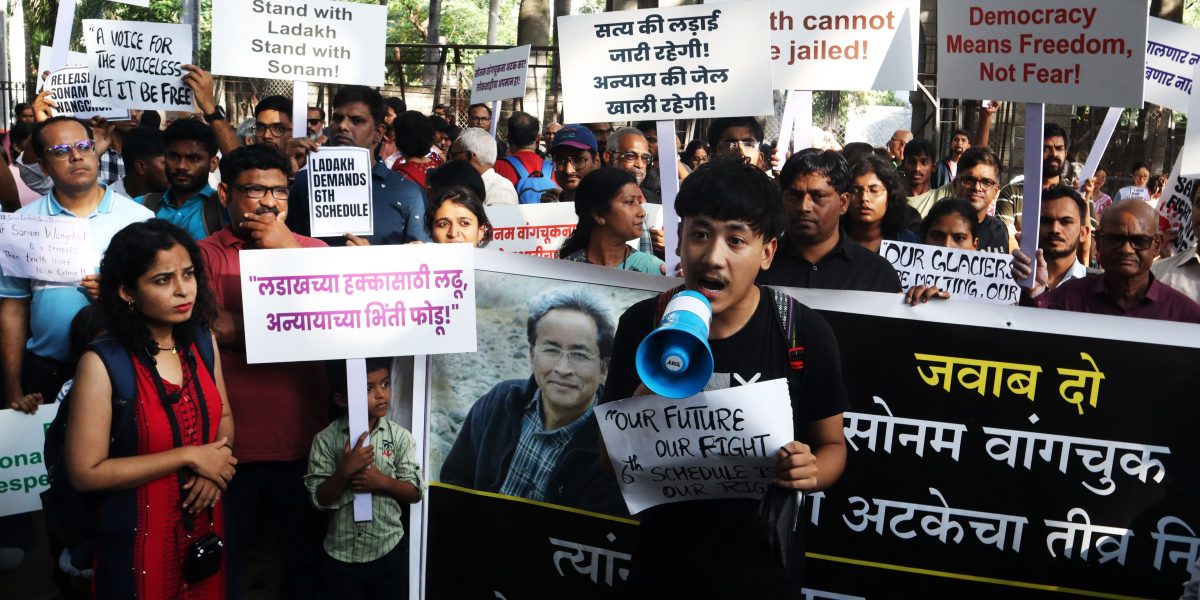
With recurrent abuse of the NSA, the courts should now consider examining whether an order of preventive detention is actually preventative or punitive.


People take part in a protest march demanding the release of climate activist Sonam Wangchuk, who was recently detained following the September 24 violent clashes in Ladakh, at Chhatrapati Sambhaji Raje Garden, in Pune, Saturday, Oct. 4, 2025. Photo: PTI

LONG READ


The Supreme Court has a great opportunity to prevent and stop manifold injustices caused to detenus under various preventive detention laws. I have in mind the preventive detention of Sonam Wangchuk. I hope the court grabs the opportunity with both hands and makes it clear to the Executive that preventive detention is distinct from punitive detention.

Preventive detention laws are enacted for application in rare cases, if not in the rarest of rare cases. Yes, the Maintenance of Security Act (MISA) was abused during the Emergency years when thousands were detained to prevent them from committing an offence endangering internal security. But our judges stood up to the injustice and 9 of the 11 high courts quashed the preventive detention orders. (The other two high courts perhaps had no such cases before them). MISA was subsequently repealed in 1978.

The Conservation of Foreign Exchange and Prevention of Smuggling Activities Act, 1974 (COFEPOSA) was used and abused in the 1980s and 1990s when gold and other valuable items were smuggled by carriers (called mules) who would use a suitcase with a fake or collapsible bottom for smuggling; some would swallow drugs safely packed in a plastic bag or hide gold biscuits in the rectum. Dozens were caught while trying to smuggle and preventively detained, but their handlers, big fish, always got away. The courts appreciated the damage these smugglers caused to the economy. But all judges gave greater importance to the injustice caused by the denial of constitutional rights and civil liberties of the detenus without a trial and relied on procedural flaws to release them.

Not once did the courts delve into the merits of the allegations made against the detenus. The reason was simple. The courts have no power of judicial review over the subjective satisfaction of the detaining authority, which is not justiciable. This is well settled law over decades. In my view, the jurisprudence of a hands-off approach to subjective satisfaction must now be revisited thanks to abuse of the preventive detention law by the Executive.

Punitive detention is resorted to when a person allegedly commits an offence and is accused, based on investigation, of having committed that offence. There is, therefore, a clear distinction between the two forms of detention – preventive and punitive. Of late, this distinction is getting blurred and, perhaps, deliberately so.

In the recent past, preventive detention orders under the National Security Act (NSA) have been liberally issued, reminiscent of the Emergency period. It appears that the establishment has concluded that it is so much easier and more effective to arrest and detain a person under the NSA than to do so under the penal law, including under the Unlawful Activities (Prevention) Act (UAPA).

The NSA is applicable only if the Union government or the state government is (subjectively) satisfied that it is necessary to detain a person “with a view to preventing him from acting in any manner prejudicial to the defence of India, the relations of India with foreign powers, or the security of India” or “with a view to preventing him from acting in any manner prejudicial to the security of the State or from acting in any manner prejudicial to the maintenance of public order or from acting in any manner prejudicial to the maintenance of supplies and services essential to the community.”

Therefore, a person is detained on the prognosis that he is likely to commit an offence if he is not detained and not because he has allegedly committed an offence – reminding one of the Hollywood movie Minority Report kind of situation.

In Parvez v. State of UP (2021) the Allahabad high court quashed a preventive detention order under the NSA against the detenu for “cutting beef” in his house in the wee hours of the morning. The high court held, and rightly so that “cutting beef” did not raise a public order issue. However, two facts arising from this case are surprising.

First, every preventive detention order is tested before an Advisory Board constituted under the NSA consisting of a person who is or has been a judge of the high court and two others who have been or are qualified to be judges of the high court. These worthies are entitled to decide whether the detaining authority has bona fide and subjectively satisfied himself of the necessity of preventively detaining the detenu. Surprisingly, the Advisory Board did not do so and therefore failed to quash the preventive detention order. The report of the Advisory Board is confidential so we will never know the reasons that weighed with it to uphold the detention.

Second, it took the Allahabad high court almost one year to quash the detention order meaning thereby that the person was in jail for almost a year without a trial and only because the district magistrate felt that he should be in custody to prevent him from committing a similar offence. There are quite a few such cases, despite the minister of state in the Home Ministry having rightly informed Parliament (as reported on the website of India Today) that “Transportation of cattle and cow slaughter are not punishable offences under the NSA.”

More recently, the Supreme Court dealt with the case of a student who was preventively detained in July 2024. It appears that the order of preventive detention under the NSA was for a short period but was extended from time to time till July 2025. The grounds for detention disclosed that there were eight criminal cases against him. He was acquitted in five of them; in one case he was convicted with the punishment being a fine; two cases were pending but he was granted bail. The only reason why he continued in custody was because of the preventive detention order. Preventive detention laws do not postulate grant of bail and this student remained in custody only for this reason, despite having obtained bail for alleged penal offences. The Supreme Court has not yet passed a reasoned order setting aside his preventive detention, but it appears from a reading of the quashing order that his detention was not preventive but punitive.

With recurrent abuse of the NSA, the courts should now consider examining whether an order of preventive detention is actually preventative or punitive. The courts should also now consider holding a detaining authority accountable for passing an order of punitive action in the guise of preventive detention. Thirdly, the Courts should consider introducing bail jurisprudence in appropriate cases of preventive detention. Otherwise, as in the case of Parvez or the student, there is certainty that a person will be in punitive custody for a few months at least.

Sonam Wangchuk was preventively detained under the NSA three months ago. Given the reasons for his detention that are in the public domain, is his detention preventive or punitive? This is as fit a case as any for revisiting the draconian law of preventive detention or at least making it more humane.


Madan B. Lokur is a former judge of the Supreme Court of India.


Bangladesh: Interim Govt Pushing Country Toward Civil War, Says Workers Party


Abdul Rahman 


The party claims religious extremist mobs have been allowed to target their offices, leading newspapers, secular cultural organizations and persons from minority community with impunity.


Aftermath of mob and arson attacks on the office of daily Prothom Alo in Dhaka, Bangladesh. Photo: Wikimedia Commons

Scores of journalists, political and human rights activists attended a protest jointly organized by Bangladesh’s Editor’s Council and Newspaper Owners Association (NOAM) in Dhaka on Monday, December 22 to denounce last week’s attacks on leading newspapers and journalists in the country.

Claiming such attacks are attempts to silence critical voices, speakers appealed to the social forces in the country to raise their voices in protest in order to protect the (remaining) social and political freedoms in the country.

Bangladesh has seen repeated attacks on opposition parties such as the Awami League and Workers Party of Bangladesh (WPB), religious minorities, and symbols of Bangladesh’s national liberation struggle, since the formation of the interim administration last year.

However, a fresh round of violence erupted in the country last week following the news of the death of Sharif Osman Hadi, a lead organizer of the anti-quota protests against Sheikh Hasina’s government in July-August last year and a candidate for the upcoming national elections in the from one of the constituencies in Dhaka.

Hadi was shot on December 12 in Dhaka and was getting treatment in a hospital in Singapore where he passed on December 18.

The night of his death, Mostakur Rahman, a student leader and member of Bangladesh Islami Chhatra Shibir, the male student wing of Jamaat-e-Islami, gave a speech calling for two leading daily newspapers, the Daily Star and Prothom Alo, in the country to be shut down.

As reported by Prothom Alo, Rahman told a large crowd in Rajshahi, “We declare from today’s program that these so-called ‘civil’ newspapers, including Prothom Alo and The Daily Star, must be shut down. We believe that if any journalists from Prothom Alo or The Daily Star are attending this programme, they should leave immediately.”

His calls were echoed by others across social media and soon, mobs of people acted on it.

That very night and into the next morning, the offices of the Daily Star and Prothom Alowere attacked and vandalized by large violent mobs while hundreds of journalists and other staff inside. The editor of another newspaper New Age was also harassed by a mob on the same day.

Both the Daily Star and Prothom Alo could not publish their editions on December 19 due to the damages caused by the attack. Prothom Alo claimed it missed publishing an edition for the first time since their founding 27 years ago.

The attackers, as reported in the local media, had accused the Daily Star and Prothom Alo of pushing the ideology of Hasina’s Awami League which has been banned from contesting the national election next year.

The attacks on the newspaper was part of a series of violent attacks on various opposition parties including the offices of the left-wing WPB and its student and youth organizations, the country’s leading cultural organizations Chayyanaut and Udichi, members of the minority religious communities and monument of Sheikh Mujibur Rahman, the leader of Bangladesh’s liberation war and its first prime minister.

Known as Bangbandhu Bhavan, the monument is located at Dhanmondi in Dhaka. It was targeted and vandalized in February this year as well.

February’s attack on Dhanmandi was led by the leaders of the anti-quota protest who are part of the interim government led by Mohammad Yunus. These political sectors have now formed the National Citizens Party (NCP) and are contesting in the upcoming national elections.

Push towards a civil war

The Awami League called the attacks on Dhanmondi an attempt to destroy the history of the country expressing hope that such attempts will be resisted by the people.

In dialogue with Peoples Dispatch, Sharif Shamsir, a left activist, claimed that the attacks last week were part of the concerned effort to silence the secular and nationalist opposition in the country. He claimed that the newspapers were targeted despite their pro-Yunus stance as they continue to write against the rising religious extremism in the country and are in favor of secular polity.

Shamsir also claimed that the attackers were supported by the political formations such as Jamaat-e-Islami (JI) and others had expressed their discontent that these newspapers had published a series of articles celebrating the country’s national liberation movement on the occasion of this years’ National Liberation Day on December 16.

Offices of the WPB and its youth and student fronts have been attacked repeatedly by right-wing mobs as it is seen as a part of the secular nationalist alliance opposed to the religious groups in politics. WPB has also called the interim government an instrument of imperialist intervention in the country.

“These repeated incidents of attacks, vandalism, arson and occupation constitute serious obstacles to the ongoing struggle to build a democratic Bangladesh and severely hinder the practice of free thought and expression,” said Jubo Maitree (youth wing of the WPB) in a statement on Monday.

Condemning last week’s violence WPB reiterated that the interim government has failed to protect the political and media freedom in the country and has surrendered in front of the extremist forces.

Though Yunus personally condemned the attacks as barbaric, his government has been criticized for failing to take strong action against the attackers.

“Imperialist and fundamentalist forces, in a highly premeditated manner, have destabilized Bangladesh and established a reign of mob rule with the cooperation of the ruling regime,” WPB’s statement said.

WPB denounced that under Yunus regime incidents of murder, terrorism, rape and human rights violations have now become commonplace.

The government’s failure to protect the religious and political plurality of the country by letting the extremist forces take the law of the land in their hands without any repercussions, WPB said, will push the country towards a civil war.

Courtesy: Peoples Dispatch

Mexican Tariffs and India’s Position


Arsh K.S. 


Mexico is India’s third largest car export market. Manufacturers, such as Maruti-Suzuki and Tata, could find their vehicles uncompetitively priced overnight.


Representational Image. Image Courtesy: Rawpixel

Mexican President Claudia Sheinbaum’s government on December 10, 2025, approved tariffs of up to 50% against several Asian countries with whom Mexico does not have a Free Trade Agreement (FTA), including India. In reality, these tariffs have been in place since April 2024. What has changed, however, is that the earlier tariffs were put in place by the Andrés Manuel López Obrador administration and were a temporary measure that was limited to 544 product lines from countries with whom Mexico did not share an FTA policy. It was set to expire in April 2026.

The new set of tariff legislation by the Mexican Congress, however, is set to transform this temporary measure, which was initially passed as an executive decree, into a Congressional Law whose ambit would now extend to 1,463 product lines. 

This is to take effect from January 1, 2026. These tariffs are on automobiles, auto-parts, motorcycles, iron & steel, aluminium, smartphones and electronics, textiles and apparel, footwear and leather goods, industrial machinery, and plastics and chemicals. While most of the tariffs are capped at 35%, automobiles face the maximum 50% duty.

These developments have significant consequences for India’s industry. Particularly so because Mexico is India’s third largest car export market. Manufacturers, such as Maruti-Suzuki and Tata, could find their vehicles uncompetitively priced overnight.

Why have these tariffs been implemented? This primarily has to do with Mexico’s trade relations with the US. Mexico and the US share an FTA. However, goods from Asia, and particularly China, were being shipped to Mexico, where minimal assembly was taking place, and then sold to the US after being branded ‘Made in Mexico’, thereby exploiting the US, Mexico and Canada Trade Agreement. Because of this, on February 1, 2025, the Donald Trump administration had imposed a blanket 25% tariff on all Mexican exports.

These newly extended tariffs by the Sheinbaum administration are effectively a peace offering to Washington as well as a sign that Mexico is willing to cooperate to build a ‘Fortress North America’ against Asian industrial imports.

The Mexican government would also have in mind the upcoming USMCA (United States-Mexico-Canada Agreement) joint review meeting on July 1, 2026.  This would allow them to enter into the negotiations with a clean slate. By raising tariffs against non-FTA countries, a major American pain point, which is the flood of cheap Asian steel and electronic vehicles, is addressed.

Amidst the present protectionist trade climate, the Mexican government is also trying to protect domestic jobs. These tariffs would force companies that presently source parts from India and China to purchase them from Mexican factories instead. What would also weigh on the mind of the Mexican government is the present trade deficit with China, with whom $14 are imported for every $1exported. The goal appears to be to promote local manufacturing to diminish that gap. There is also the country’s national deficit to keep in mind. The tariffs that have been levied will generate $3.76 billion for the government, allowing it to fund its social programmes and infrastructural projects without raises taxes.

The Indian government is aware of how this will impact the country’s exports and that an FTA may take years to negotiate. Commerce Secretary Rajesh Agrawal has said that talks were on for a Preferential Trade Agreement in its place. Regarding the balance of trade between India and Mexico at present, the value of merchandise that crosses borders is $8.74 billion as of 2024, with exports consisting of $5.73 billion, imports consisting of $3.01 billion and a trade surplus of $2.72 billion.    

Indian industry will now have to at least temporarily find an alternative market for the share of its automotive and engineering goods that in the pre-tariff era found purchase in Mexico. This is not necessarily a glum situation, as India has on July 24, 2025, signed FTAs with the United Kingdom allowing duty free access to automobile components, textiles and leather commodities that were hit by Mexican tariffs.

Apart from the UK in 2024, a deal was signed with European Free Trade Association countries, such as Switzerland, Norway, Sweden and Lichtenstein. This opens a market for engineered goods and pharmaceuticals. There is also the Comprehensive Economic Partnership Agreement or CEPA between India and the United Arab Emirates that can be utilised to re-route Mexican-bound products. It is worth noting that both the UAE and Saudi Arabia are seeing double digit growth in the demand for electronics from India.

For lower cost vehicles and motorcycles, Indian exporters are looking to African countries, such as Egypt, Nigeria and South Africa. Egypt itself saw a growth of 27% as a market for Indian exports as of 2025. To the East, while there is significant competition from China, Indian exports of auto components find markets in Vietnam and Indonesia.

Domestically there has been a noted demand for SUV’s and mid-sized cars which can offset some of the production intended for Mexico. This market is projected to grow at 6 -8% in 2026.   

The writer is an independent journalist, pursuing his PhD. The views are personal.


Redefining Aravallis: Theft of the Commons


Shirin Akhter 


What is at stake is not simply environmental damage, but the erosion of natural rights: of communities to land, water, livelihood, and a sustainable future.


Aravalli Range in Rajasthan. Image Courtesy: Wikimedia Commons

The recent judicial executive move to impose a narrow, height-based definition of the Aravalli Range marks a troubling moment in India’s environmental governance. Traditionally, the Aravallis were understood as a continuous mountain system stretching over hundreds of kilometres from Delhi through Haryana and Rajasthan into Gujarat, across dozens of districts as an interconnected range that forms a natural barrier against desertification, supports rivers and watersheds, and sustains biodiversity and local livelihoods.

This ecological continuity reflected in historical geographic characterisations of the Aravalli Range, as a continuous fold mountain belt running from Delhi to Ahmedabad, has underpinned legal and conservation frameworks that treated the hills and their attendant ridges, foreshore landforms, and catchment areas as an indivisible whole. By recognising only landforms rising 100 metres or more above the surrounding terrain as “Aravalli hills,” the State has reduced one of the world’s oldest and most fragile ecological systems to a cartographic abstraction. What is projected as scientific clarity is, in effect, ecological amnesia, carrying grave consequences for environmental protection, federalism, and democratic accountability.

Opposition leaders have been unequivocal in flagging the dangers of this exercise. Congress leader and former Union Environment Minister Jairam Ramesh has described the redefinition as a bureaucratic sleight of hand that quietly erases large swathes of the Aravallis from legal protection without any transparent public debate on ecological costs. This arbitrary vertical threshold forgets that the Aravallis function as a continuous ecological system, where low-lying hills, forested ridges, scrublands, and catchment areas together sustain groundwater recharge, regulate dust and temperature, and support biodiversity across Rajasthan, Haryana, Delhi, and Gujarat.

By tying protection to height, the State effectively decouples ecology from law. This is precisely what environmentalists and Opposition voices warn against. Former Rajasthan Chief Minister Ashok Gehlot has pointed out that the move opens the door to renewed mining and real-estate pressures in precisely those zones that have historically borne the brunt of ecological destruction. These are areas that may not tower dramatically above the landscape but are indispensable to the integrity of the range. To exclude them is to hollow out protection while claiming compliance.

Mining Contracts and Political Economy of Redefinition

The redefinition cannot be understood outside the political economy of mining contracts. The Aravallis are mined not for strategic minerals but for quartzite, stone, sand, aggregates, and limestone, the raw materials of highways, flyovers, luxury housing, and urban infrastructure. These are low-value minerals extracted in high volumes, classified as “minor minerals,” and, therefore, governed by weaker regulatory scrutiny. Redrawing the legal boundary of what constitutes the Aravallis directly affects which parcels of land can be leased, auctioned, or diverted with ease. 

This is where the government’s clarification assumes significance. While asserting that the new definition applies only to mining, and reiterating that mining is prohibited in the NCR (National Capital Region), the Union Environment Minister has simultaneously made it clear that restrictions will not apply to the mining of “critical, strategic, and atomic minerals” listed under the First and Seventh Schedules of the Mining and Minerals (Development and Regulation) Act, 1957.

The technical committee’s report goes further, recording the Rajasthan government’s assertion that the Aravallis contain deep-seated minerals falling under these schedules. In effect, while public discussion is steered toward minor minerals, the legal framework deliberately keeps the door open for extraction that can be justified as strategically or economically important.

The report itself acknowledges that beneath the surface, the Aravalli Range holds substantial mineral wealth, including marble, granite, mica, and other minerals that have historically fuelled construction and extraction across the region. This acknowledgement is wrapped in familiar language about balancing development and conservation. Yet, the exemptions embedded in the framework tell a more revealing story.

By recommending that mining restrictions “need not apply” to critical, strategic, and atomic minerals on grounds of defence and national security, the policy regime creates a hierarchy of extraction, where ecological protection is no longer a principle but a conditional privilege.

Environmentalists have, therefore, warned that the redefinition functions less as a safeguard than as an open-ended licence. As forest analyst Chetan Agarwal has pointed out, the combined effect of the new definition and the statutory exemptions is that mining for critical minerals would be permissible both in areas above 100 metres that are legally recognised as Aravallis and in areas below 100 metres that are legally rendered non-Aravalli hills. Whether one adopts the Forest Survey of India’s slope-based criteria or the Ministry’s height-based definition, future mining is not ruled out. At best, the framework promises uniform scrutiny. It does not promise ecological restraint.

Seen this way, the redefinition is not about scientific precision. It is about regulatory reordering. It preserves flexibility for mining interests under the shifting banners of development, growth, and national security, while steadily shrinking the space of unconditional ecological protection. What is being stabilised is not conservation, but the State’s discretion to extract, leaving the ecological integrity of the Aravallis to be negotiated, diluted, and overridden as required.

Once hills and ridges fall outside the formal definition, they become administratively invisible as ecologically protected spaces and legally legible as extractable real estate. In this sense, the redefinition does not curb mining; it reorganises mining opportunities. It converts contested landscapes into contract-friendly terrain. The redefinition legalises vulnerability.

Critiques insist that the issue is not scientific disagreement but state-enabled extraction. The language of “uniform definitions” masks a deeper redistribution of ecological risk from corporations and contractors to landscapes and communities that lack political power.

Sonbhadra is another case in the point, it shows where this logic ultimately leads. Often described as the energy capital of North India, Sonbhadra is rich in coal and dotted with thermal power plants that supply electricity to distant cities and industrial hubs. It is also one of the starkest examples of how State greed, legitimised through development discourse, devastates nature and people alike.

Decades of coal mining, fly ash dumping, forest clearance, and thermal pollution have left Sonbhadra environmentally scarred and socially impoverished. Adivasi and forest-dependent communities have been repeatedly displaced, their land acquired in the name of national interest, their water poisoned, and their livelihoods eroded. Despite fuelling urban growth elsewhere, Sonbhadra itself remains marked by poverty, poor health indicators, and ecological ruin.

Sonbhadra is not an aberration. It is a preview. It demonstrates how resource-rich regions are turned into sacrifice zones, where nature is stripped, communities are marginalised, and the benefits of extraction flow outward. The same logic now looms over the Aravallis, albeit through quieter legal instruments rather than overt dispossession.

Natural Justice, Commons, and Question of Who Pays

What is strikingly absent from the redefinition of the Aravallis, and from extractive governance more broadly, is any serious engagement with the law of natural justice. At its most elementary level, natural justice rests on the principles of fairness and the right to be heard. Yet in the appropriation of natural resources and common-pool resources (CPRs), these principles are routinely violated. Decisions that reshape landscapes, livelihoods, and ecological futures are taken without involving and without a concern towards communities who live with their immediate consequences.

Read Also: Halt Wanton Degradation of Aravallis

Hills, forests, grazing lands, water bodies, and mineral-bearing tracts are not inert assets waiting to be monetised. For local communities, pastoralists in the Aravallis, adivasis in Sonbhadra, forest dwellers and small cultivators across extractive belts, they constitute shared ecological commons, governed by customary use, collective knowledge, and intergenerational dependence. When the State redraws ecological boundaries, dilutes protections, or facilitates mining through redefinition and reclassification, it does so by dispossessing those most dependent on these resources, often without meaningful consultation, consent, or remedy.

This is distributive injustice. The benefits of extraction, mining contracts, construction material, electricity, urban infrastructure, flow upwards and outwards to corporations, contractors, and distant cities. The costs, displacement, loss of livelihoods, groundwater depletion, toxic air and water, long-term health damage, are localised and borne by communities with the least political power. Those who profit from extraction are insulated from its harms; those who suffer its effects are excluded from decision-making. Such an asymmetry violates the moral core of natural justice: no group should be made to bear burdens from which others reap gains without accountability or participation.

Sonbhadra offers a grim illustration of where this logic leads. Coal and power extracted in the name of national development have left behind ecological ruin, chronic poverty, and dispossessed communities. The Aravallis now risk being drawn into the same trajectory, less dramatically, perhaps, but no less decisively, through a legal sleight that converts ecological commons into contract-ready terrain. What is at stake is not simply environmental damage, but the erosion of natural rights: the right of communities to land, water, livelihood, and a sustainable future.

Environmental degradation also violates an often-overlooked dimension of natural justice, the obligation to do no irreversible harm. When ecosystems are destroyed in ways that foreclose future options, the injury extends beyond the present generation. It robs communities of resilience, adaptability, and dignity, while accountability for such harm remains diffuse or absent. Growth achieved by externalising damage onto the poor and the peripheral cannot claim legitimacy, however technically legal it may appear.

Shirin Akhter is Associate Professor at Zakir Husain Delhi College, University of Delhi. The views are personal.