Sunday, April 19, 2026

CU

Copper price within sight of all-time high as Chinese smelters hit record activity
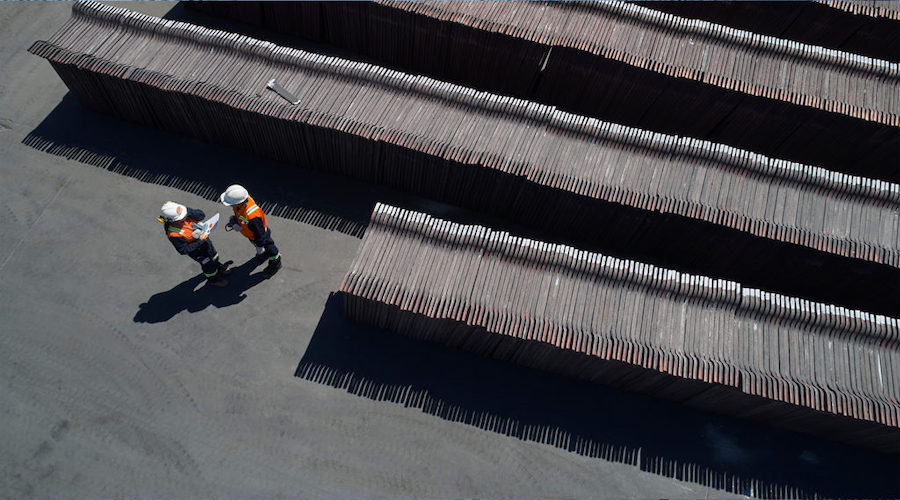

(Image courtesy of Glencore.)

Copper ended the week up more than 5% reaching a 10-week high at the close on Friday. At $6.11 per pound ($13,480 a tonne) in New York, May futures are back to within shouting distance of the all-time high closing price struck at the end of January, the day before the start of the Iran war.

The positive trend was underscored by new satellite data showing March smelter activity continuing to improve after hitting the lowest on record since tracking began nearly a decade ago in January this year.

Earth-i’s latest SAVANT Global Copper Smelting Index shows that 11.7% of global smelting capacity was inactive in March, down from 14.3% registered in January. Earth-i’s satellites cover some 95% of global capacity.

The increased activity was concentrated in China where the country-level inactive capacity sub-index fell by 1.1% to just 3.9%.

London-based Earth-i points out that together with the continuing build out of smelting capacity on the mainland, this resulted in an all-time high active capacity reading of 10.73 million tonnes, more than 775,000 tonnes higher than a year ago and 1.49 million tonnes above the 3-year average.

“This speaks to the improvement in downstream activity in recent weeks, as demand recovers following a ‘buyer’s strike’ in response to record high copper prices in January that has also seen imports from international market slump.”

Outside China, with the exception of Africa where the central copper belt showed strong operating performance, activity fell.

In Iran two smelters with combined capacity of 400,000 tonnes per annum (tpa) are offline (outside their historical routine maintenance schedules) and the ongoing outage at the 300,000-tpa Mount Isa smelter in Queensland, Australia, helped keep the Asia & Oceania regional inactivity sub index elevated at 18.7%, well above its 3-year average of only 5.7%.

According to Earth-i, inactivity did tick up modestly in Europe by 2.1%, but the region is still showing the lowest average percentage of idled capacity at 6.2%. Meanwhile smelting continues to be weakest in the western hemisphere, with the inactive capacity sub-index for North America rising by 10.3% in March to 32.3%, moving above that of South America at 27.4%.

Acid test

Chinese smelters’ willingness to buy concentrate increased further as sulfuric acid prices surged with FOB China at $210 per tonne in April, up 74% since January due to disruptions from the Iran war, according to a S&P Global Energy report.

This allows the country’s operators to secure short-term margins while putting additional pressure on TC/RCs (charges paid by miners to refiners). Spot TCRCs have plunged into deeply negative territory, with recent spot market tenders closing near –$78.50 per tonne and –7.85¢ per lb according to Platts, a unit of S&P Global Energy. That’s a swing from a positive $50 per tonne in January 2024.

The downward pressure on TC/RCs will remain, says S&P Global as the copper concentrate export permit for Indonesia’s Batu Hijau mine is set to expire at the end of April. In addition, the Democratic Republic of Congo’s Kamoa-Kakula 500,000-tpa capacity smelter began anode production at the end of 2025 which will consume domestically produced copper concentrate, further curbing exports.

The benchmark annual contract market has followed this collapse. Antofagasta’s 2026 benchmark agreement with a Chinese smelter settled at zero dollars, the lowest annual TC/RC terms ever recorded.


Codelco targets higher 2027 output to reclaim top copper spot
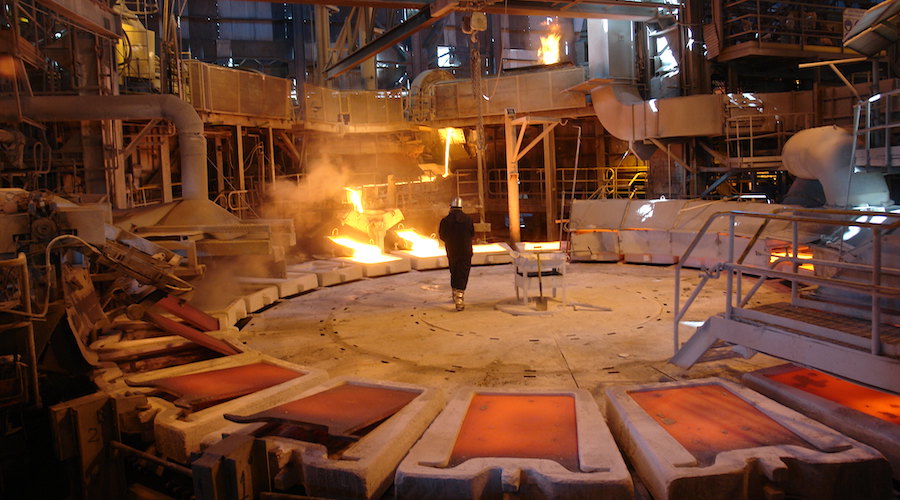

Chuquicamata smelter. (Image courtesy of Codelco | Flickr.)

Codelco is targeting a slight increase in copper output in 2027 as Chile’s state-owned miner looks to reclaim the mantle of world’s biggest supplier of the industrial metal.

Total production next year is budgeted at 1.5 million metric tons, according to people briefed on the projections. The amount includes Codelco’s share of output from mines it doesn’t operate but holds minority ownership in. Production from its own mines is targeted to rise to 1.37 million tons from 1.34 million tons this year, said the people, who asked not to be identified because 2027 guidance hasn’t yet been published.

The company is striving to reverse a prolonged decline in output while getting its aging mines and delayed expansion projects back on track. Chairman Maximo Pacheco is eying a return to pre-pandemic levels of 1.7 million tons by the end of the decade when the global market is expected to tighten.

Codelco has overhauled management and decentralized project leadership to counter falling ore grades, cost overruns and a heavy debt load. Bloomberg Intelligence says Codelco is on track to displace BHP Group as the top global producer. BHP operates Escondida in northern Chile, the world’s biggest single copper mine.


“If Codelco manages to squeeze out a few more tons and Escondida’s grade does decline according to the mine plan, Codelco could take top spot again,” BI analyst Grant Sporre said.

(By James Attwood)


Codelco, Anglo pursue twin environmental approvals for shared Chile copper pit
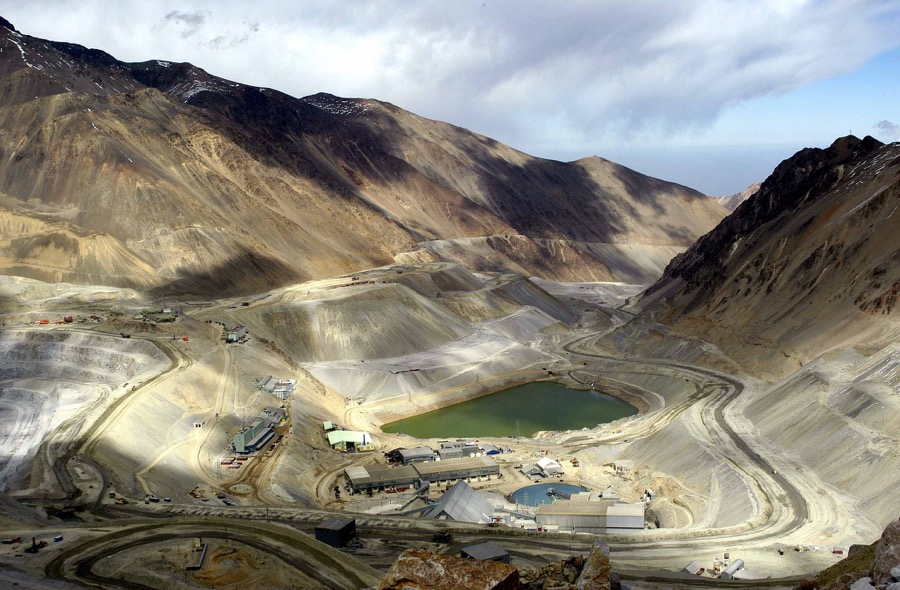

Los Bronces is Anglos’s flagship mine in Chile. (Image courtesy of Anglo American | Flickr)

Chilean copper producer Codelco and global miner Anglo American plan to submit separate environmental studies to regulators for their planned shared copper mine in Chile, documents seen by Reuters show, using what they called an “unprecedented” twin-track to streamline the approval process.

The previously unreported documents on the Andina-Los Bronces project, presented to environmental authorities in January, show the companies plan in December to file two largely identical applications for a pit where they would jointly extract copper in the world’s top producer of the red metal.

The model could serve as a blueprint for other major miners seeking to share infrastructure and operations to raise output amid an expected global supply crunch, while setting up Codelco and Anglo American to move faster and cut down on risks.

Codelco and Anglo finalized the deal in September, planning to add about 120,000 metric tons of copper per year from 2030 to 2051, generating at least $5 billion in pre-tax value.

Codelco chairman Maximo Pacheco, as well as a source at Anglo American, confirmed to Reuters that the firms plan to file the two applications at the end of the year.

‘Mirror’ applications

In areas where operations will overlap, the companies proposed applying identical environmental measures to each miner.

A single filing was not legally viable, they argued, because Chile’s constitution requires Codelco to retain ownership of its mining concessions, one presentation showed.

The companies also considered filing three applications: one from each miner to extend the useful life of their respective mines, and a third from a joint entity that would run the shared operation.

They ruled that out because it would require the firms to give up their existing open-pit environmental permits to make way for the combined mine.

The dual structure would also allow the mines to potentially return to independent operations in the future.

Work on the ground

The documents detailed plans to create a single pit over the existing pits.

Anglo American’s Los Bronces and Codelco’s Andina pits are adjacent, and the companies’ plan showed the rock barrier between them would also be mined, creating a single operating pit while keeping the project largely within the mines’ existing footprint.

Ore extracted from the shared pit would be sent interchangeably to Los Bronces’ and Andina’s processing plants, while waste rock would be deposited in each company’s own waste dumps, one document showed.

Changes to waste dumps, tailings facilities, pipelines and support infrastructure would still be needed for the two mines to operate as an integrated system.

Shared infrastructure would avoid duplicate facilities, cut freshwater use and reduce pressure on the surrounding area, the companies said.

Risks to sharing a mine

The companies also flagged significant risks, such as the need for close coordination with regulators, which could strain Chile’s already slow-moving environmental review system.

They highlighted the project’s “high public visibility” and the risk that environmentalists and affected communities could argue the two reviews obscure the scale of the impacts.

Los Bronces has faced years of scrutiny by residents, regulators and courts over alleged impacts on air quality, water use and glaciers in the high Andes where the mine operates.

While Codelco and Anglo argue the dual-track approach would reduce the risk of underestimating impacts, they acknowledged it could lead to duplicate or unnecessary environmental management measures.

The firms plan to begin outreach to local communities and other stakeholders in the second half of the year, one document showed.

(By Kylie Madry and Fabian Cambero; Editing by Daina Beth Solomon and Mark Potter)

CU/MO

Chinalco bets $700M on Peru mine turnaround


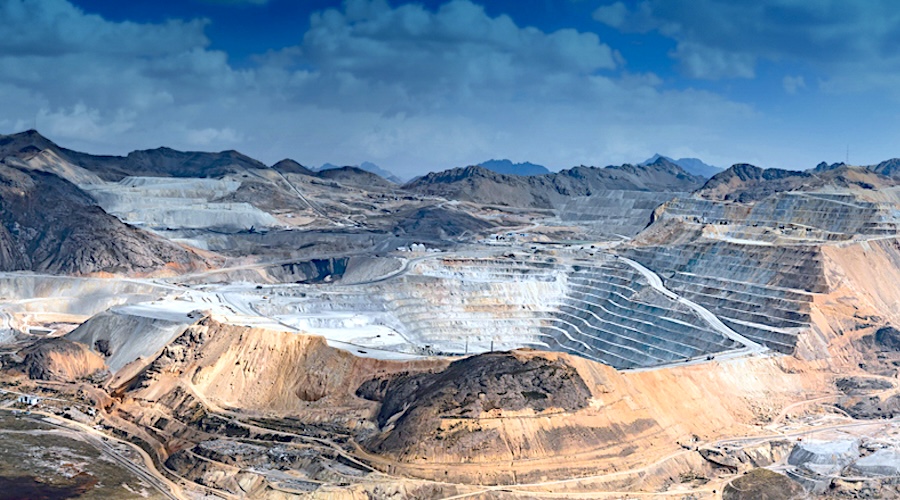
The Toromocho copper mine has been running for 36 years. (Image courtesy of Chinalco Peru.)

Aluminum Corp of China (Chinalco) is investing more than $700 million over the next three years to overhaul its Toromocho copper mine in Peru, adding molybdenum output to drive a long-awaited turnaround.

The plan, part of a $1.7 billion investment committed in 2018, includes updates to the mining scheme, new deposits and expanded stockpiling to improve efficiency and ensure operational continuity.

The total planned investment is being carried out in stages, with the core $1.35-billion expansion focused on lifting plant capacity and extending Toromocho’s development. That is being followed by additional technical modifications valued at about $350 million to optimize processing, recovery and supporting infrastructure.

Chinalco will expand a low-grade ore stockpile to the west and create a new stockpile within the existing pit, aiming to maximize existing infrastructure while staying within authorized limits. The company said the upgrade will improve processing performance and recoveries at the operation, where past technical challenges have weighed on output and costs. It also said the revamp will allow it to increase the plant’s capacity to 170,000 tonnes per day from the current 117,000-tonne-per-day capacity.

“This approval makes it possible to implement 28 projects, comprising 33 components over the next three years,” Chinalco executive Álvaro Barrenechea said in a statement.

Adding molybdenum

A key component of the overhaul is the introduction of molybdenum recovery, a metal previously not processed at Toromocho, supported by a new classification system that separates copper-only ore from copper-molybdenum material. The latter will be stockpiled for near-term processing, allowing more efficient resource use and diversified production. 

Chinalco said this approach will help secure early reserves and ensure continuous supply to the concentrator. The company also plans to stockpile ore in 2027 for processing in 2028, using existing pit roads and a new northern stockpile to maintain steady feed to the concentrator.

Peru’s Vice Minister of Mines Mayra Figueroa said copper and molybdenum are critical to the global economy, underscoring the project’s strategic importance as Peru remains the world’s second-largest copper producer and a key molybdenum supplier.

Toromocho, an open-pit mine in the Junín region, accounts for about 10% of Peru’s copper output and is expected to operate until 2042, highlighting the long-term significance of the upgrades. The operation sits 4,500 metres above sea level east of Lima and includes an open-pit mine and a processing plant. It produces about 250,000 tonnes of copper in concentrate annually and holds 1.53 million tonnes in reserves grading 0.48%, with a mine life of roughly 36 years since starting operations in 2013.

The company has also advanced its digital transformation at the site, launching an Integrated Operations Management Centre earlier this year and deploying an autonomous drilling and fleet management system developed with Huawei Peru to improve efficiency across the value chain.

Political landscape

Peru’s mining outlook now hinges on a June 7 presidential run-off between Keiko Fujimori and Rafael López Aliaga, with both candidates signalling policies that could reshape the sector.

Keiko, daughter of jailed former president Alberto Fujimori, has positioned herself as pro-US and investor-friendly, promising clearer rules to attract foreign capital while casting opponents as closer to Beijing. Her campaign has leaned on law-and-order messaging reminiscent of her father’s presidency. 

López Aliaga has struck a similar tone but warned unused mining permits could revert to the state, signalling a potential shake-up in one of Peru’s most important sectors.

The prospect of revoking unused mining concessions underscores rising political pressure on the country’s sector, raising the risk of disruption for major operators including Southern Copper (NYSE, LON: SCCO), MMG Ltd (HKG: 1208) and First Quantum Minerals (TSX: FM). 

The election outcome will shape billions in mining investment as Peru’s sector— which attracted about $6 billion last year and has driven roughly 3% annual economic growth since the pandemic—faces mounting political pressure and a surge in illegal mining.

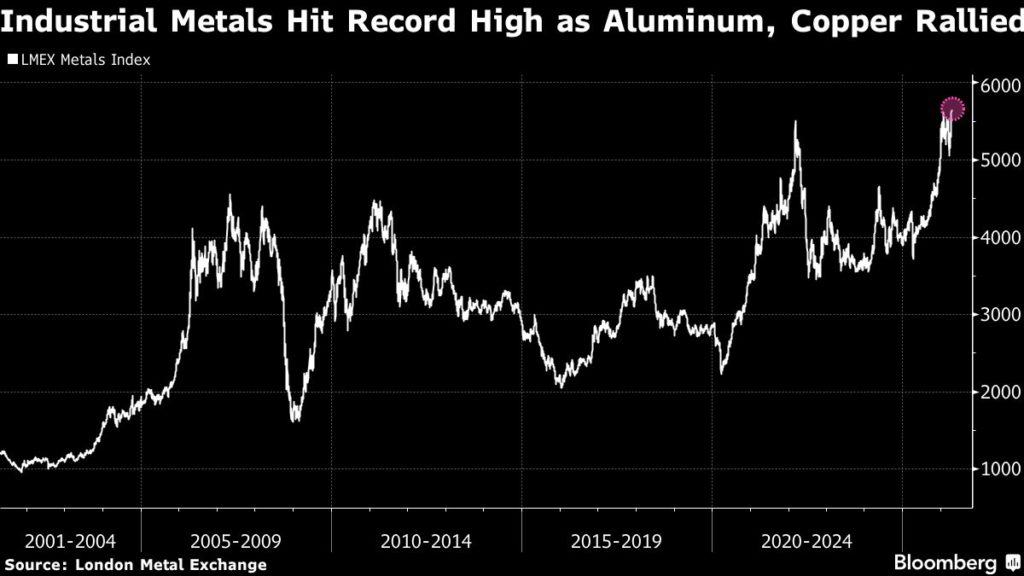
CHART: Copper price, aluminum ‘black hole’ fears lift LME base metals index to record high


Stock image.

A gauge of industrial metals jumped to a record high on the London Metal Exchange on Thursday, driven by gains in aluminum after the Middle East war disrupted supplies, as well as a recent revival in copper.

The LME Index, which tracks six major metals, has rallied by almost 12% over the past four weeks and was at an all-time peak at the close of trading. Aluminum has risen more than 15% since the start of the Iran war, with roughly a 10th of global output coming from the Middle East.

Aluminum has the biggest weighting in the LME gauge, and prices for the metal hit a four-year high on Thursday, moving closer to a record struck in the wake of Russia’s invasion of Ukraine. Together with copper — which has also moved back towards a record reached in January — the two metals make up almost three-quarters of the index.

Nickel, zinc and tin have also rallied this year, although none of the individual constituents of the index are at all-time highs.

JPMorgan Chase & Co. has warned the aluminum industry was heading toward a “black hole” as a serious, prolonged supply deficit is hitting the market after supply losses escalated dramatically in the wake of Iranian strikes directly targeting two key smelters in Abu Dhabi and Bahrain at the end of last month. A double blockade of the Strait of Hormuz — by the US and Iran — is also keeping shipments stranded.

But while the waterway remains closed, hopes that a ceasefire between the US and Iran will be extended and signs the two sides may be moving closer to a peace deal have aided other metals. They were hit by soaring energy costs and fears of slowing global growth due to the war, but have recovered in recent weeks on signs the conflict might be winding down.

President Donald Trump claimed on Thursday, without evidence, that Iran had agreed to terms it has long resisted, including giving up ambitions for a nuclear weapon. Tehran hasn’t confirmed it’s made concessions.

“Traders are building back positions in base metals and front-running the move, even though the Iran war has yet to be resolved,” said Gao Yin, an analyst at Shuohe Asset Management Co. “They also like to trade on the certainty of aluminum supply disruptions.”

Mercuria Energy Group and BMO Capital Markets forecast this week that copper would surpass a record high hit in January. They cited Chinese buyers coming back to the market and a looming decision on tariffs from the White House that’s encouraging more shipments to the US. Copper has rallied 11% in the last four weeks, and is around 3% off its all-time closing price peak.

The LMEX Metals Index rose 3.6% this week through Thursday. Most metals were down on Friday. Aluminum fell 0.4% to $3,629 a ton as of 8:39 a.m. local time. Copper dipped 0.4%, while nickel rose 1.8%.

AU

Second Mali gold mine scores backing from former Olam exec


Cora Gold Sanankoro artisanal gold workings in Mali. Credit: SRK Consulting

The family office of Indian businessman Gagan Gupta has agreed to fund a second gold mine in Mali, providing a boost to a government that’s been at loggerheads with mining investors in recent years.

Eagle Eye Asset Holdings Pte. Ltd. has struck a $120 million deal with Cora Gold Ltd. to support the development of the Sanankoro gold project in southern Mali. The Singapore-based firm is already backing the construction of a larger mine being built nearby by Toubani Resources Ltd.

Eagle Eye is doubling down on the West African nation, even as its military-led government has spent much of the past three years locked in disputes with foreign companies that own the country’s largest gold mines. Those rows centered on claims of alleged back taxes and revised legislation that hiked royalties and the state’s share in joint ventures. Mali is Africa’s second-largest producer of the precious metal, according to the World Gold Council.

While companies such as Resolute Mining Ltd. and B2Gold Corp. continued operating by reaching financial settlements with the authorities, the standoff with Barrick Mining Corp. – which runs the vast Loulo-Gounkoto mining complex – deteriorated to such an extent that the Canadian firm temporarily lost control of the asset last year

Gupta is the founder and chief executive of Arise Integrated and Industrial Platforms, an operator of industrial parks that’s active in more than a dozen African countries. A former Olam Group Ltd. executive, his businesses are ramping up investment in mining and minerals processing ventures across Africa, including Sierra Leone’s first commercial gold mine, a bauxite project in Cameroon, copper exploration in Zambia and an iron ore mine in the Republic of Congo.

Eagle Eye — which is owned by Gupta’s family office – will fund Sanankoro through a streaming deal entitling the company to purchase about 30% of future gold production for 20% of the prevailing spot price, London-listed Cora said on Friday. The arrangement should “materially accelerate” the construction timeline once permits are secured, the statement said.

In October, the same investor agreed to be a major financier of Australia-based Toubani’s $216 million Kobada project, which is expected to enter production next year and targeting output of 162,000 ounces a year.

Eagle Eye is the top shareholder in both companies, owning 29.9% of Cora and 33.8% of Toubani.

(By William Clowes)


US imposes sanctions on Nicaraguan officials linked to gold sector


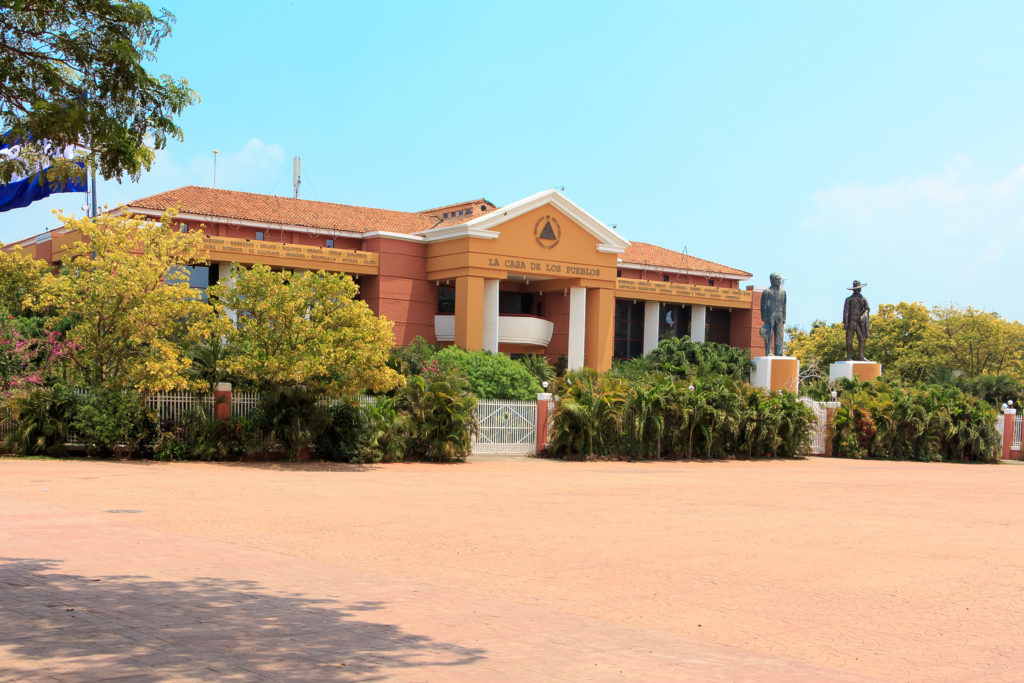
Presidential palace, Managua. Nicaragua. Stock image.

The US Treasury Department on Thursday imposed sanctions on a number of individuals and companies that operate in Nicaragua’s gold sector, including two sons of the country’s co-presidents.

Another of the individuals sanctioned is Santiago Hernan Bermudez Tapia, Nicaragua’s vice minister of energy and mines, the Treasury Department said in a statement. A number of companies were also sanctioned that the US said had been complicit in helping the Nicaraguan government generate money from gold and maintain political control.

Treasury Secretary Scott Bessent said the Nicaraguan government, led by Rosario Murillo and her husband Daniel Ortega, had sought to fill its own coffers by “confiscating American investments” in the country.

“The United States will not allow the illicit confiscation of American-owned assets and will continue to target revenue streams that empower the corrupt Murillo-Ortega regime,” he said.

Washington, under both the current and former Republican Trump administrations and the prior Democratic Biden administration, has been using economic and diplomatic means to pressure Managua to reform, dating back to a violent crackdown that began in April 2018 following mass demonstrations.

The United Nations last year accused dozens of officials from Ortega’s government of serious human rights violations and crimes, in what it described as a “tightly coordinated system of repression” following the protests.

Treasury said the sanctions imposed on Thursday stemmed from the 2025 occupation and forcible seizure of the gold processing site of BHMB Mining Nicaragua SA, a Nicaraguan company founded in 2019 with foreign investment from a US company.

It said high-ranking members of the Murillo-Ortega government had benefited from Nicaragua’s increase in gold exports in recent years as well as actions by state-owned Empresa Nicaraguense de Minas to funnel profits to “private sector partners and kickbacks to regime insiders.”

Treasury said its Office of Foreign Assets Control imposed sanctions on two of the ruling couple’s sons: Maurice Facundo Ortega Murillo, who serves as the Nicaraguan presidential delegate for sports, and Daniel Edmundo Ortega Murillo, who heads the country’s Communication and Citizenship Council.

Among others sanctioned on Thursday were: the president of Zhong Fu, one of the companies involved in the seizure of BHMB assets; Santa Rita Mining Co., which was granted land concessions for mineral extraction; and Nicaragua-based Exportadora de Metales Sociedad Anonima, which sells gold to the US, with the profits possibly used to fund government-linked paramilitary groups, Treasury said.

Grupo Minero Xiloa SA, was also sanctioned, Treasury said, accusing it of using the US financial system to legitimize illicit funds and using the proceeds to finance the government’s political machinery.

No comment was immediately available from the companies or individuals listed.

(By Andrea Shalal; Editing by Daphne Psaledakis and Rosalba O’Brien)

Fe

Iron ore price rises on Australia supply disruption fears, portside stocks decline


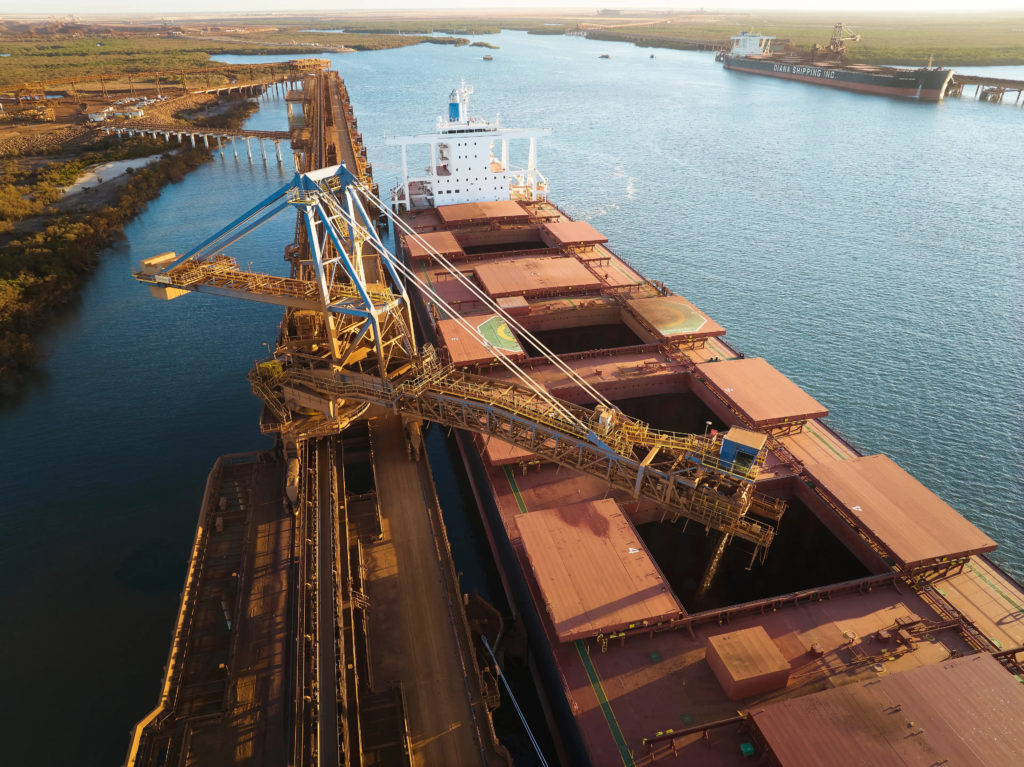
Port Hedland. Credit: Fortescue

Dalian iron ore futures edged higher on Friday, as investors weighed potential supply disruptions in Australia against tempered demand stemming from China’s environmental curbs in a key steel-making province.

The most-traded September iron ore contract on China’s Dalian Commodity Exchange (DCE) traded 0.39% higher at 778.5 yuan ($114.06) a metric ton.

The contract has gained 2.85% so far this week, and is on track to snap two consecutive weekly losses.

The benchmark May iron ore on the Singapore Exchange was down 0.49% at $105.8 a ton. The contract has risen 2.24% this week so far.

Portside iron ore inventories declined this week, with the drawdown on previously banned BHP product Jimblebar Fines, Shanghai Metals Market said in a note.

Hot metal production has also been sustained at high levels, supporting demand.

In addition, a fire at one of Australia’s two oil refineries has stoked concerns of diesel shortages, which could affect mining operations in China’s biggest iron ore supplier.

Concerns over a short-term supply contraction in the iron ore market have been compounded by persistently high energy prices and fuel shortages linked to the Iran war, Shanghai Metals Market added.

However, several cities in China’s key steelmaking province Hebei have activated emergency responses to air pollution, stoking fears over demand for iron ore as steelmakers restrict production.

Authorities in cities such as Tangshan, Xingtai and Langfang have announced level 2 emergency responses over WeChat on April 16-17.

In company news, Brazilian miner Vale reported on Thursday its highest iron ore sales for a first quarter since 2018.

The company’s iron ore sales, which include fines, pellets and run-of-mine, rose 3.9% to 68.7 million metric tons for the January-March quarter from a year earlier.

Other steelmaking ingredients on the DCE fell, with coking coal and coke down 1.15% and 0.15%, respectively.

Steel benchmarks on the Shanghai Futures Exchange gained. Rebar lifted 0.42%, hot-rolled coil advanced 0.33%, wire rod was little changed, and stainless steel jumped 2.2%.

($1 = 6.8256 yuan)

(By Ruth Chai; Editing by Sherry Jacob-Phillips)

US rejects CenterPoint’s bid to close Indiana coal plant

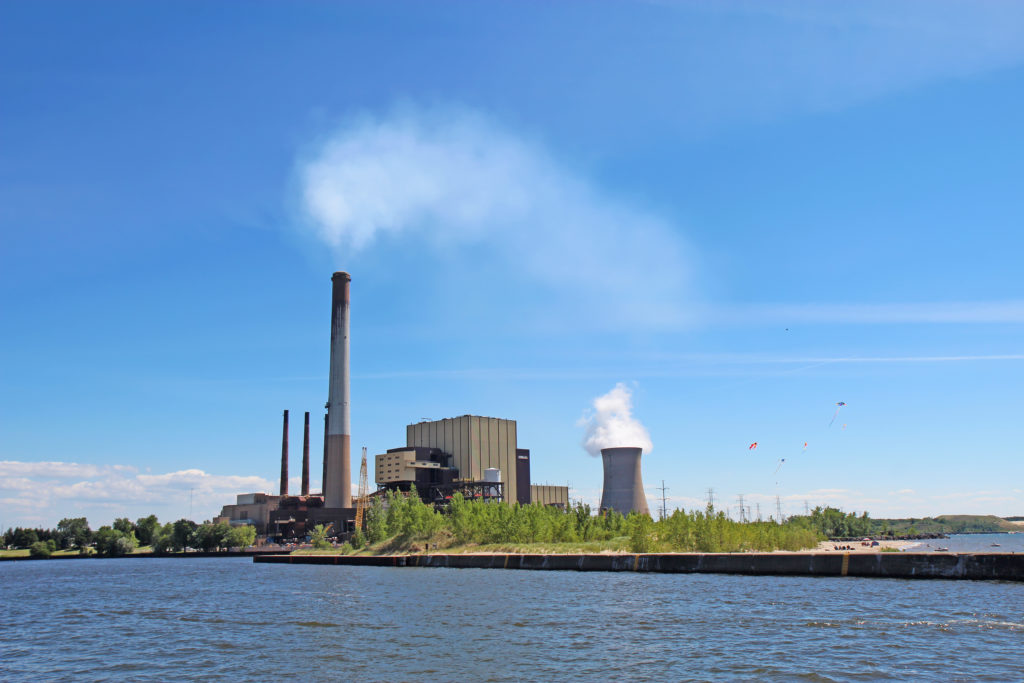
Coal- and gas-fired power plant on lake Michigan in Indiana. Stock image by sbgoodwin.

The Trump administration rejected a request from CenterPoint Energy to allow a 60-year-old coal plant in Indiana to close, forcing the utility to keep operating a unit it says is costly and unreliable.

The clash underscores a broader federal push to keep aging coal plants online that the administration says are needed to support the electric grid amid rising power demand, even as some utilities resist orders to extend the life of older units.

In a letter, CenterPoint said extending an order halting the plant’s planned December 2025 retirement would require millions of dollars in upgrades and lengthy outages “to support an inefficient and increasingly unreliable asset.”

“These factors make clear that extending the life of Unit 2 is neither practical nor financially responsible, underscoring the need for a more prudent and economically sound path forward,” the utility wrote. It added the plant accounts for less than 1% of total installed capacity in its regional grid.

The Feb. 17 letter asked the Energy Department not to renew its December order keeping the plant open. The agency extended that directive, along with another order for an Indiana coal unit owned by the Northern Indiana Public Service Company, through June 21 in March.

An Energy Department spokesperson said electricity from the plant was essential in powering the grid during extreme weather that occurred over the winter and that the agency’s emergency authorizations have prevented blackouts and “likely saved hundreds of lives during peak capacity events this past year.”

Energy Secretary Chris Wright has said the orders are needed to prevent costly blackouts and supply electricity for power-hungry AI data centers and US manufacturing.

“That’s how the lights stay on, that’s how factories and things get built,” Wright said Thursday in testimony before a House committee. “But there has been a political desire to put on intermittent unreliable sources onto our grid everywhere.”

The letter was provided Thursday by the Citizens Action Coalition, an Indianapolis-based advocacy group, that obtained it through a proceeding with the Indiana Utility Regulatory Commission.

“This letter shows that even utilities like CenterPoint admit that there is no grid emergency and that coal plants are too unreliable, expensive, and polluting to continue operating,” said Ben Inskeep, Citizens Action Coalition’s program director.

“The federal government’s unlawful orders directing utilities to keep dilapidated and unreliable coal plants open at a massive and growing cost to consumers is an outrageous abuse of power that will cause Americans’ energy bills to continue to increase.”

CenterPoint said it would comply with the Energy Department order.

(By Ari Natter)


US Senate narrowly overturns Minnesota mining ban, sending bill to Trump


Stock image.

The US Senate on Thursday narrowly voted to overturn former President Joe Biden’s mining ban in northern Minnesota, agreeing with the House of Representatives and sending the bill to President Donald Trump, who is expected to sign it.

The move reverses Biden’s 20-year block on mining across 225,504 minerals-rich acres (91,200 hectares) in the Superior National Forest and gives a major boost to Antofagasta’s Twin Metals copper, cobalt and nickel project, as well as other proposed mines in the region bordering Canada.


Environmentalists have long worried that the mine could damage the water-rich region, which is visited by more than 200,000 hikers and canoeists each year. Mining companies have said they believe minerals can be extracted safely.

The Senate voted 50-49 to send the measure to Trump, who campaigned in 2024 on overturning the ban. The House approved the bill in January.

Should Trump sign the bill, a future president could not replicate Biden’s ban because of a provision in the 1996 Congressional Review Act. The White House was not immediately available to comment.

Reuters first reported in January that Trump officials and legislators had launched a complex plan to reverse the ban using the novel claim that Biden had not properly informed Congress, a claim that conservationists have rejected.

Trump officials would still need to reissue mining leases to Chile-focused Antofagasta, which has been trying to develop the mine for decades on land controlled by the federal government. The mine would also need to undergo an environmental review and obtain permits.

Minerals demand clashes with conservation

Thursday’s vote is almost certain to escalate tension over where and how to procure minerals crucial for the electrified economy and national defense.

Copper, nickel and cobalt are used to build electric vehicles, AI data centers, weapons and myriad other devices, yet the US imports far more of these minerals than it produces.

Congressman Pete Stauber, a Republican who represents northern Minnesota and sponsored the legislation, said Trump had told him he plans to sign the bill and that the Congressional Review Act could potentially be used to boost other US mining projects.

“Yes, this might be precedent setting, but it’s the right thing to do to allow us to harvest our own natural resources,” Stauber told Reuters. “This will allow for other languishing projects to move forward.”


Save the Boundary Waters, a conservation group, called the vote “a dark day for America’s most beloved wilderness area” and vowed to fight the project.

“Minnesotans and the American public writ large have been loud and clear: this iconic place needs to be protected,” said Ingrid Lyons, the group’s executive director.

Earthjustice, The Wilderness Society, the Center for Western Priorities, Friends of the Boundary Water Wilderness and other conservation groups echoed their disapproval of the Senate’s vote, which was largely along party lines.

Antofagasta’s Twin Metals subsidiary said the bill’s passage reflects a “critical moment for our nation’s ability to strengthen our mineral supply chains.”

“The Twin Metals team looks forward to a robust discussion and engagement with our communities through any future regulatory processes,” said spokeswoman Kathy Graul.

Antofagasta has said it likely will export the mine’s critical minerals for processing overseas. The company’s stock fell 3% in London trading on Thursday.

(By Ernest Scheyder, Editing by Rosalba O’Brien and Aurora Ellis)

India-Zambia talks on critical minerals stall over mining rights


Lusaka, Zambia. Stock image.

India’s talks with Zambia over critical minerals mining have stalled amid a lack of assurances from Lusaka on mining rights, two sources familiar with the matter told Reuters.

India last year received an allocation of 9,000 square km (3,474.92 square miles) to explore cobalt — a key component in batteries for electric vehicles and mobile phones — as well as copper, widely used in power generation, electronics and construction.

India dispatched a team of geologists last year, who have since returned with samples of minerals, including cobalt and copper.

The exploration program in Zambia was set to run for three years, after which New Delhi had planned to invite private sector companies to participate, subject to securing mining rights.

It was not immediately clear why Zambia was withholding assurances for mining rights.

New Delhi is making efforts to restart discussions with Zambia, but the situation is still uncertain, one of the sources said.

They declined to be identified as the discussions are not public. India’s federal Ministry of Mines did not respond to a Reuters request for comment.

India has been in talks with several African countries to acquire critical mineral blocks on a government-to-government basis, while also exploring opportunities in Australia and Latin America.

The Indian government last year held internal discussions over the country’s growing vulnerability to a tightening global copper market and ways to secure supplies from resource-rich countries during ongoing trade negotiations.

India’s copper imports have risen sharply since the 2018 closure of Vedanta’s Sterlite copper smelter. The country imported 1.2 million metric tons of copper in the fiscal year ending March 2025, up 4% from the previous year.

India is almost entirely dependent on cobalt imports, with shipments of cobalt oxide rising 20% in 2024-25 to 693 metric tons, government data showed.

(By Neha Arora; Editing by Mayank Bhardwaj and Janane Venkatraman)

Environmental group sues US Interior for approving rare earth mining in Mojave Desert


The Mojave Preserve is one of the largest national park sites in the lower 48 states and provides habitat for bighorn sheep. Stock image.

An environmental advocacy group is suing the Department of the Interior (DOI) over its decision to greenlight a rare earth mining project located within the Mojave National Preserve a year ago.

The lawsuit, filed last week by environmental law firm Earthjustice on behalf of the National Parks Conservation Association (NPCA), relates to the Department’s approval last year of the Colosseum mine project being developed by Australia’s Dateline Resources (ASX: DTR).

In its filing, Earthjustice said that the National Park Service (NPS) — a bureau under the DOI managing national reserves like the Mojave — signed off on the project without a “valid plan of operations or the necessary permits and approvals.”

In approving mining activities, the NPS had broken “numerous federal laws,” the lawsuit said, noting that the agency had for years denied Dateline’s efforts to advance the project.

Potential mine near Mountain Pass

The Colosseum project, which sits within Mojave’s Clark Mountain region, was previously mined for gold and silver during the 1990s, but it is now also being explored for rare earth elements. Dateline, which acquired the project in 2021, identified the project’s rare earth potential after a review of historic government data and drew geological similarities to MP Materials’ (NYSE: MP) Mountain Pass — the only rare earth mine in the US, located just 10 km away.

In response to US President Donald Trump’s executive order to bolster America’s critical minerals supply chain, the Interior Department approved Dateline’s mining rights last April. The project subsequently received public backing from Interior Secretary Doug Burgum, who called the revival of the Colosseum project a “pivotal step” in the Trump administration’s efforts to build a secure supply of minerals such as rare earths.

While there is no current rare earth resource estimated for the project, Dateline had claimed there is potential for rare-earth-bearing ore within the project claim boundary.

Earlier this year, the Australian miner added a second project in California, where it highlighted its prospectivity for heavy rare earths.

‘Threat’ to Mojave Preserve

The attorney representing Earthjustice views the DOI’s approval of the project as “a blatant threat to the Mojave Preserve, setting a dangerous precedent that industrial mining interests can override decades of established park protections.”

“Laws and policies were put in place to protect national parks from destructive, speculative mining for a reason, and no administration is above the law when it ignores them,“ said Chance Wilcox, NPCA’s California Desert Program Manager.

Established by Congress in 1994, the Mojave is one of the largest national park sites in the lower 48 states. It provides habitat for bighorn sheep and is said to host the second-highest density of rare plants of any of the mountain ranges in California. Before the NPS, the Bureau of Land Management, also under the DOI, was the agency responsible for activity in the area and had approved mining in the 1980s.

In response to the legal proceedings against the DOI, Dateline said the activities at Colosseum will continue as planned, as the legal proceedings only target the aforementioned federal agencies.

Shares of Dateline Resources plunged over 9.5% at market close Friday on the legal uncertainty over its project, sending its market capitalization down to A$1.23 billion.