Wednesday, April 22, 2026

U$A

A Guide to Commenting on Rules Removing Public Oversight of Nuclear Reactor Safety


April 22, 2026

Public comments on two new NRC rules are due soon — May 4 and May 18, 2026. This is a quick guide on what these rules do and how to submit comments that carry legal weight, even if you have never done it before.

The Nuclear Regulatory Commission (NRC) is undergoing a radical restructuring that is happening so fast it’s hard for the public to keep up — but public participation has never been more important. Two rules published in April 2026 would permanently remove the public from the safety review process for new commercial nuclear reactors.

On April 2 the NRC published a proposed rule that would allow companies seeking commercial nuclear reactor licenses to substitute a secret Department of Energy (DOE) or Department of War (DOW) internal safety authorization for the NRC’s own independent safety review. Those DOE safety reviews are not just secret — they have been secretly rewritten.

Here is what that means in practice. A startup company with no commercial nuclear track record tests a small experimental nuclear reactor under a secret DOE safety review that the public never sees. It then walks into the NRC and uses that secret authorization to satisfy the commercial nuclear reactor safety requirement. Because the public had no access to the underlying safety study, it has no basis to challenge the license in court.

Valar Atomics is one such startup. Founded in 2023 and backed by defense AI giant Palantir, it was one of eleven companies selected by the DOE to race toward nuclear reactor criticality by July 4 under a program that bypasses NRC licensing entirely. Its nuclear reactor — a 100 kilowatt device the size of a shipping container — will be tested under a secret DOE safety review with no independent observer and no public verification of whether the test succeeds or fails. The July 4 deadline is a White House political target, not a safety milestone. Valar has already stated publicly what the April 2 rule means for its plans to expand from a test nuclear reactor to full commercial scale deployment: “We cannot achieve this necessary scale if every subsequent commercial application is forced to re-litigate foundational safety demonstrations that have already been validated by the Department of Energy or the Department of War.” Industry lawyers are already advising clients to use this kind of pilot nuclear reactor data to seek NRC approval for “10 to 20 units on a commercial AI campus.” The NRC would be directed to accept a secret safety review conducted on a nuclear reactor the size of a shipping container as the foundation for licensing nuclear reactors potentially 100 times larger, operating for 40 to 80 years, next to civilian communities.

On April 17 the NRC published companion Interim Staff Guidance (ISG) — a procedural document telling NRC staff how to implement the April 2 rule — which amounts to instructions to defer to the DOE and DOW with no independent judgment required. This is consistent with what recent investigations by ProPublica and E&E News have found: that the NRC no longer functions as an independent regulatory agency, with its draft rules now subject to White House review and the DOE directing major agency decisions. Over 400 NRC staff have departed since Trump took office. Under executive orders with a hard November 2026 deadline, the agency is being systematically redirected to serve the administration’s nuclear energy agenda.

Why Your Comment Matters — and How It Works

The NRC nuclear reactor licensing process normally has two separate parts — a safety review and an environmental review governed by the National Environmental Policy Act (NEPA). Both are required by law and the public — which includes individuals, community groups, environmental organizations, and indigenous nations — gets to comment on both. Those comments create the legal record necessary to challenge agency decisions in court. Without them there is no basis for a legal challenge. For an example of how the same pattern of secrecy is playing out in the environmental review process, see my recent article on the Paducah Laser Enrichment Facility.

NRC comment periods are typically 30 days or less — barely enough time for most people to learn a rule exists, let alone analyze it. But you do not have to be an expert to submit a comment. You can reference the technical arguments of others in your submission, which incorporates those arguments into the administrative record under your name and strengthens the legal foundation for any future court challenge. You can also copy and paste any part of this article, including the bullet lists below, directly into your comment.

By searching the NRC docket online I found detailed, fully cited technical comments submitted by Fred Schofer, a former NRC Regulatory Analysis Team Lead and Rulemaking Project Manager who spent 16 years at the agency before retiring in April 2024. His analysis is the most rigorous I have encountered in years of covering nuclear regulatory policy. He submitted detailed comments on the April 2 rule and followed with a 19-point formal comment on the ISG on April 19. At the time of publishing his ISG comment had not yet posted — search his name at the ISG docket and it will come up. Here are the highlights of both.

April 2 Rule — Docket NRC-2025-1503

+DOE and DOW are not regulatory agencies. The NRC was created in 1974 specifically to separate nuclear promotion from nuclear regulation because the Atomic Energy Commission had tried to do both and the conflict of interest proved irreconcilable. Neither DOE nor DOW has safety standards equivalent to the NRC’s independent framework.

+No objective acceptance criteria. Companies self-certify that a prior secret authorization satisfies NRC safety requirements with no defined standard for when it does.

+The safety basis cannot be scaled. The NRC’s own regulations define a prototype plant as one similar to a commercial design “in all features and size.” A nuclear reactor tested at small scale under a secret DOE authorization fails that definition for any commercial application and the April 2 rule never acknowledges this conflict. As Fred writes: “every application that references a materially differently-sized prior authorization contains an unresolved regulatory deficiency that an intervenor can contest at the licensing stage, and a petitioner can challenge directly in the courts of appeals within 60 days of final rule publication.”

+Multiple nuclear reactors on one site not addressed. The rule contains no requirement to analyze how multiple nuclear reactors interact through shared infrastructure and combined accident consequences — yet industry lawyers are already advising clients to seek approval for 10 to 20 units on one campus using a single prototype authorization.

+Classified military material could form the safety basis for a commercial license the public cannot examine or challenge in a hearing.

+The regulatory analysis is empty. The NRC admitted it could not quantify costs or benefits, violating its own guidelines.

April 17 ISG — Docket NRC-2026-0760

+All ten appendices instruct NRC staff to defer to DOE or DOW authorization “to the maximum extent practical” with no evidentiary threshold and no methodology for determining when secret information is sufficient.

+Part 53 — the new advanced nuclear reactor licensing framework that took effect April 29, 2026 and is the most likely licensing pathway for the companies this rule was designed for — is completely omitted from the guidance.

+No framework for AI-generated license applications. In March 2026 DOE demonstrated using artificial intelligence to convert a DOE safety document into a 208-page NRC license application in 24 hours. Neither the rule nor the ISG requires disclosure of AI use or any quality assurance for AI-generated content.

+Several pilot program nuclear reactors use high-assay low-enriched uranium TRISO fuel (HALEU TRISO) enriched up to 20% — four times higher than standard commercial nuclear reactor fuel. Fuel qualification data from a prototype-scale nuclear reactor does not automatically transfer to a larger commercial design and the ISG provides no guidance on this.

+One appendix contains a blank section where a required legal analysis should appear with a placeholder reading “discussion to be provided in final ISG.”

Fred’s conclusion: the ISG is “unfit for finalization.”

What To Submit — Copy, Paste, Done

Comments can be submitted online at regulations.gov. You can copy and paste any part of this article — including the bullet lists above — directly into your comment. The sample comments below reference Fred’s docket submissions, which formally incorporates his technical arguments into the administrative record under your name. You can add your own words or submit as written.

For the April 2 rule — deadline May 4, 2026

Submit online at: https://www.regulations.gov/docket/NRC-2025-1503

I oppose the proposed rule “NRC Reviews of Reactor Designs Previously Authorized by U.S. Department of Energy or Department of War,” Docket ID NRC-2025-1503. Independent NRC safety review is a non-delegable mandate under the Atomic Energy Act and cannot lawfully be replaced by secret DOE or DOW internal authorizations that the public cannot access or challenge. I incorporate by reference and adopt as my own the comments submitted to this docket by Fred Schofer, former NRC Regulatory Analysis Team Lead, which identify specific legal deficiencies including the absence of objective acceptance criteria, the unresolved conflict with the NRC’s own prototype definition, the failure to address prototype-to-commercial scaling, and the inadequate regulatory analysis. I request that this proposed rule be withdrawn.

For the April 17 ISG — deadline May 18, 2026

Submit online at: https://www.regulations.gov/docket/NRC-2026-0760

I oppose Interim Staff Guidance DANU-ISG-2026-XX, Docket ID NRC-2026-0760. Independent NRC safety review cannot be reduced to blanket deference to secret DOE or DOW authorizations. I incorporate by reference and adopt as my own the comments submitted to this docket by Fred Schofer, former NRC Regulatory Analysis Team Lead, which identify 19 formal deficiencies including the omission of Part 53, the absence of multi-unit risk assessment requirements, and the lack of any framework for AI-generated license application content. I request that this guidance be withdrawn and reissued after proper public notice-and-comment.

To read Fred Schofer’s comments in full: his April 2 comment is here. His ISG comment will be posted to the second docket shortly — search his name when you get there.

If you are already submitting comments, the Paducah Laser Enrichment Facility draft Environmental Impact Statement also has a public comment deadline of May 11, 2026. I have written about that proceeding and submitted my own comments. You can submit yours at https://www.regulations.gov/docket/NRC-2025-1007.
Dismissing China’s Repression in Xinjiang

 April 22, 2026

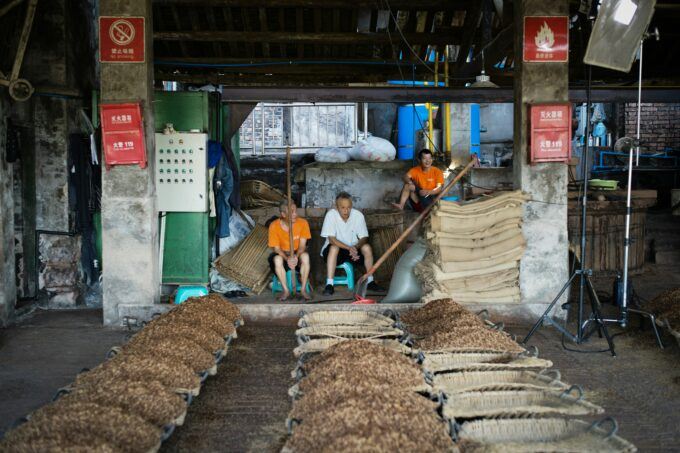
Image by Fenghua.

Vijay Prashad and Tings Chak’s article in Monthly Review, “The Idea of the ‘Uyghur Genocide’ and the Realities of Xinjiang,” is among the more substantial recent efforts on the international Left to defend China’s repressive policies in Xinjiang and dismiss the grievances of local Muslim peoples. Their article strikes a similar tone to the Chinese government sources that they often rely on, featuring the same questionable historical narratives and narrow focus on a few individual critics and their affiliations. By the end of the piece, I was noting signs of intellectual sloppiness. As I did my due diligence and dug into its sources, my suspicions were confirmed.

Prashad and Chak now edit the international edition of the journal Wenhua Zongheng 文化纵横. This has brought them into dialogue with Chinese intellectuals such as Wang Hui 汪晖, and it was unsurprising to see the article’s conclusion riffing off Wang’s critique of technocratic governance in the PRC. Wang was cited here for the view that “[g]enuine ethnic unity cannot be achieved through depoliticization, but must be built on recognition of history, diversity, and substantive equality.” I found this a well-meaning note to end on, even if the article itself had done little to advance these objectives.

But as has now been confirmed through an exchange with Prashad online, Wang did not write these lines. The “landmark essay” attributed to him was made up. It also emerged that the authors had invented a book by Wang Ke 王柯, a scholar of Xinjiang who works in Japan, and a Grayzone article by Max Blumenthal.

I’m unsure how much weight to give all this. Needless to say, I found it dismaying to find a left forum like Monthly Review infected by the same fake sourcing that I now must watch out for in the undergraduate essays I receive. Prashad says that there was no AI use involved in their article. Only he and his co-author know the truth of that. He has also said that the flaws in its referencing do not materially impact the substance of the article. Here we agree. Let us note this shortcoming and move on. Any debate should indeed focus on points of substance. On that, I’m afraid to say, my conclusion is that the article’s substance is as deficient as its referencing.

Misusing history

Take the authors’ sketch of Xinjiang’s history. Like every State Council White Paper, they repeat a version of the mantra that this territory has been part of China since ancient times. They claim that not only Xinjiang, but Tibet as well, were part of China during the Eastern Han dynasty (25–229 CE)—and also during the Tang (618–907), Yuan (1271–1368), Ming (1368–1644), and Qing (1644–1912) dynasties.

Before going on, I must pause to note how absurd it is for Prashad and Chak to drag us onto this terrain of debate at all. Since when has the Left considered the political status of a territory millennia in the past to have any bearing on the justice of its political configuration in the present? What business is it of today’s radicals to plumb dynastic chronicles to decide whether this or that piece of land rightfully “belongs” to a modern state? Prashad and Chak would not appreciate the comparison, but the similarity between this kind of argumentation and the logic of Zionism is striking.

Space precludes a full dissection of the specific claims. Briefly, though, the Han and Tang participated in multisided rivalries in the Tarim Basin, both establishing intermittent control there across a century or so—i.e., for less than half their existence. As for the “Yuan,” this was the Chinese name for the “Great Mongol Empire,” i.e., it was a Mongol, not a Chinese dynasty. In any case, the Toluid family ruling the Yuan were mostly kept out of Xinjiang by their Ögedeid and Chaghatayid cousins. The Ming then garrisoned Hami, on the very eastern edge of Xinjiang, for a century or so before the Islamised Chaghatayid Mongols drove them out. Finally, while maintaining that Xinjiang “belonged” to the Qing, the authors acknowledge that it was only after the destruction of the Junghar khanate (1634–1758) that this empire was able to tax it. The admission brings them close to recognizing the obvious reality: that the Qing dynasty’s mid-eighteenth-century incorporation of Xinjiang was an act of imperial conquest.

The difficulty for the authors is that the Chinese government line on Xinjiang has evolved in the last decade, in line with the heightened repression. The official position today is not that some dynasties had control of Xinjiang, but that they all did. The State Council report that Prashad and Chak cite says that Xinjiang became “Chinese territory” in the Han Dynasty and that all dynasties since “exercised the right of jurisdiction” there. This is where things get truly awkward for anyone interested in preserving their credibility as a historian, and Prashad and Chak decide to dodge the issue by shifting to questions of ideology. “Chinese political thought,” they argue, “is not rooted in fixed territory but in a more abstract idea of belonging.” All Chinese empires had documents that “suggested” their rule in Xinjiang, grounded in the civilizational notion of “all under Heaven”, i.e. Tianxia.

There is a term for a style of analysis that rests on a stark binary between Eastern and Western ways of thinking and doing. Edward Said once wrote a book about it. But the fact is, there is nothing particularly unique about the universalist pretensions exhibited by China’s dynasties. The Holy Roman Empire once claimed to rule all “Christendom,” even though its actual writ was far more limited.

What the imperial self-aggrandizing of the past might have to do with the rights and wrongs of policies in the present is again something the authors entirely fail to explain.

At this point Prashad and Chak add a final disclaimer: that the historical literature on Xinjiang is vast and “beyond our command to interpret.” Were they genuinely so perplexed, the appropriate thing to do would be to present various sides of the debate. But this they have studiously avoided doing. The only version of history they have presented is the distorted one preferred by Beijing. Their closing gesture towards the inscrutable Orient is a last-ditch effort to restore some distance between themselves and the obviously false claims they have rehashed.

We move from here to an equally common talking point in official publications: that the notion of “East Turkistan” was a foreign invention. I can assure the authors that well before any Russian influence, the notion that Xinjiang was part of “Turkistan” was commonplace. It is also true that modern nationalism came relatively late to Central Asia, and that when it did, local imaginings of nation and place were part of a trans-Eurasian dialogue, connecting to intellectual trends among Muslims and non-Muslims in Russia and the Ottoman Empire. There is nothing particularly unique in such a story. Entering the twentieth century, activists in or from Xinjiang laid claim to the territory using a mixture of old and new vocabulary: Uyghuristan, East Turkistan, Altishahr, occasionally even the archaic “Moghulistan.”

So what? Again, I am reminded of the way that Zionists try to discredit the Palestinian cause by claiming that “Palestine” was not a well-defined, or meaningful geographic unit for the inhabitants of the region at the time of Zionist colonization. Those facts are in dispute, but even assuming this was the case, what follows? Are people to be punished for arriving late to a fully elaborated nationalist program? Are we reinventing here the category of “non-historic” peoples, destined to be swept aside by those with more viable national movements?

The fact is, Prashad and Chak show no serious interest in the complex political history of the region they are discussing. They skip the entire history of Islamic reformism and Soviet-aligned Uyghur nationalism; there is no mention of Comintern strategies towards Xinjiang, which saw various schemes to extend the Russian revolution there; nothing on Uyghur labor organizing or cultural radicalism in Soviet Central Asia. Their “left” analysis sets all this aside to commence a narrative of “secession” movements at the time of the Sino-Soviet split, aligning with a trend in China today to reduce Uyghur nationalism to a tool of Russian/Soviet intrigue. They devote two long paragraphs to the relatively insignificant figure of Yusupbek Mukhlisi (1920–2004), with only a brief nod to the Second East Turkistan Republic as part of his life story. They inform us that Mukhlisi’s Kazakhstan-centered network claimed responsibility for attacks in China in the 1990s, neglecting to mention that not even the Chinese government took these claims seriously. Prashad and Chak’s narrative of more recent militancy likewise zooms in on individuals and organizations at the expense of any consideration of social conditions. No one denies that jihadists have emerged from discontented sections of Xinjiang’s populace, and that some of these have engaged in unconscionable attacks on ordinary Chinese civilians. But simply recycling official narratives on the scale and nature of these attacks adds little clarity to the discussion.

Counter-terrorism and repression

The authors’ master narrative of recent years is of a Communist Party gradually shifting from a counter-terrorism crackdown to recognizing the social and economic grievances that generated support for Uyghur militancy and addressing these through development schemes. There is a grain of truth here, and recent improvements in basic living standards in Xinjiang have indeed been impressive. But the party has long had grand designs for Xinjiang’s economy. The relevant policy shift between the first and second decades of the twenty-first century was not from counterterrorism to development, but from militarized counterterrorist policing to a far more wide-ranging “de-radicalization” paradigm. This involved a panoply of War on Terror techniques: predictive policing (on the basis of Islamophobic “indicators” of radicalization), surveillance of social media and domestic space, public loyalty ceremonies, and of course mass ideological re-education carried out through detention centers.

At the same time, a Stalinist purge hit Xinjiang’s institutions, targeting non-Han elites deemed insufficiently loyal. As one Chinese commentator described it in 2020: “Xinjiang has punished a large number of ‘two-faced people’ and ‘two-faced factions’ in the fields of public security, prosecution, law, education, publishing, propaganda and culture.” The Chinese government has itself publicized stories of Uyghur intellectuals imprisoned for publications that were once approved by state censors, but which now fall foul of tightening ideological standards. Alongside this, there is ample evidence of people receiving devastating sentences for acts as simple as providing religious instruction at home or maintaining contact with relatives outside China.

All this is grossly minimized by Prashad and Chak. In the only mention of formal incarceration in their entire article, they note in passing that “several people” were imprisoned from 2014 to 2019 for “violent activities.” “Several people”? Total prosecutions in Xinjiang soared during this period, jumping from 41,305 in 2016 to 215,823 in 2017, and increased in average length. China has not hidden the fact that thousands have been convicted for “terrorism” offenses—keeping in mind that a UN review of available judicial documentation described “judgments referring to conduct being ‘extremist’ despite none of the formal charges being related to terrorism or “extremism.’” This was seen as indicative “of an approach that considers any type of violation of law committed by a Muslim person as presumptively “extremist.’”

The authors would have us believe that stories of repression in Xinjiang originate in a narrow circle of U.S.-aligned diaspora activists. But some of the most chilling stories I have encountered—of family members ripped from their beds at night, eventually returning months or years later as broken individuals—have been from people who studiously avoid all involvement in diaspora politics. Against such narratives, the authors counterpose the glowing reports that China has received from bodies such as the Organization of Islamic Cooperation. I suppose if China’s State Council is a trustworthy source on human rights in Xinjiang, then why not Egyptian or Indonesian diplomats?

In the end, Prashad and Chak fall back on a form of whataboutism: Sure, the camps might have been coercive, but China’s counter-terrorism policies were still preferable to Russia’s in Chechnya, America’s in Iraq, or Israel’s in Palestine. This is true enough. China has not engaged in the mass slaughter of Uyghurs and Kazakhs. Gaza stands in ruins, while Xinjiang’s modern infrastructure grows. But the comparison strikes me as odd, given the earlier insistence that Xinjiang has been part of China for millennia. If so, why are imperialist wars and colonial genocides the points of reference here?

The question of “genocide”

Which brings me to the question: Is this genocide? This often sits at the center of debate on Xinjiang, but in my opinion it need not. When public discourse shifted to talk of “genocide” in Xinjiang, I was among those who were wary. The hope that accusing China of the crime of crimes might prompt international action was understandable, if misplaced. But it was equally obvious that the claim would serve as a lightning rod for skeptical critique, and risk obscuring the wider question of mass repression and cultural erasure. Some adopt capacious definitions of genocide that may arguably capture the Xinjiang case. Personally, I use the term in its common-language sense of the deliberate destruction of a people. While some have died in China’s camps and prisons, I am not convinced that “genocide” best describes the situation.

I can also concur with the authors that talk of genocide in Xinjiang has been cynically exploited by governments that have no business lecturing anyone on human rights, implicated as they are in their own horrific crimes. Liberal human rights organizations have often been too quick to make common cause with China hawks. The Left should have no truck with any of this.

But equally, the Left should not allow criticism of genocide claims to smuggle in an attitude of indifference to the human suffering that those claims point to—precisely what Prashad and Chak are trying to do. In their hands, talk of genocide is reduced to the work of a handful of individuals affiliated with right-wing think tanks, a move that allows them to focus on cultivating a sense that the entire Xinjiang issue is a construct of funding sources and self-interest. This will pass for “materialism” in some circles, but it is the sort of analysis that Gramsci had in mind when he complained of the reduction of Marxism to “economic superstition.” In such thinking, “‘Critical’ activity is reduced to the exposure of swindles, to creating scandals, and to prying into the pockets of public figures.”

Sadly, far too much of today’s China debate has this feel to it. Prashad and his co-thinkers are often enough on the receiving end themselves of critiques focusing on funding sources. It is a pity that instead of elevating the discussion above this level, they choose to descend to it.

Concluding

Aligning as they do with official Chinese government positions, Prashad and Chak’s argumentation draws more on the logic of nationalism than left traditions of debate on the national question. They are quite often wrong, but just as often they present talking points with little obvious relevance to determining where the Left should stand on  the situation in Xinjiang. Wang Hui’s critique of “depoliticization,” which the authors embrace in their conclusion, expresses a desire for more dialogue and debate to build trust among the peoples of Xinjiang. Well and good. But who do they imagine participating in this dialogue? Minzu University Professor Ilham Tohti once tried to initiate such an exchange, and is now serving a life sentence in prison for separatism. Any comment from the authors on that?

Marxists have always insisted that the only way to build trust amid national antagonisms is through the forthright defense of national rights—something that is entirely missing from Prashad and Chak’s lengthy presentation. In the absence of this, what is the import of a call for more “politicized” governance in Xinjiang? After all, Xinjiang has seen plenty of politics in the last decade: relentless ideological bullying, the constriction of non-Han languages and cultural expression, and life-destroying punishments for anyone who steps out of line. The full implications of China’s new Law on Promoting Ethnic Unity and Progress remain to be seen, but it looks likely to involve more of the same. Some may choose to keep downplaying all this in the name of anti-imperialism. I think the Left needs to tell the truth.

This piece first appeared on Tempest.

David Brophy is an Australian socialist scholar of Chinese and Uyghur history.