Sunday, September 28, 2025

Moldova’s pro-EU party wins pivotal election mired in claims of Russian meddling

Moldova's ruling PAS party pulled comfortably ahead of its Russian-leaning rivals in a high-stakes parliamentary election as final results trickled in on Monday, leaving the EU candidate country that borders Ukraine on a path towards European integration. The tense vote was marked by a string of incidents and overshadowed by accusations of Russian interference.


Issued on: 29/09/2025 - 00:28
By: FRANCE 24
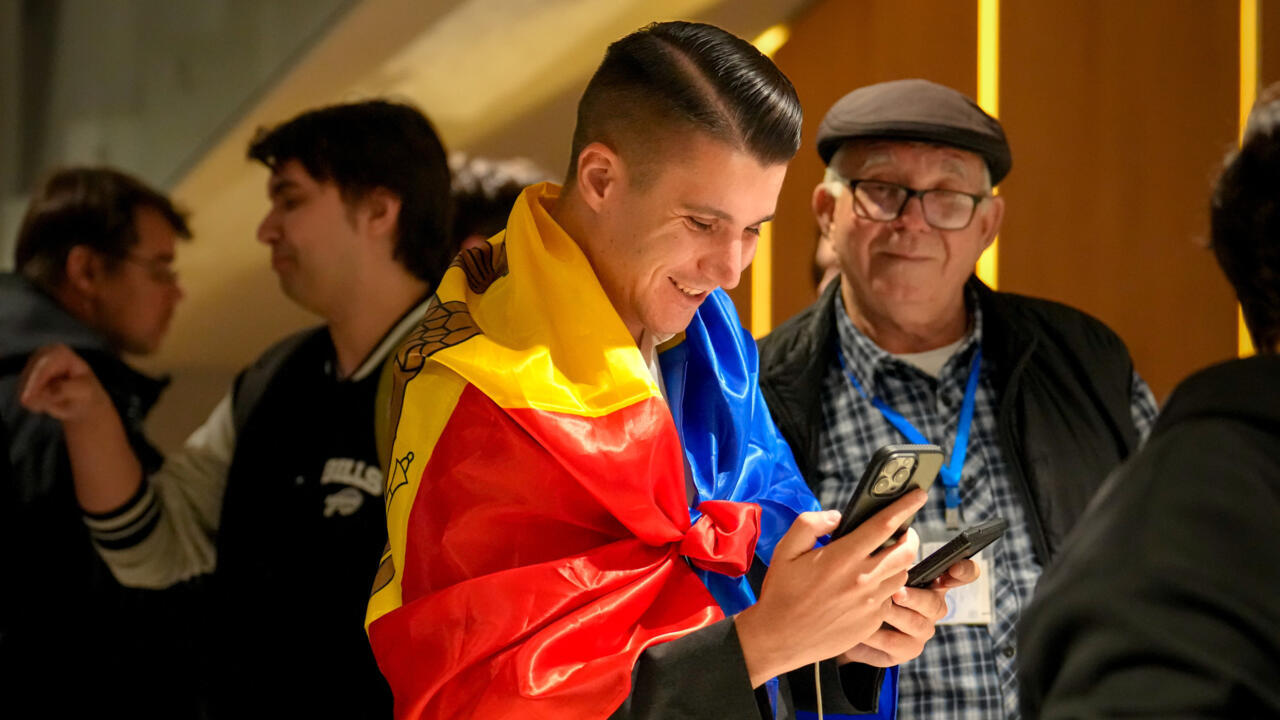

A supporter of the pro-EU Party of Action and Solidarity (PAS) draped in the Moldovan flag smiles as he checks partial results on a phone in Chisinau on September 28, 2025. © Vadim Ghirda, AP
05:06


Moldova's ruling pro-EU party on Sunday topped parliamentary elections, according to almost complete results for a vote overshadowed by accusations of Russian interference in the ex-Soviet country.

The small European Union candidate nation, which borders Ukraine and has a pro-Russia breakaway region, has long been divided over whether to move closer with Brussels or maintain Soviet-era relations with Moscow.

Sunday's elections were seen as crucial for the country to maintain its push towards EU integration, launched after Moscow's 2022 invasion of Ukraine.
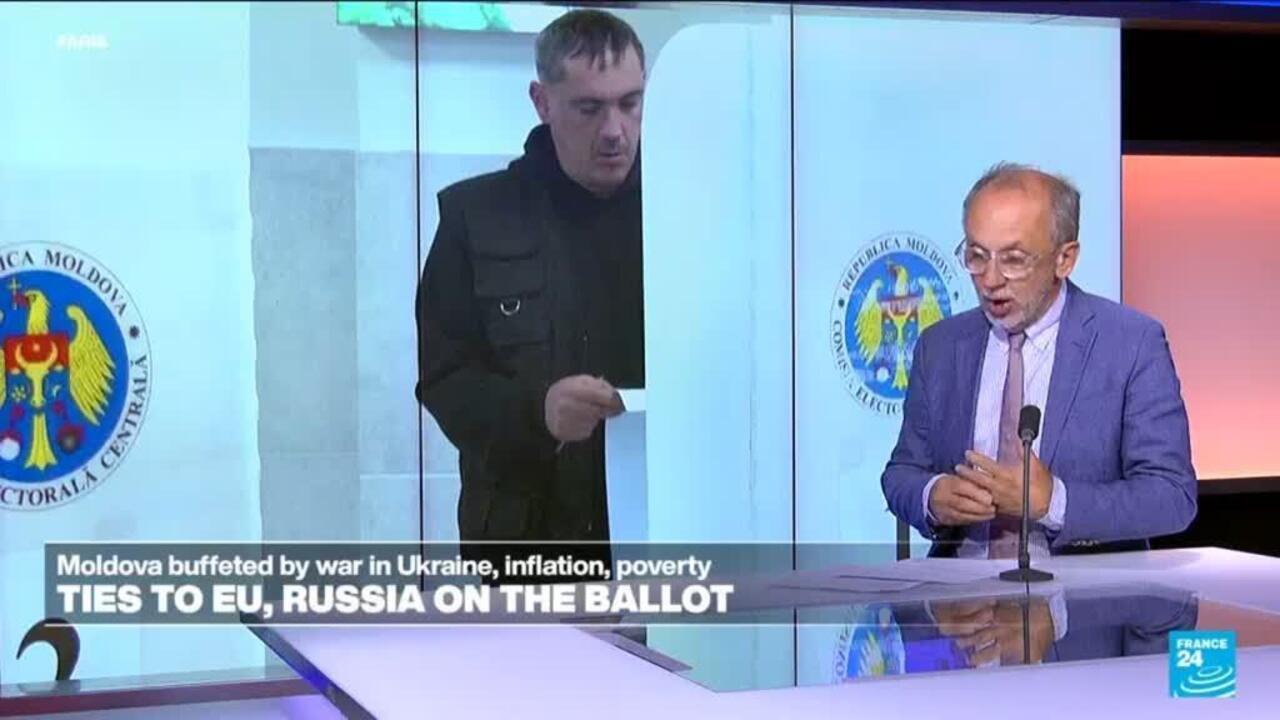
© France 24
02:46


With 95 percent of the votes counted early Monday, the Party of Action and Solidarity (PAS), in power since 2021, stood at 48.3 percent, well ahead of the runner-up pro-Russian Patriotic Bloc at 25.5 percent.

PAS – whose leaders did not address waiting reporters late Sunday – gained 52.8 percent in 2021.

"Statistically speaking PAS has guaranteed a fragile majority," analyst Andrei Curararu of the Chisinau-based think tank WatchDog.md told AFP.

But he warned that "the danger is not surpassed, as a functional government is difficult to form."

Curararu added: "The Kremlin has bankrolled too big of an operation to stand down and could resort to protests, bribing PAS MPs and other tactics to disrupt forming a stable pro-European government."
Call for protests

The ballot was overshadowed by fears of vote buying and unrest, as well as "an unprecedented campaign of disinformation" from Russia, according to the EU.

Moscow has denied the allegations.
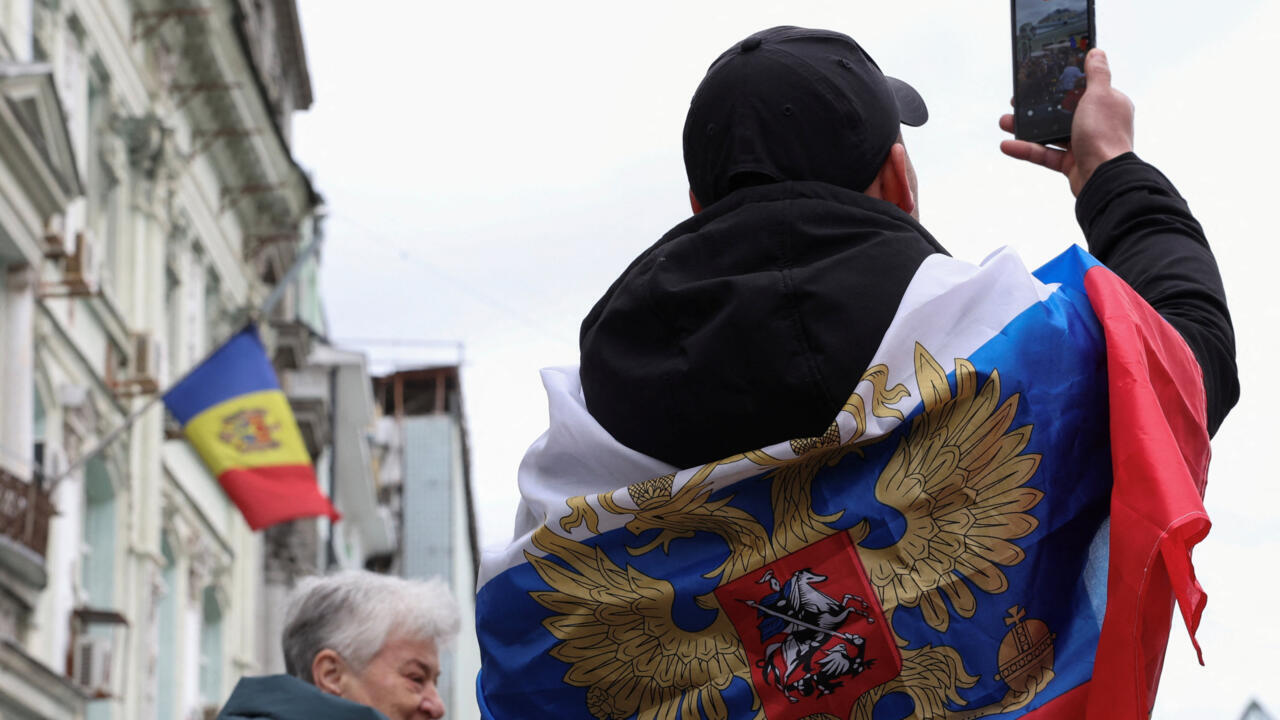
Moldovan citizens queue to vote in the parliamentary elections at the country's embassy in Moscow REUTERS - Ramil Sitdikov
16:58


Igor Dodon, a former president and one of the leaders of the Patriotic Bloc, called on people to "peacefully protest" on Monday, accusing PAS of stealing the vote.

"If during the night there are falsifications, tomorrow we won't recognise (the result of) the parliamentary elections... and we will ask for elections to be repeated," he said late Sunday outside the electoral commission, where he went with some supporters.

Earlier Sunday, voter Natalia Sandu said the election was critical becasue the nation was "at a crossroads".

"Our hope, and our expectation, is that we will stay on the European path," the 34-year-old homemaker told AFP.

"The alternative is unthinkable, I refuse to even imagine sliding back into the past," she added.


Turnout stood at around 52 percent, similar to that of the last parliamentary elections in 2021.

Voters in the country of 2.4 million – one of Europe's poorest – have expressed frustration over economic hardship, as well as scepticism over the drive to join the EU.

"I want higher wages and pensions.... I want things to continue as they were during the Russian times," Vasile, a 51-year-old locksmith and welder, who only gave his first name, told AFP at a polling station in Chisinau.

Some 20 political parties and independent candidates were running for the 101 parliamentary seats.

'Massive interference'

After casting her vote, pro-EU President Maia Sandu of PAS warned of a "massive interference of Russia".

Moldova's cybersecurity service said Sunday it had detected several attempted attacks on the electoral infrastructure, which were "neutralised in real time... without affecting the availability or integrity of electoral services".


Election day was marked by a string of incidents, ranging from bomb threats at multiple polling stations abroad to voters photographing their ballots and some being illegally transported to polling stations. Police also detained three people suspected of plotting to cause unrest after the vote

In the breakaway region of Transnistria, authorities, in turn, accused Chisinau of "numerous and blatant" attempts to limit the vote of Moldovans living in the separatist territory by reducing the number of polling stations and other tactics.

The government has accused the Kremlin of spending hundreds of millions in "dirty money" to interfere in the campaign.

In the lead-up to the vote, prosecutors carried out hundreds of searches related to what the government said was "electoral corruption" and "destabilisation attempts", with dozens arrested.

(FRANCE 24 with AP)

Divided by the Dniester: Transnistria casts a shadow over Moldova’s EU ambitions


The separatist region of Transnistria has long been the thorn in the side of Moldova's pursuit of European Union membership – a fact thrown into sharp relief as parliamentary elections loom.


Issued on: 26/09/2025 - RFI

A woman walks past the Operational Group of Russian Forces headquarters in Tiraspol, the capital of the breakaway region of Transnistria in Moldova, 1 November, 2021. AP - Dmitri Lovetsky

By: Jan van der Made


At the 28 September elections in Moldova, most people in the breakaway region of Transnistria won’t vote.

"There are no polling stations. They consider themselves independent,” says Nico Lamminparras, an expert in the politics of Transnistria based in Helsinki.

Transnistrians who want to vote can do so, if they cross the artificial border formed by the Dniester river into Moldova proper, where the government will open several polling stations.

The inhabitants of Transnistria are predominantly pro-Russian and "local authorities continue to promote an Eastern [pro-Russian] orientation," Lamminparras told RFI.

The region held its own referendum in 2006, opting to “go back home, to Russia,” he added – a move that underlined the enclave's metaphorical, if not geographical, distance from Moldova and the European Union.

Moldova will keep pro-EU course despite Russian threat, Popescu tells RFI

It is unclear how many Transnistrians will turn out to vote later this month.

According to Chisinau-based Regional Trend Analytics, a socio-economic watchdog, during last year's presidential elections and referendum some 30 polling stations were opened but only a few people turned up because of false reports of mines and blocking of bridges.
Soviet era

Transnistria has historically been multi-ethnic, its population shaped by waves of migration during the Soviet era, with substantial Russian and Ukrainian communities.

Joseph Stalin’s annexation of Bessarabia from Romania in 1940 merged it with Russian-speaking Transnistria to form the Moldovan Soviet Socialist Republic.

Following the Soviet collapse, as Moldova drifted towards nationalism and a potential union with Romania, people in Transnistria, wary of losing Russian cultural ties, declared independence in 1990.

Armed conflict, resulting in some 1,000 dead, broke out in 1992, with the 14th Guards Combined Arms Army branch of the Russian Army intervening to support the separatists.

The resulting ceasefire cemented Transnistria’s de facto independence, although this is not recognised internationally and a “frozen conflict” persists to this day.

Moldova President warns European Parliament about Russia threat


Location of Transnistria at the eastern border of Moldova. © Wikimedia Commons

Different model

Transnistria is not the only Moldovan region that wants to chart its own course.

Still under Moldovan control, southern Gagauzia offers a different model. The enclave is home to the Gagauz, a Turkic Orthodox Christian people.

It also declared independence in the early 1990s. But rather than secede, Gagauzia accepted autonomy within Moldova in 1995, obtaining constitutional guarantees and substantial cultural self-determination.

Russian remains the dominant language, and Gagauzia continues to harbour pro-Russian sentiments, occasionally threatening to secede if Moldova were to change its status of autonomy.

Yet unlike Transnistria, Gagauzia participates in Moldovan elections and retains economic links to the central government, making its autonomy more functional and less destabilising.

Macron pledges France's 'determined support' for Moldova joining EU


EU accession


The Transnistrian question casts a long shadow over Moldova’s EU accession process.

“The pro-Europeans will have a clear majority,” predicts Laminparras – albeit a declining one, meaning that "Moldovan policy will keep on as it is".

For Transnistria, he says, a possible Moldovan accession could prove disastrous.

"The EU process implies tariffs for the Transnistrian products passing the boundary,” which he added would deepen the economic gulf between the two banks of the Dniester.

Others, however, are more optimistic.

"It's clear that it's much better to join the European Union without a separatist conflict,” Nicu Popescu, Moldova's former deputy prime minister and foreign minister, who is running in the parliamentary elections on the list of the pro-European Action and Solidarity Party, told RFI. “The EU itself was founded on a divided state – West Germany."

According to Popescu, in the case of Moldova "the hope is that by joining the EU, reintegration of the country will in fact be made easier and more sustainable".

EU integration versus Russian influence: Moldova’s future on the line

Moldovans are heading to the polls on Sunday – in what is widely seen as the most important election since the country gained independence – facing a political crossroads with implications for its European future, regional security and domestic stability.


Issued on: 28/09/2025 - 
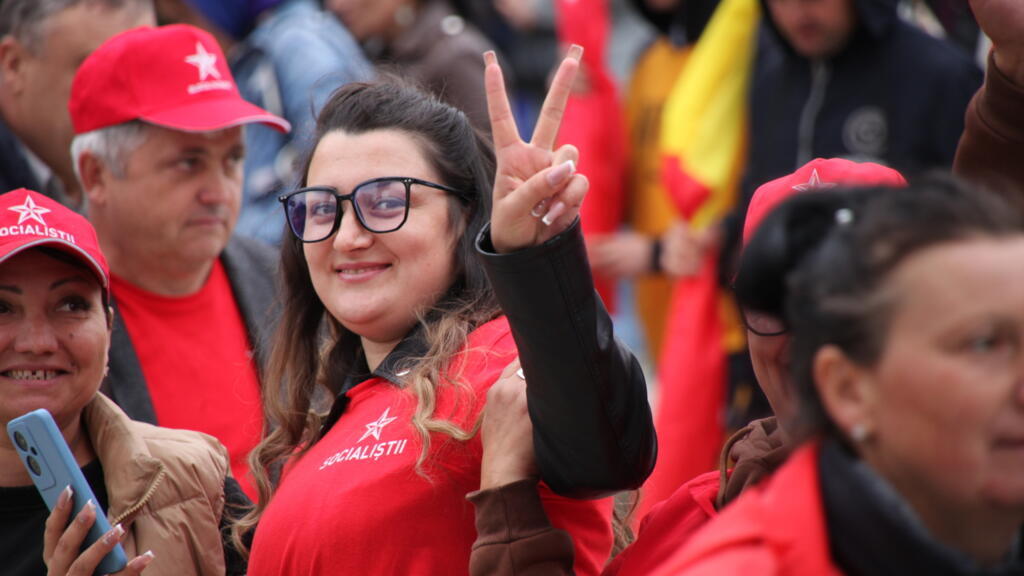
A demonstration of the Socialist-Communist block in Chisinau, Moldova, 25 September.
 © RFI/Jan van der Made

By:Jan van der MadeFollow
Advertising

At stake are all 101 seats in the unicameral parliament, which are elected via proportional representation.

The significance of Sunday's vote transcends national boundaries. Moldova’s next government will determine whether the country maintains its accelerated path toward European Union membership, or pivots back toward deeper ties with Moscow.

The election is set against a backdrop of Russia’s ongoing war in neighbouring Ukraine, and intense international interest in Moldova’s democratic resilience.

Russian disinformation and Moldova's media landscape

Who are the main contenders?


The pro-European Party of Action and Solidarity (PAS), led by President Maia Sandu, seeks to consolidate Moldova’s European trajectory. PAS entered this race as the incumbent majority, campaigning on promises of anti-corruption and EU integration.
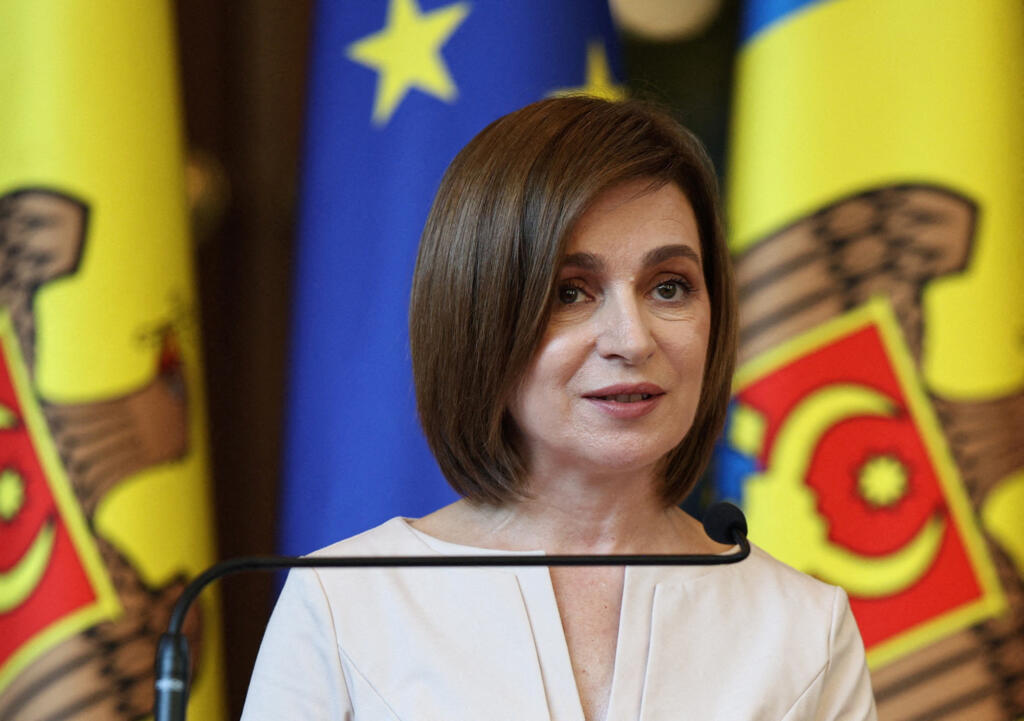
Maia Sandu speaks at the first Moldova-EU summit in Chisinau on 4 July. 
REUTERS - Vladislav Culiomza

Facing off against the PAS are two pro-Russian alliances – the Patriotic Electoral Bloc (BEP) and the Alternativa Bloc.

BEP consists of former presidents Igor Dodon and Vladimir Voronin. But in the period leading up to the elections, their forces were weakened after the Central Electoral Commission banned some of the participants.

On Friday the commission excluded the pro-Russian party Greater Moldova from the election citing suspected illegal financing and foreign funding. Authorities suspect the party tried to influence voters with money and may be linked to the previously banned party led by exiled businessman Ilan Shor.

Greater Moldova’s leader, Victoria Furtuna, described the decision as biased and intends to appeal.

Last week the commission banned another pro-Russian party, Heart of Moldova, part of the pro-Russian Patriotic bloc, from participating in the bloc, amid similar concerns.
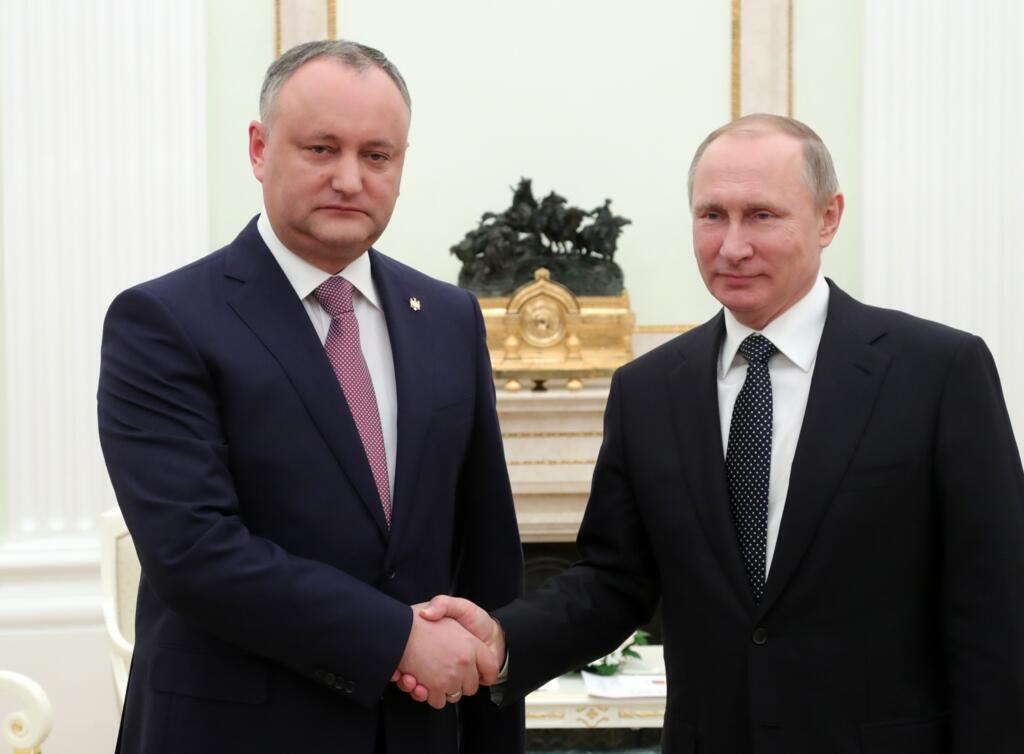
Vladimir Putin and then-Moldovan President Igor Dodon shake hands during a meeting at the Kremlin in March 2017. 
AP - Mikhail Klimentyev


The opposition forces advocate for Moldova’s neutrality and a sovereign course, warning that closer EU alignment would erode the country’s independence and social fabric.
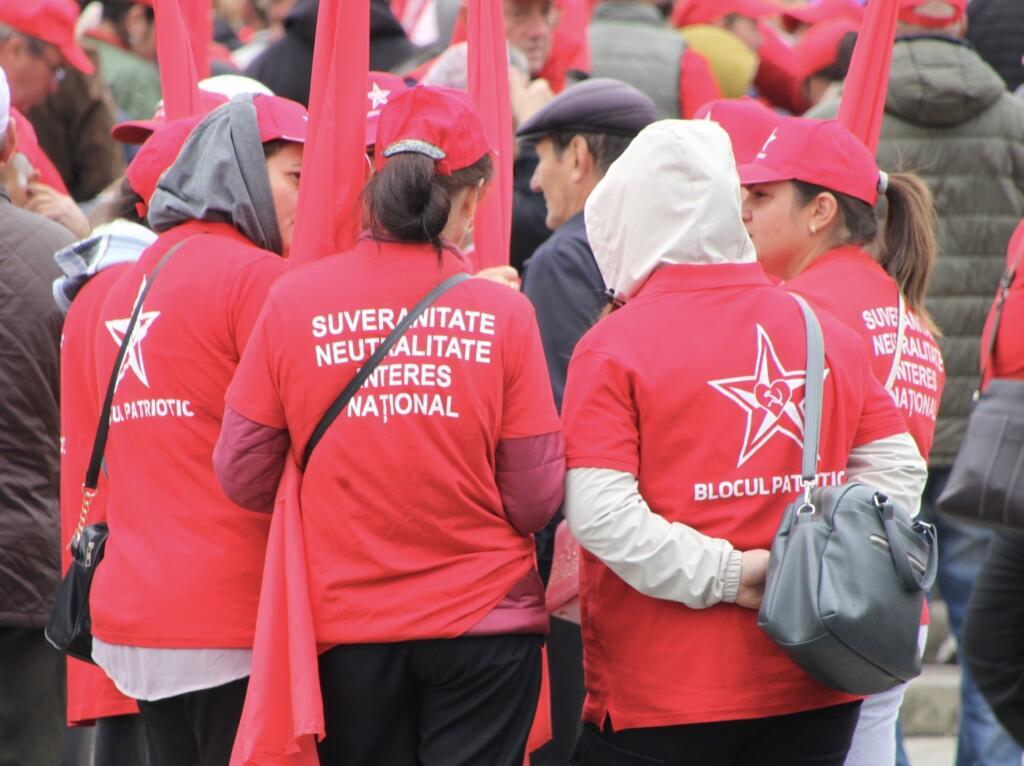

Demonstrators with the Socialist/Communist block in central Chisinau, two days before the general election, on 25 September, 2025. © RFI/Jan van der Made

The Alternativa Bloc, led by Chisinau mayor Ion Ceban, former Prosecutor General Alexandru Stoianoglo, former prime minister Ion Chicu and strategist Mark Tkaciuc, positions itself as a “neither West nor Russia” coalition.

Its pragmatism has drawn voters tired of ideological confrontation, although its image took a hit when Ceban was denied entry to Romania in July over security concerns – a ban which extends to the entire Schengen visa-free travel area, Romania's foreign ministry said.
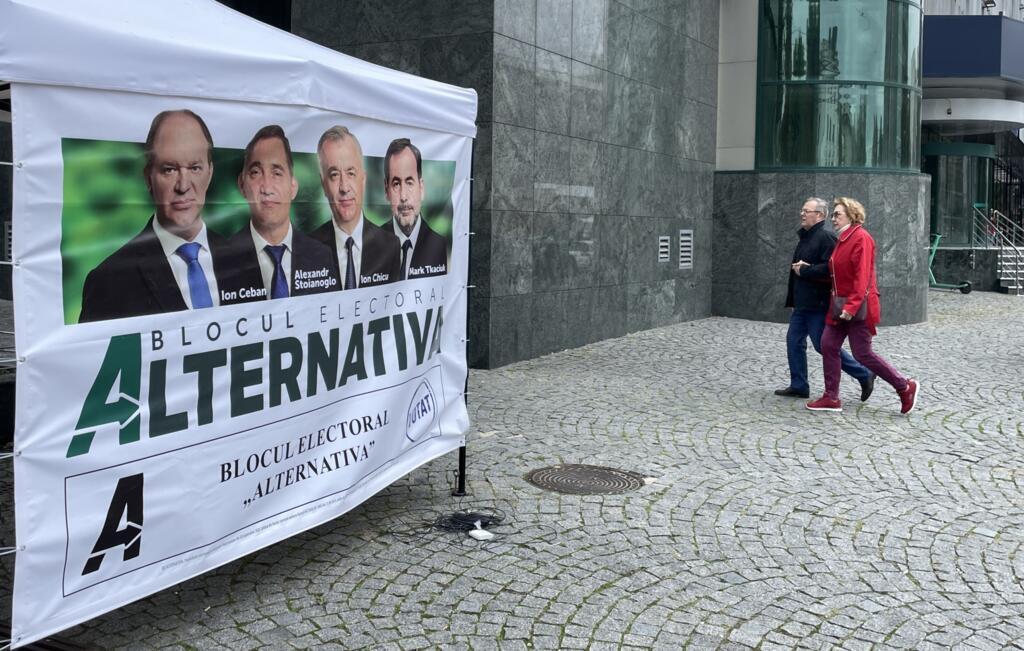
A couple passes an election poster for the 'Alternative' block, 25 September. 
© RFI/Jan van der Made

Russian influence


Moscow’s campaign to prevent a pro-EU majority has been well documented, and multi-faceted.

Intelligence leaks and investigative reports such as those by the Bulgaria-based Disinformation observatory, reveal strategies ranging from funding pro-Russian parties, deploying social media disinformation, orchestrating protests and targeting the Moldovan diaspora with false narratives and cash inducements.

Last week, Moldovan authorities detained 74 individuals accused of involvement in a Moscow-driven plot to destabilise the elections.

French support, Russian meddling and the fight for Europe’s frontier in Moldova

For the EU, Moldova’s election is a litmus test for the bloc's ability to withstand Moscow’s interference campaigns, and anchor reform and stability at its eastern border.

Brussels and several member state leaders have demonstrated support for Moldova’s sovereignty, with Emmanuel Macron, Friedrich Merz and Donald Tusk paying recent visits.

The EU has imposed targeted sanctions on individuals and groups suspected of fuelling Russian interference, while stepping up assistance for media pluralism, electoral transparency and civil society organisations.
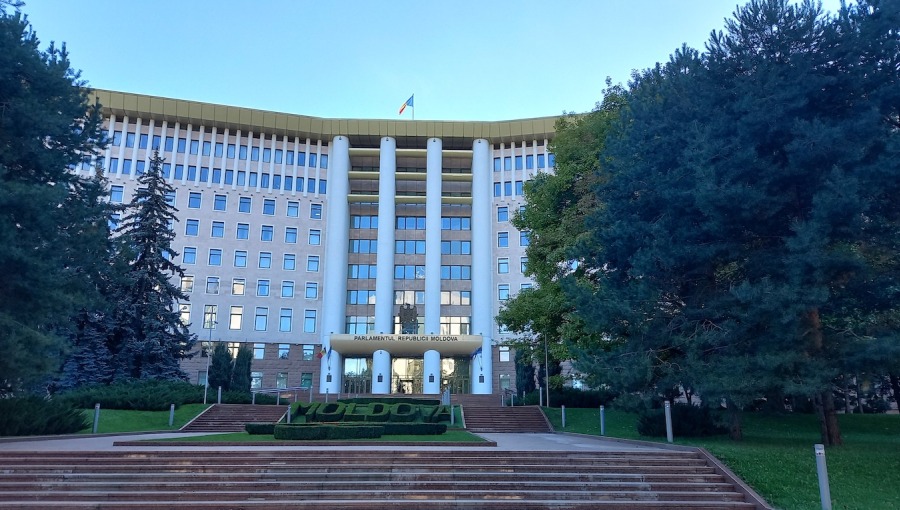
BALKAN BLOG: The battle for Moldova

BALKAN BLOG: The battle for Moldova
/ bne IntelliNews
By Iulian Ernst in Bucharest September 28, 2025

After Moldova was nearly derailed from its EU accession path in last year’s presidential election, the authorities have taken controversial steps to prevent this happening again ahead of the September 28 general election. 

In recent months, the Moldovan authorities have unveiled illegal financing schemes to support pro-Russian parties, and criminal organisations channelling money to buy votes and organise anti-government protests. They also exposed sophisticated online campaigns involving bot farms and influencers linked to Russia. The authorities in Chisinau responded actively, including with strategies that would, under normal circumstances, be considered on the verge of unconstitutional. 

This began with the dissolution of the Șor Party led by fugitive oligarch Ilan Shor in June 2023 on grounds that were seen as flimsy at the time. Now, Shor’s role in the country’s elections is better documented. Sentenced in Moldova to 15 years of prison for financial fraud, he is openly organising and financing the pro-Russian opposition in Moldova, while also helping Russian authorities to bypass Western sanctions through cryptocurrency arrangements, as announced by the US Department of the Treasury’s Office of Foreign Assets Control (OFAC) earlier this year.

On September 26, two opposition parties, including Inima Moldovei (Heart of Moldova) led by former governor of Gagauzia Irina Vlah, one of the three parties in the main opposition coalition, were banned from running in the election just two days before the vote.

Like former president Igor Dodon, Vlah has regularly met Russian President Vladimir Putin and argued for equal collaboration with both the EU and Russia. Her party had not yet been found guilty of illegal financing activities. However, the Central Electoral Commission (CEC) decided to suspend the party’s activity for 12 months on “reasonable suspicions” of illegal financing, at the request of the Ministry of Justice. The decision can be appealed, but its effects were enforced before the appeal, starting with the September 28 election.

The new party led by former prosecutor Victoria Furtună was also suspended for 12 months, allegedly for connections with Shor.

In another controversial previous move, the Moldovan authorities restricted the civil rights of opposition leaders, including Vlah, primarily by freezing their bank accounts. These measures were based not on court rulings but on sanctions imposed by Western countries for “active support of Russia”. The Constitutional Court allowed the intelligence services to impose such civil rights restrictions based solely on political sanctions set by foreign states.

Also on September 26, the CEC decided to relocate five voting stations initially designated for voters in Transnistria. Originally announced to be located within the separatist region, the stations were moved to territory controlled by the constitutional authorities only two days before the ballot.

Opposition parties claimed that construction works on bridges across the Dniester River, separating the two sides of the country, had been initiated by the authorities deliberately before the elections in order to prevent pro-Russian voters from reaching polling stations.

On election day, the authorities reported the organised transport of Transnistrians to polling stations across the Dniester as a breach of electoral procedures.

This year, the number of voting stations in Russia, home to a significant part of the Moldovan diaspora, has been severely restricted. Moldovans in areas far from Moscow were transported to Belarus to vote in Minsk, reportedly organised by Șor. Moldovan authorities also reported this operation as a violation of electoral regulations.

In another unusual move, President Maia Sandu became actively involved in supporting the Party of Action and Solidarity (PAS), which she founded, despite constitutional provisions.

With strong support from EU institutions, she campaigned for the country’s EU accession while criticising other pro-EU parties as covert Russian vehicles. A side effect of this strategy was the lack of political allies for the PAS, which will have to secure the majority of votes in order to remain in office. The authorities’ limited engagement with the Russian-speaking population during the EU accession process was evident and created space for pro-Russian propaganda.

Not only President Sandu, but also the public administration, has engaged in supporting the pro-EU parties.

In its first monitoring report on the September 28 parliamentary election, civil society organisation Promo-LEX stated that abuse of administrative resources is a “systemic phenomenon”, tolerated and still practised despite the existing legal framework.

“Without real sanctions, legislative clarifications, and a genuine delimitation between party and state, this type of abuse risks becoming normal,” warned Promo-LEX experts.

Conditions in Moldova have been far from normal since Russia invaded Ukraine, and especially in recent weeks.

This follows a turbulent period in Moldovan politics since Russia annexed Crimea in 2014. Shortly afterwards, it was revealed that pro-EU politicians were involved in the $1bn bank fraud scandal that bankrupted the country’s three largest banks, adding some 8% of GDP to public debt and complicating EU accession efforts.

The parliamentary election of November-December 2023 and the presidential election and EU accession referendum in September 2024 marked a gradual increase in activity by pro-Russian politicians operating in coordination with the Kremlin.

The pro-EU authorities in office since 2021, headed by Sandu, have been caught between economic pressures generated by the war in Ukraine and Russia’s energy leverage on one hand, and resistance to reform from the judiciary on the other. The latter has prevented firm prosecution of corruption, including what Sandu has described as electoral corruption.

Moldova’s proactive response must be viewed in the context of the hybrid war waged by Russia in cooperation with a significant part of the local population. Court rulings should be based on the evidence available at the time, but the complexity of digital tools poses serious challenges in addressing electoral criminality.

The elections in Moldova, carried out under hybrid attacks from the Russian Federation, illustrate the need for a revised set of best electoral practices in light of new financial, media and communication instruments. Ballot reruns, as seen in Romania, or reactive policies may provide short-term fixes, but they remain debatable and insufficient for ensuring genuine elections in which the rights of all candidates are respected.

Telegram owner Durov says French, Moldovan governments asked him to block anti-government accounts ahead of elections

Telegram owner Durov says French, Moldovan governments asked him to block anti-government accounts ahead of elections
Tech billionaire Pavel Durov says the French intelligence services and Moldovan asked him to block anti-govrenment channels ahead of this weekend's elections in a politically motivated attempt to manipulate social media. / bne IntelliNews
By Ben Aris in Berlin September 28, 2025

The owner of the Telegram messaging service Pavel Durov said that the French intelligence approached him earlier this year and asked him to block anti-government channels in the run up to this weekend's elections on two occasions in a post on Telegram on September 27.

“About a year ago, while I was stuck in Paris, the French intelligence services reached out to me through an intermediary, asking me to help the Moldovan government censor certain Telegram channels ahead of the presidential elections in Moldova,” Durov said.
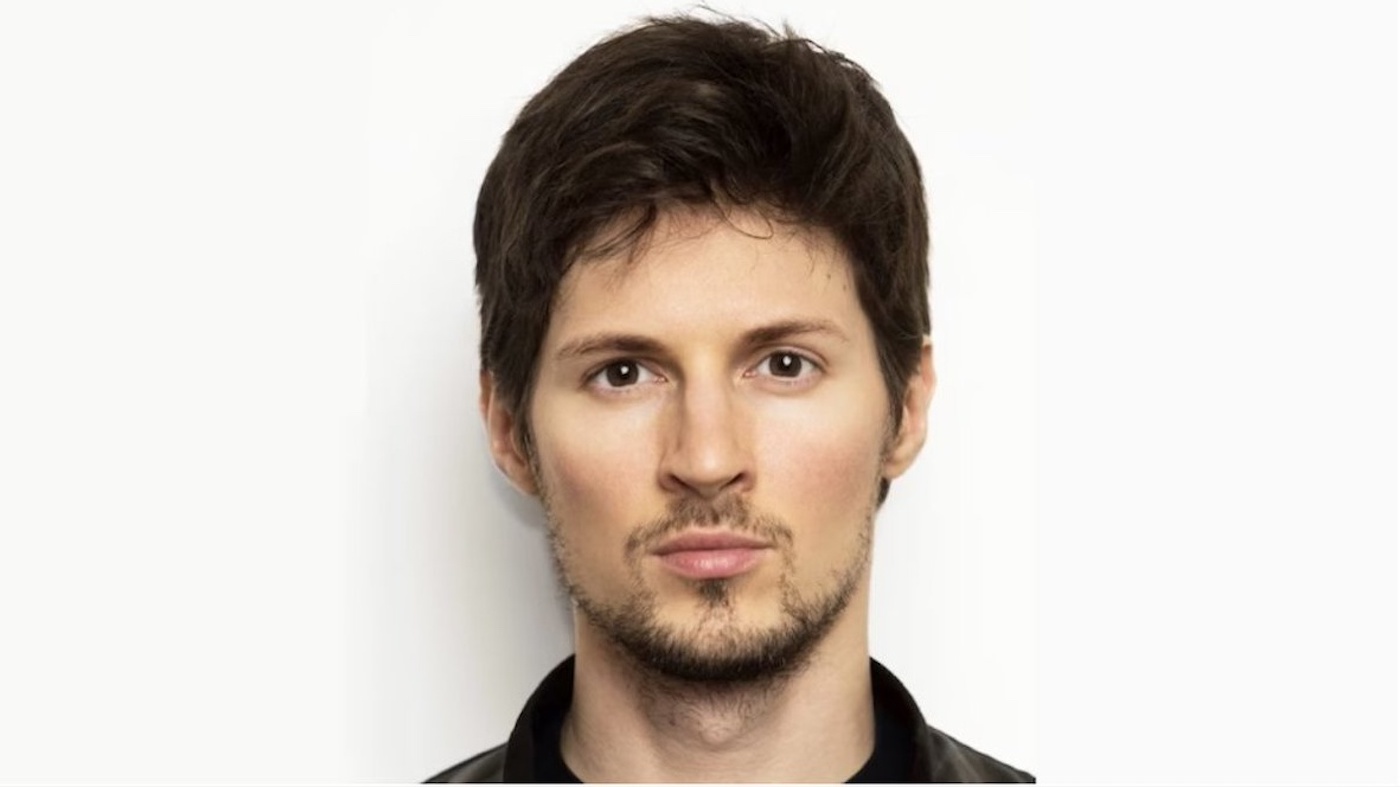
Tech billionaire Elon Musk reposted the message with the brief comment: “Wow.”

The founder of Telegram encrypted messenger service now lives in self-imposed exile and was arrested in August last year as he got off his private jet in France.

Durov holds a dual French citizenship since 2021 was held for several days on child pornography and other cybersecurity charges by the French authorities. The officials said that Durov has failed to monitor his service which is widely used by criminals to conduct business including selling illicit pornography, although the charges were later dropped.

“After reviewing the channels flagged by French (and Moldovan) authorities, we identified a few that clearly violated our rules and removed them. The intermediary then informed me that, in exchange for this cooperation, French intelligence would “say good things” about me to the judge who had ordered my arrest in August last year,” Durov said in his post.

“This was unacceptable on several levels. If the agency did in fact approach the judge — it constituted an attempt to interfere in the judicial process. If it did not, and merely claimed to have done so, then it was exploiting my legal situation in France to influence political developments in Eastern Europe — a pattern we have also observed in Romania,” Durov added.

Telegram is one of the favourite messaging services and has played a key role in Belarus’ mass anti-government protests in 2020 and has been a thorn in the side of the Russian authorities, who tried to ban th service in 2008, but failed.

This weekend's elections are proving controversial and have led to accusations of an attempt to manipulate the outcome for the pro-Europe Sandu). The authorities banned two of the main opposition parties only 48 hours before the vote. Voting in the breakaway Moldovan region of Transnistria, which is under Russian occupation, has been cancelled. No polling stations have been provided for Moldovans living in Russia, according to reports, while extra stations for Moldovans living in the EU have been provided.

Durov said he was approached a second time by the French intelligence service with a more explicit politically motivated request to close down anti-government channels, which he refused to do.

“Shortly thereafter, the Telegram team received a second list of so-called “problematic” Moldovan channels. Unlike the first, nearly all of these channels were legitimate and fully compliant with our rules. Their only commonality was that they voiced political positions disliked by the French and Moldovan governments,” Durov wrote. “We refused to act on this request.”

Durov has taken a radical non-interference stance and says that it will not censor the content on its service and flatly refuses to cooperate with governments. However, after his arrest in France, investigations have found that he has on occasion cooperated with the Federal Security Service (FSB), the Russian security service.

“Telegram is committed to freedom of speech and will not remove content for political reasons. I will continue to expose every attempt to pressure Telegram into censoring our platform. Stay tuned,” Durov posted.

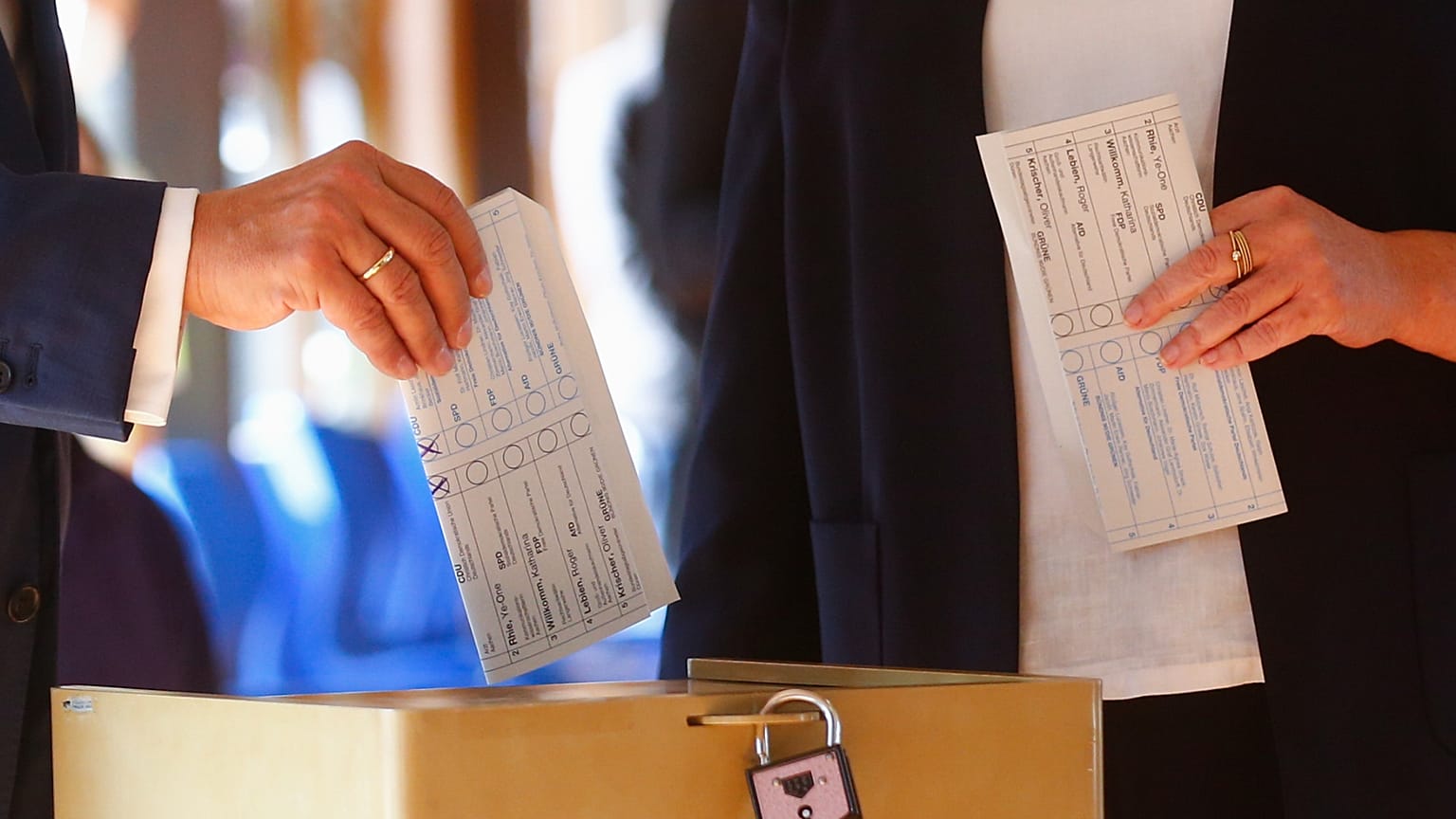
 

CDU wins big in Germany's local elections as AfD fails to secure any cities

Local elections in NRW: Counting underway
Copyright AP Photo


By Euronews
Updated 

After Germany's local elections, the CDU made significant gains, winning in Dortmund, Leverkusen and Bielefeld. Despite setbacks, the SPD celebrated victories in Cologne and other cities.

The centre-right CDU party won mayoralties across North Rhine-Westphalia on Sunday, including Dortmund's first non-Social Democrat mayor since 1946, while the far-right AfD failed to capture any cities despite reaching runoffs in three municipalities.

CDU candidate Alexander Khalouti defeated the centre-left SPD in Dortmund, ending the Social Democrats' 78-year control of Germany's largest working-class city.

The Christian Democrats also scored victories in Leverkusen and Bielefeld.

"That hurts," SPD state chairwoman Sarah Philipp said after the Dortmund loss.

The Social Democrats retained Cologne, where Torsten Burmeister defeated Green candidate Berivan Aymaz, and held Oberhausen, Gelsenkirchen, Wuppertal and Mülheim an der Ruhr, while the Greens won Münster from the CDU.

AfD candidates lost in Duisburg, Gelsenkirchen and Hagen, reaching second rounds for the first time in the state's history yet losing by large margins to opponents from CDU and SPD.

The results from nearly 150 districts and cities showed CDU's strength in rural areas while the SPD maintained control of industrial centres. Düsseldorf remained CDU-controlled and Bochum stayed with the SPD.

The elections serve as a bellwether ahead of federal voting, with mainstream parties containing far-right advances while competing for control of urban areas.

 "Security is gone, Pax Americana is dead,"

'Europe First': Berlin turns to European defence industry, reducing US dependence

For decades, Germany relied on the US for its security policy. But that era is over, experts tell Euronews


Copyright Evan Vucci/Copyright 2025 The AP. All rights reserved

By Johanna Urbancik & Sonja Issel
 29/09/2025 -
Euronews


Germany plans to spend up to €83 billion on European-made weapons and reduce dependence on US defence systems as Chancellor Friedrich Merz pushes to build Europe's "strongest conventional armed force" amid doubts about Washington's reliability under Donald Trump.

According to reports, the German government plans 154 major defence procurements between September 2025 and December 2026, with only 8% from US suppliers compared to the previously heavy reliance on US systems.

The shift follows US President Trump's demands that NATO partners increase their defence spending to 5% of GDP, while purchasing more US weapons, prompting Berlin to pursue a "Buy European" strategy.

Europe's dependence on American defence equipment has increased significantly in recent years. According to the Stockholm-based peace research institute SIPRI, arms imports from the US to Europe - including Ukraine - more than tripled between 2020 and 2024 compared to the previous five years.

For the first time in two decades, the largest share of US arms exports went to Europe, rising from 13% (2015-2019) to 35% (2020-2024). Overall, the European NATO states doubled their arms imports during this period, with two-thirds coming from the US.

Germany recorded a particularly drastic increase: arms imports rose by 334%, around 70% of which came from the US.

The US also continued to expand its leading role globally. Its exports increased by 21% between the two five-year periods, and its share of the global arms trade grew from 35% to 43%.

Now Berlin wants to take a new course, in line with the "Buy European" motto.

What about the US-made 'kill switch'?

According to US expert and author Dr Josef Braml, this move should not be seen as a mistake of confusing cause and effect.

"The cause was that Trump made it clear that America can no longer be relied on," Braml told Euronews. Now that this has become clear, "it no longer makes sense to pay tribute for protection that we no longer get," he added.

According to Braml, this "tribute" was paid by buying US weapons that made Germany and other European countries dependent on US systems.

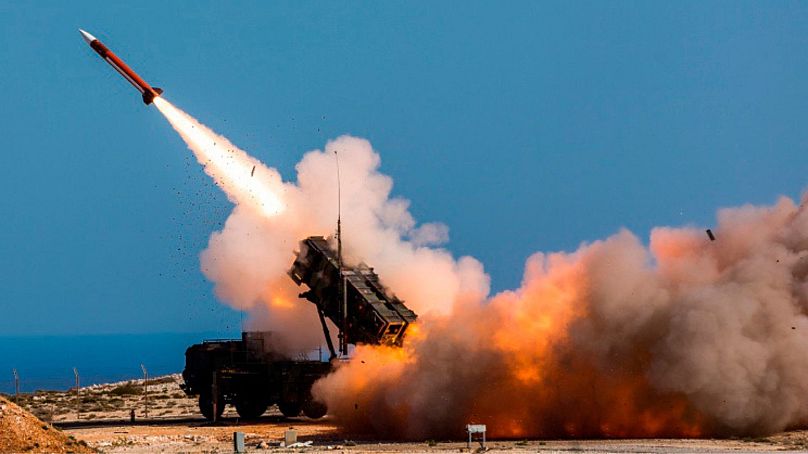
These include the Patriot defence system, of which Germany currently still has six. The system is considered one of the most modern and powerful air defence systems in the world.

According to US domestic media outlets, the US government has temporarily halted the export of these systems as the Pentagon considers them to be in short supply and wants to reserve them primarily for its own use.

German soldiers fire the Patriot weapon system at the NATO missile launch facility in Chania, Greece
 Sebastian Apel/U.S. Department of Defense, via AP

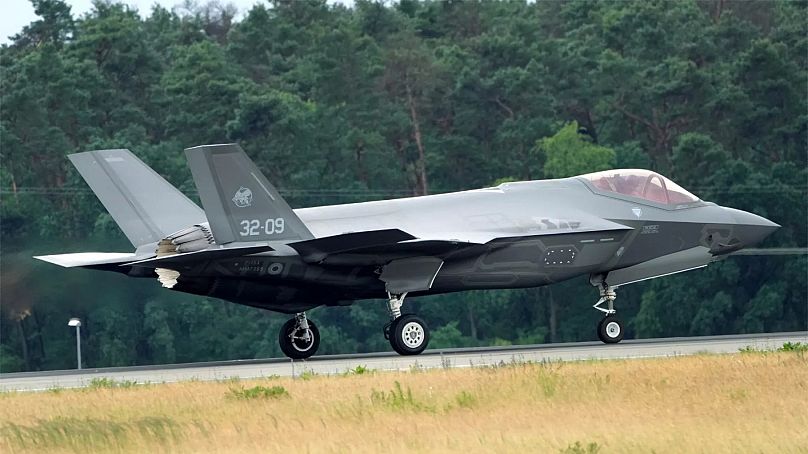
However, there is still no European solution for some weapon systems. This includes the F-35 fighter jet, for example.

Christophe Gomart, a former head of French military intelligence and current MEP for the European People's Party, put forward the theory of a so-called "kill switch" this year.

According to Gomart, the US would install a blocking system in the jets that could be activated if the Pentagon does not approve the flight plan.
RelatedCan the US turn off European weapons? Experts weigh in on 'kill switch' fears

However, the existence of the "kill switch" could not be confirmed, as there is "no way to simply switch off the F-35 remotely", a spokesperson for the German Ministry of Defence told public broadcaster ARD's flagship news programme Tagesschau.

A Lockheed Martin F-35 Lightning II aircraft of the Italian Air Force in Schönefeld 
AP Photo/Michael Sohn

The German government is thus maintaining its order for the jets. "The F-35 is a fifth-generation fighter aircraft that does not yet exist in Europe," a spokeswoman for the Federal Office of Bundeswehr Equipment, Information Technology and In-Service Support (BAAINBw) told Euronews.

"Thanks to its stealth technology, it is almost impossible to recognise. If the armed forces make such demands of us, we can only buy from the US," she said.

'Sovereignty also means that you can protect yourself'

Pieter Wezeman, researcher at the Stockholm Peace Research Institute SIPRI and co-author of the study on the latest figures for European arms imports from the US, emphasises, however, that Europe is already taking countermeasures.

"The NATO states in Europe have taken steps to reduce their dependence on imports and strengthen their own arms industries. But the transatlantic relationship in the defence business has deep roots," Wezeman said.

The Marshall Plan and NATO laid the foundations for security and economic relations between Germany and the US after World War II. Since Trump took office, the German government has endeavoured to maintain bilateral relations. Nevertheless, the German course is running counter to the US president's expectations.

Trump started his second term in office with the promise of "America First". This series of political measures aims to make foreign and domestic policy decisions that prioritise the interests of the US over those of all other nations.

As recently as February, Trump called on NATO partners to increase their defence spending to 5% and procure US weapons. In his budget, the so-called "One Big Beautiful Bill", Trump has earmarked around $150 billion in mandatory funding for the Department of Defence as part of his "Peace through Strength" agenda.


According to Braml, the US can rely on its own defence industry, especially when it comes to spare parts or software for individual systems. "Sovereignty also means that you can protect yourself," he said.

If this is not the case, Braml believes that we are making ourselves vulnerable to blackmail.

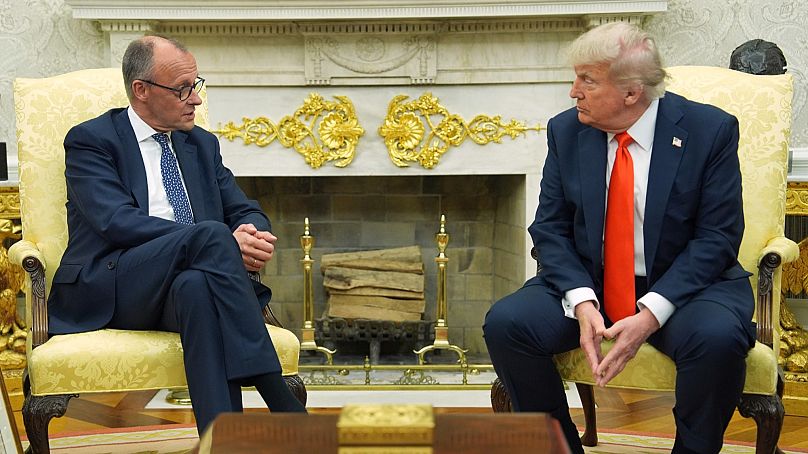
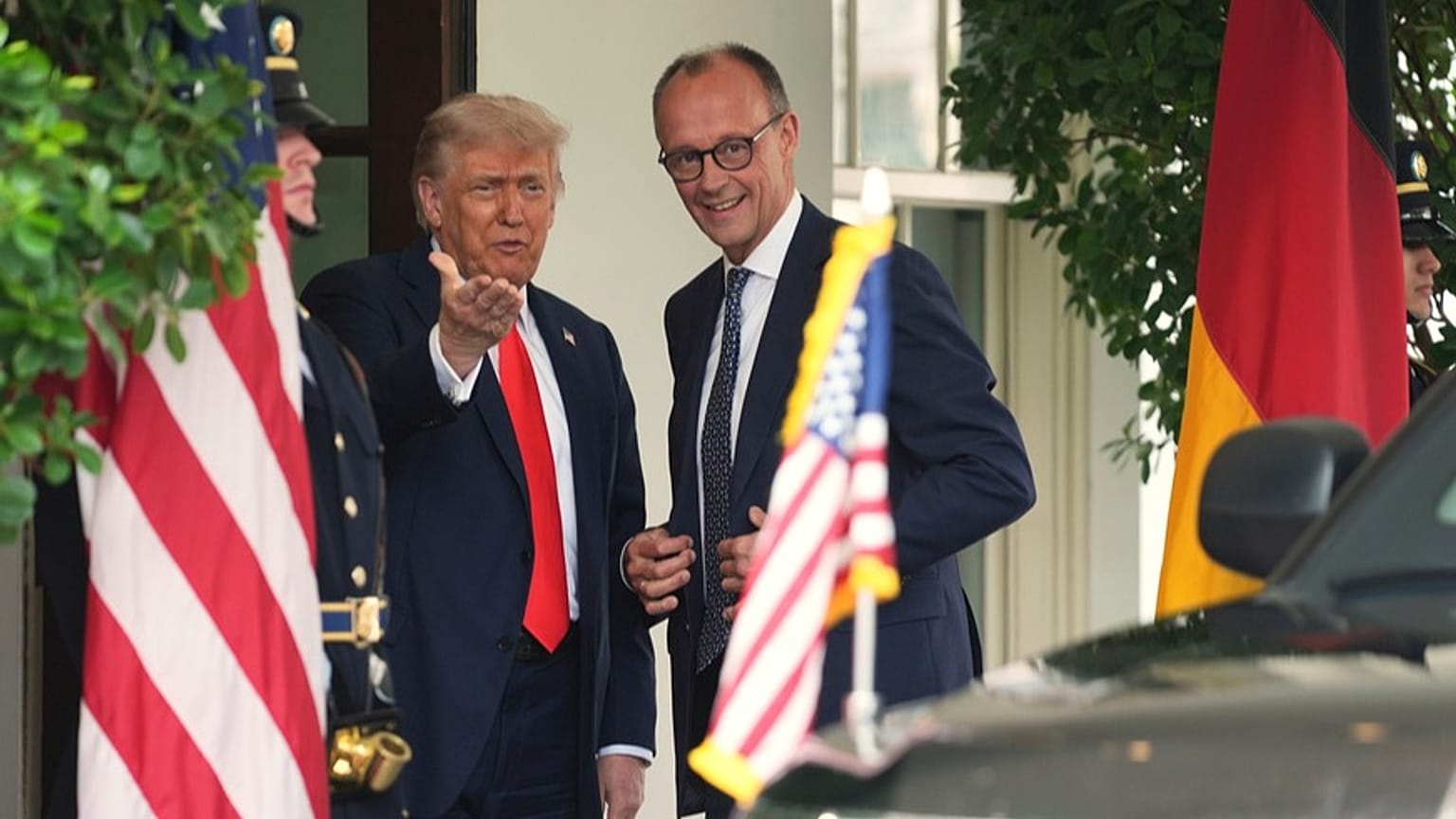
During his first official visit to the White House, Merz admitted that "whether we like it or not, we will remain dependent on the United States of America for a long time to come."
President Donald Trump during a meeting with German Chancellor Friedrich Merz in the Oval Office, 5 June 2025 AP Photo/Evan Vucci

'Security is gone, Pax Americana dead'

"We are living in a new era, in a multipolar world order, and if we do not succeed in establishing Europe as an independent pole, then we have lost in this world in which the strong do what they can and the weak suffer," Braml explained.

Ultimately, however, a glance at the patent statistics shows that when it comes to defence technology, Washington continues to set the pace in Europe.

According to a study by the German Institute for Economic Research (IW), US companies registered almost 18,000 patents between 2015 and 2021, while all 27 EU member states collectively registered fewer than 12,000 patents.

With around 4,300 patent applications, Germany ranks second in the EU after France, but is heavily dependent on US companies overall.

Continuing as before is therefore not an option for Braml. "Security is gone, Pax Americana is dead," he concluded.


K-POP

How East Asia, by way of BLACKPINK, BTS et al, has redefined global pop culture


How East Asia, by way of BLACKPINK, BTS et al, has redefined global pop culture
BLACKPINK members (L-R) Lisa, Rose, Jisoo and Jennie with their honorary MBEs / royal.uk
By Mark Buckton - Taipei September 29, 2025

Twenty-five years ago, the notion that the centre of gravity in global pop music might shift away from Los Angeles, London or any of a number of Western capitals might have sounded far-fetched.

Yet today, the evidence is unmistakable: first Japanese pop, then Korean pop, has turned East Asia into the most potent cultural export engine of the early twenty-first century. In terms of reach, fan loyalty and the all-important concept of soft power, neither the United States nor Europe has produced anything to match it in decades.

Japan

In the late 1990s and early 2000s, J-pop emerged as a formidable force across the region. Groups such as the all-girl group Morning Musume and five loveable but somewhat zany lads in SMAP dominated Japan’s highly choreographed entertainment industry while also finding enthusiastic audiences across East and Southeast Asia.

At the same time, solo artists like Ayumi Hamasaki and even the US-based Utada Hikaru topped charts in Japan and overseas, with Utada’s English-language debut Exodus perhaps the earliest indication of Japanese ambitions to one day cross over to Western markets.

The magic lay in a combination of flair and formula. The Japanese idol system perfected model training, branding and relentless media exposure on TV shows, by way of manga tie-ins, and through merchandising that turned performers into household names long before social media ever existed.

For a brief period just after the turn of the century, Tokyo rivalled London and New York in shaping the pop world. In the eyes of Asia – Tokyo led by a length or more.

Yet J-pop remained curiously inward-looking. Regional sales across Asia were strong, but language barriers coupled to conservative management practices and what seemed like a fear of overseas touring meant Japanese acts never truly broke into Western consciousness.

As many in the entertainment industry predicted though – it was only a matter of time. The blueprint had been produced and, somewhat ironically, it would be acts from Japan’s biggest rival - South Korea – that would pick up the baton and run with it onto the global stage.

South Korea

To this end, by the mid-2000s, Seoul’s entertainment companies had not only learnt from Japan, they had refined the way things were being done in Tokyo.

The ‘idol system’ as it existed, and as it still does in Seoul, operated with near-military precision by adding a sharper global outlook. Trainees were selected with the stamina of athletes and groomed intensively in dance, vocals, and multiple languages.

The result was K-pop, a meticulously engineered cultural product tailor-made for the YouTube, Twitter and more recently, TikTok era.

Girls’ Generation’s Gee (2009) was an early breakthrough, smashing Korean chart records and catching attention across Asia – including back in Japan where the idol-turned-singer / entertainer industry started.

But it was PSY’s Gangnam Style in 2012 that truly exploded worldwide, becoming the first YouTube video to surpass a billion views and introducing Western audiences to the phenomenon that is – and remains - Korean pop.

From there, a succession of acts built empires across Asia and increasingly into the Western world that J-pop could only dream of. The boy-band BIGBANG and girl-band 2NE1 commanded stadiums across continents. EXO and TWICE became household names across Asia. BTS – all boys – were up next and all but redefined the global pop culture landscape.

BTS and the mainstream

Where J-pop hinted at East Asia’s potential, BTS made it undeniable. Formed by Big Hit Entertainment (now HYBE), BTS started with modest expectations but quickly grew into the biggest boy band in the world, eclipsing even the heights of the Backstreet Boys or One Direction.

Hits like DNABoy With Luv, and Dynamite racked up billions of streams. BTS topped the Billboard Hot 100, sold out Wembley Stadium in London, and even addressed the United Nations.

Their fandom - ARMY (meaning "Adorable Representative M.C. for Youth") - became a global movement in its own right, organising online in ways that blurred the line between fan club and political force.

During the 2020 US presidential election campaign, ARMY’s coordinated hashtag campaigns and playful interventions drew attention even from analysts.

No Western pop act in the past 25 years has commanded such sustained global devotion, and while The Beatles may for all time remain the benchmark for influence, in terms of scale, infrastructure and digital reach, BTS in Asia and much of the rest of the world at least, surpasses the Fab Four.

BLACKPINK

Then came Lisa, Jennie, Rose and Jisoo – BLACKPINK.

While BTS rewrote the rules for boy bands, BLACKPINK reshaped girl group dynamics and have since taken the world by storm – routinely selling out stadiums across the US and Europe including Citi Field in New York, Wembley in London and Stade de France in Paris. Their 2019 Coachella performance, the first by a K-pop girl group, was a watershed moment, cementing their place in Western festival culture.

In the meantime, the world still has stars produced in the West - Taylor Swift remains a global powerhouse, commanding sold-out tours as do Billie Eilish, Harry Styles, and Dua Lipa.

But K-pop, built on the foundations of J-pop, sets itself apart in the scale and intensity of its fan ecosystems. No American or European act has a global, multilingual fanbase mobilised with the devotion of ARMY or BLINKs (BLACKPINK’s fans).

No Western artist gets close to combining the music, choreography, fashion collaborations, and constant digital engagement to the degree K-pop groups do. Behind the scenes, K-pop operations resemble Silicon Valley start-ups more than traditional record labels. Data-driven marketing, global auditions, multilingual strategies and perfectly timed release schedules make Western models look sluggish by comparison.

It is something even governments have noticed. South Korea’s government openly embraces K-pop as a cornerstone of its national brand, integrating it into cultural diplomacy. The “Korean Wave” (Hallyu) encompasses not only music, but also TV dramas, film and even cosmetics, amplifying Seoul’s soft power far beyond its size.

Japan, despite inventing the idol system, never leveraged pop culture in quite the same way. Its anime industry remains influential, but in music, it is South Korea that now leads.

Geopolitics

And the geopolitical stakes are real. When BTS visited the White House in 2022 to speak on anti-Asian hate crimes, it both made headlines around the world while at the same time highlighting how a pop act can double as a diplomatic envoy.

This was followed in an even more renowned setting by BLACKPINK when they were invited to Buckingham Palace in November 2023, to receive an honorary MBE – see pic above – an event marked by a post on X by the UK’s Royal Family account stating: “The King, joined by The President and First Lady of the Republic of Korea, has welcomed @BLACKPINK to Buckingham Palace, as they are awarded Honorary MBEs,” continuing “The K-pop band have been awarded the honours in recognition of their role as Advocates for the COP26 Summit in Glasgow.”

Beyond Korea

The only big question now is whether K-pop’s dominance will endure, or if others will catch up. China has experimented with idol groups, though censorship and restrictions on fan culture have limited their global impact. Other countries in Asia are dabbling but nothing yet compares to the efforts and levels of success reached first by Japan, and later Korea.

What is clear is that the US and Europe no longer control global pop culture. In the streaming age – viral choreography, visuals, and digital content comes from the East.

America has a religious fundamentalism problem — and we are not exempt from the damage

The divine is always invoked to conquer, to exclude, to strip away the humanity of others.


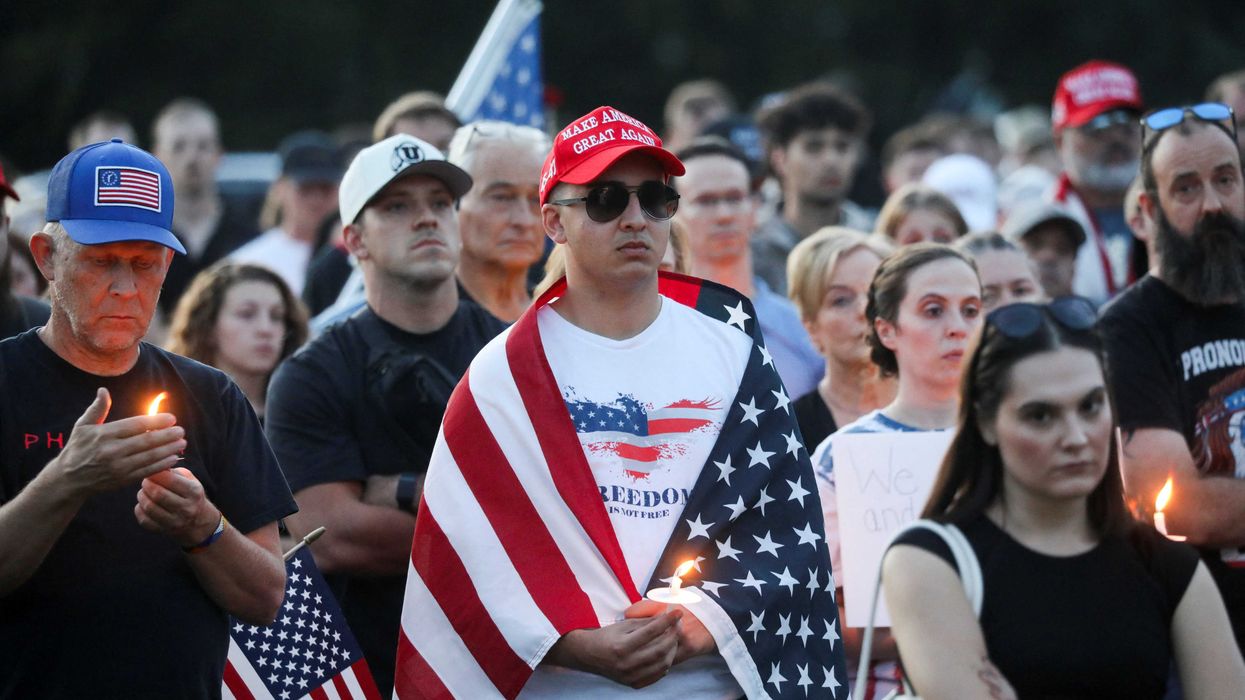
A man, wearing a MAGA cap and a U.S. flag draped around his shoulders, attend a vigil in Provo, after U.S. right-wing activist, commentator, Charlie Kirk, an ally of U.S. President Donald Trump, was fatally shot during an event at Utah Valley University, in Utah, U.S. September 12, 2025. REUTERS/Jim Urquhart


THE CONVERSATION
September 28, 2025 


I was a political science student in college when 9-11 happened. Almost overnight, the air in our classrooms thickened with talk of the Middle East—of regimes and sects, of the supposed sickness in other people’s faith. At the same time, I sat in lectures on American government, absorbing lessons on freedom, the separation of church and state, and the principles that anchor a democracy. The story was tidy: Extremism existed “over there,” and here was civility, rationality, liberty.

But even then, I felt the story was too neat. We were trained to see extremism as foreign, an affliction of others. No one asked us to look for it in our own pulpits, in our own chambers of power, where faith is wielded not only as belief but as authority.

For decades, we were told that extremism abroad is born of poverty, oppression, and lack of democracy. That dignity and fair governance could inoculate against violence. Yet here at home, the extremists are not poor. They are not desperate. They are wealthy, white, and privileged, carrying Bibles in one hand and power in the other. These are the people shaping foreign policy, writing the rules of engagement, and insisting that God Himself is on their side.

It is easy to sneer at fundamentalism when it wears a beard and prays to a different God. We do this without noticing how our own leaders claim the same divine sanction. Take Sen. Ted Cruz (R-Texas), who recently said, “Those who bless Israel will be blessed, and those who curse Israel will be cursed,” a statement guiding policy on the basis of religious prophecy. As a result, borders are drawn and redrawn, not by maps or treaties, but by the conviction that scripture demands it. Tanks move forward because some believe the end times will be hastened by the blood spilled today. I have heard lawmakers speak of Israel not as a nation among nations, but as a ticket for their own salvation—a stage for the rapture. Lives are traded away for a promise written in ancient ink. Too often, it is prophecy, not policy, that carries the weight of law.

The divine is always invoked to conquer, to exclude, to strip away the humanity of others.

Charlie Kirk was another voice in this chorus. His platform rested on the claim that his words bore the imprint of Jesus Himself. And that is the mark of fundamentalism: not just to speak, but to declare speech holy. Not just to pass laws, but to claim the laws come from God. When movements convince their followers that every act of war, every border drawn, every vote cast is sanctified, fundamentalism is no longer a fringe—it is the system itself.

This is America’s problem. We imagine fundamentalism as the product of religion alone, but in truth it is about power. It thrives in systems that punish dissent and demand obedience. It flourishes where inequality is already deep, where racism already wounds. Whether it calls itself Christian nationalism or Zionism, the fruit is the same: oppression disguised as divine order.

Christian nationalism, in particular, is theater. Fear of the stranger is the script. The Gospels are props—quoted when convenient, discarded when not. The gun becomes holy; violence is celebrated as sacrament; scripture appears only to bless white entitlement and empire. And somehow, the divine is always invoked to conquer, to exclude, to strip away the humanity of others.

“Love the stranger as yourself” has been rewritten into “expel the immigrant.” “Turn the other cheek” has become “press his cheek into the ground.” The inversion is so stark you can only call it blasphemy.

It is time to see the truth we’ve trained ourselves to ignore: that the politics of faith are not a distant problem but a domestic one. That prophecy and scripture are invoked to shape our laws, and our laws shape our lives. That the moral high ground, so often claimed, is little more than a thin veneer of power and entitlement.

We are not exempt from the damage. We are participants in it. And we cannot keep pretending that America’s fundamentalists are not pulling the strings.

I Am on Kirk’s “Professor Watchlist.” I Know How It Destroys Civil Debate.

I deeply value free speech and debate. The watchlist created by Charlie Kirk’s Turning Point USA is anathema to both.
September 27, 2025

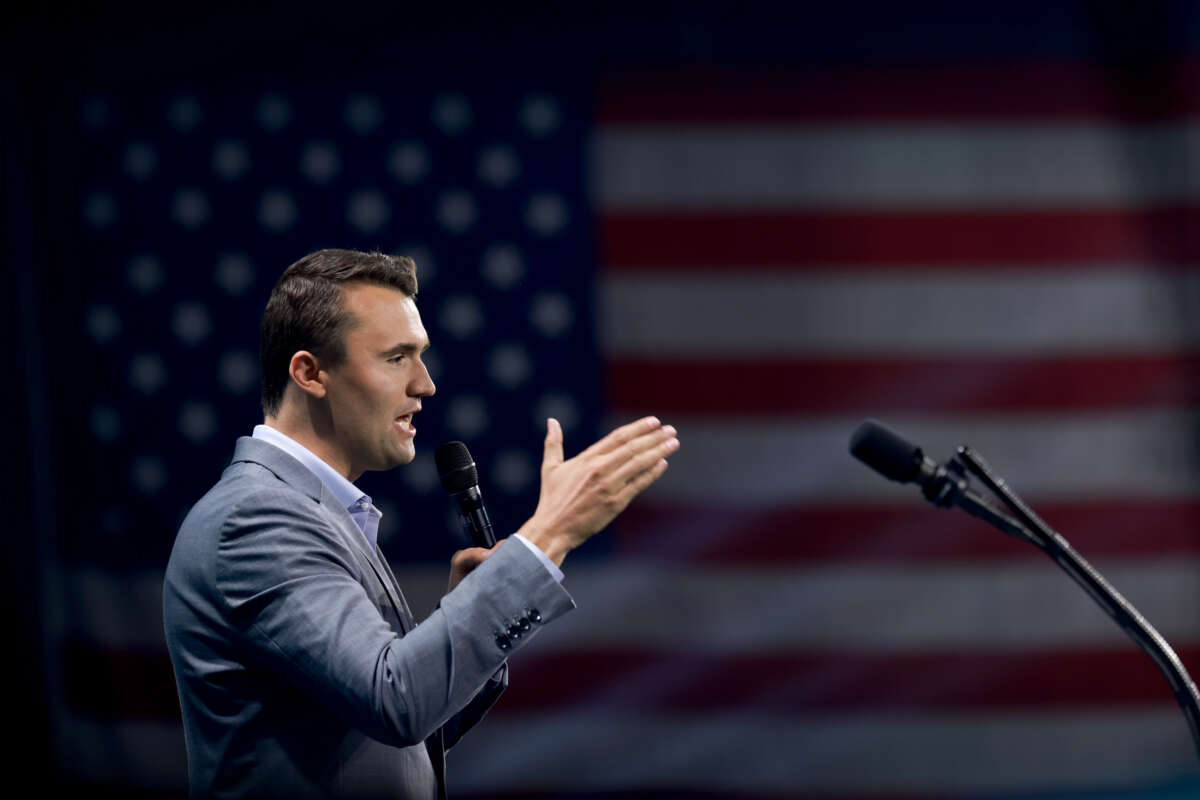
Charlie Kirk, who founded Turning Point USA, speaks before former President Donald Trump's arrival during a Turning Point USA Believers Summit conference at the Palm Beach Convention Center on July 26, 2024, in West Palm Beach, Florida.
Joe Raedle / Getty Images

After the tragic murder of Charlie Kirk — one that I unequivocally found to be unconscionable, unacceptable, and sickening — I thought about his wife and children. I am married, and I have children. I can’t imagine the unspeakable sorrow that Kirk’s wife and children must be experiencing. So, I will continue to mourn his death and their loss. I do so because I believe in love, forgiveness, and the sanctity of human life. I also believe in the First Amendment. So, here we are.

In the aftermath of Kirk’s tragic death, a great deal is being discussed now about his legacy regarding free speech and open debate. What I have to offer to readers in this regard is my own very personal experience of the organization that Kirk founded — Turning Point USA (TPUSA).

How Kirk’s Organization Targeted Me in 2016


In 2016, TPUSA produced an online list titled “Professor Watchlist,” a site designed to identify professors who purportedly “discriminate against conservative students and advance leftist propaganda in the classroom.” I don’t “teach leftist propaganda in the classroom,” and I never discriminate against conservative students, but I was nevertheless placed on the list soon after its creation in 2016, apparently because I am a philosopher who examines the complex ways in which white people are socially and psychically complicit in the perpetuation of anti-Black racism in the United States.

There’s no way for me to know whether or to what extent my placement on the Professor Watchlist extended or intensified the ongoing avalanche of racist threats and slurs that I had already started receiving after I published an open letter in The New York Times in 2015 titled “Dear White America” — a letter that sought to challenge the racist “innocence” of white people and was the source that Turning Point USA cited as grounds for placing me on their watchlist. But being placed on the Professor Watchlist undoubtedly magnified the feelings of trepidation and outrage created by the racist invective constantly pouring down on me throughout that time.

In response to “Dear White America,” I received an ongoing series of hate messages via email, voice message, and postal mail such as:


Trump Signs Order Designating “Antifa” a “Domestic Terrorist Organization”
The executive order comes in the midst of the Trump administration’s widespread attacks on the First Amendment. By Elizabeth Weill-Greenberg , Truthout September 23, 2025

“Dear N***** Professor… You’re a f***ing smug N*****. You are uneducated with education. You are a f***ing animal. Just like all Black people in the United States of America.”

“Hey Georgie boy… You wouldn’t have a job if it wasn’t for affirmative action. Somebody needs to put a boot up your ass and knock your f***ing head off your shoulders…”

“There are two ways you can return to Africa: On a passenger ship, or in a coffin freighter. Choose quickly.”

“In a sane world, this ugly n***** would be just beheaded ISIS style. Make America WHITE Again.”

With apologies to those who already encounter this kind of triggering hate speech regularly and do not need more of it in their lives, I reprint these examples here to show the ways in which there is a failure of vulnerability to truly listen to those deemed “the other,” dreams of returning to a white mythical past of “racial purity,” an unabashed ascendancy of white nationalism, political disinformation about white “victimhood,” an intentional disregard for civic responsibility, and an intentional fomentation of hatred by a Trumpian regime hell-bent on creating and exacerbating racial, political, and religious divisiveness. All of this is at the heart of what is actually shutting down space for civil debate and free speech in this country.

My personal experience underscores how projects such as this watchlist are not really about protecting “civil debate” and “free speech,” as some of Kirk’s fans have argued.

And my personal experience of receiving this ongoing avalanche of hate in response to publishing an op-ed, and then being placed on the TPUSA’s Professor Watchlist as an additional response to the same op-ed, underscores how projects such as this watchlist are not really about protecting “civil debate” and “free speech,” as some of Kirk’s fans have argued.

The process through which I was placed on TPUSA’s list was anathema to public debate. Instead of writing an op-ed in response to my New York Times op-ed, or inviting me to a public debate on these issues, TPUSA instead added me to an online list that is — as I explained in another New York Times op-ed back in 2016 — essentially a new species of McCarthyism.

I would never dream of subjecting the people I disagree with most vehemently to a list like this. I have no desire to create a watchlist that monitors conservatives and fuels their public denial or subjects them to violent retribution; I don’t believe in shaming entire groups of people or targeting individuals through a list such as this.

The list — a dangerous and antidemocratic tool — follows a draconian playbook by spying on professors and labeling them as “troublemakers” for the U.S. establishment. It is a site for surveillance, control, name-calling. Functioning like a modern-day scarlet letter, the list can lead to ostracization, condemnation, and even the practice of self-silencing (because of the fear of being the object of actual or potential violence) for those who are placed on it.

Before placing me on this list, no one from TPUSA asked to speak with me. Kirk never asked to debate me about my views on whiteness, white privilege, or white embodiment. In being placed on the list, I was falsely labeled and marked in ways that are not true. I have recently listened to clips of Kirk complaining that there are those who didn’t listen to him; in the clips he expresses frustrations about times when others just made assumptions about things that he didn’t say, or distorted what he meant by what he said.

I understand his point because that’s exactly what his organization, TPUSA, did to me. I was placed on the list without a mumbling word about making sure that I was given democratic space to debate my position on whiteness. TPUSA sought to tar and ostracize me as an “enemy” of conservative thought without first inviting me for civil debate.
Conversations That Kirk and I Never Had

Kirk and I would have had much to debate if our engagement had involved an in-person conversation rather than his organization simply placing me on a McCarthyist shunning list. It appears that we disagreed on many topics.

For example, though Kirk never said that all Black women lack “the brain processing power to otherwise be taken really seriously,” he did accuse Joy Reid, Michelle Obama, Sheila Jackson Lee, and Ketanji Brown Jackson as “lacking” such brain processing power. All these women are Black and all of them graduated from Ivy League schools. So, what was the basis for Kirk’s insult? He can’t simply make such an egregious claim without that claim being mediated by the history of anti-Black racism. Indeed, his accusation was loaded with white racist overtones. So as not to miss Kirk’s nuance, he says these women lack such brain power because they have benefited from affirmative action. He says they stole “a white person’s slot to go be taken somewhat seriously.” The assumption that because they may have benefitted from affirmative action they are therefore not bright enough is a blatant non sequitur. He assumes that affirmative action involves the automatic lowering of standards. Affirmative action was never designed to discriminate, but to create an equitable playing field. To hold this position about brain power and affirmative action, it would follow, based upon Kirk’s reasoning, that white women, the group that has benefited most from affirmative action, are also cognitively incompetent.

Similarly, when asked about diversity, equity, and inclusion (DEI), Kirk responded, “Obviously [DEI is] about trying to destroy the excellence of the country and elevating racial tribal politics.”I’m not cherry picking here. Notice that he says, “obviously.” But to whom is this “obvious”? Certainly not to Black people, who have been enslaved in this country longer than we have been “free.” But let’s face it, the United States was founded upon white racial tribal politics.

Kirk also problematically raised the issue of race, affirmative action, and DEI while clarifying a statement that he made about Black pilots. Originally, his comment was within the context of United Airlines saying that it wanted 50 percent of its pilots to be people of color or women, which still disproportionately favors white men. Kirk went on to talk about how there are relaxed standards anytime there are racial quotas. And he extended his reasoning to air traffic controllers, professors, and college admissions.

He later clarified, “Boy, if I see a Black pilot, I’m now going to wonder is that individual qualified or were they selected because of their race.” He went on to assert that he had this thought not because of who he is, but because affirmative action and DEI hiring practices made him think that way.

Here’s the problem. Being a qualified Black pilot and benefitting from affirmative action or DEI hiring practices are not mutually exclusive. When I’ve seen a Black pilot, I don’t “hope” that they can fly the plane. I’m proud to see them. And if they have benefitted from affirmative action or DEI, this in no way creates trepidation for me about their qualifications. I am fine with the fact that United Airlines cares both about making sure some pilots are Black and also making sure that those same pilots are well-qualified.

This is a conjunction that Kirk rejected. Kirk also didn’t seem to understand why United Airlines would be concerned with the color of the skin of the pilot. To wonder about this is to pretend ignorance about white supremacy in this country. Since Kirk didn’t address this, I will. Actually, it is Kirk who was concerned with the color of the skin of pilots. His concern was part of the perpetuation of white racism and had everything to do with the whiteness of the skin of those pilots who have dominated aviation. United Airlines does not hire based upon racial quotas, which are illegal. Its aim was merely to open possibilities and opportunities for those who have been systemically and systematically excluded from the field and from the cockpit.

I hope that articulating my disagreements with Kirk here isn’t interpreted as a virulent attack. I just think that he was wrong on these issues. In a functional democracy, to disagree with someone is a politically protected right, and it ought to be productive of greater mutual understanding and clarity. In fact, philosophically and democratically, agonism (a creative tension between interlocutors) is to be valued and treasured. In his book The Multivoiced Body, philosopher Fred Evans argues that agonism exemplifies an enduring creative interplay between voices, “not a reaction to enemies.”
The Right Is Weaponizing Kirk’s Murder to Fuel Attacks on Democracy and Speech

To engage in critique and productive disagreement should be the lifeblood of a democracy, and of this fragile experiment known as U.S. democracy. Yet, Donald Trump, JD Vance, Stephen Miller, and many right-wing activists are using the tragic occasion of Kirk’s murder to foment retribution on those who disagree publicly with Kirk’s views. Indeed, they are effectively and anti-democratically weaponizing the death of Kirk.

Trump and his sycophants are implementing political repression, censorship, and politically targeting free speech, which means that those of us who believe in democratic speech, in dissent, in open and critical debate, are being targeted, are being silenced, are being marked for further violence. This is not new for Trump. As someone who aspires to be a political strongman, his modus operandi is to threaten to use government power to imprison and to prosecutethose who he sees as his political enemies, despite it being unconstitutional. The Justice Department is not, or should not be, a political tool to be wielded against one’s perceived or real political rivals.

The soul of this country is at stake, if it has a soul worth saving. I don’t say this flippantly. I say this because I mean it, and I am serious about it. I say it because I refuse to feign ignorance about what is happening to this country before our eyes. It is becoming increasingly fascistic. Is it now a crime to use that term, to speak freely? If it is, then that only confirms the truth that I speak.

The reactionary call for blood and collective punishment after the tragic murder of Charlie Kirk is a form of ethical debauchery and warmongering. For those who encourage it, especially those who identify as “Christians,” you might as well spit in the face of Jesus. Some of us — many of us — detest the murder of Kirk, even as we passionately disagree with his politics. I am one of those. As Frantz Fanon writes in Black Skin, White Masks, “Today I believe in the possibility of love; that is why I endeavor to trace its imperfections, its perversions.”

My question is, what do you believe in?


This article is licensed under Creative Commons (CC BY-NC-ND 4.0), and you are free to share and republish under the terms of the license.


George Yancy is the Samuel Candler Dobbs professor of philosophy at Emory University and a Montgomery fellow at Dartmouth College. He is also the University of Pennsylvania’s inaugural fellow in the Provost’s Distinguished Faculty Fellowship Program (2019-2020 academic year). He is the author, editor and co-editor of over 25 books, including Black Bodies, White Gazes; Look, A White; Backlash: What Happens When We Talk Honestly about Racism in America; and Across Black Spaces: Essays and Interviews from an American Philosopher published by Rowman & Littlefield in 2020. His most recent books include a collection of critical interviews entitled, Until Our Lungs Give Out: Conversations on Race, Justice, and the Future (Rowman & Littlefield, 2023), and a coedited book (with philosopher Bill Bywater) entitled, In Sheep’s Clothing: The Idolatry of White Christian Nationalism (Roman & Littlefield, 2024).