Wednesday, October 08, 2025


Reimagining Ports: Europe’s Lessons For The Global South – Analysis
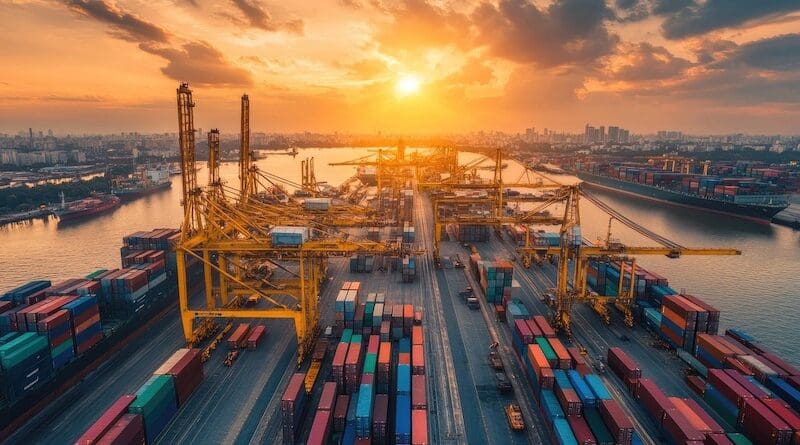
port harbor shipping trade pixabay containers


By 

By Tomasz Łukaszuk


Ports have always played a vital role in European civilisation. State-ports in Greece were the birthplace of the concept of the state, including thalassic, encompassing all areas of the conceptual and practical framework of statehood and human activities.

In 2022, the European Union (EU) ports handled 23 percent of total port calls globally, with almost 3 million occurring in EU and European Economic Area ports. Among these, nearly 88 percent of the ships carried an EU flag, and the EU owned 90 percent.

The EU Integrated Maritime Policy (IMP) was introduced in 2007 following the enactment of the United Nations Convention on the Law of the Sea (UNCLOS), coming into force in 1994, and the implementation of the concept of Integrated Oceans Management (IOM). 

Within the IMP, 1,200 major and minor seaports play a vital role, as there are 42,000 kilometres of inland waterways with 200 ports, interconnected with seaports, and over 5,000 kilometres of European ferry routes, with 400 million passengers embarking and disembarking in European ports annually. The waterways system has been intertwined with Europe’s transport infrastructure, which includes over 217,000 kilometres of railways, 77,000 kilometres of motorways, and 325 airports. This multilayered and multidimensional transportation network has been developed not only at the national but also at the subregional and regional levels.  

The significant role in that context plays the transboundary regionalisation and the transboundary and cross-border cooperation. The EU created the European Seaports Organisation (ESPO) and Transboundary Maritime Spatial Planning (TMSP) in the North Sea, the Baltic Sea, and the Atlantic Ocean, Sea Basin Strategies, and Macro-Regional Strategies (for the Baltic Sea Region in 2009 and for the Adriatic and Ionian Region in 2014). ESPO launched PortinSights, an online data platform that serves European ports by gathering RES throughput data, data on port governance, and environmental data, thereby building a knowledge hub for European ports. 


The European Commission has also launched a special INTERREG programme that includes maritime cross-border territories and transnational initiatives for the EU operational framework 2021-2027. Under INTERREG, a collaboration exists, for example, between the maritime regions of Italy and France, especially seaports in both countries, aiming to improve their competitiveness and sustainability. This collaboration focuses on sustainable growth, environmental protection, improved accessibility, human capital development, and cross-border cohesion.

In modern intermodal transportation networks, EU ports are required to assume roles that are significantly different from those in the 20th century. Aside from traditional functions such as land provision and infrastructure development (including storage and transhipment facilities), ports have become central hubs that support the coastal community and are critical components of national and transnational transportation networks.

These responsibilities now include managing production and distribution facilities, as well as offshore wind energy and onshore solar energy projects. Additionally, ports are transforming into facilitators and advocates of sustainable blue economy activities and solutions. By acting as blue accelerators, ports promote a cohesive and strong relationship among various sectors of the blue economy through establishing research spaces and test facilities for start-ups and innovative blue economy businesses.

The port’s role also involves becoming a pioneer and innovator in developing new technologies relevant to blue economy sectors, including shipping. Some port authorities aim to become operators of blue economy activities.  To accelerate the sustainable development of coastal areas and make ports more capable in their new roles, the European Ocean Pact was adopted on June 5, 2025, with a 1 billion Euro budget.

To support the new functions of ports, EU member states also utilise instruments from the Blue Ports Initiative programme, launched by the Food and Agriculture Organization (FAO) in 2019, enhancing their blue credentials and promoting sustainable development. There are 100 blue ports in the EU, climate neutral and smart, committed to sustainable climate action, particularly the use of innovative technology. They exchange information and knowledge, and cooperate in preserving the balance between the ecosystem and the needs of the blue economy sectors, especially between tourism and mariculture, food-processing, and shipbuilding industries. The protection of the coast in the context of sea level rise by building special dams and breakwaters is another field of cooperation.

The new conflicts in the third decade of the 21st century in Europe and the Middle East, near the Sea Lanes of Communication and seabed pipelines, have created a new set of security-related challenges for ports. A key responsibility involves actively monitoring and preventing hybrid war attacks. Hybrid war encompasses illicit activities such as jamming and spoofing ships’ navigation systems as they approach ports, attacks on seabed telecommunications and energy infrastructure utilising both crewed and uncrewed surface and subsurface vessels, as well as ports’ roadsteads being used as sites for the illegal transhipment of smuggled goods by grey zone fleets.

An additional challenge is the growing phenomenon of the paramilitary fleet. All these security concerns require a new approach within the Security Action for Europe(SAFE) of the European Union, including closer cooperation with the Coast Guard and Navy, as well as using space and radar surveillance, and adapting some port infrastructure for dual-use purposes by the Navy.

Conclusion

The EU significantly developed its ports in the last 20 years, creating a mechanism of multilayered local, national, and regional cooperation of member states. This inclusive strategy within the Integrated Maritime Policy created successful results in the sustainability of ports’ development, supporting them in facing a growing span of tasks and challenges.

Leaders in the Global South, like India, could benefit from adopting certain patterns and tools used by the EU, as well as from the lessons learned by the EU. India could implement these, also in cooperation with the EU, in its initiatives related to concepts and programmes such as SAGARMALA, the North East Indian Ocean Region (NEIO) which included Australia, the Bay of Bengal, and the Andaman Sea triangle, the Asia-Africa Growth Corridor covering the entire Indian Ocean Region, the India-Japan Corridor between the East Indian Ocean and West Pacific Ocean regions, and the ASEAN-India Cruise Dialogue in the Bay of Bengal.


  • About the author: Tomasz Łukaszuk is a Researcher at the Department of Regional and Global Studies, Faculty of Political Science and International Studies, University of Warsaw, and a former Ambassador of Poland to India (2014-2017).


Observer Research Foundation

ORF was established on 5 September 1990 as a private, not for profit, ’think tank’ to influence public policy formulation. The Foundation brought together, for the first time, leading Indian economists and policymakers to present An Agenda for Economic Reforms in India. The idea was to help develop a consensus in favour of economic reforms.


 

Catalan Separatist Leader Puigdemont Wins Court Approval To Challenge Embezzlement Charges

Catalan separatist leader Carles Puigdemont. Photo Credit: Carles Puigdemont, X


By 

By Inés Fernández-Pontes


(EurActiv) — Spain’s Constitutional Court on Tuesday admitted an appeal lodged by self-exiled Catalan separatist leader Carles Puigdemont and two of his former ministers, Antoni Comín, and Lluis Puig.

The Catalan politicians appealed against the Spanish Supreme Court’s decision not to fully apply a controversial amnesty law, which has seen hundreds of members of the Catalan separatist movement pardoned, by upholding embezzlement charges against them.

In 2018, Supreme Court judge Pablo Llarena indicted the three separatist leaders over the misuse of around €1.6 million in public funds to finance the failed 2017 Catalan independence referendum, issuing arrest warrants against them.

Puigdemont, who lives in exile in Belgium, has repeatedly appealed against Llarena’s decision, without success. Comín, a now MEP, and Puig, also reside in Belgium.

Due to the “special constitutional significance” of the appeal, the Constitutional Court will launch a probe into the judge’s decision to uphold embezzlement charges against Puigdemont, Comín and Puig. The court itself has affirmed the constitutionality of the controversial amnesty law back in June.

Spain’s Prime Minister Pedro Sánchez’s Socialist-led coalition approved the amnesty law in 2023, in a bid to secure the backing of Puigdemont’s right-wing Junts MPs to support his re-election campaign. Under the law, hundreds of Catalan separatists involved in the secession movement between 2012 and 2023 have been pardoned.

The European Commission has raised concerns over the compliance of the Spanish amnesty law with EU law, and the EU’s top court (CJEU) initiated proceedings this year to assess whether the Catalan secessionist movement harmed the EU’s financial interests – and whether the amnesty amounts to a politically driven “self-amnesty.”

The CJEU ruling is expected by the end of the year and will be binding on all Spanish courts.


Non-Russians Increasing Their Share Of Russia’s Population – Analysis

russia woman poverty poor


By 

The total population of the Russian Federation is declining fast. Even the Russian government admits it, and some experts are suggesting that Russia will lose as much as almost half of its current population by the end of this century as a result (The Moscow Times, January 31; Carnegie Politika, September 19; Meduza, September 29).


Neither Russian officials nor independent demographers, however, have focused on what may become the most critical aspect of this decline. The percentage of ethnic Russians in the country’s population will almost certainly decline while that of non-Russians will continue to increase. This is the product of much lower fertility rates among the former than the latter and the changed nature of immigration from one dominated by ethnic Russians in the 1990s to one now overwhelmingly dominated by non-Russians from Central Asia and the Caucasus (Carnegie Politika, September 19).

Moscow has sought to counter this by launching campaigns to Russify non-Russians, boost birthrates—which have unintentionally sparked greater rises among non-Russians than among ethnic Russians—make it easier for remaining ethnic Russians abroad to come to Russia, and impose increased restrictions on non-Russian immigration. The Russian government is covering up its population decline by stopping the publication of demographic data that would allow analysts and others to track the issue (see EDM, May 15, 2024; Millyard Tatar, June 10; Yesli byt’ tochnym, August 6; Krizis Kopilka, September 27;  MariUver, October 1).

These efforts have been far less successful than the Kremlin suggests. Demographers mine indirect data sources and the policies of the Russian government, which in many cases, prove openly counterproductive and subject to criticism (Window on Eurasia, January 26, 2024; see EDM, October 22, 2024). Moreover, many ethnic Russians can see from what is going on around them that their position in the population is slipping, however much Putin suggests otherwise with his talk of an ethnic “Russian world” (Bereg, July 10).

The experience of many Russians, especially in major cities, has sparked popular demands for restrictions on immigrants far more radical than the Russian government wants and the Russian economy can tolerate. This has also caused the formation of far-right Russian nationalist groups such as the Russian Community to drive out immigrants and rein in indigenous non-Russians (see EDM, November 9, 2021, October 15, 2024, July 30, September 18).

Some in the Kremlin are supporting these groups, which may help Moscow tactically, but may also pose a strategic threat to Russia, both in economic and political terms. This support only prompts non-Russians to take countermeasures and potentially think about pursuing independence (see EDM, April 30, 2024).

The Kremlin continues to insist, and most observers in Russia and the West continue to repeat, that ethnic Russians form roughly 80 percent of the total population of the Russian Federation. That figure is no longer true, however, and will be even less so in the coming decades. That figure does not include the more than seven million Central Asian and Caucasian immigrants now living in the country or reflect how a large swath of the Russian population was not counted in the 2020–2021 census, but rather estimated based on projections, which detailed studies have suggested were extremely inaccurate (see EDM, June 7, 2022; Window on Eurasia, July 17, August 11, 2023; Yesli byt’ tochnym, March 24, 2024).

That, in turn, means the percentage of ethnic Russians actually resident in the Russian Federation is now likely to be closer to 70 percent than to the 80 percent Moscow claims. This number will continue to fall, given that fertility rates in Russian cities already approach 1.0 children per woman per lifetime, far below the 2.2 needed to maintain a constant population. Such rates are also below replacement levels in predominantly ethnic Russian oblasts, while, in non-Russian areas, these rates remain close to or, in some cases, far above replacement levels (RG.ru, February 2, 2020).

That pattern does not mean that the Russian Federation, over the course of the rest of this century, will have a population evenly divided between ethnic Russians and non-Russians as was the case in the Soviet Union in 1991. Nor does it mean that its economy will collapse, or its military be forced to contract because of a shortage of men. It does almost certainly mean, however, that the share of ethnic Russians will be far lower than it is now.

Many in the Kremlin refuse to believe this because they remain trapped in a paradigm that is no longer true—or at least not as true as it once was—and assume that the current declines will be reversed in the next decade or so. Since World War II, Russia has experienced a series of demographic “waves” triggered by the huge losses in that conflict.

As a result of those losses, the number of women in prime child-bearing age groups has declined every 20 to 25 years. This has meant that the number of children they give birth to has declined, but then recovered at least slightly as more of those children become parents. That pattern held until the end of Soviet times, but plunging fertility rates in the cities has changed that. This almost certainly means that there will not be the bounce a decade or so from now that Russia experienced in the past and that Russian officials continue to count on (Meduza, September 29).

Additionally, as these same observers have pointed out, there simply are not enough ethnic Russians abroad who might come back and cover losses, as was the case in the first post-Soviet decade, and urban Russians are not going to have more children unless housing becomes more affordable and their incomes rise dramatically.

This demographic trend is already impacting ethnic Russians and non-Russians alike. Ethnic Russians are becoming even more nationalistic and hostile to non-Russians, indigenous as well as immigrants. This will raise the ethnic temperature within the country while simultaneously leading them to question Kremlin efforts to continue to rely on immigration or expand the borders of the Russian Federation. This is a step that would, as the case of Ukraine, inevitably add an even greater share of non-Russians to the total and even recreate much sooner some of the same demographic forces that contributed to the demise of the Soviet Union (Window on Eurasia, March 17, 2022,February 28, 2024).

At the same time, many non-Russians are already encouraged by their increasing share in the population, but discouraged by their falling numbers. They are likely to become increasingly radicalized, especially if the Kremlin responds, as seems likely, with greater repression.

Demography is not destiny, except in the long term. Governments can and do change their policies. The aging Russian President Vladimir Putin leadership, however, seems disinclined to do so in this area. That almost certainly means that, in the coming decades, demography will be a central issue in Russian life, one that could easily explode if the Kremlin does not change course (Window on Eurasia, April 21, 2024).


Paul Goble is a longtime specialist on ethnic and religious questions in Eurasia. Most recently, he was director of research and publications at the Azerbaijan Diplomatic Academy. Earlier, he served as vice dean for the social sciences and humanities at Audentes University in Tallinn and a senior research associate at the EuroCollege of the University of Tartu in Estonia. He has served in various capacities in the U.S. State Department, the Central Intelligence Agency and the International Broadcasting Bureau as well as at the Voice of America and Radio Free Europe/Radio Liberty and at the Carnegie Endowment for International Peace. Mr. Goble maintains the Window on Eurasia blog and can be contacted directly at paul.goble@gmail.com


AUKUS Still Has A Virginia Problem – Analysis

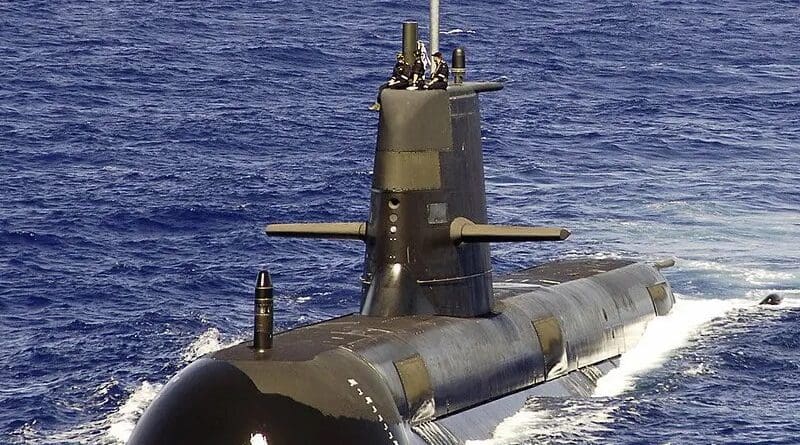
Australian submarine HMAS Rankin. U.S. Navy photo by Mass Communication Specialist Seaman James R. Evans

By 

By Dr. Emma Salisbury


(FPRI) — In a move that has likely led to sighs of relief in London and Canberra, the Trump administration has reportedly reaffirmed its commitment to the AUKUS submarine pact, preserving a key pillar of the trilateral defense partnership between the United States, United Kingdom, and Australia. The decision ensures that Australia will still receive three American Virginia-class nuclear-powered submarines (SSNs) from the early 2030s, despite concerns that the arrangement could have fallen foul of President Donald Trump’s “America First” philosophy.

While the confirmation has cleared away some of the lingering cloud of uncertainty over AUKUS, it should also reignite questions about the health and capacity of America’s own submarine industrial base, a sector already struggling to keep up with domestic demands. At the heart of the matter is a simple but high-stakes question: Can the United States afford to give away some of its most advanced undersea assets while trying to outpace China’s military expansion?

The Pentagon’s recent review of the AUKUS agreement, led by Undersecretary of Defense for Policy Elbridge Colby, was not merely a routine assessment. It was a political litmus test — one that sought to evaluate whether the transfer of strategic military technology to a close ally aligned with Trump’s revived nationalism. A central issue was whether the US Navy could afford to give up three to five Virginia-class submarines within the next decade without compromising its own operational readiness, particularly in the face of a potential confrontation with China. Yet despite these concerns, Pentagon officials have confirmed: “AUKUS is safe.”

Under the current AUKUS plan, Australia will receive between three and five second-hand Virginia-class submarines from the early 2030s to replace its aging Collins-class boats. These will serve as a bridge until a new generation of boats — the so-called SSN-AUKUS class — can be built collaboratively by the United Kingdom and Australia. The SSN-AUKUS will be based on a British design and include American technology. Australia’s versions will be built in Adelaide with British help and the Royal Navy’s boats will be built in the United Kingdom, while Rolls-Royce in Derby will manufacture the nuclear reactors for all of them. The timeline is ambitious: The first SSN-AUKUS is slated to be delivered to the Royal Navy in the late 2030s, followed by Australian-constructed boats in the 2040s. But filling that gap in Australian capability depends on whether the US submarine industry can climb out of its current production valley — and fast.

The US Navy has been procuring Virginia-class submarines since 1998. On paper, the Navy has been procuring two boats per year since 2011 — a pace theoretically sufficient to replace aging vessels and expand the fleet. In practice, however, the yards building these boats have struggled to meet those targets. Since 2022, the actual production rate has slumped to around 1.2 boats per year, leaving a backlog of boats that have been funded but not yet built.


During the Cold War, the mission was against Soviet submarines. Today, with China rising and Russia resurgent, the submarine force is being called upon once again to provide undersea dominance. Yet the fleet is about to dip into a valley, a projected shortage of available attack submarines caused by a slowdown in construction during the 1990s. By 2030, the SSN force is expected to bottom out at just 47 boats — down from 50 today — before slowly climbing to 64 or 66 by the 2050s. That forecast does not include the subtraction of up to five boats under the AUKUS transfer.

Submarines play an outsized role in America’s military posture. SSNs are the Swiss Army knives of the fleet — capable of launching cruise missiles, gathering intelligence, inserting special forces, laying mines, and hunting both enemy submarines and surface ships. Crucially, they can slip through China’s extensive anti-access/area-denial (A2/AD) networks, enabling them to project power deep into contested waters. The Virginia-class submarines are arguably one of America’s most potent conventional assets. They excel at stealth, endurance, and firepower, offering a decisive edge in undersea warfare. Diverting even a handful of these submarines to Australia without replacing them in the fleet could expose a critical vulnerability during a period of heightened tension in the Indo-Pacific.

To bridge the production gap, the Navy is planning to refuel and extend the lives of up to seven Los Angeles-class submarines, the predecessor to the Virginia class. It’s also exploring “hull-by-hull” service life extensions to squeeze more years out of older boats. But these are stopgaps, not solutions. The long-term answer lies in expanding production. The Navy’s 30-year shipbuilding plan envisions buying two new Virginia-class submarines per year starting in 2030 — eventually ramping up to 2.33 per year. That increase is meant to support US force structure goals and fulfill the AUKUS commitment, but hitting those numbers will require an industrial renaissance not seen since the Cold War.

Colby himself has long voiced concerns about exporting these boats before domestic production can be increased. It’s a sentiment echoed by Adm. Daryl Caudle, the incoming Chief of Naval Operations, who bluntly stated, “The only way we’ll ever make good on the AUKUS agreement is that we get to the 2.3 [build rate].”

The Australian government has not been blind to these challenges. In fact, it has already contributed $1.6 billion directly to support US shipbuilding efforts, a recognition that its submarine acquisition depends on America’s ability to build fast enough for both nations. Yet even with Australian funds bolstering the industrial base, the question remains as to whether the shipyards can ramp up quickly enough. Congress has appropriated billions over the last few years to expand submarine production — upgrading facilities, training workers, and modernizing supply chains — but the effects will take even more years to materialize.

For now, AUKUS lives. Its survival under Trump reflects the survival of a deeper bipartisan consensus in Washington: that strengthening Australia’s military capabilities is in America’s long-term strategic interest, especially as the Indo-Pacific looks set to remain at the center of great-power competition. But it’s a gamble — one that assumes the United States can rebuild its submarine fleet faster than its adversaries can erode its undersea advantage. If that bet doesn’t pay off, the United States could find its fleet in a very stretched position when it needs it the most.

The deal is still on course. The question now is whether the shipyards will hold.

  • About the author: Dr. Emma Salisbury is a Non-Resident Senior Fellow in the Foreign Policy Research Institute’s National Security Program, an Associate Fellow at the Royal Navy Strategic Studies Centre, and a Contributing Editor at War on the Rocks.


Published by the Foreign Policy Research Institute

Founded in 1955, FPRI (http://www.fpri.org/) is a 501(c)(3) non-profit organization devoted to bringing the insights of scholarship to bear on the development of policies that advance U.S. national interests and seeks to add perspective to events by fitting them into the larger historical and cultural context of international politics.