Wednesday, October 08, 2025


Burkina Faso's military junta arrests European NGO workers for 'spying'
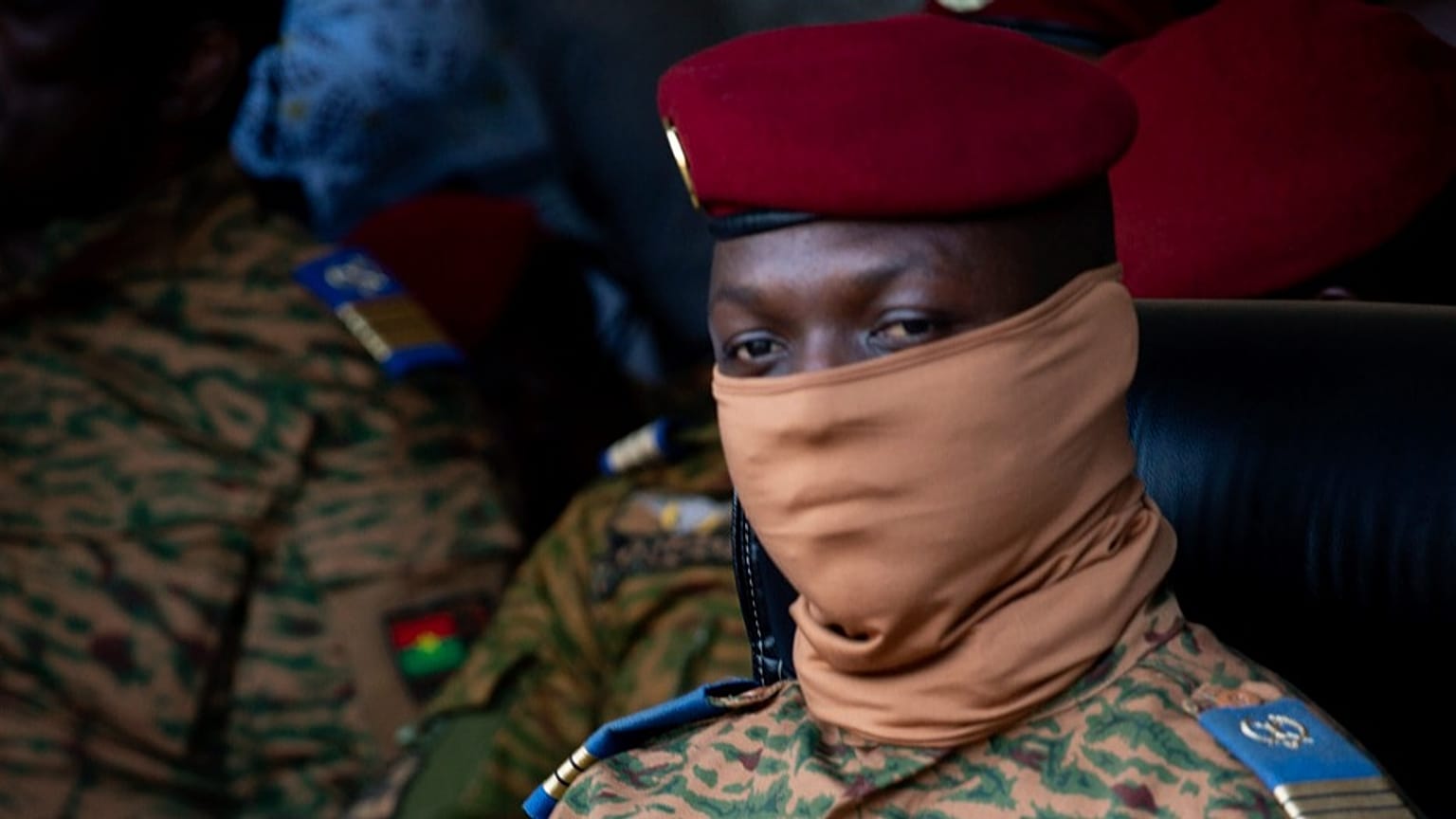
FILE: Burkina Faso junta leader Ibrahim Traore participates in a ceremony in Ouagadougou, Oct. 15, 2022.
Copyright Kilaye Bationo/Copyright 2020 The AP. All rights reserved.


By Kieran Guilbert
Published on 

The Netherlands-based International NGO Safety Organisation (INSO) said it "categorically rejects" the allegations made regarding its eight workers.

Burkina Faso's military junta has arrested eight members of a humanitarian group on suspicion of "spying and treason", accusations the Dutch NGO categorically rejected.

The West African nation's Security Minister Mahamadou Sana said on Tuesday that the eight people worked for the Netherlands-based International NGO Safety Organisation (INSO), which specialises in humanitarian safety.

Those arrested include Czech, French, Malian and Burkinabe citizens, according to Sana.

The NGO was suspended from operation at the end of July for three months for "collecting sensitive data without authorisation", the security minister said. INSO's country director was taken from the group's office and detained at that time.

Following the suspension, Sana alleged that some of the NGO's employees "continued to clandestinely or covertly conduct activities such as information collection and meetings in person or online".

The staff members had "collected and passed on sensitive security information that could be detrimental to national security and the interests of Burkina Faso, to foreign powers", Sana added.

Later on Tuesday, INSO issued a statement in which it strongly rejected the "extremely concerning" allegations about its activities in Burkina Faso. The organisation said the information it collects is not confidential and is already largely known to the public.

"Associating our work to strengthen humanitarian safety with intelligence work is not only false but will only serve to place aid workers at greater risk," the statement said.

"We will continue to work tirelessly to secure the safe and immediate release of our colleagues and are committed to addressing these false accusations and misunderstandings."

The landlocked nation of 23 million people has become synonymous with the security crisis in the Sahel region south of the Sahara in recent years. It has been shaken by violence from extremist groups and the governments fighting them.

The military junta — which seized power in 2022 — has failed to provide the stability it promised. According to conservative estimates, more than 60% of the country is now outside of government control, more than 2.1 million people have lost their homes and almost 6.5 million need humanitarian aid to survive.

NGOs say the junta has installed a system of de facto censorship, crushing critics, while many civilians have been reported killed by jihadist groups or government forces.

The country's military government has increasingly pivoted away from the West during its rule and become closer with Moscow. Earlier this year, Russia and Burkina Faso said they would work together to strengthen economic ties and diversify trade.

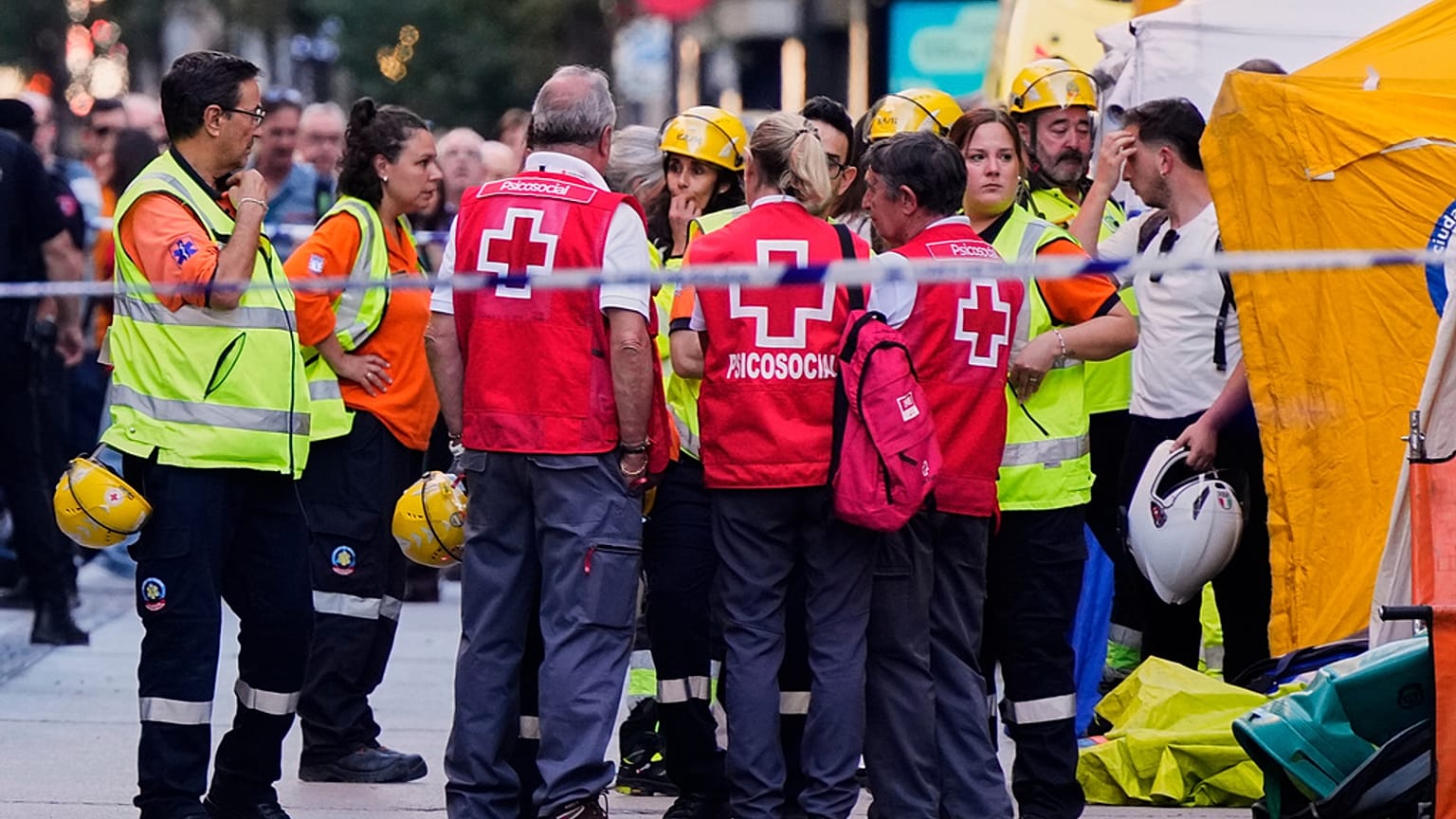
 

Four dead after building under construction collapses in central Madrid

Emergency personnel work at the site of a building collapse in Madrid, Spain, on Tuesday, 7 October 2025
Copyright Manu Fernandez/Copyright 2025 The AP. All rights reserved.


By Maria Muñoz Morillo & Christina Thykjaer
Published on 

The victims reportedly include three construction workers from Ecuador, Mali, and Guinea-Conakry and an architect involved in the renovation project.

Four people died and three others were injured after a building under renovation collapsed in central Madrid on Tuesday, according to the authorities.

Emergency workers recovered four bodies from beneath the rubble of the six-storey building in Madrid's Opera neighbourhood in the early hours of Wednesday morning.

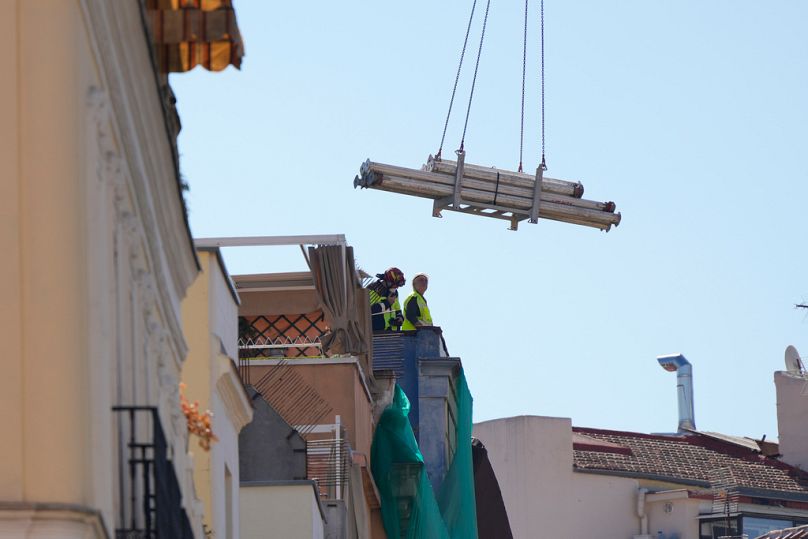
The top floor of the building collapsed around 1 pm on Tuesday, causing the lower floors to collapse beneath it in succession, said Madrid's Mayor José Luis Martínez-Almeida.

The victims have been identified in Spanish media as three construction workers from Ecuador, Mali and Guinea-Conakry — aged between 30 and 50 — and a 30-year-old architect involved in the renovation project. All were employed by the construction company ANKA, according to reports.

Another three workers were injured in the collapse, with one suffering a fractured leg. None of them have life-threatening injuries.

Sources from the city council and fire department told broadcaster RTVE that a concrete slab weighing about eight tonnes fell from the sixth floor during renovation work.

The facade remained standing and apparently stopped most of the debris from reaching the street. Firefighters and police used sniffer dogs and drones to help the search efforts.

Rescue teams are on the roof of the collapsed building in Madrid, Spain, on Tuesday, 7 October 2025.
Rescue teams are on the roof of the collapsed building in Madrid, Spain, on Tuesday, 7 October 2025. Manu Fernandez/Copyright 2025 The AP. All rights reserved.

The local government said that authorities are still investigating the cause of the collapse, with Madrid's municipal police leading the probe as it is a workplace accident.

According to Madrid's online registry of buildings under construction, the building had "unfavourable" technical inspections in 2012 and 2022 due to "the general condition of the facade, exterior, partition walls, roof, roof terraces and plumbing and sewage system".

The former office building was built in 1965 and was being converted into a hotel. Mayor Almeida said that the renovation work had the proper documentation and permits.


Israeli military intercepts another flotilla en route to Gaza

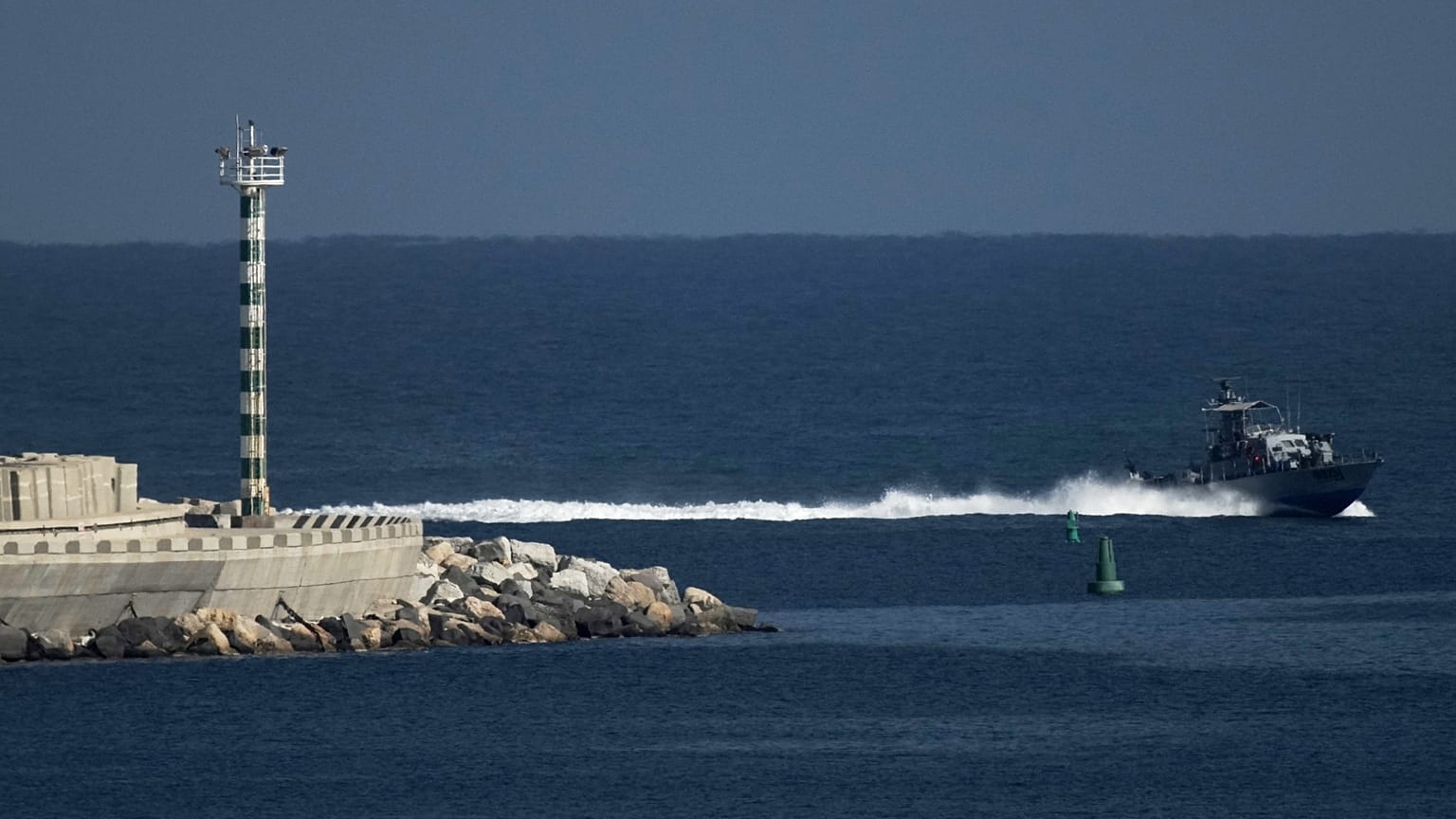
FILE: An Israeli Navy vessel moves in the Mediterranean sea toward the port of Ashdod, 2 October 2025
Copyright AP Photo

By Euronews
Published on 

A new flotilla bound for Gaza was intercepted by the Israeli army, days after the detention of high-profile activists on a separate convoy sparked protests in Europe.

A new flotilla bound for Gaza has been intercepted by the Israeli army on Wednesday, days after the detention of several high-profile activists on a separate flotilla sparked large protests in Europe.

The Israeli foreign ministry confirmed that at least 145 activists were brought to shore for processing and are expected to be deported soon. Among them were doctors, politicians and three Turkish lawmakers.

“Another futile attempt to breach the legal naval blockade and enter a combat zone ended in nothing,” the foreign ministry wrote on X.

The Freedom Flotilla Coalition, comprised of nine vessels, said it "poses no harm" and that the "Israeli military has no legal jurisdiction over international waters."

“Three vessels – Gaza Sunbirds, Alaa Al-Najjar, and Anas Al-Sharif – have been attacked and illegally intercepted by the Israeli military” on Wednesday morning, around 220km off the coast of Gaza, organisers posted on X.

Organisers said the boats were intercepted around 120 nautical miles off the coast of Gaza. In footage of the interceptions, the flotilla boats are approached by fast-moving ships and then boarded by Israeli troops. No injuries were reported.

The Freedom Flotilla Coalition is a network of pro-Palestinian groups aiming to end Israel's aid blockade of Gaza.

The interception of this flotilla comes after Israel intercepted the Global Sumud Flotilla, sparking widespread protests and a general strike in Italy.

At least 450 activists were detained, including climate campaigner Greta Thunberg. Israel said it offered all activists voluntary deportation. Those who refuse will undergo a legal deportation process.

Several activists have alleged they were mistreated, a claim Israel has said is a "brazen lie".

Jerusalem Churches Face Mounting Tax Pressures Under Israel’s ‘Arnona’ Property Levy


ZIONISM VIEWS CHRISTIANITY AS ANTI-SEMITIC

Churches in Jerusalem face ongoing tax pressures amid long-standing negotiations. | Credit: Amizor via Wikimedia Commons (CC BY-SA 4.0)

By 

By Sanad Sahelia


In Jerusalem, the property tax, known as the “Arnona” tax, has become one of the most contentious issues between the city’s municipality and the churches. 

Under Israeli law, this is a municipal levy imposed on all properties within city and local council boundaries, regardless of type, and its calculations are based on square meters and the use of the property.

Attorney Fareed Jibran, legal and public affairs adviser to the Latin Patriarchate of Jerusalem, explained to ACI MENA, CNA’s Arabic-language news partner: “Arnona is a municipal property tax, not a state tax. The basic principle is that every property within municipal borders, whether residential, commercial, or public, must pay tax in exchange for the services the municipality provides.”

For centuries, churches in Jerusalem and most of their institutions were exempt from this tax, since Ottoman rule, through the British Mandate, and into the early years of Israel’s establishment. The exemption was nearly absolute, except for purely commercial activity. 

“Churches historically provided services the state did not, such as education, health care, and ecclesiastical courts. For this reason, they were granted tax exemptions,” Jibran explained.


“The shift in the legal framework about 15 years ago ignored this historical reality, leading to tax demands on monasteries, clergy residences, guesthouses, hospitals, and organizations like Caritas, even though these are nonprofit institutions playing a vital social role,” he added.

‘More than 30 years later, no solution has been reached’

The issue also carries an international legal dimension.

Since 1993, the Vatican and Israel have been negotiating the financial and tax status of Catholic Church properties in Jerusalem, including Arnona.

“The fundamental agreement is clear: As long as negotiations are ongoing, neither side has the right to take unilateral measures,” Jibran said. “Nevertheless, in recent years, municipalities have begun sending seizure orders and initiating legal action against churches, despite the Vatican’s protests that such steps violate the agreement.”

The agreement initially envisioned concluding negotiations within two years. “But today,” Jibran noted, “more than 30 years later, no solution has been reached. The state claims some properties are used commercially, such as restaurants within church grounds, which would not qualify for exemption. This opens debate about what counts as ‘commercial’ versus what is considered a Church service.”

Impact on the churches

According to Jibran, the taxes imposed on church institutions directly affect their ability to carry out their religious and social mission and to safeguard Christian heritage in Jerusalem. 

“These taxes impact the upkeep of historic buildings and ancient churches, the running of schools and hospitals, and the provision of community services,” he said.

In a recent move that sparked strong protest, Israeli municipal authorities froze the bank accounts of the Greek Orthodox Patriarchate of Jerusalem and imposed high tax demands on its properties. The Palestinian Higher Presidential Committee for Church Affairs denounced the measure as an “attack on the authentic Christian presence in Palestine.” 

So far, no official confirmation has been given that the freeze has been lifted, leaving the Church facing financial challenges that hinder its ability to provide spiritual, humanitarian, and social services.

\\
CNA

The Catholic News Agency (CNA) has been, since 2004, one of the fastest growing Catholic news providers to the English speaking world. The Catholic News Agency takes much of its mission from its sister agency, ACI Prensa, which was founded in Lima, Peru, in 1980 by Fr. Adalbert Marie Mohm (†1986).


NAPAC 2025: Algeria’s Desalination Projects Attract Wide International Attention – OpEd

Algiers, Algeria. Photo by Poudou99, Wikipedia Commons.

By 

Algeria’s seawater desalination projects have drawn significant international attention during the NAPAC 2025 Exhibition and Conference, one of the region’s leading events in the fields of energy and water.


During the event, the Algerian Energy Company (AEC) — a subsidiary of Sonatrach Group — presented details of the National Complementary Program for Seawater Desalination, which aims to ensure national water security and support the country’s sustainable energy transition.

The program includes the construction of six new desalination plants along the Algerian coast, with a total production capacity of 1.8 million cubic meters per day, while relying on solar energy to cover around 35% of operational needs.

Four new desalination plants have already been inaugurated in Oran, Tipaza, Boumerdès, and El Tarf, while the Béjaïa (Tigremt) plant has successfully completed its testing phase and is preparing to enter full operation soon. These five facilities constitute the backbone of Algeria’s national desalination program, which aims to ensure long-term water security and meet the growing demand for drinking water in major coastal cities.

According to official estimates, the program will raise the share of desalinated water in the national supply network from 18% currently to around 42% in the coming years, with total investments exceeding 3 billion USD.

The Algerian pavilion at NAPAC 2025 attracted strong interest from international delegations coming from Europe, Asia, Africa, and the Gulf region, who expressed particular admiration for Algeria’s model that combines desalination with renewable energy. Many experts considered the Algerian experience a regional benchmark in integrating water security and energy transition.


Despite these achievements, specialists stressed the need to continue efforts to treat brine discharge, reduce energy costs, and build national expertise in the operation and maintenance of the new desalination plants.

These projects highlight Algeria’s steady progress toward achieving both water and energy security, within a comprehensive national vision to address environmental and climate challenges in the Mediterranean region.


Madjed Sakhri

Madjed Sakhri is an Algerian journalist with Iktisad Elbaled, specializing in trade, agriculture, and economic development. He writes extensively on Algeria's strategic opportunities in global markets and regional trade dynamics.