It’s possible that I shall make an ass of myself. But in that case one can always get out of it with a little dialectic. I have, of course, so worded my proposition as to be right either way (K.Marx, Letter to F.Engels on the Indian Mutiny)
Wednesday, October 15, 2025
Gaza: The Peace of the Genocide Alliance
The great war may be coming to an end, but the violence of occupation, apartheid, and territorial expansion is not.
A Palestinian woman carrying her child walks along the so-called “Netzarim corridor” as she makes her way to Gaza City from Nuseirat in the central Gaza Strip on October 11, 2025. Israel declared a ceasefire in Gaza and began to pull back its forces on October 10, as tens of thousands of exhausted Palestinians made their way back to their devastated homes. (Photo by Eyad Baba / Getty Images via Getty Images)
With the silence of the guns, hope grows that Israel’s genocide in Gaza may have come to an end. Hostages and prisoners from both sides have already been exchanged, and Israeli forces have begun to withdraw to the first ceasefire line in the enclave.
Much-needed aid supplies are once again reaching the humanitarian disaster zone, where an artificially created famine is raging, via the border crossings. Meanwhile, in Egypt, representatives of the US, European countries, Arab states, and Mahmoud Abbas of the Palestinian Authority have been discussing the next phases of the ceasefire.
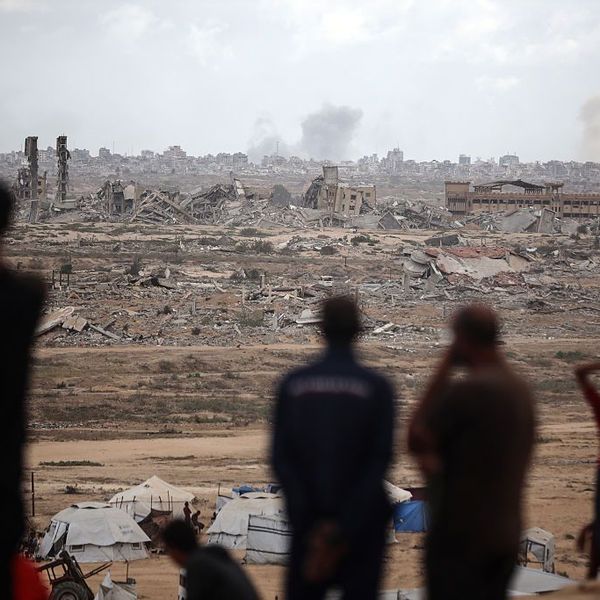
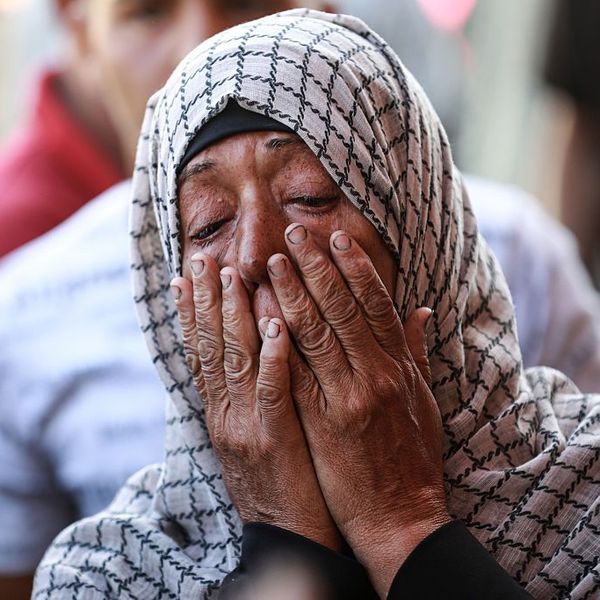
At the same time, survivors and those who have been displaced multiple times are returning to where they once lived—to the apocalyptic ruins of their homeland. Among them is Gaza resident Fidaa Haraz. Like many others, she is now wandering around Gaza City, against a backdrop that resembles destroyed Berlin after World War II: “I’m walking in the street, but I do not know where to go, due to the extent of the destruction. I swear I don’t know where the crossroads is or where my home is. I know that my home was leveled, but where is it? Where is it? I cannot find it. What is this? What do we do with our lives? Where should we live? Where should we stay?”
At least 92 percent of Gaza’s infrastructure has been destroyed or severely damaged by Israel, over 61 million tons of rubble are piling up in the coastal strip, including hospitals, schools, and mosques, heavily contaminated and turned into hazardous material by unexploded ordnance. It will take many years, probably generations, to dispose of it and rebuild. It is the miserable and long aftermath of genocide.
US President Donald Trump is being credited with ending Israel’s more than two-year massacre of the Gaza population. He pressured Israel Prime Minister Benjamin Netanyahu and Hamas to accept his “deal.” In fact, Hamas had already agreed to similar conditions for a ceasefire over a year ago. But Israel prevented the agreement and killed Hamas leader and negotiator Ismail Haniyya, while the US under Biden and then Trump continued to supply weapons for the genocide and blocked a ceasefire in the UN Security Council with its veto.
What has changed in recent months is that, while the Palestinians could not be persuaded to “voluntarily leave” their homeland and Hamas was by no means defeated militarily, the Netanyahu government has increasingly become a burden for Trump due to its various regional escalations.
Due to the bombing of the ceasefire talks in Qatar, a close ally of the US, and pressure from his own MAGA movement, Trump felt increasingly compelled to rein in Tel Aviv.
The accusation from conservative and right-wing circles in the US, prominently articulated by Tucker Carlson or US Representative Marjorie Taylor Greene, is that Israel is drawing far too much attention to itself and damaging US interests (i.e., those of the American business class) with its bombing of Iran, Lebanon, Syria, Iraq, and Yemen, while the Trump administration has more important things to do, such as fighting for an authoritarian-fascist social order and declaring economic war on the rest of the world. They demand: “America First.”
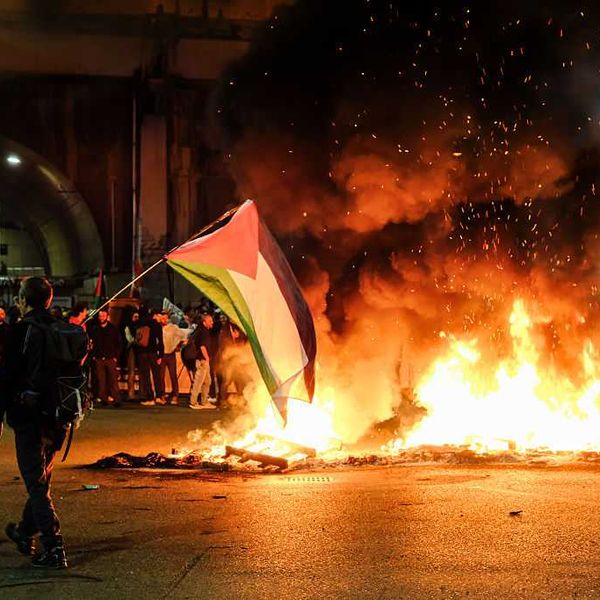
The growing protests in Western industrialized countries, with hundreds of thousands, even millions on the streets—from Great Britain to Italy and Spain to the Netherlands and Germany, forcing their governments to make concessions— the opposition of large parts of the so-called Global South to the Gaza massacre and the associated isolation of Israel have caused costs to rise for the US as well as for Netanyahu.
However, we should not be under any illusions: the possible end of genocide, starvation, and humanitarian destruction does not mean that peace will ensue. For peace is more than the absence of constant military bombardment, marauding ground troops, and kill zones.
The great war may be coming to an end, but the violence of occupation, apartheid, and territorial expansion is not. For example, settlement projects in the West Bank continued at an accelerated pace during the Gaza war.
We should also remember what the status quo was before October 7, 2023, when the Hamas attack occurred, which Trump’s peace plan not only renews but actually exacerbates. Because now it means Israeli occupation plus military-backed foreign administration for an indefinite period. Later, according to the plan, the corrupt Palestinian Authority in the West Bank, which is hated by many Palestinians, will be handed control of Gaza by Trump and Co.
The occupation will therefore continue, with all its consequences. In 2023 alone, until the Hamas attack, an average of one Palestinian per day was killed by Israeli soldiers and settlers in the occupied territories, including many children. A total of over 200 victims in the first seven months of that year. The Western media has become accustomed to turning a blind eye to Israel’s ongoing human rights violations, the many minors held in torture prisonswithout charge, and the violent occupation regime, which the International Court of Justice has ruled to be a violation of international law.
When journalists report on the crimes in the occupied territories, they become targets of the “most moral army in the world.” Al-Jazeera journalist Shireen Abu Akleh, a US citizen well known in the Arab world, was killed in 2022 by Israeli soldiers who shot her in the head while she was reporting, even though she was clearly wearing a bulletproof vest and a helmet marked “Press.” Israel denied the case, and the US swept it under the rug.
All of this will continue. Nor will future Israeli military actions in Gaza be prevented by ceasefires. In total, before the Hamas attack, there were five Gaza wars, which are in reality massacres of an enclosed population, with thousands of civilians killed: 2008, 2012, 2014, 2018, 2021. You can literally set your watch by it. Afterwards, a ceasefire was always agreed upon until Israel again deemed it necessary to “mow the lawn,” as the regular decimation of resistance in Gaza against the occupation is referred to in Israeli security circles.
Since Israel’s Six-Day War in June 1967 and the conquest of the West Bank, Gaza, the Golan Heights, and the Sinai Peninsula, US-Israeli peace plans have also been adopted at regular intervals. Virtually every US president, with the exception of Barack Obama and Joe Biden, has produced one. None of them have come to anything. Trump’s 20-point plan is the most substance-free of them all, as political analyst Norman Finkelstein said on Al-Jazeera.
The other plans at least referred to international documents such as UN Security Council Resolution 242 after the Six-Day War, which calls on Israel to withdraw from all occupied territories and to recognize the sovereignty, political independence, and right of every state “to live in peace within secure and recognized boundaries free from threats or acts of force.” Or they referred to the territorial borderline (“green line”) as the basis for a two-state solution in sync with the international community.
None of this is included in the Trump plan. It is simply 20 short points, without any references or coherence. There is not even any mention of whether Israel will continue to occupy the Gaza Strip by controlling its land, sea, and air borders. It simply assumes that this “norm” will not change.
The rights of Palestinians are absent from the plan, except for a vague formulation at the end: if the residents of Gaza and the Palestinian Authority behave properly (“Gaza re-development advances and when the PA reform programme is faithfully carried out”) — which, of course, will be judged by the US and Israel — then “the conditions may finally be in place for a credible pathway to Palestinian self-determination and statehood.”
Such meaningless statements are not worth the paper they are written on. Israel has repeatedly rejected a Palestinian state within internationally recognized borders, like they are implicit in UN Resolution 242. For 50 years, this peace has been offered by the Arab states and the Palestinian side. Israel has blocked the solution also in the rare cases of bilateral negotiations by at most presentingunviable cantons. Meanwhile, over the decades, illegal settlements and walls have created facts on the ground, and fertile land in the West Bank and around Jerusalem has been unlawfully appropriated.
It is obvious that there is no willingness to hold those responsible for the genocide and their accomplices in Washington, London, Paris, or Berlin accountable, or even those in the executive suites of companies that profit from Israel’s violence – because who would enforce this internationally?
At the same time, the US regularlyuses its veto when the solution is put to a vote in the UN Security Council, while the Netanyahu government, with the support of the Knesset—and also in line with an increasingly rejectionist population in Israel—has now openly declared that it will no longer allow a Palestinian state. Israel and the US are completely isolated internationally on this issue. Hence, in order to appease the Western liberal public in particular, vague talk of Palestinian statehood is again used: a rhetorical facade with no political value, pretending “goodwill” where there is none.
There will be no peace without justice. As long as the root cause of the crisis in the Middle East—an end to occupation and apartheid, a viable state for the Palestinians within internationally recognized borders—is not seriously addressed, there will continue to be violence and, at best, a peace of the graveyard.
To this day, we do not know how many people in Gaza have actually been killed, how many more will die as a result of the famine and genocide (some estimates put the final death toll at hundreds of thousands), and how many will be scarred for life by mutilation.
However, it is obvious that there is no willingness to hold those responsible for the genocide and their accomplices in Washington, London, Paris, or Berlin accountable, or even those in the executive suites of companies that profit from Israel’s violence—because who would enforce this internationally? The states that support Israel essentially rule the world and all have blood on their hands. This is nothing new, see the “war on terror” or the Indochina wars of the US.
What is now to be decided and implemented is good if it ends the mass deaths in Gaza. But it remains a peace of the perpetrators and a genocide without accountability, with which the survivors have to live.
Our work is licensed under Creative Commons (CC BY-NC-ND 3.0). Feel free to republish and share widely.
David Goessmann David Goeßmann is a journalist and author based in Berlin, Germany. He has worked for several media outlets including Spiegel Online, ARD, and ZDF. His articles appeared on Truthout, Common Dreams, The Progressive or Progressive International. In his books he analyzes climate policies, global justice, and media bias. Full Bio >
Israel’s Air-Power Colonialism
Like the British empire before it, Israel is attempting to dominate the Middle East from the skies.
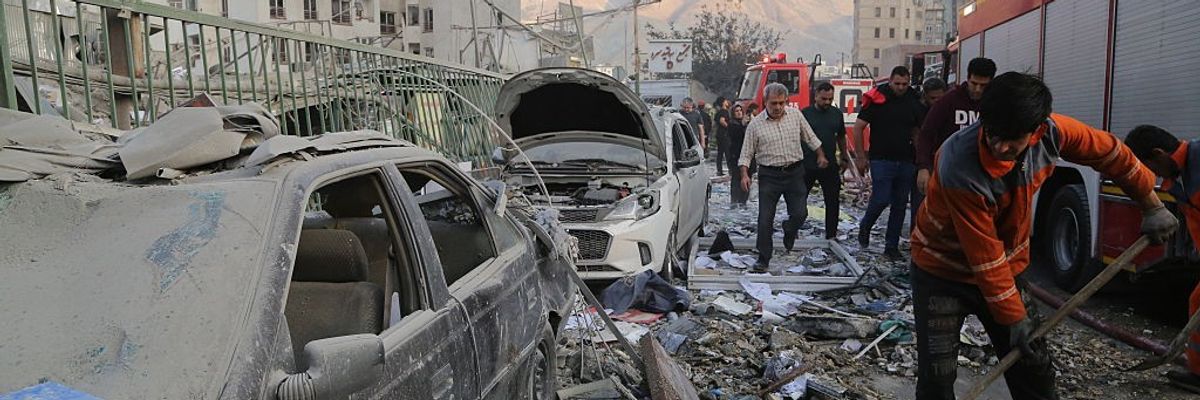
THE GHOST OF BOMBER HARRIS HAUNTS MENA A view of a damaged building in the Iranian capital, Tehran,
following an Israeli attack, on June 13, 2025 is shown. (Photo by Fatemeh Bahrami/Anadolu via Getty Images)
US President Donald Trump and Israeli Prime Minister Benjamin Netanyahu’s nomination of former British Prime Minister Tony Blair, his hands already crimson with the blood of innocent Iraqis, to run post-war Gaza, brings to mind a distant era when London sent its politicians out to be viceroys in its global colonial domains. Consider Blair’s proposed appointment, made (of course!) without consulting any Palestinians, a clear signal that the Middle East has entered a second era of Western imperialism. Other than Palestine, which has already been subjected to classic settler colonialism, our current neo-imperial moment is characterized by the American use of Israel as its base in the Middle East and by the employment of air power to subdue any challengers. Swarming
The odd assortment of grifters, oil men, financiers, mercenaries, white nationalists, and Christian and Jewish Zionists now presiding in Washington, led by that great orange-hued hotelier-in-chief, has (with the help of Germany, Great Britain, and France) built up Israel into a huge airbase with a small country attached to it. From that airbase, a constant stream of missiles, rockets, drones, and fighter jets routinely swarm out to hit regional neighbors.
Gaza was pounded into rubble almost hourly for the last two years, only the first month of which could plausibly have been justified as “self-defense” in the wake of the horrific Hamas attack on Israel on October 7, 2023. Even the Palestinian West Bank, already under Israeli military rule, has been struck repeatedly from above. Lebanon has been subject to numerous bombings despite a supposed ceasefire, as has Syria (no matter that its leader claims he wants good relations with his neighbor). Yemen, which has indeed fired missiles at Israel to protest the genocide in Gaza, has now been hit endlessly by the Israelis, who also struck Iranian nuclear enrichment sites and other targets last June.
Some of the Israeli bombing raids or missile and drone strikes were indeed tit-for-tat replies to attacks by that country’s enemies. Others were only made necessary because of Israeli provocations, including its seemingly never-ending atrocities in Gaza, to which regional actors have felt compelled to reply. Many Israeli strikes, however, have had little, if anything, to do with self-defense, often being aimed at civilian targets or at places like Syria that pose no immediate threat. On September 9, Israel even bombed Qatar, the country its leaders had asked to help negotiate with Hamas for the return of Israeli hostages taken on October 7.
Tel Aviv is now shaping governments of the Middle East simply by wiping their officials off the face of the Earth or credibly threatening to do so. In short, what we’re now seeing is Israel’s version of air-power colonialism.
Typically, its fighter jets bombed the Yemeni capital of Sanaa on August 28, assassinating northern Yemen’s prime minister, Ahmed al-Rahwi, along with several senior members of the region’s Houthi government and numerous journalists. (Israeli officials had previously boasted that they could have killed the top leadership of Iran in their 12-day war on that country in June.)
In reality, Tel Aviv is now shaping governments of the Middle East simply by wiping their officials off the face of the Earth or credibly threatening to do so. Israel has also had an eerie hand in shaping outside perceptions of developments in the region by regularly assassinating journalists, not only in Palestine but also in Lebanon and as far abroad as Yemen. However, by failing to come close to subduing the region entirely, what Tel Aviv has created is a negative version of hegemony rather than grasping any kind of positive leadership role.
Negative Imperialism
The massive June bombardment of Iran by Israel and the United States, destroying civilian nuclear enrichment facilities at Natanz and Fordow, came amid ongoing diplomatic negotiations in Oman. As a signatory to the Nuclear Non-Proliferation Treaty, Iran has the right to enrich uranium for civilian uses and no credible evidence was presented that Tehran had decided to militarize its program. The International Atomic Energy Agency (IAEA) condemned both sets of strikes as severe violations of the United Nations charter and of its own statutes. They also posed public health concerns, mainly because of the release of potentially toxic chemicals and radiological contaminants.
Those attacks, in short, were aimed at denying Iran the sort of economic and scientific enterprises that are a routine part of life in Israel and the United States, as well as Brazil, China, France, Germany, India, Japan, the Netherlands, Pakistan, Russia, and the United Kingdom. Several of those countries (like Israel) do, of course, also have nuclear weapons, while Iran does not. In the end, Tehran saw no benefit in the 2015 nuclear deal its leaders had agreed to that required it to mothball 80% of its civilian nuclear enrichment program. Indeed, President Trump functionally punished the Iranian leadership for complying with it when he imposed maximum-pressure sanctions in May 2018—sanctions largely maintained by the Biden administration and in place to this day.
Those dangerous and illegal air strikes on Iran should bring to mind 19th-century British and Russian resistance to the building of a railroad by Iran’s Qajar dynasty, a form of what I’ve come to think of as “negative imperialism.” In other words, contrary to classic theories of imperialism that focused on the domination of markets and the extraction of resources, some imperial strategies have always been aimed at preventing the operation of markets in order to keep a victim nation weak.
After all, Iran has few navigable waterways and its economy has long suffered from transportation difficulties. The obvious solution once upon a time was to build a railroad, something both the British and the Russians came to oppose out of a desire to keep that country a weak buffer zone between their empires. Iran didn’t, in fact, get such a railroad until 1938.
In a similar fashion, 21st-century imperialism-from-the-air is denying it the ability to produce fuel for its nuclear power plant at Bushehr. The United States, Europe, and Israel are treating Iran differently from so many other countries in this regard because of its government’s rejection of a Western-imposed imperial order in the region.
Popular movements and revolts brought the long decades of British and French colonial dominance of the Middle East to an end after World War II. The demise of colonialism and the rise of independent nation-states was, however, never truly accepted by right-wing politicians in either Europe or the United States who had no interest in confronting the horrors of the colonial age. Instead, they preferred to ignore history, including the slave trade, economic looting, the displacement or massacre of Indigenous populations, the mismanagement of famines, and forms of racist apartheid. Worse yet, the desire for a sanitized history of the colonial era was often coupled with a determination to run the entire deadly experiment all over again.
The framers of the ill-omened Global War on Terror’s nightmares in Afghanistan and Iraq during the administration of President George W. Bush would openly celebrate what was functionally the return of Western colonialism. They attempted to use America’s moment as a hyperpower (unconstrained by great power competition after the fall of the Soviet Union in 1991) to attempt to recolonize the Greater Middle East.
Predictably, they failed miserably. Unlike their 19th-century ancestors, people in the Global South are now largely urban and literate, connected by newspapers and the internet, organized by political parties and nongovernmental outfits, and in possession of capital, resources, and sophisticated weaponry. Direct colonization could now only be achieved through truly genocidal acts, as Israeli actions in Gaza suggest—and, even then, would be unlikely to succeed.
“We Destroyed the Villages by Air Patrols”
No wonder imperial powers have once again turned to indirect dominance through aerial bombardment. The use of air power to try to subdue or at least curb Middle Easterners is, in fact, more than a century old. That tactic was inaugurated by the government of Italian Prime Minister Giovanni Giolitti during his country’s invasion and occupation of Ottoman Libya in 1911. Aerial surveillance pilot Lieutenant Giulio Gavotti fitted detonators to two-pound grenades, dropping them on enemy camps. Though he caused no injuries, his act, then seen as sneaky and ungentlemanly, provoked outrage.
The ruthless British subjugation of Palestine, aimed at—this should sound eerily familiar today—displacing the Indigenous population and establishing a European “Jewish Ulster” there to bolster British rule in the Middle East, also deployed air power. As Irish parliamentarian Chris Hazzard observed, “Herbert Samuel, hated in Ireland for sanctioning Roger Casement’s execution and the internment of thousands following the Easter Rising in 1916—would, as Britain’s first High Commissioner in Palestine, order the indiscriminate aerial bombardment of Palestinian protestors in 1921 (the first bombs dropped from the sky on Palestinian civilians).”
The most extensive use of aerial bombardment for imperial control, however, would be pursued by the British in Mesopotamia, which they derogatorily called “Mespot.” The fragile British occupation of what is now Iraq from 1917 to 1932 ended long before imperialists like then-Secretary of State for War, Air, and the Colonies Winston Churchill thought it should, largely because the armed local population mounted a vigorous resistance to it. A war-weary British public proved unwilling to bear the costs of a large occupation army there in the 1920s, so Churchill decided to use the Royal Air Force to keep control.
Unlike genuine international leadership, the Frankenstein monster of negative hegemony in the Middle East stirs only opposition and resistance.
Arthur “Bomber” Harris, a settler in colonial Rhodesia, who joined the British Air Force during the first World War, was then sent to Iraq. As he wrote, “We were equipped with Vickers Venon and subsequently Victoria aircraft… By sawing a sighting hole in the nose of our troop carriers and making our own bomb racks we converted them into what were nearly the first post-war long-range heavy bombers.” He did not attempt to gild the lily about his tactics: “[I]f the rebellion continued, we destroyed the villages and by air patrols kept the insurgents away from their homes for as long as necessary.” That, as he explained, was far less expensive than using troops and, of course, produced no high infantry casualty counts of the sort that had scarred Europe’s conscience during World War I.
Colonial officials obscured the fact that such measures were being taken against a civilian population in peacetime, rather than enemy soldiers during a war. In short, the denial that there are any civilians in Palestine, or in the Middle East more generally, has a long colonial heritage. It should be noted, however, that, in the end, Great Britain’s aerial dominance of Iraq failed, and it finally had to grant that country what at least passed for independence in 1932. In 1958, an enraged public would finally violently overthrow the government the British had installed there, after which Iraq became a nationalist challenger to Western dominance in the region for decades to come.
Of course, Harris’ air power strategy, whetted in Mesopotamia, came to haunt Europe itself during the Second World War, when he emerged as commander-in-chief of Bomber Command and rose to the rank of air chief marshal. He would then pioneer the tactic of massively bombarding civilian cities, beginning with the “thousand bomber” raid on Cologne in May 1942. His “total war” air campaign would, of course, culminate in the notorious 1945 firebombing of Dresden, which devastated eight square miles of the “Florence of Germany,” wiping out at least 25,000 victims, most of them noncombatants. Terror from the Skies
In the end, the way Bomber Harris’ deadly skies came home to Europe should be an object lesson to our own neo-imperialists. At this very moment, in fact, Europe faces menacing drones no less than does the Middle East. Moreover, unlike genuine international leadership, the Frankenstein monster of negative hegemony in the Middle East stirs only opposition and resistance. Despite Israel’s technological superiority, it has hardly achieved invulnerability. Poverty-stricken and war-ridden Yemen has, for instance, managed to all but close the vital Red Sea to international shipping to protest the genocide in Gaza and has hit Israel with hypersonic missiles, closing the port of Eilat. Nor, during their 12-day war, did Iran prove entirely helpless either. It took out Israel’s major oil refinery and struck key military and research facilities. Instead of shaking the Iranian government, Israel appears to have pushed Iranians to rally around the flag. Nor is it even clear that Iran’s stockpile of highly enriched uranium was affected.
Most damning of all, Israel’s ability to inflict atrocities on the Palestinians of Gaza (often with US-supplied weaponry) has produced widespread revulsion. It is now increasingly isolated, its prime minister unable even to fly over France and Spain due to a fear of an International Criminal Court warrant for his arrest. The publics of the Middle East are boiling with anger, as are many Europeans. In early October, Italy’s major labor unions called a general strike, essentially closing the country down to protest Israel’s interception of the Global Sumud Flotilla, a group of ships attempting to bring humanitarian aid to Gaza. As with Bomber Harris’ ill-starred domination of Iraq, terror from the skies in Gaza and beyond is all too likely to fail as a long-term Grand Strategy.
Trump briefly silenced as Israeli politicians yell 'terrorist' during parliament address
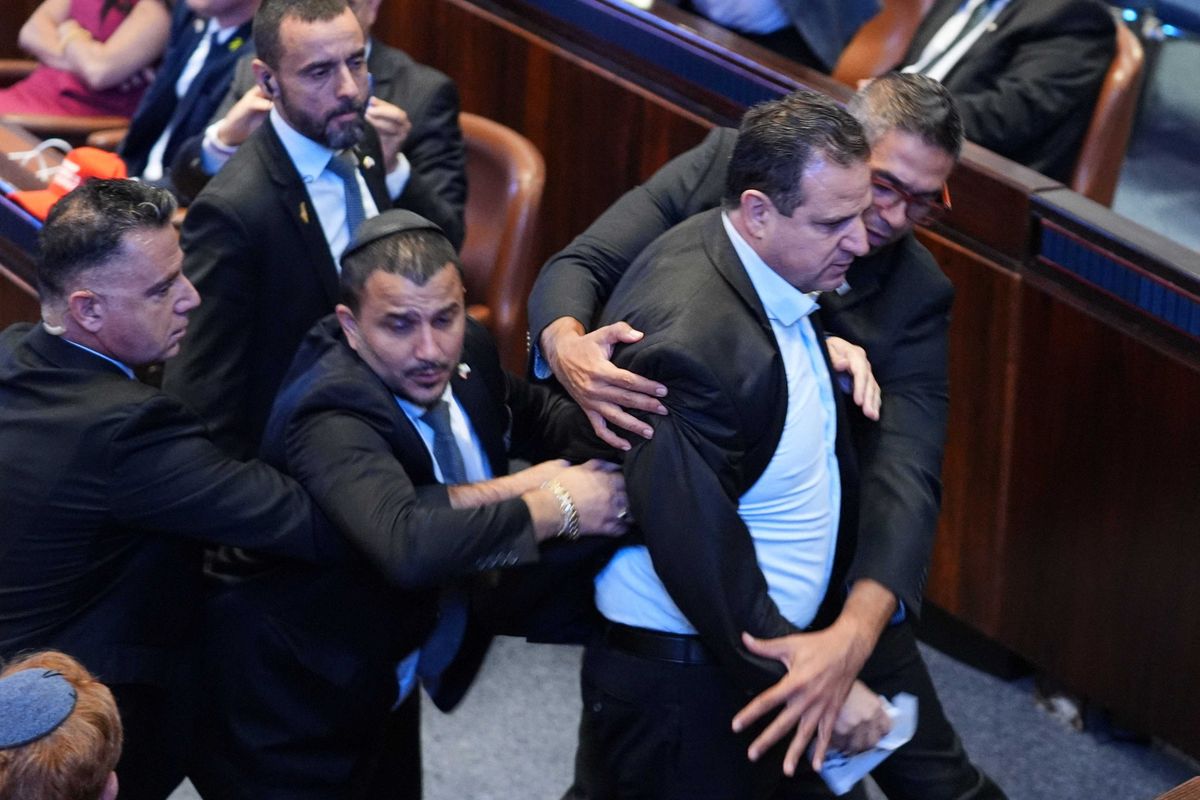
Security officials remove a Knesset member who interrupted President Donald Trump speech to the Knesset, Israel's parliament, Monday, Oct. 13, 2025, in Jerusalem. Evan Vucci/Pool via REUTERS
President Donald Trump was briefly silenced Monday as Israeli politicians yelled 'terrorist!" at him as he spoke to the nation's parliament.
The U.S. president has just received a standing ovation from members of the Knesset as he took his place behind the podium, but two left-wing politicians began shouting at him in protest as he praised his special envoy Steve Witkoff in a speech marking the end of Israel’s war on Gaza.
The interruption left Trump briefly silenced as he was seen clearly confused by what was going on.
Hadash Party head Ayman Odeh and Knesset member Ofer Cassif were ejected from the chamber after shouting "terrorist" at Trump. They held up signs that read "genocide" and "recognize Palestine."
"That was very efficient," Trump said, as Cassif and Odeh were marched out of the hall by Knesset security.
"Back to Steve," Trump said, after the commotion settled down. “I call him Henry Kissinger, who doesn’t leak.
US President Donald Trump lands in Egypt for a summit on Gaza
- Copyright AFP Alfredo ESTRELLA
Bahira AMIN
US President Donald Trump’s lightning summit in Egypt, meant to cement a ceasefire in Gaza, was more a celebration of one man’s newfound peacemaker persona than a high-level political negotiation, according to diplomats.
Trump and the leaders of Egypt, Qatar and Turkey — guarantors to the Israel-Hamas deal — signed a document on Monday that one diplomat called “more of a vision statement than anything”.
In devastated Gaza, the ceasefire is mostly holding, but most of the details of Trump’s 20-point peace plan have yet to be thrashed out.
These include significant possible stumbling blocks, like Hamas’s disarmament, the Palestinian territory’s future governance and the role of a supervisory so-called “Board of Peace”.
While Trump held what amounted to a victory rally in the Israeli Knesset on Monday, more than two dozen world leaders — including UK Prime Minister Keir Starmer, German Chancellor Friedrich Merz, French President Emmanuel Macron and UN chief Antonio Guterres — were kept waiting all day in the Egyptian resort town of Sharm el-Sheikh. – Red carpet shuffle –
In a meeting held ahead of his arrival, they intended to press him on aid and governance, according to a participant.
But when he arrived, four hours behind schedule, they lined up in a queue that snaked all the way around the room to greet the man who claims he can “bring peace to the Middle East”.
One after the other, they stepped onto a red carpet to shake hands with a beaming Trump, over a giant sign that read “PEACE 2025”.
“It was a very bizarre day… Just the show, the speech with all these leaders lined up, it was crazy,” one diplomat told AFP, requesting anonymity in order to speak freely about diplomatic events.
“I’ve never seen anything like it, and I don’t think many people have.”
As Trump and Sisi delivered addresses, most of the leaders stood dutifully behind them in an unorthodox configuration that even Trump questioned.
Some refused to take part, with France’s Macron, Jordan’s King Abdullah II and Palestinian president Mahmud Abbas remaining seated.
“He’s not going to stand behind a leader as he speaks,” said a French diplomat travelling with Macron, who also accompanied Abbas on stage for a reportedly unplanned handshake, which ended up being one of Trump’s longest.
– The chosen one –
Egypt — whose leaders have taken every opportunity to praise Trump as the “only one in the world capable of achieving peace” — pulled out all the stops.
Sharm el-Sheikh was covered in billboards featuring Trump and Sisi’s smiling faces alongside slogans of peace.
As Air Force One entered Egyptian airspace, it was accompanied by Egypt’s US-made F16 fighter jets, which Trump then quipped that Cairo had “paid a lot of money for” but “got a good deal”.
Sisi announced Trump had been awarded the Order of the Nile, Egypt’s highest civilian honour, hours after he received the equivalent medal in Israel.
One Egyptian source said Monday’s document was meant to “simply commemorate peace efforts”, for which Cairo credits Trump.
But the former reality TV star’s penchant for theatrics nearly derailed even that.
In a surprise three-way call while he was in Israel, Trump pushed Sisi into inviting Israeli Prime Minister Benjamin Netanyahu to the summit — sandbagging the leaders waiting in Egypt, some of whose governments have no relations with Israel.
According to a diplomatic source, Sisi only agreed to the call in order to “be the star pupil”.
Diplomats said several states bristled at the idea of rubbing shoulders with the Israeli leader, who is wanted by the ICC on suspicion of war crimes.
AFP journalists witnessed Turkish president Recep Tayyip Erdogan’s plane circle Sharm el-Sheikh twice before it landed. Turkish media reported Erdogan refused to land after he learnt of the invite.
By the time Netanyahu had rushed out a statement saying he would not attend because of a Jewish religious holiday and Trump had landed, several leaders had run out of time.
Faced with the risk of having to rush to their planes without a single soundbite, the leaders of Germany, Italy and the Netherlands were forced to walk out of their closed-off meeting area to meet the sequestered press.
“It was a ridiculous day,” another diplomat said in the aftermath, echoing an incredulity that was shared by every diplomat to whom AFP spoke.
“But ultimately we’re better off today than where we were yesterday. The question is if he’s going to keep this up going forward, and keep that firm line with Netanyahu.”
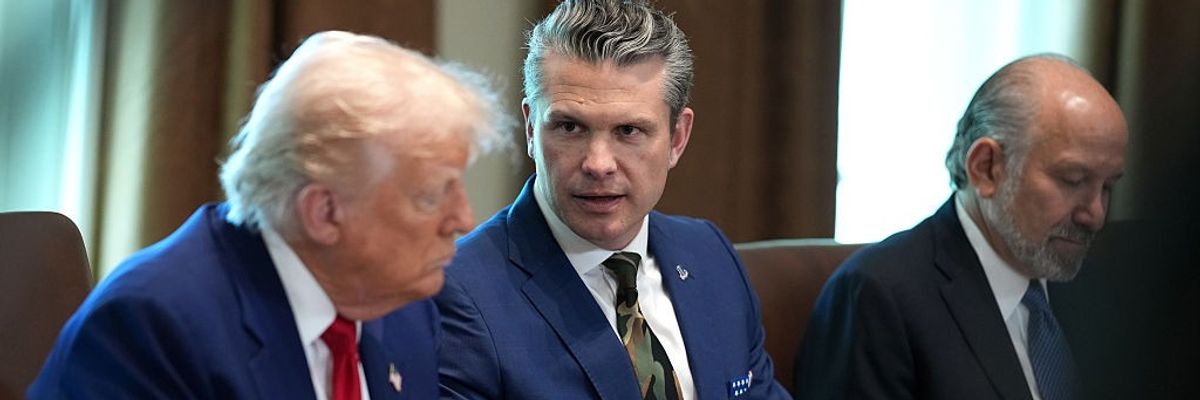
‘These Are Murders’: Trump Condemned After Bombing Yet Another Boat Off Venezuelan Coast “That’s 27 lives taken without even a semblance of a legal justification under domestic or international law,” said one critic of the boat strikes. US Defense Secretary Pete Hegseth looks on as US President Donald Trump speaks during a Cabinet meeting at the White House on April 30, 2025 in Washington, DC. (Photo by Andrew Harnik/Getty Images)
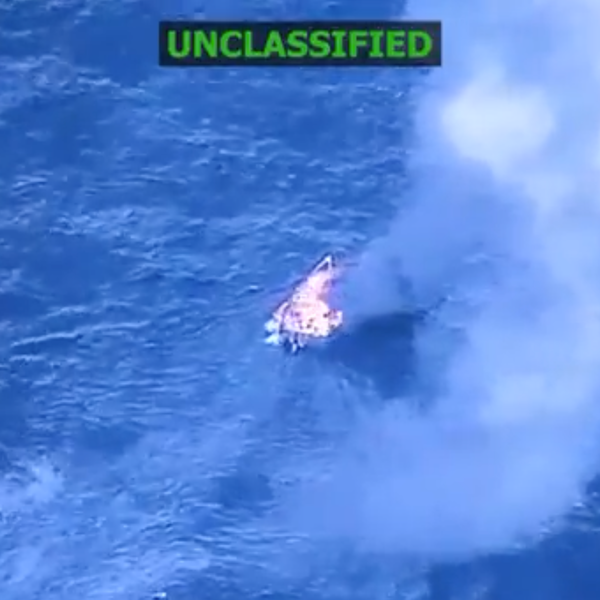
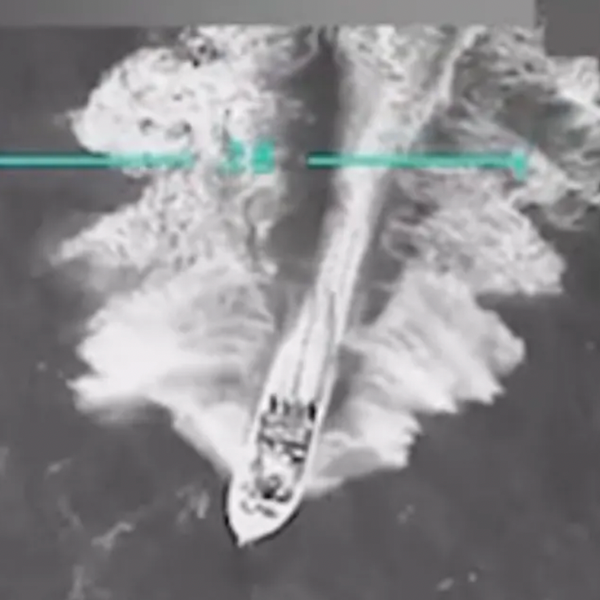
President Donald Trump, who in recent days has been lobbying to receive a Nobel Peace Prize, announced on Tuesday afternoon that he had ordered a lethal US military strike against yet another boat off the coast of Venezuela.
In a post on his Truth Social network, Trump said that Defense Secretary Pete Hegseth on Tuesday morning “ordered a lethal kinetic strike on a vessel affiliated with a Designated Terrorist Organization (DTO) conducting narcotrafficking.”
Trump then claimed that “intelligence” had “confirmed” that the boat was engaged in illegal drug trafficking, although he provided no evidence to back up this claim.
Six passengers aboard the boat were killed in the attack, the president claimed.
Trump has now repeatedlyordered the American military to use deadly force against boats in international waters that are allegedly engaged in drug smuggling. Many legal scholars, including some right-wing experts who in the past have embraced expansive views of presidential powers, consider such strikesillegal.
Rep. Pramila Jayapal (D-Wash.) condemned Trump’s attack, which she noted was the fifth time the president had ordered a strike on a purported drug-trafficking vessel.
“Using the military to execute alleged criminals with no due process or input from Congress is brazenly unconstitutional and damaging to our democracy,” she wrote in a social media post.
Attorney George Conway, a former Republican who broke with the party over its support of Trump, said there was absolutely zero doubt that Trump’s strikes on the boats were acts of murder.
“That’s 27 flat-out murders,” he wrote in a post on X, referring to the total body count resulting from the president’s boat strikes. “That’s 27 lives taken without even a semblance of a legal justification under domestic or international law.”
Kenneth Roth, former director of Human Rights Watch, said that Trump could face criminal prosecution for attacking the boats.
“Trump keeps ordering the summary killing of people in boats off the coast of Venezuela,” Roth wrote. “Whether drug traffickers or not (we have no idea), these are murders. If on Venezuelan territory, the International Criminal Court could prosecute.”
Richard Painter, who was an ethics lawyer in former President George W. Bush’s White House, similarly described the strikes as “murder” and “a violation of US as well as international law.”
According to The Associated Press, the strikes against boats have unnerved the Venezuelan government, which believes the US is preparing to launch a regime-change war against it. Venezuelan Defense Minister Vladimir Padrino last week even went so far as to tell his citizens to be prepared for a potential invasion during a televised appearance.
“I want to warn the population: We have to prepare ourselves because the irrationality with which the US empire operates is not normal,” he said, according to the AP. “It’s anti-political, anti-human, warmongering, rude, and vulgar.”
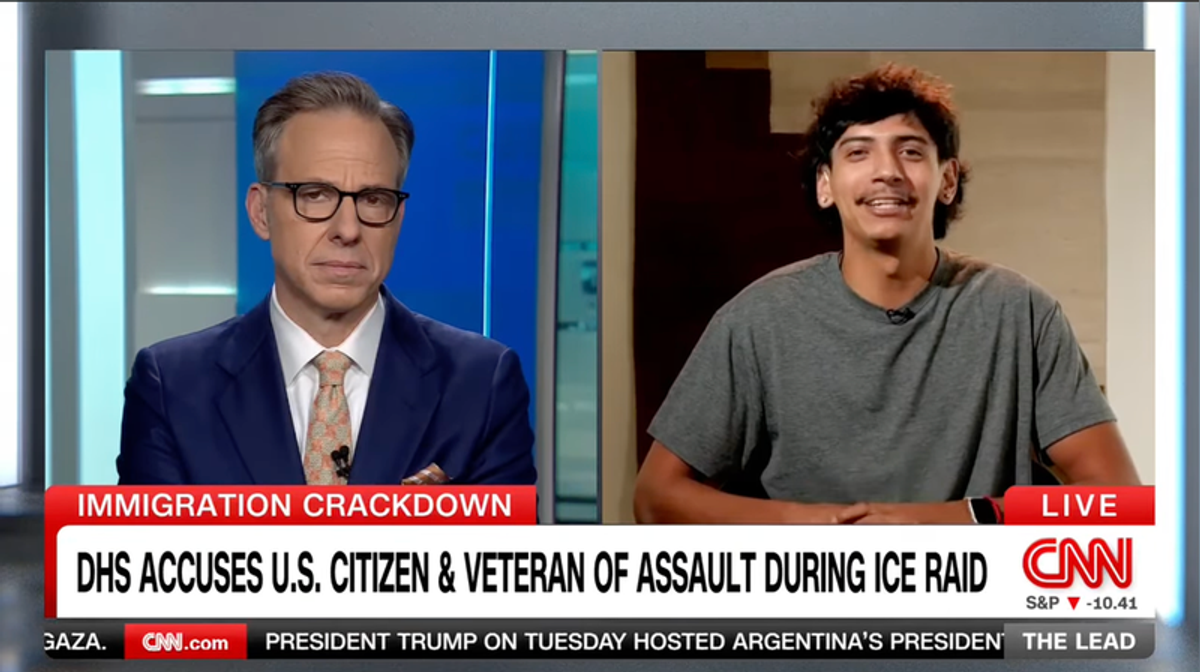
'I'm not blind': Military vet trashes Trump admin after immigration arrest
A military veteran who was recently arrested by President Donald Trump's immigration agents trashed the administration on Tuesday during an interview on CNN.
George Retes, a 25-year-old military veteran, was arrested by immigration officials in July during a raid on a marijuana farm where Retes worked as a contract security guard. He was detained for three days, where he was reportedly placed on suicide watch.
The Department of Homeland Security has previously pushed back on Retes' claims. In October, DHS claimed that Retes "became violent" with immigration officers, thereby warranting his arrest.
DHS officials have said attorneys in the Department of Justice are reviewing his case to determine if federal charges are warranted. Retes discussed his case and Trump's immigration actions on "The Lead with Jake Tapper."
"I'm not blind to see what's happening out there in the world," Retes said. "I'm not stuck in a bubble. It happens. I mean, it happened to me. It is happening to other people. And so it could really happen to anyone."
Retes also said that he is "not concerned" about his upcoming federal case.
"I'm not concerned in the slightest," Retes said. "I'm just ready to start this whole process and get over this six-month waiting period. I have these claims and am ready to get justice and find out the truth, and get the truth for everyone, honestly."
Trump admin yanks 6 visas over Charlie Kirk comments: report
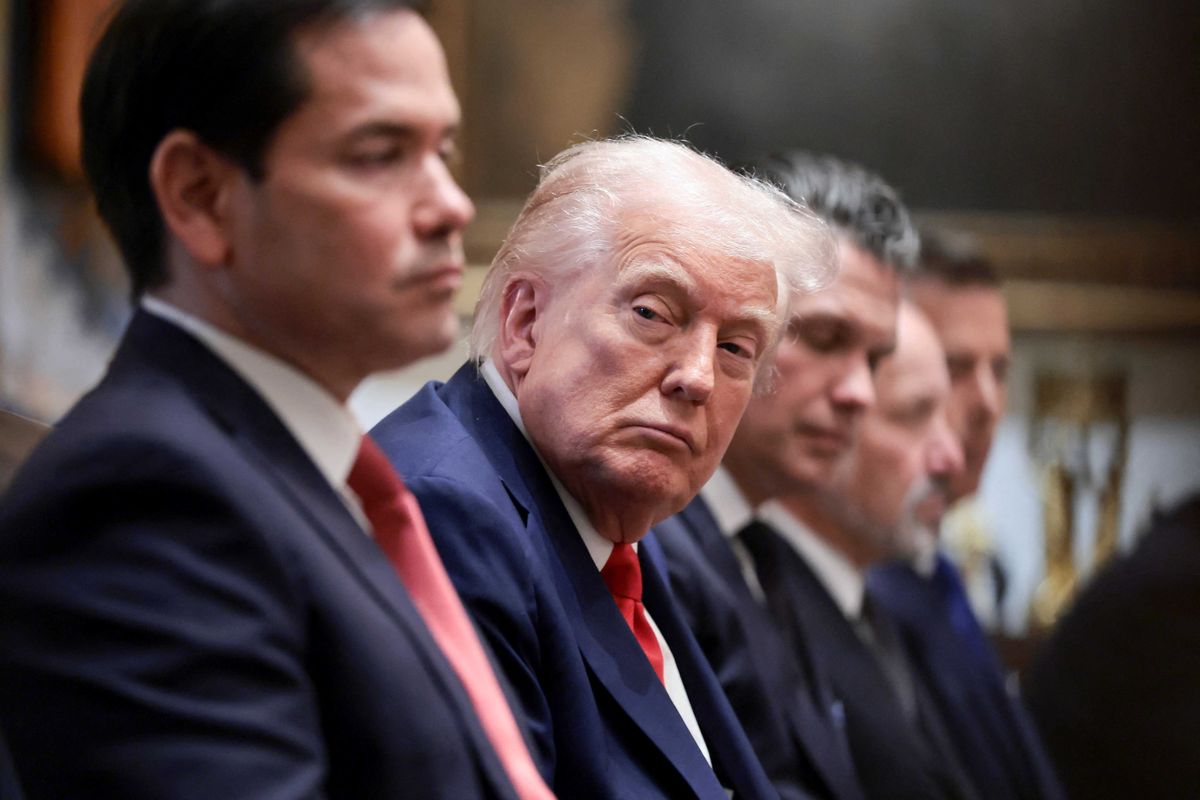
President Donald Trump, Secretary of State Marco Rubio and Defense Secretary Pete Hegseth attend a cabinet meeting at the White House, in Washington, D.C. on Oct. 9, 2025. REUTERS/Evelyn Hockstein
The Department of State has revoked at least six visas from people who made negative comments about conservative activist Charlie Kirk following his assassination in September, according to a new report.
The Wall Street Journal reported on Tuesday that foreign nationals from Argentina, South Africa, and Mexico had their visas revoked. An Argentine national allegedly said Kirk spread "racist, xenophobic, misogynistic rhetoric." A post from a German national shared with the outlet read in part, “When fascists die, democrats don’t complain.”
The State Department said in a statement to the Journal that the U.S. "has no obligation to host foreigners who wish death on Americans."
State Department officials began collecting information about people who spoke negatively about Kirk after his assassination, according to the report. For instance, Deputy Secretary of State Christopher Landau directed officials to “undertake appropriate action” for social media posts that "glorified violence," the report states.
"If you are here on a visa and cheering on the public assassination of a political figure, prepare to be deported," Rubio said. "You are not welcome in this country."
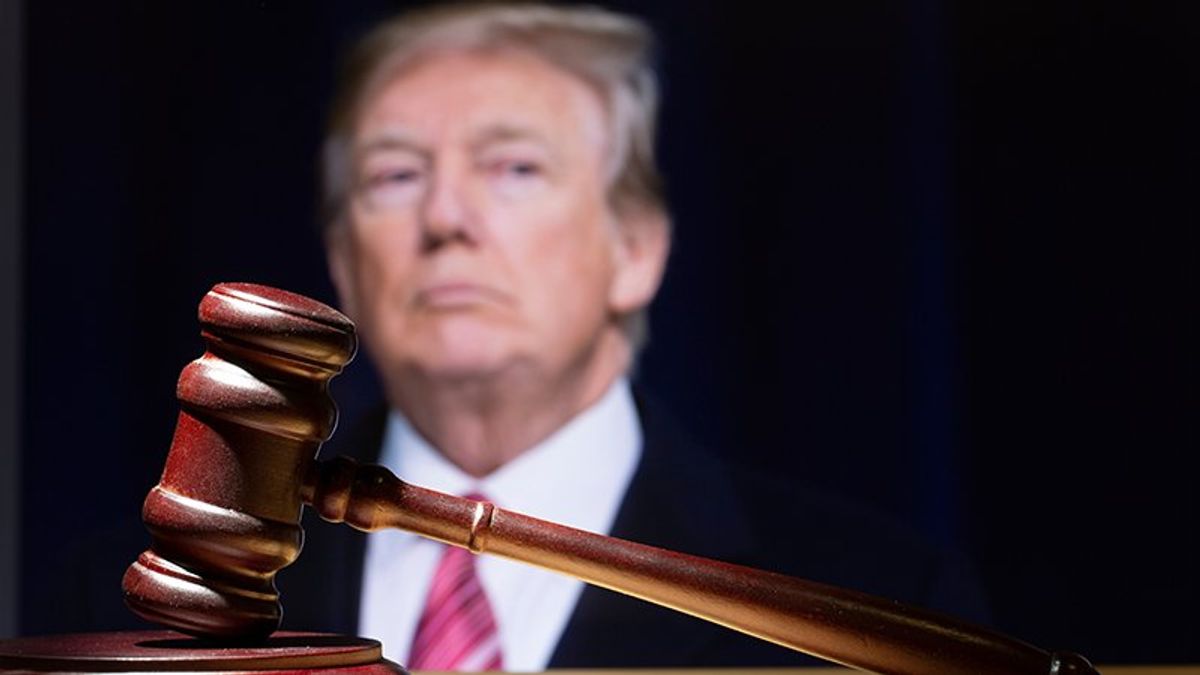
Donald Trump with court gavel. (Photo: Potashev Aleksandr/Shutterstock)
A federal judge in Rhode Island has accused the Trump administration of defying its order prohibiting officials from withholding Federal Emergency Management Agency funds from jurisdictions that refuse to cooperate with Trump's immigration policies.
U.S. District Judge William Smith in Rhode Island initially blocked the administration from enforcing this policy in September, ruling that it ran afoul of the Administrative Procedure Act.
But in a new scathing opinion handed down on Tuesday, Smith said the administration has basically not changed its policy in any way, and is still telling areas applying for disaster relief they have to follow the policy "conditionally."
"Despite the Court’s order, Defendants have now inserted the contested conditions into Plaintiff States’ award letters for DHS grants, along with statements promising that '[i]f the injunction is stayed, vacated, or extinguished, the [contested conditions] will immediately become effective,'" wrote Smith.
This is not acceptable, he wrote, because it's essentially just telling states and cities that the court order isn't worth regarding.
"In effect, Defendants have done precisely what the Memorandum and Order forbids, which is requiring Plaintiff States to agree to assist in federal immigration enforcement or else forgo the award of DHS grants," wrote Smith. "The fig leaf conditional nature of the requirement makes little difference. No matter how confident Defendants may be of their chances on appeal, at present, the contested conditions are unlawful. Plaintiff States therefore have a right to accept the awards without regard to the contested conditions."
"Defendants’ new condition is not a good faith effort to comply with the order; it is a ham-handed attempt to bully the states into making promises they have no obligation to make at the risk of losing critical disaster and other funding already appropriated by Congress," Smith
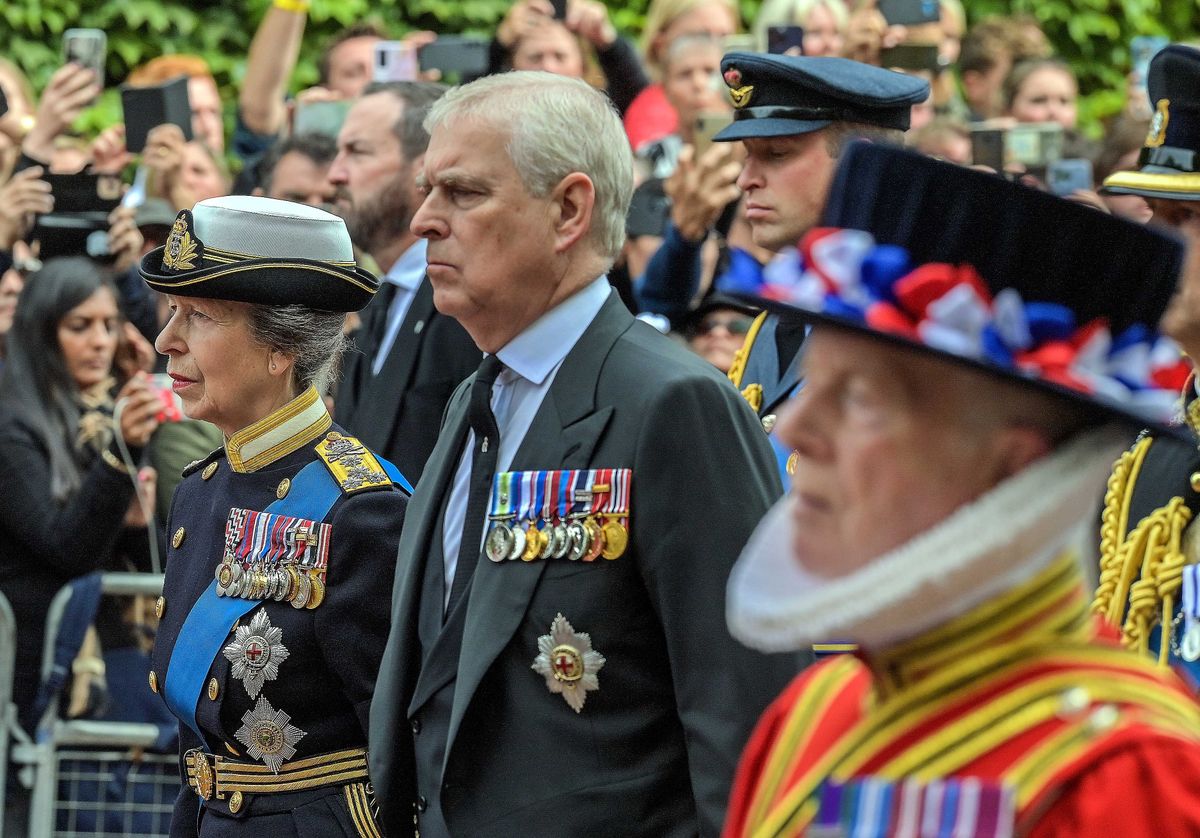
'Tip of the iceberg': Prince Andrew interviewer predicts new Epstein links coming
A journalist whose interview with Prince Andrew ended his royal career predicts Jeffrey Epstein's files will ruin more reputations.
The Duke of York invited BBC's Emily Maitlis into the palace in November 2019 to discuss his friendship with the disgraced financier shortly after his death in jail — an interview widely considered to be an own goal for the prince, who denied having sex with a 17-year-old sex trafficking victim.
"None of it quite adds up, does it?" Maitlis said.
"The narrative from Andrew had always been, 'After I realized who he was, you know, broadly, I ended contact with him,'" Maitlis added. "Now, that doesn't match up because in 2008 [Epstein had] already been a convicted sex offender, he'd served his short prison sentence, and Prince Andrew had told me that he'd broken off contact in 2006, but actually he hadn't."
Andrew told her that he ceased contact with Epstein in December 2010, saying he ended their friendship in person during a walk in Central Park that was captured by a paparazzi photo. But the emails show him offering support to Epstein in February 2011 and promising to "keep in close touch and we’ll play some more soon."
"We still don't know the absolute truth even behind that photo taken in Central Park," Maitlis said. "But much of the reporting has suggested that it was very useful to Epstein because it provided, sort of, kompromat. It links him."
The newly revealed emails were dated Feb. 28, 2011, the day after the Mail on Sunday published a now-infamous photo of the prince with Epstein co-conspirator Ghislaine Maxwell and teenaged Virginia Giuffre, with whom he later settled a sex abuse lawsuit out of court for an undisclosed sum while denying liability."I mean, the number of people that have ended up lying for Epstein, whose careers have ended up in absolute tatters because of their connection to him," Maitlis said. "I think we're at the tip of the iceberg, I genuinely do."
New film accuses Big Oil of using 'sophisticated and successful' Big Tobacco-style lies
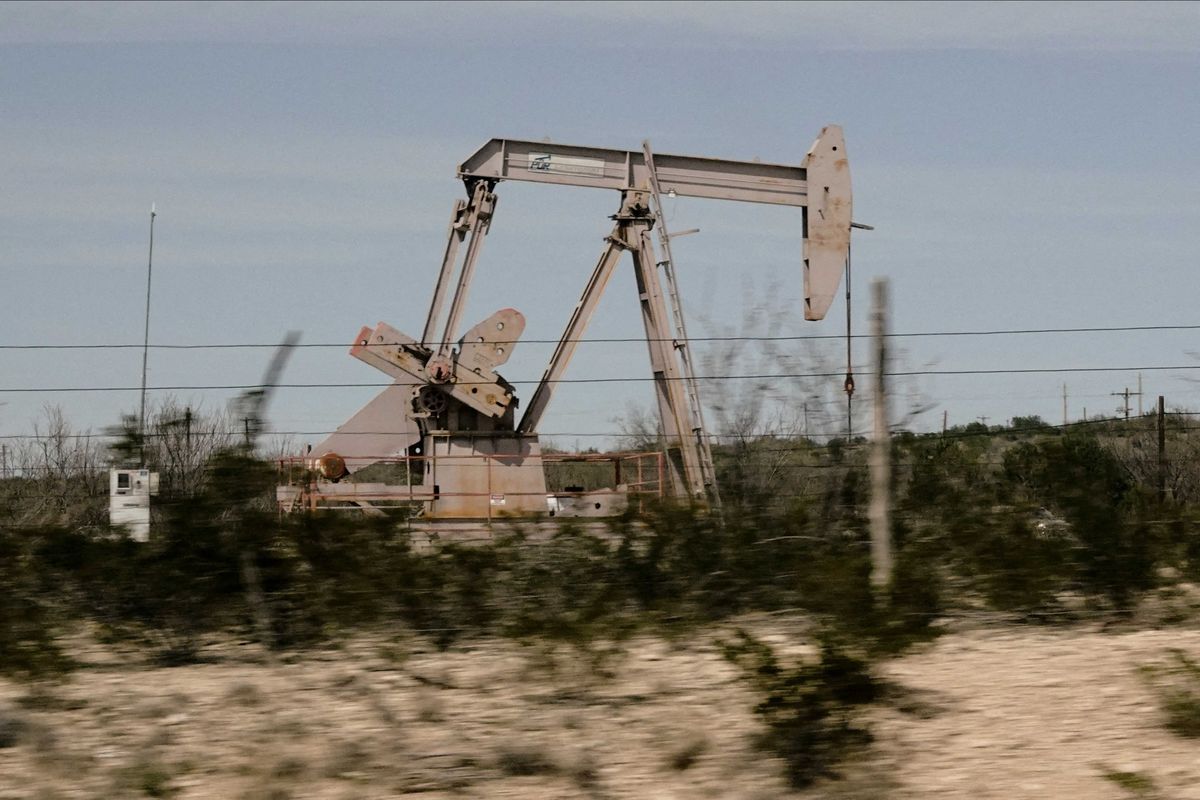
FILE PHOTO: A pump jack drills oil crude from the Yates Oilfield in West Texas?s Permian Basin near Iraan, Texas, U.S., March 17, 2023. Picture taken through glass. REUTERS/Bing Guan/File Photo
With less than a month until the next United Nations climate summit, filmmakers and campaigners on Tuesday released an animation that calls out the fossil fuel industry’s use of Big Tobacco’s public relations tactics in under three minutes.
The Well-Oiled Plan was created by Daniel Bird and Adam Levy at Wit & Wisdom, in association with the Global Climate and Health Alliance (GCHA), a consortium of over 200 health professional and civil society groups. It “comprises scenes spun off from My Pet Footprint,” a comedy feature film about climate grief that Wit & Wisdom is developing with Greenpeace.
“My Pet Footprint plays with the idea that consciences are removable,” Bird, the director, said in a statement. “Decades ago, the fossil fuel industry decided business as usual was worth any price, and it takes an incredible deficit of conscience to be able to do that when that price is the demise of civilization and possibly even life in general.”
With the new short, he said, “we took a direct route from smoking as an evil perpetuated on individuals, and the nascent public relations industry around that, to smoking as an industrial process imposed upon the global population. The only difference now is that the PR machine has become all the more sophisticated, and, dare we say it, successful.”
The short film—starring comedians Cody Dahler and Michael Spicer, and actors Jaylah Moore-Ross and Sinead Phelps—comes as Big Oil has faced mounting scrutiny for its decades of burying, denying, and downplaying the impacts of its products. Since the #ExxonKnew exposés a decade ago, more journalism, scholarly research, lawsuits against the fossil fuel industry, and congressional reports and hearings have further revealed major polluters’ climate disinformation efforts.
In 2020, Fossil Free Media launched Clean Creatives, a project targeting public relations and advertising agencies that serve Big Oil. Since then, 2,700 creatives and 1,500 agencies have signed the campaign’s pledge to decline future contracts with the industry. Despite that progress, polluters continue to dump money into PR and ads from firms that will work for them.
“Fossil fuels are making people sick—and the companies behind them are spending millions on advertising and PR to cover it up,” said Shweta Narayan, campaign lead at GCHA—which last month released a report detailing “the health toll of fossil fuels” for at every stage of the production cycle and across the human lifespan.
“The PR and communications industry must commit to fossil-free contracts,” she argued. “Firms cannot claim to advance sustainability while helping fossil fuel companies greenwash their image or delay climate policy. We call on agencies to adopt fossil-free policies, disclose all fossil fuel clients, and ensure their work does not obstruct the transition to clean, healthy energy systems.”
“We call on agencies to adopt fossil-free policies, disclose all fossil fuel clients, and ensure their work does not obstruct the transition to clean, healthy energy systems.”
Narayan noted that “the same PR firms spreading fossil fuel disinformation are also working with health organizations—a clear conflict of interest for health. Through the Break the Fossil Influence—Fossil-Free Health Communications commitment, health organizations are leading by example, by cutting ties with those agencies.”
Clean Creatives executive director Duncan Meisel stressed that “health organizations should not be hiring agencies with fossil fuel clients.”
“The fossil fuel industry is one of the leading causes of long-term illness and premature death worldwide, and agencies that help sell coal, oil, or gas products have a conflict of interest when it comes to organizations and companies that promote public health,” he continued. “At the same time, the public health sector has enormous leverage to use their procurement policies to accelerate the marketing industry’s exit from fossil fuels.”
Hundreds of organizations, including GCHA, are also calling on Brazil, host of the upcoming UN Climate Change Conference (COP30), to “make clear that unchecked corporate influence is not compatible with climate leadership.”
GCHA executive director Jeni Miller on Tuesday urged the United Nations Framework Convention on Climate Change (UNFCCC) “to draw a red line” and declare that “no PR or advertising firms that continue to work for fossil fuel companies should be allowed to shape the story of the COP or the climate crisis.”
“For all future COPs, governments and the UNFCCC must adopt clear conflict-of-interest rules and ethical procurement standards for all communications, PR, and event contractors—just as the World Health Organization does under its tobacco control framework,” she said. “Just as the health community once stood up to Big Tobacco and its advertising, now it’s time to stand up to Big Oil.”