Wednesday, October 15, 2025

 SCI-FI-TEK 70 YRS IN THE MAKING

World’s largest superconducting fusion system will use American technology to measure the plasma within


Princeton Plasma Physics Laboratory partners with Japan and Europe on groundbreaking fusion energy research


Princeton University

Fusion leaders from the U.S., Europe and Japan. 

image: 

Fusion leaders from the U.S., Europe and Japan met to discuss research collaborations. From left: Masaya Hanada, director general of Naka Institute for Fusion Science and Technology at the National Institutes for Quantum Science and Technology (QST); Emma Quigg, special adviser to the undersecretary for science at the U.S. Department of Energy (DOE); Christian Newton, chief of staff for the Office of Science at DOE; Jean Paul Allain, associate director of Fusion Energy Sciences at DOE; Hisayoshi Itoh, executive director of QST; Masayuki Ono, principal research physicist at the Princeton Plasma Physics Laboratory; Guy Phillips, head of the Broader Approach and Roadmap Projects Unit at F4E and project leader for the Satellite Tokamak Programme at Europe’s Fusion for Energy.

view more 

Credit: QST


When the experimental fusion system known as JT-60SA comes online in 2026, it will be the world’s largest fusion machine: a crowning achievement for Japan and Europe, which partnered to build it. Now, the research team has turned to the U.S. Department of Energy’s (DOE) Princeton Plasma Physics Laboratory (PPPL) for critical measurement equipment.

The effort is part of a new agreement between PPPL, the National Institutes for Quantum Science and Technology (QST) of Japan and Europe’s Fusion for Energy (F4E), allowing for broader collaboration between the researchers.

“PPPL is among the first U.S. institutions to have its equipment installed directly into JT-60SA,” said Luis Delgado-Aparicio, head of advanced projects at PPPL. He leads the PPPL team working on the project along with PPPL Principal Research Physicist Masayuki Ono

Under the agreement, the Lab will provide a measurement tool, or diagnostic, called an X-ray imaging crystal spectrometer (XICS). XICS will help scientists better understand and control the plasma inside JT-60SA. The four-ton tool will be installed in winter 2026 and will begin collecting data in that summer. Placing the XICS on the largest fusion tokamak in the world positions the U.S. and its strategic partnership with Japan at a new level.

The valve that will connect the XICS diagnostic to JT-60SA manufactured by Metal Technologies Company of Japan. The valve was specially designed by a team at PPPL, QST and MTC led by Luis F. Delgado-Aparicio and Masayuki Ono, who stand fifth and sixth from left. (Photo credit: Luis F. Delgado-Aparicio)

Precise measurements will be needed to produce commercial fusion

The XICS measures X-rays emitted by the plasma to determine critical information, including the temperature, speed and direction of flow of the plasma particles, as well as the density of impurities — unwanted particles that can cool the plasma. While in some ways this cooling can be beneficial, the plasma temperature needs to be carefully monitored to achieve maximum efficiency of the fusion system. These measurements are essential to keeping the fusion reaction stable and preventing the plasma from escaping its magnetic containment and damaging the inside of the fusion system.

Similar systems sometimes provide inaccurate measurements if the temperature shifts. But PPPL’s XICS has an advanced calibration system that ensures every measurement is highly accurate, regardless of changes in density and temperature. This level of precision is crucial for achieving the stable, high-performance plasma conditions needed for commercial fusion power plants.

PPPL: Contributing to the world’s most important fusion systems

JT-60SA represents a crucial stepping stone toward someday achieving commercial fusion energy. The machine uses superconducting magnets, which can operate continuously without losing energy to electrical resistance as long as the magnets are kept at an extremely cold temperature. In normal electrical systems, some energy is always lost as heat due to resistance. But when superconducting magnets are cooled to incredibly low temperatures, they lose all resistance and become highly efficient. This makes JT-60SA more similar to future power plants than older experimental machines.

It will be the most powerful tokamak before ITER is operational, the multinational fusion facility under construction in France. Despite being smaller than ITER, JT-60SA’s power density — or power per unit volume — will be exceptionally high, allowing scientists to explore new plasma behaviors and test concepts for future power plants. 

“This calibration scheme has never been implemented before at this scale,” said Delgado-Aparicio. “Because JT-60SA will be such a powerful machine, we will access operating conditions that we have never achieved before. The measurements need to be very accurate for us to learn the science of those new regimes.”

PPPL was the natural choice when JT-60SA’s operators decided to seek international collaboration for their diagnostic systems, as the Lab pioneered and refined the diagnostic over the last two decades. The Lab also has a long history of developing diagnostic systems used around the world. PPPL’s XICS system has already been installed on several fusion systems worldwide, including the Large Helical Device in Japan and Wendelstein 7-X in Germany.

“The XICS is essential. You need something like it to get the data from plasma and do the physics. That’s one reason we were chosen to be the first U.S. institution to collaborate with JT-60SA,” Ono said.

The collaboration extends beyond providing equipment for the tokamak or fusion system. PPPL scientists will operate the diagnostic locally and remotely, analyze the data and share findings with the international fusion community. The knowledge gained will inform the design and operation of similar diagnostics on ITER and future demonstration power plants.

“Taking advantage of facilities overseas is very important for fusion research in the U.S. to be world-class,” said Ono.

Funding for this work was provided by DOE’s Fusion Energy Sciences program.

PPPL is mastering the art of using plasma — the fourth state of matter — to solve some of the world’s toughest science and technology challenges. Nestled on Princeton University’s Forrestal Campus in Plainsboro, New Jersey, our research ignites innovation in a range of applications including fusion energy, nanoscale fabrication, quantum materials and devices, and sustainability science. The University manages the Laboratory for the U.S. Department of Energy’s Office of Science, which is the nation’s single largest supporter of basic research in the physical sciences. Feel the heat at https://energy.gov/science and https://www.pppl.gov

The valve that will connect the XICS diagnostic to JT-60SA manufactured by Metal Technologies Company of Japan. The valve was specially designed by a team at PPPL, QST and MTC led by Luis F. Delgado-Aparicio and Masayuki Ono, who stand fifth and sixth from left. 

Credit

Luis F. Delgado-Aparicio


World’s Forests ‘Still in Crisis’ Halfway to Deadline to End Deforestation: Report

“The 2025 Forest Declaration Assessment is out and can broadly be summarized as, ‘We suck,’” said one climate scientist.


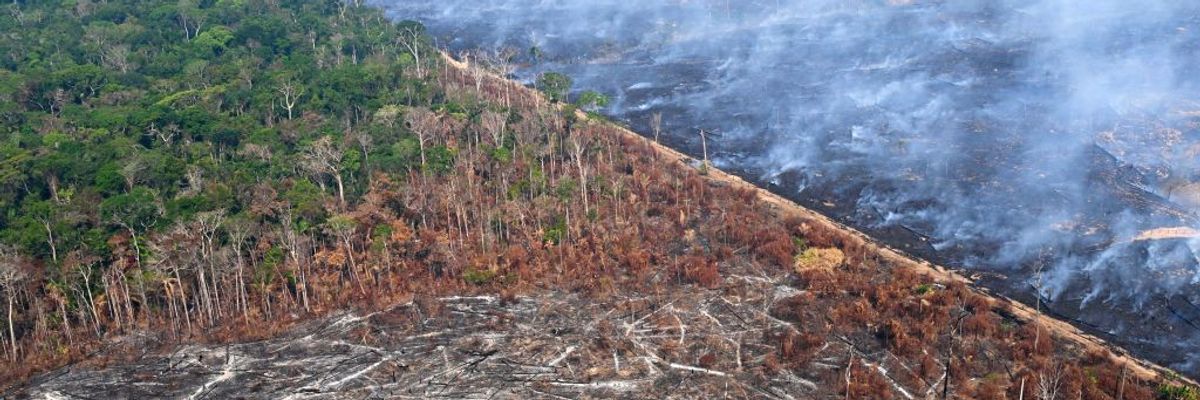
An aerial view shows a large swath of the Amazon rainforest deforested by illegal fire in the municipality of Labrea, Amazonas State, Brazil, on August 20, 2024.
(Photo by Evaristo Sa/AFP via Getty Images)


Brett Wilkins
Oct 14, 2025
COMMON DREAMS


The world’s governments are falling far short of their goal to tackle forest destruction by the end of the decade, according to a key annual report published Monday.

At the 2021 United Nations Climate Change Conference, or COP26, in Scotland, 145 countries adopted the Forest Declaration, pledging to end deforestation and forest degradation and restore 30% of all degraded ecosystems by 2030.

Annual Forest Declaration Assessment reports—which are published by a coalition of dozens of NGOs—track progress toward achieving the objectives established at COP29. Although stopping and reversing deforestation by 2030 is crucial to averting the worst consequences of the climate and biodiversity crises, every annual report has highlighted how the world is failing to adequately protect its forests.

This year is no different. According to the 2025 Forest Declaration Assessment, “in 2024, forests continued to experience large-scale destruction, with nearly 8.1 million hectares permanently lost globally.”

“Primary tropical forests continue to be cleared at alarming rates, with 6.73 million hectares lost last year alone, releasing 3.1 billion metric tons of greenhouse gases,” the report continues. “Losses in forested Key Biodiversity Areas reached 2.2 million hectares, up 47% from the previous year, threatening irreplaceable habitats.”


The assessment notes:
Deforestation remains overwhelmingly driven by clearance for permanent agriculture, accounting for an average of about 86% of global deforestation over the past decade, with other drivers such as mining exerting growing pressure. Because deforestation commodities are both consumed domestically and exported internationally, deforestation represents a systemic problem; national land-use policies and practices are deeply intertwined with global demand. This highlights the urgent need for structural change in how production and trade are regulated, monitored, and ultimately governed.

Furthermore, according to the report, “financial flows are still grossly misaligned with forest goals, with harmful subsidies outweighing green subsidies by over 200:1,” and “despite new pledges, the flow of funds to forest countries and local actors remains far below what’s necessary to deliver on 2030 goals.”

“‘Global forests remain in crisis’ is not the headline we hoped to write in 2025,” the publication states. “As the halfway point in the decade of ambitious forest pledges, this year was meant to be a turning point. Despite the indispensable role of forests, the verdict is clear: We are off track.”

The news isn’t all bad—the report highlights how “restoration efforts are expanding, with at least 10.6 million hectares hosting forest restoration projects worldwide. But global data remain too fragmented to determine whether the world is recovering forests at the scale required.”

The assessment offers the following recommendations for policymakers:Governments must act to value forests, including through regulations and pricing in the real cost of deforestation;
Action must become integrated, not siloed, as the climate emergency, biodiversity crisis, and social inequality are all interconnected; and
Decision-making must be inclusive and participatory, as rapid progress toward 2030 forest goals requires the participation of Indigenous peoples, local communities, women, and civil society.

“At the halfway point to 2030, the world should be seeing a steep decline in deforestation,” the assessment says. “Instead, the global deforestation curve has not begun to bend.”

The new Forest Declaration Assessment comes ahead of next month’s UN climate conference, or COP30, in Belém, located in the Brazilian Amazon.

“This COP30 is extremely crucial for us to move these pledges to actions,” Sassan Saatchi, founder of the non-profit CTrees and a former NASA scientist, told Climate Home News on Tuesday.

“The nice thing about COP30 being in Belém,” Saatchi added, “is that there is a recognition that the Global South has really come forward to say: ’We are going to solve the climate problem, even though we may not have been historically the cause of this climate change.‘”

Global goal to end deforestation nowhere near being met: experts


By AFP
October 13, 2025


Globally, deforestation is driven overwhelmingly by the expansion of agriculture. - Copyright AFP Lillian SUWANRUMPHA

Deforestation “has not meaningfully declined” despite a global pledge to halt forest destruction, but next month’s UN climate summit in the Amazon could mark a turning point, experts said Tuesday.

Last year an area of the world’s forests larger than Scotland was cleared primarily to make way for agriculture, according to an annual deforestation assessment by a broad global coalition of researchers and activists.

Tropical primary forests — particularly carbon rich and ecologically biodiverse environments — were the hardest hit, with 6.7 million hectares (16.6 million acres) lost in 2024.

The report also highlighted persistent but overlooked levels of forest degradation, where land is damaged but not razed entirely, mostly owing to logging, road building and fires lit to clear land.

Rates of deforestation remain stubbornly high despite a commitment made by more than 140 leaders at the UN COP summit in 2021 to stamp it out by the end of the decade.

“Deforestation has not meaningfully declined since the beginning of the decade, and we’re already halfway through,” Erin Matson, an expert at the Climate Focus think tank and co-author of the latest assessment, told reporters.

“Every year we are losing this level of forests.”

Deforestation worldwide in 2024 was 3.1 million hectares above the maximum possible level to align with meeting the 2030 goal, the report said.

Globally, deforestation is overwhelmingly driven by the expansion of permanent agriculture, which accounted for 85 percent of all forest loss over the past decade.

“But another important and growing driver is mining and extractives for gold, for coal, and increasingly for the metals and minerals required for the renewable energy transition,” Matson said.


– ‘Forest COP’ –


Matson said she was cautiously optimistic the cause could be revived at next month’s COP30 summit in Brazil, the first time the annual UN climate conference has been held in the Amazon region.

“This is the forest COP. I think there’s a lot of opportunity there,” she said.

Brazil’s President Luiz Inacio Lula da Silva chose to host the world’s most important climate talks in Belem, the gateway to the Amazon, to spotlight the role of forests in absorbing carbon dioxide.

At COP30, Brazil will launch an innovative new fund that rewards countries with high tropical forest cover — mostly developing nations in Asia, Africa and Latin America — that protect trees rather than chopping them down.

The Tropical Forests Forever Fund (TFFF) aims to raise up to $25 billion from donor countries and another $100 billion from the private sector, which is invested on financial markets. Brazil has already thrown in $1 billion.

“What is new about this initiative… it’s the scale, it’s the simplicity, it’s the long-term vision, and it’s the leadership of the Global South,” said Elisabeth Hoch, international portfolio lead from the Climate and Company, a think tank.

“From a political point of view, the initiative has a lot of value but it has not yet reached a stage of maturity sufficient to be fully launched,” said a French government source on Friday.

Matson said “political courage” was needed at COP30 to correct course and put the fight for forests back on the global agenda.

“Looking at the global picture of deforestation, it is dark, but we may be in the darkness before the dawn,” she said.
As Trump Boosts Coal Industry, Black Lung Miners Say They’ve Been ‘Cast Aside to Die’

“The Trump administration was handed tools to protect black lung and they are doing everything in their power to toss those rules in the trash,” said one campaigner ahead of a planned protest.


This photograph shows a dust-covered coal miner’s gaze while working.
(Photo by Sergii Kharchenko/NurPhoto via Getty Images)


Brett Wilkins
Oct 13, 2025
COMMON DREAMS


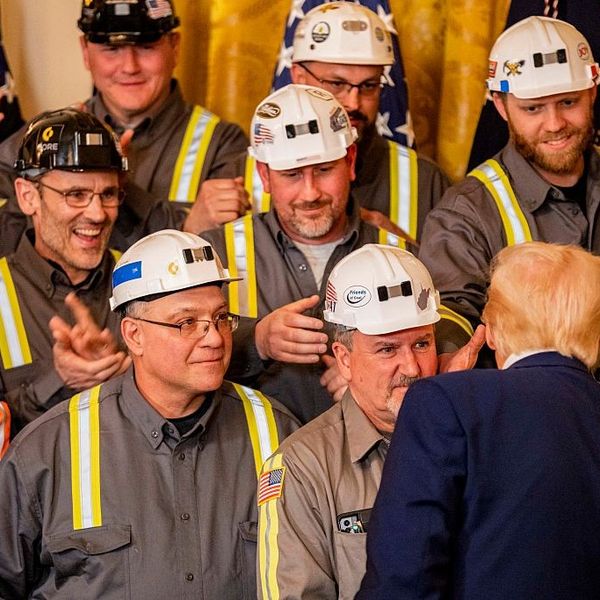
As the Trump administration moves ahead with a massive bailout for the coal industry as part of its “drill, baby, drill” pro-fossil fuel energy policy, miners suffering from black lung disease and their advocates are set for a Tuesday protest in Washington, DC to draw attention what they say is the government’s failure to protect them.

Last month, the Department of Energy (DOE) announced a $625 million investment “to expand and reinvigorate America’s coal industry,” despite the sedimentary rock being arguably the worst fossil fuel for both air pollution and the climate amid an ever-worsening planetary emergency. Burning coal for energy is the single largest contributor to planetary heating, accounting for over 40% of worldwide carbon dioxide emissions.
RECOMMENDED...


Public and Planet to ‘Pay the Price’ as Trump Props Up Coal With $625 Million Bailout


US Secretary of Energy Chris Wright said at the time that “beautiful, clean coal will be essential to powering America’s reindustrialization and winning the AI race,” as generative artificial intelligence requires stupendous amounts of energy.

“The companies might be getting a handout, but the miners ain’t getting none.”

The DOE’s announcement followed the Mine Safety and Health Administration’s (MSHA) blocking of a rule it finalized during the Biden administration to protect coal and other miners from silica dust, prolonged exposure to which causes black lung disease, which is formally called coal worker’s pneumoconiosis.

The inhaled coal dust triggers chronic inflammation, causing scarring of lung tissue, reduced lung elasticity, and impaired oxygen flow. Lung and heart failure, infections including pneumonia, lung cancer, and other illnesses cause a slow and painful death. The disease is irreversible and there is no cure. According to the American Lung Association, “an estimated 16% of coal workers are affected” by black lung disease in the US, “and after decades of improvement, the number of cases of black lung disease is on the rise again.”

As Trey Pollard of Appalachian Citizens’ Law Center explained in an email Monday:
The rule was supposed to go into effect in April 2025. But instead MSHA blocked the rule, blaming mass layoffs at the [National Institute for Occupational Safety and Health] conducted by Secretary of Health and Human Services Robert F. Kennedy Jr. The mining industry also took the rule to court, where the 8th Circuit Court of Appeals put an indefinite pause of the rule after the administration failed to oppose the industry’s request. The next court update is scheduled for mid-October, a full six months after the rule’s planned enforcement date.

“Every day of delayed enforcement increases miners’ exposure to silica and their risk of black lung disease,” Pollard added. “On October 14, miners, their families, and their supporters will gather in front of the Department of Labor to demand the administration fight to preserve the silica rule and to call for an end to the delays.”


The Washington, DC demonstration is being organized by the National Black Lung Association, with support from the United Mine Workers of America, Fayette County Black Lung Association, Kanawha County Black Lung Association, Wyoming County Black Lung Association, Virginia Black Lung Association Chapter 1, Virginia Black Lung Association Chapter 2, the Alliance for Appalachia, Appalachian Voices, Appalachian Citizens’ Law Center, and the BlueGreen Alliance.

“The Trump administration was handed tools to protect black lung and they are doing everything in their power to toss those rules in the trash,” BlueGreen Alliance executive director Jason Walsh told The New York Times‘ Lisa Friedman Monday.

Friedman interviewed miners suffering from black lung disease who said they felt abandoned by Trump, despite their support being a significant factor in his reelection.

“The companies might be getting a handout, but the miners ain’t getting none,” said 71-year-old National Black Lung Association president and retired miner Gary Hairston, who has been living with the disease since he was in his 40s.


Judith Riffe, whose husband Bernard died in March of complications from black lung disease after more than 40 years of work in West Virginia coal mines, told Friedman she wishes that the Trump administration would fight for miners as vigorously as it does for fossil fuel companies.

“Sure, they talk about how much they care about coal but come down here and look,” Riffe said. “They’re mining a lot more now, the coal trucks and everything are running, but there’s no benefits for the coal miners coming in.”

“The coal miners have supplied this country with electricity,” she added, “and now they’re just cast aside to die.”


American Soybean Farmers Sold Out by Trump While Argentina Gets Bailed Out

“The farm economy is suffering,” says the head of the American Soybean Association, “while our competitors supplant the United States in the biggest soybean import market in the world.”


Travis Hutchison, a soybean farmer, inspects a field ready for harvesting on one of his family’s farms in Cordova, Maryland, on October 10, 2025. Soybean prices “are really depressed because of the trade war,” Hutchison told AFP. His family tills 3,400 acres of soybeans, corn and other crops.
Photo by Roberto Schmidt / AFP via Getty Images)


Seth Sandronsky
Oct 14, 2025
Common Dreams

Trade policy isn’t sexy, but it is weighty, economically speaking. Jobs and wage-income are at-stake. Take President Trump’s trade policy, notably his fondness for tariffs, a tax on US imports that businesses and workers pay.

We begin with the Trump administration’s decision to provide a $20 billion “swap line” (currency exchanges between central banks) with the government of Argentina. Treasury Secretary Scott Bessent is the point man for the White House on this financial and political issue. Behind Bessent is a Wall Street hedge fund manager, Rob Citrone, a major foreign investor in Argentina, CNN reported.


Trump Admin Responds to Milei’s Failed Libertarian Policies With a US Taxpayer Bailout for Argentina


Trump Announces New 100% Tariff on China Over Rare Earth Minerals Restrictions

The Latin American country is in financial distress over its issuance of foreign bonds since President Javier Milei slashed public spending to spur economic growth. Such economic policy goes by the name of austerity.

However, Milei’s so-called pro-growth approach has had the opposite effect. Hunger and poverty among the Argentine working class are up. Workers’ household income is down.

“Argentina’s poverty rate has soared to almost 53% in the first six months of Javier Milei’s presidency,” reports The Guardian, “offering the first hard evidence of how the far-right libertarian’s tough austerity measures are hitting the population.”

What in part preceded such measures slamming the Argentine people was inflation, a general rise in prices.

In the meantime, the Milei government cut the export tax on soybeans. Chinese buyers jumped at this opportunity, reportedly purchasing some 20 shiploads of soybeans from Argentina.

That tax holiday cut revenue to the Argentine government, and created the trade conditions for lower export prices for foreign buyers. That arrangement didn’t fix the tax revenue problem for the Argentine government, however.

Meanwhile, American Soybean Association President Caleb Ragland shared this statement on some impacts of Trump’s trade policy of tit-for-tat tariffs between the world’s two biggest economies:
US soybean farmers have been clear for months: the administration needs to secure a trade deal with China. China is the world’s largest soybean customer and typically our top export market. The US has made zero sales to China in this new crop marketing year due to 20% retaliatory tariffs imposed by China in response to US tariffs. This has allowed other exporters, Brazil and now Argentina, to capture our market at the direct expense of US farmers.

According to Politico, the use of tariffs in China-US trade is having far-reaching effects on American agriculture generally. “The 20 percent retaliatory tariff that Beijing has imposed on US imports hasn’t just pounded soybean producers. All agriculture exports to China were down 53 percent in the first seven months of 2025, compared with the same period last year, according to USDA data.”

Ragland, head of the ASA, continues his criticism of Trump’s trade policy on American soybean farmers. “The frustration is overwhelming. US soybean prices are falling, harvest is underway, and farmers read headlines not about securing a trade agreement with China, but that the US government is extending $20 billion in economic support to Argentina while that country drops its soybean export taxes to sell 20 shiploads of Argentine soybeans to China in just two days.

”ASA is calling on President Trump and his negotiating team to prioritize securing an immediate deal on soybeans with China. The farm economy is suffering while our competitors supplant the United States in the biggest soybean import market in the world.“

What will the White House do to relieve the pain from the decline of demand from China for American agricultural products? Well, the president is considering a $10-$15 billion bailout for agriculture commodity producers.

Wait. There is a federal government shutdown. In other words, the allocation and distribution of a federal bailout for farmers experiencing a shortage of buyers from China will have to wait for the government shutdown to end. Your guess is as good as mine when that happens.

Such contradictions of economics and politics drive history, according to Marx. The federal government shutdown over health care spending while US Border Patrol agents and National Guard troops deploy on the streets of American cities for reason of so-called public safety are two cases in point. Trade policy that harms domestic agriculture generally and soybean growers particularly is another.


Our work is licensed under Creative Commons (CC BY-NC-ND 3.0). Feel free to republish and share widely.


Seth Sandronsky is a Sacramento journalist and member of the freelancers unit of the Pacific Media Workers Guild.
Full Bio >
Trump markets are a disaster in waiting — and millions of Americans will pay

Beware the Big Tech Oligarchs: 
Their AI-Crypto Bubble Is Bound to Burst

And when the artificial intelligence and cryptocurrency bubbles do burst, we’ll likely see what damage the wrecking ball of Trump and his fellow oligarchs have done.


Robert Reich
October 14, 2025
RAW STORY


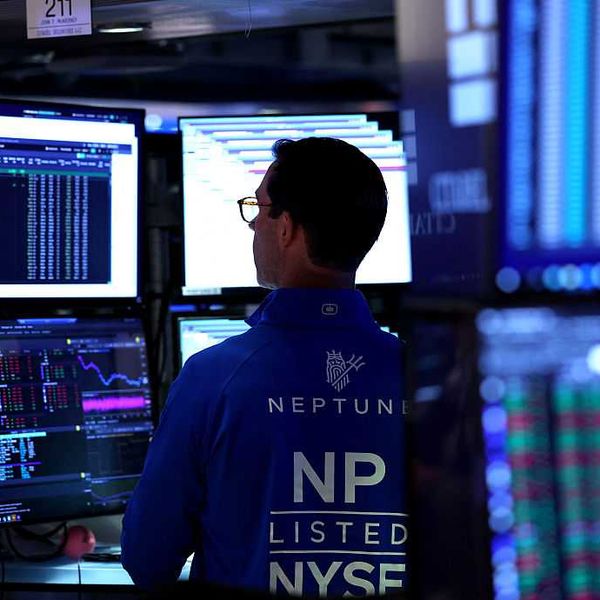
A street sign for Wall Street is seen in the financial district in New York. 
REUTERS/Brendan McDermid

What happens when huge amounts of money pour into poorly understood and unregulated industries that promise spectacular profits for a few winners?

At best, some investors lose their shirts while the lucky ones make fortunes. At worst, the bubble bursts and takes everyone down with it — not just its investors, but the entire economy.

My purpose today isn’t to worry you but to give you some economic information that may help you. I’m deeply concerned that two opaque industries are creating giant bubbles on the verge of bursting.

One is AI.

AI is worrisome enough as is — its insatiable thirst for energy and water, its capacities to override the wishes of human beings, its potential to destroy the planet.

My immediate concern is that AI is becoming a financial bubble whose bursting will harm lots of innocent people.

Anyone remember the dot-com bubble of the late 1990s? The housing bubble of 2006? The tulip-mania bubble of the 1630s? The South Sea bubble of 1720?

They all followed a well-worn pattern.

An asset generates excitement among investors because its value starts rising — mainly because other investors are also becoming excited and investing in it. Investors borrow piles of money to get in on the action.

The bubble bursts when it becomes evident that way too much has been invested relative to the potential for real-world profits. Smart investors cash out first. Everyone else is left with worthless pieces of paper. Borrowers go broke. Those insuring the borrowers disappear. If bad enough, governments have to bail out the biggest borrowers.

The Bank of England recently warned that AI stock market valuations appeared “stretched” — risking a “sudden correction” in global markets. Translated: The bubble will burst.

AI has many of the characteristics of a bubble.

Market valuations of its major players — OpenAI, Anthropic, Nvidia, Microsoft, Google, Oracle, Amazon, Meta, and Elon Musk’s xAI — have soared. Most of this is on the basis of hope and hype.

Shares of stock surrounding AI and its data centers account for an estimated 75 percent of the returns to America’s biggest corporations, 80 percent of earnings growth, and 90 percent of the growth in capital expenditures.

Yet, according to an MIT report, 95 percent of companies that try AI aren’t making any money from it.

Taxpayers are footing some of this bill. Thirty-seven states have passed legislation granting hundreds of millions of dollars of tax exemptions for the building of data centers.

Meanwhile, factory construction and manufacturing investments in the rest of the American economy have slowed. Manufacturing has lost 38,000 jobs since the start of the year, according to the Bureau of Labor Statistics.

Amazon’s Jeff Bezos recently admitted that AI is likely a bubble but that some investments will eventually pay off.

“When people get very excited, as they are today, about artificial intelligence, for example ... every experiment gets funded, every company gets funded. The good ideas and the bad ideas. And investors have a hard time in the middle of this excitement, distinguishing between the good ideas and bad ideas.”

The flood of money into AI has made America’s billionaire oligarchs far richer.


By Forbes’ count, 20 of the most notable billionaires tied to the explosive growth in AI infrastructure have already added more than $450 billion to their fortunes since January 1.

Oracle cofounder and chief technology officer Larry Ellison’s wealth has increased $140 billion in the past year, as Oracle’s shares jumped 73 percent (compared to 15 percent for the entire stock market). This was due to projected revenue from Oracle’s cloud infrastructure to power AI.

This has made Larry Ellison the second-richest person in America (just behind Elon Musk). The Ellison family is pouring some of this wealth into a media empire aligned with Trump.

The wealth of Nvidia cofounder and CEO Jensen Huang has increased $47 billion this year as shares of his chipmaking giant have risen 40 percent.

Wait for the burst.

Oracle is carrying more debt than ever, issuing another $18 billion of debt in September. The S&P’s credit rating bureau downgraded its outlook for the company to “negative” in July, citing concerns about free cash flow.

Other major players are also deep into debt.


Frankly, I don’t care which giant corporations or ultra-wealthy investors strike it big and which lose their shirts.

I worry about the economy as a whole, about working families who could lose their jobs and savings. The losses when the AI bubble bursts could ricochet across America.

Trump has put David Sacks, co-founder of an AI company and, of course, a fierce Trump loyalist, in charge of AI and cryptocurrencies. So far, Sacks has killed any restrictions and regulations that might stand in the way of either.

The Trump regime has been opening the doors for trillions of dollars in pension funds to be invested in crypto, AI, venture capital, and private equity. Even 401(k) plans have joined the flood.

Crypto is my second bubble concern. It’s a classic Ponzi scheme. It’s growing because investors believe other investors will keep buying it. And like AI, crypto’s meteoric growth has also been powered largely by the ultra-wealthy. (Trump and his family are said to have made $5 billion off it so far.)

Also like AI, crypto uses up massive amounts of energy but doesn’t actually create anything. Gertrude Stein’s famed description of Oakland, California, seems apt: There’s no there there.

Consider the online brokerage firm Robinhood, whose stock rose 284 percent in the year through September. What fueled this extraordinary increase in value? Trading in cryptocurrency and in betting on sports games.

Last month, Robinhood joined the S&P 500 — the index of America’s biggest corporations. As Jeff Sommer noted in The New York Times, had Robinhood been a member of the S&P 500 for the entire year, its meteoric rise would have been enough for it to lead the index.

Crypto tokens are even being sold as ways to get pieces of private firms like SpaceX and OpenAI. Watch your wallets.

When will the crypto bubble burst? Maybe it’s already started.


Friday’s cryptocurrency selloff — apparently triggered by Trump’s talk of a 100 percent tariff on China — wiped out more than $19 billion in crypto assets. Bitcoin dropped 12 percent, forcing liquidations that triggered more selling, pushing prices even lower. The token for World Liberty Financial, a crypto project backed by Trump and his sons, fell by more than 30 percent.

The sharp downturn exposed the huge amount of borrowing behind crypto’s nine-month rally, which began after the election of an administration seen as friendly to the industry.

The flood of money into these two opaque industries — AI and crypto — has propped up the U.S. stock market and, indirectly, the U.S. economy.

AI and crypto have created the illusion that all is well with the economy — even as Trump has taken a wrecking ball to it: raising tariffs everywhere, threatening China with a 100 percent tariff, sending federal troops into American cities, imprisoning or deporting thousands of immigrants, firing thousands of federal workers, and presiding over the closure of the U.S. government.

When the AI and crypto bubbles burst, we’ll likely see the damage Trump’s wrecking ball has done.

I fear millions of average Americans will feel the consequences — losing their savings and jobs.

Again, I’m not writing this to alarm you. You already have more than enough reason to be alarmed by what’s happening to America.

I want you to take reasonable precaution.

This isn’t an investment letter, but if you have savings, please make sure some are in low-risk assets such as money-market funds. As to your job, hold on.Robert Reich is a professor of public policy at Berkeley and former secretary of labor. His writings can be found at https://robertreich.substack.com/

Robert Reich's new memoir, Coming Up Short, can be found wherever you buy books. You can also support local bookstores nationally by ordering the book at bookshop.org


US Consumers Paying the Most for Tariffs: Wall Street Giant’s Report Exposes Trump Lies

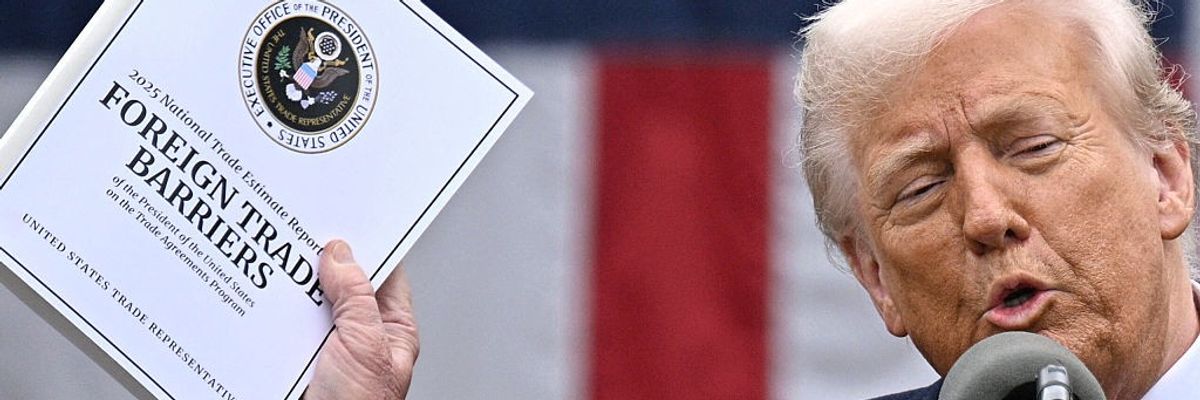
The report from investment bank Goldman Sachs comes as President Donald Trump is piling up even more tariffs on imported goods.


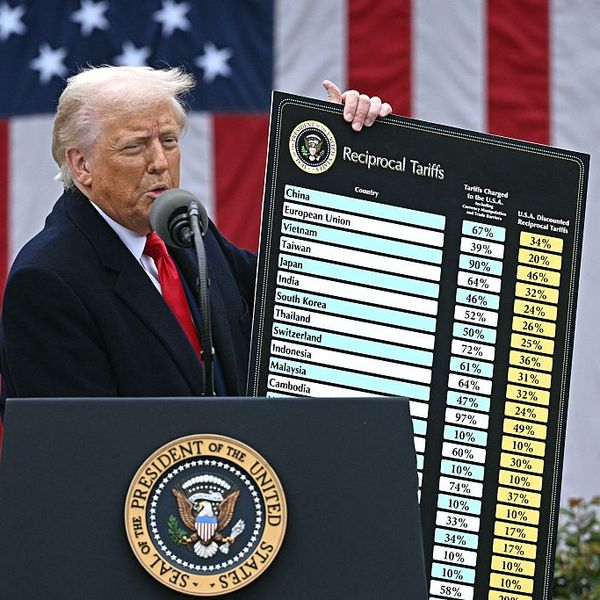
US President Donald Trump delivers remarks on reciprocal tariffs during an event in the Rose Garden entitled “Make America Wealthy Again” at the White House in Washington, DC, on April 2, 2025.
(Photo by Brendan Smialowski/AFP via Getty Images)


Brad Reed
Oct 14, 2025
COMMON DREAMS

New research from investment bank Goldman Sachs affirms, as progressive advocates and economists warned, that US consumers are bearing the brunt of President Donald Trump’s trade wars.

As reported by Bloomberg on Monday, economists at Goldman released an analysis this week estimating that US consumers are shouldering up to 55% of the costs stemming from Trump’s tariffs, even though the president has repeatedly made false claims that the tariffs on imports exclusively tax foreigners.


Trump Announces New 100% Tariff on China Over Rare Earth Minerals Restrictions


‘Business Continues to Be Severely Depressed’: New Reports Paint Dark Picture of Trump Economy

Goldman’s research also found that US businesses will pay 22% of the cost of the tariffs, while foreign exporters will pay just 18% of the cost. Additionally, Goldman economists estimate that Trump’s tariffs “have raised core personal consumption expenditure prices by 0.44% so far this year, and will push up the closely watched inflation reading to 3% by December,” according to Bloomberg.

Despite all evidence that US consumers are shouldering the costs of the tariffs, the Trump administration has continued to insist that they are exclusively being paid by foreign countries.

During a segment on NBC‘s “Meet the Press” last month, host Kristen Welker cited an earlier Goldman estimate that 86% of the president’s tariffs were being paid by US businesses and consumers, and then asked US Treasury Secretary Scott Bessent if he accepted that the tariffs were taxes on Americans.

“No, I don’t,” Bessent replied.


As Common Dreams reported in August, executives such as Walmart CEO Doug McMillon have explicitly told shareholders that while they are able to absorb the cost of tariffs, Trump’s policy would still “result in higher prices” for customers.

Goldman’s report comes as Trump is piling up even more tariffs on imported goods that will ultimately be paid by US consumers as companies raise prices.

According to The New York Times, tariffs on a wide range of products including lumber, furniture, and kitchen cabinets went into effect on Tuesday, and the Trump administration has also “started imposing fees on Chinese-owned ships docking in American ports.”

The administration has claimed that the tariffs on lumber are necessary for national security purposes, although some experts are scoffing at this rationale.

Scott Lincicome, vice president of general economics at libertarian think tank the Cato Institute, told the Times that the administration’s justification for the lumber tariffs are “absurd.”

“If war broke out tomorrow, there would be zero concern about American ’dependence’ on foreign lumber or furniture, and domestic sources would be quickly and easily acquired,” he said.

Universities Didn’t Fail, They Succeeded—That’s Why They’re Under Attack

Universities need to recognize that they are being targeted because of what they represent, not because of what they’ve failed to do, and resist accordingly.


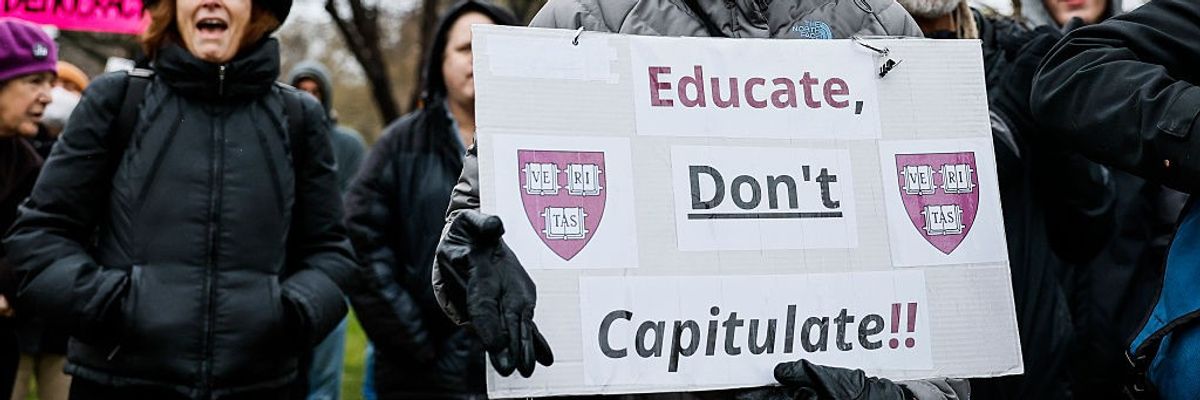
A protester holds a sign reading, “Educate, Don’t Capitulate!!” featuring Harvard University shields during a rally at Cambridge Common.
(Photo by Erin Clark/The Boston Globe via Getty Images)

Emese Ilyés
Oct 14, 2025
Common Dreams


I grew up watching my mother teach histories she was forbidden to teach, in a language that was illegal to speak. I know what authoritarianism looks like. And I’m watching American universities respond to this moment with the same dangerous pattern I witnessed then: accepting the narrative of their accusers, capitulating to illegal demands, destroying themselves from within.

At a time when blue cities become military zones, when citizens are arrested and abused on camera, when journalists are forced to transform from truth tellers to White House publicists, when the president accepts planes as gifts from foreign governments and then offers them military bases on US soil, it is not a moment for universities to ask, “What did we do wrong?” This is a moment to recognize: We are living through an authoritarian takeover, and universities are being targeted because of what they represent, not because of what they’ve failed to do.

The Trap of the “Universities Failed” Narrative

Across the country, university leaders are grappling with attacks on their institutions by asking: “How did we get here?” But without proper historical analysis, these questions lead directly into a trap set deliberately by those who seek to dismantle higher education as we know it.

The narrative is seductive: Universities became too focused on diversity, equity, and inclusion (DEI). They pushed “woke ideology.” They marginalized conservative voices. They failed to serve their students properly. And now, this narrative suggests, they’re reaping what they’ve sown.

When universities face these attacks, they have a choice: Resist in solidarity with the broader democratic struggle, or accept the framing of their accusers and try to appease them.


This is all a lie. More precisely, it’s what political theorist Isaac Kamola calls a decade-long psychological operation, a well-funded, well-organized campaign of disinformation designed to make Americans believe that what’s happening in universities is not what’s actually happening.

The reality? American higher education has more women enrolled than ever before. More people of color than ever before. An educated populace is a civically engaged populace, a populace capable of critical thinking and democratic participation. Universities haven’t failed. Universities have been succeeding. And that success threatens the wealth and power of those orchestrating these attacks.
Understanding the Authoritarian Playbook

We’ve seen this script before. Universities are always the first targets of authoritarian regimes. Look at Hungary, where Viktor Orbán seized control of higher education through a national system, banned gender studies programs, and forced the Open University to leave the country. Look at Turkey. After 2016, more than 6,000 academics were expelled in Turkey, hundreds prosecuted, and entire universities were closed. Many dismissed scholars were banned from public sector employment and from seeking academic work abroad due to travel bans, creating widespread precarity and self-censorship among remaining faculty. The pattern is unmistakable and deliberate.

When universities face these attacks, they have a choice: Resist in solidarity with the broader democratic struggle, or accept the framing of their accusers and try to appease them. History shows us that appeasement doesn’t work. It only accelerates the destruction.

Look at Brown and Columbia. In both cases, Brown and Columbia accepted Trump administration demands largely to avoid funding cuts, yet both remain under sustained attack from the administration. Rather than fighting to preserve institutional independence and democratic principles in higher education they have accelerated the authoritarian takeover by capitulating.

We are watching universities and their leaders across America choose the second path. They’re eliminating DEI programs, not because they believe these programs are wrong, but because they’re afraid of losing funding. They’re censoring faculty, not because academic freedom suddenly matters less, but because trustees are buckling under financial threats. They’re accepting the premise that they somehow deserve what’s happening to them.

They are playing into the tiny hands of authoritarians.
What’s Really at Stake: Race, Rights, and Democracy

If we take a historical view, we can see more clearly what’s actually driving these attacks: race. The legislative assault on curriculum, the attacks on critical race theory, the dismantling of DEI programs, all of this escalated in inverse proportion to the access that Black and brown people were gaining to higher education.

The bookeyman of DEI is a strategic tool for turning civil rights laws on their heads, for weaponizing the very protections meant to ensure equity. When White House Deputy Chief of Staff Stephen Miller tells law enforcement they’re “unleashed,” when apartments on Chicago’s South Side are raided and destroyed in the middle of the night and families, including citizens, are separated and detained for hours, when the National Guard is deployed to terrorize Democratic cities with large populations of Black and brown people, we’re watching the same white supremacist project that universities are being punished for challenging.

Powerful interests have recognized how threatening an educated, diverse, critically thinking populace is to their accumulation of wealth and power.

Chris Rufo has been explicit about his counterrevolutionary agenda. He accuses universities of ideological capture and promotes a fiction: that radical leftists completed a “long march through the institutions” from the 1960s to today, turning universities into engines of woke ideology. His strategy has been devastatingly effective, tying federal funding to demands that colleges eliminate “race-based” programs and DEI initiatives, end political activism on campus, and enforce what he falsely calls “ideological neutrality.” The bitter irony, of course, is that this neutrality means alignment with conservative values. Authoritarian regimes always claim neutrality while enforcing ideology.

The actual transformative change that generations of civil rights leaders have fought to achieve in higher education has been painfully, frustratingly slow. As Dr. King reminded us, the arc of the moral universe is long. Diversity, equity, and inclusion work had just begun when the backlash hit. As Isaac Kamola reminds us, we haven’t gone too far, we’ve barely started. And that’s precisely why the backlash is so fierce. Progress, however incremental, is intolerable to those who benefit from the status quo.
The Rapid Response Trap

Rapid response to individual attacks, while sometimes necessary, keeps universities perpetually defensive and reactive. Each response accepts the terms of the debate as set by those seeking to destroy higher education. Today, it’s a demand to eliminate a DEI office. Tomorrow it’s a threat to revoke accreditation. Next week, it’s federal agents on campus or trustees forcing out presidents who won’t comply. The exhausting onslaught of breaking news pushes institutions into pure survival mode, where they can only see the immediate threat in front of them. Meanwhile, the bigger picture, the systematic dismantling of democratic institutions, disappears from view.

This is how authoritarianism works. It overwhelms. It exhausts. It forces you to fight a hundred small battles so you cannot see the war.

And when universities respond by looking inward, by searching for their own failures, by implementing “reforms” that mirror the demands of their attackers—cutting DEI programs, restricting faculty speech, purging curricula of “controversial” content—they believe they’re defending themselves. They’re not. They’re participating in their own destruction. Worse, they’re legitimizing the authoritarian narrative: that universities deserved what’s happening to them, that the attacks are a reasonable response to institutional failure rather than a calculated assault on democratic education itself.

This is precisely what authoritarians count on: that institutions will police themselves, that fear will accomplish what force alone cannot.
What Universities Must Do Instead

First, universities must stop accepting the false premise that they’ve failed. Higher education remains one of the most important engines of democratic participation, social mobility, and civic engagement in American society. The Truman Commission understood this in 1947: Higher education’s core mission includes preparing citizens who can respond to social needs with intelligence and creativity.

That mission hasn’t changed. What’s changed is that powerful interests have recognized how threatening an educated, diverse, critically thinking populace is to their accumulation of wealth and power.

The question isn’t “What did we do wrong?” The question is: “Will we defend democracy, or will we aid its destruction?”

Second, universities must understand themselves not as isolated institutions defending their own interests, but as part of a broader democratic movement under siege. The attacks on higher education are interconnected with attacks on blue cities, on journalism, on voting rights, on the rule of law itself. Universities cannot win this fight alone, and they cannot win it by trying to appease authoritarians.

Third, universities must reclaim the narrative. Higher education is not a commodity that consumers buy and sell. Universities are not corporations. They are communities, students, faculty, staff, administrators, and the broader public, engaged in the vital work of knowledge production, teaching, and the preparation of democratic citizens. That means the university belongs to all of us, and all of us have a stake in its defense.

Finally, universities, that is all those who create the university community, must act with courage. We’ve seen examples of this courage—boards (like that of MIT’s) standing behind presidents who refuse to capitulate, faculty senates (like that of the University of Texas at Austin) adopting new academic freedom principles, and institutions using the rule of law to protect their faculty and students. Courage, in this moment, is the super multiplier. It gives others permission to resist.
The Choice Before Us

Universities stand at a crossroads. They can continue to react defensively to each attack, to implement “reforms” demanded by those who seek their destruction, to accept the narrative that they’ve somehow failed and deserve what’s happening. Or they can recognize this moment for what it is: an authoritarian assault on one of democracy’s essential institutions.

I know from experience that once authoritarianism takes hold, it moves swiftly. The window for resistance narrows quickly. My mother made her choice, to keep teaching the truths she was forbidden to teach. Now universities must make theirs.

The question isn’t “What did we do wrong?” The question is: “Will we defend democracy, or will we aid its destruction?”

The answer to that question will determine not only the future of higher education, but the future of American democracy itself.

Our work is licensed under Creative Commons (CC BY-NC-ND 3.0). Feel free to republish and share widely.


Emese Ilyés is a critical social psychologist and participatory action researcher whose work examines community resistance and collective survival in the face of authoritarianism. Her research focuses on grassroots movements and mutual aid networks.
Full Bio >
‘Solidarity as a Crime’: Report Details Crackdown on Pro-Palestine Protests Across West

“This trend,” said one leader at the International Federation for Human Rights, “reflects a worrying shift towards the normalization of exceptional measures in dealing with dissenting voices.”


Police arrest New York University students demonstrating against Israel’s attacks on the Gaza Strip and in solidarity with the protesters at Columbia University in New York City on April 22, 2024.
(Photo by Fatih Aktas/Anadolu via Getty Images)


Jessica Corbett
Oct 14, 2025
C0MM0N DREAMS


A report released Tuesday by one of the world’s oldest human rights groups lays out how, “from Paris to Washington, Berlin to London, support for Palestinian rights has been censored, criminalized, or violently repressed under the pretexts of combating antisemitism and protecting national security.”

The International Federation for Human Rights, also known by its French abbreviation FIDH, published Solidarity as a Crime: Voices for Palestine Under Fire just days after a ceasefire began in the Gaza Strip, following over two years of an Israeli assault widely condemned as genocide against Palestinians.


UK Grants Police New Powers to Crush Peaceful Protests as Palestine Action Demonstrations Continue


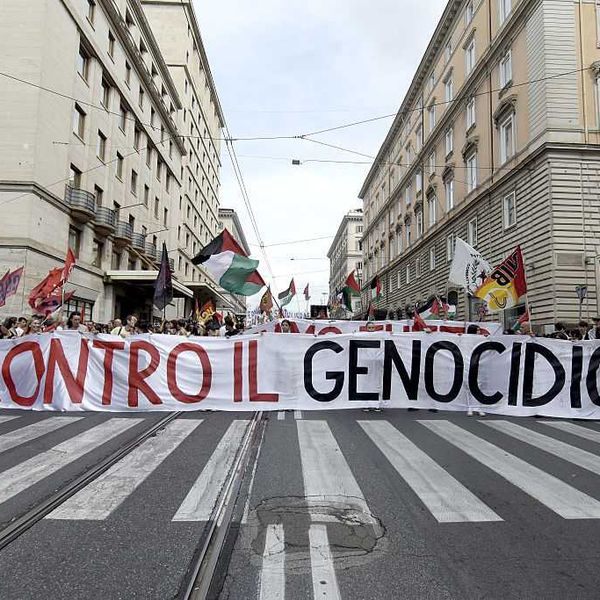
Italy’s Unions Lead General Strike for Gaza

FIDH focused on “violations of the rights to freedom of assembly, association, and expression in the context of the repression of the Palestinian solidarity movement” in France, Germany, the United Kingdom, and the United States since the Hamas-led attacks on Israel on October 7, 2023.

“This trend,” said Yosra Frawers, head of the Maghreb and Middle East Desk at FIDH, “reflects a worrying shift towards the normalization of exceptional measures in dealing with dissenting voices.”


The publication explains each country’s history with Israel and other notable background, such as anti-protest laws, along with recent violations of the rights of academics, activists, advocacy groups, journalists, and elected officials.

For example, it points out that the US government has given Israel tens of billions of dollars in military aid since the war began two years ago, and “pro-Palestine solidarity activism in the United States has been met with repression, sanctions, and censorship for many decades.”

“Since 2014, US federal and state lawmakers have proposed nearly 300 pieces of legislation aimed at repressing expressions of solidarity with Palestine, with over a quarter of the bills passing into law in 38 states and the federal government,” the document details. “Over 80 bills were proposed in 2023 alone, with some as extreme as a federal bill proposing to expel all Palestinians from the US.”

The report spotlights how US demonstrations against the genocide “have been met with significant suppression at the hands of the state,” particularly the protests at universities. The Trump administration is still trying to deport foreign students who criticized the Israeli assault and the US government’s support for it, and threatening higher education institutions’ access to federal funding.

The section on the United Kingdom acknowledges that Palestine was previously “occupied by Britain under the mandate system,” and the UK “has had a close relationship with Israel from the very beginning of the creation of the Israeli state” in the 1940s.

Over the past two years, the British government “has repeatedly minimized and legitimized Israel’s atrocities in Gaza,” and carried out a “sustained attack” on the right to protest, the publication continues. “Protests in solidarity with Gaza and against Israel’s genocidal violence have been met with high levels of police surveillance and police violence.”


Germany’s relationship with Israel “is shaped profoundly by the history of the Holocaust,” and the European powerhouse is now the Israeli government’s “second-most important strategic partner in the world,” behind only the United States, the document notes. It calls out “widespread bans on protests” and highlights how “Pro-Palestinian civil society organizations have been hit particularly hard by repressive measures.”

France—which is enduring a broader political crisis—is also “a long-standing ally to Israel” with “a history of repression of expressions of solidarity with Palestine,” according to Paris-based FIDH. “On October 12, 2023 the Minister of the Interior Gérald Darmanin called for a complete ban on all assemblies expressing solidarity with Palestine.”

“Despite the ban, mass protests went ahead in cities across France... These protests were met with police violence, including the use of tear gas and water cannons. Many protestors were arrested, often using disproportionate force,” the group wrote. “Immigrants and foreigners have often borne the brunt of repressive measures.”

FIDH’s report—which features “vital” contributions from the Center for Constitutional Rights in the United States, Committee on the Administration of Justice in Northern Ireland, and Ligue des droits de l’Homme in France—concludes with recommendations, including specific suggestions for each country examined as well as civil society groups, media platforms, and academic, regional, international, and philanthropic institutions.

“States must guarantee everyone the right to express themselves and to mobilize peacefully, on all causes,” said FIDH president Alice Mogwe. “The defense of human rights ought not to be constrained by political sensibilities.”
Ceasefire Sparks Fresh Calls for Global Media Access to Gaza

Press groups are also demanding justice for the more than 200 journalists slaughtered in Palestinian territory over the past two years.


Palestinians attend the funeral of journalist Saleh al-Jafarawi, who was killed in southern Gaza City in the Gaza Strip, on October 13, 2025.

(Photo by Khames Alrefi/Anadolu via Getty Images)

Jessica Corbett
Oct 13, 2025
COMMON DREAMS

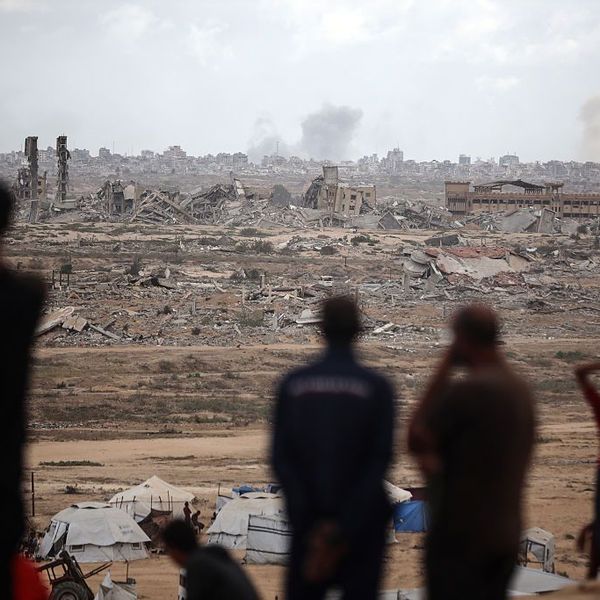
Since a fragile ceasefire in the Gaza Strip began on Friday, press freedom advocates and critics of Israel’s genocidal assault have issued new calls for international media access to the decimated Palestinian territory, including the largest Muslim civil rights and advocacy group in the United States.

“We encourage American and international media outlets to demand direct, unsupervised access to Gaza in the wake of the ceasefire agreement,” the Council on American-Islamic Relations (CAIR) said in a statement on Monday, as Hamas returned 20 hostages taken on October 7, 2023 and Israel released over 1,900 imprisoned Palestinians, most of whom were taken captive by Israeli forces over the past two years.


Palestinians, Aid Groups Express Cautious ‘Jubilation’ as Ceasefire Deal Reached


‘We Must Keep the Pressure On’: Humanitarians Say Ceasefire Doesn’t Erase Gaza Genocide

CAIR urged reporters to demand access to “the 1,700 Palestinian men, women, and children going free after Israel occupation forces abducted them from Gaza, held them without charge, and reportedly subjected them to torture in prisons run by Itamar Ben-Gvir,” the country’s far-right minister of national security.

As Drop Site News‘ Ryan Grim noted on social media, some Palestinians are already speaking out about the torture they endured:


“Although many media outlets will understandably cover the release of Israeli hostages, it is important to also cover the stories of Palestinian civilians who were kidnapped and other Palestinian hostages who may not go free, such as Dr. Hussam Abu Safiya,” said CAIR. “Ignoring Palestinian suffering would give the appearance of bias and create a warped, one-sided image for the public.”

“It is particularly critical for American journalists to overcome the Israeli government’s attempts to hide the aftermath of the US-funded devastation in Gaza,” CAIR added. “Reporters must immediately receive access to Gaza so they can see and report on the consequences of the genocide for themselves.”

Unsuccessfully pursuing a Nobel Peace Prize, US President Donald Trump announced last Wednesday night that Israel and Hamas had agreed to the first phase of his proposed plan for Gaza. On Monday, Trump addressed Israeli lawmakers. He also signed a peace deal document, as did Egyptian, Qatari, and Turkish leaders.

A report published last week by the Quincy Institute for Responsible Statecraft and the Costs of War Project at Brown University found that the Trump and Biden administrations provided at least $21.7 billion in military aid to Israel since October 2023. The two-year Israeli assault—widely decried as genocide—has killed at least 67,869 Palestinians and wounded 170,105, the Gaza Health Ministry said Monday. Thousands of people remain missing, and experts believe the true toll is far higher.

Among those dead are hundreds of Palestinian journalists, who have worked to not only survive Gaza but also share stories from there over the past two years, as Israel has largely prevented any international reporters from entering the territory.

The various tallies of journalists slaughtered in Gaza go up to at least 271, which includes Saleh al-Jafarawi, a Palestinian reporter and content creator killed on Sunday. According to The New Arab:
Reports in Arabic media state that the armed militia was affiliated with Israel, and members of the group had been killing displaced Palestinians who were making their way back to their homes in the aftermath of the truce.

When he was found, after being announced as missing early on Sunday, he was wearing a press jacket.

The reporter had amassed a large following on social media for his fearless dispatches from on the ground, despite himself being displaced, starved, and his home bombed.

As Middle East Eye reported Monday, the slain journalist “was buried the same day as his brother Naji al-Jafarawi was released from an Israeli prison as part of an exchange of captives.”


After Saleh al-Jafarawi’s death, multiple social media users shared a video of him welcoming the ceasefire that started on Friday.

Jonathan Dagher, head of the Middle East Desk at Reporters Without Borders, or Reporters Sans Frontières (RSF), said in a Friday statement that “the relief of a ceasefire in Gaza must not distract from the absolute urgency of the catastrophic situation facing journalists in the territory.”

Over 200 journalists have been killed by Israeli forces, “and the reporters still alive in Gaza need immediate care, equipment, and support,” he noted. “They also need justice—more than ever. If the impunity for the crimes committed against them continues, they will be repeated in Gaza, Palestine, and elsewhere in the world. To bring justice to Gaza’s reporters and to protect the right to information around the world, we demand arrest warrants for the perpetrators of crimes against our fellow journalists in Gaza.”

“RSF is counting on the International Criminal Court (ICC) to act on the complaints we filed for war crimes committed against these journalists,” added Dagher, whose group has filed five complaints with the tribunal since October 2023. “It’s high time that the international community’s response matched the courage shown by Palestinian reporters over the past two years.”


The board of the Foreign Press Association in Jerusalem also released a statement on Friday. It said that “the FPA welcomes the agreement between the warring parties on a ceasefire in Gaza. With the halt in fighting, we renew our urgent call for Israel to open the borders immediately and allow international media free and independent access to the Gaza Strip.”

“For the last two years, the FPA and its members have asked, through all channels, to be let into Gaza to report on the reality of the war. These demands have been repeatedly ignored, while our Palestinian colleagues have risked their lives to provide tireless and brave reporting from Gaza,” the group continued.

Israel’s Supreme Court is set to hear arguments in a related case next week, “but there is no reason to wait that long,” the group added. “Enough with the excuses and delay tactics. The restrictions on press freedom must come to an end.”