Monday, March 09, 2026

A half-empty conference hall, but a packed left fringe

MARCH 7, 2026

Vince Mills reports on the recent Scottish Labour Party Conference.

Scottish Labour Party Conference on the last Friday of February was a strange affair. It happened, of course, on the day after the disastrous (well, disastrous for Labour)  Gorton and Denton by election, a string of polls saying that the Scottish Labour Party (SLP) was toast in the May Scottish Parliament elections and a futile attempt by Anas Sarwar to defenestrate his best pal Keir Starmer, a couple of weeks previously.

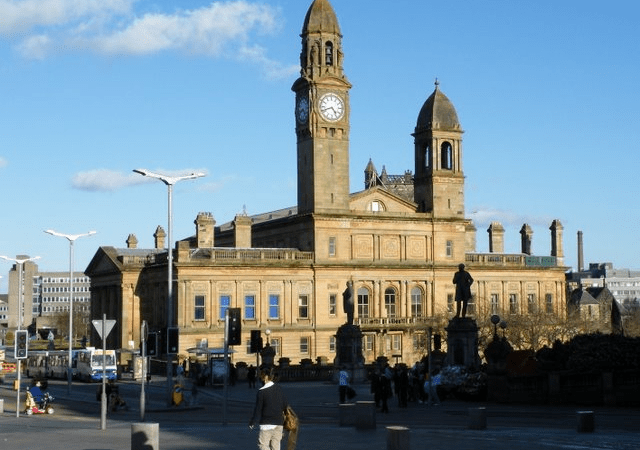
None of this would have been obvious to a passer-by who had inadvertently found themselves drawn into Paisley Town Hall’s half empty main assembly space. Instead, they would have seen a collection of political actors on the stage who, for all the world appeared like characters in an Agatha Christie play stepping gingerly over the body of the SLP bleeding out on the stage while they discussed the pattern of the wallpaper.

The main event and most blatant act of denial was Sarwar’s speech in the afternoon where he mentioned none of the problems described above but managed to find space, in a largely vacuous contribution, to defend using the private sector in the Scottish NHS, should Labour win in May. But before that, in the morning, delegates were invited to sit through three debates with no motions and titles that could have meant anything. Debate number one, for example was: “Scotland’s Best Days Lie Ahead.”  I did not contribute but if I had I would have taken the Kenny Daglish position: “Mibbies Aye, Mibbies Naw.” 

But without a motion, or any outcome of the discussion, participation was pretty well pointless, although credit to Lynn Davis of Unite who used the second debate on jobs and skills to attack the continued decline of Scotland’s manufacturing base and argue for public ownership. She was unfortunately a lone voice and the vacuum was filled by candidates for the May elections strutting their stuff to a half-empty hall.

For real politics you had to wait for the Campaign for Socialism fringe which took place after the conference in Glasgow. It was standing room only with a largely young audience. Chaired by Mercedes Villalba MSP, there was a panel of two other MSPs, Katy Clark and Carol Mochan as well as Councillor Katrina Faccenda.

The consensus that emerged was the need to stay in the SLP, for all its faults,  and fight to push it left. Whatever happens in May, the day after the elections will surely open up opportunities for a politically coherent and organised left.

Vince Mills is a member of the Red Paper Collective.

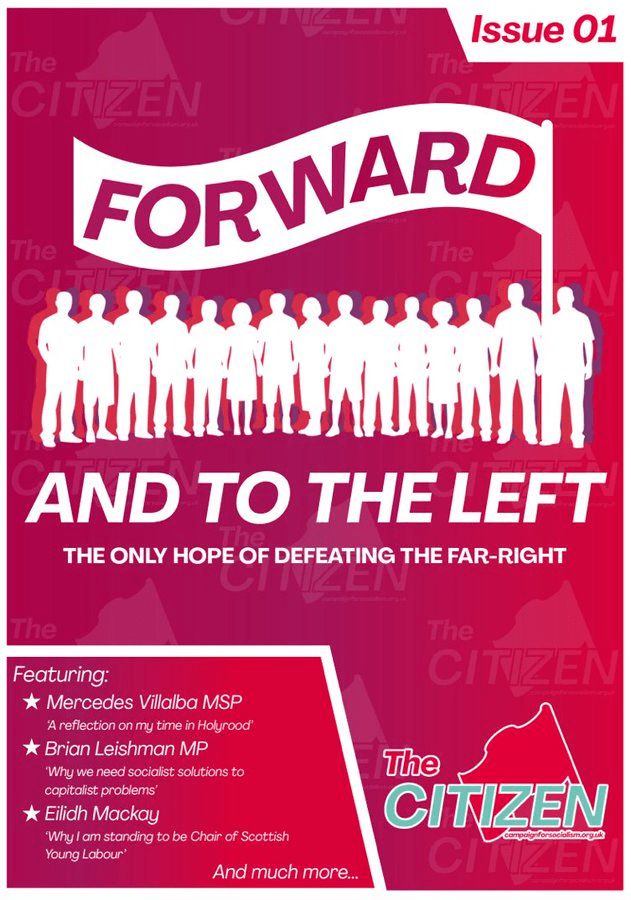
The Conference also saw the first full issue of The Citizen – a fantastic collection of articles on Parliament, culture, youth issues and socialism, available here.

Main image: https://commons.wikimedia.org/wiki/File:Paisley_Town_Hall_-_geograph.org.uk_-_1220986.jpg Paisley Town Hall Source: From geograph.org.uk Author: Thomas Nugent,  licensed under the Creative Commons Attribution-Share Alike 2.0 Generic license.

UK

Right-wing media watch – Nuts about the Greens


Yesterday
Left Foot Forward


Pinning an electoral defeat on conspiracy-tinged claims of fraud is often easier than confronting why voters turned elsewhere.


Where have we seen a politician throw all the toys out of the pram after an election defeat? In the United States, of course, when Donald Trump refused to accept his loss to Joe Biden in the 2020 presidential election, insisting, without evidence, that the vote had been rigged.

Fast-forward six years and some 3,600 miles east, to Gorton, Manchester, and the echoes are hard to ignore. This time it’s not a single defeated president railing against the result, but a cross-party chorus, amplified by a sympathetic press, casting doubt on a local by-election outcome.

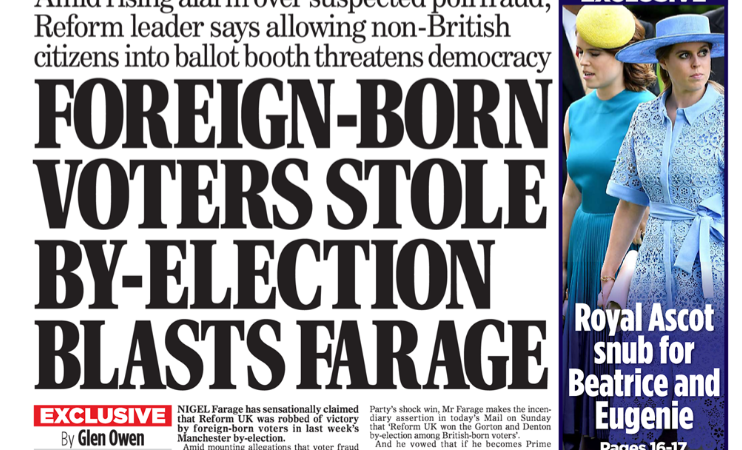
The trigger was the Green Party’s landslide victory in the Gorton and Denton by-election. Rather than conceding defeat and reflecting on what might be learned, leading figures in Reform and the Conservatives instead alleged wrongdoing. The Daily Mail splashed: “Foreign-born voters stole by-election.” The narrative quickly solidified, suggesting something suspicious had occurred and that the integrity of the vote was in question.

Nigel Farage was first out of the blocks, declaring the result “a victory for cheating in elections” after poll monitors “raised the alarm.” He contacted police and the Electoral Commission, claiming that what had been witnessed in “predominantly Muslim areas” raised “serious questions about the integrity of the democratic process.” He went further still, inviting readers to “imagine the potential for coercion with postal votes.”

Shadow housing minister James Cleverly followed suit, citing a report from Democracy Volunteers to claim there was “clear evidence that electoral offences were committed.” Kemi Badenoch blamed Labour, the Greens and Reform for “grievance politics,” while Keir Starmer struck a dismissive note, referring to the “extreme of the left in the Green party.”

Yet Manchester City Council stated that no issues had been reported. The allegations centred on claims by Democracy Volunteers of “concerningly high levels” of so-called family voting, where one family member influences how others cast their ballot. That is a legitimate issue to monitor in any democracy. But transforming unproven observations into sweeping claims of criminality and sectarian corruption is quite another matter.

What followed was classic conveyor belt of media amplification. The Daily Mail and the Telegraph relied heavily on the fraud narrative, the latter warning that Britain’s “ancient norms and traditions won’t survive a sectarian turn.” The story then migrated into more ostensibly neutral outlets. The BBC foregrounded the fraud allegations in its coverage. Even the Guardian reported that Reform and the Conservatives had referred “family voting” claims to the watchdog, though to its credit it noted prominently that the council had received no complaints.

But notice what was sidelined in all of this. The Greens’ candidate, Hannah Spencer, a working-class plumber from Manchester, overturned a seat held by Labour since the 1930s. The campaign was powered by hundreds of volunteers knocking on doors and focusing relentlessly on the cost-of-living crisis. By polling day, observers reported, the Greens had more activists than they knew what to do with. It was a ground campaign rooted in bread-and-butter concerns, not sectarian mobilisation.

The rush to frame the result as tainted says as much about the losing parties as it does about the media ecosystem that sustains them. Allegations of “family voting” may warrant investigation, as all credible concerns should. But elevating them into a narrative of systemic cheating, particularly in “predominantly Muslim areas,” risks stoking division while evading harder questions about political strategy and voter appeal.

Pinning an electoral defeat on conspiracy-tinged claims of fraud is often easier than confronting why voters turned elsewhere. If anything, the reaction to Gorton and Denton exemplifies the very grievance critics claim to deplore and helps explain why the Greens were able to present themselves as the alternative.


Welsh journalist Gareth Jones to be honoured in Ukraine capital


MARCH 7, 2026

Welsh journalist Gareth Jones will be honoured with a 2m x 60cm memorial made of Welsh slate in the centre of Kyiv, Ukraine’s capital city.

The memorial will be sited in the street named after him in 2020 by Kyiv City Council in recognition of his role as one of the first correspondents from the West to tell the world the truth about the famine in Ukraine, which killed an estimated 4 million Ukrainians between 1931 – 1932.

The memorial will feature an image of Gareth Jones and an inscription in Ukrainian, Welsh and English together with a portrayal of both Welsh and Ukrainian flags, crossed in harmony.

The memorial’s inscription will read: “Gareth Jones – Welsh journalist who was the first to state in the Western press, under his own name, that the Holodomor occurred in Ukraine in 1932-1933”.

Welsh Government has allocated £16,000 to the Senedd Cross-Party Group Friends of Ukraine for the construction and placement of the memorial.

Alun Davies MS, Chair of the Cross-Party Group said: “We don’t do enough to recognise the contribution Welsh citizens have made to world affairs. Gareth Jones was a unique individual. Whilst some journalists were wined and dined by the Soviet authorities and chose to ignore or deny what was happening in Ukraine, he chose to go and see for himself and he told the world.

“At this time, when Ukraine’s very existence is under attack and parts of the country where the Holodomor had such terrible impact are occupied, this is a way of recognising the vital role of journalists in exposing the truth and showing our solidarity and friendship with Ukraine.”

It is anticipated it will be ready for unveiling in a civic ceremony in Kyiv in November 2026, the traditional day of remembrance of the Holodomor (‘Death by Starvation’).

Graham Colley, grandnephew of Gareth Jones said: “I very much welcome this initiative which not only recognises the contribution of my Great Uncle, Gareth, to exposing one of the last centuries great crimes, the Holodomor. It is also a tribute in these troubling times to his commitment to the highest ethical standards of journalism at a time when the Soviet authorities and collaborative journalists sought to hide the truth of those terrible events.

“It is a fitting Welsh tribute to a true Welsh hero, one who is sadly better known internationally than he is in Wales. I hope this memorial stone will contribute to the growth of relations between the people of Wales and Ukraine.”

The memorial plinth will be hand-crafted and inscribed from natural Welsh slate. The project was approved by Kyiv City Council at a meeting between the Council and Alun Davies MS (Chair of the Cross-Party Group) and Mick Antoniw MS during their recent visit to Ukraine to deliver vehicles and aid to front-line units.

In March 1933 Gareth Jones convened a press conference in Berlin where he declared the famine which was a consequence of Stalin’s disastrous collectivisation programme. Although it affected parts of Russia and the Russian Federation as well, resistance in Ukraine was furious with an estimated 200 uprisings, which  were brutally suppressed. The implementation of the seizure of foods and grain resulted in the mass starvation of Ukrainian towns and villages. The consequences of the Holodomor are felt to this day particularly in Eastern and Central Ukraine.

The Welsh Parliament has formally passed a resolution declaring the Holodomor and Act of Genocide, the only one of the four Parliaments of the United Kingdom to formally make this declaration, joining other countries such as France, Australia and Canada.

Image: https://commons.wikimedia.org/wiki/File:Gareth_Jones_Edit.jpg Gareth Jones Source: People of Truth Author: Український інститут національної пам’яті, licensed under the Creative Commons Attribution-Share Alike 3.0 Unported license.


Newfound Terrestrial Crocodile Fossil Redraws The Map Of Europe In The Age Of The Dinosaurs

Artist’s impression of the land-dwelling crocodile Doratodon carcharidens. This is what the now-extinct animal with its long skull and jagged teeth might have looked like. Illustration: Márton Zsoldos

By 

A research team led by Dr. Márton Rabi from the Biogeology Department of the University of Tübingen, together with Máté Szegszárdi and Professor Attila Ősi from the Hungarian Eötvös Loránd University, is challenging the hypothesis that Europe remained connected to Africa during the age of the dinosaurs.

One argument for this is the great similarity between fossils of extinct crocodiles discovered in present-day Europe and species occurring in the same era in Africa and South America. If the primeval crocodiles were related, that would indicate a late separation of Europe from the southern continents. But after studying a more complete specimen of the crocodile Doratodoncarcharidens found in Hungary, the researchers concluded that its similarities with African and South American species did not arise from close kinship; instead, they were shaped by a similar way of life. This calls into question that key piece of evidence for a late separation between the continents. The scientific study has been published in the journal Scientific Reports.

During the Permian period, around 300 million years ago, the supercontinent Pangaea encompassed all of Earth’s landmasses. About 200 million years ago, Pangaea began breaking apart into its primary divisions: the northern Laurasia, containing Europe, North America and Asia; and the southern continent of Gondwana, including all the rest of the landmasses – according to geological models. “In contrast, paleontologists assumed that European fauna during the age of the dinosaurs shared most of its evolutionary history with species in North America as well as with those of the southern landmasses, including Africa and South America,” Márton Rabi says. On this assumption, Europe must have remained connected to Africa for longer than geological models indicate, meaning that “during the Cretaceous period, land animals could have moved freely between the now-separated continents,” Rabi says.

A key piece of evidence for this assumption is the spectacular-looking land-dwelling crocodile Doratodon carcharidens, whose remains have been found in Europe. With its deep skull and blade-like, serrated teeth, it resembled a carnivorous dinosaur. “These features had previously only been documented in African and South American crocodile species. Doratodon was therefore long considered an immigrant from the south, arriving overland,” Rabi explains. “However, we had only very fragmentary remains of Doratodon, just teeth and incomplete jaws.”

Fossil fragments of a single individual

Six years after discovering Doratodon remains in 85-million-year-old Cretaceous rocks at Iharkút, Hungary, in 2018, the research team made another discovery: “We found an upper jaw with the characteristic teeth and realized that it and the previously discovered partial skull fitted together perfectly,” reports Attila Ősi. “It was clear that it must have belonged to the same individual, and Doratodon finally took shape before our eyes.” The proportions of the skull and teeth suggest a modestly-sized but fearsome-looking crocodile, some 1.5 meters long, likely with long legs, and a dinosaur-like head. “At first glance, the new finds seemed to confirm the great similarity between Doratodon and some extinct crocodile species from Africa and South America,” says Ősi.

But a comprehensive analysis of Doratodon’s anatomical details and evolutionary relationships yielded an unexpected result. “It is not closely related to the southern crocodile species. Rather, it belongs to a group of crocodiles from North America and Asia that more closely resemble our current image of a crocodile,” says Máté Szegszárdi, a doctoral student and first author of the study. Doratodon’s similarity to African and South American forms has turned out to be a case of extreme evolutionary convergence. This term describes obvious similarities between unrelated species that have developed the same characteristics to adapt to similar ecological roles. “Upon re-examining other European species from this period, including dinosaurs that were previously thought to be immigrants from Africa, we found that their ancestry too needs to be reconsidered. These animals can be viewed as survivors of a once widespread ancestor from the time of the supercontinent. This seems more likely than the idea that they were newcomers, crossing the landmasses into Europe from the south,” Rabi says.

“Our findings suggest that the main division of the supercontinent Pangaea into the northern continent Laurasia and the southern continent Gondwana was important in the divergence of crocodile groups,” says Rabi. “We now assume an early separation of Europe – as part of Laurasia – from Gondwana during the Jurassic period, around 180 million years ago – which is in better agreement with geological models. Doratodon has, in a sense, redrawn the prehistoric map of Europe.”

“In paleontological research, findings are pieced together like mosaic tiles. This creates an increasingly complete picture, to which the researchers at the University of Tübingen make important contributions. This work by Dr. Rabi and his team shows how fundamentally our understanding of evolutionary history can change when new discoveries are placed in context,” says Professor Dr. Karla Pollmann, University of Tübingen president.

From Field To Fork: Building A Network To End Agro-Food Waste

Credit: European Cooperation in Science and Technology (COST)


March 9, 2026 
By Eurasia Review


Reducing food loss and waste is crucial in a world where hunger has been steadily rising for a decade, while large quantities of edible food are discarded or spoiled every day. It is recognised as a priority within the UN Sustainable Development Goals and within the European Green Deal’s Farm to Fork Strategy.

Food loss and waste (FLW) is a global issue widely acknowledged by governments and international organisations. While a third of humanity faces food insecurity, with 783 million people still going hungry, an equivalent of one billion meals go to waste every day, according to the UN Environment Agency and the Food Waste Index Report. It provides the most accurate global estimate of food waste at the retail and consumer levels, aligning with the SDGs’ mission.

Key figures from the 2024 report indicate that one-fifth of food produced for human consumption is lost or wasted globally, with 60% of waste occurring at the household level.

Additionally, food loss and waste generate up to 10 per cent of global greenhouse gas emissions, almost five times the total emissions compared to the aviation sector, a UNEP expert highlights.

Beyond being an ethical and economic issue, food waste also drains the environment of its limited natural resources. To tackle this issue, the Food Waste Breakthrough new initiative, was launched during the recent COP30 in Belèm, Brazil, to halve global food waste by 2030 and cut methane emissions by up to 7%.

Food loss – Food waste


The distinction between food loss and food waste lies in where they occur. Food loss happens during production, post-harvest handling, processing, and distribution, whereas food waste takes place at the retail and consumer stages.

Reducing food loss and waste (FLW) protects natural resources and biodiversity, cuts pollution and greenhouse gas emissions, and ensures that the food we produce is used to its fullest. As a result, it plays a vital role in creating efficient, inclusive, resilient, and sustainable agrifood systems, while also strengthening food security, nutrition, and health.
Introducing the COST ActionFoodWaStop

To address this issue, a new collaborative research network, the Sustainable Network for Agro-Food Loss and Waste Prevention, Management, Quantification and Valorisation, FoodWaStop, was established in 2023, bringing together 955 members from 63 countries with a common goal of analysis and prevention of food loss and waste.

The COST Action FoodWaStop aims to reduce food loss and waste through innovative scientific approaches and wide international collaboration of different committed researchers and stakeholders. The initiative seeks to extend the shelf life of perishable Euro-Mediterranean food products and to disseminate research outcomes to stakeholders through practical measures. Practical measures will be provided to grower associations, plant doctors, packinghouse technicians, retailers, food managers, and consumers to reduce fruit and vegetable loss and waste by at least 15%.

“The third annual meeting of COST FoodWaStop Action held in Zadar, Croatia, showed the interest of over 150 participants (90 of them funded by COST and the others self-funded) from 30 countries, with good interactions, making the state of the art of the deliverables together with WG leaders, and planning next initiatives, that includes writing of over 20 joint scientific papers in progress. The local organiser, Slaven Zjalic, WG2 leader, was excellent in the organisation and provided facilities that allowed a smooth interaction over the two days, in which we had 37 presentations and 67 posters,” says Prof. Gianfranco Romanazzi, Chair of Food WaStop.

He adds: “The interest in recycling of food waste is confirmed by the interest in the training school in Cesis, Latvia, on WG4, which received 92 requests for participation of trainees, from 26 countries, as compared to 37 available Grants, and several participants are joining with their own Grants. On the network website, there is news of the call open for 12 STSM for a period from 3 weeks to 3 months in a foreign lab, with a deadline on 6 March. We are happy to see so many young researchers interested in the subject, taking advantage of the networking with more experienced participants and labs, for an improved overall knowledge supporting the reduction of food loss and waste”.

FoodWaStop will establish a knowledge platform to promote innovation, provide guidelines, and foster dialogue with policymakers, with the aim of raising awareness of the social and economic implications of food loss and waste (FLW). Additionally, the Action will support access to high-quality, longer-lasting fresh fruit and vegetables through safe, innovative solutions that reduce food waste and significantly limit the use of synthetic pesticides, directly contributing to the Farm to Fork objectives of the European Green Deal.

A social and interactive platform will be established to facilitate citizen science and support businesses in the transfer and sharing of knowledge. These initiatives will foster the development of next-generation entrepreneurs and scientists who will shape and drive the future of sustainable agriculture.

In conclusion, FoodWaStop represents a timely and collaborative response to one of the most pressing challenges facing modern food systems. Producers, investors, businesses, supply chain actors, consumers of all ages, academia, civil society, and the public and private sectors are all called upon to take urgent, coordinated action to significantly reduce food loss and waste, thereby safeguarding global food security now and for future generations.

“The transnational survey conducted within FoodWaStop confirms that household food waste is fundamentally a behavioural issue,” says Prof. Luca Falasconi, the Action’s Science Communication Coordinator.

“Although measurement remains crucial, real progress depends on understanding the everyday decisions, habits and perceptions that shape consumer behaviour. Empowering consumers with knowledge and practical tools is therefore key to moving from estimating waste to genuinely preventing it. By analysing behavioural drivers and socio-demographic patterns across 70 countries, we provide evidence that can inspire more targeted, effective and scalable prevention strategies,” adds Luca Falasconi.

By fostering innovation, knowledge exchange, and practical solutions across the agrofood value chain, FoodWaStop aims to deliver lasting environmental, economic, and social benefits, contributing to more resilient and sustainable food systems worldwide.

Eurasia Review

Eurasia Review is an independent Journal that provides a venue for analysts and experts to publish content on a wide-range of subjects that are often overlooked or under-represented by Western dominated media.


As for the actual book, Kropotkin's Fields, Factories and Workshops and Colin ... But it was precisely Kropotkin's expectation that our farms would become like.


The Slovenian Choice: Liberal Or Illiberal Democracy – Analysis

Ljubljana, Slovenia

March 9, 2026 
By IFIMES


Slovenia will hold its tenth parliamentary elections since independence on 22 March 2026, under a proportional representation system. The country is divided into eight electoral units, each comprising eleven electoral districts. A total of 1,698,352 registered voters are eligible to participate, with eleven parliamentary seats allocated in each electoral unit. The parliament comprises a total of 90 deputies.

A distinctive feature of the Slovenian electoral system lies in the constitutionally guaranteed representation of national communities. The Italian and Hungarian communities each elect one representative under a majority system, thereby further strengthening their institutional status. Members of these communities cast two ballots – one for the general electoral lists and another for the list of their respective national community – which constitutes a form of positive discrimination grounded in law and aimed at ensuring their effective parliamentary representation. The general electoral threshold for entry into the National Assembly is set at 4 per cent of valid votes; this requirement does not apply to representatives of the Italian and Hungarian communities.

The following parties, coalitions or lists are participating in the parliamentary elections: ● Freedom Movement ● Slovenian Democratic Party – SDS ● The Left and Vesna ● Democrats of Anže Logar ● New Slovenia, Slovenian People’s Party, Fokus Marko Lotrič ● Social Democrats – SD ● Revival – the party of Vladimir Prebilič ● Karl Erjavec – Party of Trust ● Greens of Slovenia + SG Generation Party ● Coalition Alternative for Slovenia (the None of This Party and the For a Healthy Society Party) ● Slovenian National Party – SNS ● We, the Socialists! ● Pirate Party of Slovenia ● Civic Movement Resni.ca ● Pavel Rupar’s Voice of Pensioners.

Elections in Slovenia 2026: between the politics of building and dismantling and the country’s strategic direction

As Slovenia approaches its parliamentary elections, a fundamental question arises regarding the country’s future political and civilisational direction. Current political dynamics place Slovenia at a crossroads. Voters’ decisions will determine whether Slovenia continues on a path of institutional consolidation, social cohesion and European integration, or shifts towards confrontation, polarisation and the erosion of constitutional standards.

The view expressed by Slovenia’s first president, Milan Kučan, that the elections amount to a choice between “politics that build and politics that dismantle” goes beyond routine political rhetoric and points to a broader issue concerning the paradigm of national development amidst global upheaval. Slovenia enters this electoral cycle amid geopolitical, security, energy and environmental, and social transformations that are redefining the balance of power and relativising the relevance of smaller states.

In IFIMES’ assessment, the elections on 22 March are not merely a formal democratic procedure, but a decision with long-term implications for the stability of the political system. Isolated scandals and shortcomings must not overshadow the overall picture of positive change; the key lies in distinguishing systemic reforms — including progress in healthcare, energy policy, climate action and digitalisation — from individual political missteps or communication lapses. Kučan’s warning should therefore not be interpreted as a defence of any particular government, but rather as a call for a rational evaluation of both achievements and shortcomings.

Civilisational and environmental challenges remain a central concern for the future government. Slovenia, as part of the European political space, faces an energy transition, climate risks and security challenges stemming from the war in Ukraine and tensions in the Middle East. The coming government will need to focus on three key priorities: the green transformation of the economy, the bolstering of institutional resilience, and the preservation of the welfare state amidst constraints on public finances.

Against this backdrop, the distinction between “building” and “dismantling” primarily reflects the difference between gradual adaptation to complex changes and radical interventions undertaken without a long-term strategy. The elections, therefore, represent a civilisational test, as voters’ decisions will determine whether Slovenia remains part of the Enlightenment tradition of rational dialogue and democratic culture, or slides into an authoritarian and ideologically dark period.

The International Institute IFIMES emphasises that the ensuing political dynamics will affect not just the composition of the government, but the very stability of democracy, respect for human rights and the quality of public discourse. In this regard, the institutional framework, political culture and the long-term vision for the country’s development will remain paramount.

Symbolic capital, polarisation and Slovenia’s strategic stability


Although the first president of the Republic of Slovenia, Milan Kučan, no longer formally holds the levers of power, he remains one of the most influential symbolic figures of the nation’s transition and independence. His enduring public presence demonstrates that part of the political spectrum remains anchored in the state-building narrative. IFIMES contends that the first president’s symbolic capital exerts a dual effect: it mobilises a segment of the electorate that identifies with stability and continuity, while simultaneously sharpening polarisation among voters who perceive the transitional elite as part of the problem. Consequently, the elections also unfold at a symbolic level — between interpretations of the past and projections of the future.

The Slovenian political space remains divided between two relatively stable blocs, presenting a structural challenge for the incoming administration. IFIMES assesses that the primary hurdle will not only lie in the composition of the coalition, but above all in the capacity to mitigate political and social polarisation. In this context, the politics of “dismantling” manifests itself as the delegitimisation of institutions, the subordination of the rule of law to particular interests and the promotion of conflict as the primary tool of political mobilisation. By contrast, the politics of “building” implies gradual reform, respect for constitutional mechanisms and the pursuit of a broader social consensus.

IFIMES assesses that the forthcoming elections will effectively represent a referendum on institutional stability and the future direction of the country’s development. At a time when a new global architecture is taking shape, a small country such as Slovenia can ill afford internal destabilisation. The main issue is not only which political option will prevail, but whether the post-election dynamics will enable a stable and programmatically consistent government capable of tempering ideological tensions and securing Slovenia’s position at the heart of European integration.

Ultimately, Kučan’s thesis about a choice between building and dismantling is not merely a rhetorical flourish, but a stark warning that political culture and institutional accountability remain the bedrock of long-term national sovereignty and social cohesion.

Slovenia needs a different political culture

Slovenia stands at a crucial political and civilisational crossroads, where the forthcoming elections will determine the country’s future trajectory. An analysis of public discourse, cultural symbols and political statements reveals a clear conflict between the culture of democracy and growing authoritarian tendencies—currents that history identifies with the hallmarks of fascism.

The Slovenian cultural landscape is symbolically tethered to the cultural holiday of 8 February, which reminds Slovenians of the values embodied by France Prešeren, the country’s greatest poet and one of the cultural pillars of Slovenian statehood. Today, culture is not merely a matter of artistic creativity, but a foundation of civilisational standards, rational dialogue and respect for human rights. IFIMES observes that Slovenian society is increasingly drifting away from these principles due to both global and domestic political challenges, while at the same time witnessing the rise of populist and authoritarian tendencies.


The core question remains: will political parties and voters opt to strengthen democratic institutions and cultural values, or will they succumb to a politics of fear, hatred and retrograde ideologies?

The rhetoric and political strategy of the Slovenian Democratic Party (SDS/EPP) are particularly critical. How other political actors define their position on cooperation with the party will directly influence the stability of democracy, respect for human rights and the quality of public discourse.

The Slovenian elections transcend a mere formal political event; they represent a civilisational litmus test. Voters will determine whether Slovenia remains anchored in the Enlightenment tradition, rational dialogue and democratic culture, or slides into authoritarianism and ideological obscurantism.

Slovenian society has the opportunity to demonstrate that culture is not a luxury, but the very bulwark of democracy, which protects the individual and fortifies society’s resilience against extremism. IFIMES will continue to monitor these political and cultural developments with the aim of supporting the stability of the political system, the transparency of institutional governance and adherence to international standards and democratic principles.

The forthcoming parliamentary elections are of central importance for Slovenia’s political and civilisational direction. Voters’ decisions will determine whether the country continues on the path of democratic consolidation and civilisational standards, or risks a descent into authoritarian patterns. The preservation of cultural values, rational dialogue and institutional accountability remains the foundation of long-term stability and social cohesion in Slovenia.
Slovenia’s political landscape ahead of the elections: liberal or illiberal democracy

In the run-up to the forthcoming elections, Slovenia’s political arena is starkly divided between two dominant blocs: the centre-left, led by the Freedom Movement (GS/ALDE) of current Prime Minister Robert Golob, and the centre-right, led by the Slovenian Democratic Party (SDS/EPP) of Janez Janša. The contest between the two camps remains tight, often pushing smaller parties to the margins, as voters resort to tactical voting in an effort to influence the final outcome.

The Freedom Movement is a liberal party and a member of the Alliance of Liberals and Democrats for Europe (ALDE), while the Slovenian Democratic Party is a centre-right, Christian-democratic and conservative party within the European People’s Party (EPP). Certain political aspects, however, point to ideological affinity with the Hungarian party Fidesz led by Viktor Orbán.

Slovenia now faces a choice between liberal and illiberal democracy. The liberal project of the Freedom Movement offers the continuation of an open, European-oriented policy. In contrast, the illiberal alternative, still immature and often controversial in Slovenia’s political landscape, suggests connections with Orbán’s circles, which hinder European integration and cultivate links with Putin’s sphere of influence. Neither approach on its own can fully meet the country’s needs; policy must remain flexible in light of current social, economic and geopolitical challenges. Should Robert Golob form a new government with his Freedom Movement, he would become the first prime minister since Janez Drnovšek to secure a second mandate.

Analysts further caution that Slovenia’s electoral system is outdated and no longer corresponds to the country’s contemporary needs. One proposal under discussion is the introduction of a chancellor-style system modelled on Austria. Proponents argue this would better align with Slovenia’s political culture and facilitate more efficient decision-making, as the current proportional system often hinders development and undermines political stability.


IFIMES

IFIMES – International Institute for Middle-East and Balkan studies, based in Ljubljana, Slovenia, has special consultative status with the Economic and Social Council ECOSOC/UN since 2018. IFIMES is also the publisher of the biannual international scientific journal European Perspectives. IFIMES gathers and selects various information and sources on key conflict areas in the world. The Institute analyses mutual relations among parties with an aim to promote the importance of reconciliation, early prevention/preventive diplomacy and disarmament/ confidence building measures in the regional or global conflict resolution of the existing conflicts and the role of preventive actions against new global disputes.


Residents Of Cities In Russian North Feel Increasingly Insecure Because Of Shortage Of Policemen – OpEd


By 

The shortage of policemen across the Russian Federation has hit residents of cities in the northern portions of that country especially hard and they say they no longer feel secure because there is little chance any police will show up if they call to report crimes, Denis Zagorye of The Barents Observer says. 

Most of the northern regions are suffering from even greater shortages of police than the national average, the journalist reports, citing both regional media (nord-news.ru/news/2026/03/02/?newsid=211461) and interviews with local people (ru.thebarentsobserver.com/zarezut-prihodite-na-severe-rossii-ne-hvataet-policejskih/446058).

The situation is deteriorating in most of them, but the regional governments lack the funds to do anything about it. Instead, Zagorye says, they are relying on Moscow to provide such moneys – but as of now, the central Russian government hasn’t, and people in the north are increasingly alarmed.  

It may very well be that the specter of “a police state without enough police” (jamestown.org/war-against-ukraine-leaving-russian-police-state-without-enough-police/)  will occur in the northern cities of Russia, places where private citizens disproportionately have their own weapons and may use them if they can no longer count on officials to protect them.

Cash In The Constitution: A Swiss Decision On An International Issue – Analysis

With people worldwide concerned about a possible decline of cash, Sunday’s vote could be seen as a signal, says an internationally renowned advocate. But conspiracy theories are never far away from cash, as an analysis with sociological perspectives explains.


March 9, 2026 
By SwissInfo
By Benjamin von Wyl

With Sunday’s national vote, Switzerland has enshrined the preservation of cash in its federal constitution. The official information booklet for the vote, provided by the government, stated that this shift would have no impact on everyday life – nor involve any new tasks or costs.

However, on a symbolic level at least, many people seem to value the fact that cash is now explicitly anchored at constitutional level and not just in normal law – and this includes people outside Switzerland.

An important signal to the world

South African anthropologist and activist Brett Scott told Swissinfo before the vote that it would be an “important moment of signalling to the rest of the world” if Switzerland were to enshrine cash in its constitution. Banks have promoted digital payments for decades, Scott points out. In this context, he adds, it is important when a country takes a clear position that it wants to protect cash.

Scott, who advocates in his books for the preservation of physical money, lists many reasons why cash is important to people. “Some are specific to cash payments, others are more generally about digital society,” he says.

For example, Scott explains, elderly people and people with disabilities or visual impairments depend on cash, as do people with less money, since it’s easier to keep to a tight budget with cash. On top of this, “people with low incomes often don’t trust the banking sector; middle-class people, on the other hand, tend to trust in institutions,” he says. And in general, many people have a “nostalgic attachment” to cash.

Support from various backgrounds

At the societal level, cash supporters can have very different backgrounds. Scott mentions national security experts, for example, who worry about the “serious security threat” when people don’t have access to cash. Equally critical are “libertarian communities concerned about surveillance by digital systems”, people who are against Big Tech or the financial industry, or those who want to maintain an offline life.

But many also value cash for its “informal economy element”, says Scott. “Lots of people like to preserve an informal sphere for themselves – they don’t want institutions between themselves and their life.” Collection plates in church or poker games at home would be strange without cash, Scott adds. Who wants to use a Visa card in church?

It is not expected that the vote on Sunday will slow down the declining importance of notes and coins in everyday life in Switzerland.

Cash from a need for control


The importance of cash in many people’s lives also becomes clear when talking with Swiss sociologist Nadine Frei, who wrote a dissertation on the everyday understanding of money. “In interviews, I often encountered the notion that ‘only cash is real’ – cash is seen as real money in contrast to digital money, to which a certain artificiality is attached,” she says.

Frei thinks this is connected to a need for control. “Money is attributed a seductive power that needs to be resisted and controlled,” she says. “When it’s tangible, it’s viewed with a certain control.” People don’t want to get into debt or spend money on unnecessary things, and many imagine that they can control this better with cash, Frei explains.

“Digital money is associated both with a certain abstraction and an immediacy,” says Frei.

For her, criticism about how digital methods of payments can socially exclude certain groups is often legitimate – yet she also raises proximities to conspiratorial thinking.

From pandemic to cash

Indeed, conspiracy theories often hover around cash. Scott, for instance, saw during the Covid-19 pandemic how his viewpoints ended up in an online video outlining a conspiracy theory about vaccinations and secret microchips.


Frei, who researched the circles of those opposed to health measures in Switzerland during the pandemic, says that “conspiracy narratives dock relatively well onto abstract and invisible processes – as well as onto the abstraction that the financial world involves”. For Frei, conspiracy thinking is characterised by an assumption that certain groups act in secret to steer the course of events. “This notion was evident not only in the coronavirus protests, but also in other areas,” Frei explains.


Criticism of the cash campaign’s connections


On Sunday, Swiss citizens voted on two separate questions about cash. The “Cash is freedom” initiative, a people’s initiative launched by citizens, did not convince a majority. A clear majority did however vote for a parliamentary counterproposal, which emphasised the mandate of the Swiss National Bank (SNB) in ensuring cash supply.

The “Cash is freedom” initiative was launched by the same milieu as the “Stop compulsory vaccination” initiative, which was rejected by just under three-quarters of voters in 2024.

Before the cash vote, Swiss journalist Dennis Bühler researched in the Republik magazine how closely the group around the initiative were connected to various conspiracy narratives, including about the pandemic. In the same article, he argued that in terms of content it was “more or less irrelevant” whether people voted “yes” or “no”.

Asked further by Swissinfo, Bühler explains that he sees no signs “that Swiss politics and/or the SNB want to abolish cash or even to reduce its importance”. Bühler also doesn’t believe that anchoring cash in the constitution could help to “appease conspiracy-minded circles”.

No answers from the initiators


Swissinfo sent questions to the “Cash is freedom initiative” committee about their concerns and their view, which so far have remained unanswered.

Swissinfo also explicitly asked them for their response to the accusations by Bühler, who wrote in Republik that, among other things, it was “not the first initiative with which these circles sow doubt and discord”. The “Stop compulsory vaccination” initiative previously insinuated that “there is a plan to transplant microchips under people’s skin against their will”, he wrote.

In fact, the initiative argued at the time that “neither politics, the pharmaceutical industry nor international organisations” should be allowed to decide “whether an implantable microchip, nanoparticles, genetic manipulation, a vaccination or something else enters our body”.

In a recent debate programme on Swiss public television, SRF, the cash initiative’s initiator, Richard Koller, was directly confronted with the Republik article. In response, Koller said that “we are very much for the people, very much for people”. In doing so, one can’t “look into people’s brains” and can’t know “what will come in the future”, he said. “A popular initiative takes five to six years”, and as an initiative committee, they have “no influence” over how people develop “during this time”.

Whether the criticism of the initiative’s milieu had an influence on why so many fewer people voted for the initial cash initiative than for the counterproposal is unclear.

Swiss voting culture

Around five years ago, Switzerland voted for the first time on part of the pandemic measures. It was almost the only country where voters could do so. In total, the Swiss voted on the Covid-19 law three times. Each time, over 60% voted in favour of the measures.

In general, says sociologist Oliver Nachtwey, who worked on the same studies on Covid protests as Frei, “Swiss democracy contributes to de-radicalisation”. By this he doesn’t mean individual votes, but rather the “basic Swiss understanding that one can launch initiatives and referendums and, if one loses, can make a fresh attempt again later.”

Whether cash in the constitution actually becomes an international signal remains to be seen.


SwissInfo

swissinfo is an enterprise of the Swiss Broadcasting Corporation (SBC). Its role is to inform Swiss living abroad about events in their homeland and to raise awareness of Switzerland in other countries. swissinfo achieves this through its nine-language internet news and information platform.