The Driest March in 131 Years
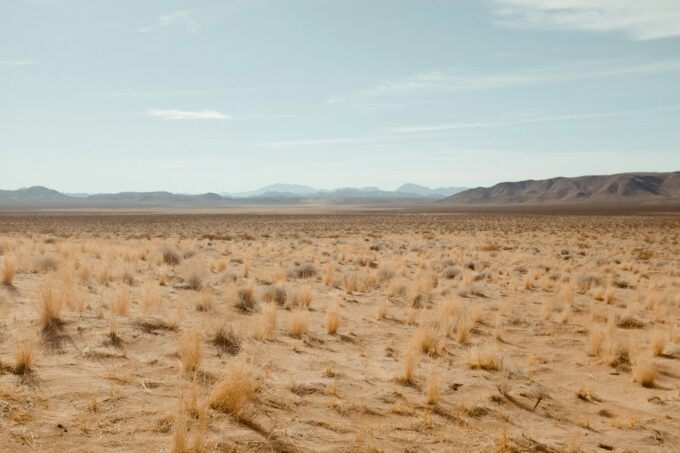
Image by Wesley Tingey.
This article is based upon an analysis of a climate change black swan event currently spreading across America.
As of April 28th, the U.S. Drought Monitor confirmed much of the country in various stages of drought with some regions in serious condition. The Plains States and entire Southeast are trapped in various stages of unending drought. The West is another story altogether, experiencing lost snowpack like never before in history.
But the most haunting number is the Palmer Drought Severity Index PDSI for March. Based on NOAA National Centers for Environmental Information (NCEI) data, March 2026 recorded an exceptionally low Palmer Drought Severity Index PDSI of -7.84 for the contiguous U.S. This is the most severe March reading since 1895 or 131 years ago.
Mainstream news outlets claim it’s “a normal dry season,” but the intensity and reach more closely resemble a sinister black swan event with earmarks of what could become an irreversible systemic collapse.
The atmosphere is locked in a very high percentile heat shock, plummeting Snow Water Equivalents (SWE) to dangerous lows accompanied by a stiff La Niña feedback loop. Unlike the Dust Bowl of the 1930s, this ‘Double Drought’ is simultaneously draining the fossilized Ogallala Aquifer and pushing the Colorado River Basin past its absolute physical tipping point.
The national power grid and massive AI data centers, mega cities, and 40 million people could be facing an inescapable, catastrophic breaking point. After all, the entire West Coast is totally dependent upon water. It’s everything; it’s the lifeblood of existence.
Snowpack’s “Water Bank” Turning Bankrupt
The snowpack (water bank) is the only thing that keeps that vast infrastructure operational, but it has never been so sparse at this crucial stage. The trusty water bank may be going bankrupt.
The unbelievable heat wave in March triggered a broken-down chain reaction. In the Colorado River Basin, the Rio Grande, and the Sierra Nevada the snow did not melt; it evaporated and forcibly flowed downstream. Drought.gov confirmed the collapse in early April. Snow/Water Equivalent, SWE plummeted. A drought emergency has already been declared in some states in mid-spring, way too early on a normal basis for such a declaration. Alas, this season has experienced not only slight snowfall, but of more significance, the water supply calendar for nearly one-half of America has been nearly destroyed. Tons of water have been “forced down” by inordinate heat in March, overwhelming reservoirs down below that were forced to release massive amounts of precious water, or burst from overflow, that otherwise would have been available during the upcoming hotter summer months. Indeed, it’s a black swan event of unprecedented proportions.
Statement By U.S, Forest Service (April 2026)
“It is unlikely that snowpacks will rebound at this point in the season, leaving scant snow reserves to supply water through the summer months.” (USDA Forest Service d/d April 3rd, 2026)
Our modern society of billion-dollar mega cities, and massive food supply chains has been established on a 20th century calendar. A calendar that dictated snow would hold water and spring would arrive on schedule. In 2026 that calendar will cease to exist. If the West has lost its only natural water-holding source for the summer, what will happen when real fire arrives?
The West is losing Snow; the East is Losing Moisture.
Meanwhile, America’s Southeast is heavily locked in extreme drought. Florida is in the worst drought since the turn of the millennium. More than 1,500 wildfires have ripped thru the state of Florida over only the first four months of 2026. Florida peatlands (normally moist) are drying up and smoldering from beneath the surface. In turn, this incinerates the reef system.
The 2026 drought is referred to as a ‘Compound Drought” the result of convergence of three destructive forces. Scientists warned about this for years now; (1) climate change – the planet’s baseline temperature has warmed which turns the atmosphere into a “giant dehumidifier,” draining water from the soil as well as vegetation faster than ever before (2) a long La Nina cycle that deflects the jet stream blocking rainstorms from the South and Great Plains (3) the March 2026 “heat shock” across the country depleting snow reserves and soaking up moisture before the advent of spring.
The West Sucked Dry
The “sponginess of the atmosphere” or how much moisture hot, dry air sucks up from the land is at an eye-popping 77% above normal. This is ‘vapor pressure deficit,” and it’s off the charts. According to UCLA hydroclimatologist Park Williams, this sensitive reading is 25% above the all-time previous record for January thru March in the West. Professor Williams claims that amount of moisture sucking from the ground was previously not considered possible, until now. (Source: Record U.S. Drought Sparks Fears About Wildfires, Water Supply and Food Prices, CBS News, April 18, 2026)
Drought usually peaks in summer, not spring, and that’s what worries scientists this year. America is starting to collapse from its ground up as its fragile topsoil sustains 330 million people.
Winter wheat, a crop planted in the fall to be harvested in the summer, is dying of thirst. The percentage of crops achieving good to excellent grades has plummeted, a dramatic drop compared to the same period last year. As of late April 2026, approximately 68% to 70% of the U.S. winter wheat crop is located in areas experiencing drought According to USDA data, as of late April 2026, 98% of the U.S. cotton crop is located within areas experiencing drought. Such extreme statistics highlights an ongoing threat of high abandonment rates
“Farmers across the Great Plains are confronting an intense drought that threatens winter wheat harvests and is pushing cattle producers toward costly feed purchases…The dryness is expected to persist through spring after weeks of scant rainfall and a late-winter heat spell that fueled massive pasture fires across the nation’s breadbasket. Drought now covers nearly 90% of Nebraska and Oklahoma, with more than half of Nebraska in “extreme” drought.” (US Wheat Crops Wither, Herds Thin as Spring Drought Deepens, The Spokesman Review, est 1883, April 27, 2026)
Ogallala Aquifer Threat
Beneath the arid soil of eight states stretching from South Dakota to the tip of Texas lies Ogallala Aquifer. North America’s largest aquifer. It’s the continent’s backup battery, an invisible ocean containing fossilized water accumulated since the Ice Age. The natural recirculation rate is a few inches per year, but tens of thousands of industrial scale pumps drain hundreds of feet of water, not inches. In 2026, with 80% of Oklahoma and 75-85% of Texas succumbing to surface drought, farmers are pumping full-out.
Drill Results: USGS reports in West Texas confirm that many bore holes into the famous aquifer have hit ‘rock bottom.’
According to The Topeka Capital-Journal d/d Feb. 17, 2026, “Southwest Kansas farmers face significant water cuts to save the Ogallala Aquifer.” But. “save it” for what… to puppy-it-along with decreasing production of both water and crops?
Risky Living: Phoenix- five million inhabitants live in the middle of a desert. For the first time in RE history, a state is regulating RE development based upon water. Contractors are being forced to prove their projects have a guaranteed water supply. Many projects have been rejected.
Meanwhile, a series of AI data centers are being constructed, consuming millions of gallons of water to cool servers. Some centers adopt circular water systems to reduce direct use. However, according to a Ceres study, while direct cooling is a significant factor, “indirect water” required for energy generation accounts for up to 75% of total consumption, a crucial, often overlooked factor found in the Ceres analysis.
According to ABC15 Arizona; “More than 125 data centers already operate in Maricopa County, with many more seeking to establish operations in Arizona. The expansion has created excitement among entrepreneurs while raising concerns from city leaders about costs and infrastructure.” Oh, really!
Yesterday’s Climate Vanishes
The decisions made in the 20th century were based upon assumptions that tomorrow’s climate will be exactly the same as yesterday’s. But 2026 is the year that assumption may officially crumble.
Who said climate change is a hoax?