Friday, May 15, 2026

‘No medicine for my son’: Sudanese struggle to survive in new war zone


ByAFP
May 7, 2026


A person receives free medication in Sudan's capital. In Blue Nile to the south, displaced people have reported shortages of medicine and food - Copyright AFP Khaled DESOUKI


Abdelmoneim Abu Idris Ali with Menna Farouk in Cairo

In an overcrowded camp in Sudan’s Blue Nile state, Awatif Awad has been fighting to keep her five children alive as the region becomes a new front line in the country’s three-year war.

“We are only given one meal a day,” she told AFP by phone from the camp, home to thousands of people who had fled a recent surge in fighting between Sudan’s army and the paramilitary Rapid Support Forces (RSF).

“My son is five years old. He has malaria. There is no medicine for my son,” Awad, 38, added from the sprawling Al-Karama 3 Camp in state capital El-Damazin.

The fighting escalated in Blue Nile early this year, three months after paramilitary forces overran El-Fasher, the army’s last stronghold in western Darfur.

The war has since pushed east into southern Kordofan and Blue Nile, a resource-rich border region between Ethiopia and South Sudan that serves as a key supply corridor.

Sudan’s army has been fighting there against the RSF and their allies from the Sudan People’s Liberation Movement-North (SPLM-N), a rebel group that has long operated in parts of Blue Nile and South Kordofan.

Control of the state is divided between the rival camps.

Jalale Getachew Birru, a senior analyst at the US-based Armed Conflict Location and Event Data project, said at least 450 people were killed in Blue Nile between January and March, the deadliest period since 2023.

“Blue Nile has shifted from a peripheral front to a central battleground,” Birru told AFP.

Birru said control of the state was strategically significant, as it borders army-held Sennar — regained in a counteroffensive last year that also saw the army retake Khartoum — and could “determine who controls central Sudan”.


– Under strain –


Sudan’s war has killed tens of thousands of people, displaced millions more and created what the United Nations describes as the world’s largest displacement and hunger crises.

Awad fled Kurmuk, a town near the Ethiopian border and nearly 140 kilometres (87 miles) south of Damazin, in late March as paramilitary fighters descended in full force.

Carrying what she could and clutching her children, she walked for three days across unfamiliar terrain.

“At night it was pitch black,” she said. “We just kept walking.”

When she finally reached Damazin, she found a camp already under strain.

Karama 3 was originally built to host refugees who had fled earlier conflicts to South Sudan and Ethiopia and later returned.

But since January, Karama 3 and other displacement sites in Damazin, as well as neighbouring Roseires and Baw, have taken in around 30,000 people fleeing violence across Blue Nile.

Kurmuk saw large-scale displacement over several weeks, with over 11,000 civilians fleeing, according to UN figures.

Photos of Karama 3 shared by local volunteers online showed women gathering their children close as they queued for meagre food rations and water.

Shelters are patched together from plastic sheeting, straw and scraps.

There is no clinic nearby and reaching the city’s hospital often depends on the availability of a battered motorised rickshaw, the camp’s only form of transport.


– ‘We are scared’ –


“We are scared of the rains,” said 33-year-old Mahasin Abdelhamid, who also fled Kurmuk and now shares a large tent with dozens of families.

When the rainy season starts this month, “this place will flood and the tents won’t protect us”.

Local officials say more than 150,000 people have been displaced across Blue Nile since April 2023, with around 100,000 sheltering in Damazin alone.

“People are suffering severe shortages of food, shelter and healthcare,” said one volunteer assisting displaced families in Blue Nile, who asked not to be named for security reasons.

“Some of the displaced arrive injured, but there are no clinics,” the volunteer added.

A recent UN assessment warned that conditions in Blue Nile were worsening due to overcrowding, poor shelter and sanitation and rising risks of gender-based violence.

UN humanitarian coordinator Denise Brown said funding gaps, insecurity and access constraints were crippling aid efforts.

Local authorities say aid agencies cannot keep pace.

“They assess needs based on a certain number, but when they return the next day, they find the figures have increased,” the Kurmuk locality’s media office told AFP.

Community-run emergency rooms providing food, basic healthcare and coordination were ordered shut last month without explanation, a local human rights monitor said. Authorities did not respond to an AFP request for comment.

Meanwhile, the fighting shows no sign of easing.

Sudan has accused Ethiopia and the United Arab Emirates of launching drone attacks since March on several states, including Blue Nile, from Ethiopian territory, a development that risks drawing the wider region into conflict.

The UAE has repeatedly denied accusations that it arms the RSF, while Ethiopia has denied hosting RSF or UAE forces.

“If the conflict escalates, vulnerable groups will be greatly affected,” Birru said.

“Health and maternity care might completely collapse… The conflict has already kept children out of school, and the continued escalation in this state will only solidify this.”
Japan confirms year’s first fatal bear attack, two more suspected


ByAFP
May 8, 2026


A spate of bear encounters including at hot spring resorts and in supermarkets last year has sparked alarm, with the government deploying troops to help trap and hunt the animals - Copyright AFP/File Caroline GARDIN
Kyoko HASEGAWA

Japan confirmed Friday the first fatal bear attack of 2026 after a record 13 deaths last year, with reports pointing to a jump in sightings as the animals emerge hungry from hibernation.

A spate of bear encounters including at hot spring resorts and in supermarkets last year sparked alarm, with the government deploying troops to help trap and hunt the animals.

Record sightings have been reported again this year as the bears emerge from their winter slumber, according to local media.

This year’s first confirmed fatality, reportedly a 55-year-old woman, was discovered on April 21 in Iwate prefecture in northern Japan, according to the environment ministry.

Two more sets of human remains were found this week, police told AFP, with media reports drawing a link to bear attacks.

One of the two bodies was discovered elsewhere in the Iwate region on Thursday while another was found in a forest in Yamagata prefecture on Tuesday, police said, without providing the cause of the deaths.

Broadcaster NHK identified one of the two as Chiyoko Kumagai, 69, who went missing after going to a mountain forest to pick edible wild plants.

Police and rescuers launched a search on Thursday in the forest where her car was parked and found her body shortly after 8:00 am (2300 GMT Wednesday), NHK reported.

She reportedly had injuries on her face and head that appeared to have been caused by an animal’s claws.

City officials said local hunters were expected to begin patrolling the area on Friday, according to the broadcaster.


– Supermarket sweep –


Last year’s record number of fatal attacks was more than double the previous high of six. More than 200 people were also injured.

The animals were seen entering homes, roaming near schools and rampaging in supermarkets and hot spring resorts almost on a daily basis.

Between April 1, 2025 and March 31, 2026, more than 14,000 bears were culled, official data showed, almost three times the previous year.

Scientists say that last year’s upsurge was driven by fast-growing numbers of bears, combined with a falling human population, especially in rural areas.

Bears are thriving thanks in part to an abundance of food — including acorns, deer and boars — under the influence of a warming climate, experts say.

The brown bear population has doubled in three decades, and now stands at around 12,000, while the number of Asian black bears has climbed on the main Honshu island, reaching 42,000, according to a 2025 government report.

This in turn has led to “overcrowding”, forcing some bears to stray out of the mountains — which make up around 80 percent of Japan — towards areas inhabited by humans, experts say.

Cubs in particular can become less fearful and develop a taste for farmed produce and common fruits such as persimmon.

But poor harvests in 2025 pushed bears to seek food elsewhere, including in towns and villages.

This year forecasts for nuts and other food are better but as the animals have emerged from winter hibernation there have also been record numbers of sightings, according to local media.

In Miyagi, Akita, and Fukushima prefectures, the number of sightings in April was around four times that of the previous year, the Yomiuri daily reported.

Brown bears — which can weigh up to half a tonne and outrun a human — are found only in the main northern island of Hokkaido.

Smaller Japanese black bears, meanwhile, are common across large parts of Japan including on the main island of Honshu, and are responsible for most of the attacks.


Hundreds paid or seeking damages over Harrods Al-Fayed abuse complaints


ByAFP
May 7, 2026


Harrods department store in west London. — © AFP


Anne-Laure Mondesert

More than 75 survivors have been awarded “full compensation” for suffering sexual abuse at the hands of late Harrods owner Mohamed Al-Fayed, and nearly another 200 claims are being processed, a company scheme told AFP Thursday.

“We can confirm that 259 survivors have entered the process, many of whom have received interim compensation,” the Harrods Redress Scheme said in a statement sent to AFP.

“To date, over 75 survivors have received full compensation through the scheme.”

The remaining cases, submitted before a March 31 deadline, “will continue to be reviewed and progressed to conclusion,” the statement added.

It came as the UK’s police watchdog confirmed that a serving officer with London’s Metropolitan Police and four ex-officers were being investigated for their handling of the allegations.

The probe centres on the quality of police inquiries in 2008 and 2013 in response to accusations against the late Egyptian billionaire.

While some 21 complaints were made to the London force before Fayed’s death, aged 94 in 2023, none led to a prosecution.

Fayed, who owned the famed luxury department store in London, has been accused of large-scale rape, sexual assault, sexual exploitation and human trafficking.

– ‘Survivors were failed’ –

The Harrods Redress Scheme was launched in March 2025, after growing numbers of women came forward to launch complaints against Fayed following the September 2024 release of a BBC investigation into the claims of rape and assault.

The company has said it “apologises unreservedly for the sexual abuse inflicted upon survivors by Fayed who abused his power wherever he operated.

“We acknowledge survivors were failed.”

Under the terms set out by the scheme, survivors could be eligible for up to £400,000 ($544,000) in compensation.

Any applicant could make claims for various amounts depending on the level of harm.

For example, women can claim an indemnity of £10,000 if they were forced to undergo intrusive gynaecological examinations to check if they had sexually transmitted diseases or were virgins.

The company added that while “it is recognised many individuals may have been impacted by Fayed, applications to the Scheme are limited to those who have potential claims against Harrods for acts of sexual abuse perpetrated by Fayed”.

Earlier Thursday, the Independent Office for Police Conduct (IOPC) said in a statement that five police officers were being “investigated for potential misconduct”.

It added: “The victims-survivors are being kept updated on the progress of our investigation.”

The mother of one woman who went to police later told the BBC her daughter, who has since died, had been effectively dismissed by officers.

Samantha Ramsay was told it would be her word against Fayed’s, but that her allegations would be added to “a pile” of others by women who had made the similar complaints.

– ‘Modern slavery victim’ –

A Met spokesperson said Thursday the force was assisting the ongoing IOPC probe launched in January 2025.

It own investigation into “individuals who may have facilitated or enabled offending by Mohamed Al-Fayed remains active”, it added.

The force said in March it had questioned three women on suspicion of “aiding and abetting rape” and “human trafficking for sexual exploitation”.

Fayed bought Harrods in 1985, six years after acquiring the Ritz in Paris.

The French authorities have also been investigating a vast alleged human trafficking network reportedly set up by Fayed.

Rachael Louw, a former saleswoman at Harrods who has been interviewed by the French body combatting human trafficking, OCRTEH, told AFP she had been recognised in the UK in April as a victim of modern slavery.

She felt the decision, by the National Referral Mechanism, was “a validation and a vindication of what I said to the Met when I first reported back in 2024”, she said.

Justine, who worked at Harrods and is a member of the victims group No One Above, said the IOPC probe was a step, but called for a full probe into alleged trafficking.

“What the Fayeds ran was a trafficking operation — one that required a network of facilitators, institutional access, and sustained cover,” she told AFP.


Peru vote uncertainty jolts markets, mining sector


Arequipa is one of the most important mining regions in Peru. (Stock image by Nicolas Dumeige.)

Peru’s presidential election uncertainty is rattling investors and raising concerns over the future of billions in mining investment as leftist candidate Roberto Sánchez moves closer to a June runoff that could reshape the country’s business-friendly economic model.

Business confidence fell in April to its lowest level in almost two years, according to a Central Bank report published this month, while Peru’s bonds and currency have lagged regional peers in recent weeks. 

Investors fear Sánchez could pursue greater state intervention in key industries, increase taxes on miners and weaken investor protections through constitutional reform. 

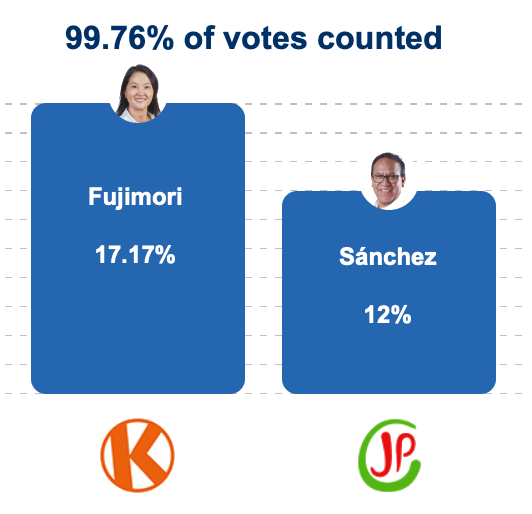
Sánchez appears poised to face conservative Keiko Fujimori in the June 7 runoff after opening a 15,000-vote lead over right-wing rival Rafael López Aliaga with 99% of ballots counted. Electoral authorities are expected to confirm the final result this week following a review of contested ballots.

“There has been a sharp deterioration mainly driven by election uncertainty and fear of a radical shift in the way the country is governed,” former finance minister Luis Miguel Castilla told Bloomberg News

Polls show Sánchez and Fujimori running neck-and-neck ahead of the runoff, setting up a stark choice between greater state intervention and Peru’s traditional investor-friendly framework.

Billions at stake

The election comes at a pivotal moment for Peru’s mining industry, which has underpinned economic growth despite years of political upheaval in Lima. Mining investment reached about $6 billion last year and had been expected to rise further in 2026 amid strong copper and gold prices. 

Peru’s economy has expanded by roughly 3% annually since the pandemic, driven largely by mineral exports even as the country cycled through multiple presidents and recurring political crises.

The Andean nation remains the world’s third-largest copper producer and a major supplier of gold, silver and zinc. 

Mining accounts for about 60% of exports and anchors operations for companies including Glencore (LON: GLEN), Anglo American (LON: AAL), Freeport McMoRan (NYSE: FCX) and MMG. The country’s vast mineral wealth continues to attract investment despite the uncertainty. 

In March, Australia’s Fortescue (ASX: FMG) completed its C$139-million acquisition of Alta Copper and its Cañariaco project, an open-pit development expected to produce 140,000 tonnes of copper annually.

Analysts said Peru’s markets had largely become accustomed to instability after eight presidents since 2016. GEM Mining Consulting warns that a Sánchez victory could trigger a “strong adjustment” in the country’s bonds and currency. Barclays analysts have also turned underweight on Peru’s dollar bonds and recommended selling the sol against the US dollar.

Sánchez, a close ally of jailed former president Pedro Castillo, has pledged to redistribute wealth to rural communities, review mining tax agreements, rewrite Peru’s constitution and phase out open-pit mining, the dominant method used by nearly all of the country’s large mines.

He has also suggested using international reserves for social spending and criticized central bank governor Julio Velarde. Investors are also weighing fresh pressure on the mining industry, including proposed legislation to halve the amount of time companies can hold unused concessions and the revocation of Southern Copper’s (NYSE, LON: SCCO) long-delayed $1.8-billion Tía María project licence, which was restituted in April.

Illegal mining persists

The broader concern for investors is whether Peru’s next president can restore stability and contain the growing influence of illegal mining. Illicit operations are now believed to produce more gold than major formal miners, including Hochschild Mining (LON: HOC), Compañía de Minas Buenaventura (NYSE: BVN) and Newmont Mining (NYSE: NEM), underscoring the scale of the challenge facing the sector.

Former finance minister Castilla said any market selloff would likely be less severe than the capital flight that followed Castillo’s election five years ago because Peru now holds stronger international reserves and continues to benefit from robust demand for metals exports. Preliminary congressional results also suggest business-friendly lawmakers will maintain significant influence in Peru’s restored bicameral legislature, potentially limiting more radical policy shifts.

The runoff will determine whether Peru doubles down on investor-friendly policies or shifts toward greater state intervention, with billions in mining investment and one of Latin America’s most important resource economies hanging in the balance.

(With files from Bloomberg)


Latin America is heading into 2026 with resources at the centre of a growing global power struggle, as governments and investors focus on who controls critical minerals and the supply chains behind them. If the region matters to you, don’t miss MINING.COM’s new series tracking the geopolitical forces reshaping it and why markets are increasingly driven by global alliances as much as local politics.

Countries in the series so far:

IMF sees risks to global growth forecast over sustained Iran war


By AFP
May 14, 2026


The economic ramifications of the war in the Middle East have dominated discussions at the 2026 IMF-World Bank Spring Meetings in Washington - Copyright AFP Tierney CROSS


Asad HASHIM

The International Monetary Fund warned on Thursday that continuing disruptions due to the Iran war meant its global economic outlook was moving towards an “adverse” scenario, with growth pared down and greater risks to inflation.

Last month, the multilateral lender’s World Economic Outlook predicted global growth would drop to 3.1 percent in 2026 in its “reference” scenario, but warned of a bleaker outlook if the war were to drag on.

In the “adverse” scenario, where oil prices remain higher for longer, inflation expectations become less stable and financial conditions tighten, growth would slow to 2.5 percent, the Fund said at the time.

On Thursday, the Fund’s chief spokesperson said the global economy was headed towards this less auspicious situation.

“We are moving into the adverse scenario, but inflation expectations are still reasonably well anchored, and financial conditions still remain accommodative,” Julie Kozack told reporters in Washington.

The Fund also has a “severe” scenario, in which growth slows to 2.0 percent and inflation flares to six percent.

An update of the World Economic Outlook is due in July.

The US-Israel war on Iran has engulfed the Middle East in violence, with Tehran’s retaliatory action targeting Washington’s regional allies and virtually blocking the Strait of Hormuz.

The key waterway normally sees about a fifth of global oil and gas supplies pass through it, and the blockade has seen energy prices skyrocket worldwide.

The IMF was in “active discussions” with member states over their needs, and “many countries are actually asking us for support in the policy area,” said Kozack.

During the IMF’s spring meetings last month, Managing Director Kristalina Georgieva said as many as 12 countries could require financial assistance from the Fund, with $20-50 billion required in total.

Kozack said that discussions on that financial assistance were continuing, but that the Fund was not yet prepared to disclose which specific countries were involved.

The IMF spokesperson also warned of the risks to food security due to the war, with a third of the world’s fertilizer supply also stopped due to the blockade.

“We know from history that when fertilizer prices increase, that it takes about six months or so for this to translate into increased food prices and, in some cases, reductions in yields and food security issues,” she said.

IMF warns of ‘inevitable’ AI-powered threats to global financial system


ByAFP
May 7, 2026


Last month, AI company Anthropic warned that its latest model -- not yet available to the public -- was incredibly efficient at finding and exploiting software vulnerabilities - Copyright VATICAN MEDIA/AFP Handout

The International Monetary Fund (IMF) warned on Thursday of the risks to global financial stability posed by cyberattacks powered by advanced artificial intelligence tools, calling for greater international cooperation on the issue.

“IMF analysis suggests that extreme cyber-incident losses could trigger funding strains, raise solvency concerns, and disrupt broader markets,” the lender warned in a new report.

The study’s authors highlighted the risks posed by the highly interconnected nature of the global financial system, with advanced AI models able to “dramatically reduce” the time and cost of exploiting vulnerabilities.

The warning comes weeks after AI company Anthropic cautioned that its yet-to-be-released “Mythos” model was incredibly adept at finding and exploiting such weaknesses.

The model was particularly efficient at identifying vulnerabilities that developers and users had been previously unaware of.

In the hands of hackers, such so-called “zero-day” vulnerabilities are considered particularly dangerous.

On Wednesday, White House economic adviser Kevin Hassett told Fox News that an “all-government” and private sector effort was being made to test the model and ensure it does not cause harm to US businesses or government.

A day earlier, the US government announced a policy shift in which it would have access to tech giants’ new AI models to evaluate them before they are released.

The IMF warned that emerging and developing countries, “which often have more severe resource constraints, may be disproportionately exposed to attackers targeting regions with weaker defenses.”

The risks, the authors said, were systemic, cut across sectors and came with the threat of contagion, with the reliance on a small number of platforms and cloud providers likely to increase “the impact of any single exploited weakness.”

“Defenses will inevitably be breached, so resilience must also be a priority, specifically to limit how far incidents spread and ensure rapid recovery,” the report said.

IMF chief Kristalina Georgieva warned last month that the global financial system was not ready for the cybersecurity threats posed by AI.

“We are very keen to see more attention to the guardrails that are necessary to protect financial stability in a world of AI,” she told CBS News, seeking global collaboration on the issue.

AI use surges globally but rich-poor divide widens, Microsoft says


ByAFP
May 7, 2026


The AI adoption gap between wealthy and developing nations continues to widen - Copyright AFP Kirill KUDRYAVTSEV

Generative artificial intelligence is being used by 17.8 percent of the world’s working-age population, but the gap between wealthy and developing nations continues to widen, according to a report published Tuesday by Microsoft.

In the first quarter of 2026, 27.5 percent of people aged 15-64 in developed countries used a generative AI tool, compared with 15.4 percent in the developing world — a gap that widened by 1.5 percentage points from the second half of 2025, according to the report’s estimates.

The divide stems from significant inequality in access to internet connectivity, basic digital skills and electricity, according to the Microsoft AI Economy Institute.

AI model performance — historically stronger in English as most of the major AI companies are based in the US — is also slowing the spread of such tools in non-English-speaking countries.

But progress in processing non-European languages is fueling a catch-up in adoption in some countries, particularly in Asia, the US tech giant noted.

The United Arab Emirates tops the ranking of AI usage at 70.1 percent, followed by Singapore, Norway, Ireland and France.

The estimates were based primarily on measurements from computers running Windows and Microsoft products such as Bing and Copilot.

They only partially captured usage on Apple devices, and consolidated data was lacking for Russia, Iran and China.

The United States — home to dominant large AI models like ChatGPT, Claude and Gemini — ranked only 21st, at 31.3 percent.

AI usage in China — the world’s second-largest economy which is jostling with the US for an edge in the AI race — was 16.4 percent, the report said.

Pushing back against fears of job losses driven by automation, Microsoft argued in the report that AI coding tools “could increase demand for developer jobs.”

The company cautioned, however, that “it is still too early to know the full impact” of AI on the labor market.

For the first time in its history, the company itself offered voluntary departures to nearly 9,000 of its US-based employees in April.

According to Layoffs.fyi, a private aggregator, nearly 99,000 people have been laid off in the tech sector since January 1, primarily in the United States.

AI disinfo tests South Korean laws ahead of local elections


ByAFP
May 6, 2026


South Korea has hired hundreds of staff to track and counter manipulated content ahead of local elections - Copyright AFP Jung Yeon-je

Hawon Jung

In an airy office in South Korea, workers comb through social media, uncovering AI-generated content whose growing sophistication is testing toughened election laws ahead of local polls.

Experts warn that cheaper, more advanced artificial intelligence models are driving the global spread of online disinformation — a major concern in South Korea, which has adopted AI particularly rapidly.

The government strengthened the law in 2023 to counter the misuse of AI around elections, and has hired hundreds of staff to track and counter manipulated content ahead of local ballots on June 3.

But some say they feel like they are fighting an uphill battle.

“We can literally see how fast this technology evolves — like how each new version of AI makes videos and audio look and sound even more convincing,” disinformation monitor Choi Ji-hee said.

“Our job keeps getting harder and harder,” she told AFP at the National Election Commission (NEC) headquarters in Gwacheon, just south of Seoul.

On a recent workday, Choi and 18 colleagues clicked through Instagram, YouTube and other platforms, as well as online chatrooms and “fan clubs” for local politicians, in search of content concocted by AI.

Recent finds include a fake TV news report claiming a mayoral candidate had made Time magazine’s list of rising political leaders, and a slick, AI-produced K-pop song praising a politician while mocking his rivals.

Once authorities confirm the content is the work of AI, authorities can demand its removal and issue harsh punishments, including jail time in extreme cases.

In one corner, workers discussed how to dissect a suspicious video, mulling whether to separately extract its audio, key frames, facial images and background footage.

Nearby, data analyst Kim Ma-ru mapped where, when, and by whom fake materials had been distributed, helping Choi’s team detect dubious content more quickly.


– ‘Whack-a-mole’ –


The local polls are the third major ballot in South Korea since an amended law to combat AI-fuelled election falsehoods was passed in 2023.

More than 45 percent of South Koreans use generative AI, according to government figures. ChatGPT maker OpenAI says the country has the most paid subscribers outside the United States.

At the same time, South Koreans consume more low-quality generative content — “AI slop” — than any other country, and reports of false AI-created content rose 27-fold between the general election in 2024 and the presidential campaign the following year.

“It’s an exhausting job that can feel like a (game of) whack-a-mole,” Kim told AFP.

“But it’s important work — there’s a sense of civic duty in it.”

AFP has debunked AI-generated election disinformation in South Korea, including a video of the 2025 presidential frontrunner Lee Jae Myung — now the country’s leader — purportedly faking a hunger strike.

Beyond fake content about candidates, conspiracy theories about vote-rigging in recent years have also dented public trust in elections.

Jailed ex-president Yoon Suk Yeol sent hundreds of armed troops to the NEC during his short-lived bid to impose martial law in late 2024, repeating widely disproven far-right claims of vote hacking.

On the street outside the office, pro-Yoon protesters have hung a banner reading: “Investigate the rigged elections immediately!”

Both Choi and Kim declined to be photographed or filmed, citing growing threats and online bullying targeting election workers.


– Strict laws –


“In such a short time, it has become so difficult for voters to tell what is real and what is not,” said Jung Hui-hun, a digital forensic specialist at the NEC’s cyber investigations unit, as he ran videos through state-developed software tools to detect AI imagery.

Officials say the programmes are about 92 percent accurate, with human experts reviewing the most sophisticated material.

Once confirmed, authorities demand that either the poster or the platform remove the content for violating the 2023 law, which bans AI material that involves candidates and looks realistic enough to confuse voters in the three months before a poll.

Repeat offenders, or those who create content deemed particularly harmful, can face up to seven years in jail or a maximum fine of 50 million won ($34,000).

“The rules may seem excessive to those outside South Korea, especially in places like the US that highly prioritise freedom of expression,” Kim Myuhng-joo, director of the Korea AI Safety Institute, told AFP.

But as swiftly as South Koreans embraced AI, many grew aware of its dangers, Kim said, citing the election conspiracy theories and a public scandal around deepfake pornography targeting women and girls.

“Public consensus has formed that we need tough regulations over the use of AI when it comes to election transparency,” Kim said.

A survey last year showed 75 percent of South Koreans believed AI-generated content could sway election results, and nearly 80 percent supported stronger efforts to detect and punish its use.

Jung, the digital forensic specialist, acknowledged the country’s response had “many limits” but voiced hope it would spur debate on how to tackle AI-fuelled disinformation.

“We’re still trying to figure out what is the best solution… but I think we are moving forward — slowly but surely,” he said.


Canada’s Cohere embraces ‘low drama’ amid AI giant tumult


ByAFP
May 15, 2026


Montreal-based Joelle Pineau joined Cohere last year after nearly eight years leading Meta's Fundamental AI Research lab - Copyright AFP ALAIN JOCARD


Alex PIGMAN

In an industry that runs on hype and grand gestures, Canadian AI firm Cohere is charting a different course from Silicon Valley. No talk of superintelligent machines, no public feuding, just one question: can it make money?

“Cohere is a very low drama company,” chief AI officer Joelle Pineau told AFP in a recent interview, noting that she counts many friends at OpenAI and Anthropic — and that Cohere is quite different.

The company was co-founded in Toronto in 2019 by Aidan Gomez, an AI researcher who co-authored a seminal paper that laid the foundations for modern AI systems, underscoring the central role of the Canadian AI research ecosystem in the field’s development.

Pineau, who joined Cohere last year after nearly eight years leading Meta’s Fundamental AI Research lab, said the company’s understated approach extends to one of the hottest buzzwords in the industry: artificial general intelligence, or AGI, the hypothetical point at which AI surpasses human intelligence.

“We don’t spend a lot of time talking about AGI,” Pineau said, dismissing the theorizing as a distraction.

Instead, she said, the company rallies around a decidedly less glamorous slogan — “ROI over AGI” — a reference to the return on investment that has yet to materialize across much of the cash-burning AI industry.

Pineau said the company’s focus on business clients shapes how the firm thinks about AI risk, cutting through what she described as fear-mongering around hypothetical scenarios.

“We’ve had a number of people who’ve gone around and essentially made people scared of AI as opposed to really understanding the real risks,” she said, arguing that time spent catastrophizing could be better spent addressing tangible safety challenges.

Those real risks, she said, include workforce disruption, data privacy and infrastructure security — concerns that Cohere’s enterprise customers in financial services, healthcare and government are actively grappling with.

“People are worried whether that’s going to impact their jobs, their ability to have a livelihood,” Pineau said. “These are completely legitimate questions.”

On the competitive threat from Chinese AI models, she pushed back against alarmist framing while acknowledging security considerations. The risk of malicious code injection through AI-generated software, she noted, is not unique to any one country.

“It’s not only the Chinese who can do this — any developer who decides that they want to do this” has mechanisms to do so, she said, adding that robust safety practices were good hygiene regardless of a model’s origin.

– ‘Spicy takes’ –

Pineau said Cohere was well-positioned to capitalize on demand from European and Asian markets wary of dependence on US technology platforms.

The company last month announced a deal to acquire German AI firm Aleph Alpha, creating a combined entity valued at around $20 billion with dual headquarters in Toronto and Berlin.

The deal, backed by both the Canadian and German governments, is designed to position Cohere as a sovereign alternative for businesses to American AI giants in the European market, as well as in Asia.

“Given the geopolitical context, some of them are afraid of just getting locked out of US tech solutions,” she said. “We are more than happy to offer an alternative.”

While Cohere will continue to call Toronto its global home, Pineau said the company’s ambitions stretch well beyond its borders. With offices in San Francisco, New York, London and Paris — and now a deepening presence in Germany — the goal is unambiguously international.

Still, she suggested the founders’ origins might leave a lasting imprint on the firm’s character.

“There may be some particular Canadian folklore that comes with it — some of the values of the co-founders that are going to permeate,” she said.

Asked whether leaning into splashier narratives — like rivals’ warnings of AI doom — might attract more investor attention and generate more publicity, Pineau suggested wryly that “maybe we’d get a lot more air time” by playing along.

“Maybe we’ll try some spicy takes once in a while,” she added.


Europe Doubles Down on the Arctic to Bypass Risky Red Sea Internet Route

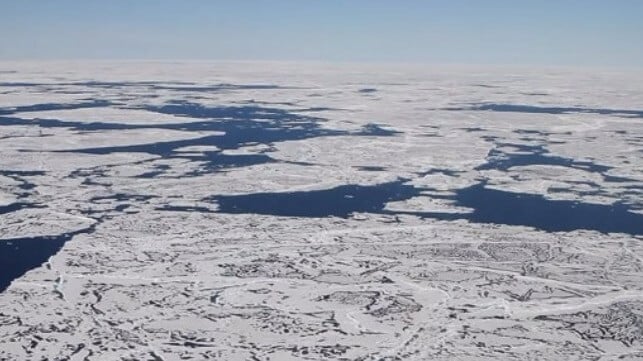
Arctic sea ice
Arctic sea ice (NASA)

Published May 14, 2026 7:08 PM by The Maritime Executive


With growing instability in the Middle East, the European Union (EU) is considering using the Arctic as a bypass for its internet traffic. Over the past decade, Europe has been investigating the viability of the Arctic as a secure digital corridor. The war with Iran has accelerated these efforts, at a time when network engineers have already expressed concerns over the security of subsea cables in the Red Sea and the Persian Gulf regions. 

Currently, around 90 percent of Europe’s internet traffic passes through the Red Sea. Europe sees this as a massive risk to its digital sovereignty.

In line with these concerns, the EU, in a report early this year, highlighted the Arctic as an important alternative. The report further called for the Arctic connection to be a prioritized initiative for Europe. Two connections are envisaged, which include the Far North Fiber expected to link Europe and Japan through the North-West Passage between Greenland and Canada. The second one is Polar Connect, which follows a more direct route through the North Pole, towards North America and East Asia.

The Polar Connect cable has received priority, and the EU has so far put in about $10 million for preparatory work. Overall establishment costs are estimated to be $2.3 billion. Some of the preparatory works include a route survey for the cable, planned for this summer. Nordic countries are taking a leading role in the project, and discussions are underway to involve Japan and South Korea.

The organizations participating in this early phase of planning include the Nordic academic network operators (NORDUnet), the Swedish Polar Research Secretariat, and the Nordic telco firm GlobalConnect Carrier. A report prepared by the consortium justified the Arctic route as the most effective solution for long-range transmission of large data volumes in Europe.

“Looking at the globe from the North Pole, it is obvious that a route through the Arctic region is the shortest between Northern Europe and Asia. Further, since the connections will pass through virgin territory, they will be fully independent from congested regions,” said the report led by NORDUnet. “For instance, the existing route through the Suez Canal and the Red Sea is used by multiple connections, which is a high-risk factor, even if the geopolitical tensions in that region had not existed.”

But Europe is attempting an Arctic subsea cable project where others failed, a subject that has raised viability concerns. The US-based telco provider Quintillion was initially formed to build a subsea cable from Japan to Europe via the North Pole. The company only managed to deploy a North Alaskan subsea cable. Quintillion has been recently acquired by the Alaskan telco company GCI after several years of operational challenges.

Quintillion’s cable suffered a major outage in 2023 due to shifting sea ice. Without an icebreaker, the repairs had to wait for months for the ice to disperse, which significantly affected the company's revenues. Europe might face a similar set of challenges, as there are no cable ships with icebreaking capabilities. Again, deploying a cable from Europe through the North Pole, passing the Bering Strait to reach Tokyo, will require at least two ships. One for cable laying and at least one icebreaker. This could drive up costs, not to mention that cable maintenance will also require almost the same set of vessels. 

Closing arguments in blockbuster trial pitting Musk against OpenAI


ByAFP
May 14, 2026


OpenAI CEO Sam Altman was in the front row of the courtroom on Thursday, May 14, 2026 as lawyers presented their closing arguments in the case pitting Elon Musk against OpenAI - Copyright AFP Brendan SMIALOWSKI


Benjamin LEGENDRE

Lawyers for Elon Musk and OpenAI presented closing arguments Thursday in a blockbuster trial where the verdict could hobble ChatGPT’s parent company in the breakneck race for AI supremacy.

The three-week trial in Oakland, outside San Francisco, has seen a parade of Silicon Valley titans take the stand.

World’s richest person Musk is suing OpenAI over its pivot away from a scrappy non-profit into the $850 billion juggernaut behind ChatGPT.

Musk claims OpenAI CEO Sam Altman and co-founder Greg Brockman improperly used a $38 million injection he had hoped would sustain OpenAI as a research lab dedicated to developing AI technology for the good of humanity.

For the nine-person jury, as Judge Yvonne Gonzalez Rogers noted, their decision may come down to a simple question: who should they believe among the bickering billionaires?

“A non-profit devoted to the safe development of artificial intelligence, open sourced as practical, for the benefit of humanity. You know, we’re supposed to buy that,” quipped Musk’s attorney Steven Molo in his closing argument on Thursday, slamming Altman’s integrity.

OpenAI attorney Sarah Eddy countered with an attack on Musk.

“Even the people who work for him, even the mother of his children, can’t back his story,” she said, referring to Shivon Zilis, a business associate of Musk with whom he has four children, who testified about her role as an intermediary between the tech executives.

Musk, who was visiting China on Thursday as part of US President Donald Trump’s delegation, left OpenAI in 2018 and continues to pursue lucrative AI projects through his company SpaceX.

— Petty revenge? —

OpenAI was founded as a non-profit in 2015, but established a for-profit subsidiary in 2019 as the AI race heated up.

Altman and others insist this was necessary to raise the vast sums of money from investors required to compete in a costly and difficult field.

Musk’s legal case demands that OpenAI revert to non-profit status, a move that would stymie its position in the global artificial intelligence race against Anthropic, Google and China’s Deepseek.

As a non-profit, OpenAI would have to abandon its planned IPO and sever ties with powerful investors — Microsoft, Amazon, and SoftBank — whose funding is essential in the costly AI race.

In that scenario, the jury would have to determine whether Microsoft — the then-startup’s first private investor with a $13 billion injection — knowingly facilitated the company’s deviation from its original mission.

The jury’s first task is to determine whether Musk, who initiated the case in 2024 — six years after leaving OpenAI — filed his lawsuit within the legally permitted time limit.

If the answer is no, the case would end there.

OpenAI argues Musk is motivated by petty revenge, having failed to seize majority control of the commercial entity.

The trial has featured testimony from some of the top names in tech.

Musk spent three days on the stand portraying himself as a selfless benefactor seeking to reconcile the advancement of AI with the preservation of humanity.

Also appearing were OpenAI co-founder Brockman, who has since become one of the largest donors to President Donald Trump’s camp, Microsoft CEO Satya Nadella and Altman.

The case has highlighted the mind-boggling sums of cash washing around AI companies as they forge ahead with a technology that is changing the way society lives and works.

The jury, which serves in an advisory role in this trial, is expected to reach a verdict on any actual wrongdoing next week.

The judge will make the final decision on liability and potential remedies. She has indicated she will likely follow the jury’s advice.


Sweden Proceeds with Cargo Ship Seizure on Request from Ukraine

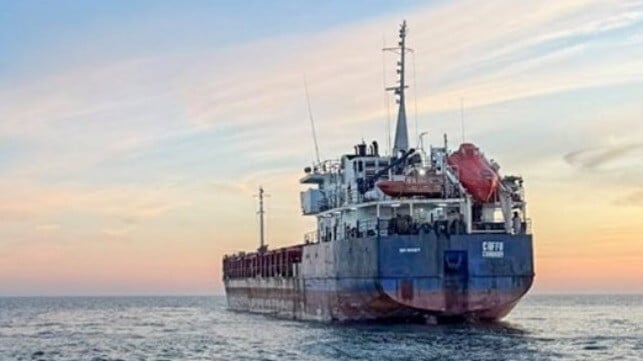
cargo ship detained off Sweden
Caffa was ordered to the dock and impounded based on Ukraine's allegation that the ship transported stolen grain (Swedish Coast Guard)

Published May 11, 2026 2:31 PM by The Maritime Executive


Swedish police proceeded to impound a small cargo ship, acting on the "legal request" from Ukraine, which asserts the ship was involved in the theft of grain from the occupied territories. Sweden had been detaining the ship for the past nine weeks on suspicion that it was operating without a proper flag registry and had safety violations.

At the end of April, Ukraine launched its latest tactic against Russia’s shadow fleet, filing legal requests in Sweden and Israel seeking to detain ships it alleges have entered the sanctioned ports of its occupied territories. It has repeatedly asserted that Russia is stealing grain and other Ukrainian assets and exporting them from occupied Crimea and other sections of the country. In the past, Ukraine had stopped ships in its local region, but this was the first time it sought international cooperation.

Swedish prosecutors accepted the legal request from Ukraine. They reported at the end of April that they would let the Swedish courts decide the matter and that the ship would be held during the judicial proceedings.

The ship, named Caffa, is a 4,300 dwt general cargo ship. Built in 1997, it had operated under the Russian flag but of late claimed to be registered in Guinea. Equasis lists it as a false flag. It was traveling from Casablanca to Saint Petersburg when Swedish forces intercepted the ship on March 6 and directed it to the anchorage off Trelleborg.

The Swedish police reported today, May 11, that they decided to execute the decision of the prosecutors and seized the Caffa. The ship was ordered to sail into the port and docked in Trelleborg, where it was officially impounded. Swedish authorities said it will be held until the court proceeding is complete, and the police were handling the crewmembers who are from outside the Schengen area.

“The cargo ship is empty and will be thoroughly examined by police personnel,” said Niclas Andersson, a spokesperson for the investigation unit of the national police

Swedish authorities in March arrested the captain of the vessel on charges that he had presented false papers when the ship was inspected.  The captain was later released, with prosecutors saying it was difficult to prove intent and that the captain was aware that the papers were false. However, the ship was being detained until it could demonstrate a valid registration and until safety deficiencies identified by the Swedish Transport Administration (Trafikverket) had been corrected.

The Caffa was the first of a series of ships that Sweden had detained. It continues to detain two small tankers that were also suspected of operating under false flags. Two other ships were charged with environmental violations. They were released after paying a fine.


Europe Launches 20th Sanctions Round Against Russia

tanker
EU in addition to listed more tankers add a ban on the sale of tankers to Russia (file photo)

Published May 12, 2026 5:05 PM by The Maritime Executive


In the wake of reduced Hungarian opposition following recent elections, the European Union has been able to move forward with its $106 billion loan facility for Ukraine. At the same time, the EU has also been able to promulgate its 20th sanctions round targeting Russia and its actions in Ukraine, a package of much wider scope than its predecessors, and a package with a wide impact on the shipping community.

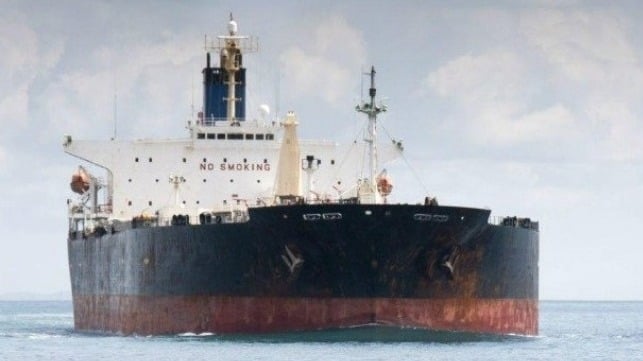
Continuing as before, the EU has sanctioned a further 46 ships. But the EU has also banned the sale (and future resale) by EU entities of any tankers to Russia, so as to prevent the build-up of a Russian-flagged dark fleet, a move that may have precipitated the sale of a number of tankers to Russia before the ban came into force.  

With these additions, there are now a total of 632 vessels in the designated Russian shadow fleet, all of which are now banned from making port calls or receiving marine or maintenance services in the EU. A number of ship management and service companies looking after dark fleet vessels in third countries have also been sanctioned.

The EU is also sanctioning any use of the Russian ports of Murmansk and Tuapse, plus the Karimun Oil Terminal in Indonesia. 

In the financial sector, EU operators have been banned from dealing with an additional 20 banks in Russia, making now a total of 70, plus four banks in Kyrgyzstan, Laos, and Azerbaijan. A total sectoral ban has been imposed on all Russian crypto asset service providers, use of the RUBx stablecoin and the digital rouble backed by the Central Bank of Russia, plus on any payment service providers who facilitate transfers through third countries to Russia.

New export bans have been imposed on a range of Russian-manufactured goods, including rubber, tractors, explosives, lubricants, metals, chemicals, and minerals.  A further 58 Russian companies manufacturing weapons-associated materials have been added to the sanctions list, as well as 60 third-country entities based in Belarus, China, Hong Kong, Kazakhstan, Thailand, Türkiye, the UAE, and Uzbekistan involved either in the manufacture or sourcing of components for Russian weapons systems.

An additional 33 individuals and 83 entities have been subject to sanctions and travel bans.

While the EU sanctions packages cover all EU member countries, enforcement is primarily the responsibility of individual countries. A number of countries have been particularly active in enforcement, making up for a number of others who have been somewhat slack. Of particular note, joining the robust stance taken by Nordic countries, the Netherlands is introducing emergency legislation to permit the interception and seizure of suspicious or falsely-flagged ships. Although not part of the EU, the United Kingdom is a weak link with regard to enforcement in Europe, having never attempted an interception because of the Attorney General's legal concerns. The tighter enforcement environment closing in on the Russian dark fleet has also been aided by the International Maritime Organisation’s adoption of new verification rules to curb the false-flagging of ships.