Friday, May 15, 2026


Indian magnate Adani agrees multi-million-dollar penalty in US court case


ByAFP
May 15, 2026


Chairperson of the Indian conglomerate Adani Group, Gautam Adani 
- Copyright AFP Punit PARANJPE

Indian billionaire industrialist Gautam Adani has agreed to pay a multi-million-dollar settlement in a US civil court case linked to corruption without admitting guilt, his company said Friday.

The November 2024 indictment in New York accused the industrialist and multiple subordinates of deliberately misleading international investors as part of a vast bribery scheme.

Adani was accused of having participated in an estimated $250 million scheme to bribe Indian officials for lucrative solar energy supply contracts.

Adani, along with his nephew Sagar Adani, agreed to the “payment of a civil penalty” totalling $18 million, while noting that it came “without admitting or denying the allegations made in the civil complaint”, a letter from Adani Green Energy to the Mumbai stock exchange read.

The penalty payment comes as US prosecutors are reported to be set to drop charges against Adani, The New York Times reported on Thursday.

The Adani letter, which noted that the final judgement of the US court is still awaited, stressed that the “company is not a party to this proceeding, and no charges have been brought against it”.

The New York Times said the move to abandon the charges, brought under US president Joe Biden’s administration, came after Adani hired a new legal team led by Robert Giuffra, one of President Donald Trump’s personal lawyers.

With a business empire spanning coal, airports, cement and media, the chairman of Adani Group has been rocked in recent years by corporate fraud allegations and a stock crash.

Adani, a close ally of Indian Prime Minister Narendra Modi, was born in Ahmedabad in Gujarat state to a middle-class family but dropped out of school at 16.

He moved to India’s financial capital, Mumbai, to find work in the city’s lucrative gem trade.

After a short stint in his brother’s plastics business, he launched the flagship family conglomerate that bears his name in 1988 by branching out into the export trade.

His big break came seven years later with a contract to build and operate a commercial shipping port in Gujarat.


India vows to crush terror ‘ecosystem’, a year after Pakistan conflict


ByAFP
May 7, 2026


Prime Minister Narendra Modi said India remains "steadfast as ever"
 - Copyright AFP/File Sajjad HUSSAIN

Prime Minister Narendra Modi said India remains “steadfast as ever” in its determination to defeat terrorism and its “enabling ecosystem”, marking one year since a deadly clash with arch-enemy Pakistan.

Relations between nuclear-armed neighbours plummeted last year after an April 22 attack in Pahalgam in Indian-administered Kashmir killed 26 men, mostly Hindu tourists, leading to their worst conflict in decades.

India blamed Pakistan for backing the attack — a charge Islamabad denied — triggering tit-for-tat diplomatic measures and a sharp military escalation.

The conflict escalated after India launched strikes on May 7, 2025 — on what it described as “terrorist camps” in Pakistan.

That prompted an immediate response from Islamabad, leading to airstrikes, drone swarms and heavy mortar fire between the two nuclear-armed neighbours.

“We remain as steadfast as ever in our resolve to defeat terrorism and destroy its enabling ecosystem,” Modi said on Thursday, a year on since the launch of what India dubbed “Operation Sindoor”.

Modi’s Hindu nationalist government used Sindoor, the Hindi word for the red powder which married Hindu women wear on their foreheads, as a sign that it was to avenge those widowed in the April 22 attack.

“They gave a fitting response to those who dared to attack innocent Indians at Pahalgam. The entire nation salutes our forces for their valour,” he said in a statement.

More than 70 people were killed on both sides.

Pakistan claims to have shot down five Indian fighter jets, including three advanced French Rafale aircraft, all of which were in Indian airspace at the time. India has not disclosed any losses.

On Thursday Pakistan said it would defend itself strongly against any attack in a statement marking the anniversary of a conflict Islamabad calls “Marka-e-Haq”, or “Battle of Truth”.

“We reaffirm that any threat to our homeland will be met with national unity, unshakeable resolve, and strength through all means available,” a foreign ministry statement said.

Without mentioning India by name, it added: “Last year, when aggression was imposed upon us, Pakistan… acted with calm resolve and moral clarity. Our response was measured, responsible, and precise; guided not by emotion, but by principle.”

The neighbours agreed to end the four-day conflict on May 10, a ceasefire first announced by US President Donald Trump.

Officials from Islamabad and New Delhi confirmed the ceasefire on May 10, minutes after Trump posted the announcement on his Truth Social network. India has repeatedly insisted that the truce was worked out directly with Islamabad.

India is also reported to be readying a test-fire of the latest model of the domestically developed ballistic Agni missile — meaning “fire” in Sanskrit — capable of carrying multiple nuclear warheads.

Modi’s Bharatiya Janata Party (BJP), in a post on social media, claimed the Agni-6 missile had a range of up to 10,000 kilometres (6,200 miles).

It claimed that it would place India in an elite club of nations with such long-distance missiles.

“This missile will make India’s security impenetrable and place us among the most powerful nations in the world,” it said, without giving further details of the launch.

However, Indian media report a Notice to Air Missions has been issued for a warning area over the Bay of Bengal, according to the Times of India newspaper.
New York governor orders US immigration agents to unmask


ByAFP
May 7, 2026


Officers of federal Immigration and Customs Enforcement (ICE) typically cover their faces on operations - Copyright AFP ANDREW CABALLERO-REYNOLDS

New York’s governor on Thursday ordered federal immigration agents operating in her state to not wear masks, a move likely to be challenged by President Donald Trump’s administration after courts overturned a similar effort in California.

Since the beginning of Trump’s controversial mass deportation campaign, agents from Immigration and Customs Enforcement (ICE) have typically covered their faces, officially to avoid being identified and potentially threatened outside of work.

“For ICE, wearing masks without good cause is nothing short of an intimidation tactic, a cowardly attempt to evade responsibility,” New York Governor Kathy Hochul, a leading Democrat opponent of Trump and his immigration policies, said Thursday.

Images of heavily armed, masked, plainclothes officers marauding around US cities including Minneapolis brutalizing citizens and non-citizens alike garnered international attention earlier this year, peaking when ICE officers shot dead two Americans in the Midwestern city.

As well as the restriction on face coverings, Hochul announced that ICE agents would no longer be permitted to enter schools, libraries, community centers, polling sites, and other sensitive locations without a judicial warrant.

She also forbade local police from cooperating with the agency in any operation conducted solely on immigration grounds.

“Our officers, paid for by local taxpayer dollars, were hired to protect their communities…they’re not there to do the federal government’s bidding,” the governor added.

Trump’s immigration pointman Tom Homan recently warned that “what’s going to happen with places like New York, and (if) people pass ridiculous legislation not to work with us, we’re going to flood the zone.”

A law passed by California’s legislature requiring federal agents to show their faces was blocked by a district court earlier this year, with an appellate court later also ruling against the measure.


US tariffs, cyberattack drive Jaguar Land Rover into loss


ByAFP
May 14, 2026


Jaguar Land Rover, like other automakers, suffered last year when the United States slapped tariffs on imports, which led the automaker to halt delivery of vehicles to the country in April - Copyright AFP/File RONALDO SCHEMIDT

US import tariffs and a debilitating cyberattack pushed Jaguar Land Rover into an annual loss, figures published Thursday showed, although the luxury British automaker’s performance improved in the last quarter.

The company, which is owned by India’s Tata Motors, recorded a net loss of £244 million ($328 million) in its fiscal year that ended on March 31, as revenues slumped almost 21 percent to £22.9 billion.

Jaguar Land Rover, like other automakers, suffered last year when the United States slapped tariffs on imports, which led the automaker to halt delivery of vehicles to the country in April.

Britain reached a trade deal with the US that brought the automaker some relief in July.

The respite was short lived however as a cyberattack forced Jaguar Land Rover to halt production for more than a month, leading to a hit of £196 million.

Jaguar Land Rover “faced a challenging year with revenue and profit impacted by multiple headwinds, including a pause in production following the cyber incident,” chief executive PB Balaji said in a statement.

The tough car market in China and the winding down of production of existing models ahead of the launch of new models also affected performance in the last fiscal year.

The company pointed to a recovery at the start of this year, however, and expressed confidence for the coming year.

“Looking ahead, (Jaguar Land Rover) remains resilient and well placed to address the geopolitical, inflationary and regulatory challenges the industry faces,” it said
Honda suspends plans for new electric vehicle plant in Canada


ByAFP
May 14, 2026


Honda had announced the plan to expand its Canada operations two years ago
 - Copyright AFP Kazuhiro NOGI

Japanese auto giant Honda said Thursday its plans to build a multi-billion-dollar electric vehicle plant in Canada have been “indefinitely suspended,” marking another blow to the country’s tariff-hit auto sector.

Canada had hoped to become a global EV production powerhouse, inking massive government-backed deals with leading automakers like Honda and Germany’s Volkswagen — but those ambitions are fraying.

Demand for EVs has proven softer than expected in some markets, and sales have been hurt by US President Donald Trump’s decision to scrap federal government tax breaks for electric vehicle sales.

Honda said in a statement its decision was driven by “evolving business conditions, a change in external resource strategy and shifting customer demand.”

The company had planned to expand its operations in Alliston, Ontario, about 90 kilometers north of Toronto, where it has been producing conventional vehicles for decades.

When the plan was announced two years ago, Canadian officials valued the project at roughly C$15 billion ($11 billion).

Canada has pitched itself as an ideal location for EV battery production, arguing it has huge reserves of the critical minerals needed for advanced battery technology and an abundance of skilled auto workers.

But multiple projects have been delayed or suspended as automakers have adjusted their plans to ramp up EV production.

Honda announced in March that it was cancelling the launch and development of certain EV models in the United States, blaming a “government policy shift” by the Trump administration.

Canada’s auto industry has also been hit uniquely hard by Trump’s tariffs, given the deep integration of the North American auto sector.


Ionic-led project demonstrates viable recycled rare earth supply chain for EV motors

Belfast-based commercial plant. ( Architect’s Impression courtesy of Ionic Rare Earths Limited.)

Ionic Rare Earths (ASX: IXR) says it has successfully led a European collaboration demonstrating the Western world’s first end-to-end recycled rare earth supply chain for electric vehicle motor magnets.

On Monday, the Australian firm said it has led a ground-breaking project that also involves Less Common Metals (LCM), GKN and Ford UK, designed to test the conversion of recycled rare earth metal into magnets used in Ford EVs.

The project was supported via the UK government’s CLIMATES initiative, which fostered 36 projects supporting circular rare earth elements (REE) initiatives. The Ionic-led circular automotive supply chain was considered a flagship project, providing a fully circular demonstration for high-specification magnets.

In late 2023, the company received UK government backing to build a commercial rare earth magnet recycling facility in Belfast, which will provide materials to LCM for alloy production. The alloy will then be converted into magnets to be used for Ford’s electric vehicle production facilities in the country.

Ionic currently produces rare earth oxides (REOs) of neodymium, dysprosium and terbium at target purities of above 99.5% via recycling of magnets and secondary materials from within the magnet supply chain.

As part of the collaboration, the recycled rare earth oxides are converted into metal and strip alloy to magnet specification by LCM, prior to GKN making the magnets to Ford specifications. The magnets are then tested at Ford’s R&D facility in Dunton, UK.

During the testing, the rotor produced with the recycled materials magnets passed a durability test cycle, with results equivalent to rotors manufactured with production magnets, Ionic said.

West’s first recycled REOs

“Utilizing made-in-Belfast technology, Ionic Technologies was the first producer of recycled, individually separated magnet REOs in the Western world, and this now proves that its long-loop recycling technology can supply Western supply chains for the most demanding applications,” Ionic’s managing director Tim Harrison said in a news release.

According to the company, this project provided evidence that rare earth oxides produced using Ionic’s proprietary technology are both appropriate for use in high-specification magnet supply chains, and also that the long-loop recycling method can enable a UK-orientated holistic supply chain that can deliver magnets equivalent to the existing supply chain.

Under the UK’s Critical Minerals Strategy announced in November 2025, the country is targeting producing 10% of its mineral needs domestically and 20% through recycling by 2035, compared to current domestic production, which accounts for just 6% of its critical minerals needs.

This is a significant breakthrough in achieving the UK government’s goal of reducing the nation’s overreliance on foreign imports of critical minerals, protecting the UK from shortages in global shocks and shoring up supply chains, Ionic said.


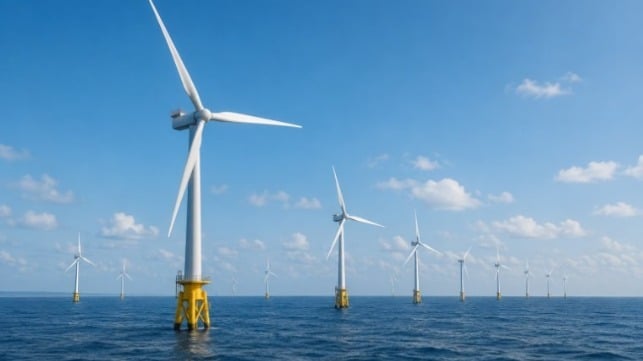
Turkey Defines Areas for First Offshore Wind Energy Auction

offshore wind farm
Turkey is preparing to offer four areas in its first offshore wind tender

Published May 14, 2026 7:51 PM by The Maritime Executive


The Turkish government is pushing forward with its efforts to launch its first offshore wind energy tender in 2026. They defined the first zones that will be offered as the country continues to expand its onshore use of wind energy as part of its overall renewable energy strategy.

The Ministry of Energy and Natural Resources posted the country’s first offshore wind Renewable Energy Resource Areas (YEKA) on its website. It reports that, as a result of studies it has conducted, a total of four areas in the Saros Bay, Gökçeada, Bozcaada, and off the coast of Edremit have been identified as candidate Renewable Energy Resource Areas (YEKA). Detailed studies have begun to declare these areas as YEKA based on offshore wind energy.  All four are located in the western parts of Turkey in the Aegean and near the border with Greece.

The minister told the audience at the Turkey Wind Energy Congress that they planned to offer tenders for 1.5 GW of capacity this year. Going forward, their goal will be for 2 GW of additional capacity each year. He said the government is committed to investing $30 billion by 2035 in its transmission infrastructure.

"We aim to reach a capacity of 5,000 megawatts in offshore wind energy by 2035," said Minister of Energy and Natural Resources Alparslan Bayraktar. “Our country has significant potential in this field,” he said, reporting that they were working to complete the permitting process.

The minister highlighted that Turkey's total installed power capacity exceeds 125 GW, while highlighting that more than 60 percent comes from renewable sources. Onshore Turkey, as of early 2026, exceeded 15 GW of wind energy capacity. Wind power already accounts for about 11 percent of the country’s energy production. 

By 2035, Turkey forecasts that it will have a capacity of 120 GW coming from wind and solar energy.
 

Colombian ex-fisherman swaps trade for saving Caribbean coral


ByAFP
May 6, 2026


Former fishermen have opted to revive Colombia's coral reefs instead of destroying them - Copyright AFP Luis ACOSTA

Yerson Granados used to fish off Colombia’s Caribbean coast for a living, but when he discovered the havoc he was wreaking on coral reefs, he changed his ways.

The 56-year-old from the city of Santa Marta now earns his keep saving coral, which is vital for marine biodiversity.

“We used to destroy them,” Granados told AFP, his body half-submerged in the sea and diving goggles concealing his face.

“We didn’t know it was a living being. They looked like rocks to us.”

Forty-four percent of the world’s coral species face extinction, mainly due to climate change, the International Union for Conservation of Nature estimated in 2024.

When he discovered the pressing need to preserve coral, Granados swapped his dynamite, nets and anchors for a diving suit, which he uses to plunge to the depths of the sea to attach coral fragments to an artificial reef in a bid to repopulate the area.

He was the first fisherman to retrain as an environmental defender under a pioneering project to replenish the Caribbean coral ecosystem.

CIM Caribbean Foundation estimates that it has planted 1.5 hectares worth of 20 different coral species thanks to the team of former fishermen.

The NGO is hoping to plant 36 hectares of coral by 2030, which scientific director Diana Tarazona calls reviving “underwater cities.”

“Working with them (the former fishermen) means gaining insight into what lies beyond the literature, which is that innate knowledge they have” about the sea, she said.

A typical workday for Granados entails diving 10 metres below the surface with an oxygen tank to monitor the precious gardens.

The corals spend months growing in an incubator before transplantation.

Once underwater, they become “houses for the fish,” he said.

Kevin Monsalvo, 26, has followed in the footsteps of Granados and said things are different for him since he learned more about the organism threatened with extinction.

“Life has changed quite a lot for me, because we didn’t know what a coral was,” he said.

“For me, a coral is life now.”
Amazonian countries approve action plan to conserve migratory catfish


By Dr. Tim Sandle
DIGITAL JOURNAL
May 7, 2026


Catfish are a diverse group of ray-finned fish. Public Domain image, CC3.0.

Large migratory catfish, such as piramutaba (Brachyplatystoma vaillantii), travel up to 11,000 km round trip between the Andes and the Atlantic, connecting ecosystems and countries and act as sentinels of the health of Amazonian rivers. In particular, the Andean Amazon plays a key role in the reproduction of migratory catfish.

At COP15 of the Convention on Migratory Species (CMS), Parties have unanimously adopted the Regional Action Plan for Amazonian Migratory Catfish, marking a new milestone for the conservation of these species.

This resolution was proposed by the Government of Brazil to CMS and received strong support from the delegations of Amazonian countries that are Parties—Bolivia, Ecuador, and Peru—as well as from the European Union. It was also supported by Venezuela, a non-Party country within the range of the species.

This approval builds on the process initiated at CMS COP14, where dorado (Brachyplatystoma rousseauxii) and piramutaba (Brachyplatystoma vaillantii) were included in Appendix II of CMS, and enables the definition of concrete, coordinated actions at the scale of the Amazon Basin.


Catfish are a diverse group of ray-finned fish. Catfish are named for their prominent barbels, which resemble a cat’s whiskers. Many catfish have a maximum length of under 12 centimetres.

“Incorporating river connectivity into planning strengthens biodiversity conservation and contributes to the well-being of the populations that depend on these rivers,” says Rita Mesquita, Secretary of Biodiversity at Brazil’s Ministry of the Environment and Climate Change, in research note.

Large migratory catfish travel up to 11,000 km round trip between the Andes and the Atlantic. These species connect ecosystems and countries and act as sentinels of the health of Amazonian rivers. Their conservation depends on maintaining connected corridors across Brazil, Bolivia, Colombia, Ecuador, and Peru and is key to sustaining the livelihoods of millions of people who depend on fisheries in the Amazon.

The new plan establishes a common roadmap to conserve habitats and migratory corridors, strengthen scientific, Indigenous, and local knowledge, and promote sustainable fisheries practices, in a context of increasing pressures on river connectivity. Within this framework, it identifies three priority actions for the next 12 months:

1) conserve habitats and connectivity of Amazonian rivers;

2) strengthen scientific, Indigenous, and local knowledge;

3) promote sustainable value chains linked to fisheries management.

Certain Amazon catfish species, particularly large migratory “Goliath” catfish like the dorado/gilded catfish (Brachyplatystoma rousseauxii), are considered threatened or vulnerable due to rapid population declines. The new measures outlined will help to address the risk that the fish population faces.
‘No medicine for my son’: Sudanese struggle to survive in new war zone


ByAFP
May 7, 2026


A person receives free medication in Sudan's capital. In Blue Nile to the south, displaced people have reported shortages of medicine and food - Copyright AFP Khaled DESOUKI


Abdelmoneim Abu Idris Ali with Menna Farouk in Cairo

In an overcrowded camp in Sudan’s Blue Nile state, Awatif Awad has been fighting to keep her five children alive as the region becomes a new front line in the country’s three-year war.

“We are only given one meal a day,” she told AFP by phone from the camp, home to thousands of people who had fled a recent surge in fighting between Sudan’s army and the paramilitary Rapid Support Forces (RSF).

“My son is five years old. He has malaria. There is no medicine for my son,” Awad, 38, added from the sprawling Al-Karama 3 Camp in state capital El-Damazin.

The fighting escalated in Blue Nile early this year, three months after paramilitary forces overran El-Fasher, the army’s last stronghold in western Darfur.

The war has since pushed east into southern Kordofan and Blue Nile, a resource-rich border region between Ethiopia and South Sudan that serves as a key supply corridor.

Sudan’s army has been fighting there against the RSF and their allies from the Sudan People’s Liberation Movement-North (SPLM-N), a rebel group that has long operated in parts of Blue Nile and South Kordofan.

Control of the state is divided between the rival camps.

Jalale Getachew Birru, a senior analyst at the US-based Armed Conflict Location and Event Data project, said at least 450 people were killed in Blue Nile between January and March, the deadliest period since 2023.

“Blue Nile has shifted from a peripheral front to a central battleground,” Birru told AFP.

Birru said control of the state was strategically significant, as it borders army-held Sennar — regained in a counteroffensive last year that also saw the army retake Khartoum — and could “determine who controls central Sudan”.


– Under strain –


Sudan’s war has killed tens of thousands of people, displaced millions more and created what the United Nations describes as the world’s largest displacement and hunger crises.

Awad fled Kurmuk, a town near the Ethiopian border and nearly 140 kilometres (87 miles) south of Damazin, in late March as paramilitary fighters descended in full force.

Carrying what she could and clutching her children, she walked for three days across unfamiliar terrain.

“At night it was pitch black,” she said. “We just kept walking.”

When she finally reached Damazin, she found a camp already under strain.

Karama 3 was originally built to host refugees who had fled earlier conflicts to South Sudan and Ethiopia and later returned.

But since January, Karama 3 and other displacement sites in Damazin, as well as neighbouring Roseires and Baw, have taken in around 30,000 people fleeing violence across Blue Nile.

Kurmuk saw large-scale displacement over several weeks, with over 11,000 civilians fleeing, according to UN figures.

Photos of Karama 3 shared by local volunteers online showed women gathering their children close as they queued for meagre food rations and water.

Shelters are patched together from plastic sheeting, straw and scraps.

There is no clinic nearby and reaching the city’s hospital often depends on the availability of a battered motorised rickshaw, the camp’s only form of transport.


– ‘We are scared’ –


“We are scared of the rains,” said 33-year-old Mahasin Abdelhamid, who also fled Kurmuk and now shares a large tent with dozens of families.

When the rainy season starts this month, “this place will flood and the tents won’t protect us”.

Local officials say more than 150,000 people have been displaced across Blue Nile since April 2023, with around 100,000 sheltering in Damazin alone.

“People are suffering severe shortages of food, shelter and healthcare,” said one volunteer assisting displaced families in Blue Nile, who asked not to be named for security reasons.

“Some of the displaced arrive injured, but there are no clinics,” the volunteer added.

A recent UN assessment warned that conditions in Blue Nile were worsening due to overcrowding, poor shelter and sanitation and rising risks of gender-based violence.

UN humanitarian coordinator Denise Brown said funding gaps, insecurity and access constraints were crippling aid efforts.

Local authorities say aid agencies cannot keep pace.

“They assess needs based on a certain number, but when they return the next day, they find the figures have increased,” the Kurmuk locality’s media office told AFP.

Community-run emergency rooms providing food, basic healthcare and coordination were ordered shut last month without explanation, a local human rights monitor said. Authorities did not respond to an AFP request for comment.

Meanwhile, the fighting shows no sign of easing.

Sudan has accused Ethiopia and the United Arab Emirates of launching drone attacks since March on several states, including Blue Nile, from Ethiopian territory, a development that risks drawing the wider region into conflict.

The UAE has repeatedly denied accusations that it arms the RSF, while Ethiopia has denied hosting RSF or UAE forces.

“If the conflict escalates, vulnerable groups will be greatly affected,” Birru said.

“Health and maternity care might completely collapse… The conflict has already kept children out of school, and the continued escalation in this state will only solidify this.”