Friday, May 15, 2026

Oxford joins UK’s largest miscarriage research centre in major expansion


By Dr. Tim Sandle
DIGITAL JOURNAL
May 14, 2026


NHS ambulance, London. — Image by © Tim Sandle

The University of Oxford has joined forces with other leading UK institutions to strengthen what is already Europe’s largest research centre dedicated to miscarriage. This marks a significant step forward in efforts to better understand and prevent pregnancy loss.

Tommy’s National Centre for Miscarriage Research, established in 2016, will now operate as a partnership between Oxford’s Nuffield Department of Women’s and Reproductive Health and existing members at the Universities of Birmingham, Warwick and Imperial College London.

This expansion intends to bring enhanced research capability, clinical reach and leadership to a field that remains one of the most common yet under-addressed complications in pregnancy.

Miscarriage affects around one in five women during their lifetime. Despite its prevalence, it has historically received limited research attention. The centre was founded to address this gap, bringing together academic and clinical expertise across multiple institutions and hospitals.
Driving meta-analyses and policy reviews

Over the past decade, the centre has produced findings that have directly influenced clinical practice. Among its most notable achievements is the Progesterone in Spontaneous Miscarriage (PRISM) trial, which demonstrated that progesterone treatment for women experiencing early pregnancy bleeding with a history of miscarriage could prevent thousands of losses annually in the UK. The PRISM trial has also shown that while progesterone does not help all women with early pregnancy bleeding, it significantly improves outcomes in those with a history of miscarriage.

The results prompted the National Institute for Health and Care Excellence (NICE) to update its guidance, expanding access to the treatment.

Research from the centre has also shaped public and policy debate. Its Miscarriage Matters series, published in The Lancet in 2021, highlighted both the emotional toll of pregnancy loss and shortcomings in care, while setting out recommendations for improvement. Campaign efforts linked to this work attracted more than 250,000 signatures, underscoring growing public concern.

More recently, a pilot of a “graded model” of miscarriage care—designed to tailor support and intervention based on risk—has shown promise. Early findings suggest it could prevent over 10,000 miscarriages a year if implemented nationwide, with thousands of campaigners now urging government adoption.

The addition of Oxford is expected to accelerate progress. The university brings expertise in statistics, trial design, health economics and bioinformatics, alongside Oxford University Hospitals NHS Foundation Trust, which will serve as the lead clinical partner. New leadership appointments across partner institutions are also intended to strengthen coordination and delivery.

Professor Arri Coomarasamy, director of the centre, says the expansion would help translate research into tangible improvements for patients. “Every miscarriage represents not just a clinical event, but a deeply personal loss,” he said. “Our ambition is to turn evidence into better tests, treatments and care.”

Charity leaders argue that while progress has been made, significant unmet need remains. For many families, miscarriage continues to bring unanswered questions and repeated heartbreak. By broadening its partnerships and resources, the centre hopes to advance both scientific understanding and the quality of care available—ultimately reducing the incidence of miscarriage and its impact on families.

UK

RMT Union Members Conduct New Strikes at Royal Fleet Auxiliary Over Pay

seafarers striking
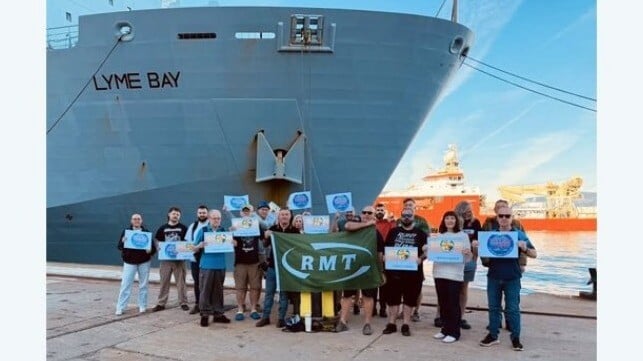
RFA seafarers staged two 24-hour job actions to call attention to their wage and compensation rules demands (RMT)

Published May 13, 2026 4:49 PM by The Maritime Executive


For the second time in two years, crews from the UK’s Royal Fleet Auxiliary are staging 24-hour strikes over pay. The National Union of Rail, Maritime and Transport Workers (RMT) says it has warned that years of below-average pay settlements, combined with poor transparency and growing dissatisfaction over conditions, are contributing to retention problems across the service.

Coordinated with efforts by the other powerful UK union, Nautilus, the RMT staged a series of strikes and work actions in late 2024, the first in the history of the service. Those strikes dragged on until they finally reached a wage agreement in early 2025.

Now, RMT reports talks are underway, and there has been some progress, but once again, it says no acceptable proposal has been offered to address concerns over wages as well as transparency of how wages are calculated. The union is also raising questions about whether the RFA is in compliance with the UK’s National Minimum Wage legislation.

RFA members are civilian employees who operate the supply and logistics ships for the Royal Navy. Formed in 1905, the fleet has been shrinking and is down to nine active vessels, including tankers and supply ships. There are approximately 1,750 individuals classed as civil servants in the RFA, according to the RMT. 

“Our members in the Royal Fleet Auxiliary do not take strike action lightly, and this decision has only been reached after years of frustration over pay, conditions, and a lack of transparency around wages,” said General Secretary of the RMT Eddie Dempsey. “There remains no clear formula setting out how pay is calculated against the hours actually worked, and there are serious concerns that some members’ pay could effectively fall below the legal minimum once those hours are properly accounted for.”

Members staged the first 24-hour action on May 8 and a second one today, May 13. According to the posting by RMT, the actions spanned from the RFA Lyme Bay docked in Gibraltar to seafarers in Falmouth and Birkenhead. During the 24-hour strike action, the RMT said members would continue to ensure the safety of vessels is maintained at all times, including the management of moorings and gangways.

The union argues that RFA seafarers can routinely work up to 12 hours a day and more when operational duties demand, often spending months at sea, while there remains no clear or transparent formula explaining how pay is calculated against hours worked. As in 2024, it is calling for increases that address shortfalls in the past and the increased cost of living for members.

The union said without serious proposals from the Royal Fleet, its members would continue their industrial actions.

Photos: Fire on California Offshore Gas Platform Near Santa Barbara

oil platform fire
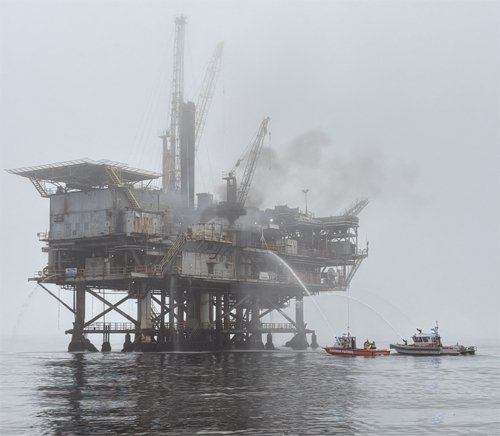
Platform near Santa Barbara has been evacuated while crew fight the fire (USCG photos)

Published May 11, 2026 4:47 PM by The Maritime Executive


The U.S. Coast Guard led a response to a fire that is burning aboard a non-operational offshore gas platform located off the coast of California. At least two fireboats were on the scene while the USCG maintained a 1,000-yard safety zone around the platform.

The operation known as Platform Habitat is reported to be approximately 7.5 miles offshore in the Santa Barbara Channel and near Carpinteria. It is owned by a company called DCOR, which has been operating offshore energy platforms since 2001.


According to the local reports, the crew of 26 aboard the platform was to conduct decommissioning when they discovered the fire shortly around 0700 local time on Monday, May 11. They were unable to douse the fire and placed the emergency call. 

The U.S. Coast Guard reports the crew was evacuated. Two people suffered minor injuries.

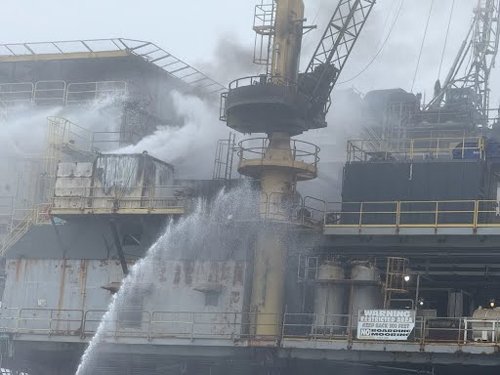
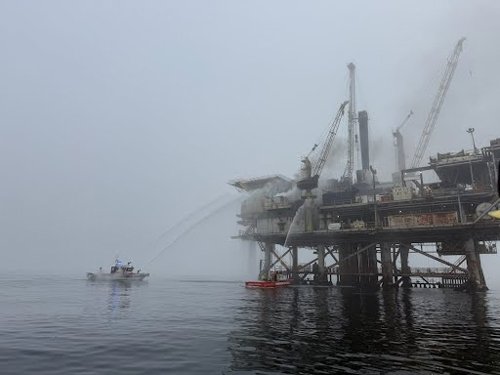
Pictures supplied by the U.S. Coast Guard Southwest show large plumes of smoke. Two fireboats are pumping water onto the structure. 

Local reports said there was heavy fog in the area this morning. It prevented the use of aircraft.


The platform was built in 1981 and had been in operation since 1983. It is located at a position with approximately a 290-foot water depth. The Los Angeles Times reports it mostly produces natural gas. Federal records show production of more than 232 million cubic feet of natural gas and a limited amount of crude oil.

There were no immediate reports of pollution at the site. Later on Monday, the USCG reported the fire onboard the platform was secured and that personnel were being transferred onboard the platform to conduct safety work. Responders and platform personnel reported that the fire was extinguished at 11:40 a.m. local time.

US Coast Guard and Air Force Team Up to Rescue Plane Crash Survivors

Pararescue
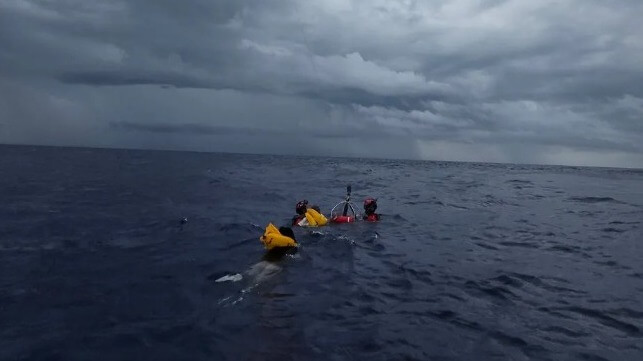
US Air Force pararescuemen prepare to hoist survivors from the plane crash while an HH-60W helicopter (unseen) hovers overhead (920th Rescue Wing)

Published May 13, 2026 4:11 PM by The Maritime Executive


The U.S. Coast Guard and its partner services often assist friendly nations with emergencies at sea, providing long-range search and rescue services that would not otherwise be available to mariners in distant regions. This week, the Coast Guard teamed up with the U.S. Air Force to rescue survivors of a plane crash in Bahamian waters. 

On Tuesday morning, an emergency locator beacon from a twin-engine Beechcraft BE30 passenger plane went off, alerting Coast Guard Southeast District of a distress situation. The aircraft had been on a flight from Marsh Harbor, Bahamas to an airport at nearby Freeport, and appears to have suffered an engine failure. 

The district's watchstanders dispatched a C-27 search plane out of Air Station Clearwater and requested the diversion of an Air Force HC-130J long range pararescue plane, which was already airborne on a training mission. 

The survivors were spotted in a life raft, and an Air Force HH-60W rescue helicopter hoisted all 11 people safely aboard. There were more than initially reported, and the pararescue team worked fast to treat survivors and get them all on board. "We had five minutes left [of fuel reserve status] when we got the last person out of the water," said Capt. Rory Whipple (USAF). 

The survivors were delivered safely to Orlando's airport for transfer to emergency medical services. All were in stable condition, according to the Coast Guard. Officials in the Bahamas will conduct a root cause investigation. 

“The outstanding support from Patrick Space Force Base and the seamless coordination among all responding agencies directly contributed to the successful rescue of 11 survivors from the downed aircraft,” said Master Chief Petty Officer Omar Colon, a command duty officer, Southeast Coast Guard District. “Their rapid response, professionalism, and unwavering commitment to saving lives were instrumental in bringing everyone home safely.”


US Coast Guard Finds and Boards Yacht in High-Profile Missing Person Case

Soulmate
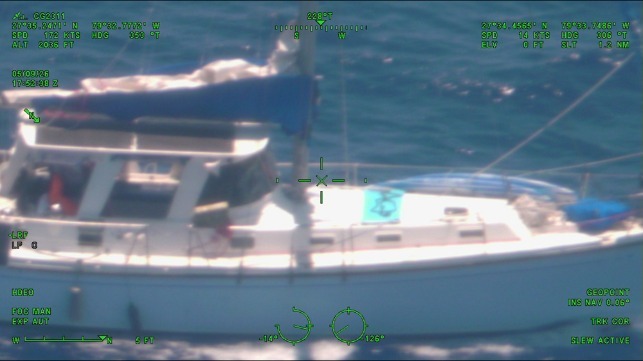
Soulmate, as seen from a U.S. Coast Guard search aircraft (USCG)

Published May 14, 2026 11:18 PM by The Maritime Executive


The U.S. Coast Guard received a challenging and unusual assignment last weekend: to seize, secure and search a sailboat off Florida in connection with a high profile missing-person case. 

Last month, married couple Brian and Lynette Hooker were on a trip through the Bahamas aboard their sail cruising yacht, Soulmate. On the night of April 4, Lynette Hooker disappeared; Mr. Hooker arrived on shore and reported her absence in the early hours of April 5. No indications of Lynette Hooker's whereabouts have been detected since, and Bahamian authorities released Mr. Hooker after questioning. Amidst considerable media attention, the Coast Guard Investigative Service is leading its own parallel probe under U.S. jurisdiction. 

The yacht Soulmate left Marsh Harbor in the Bahamas on Friday and got under way for U.S. shores. The Coast Guard Investigative Service intercepted the sailing vessel in international waters, about 40 nautical miles off the coast of Melbourne, Florida. 

The USCG described the boarding as a "complex surveillance and interdiction operation" with multiple participating surface and airborne assets. After Coast Guard officers went aboard the vessel, its engine lost power, and it had to be taken in tow by a Fast Response Cutter, the USCGC Winslow Griesser. The yacht was taken into the harbor at Coast Guard Station Fort Pierce, Florida, arriving Monday. The seizure was first reported by local media and later confirmed by CGIS.

Mr. Hooker was not aboard at the time of the interdiction: he previously returned to the U.S. to attend to the needs of his mother, who is in ill health, his attorney told CBS

CGIS is soliciting information from any potential witnesses who would like to step forward, and has been conducting interviews.

Mr. Hooker - who has not been charged with any crime - maintains that he did nothing wrong, and says that his wife went overboard in a tragic accident. "I am heartbroken over the recent boat accident in unpredictable seas and high winds that caused my beloved Lynette to fall from our small dinghy near Elbow Cay in the Bahamas," he wrote in a Facebook post after her disappearance. "Despite desperate attempts to reach her, the winds and currents drove us further apart."

CRIME AGAINST HUMANITY

Libyan Coast Guard Opens Fire on Rescue Vessel and Threatens to Seize It

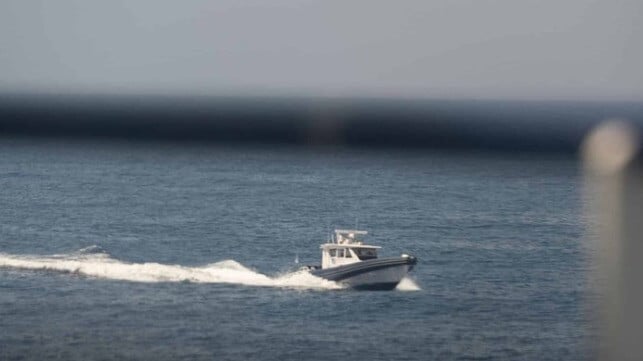
Libyan patrol boat seen from the bridge of the Sea-Watch 5 (Sea-Watch press handout)

Published May 13, 2026 11:31 PM by The Maritime Executive


A migrant rescue vessel in the Central Mediterranean has reported another violent encounter with the Libyan coast guard - this time, accompanied by the threat of vessel seizure in international waters. 

Libya's militia-operated coast guard has a fraught relationship with the migrant rescue NGOs of the Central Mediterranean, which retrieve passengers from unseaworthy boats and deliver them to safety in Italy. The European-sponsored Libyan coast guard believes it has jurisdiction over rescues in international waters, and it has an active program to conduct "pullbacks" to bring maritime migrants back to Libyan holding centers, where a range of human rights abuses have been well documented. In the course of these operations, the militia-affiliated service has shown its willingness to use force to drive off NGO rescue vessels that approach too closely. The rules of engagement appear to have loosened considerably: on Monday, a Libyan coast guard patrol boat opened fire on the rescue vessel Sea-Watch 5, the operator reports - then threatened to board the ship and divert it to a Libyan port. If substantiated, it appears to be a first for the small Libyan coast guard, and a significant escalation. 

On Monday morning, just after the crew of Sea-Watch 5 finished rescuing 90 people in distress at a position about 55 nautical miles north of Tripoli, a Libyan militia boat approached. The crew aboard the patrol boat fired about 10-15 shots at the rescue vessel, and conveyed their intent to board the ship and take it - along with all of the occupants - to Libya. The Sea-Watch 5's crew sent a mayday and contacted authorities in Italy and Germany; in the meanwhile, two Libyan patrol boats stayed in pursuit as Sea-Watch 5 headed north, away from Tripoli and towards safety. After a few hours, the boats turned around, allowing Sea-Watch 5 to proceed on her mission - resulting in the rescue of another 64 people.

Sea-Watch identified one of the militia vessels as a Corrubia-class patrol boat, donated to Libyan authorities by the Italian government. 

Just one week before the encounter, Germany's interior ministry expanded its existing security alert zone for waters of the Central Mediterranean in order to include Libya's EEZ. The ministry assessed that migrant rescue vessels were at particular risk. In a statement, Sea-Watch said that the German government had adopted a contradictory policy: on the one hand, it is materially supporting the Libyan coast guard via EU-backed training opportunities and rescue coordination centers; and on the other, it is declaring a shipping security zone due to the risks posed by the same EU-backed Libyan coast guard. Sea-Watch called for Germany to resolve this tension by imposing diplomatic consequences in Libya's government. 
 
"[Germany] acknowledges the real danger posed by the so-called Libyan coast guard while at the same time continuing to support it. The current governing coalition has even made it possible once again to train the so-called Libyan coast guard, instead of clearly opposing it," commented Sea-Watch spokesperson Marie Naab last week. 

The NGO also took the European Commission to task for an allegedly permissive response to Libyan forces' pattern of violence. In a press conference Tuesday, an EC spokesperson described the Libyan coast guard's activities as a technical matter. 

"Our engagement, as I said here many times, is really to support a comprehensive and rights-based migration management, including the protection of migrants," the EC spokesperson said. "We have been engaging in dialogue and providing training to improve the operating procedures and we'll continue to do so."

In addition to its challenged relationship with Libyan militia forces, Sea-Watch is unpopular with Italian authorities, who have repeatedly attempted to impound its vessels to prevent further rescue activities. In February, a court in Palermo, Sicily ordered the Italian government to pay the NGO a total of $89,000 in compensation for the detention of the group's earlier vessel, the Sea-Watch 3. 


Corvus Energy & BYD Energy Storage to Advance Next?Gen Maritime Technology

Corvus Energy AS
Picture from the signing ceremony for the strategic cooperation agreement held at the CIBF exhibition in Shenzhen Marintec China.

Published May 13, 2026 4:48 PM by The Maritime Executive


[By: Corvus Energy]

Corvus Energy AS, the global leader in zero?emission maritime energy solutions, and BYD Energy Storage, a global leader in the energy storage sector, today signed a Strategic Cooperation Agreement (SCA) that marks a major milestone in the companies’ collaboration.

The new agreement builds on a Memorandum of Understanding (MoU) signed in December 2025, which created a long?term framework for cooperation on next?generation marine battery technologies. The SCA formalizes the next phase of this partnership and sets the foundation for the co?development of next generation marine battery solutions

Advancing Maritime Battery Technology with Next?Generation LFP

With BYD Energy Storage as one of the world’s largest battery cell manufacturers and Corvus Energy as the leading supplier of marine battery systems, the partnership brings together two global powerhouses to accelerate the maritime energy transition.

Under the SCA, Corvus Energy and BYD Energy Storage will combine Corvus’ deep expertise in marine system integration with BYD Energy Storage’s advanced cell technology to develop a low cost, safe and reliable battery system optimized for demanding marine environments.

Fredrik Witte, CEO of Corvus Energy, said: “This agreement accelerates our ability to deliver highly competitive LFP solutions at scale. By pairing Corvus’ deep maritime knowledge with BYD Energy Storage’s world?leading cell technology, we can reduce system cost significantly while maintaining the safety and performance standards this industry needs. No other marine battery supplier matches our safety record or our digital capabilities, which help customers maximize uptime, reduce maintenance, and improve return on investment.”

The two parties will work together in areas such as technological collaboration, resource sharing, and market expansion to jointly advance the R&D, certification, and large-scale deployment of high-rate lithium iron phosphate marine battery systems, and bring them to the global market.

The products and services herein described in this press release are not endorsed by The Maritime Executive.


Basel vs. Hong Kong? Why the “Conflict” Narrative Misses the Point  

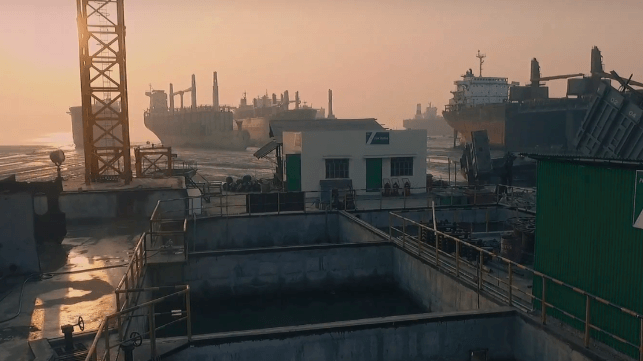
Courtesy PHP
Courtesy PHP

Published May 11, 2026 12:52 PM by Gudrun Janssens


The ongoing debate around ship recycling governance frequently centers on the relationship between the Basel Convention (BC) and the Hong Kong International Convention for the Safe and Environmentally Sound Recycling of Ships (HKC).

A recent article; “HKC Certification Can’t Substitute for the Basel Convention”, published by Prof. Dr. Ishtiaque Ahmed, raises some questions about the functioning of, and interaction between, these two UN conventions. In the article, one UN Convention is characterized as an instrument based on strict state-to-state oversight, requiring direct, formalized and accountable consent before any transboundary movement. By contrast, the other UN Convention is portrayed as an industry-oriented solution, introducing a consent procedure that does not constitute a negotiated or acknowledged agreement between states and with its certification process not functioning as an instrument of intergovernmental consent.

The article concludes that Bangladesh, India or Pakistan - or any other recycling state - cannot rely on the HKC’s International Ready for Recycling Certificate (IRRC) as a substitute for Basel’s “strict state-to-state” consent. Nor can it legitimately issue or facilitate such certification in a way that effectively replaces the role of the exporting state. To do so would, according to the author, seriously undermine the core safeguard mechanisms of the Basel regime.

While open discussion on this topic is welcome, the purpose, mechanisms, and intent of the HKC are too often misunderstood. This article will address three main points:

- The core safeguard mechanisms of the BC

- Governance under UN conventions

- The roles of flag states versus exporting states.

Core safeguard mechanisms undermined by introducing the IRRC

From the outset, the article states that the HKC IRRC procedure cannot substitute the BC Prior Informed Consent (PIC) procedure, warning that anyone who suggests otherwise undermines the core safeguards that the BC was deigned to uphold.

The suggestion that HKC compliance undermines Basel’s core safeguards is incorrect, as no party has sought to weaken the Basel PIC. More importantly, while Basel’s safeguard mechanisms work perfectly well for packaged hazardous waste streams, they have never operated effectively for ships and ship recycling in the first place. The PIC mechanism does not provide meaningful oversight of end-of-life ships, nor does it prevent unsafe or environmentally harmful recycling in practice. The legacy of past substandard ship recycling practices serves as evidence of this. The HKC therefore does not replace an effective system - rather, it was created because there was no functioning global regime for the recycling of ships. 

We believe that the procedures under the BC (and the EU Waste Shipment Regulation) have failed to positively impact the regulation of end-of-life ship recycling on a global scale. This raises the question of the mentioned “core safeguards” and the claims that they are at risk of being undermined. Portraying HKC implementation as an erosion of Basel protection risks rewriting history and obscuring why the HKC was needed in the first place.

Governance under UN conventions

Furthermore, the arguments in the article overlook the fact that that UN conventions are governed equally by states. It is not correct that the HKC IRRC is an agreement between a state and a private operator, as both the HKC’s IRRC and the BC’s PIC rely on approval and consent by the relevant states.

The distinction lies not in who governs them, but in what they govern: the BC addresses waste movement and treatment while the HKC regulates ships and their recycling. Neither convention is an industry or voluntary regime. In fact, both are intergovernmental UN treaties which are negotiated, adopted and ratified by states and implemented and enforced through national legislation and competent authorities.

Stating otherwise causes confusion. States—not the industry—regulate and enforce compliance. Whether designated as flag or exporting states, the obligations assigned by both conventions remain with the states.

Flag state vs. exporting state: legal and practical roles in ship recycling

Another point concerns the approach to the competence of the states involved. The article asserts that the flag state concept was never meant to replace territorial export control, suggesting it merely reflects jurisdiction over the vessel, not authority over its disposal. Furthermore, it claims that there is a widespread practice of treating the flag state as the de facto exporting state for Basel purposes.

In practice, however, there is no intention to make the flag state the exporting state; it is quite simply not possible because the BC does not acknowledge the existence of the flag state. Therefore, it is inaccurate to state that it is common practice to treat the flag state as the de facto exporting state for Basel purposes.

Nonetheless, it is evident that the flag state is the authority most closely connected to the ship throughout its life. The flag states oversee IHM surveys, certificates, and all matters related to safety of the ship, its crew and environmental regulations—including when the decision to recycle the ship is made—unlike the BC authority in the exporting state.

Lastly, a final point to address is the view that an exporting state can be meaningfully identified in the context of ship recycling. In reality, there is no factual link between an end-of-life ship and any exporting state as defined by the BC. The waste contained within a ship is not produced in or by an exporting state, nor is it stored or managed there. Instead, it develops gradually over decades of international trading, maintenance and operations across multiple jurisdictions, often far from the state and the port where the ship is located when recycling is considered. As a result, environmental authorities in the exporting state are generally less acquainted with the ship, including its operational, practical and legal compliance requirements, as well as with the processes necessary to uphold enforcement measures on it.

Conclusion

Both the BC and the HKC function within a comprehensive regulatory system. Each is a UN intergovernmental treaty—negotiated, adopted, and ratified by states and implemented and enforced through national legislation and designated authorities. While states oversee both conventions, each one of them approaches ship recycling from different perspectives.

Assertions that HKC compliance diminishes Basel’s “core safeguards” is a misconception. There has been no initiative to weaken the BC; rather, its safeguards have historically proven ineffective when applied to ships. In fact, the HKC was established precisely because no effective global framework for ships existed. It was the Conference of the Parties (COP) to the BC that asked the IMO to develop mandatory requirements to ensure the environmentally sound management of ship dismantling. Suggesting that implementation of the HKC erodes Basel’s protections misrepresents the facts and obscures the underlying rationale for the HKC’s creation.

The BC can positively impact the safe and environmentally sound management of waste streams generated during the ship recycling process, but it remains the prerogative of BC Parties to determine their engagement in this area. Should the parties choose to engage more actively, they may find that the shipping and ship recycling industries are prepared to collaborate constructively.

We face a pivotal decision: either continue discussing how to best reconcile two UN Conventions—one of which was never intended to regulate ships going for recycling—or fully support the robust implementation of the Hong Kong Convention globally, which elevates standards in the recycling states and supports tangible environmental and safety progress. At this critical juncture, workers and the environment would benefit substantially from global support for an effective, enforceable, multilateral, legally binding framework. BIMCO advocates for the latter approach, and the solution is already here.

There is no doubt that the face of ship recycling has already changed under the prospects of the HKC coming into force - first in India, then in Bangladesh and now in Pakistan. The progress can be witnessed first-hand by anyone visiting the yards.

The HKC embodies years of multilateral negotiation involving governments, industry representatives, NGOs and international organisations. Its value should not be diminished.

Gudrun Janssens is Head of EU Engagement and oversees BIMCO's EU-related marine environment, safety and technical affairs from the Brussels office.

The opinions expressed herein are the author's and not necessarily those of The Maritime Executive.

Selling factories to Chinese partners: risky road for European carmakers


ByAFP
May 8, 2026


The partnership between Leapmotor and Stellantis could deepen with Leapmotor taking over a Stellantis factory in Spain - Copyright AFP/File Ina FASSBENDER


Laurence BENHAMOU

Carmaker Stellantis announced Friday it is considering selling an underutilised factory in Spain to its Chinese joint venture Leapmotor, which could save jobs in the short term but risks further strengthening Chinese automakers.

This is a question all European carmakers are facing. The continent’s car market has never fully recovered from the Covid pandemic downturn and their factories are operating on average at only half capacity.

They also face an onslaught from Chinese carmakers, whose rapidly advancing technical prowess and low production costs pose major risks to global rivals.

And as weak demand makes the domestic Chinese market fiercely competitive, Chinese automakers are increasingly looking to Europe as an El Dorado.

Brands such as BYD, MG, Chery, Geely, Leapmotor, Jaecoo, and Xpeng, were virtually unknown three years ago in Europe.

Now they already account for nine percent of European sales overall and 14 percent of electric vehicle sales, according to the consulting firm Dataforce.

Tariffs and consumer incentives for which only European-assembled cars are eligible have posed a hurdle for Chinese automakers to gain market share in Europe.

So, they are increasingly looking to hop over these obstacles by manufacturing in Europe, either by building factories or, even more simply, by buying them.

Chery kicked off the trend in 2023 by buying a former Nissan plant in Barcelona, Spain, where it now plans to produce 200,000 vehicles a year.

It said last month it would open a research and design centre in Paris to work on developing a small electric car to manufacture in Europe for the local market.

Nissan is reportedly considering selling its British plant in Sunderland — its last in Europe — to Chery or the Chinese company Dongfeng.

– Closer collaboration –

This Friday, the Franco-Italian-American manufacturer Stellantis — whose brands include Peugeot, Fiat and Jeep — became the first European automaker to take the plunge.It announced it was considering partially selling its Villaverde site in Madrid to Leapmotor, in which it holds a 51-percent stake.

It already plans to open its Zaragoza plant so that Leapmotor can soon produce a model there under its own brand.

An electric SUV sold under the Opel brand could also be produced in Zaragoza in collaboration with Leapmotor.

And this is only the beginning: this German-Chinese car will serve as a template for other Stellantis vehicles.

Some European cars already incorporate a large number of Chinese components, such as Renault’s electric Twingo, which was also designed at a Renault facility in China.

The Stellantis announcement, however, is the first time a European automaker has so openly presented such collaboration on producing models with a Chinese partner.

According to Bloomberg, Stellantis will not stop there.

It is reportedly considering selling three plants — one each in France, German and Italy — to another longstanding Chinese partner: Dongfeng.

A Dongfeng delegation recently visited the factory in France, a union representative confirmed to AFP.

Ford also confirmed on Thursday that it was in talks with Chinese company Geely over the partial sale of a plant in Valencia, Spain.

Geely, which is also a co-owner of Renault plants in Brazil and South Korea, would produce a model for the European market.

German giant Volkswagen is also tempted.

Its chief executive Oliver Blume said recently that the company was examining whether “there are opportunities for our Chinese cars in Europe or for opening this for partnering maybe with our partners we do have in China”.

Other options included selling factories to defence manufacturers, he added.

“The worst one and most costly one is to close a plant,” Blume said.

That view is shared by the chief executive of OPmobility, a French auto-parts manufacturer.

Selling European car factories to Chinese manufacturers would be “a smart option, rather than adding to overcapacity”, said OPmobility chief executive Felicie Burelle.

– ‘Siren song’ –

But “we mustn’t give in to this siren song,” warned Bernard Jullien, an automotive industry specialist at the University of Bordeaux.

“For manufacturers, suppliers, employees and local officials, it is tempting to prefer selling to a Chinese player rather than disappearing,” he noted.

“But this amounts to giving a leg up to a formidable competitor right here in the heart of Europe by providing a powerful accelerator for its penetration of our markets,” Jullien wrote in an opinion piece on the website autoactu.com.

He sees such moves as taking the easy way out for a manufacturer like Stellantis, which has been losing ground in Europe.

With Chinese companies having taken the lead in developing electric vehicles, he did not exclude the company deciding to outsource electrification to its Chinese partners.

But this “every-man-for-himself” strategy will end up giving Chinese manufacturers a boost while “ruining European car manufacturing”, Jullien warned.

Only lawmakers can act to prevent European carmakers from succumbing to this temptation, he added.
China’s Weichai wins battle for Ferretti yacht maker


By AFP
May 14, 2026


Ferretti builds luxury yachts under a series of brands including Riva, Pershing, Wally and Itama at seven shipyards in northern Italy - Copyright GETTY IMAGES NORTH AMERICA/AFP/File JOE RAEDLE

Chinese group Weichai on Thursday took control of the world’s top yacht maker, Ferretti, after a takeover battle with a Czech shareholder that had appealed to the Italian government.

Ferretti builds luxury yachts under a series of brands including Riva, Pershing, Wally and Itama at seven shipyards in northern Italy.

Shareholders approved by 52.3 percent a new board put forward by Weichai, the biggest shareholder in Ferretti with a stake of 39.5 percent, the company said in a statement.

KKCG, the conglomerate of Czech billionaire Karel Komarek and a rival of Weichai, challenged the takeover and asked Italy’s government to block it.

In a statement, KKCG expressed “serious concerns” over the takeover and “potential failures to comply with disclosure obligations”.

KKCG appealed to Italian Prime Minister Giorgia Meloni to use the government’s so-called “golden power” provision, which applies to strategic assets, to stop the takeover.

Ferretti also produces patrol boats for law enforcement agencies.

KKCG earlier this year increased its stake in Ferretti from 14.5 percent to 23.23 percent for 115 million euros ($134 million).

On Thursday, KKCG was only allowed one seat on the new board of directors while Weichai appointed eight people.

Weichai, a state-owned group based in the Shandong region in northern China, is a major manufacturer of commercial vehicles, construction machinery and industrial engines, with 100,000 employees worldwide.

Weichai first helped prop up Ferretti in 2012, with a 178 million euro infusion of cash and bank loan guarantees of 196 million euros, at a time when the yacht maker was heavily indebted and hit hard by a drop in demand after the 2009 financial crisis.

Ferretti shares were down 5.2 percent on Thursday on the Milan Stock Exchange to 3.50 euros at 1529 GMT.