Friday, May 15, 2026

Trump courts Brazil in rare earth supply push
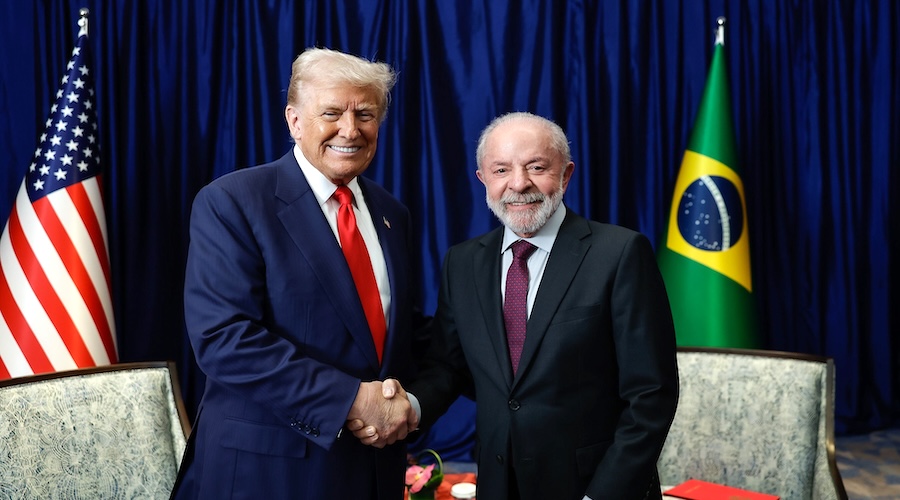

Trump meets Lula in October 2025 during the 47th ASEAN Summit. (Image courtesy of Ricardo Stuckert | Palácio do Planalto.)

US President Donald Trump and his Brazilian counterpart Luiz Inácio Lula da Silva are forging an unlikely partnership around rare earths as Washington races to loosen China’s grip on critical mineral supply chains.

Their improvised White House meeting last week underscored how geopolitical competition over strategic minerals is reshaping alliances, with Brazil emerging as one of the few countries capable of helping the US diversify supply away from China.

Lula told Trump that Brazil’s vast rare-earth reserves are open to investment from any country willing to process minerals domestically, while Trump sought to signal renewed US engagement in Latin America ahead of a key China trip. The April agreement by Oklahoma-based USA Rare Earth to acquire Serra Verde Group for $2.8 billion highlighted the scale of the opportunity.


“The Lula-Trump meeting was less a bilateral reset than a bid to keep a politicised relationship manageable,” Mariano Machado, principal Americas analyst at Verisk Maplecroft, said in a note. “Among the items discussed, critical minerals emerged as the one topic where both leaders can claim a win without resolving deeper political tension.”

Reality-check

Yet Brazil’s long history with rare earths suggests the geopolitical enthusiasm may far exceed the industry’s near-term reality. Despite holding the world’s second-largest rare-earth reserves, the country has struggled for decades to turn geological potential into sustained production. Environmental licensing delays, bureaucratic hurdles, volatile commodity prices and periodic waves of resource nationalism have repeatedly stalled projects.

Mining companies can spend five to 10 years securing permits, while growing public opposition following deadly tailings dam disasters in Minas Gerais has hardened scrutiny of new developments.

The tensions expose a broader disconnect between global ambitions for critical minerals and local resistance to mining expansion. Rare earths are increasingly viewed as essential for semiconductors, AI infrastructure, electric vehicles and military technologies, but communities near prospective projects often see limited benefits and mounting environmental risks. Machado said the Serra Verde transaction illustrates both the opportunity and the constraints facing the two countries.

“The concrete test is Serra Verde in Goiás, Brazil’s only commercial-scale rare earths operation,” he said. “USA Rare Earth’s proposed $2.8 billion acquisition gives Washington a route into Brazilian production. But Lula’s message after meeting Trump was clear: Brazil has ‘no veto’ over US participation, yet also no intention to offer preferential access.”

Brazil’s Congress is advancing legislation that includes a $2 billion guarantee fund and $5 billion in tax credits to encourage domestic processing of critical minerals. Lula told Trump the country wants investment and technology transfer while ensuring more value-added processing remains domestic. Machado said that balancing act risks turning commercial development into a sovereignty debate that could slow approvals and delay investment.

“Critical minerals are not the simplest part of the bilateral agenda, even if they are the most practical,” he said. “Washington is going all-in on alternatives to China across rare earths, niobium, graphite, lithium, nickel and copper; while Brasília wants investment, technology transfer and domestic processing, without surrendering control over strategic resources.”

Second only to China

Brazil holds roughly 21 million tonnes of rare-earth reserves, second only to China and the Brazilian Mining Association projects $2.4 billion in rare-earth investment by 2030 as part of a broader $21.3 billion critical minerals pipeline. 
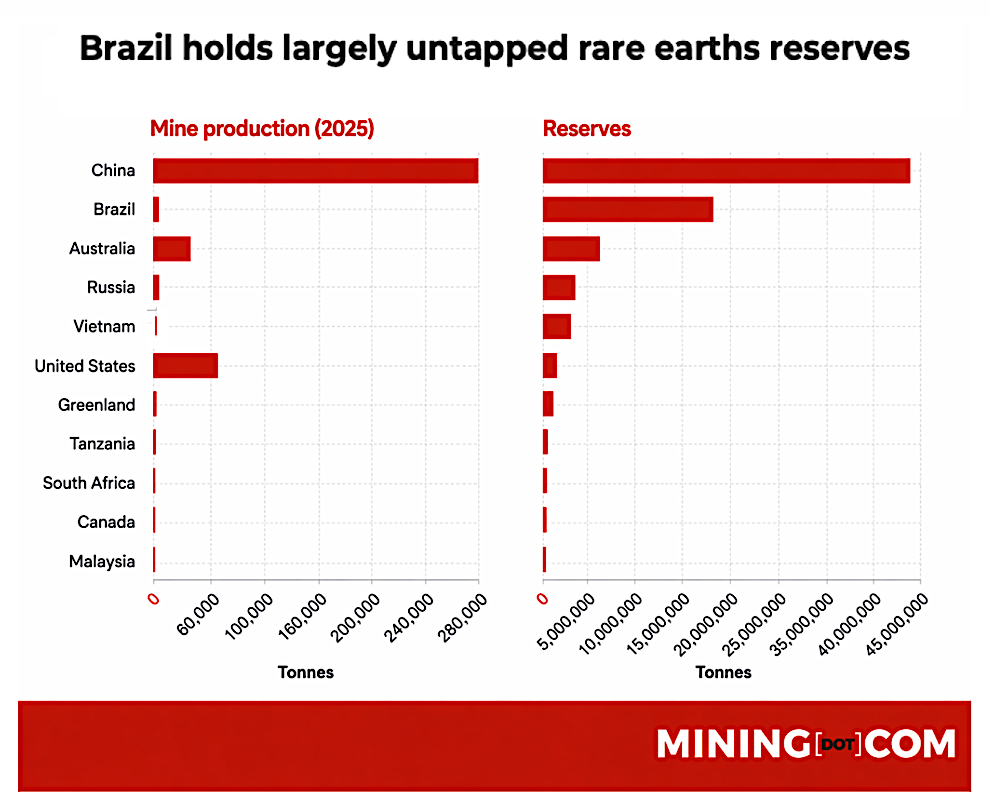
(Data source USGS – metric tonnes.)

But execution remains the central challenge. Licensing delays, land disputes, environmental scrutiny and limited processing capacity continue to cloud timelines for new developments.

“The risk for both sides is a development opportunity shifting into a de facto sovereignty debate, slowing approvals and dragging out business timelines,” Machado said. “This means Brazil can become a strategic rare earths supplier to the US — but not quickly nor on US terms alone.”

Race for critical minerals leaves EU struggling to keep up


Sunny footpaths under the Sandberg hill, Bratislava, Slovakia. Stock image.

For the European Union, the fate of a Cold War-era mine near Bratislava is becoming a litmus test for its ambition to break free from China’s chokehold over critical minerals.

Sitting in a wooded range of hills in Slovakia known as the Little Carpathians, the so-called Trojarova project is where Soviet engineers first discovered a rich seam of antimony in the 1980s. Its owners, Canada-based Military Metals Corp, are pitching the facility as a chance for Europe to secure access to an uncommon metal used in military equipment.

For crucial resources such as antimony, EU nations appear unable put up the money and act, leaving projects such as Trojarova open to being snapped up by rivals. So far, Military Metals hasn’t secured an offtake agreement from the bloc.

As US President Donald Trump prepares for summit talks in Beijing this week — and threatens to raise tariffs on Europe — the project serves to illustrate the dangers of getting left behind in a hotly contested race between superpowers.

China imposed sweeping export controls on most critical minerals and rare earths last year. While the US has aggressively pursued partnerships with resource-rich nations and funded projects all over the world to catch up, Europe has lagged.

“Member states are still reluctant to pool resources for mining and processing projects beyond their borders, even as geoeconomic realities demand it,” said Sabrina Schulz, Germany director at the European Initiative for Energy Security. “Financing remains the central bottleneck.”

The bloc’s formal strategy was articulated in the European Critical Raw Materials Act of 2023, which set targets that included extracting at least 10% of annual consumption of key elements, and processing 40% of them. Those goals spurred action to identify vulnerabilities and to funnel investment to securing supplies of metals crucial for batteries such as lithium.

Global rivals have since pivoted toward resources with military uses such as antimony, gallium and germanium, but Europe has yet to follow suit. Brussels officials don’t have a mandate to pursue similar policies to the US, and lack money, people familiar with the internal deliberations said.

That leaves niche mining projects owned by thinly capitalized companies struggling to take off, not least because of the difficulty for them to raise finance in private markets.

With Europe, budgets are stretched, and many EU countries are unsure on how to engage. For example, in Germany there still isn’t consensus between the economy ministry, chancellery and foreign ministry of what exactly a de-risking strategy in critical minerals actually entails, the people said.

The result is an administrative impasse that leaves European officials worried about getting squeezed, with the feeling in Brussels and in capitals described as a fear of missing out.

Fretting about being left out of any deal Trump might cut with his Chinese counterpart Xi Jinping in their upcoming summit, the bloc last month reached an accord with the US to coordinate on policies to build secure critical minerals supply chains. For Military Metals, that’s a positive development that could result in joint US-EU investment and offtake partnerships for Trojarova.


Frank Hartmann, the official responsible for Asia at the German foreign ministry, told a March 24 event in Berlin that Europe is being too slow and operating on a “too limited scale.”

“What we have to do is long-term strategy, take money and funds into our hands to invest in these critical mineral funds for the next 10 years,” he said on a panel hosted by the German Council on Foreign Relations. “Otherwise, we never escape this dependency trap.”

The Trojarova project, acquired almost two years ago by Military Metals, epitomizes the challenge. The mineshaft there, protruding deep into the hillside, heads toward a murky gloom that seems endless, but a potentially bountiful opportunity might lurk within.

A shiny white metal that is often explored for alongside gold, antimony is largely found in China, Russia and Tajikistan. It’s essential for military applications such as munitions, night vision goggles and infrared sensors, which make up as much as 15% of demand. Other uses encompass fire retardants, and nuclear and renewable energy.

“Antimony is a textbook example of a small-volume mineral with outsized strategic impact,” said Schulz at the EIES. “Europe is almost entirely import-dependent, and supply is highly concentrated.”
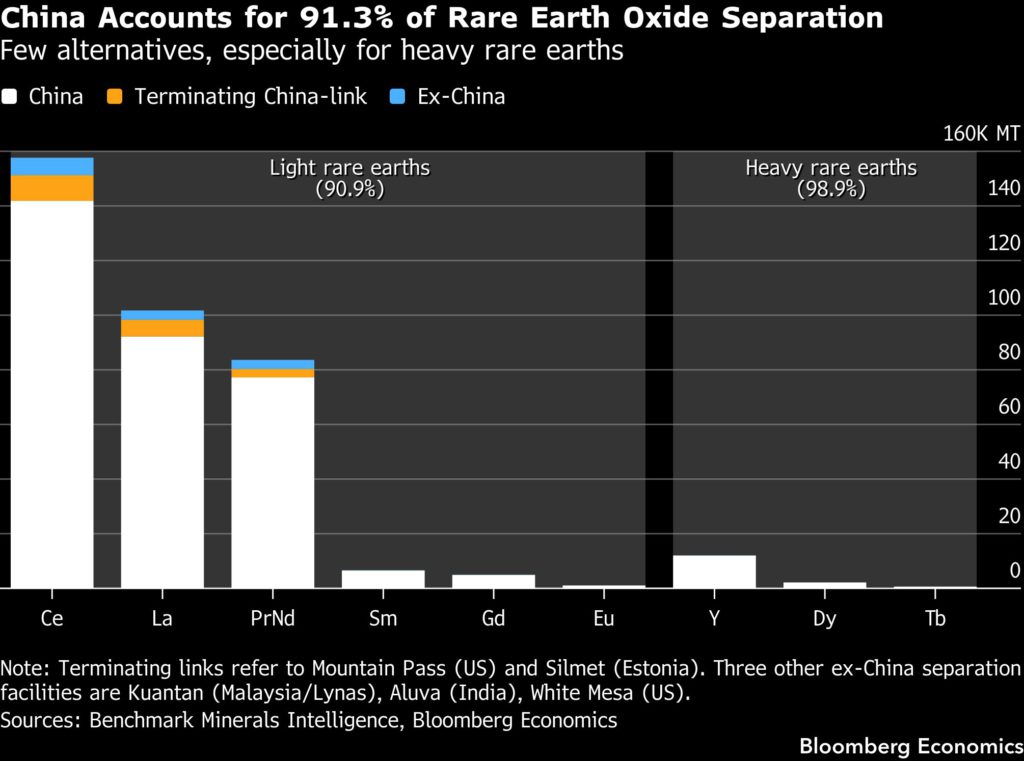
She highlighted that China controls almost 80% of processing, pointing to another challenge. The Asian behemoth is pivotal not only as a source of such raw materials, but also as a refining hub. That’s one reason why Military Metals is pitching Trojarova’s riches to investors as a chance for Europe to catch up, with plans to produce ingots that can go direct to defense clients.

Alternatively, refining in Germany and Sweden could assist in smelting, meaning the facility could ultimately help establish an entire supply chain, from mining and processing, according to chief executive officer Scott Eldridge.

The mine, situated near the winemaking town of Pezinok in southwestern Slovakia, was first discovered and developed by the Soviets. When the Iron Curtain fell, the 1.7-km (1-mile) long excavation was abandoned, but it remained one of Europe’s most significant deposits of antimony.

Military Metals is too small a company to scale up the project on its own, and needs partners to invest and help develop an associated refining capacity. If reactivated, it could supply as much as a third of the continent’s annual demand, totaling about 6,000 tons, and be up and running in two or three years.

But the company — which has a market capitalization of less than $30 million — would need substantial funding.

Moreover, critical minerals are prone to wild price swings, and even in markets like lithium, several major projects have stalled as owners sought out government funding.

Whatever the merits of the company’s business case here, Europe’s money and resolve to secure such resources remain lacking. Germany’s own €1 billion ($1.2 billion) raw materials fund has only supported two projects so far and creates more hurdles for companies to qualify than it eliminates.

The EU Commission and member states have signed memorandums with producer countries — Spain agreed one with Brazil last month, for example — but US deals with the same countries are often bigger in funding terms and more ambitious on timelines for operationalizing the plans.

The Trump administration’s agreement with the EU reflects its push for so-called price floors, which guarantee minimum prices for producers that can’t be undercut by Beijing. European countries have been hesitant, but at some point might have little choice but to go along with the US-led initiative.

Meanwhile the region’s momentum to act has essentially taken a backseat to other more urgent crises. By contrast, despite the Trump administration’s recent focus on conflicts such as the Iran war, the president’s team of aides has been busy identifying mineral projects and bidding to secure them.

One American company has already approached Military Metals and asked to see the Trojarova project. Meanwhile just last month, the US government’s investment arm agreed on a $5 million deal to restart another dormant antimony mine in Northern Macedonia.

Thomas Hüser, the chairman of Military Metals, would like to prevent a similar outcome for Trojarova. The German native joined the company this year and was formerly a Glencore Plc manager.

“What we are still lacking is not ambition, but execution,” he said. “Europe’s raw materials strategy remains fragmented, slow, and often disconnected from industrial reality.”

(By Jenny Leonard and Jody Megson)


Japan’s Sojitz eyes Southeast Asia for new rare earths supply
Stock image.

Japanese trading house Sojitz Corp. is looking to Southeast Asia and other regions as new potential sources of rare earths outside Australia, as it aims to boost output and diversify its supply chain of the highly sought-after materials.

“Areas connected to southern China such as Laos, Cambodia and Vietnam will be potential regions that the company will look into,” chief financial officer Makoto Shibuya told Bloomberg News this week. The company will also consider India and other countries if suitable rare earths investment opportunities exist there, he added.

Rare earths are among the critical minerals used across high-tech manufacturing, including to build the powerful magnets used in electric vehicles, mobile phones and missile systems. China dominates the global supply chain for the materials, which has given it crucial leverage in trade and diplomatic negotiations, and countries including Japan are working to reduce their reliance on the Asian giant.

Sojitz, alongside Tokyo-backed energy agency Jogmec, has been in a joint venture with Australia-based Lynas Rare Earths Ltd. for more than a decade. They agreed in mid-March to start talks on mineral exploration and development of rare earth resources, including possible new mines “both in and outside Australia.” Sojitz has said its primary objective is to seek other sources besides Lynas’ major mining site at Mt. Weld in Western Australia.

As for its energy portfolio, Sojitz has no appetite either for a stake in the Alaska LNG project or to offtake volumes from the planned American venture as it’s simply too costly, Shibuya said. The proposed Alaska plant is backed by US President Donald Trump and often dismissed as fanciful by many in the industry.

Energy accounts for only around 10% of Sojitz’s total investments over the past decade and management has already been trimming that part of the business. Liquefied natural gas is one of its few remaining energy-related investments, but the company says it will only pursue projects that have been carefully scrutinized.

Japan’s government last year agreed with Washington to invest $550 billion in the United States, including possibly in the Alaska LNG project, in exchange for reducing tariffs on Japanese products to 15%.

(By Yusuke Maekawa and Koh Yoshida)


U.S. is Set to Become Europe's Largest Gas Supplier, Overtaking Norway

LNG
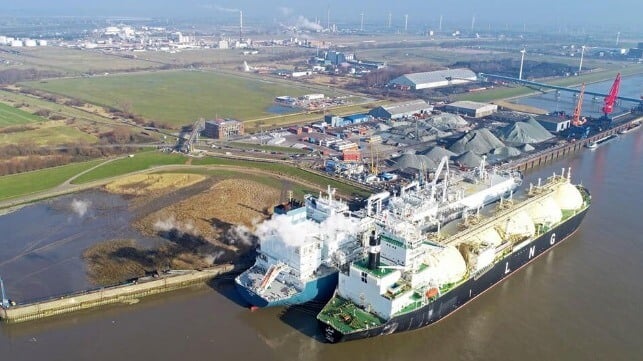
The FSRU import terminal at Brunsbuttel (press handout courtesy RWE)

Published May 13, 2026 9:55 PM by The Maritime Executive


Europe may have freed itself from excessive reliance on Russian natural gas, but only by replacing it with another foreign supplier, according to a new analysis by the Institute for Energy Economics and Financial Analysis (IEEFA). The United States is on track to become the EU's largest gas supplier of any kind this year, overtaking regional energy security partner Norway.

The U.S. is overcoming Norway's pipeline-gas advantage by dint of the rapid development of U.S. Gulf Coast LNG plants, as well as the sudden unavailability of Middle Eastern supplies due to the Iran conflict. Qatar, normally the second-largest LNG exporter in the world, now finds itself on the wrong side of the Strait of Hormuz for global shipping. As a result, American liquefaction terminals now account for about two thirds of all European LNG imports - and this could rise to 80 percent by 2028, according to IEEFA.

For the same reason, shipments of Russian-sourced LNG into Europe are also rising and are now at the highest level since the start of the invasion of Ukraine, despite the EU's plans to ban these cargoes by the end of next year. Russian LNG imports rose by 16 percent year-on-year in the first quarter alone. 

"LNG has become the Achilles’ heel of Europe's energy security strategy, leaving the continent exposed to high gas prices and to new forms of supply disruption," said IEEFA lead Europe analyst Ana Maria Jaller-Makarewicz in a statement. "The 2026 energy crisis shows that as long as European countries choose to rely on gas, they must accept the geopolitical risks that come with it."

Part of the solution is simply cutting demand. Europe's natural gas consumption is on track to shrink by 14 percent by 2030, with more-expensive LNG accounting for a disproportionate share of the declining supply. Even more could be done by speeding up heat-pump adoption in the EU residential market, the think tank says. This has implications for the number of import terminals that the EU needs, and IEEFA thinks that there will likely be excess import infrastructure capacity by 2030. 

Trump’s designs on Greenland prod investment, tourism likely to pay off faster than mines


Disko Bay, Greenland. Stock image.

New focus on Greenland since Donald Trump declared his aim to seize it could help boost investment there, with Arctic tourism likely to pay off faster than ambitious future plans to mine for minerals, the head of Denmark’s export credit agency said.

The governments of Greenland and Denmark have rejected Trump’s repeated demands that the self-governing Danish territory become part of the United States. But since Trump’s designs thrust Greenland into the headlines, there has been a surge of interest in doing business there.

“I am actually convinced that it is different this time. There is a different sense of urgency,” said Peder Lundquist, chief executive of Danish export credit agency EIFO.

“We believe there is a faster path to local value creation in tourism than there is in raw materials,” said Lundquist. “Raw materials have a long-term and solid value creation, but it is over decades.”

Tourism in Greenland has been held back by limited capacity in the peak summer months. Among the projects EIFO is helping fund is a study of the potential to increase visits to the area around the town of Ilulissat on the island’s west coast, soon to receive an international airport

Nearby Disko Bay is rich in the Arctic wildlife and dramatic scenery that draw cruise ships. The analysis will look into harbour capacity, feeder infrastructure and spreading visitors across the area.

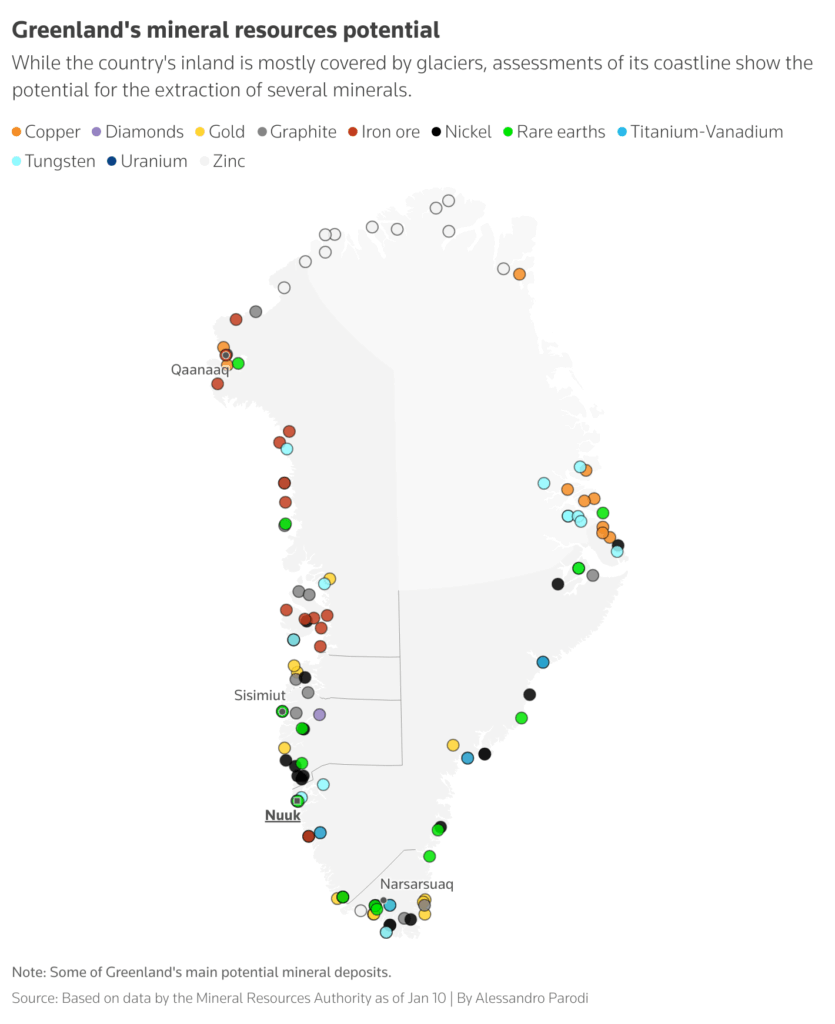
Trump has said the United States needs Greenland for its strategic location and for the mineral wealth beneath its ice, including gold and precious rare earth materials used in tech products. But so far there has been little mining on the island, whose 57,000 residents tend to elect leaders that promise to preserve its natural environment.

Greenland’s Prime Minister Jens-Frederik Nielsen, speaking to journalists in Copenhagen on Tuesday, said his government was open for business but would not compromise on environmental protection.

“We have high environmental standards and that’s just how it is in Greenland, because we live off the nature, we live off the sea and that will never change no matter how many critical rare earth minerals we have.”

The European Union has said it aims to double financial support to Greenland, and has picked the GreenRoc graphite project, a company EIFO has also backed, as critical to increase the bloc’s supplies.

Nevertheless, Lundquist said he did not expect major mining projects to materialize at scale just yet, both because of those environmental standards, and because large-scale extraction was not commercially viable without public-sector guarantees.

“My claim would be that if you want this at larger scale, you need political backing of some kind,” he said. Such support could include minimum price guarantees for extracted materials, potentially from the EU or the Danish government.

At smaller scale, deals are moving. EIFO expects 3-5 new transactions in 2026 and is considering participating in the financing of Suliaq, a subsidiary of gold miner Amaroq, which is seeking $20 million to $35 million to procure equipment for Arctic mining currently scarce or unavailable in Greenland.

($1 = 6.3736 Danish crowns)

(By Stine Jacobsen; Editing by Peter Graff)


Fortescue to pay $108M for Indigenous site damage

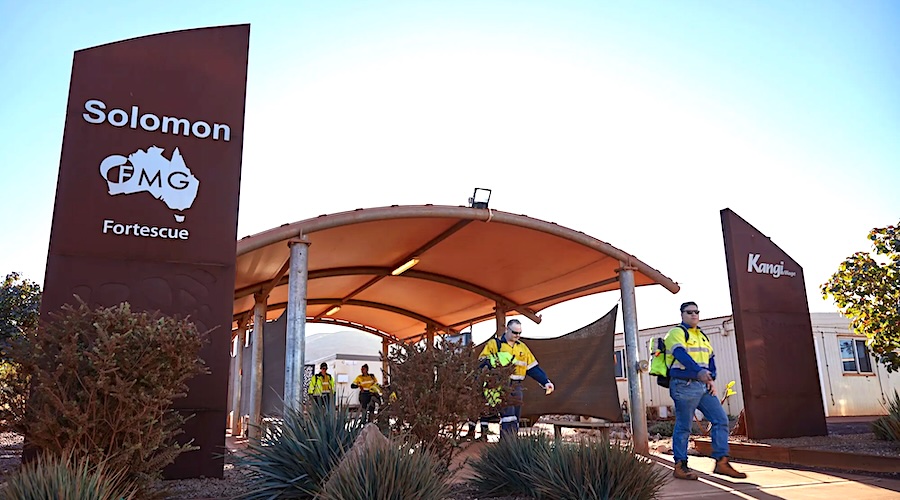
The Solomon Hub is Fortescue’s flagship iron ore mine and production site. (Image courtesy of Fortescue)

Fortescue (ASX: FMG), one of the world’s biggest iron ore miners, must pay more than A$150 million ($108 million) to an Australian Indigenous group after a court found it it damaged culturally significant sites without consent while operating the Solomon Hub mine.

The Federal Court of Australia ruled the miner caused “significant damage” to the cultural heritage of the Yindjibarndi people in Western Australia’s Pilbara region, awarding A$150 million for cultural loss and A$100,000 (about $73,000) for economic loss. The Yindjibarndi Ngurra Aboriginal Corporation had sought as much as A$1.8 billion ($1.3 billion) in compensation. 

Judge Stephen Burley said the community held “deep and visceral” connections to the land and that “significant damage has been done to Yindjibarndi songlines and other areas of cultural heritage.”

“Fortescue accepts that the Yindjibarndi People are entitled to compensation,” a company spokesperson said in an emailed statement. The company noted it would review the court’s full reasons for the decision once published. 

Long-dragged out dispute

The dispute dates back more than two decades after the Yindjibarndi people filed a native title claim in 2003. Fortescue began mining before the matter was resolved and later fought the case in court after the Yindjibarndi secured exclusive native title rights in 2017 over a 2,700-sq.-km area rich in iron ore deposits.

Fortescue is the world’s fourth-largest iron ore producer, with executive chairman and founder Andrew Forrest building a multibillion-dollar fortune as China’s industrialization fuelled soaring demand for iron ore, the key ingredient in steelmaking.

The ruling marks one of the largest compensation awards under Australia’s native title laws and represents a significant ESG and legal setback for a major global miner. 

A spokesperson for the Yindjibarndi Aboriginal Corporation did not immediately respond to a MINING.COM request for comment.


Australian High Court Says Shipping Company Cannot Limit Liabilities

cement carrier hitting tug boats
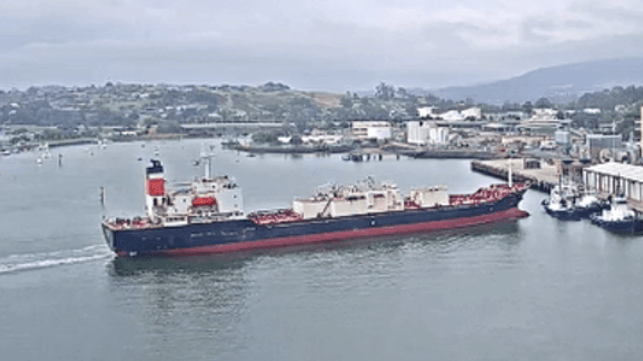
CCTV caught images of the cement carrier approaching the tugs (ATSB / TasPorts)

Published May 13, 2026 6:50 PM by The Maritime Executive


Four years after a docking accident caused the loss of two tugs and caused significant environmental damage, Australia’s High Court has ruled the shipping company CSL Australia cannot limit its liabilities resulting from the incident. The case has gone back and forth in the courts as TasPorts, operator of the Devonport harbor where the incident took place and owner of the tugs, sued to recover its losses.

The case stems from a January 2022 incident when the Australian-flagged cement carrier Goliath (15,539 dwt), operated by CSL Australia, was maneuvering into the dock at Devonport. The master of the vessel was conducting the maneuver. His practice was to maneuver using the main engine telegraph for power control; the bow thruster control; and the joystick for the specialized VecTwin rudder angle control, according to the Australian Transport Safety Bureau (ATSB).

In its report, ATSB found that the ship was not responding as the master expected, and then suddenly the vessel had picked up speed to four knots and was still accelerating. As the ship closed in on the wharf, the master looked at the rudder angle indicator and determined that both rudders were amidships, not the rudder angle set on the VecTwin joystick. ATSB found the incorrect settings caused the allision where the vessel struck the wharf as well as two docked tugs, York Cove and Campbell Cove, which were badly damaged and sank at the pier.

There was an estimated 69,000 liters of diesel and other fuel on the two tugs, which leaked into the river. TasPorts undertook the clean-up, and more than six months later, the salvage of the two tugs.

TasPort sued for approximately A$22 million (US$16 million). CSL Australia did not deny liabilities in for the incident but sought to invoke the convention for the Limitation of Liability for Maritime Claims. It is a long-standing principle of maritime law, with the most recent version of the IMO Convention drafted in 1976 and in force since 2004. While the limit of liability for claims covered was raised considerably, it still uses a formula based on tonnage to determine liabilities.

Under the formula, CSL asserting its liability should have been limited to no more than A$15 million (US$11 million).

A Federal Court judge initially found in favor of CSL, but TasPort won on appeal in front of the full court. Today (May 13), the High Court dismissed an appeal from the Full Court of the Federal Court of Australia. The case had come down to the fact that Australia, when it adopted the convention, had elected not to adopt certain provisions. The courts debated where CSL’s liability fell within the convention. The High Court finally ruled Australia had not adopted provisions that limit the liabilities for the raising, removal, and destruction of a sunk or wrecked ship.

Experts point out that this could have wider ramifications in Australia and future liability cases. Similar issues will also be debated elsewhere, including in a U.S. federal court in Baltimore in the coming weeks. Grace Ocea, the owner of the containership Dali, and Synery Marine Group, operators of the containership that destroyed the Francis Scott Key Bridge, have sought to invoke an 1850s law that would let them cap liabilities at the value of the vessel and its cargo. Plaintiffs ranging from the City of Baltimore to cargo owners, the families of six people killed when the bridge collapsed, and local businesses, are seeking to block the limitation of liability. 

The problems for CSL Australia, however, are not over from the 2022 incident. The company has also been charged with causing serious environmental damage. A legal case is still pending on those charges.


Somali Pirates Reportedly Demand $10M to Release Small Product Tanker

tanker held by pirates
MT Honour 25 is one of the two product tankers being held off the coast of Somalia by pirates (EUNAVFOR ATALANTA)

Published May 13, 2026 4:04 PM by The Maritime Executive


Concern is rising among the families of the seafarers aboard the vessels seized by Somali pirates. In particular therer are reports of increasing demands from the pirates for the two laden product tankers they are holding.

The authorities report they are monitoring the vessels, but according to one of the family members, it is too dangerous to storm the vessel because they have flammable cargoes. With energy prices rising dramatically, the ships are likely seen as prize assets. Observers have speculated that the pirates were further emboldened by the potential value of the fuel tankers demonstrated by increased activity in recent weeks.

One of the tankers, Eureka (3,353 dwt), was seized off Yemen as it was transporting a cargo of 2,800 tonnes of diesel from the UAE. The pirates boarded the vessel on May 2 and directed it to the Somali coast. The ship is managed from the UAE and registered in Togo.

Family members are claiming the UAE-based managers of the vessel were slow to begin negotiations. The pirates reportedly increased their demands from $3.5 million to $10 million and continue to threaten the crewmembers.

Responding to the demands for action from the family members of the eight Egyptian crewmembers aboard the Eureka, Egypt’s Foreign Ministry said it was closely monitoring the situation. Foreign Minister Badr Abdelatty said he had instructed the embassy in Mogadishu to follow up and ensure the safety of the seafarers. The families said the Egyptians on the ship include engineers, mechanics, officers, and support staff. There are also four Pakistani crewmembers on the ship.

Family members said they are being permitted limited contact with the hostage crewmembers. During one call, they report the crew said they were being given limited food and water and being watched over by armed guards.

At the same time in Pakistan, the families of the crewmembers aboard the other seized tanker, the Honour 25 (3,089 dwt), also went public, calling for government support. They said their family members have been held for 23 days since the product tanker was seized on April 21, approximately 30 nautical miles off Somalia’s Puntland region. They report that 10 of the 17 crewmembers are from Pakistan.

A team from the Pakistani embassy in Djibouti is reported to have gone to Somalia from May 7 to 10. The reports said they were told the captives were safe. The families are calling for more action to free the crewmembers who they said are existing in horrible conditions and being forced to drink water from the tanks to survive.

The EU security operation of the region has reported three commercial ships were seized along with several dhows. They have warned shipping to remain at least 150 nautical miles from the coast and to increase security measures. However, even with the reports of increased regional security, there was a report that another group has seized a dhow and i likely on the prowl for a merchant ship target.


South Korean Investigation Shows Unidentified Projectiles Struck HMM Ship

damage to cargo ship
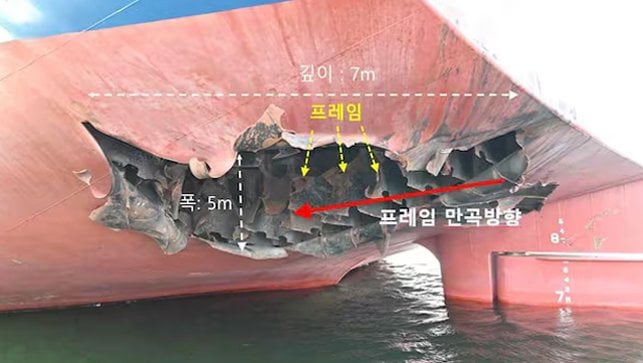
Daamge to the hull of the HMM cargo ship (Foreign Ministry released photos)

Published May 10, 2026 3:17 PM by The Maritime Executive


South Korea continues its investigation into the damage to an HMM general cargo ship on May 4 while in the Persian Gulf. To put an end to the various speculations, South Korea’s Ministry of Foreign Affairs held a briefing on May 10, saying two unidentified projectiles struck the ship, causing the fire that disabled the vessel.

The HMM Namu (38,314 dwt) was towed to Dubai and is now in the Drydocks World shipyard. Investigators from the Ministry of Oceans and Fisheries’ Marine Safety Tribunal, as well as forensic experts from the National Fire Agency, began their investigation of the vessel on May 8. They are collecting evidence from the engine room of the vessel, reviewing CCTV footage, and interviewing the captain.

Based on the CCTV footage and the captain’s accounts, the Ministry says it is certain the vessel was struck by two unidentified "aerial objects" at an interval of about one minute on the afternoon of May 4 while it was anchored off the UAE port of Umm Al Quwain. The vessel was stuck on its port side about 1 to 1.5 meters (approximately 3 to 5 feet) above sea level, hitting a ballast tank. The penetration is approximately 5 meters (16.5 feet) wide and entered approximately 7 meters (23 feet) into the ship and shows signs of explosive pressure on the exterior of the ship.

They believe the first explosion sparked the fire near the point of impact on the hull near the top of the tank. The second strike caused the fire to rapidly expand, and it ultimately consumed the engine room.


The second impact caused the fire to rapidly spread in the engineering spaces (Foreign Ministry)


The Ministry refused to identify the nature of the object that struck the ship, saying the CCTV was not clear enough to determine what type of object was involved. They are collecting evidence from the engine room for further investigation, saying it would likely reveal the specific nature of the attack, and they are also looking to identify the origins of the components.

The reports are speculating that it was most likely an anti-ship missile because of the surface-skimming nature of the attack. The reports are saying a cruise missile would have caused much more extensive damage to the vessel. It is hard for a drone to conduct such a low-level attack.

The Ministry also sought to put to rest the speculation that the ship struck a mine or that it was a machinery failure. They said there were no problems with the vessel’s engines, generators, or boilers. HMM Namu is a general cargo ship that was completed earlier this year and had only recently entered service for HMM. The 24 crewmembers, including six South Koreans, were uninjured.

While refusing to speculate on involvement in the attack, the Ministry, however, did summon the Iranian ambassador, Saeed Koozechi. The embassy had previously issued a statement denying Iranian involvement in the attack. Business Korea says the ambassador today described the incident to the media as an “accident.” Iran’s Press TV, shortly after the attack, highlighted the requirement for Iranian approval to transit the Strait of Hormuz and cited “violations of maritime regulations.”

Donald Trump had used the incident to demand that South Korea get involved in supporting the United States in reopening the Strait of Hormuz. He said Iran had “taken some shots” at a South Korean vessel. 

The South Korean government is being criticized domestically for its slow and cautious response to the incident. It continues to say it will investigate the details and take an appropriate response.

Report: Vessel Captured off Fujairah is a Floating Armory

Hui Chuan
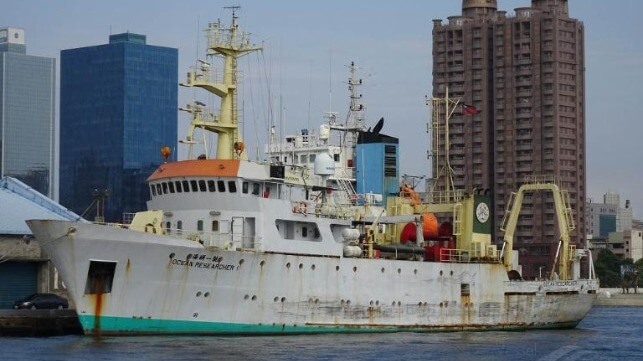
Hui Chuan in apparent layup at Kaohsiung, 2020 (Ya Ray Yang / VesselFinder)

Published May 14, 2026 4:00 PM by The Maritime Executive


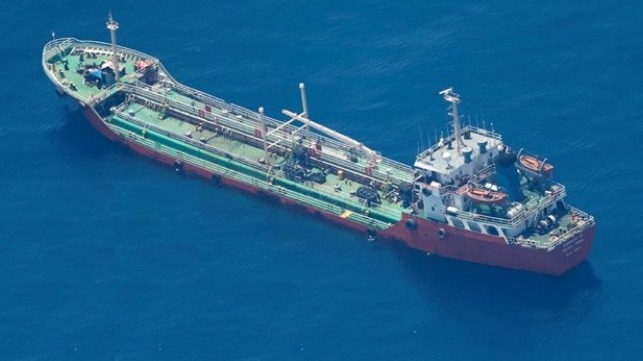
The vessel off the port of Fujairah was a floating armory, according to maritime security consultancy Vanguard Tech. 

The consultancy identified the vessel as the Honduran-flagged "fishing support vessel" Hui Chuan, which - per a report from the company security officer - had been operating as a floating armory in the Gulf of Oman. The vessel was boarded by unauthorized personnel while anchored about 38 nm to the northeast of Fujairah, towards the eastern entrance to the Strait of Hormuz, then diverted into Iranian territorial waters. Contact with the vessel has been lost, and its AIS signal has disappeared from tracking. 

Floating armories are used by maritime security contractors as a practical solution for the storage of arms, ammunition and personnel in between embarked security missions; this avoids the need to stage weapons and people in nearby coastal states, a legally fraught proposition that occasionally ends in weapons confiscation, arrests and criminal charges. Local firearms laws do not always contain exceptions for security contractors or personnel in transit, and enforcement varies - but at sea, in international waters, the contractor can store and maintain their equipment without interference. 

By the nature of their business, floating armory operations tend to be opaque, and the ownership and management of the Hui Chuan are not clear. The 1984-built vessel is flagged in Honduras and owned and operated by a letterbox company in the Marshall Islands. The holding company owns one other vessel, the 1993-built fishing vessel Sunny Ocean. 

Top image: Hui Chuan in apparent layup at Kaohsiung, 2020 (Ya Ray Yang / VesselFinder)

French Carrier Charles De Gaulle Safely Transits Strait of Bab el Mandeb

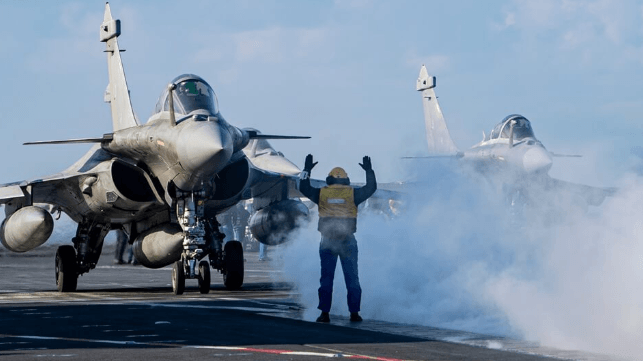
Fighers aboard Charles de Gaulle
Courtesy Marine Nationale

Published May 14, 2026 6:26 PM by The Maritime Executive


The French Navy FS Charles de Gaulle (R91) Carrier Strike Group (CSG) appears to have come safely through the Strait of Bab el Mandeb and is now at the French naval base in Djibouti.

The French Navy operates a tighter release of operational information than most other Western navies, creating a news vacuum which fake news generators seem keen to create confusion with. However, there was no disguising the FS Charles de Gaulle as it went through the Suez Canal on May 6, accompanied by a Jacques Chevallier-class replenishment oiler, probably FS Jacques Chevallier (A725), and an Aquitaine-class anti-submarine warfare destroyer. There is likely to be at least an additional air defense frigate and a nuclear submarine with the CSG. Pictures have subsequently shown the carrier anchored off Djibouti, with a Djibouti coastguard boat standing by.

The transit of the French CSG through the southern Red Sea and Bab el Mandeb appears to have attracted no comment in Houthi-controlled media, although the transit cannot have been missed by the Houthi coastal watch system.

This lack of adverse comment ties in with other indications that the Yemeni civil war is winding down. A drone was intercepted over Eilat on May 12, but unusually neither the Israelis nor the Houthis made any comment regarding the incident, leaving who might have been responsible for the intrusion in some doubt. The last acknowledged Houthi drone attack on Israel was on April 6, which brought to an end a series of six Houthi drone and missile attacks on Israel starting on March 30, none of which did any damage, and which did not attract Israeli reprisals.

Yemeni analyst Mohammed al Basha also notes that the Houthi leader AbdulMalik al Houthi has recently given up his weekly addresses to the nation, which had been used to fire up Houthi military resolve. Instead, the Yemeni press has been more concerned with a successful break-through in long-running negotiations, chaired by the UN in Amman, which has resulted in an agreement between the Houthis and the Internationally Recognized Government (IRG) for the exchange of 1,643 prisoners, scheduled for May 14.

Although skirmishes are still going on along the border between Houthi and IRG forces, an important element in the overall reduction in tension has been the re-ordering of political forces in southern Yemen, which has seen the IRG, backed by the Saudis, stepping up to exert more authority in the area of Yemen it controls and to impose unity, at the expense of the Southern Transition Council and its Emirati sponsors. This sets the scene for a better-based negotiation between the Houthis and the IRG over a final settlement of the civil war, which the Houthis are hoping will be bankrolled by the Saudis. There is no desire at the moment on either side to upset this steady progress.

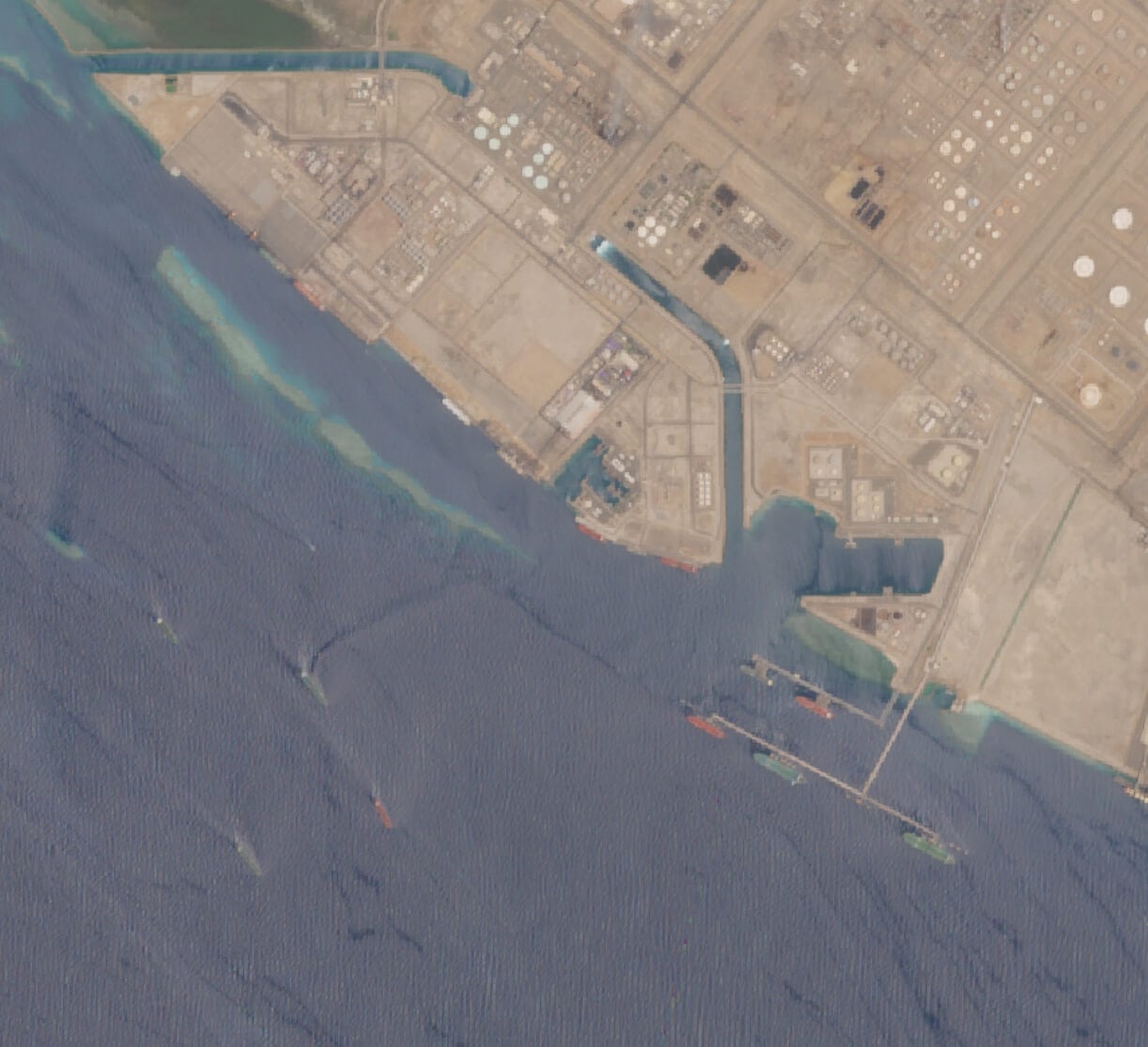
In this improving security climate, Saudi exports of crude from the southern Red Sea port of Yanbu have risen steadily. In March, Kpler estimated that Yanbu crude loadings averaged ?3.3 million bpd, up from a pre-war 800,000 bpd in February, mostly headed south through the Strait of Bab el Mandeb. Notwithstanding damage done to the East-West pipeline by an Iranian drone attack on April 8, throughput over the whole of last month averaged 4 million bpd, and is on track to reach maximum export capacity of 5 million bpd by the end of this month. Saudi Aramco President and CEO Amin Nasser Al Muajjiz said on May 11 that there are plans to increase the pipeline capacity and to boost exports even further. About 20 million bpd of exports from Gulf countries were lost in April because of the closure of the Strait of Hormuz.


All jetties occupied and an orderly queue waiting off the Aramco oil export terminal at Yanbu, amongst 33 arrivals logged by VesselFinder on May 13 (Sentinel-2)

The situation remains volatile. But for marine traffic in the Red Sea, this seems to look like good news, with the chances of a resumption of Houthi attacks on shipping now somewhat diminished.  

Shipping Companies Leverage Arabian Peninsula Truck Routes to Bypass Hormuz

Arabian peninsula
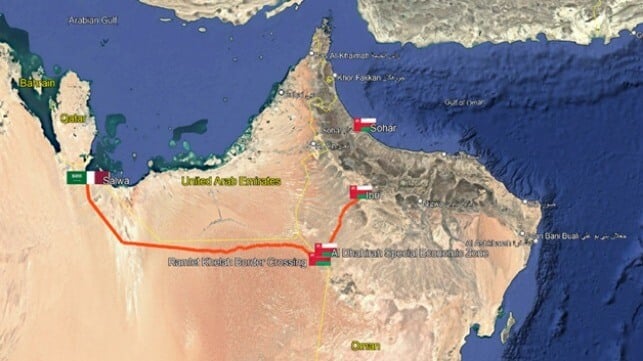
Route 95, from the Saudi-Qatar border to Ibri in Oman, and thence to Sohar, Duqm and Salalah (Google Earth/CJRC)

Published May 11, 2026 9:08 AM by The Maritime Executive


With the Strait of Hormuz remaining closed, logistics operators are working out how to get consignments to and from Gulf destinations previously served by ports that are now in effect blocked to external traffic. Without extensive state direction, entrepreneurs are opening up new routes and increasing capacity on existing routes.

One immediate beneficiary has been traffic flow on Route 95, which starts from the Saudi town of Alkwifiriah close to the Saudi-Qatari border crossing at Salwa. The route then crosses through the Shaybah oilfield and enters Oman at the Ramlet Khelah border crossing point, which was opened in January 2023. The route had been long in the planning, and its opening was delayed not by the COVID pandemic, but by the engineering difficulties of pushing a highway through the shifting sands of the “Empty Quarter.” The route has cut the travelling time between the start and end points by 16 hours, cutting out the old road across the sand or the necessity of diverting through the UAE with the inevitable delays at customs points.

According to the Oman Public Authority for Special Economic and Free Zones, the value of goods crossing the border almost tripled to $830 million in March, from $300 million in February. The main categories moving through the Ramlet Khelah border crossing point are fertilizers, construction materials, food, medicines, and machinery. One trucking company, Ramool Transportation, told AGBI that it had earned more in March 2026 than in the whole of 2025.

Back in 2021, Oman and Saudi Arabia agreed to set up a joint economic zone twelve miles into Oman to take advantage of the new route and border crossing point. The Special Economic Zone at Al Dhahirah (EZAD) opens for business next year, with a land port to be operated by the Omani integrated logistics company Asyad.  But the focus for EZAD will be manufacturing units rather than logistics.


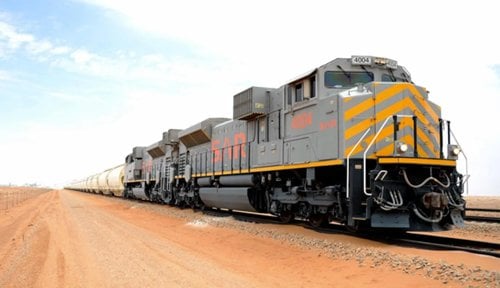
Saudi Arabia Railways is launching five new freight corridors linking West and East coasts (SPA)


Saudi Arabian Railways is developing five new logistics routes, based on a pre-war plan to get traffic off roads and onto the railway. Now it is placing a greater emphasis on improving access from rail hubs at Dammam, Jubail, Ras Al Khair, Al Kharj, and Hail through to Red Sea ports.

The Kingdom will also need to develop further the capacity of the heavily used Northern International Highway Route 85, which stretches from Dammam, through Riyadh, and then along the northern border following the course of the old Trans-Arabian Pipeline to Al Hadithah on the Jordanian border. With the civil war in Syria largely over, the route can now be used with much greater facility through to Tartus and Latakia on the Mediterranean. Considered historically to be something of a death-trap, the route is now a continuous dual highway engineered to modern standards.

Shipping companies are also looking to offer combined sea and land routes. MSC Mediterranean Shipping Company is launching a new service from Antwerp in May 2026, which will ship to Jeddah and King Abdullah Port on the Red Sea, container transfer to trucks to Dammam on the East coast, and then use of feeder services to move freight further forward to Jebel Ali, Khalifa Industrial Zone, and other ports within the Gulf. Hapag-Lloyd is also launching overland options via Saudi Arabia and Oman.

The main challenge to developing new logistic routes has been a shortage of trucks and drivers, a problem which no doubt will be solved quickly by the attractions of winning extra revenues for those already in the business. The other major issue is the throughput capacity of the ports now being brought into the new logistics networks. Both Khor Fakkan and Fujairah have limited capacity, with Khor Fakkan never having operated at more than three million TEUs in comparison to Jebel Ali’s 25 million TEUs. Both Sohar and Salalah are efficient port operations, with Salalah being ranked as the second most efficient container port in the world in 2023. But both ports are suffering capacity issues, which will take considerably longer to solve than the lack of trucks and drivers.


Oxford joins UK’s largest miscarriage research centre in major expansion


By Dr. Tim Sandle
DIGITAL JOURNAL
May 14, 2026


NHS ambulance, London. — Image by © Tim Sandle

The University of Oxford has joined forces with other leading UK institutions to strengthen what is already Europe’s largest research centre dedicated to miscarriage. This marks a significant step forward in efforts to better understand and prevent pregnancy loss.

Tommy’s National Centre for Miscarriage Research, established in 2016, will now operate as a partnership between Oxford’s Nuffield Department of Women’s and Reproductive Health and existing members at the Universities of Birmingham, Warwick and Imperial College London.

This expansion intends to bring enhanced research capability, clinical reach and leadership to a field that remains one of the most common yet under-addressed complications in pregnancy.

Miscarriage affects around one in five women during their lifetime. Despite its prevalence, it has historically received limited research attention. The centre was founded to address this gap, bringing together academic and clinical expertise across multiple institutions and hospitals.
Driving meta-analyses and policy reviews

Over the past decade, the centre has produced findings that have directly influenced clinical practice. Among its most notable achievements is the Progesterone in Spontaneous Miscarriage (PRISM) trial, which demonstrated that progesterone treatment for women experiencing early pregnancy bleeding with a history of miscarriage could prevent thousands of losses annually in the UK. The PRISM trial has also shown that while progesterone does not help all women with early pregnancy bleeding, it significantly improves outcomes in those with a history of miscarriage.

The results prompted the National Institute for Health and Care Excellence (NICE) to update its guidance, expanding access to the treatment.

Research from the centre has also shaped public and policy debate. Its Miscarriage Matters series, published in The Lancet in 2021, highlighted both the emotional toll of pregnancy loss and shortcomings in care, while setting out recommendations for improvement. Campaign efforts linked to this work attracted more than 250,000 signatures, underscoring growing public concern.

More recently, a pilot of a “graded model” of miscarriage care—designed to tailor support and intervention based on risk—has shown promise. Early findings suggest it could prevent over 10,000 miscarriages a year if implemented nationwide, with thousands of campaigners now urging government adoption.

The addition of Oxford is expected to accelerate progress. The university brings expertise in statistics, trial design, health economics and bioinformatics, alongside Oxford University Hospitals NHS Foundation Trust, which will serve as the lead clinical partner. New leadership appointments across partner institutions are also intended to strengthen coordination and delivery.

Professor Arri Coomarasamy, director of the centre, says the expansion would help translate research into tangible improvements for patients. “Every miscarriage represents not just a clinical event, but a deeply personal loss,” he said. “Our ambition is to turn evidence into better tests, treatments and care.”

Charity leaders argue that while progress has been made, significant unmet need remains. For many families, miscarriage continues to bring unanswered questions and repeated heartbreak. By broadening its partnerships and resources, the centre hopes to advance both scientific understanding and the quality of care available—ultimately reducing the incidence of miscarriage and its impact on families.