Sunday, May 24, 2026


Norway Doubles Down on Oil and Gas as Europe Scrambles for Supply

  • Norway is boosting fossil fuel production to offset energy supply disruptions caused by Middle East instability and sanctions on Russian energy.

  • The Norwegian government plans to reopen three North Sea gas fields and maintain high production levels beyond 2030.

  • Environmental groups argue the policy undermines climate goals and delays Europe’s transition away from fossil fuels.

Norway, well known for its oil and gas production, has ramped up its fossil fuel output in recent weeks to fill the gap following the closure of the Strait of Hormuz and the ongoing energy trade disruptions. While some countries are grateful to Norway for helping alleviate oil and gas shortages, environmentalists have critiqued the move, suggesting that more of a focus must be placed on increasing the region’s renewable energy capacity.

Norway appears to have taken on the role of “Europe’s saviour” as it stepped in to replace Middle Eastern oil and gas imports following the closure of a key trade corridor connecting Asia and Europe. The Prime Minister of Norway’s Labour-run government, Jonas Gahr Støre, explained, “It’s [Iran] a war that appears to have no plan… In such unpredictable times, Norway needs to be reliable.”

Norway previously increased its fossil fuel output following the Russian invasion of Ukraine in 2022, as several European governments stopped purchasing oil and gas from Russia and, instead, looked to Norway to fill the gap. Norway has since become Europe’s largest pipeline gas supplier following the imposition of strict sanctions on Russian energy. Now, an estimated 90 to 95 percent of Norway’s oil goes to Europe, while the EU attains around one-third of its gas imports from Oslo.

However, Norway is close to reaching its maximum output, meaning that it cannot increase production from existing projects much further. Norway’s oil output is expected to decrease after 2030 unless it develops new projects. Therefore, if it hopes to boost output, Norway must invest in new exploration activities, a move that environmentalists are staunchly against.

Norway’s Energy Minister Terje Aasland stated in March, “Our focus is to be a stable, long and predictable supplier of energy to the European market.” The stance appears to be the same across most of the political spectrum, with most politicians seeing Norway’s oil and gas production as key to ensuring Europe’s energy security, particularly during a time of geopolitical turmoil, which has driven up energy prices significantly.

Following over two months of severe energy trade restrictions due to the ongoing Iran War, Aasland has doubled down on his comments about Norway as a major energy provider. “We will develop, not dismantle, activity on our continental shelf,” Aasland recently stated. In May, Aasland announced plans to reopen three gas fields – Albuskjell, Vest Ekofisk and Tommeliten Gamma – in the North Sea, off Norway’s southern coast, by the end of 2028, almost three decades after their closure.

The government hopes that reopening the fields will help fill the gap left by ongoing sanctions on Russian energy and the Middle East trade disruption. The reopening of the fields is expected to maintain Norway’s gas and oil production at around the output recorded in 2025.

“Norwegian offshore production plays an important role in ensuring energy security in Europe… The world, and Europe, will have a need for oil and gas for decades to come, and it is crucial that Norway continues to develop its continental shelf to remain a reliable and long-term supplier … and (with) a high level of exploration activity,” stated Aasland. “We have a responsibility. Our focus is very clear,” Aasland said about Norway’s role in providing energy to Europe.

Meanwhile, Ola Morten Aanestad, the Press Spokesperson of Norway’s state-owned oil firm Equinor, said the company plans to invest $6 billion a year up to 2035 to help it avoid a decline in output. Aanestad highlighted plans for “more drilling … a lot of new development, more pipelines … maybe smaller fields developing, but still important.”

Norway pumped 2.31 million barrels of oil equivalent per day in the first quarter of the year, according to its latest financial results, nearly 9 percent more than in the same period last year. In mid-May, Norway's government revised its earnings forecast upwards for oil and gas production this year, from $60 billion to $79 billion, citing higher global energy prices.

However, Norway’s Socialist Left party does not agree with the government’s commitment to maintaining oil and gas output. The deputy leader and environment spokesperson for the party, Lars Haltbrekken, said, “It shows that the government is once again blatantly ignoring environmental advice from its own experts. All the talk about responsible oil extraction is nothing but nonsense. It’s greenwashing through and through, with vulnerable and important natural areas being put at risk with full awareness.

While some view Norway’s plans for maintaining or increasing oil and gas output as key to ensuring Europe’s energy security, others see the government’s ongoing support for fossil fuels in a time of global crisis as “greenwashing’. While Norway is clearly filling a gap and providing European powers with a more stable and geopolitically certain oil and gas supply, environmentalists worry that plans to maintain high output beyond 2030 could reduce the urgency to achieve a green transition. 

By Felicity Bradstock for Oilprice.com


Equinor and Aker BP Realign Stakes to Boost Norway Output

Equinor and Aker BP have struck a strategic collaboration covering selected assets on the Norwegian Continental Shelf, with a series of transactions designed to simplify ownership, align development interests, and unlock more value from undeveloped resources.

Under the deal, Equinor will sell Aker BP a 19% interest in several discoveries in the Ringvei Vest area, including Grosbeak, Røver Nord, Sør, Toppand, and Swisher. The companies also aim to include the Kveikje discovery in the Ringvei Vest development.

Ringvei Vest, operated by Equinor, is expected to be developed as a cluster of oil and gas discoveries in the Troll-Fram area of the North Sea.

Equinor will also sell Aker BP a 38.16% stake in the Frigg UK licence, leaving Equinor with 61.84%. That transaction is intended to support a coordinated appraisal and development of the Omega Alfa discovery and remaining Frigg-area oil potential.

In return, Equinor will increase its stake in the Wisting discovery from 35% to 42.5%, strengthening its position in what the company describes as the largest undeveloped discovery on the Norwegian Continental Shelf.

Aker BP will pay Equinor $23 million in cash. The agreements are effective from Jan. 1, 2026, and remain subject to regulatory approvals.

The transactions come as Norway’s offshore sector works to sustain production from a mature basin where new output increasingly depends on tiebacks, cluster developments, and more efficient use of existing infrastructure. By aligning ownership across key discoveries, Equinor and Aker BP are aiming to reduce project complexity and make faster investment decisions.

For Equinor, the deal fits its strategy of optimizing its oil and gas portfolio toward 2035 while concentrating exposure around higher-value developments. For Aker BP, the agreement expands its position in several North Sea discoveries and supports a more coordinated role in future development planning.

By Charles Kennedy for Oilprice.com


Colombia's Natural Gas Crisis Deepens as Strait of Hormuz Closure Cuts Supply

Strife-torn Colombia is facing a severe energy crisis at a critical juncture. Global supply of natural gas is heavily constrained due to the closure of the Strait of Hormuz after U.S. strikes on Iran. This could not come at a worse time for Colombia, with the Andean country experiencing a massive surge in demand for natural gas at a time when domestic production is declining. The rapidly growing supply shortfall was filled by costly liquefied natural gas (LNG) imports, the future of which now appears uncertain. These events are weighing heavily on Colombia's vulnerable economy.

Colombia's energy patch appears caught in a death spiral with petroleum and natural gas production declining sharply over the last decade. During March 2026, petroleum output grew by just under 1% compared to a month prior but was 1% lower year over year to an average of 740,497 barrels per day. This is significantly lower than the 917,210 barrels per day lifted a decade earlier for March 2016.

Declining oil production is a key contributor to Colombia's emerging energy crisis because a considerable portion of the natural gas produced in the Andean country is associated with petroleum production. Drillers are using that associated natural gas for enhanced recovery by reinjecting it into petroleum reservoirs to boost pressure and reduce viscosity, especially for Colombia's mature heavy oil fields.

Indeed, the aging nature of Colombia's oilfields, with most having reached peak production a decade or more ago, places greater pressure on drillers to employ enhanced recovery. This means more associated natural gas is being deployed for oil recovery purposes, removing it from domestic commercial supply, thereby exacerbating the supply shortfall.

Colombia's March 2026 natural gas production rose by 0.7% month over month to 700 million cubic feet, but this still represented an almost 15% decline compared to the same period a year earlier. That illustrates that the Andean country's natural gas output is caught in a death spiral, especially when it is considered that it is a whopping 38% lower than a decade earlier.

In comparison, at the start of 2016, Colombia was self-sufficient when it came to natural gas supply, although costly LNG imports did begin in December of that year as a supply shortfall started developing. Along with ever-worsening domestic supply constraints, growing demand for natural gas in Colombia, where it is a crucial industrial and household fuel, is creating a massive shortfall.

Declining natural gas output is not the only significant issue. A marked drop in Colombia's reserves of the fossil fuel is also weighing heavily on the hydrocarbon industry's future and a deteriorating economy. By the end of 2024, the Andean country had only proved reserves of two trillion cubic feet, which is sufficient for another 5.9 years of production.

That number was not only 3.3% lower than a year earlier, but it is also the lowest proved natural gas reserves in well over two decades. A lack of exploration drilling is weighing heavily on Colombia's ability to boost its hydrocarbon reserves, especially for natural gas. This is placing considerable pressure on the country's fragile economy, where gross domestic product only expanded by 2.2% for the first quarter of 2026.

Consequently, there are fears of an energy crisis emerging because of the sharp decline in hydrocarbon production, which is occurring primarily because of President Gustavo Petro's policies aimed at reducing fossil fuel dependence. These, which include significant tax hikes as well as a ban on awarding new exploration and production contracts, are responsible for causing natural gas output to plummet precipitously to unsustainable historical lows.

A major driver of rising natural gas consumption is the shift from coal-fired to natural gas-fired power plants. While around 65% of Colombia's electricity is generated by hydro plants, an increasing proportion is produced by thermal plants, many of which are reliant on coal as a fuel. El Niño-driven drought continues to reduce water flows and hydropower output, forcing Colombia to generate more electricity from thermal plants, placing considerable pressure on the already constrained natural gas supply.

You see, Bogota is steadily phasing out coal-fired facilities, thereby boosting consumption of natural gas, particularly during times of El Niño-induced drought. Without sufficient fuel to fire Colombia's thermal plants at times of high electricity demand, an already stretched grid risks collapsing, especially with brownouts and even blackouts regular occurrences in numerous cities as well as remote areas.

Natural gas is a cost-effective fuel widely used by industry in Colombia, where the manufacturing sector contributes 10% of gross domestic product (GDP). It is also the only widely available low-cost household fuel used in a country where nearly 32% of the population lives in poverty. For those reasons, the expected substantial increase in expensive natural gas imports will sharply impact the economy while causing the cost of living to spiral higher.

As discussed, Colombia is no longer self-sufficient when it comes to natural gas. A rapidly expanding domestic supply shortfall is forcing the country to become more dependent on LNG imports, which are more expensive than domestically produced natural gas. This is because there are liquefaction costs at the point of manufacture, shipping expenses, and regasification costs at the port of delivery with the average price of imported natural gas climbing 26% from $14.64 to $18.39 per MBTU.

Indeed, industry data shows the cost of natural gas for industrial consumers during 2025 soared by 69%, yet for households, which receive mostly domestic production, surged by 23% that year. This is not only impacting vital economic sectors and the cost of living but is also one of the major causes driving higher inflation, which for April 2026 hit 5.68% up from 5.16% a year earlier.

There are fears that as the proportion of domestic natural gas supply provided by LNG imports grows, prices will rise even higher, further impacting industry and households. By the end of 2025, 18% of Colombia's natural gas supply was sourced from imports, and this was originally expected to grow to 26% during 2026, but there are signs it may expand to as much as 33% because of dwindling domestic production.

Iran disrupted roughly a fifth of Qatar's LNG production, immediately causing global LNG supply to tighten, sending prices higher. That pressure is being intensified by the closure of the Strait of Hormuz, through which about 20% of global natural gas shipments pass each year. This is causing LNG prices to spiral higher, which will have a sharp impact on Colombia's natural gas supply, further damaging an already weak economy laboring under considerable debt and large fiscal deficits.

By Matthew Smith for Oilprice.com


IEA: Oil Shock Sparks Surge in EV Sales

Electric vehicle sales could hit nearly 30% of all car sales in the world this year as drivers accelerate a shift to EVs and hybrids amid spiking fuel prices in the wake of the Iran war, the International Energy Agency (IEA) said on Wednesday.

Following strong growth in 2025, this year EV sales are set to reach 23 million globally in 2026, accounting for almost 30% of all cars sold worldwide, the IEA said in its annual Global EV Outlook 2026 report out today.

Last year, EV sales grew by 20% globally and accounted for one-quarter of all new cars sold were electric cars. This year, the share is moving closer to 30%, as surging fuel prices encourage more drivers to switch to electric vehicles.

Due to policy changes, especially in China and the United States which reduced or phased out incentives, respectively, global EV sales dropped by 8% in the first quarter of 2026 from a year earlier.

However, this overall decline masked strong sales growth in many other countries and regions, the IEA said.

In Europe, EV sales jumped by close to 30% year-on-year; in the Asia Pacific region excluding China, sales surged by 80%; and in Latin American EV sales soared by 75% between January and March compared to the same period last year, the agency added.

As oil and fuel prices spiked in March due to the Middle East conflict, nearly 90 countries saw annual EV sales increases, including 30 countries in which electric car sales logged record-breaking monthly sales, the IEA noted.

"Looking ahead, the falls we have seen in battery prices and the potential policy responses to the current global energy crisis are set to provide further momentum in EV markets," IEA Executive Director Fatih Birol said.

EV sales in Europe continue to rise, with demand for electric vehicles jumping by 34% in April.

By Michael Kern for Oilprice.co


Soaring Energy Prices Are Driving a Home Solar Boom

  • Households in the U.K. and U.S. are increasingly adopting rooftop solar as oil and gas prices surge following geopolitical disruptions.

  • Falling solar panel and battery costs are making home energy systems more accessible and attractive for consumers seeking long-term savings.

  • Governments and utilities are expanding support for residential solar, although affordability and grid safety regulations remain challenges.

Home solar power installations have risen significantly in recent decades, as consumers look to drive down their electricity bills and make their energy use more sustainable. Now, with oil and gas prices soaring due to geopolitical challenges, more households are being attracted to solar installations.

Solar photovoltaic (PV) uses electronic devices, also called solar cells, to convert sunlight directly into electricity. Solar PV is highly modular, meaning that smaller-sized solar home kits and rooftop installations with around 3-20 kW of capacity can be fitted on a range of residential buildings. The cost of manufacturing solar panels has fallen dramatically over the past decade, making them affordable and providing users with one of the cheapest forms of electricity.

The falling price of solar power has attracted millions of consumers to invest in solar installations in recent years, and now even more households may adopt solar systems. Following the United States–Israeli–led attack on Iran in February, Iran ordered the closure of the Strait of Hormuz, which has significantly reduced energy trade between Europe and Asia and has driven up global oil and gas prices dramatically in recent months.

The higher energy prices are hitting consumers hard, many of whom have already been negatively affected by high inflation over the past couple of years. This has led many consumers to call on governments to diversify the energy mix beyond fossil fuels to enhance energy security and reduce the impact of price volatility. In addition, many households are taking energy into their own hands by investing in rooftop solar panels.

In the United Kingdom, solar panel sales have increased significantly since the start of the Iran war, according to the energy provider Octopus Energy. Sales increased by around 54 percent in March, compared to February, with consumers investing in larger solar arrays.

Octopus Energy’s Chief Product Officer, Rebecca Dibb-Simkin, stated, “We are seeing a massive shift as people stop just asking and start acting. British families are tired of being held hostage by global fossil fuel prices. By switching to solar and heat pumps, they are becoming their own power stations, locking in low costs and protecting their wallets for the long term.”

It may not only be the Iran war drawing greater interest to solar systems, as more consumers were already purchasing solar panels due to the higher energy costs associated with inflation. The green electricity supplier Good Energy said in March that it had seen interest in solar panels double over the previous three months. The firm’s CEO, Nigel Pocklington, said that “The most effective way to bring bills down over the long term is to double down on renewables, alongside storage and flexibility, so more of our power comes from predictable, homegrown sources.”

The cost of home batteries is also falling, meaning that consumers may be able to access power from solar units even when the sun is not shining. The more electricity a household uses, the greater the potential savings from using a home battery, meaning that those with a home electric car charger or heat pump could save the most.

The U.K. Labour government announced earlier in March that it expected most new homes to have solar panels starting in 2028 and that it planned to lift a ban on sales of plug-in solar kits.

In the United States, solar adoption has become the fastest-growing source of power in the country in recent years. In 2024, 84 percent of all new electricity production capacity added to the grid came from solar power and battery storage. While the Trump administration’s crackdown on renewable energy expansion is expected to slow mid-term expansion, many states are still expanding grants and rebates for consumers and businesses looking to install solar systems.

Rooftop solar panels and installation are estimated to have a median cost of around $30,000, before government incentives, meaning that while they offer a clear path to cutting electricity costs, at present, only richer households can afford to invest in these installations.

In recent months, faced with higher energy prices, several U.S. consumers have taken energy into their own hands by installing plug-in solar panels without informing utilities. This is simple, as people can buy cheap, small solar panels and hang them nearly anywhere without hiring an electrician’s services, as the panels can be plugged into a regular outlet to start generating electricity, with the support of a microinverter.

Plug-in technology is already popular in some parts of the world, such as Germany. However, U.S. regulators have previously stressed that they cannot simply replicate the German model as the electrical system is different. In the U.S., there is no ground fault circuit interrupter, meaning appliances do not cut out as necessary to minimise the risk of electric shock. However, some states, such as Utah, have introduced legislation to encourage greater uptake.

With or without permission, the consumer trend of installing household solar systems is set to continue so long as fossil fuel prices remain highly volatile and energy bills are elevated.

By Felicity Bradstock for Oilprice.com

TotalEnergies Eyes $100M+ Stake Sales in European Solar and Wind Portfolio

TotalEnergies is considering selling 50% of some of its solar and wind assets in Europe as part of its strategy to partner with other companies in operating and monetizing its clean energy portfolio, Bloomberg reported on Friday, quoting anonymous sources with knowledge of the plans.

The France-based oil and gas supermajor, which has been developing a global renewable energy portfolio for years, is now working with advisers to potentially market 50% in a combined 1.2 gigawatts (GW) of solar and wind power assets in France, Germany, Spain, and Poland, according to Bloomberg’s sources.

A deal could be worth several hundred million U.S. dollars for TotalEnergies, the sources noted.

Unlike other European majors such as BP and Shell, which have outright reduced spending on renewables, TotalEnergies has a strategy to reach a 12% profitability target for its Integrated Power business.

This means that TotalEnergies would typically divest up to 50% of its renewable assets once they reach commercial operation date (COD) and are de-risked, which allows it “to maximize asset value and manage risks.”

In one of its biggest recent stake sales, TotalEnergies last year agreed to sell 50% of its solar projects portfolio in North America to global investment firm KKR for about $1 billion, as part of the French supermajor’s renewables strategy to divest half of its already operational assets.

TotalEnergies has also moved to sign power purchase deals to provide clean energy to major data center developers and hyperscalers.

In November, the French major signed a 15-year Power Purchase Agreement (PPA) to supply Google data centers in Ohio with renewable electricity from a local TotalEnergies solar farm.

Earlier in November, TotalEnergies signed a power purchase agreement with Data4 to supply renewable electricity to the data center developer’s sites in Spain for 10 years, as the French supermajor looks to boost its integrated power business with the key driver of global electricity demand—data centers and AI infrastructure.

By Michael Kern for Oilprice.com 


India Explores Alternative Energy Sources Amid Oil Supply Shock

India’s Prime Minister Narendra Modi has urged the government to urgently explore an increase in the use of alternative energy sources, including biogas as a substitute for liquefied petroleum gas (LPG), as the Middle East crisis is choking oil and gas supply to the world’s third-largest crude importer.

Modi also urged ministers to move faster with implementing reforms to turn India into a developed nation by 2047, the goal for its 100th independence anniversary.

India has been grappling with the energy crisis that the Iran war created. Oil supply from the Middle East was severely constrained, forcing India to boost Russian oil imports – with a U.S. blessing in the form of waivers for Russian crude on tankers – and seek alternative crude and LPG supply from regions other than the Middle East.

Earlier this week, reports emerged that India plans to send empty tankers into the Strait of Hormuz to load oil supplies from the Gulf producers.

This would be a first such Indian move west of the chokepoint for loading crude and LPG since the Iran war began, sources with knowledge of the matter told Bloomberg on Wednesday.

India has boosted imports of oil and LPG from places that don’t need the Strait of Hormuz, but costs are usually higher, and the journey times are much longer compared to the shorter routes from the Persian Gulf to India.

At any rate, India will likely need approval from the U.S. to move through the U.S. blockade in the Gulf of Oman first, and then from Iran for clearance in the Strait of Hormuz en route to the export ports in the Persian Gulf.  

Two and a half months after the Middle East conflict began, one of the highest-performing emerging markets in recent years is scrambling to contain the oil shock that is spreading to consumer prices, foreign exchange reserves, and economic growth.

By Tsvetana Paraskova for Oilprice.com


Strikes Hit Two Australian LNG Facilities After Wage Talks Collapse

Maintenance workers at two offshore LNG facilities in Australia went on strike after failing to reach an agreement on wage terms with their employer, engineering major UGL.

“The end result of UGL's inability to negotiate or accept industrial standards is protected industrial action,” trade union group the Offshore Alliance, which represents the workers, said in a statement as quoted by Reuters.

The strike will affect Woodside’s North West Shelf LNG facility as well as the neighboring Pluto LNG project, also operated by the Australian energy major. The North West Shelf LNG plant produces 14.3 million tons of the superchilled fuel annually, and Pluto LNG has a capacity of 4.9 million tons.

“We've been making sure we understand how to accommodate this. Working closely with our workforce has always been our priority, and we continue to have those strong relationships, so you know it's sort of part of life,” Woodside’s chief executive, Liz Westcott, said, as quoted by Reuters.

Earlier this week, the Offshore Alliance also notified Japan’s Inpex that a strike may be imminent at the Japanese company’s Ichthys LNG project. “We have made it clear to Inpex that we aren’t going to cop the short-changing of our bargaining claims simply because Inpex could not be bothered reading our claims for six months,” a spokesperson for the Offshore Alliance said in a statement on Monday.

Australia is a top-three global exporter of liquefied natural gas thanks to its vast offshore reserves. It has recently returned to the spotlight after being edged out of it by booming U.S. exports, as the Qatari LNG crunch prompted Asian energy buyers to look for viable alternatives.

There has been concern about the Australian government imposing curbs on LNG exports to secure domestic supply amid tight gas availability on the densely populated east coast of the country but the government recently denied such plans over the near term. It will, however, mandate LNG producers to set aside a certain amount of gas for the domestic market to ensure supply security.

By Irina Slav for Oilprice.com


Colombia pushes Glencore on Cerrejón closure plans


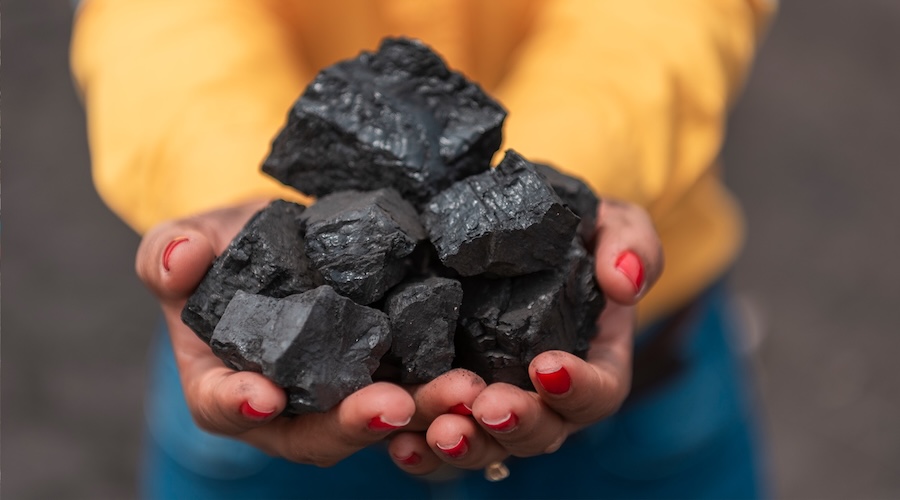
Coal extracted at Cerrejón. (Image courtesy of Glencore | Cerrejón.)

Colombia is pressing Glencore (LON: GLEN) to begin planning for a post-coal future at its Cerrejón mine, setting up a high-stakes debate over whether one of the world’s largest open-pit coal operations can wind down without triggering economic shock.

The push follows calls from President Gustavo Petro’s government for early transition talks around the Cerrejón complex. The concession runs until 2034, but officials say waiting until the final years of the operation could leave the coal-dependent region of La Guajira vulnerable to severe economic and social disruption.

Cerrejón produced 16.8 million tonnes of coal in 2025, down from 19.2 million tonnes a year earlier, according to a report by Chilean mining consultancy GEM. The operation supports more than 12,000 direct and contractor jobs and includes a 150-km railway and Caribbean export port that underpin much of the economy in the northern province of La Guajira.

“The real choice in this case is between a managed transition and an unmanaged shock,” Juan Ignacio Guzmán, head of GEM, said in the report, which examined the risks of an accelerated closure. 

The consultancy argued that abrupt political intervention without replacement industries, financing and community safeguards could destabilize municipal budgets, local suppliers and environmental programs across the region. 

Cerrejón remains one of Colombia’s most important export assets and a major source of royalties, taxes and employment. GEM estimates the coal complex contributes about $166 million annually in royalties and supports roughly $86 million in local procurement spending. 


Production declines could trigger a cascade of economic impacts affecting suppliers, municipal budgets, contractor employment and social services in one of Colombia’s poorest regions, the report said.

Energy transition test

The debate has become a test case for Colombia’s broader energy transition strategy. Petro has banned new coal and hydrocarbon exploration contracts while promoting wind and solar investment in La Guajira, a region with some of Latin America’s strongest renewable-energy potential. 

Cerrejón has also faced years of environmental and social criticism over water use, coal dust and the displacement of Indigenous Wayuu communities. Environmental groups argue the eventual closure of the mine could reduce pressure on scarce water resources in the arid region, while unions and local leaders fear a poorly managed transition could devastate the local economy.

GEM said international mine-closure experience shows the greatest risks emerge when shutdowns are driven by political conflict, legal uncertainty or financial stress before governments and communities are prepared.

It cited cases including First Quantum’s (TSX: FM) Cobre Panama, South Africa’s Blyvooruitzicht and Zambia’s Kabwe, where abrupt shutdowns or weak remediation planning triggered fiscal stress, unemployment and long-term contamination problems.

The consultancy recommended a “managed transition compact” involving the Colombian government, Glencore, Cerrejón management and local communities. Proposed measures include ring-fenced transition financing, worker retraining, supplier-conversion programs, environmental assurance funding and long-term plans for reusing rail, port and logistics infrastructure after mining declines.

The report highlights the pressure on Glencore is less about forcing an immediate shutdown than positioning Cerrejón at the centre of Colombia’s long-term shift away from coal.

For Petro’s government, the mine has become both a practical and symbolic test of whether the country can cut fossil fuel dependence without repeating the economic and social turmoil seen in abrupt mine closures elsewhere.


Sigma Lithium fights Brazil ruling after 15% shares slide


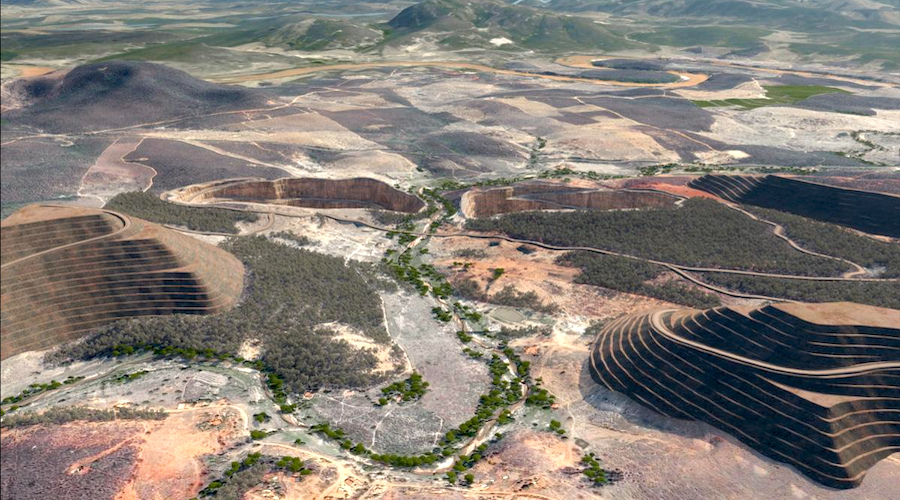
Preservation of the Piauí Seasonal Creek is a core ESG initiative at the Grota do Cirilo mine. (Image courtesy of Sigma Lithium.)

Sigma Lithium (NASDAQ: SGML) is appealing a Brazilian court ruling tied to allegations involving waste disposal at its Grota do Cirilo lithium operation after the developments helped wipe 15% off the company’s share price.

The May 17 decision by a local judge in Aracuai, in Brazil’s Vale do Jequitinhonha region, includes potential legal collateral of $10 million that would only become payable if the company ultimately loses following appeals through Brazil’s state and federal courts, Sigma said. 

The company said similar cases in Brazil typically take years to resolve and no payments are currently due. The ruling followed a site visit by legal authorities who verified the operation complied with Brazilian environmental regulations, Sigma added. More than 200 people from nearby communities also attended a public hearing the same day in support of the mine, the company said.

“The company is the target of fake news and coordinated misinformation campaigns intended to damage its reputation and market value,” Sigma said, adding it remains in contact with authorities including FINRA regarding the matter.

Sigma shares closed Monday down 12.25% at $14.76, giving the company a market capitalization of about $2.6 billion. The stock fell another 1.76% in pre-market trading Wednesday to $14.50 a share.

Waste pile scrutiny

Reports earlier this month alleged Brazilian labour inspectors fined Sigma for depositing waste on a pile that authorities had previously shut down over what they described as grave and imminent risks to workers and nearby residents. Three waste piles were suspended in December, though inspectors reportedly alleged trucks continued depositing material on one of them in mid-May. Reuters reported a labour inspector cited a “partial rupture” at one pile near a school in Poco Dantas as evidence of structural concerns.

The dispute comes as Sigma pushes ahead with expansion plans at Grota do Cirilo, which the company describes as the world’s fifth-largest industrial-mineral complex for lithium oxide concentrate. The operation currently has nameplate capacity of 270,000 tonnes annually, while a Phase 2 expansion aims to lift output to 520,000 tonnes per year.

The controversy also highlights growing scrutiny facing lithium developers in Latin America as governments, regulators and communities demand tighter environmental oversight while producers race to meet battery-material demand.

Op-Ed: Recovering more metal from leach pads is mining’s quickest win


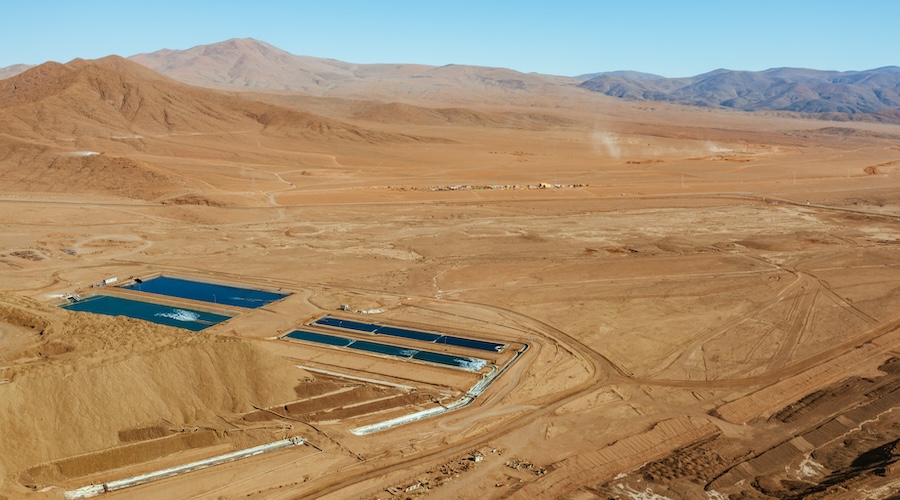
Leaching area in copper operation, Atacama, Chile. (Stock image by Jorge.)

Mining companies today are under intense pressure to increase their output of base, precious minerals as well as critical minerals, but bringing new production online is neither quick nor easy. 

The industry faces a structural squeeze: demand for copper, lithium and other critical minerals is rising faster than new projects can be permitted, financed and built. The International Energy Agency forecast supply gaps of 30% for copper and 40% for lithium by 2035 underscore the urgency, even before factoring in delays tied to permitting, construction and geopolitics. In that context, the most immediate gains may not come from new mines at all, but from extracting more value out of ore already stacked on leach pads.

The conventional route to higher production remains slow and capital intensive. Expansions require feasibility work, regulatory approvals and construction timelines that can stretch well beyond market cycles. By contrast, improving recovery within an existing footprint is one of the few levers operators can pull quickly. It does not replace long-term growth, but it can narrow the gap between supply and demand in the near term.

At the centre of that opportunity is a persistent inefficiency in heap leaching: uneven solution distribution. Variability across a pad—whether from slope, rock size, poor line spacing or pressure inconsistencies—creates wet and dry zones that limit how much metal is actually recovered. These are not marginal losses. Over time, they compound into meaningful production shortfalls that rarely show up clearly in headline metrics.

“The question is not whether solution is applied, but whether it is applied consistently across the entire pad for the full cycle,” operators focused on recovery performance often emphasize. “Without uniform distribution, large portions of the heap can be bypassed entirely.”

That inconsistency exposes one of the industry’s most costly assumptions—that metal missed in one lift will be recovered later. In practice, once fluid begins channeling through preferred pathways, subsequent applications tend to follow the same routes, leaving other zones under-leached. What appears to be delayed recovery is often permanent loss.

The implication is straightforward: recovery is not just a function of time, but of control. Precision irrigation systems that regulate pressure, flow and distribution across large pads offer a way to reduce variability and improve percolation. More uniform delivery allows solution to contact a greater portion of the ore body, increasing overall extraction while also reducing water use—an increasingly important consideration in water-constrained jurisdictions.

This is where operational discipline becomes as important as engineering. Mines that treat heap leaching as a controllable system—rather than a background process—tend to perform better. They invest in monitoring, automate where possible and focus on maintaining consistent conditions across the pad. The result is not just higher recovery, but more predictable outcomes.

The case for doing so is strengthened by broader industry pressures. Labour shortages are intensifying, with more than half of the US mining workforce projected to retire by 2029. That makes manual inspection and adjustment more difficult to sustain, particularly on large-scale operations. Automation and real-time visibility are no longer optional upgrades; they are becoming necessary tools to maintain performance.

What is often overlooked in discussions about future supply is how much metal is already within reach. The industry is rightly focused on new projects and critical mineral strategies, but it risks underestimating the volume that could be unlocked through better execution at existing sites. Incremental gains in recovery, applied across large operations, can translate into significant increases in output.

That is the core argument: the fastest production gains available to mining today are not buried in undeveloped deposits, but sitting in plain sight on current leach pads. Improving how those pads are managed will not solve the supply challenge on its own, but it offers a practical, immediate way to ease it.


** Tom Claridge is sales manager, Mining North, Netafim North America