Thursday, August 21, 2025

Telefonica renewed one Huawei 5G contract in Spain until 2030, report says

 VivaTech conference dedicated to innovation and startups in Paris


Reuters
Thu, August 21, 2025 


MADRID (Reuters) -Telefonica renewed a contract with Chinese manufacturer Huawei to supply equipment for its 5G mobile core network for retail customers in Spain until 2030, El Pais newspaper reported on Thursday, citing unnamed industry sources.

Telefonica renewed that contract in late 2024 and, in early 2025, it awarded to rival manufacturer Nokia a contract for 5G core for its service to companies and government institutions, El Pais said.

Telefonica's Chief Operating Officer Emilio Gayo told Reuters last month that the company was "reducing its exposure to Huawei" in Spain to comply with EU recommendations to telecom operators to phase out Huawei-made devices over concerns they pose a potential security risk.

A spokesperson for Telefonica said the company would not comment on individual contracts and Gayo did not immediately respond to a request for comment.

Huawei declined to comment.

Some European countries, including Germany, have passed outright bans on the use of Huawei gear, while Spain has not.

(Reporting by Inti Landauro and Paul Sandle; Editing by Emelia Sithole-Matarise)

US lawmakers urge investigation into Spain's deal with Huawei amid national security concerns


Copyright Paul White/Copyright 2019 The AP. All rights reserved

By Maria Muñoz Morillo
Published on 21/08/2025 

American lawmakers accused Spain of putting US national security at risk by contracting Chinese tech giant Huawei to handle sensitive data.

A pair of American lawmakers have accused the Spanish government of putting US national security at risk by contracting the Chinese telecommunications giant Huawei to handle sensitive data.

Pedro Sánchez's government has been facing backlash for weeks over the multimillion-euro deal, which would see Huawei manage and store sensitive data related to judicial wiretaps.

US President Donald Trump's administration has demanded that Sánchez cancel the agreement, threatening to cut off intelligence cooperation. The US considers Huawei an extension of the Chinese state and a potential instrument of espionage.

The Spanish government has kept publicly quiet amid the criticism.

Now, two US Congressmen are raising their own concerns. In a letter to US Commerce Secretary Howard Lutnick dated August 8, they said the plan has serious implications for US digital security, privacy, and commercial interests, and that it would hurt US workers.

Reps. Richard Hudson and Gus Bilirakis, both Republicans, cited Huawei's ties to the Chinese Communist Party (CCP) and noted that Trump previously banned Huawei and another Chinese firm, ZTE, from US telecommunications infrastructure in 2019.

The key American concern is that Huawei will be forced to share data under the mandate of Xi Jinping's Chinese government, and that this sensitive information will fall into the hands of the CCP.

In the letter, Hudson and Bilirakis accused the EU and especially Spain of having a double standard, restricting data transfers with the US on privacy grounds, but allowing the free flow of data to China. They said the US-EU Data Privacy Framework (DPF) has been invalidated several times by the EU, creating legal uncertainty for US companies.

The lawmakers called on the US Commerce Department to investigate decisions by Spain and other EU governments that may adversely affect US digital commerce.

The European Commission, the European Union's executive arm, has also raised concerns over Huawei and ZTE.

In 2023, the Commission said member states would be "justified" in restricting or excluding the Chinese companies from their 5G networks because they come with "materially higher risks than other 5G suppliers".
Europeans back minimum tax for large multinationals and the super-rich
Copyright EuronewsBy Carolina Cardoso   &   Loredana DumitruPublished on 21/08/2025 

The majority of EU citizens are willing to increase environmental taxes, and most support the introduction of a minimum tax for the super-rich.

The latest Eurobarometer survey on taxation shows that citizens are open to policy shifts that would make taxes fairer and greener.

In 2024, 80% of respondents agreed that large multinational companies should pay a minimum tax in every country where they operate.

Nearly two-thirds (65%) of respondents support the introduction of a tax for the wealthiest individuals (the top 0.001%) to ensure they pay a minimum level of taxes. Support is highest in Hungary (78%), Bulgaria (71%) and Croatia (71%).

Those who oppose such a tax are concerned about competitiveness, investment, and potential capital flight.

When it comes to fairness, only one in five European Union citizens believes that tax contributions in their country are proportional to income and wealth "to a large extent", with most respondents being more sceptical.

The system is considered most fair in Finland and Luxembourg, while Latvia, Czechia, Lithuania and Poland are ranked lowest when it comes to taxation fairness.

Among those who agree with higher taxes for improved public services, nearly half would first target tobacco and alcohol, and one-third would increase taxes on investment income like interest or rent.

Nearly six in ten EU citizens favour using fiscal measures to discourage the usage or consumption of environmentally harmful goods and polluting energy. Most would prioritise taxes on non-recyclable or hard-to-recycle products, followed by plastics and greenhouse gas emissions.

As for what citizens want the EU to prioritise in terms of taxation issues, the number one issue is tackling tax avoidance and evasion, which costs member states billions of euros each year. The second priority is preventing double taxation between EU countries.

In the EU, nearly 90% of the revenue available to national governments comes from taxes.


FUKUSHIMA SHRIMP?!

Walmart recalls frozen shrimp in the US over potential radioactive contamination


Copyright Canva

By Euronews with AP
Published on 21/08/2025 


One food safety expert says the risk is low from the recalled shrimp, which was sold in 13 US states.

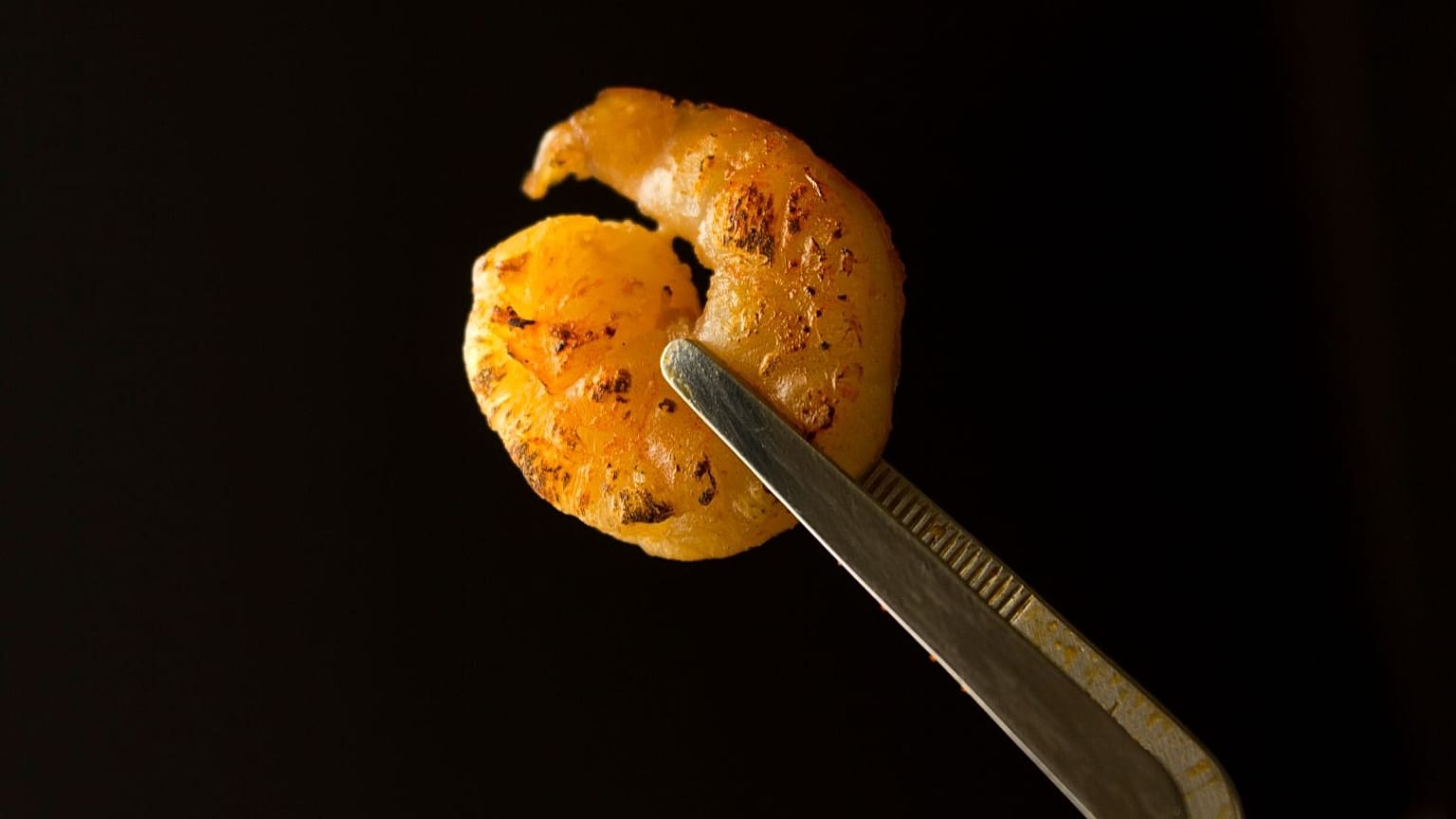
Walmart has recalled frozen, raw shrimp sold in parts of the United States because health officials there say it could have potential radioactive contamination.

The US Food and Drug Administration (FDA) asked Walmart to pull three lots of Great Value brand frozen shrimp from stores after federal officials detected Cesium-137, a radioactive isotope, in shipping containers and a sample of breaded shrimp imported from Indonesia.


The products could pose a “potential health concern” for people exposed to low levels of Cesium-137 over time, FDA officials said.

“If you have recently purchased raw frozen shrimp from Walmart that matches this description, throw it away,” FDA officials said in a statement.

The risk from the recalled shrimp is “quite low,” said Donald Schaffner, a food safety expert at Rutgers University.

Cesium-137 is a byproduct of nuclear reactions, including nuclear bombs, testing, reactor operations, and accidents. It’s widespread around the world, with trace amounts found in the environment, including soil, food, and air.

The level detected in the frozen breaded shrimp was far lower than FDA intervention levels. However, the agency said that avoiding potentially contaminated products could reduce exposure to low-level radiation that could lead to health problems over time.

The FDA is investigating reports of Cesium-137 contamination in shipping containers and products processed by PT Bahari Makmur Sejati, doing business as BMS Foods of Indonesia.

US Customs and Border Protection officials alerted FDA that they found Cesium-137 in shipping containers sent to US ports in four cities across the country.
RelatedDeath toll rises to 4 in botulism outbreak in Italy

FDA officials collected several product samples and detected contamination in one sample of frozen breaded shrimp. The shipping containers and products were denied entry into the U.S.

However, the FDA then learned that Walmart had received potentially affected products imported after the first detection, from shipments that did not trigger contamination alerts.

Walmart immediately recalled the products, a company spokesperson said. The shrimp was sold in 13 states.
Palestinian groups in Lebanon begin handing over weapons under state deal

Some Palestinian armed groups in Lebanese refugee camps started handing over their weapons Thursday as part of a state-backed deal aimed at establishing government control and enabling a state monopoly on arms.


Issued on: 21/08/2025 - 
By: FRANCE 24

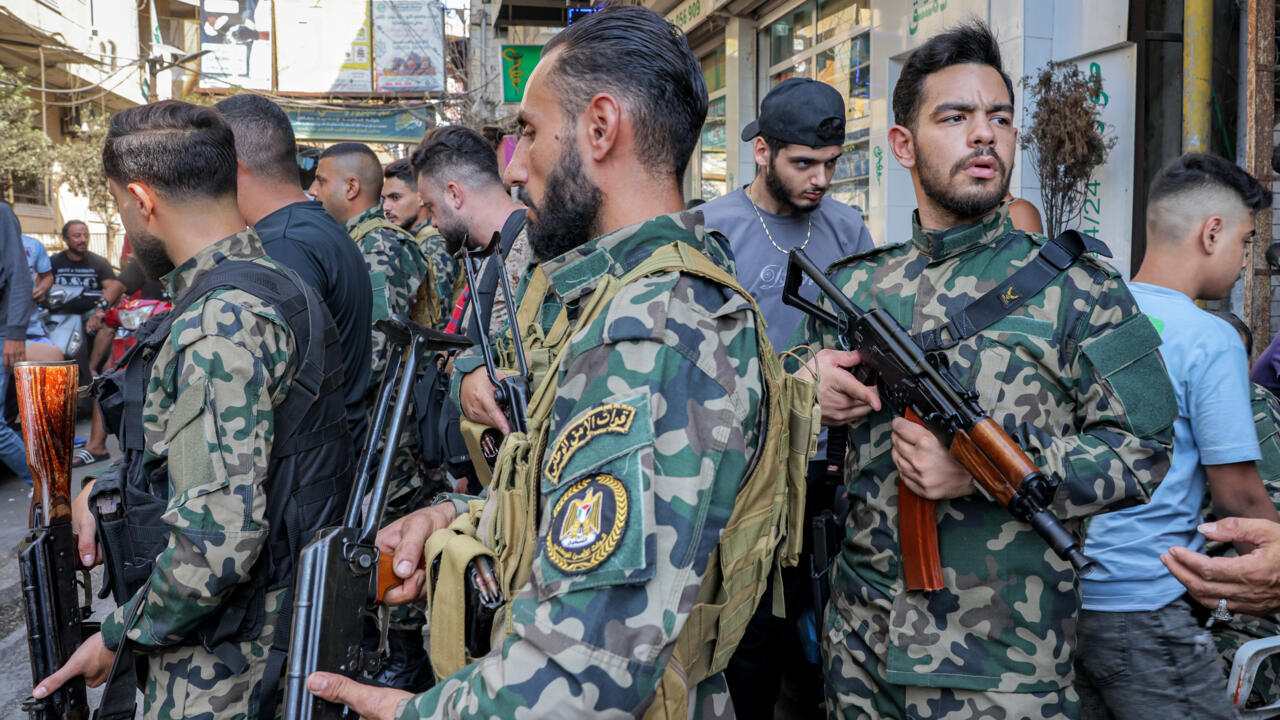
File photo shows Palestinian fighters in the Burj al-Barajneh camp for Palestinian refugees in Beirut's southern suburbs. © Anwar Amro, AFP

Palestinian factions began handing over some of the weapons held in a refugee camp on the outskirts of Beirut to the Lebanese army Thursday, an initial step in implementing a plan officials announced three months earlier for removing arms from the camps.

It was a modest first step. One pickup left the camp loaded with light weapons packed in bags. The butts of machine guns could be seen protruding from some of the sacks.

It remains unclear whether all factions will abide by the decision.

Representatives of Hamas and the allied Palestinian Islamic Jihad did not respond to requests for comment.

A spokesperson for Hamas sent a statement signed by “the Palestinian Factions in Lebanon” that called Thursday’s handover of weapons “an internal organizational matter within the Fatah movement” that “has no connection, near or far, to the issue of Palestinian weapons in the camps.”

It added, “Our weapons have always been and will always be linked to the right of return and the just Palestinian cause and will remain so as long as the occupation remains on Palestinian soil.”

The decision to remove weapons from the camps was announced in May during a visit by Palestinian President Mahmoud Abbas to Lebanon, during which he and Lebanese President Joseph Aoun announced that arms would be consolidated under the authority of the Lebanese government.

The step of removing weapons from the camps was seen as a precursor to the much more difficult step of disarming the Lebanese militant group Hezbollah, which last year fought a bruising war with Israel that ended in a ceasefire in November. The group has been under domestic and international pressure since then to give up its remaining arsenal, which it has so far refused to do.

Read moreHezbollah leader accuses govt of ‘handing’ Lebanon to Israel with disarmament plan

Implementation of the plan for the Palestinian camps was delayed amid disagreements among and within the various Palestinian factions operating in Lebanon, which include Abbas’ Fatah movement, the rival Hamas group and a range of other Islamist and leftist groups, over the mechanism for handing over the weapons.

Ramez Dimashkieh, head of the Lebanese-Palestinian Dialogue Committee, a government body that serves as an interlocutor between Palestinian refugees and officials, said in a statement that the handover of weapons Thursday at the Burj al-Barajneh camp south of Beirut “will be the first step, with further batches to be delivered in the coming weeks from Burj al-Barajneh camp and the rest of the camps,” the statement said.

Nabil Abu Rdeneh, a spokesperson for Abbas, said in a statement that weapons were also handed over Thursday at al-Bass camp in southern Lebanon and would continue in other camps in implementation of the agreement between Abbas and the Lebanese government.

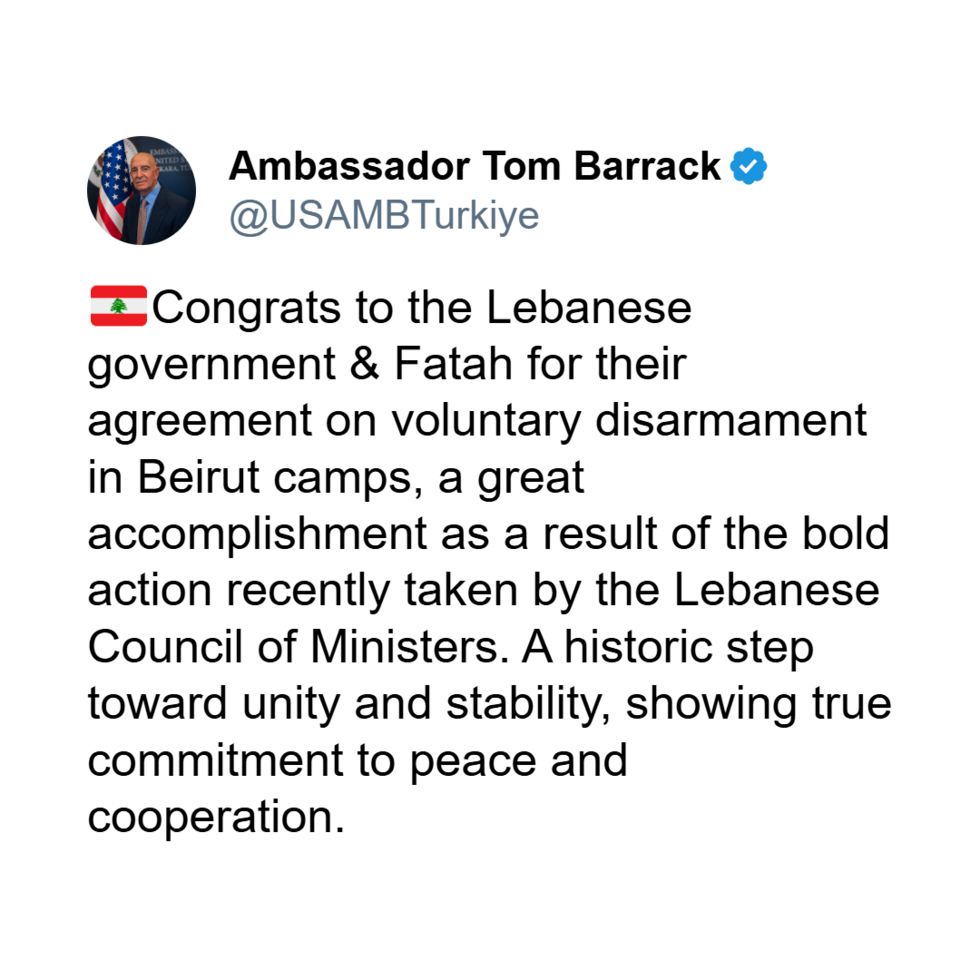
US envoy Tom Barrack congratulated the Lebanese government and Fatah “for their agreement on voluntary disarmament in Beirut camps.” In a post on X, he called it “a historic step toward unity and stability, showing true commitment to peace and cooperation.”
"Congrats to the Lebanese government & Fatah for their agreement on voluntary disarmament in Beirut camps," US envoy Tom Barrack said on social media. © Screenshot, FRANCE 24

However, the extent to which the decision would actually be implemented remained unclear. Some officials with the Palestinian factions said only “illegal” weapons would be handed over, not those belonging to organized factions. They also said personal light weapons would not be included.

Badih al-Habet, a spokesperson for Fatah in Beirut, told reporters that Aoun had acknowledged that “personal weapons are part of Arab and national culture."

(FRANCE 24 with AP)

France leads European pushback against US  move to end UN Lebanon mission

France and its European partners are resisting Washington’s push to end the UN peacekeeping mission in Lebanon – UNIFIL – arguing its presence remains essential for stability along Israel’s northern border.


Issued on: 19/08/2025 - RFI

French soldiers of the United Nations Interim Force in Lebanon (UNIFIL) march during the Bastille Day parade, Monday, 14 July 2025 in Paris. AP - Michel Euler

The United Nations Security Council began to debate Monday a resolution drafted by France to extend the UN peacekeeping force in south Lebanon for a year with the ultimate aim to withdraw it.

The future of UNIFIL has become the latest flashpoint between Washington and its European allies.

While the Trump administration has been pressing to draw down and shut the operation within months, France and its European partners are rallying behind it, arguing its continued presence is vital for stability in the region.

Created in 1978 and expanded after the 2006 war between Israel and Hezbollah, UNIFIL has long served as a buffer force in southern Lebanon.

Its 10,000-strong contingent of international troops patrols a volatile border and supports the Lebanese army as it works to consolidate authority. For many in Europe, the mission is imperfect but indispensable.

UNIFIL vehicles drive in the town of Qlayaa, near the border with Israel, amid ongoing hostilities between Hezbollah and Israeli forces, southern Lebanon 19 October 2024. © REUTERS - Karamallah Daher

'Expensive failure'

The White House, however, has made no secret of its desire to curtail the operation.

Senior officials, echoing longstanding Israeli frustrations, see UNIFIL as an expensive failure that has done little to weaken Hezbollah’s grip in the south of the country.

US Secretary of State Marco Rubio recently endorsed a plan to wind down the mission over six months, part of a broader retreat from multilateral commitments and UN spending.

But France – backed by Italy and Britain – has mounted a determined diplomatic campaign to resist an abrupt end.

European envoys argue that cutting short UNIFIL’s work would create a dangerous security vacuum.

France has pointed to the example of Mali, where a premature UN withdrawal left government forces overstretched and paved the way for extremist groups to expand.

As one French diplomat, speaking on condition of anonymity, warned: “If you leave too soon, others will rush to fill the space – and not the kind of actors anyone wants.”

France secures UNIFIL extension


After a series of negotiations last week, France and its allies secured provisional US agreement to a one-year extension of the mandate, buying time to keep the mission alive.

Israel, though long hostile to the peacekeepers, reluctantly accepted the compromise. What happens beyond next year, however, remains the subject of debate.

The French draft resolution, circulated in New York ahead of an upcoming Security Council vote on 25 August, deliberately avoids setting a fixed withdrawal date.

Instead, it extends UNIFIL’s mandate for a year while signalling the Council’s “intention to work on a withdrawal”.

For Paris, keeping the mission's closure open-ended is crucial to avoid emboldening Hezbollah or undermining the Lebanese army before it is ready to assume full responsibility.

Disarming Hezbollah


Lebanon’s government is itself deeply wary of any rapid pullback. With only 6,000 troops currently deployed in the south, Beirut says it needs time and resources to scale up to the planned 10,000.

Retired general Khalil Helou has warned that without UNIFIL, the army would have to divert soldiers from the Syrian border or other critical posts, risking wider instability. “For Lebanon, their presence is important,” he said.

Even Washington’s own representatives have softened their tone. Tom Barrack, the US envoy to Lebanon, this week called on Israel to fully honour its ceasefire commitments, including withdrawal from five Lebanese border points it still occupies.

He praised Beirut for taking steps to disarm Hezbollah and urged an “economic plan for prosperity, restoration and renovation” in the country.

Meanwhile, UN officials, have continued to underline the mission’s contribution. Peacekeepers have uncovered weapons caches and rocket launchers in recent weeks, sharing intelligence with the Lebanese army.

“UNIFIL remains critical to regional stability,” spokesman Stephane Dujarric said.

Financial constraints may still force adjustments. With UN budgets under strain, diplomats acknowledge that troop numbers could be reduced, offset by the greater use of surveillance technology.

(with newswires)
Anti-war protest in Gaza City as Israel prepares offensive


Issued on: 21/08/2025 - FRANCE24

Residents of Gaza City demonstrated this Thursday to call for an end to the war, as Israel approved a plan to seize Gaza City and prepares to launch its offensive and enter the city. Ceasefire negotiations appear to be at a standstill, although Hamas recently accepted a mediated proposal.

.


‘We've given up on Israel’: Disillusioned with Netanyahu and the war in Gaza, Israelis are fleeing

Analysis

Israel has seen emigration double since the attacks of October 7, 2023, and the subsequent war in Gaza. While some are choosing to leave for security reasons, among those choosing exile are peace activists weary of war and feeling increasingly isolated amid their country's illiberal drift.


Issued on: 20/08/2025 - FRANCE24
By: Sophian Aubin

Protesters march amid demonstrations against the Netanyahu government's judicial reform bill in Tel Aviv, April 15, 2023 © Jack Guez, AFP

Working towards peace in the Middle East is why left-wing activist Mordechai, 42, chose to remain in Israel.

Then came October 7, 2023, and the war in Gaza.

“We've given up on Israel,” he says. “We've given up on turning the government into something that can create peace in the Middle East.”

In the aftermath of the October 7 attacks, “I saw that there is very little left wing left in Israel,” he says.

“I just realised that … we're not doing the right thing. We're not on the right path. And my children are going to be on the same path as I am.”

But he soon experienced a shift that put him on another.

“At some point, this responsibility [I felt] towards the region kind of turned into responsibility towards my kids,” he explains. “I have two boys, and I don't want their head filled with the stuff that I have in my head … people dying and people [as] hostages and people suffering.”

Mordechai now lives with his wife and two sons, ages 9 and 10, in Greece, one of the top destinations for emigrating Israelis, with tens of thousands of them making a home there.

Record numbers of Israelis have been leaving since the October 7 attacks – even doubling, by some estimates – leading to fears of a “brain drain”. While some are emigrating for security reasons, others are increasingly disillusioned with Israel’s shift to the political right and the punishing war in Gaza.

‘Taboo’ of Israeli emigration

In total, 82,700 Israelis left the country in 2024, according to government figures, a number that exceeded the roughly 55,280 arrivals that same year, leaving Israel with a rare negative net migration rate.

Frédérique Schillo, an Israel specialist and co-author of “Sous tes pierres, Jérusalem” (Beneath the Stones of Jerusalem), calls it a “phenomenon of unprecedented magnitude".

"For a long time, the departure of Israelis was not studied, the authorities were reluctant to talk about it: the idea of Israel, a supposed refuge for Jews from all over the world, letting its children leave was absolutely taboo," the Jerusalem-based historian explains.

During his first term in the 1970s, former prime minister Yitzhak Rabin roundly mocked Israelis leaving the country, “referring to ‘wimps’ and the ‘fall of the weak’”, Schillo notes.

In a nation built on migration, the idea of leaving is particularly contentious. In Hebrew, to settle in Israel is referred to as "aliyah" or "ascension". Conversely, to leave is "yerida", meaning "descent".

"There is this idea that to leave is to fall," Schillo says. And this feeling remains deep-seated in Israeli society.

To emigrate on political grounds is also a luxury, she points out. Only Israelis of a certain socioeconomic level – or those with origins that entitle them to a foreign passport – are able to expatriate.

‘I no longer felt safe’ in Israel

While October 7 may have prompted record numbers to consider emigration, many began looking to leave several years earlier, Schillo says, citing “the unease of Israeli intellectuals” with the policies of Israeli Prime Minister Benjamin Netanyahu.

In early 2023, Netanyahu’s government launched a controversial judicial reform aimed at weakening the powers of the Supreme Court, the centerpiece of Israeli checks and balances. Mass demonstrations erupted across the country, gathering tens of thousands people for weekly protests over several months.

Among them were Mordechai and his wife. But the national mood shifted after the October 7 attacks.

“Netanyahu really ramped up this right-wing engine … ,” Mordechai says. “I started feeling open hostility towards me in Israel as a liberal.”

"I no longer felt safe. I felt like the climate made it very easy to attack left-wing protesters like us, even if they were Israeli citizens," he recalls.

As immigrants to Greece, “in Athens we are isolated,” he says. “But at least people are not openly hostile.”

Peace activist Noga, who documented human rights violations in the Palestinian Territories for the B'Tselem centre, left Israel in September 2024.

“I lost faith,” she says simply. “I saw how people react when there is violence against them, and there is injustice and violence committed by their country against the others … people just don't want to know about the injustice that we are doing. They just feel [like] victims.”

She also spoke of feeling “isolated”, even among her mostly leftist circle in Israel. After the Hamas-led attacks of October 7, she says many Israelis “lost compassion”.

“I felt that hardly anybody that I know [or] around me cares about what's going on in Gaza … it was not something even that people talk about,” she says. “And when the people do talk about it, they found a way to justify what is going on.”

“Of course, there are activists in Israel that stay in Israel and fight and do very important work,” she says.

But those who are working for peace may still have a long wait.

“We're too small a minority to change things,” Noga says.

The Israeli ‘burden’

A year after settling into her new home in Milan, Noga found a new sense of peace. “I felt I moved to just a normal country that when you see an airplane, it's just an airplane that takes people from here and there. Not a war machine that is going to kill children.”

And no one seems to judge her in the Lombardy capital. But Noga still has a lingering sense of remorse, what she calls “the burden of my Israeliness”.

“I always feel … the guilt of what Israel is doing, and I'm always afraid that people will think that I support it.”

And there may be reason to feel uneasy.

"Israel is on the verge of becoming a pariah state on the international stage, and Israelis are being singled out," Schillo observes.

Italy saw a sharp increase in anti-Jewish violence following the October 2023 attacks and the start of the Gaza war. The 216 anti-Semitic incidents recorded just between October and December of that year were almost equal to the 241 seen in the entirety of 2022, according to an annual report from the anti-Semitism observatory.

‘Anti-Semitic tsunami’

A similar trend can be seen in many Western countries. "An anti-Semitic tsunami is sweeping the planet," says Schillo. "Israelis, even if they have chosen to move away from Israel, are still perceived as Israelis, as Jews: they are caught in the crossfire."

Mordechai is cautious in his new home country, rarely mentioning his country of origin and often lowering his voice when speaking Hebrew to his wife or children.

While he was never a particularly proud Israeli, he says he now feels like it is “something that I need to apologise for”.

When people ask, “Saying I'm from Israel is already sometimes considered a political or even violent act,” he says. “But you can't help it … it's where I was born.”

He is even careful speaking to other Israelis who may not share his critical views of Israel.

Left-wing and liberal Israelis are currently experiencing a “double isolation”, he says.

Since leftists usually take the side of the victim and the underdog, “the international left doesn't have room for us right now”.

"There is no room for our pain."
What happens in the Antarctic doesn't stay in the Antarctic, ice-sheet modeller says

Issued on: 21/08/2025 - FRANCE24

A new study published in Nature reveals 'evidence for rapid, interacting and sometimes self-perpetuating changes in the Antarctic'. Speaking on FRANCE 24, glaciologist and ice-sheet modeller Frank Pattyn, Chair of the Belgian National Committee on Arctic/Antarctic Research, says that 'what happens in the Antarctic doesn't stay in the Antarctic' and that 'we haven't seen all the change yet that should be induced' by current global warming.

Video by: Sharon GAFFNEY


Surging tourism is polluting Antarctica, scientists warn


By AFP
August 20, 2025


The white continent is melting: Researchers are sounding the alarm about the threats to Antarctica - Copyright University of Santiago USACH/AFP Jose Jorquera

Soaring numbers of tourists and expanding research projects are increasingly polluting Antarctica, scientists warned Wednesday, a fresh blow for one of Earth’s most pristine environments already threatened by human-driven climate change.

In Antarctic areas where humans have been active, the concentration of fine particles containing heavy metals is 10 times higher than it was 40 years ago, the international team of researchers said in a new study.

That change has come as the number of annual tourists visiting the white continent has risen from 20,000 to 120,000 over the last two decades, according to the International Association of Antarctica Tour Operators.

“The increasing human presence in Antarctica raises concerns about pollutants from fossil fuel combustion, including those from ships, aircraft, vehicles and supporting infrastructure,” the study in the journal Nature Sustainability said.

Ships carrying tourists are powered by dirty fossil fuels, which are the source of fine particles containing things like nickel, copper, zinc and lead.

“Snow melts faster in Antarctica due to the presence of polluting particles in areas frequented by tourists,” study co-author Raul Cordero told AFP.

“A single tourist can contribute to accelerating the melting of around 100 tons of snow,” said the scientist at the University of Groningen in the Netherlands.

The researchers — from countries including Chile and Germany — spent four years traveling 1,200 miles (2,000 kilometers) in Antarctica to measure the contamination.

The presence of heavy metals has also increased due to scientific expeditions. Research projects that stay for an extended time can have up to 10 times more of an impact than a single tourist, Cordero said.

The study acknowledged there have been “meaningful steps forward” in attempts to protect Antarctica, such as a ban on highly polluting heavy fuel oil and the tourism industry embracing electric-hybrid ships.

“Nevertheless, our results show that more remains to be done to reduce the burdens of human activities in Antarctica,” including speeding up the transition to renewable energy and slashing fossil fuel use, the study said.

A different Nature study also published on Wednesday warned that potentially irreversible changes in Antarctica driven by climate change could lift global oceans by meters and lead to “catastrophic consequences for generations.”


Antarctic climate shifts threaten ‘catastrophic’ impacts globally


By AFP
August 20, 2025


Shifts in different facets of Antarctica's climate system amplify each other and accelerate the pace of warming globally as well - Copyright Louisiana State University/AFP/File Michael Polito


Marlowe HOOD

Abrupt and potentially irreversible changes in Antarctica driven by climate change could lift global oceans by metres and lead to “catastrophic consequences for generations”, scientists warned Wednesday.

More broadly, a state-of-knowledge review by a score of top experts revealed accelerating shifts across the region that are often both cause and effect of global warming, according to a study published in Nature.

“Antarctica is showing worrying signs of rapid change across its ice, ocean and ecosystems,” lead author and Australian National University professor Nerilie Abram told AFP.

“Some of these abrupt changes will be difficult to stop.”

Shifts in different facets of Antarctica’s climate system amplify each other and have accelerated the pace of warming globally as well, she said.

The study looked at evidence of abrupt change — or “regime shifts” — in sea ice, regional ocean currents, the continent’s ice sheet and ice shelves, and marine life. It also examined how they interact.

Floating sea ice does not add to sea level when it melts. But its retreat does replace white surfaces that reflect almost all of the Sun’s energy back into space with deep blue water, which absorbs the same amount instead.

Ninety percent of the heat generated by manmade global warming is soaked up by oceans.


– Retreating sea ice –


After increasing slightly during the first 35 years that satellite data was available, Antarctic sea ice cover plunged dramatically over the last decade.

Since 2014, sea ice has retreated on average 120 kilometres (75 miles) from the continent’s shoreline. That contraction has happened about three times faster in 10 years than the decline in Arctic sea ice over nearly 50.

The “overwhelming evidence of a regime shift in sea ice” means that, on current trends, Antarctica could essentially become ice free in summer sooner than the Arctic, the study found.

This will speed up warming in the region and beyond, and could push some marine species toward extinction.

Over the last two years, for example, helpless emperor penguin chicks perished at multiple breeding grounds, drowning or freezing to death when sea ice gave way earlier than usual under their tiny feet.

Of five sites monitored in the Bellingshausen Sea region in 2023, all but one experienced a 100 percent loss of chicks, earlier research reported.

Unlike sea ice, ice sheets and the ice shelves to which they are connected are on — or supported by — land.

The world would need to heat up by five degrees Celsius compared with pre-industrial levels to melt the entire Antarctic ice sheet, which would lift global oceans an almost unimaginable 58 metres (nearly 200 feet).


– Point of no return –


But global warming to date — on average about 1.3C — is fast approaching a threshold that would cause part of the ice sheet to generate at least three metres of sea level rise, flooding coastal areas inhabited today by hundreds of millions, the study said.

“Unstoppable collapse of the West Antarctic Ice Sheet is one of the most concerning global tipping points,” said Abram.

“The evidence points to this being triggered at global warming well below 2C.”

Another potential risk is the collapse of the Antarctic Overturning Circulation, a system of ocean currents that distribute heat and nutrients within the the region and globally.

A “rapid and substantial slowdown” of the currents has already begun, and evidence from the previous interglacial period — between two ice ages — before our own, 125,000 years ago, points to an abrupt stagnation of the system under conditions similar to those seen today.

“This would lead to widespread climate and ecosystem impacts,” ranging from an intensification of global warming to a decrease in the ocean’s capacity to absorb CO2, the study reported.

Ultimately, the only way to slow down the interlocking changes is to stop adding more planet-warming gases into the atmosphere.

“The greenhouse gas emission decisions that we make over the coming decade or two will lock in how much ice we will lose and how quickly it will be lost,” Abram said.
Italy arrests Ukrainian suspected of involvement in Nord Stream pipeline blasts


Italian police said Thursday they had arrested a Ukrainian man suspected of being one of the coordinators of the 2022 attacks on the Nord Stream gas pipelines, which were built to carry gas from Russia to Germany. Prosecutors believe the suspect was one of a group of people who placed undersea explosives on the pipeline
s.


Issued on: 21/08/2025 - 
By: FRANCE 24
Video by: Monte FRANCIS

A leak from Nord Stream 2 is seen on September 28, 2022 in the Baltic sea following explosions that damaged the pipeline. © Swedish Coast Guard, AP
01:58


Italy's Carabinieri police said on Thursday they had arrested a Ukrainian citizen suspected by Germany of being one of the coordinators of the undersea explosions in 2022 that damaged the Nord Stream gas pipelines between Russia and Germany.

The suspect, identified only as Serhii K. in line with German privacy rules, was arrested overnight by officers from a police station in Misano Adriatrico, near the Italian city of Rimini, federal prosecutors said.

Explosions on September 26, 2022, damaged the pipelines, which were built to carry Russian natural gas to Germany under the Baltic Sea. The damage added to tensions over the war in Ukraine as European countries moved to wean themselves off Russian energy sources, following the Kremlin’s full-scale invasion of Ukraine.

Investigators have been largely tightlipped on their investigation, but said two years ago they found traces of undersea explosives in samples taken from a yacht that was searched as part of the probe.


In a statement Thursday, prosecutors said Serhii K. was one of a group of people who placed explosives on the pipelines and is believed to have been one of the coordinators. They said he is suspected of causing explosions, anti-constitutional sabotage and the destruction of structures. He was arrested on a European arrest warrant that was issued on Monday.

The suspect and others used a yacht that set off from the German port of Rostock, which had been hired from a German company using forged IDs and with the help of intermediaries, prosecutors said.

They didn't give any information on the other people aboard the yacht or say anything about who else might have been involved in coordinating the suspected sabotage, or about a possible motive.

German Justice Minister Stefanie Hubig praised what she called “a very impressive investigative success”. She said in a statement that the explosions must be cleared up, “so it is good that we are making progress”.

The explosions ruptured the Nord Stream 1 pipeline, which was Russia’s main natural gas supply route to Germany until Moscow cut off supplies at the end of August 2022.

They also damaged the Nord Stream 2 pipeline, which never entered service because Germany suspended its certification process shortly before Russia invaded Ukraine in February of that year.

Russia has accused the US of staging the explosions, a charge Washington has denied. The pipelines were long a target of criticism by the US and some of its allies, who warned that they posed a risk to Europe’s energy security by increasing dependence on Russian gas.

In 2023, German media reported that a pro-Ukraine group was involved in the sabotage. Ukraine rejected suggestions it might have ordered the attack and German officials voiced caution over the accusation.

Read moreUkraine rejects as 'nonsense' alleged role in Nord Stream blasts

German prosecutors didn't say when they expect Serhii K. to be handed over to German authorities.

Swedish and Danish authorities closed their investigations in February 2024, leaving the German prosecutors’ case as the sole probe.

(FRANCE 24 with AP)


Tunisians rally in support of embattled trade union amid government clampdown
Africa


Tunisia’s main labour union drew the country’s largest rally in months on Thursday, as members and backers protested President Kais Saied’s growing pressure on the UGTT, denouncing rising repression and a rollback of freedoms in the birthplace of the Arab Spring.


Issued on: 21/08/2025 
By: 
FRANCE 24

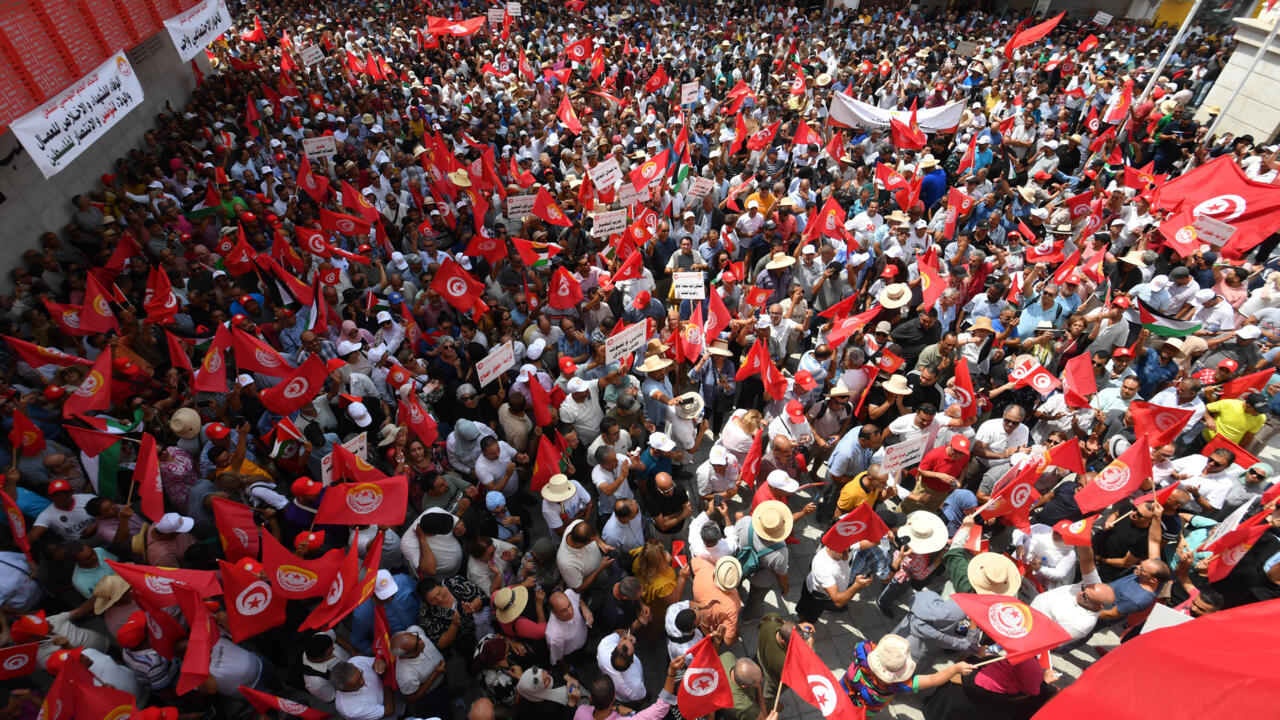
Tunisian supporters of the General Labour Union (UGTT) wave their national flag during a rally in Tunis on August 21, 2025. © Fethi Belaid, AFP

Members and backers of Tunisia's largest trade union rallied Thursday in support of the organisation, which has faced mounting pressure from President Kais Saied.

It was the largest demonstration Tunisia has seen in recent months, coinciding with what rights groups have denounced as a rollback of freedoms in the birthplace of the Arab Spring.

The Tunisian General Labour Union (UGTT) – part of the 2015 Nobel Peace Prize-winning "national dialogue quartet" – remains an influential counterweight to Saied, who has jailed many of his critics since a sweeping 2021 power grab.

Read more Tunisia's labour union UGTT calls for protest amid crackdown threats


"With our soul and our blood, we sacrifice ourselves for the UGTT," some protesters chanted, waving the union's red-and-white flag.

Others demanded an end to the rising cost of living, and decried the "injustices" of living under a "police state".

AFP reporters at the scene estimated the crowd to be more than 2,000 people, while one local media outlet put it at 3,500.

Dozens of protesters were seen being barred by the police from joining the rally in downtown Tunis.

With some 700,000 members across the country of 12 million, the UGTT maintains its significant power to mobilise people.

However, it has increasingly come under fire in recent weeks from the president, as well as a segment of the public frustrated with repeated strikes in the transport and the key phosphate production sectors.

Speaking to the crowd outside of the union's headquarters, UGTT chief Noureddine Taboubi denounced what he called "false information" and a "methodical campaign" against the union.

"Our country is going through a delicate phase," he said. "All the foundations of political and civil life have collapsed."

Earlier this month, the union said a group of Saied supporters tried to storm its Tunis headquarters, with videos showing several dozen people gathered outside denouncing it for "corruption" and "squandering the people's money".

The following night, Saied demanded the union be held accountable, saying he shared the demonstrators' grievances and insisting they had not intended violence.

Rights groups, however, said the anti-union gathering was aggressive and sought to intimidate the union.

Founded in 1946, the UGTT played a leading role in the struggle against French colonial rule, and later resisted autocratic presidents Habib Bourguiba and Zine El Abidine Ben Ali.

It was also central to the 2011 revolution that toppled Ben Ali and ignited protests across the Arab world.

(FRANCE 24 with AFP)
Bayeux leave?
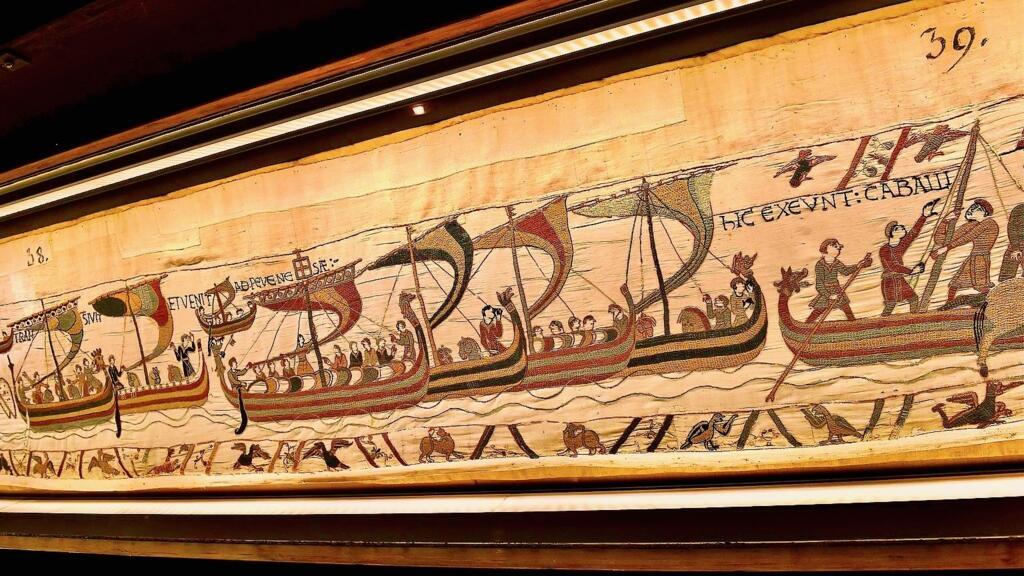
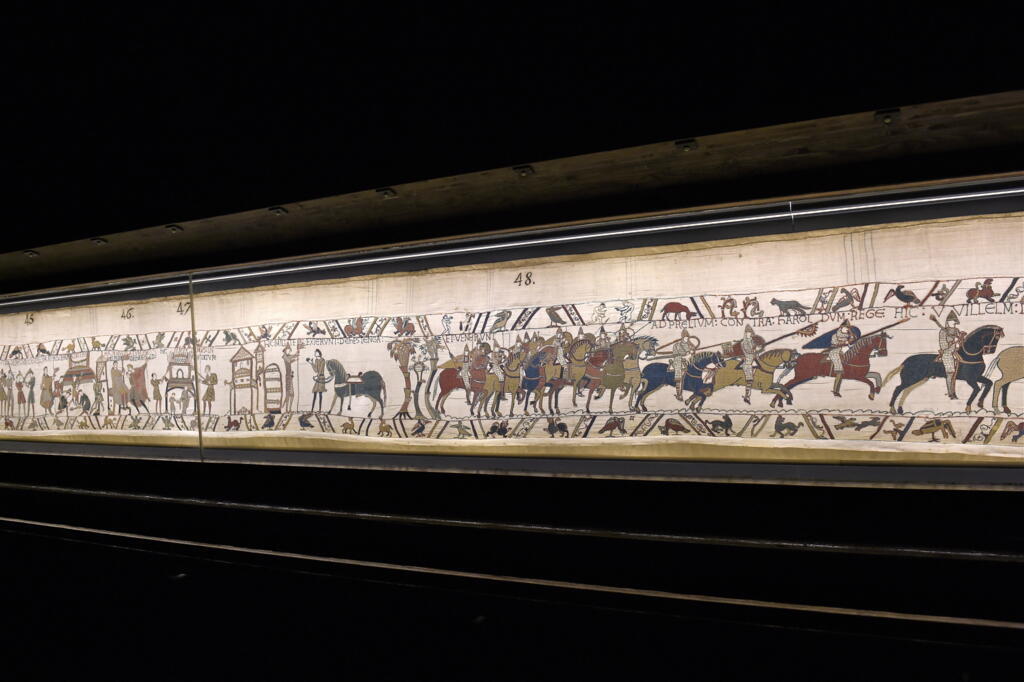
 45,000 sign petition to halt tapestry's loan to British Museum

A French petition opposing the planned loan of the Bayeux Tapestry to the British Museum has drawn nearly 45,000 signatures since its launch on 13 July, amid warnings the 11th‑century work is too fragile to move.


Issued on: 21/08/2025 - RFI

Critics of the loan say the Bayeux Tapestry is too fragile to be moved. © Wikimmedia

The petition’s creator, Didier Rykner, editor of La Tribune de l’Art, called the transfer "a true heritage crime" and urged President Emmanuel Macron to abandon the plan.

Macron announced earlier this year that the tapestry would travel to London between September 2026 and June 2027, in exchange for treasures from the Anglo-Saxon ship buried at Sutton Hoo in southern England.

"Specialists, restorers and curators agree there is a significant risk of tears or loss of material from vibrations during transport," Rykner told French news agency AFP, calling the decision "inadmissible" and "purely political".

The Sutton Hoo helmet, which will be loaned to France to be exhibited in Normandy, in exchange for the loan of the Bayeux Tapestry. AFP - LUDOVIC MARIN

The 70‑metre embroidered masterpiece, which depicts William of Normandy’s conquest of England in 1066, has long been considered too delicate to be transported long distances.

In February 2025, Cécile Binet from Normandy’s regional cultural authority, DRAC, said: "Any additional handling poses a conservation risk."

These concerns have repeatedly been raised by conservators and restorers when the possibility of international transport of the tapestry arises.

The findings of a feasibility study for such a move, reportedly carried out in 2022, remain confidential. Rykner complained that the Ministry of Culture refuses to release it, saying: "If they say it’s transportable, let them prove it."

The ministry, the DRAC and the restorers declined to comment.

A section of the Bayeux Tapestry. via REUTERS - The British Museum


For generations, the tapestry has been housed in the town of Bayeux in northern France and rarely removed from its climate-controlled display. The textile is vulnerable to the slightest environmental changes. Vibrations, temperature fluctuations and physical handling present significant risks.

Bayeux Tapestry to come to life in ambitious museum revamp

The Bayeux Tapestry, which dates from around 1077, on display in Bayeux’s town hall, in 2018. AFP - STEPHANE MAURICE


(with newswires)
Why fan violence still sullies Latin American football

Santiago (AFP) – Images of a fan jumping from the stands to escape a beating as bottles, rocks and seats fly through the air at a game between Chilean and Argentine clubs in Buenos Aires on Wednesday highlight the enduring problem of violence in Latin American football.


Issued on: 22/08/2025 - 


Several Latin American clubs have been forced to play behind closed doors in the past year due to fan violence © Alejandro PAGNI / AFP

Over 100 people were arrested over the bloody battles between supporters of Universidad de Chile and Argentina's Independiente, which left 19 people injured, three seriously.

From Mexico to Argentina, Brazil, Colombia, Chile and Ecuador, stadium violence continues to mar the beautiful game in football-mad Latin America.

Here is a quick overview of the situation:
What causes the violence?

Argentina, Brazil, Chile, Colombia, Honduras, Ecuador, Peru and Uruguay have all enacted laws over the past two decades to tackle hooliganism, including, in some cases, with prison sentences.

But the violence continues unabated.

So far this year in Chile, twelve matches were suspended due to violence, according to the players' union.

In April, two fans died during a stampede outside a Santiago stadium before a Copa Libertadores match between local side Colo Colo and Brazil's Fortaleza.

In Argentina, more than 100 people have died in the last 20 years, 157 in Brazil between 2009 and 2019, and 170 died in Colombia between 2001 and 2019, according to academic and NGO studies.

There's an idea "that stadiums are spaces where it's legitimate to commit acts of violence, not just physical violence, but also racism and homophobia," Argentine sociologist Diego Murze, author of the book "Football, Violence, and the State," told AFP.

According to Murze, there's a "tribal logic that has always prevailed in football," including a culture of provocation between fans that has "re-emerged in recent years."

For many fans, "football is a channel for frustration," says Colombian sociologist German Gomez, author of the book "Football and Hooligans, an Urban Phenomenon."

Gomez attributed it to "a poeticization of what a team's victory means in the lives of these fans, which leads to that loss of emotional control when a match is won, and even when it is lost."

- Has tighter scrutiny worked?

Security has been stepped up at stadiums around the continent, with some requiring biometric identification for entry and installing video surveillance of the stands.

"In Argentina, they monitor you more in a soccer stadium than at the airport," Murze said,

But the technology, while useful to identify banned offenders, is often powerless to prevent violence by hitherto unknown individuals with masked faces.

The Colombian sociologist accused Conmebol, South America's football governing body, of being lax on violence, saying it doesn't "issue exemplary sanctions against soccer clubs because... closing a soccer club can mean significant financial losses."

- What more can be done? -

In Argentina, visiting fans are not allowed at local first division games.

Several clubs in the World Cup title holder, as well as in Chile and Uruguay, were forced to play behind closed doors last year as punishment for fan violence.

Murze argued that clubs need to professionalize their security apparatus, as they currently "rely entirely on what the state and the police can do."

Following the deaths of the two fans in Chile in April, the Chilean government ended the "Safe Stadium" program, an initiative created in 2011 to combat football violence, without success.

The program prohibited drums and banners from stadiums and left stadium security in the hands of private individuals.

The government has pledged to replace it with new rules for all mass events.

"Mitigating football violence in South America must be driven by actions that promote education and football culture," said Gomez.

© 2025 AFP
Schools in Mayotte set to reopen as unions warn cyclone recovery still lags

Middle and high schools in Mayotte will reopen next week, eight months after cyclone Chido killed at least 50 people and wrecked classrooms across the French overseas department. Education Minister Elisabeth Borne, visiting the Indian Ocean archipelago, promised lessons would resume "in the same conditions as before the cyclone."


Issued on: 19/08/2025 - RFI


9th grade students enter Zena M'dere middle school, which usually welcomes 1400 students, in Pamandzi, on the French Indian Ocean territory of Mayotte, on 27 January, 2025. © AFP - MARINE GACHET

Borne toured several schools on Monday and spoke of "significant progress" in repairing buildings.

The French overseas department was ravaged by cyclone Chido which swept through in December 2024, killing at least 50 people and causing considerable material damage.

At Younoussa-Bamana High School in Mamoudzou, 57 of 66 classrooms are now operational. "We will welcome students in the same conditions as before the cyclone," Borne said during her visit.

Construction manager Bruno Ulrich said he hoped to finish all repairs by 26 August, but admitted "there's still a lot to do" because of shortages of materials.

In the meantime, modular classrooms have been set up near unfinished blocks. At Majicavo-Lamir kindergarten in the north east of Grande-Terre island, eight prefabricated buildings are being used to host pupils from a neighbouring primary school destroyed by the storm.
This photograph shows a general view of damaged shelters and houses in the town of Vahibe, on the outskirts of Mamoudzou, on the French Indian Ocean territory of Mayotte on December 24, 2024, a week after the cyclone Chido's passage over the archipelago. © PATRICK MEINHARDT / AFP


The mayor of Majicavo-Lamir, Assani Saindou Bamcolo, said rebuilding had been slowed by a lack of funding.

Borne said that "90 percent of students will be able to attend a normal schedule of 24 hours of classes per week." The remaining 10 percent would start with 10 hours a week before gradually returning to full schedules.

At M'gombani Middle School in Mamoudzou, Borne met students taking part in the "Learning Holidays" programme, a week of preparatory lessons "to get the best possible start to the year".

Unions, parents disappointed


Parents’ groups and teachers’ unions disputed the minister’s optimism.

The FCPE 976 parents’ organisation refused to attend the visit, saying schools "are not ready." In a letter to Borne, the group said 15,000 children – one in four – were still unable to attend classes.

"What our children are experience is not a fleeting problem. It's a national shame," the signatories wrote.

SNES-FSU teachers’ union general secretary Sophie Vénétitay also voiced concern. "There are still colleagues who have not received the exceptional Chido bonus (...) And little has been done regarding attractiveness," she told French news agency AFP.

How overseas Mayotte became 'a department apart' within France

Many in Mayotte have long felt neglected by France's central government, and the devastation caused by cyclone Chido has deepened those frustrations.

Chronic underinvestment in infrastructure and public services has exacerbated the crisis.

Currently 77 percent of people live below the national poverty line and payments such as the minimum income benefit RSA remain half as high as in the rest of France.

In July, France's Senate approved a bill to rebuild Mayotte, which includes €4 billion in public investment over six years.

It also aims to increase social benefits in Mayotte to match mainland France by 2031.

The Constitutional Council cleared the bill earlier this month despite objections from Socialist, far-left and Green MPs. The law also tightens immigration rules and targets informal housing.

(with AFP)


Valls presses case for independence deal in tense New Caledonia talks

The visit to New Caledonia of the French Overseas Miniser Manuel Valls has thrown the spotlight back on the Bougival accord, a deal seen by many as the best hope for political stability after last year’s deadly unrest.


Issued on: 21/08/2025 - RFI

The Minister for Overseas Territories will be in New Caledonia from Wednesday to Saturday. Hans Lucas via AFP - DELPHINE MAYEUR

Valls began a high-stakes trip to New Caledonia on Wednesday, urging local leaders to embrace the Bougival agreement on the Pacific territory’s future, even as divisions with the main pro-independence movement remain stark.

Addressing the customary Senate in Nouméa, Valls called the accord “a historic opportunity” and insisted there was “no credible alternative”.

Signed in July after 10 days of negotiations in France, the Bougival agreement outlines the creation of a New Caledonian state with its own nationality, while remaining enshrined in the French Constitution. It also delays provincial elections until mid-2026.

But the Kanak Socialist National Liberation Front (FLNKS) – the principal pro-independence coalition – has rejected the deal.

After a two-and-a-half-hour meeting with Valls, its delegation left without public comment, saying it wished first to consult leader Christian Tein who is under judicial control and barred from the territory for his alleged role in last year’s unrest.

Nevertheless, he continues to supervise the movement’s strategy.

Later, the FLNKS issued a statement restating its refusal to postpone elections and its demand for a binding timetable towards full sovereignty by 2027. “To claim that without Bougival the country would plunge into the void is a falsehood,” the communiqué declared
.
French Minister for Overseas Departments pictured speaking to pro-independence demonstrators during a visit to New Caledonia in February 2025. AFP or licensors


Divisions within independence ranks


However, the FLNKS now stands isolated. Other pro-independence parties – including Palika and the Progressive Union in Melanesia (UPM) – have endorsed the Bougival text, as has the Eveil océanien, a key grouping that takes no position on independence itself.

All non-independence parties are also on board.

That left Valls able to count some successes on his first day. Virginie Ruffenach, of the loyalist Rassemblement-Les Républicains, welcomed the minister’s determination to press ahead “along the path approved by the majority”.

Still, his visit highlights the political fault lines that persist more than a year after violent riots left 14 people dead and inflicted more than €2 billion in damage.

The disturbances, sparked by a proposed electoral reform, also collapsed the local economy, with GDP falling by an estimated 10 to 15 percent.

Concerns on the ground

Valls also met local mayors and community leaders, though only 14 of the territory’s 33 mayors attended, with many from FLNKS-controlled communes absent.

Those present painted a sobering picture: some municipalities have had to close social action centres, while others warned of the risk of fresh unrest without progress.

Despite the challenges, Valls struck an optimistic tone, emphasising that Bougival offers a framework for stability and development.

Without such an agreement, he warned, investors would shun New Caledonia’s vital nickel industry, health services would struggle to recover, and social inequalities would deepen.

On Thursday, the minister is set to launch a drafting committee to refine the Bougival text and “clarify its spirit”, before heading north to a region hard-hit by a shortage of healthcare workers since the 2024 violence.
Investigators probe death of French streamer broadcast live

French police are investigating the live-streamed death of a man who had regularly been shown enduring violence and humiliations, raising concerns about the practice of broadcasting such content online.


Issued on: 21/08/2025 - 

The French streamer known as Jean Pormanove  broadcast his videos - and his death - on the Australian streaming platform Kick. © AFP TV


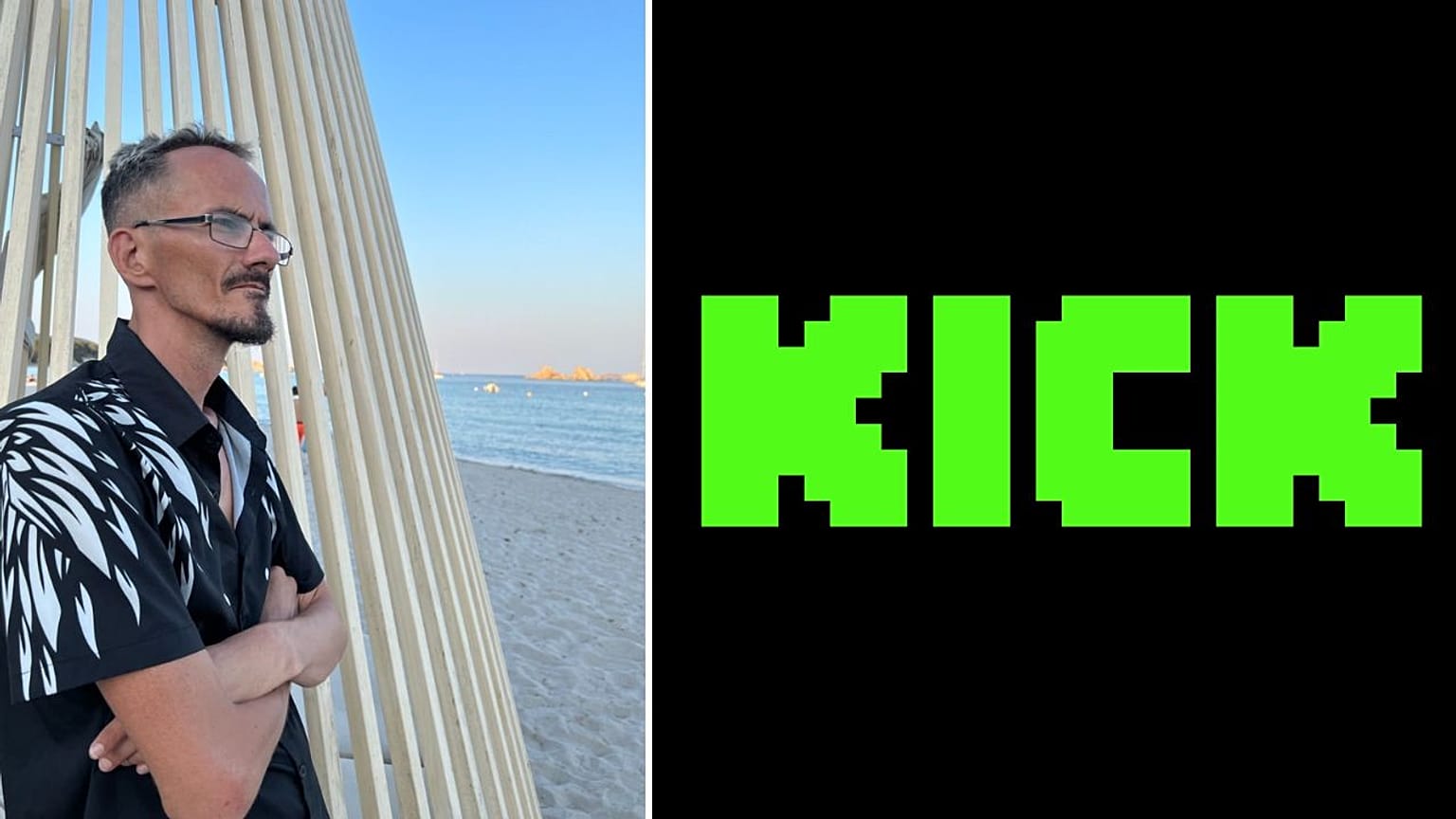
Prosecutors ordered an autopsy and opened an investigation into the death of Raphael Graven, 46, in the village of Contes, north of Nice in southern France, that was broadcast on Monday on the live streaming platform Kick.

Graven, known online as Jean Pormanove, or JP, had built a following of hundreds of thousands on the platform by participating in live "trash streaming", in which he was physically assaulted or humiliated as viewers watched live and sometimes donated money.

On Monday, on the 12th day of a live stream, Graven was shown on the platform getting angry after being hit several times.

Later he was shown lying under a sheet while another man, one of two men in the room with him, known by pseudonyms NarutoVie and Safine, threw a plastic water bottle at him.

A moderator of the channel streaming the content told viewers that Graven was dead, which the Nice prosecutors office later confirmed.

“Several interviews with people present at the time of his death have been conducted without yielding leads as to its causes,” prosecutor Damien Martinelli said in a statement.

NarutoVie and Safine had been questioned by police in January in a separate inquiry, following reporting by Mediapart that they were mistreating vulnerable people online to generate revenue.

Graven was interviewed at the time as a potential victim, but he denied suffering any actual violence, Martinelli said.

Instead, Graven and another suspected victim told police the events were staged in order to generate money.

Viewers could donate money to him during the stream, and he told investigators that he earned up to €6,000 through contracts with the platform.
Minister hits out at content

France's Minister for digital affairs, Clara Chappaz, called Graven’s death online “an absolute horror” and condemned the violent content in which he had appeared online.

She said she had referred the matter to Arcom, the regulatory authority that oversees streaming platforms, as well as well as to the Pharos platform, which investigates illegal content and behaviour online. She added that she had asked the managers of the platform for explanations.

Kick, an Australia-registered live streaming platform that shares revenue with content creators, is seen as having less stringent user terms than the market leader Twitch.

The company said on Wednesday that all those involved with the death had been banned from the platform, pending the outcome of the investigation, and that it was re-evaluating its French content.

(with newswires)

The death of a French streamer sheds light on the depths and horrors of ‘trash streaming’


Copyright `@jeanpormanove - Instagram / Kick

By Sarah Miansoni
 21/08/2025 

French streamer Jean Pormanove was known for performing extreme acts in live broadcasts. His death exposes a disturbing internet phenomenon.


Content warning: This article includes mentions of violence, suicide and extreme acts that some readers might find disturbing.

It’s a tragedy that has exposed a lesser-known side of internet culture.

French streamer Raphaël Graven, known online as Jean Pormanove, died on Monday in southern France during a live broadcast on the Kick streaming platform.

Graven, 46, was one of France’s first ever streamers and had about half a million followers on his various channels.

Over the years, he had become known for engaging in degrading acts on screen, such as strangulation and ingestion of toxic chemicals, sometimes at the request and with the financial support of live viewers.

Graven appeared alongside three other people – his regular streaming partners – throughout the 12-day long broadcast that led up to his death.

Footage shared on social media showed two of these men, known as Naruto and Safine, physically abusing and berating him. France's digital affairs and artificial intelligence minister Clara Chappaz described the incident as “absolute horror”.

French police opened an investigation into Graven’s death, and an autopsy should be performed today.

Rapper Drake and US streamer Adin Ross, who are both financially linked to Kick’s parent company, have offered to pay for Graven’s funeral.

This episode of horrific violence sheds light on a subgenre of live online content that is driven by streamers who engage in humiliating and sometimes dangerous behaviour.
The disturbing horrors of trash streaming

Graven’s case is reminiscent of trash streaming, a phenomenon that originated in the 2010s and became popular in Russia and Poland.

Trash streamers commit degrading, violent and sometimes fatal acts against themselves or others.

In 2021, a Russian streamer was sentenced to six years in prison for the death of his 28-year-old pregnant girlfriend during a December 2020 live stream. The man beat his partner, causing traumatic brain injury, and locked her out of their home while she was wearing only her underwear, the Moscow Times reported.

Paramedics pronounced the young woman dead while cameras were still rolling. Russia later adopted a federal law banning trash streams.

The audience is a key participant in trash streaming.

“Viewers are often curious about what extremes trash streamers are capable of going to,” said researchers Barbara Cyrek and Malwina Popiołek in a 2022 article. “The greater the availability of tools allowing to influence the shape of the broadcast, the potentially greater the chances for more extreme content.”

On platforms like Kick or even YouTube, viewers can donate money to incentivise content creators to go further.

The first episode of the seventh Black Mirror series, which aired in April, takes inspiration from this phenomenon. The main character, played by Chris O’Dowd, joins a fictional trash streaming site named "Dum Dummies", where he performs humiliating tasks in exchange for money to support his ill wife.

The episode ends as he is about to commit suicide while on stream.

In Raphaël Graven’s case, the donation counter at the end of his fatal 298 hours-long live suggested him and his partners had raised more than €36,000.
Lack of regulation

Content creators who engage in practices related to trash streaming have found safe havens in loosely regulated platforms like Kick.

The Australian live streaming service was created in 2022 by the founders of gambling company Stake.

Kick’s community guidelines officially prohibit “content that depicts or incites abhorrent violence including significant harm, suffering or death,” as well as “displays of serious and significant self-harm.” However, the platform grew its brand and user base thanks to more lenient moderation policies compared to rivals like Twitch.

In December, French media Mediapart had already revealed that Raphaël Graven was the victim of a yearslong “business of humiliation.”

The story prompted prosecutors to open an investigation, with Graven’s partners Naruto and Safine being briefly taken into custody.

Kick temporarily suspended his channel before it was allowed to broadcast again. Mediapart’s revelations prompted no political or legislative follow-up at the time.

The platform has banned all streamers involved in the video of Graven’s death and is reviewing its French content, it said on Wednesday. However, Kick did not say whether it would update its community guidelines, which currently state that “live streaming, by its nature, is unpredictable” and that “it's impossible to foresee every outcome.”


'Power of the regulator: Holding platforms to account when they potentially violate national laws'

Issued on: 21/08/2025 - FRANCE24

French streamer Raphaël Graven, 46, known as Jean Pormanove on social media, died in southern France during a broadcast on the Kick livestreaming platform that had been running for more than 298 hours. A government minister said he had been “humiliated and mistreated for months" on air. His death has prompted soul-searching and a judicial investigation. For in-depth analysis and a deeper perspective, FRANCE 24's Peter O'Brien welcomes Cécile Simmons, Researcher specialising in digital harms.

Video by:  Peter O'BRIEN


TikTok and Instagram accused of pushing suicide-related content to teens


Copyright Canva

By Gabriela Galvin
Published on 21/08/2025 -


The popular social media platforms recommend "shocking levels of harmful content" to teenagers, the researchers said.


Social media platforms continue to push teenagers toward content about suicide, self-harm, and “intense depression,” a new report has found.

The UK-based Molly Rose Foundation created TikTok and Instagram accounts posing as a 15-year-old girl who had previously engaged with this kind of content. Nearly every video that came up on the two platforms were related to suicide, depression, or self-harm, the group said.

TikTok’s For You Page, for example, regularly recommended videos that “explicitly promoted and glorified suicide” and recommended specific suicide methods, the report said.

On Instagram, the fake users were most likely to see this kind of content on Reels, the platform’s short-form video feature.

“Harmful algorithms continue to bombard teenagers with shocking levels of harmful content, and on the most popular platforms for young people this can happen at an industrial scale,” said Andy Burrows, the Molly Rose Foundation’s chief executive.


The tests were run in the weeks before the UK Online Safety Act’s child safety rules came into effect in late July. Among other measures, the law requires social media sites to “rapidly remove illegal suicide and self-harm content” and “proactive protect users” from illegal content on these topics.

But the foundation said the latest findings indicate little has changed since 2017, when 14-year-old Molly Russell died by suicide in the UK. A coroner ruled that exposure to harmful content online contributed in a “more than minimal way” to her death.

The group called on the UK communications regulator Ofcom to take additional steps to protect young people from harmful content online, and for the government to strengthen the Online Safety Act.

A TikTok spokesperson disputed the findings, telling Euronews Next they “don’t reflect the real experience of people on our platform, which the report admits”. The spokesperson said TikTok proactively removes 99 per cent of content that violates its standards.

A spokesperson from Meta, the parent company of Instagram and Facebook, also disagreed with the report's conclusions, saying the methodology was "limited".

They added that "tens of thousands" of teenagers are now in Instagram's "Teen Accounts,” which the company rolled out last year. These accounts have built-in safety features such as restrictions on teens’ access to sensitive content.

"We developed Teen Accounts to help protect teens online and continue to work tirelessly to do just that," the spokesperson said.

If you are contemplating suicide and need to talk, please reach out to Befrienders Worldwide, an international organisation with helplines in 32 countries. Visit befrienders.org to find the telephone number for your location.

Updated August 21: This article has been updated to include comment from a Meta spokesperson.

International Criminal Court chiefs slam US sanctions on top staff

International Criminal Court chiefs on Thursday hit out at an American government decision to impose sanctions on four more of its top staff, including a French and a Canadian judge over their involvement in cases against Israeli politicians and US military operations in Afghanistan.


Issued on: 21/08/2025 - RFI

The International Criminal Court was set up in The Hague in the Netherlands in 2002.. REUTERS - Piroschka Van De Wouw

Frenchman Nicolas Guillou has been presiding over a case in which an arrest warrant was issued for the Israeli Prime Minister Benjamin Netanyahu.

The Canadian judge, Kimberly Prost, was involved in a case that authorised an investigation into alleged crimes committed during the war in Afghanistan, including by United States forces.

Deputy prosecutor Nazhat Shameem Khan from Fiji and deputy prosecutor Mame Mandiaye Niang from Senegal were also placed on the list banning them from travelling to the US and blocking their access to property.

"These sanctions are a flagrant attack against the independence of an impartial judicial institution which operates under the mandate from 125 States Parties from all regions," said the International Criminal Court (ICC) in a statement.

"They constitute also an affront against the court’s States Parties, the rules-based international order and, above all, millions of innocent victims across the world."

French officials expressed dismay at the US State Department's move.

A foreign ministry spokesman said the sanctions were in contradiction to the principle of an independent judiciary.

In June four judges from Benin, Uganda, Peru and Slovenia were hit with sanctions.

"As stated before by the ICC president and judiciary ... the court stands firmly behind its personnel and victims of unimaginable atrocities. The ICC will continue fulfilling its mandate, undeterred, in strict accordance with its legal framework as adopted by the States Parties and without regard to any restriction, pressure or threat."

The ICC was set up in 2002 in the Dutch capital The Hague to try individuals for genocide, war crimes, crimes against humanity, and aggression.

"The ICC is a national security threat that has been an instrument for "lawfare" against the United States and our close ally Israel," Secretary of State Marco Rubio said in a statement, using the "lawfare" term popular with President Donald Trump's supporters.

Rubio said that the four recent targets had sought to investigate or prosecute nationals from the US or Israel without the consent of either nation.

The State Department said the US was punishing Niang and Khan for supporting "illegitimate ICC actions against Israel," including their support of the arrest warrants against Netanyahu and the Israeli former defence minister Yoav Gallant.
People step on a piece of paper with the image of Israeli Prime Minister Benjamin Netanyahu, during a protest in support of Palestinians, calling for an immediate ceasefire in Gaza, amid the ongoing conflict between Israel and Hamas, in Paris, France July 31, 2025. REUTERS - Tom Nicholson

"I congratulate Marco Rubio who decided to impose sanctions on the judges of the International Criminal Court," Netanyahu's office said in a statement.

"This is a decisive act against a smear campaign of lies against the State of Israel and the [Israeli army]," added the prime minister, who has been the subject of an ICC arrest warrant since November 2024 for war crimes and crimes against humanity in Gaza.
Court of last resort

Under the sanctions, the US will bar entry of the ICC judges to the US and block any property they have in the country – measures more often taken against adversaries of the US than individuals from close allies.

The Trump administration has rejected the authority of the court, which is backed by almost all European governments.

Last Friday, Trump welcomed Russian President Vladimir Putin to Alaska even though Putin faces an ICC arrest warrant, a factor that has stopped him from travelling more widely since he ordered the invasion of Ukraine three years ago.

(With newswires)