Thursday, December 11, 2025

Trump admin eyes yanking visas of Musk critics: report


Nicole Charky-Chami
December 11, 2025 
RAW STORY

The Trump administration has considered revoking visas of two prominent critics of billionaire Elon Musk — a once close ally of President Donald Trump — and his X social platform, according to a new Zeteo report on Thursday.

New documentation viewed by Zeteo indicated that high-level talks were underway among top government officials to decide whether to make the decision.

"Per a draft for an action memo outlining options for Secretary of State Marco Rubio, the administration is weighing a move to revoke the visas of former European Union Commissioner Thierry Breton and Imran Ahmed, CEO and founder of the Center for Countering Digital Hate," according to the outlet.

It could be the first attempt for the Trump administration to revoke visas of people it deems are censoring Americans.

"Just last week, the State Department reportedly directed officials to screen out applicants for skilled worker visas who have previously worked to combat online misinformation and disinformation," Zeteo reported.

The news comes as the Trump administration on Wednesday signaled it would begin a new Department of Homeland Security policy that would require visitors to undergo social media inspections. Under the new rule, international travelers would have to provide their social media history over the last five years.
This sinister pattern shows how Nazis will deploy AI

The Conversation
December 7, 2025 


A neo-Nazi protest in Harvard Square. Pic: Screengrab


By Michelle Lynn Kahn, Associate Professor of History, University of Richmond

How can society police the global spread of online far-right extremism while still protecting free speech? That’s a question policymakers and watchdog organizations confronted as early as the 1980s and 90s — and it hasn’t gone away.

Decades before artificial intelligence, Telegram and white nationalist Nick Fuentes’ livestreams, far-right extremists embraced the early days of home computing and the internet. These new technologies offered them a bastion of free speech and a global platform. They could share propaganda, spew hatred, incite violence and gain international followers like never before.

Before the digital era, far-right extremists radicalized each other primarily using print propaganda. They wrote their own newsletters and reprinted far-right tracts such as Adolf Hitler’s Mein Kampf and American neo-Nazi William Pierce’s The Turner Diaries, a dystopian work of fiction describing a race war. Then, they mailed this propaganda to supporters at home and abroad.

I’m a historian who studies neo-Nazis and far-right extremism. As my research shows, most of the neo-Nazi propaganda confiscated in Germany from the 1970s through the 1990s came from the United States. American neo-Nazis exploited their free speech under the First Amendment to bypass German censorship laws. German neo-Nazis then picked up this print propaganda and distributed it throughout the country.


This strategy wasn’t foolproof, however. Print propaganda could get lost in the mail or be confiscated, especially when crossing into Germany. Producing and shipping it was also expensive and time-consuming, and far-right organizations were chronically understaffed and strapped for cash.

Going digital

Computers, which entered the mass market in 1977, promised to help resolve these problems. In 1981, Matt Koehl, head of the National Socialist White People’s Party in the United States, solicited donations to “Help the Party Enter The Computer Age.” The American neo-Nazi Harold Covington begged for a printer, scanner and “serious PC” that could run WordPerfect word processing software. “Our multifarious enemies already possess this technology,” he noted, referring to Jews and government officials.

Soon, far-right extremists figured out how to connect their computers to one another. They did so by using online bulletin board systems, or BBSes, a precursor to the internet. A BBS was hosted on a personal computer, and other computers could dial in to the BBS using a modem and a terminal software program, allowing users to exchange messages, documents and software.

With BBSes, anyone interested in accessing far-right propaganda could simply turn on their computer and dial in to an organization’s advertised phone number. Once connected, they could read the organization’s public posts, exchange messages and upload and download files.

The first far-right bulletin board system, the Aryan Nations Liberty Net, was established in 1984 by Louis Beam, a high-ranking member of the Ku Klux Klan and Aryan Nations.

Beam explained: “Imagine, if you can, a single computer to which all leaders and strategists of the patriotic movement are connected. Imagine further that any patriot in the country is able to tap into this computer at will in order to reap the benefit of all accumulative knowledge and wisdom of the leaders. ‘Someday,’ you may say? How about today?”

Then came violent neo-Nazi computer games. Neo-Nazis in the United States and elsewhere could upload and download these games via bulletin board systems, copy them onto disks and distribute them widely, especially to schoolchildren.

In the German computer game KZ Manager, players role-played as a commandant in a Nazi concentration camp that murdered Jews, Sinti and Roma, and Turkish immigrants. An early 1990s poll revealed that 39 percent of Austrian high schoolers knew of such games and 22% had seen them.
Arrival of the web

By the mid-1990s, with the introduction of the more user-friendly World Wide Web, bulletin boards fell out of favor. The first major racial hate website on the internet, Stormfront, was founded in 1995 by the American white supremacist Don Black. The civil rights organization Southern Poverty Law Center found that almost 100 murders were linked to Stormfront.

By 2000, the German government had discovered, and banned, over 300 German websites with right-wing content — a tenfold increase within just four years.

In response, American white supremacists again exploited their free speech rights to bypass German censorship bans. They gave international far-right extremists the opportunity to host their websites safely and anonymously on unregulated American servers — a strategy that continues today.

Up next: AI

The next frontier for far-right extremists is AI. They are using AI tools to create targeted propaganda, manipulate images, audio and videos, and evade detection. The far-right social network Gab created a Hitler chatbot that users can talk to.

AI chatbots are also adopting the far-right views of social media users. Grok, the chatbot on Elon Musk’s X, recently called itself “MechaHitler,” spewed antisemitic hate speech and denied the Holocaust.

Countering extremism

Combating online hate is a global imperative. It requires comprehensive international cooperation among governments, nongovernmental organizations, watchdog organizations, communities and tech corporations.

Far-right extremists have long pioneered innovative ways to exploit technological progress and free speech. Efforts to counter this radicalization are challenged to stay one step ahead of the far right’s technological advances.


Trump makes wild claim about 6G networks: 'Gives you a deeper view into somebody’s skin'


David Edwards
December 10, 2025 
RAW STORY


President Donald Trump made the bizarre suggestion that 6G cellular networks allow seeing "a little bit deeper view into somebody's skin.

During a Wednesday meeting with business leaders, Qualcomm CEO Cristiano Amon told Trump that 6G networks were on the horizon.

"I was a leader on 5G, getting that down," Trump volunteered. "And now they're up to six. Let's do it again. What does that do? Give you a little bit deeper view into somebody's skin? See how perfect it is. I like the cameras from the old days. So they just had a nice feature.

"Now they cover every little..." the president added without finishing his remarks.

'Amateur hour’: Trump official says antifa is major US threat — but can't say what it is


December 11, 2025 


A top FBI official struggled on Thursday to answer basic questions about antifa, a loosely organized collective of anti-fascist activists that he labeled the top terrorist threat facing the US.

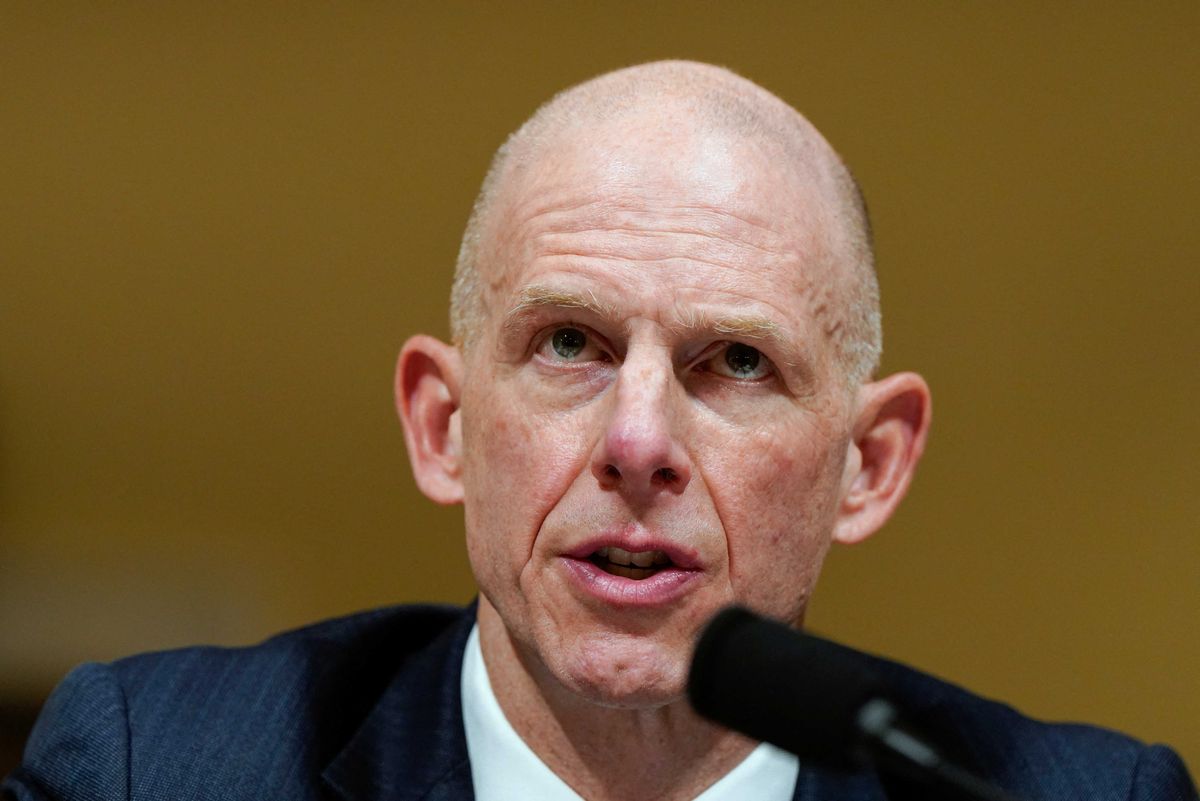
Michael Glasheen, operations director of the FBI’s National Security Branch, testified before the US House Committee on Homeland Security that antifa was “the most immediate violent threat” facing Americans today when it comes to domestic terrorism.

But when Rep. Bennie Thompson (D-Miss.), ranking member of the Homeland Security Committee, asked Glasheen for specifics about this purportedly dire threat, he mostly came up empty.

“So where is antifa headquarters?” Thompson asked him.

Glasheen paused for several seconds and then said, “What we’re doing right now with the organization...” before Thompson interrupted him.

“Where in the United States does antifa exist?” asked Thompson.

“We are building out the infrastructure right now,” Glasheen replied.

“So what does that mean?” asked a bewildered Thompson. “I’m just, we’re trying to get information. You said antifa is a terrorist organization. Tell us, as a committee, how did you come to that? Whether they exist, how many members do they have in the United States as of right now?”

“Well, that’s very fluid,” Glasheen said. “It’s ongoing for us to understand that... no different from al-Qaeda and ISIS.”


Thompson again interrupted and tried to make Glasheen answer his original question.

“If you said antifa is the No. 1 domestic terrorist organization operating in the United States,” he said, “I just need to know where they are, how many people. I don’t want a name, I don’t want anything like that. Just, how many people have you identified, with the FBI, that antifa is made of?”

“Well, the investigations are active...” Glasheen said.

Thompson then became incredulous.

“Sir, you wouldn’t come to this committee and say something you can’t prove,” he said. “I know you wouldn’t do that. But you did.”

Many observers were stunned that Glasheen appeared to know so little about what he proclaimed to be the top domestic terrorist threat facing the US.

“Total amateur hour in US law enforcement,” remarked Democracy Docket news editor Matthew Kupfer, “where the No. 1 terror threat is an organization that does not formally exist and a career FBI official is dancing around before a congressional committee trying to make the Trump strategy sound legit.”

Zeteo editor-in-chief Mehdi Hasan argued that Glasheen’s testimony was proof that the administration was simply concocting domestic terrorism threats with zero basis in reality.

“Wow,” Hasan marveled. “Just a complete admission here that the entire ‘antifa’ threat narrative is totally manufactured by this administration.”

Fred Wellman, a Democratic congressional candidate in Missouri, wondered how many actual dangerous criminals are running free while the FBI focuses on taking down an organization that it apparently knows nothing about.

“This would be comical if there wasn’t real world impact from this idiocy,” Wellman wrote. “We have real crimes and real threats and they are chasing a fake ‘organization’ for politics.”

Democrats on the House Homeland Security Committee also piled on Glasheen, citing his testimony as evidence that the Trump administration is completely unserious about law enforcement.

“If your ‘top threat’ has no headquarters, no organization, and no definition then it’s not a top threat,” they posted on social media. “The Trump administration is ignoring real threats, and the American people see right through it.”

CANADIAN GRANDDADDY OF ANTI-FA


Top FBI official accused of making up terror threat by lawmaker

David Badash
December 11, 2025 
RAW STORY


Operations Director of the FBI's National Security Branch Michael Glasheen speaks during a House Homeland Security hearing entitled "Worldwide Threats to the Homeland," on Capitol Hill in Washington, D.C., U.S. December 11, 2025. REUTERS/Elizabeth Frantz

A top FBI official struggled to explain his claim that Antifa is the “most immediate violent threat” America is facing, as he was challenged to provide details.

Former Trump FBI Director Christopher Wray stated in 2020 congressional testimony that Antifa is “not a group or an organization. It’s a movement or an ideology.” The BBC has explained that Antifa is “a loosely organized, leftist movement that opposes far-right, racist and fascist groups.”

“Antifa is short for anti-fascist,” the BBC added. “It is a loose, leaderless affiliation of mostly far-left activists.”

House Homeland Security Committee Ranking Member Bennie Thompson on Thursday asked Michael Glasheen, FBI national security operations director, to describe “organizations that pose, on the domestic side,” the number one and number two threats to the homeland.

Glasheen asked for clarification.

“Any domestic terrorist organizations that poses a threat to the homeland as we speak,” Thompson replied.

Pointing to President Donald Trump’s designation of Antifa as a domestic terrorist organization, Glasheen said, “That’s our primary concern right now.”

He described Antifa as “the most immediate violent threat that we’re facing on the domestic side.”

“So, where is the Antifa headquartered?” Thompson pressed.

After a pause, Glasheen said: “What we’re doing right now —” before Thompson cut him off.

“Where, in the United States, does Antifa exist?” he asked. “If it’s a terrorist organization — and you’ve identified it as number one.”

“We are building out the infrastructure right now,” Glasheen responded.


“So what does that mean?” Thompson pressed. “Where do they exist? How many members do they have in the United States as of right now?”

“Well, that’s very fluid,” Glasheen said, describing it as “ongoing,” before comparing the situation to Al Qaeda and ISIS.

“I asked one question, sir,” Thompson replied. “I just want you to tell us. If you said Antifa is the number one domestic terrorist organization, operating in the United States, I just need to know where they are, how many people. I don’t want a name. I don’t want anything like that. Just, how many people have you identified with the FBI, that Antifa is made of?”

“Well, the investigations are active,” Glasheen replied.

“Sir, you wouldn’t come to this committee and say something you can’t prove. I know. I knew you wouldn’t do that. But you did.”


'Nothing bad is happening’: Trump official raises eyebrows as economy tanks


, Common Dreams
December 11, 2025 

A new poll shows US voters’ approval of President Donald Trump’s handling of the economy has hit an all-time low, even as the president and his officials insist the economy is the best in the world.

The latest Associated Press-NORC Center for Public Affairs Research poll released Thursday found that only 31% of voters approve of Trump’s handling of the economy, the lowest figure in that survey throughout either of his two terms in office. Overall, 68% of voters said that the current state of the economy was “poor.”

What’s more, Trump’s approval rating on the economy among Republican voters now stands at just 69%, a strikingly low figure for a president who has consistently commanded loyalty from the GOP base.

Despite the grim numbers, the president and his administration have continued to say that the US is now in the middle of an economic boom.

During a Thursday morning interview on CNBC, Commerce Secretary Howard Lutnick said that the US now has “the greatest $30 trillion economy in the world.”

“We are doing great,” Lutnick said. “Nothing bad is happening. Greatness is happening. We grew at 4% GDP! Come on!”

Lutnick’s message echoes the one Trump delivered earlier this week during a rally in Pennsylvania, where he said that voters’ concerns about being able to afford basics such as groceries, electricity, and healthcare were a “hoax” concocted by Democrats.

“Prices are coming down very substantially,” Trump falsely claimed during his speech. “But they have a new word. You know, they always have a hoax. The new word is affordability.”

As NPR reported on Thursday, data shows that the prices of groceries and electricity have continued to rise throughout Trump’s second term, directly contradicting his claims that prices are “coming down.”

University of Michigan economist Betsey Stevenson told NPR that Trump is playing with fire by making false claims about prices when US consumers can see costs persistently going up.

“Trump’s claims about inflation are false, and you can go to the grocery store and see it yourself,” Stevenson said.

Even some members of Trump’s own party are growing wary of him insisting that America is experiencing an unprecedented economic boom when voters feel otherwise.

Sen. Lisa Murkowski (R-Alaska) told The Hill that Trump’s insistence on making happy talk about the economy would not fly with voters.

“You can’t call it a hoax and suggest that people are going to believe it,” she said. “What you say matters.”

An anonymous Republican senator also told The Hill that they were concerned about the optics of Trump building a massive luxury ballroom in the White House at a time when Americans say they are struggling financially.

“The cost of living just makes life very difficult on people,” the senator stressed.

And Sen. Shelley Moore Capito (R-W.Va.) gently pushed back on Trump’s messaging by telling CNN that “a lot of people are still having trouble making ends meet” in her state.
Rampant fear in this red state shows the true danger of Trump's vile racist attacks

Ohio Capital Journal
December 11, 2025 


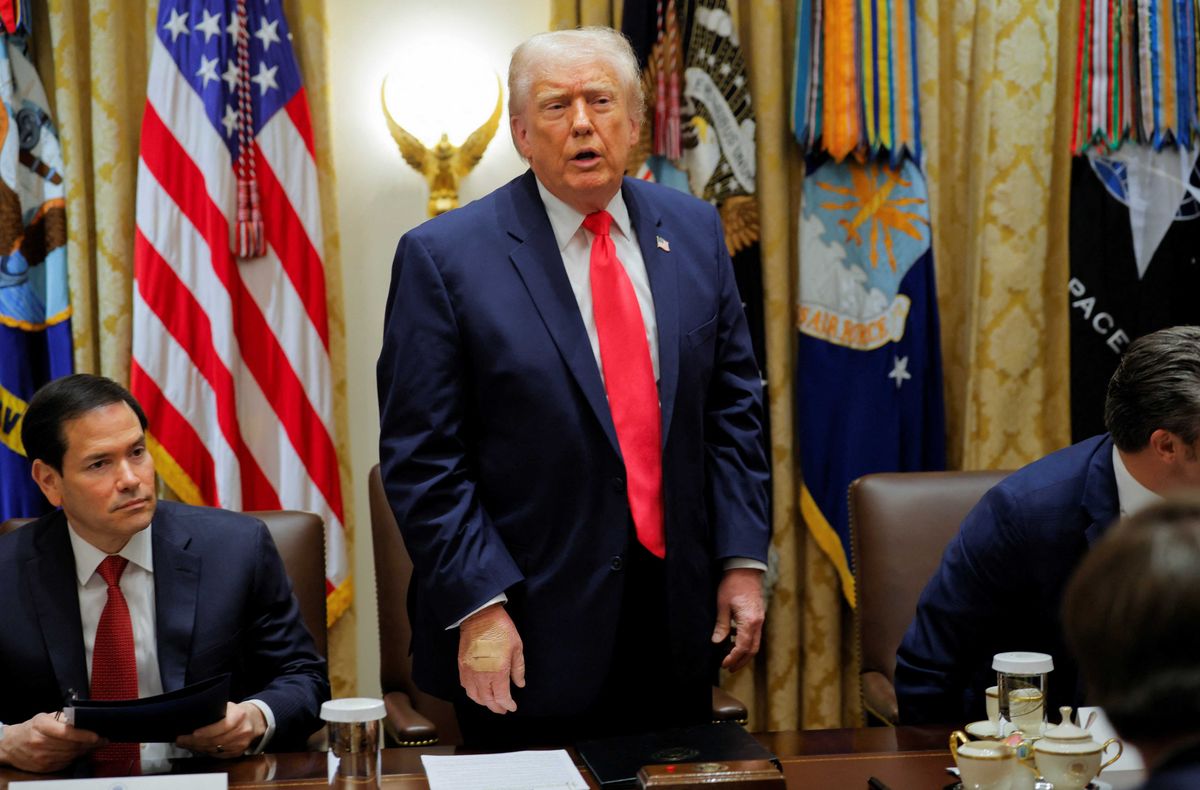
Donald Trump attends a cabinet meeting at the White House. 
REUTERS/Brian Snyder

Will we be next? Ohio’s Somali community, the second largest in the U.S. after Minnesota, is terrified that President Donald Trump’s crackdown on Somali immigrants in Minneapolis will spread to Columbus, where an estimated 60,000 Somali Americans live.

A surge in ICE activity and racial profiling targeting Somalis in the Twin Cities followed Trump’s racist rant last week against the entire Somali community in America that among them includes an overwhelming majority of U.S. citizens.

Sit with that for a minute.

The president of the United States openly trashed Americans of a certain ethnic and racial group in a vile attack that preceded increased federal government harassment of mostly Somali Americans in Minnesota.

Will Ohioans of Somali descent be next?

Trump has insulted people from African (“s---hole”) countries before, but his latest outburst against Somali Americans was, as one account put it, “shocking in its unapologetic bigotry.”


After nodding off during a lengthy Cabinet meeting dripping with Dear Leader adulation, the 79-year-old convicted felon lashed out at immigrants from the war-ravaged Horn of Africa nation.

Trump called American citizens from Somalia “garbage” and vowed to deport them “back to where they came from” because “they contribute nothing” and “I don’t want them in our country.”

His premier toady, Ohio’s shameless JD Vance, banged the table in emphatic concurrence.

It was repulsive, if not unsurprising behavior from a man who notoriously demeaned and endangered legal Haitian immigrants revitalizing local economies in his home state.

As the approving JD looked on, Trump heaped derision (again) on Minnesota Democrat Ilhan Omar, who immigrated from Somalia as a child, and called for the member of Congress to “be thrown the hell out” of the U.S.

“We’re going the wrong way if we keep taking in garbage into our country. Ilhan Omar is garbage. Her friends are garbage.”

There is no ambiguity about the message Trump is sending to the world when he disparages nonwhite immigrants in America while inviting affluent white South Afrikaners to emigrate here with U.S. support.

Conversely, the most powerful man on the planet depicts Black Somali Americans as worthless freeloaders who threatened to destroy “our” country and wants them expelled.

Never mind the taxpayers, doctors, lawyers, engineers, small business owners, politicians, etc., who are first- and second-generation Somali Americans contributing to their communities.

Ismail Mohamed is one of them.

He is a 33-year-old lawyer and one of two Somali Americans serving in the Ohio House as a state representative from Columbus.

The Democrat, in his second term, has been fielding urgent calls and texts from anxious constituents ever since Trump put Ohioans of Somali origin in the crosshairs of his wrath.

People are gripped with fear, he said.

“Especially those who don’t speak English, who fear going out. If they get picked up and can’t communicate, how are they going to relay that they are U.S. citizens?” asked Mohamed.

“I am advising many to know their rights, make sure you have documents with you, the name of a lawyer.”

The young legislator was shaken by Trump’s hateful rhetoric about his community yet resolved.

“We’re educating the community, but those in legal limbo as asylum seekers are worried. Even though you have legal status, a pending application, you’re at risk. When the president of the United States, the leader of the free world, attacks a community he knows is not in a position to fight back, it’s hard not to be scared.”

Mohamed, who was born in Somalia and lived as a refugee before coming to the U.S., is most concerned about the impact of Trump’s words and what they could trigger in someone who’s already on edge.

“It’s easy for someone who’s a racist or bigot to pick up a gun and shoot at a local mosque or, God forbid, kill someone. We’ve seen that happen before in other states. We’ve seen an increase in hate crimes in Columbus. I’m careful, even as an elected myself.”

The lawmaker recounted recent online attacks against him stemming from a video of him speaking Somali to his constituents.

Posted blasts skewered an elected rep in the U.S. speaking a foreign language.

Mohamed was unsettled when a Republican colleague in the Ohio House, state Rep. Jennifer Gross, actually reposted the video attacking him and added, “This is an Ohio State Representative. Thoughts?”

Mohamed confided he had to have security for a period of time.

Gross’ post has not been deleted.

Still, the refugee-turned-lawyer-turned-state representative reflected that every immigrant community in America has faced some initial pushback and hostility.

“They’re not American enough, or their language is different, their food is weird.”

But experiencing the ugliness firsthand, and from the president no less, is difficult to process said Mohamed.

“It is still hard and painful when a young kid, a college kid, reaches out to you and says why is the president calling me garbage?”

It is a new low to try to explain or justify, he added.

“You feel so angry and hurt. But we are appealing to everyone to say this is wrong, this is un-American to target and dehumanize an entire people simply for political gain. If it is Somali Americans now, it’ll be a different community next week. I hope Ohioans who are not Somali can just take a step back and imagine what is happening to us happening to them or their ancestors who were not welcomed.”
Republican makes shocking declaration that '2nd Civil War' is underway

THE CONFEDERACY WON THE FIRST ONE

Daniel Hampton
December 11, 2025 
RAW STORY


An Indiana Republican delivered a shocking claim Thursday as he pleaded with his GOP colleagues to go along with a scheme backed by President Donald Trump to conduct a mid-decade redistricting.

Republican state Sen. Mike Gaskill of Pendleton made particularly stark declarations while lawmakers debated.

"I will submit to you that the Second U.S. Civil War has already started. They're just using surrogates," Gaskill declared, according to Newsweek.

He added, "I submit to you that that's accurate."

Gaskill also invoked historical comparisons, telling colleagues they could "either be Churchills or Chamberlains," referencing World War II-era British leadership.

The hyperbolic proclamation fell on deaf ears, as the Indiana Senate voted to deal Trump and the gerrymandering scheme a significant setback. The chamber rejected the remapping proposal by a whopping 19-31 margin. The failed push came despite enormous pressure from the Trump administration and inflammatory rhetoric from supporters of the measure. It also came as defiant Republicans face swatting threats, as well as promises from Trump allies that they'll face a primary challenge.

The proposed redistricting map aimed to consolidate Republican control over all nine Indiana congressional seats, eliminating the two districts currently held by Democrats. Several Republican senators expressed reservations. Sen. Greg Goode, who had remained uncommitted before the vote, objected to constituent complaints about county divisions and criticized the "over-the-top pressure" applied by both internal and external forces, though he emphasized his affection for Trump.


Republicans have pursued map changes in Texas, Missouri, Ohio, and North Carolina. In response, California voters recently approved Democratic-friendly measures that aim to add up to five Democratic Congressional seats.
Kristi Noem threatened with perjury charges before livid lawmaker cuts off her testimony

Tom Boggioni
December 11, 2025
RAW STORY


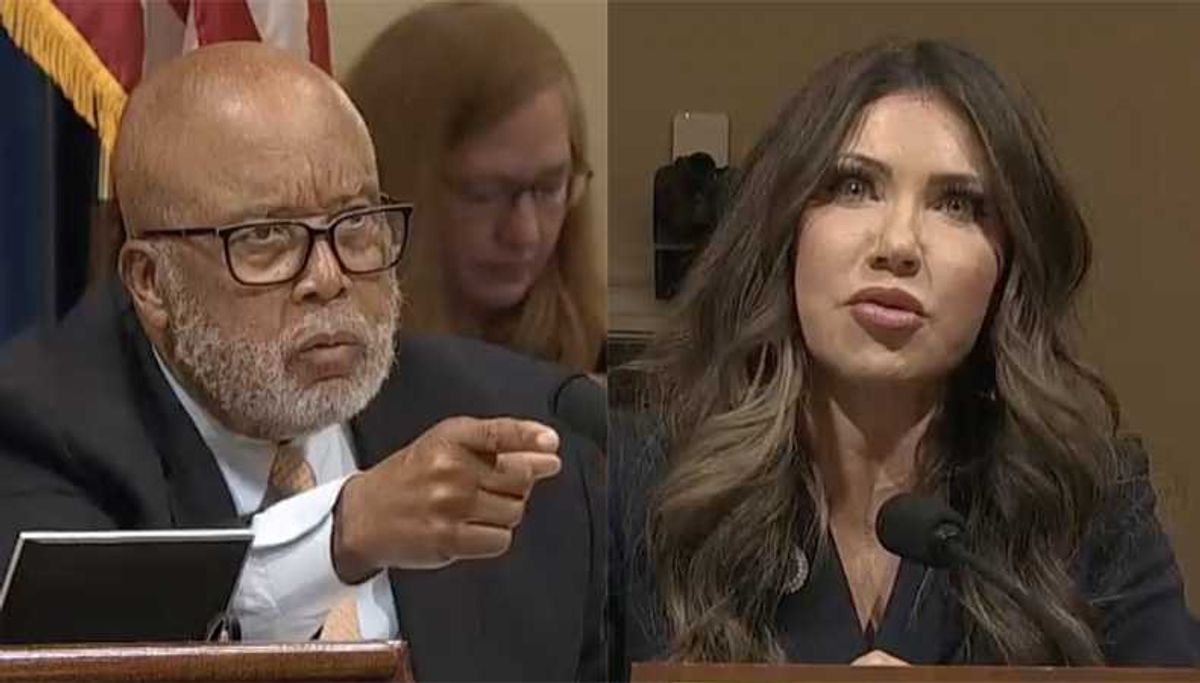
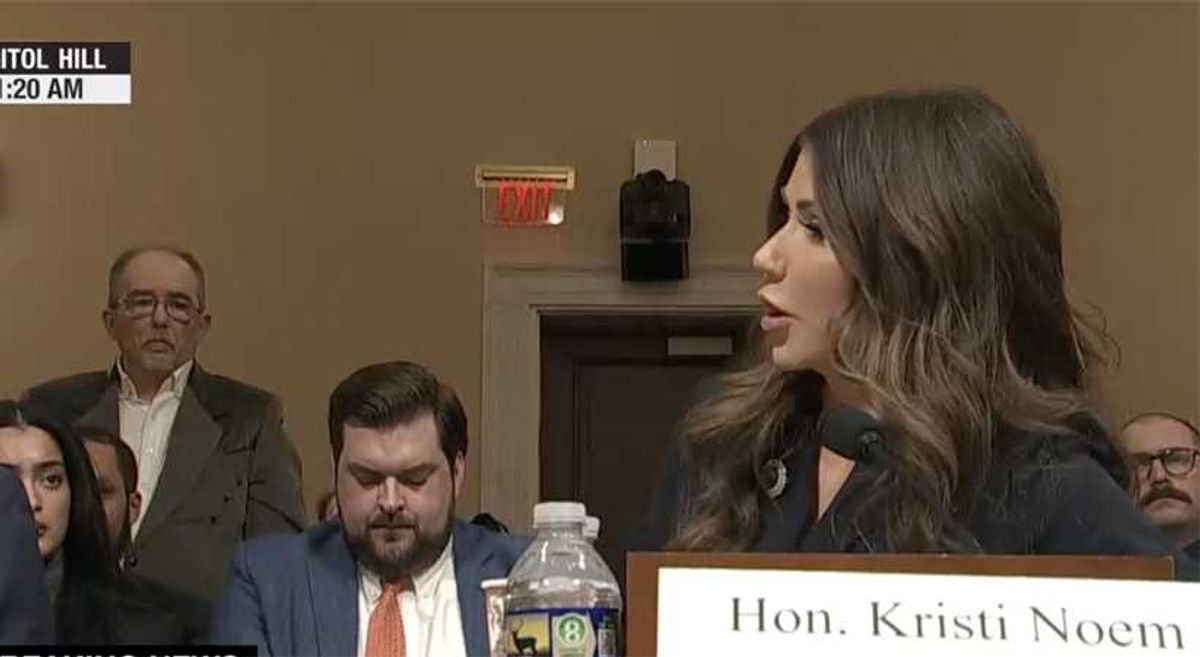
The former chair of the House Homeland Security Committee lost his patience with DHS Secretary Kristi Noem during a heated confrontation that was televised nationally on Thursday morning.

Toward the end of his allotted time, Rep. Bennie Thompson (D-MS) repeatedly asked the embattled the Donald Trump appointee over which administration vetted the refugee from Afghanistan who has been accused of shooting two National Guardsmen, one critically, in Washington, D.C., weeks ago.

With Thompson pointing out that Noem has been blaming President Joe Biden for the shooting, he asked her repeatedly to admit that Trump had a hand in Rahmanullah Lakanwal's asylum approval earlier this year.

Pressed on the case, Noem repeatedly stated, “The application on the asylum was thoroughly filled out by information that was gathered by the Biden administration.”

“So the Biden administration approved the asylum?” the Democratic lawmaker asked.

“The asylum application was put into place under the rules established by the Biden administration,” Noem parried again as Thompson asked the chair to reclaim his time.

“I don't want to charge, file, perjury charges against you, but I'm of the opinion that the Trump administration, DHS, your DHS, approved the asylum application,” Thompson warned her.

“The asylum application moved forward under all of the information and vetting processes that were put in place under the Biden administration, which is when vetting happened,” Noem repeated. “And that's what President Trump has changed under President Trump's administration ---”

That led Thompson to cut her off with, “It's obvious you don't want to answer the question,” before asking Trump appointee, Joe Kent, of the National Counterterrorism Center who was seated to Noem's right, to take “a shot at it,” where Kent repeated Noem’s talking point to Thompson’s frustration.


Kristi Noem forced to face combat veteran whose Irish wife has been jailed for four months

Tom Boggioni
December 11, 2025 
RAW ST0RY


Veteran Jim Brown (standing), Kristi Noem (MS NOW screenshot)

Department of Homeland Security Kristi Noem was put in the awkward position of apologizing to U.S. military veterans whose lives have been turned upside down, after a Democratic lawmaker who came armed to the teeth with tales of ICE immigrant overreach.

During questioning before the House Homeland Security Committee, the embattled Noem, who is reportedly on the way out at DHS, was confronted by Rep. Seth Magaziner (D-RI) who followed up her claim, “We have not deported U.S. citizens or military veterans,” by asking, “I don't believe you served in the military. I haven't either, but I think you and I can agree that, as Americans, we owe everything to those who have served our country in uniform, particularly those who have served in combat. Do you agree with that?”

She answered, “I believe that people that are in this United States that are citizens have legal status here.”

Magaziner then offered up a Purple Heart veteran who is now living in South Korea due to ICE, and who appeared at the hearing via Zoom, before directing her attention to veteran Jim Brown, who was in the audience and whose wife, a native of Ireland, has been jailed by DHS for four months as she awaits deportation.

In an interview with the Guardian, Brown gained national attention for confessing, “... he ‘100%”’regretted voting for Donald Trump as president.”

“Madam Secretary, the man behind you, please stand up, sir, his name is Jim Brown from Troy, Missouri," Magaziner began. “He is a Navy combat veteran who served our country in the Gulf War. He's married to a woman named Donna who came to our country legally from Ireland when she was 11 years old. She has lived here for 48 years. Because of you. Jim's wife, Donna, has been in prison for the last four months. She did not come here illegally and she has never committed any crime other than writing two bad checks totaling $80.10 years ago. She is currently in prison and facing deportation.”

“Miss Noem, will you thank Mr. Brown for his service to our country?” he asked.

Noem turned in her seat to the right and murmured to the standing veteran, "Thank you, Mr. Brown, for your service to our country.”

"Now, what possible explanation can there be for locking up his wife for four months when she has committed no crime, other than writing a couple of bad checks for $80?” the Democratic lawmaker pressed.

“Sir, it is not my prerogative, my attitude or my job to pick and choose which laws in this country get enforced,” she demurred.

Donald Trump’s tariffs intensify strain on US farmers, Deere warns 


Farming equipment giant is scaling back production at flagship tractor plant in Iowa 

Deere is planning further job cuts in 2026, a company executive has said 
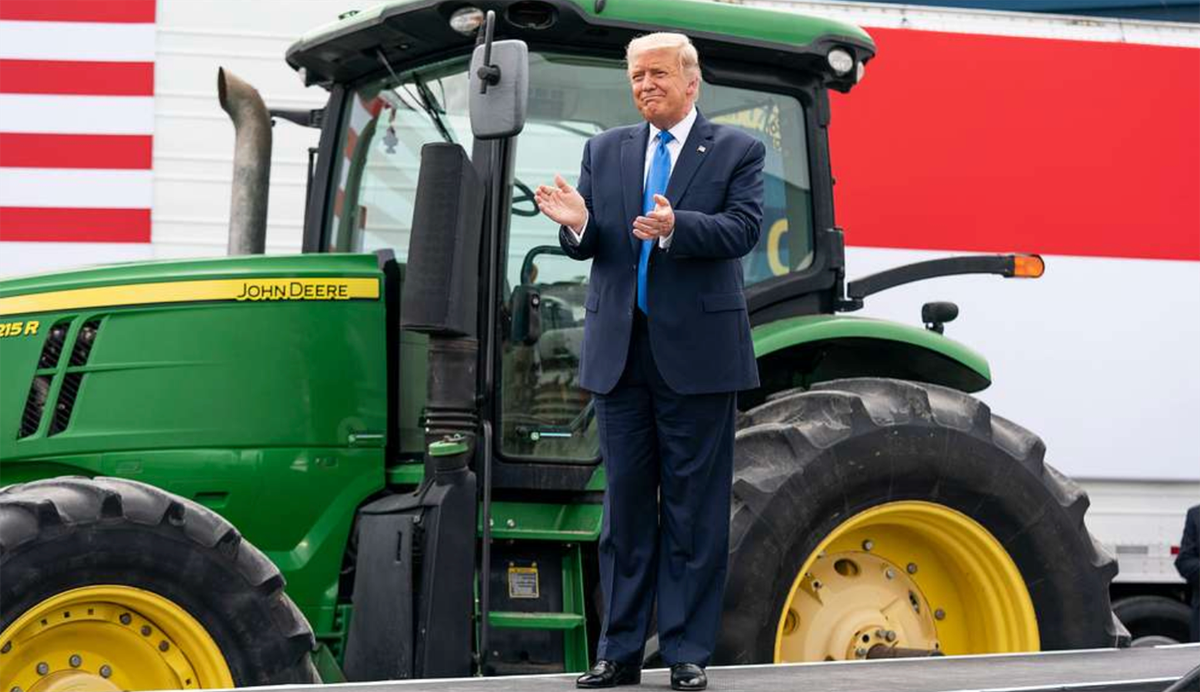

President Donald J. Trump applauds the crowd prior to delivering remarks in support of the Farmers to Families Food Box distribution program Monday, Aug. 24, 2020, at Flavor First Growers and Packers in Mills River, N.C. 
(Official White House Photo by Shealah Craighead)


 Deere warns on x (opens in a new window) Donald Trump’s tariffs intensify strain on US farmers,  Tractor maker Deere has warned that US President Donald Trump’s tariffs are backfiring on American farmers, prompting cash-strapped producers to delay replacing ageing equipment. 

Cory Reed, president of the company’s agriculture and turf division, told the Financial Times that demand for expensive farm equipment in the US is faltering as growers contend with weak crop prices, higher input costs and persistent trade uncertainty.

 “The large ag business has seen the most pressure, and that’s largely in the North American market,” he said in an interview in New York, referring to its unit that sells high-horsepower tractors, combines and sprayers, along with its precision agriculture technology.

 “Most of that downturn was our home market, here in the US. It wasn’t the European market and it wasn’t the South American market.”

 The strains have pushed Deere to slash production at its flagship tractor plant in Waterloo, Iowa, with the group “building half as many tractors this year as we did two years ago”,

 Reed said. Reed added that the world’s biggest farming equipment maker is anticipating further job cuts in 2026 after several rounds of lay-offs in recent years. He said: “Our US market has been the one under the most pressure . . . based on what’s happened with trade flows, what’s happened with tariffs and what’s happened with the escalating cost structure internally, as we’ve seen that market cycle down.” 

The pressure stems from the disruption to agricultural trade. China, traditionally the largest buyer of US soyabeans, only resumed purchases of American beans last month after retaliating against new tariffs on Chinese goods. The pause created a supply glut that has weighed on farmer sentiment and pushed prices lower: US soyabeans are down about 40 per cent from their mid-2022 highs and corn almost 50 per cent. 

The Trump administration on Monday announced a $12bn aid package for farmers — including $11bn in one-off payments to crop growers — after soyabean producers reported heavy losses and farm bankruptcies rose nearly 50 per cent over the first nine months of 2025.

 While the White House said the assistance would provide “much-needed certainty”, growers warned it would not fully offset months of depressed prices and disrupted trade.

 Reed reiterated guidance that sales in Deere’s large agricultural machinery business are expected to fall 15 to 20 per cent in its 2026 fiscal year. Deere’s overall net income fell 29 per cent to $5bn in the year to November 2, and it expects profits to weaken further to between $4bn and $4.75bn in 2026. Stress across the farm belt is deepening. 


The Federal Reserve Bank of Chicago said loan-repayment rates in the Midwest fell for the eighth consecutive quarter in the three months to September, while nearly half of surveyed agricultural lenders expect more forced sales or liquidations of farm assets this winter. 


With crop prices down, many growers are unwilling to commit to six-figure machinery purchases, opting instead to extend the life of existing equipment. Reed said used inventories, which had swelled over the past two years, had only recently begun to clear. “Customer uncertainty” had led to muted demand, said Reed. 

“If you’re a farmer and you’re trying to make a capital equipment decision, and you’re not sure what exactly your export market is, [you’re less likely to buy].” Tariffs have also pushed up manufacturing costs. 

Duties on steel and aluminium have lifted US steel prices, even for manufacturers sourcing materials domestically. Deere expects tariffs to impose a $1.2bn pre-tax hit in 2026, double the $600mn absorbed this year, with the burden running at roughly $300mn a quarter, according to its latest guidance. 

Trump singled out Deere’s Mexico business during his presidential campaign in 2024, threatening a 200 per cent tariff on equipment brought into the US if production moved south. Reed said the episode highlighted how closely Deere’s US and Mexican plants were tied and forced a rethink of its manufacturing footprint. 

The company is still investing on both sides of the border, including more than $20bn in the US. Recommended The Big Read The controversial return of Brazil’s billionaire beef barons Tariffs have also undermined the competitiveness of US-built equipment overseas. 

“One in four of our large tractors we build in the US get exported to places like Europe or Canada,” Reed said. “That’s put pressure on the competitiveness of our cost structure going into those parts of the world. So we’ve had to aggressively go after cost.” Reed said he expected the downturn to bottom out in early 2026 “as some of that certainty returns”


. Trump’s bailout package, lower interest rates, a new bioethanol policy and signs of improving agricultural trade flows — including more grain exports and firmer domestic consumption — were “positive indicators”, he said. But restoring predictable market access through trade deals would be decisive: “Getting the free flow of commodities back out of the US into the global market.”


'Pathetic': Farmer unloads on 'Republican sycophants' in blistering op-ed


Adam Lynch
December 11, 2025 
RAW STORY

Ben Palen — a Kansas native and a fifth-generation farmer and agriculture consultant — blasted President Donald Trump’s repeated tactic of putting farmers in distress and then dangling tax-funded salvation before them and hungry developers.

“[T]he Trump administration will provide several billion dollars in bailouts to farmers, with an emphasis on corn and soybean growers,” Palen wrote in the Kansas Reflector. “... Predictably, political dances followed the announcement, with various farm groups issuing statements supporting release of this money.”

“It’s pathetic,” Palen wrote. “It’s especially so when the Republican sycophants who represent Kansas farmers fall all over themselves to pay homage to Trump. How about some honest conversations about what this regime has done to American farmers via a patchwork of actions that show little understanding of international trade and so many other issues?”

Palen said there is no Republican “representative” from Kansas who is speaking the truth about the “folly from Washington D.C.,” like the damage Trump does to rural hospitals or the fact that people are going hungry because of the administration's policies. Meanwhile, farmers “are receiving just a few breadcrumbs."

"The fundamental challenges of trade policy remain unsolved, and our competitors are gleeful as they take market share from U.S. farmers," he wrote.

“The peril in farm country is real,” Palen warned. “In less than 12 months, damage done to Kansas farmers and their peers across the nation is only just beginning to be felt. This latest bailout completely fails to address the underlying issues. Again, I will ask Kansas politicians: When are you going to do your job for the people who voted for you?”

Palen lamented that those same politicians are eager to spend millions of dollars and expend state resources to woo the Kansas City Chiefs to a new stadium and the development of "entertainment districts."

“Let’s not kid ourselves,” said Palen. “Regardless of whether these deals are funded with grants, contributions from donors, tax incentives or other methods, there are adverse economic and social consequences often overlooked. … These large sums of money could be better spent. How about fixing crumbling infrastructure? How about encouraging companies to bring good-paying manufacturing jobs to the area? In the case of [Kansas University], how about big money donors helping students afford the high cost of an education, instead of being so focused on having one’s name on a sports venue?”

“Our society has some strange priorities. Maybe it’s time to focus on taking care of what we have instead of pouring enormous sums into brand new, shiny buildings,” Palen added.


Read Palen's column in the Kansas Reflector here.

Navy delivers report to Hegseth on potential punishment for Sen. Mark Kelly over ‘illegal orders’ video

Zachary Cohen, 
CNN
Thu, December 11, 2025 


U.S. Sen. Mark Kelly speaks at a news conference in the U.S. Capitol on December 1, 2025, in Washington, DC. - Anna Moneymaker/Getty Images

The US Navy has submitted its recommendations on potential punishments for Democratic Sen. Mark Kelly over his participation in a video that reminded US troops they have a duty to refuse illegal orders, a Pentagon official told CNN on Thursday.

Those recommendations have been submitted to the Pentagon’s Office of General Counsel “where they are providing a legal review and input,” the official said.

CNN has reached out to Kelly’s office for comment. It was not immediately clear what recommendations were included in the report.

Late last month, Defense Secretary Pete Hegseth requested advice from the Navy Secretary, who oversees the military branch Kelly served in for more than two decades, on how to proceed to potentially punish Kelly for participating in the video, which Hegseth has claimed amounted to serious violations of the military’s code of justice.

“I am referring this, and any other related matters, for your review, consideration and disposition as you see fit,” Hegseth wrote in a memo to the Navy secretary, dated November 25.

In the video that triggered the Trump administration’s calls for consequences, six Democratic lawmakers said that “threats to our Constitution” are coming “from right here at home,” and repeatedly urged the military and intelligence community to “refuse illegal orders.”

Although the video didn’t reference what orders service members might be receiving that would potentially be illegal, lawmakers on both sides of the aisle have raised concerns repeatedly about the legality of US military strikes against suspected drug boats in the Caribbean and the US military’s deployment to cities over the protest of governors.

The Trump administration has argued that by emphasizing service members’ legal duty to disobey unlawful orders, Kelly and the other Democratic lawmakers were inciting troops to disobey lawful orders. President Donald Trump has called the video “seditious behavior at the highest level.”

Kelly’s involvement in the video is under “review” by the Pentagon, rather than subject to a formal investigation, meaning military police are not involved, a source familiar with Hegseth’s thinking previously told CNN.

Behind closed doors, Hegseth has been weighing his options to punish Kelly for participating in the video, ones that range from reducing the retired US Navy captain’s rank and pension to prosecuting him under military law, CNN has reported.

In his various public messages, Hegseth has suggested Kelly’s comments violated several statutes of the Uniform Code of Military Justice, which lays out legal requirements for those in the military.

In Kelly, Hegseth sees a critic worth making an example of, and he could technically use the military justice system to do so, the source familiar with Hegseth’s thinking said. Unlike the other five Democrats who appeared in the video, Kelly is a military retiree — meaning he served long enough to receive a pension, and thus, is still beholden to the UCMJ, including its restrictions on free speech, legal experts told CNN.

Kelly could be recalled to active service and court-martialed because of that status, but doing so over his role in the video would be extraordinary, legal experts said. That’s because not only has the UCMJ mainly been used in recent years to prosecute former service members who commit crimes overseas outside of US civil jurisdiction, but also because Kelly is a US senator.

White House caught flat-footed when asked how billionaire Trump can tell average Americans to limit kids’ Christmas gifts


Andrew Feinberg
Thu, December 11, 2025
THE INDEPENDENT 


With an estimated net worth between $5 billion and $7 billion and a penchant for coating every surface in the White House with what he claims to be 18-karat gold leaf paint, President Donald Trump isn’t exactly an expert on personal cost-cutting.

But after the uber-wealthy ex-real estate developer claimed that record-high toy prices caused by his tariffs are just fine because young girls “don’t need 37 dolls” and can make do with “two or three” instead, his official spokesperson was left scrambling when asked to defend the eyebrow-raising remarks.

Asked about Trump’s claim that Americans can “give up certain products” and limit toy purchases because tariffs have caused prices to go upon the 80 percent of toys on the U.S. market that are imported from China, White House Press Secretary Karoline Leavitt first told reporters that the president’s comments were meant as an exhortation to buy more expensive American-made ones instead.

“Maybe you'll pay $1 or two more, but you will get better quality, and you'll be supporting your fellow Americans by buying American and that's what the President was saying,” she said.

But when The Independent pressed her on whether it is appropriate for one of the wealthiest men in the country to be lecturing cash-strapped parents on how many dolls their sons or daughters need to own, Leavitt irately pivoted to recasting Trump’s wealth as a positive while ignoring the substance of the question.


White House press secretary Karoline Leavitt speaks during a press briefing at the White House, Thursday, Dec. 11, 2025, in Washington (AP)

“Do you think the people in that room in Pennsylvania who the President was speaking to don't know the President's a billionaire? I think that's a very well established fact,” she said.

Leavitt continued her monologue by claiming that Trump’s status as a billionaire was part and parcel of why voters chose to return him to the White House in last year’s election over then-vice president Kamala Harris.

“Actually, I think it's one of the many reasons they reelected him back to this office, because he's a businessman who understands the economy and knows how to fix it, and he's doing it right now, just like he did in his first term,” she said.

Despite Trump’s claims to have lowered costs of living for Americans since returning to the White House in January, voters are not happy with his performance on affordability issues thus far.

According to a recent Gallup poll, only 36 percent of voters approve of his performance as president, giving him the lowest rating of his second term. A Politico poll released this week showed 46 percent of respondents saying the cost of living in America is worse than they can remember at any point, including 37 percent of voters who pulled levers for Trump last year.

Nearly half of respondents also said they blame Trump — not Biden or Harris — for the economy’s current condition.

But at the same time, Trump continues to tout his own record, such as it is.

In an interview with Politico this week, he told correspondent Dasha Burns that he gives himself an “A-plus-plus-plus-plus” when she asked him to grade his own record on the economy thus far.

CRIMINAL CAPITALI$M; THE GRIFT

Intel pursued deals that boosted CEO Lip-Bu Tan's fortune, sources say


YAHOO FINANCIAL
Wed, December 10, 2025 

What conflicts of interest does Intel CEO have?


What AI strategy changes has Tan implemented?


How did Meta outbid Intel for Rivos?


How does Intel Capital's structure create governance concerns?


By Jeffrey Dastin, Max A. Cherney and Milana Vinn

SAN FRANCISCO, Dec 10 (Reuters) - When the chairman of AI chip startup Rivos wanted Intel to bid for the company, he had no need to phone the chip giant. That’s because the chairman of Rivos was also Intel’s CEO: Lip-Bu Tan.

Tan had pitched Intel’s board on buying Rivos in the summer of 2025, but he had no luck. The board told Tan he had a conflict in representing both Rivos’ interests and Intel’s, and he lacked a strategy on artificial intelligence to justify a deal, three people familiar with the events told Reuters.

Tan asked one of his lieutenants at Intel to pitch a new AI plan, leading to partnership talks with Rivos, the people said. But now there was a problem: social media giant Meta had been stalking Rivos and made an offer for the company.

Meta’s interest spurred Intel to ​make its own offer. Meta countered with a sweetened bid. The competition for the startup drove the deal and incentives above the $2 billion valuation that Rivos had sought in fundraising earlier this year. Some of the sources pinned this package at around $4 billion.

Meta announced plans to buy Rivos in September. By then the bidding process had boosted the startup’s returns at Meta’s expense.

Reuters was unable to determine how much the Intel CEO profited personally as a Rivos shareholder because the financials ‌are not public. But in a blog post on its website, Tan’s venture-capital firm, Walden Catalyst, touted how he had delivered a “successful outcome” for its investors and congratulated the Rivos team for their “remarkable achievement.”


The events show one of at least three instances where Intel has pursued deals that benefit Tan financially either by exploring bids for startups or investing in them directly through Intel’s investment arm, Intel Capital, said two of the sources.

Intel declined to make Tan available for an interview for this story. Meta did not respond to requests for comment, and Rivos declined to comment.


VENTURE CAPITALIST AS CEO


Intel hired Tan in March in part for his experience as a ‌venture capitalist and unparalleled industry connections as a longtime investor in tech companies. Those connections have helped Intel clinch a $5 billion investment from Nvidia and a $2 billion investment from SoftBank.

Since Tan’s arrival, Intel has implemented policies requiring Tan to recuse himself from participating in investment decisions where he might benefit, two sources said. Specifically, Tan cannot attend or vote in decision meetings of Intel’s board or Intel Capital’s investment committee if he has a conflict in a venture or company-wide transaction, the sources said.


Such recusals are commonplace in industry. But they had not been an issue to the same degree at Intel because its leadership prior to Tan had fewer potentially conflicting investments, three of the sources said.

In the event of a Tan recusal for Intel Capital, the first two sources said, decision-making authority for the venture unit’s investment committee goes to Chief Financial Officer David Zinsner, who reports to Tan.

Intel declined to make Zinsner available for an interview.


Intel’s board knew when it appointed Tan that his web of investments in chip and technology companies could create conflicts, but the board accepted this, hoping that Tan can revive the iconic U.S. chipmaker, which lost $19 billion last year, one of the people said.

Intel’s 11 independent board directors did not individually comment on Tan, but in response to Reuters queries, an Intel spokesperson said: “The Board of Directors believes it’s important that Intel fully leverage his vast network and position Intel to capture the next wave of industry innovation and opportunity.”

Tan’s dealmaking comes as the administration of President Donald Trump agreed to make an $8.9 billion investment for what would be the largest ownership stake in the chipmaker, designating it as strategic to the U.S. and effectively making its citizens shareholders.

Some chip-industry analysts have said in ⁠research notes that they welcomed Tan’s industry relationships. “He has a wide view across the ecosystem,” said Bernstein analyst Stacy Rasgon in an interview with Reuters. “And that’s helpful for Intel.”

Tan does not ‌perceive his dealmaking at Intel to be conflicted, said two of the sources, who are familiar with his thinking. Tan believes that his roles at these startups and at Intel make him uniquely able to negotiate transactions that benefit all parties, the people said.

In a statement, an Intel spokesperson disputed that Tan’s dealmaking posed any problem. “The company has an unwavering commitment to the highest standards of corporate governance, integrity, and accountability,” the spokesperson said. Tan’s “extensive relationships across the global semiconductor ecosystem are invaluable as Intel positions itself to capitalize on a rapidly evolving industry landscape.”

The Securities and Exchange Commission would not require Intel to disclose related-party transactions that could involve Tan until the spring of 2026, a year after its last disclosure, which took place the week after his start date.

U.S. regulations require such disclosures when transactions personally benefiting corporate officers ‍exceed $120,000, though experts have said smaller dollar amounts can be material to investors if the information would inform a decision to sell or purchase stock.


DEALS TO REVIVE INTEL’S AI STRATEGY

Tan believed Intel needed to buy Rivos because earlier in-house efforts to enter the AI chip market had failed, one of the sources said. In the statement, the Intel spokesperson said Tan was “advancing its AI strategy” and “revitalizing its engineering-centric, customer-first culture.”

Rivos was one of the major targets for Intel where Tan had interests on both sides of the deal. Tan also pitched Intel’s board on buying the troubled AI computing startup SambaNova, where Tan served as executive chairman, the first three sources said.

The rationale - debated inside Intel - was that SambaNova also could provide more tech and talent to build AI chips, the sources said.

SambaNova declined to comment on any talks between the startup and Intel. “While we’re always exploring strategic options, our focus remains on accelerating the roadmap, delivering products to market, and supporting our customers,” a spokesperson said.

Intel also declined to comment on the SambaNova talks.

Tan’s portfolio has drawn scrutiny before. In April, Reuters documented how Tan’s investment firms had stakes in more than 600 Chinese companies, some with military ties, drawing a rebuke ​by Trump that the U.S. chip manufacturer’s CEO was "highly

 CONFLICTED.”

According to a White House official, Tan subsequently cleared up Trump’s concerns in an Oval Office meeting, which paved the way for collaboration on U.S. national and economic security. In September, Trump publicly celebrated Intel’s rising share price following Tan’s Nvidia deal.


Intel’s share price has roughly doubled since Tan’s appointment, outpacing the percentage gains of the S&P 500 and chip leader Nvidia in that time.


TAKING CONTROL OF INTEL CAPITAL

Soon after his appointment as CEO, Tan took direct control ‌of Intel’s investment arm, Intel Capital, reversing a plan to spin it off. Instead, he reorganized the company so that Intel Capital would report to him, according to two of the sources, for reasons Intel has not disclosed. Its investment committee would be composed solely of Tan and one of his direct reports, finance chief Zinsner, said three people familiar with the change

Since then, Intel Capital has invested in several companies in which Tan has a stake through his investment vehicles or venture capital firms, which include A&E Investment LLC, Celesta Capital and Walden International, three of the sources said. Some Intel staff have felt an obligation to explore such deals to win Tan’s support, two of them said.

One such investment was in proteanTecs, which announced a late-stage, Series D funding round in September. Intel Capital upped its existing stake in the startup, helping increase the value of Tan’s holdings through A&E Investment and Celesta Capital, funding data shows.

ProteanTecs declined to comment. A&E Investment, Walden Catalyst and Walden International did not respond to requests for comment. In a statement, Celesta Capital said Tan "has always acted with integrity and a commitment to doing what is right for all stakeholders.”

Before Tan became CEO, Intel Capital co-invested with him or his investment firms at least 12 times since 2019, funding announcements show.


Intel is not alone in having a venture capital arm. That’s common at large technology companies, including Nvidia, Microsoft, Alphabet and Qualcomm. But unlike those other companies, Intel is unusual in having a CEO who oversees its venture unit while also leading unrelated investment firms, a Reuters review of leadership at those companies shows.

Reuters was unable to determine how much Intel’s recent investments had in total increased Tan’s net worth, estimated to be well over $500 million.

Two corporate governance experts consulted by Reuters said Tan’s dealmaking raises red flags due to the conflicts inherent in forging deals with his own portfolio companies.


One of them also said that Intel could benefit from Tan’s connections. “You don't want to preclude making good investments because your CEO is well connected,” said Daniel Taylor, a professor at the Wharton School specializing in corporate disclosures and insider trading.
TAN TOUTS HIS BOOK

The Intel CEO has consistently highlighted his portfolio ⁠in public appearances. In one of his first presentations as the Intel chief in March, he talked up his 251 chip-related investments, an online video from the occasion shows.

At an October chip conference in Phoenix, Tan gave a speech representing Intel that featured slides touting still more holdings, including in ​proteanTecs and SambaNova.


Intel’s code of conduct encourages executives to disclose potential conflicts to the company’s board and top legal and compliance officers for resolution. “We avoid situations that interfere or appear to interfere with our ability to act in the best interests of Intel,” the code of conduct states. It adds that staff must mind ​conflicts arising from “an ownership interest in an Intel supplier, customer, or competitor” and from “outside employment that interferes with your obligations to Intel.”

The two corporate governance experts said Tan should have dropped his portfolio investments, placed them in a blind trust or set up a special committee of the board to remove potential conflicts with his investment portfolio. Some lawyers have said special committees are not always necessary, and some scholars argue outside board roles apprise executives of strategic information.


Intel declined to say if Tan had taken any such measure.

The Intel board’s independent Audit Committee “actively monitors, reviews, and approves, as appropriate, any related-party transactions in strict accordance with Intel’s rigorous Related-Party Transactions Policy,” the company spokesperson said.

The policy has exceptions. Transactions in which an Intel executive owns less than 10% of a company that is party to a deal, whose value does not exceed $1 million or ‍2% of that company’s revenue, are deemed to be “pre-cleared,” the policy states. It was not clear how many investments by Intel, if any, ⁠fell under this policy, which pre-dated Tan’s leadership.

INTEL EXPLORES BID FOR A STRUGGLING STARTUP

In 2018, SambaNova was a startup with lofty ambitions to build an AI computing system that could rival Nvidia’s AI hardware and software ecosystem. Tan’s venture firm Walden International co-led SambaNova’s $56 million Series A funding round that year, which secured Tan’s position on its board.


Over the years, SambaNova hoovered up money from investors: more from Tan’s venture firm and, around 2021, a big check from SoftBank, where Tan served as a board director until 2022. The $676 million Series D round led by SoftBank valued SambaNova at around $5 billion and gave Tan’s holdings a healthy increase on paper.

SoftBank declined to answer if Tan had a role in persuading it to invest in SambaNova.

But the startup’s ambitious vision wasn’t panning out, three people familiar with the matter said. Customers had more demand for Nvidia’s chips, which are good for a wide variety of uses in AI. That contrasts with the silicon from SambaNova, which ⁠is designed for more specific AI applications.

In 2024, Tan stepped in as SambaNova’s new executive chairman in the hopes that he could help grow its business faster. The company was poised to run out of its cash, three people familiar with the matter said. It laid off 77 people in California, or reportedly about 15% of its staff, in April.


The chip startup tried to drum up interest for another funding round, but found few takers, two sources said. Its revenue meant it would have to fundraise or go up for sale at a lower valuation, said the people and a third source. Bankers pegged its worth at $2 billion to around $3 ‌billion at most, two of the sources said.

Tan asked Intel to look at a deal with the chipmaker over the summer, three sources said.

In recent weeks, some of SambaNova’s investors provided additional financing to tide over the startup, two people familiar with the insider round said.

In a statement to Reuters, a SambaNova spokesperson confirmed the startup recently secured additional funding, adding its business “is performing really well.”

Deal talks with SambaNova are ongoing, two of the sources ‌said. Intel and SambaNova have signed a non-binding term sheet, one of them said.

(Reporting by Jeffrey Dastin and Max A. Cherney in San Francisco and Milana Vinn in New Yorik; additional reporting by Krystal Hu in San Francisco. Editing by Kenneth Li and Michael Learmonth )


Ancient lake reemerges after record rainfall at Death Valley National Park


JULIA JACOBO
Wed, December 10, 2025 at 3:07 AM MST

An ancient lake that once existed at Death Valley National Park has reemerged after record rainfall in the region.

Several inches of water have formed in Badwater Basin, which lies at 282 feet below sea level, the lowest point in North America, according to a press release from the National Park Service.


Savannah M. Sanford/NPS - PHOTO: A small Lake Manly has formed near Badwater Basin. The hike to the water is about one mile and is just a few inches deep.

During the Ice Ages, the basin -- colloquially known as Lake Manly -- was once a lake with depths of up to 700 feet.

Ice covered the Sierra Nevada between 128,000 and 186,000 years ago, allowing rivers to flow into a long valley that fed into Lake Manly, according to NASA. At the time, the lake measured nearly 100 miles long.

In modern times, the basin typically lies bare, without any significant moisture.

Why an ancient lake that reemerged at Death Valley National Park will stick around

Death Valley just experienced its wettest fall on record, according to the National Weather Service. Between September and November, 2.41 inches of rain fell -- more than what typically falls in the desert landscape in one year. November alone recorded 1.76 inches -- breaking the record set in 1923 at 1.7 inches.

The lake is much more shallow than the one that formed in 2024 in the aftermath of Hurricane Hilary -- an event that prompted the first tropical storm watch in California's history.


George Rose/Getty Images - PHOTO: Badwater Basin, the site of Lake Manly, is viewed from Dante's View showing the lake receding due to evaporation on April 21, 2024, near Furnace Creek, California.

On Aug. 20, 2024, alone, more than 2 inches of rain fell in Death Valley, according to the NPS.

This year's rainfall will allow those who missed the last emergence of Lake Manly to see the rare phenomenon once again

An ancient lake has reemerged at Death Valley National Park

The water can't drain out, since the basin is contained and at such a low elevation, said Andrew Heltzel, chief commercial officer of the Xanterra Travel Collection, an operator of lodges, restaurants and excursions at several of the most iconic national parks in the U.S., including Death Valley, Yellowstone and Grand Canyon.

"It's almost impenetrable," Heltzel told ABC News, describing the outskirts of the basin as "like a seal."


Robyn Beck/AFP via Getty Images - PHOTO: Wildflowers line a road in Death Valley, California in a rare super bloom, March 4, 2016.

The only way for the water to escape is through evaporation, which could take months.

When the water is present, it creates a stunning reflection of the surrounding mountain peaks.

"My advice would be to, if you are interested in seeing this, not to delay to get there," Heltzel said. "It is getting smaller through evaporation every day."

How climate change contributes to the atmospheric river slamming the West Coast

The "most exciting" aspect of the way the rain fell this time is that it could spark a superbloom of wildflowers in the spring, Heltzel said.

The pace and amount of rain that fell made for the "perfect ingredients" for a significant display of wildflowers to emerge, Heltzel said.

In 2024, too much rain fell too fast, and the soil was unable to absorb the moisture, Heltzel said.

"With the November rains, they came in gently enough that it was able to get into the ground and potentially give us those flowers as well as a second chance to see Lake Manly," he said.

The last time a superbloom occurred was in 2016, according to the NPS.


Robyn Beck/AFP via Getty Images - PHOTO: Wildflowers line a road in Death Valley National Park, in Death Valley, California, March 3, 2016.

The recent storms caused numerous road closures across the parks, with several paved roads covered in flood debris, according to the NPS. However, many of the park's most popular sites remain open, including Zabriskie Point, Dantes View, Badwater Basin, and Mesquite Sand Dunes.

The National Park Service advised visitors to be aware that unpaved roads may be impassable due to storm damage and to be prepared for self-rescue when traveling on backcountry roads.

In February, Death Valley National Park will host the Dark Sky Festival, which can give visitors opportunities to sky gaze while also seeing Lake Manly, Heltzel said.

Death Valley has been designated as a Gold Tier Dark Sky Park, which signifies the highest rating of darkness, according to the NPS.