Tuesday, December 30, 2025

Reform Without Power: Chile’s Parliamentary Left from Allende to Boric

Source: Europe Solidaire Sans Frontières

The victory of José Antonio Kast in Chile’s 2025 presidential election ends a political cycle that began, improbably, with a subway fare hike six years earlier. In October 2019, a mass revolt shattered the image of stability that had long distinguished Chile from its neighbours. In October 2020, an overwhelming plebiscitary majority voted to scrap the Pinochet-era constitution. In December 2021, a former radical left student leader entered the presidential palace, promising to bury neoliberalism and inaugurate a new social pact. Less than four years later, an openly reactionary right has returned to the threshold of state power; this time, tanks were not necessary—ballots sufficed.

This reversal has already generated a familiar repertoire of explanations. For some, it reflects a global rightward drift, encompassing authoritarian consolidation in Europe, Trumpism in the United States, and the rise of Bolsonaro and Milei in Latin America. [1] Others emphasise contingent failures: inflation, insecurity, migration, crime. [2] A third line of argument points to cultural backlash, suggesting that progressive overreach—on gender, plurinationality, environmentalism—alienated socially conservative voters. [3] Each captures something real but none, on its own, is sufficient. Taken together, they obscure the longer historical conditions shaping Chile’s democratic experiments—past and present—and deflect attention from a more fundamental problem: the limits of democratic politics within capitalist societies once reformist challenges approach the boundaries of property, accumulation and class power. These limits are not merely institutional; they emerge from democracy’s uneven capacity to reorganise class relations without provoking counter-mobilisation.

Chile offers an unusually clear vantage point from which to examine this problem. An overt dictatorship first imposed neoliberalism here. A negotiated democratic transition later produced one of the Global South’s most stable electoral regimes while leaving capitalist social relations largely intact. Earlier still, the twentieth century’s most ambitious attempt at a parliamentary road to socialism (la vía chilena al socialismo) was violently suppressed—an experience that left not only profound trauma but a lasting strategic impasse for the left.

The present conjuncture compels a renewed analysis—not to commemorate Salvador Allende’s defeat or rehearse binaries of reform versus revolution, but to examine the conditions under which democratic advances become politically reversible. The comparison between the Popular Unity government of 1970–73 and the Apruebo Dignidad administration of 2022–25 is therefore neither nostalgic nor merely analogical. It serves as a probe into how class power is assembled, dispersed, and recomposed across distinct phases of capitalist development.

 Beyond Inevitability

Prevailing narratives of Allende’s overthrow remain curiously static. Within the left, some accounts locate the coup primarily in US imperialism, emphasising CIA intervention, economic sabotage, and Cold War geopolitics. [4] Others assign responsibility to Popular Unity itself, citing excessive legalism, reluctance to arm the working class or misplaced faith in bourgeois institutions. Despite their differences, these interpretations converge on a shared conclusion: the Chilean road to socialism was doomed from the outset.

This sense of inevitability has been politically disabling. If Allende’s experiment was structurally impossible, its defeat offers little guidance beyond cautionary symbolism. Imperialist power or capitalist reaction appears destined to overwhelm any transitional path to socialism, leaving only two options: accommodation without transformation or confrontation without victory. Yet inevitability is a poor guide to historical explanation. Defeat does not prove impossibility; it indicates only that the balance of forces ultimately shifted. Analysis must therefore move beyond heroic counterfactuals to identify the mechanisms through which political openings expand or contract—and how such false dichotomies continue to shape left strategy well beyond Chile.

Viewed in this light, the coup appears less as the mechanical outcome of imperialist intervention or socialist error than as the result of a specific realignment of domestic class forces. External pressure mattered, but it became decisive only once Chilean elites succeeded in reuniting a previously fractured ruling bloc and securing the acquiescence—if not support—of key middle strata. Allende’s constitutionalism did not neutralise popular power; on the contrary, the Popular Unity years witnessed one of the fastest expansions of working-class organisation and material gains in Chilean history. What proved fatal was not reformism per se, but the failure to prevent elite reunification as economic crisis eroded the coalition’s social base.

This distinction is not merely historical. It suggests that socialist projects are neither guaranteed success nor condemned to failure. Their viability depends on whether popular power can expand faster than ruling classes consolidate countervailing alliances. It is this dynamic—rather than abstract fidelity to institutions or insurrectionary virtue—that determines whether parliamentary democratic openings harden into durable transformations or collapse into authoritarian restoration.

 Capitalism, Democracy and the Chilean Exception

Chile’s post-1973 trajectory illustrates this dynamic with unusual clarity. The Pinochet regime did not merely repress the left; it dismantled working-class organisational capacities and restructured the economy to prevent their reconstitution. The restoration of democracy in 1990 preserved core institutional protections for capital: a subsidiary state, privatised social provision, fragmented labour relations, and constitutional constraints on redistribution. Electoral pluralism returned; class power did not.

For roughly two decades, this arrangement appeared stable. Growth was steady, poverty declined, [5] and alternation in office—first among centre-left governments, later including the moderate right—seemed to normalise democracy after authoritarian rupture. Beneath the surface, however, the contradiction between political equality and market dependence intensified. Social rights were increasingly commodified; insecurity generalised; labour remained atomised. The regime’s legitimacy eroded long before its crisis became visible.

The 2019 rebellion did not reflect sudden radicalisation but the exhaustion of a model that demanded discipline, flexibility, and individualised risk while failing to promise collective improvement. What followed—the plebiscite, the constituent process, and the election of Gabriel Boric—appeared to reopen a question, apparently, settled since 1973: whether Chilean democracy could be re-founded on social rights rather than market dependence.

Its failure, and the rapid resurgence of an authoritarian right, posed a problem symmetrical to that of the Allende years—though inverted. In the early 1970s, elites abandoned democracy once it no longer guaranteed their dominance. In the 2020s, segments of the electorate have turned to the right because democracy, as recently practised, failed to improve material conditions. Understanding this reversal requires moving beyond culturalist explanations and electoral arithmetic toward an analysis of how the contemporary left governed—its relation with the working class, its engagement with capital, and its navigation of institutional constraints.

The argument advanced here is straightforward but demanding: the Chilean left’s recent defeat was not the product of excessive ambition but of a strategic misalignment between its reform agenda and the sources of popular power capable of sustaining it. The contrast with Popular Unity is instructive—not because Allende “had the answers”, but because his government faced a similar dilemma under far harsher conditions and, for a time, managed it more effectively. The analysis that follows reconstructs Chile’s neo-liberal consolidation and the recomposition of class relations culminating in 2019, revisits the Allende experience to extract its strategic logic, and then examines the Boric government through that lens.

The aim is neither prophecy nor prescription. It is to clarify the conditions under which parliamentary democratic openings close—and to insist that their closure is a political outcome, not a historical law.

 Remaking Society Under Neo-liberal Rule

Chile’s post-1973 order did not arise solely from repression. While the dictatorship’s brutality was fundamental in dismantling organised resistance, the endurance of neoliberalism was grounded in a more systematic reconfiguration of social relations—transforming how Chileans worked, consumed and lived their lives. Under the guidance of the Chicago Boys, the military regime dismantled the developmental state, privatised public enterprises, liberalised trade and finance, and substituted social provisions with market-driven mechanisms. The Labour Law was amended to fragment collective bargaining, prohibit sectoral coordination, and criminalise solidarity actions. Pensions, education, healthcare and housing were restructured to prioritise individual responsibility and private wealth accumulation. [6] Consequently, the outcome was not merely a smaller state but a fundamentally different society in which access to essential goods was mediated by debt and competition rather than collective rights.

When democracy was restored in 1990, this architecture remained largely intact. The negotiated transition overseen by the Concertación [7] was explicitly designed to prevent a return to the polarisation of the early 1970s, embedding constitutional constraints and electoral mechanisms that ensured continuity. More decisively, the centre-left embraced the core premises of the neo-liberal model, promising to humanise them rather than dismantle them. For a time, this strategy appeared successful. Growth resumed, poverty rates fell, and Chile became a model student of international financial institutions. The new order generated a form of compensatory legitimacy: while inequality remained extreme, rising consumption and access to credit allowed large segments of the population to experience modest upward mobility. Democracy functioned primarily as a mechanism of elite rotation rather than social transformation, but it delivered sufficient material improvement to forestall mass opposition.

Yet this equilibrium rested on fragile foundations. The decline in poverty masked a deeper recomposition of class relations. Stable industrial employment gave way to subcontracting, informality, and service work; union density collapsed, along with the organisational capacities that once anchored the Left. A growing middle class found itself asset-poor, indebted and excluded from social programs targeting the very poor. By the early 2000s, signs of strain were already visible: trust in political parties plummeted, electoral participation declined once voting became voluntary, and dissatisfaction with pensions, education and health care was widespread. But without strong collective organisations or a credible political alternative, discontent remained fragmented, absorbed into individualised strategies for survival.

 The Return of Collective Action

What changed in the 2010s was not the extent of inequality but rather the reawakening of collective capacities. The student movement of 2011 was an important turning point. By challenging the commodification of education, it revealed the underlying logic of Chile’s social model, re-legitimized mass protests as a political tool, and fostered a new generation of actors who were openly critical of the Concertación’s alignment with neo-liberalism.

This resurgence did not remain confined to students. Over the following decade, diverse sectors mobilised against extractivism, environmental destruction, privatised pensions, and gender violence. The working class, long assumed to be irreversibly weakened, began to reassert itself. Subcontracted copper workers, dockworkers, teachers, and later health workers engaged in strikes that tested bosses’ power in strategic sectors. While union density remained low by historical standards, these struggles demonstrated a renewed capacity to disrupt accumulation at key nodes of the economy.

This mobilisation was uneven and rarely coordinated. They did not coalesce into a unified movement capable of articulating a comprehensive alternative. Yet they mattered in two decisive respects. They rebuilt practical knowledge of collective action after decades of defeat, and they steadily eroded the legitimacy of the post-authoritarian settlement by exposing the widening gap between democratic form and social content.

The estallido social of October 2019 marked a pivotal moment when various currents converged. A fare increase initially sparked the rebellion, but a build-up of grievances drove it, manifesting as a generalised refusal rather than a coherent uprising. Millions took to the streets, normal routines broke down, and repression proved ineffective in restoring order without concessions. The subsequent plebiscite in October 2020—where nearly 80 percent voted in favour of a new constitution with particularly high turnout in working-class districts—formalized this rupture. It represented a plebiscitary withdrawal of consent from the institutional framework inherited from the dictatorship and managed under democratic neoliberalism.

At this point, a different trajectory was possible. The rebellion had not overthrown the state, but it had decisively weakened elite authority. The constitutional process offered a mechanism to translate diffuse anger into institutional change, and the election of a constituent assembly dominated by left and independent forces appeared to confirm the opening. Yet from the outset, tensions were evident. The movements that had caused the plebiscite were heterogeneous, loosely organised, and often wary of formal politics. The New Left, grouped around the Frente Amplio and later allied with the Communist Party, moved quickly to occupy the institutional space that emerged—understandably, since without representation constitutional reform would stall or be co-opted. But this shift also meant that the energy of the streets was rapidly rechannelled into a highly formalised process governed by legal procedures and media spectacle.

The constituent assembly became the symbolic centre of transformation. Its ambitions were expansive and, in many respects, laudable: social rights, plurinational recognition, gender parity and environmental protection. Yet its mode of operation—fragmented, moralised, and often disconnected from the everyday insecurities of working people—left it exposed. The draft constitution spoke powerfully about recognition and participation but less clearly about wages, employment and material security. For many Chileans, it came to appear as an elite project of a different kind.

Gabriel Boric’s election in December 2021 took place against this backdrop. His victory was real but fragile: he entered office with a narrow first-round base, dependent on a second-round coalition mobilised primarily to block the far right, and without a congressional majority. Unlike Allende in 1970, Boric did not lead a growing wave of organised working-class power that could exert pressure on elites from below. Constraints were therefore severe from the outset. What distinguishes this moment, however, is not the existence of such constraints—which are endemic to politics—but how they were navigated. The government’s strategy rested on two assumptions: that constitutional reform would supply the legitimacy needed to overcome institutional vetoes, and that moderation and technocratic competence would reassure markets while preserving space for gradual reform.

Both assumptions proved misplaced. The rejection of the draft constitution in 2022 deprived the government of its central legitimating project, while concessions to business failed to secure elite cooperation and simultaneously alienated sections of its popular base. Authority eroded without compensatory gains in organisation, material security or elite fracture. By the time the second constitutional process delivered a right-dominated council, political initiative had shifted decisively. The rebellion’s promise was neutralised, not through repression alone, but through exhaustion, fragmentation, and strategic drift. The space thus opened was filled not by a revitalised centre-left, but by a hard right capable of translating diffuse insecurity into an authoritarian programme.

 The Popular Unity Experiment

The experience of the Popular Unity government merits reconsideration as a strategic case to clarify the issue of transformation. The Allende administration stands as the most sustained effort to pursue significant social changes via the parliamentary route within a capitalist society. Its defeat is indisputable. However, defeat alone does not signify a strategic error or render historical possibility unattainable. The pertinent question is not why the UP failed in a general sense, but rather how and when the balance of forces shifted decisively against it.

Two dominant interpretations have long structured the debate over the UP. According to one position, its downfall is primarily due to external intervention, particularly by the United States; the other place accuses Allende and his allies of excessive moderation or legalism. Both capture partial truths, yet neither fully explains the UP’s survival or its collapse.

There is no doubt that US intervention was hostile, sustained, and damaging. Washington funded opposition parties, encouraged economic sabotage, pressured international lenders and welcomed the coup. Yet American power alone was not sufficient to determine outcomes. The United States failed repeatedly to prevent Allende’s election, inauguration, and early reforms, and even covert operations—most notably the attempted kidnapping of General René Schneider—backfired, strengthening constitutionalist sentiment within the military. More importantly, external pressure became decisive only once domestic class alignments allowed it to operate effectively. Economic strangulation weakened the UP not mechanically, but politically—by amplifying shortages, inflation, and uncertainty that eroded support among wavering social groups. One can conclude with a degree of certainty that imperialist pressure succeeded because internal contradictions permitted it.

The more contentious debate concerns Allende’s strategy. Critics from the revolutionary left have long argued that the UP doomed itself by clinging to bourgeois legality—by refusing to arm the working class, dismantle state institutions or accelerate expropriation beyond constitutional limits. [8] This critique rests on a misleading counterfactual. It assumes that an insurrectionary rupture was both feasible and desirable. But the UP did not come to power at the head of a revolutionary army or a collective strength of workers’ councils. It emerged from decades of electoral struggle in a society with strong legal traditions, a substantial middle class, and a professionally trained military initially committed to constitutional norms.

More importantly, the UP did not seek an immediate transition to socialism. Its programme aimed to dismantle elite domination—imperialist control, monopolies and landed oligarchy—while expanding workers’ material well-being and organisational power. Socialism was conceived as a process, not an event. Measured against this objective, the UP’s record was formidable. By 1973, the state controlled the commanding heights of the economy, including copper, banking, foreign trade, and most large-scale industry. The public sector generated over half of the national output. Land reform had effectively eliminated the landed elite. Real wages rose by more than 20 percent in 1971; unemployment fell below 4 percent, and labour’s share of national income exceeded 50 percent. [9]

The expansion of working-class power was equally significant. Union density reached historical highs in strategic sectors, and new forms of organisation—such as factory councils, neighbourhood committees, and supply networks—emerged. Workers did not merely receive benefits; they exercised influence, often pushing the government beyond its initial intentions. From this viewpoint, the accusation of excessive moderation seems unfounded. UP systematically dismantled the economic foundations of elite power through an unprecedented wave of popular mobilisation. What ultimately proved fatal was not timidity, but rather the rapidity with which these advances incited counter-mobilisation among the threatened classes.

The Popular Unity’s fundamental challenge lay in managing a contradiction inherent to socialist projects, i.e., expanding working-class power destabilizes existing social hierarchies, but doing so faster than new political majorities can be consolidated invited authoritarian backlash. For its first two years, the UP navigated this tension with notable success. Electoral support grew, surpassing 50 percent in the 1971 municipal elections; the opposition remained divided between conservatives and Christian Democrats; middle sectors were uneasy but not yet unified against the government; and the military remained formally loyal to constitutional order.

This equilibrium began to unravel in 1972. External pressure intensified, but domestic shifts proved more decisive. Economic disruptions—exacerbated by employer sabotage and global conditions—eroded real wages, while shortages and inflation strained everyday life. Workers largely continued to defend the government, but segments of the middle class and small proprietors increasingly aligned with opposition forces. The UP now confronted a narrowing strategic field. Accelerating confrontation risked civil war under unfavourable conditions; retreating from reforms threatened to demoralise its base. Allende pursued a third course: attempting to broaden the coalition for transformation by engaging progressive sectors within the Christian Democratic Party.

This strategy is often dismissed as naive, yet it rested on a concrete assessment of class alignments. A substantial minority of Christian Democratic voters—particularly among workers and peasants—supported structural reforms, including the socialization of key industries, while a left wing within the party, led by figures such as Radomiro Tomic, favoured collaboration with the UP to prevent reaction. Consolidating such an alliance was never guaranteed to succeed, but it represented a plausible attempt to preserve elite divisions and expand a pro-socialist majority under parliamentary conditions.

The strategy’s failure was not due to its incoherence, but rather to the simultaneous undermining from both sides. The Christian Democratic leadership ultimately aligned with the Right, fearing loss of control; within the UP, sectors of the Socialist Party and the MIR rejected compromise, treating confrontation as inevitable. The result was paralysis: negotiations stalled, elite unity advanced, and the window for coalition expansion closed. By the time of the March 1973 parliamentary elections, the UP still commanded 44 percent of the vote—an extraordinary showing under siege conditions. Yet it was no longer enough. The coup that followed was not the consequence of socialist weakness but, as explained earlier, of a strength that outpaced the capacity to reconfigure the broader political field.

What, then, does the Popular Unity experience teach? Not that transitional advances are impossible, nor that it guarantees sure success. Rather, it reveals a strategic terrain marked by asymmetric risks. Advancing too slowly risks co-optation and demobilisation; advancing too rapidly risks elite reunification and repression. There is no formula to resolve this tension. It must be managed conjuncturally, through continuous assessment of class alignments and organisational capacities.

The tragedy of the UP lies not in choosing the wrong path between reform and revolution but in being overtaken by a convergence of crises—economic, political, and international—that narrowed its room for manœuvre. Its defeat was contingent, not predetermined. This conclusion matters because it reframes the comparison with the present. The question is not whether Boric failed to replicate Allende’s heroism, but whether the New Left has confronted a structurally similar dilemma—and how it has responded.

The strategic thread running through Chile’s successive left experiments also intersects with a wider Latin American effort to theorise socialist advance under adverse conditions. Few figures were more attentive to this problem than Marta Harnecker, whose reflections after 1973 and during the Pink Tide sought to reconcile democratic legitimacy, state action and the gradual accumulation of popular power. Harnecker’s insistence that transformative projects could neither bypass existing institutions nor survive without an organised and mobilised social base captured a central lesson of the Chilean experience, even as her later writings tracked the ambiguities of governing lefts during the Pink Tide. The relevance of her work here lies less in its doctrinal specifics than in its shared premise: that the viability of any parliamentary road to socialism hinges on whether governing projects expand, rather than erode, the collective capacities of working people. It is precisely on this terrain—of class power, organisation, and strategic orientation—that Chile’s contemporary impasse must be assessed.

 The New Left in Power

When Gabriel Boric took office in March 2022, Chile appeared to be living through a second historic opening. A decade of escalating protest, culminating in the 2019 rebellion, had shattered the legitimacy of post-authoritarian neo-liberalism. The party system that had governed since 1990 lay discredited. A constituent assembly dominated by left and independent forces was drafting a new charter. The business elites found themselves fragmented and on the defensive. Although the working class remained weak by historical standards, it had recovered strategic leverage in mining, ports, and public services. Few moments since 1973 have offered such a favourable conjuncture for reform.

Within two years, the opportunity for reform had closed. The draft constitution was rejected by a decisive margin. Core reforms stalled or were diluted. Electoral momentum shifted sharply toward a reconstituted right, including an authoritarian current that soon came to dominate the opposition. Unlike in 1973, no tanks were required: the New Left was overtaken through entirely constitutional means.

This reversal cannot be explained by adverse circumstances alone. It reflects a strategic choice that structured the Boric government’s approach from the outset. Rather than synchronising institutional reform with renewed pressure from below, the administration adopted a strategy of sequencing: constitutional transformation first, substantive redistribution later. Mass mobilisation was viewed less as a lever to be activated than as a risk to be contained.

The consequences of this choice were cumulative. By deferring material reforms, the government forfeited the opportunity to deliver early gains capable of consolidating popular support. Business elites were granted time to regroup, while unions and social movements received clear signals that their role in shaping policy had become secondary. Protest declined—not only because of pandemic conditions, but because no effective channels existed through which collective pressure could meaningfully influence outcomes.

From this point onwards, the political dynamic shifted. Structural constraints—post-pandemic inflation, subdued investment, fiscal limits—did not simply impose themselves from outside; they were interpreted through a governing orientation that treated them as reasons for restraint rather than as terrain for contestation. In contrast to the Popular Unity government, which had sought to weaken capital’s veto power by expanding public ownership and strengthening organised working class, the Boric administration responded to resistance by scaling back its ambitions. Labour reform was diluted, pension transformation deferred, and fiscal restructuring postponed in the hope of securing elite acquiescence.x

The effect was not stability but erosion. As real wages stagnatedxi and insecurity persisted, the gap between reformist discourse and everyday experience widened. The government’s legitimacy weakened, not primarily because of ideological backlash, but because its project failed to translate electoral mandate into material improvement or expanded social power. In this context, the right was able to reconstitute itself around themes of order, authority and economic realism—presenting itself as the only force capable of decisive action.

Nowhere were the consequences of this strategic orientation clearer than in the constituent process. The new constitution became a symbolic centrepiece of reform, invested with expectations it could not meet. Its failure was not primarily procedural but substantive. While the draft articulated an ambitious catalogue of rights, it remained opaque on how core sources of insecurity—wages, employment stability, pensions, housing and debt—would be addressed. For many working people, the text appeared morally expansive yet economically indeterminate, weakening confidence in its capacity to deliver redistribution or security.

The plebiscite loss in September 2022 can’t be interpreted as a social no-confidence against reform in general. Polling consistently showed strong support for public pensions, universal healthcare and stronger labour protections. What voters rejected was a project that appeared disconnected from material improvement and a political class unable to convert promise into protection. [10] The defeat shattered the government’s momentum, legitimised elite narratives of “excessive radicalism”, and opened space for a rapid right-wing resurgence. Within months, the far-right Republican Party emerged as the dominant opposition force.

The contrast with 1973 is instructive. Then, the elites abandoned democratic rule because it no longer sufficed to contain organised working-class power. Today, they have regained initiative precisely because such power was never consolidated. By prioritising institutional stability over social leverage, the New Left facilitated the rehabilitation of discredited actors and enabled an authoritarian reorganisation of the political field.

 Two Comfortable Myths

Two consoling myths continue to shape interpretations of Chile’s recent trajectory. The first is the myth of institutional sufficiency: the belief that progressive constitutions, enlightened leadership, and procedural democracy can, by themselves, carry a project of egalitarian transformation through entrenched capitalist resistance. Chile, after 2019, demonstrates the opposite. Institutional openings that are not underwritten by organised social power remain politically fragile and readily reversible.

The second is the myth of inevitable backlash: the claim that any serious reform effort must provoke authoritarian reaction and that defeats such as 1973—or the present rightward turn—are therefore unavoidable. Historical comparison suggests otherwise. Authoritarian closure is not an automatic response to reformist advances, but a contingent outcome shaped by shifts in class power and political organisation. Backlash occurs not simply because reform goes “too far”, but because it alters—or fails to alter—the balance of forces in ways that invite elite reunification or popular disengagement.

Across Chile’s two decisive left experiments, one variable proves decisive: whether governments in power expand or contract the collective capacities of working people. Where those capacities grow, reform acquires social weight and political durability. Institutional projects lose their footing when they stagnate or erode, no matter what their official goals are.

We can read the divergent outcomes of Popular Unity and the Boric administration through this perspective. Under Popular Unity, material gains, rising union density, and new forms of worker participation altered class relations in tangible ways, provoking fierce resistance from threatened elites. Under the New Left, reform unfolded largely without a comparable expansion of organised working class or popular leverage. Collective bargaining remained fragmented; pensions and taxation retained their commodified structure; employment insecurity persisted. Often, the New Left managed mobilisation rather than cultivating it.

The predictable consequence was not immediate reaction but political drift. Elites regrouped in the absence of sustained pressure from below. Working-class voters, experiencing little material relief, disengaged or gravitated toward authoritarian alternatives promising order and protection. The right advanced less by defeating a strong left than by occupying the vacuum left by a stalled reform project.

The constituent process condensed these dynamics. The draft constitution failed not because it was “too radical”, but because it remained weakly connected to material redistribution and everyday economic security. While rich in institutional innovation and symbolic recognition, it offered few clear guarantees regarding wages, pensions, housing, or debt. For many working people, it appeared morally ambitious yet economically indeterminate—an aspiration without a credible social foundation.

Such an issue was not merely a problem of messaging. It reflected a deeper misalignment between the social base of the New Left and the heterogeneous coalition that had animated the 2019 rebellion. Constitutions, however progressive, cannot substitute for ongoing struggles over material conditions. When detached from such struggles, they become vulnerable to elite counter-framing and popular scepticism alike.

Seen in this light, the resurgence of Chile’s far right should not be understood as a sudden ideological conversion to reaction. It is better read as a symptom of an unresolved crisis. When neo-liberalism loses legitimacy but reform fails to deliver security, fear and resentment develop authoritarian outlets. Chile’s specificity lies not in the uniqueness of this pattern, but in the clarity with which it has unfolded.

 Parliamentary Transformation and Its Limits

Chile’s recent cycle does not offer a model to be emulated, nor a warning to retreat but something more demanding: a clarification of the conditions under which parliamentary transformation can be sustained in capitalist societies marked by high inequality, weak workers’ organisation and mobile capital.

The central lesson is not that reform provokes backlash, nor that institutions are irrelevant. It is that institutions cannot substitute for power. Electoral mandates, constitutional openings and progressive administrations acquire durability only insofar as they are anchored in organised social forces capable of reshaping material relations and disciplining elites. Where such forces are absent or eroded, democratic advances remain contingent, vulnerable to reversal and prone to exhaustion.

This places contemporary left projects before a strategic dilemma that cannot be resolved through moderation or acceleration alone. Governing within capitalist democracies entails navigating structural constraints that are real but politically mediated. Treating those constraints as immutable invites accommodation and drift; confronting them without a social base invites isolation. The problem is not to choose between reform and rupture in the abstract but to construct pathways through which reform expands the very capacities required to sustain it.

Chile demonstrates the costs of failing to do so with unusual clarity. A crisis of neo-liberal legitimacy created an opening, but the absence of sustained working-class empowerment allowed that opening to close without fundamental transformation. The result was not stabilisation but recomposition—of elites, of narratives, and of authoritarian alternatives able to mobilise insecurity where reform had promised protection.

None of this renders socialism impossible. But it does impose a hard constraint. No parliamentary strategy can remain relevant unless it continuously produces the social power needed to keep it valid. That power cannot be improvised at moments of crisis nor deferred to institutional design. It must be built deliberately, materially and in advance.

In this sense, Chile’s experience returns us to a truth that remains unfashionable but unavoidable: socialism is not secured by winning elections or drafting constitutions alone. It is secured—if at all—by transforming the balance of forces that gives those victories meaning.

Africa Deindustrializes Due To China’s Overproduction and Trump’s Tariffs

Source: Originally published by Z. Feel free to share widely.

At the close of a year in which Africa’s underlying economic problems continue to worsen, the Johannesburg G20 summit on November 22-23 utterly failed in its mandate to cut the continent’s foreign debt and assure that appropriate climate-finance grants will be available. Nevertheless, even while the world economy’s value chains suffer disfigurement thanks to Donald Trump’s whimsical tariffs, ambitions for Africa’s long-overdue industrialization are regularly articulated based either on copying an East Asian sweatshop-based strategy replete with Special Economic Zones, given the continent’s large, young, desperate workforce; or on adding value to local raw materials. 

In both cases, hope is sometimes expressed that, as U.S., British and European Union (EU) aid shrinks and trade barriers rise, the Brazil-Russia-India-China-South Africa (BRICS) economies will come to the rescue, especially because a benign sponsor – Beijing – is standing by, quite capable of reversing current trends. 

Writing in early December, Tricontinental research institute leader Vijay Prashad recalled how, “At the 2015 Forum on China-Africa Cooperation (FOCAC) in Johannesburg, South Africa, the Chinese government and fifty African governments discussed the problem of economic development and industrialization. Since 1945, the question of African industrialization has been on the table but has not advanced due to the neocolonial structure that has prevented any serious structural transformation.”

True, colonial-era and immediate post-colonial African dependency relations persisted thanks to Western economies’ power over the continent’s exports, over global commodity markets and over nascent value chains through the fragmentation and extension of corporate production systems. Only a few sites of durable capital accumulation emerged in Africa via productive forces associated with manufacturing. 

Prashad explains: “The most industrialized countries on the African continent are South Africa, Morocco, and Egypt, but the entire continent accounts for less than 2% of world manufacturing value added and only about 1% of global trade in manufactures. That is why it was so significant for FOCAC to put industrial policy at the heart of its agenda; its 2015 Johannesburg Declaration affirmed that ‘industrialization is an imperative to ensure Africa’s independent and sustainable development’.”

These are fine aspirations – and they are also expressed regularly in African elite meetings with Western imperial powers, such as in Angola last month when 76 leaders of the EU and African Union met for a major summit aiming to “Strengthen continental and regional economic integration and accelerate Africa’s industrial development.” Yada yada.

In practice, such sentiments tend to be overwhelmed by the capitalist mode of production’s laws of motion; today, especially by the unregulated, increasingly desperate drive for profit and commodity access by Chinese firms. A new book makes that case (with free download here): The Material Geographies of the Belt and Road Initiative, edited by Elia Apostolopoulou, Han Cheng, Jonathan Silver and Alan Wiig. 

(For dialectical curiosity, here’s a completely different approach, from a neoliberal podcaster arguing that China’s ‘curse of overproduction’ is not capitalism’s fault but is due to “government’s heavy intervention, weak market mechanisms, and lack of legal frameworks perpetuate inefficiencies, with local governments chasing GDP through subsidies and projects.”)

In a more critical – but nationalistic (and non-solidaristic) – spirit, one of Prashad’s leading allies here in Johannesburg, Irvin Jim of the National Union of Metalworkers of South Africa (NUMSA), made a heartfelt appeal last month against “the dumping of cars from India and China” whose automakers have increased their market share here by a factor of 25 since 2018. 

Hence, insists Jim, “it is about time that we must increase tariffs.” His grievances about massive job losses caused by imports – to be discussed in detail in the next essay – suggest Prashad is not yet attuned to deindustrialization damage done by the Chinese state and its capitalists in recent years. Moreover, at a time the West has shrunk its own (inflation-adjusted) aid-debt-investment packages, the FOCAC commitments made in 2015 – amounting to about $22 per African citizen – were chopped nearly in half by 2024.

Relentless Western abuse of Africa

Of course, Washington should mainly be blamed for the continent’s most current wave of social misery and economic degradation, which in the second half of 2025 contributed to Gen Z social uprisings in Kenya, Tunisia, Morocco, Madagascar, Zambia and Tanzania. The mix of Western economic attacks on Africa and greedy resource grabbing should not disguise how imperial interest at the White House and State Department is waning: Trump last week recalled 15 career-professional U.S. ambassadors from African countries, to be replaced by America-First political hacks.

Exceptions to that disinterest in Africa may arise, such as the Lobito Corridor extraction route for $2 trillion worth of minerals to be spirited out from the eastern Democratic Republic of Congo (DRC) via an Angolan port. In a ‘peace deal’ earlier this month brokered by Trump between corruption-accused DRC leader Felix Tshisekedi and Rwandan dictator Paul Kagame – one immediately violated – the U.S. president announced he would soon be “sending some of our biggest and greatest companies over to the two countries… we’re going to take out some of the rare earth and take out some of the assets and pay… and everybody’s going to make a lot of money.” 

Except the African people and ecologies, yet again victims of what can be termed ‘unequal ecological exchange.’

Already in February, Trump and his ex-South African sidekick Elon Musk had wiped out most U.S. emergency food, medical and climate-related aid to Africa, with a special cut for all South African contracts. Washington’s $64 billion US Agency for International Development was shuttered by Musk, fed “into the wood chipper,” leaving many millions of lives at risk (although some AIDS medicines spending was later revived). 

Then came Trump’s devastating tariffs – in February, April and again in August – followed by the September demise of the Africa Growth and Opportunity Act (AGOA) which since 2000 had given dozens of African countries duty-free access to U.S. markets. Notwithstanding a deeper context of dependency relations associated with AGOA – for as political economist Rick Rowden points out, “gains were largely due to African exports of petroleum and other minerals, not manufactured goods” – these latter trade-curtailing processes were exceptionally damaging, wiping out 87% of auto exports from South Africa in the first half of 2025. 

The World Bank concluded of 2025’s tariff chaos, “industry-level impacts may be significant in global value chain–linked activities, notably, textiles and apparel as well as footwear (Eswatini, Kenya, Lesotho, Madagascar, and Mauritius) and automotive and components (South Africa)… Loss of the AGOA would sharply reduce exports to the United States. On average, exports would decline by 39% if a nation were suspended from AGOA benefits.” 

(A House of Representatives bill may gain support to resume AGOA in 2026 but without the main industrial beneficiary, South Africa, due to Trump’s irrational hostility. Exports of autos, steel, aluminium and many agricultural products to U.S. have collapsed.)

Moreover, other Western sources of demand for African products will also soon decline, according to the World Bank, thanks to Europe’s “new regulatory measures, such as the Carbon Border Adjustment Mechanism and the EU Deforestation Regulation, [which] impose stringent compliance requirements on exporters of cement, metals, and agricultural products” starting in early 2026. The Bank admits both that a “global shift toward ‘friendshoring’ in strategic industries, risks marginalizing African suppliers” – thus undermining its export-led ‘growth’ mantra. 

On the class-struggle front, the Bank continues, “The growth of the labor share in national income registered a negative contribution in 2000–19: it declined at an annual rate of 0.1%. This decline reflects the adoption of more capital-intensive technologies, increased participation in global value chains, reduced (relative) bargaining power of workers, and greater market power of large firms in concentrated product markets.”

Too much is being produced, mainly by China

Still, the overarching crisis affecting the world economy, not just Africa’s, can be termed the ‘overaccumulation of capital,’ which Karl Marx had in Das Kapital identified as the core internal problem capitalism faces, due to the tendency to overproduce relative to market size. From that process, we can understand geopolitical tensions much better. 

As world-systems sociologist Ho-fung Hung recently suggested, “Today’s intensifying U.S.-China rivalry resembles more the inter-imperial rivalry a century ago driven by the overaccumulation of rising capitalist power – that is China – than the Cold War between the U.S. and the Soviet Union.” 

At the end of 2025, it is abundantly evident that far too much productive capacity exists in China, given limits to the fractured world economy’s ability to mop up the surpluses through various forms of consumption and debt – now at saturation level in many countries. 

The excess capacity is experienced in various ways, as capital flows away from durable fixed investment in many settings, and often into extreme financial bubbling due to higher speculative profits. When the crash comes, if the state is sufficiently strong, such credit flows can be reversed, as Evergrande’s 2021-22 collapse in China illustrates (following which the state’s managers of overaccumulated capital self-destructively redirected bank loans to manufacturing again). 

Nervousness about the durability of the financialization that inevitably follows overproduction is reflected in the soaring gold price, up from $250/oz 25 years ago to an insane $4500/oz today. There is also new evidence, in many national economies, of fresh swathes of deindustrialization, high levels of unemployment and under-employment, and falling profit rates

Mostly though, excess capacity is the core signal, as some crucial sectoral examples show:

  • global steel output of nearly 1.9 billion tonnes in 2024 contrasted to 2.47 billion tonnes of capacity (i.e., 76% capacity utilization), with a rise of another 10% excess capacity estimated in 2025, to 680 megatonnes; 
  • in chemicals, Bloomberg News reported earlier this month, “A wave of new Chinese petrochemical plants is raising fears of a deluge of exports that will put pressure on other producing nations that are already struggling with oversupply” due to “seven massive petrochemical hubs…  creating a global glut that could swell even further if more planned plants come online” at a time, in 2025, polyethylene output rose 18%;
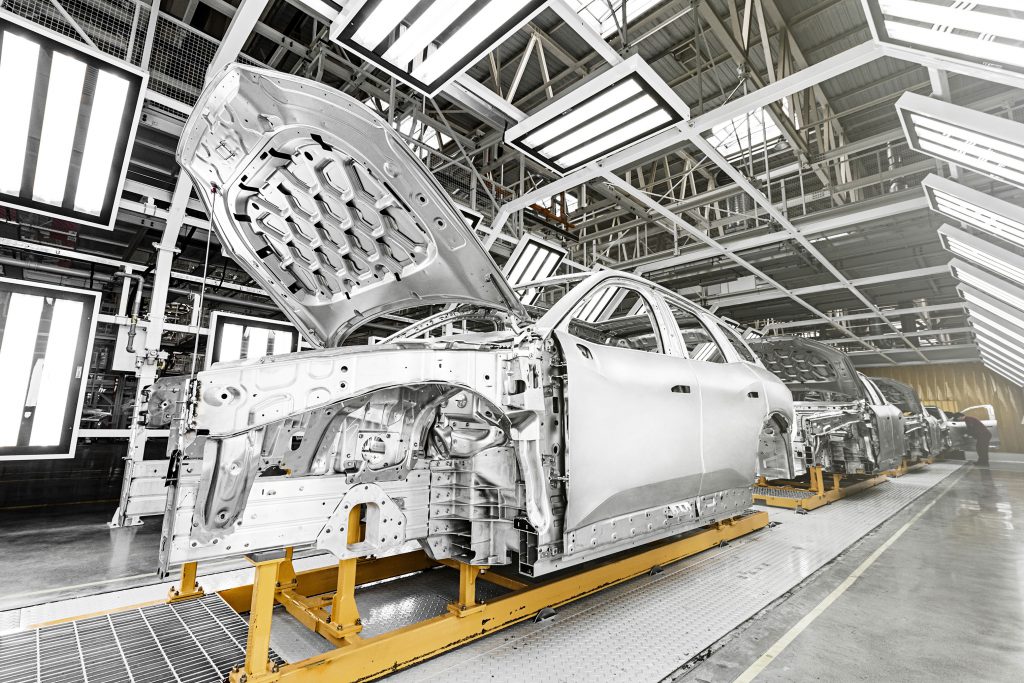
  • China’s annual vehicle production capacity – carrying either internal combustion engine or electric motors – was 55.5 million vehicles/year capacity in 2024, but was only half utilized (just 27.5 million vehicles were produced that year), while in 2025, Chinese output was expected to reach 35 million (still a low capacity utilization), displacing other economy’s sales and leaving the world with increased idle capacity, as global vehicle sales languish at 90 million; 
  • also in China, “The root cause of the cement sector’s current difficulties lies in the long-standing problem of overcapacity, which has now been amplified by weaker market demand” since 2021 “due to declining property investment and a slowdown in infrastructure construction,” according to the China Building Materials Federation, and
  • solar photovoltaic panels generated nearly 600 GW of new power in 2024 – mostly emanating from China – but there was, at that point, more than 1,000 GW of annual manufacturing capacity, and to store the power, lithium-ion batteries were produced at the scale of 2.5 TWh in 2023, but by 2024 there was 3 TWh of capacity and projections of 9 TWh by 2030, at a time demand was expected to rise only to 5 TWh.

(Renewable energy offers a curious form of capitalist ‘excess capacity’ – since this description obviously deserves scare quotes: for the sake of ecological sanity, it is a misnomer. So much more capacity is urgently needed for installation in every corner of the earth, but at an affordable price. And it’s becoming obvious that even mass production in China apparently cannot drive prices down to the point where capitalism can save itself from the climate catastrophe, given this disjuncture.)

As a result of core sectoral overinvestment, financial bubbling and trade turmoil, world capitalism is currently suffering the worst case of overaccumulation in recorded economic history. In a recent report by the Organization for Economic Cooperation and Development (OECD), the extent of recent overproduction emanating from China is illustrated by comparing investment rates of its firms (and also multinational corporate subsidiaries there) to sites elsewhere. China’s economy takes obvious leadership in ‘new economy’ sectors, amidst an overall investment boom that followed Beijing’s recent redirection of bank lending into manufacturing

However, whether this investment can be justified by sustained profitability remains to be seen, for as the OECD shows, China’s rates are generally lower overall than in other countries, and especially in several (mainly old-economy) sectors including semiconductors, fertilizers, chemicals, aluminium, steel, and aeronautics and defense. 

One reason for the overproduction of those goods, is the Chinese state’s ambition and ability to redirect credit flows (often at below-market rates), as can be seen in the year-on-year growth in Beijing’s (centrally-directed) lending to its own firms. This is a revealing case in which public policy amplifies capitalism’s underlying contradictions (the classic ‘pro-cyclical’ bias of neoliberalism). So after the early-2019 year-on-year increases in lending to China’s bubbly real estate sector hit $1 trillion, at the peak of the economy’s chaotic property speculation, then, contributing to the bubble’s burst, loans fell rapidly in 2021, down to no year-on-year growth by early 2024.  

In contrast, year-on-year growth in Chinese manufacturing finance rose from steady levels of just $60-90 billion in the 2016-20 period; and suddenly by late 2023 there were $700 billion worth of new manufacturing loans (compared to the year before). 

These trends appear to have continued, if the People’s Bank of China statistics are accurate; in September its staff reported that “outstanding medium and long-term loans to the manufacturing sector registered a year-on-year increase of 15.9%. Specifically, outstanding loans to the high-tech manufacturing sector increased by 13.4% year on year.” 

Hence in 2024-25, manufacturing output in China has been formidable, growing nearly 6% annually (more than ten times the 0.6% global manufacturing increase in 2024 and three times 2025’s expected increase of 1.9%). The result is a 2025 trade surplus that, for the first time, exceeded $1 trillion. 

But it is vital to keep the systemic features in mind, because in this process of serving capitalist global value chains, “China has made large transfers in value through trade and investment to the imperialist bloc,” according to Marxist economist Michael Roberts. 

This is obvious enough, but so too have peripheral countries like the DRC made large transfers in value to Chinese capitalism through, first, Congolese workers’ depletion of non-renewable resources that are inadequately compensated (either through royalties or various forms of profit reinvestment), thus depriving current and future generations of natural wealth; second, through massive greenhouse gas emissions whose cost we consider below; and third, through local pollution which in many cases can be extreme. All these features contribute to China’s role as a subimperial power.

Can Chinese-led industrialization save Africa?

How does China address its excessive local investment and untenable trade surpluses? One obvious strategy implemented since the early 2010s is when firms attempt so-called ‘going out’ from their immediate sites of overaccumulation, along the Belt and Road Initiative. This has included the establishment of much stronger connections to African markets, which should in turn permit more African exports. 

This process coincides, insists Ho-fung Hung, with “the increasing competition between Chinese capital and U.S. capital worldwide after China started to aggressively export its overaccumulated capital to the rest of the world in the wake of the global financial crisis of 2008.”

In contrast, on the optimistic end of the spectrum, Prashad argues, “China’s industrial capacity would be put at the service of Africa’s need for industrialization through the creation of joint ventures, industrial parks, a cooperation fund, and mechanisms for technology and science transfer. Africa-China trade has increased from $10 billion in 2000 to $282 billion in 2023. In 2024, the Chinese government upgraded its relationship with African states to ‘strategic partnerships’, enabling greater cooperation. We now have a test case for whether South-South cooperation can engender sovereign industrialization that breaks with the old patterns of plunder and dependency.” 

But on the pessimistic end, there are too many instances of adverse impacts from Chinese capitalism in Africa: deindustrialization through swamping local markets with surpluses (as NUMSA complains), especially as the displacement of Trump’s tariffs; broken promises on Special Economic Zone investments; brazen but unpunished corruption; excessive lending and then sudden cuts in credit lines; and heinous corporate behavior especially in the extractive industries, including extreme ecological damage. Each needs elaboration, in the pages below.

And one test case deserves more consideration: the rapid deindustrialization of South Africa underway in recent months thanks to the ‘dumping’ (i.e. sale at below the cost of production) of Chinese overaccumulated capital, according not only to the government in Pretoria – which in recent months punished imported Chinese steel, tyres, washing machines, and nuts and bolts with new tariffs – but also to NUMSA (which wants the same for cars), although it is ordinarily very pro-China. In South Africa, the manufacturing/GDP ratio was 24% in 1990 and has now sunk to 13%.

Formidable Chinese product competition means the African economies mentioned by Prashad as the continent’s lead industrial production sites, plus the largest in population (Nigeria), have not improved their manufacturing/GDP ratios since that 2015 FOCAC industrialization hype. Most such ratios, like South Africa’s, had already collapsed in the first round of 1990s-era trade liberalization. 

The optimal test case that many pointed to during the mid-2010s as Africa’s cutting-edge industrialization site, was Ethiopia, thanks to the sudden emergence of (largely sweatshop) manufacturers mainly in Addis Ababa, whose products benefited from the new train line to the port of Djibouti, built with the assistance of Beijing. As a result of the influx of Chinese firms’ local production of clothing, textiles, footwear and other light-industrial output, Ethiopia’s manufacturing/GDP rose rapidly from 3.4% at the low point in 2012, to 6.2% in 2017. 

However, that ratio subsequently fell to 4.3% in the period 2021-24. As the International Monetary Fund explained, “The share of manufactured goods such as textiles, leather and meat product in total exports had grown to 13.5% in Fiscal Year 2018/19, from a small base, but declined sharply thereafter to around 4% in the first nine months of FY2024/25, due to the pandemic, conflict, suspension from AGOA, and foreign exchange shortages that limited availability of intermediate imports.”

Those hard currency shortages led to a major financial crisis in late 2023, when the Addis Ababa regime declared bankruptcy on foreign loans, just days before the country officially joined the BRICS network. As a result of the default, Ethiopia was initially not permitted to become a formal member of the BRICS New Development Bank, for potential hard-currency credit infusions (nearly 80% of that bank’s lending is in the dollar or euro), although it is scheduled to join, at some stage. 

Then in mid-2024, a $2.56 billion International Monetary Fund package imposed all the classical Washington Consensus remedies on Ethiopians, including a 50% currency depreciation which was meant to spur manufacturing exports. Indeed a revival of sweatshop exports oriented to Chinese consumer markets apparently began in 2025, and Beijing began talks to potentially convert $5.4 billion of its dollar-denominated loans to Ethiopia into yuan by late 2025, on which a lower interest rate would be paid. Ethiopia was indebted to China for $7.4 billion of its $28 billion foreign debt in late 2023 (with $15.3 billion owed to international financial institutions).

But in Ethiopia, and across Africa more generally, foreign exchange reserves have shrunk due to the vicissitudes of Global North states and multilaterals. For all recipients, aid was cut in 2024 by 9%, and in 2025 by up to 17%. The peak year for Overseas Development Aid to Africa was 2020 at $73 billion, but especially since Russia invaded Ukraine in 2022, European capitals and London have replaced a great deal of aid for Africa with higher military budgets. 

Will Beijing step in? In aggregate, Chinese aid, investment and loans to Africa have also fallen since mid-2010s peaks, which also affected states’ foreign exchange reserves. China’s own new public and publicly-guaranteed loans to Africa collapsed from $32 billion in the peak year of 2016, to $1 billion in 2022. The year-end 2025 African foreign debt of $1.3 trillion includes $182 billion in Beijing’s known public and publicly-guaranteed loans. 

China had taken a decision in 2021, AidData researchers remind, to fund 128 rescue loan operations in 22 low-income countries facing debt distress, costing $240 billion. These included five African states – Angola, Sudan, South Sudan, Tanzania and Kenya – among which low-income borrowers were “typically offered a debt restructuring that involves a grace period or final repayment date extension but no new money, while middle-income countries tend to receive new money – via balance of payments (BOP) support – to avoid or delay default… These operations include many so-called ‘rollovers,’ in which the same short-term loans are extended again and again to refinance maturing debts.” 

The 2024 FOCAC did, however, denominate more financial flows in the Chinese currency, which could facilitate trade, alleviate forex shortages, and also lower transactions costs. Yet devils are in the details, for against all the logic argued above, according to the Centre for Global Development (which is generally neoliberal and welcomes Chinese lending): 

“Between 2015 and 2021, commercial creditors contributed about a third of all Chinese lending commitments over that period. These commercial lenders overtook policy banks between 2018 and 2021 … [and] are market-oriented, with loans that are more expensive and with shorter maturity than state-owned counterparts. Their need for risk mitigation, usually through Sinosure, raises the financing costs even higher. Over the next five years, a continuation of this trend where Chinese commercial lenders become an ever-larger segment of lending to Africa at non-concessional rates will only heightens the risks of debt distress.”

So the overall trends suggest that China’s extreme overaccumulation of manufacturing this year, as Trump’s tariffs cause chaos at a time of Belt & Road Initiative burn-out, there is no reason to expect FOCAC to, as Prashad hopes, “engender sovereign industrialization that breaks with the old patterns of plunder and dependency.” Africans should prepare for the opposite.

FOCAC’s declining pledges, 2006-24

FOCAC cycleNominal pledge (US$bn)Inflation-adjusted pledge (2024 US$bn)Annualized (2024 US$bn/yr)African population (bn)Per capita (2024 US$/person/yr)
20065.07.782.590.9522.72
200910.014.624.871.0284.74
201220.027.339.111.108.28
201560.079.4126.471.22021.69
201860.074.9524.981.31019.07
202140.046.3115.441.39411.08
202450.750.7016.901.49511.31

Source: http://www.focac.org/eng/

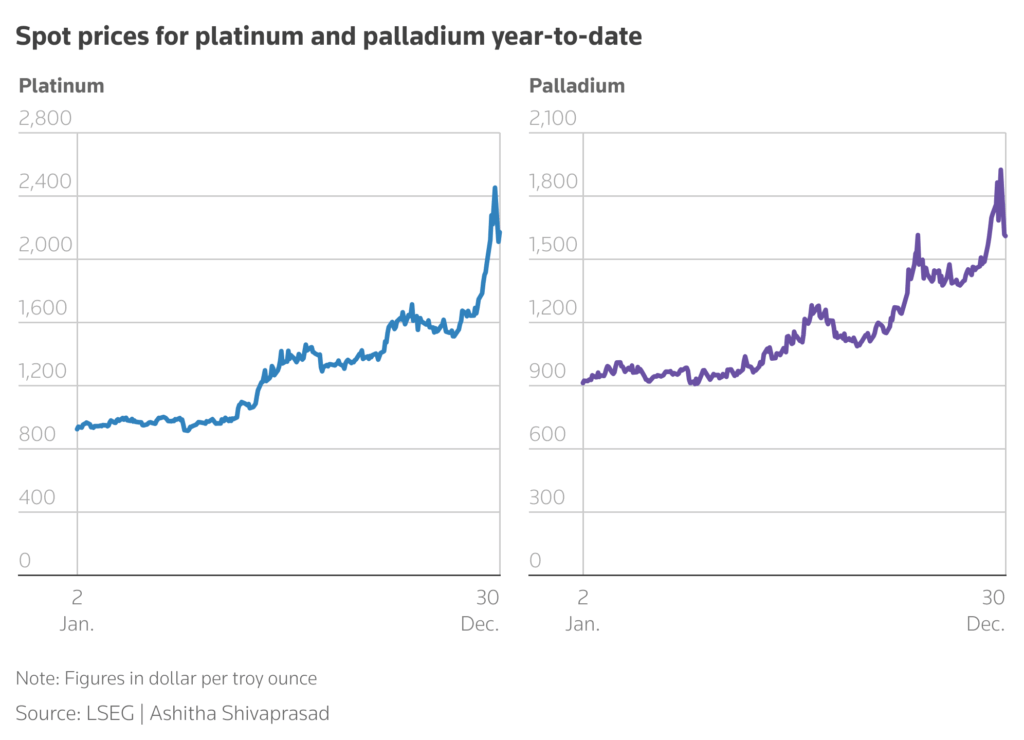
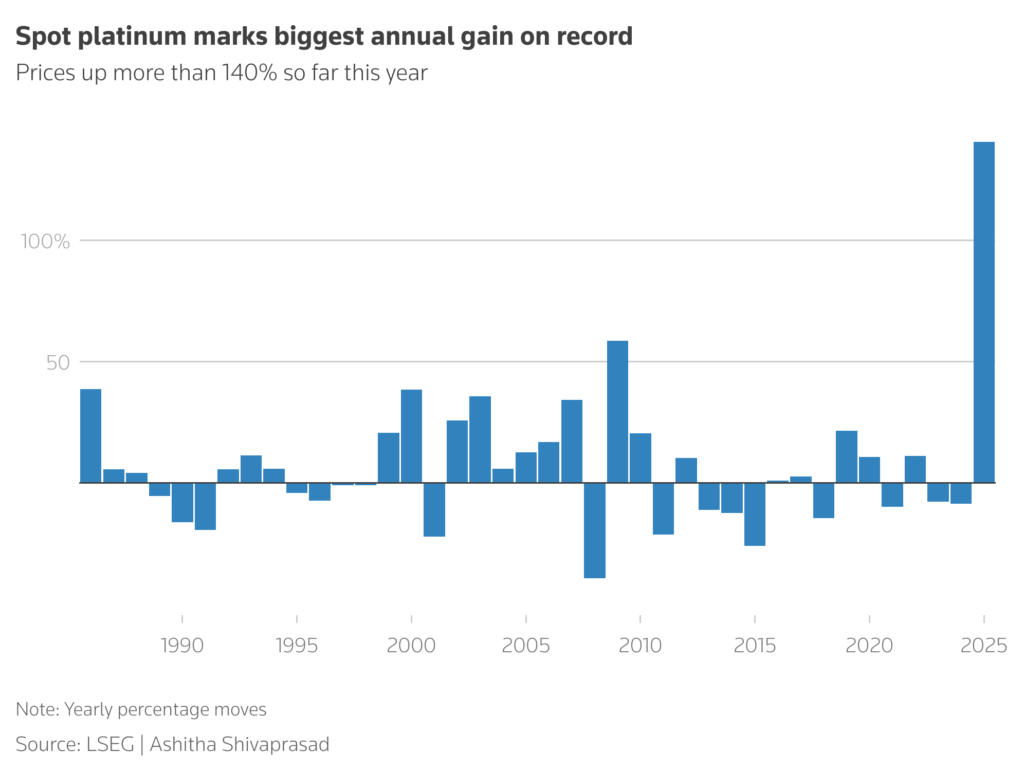
Also adversely affecting Africa’s hard currency revenues, most energy and mineral commodity markets crashed after their May 2022 peaks (with notable exceptions like gold and, recently, platinum). As a result, across the continent, there is less foreign exchange available to repay debt, especially when exacerbated by the higher interest rates imposed by the U.S. Federal Reserve from 2022-24. 

In 2025, Trump’s new tariffs on African exports to the U.S. represented an overall 10% levy in April, followed by higher amounts for many countries in August (e.g. South Africa at 30%). Annual remittances, generally paid by African migrant workers living in countries abroad to their family back home, rose in this period from $66 billion up to $110 billion in 2024, but are not expected to rise further due to rising Western xenophobia.

Are Chinese firms looting Africa?

In this desperate context, Ethiopia’s sweatshop experience could not be termed genuinely ‘sovereign industrialization,’ no doubt Prashad would agree. Nor should any African – or sympathetic observer – tolerate the Chinese-led extractive industry plunder of many economies, resulting not only in extreme ecological damage in general terms, but in a series of specific scandals and social resistance. 

As noted above, there are usually three categories to consider, of ecological reparations due to non-renewable resource depletion, greenhouse gas emissions and other forms of localised pollution. Michael Roberts acknowledges, in a helpful essay on environmentalism, “a continual battle by capital to control and lower rising raw material prices as natural resources are depleted and not renewed, adding another factor to the tendency of the rate of profit to fall.” 

And in a 2021 co-authored analysis of the ‘Economics of Modern Imperialism’, Roberts argues,

“Colonialism and modern imperialism do not exclude each other. Colonialism is the appropriation of natural resources, military occupation, the direct state control of colonies and the stealing by the imperialist countries of commodities not produced capitalistically. But colonialism contains in itself the germs of modern imperialism. This is the appropriation by capitals in the imperialist countries of the surplus value produced by capitals in the colonies through the trade of the commodities with high technological content produced in the imperialist countries for the capitalistically produced raw materials or industrial goods produced with lower technological content in the dominated countries. The result is unequal exchange, the appropriation of international surplus value through international trade.”

Roberts concludes that the Chinese economy therefore retains a relatively low – and now fast-falling – share of global value chain profits due to unequal exchange processes. The distribution, marketing, financing and research and development departments of Western corporate headquarters squeeze out monies that could otherwise be paid to both Chinese and Congolese laborers and to communities now underpaid for their work in extraction of raw materials, in super-exploitative production systems, and in goods transport.

There are some on the left who object to a critique based in part upon imperial-subimperial collaboration in the looting of Africa. Last year, Prashad’s colleagues at Tricontinental offered a different view of the DRC, based on competition between the Chinese on the one hand; and on the other, Western firms like Swiss-headquartered, London-listed Glencore (whose largest share of its $70 billion capitalization is actually registered on the Johannesburg Stock Exchange) and Canada’s Ivanhoe. Tricontinental authors claim that “Chinese interests therefore lie in keeping mineral and metal processing within the DRC and building an industrial base for the country.”

This counter-intuitive conclusion is based on how, in Tricontinental’s interpretation, “The entry of the Chinese state and private Chinese companies into Africa over the past two decades has provided competition against the Global North countries and their mining companies. This was the first time that these multinational corporations faced direct competition, a shift that provided the space for the Congolese government to amend the mining code in 2018 on more beneficial terms.” 

Admitting that, in the process, Chinese firms gained “control of fifteen of the DRC’s seventeen mining complexes,” Tricontinental authors turn to this justification: “In the extractivism debate, the Global North, its eyes set on furthering its own agenda, has fixated on China’s role in the region as the world’s leading consumer of cobalt, nearly 80% of which it uses in its rechargeable battery industry. What is often left out of the discussion, however, is that, as the largest manufacturing country in the world, China uses Congolese minerals and metals to produce goods that are consumed across the globe, including in the DRC and the Global North.”

Indeed this subimperial location within global value chains makes China subject to an unequal ecological exchange critique. For behind the general need for resource extraction and (limited) processing of minerals that goes on in Africa, are scandalous conditions. Without sinking into Sinophobia, it is useful to recall some of the highest-profile cases, because Beijing simply fails to respond to the obvious need to curtail Belt and Road abuse by Chinese firms: 

In addition to often-extreme human rights violations, these represent obvious forms of unequal ecological exchange, in which African economies lose net wealth, even if Chinese purchases of raw materials raise levels of foreign exchange and national income, creating (low-paid) jobs and providing a modicum of royalties, taxes and infrastructure. 

Typically outweighing such benefits, though, damage is not limited to local pollution and displacement, or to permanent depletion of non-renewable resources that leave both current and future generations impoverished. For example, instead of burning coal, gas and oil, their hydrocarbons should be left underground and only later, if needed, exploited for non-combustible purposes (lubricants, synthetic materials, pharmaceutical products, etc).

On top of this damage, the extraction and processing of minerals also entail an enormous ‘social cost of carbon’ caused by CO2 and methane emissions in mines and smelters. This should be priced (by taxation not carbon trading) in the region of $1584/tonne of CO2 (according to a recent National Bureau of Economic Research study), rendering a great deal of the pollution-intensive extractive+processing activity as uneconomic. 

The latter damage will create new ‘polluter-pays’ climate debtors out of low-income African economies, if the International Court of Justice’s July 2025 advisory opinion on liabilities for socio-ecological reparations is to be taken seriously. Following the court’s finding against states which do not limit their firms’ emissions, much more climate-debt litigation is inevitable. In late 2024, Beijing and many other high-polluting countries’ governments had opposed any liability judgement because, as the imperialist and subimperial powers together insisted, the Paris Climate Agreement “does not involve or provide a basis for any liability or compensation.”

The best opportunity for a Chinese climate debt payment to Africa arose in September 2021 when Xi Jinping announced, “China will step up support for other developing countries in developing green and low-carbon energy, and will not build new coal-fired power projects abroad.” 

However, not only is renewable energy still a for-profit commodity, unaffordable for the vast majority. In addition, in Zimbabwe, residents of the wretched coal-mining town of Hwange (near Victoria Falls) know that Xi’s was just one more broken climate promise, what with several Chinese coal-fired power plants under construction there.

In sum, unless the Chinese state suddenly begins regulating its firms’ emissions and abuse of African resources and people, and finds creative ways to pay a wide range of ecological reparations, it appears extremely unlikely that a genuine industrialization initiative will emanate from Chinese investors. 

But having set the context of blame for Africa’s recent bout of underdevelopment both in Chinese overproduction and Trump’s tariffs – among the main new factors that amplify existing problems of commodity export dependency, excessive debt, structural adjustment policies and climate damage – the next essay will have to assess various strategies emerging among some leading African activists, ranging from nationalistic dirty growth to internationalist degrowth en route to eco-socialism.

avatar

Patrick Bond is a political economist, political ecologist and scholar of social mobilisation. From 2020-21 he was Professor at the Western Cape School of Government and from 2015-2019 was a Distinguished Professor of Political Economy at the University of the Witwatersrand School of Governance. From 2004 through mid-2016, he was Senior Professor at the University of KwaZulu-Natal School of Built Environment and Development Studies and was also Director of the Centre for Civil Society. He has held visiting posts at a dozen universities and presented lectures at more than 100 others.