Tuesday, January 13, 2026

Greece airspace shutdown exposes badly outdated systems

By AFP
January 13, 2026


Flights were grounded or delayed for several hours - Copyright AFP Sakis Mitrolidis


John HADOULIS, Yannick PASQUET

A deeply embarrassing systems failure which forced Greece to close its airspace for several hours with pilots unable to speak to air traffic control, has exposed badly outdated communication systems at Athens International Airport — one of the world’s top travel destinations.

Flights had to be diverted to neighbouring countries with thousands of travellers hit after the “unprecedented” technical malfunction on January 4, which baffled experts.

Even more than a week after the chaos, questions as to what sparked the glitch — and how the system returned online — remain unanswered, with a report expected this week.

According to the Greek civil aviation authority, the YPA, the malfunction began at 8:59 am (0659 GMT) when multiple radio frequencies serving Athens airspace were hit by continuous “noise” interference.

The agency’s transmitters began sending out “involuntary signal emissions”, YPA said.

As technicians raced to radio relay stations on top of mountains near Athens and further afield to locate the problem, planes were essentially flying blind, experts said — unable to communicate with air traffic controllers — until the incident began to gradually abate four hours later.

“Hundreds of flights were directly affected — those in contact with air traffic control or already in the air that changed their route,” Foivos Kaperonis, a board member of the Greek air traffic controllers association (EEEK), told AFP.

Athens International Airport handled over 280,000 flights last year, an average of over 760 a day.

Officials have insisted that Athens airspace was quickly cleared of traffic, and that flight safety was not compromised.

The system returned to full operation at 5 pm (1500 GMT), with flights restored 45 minutes later, the YPA said.

No signs of a cyberattack or intentional sabotage were detected, YPA said. And nothing suspicious was found at the relay stations.

Government spokesman Pavlos Marinakis later confirmed there was “no sign” of a cyberattack.


– ‘Flying deaf’ –


“We have an exact picture of what happened. What we don’t yet know is how it happened,” Michael Bletsas, one of Greece’s top computer engineers and head of the Greek cybersecurity authority, told state TV ERT.

Planes “may have flown ‘deaf’ for a short while… but under no circumstances was there a flight safety problem,” he said, with pilots still having their radar.

“Every system fails at some point,” said Bletsas, who is on the committee investigating the incident.

Kaperonis is much less sanguine.

“Air traffic controllers could see the aircraft on the radar display, but they could neither hear the pilots nor speak to them,” he said.

“In other words, if two aircraft had been on a collision course, controllers would not have been able to give them instructions,” he said.

George Saounatsos, the head of the YPA, said a report on the incident by a hurriedly-convened investigative committee would likely be delivered this week.

“It was a rare event — it’s hard for this to happen again, even statistically,” he told Open TV.

A major infrastructure overhaul costing 300 million euros ($350 million) is currently underway, which includes digital transmitters that will be delivered this year, Saounatsos said.


– ‘Outdated’ systems –


Greece’s junior transport minister has admitted the airport’s communications systems should have been upgraded “decades” earlier.

“These are systems we know are outdated,” Konstantinos Kyranakis told Action24 TV.

The Athens airport tower radar dates from 1999, air traffic controllers note.

“Clearly, systems that should have been replaced decades ago, cannot be replaced in nine months,” Kyranakis said, who was appointed in March.

Four different transport ministers have held the portfolio since 2019 when conservative Prime Minister Kyriakos Mitsotakis came to power.

Bertrand Vilmer, an aeronautics expert and consultant at Paris-based Icare Aeronautique, said Athens’ largely analog-based systems “are robust, but ones for which there’s no longer really any possible maintenance because they’re old.”

Last month the European Commission referred Greece to the EU Court of Justice for failing to put in place measures to design and publish performance-based navigation (PBN) procedures at Greek airports that should have been in place five years ago.

Air traffic controllers, who have clashed with YPA for years over staff and infrastructure shortages, insist that the January 4 incident was a debacle waiting to happen.

They say that the incident is particularly concerning in a country heavily reliant on tourism that has seen record visitor numbers in recent years.

“The air traffic control unit where the problem appeared handles up to nearly 5,000 flights per day during the summer season,” Kaperonis said.

Air traffic controllers require “long rest periods” due to the difficulty of their job, Vilmer said.

YPA and the transport minister’s office did not respond to questions.

Athens International Airport last year handled nearly 34 million passengers, an increase of 6.7 percent over the previous year.

Critics have also noted that Greece’s worst rail disaster, when two trains collided in 2023, killing 57 people — which brought hundreds of thousands onto the streets to protest — was also partly caused by chronic infrastructure and staffing failings.
Volvo Cars pauses battery factory after fruitless partner search


By AFP
January 13, 2026


Volvo Cars says it still wants to make batteries eventually, but can't say when or how - Copyright AFP/File ANDREW CABALLERO-REYNOLDS

Swedish automaker Volvo Cars said Tuesday that it was pausing operations at a battery factory under construction, dismissing all 75 workers there, after failing to find a partner for the business.

Volvo Cars, majority-owned by the Chinese conglomerate Geely, last year took full control of NOVO Energy, a subsidiary it had previously shared with Northvolt, a battery maker that went bankrupt in March.

Northvolt’s failure, one of the biggest in Swedish corporate history, highlights the difficulties for EU battery producers facing by high costs and Chinese competition.

Last month, the EU Commission said it would provide 1.5 billion euros ($1.76 billion) to support the bloc’s battery producers through interest-free loans.

NOVO Energy, founded in 2021, was to build a mega battery factory supplying Volvo Cars and Geely-owned Polestar.

But the business requires an external technology partner, which Volvo said it had failed to find after a search it started last year.

“Until a new technology partner is secured, NOVO Energy can no longer proceed with its operations as previously planned,” Volvo Cars said. “As a result, NOVO Energy AB today announces layoffs that affect all positions in the company.”

Volvo Cars said it maintained its “long-term ambition to produce batteries for its electric cars in the Gothenburg, Sweden, area”.

But it said it was not possible to say when battery production could start, “or in what organisational structure this might happen”.


Davos elite, devotees of multilateralism, brace for Trump


By AFP
January 13, 2026


Donald Trump addressing last year's World Economic Forum in Davos via a giant video screen - Copyright AFP FABRICE COFFRINI


Martine PAUWELS

All eyes will be on Donald Trump next week as politicians and business leaders head to the World Economic Forum, wondering how to square the mercurial US leader with the Davos creed of open markets and multilateralism.

After a year of roiling the liberal international order since his re-election, Trump will descend on the Swiss ski resort for a meeting whose theme this year is “A Spirit of Dialogue”.

“We’re pleased to welcome back President Trump,” Borge Brende, the forum’s chief executive, told an online press conference ahead of the Davos summit, six years after Trump’s previous in-person appearance during his first term.

He will bring along the largest US delegation ever, Brende added, setting the stage for private meetings on geopolitical flashpoints from Ukraine and Venezuela to Gaza, Greenland and Iran.

“The interest is to come together at the beginning of the year to try to connect the dots, decipher, and also see areas where we can collaborate,” Brende said.

“Dialogue is not a luxury. Dialogue is really a necessity.”

But after Trump’s protectionist tariff blitz and marked disdain for traditional US allies since last year’s re-election, the chances of forging common strategies for the world’s biggest challenges appear slim.

Brende acknowledged that “our annual meeting is taking place against the most complex geopolitical backdrop since 1945”.

For Karen Harris, an economist at the consulting firm Bain & Co., “2025 will ultimately be seen as the year in which neoliberal globalisation ended and … the post-globalisation era began.”

It’s a shift in which “the US prioritises national security, its own security, and uses the economy as a tool to achieve some of those goals”, she said.

“And that, by the way, is a very Chinese view of the economy as well.”

China is sending Vice Premier He Lifeng to Davos, while EU Commission chief Ursula von der Leyen and Ukraine’s President Volodymyr Zelensky will also attend.

Trump is bringing with him at least five key secretaries including Secretary of State Marco Rubio and Treasury Secretary Scott Bessent, Brende said, as well as Steve Witkoff, his special envoy for the Middle East and Ukraine.


– ‘Broad rejection’ –


Addressing Davos by video last year just days after his second inauguration, Trump had warned nations to shift manufacturing to the US or face punishing tariffs — a direct repudiation of decades of ever-opening trade.

In his latest upending of the global order in place since World War II, Trump in early January pulled the United States out of 66 international organisations including around half linked to the United Nations.

This rejection of cooperative partnerships “is precisely a broad rejection of multilateral institutions, on the view that international cooperation is inconsistent with ‘winning’ a global competition that is seen as a zero-sum game,” said Philippe Dauba-Pantanacce, head of geopolitical analysis at the British bank Standard Chartered.

As a result, even if global trade manages to adapt to Trump’s tariff frictions, “we may end up with a world that continues its globalisation, maybe with some adaptation and changes but… increasingly without the US”, Dauba-Pantanacce said.

A case in point is the European Union’s agreement this week to the Mercosur trade deal with South American countries, or China’s shift of exports from the US to other parts of the globe.

With his tariffs, trade “is a subject where Trump has made a lot of noise”, Pascal Lamy, former head of the World Trade Organization, told AFP.

“But unlike what has been the case with geopolitics, whether it’s Ukraine, China, Iran or Venezuela, the impact on the global economy has been limited so far,” he said.

Among the 850 CEOs or board chairs set to attend are Nvidia’s Jensen Huang and Microsoft’s Satya Nadella.


THE CABAL

Central bank chiefs voice ‘full solidarity’ with US Fed, Powell


By AFP
January 13, 2026


US Federal Reserve Board Chairman Jerome Powell blasted the subpoena as Trump's pressure campaign for another rate cut - Copyright AFP SAUL LOEB

The heads of major central banks have thrown their support behind the US Federal Reserve and its chairman Jerome Powell, saying in a joint statement Tuesday that it was “critical to preserve” their independence.

US prosecutors have issued subpoenas against Powell threatening a criminal indictment, an unprecedented move widely seen as an escalation of President Donald Trump’s campaign against the central bank.

The inquiry prompted a rare public rebuke by Powell on Sunday, who vowed to continue setting monetary policy “without political fear or favor”.

“We stand in full solidarity with the Federal Reserve System and its Chair Jerome H. Powell,” said the statement signed by chiefs of the European Central Bank, the Bank of England and others.

“The independence of central banks is a cornerstone of price, financial and economic stability in the interest of the citizens that we serve,” it added.

“Chair Powell has served with integrity, focused on his mandate and an unwavering commitment to the public interest.”

The statement was also signed by the central bank chiefs of Australia, Brazil, Canada, Denmark, South Korea, Sweden and Switzerland, as well as the chairman of the Bank for International Settlements.

The US inquiry concerns a $2.5 billion renovation of the Fed headquarters in Washington, which Trump has repeatedly attacked Powell of mismanaging.

Last year, Trump floated the possibility of firing Powell over cost overruns for the historic buildings’ facelift.

He has also slammed Powell as a “numbskull” and “moron” for the Fed’s policy decisions and not cutting borrowing costs more sharply.

In his video statement Sunday, Powell dismissed the renovation and testimony as “pretexts”.

“The threat of criminal charges is a consequence of the Federal Reserve setting interest rates based on our best assessment of what will serve the public, rather than following the preferences of the president,” he said.

WHO says sugary drinks, alcohol getting cheaper, should be taxed more


By AFP
January 13, 2026


The World Health Organization wants taxes raised on sugar-sweetened drinks - Copyright AFP FABRICE COFFRINI


Robin MILLARD

Sugary drinks and alcohol are getting relatively cheaper, the World Health Organization said Tuesday, urging countries to hike taxes to reduce consumption levels and boost health funding.

The WHO said consistently low taxes on the products in most countries were fuelling obesity, diabetes, heart disease and cancers.

“Weak tax systems are allowing harmful products to remain cheap while health systems face mounting financial pressure from preventable non-communicable diseases,” the UN health agency said.

The organisation said that while such drinks generate billions of dollars in profit, governments capture a relatively small share of that through health-driven taxes, leaving societies to bear the long-term health and economic costs.

“Health taxes are one of the strongest tools we have for promoting health and preventing disease,” WHO chief Tedros Adhanom Ghebreyesus said in a statement.

“By increasing taxes on products like tobacco, sugary drinks, and alcohol, governments can reduce harmful consumption and unlock funds for vital health services.”

Tedros told a press conference that in poorer countries left struggling as aid funding dries up, such taxes could help make the transition towards sustainable self-reliance in running health systems.

– ‘Powerful industries with deep pockets’ –

Jeremy Farrar, WHO assistant director-general in charge of health promotion, disease prevention and care, said the evidence on tobacco taxation reducing consumption was clear — and sugary drinks should be seen in the same light.

“This is also about using taxation as a move to shift behaviour,” he said, adding it could also bolster prevention in countries struggling to deal with the rise in non-communicable diseases, and allow countries to invest in healthcare.

Tedros warned that health taxes were not simple to implement.

“They can be politically unpopular, and they attract opposition from powerful industries with deep pockets and a lot to lose,” he told reporters.

“But many countries have shown that when they are done right, they are a powerful tool for health,” he said, citing measures in the Philippines, Britain and Lithuania.

The WHO is urging states to raise and redesign their taxes as part of its “3 by 35” initiative, aimed at increasing the prices of tobacco, alcohol and sugary drinks by 2035.
India hunts rampaging elephant that killed 20 people


Asian elephants are now restricted to just 15 percent of their original habitat.

By AFP
January 13, 2026


India is home to the majority of the world's remaining wild Asian elephants, like this herd bathing in Assam - Copyright AFP/File Biju BORO

Indian wildlife officers are hunting a rampaging wild elephant blamed for killing at least 20 people and injuring 15 others in the forests of Jharkhand, villagers and officials said Tuesday.

The elephant, a lone bull, is reported to have gone on the rampage for nine days beginning in early January, creating panic in the rural West Singhbhum district.

“We are trying to trace and rescue this violent wild elephant that killed so many people,” government forest officer Aditya Narayan told AFP, confirming the toll of 20 dead.

Children and the elderly are among the dead, as well as a professional elephant handler, known as a mahout.

But after wreaking a trail of destruction, it had not been spotted since Friday, despite multiple patrols in the area.

Officials said search teams, aided by drones, are combing dense forest tracts, including a national reserve in neighbouring Odisha state.

Fear has driven residents of more than 20 villages to abandon their farms or barricade themselves indoors at night, elected village head Pratap Chachar told AFP.

“A police team, or forest official vehicle, visits in the night to provide essential help to villagers,” Chachar said.

Hundreds of thousands of Indians are affected each year by crop-raiding elephants.

Asian elephants are now restricted to just 15 percent of their original habitat.

The usually shy animals are coming into increasing contact with humans because of rapidly expanding settlements and growing forest disturbance, including mining operations.

As elephant habitats shrink, conflict between humans and wild elephants has grown — 629 people were killed by elephants across India in 2023-2024, according to parliamentary figures.

The elephants that pose the most danger to humans are often rogue bulls, solitary male animals enraged during “musth”, a period of heightened sexual activity when testosterone levels soar.

A former forest official said the elephant was likely in musth, and may now have calmed down and rejoined its herd.

India is home to the majority of the world’s remaining wild Asian elephants, a species listed as endangered by the International Union for Conservation of Nature (IUCN) and increasingly threatened by shrinking habitat.

The Wildlife Institute of India last year issued a new estimate, that put the country’s wild elephant population at 22,446, a report that also warned of the deepening pressures on one of India’s most iconic animals.
Cold winter and AI boom pushed US emissions increase in 2025

RESULTS OF TRUMP'S WAR ON RENEWABLES


By AFP
January 13, 2026


Data center buildout helped push significant growth in US power sector emissions in 2025, according to a Rhodium Group analysis 
- Copyright AFP/File ANDREW CABALLERO-REYNOLDS


Issam AHMED

Greenhouse gas emissions in the United States rose last year, snapping a two-year streak of declines as cold winter temperatures drove demand for heating fuel and the AI boom led to a surge in power generation, a think tank said Tuesday.

The 2.4 percent increase in the world’s largest economy came as President Donald Trump and Republicans in Congress enacted a series of policies hostile to climate action, though the authors of the Rhodium Group report said the full impact of those decisions will only be felt in the coming years.

Rich nations, including Europe’s largest economies Germany and France, are slowing the pace of planet-warming gas reductions even as global temperatures continue to soar, with 2025 set to be confirmed as the third-hottest year on record.

US emissions fell in 2024 by 0.5 percent and in 2023 by 3.5 percent, after the economy rebounded from the Covid pandemic and emissions rose in both 2021 and 2022, by 6.3 percent and 1.2 percent respectively.

Building emissions rose 6.8 percent, followed by the power sector where emissions increased by 3.8 percent, the report found.

“Weather is bumpy year-to-year — we tend to see building emissions bump around like this due to higher fuel use for heating,” Rhodium Group analyst and the report’s co-author Michael Gaffney told AFP.

“But in the power sector this is about growing significant demand from data centers, cryptocurrency mining operations and other large load customers,” he added.

Compounding matters, high natural gas prices driven by heating demand and increasing liquefied natural gas (LNG) exports allowed a comeback for coal, the “dirtiest” fossil fuel, which accounted for 13 percent more electricity generation than in 2024.

Still, solar had a strong year, surging by 34 percent and helping lift the grid share of zero-emitting power sources by one percentage point to a record-high 42 percent — even as wind growth slowed and nuclear and hydropower output held steady.

In transport, the highest-emitting sector, emissions were nearly flat despite a fifth straight year of record road traffic, as the vehicle fleet became more efficient and consumers rushed to buy electric and hybrid vehicles before tax credits expired.


– Solar energy up –


The United States is the world’s second-largest emitter after China, but has the highest cumulative emissions since the start of the industrial era in the mid-19th century.

US greenhouse gas emissions have generally trended downward since peaking in 2007, averaging a decline of around one percent per year despite periods of flat or rising emissions, driven by natural gas replacing coal, a growing share of renewables in power generation, improved energy efficiency and more.

Since taking office, Trump has declared war on renewable energy — from abruptly halting wind farm permits to signing into law legislation that brought an early end to clean energy tax credits and revoking electric vehicle incentives.

He has also opened more public lands to drilling, while his administration has sought to repeal regulations aimed at limiting emissions of the super-pollutant methane from oil and gas facilities.

But co-author Ben King told AFP that growth in solar generation and electric vehicle sales still pointed to “sustained progress.”

What this all means for the medium and long term remains unclear, though the United States is far off track to meet its previous Paris Agreement target of cutting emissions 50–52 percent by 2035 relative to 2005 levels, set under former president Joe Biden.

“Solar, wind, batteries, these are some of the cheapest things to bring onto the grid right now and some of the most available things,” said King.

“So there’s some economic impetus to be doing that, regardless of whether the White House or Congress, or whoever likes it or doesn’t.”

The Rhodium Group generates its annual estimates using a combination of official data and — because government greenhouse gas inventories have a significant lag — supplements this with modeling based on economic and power-generation data.

But since the Trump administration is no longer expected to collect relevant data, future forecasts are set to become more difficult.

GREEN REVANCHISM

France climate goals off track as emissions cuts slow again


By AFP
January 13, 2026

CAPITALI$M IS UNSUSTAINABLE

Wealthy economies need to make faster, deeper cuts to the greenhouse gas emissions causing climate change - Copyright AFP FABRICE COFFRINI
Julien MIVIELLE

France’s cuts to greenhouse gas emissions slowed for a second straight year in 2025 and remain well off track to meeting its climate goals, according to provisional government-commissioned estimates published on Tuesday.

The slowdown comes as government appetite for climate action flags and major economies struggle to make good on their pledges to reduce planet-warming pollution.

France’s emissions were estimated to have declined 1.6 percent year-on-year, said Citepa, a non-profit organisation tasked by France’s ecology ministry with tallying the country’s greenhouse gas inventory.

The reduction of 5.8 million tonnes of CO2 equivalent was “far below the pace needed to reach 2030 targets”, which would require cuts nearly three times larger, Citepa said.

“The decrease in emissions is confirmed for 2025. This is an encouraging sign but it is not enough,” Monique Barbut, France’s ecological transition minister, said in a press release.

She said all sectors needed to double their efforts to make cuts in greenhouse gases.

The result echoes a slowdown in neighbouring Germany, where emissions fell just 1.5 percent in 2025, the Agora Energiewende expert group said in its annual report last week.

Emissions in the United States meanwhile rose 2.4 percent last year, the Rhodium Group think tank said on Tuesday, spurred by demand for heating and electricity for the AI boom in the world’s biggest economy.

France unveiled in December its updated pathway for achieving carbon neutrality by 2050.

To stay on track, greenhouse gas emissions need to fall 4.6 percent on average every year until 2030.

After France slashed its output by 3.9 percent in 2022 and 6.8 percent in 2023, the rate slowed sharply to 1.8 percent in 2024.

Citepa had earlier predicted a decline of just 0.8 percent in 2025 but said fresh data and updated methods of calculation had allowed a “more accurate” estimate for the full year.


– Climate risk –


Big polluting nations most responsible for climate change are under pressure to make faster and deeper cuts to the emissions driving record-breaking global temperatures and more extreme weather events.

Scientists say the last three years have been the hottest globally on record.

France encouraged energy saving after Russia’s invasion of Ukraine in 2022 but since then has faltered in decarbonising some of its most polluting industries.

While improvements were recorded in 2025 in heavy-emitting sectors such as industry, agriculture and transport, they remained virtually flat in energy and waste treatment, Citepa said.

The latest assessment highlighted the urgency for France to phase out its use of fossil fuels, said Anne Bringault, a director at Climate Action Network France.

“It is high time to take seriously the climate risk but also the geopolitical risk of making us suffer from our dependence on fossil fuels, which are overwhelmingly imported,” she told AFP.

The European Union has pledged to cut its net greenhouse gas emissions by 90 percent by 2040 compared to 1990 levels.

It achieved a 37-percent reduction by 2023.

Study: Western populations endorse support for Ukraine


Ludwig-Maximilians-Universität München


New study by LMU and the University of Konstanz shows broad public approval for the support of Ukraine to maintain its political and territorial sovereignty.

The possibility of high casualty numbers and the risk of nuclear escalation constrain support and carry more weight than economic costs.

Over 10,000 people in five major NATO countries, supporting Ukraine, were surveyed for the study.

Most people in the United States, United Kingdom, Germany, France, and Italy clearly endorse military support for Ukraine. They overwhelmingly reject Russia's positions on territorial claims and restrictions on Ukraine's political sovereignty. However, their approval has its limits: In particular, high casualty numbers for Ukraine and the danger of nuclear escalation reduce public backing, while economic burdens are scarcely a factor for the publics. These were the findings of a joint project located at LMU, in which researchers from LMU and the University of Konstanz compared data from a survey of the largest NATO arms exporting countries. This was the first study of its kind and its results have appeared in the journal Nature Communications. The survey was conducted between June and August 2023.

Over 10,000 people were surveyed for the study, which was carried out by Junior Professor Lukas Rudolph from the University of Konstanz and Fabian Haggerty and Professor Paul W. Thurner from the Geschwister Scholl Institute of Political Science at LMU Munich. “We investigated whether Western governments can count on stable support from their populations for the support of Ukraine,” explains Paul W. Thurner, Chair of Empirical Political Research and Policy Analysis at LMU. A key part of this was ascertaining how citizens weighed up the moral, strategic, and economic costs of support for Ukraine.

New study design allows causal inferences

The basis of the study, which was financially supported by the German Foundation for Peace Research (DSF), were two survey experiments. In the first, participants were asked to evaluate war scenarios and their possible consequences – such as military losses, territorial concessions, and the risk of nuclear escalation. The second experiment concerned the specific consequences of political measures, as participants were asked to evaluate things like the delivery of tanks, fighter jets, and air defense systems and specify what consequences they would expect from the respective form of support – such as more human suffering and material destruction in Ukraine or a faster end to the war.

“This form of survey experiment allows us to draw causal inferences as you can with lab experiments,” says Thurner. “Unlike conventional surveys, we don’t just pose the simple question as to agreement or disagreement, but simulate precisely the kind of complex dilemmas that policymakers face, or which we hear discussed in talk shows every day.” This enables the researchers to precisely measure how people weight specific political options with respect to abstract war scenarios – and what are the strongest influences on their decisions.

“The results show that although the majority clearly endorses support for Ukraine,” says Rudolph, “the consideration of possible human suffering – especially high civilian casualties on the Ukrainian side – limits their approval of certain military strategies.” Meanwhile, the risk of nuclear escalation also weighs heavily in the balance. By contrast, financial disadvantages, expressed in terms of gross domestic product, play an “astonishingly” small role, notes Rudolph.

Similar patterns in all five countries

While the answers of the respondents across the five Western countries exhibit virtually identical patterns in relation to humanitarian costs, economic disadvantages, and risks of escalation, the limits of approval vary sharply on other issues. Respondents in the United Kingdom, Germany, and United States strongly insist on the full sovereignty of Ukraine, whereas respondents in France and Italy are less forceful in their rejection of curtailments to Ukrainian sovereignty. And with regard to possible territorial concessions, Italian citizens in particular have a less critical attitude and differentiate themselves in this way from the publics in the other four countries.

“The study also reveals a strong polarization,” explains Fabian Haggerty. “Depending on a person’s political orientation or worldview, opinions on support for Ukraine diverge sharply.” This polarization does not run along classic left-right lines, but according to attitudes toward the West: Thus, around a quarter of respondents with a strongly pro-Western attitude maintain their support even in the face of large risks and costs, whereas a similarly large proportion of respondents with anti-Western (pro-Russian) attitudes view this with skepticism.

Divided opinions on tanks and fighter jets

This difference becomes particularly apparent in relation to concrete weapons aid. Although the delivery of air defense systems to Ukraine is welcomed in all groups that fundamentally endorse support for the country, opinions on tanks and fighter jets widely diverge. Whereas the pro-Western group associates this with a shortening of the duration of the war, for instance, the anti-Western group sees risks. The sending of Western ground troops, meanwhile, is rejected by almost all respondents.

“Our investigation is the first systematic study of how Western populations weigh complex decisions and potential consequences in relation to a highly politicized war,” explains Thurner. “The clear public backing for the support of Ukraine on the one hand, and the distinct polarization and red lines for the support within Western society on the other, show that governments must carefully weigh up humanitarian risks and escalation dangers. Only then can they maintain the long-term support of voters.”

Denmark, Greenland set for high-stake talks at White House

By AFP
January 13, 2026


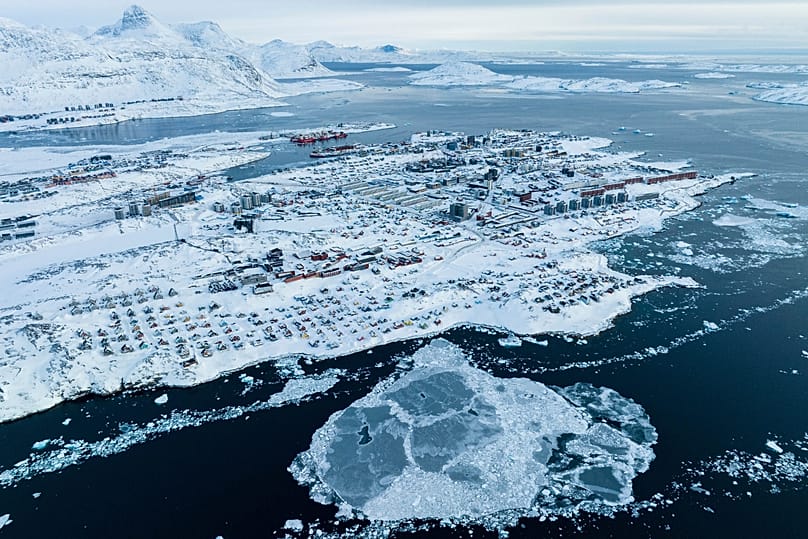
Nuuk, Greenland - Copyright AFP/File Odd ANDERSEN


Camille BAS-WOHLERT

Danish and Greenlandic officials will hold high-stake talks about Greenland’s future on Wednesday at the White House with US Vice President JD Vance, who has accused Denmark of neglecting its autonomous territory.

US President Donald Trump has been talking up the idea of buying or annexing the Arctic territory for years, and further stoked tensions this week by saying the United States would take it “one way or the other”.

Danish Foreign Minister Lars Lokke Rasmussen told reporters in Copenhagen on Tuesday that he and his Greenlandic counterpart, Vivian Motzfeldt, had requested a meeting with US Secretary of State Marco Rubio, and Vance had asked to take part and host it at the White House.

After Trump made repeated statements in early 2025 about wanting to take over Greenland, Vance announced he was making an uninvited visit to the Arctic island in March.

Following an angry outcry in Denmark and Greenland, he ended up limiting his visit to the US Pituffik military base in northwestern Greenland.

During his stay — which only lasted several hours — he slammed Denmark for what he said was a lack of commitment to Greenland and security in the Arctic, and called it a “bad ally”.

The remarks enraged Copenhagen, which has been an ardent trans-Atlantic supporter and which has sent troops to fight US wars in Iraq and Afghanistan.

“On the contrary, the United States should thank Denmark, which over the years has been a very loyal ally,” Swedish Prime Minister Ulf Kristersson recalled on Sunday.


– ‘Misunderstandings’ –


For Nuuk and Copenhagen, Wednesday’s meeting at the White House is aimed at ironing out “misunderstandings”.

These relate to Greenland’s defence, the Chinese and military presence in the Arctic, and the relationship between Greenland and Copenhagen, which together with the Faroe Islands make up the Kingdom of Denmark.

“To the uninformed American listener, the ongoing talks between Denmark and Greenland might have been construed as if Greenland’s secession from Denmark was imminent,” said Greenland specialist Mikaela Engell.

For these listeners, “I can understand that, in this situation, it would be better for the Americans to take hold of that strategic place”, the former Danish representative on the island told AFP.

But this “discussion has been going on for years and years and it has never meant that Greenland was on its way out the door”, she stressed.

Washington has accused Copenhagen of doing little to protect Greenland from what it says is the threat posed by China and Russia.

Denmark’s government rejects that argument and recently recalled that it has invested almost 90 billion kroner ($14 billion) to beef up its military presence in the Arctic.

Denmark’s foreign minister said the reason Copenhagen and Nuuk had requested Wednesday’s meeting was “to move the entire discussion… into a meeting room, where you can look each other in the eye and talk through these issues”.

He will be heading to Washington with Greenlandic counterpart Motzfeldt, who will also join Danish Defence Minister Troels Lund Poulsen in a meeting with NATO’s Secretary General Mark Rutte on January 19 to discuss Arctic security.

Denmark and Greenland have made it clear they are counting on NATO for the island’s defence.

“We are now moving forward with the whole issue of a more permanent, larger presence in Greenland from the Danish defence forces but also with the participation of other countries,” Lund Poulsen told the press.

Rutte said on Monday the NATO alliance was working on “the next steps” to bolster Arctic security.

Diplomats at NATO say some Alliance members have floated the idea of launching a new mission in the region, although no concrete proposals are yet on the table.


Nuuk, Copenhagen cautiously mull Greenland independence

By AFP
January 13, 2026


The Greenlandic flag over Tivoli Castle in Copenhagen, on January 8 - Copyright AFP STRINGER

Camille BAS-WOHLERT, with Jonathan KLEIN in Nuuk

Denmark’s self-governing territory Greenland hopes to cut all ties with Copenhagen but leaders are proceeding cautiously with independence plans despite US President Donald Trump’s threats to take over the Arctic island.

Trump has repeatedly claimed the United States needs Greenland for its national security, while Denmark and Greenland have stressed the island is not for sale and that Greenlanders themselves must decide their own future.

“We have an agreement with our Greenland fellow citizens that they decide their future in freedom, based on their own assessments and their own will,” Danish historian and former diplomat Bo Lidegaard told AFP.

“For us, it’s a violation of everything we stand for, and everything we have agreed with the Greenlanders, if that decision is not taken in freedom and without coercion.”

It is therefore out of the question to succumb to US pressure and “sell” a territory that has repeatedly said it does not want to be bought.

For Denmark, it is also out of the question to hold onto the vast Arctic island at any cost.

Greenland was a Danish colony until 1953, gaining home rule 26 years later.

Danish Prime Minister Mette Frederiksen has called Greenland’s independence drive “both legitimate and understandable” but stressed that she herself wants to develop the Danish kingdom, which in addition to Greenland also includes the Faroe Islands.

“In modern times in the Nordic countries, if a territory wants to secede and become independent, it must be authorised to do so,” Ole Waever, a political science professor at the University of Copenhagen, told AFP.

“Whether it was Norway in 1905 (which broke free of a union with Sweden) or Iceland in 1944 (which declared independence from Denmark), there has never been a civil war,” he stressed.


– ‘Very difficult’ –


In the streets of Copenhagen, Danes are fine with the idea of Greenland separating from Denmark as soon as it feels ready.

“It’s okay for them to be independent,” said Charlotte Moltke, a 68-year-old pensioner.

“But I think it will be very difficult for such a small country for the time being … on their own, when they know a big country like the US wants them,” she added.

A roadmap for Greenland’s independence was laid out in a 2009 Self-Government Act adopted by the Danish parliament.

“We are smarter than the Brits. We don’t do a Brexit and then afterwards try to find out what it means. The arrangement is clear,” smiled Waever.

Article 21 of the act stipulates that if the Greenlandic people decide to seek independence, negotiations must begin between the governments in Nuuk and Copenhagen.

At the heart of the thorny talks would be the question of the subsidies that Denmark gives Greenland each year — currently some 4.5 billion kroner ($703 million), equivalent to around a fifth of Greenland’s GDP.

Any independence agreement reached between Copenhagen and Nuuk has to be approved by both parliaments and endorsed by a referendum in Greenland, according to the act.


– Fragile economy –


A major question mark for a sovereign Greenland would be its economy.

The island is almost entirely dependent on fisheries and, like other European countries, will have to contend with the consequences of an ageing population, according to a recent report from Denmark’s central bank.

“I don’t think they’re in a place where they can be economically independent. But if they want to try, sure, go for it. It’s not up to us to decide,” said Joachim Ziegler, a 24-year-old student.

While a large majority of Greenlanders are in favour of independence, most do not support the idea of a swift secession.

This is even though the sole opposition party, Naleraq, campaigned on such a platform in the 2025 legislative elections and won 24.5 percent of votes.

Naleraq has lunged at the opportunity to push for a speedy secession.

“I find it distasteful. What is happening is awful right now and they’re using the situation to get independence,” Inger Olsvig Brandt, an entrepreneur in Nuuk, told AFP.

“I know that of all of us Greenlanders wish to become independent but… they need to make a plan,” she said.

At the political level, the current coalition government, backed by 75 percent of votes in the 2025 election, has been working on a more gradual plan for independence, basing itself on a draft constitution from 2024.

“No self-respecting Greenlandic politicians up until a year ago would state that he would rather stay within the Kingdom of Denmark and it’s very difficult to go back,” said Mikaela Engell, a Greenland specialist and former Danish representative on the island.

“But it’s first an internal discussion in Greenland,” she said.


Is China a threat to Greenland as Trump argues?


By AFP
January 13, 2026


Copyright Ritzau Scanpix/AFP Emil Stach


Sam DAVIES

US President Donald Trump has repeatedly threatened to take Greenland by force from NATO ally Denmark in order to keep the Arctic island from Beijing’s hands.

But analysts suggested China is a small player in the Arctic region, and thus far from the threat Trump has argued.

Here is what we know about Beijing’s presence in the region:

– Covered with Chinese ships? –

Despite Trump’s claim that, without US intervention, Greenland would have “Chinese destroyers and submarines all over the place”, Beijing’s Arctic military presence is underwhelming.

“Greenland is not swarming with Chinese and Russian vessels. This is nonsense,” said to Paal Sigurd Hilde at the Norwegian Institute for Defence Studies.

In other parts of the Arctic, China’s modest military presence has grown in collaboration with Russia since the 2022 invasion of Ukraine.

“China’s only pathway to gaining significant influence in the Arctic goes through Russia,” Hilde said.

The two countries have increased joint Arctic and coast guard operations, including a 2024 bomber patrol near Alaska.

China also operates a handful of icebreakers equipped with deep-sea mini-submarines, which could map the seabed — potentially useful for military deployment — and satellites for Arctic observation.

Beijing says they are for scientific research.


– Is China’s influence growing? –


These activities are “potential security concerns if China’s military or military-linked assets establish a regular presence in the region”, said Helena Legarda at the Mercator Institute for China Studies in Berlin.

“China has clear ambitions to expand its footprint and influence in the region, which it considers… an emerging arena for geopolitical competition,” she said.

Beijing launched the Polar Silk Road project in 2018 — the Arctic arm of its transnational Belt and Road infrastructure initiative — and aims to become a “polar great power” by 2030.

It has established scientific research stations in Iceland and Norway, while Chinese firms have invested in projects like Russian liquefied natural gas and a Swedish railway line.

Competition with China for resources and access to trade routes in the Arctic could threaten European interests, Legarda said.

Recently, however, China has faced pushback. Proposals to buy an abandoned naval station in Greenland and an airport in Finland have failed.

The US reportedly pressured nations to reject Chinese companies. In 2019, Greenland opted against using China’s Huawei for its 5G networks.

Russia remains the exception, with China investing heavily in resources and ports along Russia’s northern coast.


– What is China seeking? –

Greenland has the world’s eighth-largest rare earth reserves, elements vital for technologies including electric vehicles and military equipment, according the US Geological Survey.

While China dominates global production of these critical materials, its attempts to tap Greenland’s resources have seen limited success.

A Chinese-linked project at a massive deposit in Kvanefjeld was halted by the Greenland government in 2021 over environmental concerns, while another deposit in southern Greenland was sold to a New York-based firm in 2024 after US lobbying.

“There was a fear in Denmark and the US that mining investments several times the GDP of Greenland could have led to Chinese influence a decade ago, but the investments never materialised,” said Jesper Willaing Zeuthen, associate professor at Aalborg University.

More recently, “Beijing discourages engagement, because the diplomatic costs have been too high”.


– Transforming shipping routes –


The Polar Silk Road aims to link China to Europe via Arctic routes increasingly accessible as warming temperatures melt Arctic sea ice.

China and Russia agreed in October to develop the Northern Sea Route (NSR) along Russia’s northern border.

Last year, a Chinese ship reached Britain in 20 days via the Arctic, half the time of the regular Suez Canal route.

The passage could transform global shipping and reduce Chinese reliance on the Straits of Malacca for its trade.

But ships have to be modified to travel through ice, fog makes navigation difficult, and the weather is extreme.

Chinese ships made just 14 NSR voyages last year, mostly carrying Russian gas.

Another possible route — the Northwest Passage — follows the Canadian archipelago, potentially mitigating the risks of a Russian and Chinese-dominated northern passage.

The NSR does not pass by Greenland, so it is not the source for Trump’s claim of Chinese ships prowling the island’s coastline.

Zeuthen maintains there is no sign of Chinese military activity in or around the Arctic part of Greenland.

“Actual security issues are very hard to identify,” he said.


The Empire strikes back: Greenland and the death of the rules-based order

Today
Left Foot Forward


Trump’s designs on Greenland mark a turning point when we must finally accept the death of respect for international sovereignty and the law


Greenland, though beautiful, has a Falklands feel. This land, so feted by Trump, is largely empty and freezing, with a population around the size of Banbury, Oxfordshire.

Yet it has suddenly become the key actor in a drama about the death throes of the post-war rules-based order and our forced return to a world of imperialist hegemony, dominated by three super-powers: Russia, China and the US.
The democracy habit

The rules-based order has functioned, despite creaking fractures of corruption within its democracies, for long enough for us to have become complacent. The leader of the free world going rogue, like sudden severe illness, or the car engine exploding, maybe could have been foreseen. But as we didn’t look below the surface, the change feels shocking and disorientating.

Complacency explains our lack of preparation for ‘surprises’ like the Covid pandemic and Trump going berserk. Europe skipped the training day simulation where we put on our imperialist expansion goggles to see how the world might look. If we’d set the ‘rogue state’ dial to ‘US’ and observed the western hemisphere draped in its flag, how we’d have laughed – back then.

Imperialist bullies

To understand this new reality, we have to grasp the bully mindset driving imperialist expansionism. Trump’s administration follows the infantile presumption that ‘if I want x’ then ‘x is mine’. They have no concept at all of independent sovereignty. Once they decide that a geographically close country has desirable assets, then, ipso facto, it’s essentially theirs. Hence, from the imperialist standpoint, no justification is needed for grabbing Greenland. Its proximity and resources are sufficient reason for acquisition. Stephen Miller and Donald Trump spoke with incredulity that anyone could fail to see that Greenland, as an asset in their global patch, rightfully should be theirs.

Europe has issued a joint rebuke to Trump for his claims on Greenland. But, in line with the bully mindset, the Trump regime doesn’t care a jot. Aside from the sheer pleasure of expansion, they enjoy the mewling of ‘woke’ Europe in protest against the theft of its member countries. Part of the bully’s game is pleasure in reminding onlookers of their helplessness.

When, as is likely, Trump takes Greenland, it may be incremental. He could simply increase US troops, lower the Danish flag, and then re-name it ‘Trumplandia: Ice Paradise’ on Google maps. Job done.

Trump to the rescue


To achieve this expansionist aim, the Trump regime is already exploiting Greenland’s movement for independence from Denmark. During his 2025 visit, JD Vance spun the line that only by switching to some kind of bilateral agreement with the US would Greenlanders acquire true sovereignty and self-determination.

In return for this ostensibly ‘democratic’ move, the US can mine Greenland for oil and minerals whilst basking in the kudos of having successfully re-claimed a chunk of its ‘rightful territory’. Greenland’s leaders won’t find out until after the deal is done that, like Delcy Rodriguez, Venezuela’s new Trump-imposed interim leader, they’ll have to roll over and do Trump’s bidding.

Since Trump sometimes displays a sixth sense that excuses are called for, he may add to this spin the massively dishonest fudge that he’s acquiring Greenland to protect NATO.


Cracking NATO and boosting Russia


Greenland’s independence movement has various advantages for Trump’s administration. It helps to further their actual aim of undermining Europe, but indirectly, by weakening NATO and boosting Russia.

First, sowing further division between Greenlanders on independence will help distract the democratic world by triggering endless media ‘both sides’ debates about ‘where Greenland’s sovereignty really lies’.

Second, with this question posed to the media and to Greenlanders themselves, tiny group though they are, it becomes easier for Trump to spin Denmark’s historic entitlement as a matter of opinion, enabling the US to step in as ‘an equally legitimate but better owner’.

Third, it would enable Europe to save face. Re-defining the power grab as a ‘democratic’ move gives Europe a get out, even if privately no-one believes it, from having to physically go to war over Greenland.

Fourth, taking Greenland would weaken NATO by putting member countries at loggerheads over how to deal with issues like sovereignty, military resistance and responses to Trump.

Fifth, NATO would also be weakened if the US decided to reduce the use of the vital anti-Russia monitoring systems stationed in Greenland.

Sixth, a weakened NATO may attract Greenlanders to the US. With its greater military power, the US could offer more protection against Russia than a NATO-depleted Europe. Since Trump now seems closely allied with Russia, this reasoning is naïve. But it could be part of the US’s sales pitch to Greenlanders. The 2009 “Greenland Self-Government Act” gave Greenlanders the right to self-determination and has a legal Naalakkersuisut to trigger an independence process. If Trump browbeats / bribes Greenlanders into voting to leave Denmark, then Europe has no choice but to accept that outcome.

The body bag issue


Either way, according to Stephen Miller, the world can’t stop the US acquiring Greenland. And he’s right. Europe lacks the military resources needed to challenge the US.

Furthermore, Europe won’t risk creating body bags for a population the size of Banbury. Geopolitics would surely beat principle here.

It’s assumed that Trump’s imperialist intentions won’t be welcomed domestically because they contradict his isolationist election promise. The jury’s still out on how Republicans feel about the Greenland grab. But they support the Venezuelan mission and they’re impressed by Trump’s claim that “we’re going to make a lot of money”. This will get Trump over the line domestically, even if the economic pain kicks in later. But, for now, Republicans see the Venezuela grab as belonging comfortably in the America First project, a view they’ll be encouraged to extend to Greenland.

Also, domestic support for isolationism was a response to significant US military casualties incurred during previous escapades (Iraq, Vietnam). If you remove this risk and replace it with flashy, made-for-TV, ‘super-successful’ abductions and stealthy, incremental land grabs, then the concern dissipates. That Maduro’s abduction caused the deaths of 23 Venezuelans and 32 Cubans hasn’t so far reduced Republican support for US expansionism: body bags are, it seems, ok providing they only contain another country’s citizens.

But why?


Commentators are nevertheless struggling to find adequate motives for Trump’s power grabs. The irony is that re-building Venezuela’s oil industry is an astronomical 10 year project costing tens of billions. Regarding Greenland, Trump already has, or could get, most of the resources he wants there if he just asks nicely. His power grabs are logistically and economically peculiar. So, it’s a puzzle and we have to find further motives.

Acquiring Greenland has been a long-term Trump idea. But, arguably, Trump’s overseas power grabs have been activated at this moment because he can see he’s failing domestically. Since his personality cannot tolerate failure (at all), he has to hide this descent through extravagant displays of success. This is not a calculated distraction but an emotional response, a desperate, wild, big boys club ‘look at me, I’m powerful’ show-off move driven by the macho need to overreach – to push policy, in this case expansion, like a fast car, to the absolute limit of political tolerance and acceptability.
Fighting bears

How should the UK react? Despite fury over Starmer’s unwillingness to criticize Trump, we probably have to accept silence as his only option for keeping the orange despot’s wrath at bay.

Starmer’s reticence can be likened to being trapped by a killer bear: if you try to run you’ll definitely annoy it; if you stand still you’ll probably still annoy it, but there’s a very slim chance you might not. Standing still is a desperate last resort.

But it’s looking like a loser’s game. Note the parallels between Starmer and Maria Machado, exiled Venezuelan opposition leader. Both have heavily flattered a man who responded by throwing them under a bus. Trump has denied Machado the opportunity to step into Maduro’s shoes; his team have also made it clear they want to replace Starmer with Farage at the next election. And they have no compunction about intervening to help bring this about. Starmer is flirting with a man who wants him gone.

Appeasing Trump isn’t likely to halt his Greenland grab, whether it’s sudden or incremental. Nor, more broadly, can Starmer maintain the UK’s traditional role of bridging the European and US parts of the Western Alliance because the alliance no longer exists. He is effectively holding up a bridge on one side only.

Moreover, the worry about Starmer’s reserve, as Raphael Behr notes, is that it might not be a diplomatic cover for essential radical action behind the scenes but just another instance of Starmer’s constitutional reticence – about everything.


The final turning point

Either way, Trump’s Greenland grab symbolises the final turning point, the incontrovertible proof that the US administration has gone fully rogue and we are back in a dog-eat-dog world of imperialist expansionism.

This is terrifying, but we could still do three things: Europe could work fast on gaining as much military, economic and technological independence from the US as possible. European countries could unite and tighten links with other regions (e.g. Canada, India, Australia) to strengthen the democratic, rules-based vision. Finally, the UK media could stop calling those who questioned our relationship to the US all along ‘radical left lunatics’ and, with respect, start listening.

Claire Jones writes and edits for West England Bylines and is co-ordinator for the Oxfordshire branch of the progressive campaign group, Compass

This article is jointly published with West England Bylines.

US lawmakers to visit Denmark as Trump renews threats over Greenland

A bipartisan group of US lawmakers will travel to Denmark this week amid escalating tensions over President Donald Trump’s renewed threats to take control of Greenland, an autonomous territory within the Danish kingdom that hosts a US airbase.


Issued on: 13/01/2026 -
By: FRANCE 24


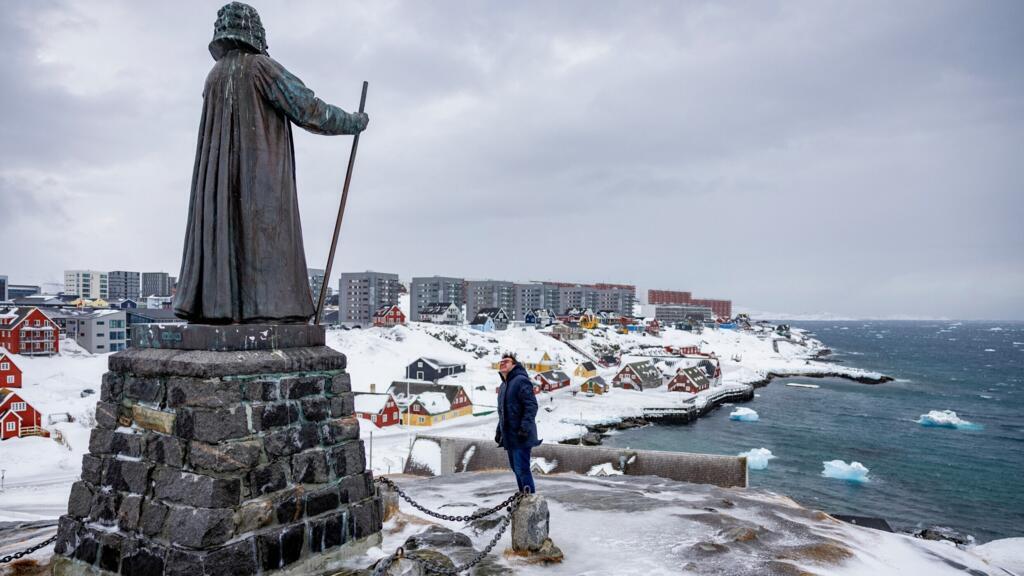
File photo of the statue of Hans Egede (1686-1758), a Lutheran missionary, overlooking in Nuuk, Greenland, taken on March 9, 2025. © Odd Andersen, AFP

A bipartisan group of US lawmakers will visit Denmark this week as President Donald Trump threatens a takeover of Greenland, an autonomous part of the Kingdom of Denmark that hosts a US airbase.

The delegation will be led by Democratic Senator Chris Coons and will include Republican Senator Thom Tillis and Democratic Senators Jeanne Shaheen and Dick Durbin, along with several members of the House of Representatives, Coons’ office said in a statement on Monday.

Why it matters

Democratic and Republican lawmakers said last week they expect the US Senate to eventually vote on legislation aimed at reining in Trump’s ability to attempt to seize Greenland from Denmark, a long-standing US ally.

Trump has repeatedly said Washington must own Greenland to prevent Russia or China from occupying the strategically located, mineral-rich Arctic territory. He has argued that an existing US military presence there is insufficient.

“One way or the other we are going to take Greenland,” Trump has said, while adding that he would prefer to strike a deal with Denmark.

Greenland and Denmark have both said the territory is not for sale, but Trump has not ruled out taking it by force. Denmark and the US, both NATO members, are scheduled to meet this week to discuss the issue.

© France 24
01:47


Key quotes

“As co-chair of the Senate NATO Observer Group, I believe it is critical that Congress stands united in supporting our allies and respecting the sovereignty of Denmark and Greenland,” said Tillis, a member of Trump’s Republican Party.

Trump’s “continued threats toward Greenland are unnecessary and would only weaken our NATO alliance”, Durbin added.

The delegation will be in Copenhagen on Friday and Saturday, according to Coons’ office.

Competing bills


Republican Representative Randy Fine introduced a bill on Monday — the Greenland Annexation and Statehood Act — which, if passed, would grant Trump the authority to annex Greenland.

Democratic Representative Jimmy Gomez is preparing a competing measure — the Greenland Sovereignty Protection Act — that would block federal funds from being used to finance any effort by Trump to take over Greenland.

Context

While Trump has previously floated the idea of taking control of the island, concerns have intensified following his order of a deadly US military raid earlier this month in Venezuela to seize the country’s ousted leader, Nicolas Maduro. Maduro was subsequently taken to New York and remains in custody.

(FRANCE 24 with Reuters)

Greenland tells Trump it will not join the US 'under any circumstances'


FILE PHOTO: Denmark's Prime Minister Mette Frederiksen welcomes Greenland's Prime Minister Jens-Frederik Nielsen on the day of the European Political Community summit in Copenhagen, Denmark, October 2, 2025. REUTERS/Leonhard Foeger/File Photo
January 12, 2026
ALTERNET

Greenland is making it clear that it will not, "under any circumstances," accept any offer from the United States to become part of the country or allow President Donald Trump to take control of it, reported The Guardian.

Trump has said that he needs Greenland for national security; however, the U.S. is closer to Russia than Greenland, with just four kilometers separating the nearest Alaska island from Russia.

NATO Secretary General Mark Rutte said that they're already at work on bolstering Arctic security.

While Trump has always mentioned the need to purchase Greenland, his top aide, Stephen Miller, told CNN's Jake Tapper that the U.S. would conduct military operations to take over the island, which has 30,000 residents.

Trump also has an interest in the rare-earth minerals on the island, but technology experts said the U.S. wouldn't even begin to uncover them for another decade.


In a Monday statement, Greenland's government said it is "part of the kingdom of Denmark" and “as part of the Danish commonwealth, a member of NATO."

Greenland also said that it would increase its efforts to ensure its defense took place “in the NATO framework."

The Island's ruling coalition “believes Greenland will forever be part of the Western Defence Alliance," and that “all NATO member states, including the US, have a common interest” in Greenland's defense.

U.S. Secretary of State Marco Rubio is scheduled to meet with Greenland Foreign Minister Vivian Motzfeldt and the Minister of Foreign Affairs in Denmark, Lars Løkke Rasmussen.

The U.S. has enjoyed a treaty with Greenland since 1951 and has an American Space Force base on the island.

Greenland's government is seeking a diplomatic solution with Trump.

Germany’s former vice-chancellor Robert Habeck penned a column in The Guardian encouraging the European Union begin the process to make Greenland part of the group.

“This should be the moment to explicitly offer EU membership to Greenland, and by extension to the Faroe Islands, Iceland and Norway,” he wrote in a co-authored piece with Andreas Raspotnik of Nord University in Norway.

Read the full report here.

Germany pledges increased Arctic role as Trump says Greenland protected by 'two dog sleds'


By Aleksandar Brezar Published on 

Germany is increasing its Arctic commitments after the US president threatened to seize Greenland, sparking a diplomatic crisis with Europe.

Germany said Sunday it was ready to assume greater responsibilities in the Arctic after US President Donald Trump threatened to seize Greenland "one way or the other", sparking a diplomatic crisis between Washington and its European allies.

German Foreign Minister Johann Wadephul said Berlin would increase its Arctic commitments while rejecting Trump's threats against the mineral-rich Danish territory.

"Security in the arctic is becoming more and more important and is part of our common interest in NATO," Wadephul said at a joint news conference with Iceland's foreign minister in Reykjavik.

"If the American president is looking at what threats might come from Russian or Chinese ships or submarines in the region, we can of course find answers to that together."

"But the future of Greenland must be decided by the people of Greenland" and Denmark, he said.

Trump told reporters aboard Air Force One on Sunday that Washington would take Greenland "one way or the other," warning that Russia and China would "take over" if the United States did not act.

"If we don't take Greenland, Russia or China will, and I'm not letting that happen," Trump said, despite neither country laying claim to the island. "Greenland should make the deal, because Greenland does not want to see Russia or China take over."

Trump mocked Greenland's security forces, saying: "You know what their defence is, two dog sleds," while Russia and China have "destroyers and submarines all over the place."

'Decisive moment' amid 'threatening rhetoric'

Denmark's Prime Minister Mette Frederiksen said Sunday her country faces a "decisive moment" in its diplomatic battle with the United States over Greenland.

"There is a conflict over Greenland. This is a decisive moment," Frederiksen said in a debate with Danish political leaders ahead of meetings in Washington on Monday.

She posted on Facebook that Denmark was "ready to defend our values — wherever it is — also in the Arctic. We believe in international law and in peoples' right to self-determination."

Swedish Prime Minister Ulf Kristersson condemned US "threatening rhetoric" after Trump's latest statements.

"Sweden, the Nordic countries, the Baltic states, and several major European countries stand together with our Danish friends," he told a defence conference in Salen attended by NATO's supreme allied commander.

"On the contrary, the US should thank Denmark, which has been a very loyal ally over the years. In Afghanistan and Iraq, over 50 Danish soldiers have paid the ultimate price for that loyalty," Kristersson said.

German Finance Minister Lars Klingbeil said, "We are strengthening security in the Arctic together, as NATO allies, and not against one another."

Leaders of seven European countries including France, Britain, Germany and Italy signed a letter Tuesday saying it is "only" for Denmark and Greenland to decide the territory's future.

Trump says controlling Greenland is crucial for US national security given increased Russian and Chinese military activity in the Arctic. The United States has maintained a military base on the island since World War II.

'No immediate threat' amid growing importance

NATO Supreme Allied Commander General Alexus Grynkewich told the Swedish conference that alliance members were discussing Greenland's status.

While there was "no immediate threat" to NATO territory, the Arctic's strategic importance was rapidly growing, Grynkewich said. He said talks on Greenland were being held at the North Atlantic Council in Brussels.

"Those dialogues continue in Brussels. They have been healthy dialogues from what I've heard," the general said.

Grynkewich said Russian and Chinese vessels had been seen patrolling together on Russia's northern coast and near Alaska and Canada, working together to gain greater access to the Arctic as ice recedes due to global warming.

A Danish colony until 1953, Greenland gained home rule in 1979 and is contemplating eventually loosening its ties with Denmark. Polls indicate Greenland's population strongly opposes a US takeover.

The vast majority of Greenland's political parties have said they do not want to be under US control and insist Greenlanders must decide their own future.

Frederiksen warned last week that any US move to take Greenland by force would destroy 80 years of transatlantic security links.

Trump waved off the comment, saying, "If it affects NATO, it affects NATO. But you know, they need us much more than we need them."

Wadephul held talks in Iceland before meeting US Secretary of State Marco Rubio in Washington on Monday to address "strategic challenges of the far north," according to a German foreign ministry statement.


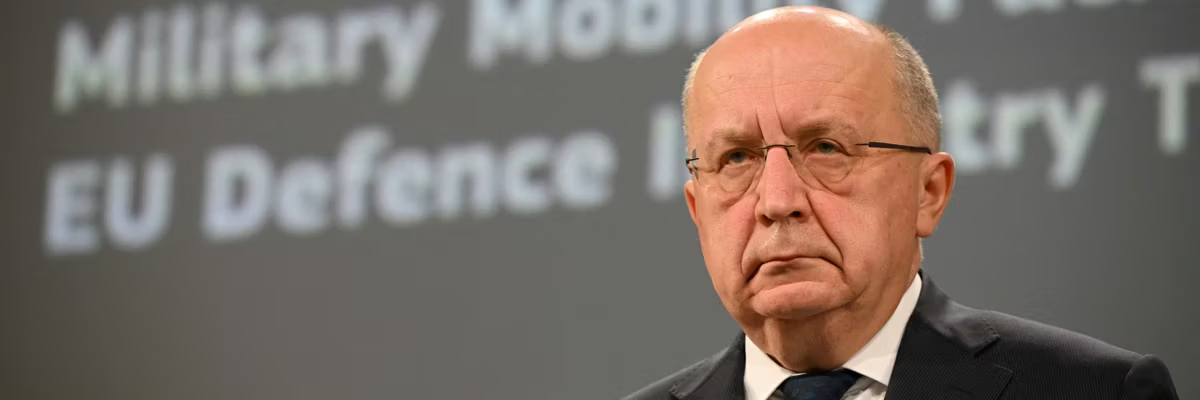
EU Leader Warns of ‘End of NATO’ as Trump Ramps Up Threats to Take Over Greenland


“Among people it will be also very, very negative,” said EU defense commissioner Andrius Kubilius.


European Union Commissioner for Defense and Space Andrius Kubilius looks on during a press conference in Brussels on November 19, 2025.
(Photo by Nicolas Tucat/AFP via Getty Images)

Julia Conley
Jan 12, 2026
COMMON DREAMS

The European Union’s defense commissioner, Andrius Kubilius, said Monday that Europe must build up its military capabilities as President Donald Trump threatens to rip up the central agreement that’s underpinned the North Atlantic Treaty Organization for more than 75 years with his escalating demand that the US should be able to take control of Greenland—a semiautonomous territory of NATO founding member Denmark.

Kubilius said he agreed with Danish Prime Minister Mette Frederiksen’s recent assessment that a US takeover of Greenland, home to about 56,000 people, “will be the end of NATO.”
.


‘Greenland Belongs to Its People’: European Leaders Begin Waking Up to Dangers of Trump Imperialism


Denmark Taking Greenland Threats ‘Seriously’ as Trump Eyes More Military Interventions

“But also among people it will be also very, very negative,” Kubilius told Reuters at a security conference in Sweden.

Trump first expressed a desire to take control of Greenland during his first term. The vast island is in a geopolitically strategic location as countries begin to use the Arctic Ocean for shipping routes, and has stores of rare earth minerals.

The president has intensified his threats against the territory following his invasion of Venezuela and the US military’s abduction of President Nicolás Maduro earlier this month, with White House officials saying Trump has the right to take control of any country he wants to in order to control their resources.

On Air Force One on Sunday, Trump told reporters that he has not yet proposed a deal to Denmark and said “Greenland should make the deal.” He added that he does not care whether a takeover of Greenland “affects NATO.”

“They need us more than we need them,” said the president.


Trump also said in the Oval Office Sunday that owning Greenland is “psychologically important for me.”

“Ownership gives you things and elements that you can’t get from just signing a document, that you can have a base,” said Trump.

The US already owns a military base in Greenland, but Trump has claimed military presence in the territory is not enough to fend off what he claims are imminent threats from China and Russia.

Kubilius said that should NATO fall apart due to a US operation aimed at taking Greenland by force from its longtime ally, “it will be a very big challenge to be ready to defend Europe, being independent, being without the United States.”

“The question would be how we can use in that case NATO structures, how they can be, you know, become a basis for European pillar of NATO,” he said. “But NATO such as it is now definitely will not exist anymore.”


Greenland’s govermment on Monday issued a statement reiterating its previous warnings that it is “part of the kingdom of Denmark.”

“As part of the Danish Commonwealth, Greenland is a member of NATO and the defense of Greenland must therefore be [done] through NATO,” reads the statement.

Considering that six NATO member states in Europe have expressed firm opposition to Trump’s plan, the government said, “Greenland will increase its efforts to ensure that the defense of Greenland takes place under the auspices of NATO.”

“The government coalition in Greenland will therefore work with Denmark to ensure that the dialogue on and development of the defense in Greenland takes place within the framework of NATO cooperation,” officials added.

In addition to the NATO agreement, Kublius said, Article 42.7 of the European Union Treaty obligates member states to come to Denmark’s defense if Greenland is attacked.

“It will depend very much on Denmark, how they will react, what will be their position, but definitely there is such an obligation of member states to come for mutual assistance if another member state is facing military aggression,” he said.

On NBC‘s “Meet the Press,” US Sen. Chris Murphy (D-Conn.) on Sunday also expressed concern that a military attack on Greenland would mean the US was at war “with Europe, with England, with France.”

“An attempt to ‘annex’ Greenland would be the functional end of NATO,” said Murphy. “And final evidence that Trump is permanently distracted by things that have nothing to do with the American people—like Venezuela, his new White House ballroom, and now Greenland.”


Greenland and NATO vow to boost Arctic security after Trump’s annexation threats

Danish military forces participate in an exercise in the Arctic Ocean in Nuuk, 15 September, 2025
Copyright AP Photo

By Gavin Blackburn
Published on 

Trump has insisted that Greenland needs to be brought under US control, arguing that the Danish autonomous territory is crucial for national security.

NATO and Greenland's government said on Monday that they intend to work on strengthening the defence of the Danish autonomous territory, hoping to dissuade US President Donald Trump from annexing the island.

On Sunday, Trump further stoked tensions by saying that the United States would take the territory "one way or the other," and poked fun at the island's defences, saying they consisted only of "two dog sleds."

Confronted with the prospect of annexation by force, Greenlandic Prime Minister Jens-Frederik Nielsen has placed his hopes in the US-led military alliance NATO.

"Our security and defence belong in NATO. That is a fundamental and firm line," Nielsen said in a social media post.

His government "will therefore work to ensure that the development of defence in and around Greenland takes place in close cooperation with NATO, in dialogue with our allies, including the United States, and in cooperation with Denmark," he added

Pieces of ice move through the sea in Qoornoq Island near Nuuk, 17 February, 2025 AP Photo

NATO chief Mark Rutte also said on Monday that the alliance was working on "the next steps" to bolster Arctic security.

Diplomats at NATO say that some alliance members are floating ideas, including possibly launching a new mission in the region.

Discussions are at an embryonic stage and there are no concrete proposals on the table so far, they say.

Trump has insisted that Greenland needs to be brought under US control, arguing that the Danish autonomous territory is crucial for national security.

Danish Prime Minister Mette Frederiksen has warned that if Washington followed through with an armed attack on Greenland it would spell the end of NATO.


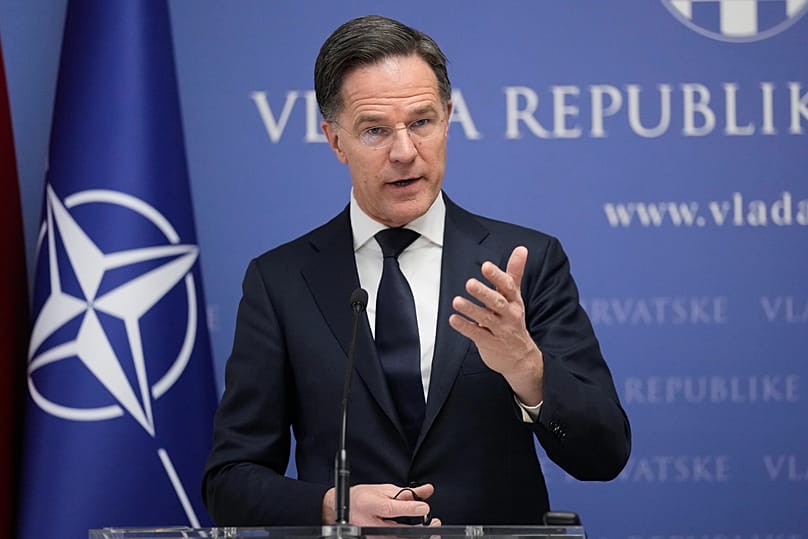
NATO Secretary General Mark Rutte attends a news conference in Zagreb, 12 January, 2026 AP Photo

In a bid to appease Washington, Copenhagen has invested heavily in security in the region, allocating some 90 billion kroner (€11 billion) in 2025.

Greenland, which is home to some 57,000 people, is vast with significant mineral resources, most of them untapped, and is considered strategically located.

Since World War II and during the Cold War, the island housed several US military bases but only one remains.

According to Rutte, Denmark would have no problem with a larger US military presence on the island.

Under a 1951 treaty, updated in 2004, the United States could simply notify Denmark if it wanted to send more troops.

Diplomatic front

Denmark is also working on the diplomatic front, with a meeting between Danish and Greenlandic representatives and US Secretary of State Marco Rubio expected this week.

According to US and Danish media reports, the meeting is set to take place Wednesday in Washington.

Danish Foreign Minister Lars Lokke Rasmussen on Monday posted a photo from a meeting with his Greenlandic counterpart Vivian Motzfeldt.

Denmark reportedly wants to present a united front with the leaders of the autonomous territory before the meeting with US representatives.

The Danish media reported last week on a tense videoconference between Danish lawmakers and their Greenlandic counterparts over how to negotiate with Washington.

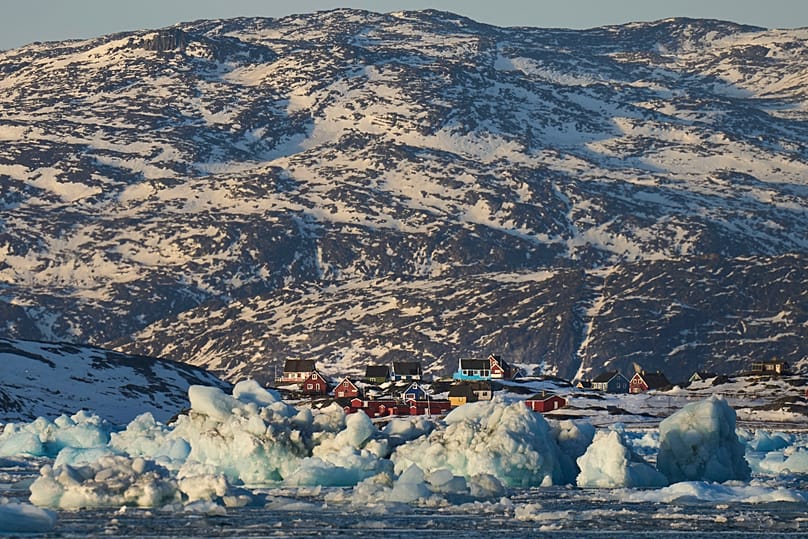
Houses covered by snow are seen on the coast of a sea inlet of Nuuk, 7 March, 2025  AP Photo

Facing Trump's repeated threats, Nielsen said in his message on Monday: "I fully understand if there is unease."

In a statement published on Monday, the government in the capital, Nuuk, said it "cannot accept under any circumstance" a US takeover of Greenland.

A Danish colony until 1953, Greenland gained home rule 26 years later and is contemplating eventually loosening its ties with Denmark.

Polls show that Greenland's people strongly oppose a US takeover.

"We have been a colony for so many years. We are not ready to be a colony and colonised again," fisherman Julius Nielsen told the AFP news agency at the weekend.

And a bipartisan US congressional delegation will head to Copenhagen later this week in an attempt to show unity between the United States and Denmark, it emerged on Monday.

Senator Chris Coons will lead the trip of at least nine members of Congress and the group will be in Copenhagen on Friday and Saturday, according to a congressional aide familiar with the trip's planning.


Sweden, Germany critical of US rhetoric on Greenland and Denmark

Sweden is highly critical of the "threatening rhetoric" against Greenland and Denmark from US President Donald Trump's administration, Prime Minister Ulf Kristersson said on Sunday. Germany reiterated its support for Denmark and Greenland.


Issued on: 11/01/2026 - RFI

Swedish Minister of Defense Pal Jonson and Swedish Prime Minister Ulf Kristersson address a press conference at the Folk och Forsvars annual National Conference at the Hogfjallshotellet in Salen, Sweden on 11 January, 2026. 
AFP - HENRIK MONTGOMERY/TT

Kristersson said in a speech on Sunday that the rules-based world order was under greater threat than for many decades.

"We are highly critical of what the United States is now doing and has done in Venezuela, in regards to international law, and probably even more critical of the rhetoric that is being expressed against Greenland and Denmark," he said at an annual security conference in northern Sweden.

"On the contrary, the United States should thank Denmark, which has been a very loyal ally over the years."

President Donald Trump said on Friday that the US needs to own Greenland to prevent Russia or China from occupying it in the future. He has repeatedly said that Russian and Chinese vessels are operating near Greenland, something Nordic countries have rejected.

Sweden to invest $1.6 billion in air defence systems

Sweden will spend 15 billion Swedish crowns ($1.6 billion) on air defence aimed at primarily protecting civilians and civilian infrastructure, the government said on Sunday.

Sweden has, like most European countries, invested heavily in defence following Russia's invasion of Ukraine. However, Sweden's vast territory has remained vulnerable to aerial threats.

"The experience from the war in Ukraine clearly shows how crucial a robust and resilient air defence is," Defence Minister Pal Jonson told reporters at a security conference in northern Sweden.

He said Sweden would buy short-range air defence systems to protect cities, bridges, power plants and other critical infrastructure.

On Sunday Prime Minister Ulf Kristersson criticised the US administration's

"threatening rhetoric" against Greenland and Denmark, saying the US should thank Denmark for being a loyal ally.

'International law applies to everyone'

Meanwhile, German Finance Minister and Vice Chancellor Lars Klingbeil said on Sunday that the principles of international law apply to everyone, including the United States, in reference to President Trump's threats to seize Greenland.

"It is solely up to Denmark and Greenland to decide about Greenland's future. Territorial sovereignty and integrity must be respected," Klingbeil said ahead of his departure to Washington for a meeting of finance ministers from the Group of Seven advanced economies.

Germany reiterated its support for Denmark and Greenland ahead of meetings in Washington on Monday.

A US military seizure of the mineral-rich Arctic island from Denmark, a long-time ally, would send shockwaves through NATO and deepen the divide between Trump and European leaders.

"We increase security in the Arctic together as NATO allies, not in opposition to one another," Klingbeil said.

(Reuters)