Tuesday, May 12, 2026


Source: Originally published by Z. Feel free to share widely.

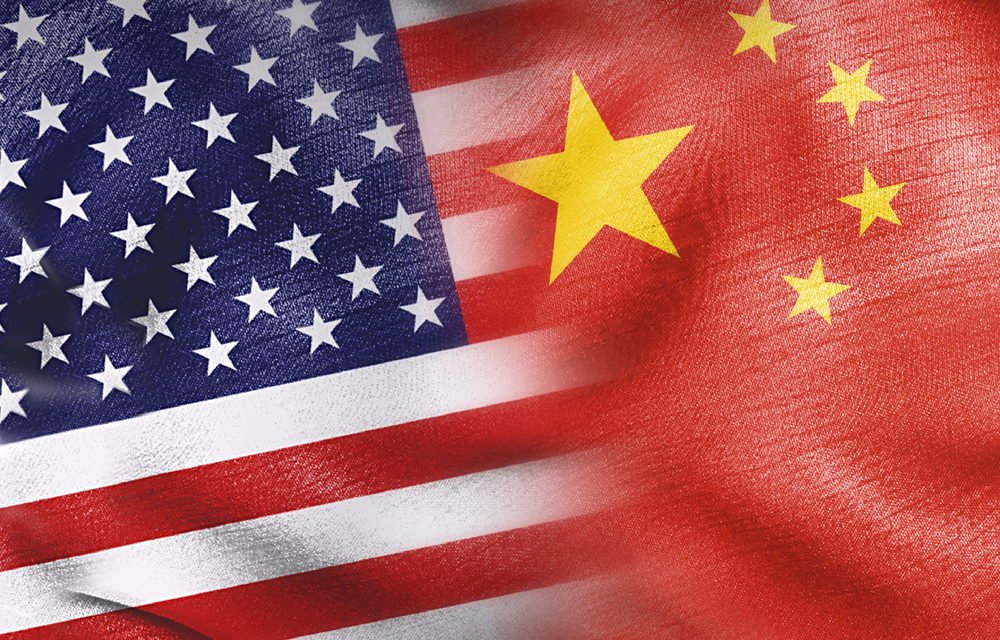
Last week, Secretary of War Pete Hegseth urged Congress to pass a 2027 Pentagon budget of 1.5 trillion dollars. He justified the increase by saying we need a modernized, high-tech military to counter China.

U.S. lawmakers have been using China as a military budget increaser and ultimate policy-generator for years. Competition with Beijing is invoked to justify military expansion, new regional alliances, AI weapons development, semiconductor restrictions, and rising nuclear expenditures. In Washington, framing a policy as necessary to “counter China” has become one of the quickest ways to secure bipartisan support. As a result, the “China threat” rhetoric proliferates while the military budget skyrockets.

In truth, China is not the existential threat that Hegseth and others claim it to be. For one, China’s military posture remains far more regionally focused than that of the United States, whose global military footprint spans hundreds of bases worldwide. China has instead actively shaped its military around “active defense,” with a navy designed to stay close to its shores and defend the country should any invasion occur. Any increase in China’s defense spending should come as no surprise, considering the U.S. military buildup across the first island chain, just off China’s coast. China has also expressly stated, both through words and action, that it has no desire for war. It has been nearly fifty years since China was involved in a conflict. There are no signs of a policy shift when it comes to China’s pursuit of diplomatic solutions, and there is no use for any projection of “what-ifs” with zero historical background or evidence.

So no, China is not a military threat, but it is a threat to the political and economic balance of power. China’s growth over the past decade is unprecedented, and its economy is soon set to surpass that of the United States. Not only that, but China has become a global leader in research and technological advancement. While this poses no real threat to the American people, it does rattle the ruling class and business elite who rely on U.S. imperial behavior to maintain a monopoly on advanced tech revenue streams. That’s one reason U.S. tech giants like Palantir are currently paying content creators thousands of dollars to promote a looming “China AI threat” and advocate support for American AI companies.

The U.S. claims that the U.S.-China “tech race” is about national security, but it is really a struggle over resource control, economic power, and wealth accumulation. Instead of benefiting the American people, it drives militarization and undermines the very scientific progress the United States claims to seek.

The U.S. has historically responded to external threats, military or otherwise, through force. When socialist projects cropped up across the world, instead of establishing diplomatic arrangements with their leaders, the U.S. launched interventions and regime change operations. This crippled economies and forced governments to adhere to U.S. interests. In response to China’s economic growth over the last decade, the U.S. has responded by militarizing the entire Asia Pacific region. A simple regime change operation would not work, so a longer, more strategic operation was necessary. Over the past decade, a steady and well-funded campaign has convinced the general public that China is the greatest threat to the safety and security of the American people. It’s been largely successful, which is why using China as a policy generator works so well. 

The truth is that the $1.5 trillion war budget isn’t meant to protect the American people but to pursue the agenda of the ruling class. The U.S. is not trying to “deter” a future China threat; it is preparing for a war it will attempt to bring to fruition should all else fail. 

Advanced technology will define the future. And currently, the U.S. and China are building their own tech ecosystems, especially in the fields of artificial intelligence, semiconductors, and quantum computing. The U.S. refers to this as a “strategic rivalry” with wider national security implications. This perspective only exists because China is considered a rival. China does not have to be considered a rival. China could just as easily be considered a development partner. And indeed it should, because cooperation on tech is the only potential avenue for ensuring the continued existence of the planet. 

Instead, the tech race is exacerbating militarization and war while levying harsh costs on the environment. The U.S. still heavily depends on China for rare earth minerals and other resources critical for weapon systems and technological development. In order to compensate for this dependency, the U.S. has looked to other regions of the world — namely Venezuela and Iran — for access to oil and rare earth minerals. 

Iran, in particular, holds significant untapped potential for rare earth elements. In 2023, Tehran reported the discovery of 8.5 million tons of lithium-rich hectorite clay. Its zinc, copper, and iron reserves are among the largest globally, just as Venezuela is home to the largest oil reserve in the world. These targets are no coincidence, and are not about “neutralizing a potential threat” as U.S. leaders often claim. They align with a larger strategic plan to obtain resource dependency, advance business interests, and prepare for a potential war against China.

If the U.S. really wants to win a tech race against China, it is shooting itself in the foot. Scientific progress in this country is funded in accordance with its military applicability. So instead of pursuing scientific advancements that could improve the daily lives and well-being of the people, it is pursued solely for military intentions. There are a lot of possibilities that go uninvestigated because the potential profit is not high enough.

Additionally, the U.S. has launched a war against Chinese scientists and scholars in the United States. Last year, Marco Rubio announced the administration would start intensively revoking visas for Chinese scholars in “critical fields” such as science and technology. Since then, numerous Chinese scholars studying at universities around the country have been questioned, detained, and deported. Just last month, semiconductor researcher Dr. Danhao Wang reportedly fell from the third floor of a University of Michigan building after being targeted by federal authorities. While the circumstances surrounding Dr. Wang’s death remain under investigation, the incident has intensified concerns among Chinese researchers who already feel increasingly scrutinized and unwelcome in the United States.

The persecution of Chinese scholars is ultimately hurting U.S. technological advancement. In its desperate bid to over-securitize the field, the U.S. is systematically destroying the avenues it has historically used to advance. Many Chinese scholars have since returned to China; others are now too afraid to come to the U.S. in the first place for fear of persecution. 

Additionally, the U.S. continues to sanction Chinese technology to protect U.S. industries. This is especially absurd when it comes to critical technology such as electric vehicles and solar panels. Instead of enabling the transition to affordable and sustainable systems, the planet is continuously sacrificed for profit.

The greatest contradiction in the U.S.-China tech race is that the United States increasingly undermines its own strengths in the name of defending them. Scientific collaboration is plagued with suspicion, technological progress is subordinated to militarization, and urgently needed green technologies are restricted in the name of corporate greed. The result is a self-inflicted weakening of the very systems required to address the crises of the future.

Megan Russell is CODEPINK’s China is Not Our Enemy Campaign Coordinator. She graduated from the London School of Economics with a Master’s Degree in Conflict Studies. Before that, she attended NYU, where she studied Conflict, Culture, and International Law. Megan spent one year studying in Shanghai and over eight years studying Chinese Mandarin. Her research focuses on the intersection between US-China affairs, peacebuilding, and international developmentEmail


The Fight to Free Palestinian Organizer Salah Sarsour From ICE

Source: Jacobin

On March 30, twelve Immigration and Customs Enforcement (ICE) vehicles descended on a Milwaukee neighborhood to arrest Salah Sarsour, a Palestinian American green card holder who has lived here for over thirty years. Since that day, Sarsour has been detained in Clay County Jail, an ICE-contracting prison in Brazil, Indiana.

Sarsour has long advocated for justice in Palestine at local and national levels. Currently, he is president of the Islamic Society of Milwaukee as well as a longtime organizer with American Muslims for Palestine. In a city with a diverse Muslim community, including the largest population of Rohingya immigrants in the United States, Sarsour is beloved for his embrace of new arrivals as well as his ongoing community and interfaith work. He is a father of six and a grandfather of nine; while in detention, he missed the birth of one grandchild.

The kidnapping and detention of Salah Sarsour are reprisals for his advocacy for Palestine. The global outpouring of solidarity with Palestine against the ongoing Israeli genocide since October 7, 2023, has produced a dramatic expansion of repression against protest in the United States and Western Europe. The detention of advocates like Sarsour is part of this campaign.

Prior to Sarsour’s arrest, Canary Mission, a shadowy website that purports to expose anti-Israel, “antisemitic” actors, identified Sarsour, without evidence, as “reportedly a Hamas activist and fundraised [sic] for terrorist organizations.” The Department of Homeland Security (DHS) charges against him echo Canary Mission. They reference his participation in “anti-Israel activities” when he was a teenager in the West Bank and allege that he somehow concealed this past on arrival to the United States.

Before leaving his home in the West Bank, Sarsour spent two years in Israeli jails, enduring months of torture at age fifteen. Such treatment of children is commonplace under Israeli administrative detention; currently, Israel detains about seven hundred children a year. Three-quarters of the children detained undergo torture.

The United States refuses to condition its copious support for Israel on the cessation of child detention, which is illegal under international law. In fact, the United States follows Israel’s example: DHS detentions of children have escalated dramatically under the current war against immigrants. Given the well-documented exchange of security information and policing techniques between the two countries, there is no way that Sarsour could have concealed his history from the DHS when entering the country.

While stoking the virulent antisemitism of its white nationalist and Christian Zionist constituencies, the Trump administration pursues repressive policies against Palestine solidarity in the name of fighting antisemitism. Supported by the American Legislative Exchange Council (ALEC), thirty-eight states have adopted legislation codifying the International Holocaust Remembrance Association’s definition of antisemitism, which defines criticism of Israel as antisemitic. In Wisconsin, Governor Tony Evers failed to veto such legislation three days before the ICE vehicles convened in Milwaukee to arrest Sarsour.

The Heritage Foundation has been busy, scouring US legal history to justify DHS violations of established civil liberties. As Marco Rubio’s deployment of the McCarran–Walter Act indicates, there is a rich archive available to justify harsh repression against foreign-born organizers. Historically, such repression rarely limits itself to non-citizens, eventually migrating to include all dissident voices.

As he did with prior arrests of foreign-born, pro-Palestine organizers, such as Rümeysa Özturk, Mahmoud Khalil, Leqaa Kordia, and Mohsen Madawi, Rubio refers to section 237a 4(c) of the McCarran–Walter Act to claim that Sarsour’s presence in the country “threatens” US foreign policy. In the past, courts have found these detentions illegal and ordered the organizers released, though the federal government continues to pursue their deportations.

The weaponization of arcane legislation from the Cold War augments the legacy of Islamophobia unleashed by the “war on terror.” The contemporary assault against pro-Palestine organizers deploys McCarthyist tactics, including allegations of guilt by association and the use of coerced and compromised witnesses to incriminate widening circles of people. Freighted with the legacy of McCarthyist immigration law, the current campaign against Palestine solidarity mobilizes Islamophobia and xenophobia against community formations. Sarsour’s kidnapping is part of this project.

Writing at the height of McCarthyism, historian Richard Hofstadter described a “paranoid style” common to American right-wing politics in 1959. Five years later, in his influential essay, “The Paranoid Style in American Politics,” Hofstadterconnected anti-Masonic and anti-Catholic animus in the nineteenth century to the anti-communism of his own era. A Jew and former member of the American Communist Party, Hofstadter knew this “paranoid style” well, having lost key career opportunities because of antisemitism and anti-communism.

Hofstadter would have been aware of the impact of the Smith Act, which was signed into law by President Franklin Delano Roosevelt in 1940. The Smith Act required all “non-citizen aliens” to register with the federal government and criminalized membership in the Communist Party, making it a deportable offense.

Two years later, FDR signed Executive Order 9066, which dictated the removal and imprisonment of Japanese Americans from the West Coast. Two-thirds of the Japanese Americans affected by this policy were US citizens. The Smith Act facilitated the removal. Similarly, President Donald Trump’s 2025 executive order, “Protecting the American People Against Invasion,” mandates registration for noncitizens, laying the groundwork for their detention and eventual deportation.

With the inauguration of the international Cold War after World War II, fear of communism enflamed US public policy. Congress overrode President Harry Truman’s veto of the McCarran–Walter Act in 1952, implementing a sprawling law that reinstated Smith Act measures against noncitizens associated in any way, even in the distant past, with communist organizing. Most of those targeted for deportation on political grounds in this period were, like Salah Sarsour, long-term residents with deep roots in the United States.

In the immediate post–World War II period, almost anyone involved in labor unions or other progressive groups would have had connections with communists, who had been actively involved in grassroots political organizing before World War II. Anti-communist policies undermined the work of civil rights and labor groups, criminalizing their activities, limiting their rights of freedom of expression, and jailing citizens and noncitizens alike on charges of “subversive activities.”

The McCarran–Walter Act concerned itself with legislating immigration and naturalization in an era of expanding US global power, ensuring the US citizenship of children born abroad to citizens serving in the military. The law reinstituted the racist “national origins” quotas that favored immigration from Northern and Western Europe, thereby restricting the abilities of Eastern European Jews displaced in the wake of the Nazi Holocaust to find safe harbor in the United States. Above all, it sought to contend the threat it saw in ways well described by Hofstadter as being posed by communists and “Jewish interests.”

The effects of McCarthyist policy led to the prominent case of the “Terminal Island Four,” foreign-born immigrant rights activists detained at Los Angeles’s Terminal Island for deportation. Two of the four, Rose Chernin and David Hyun, both targeted for their associations with left-leaning labor organizations as well as their work with the Los Angeles Committee for the Protection of Foreign Born, fought deportation for years. After protracted struggles involving national advocacy, they both prevailed, with the Supreme Court striking down the Smith Act provision about membership in the Communist Party in Chernin’s case in 1957.

Section 237(a)(4)(C) of the McCarran–Walter Act holds that any “alien whose presence or activities in the United States the Secretary of State has reasonable ground to believe would have potentially serious adverse foreign policy consequences for the United States is deportable.” This is the clause Rubio has invoked against Khalil, Madawi, Özturk, Kordia, and Sarsour.

Often invoked to terrorize foreign-born organizers, this clause remains part of federal immigration law. But it has never been successfully used to deport anyone, despite being bolstered by a 1990 amendment again articulating the right of the secretary of state to deport any noncitizen whose presence might “adversely affect” foreign policy.

Demonstrating conclusively that an individual “adversely affects” US foreign policy priorities has proven difficult. But that hasn’t stopped federal efforts to deploy this policy against those it deems to be internal enemies. As with the cases of Chernin and Hyun, these cases have sometimes taken years, with the lives of those accused hanging in the balance all the while.

In the case of the “Los Angeles Eight,” for example, the government arrested seven Palestinian Americans and one Kenyan American, then tried for twenty years to deport two of them, Khader Hamide and Michel Shehadeh, on grounds of their alleged support for the Popular Front for the Liberation of Palestine. Close to the twenty-year anniversary of the arrest of the LA Eight, an immigration judge ruled that the government violated Hamide and Shehadeh’s constitutional rights and had little case against them, even under the surviving provision of the McCarran–Walter Act.

Marc Ven Der Hout, a National Lawyers Guild advocate representing the two, commented on the ruling: “The government cannot continue to try to deport these permanent residents who did nothing but try to advocate for Palestinians’ right to a homeland — hardly a revolutionary belief in the 21st century.”

While anti-communism remains a staple of right-wing invective, the paranoid style of the US right wing in the twenty-first century focuses on the threats posed by immigrants and Muslims. Journalist Spencer Ackerman shows how enhanced counterterrorism policies deployed against Muslims and Arabs have facilitated ICE’s violent repression against foreign-born communities in general.

Inaugurated immediately after 9/11, the National Security Entry–Exit Registration System (NSEERS) created a Smith Act–style mandatory registration for Arab, Muslim, and South Asian communities. Close to 90,000 men and boys registered under the NSEERS program. While no terrorist activities were detected, thousands were detained, and immigration infractions such as failure to extend a visa resulted in over 13,000 removal proceedings.

Sources like Canary Mission continue to invent dangerous alliances between pro-Palestine organizations, Muslims, democratic socialists, and immigrants. Steeped in such paranoid theories, the shooter who murdered eleven at the Tree of Life synagogue in Pittsburgh believed that the Hebrew Immigrant Aid Society (HIAS) was meeting there to plot the replacement of white Christians by Jews and immigrants.

When the state takes up the paranoid style as public policy, it invariably compromises civil liberties for everyone. Milwaukee and the world need Salah Sarsour to be freed from prison and the baseless charges against him, so he can come home and continue his important work for our collective liberation.

This article was originally published by Jacobin; please consider supporting the original publication, and read the original version at the link above.


It Falls Upon the Left to Defeat Fascism Once Again

Source: Common Dreams

The world is at a precipice, facing existential threats while fascism is on the rise. Yet we lack the proper governance structures to address global challenges, and it also seems that it falls upon the left to defeat fascism once again. So argues political scientist/political economist, author and journalist C. J. Polychroniou in the interview that follows with the French-Greek journalist Alexandra Boutri.

Alexandra Boutri: We live in a time of great uncertainty and profound disillusionment. We see a global escalation of violence and a lack of accountability. Even Israel’s genocide goes unpunished, which speaks volumes of the hypocrisy of western governments with regard to human rights and international law. There is a global wave of democratic backsliding, massive amounts of inequality by design, and extreme power concentration. Am I painting too bleak of a picture for the current state of the world?

C. J. Polychroniou: No, you are not exaggerating the current state of the world. The truth is that it is far worse than that. We are witnessing the resurgence of naked imperialism and the emergence of a new world of spheres of influence and, concomitantly, the death of international peacemaking institutions. The continued existence of nuclear weapons, which today are far more powerful than ever before, poses an existential threat to humanity while at the same time human beings are on a collision course with the natural world. To be sure, not only do we live in an era of polycrisis but in one in which developments are occurring at an increasingly rapid pace. We need polysolutions, yet neither the mechanisms are in place nor is there any detectable willingness on the part of current world leaders to pull humanity back from the precipice.

Political hypocrisy per se is not the major issue here. Pathological hypocrisy is a constant in the behavior of western governments. What I find most disconcerting is the sharp decline of rational thinking in contemporary society. Misinformation is spreading faster than facts and trust in science has virtually collapsed, especially in the United States. For example, scientific studies have concluded that climate change is mainly caused by human activity and scientists have documented the dangerous disruptions in nature. Yet you have the president of the United States, Donald J. Trump, calling climate change “con job” and “scam.” Trust in healthcare and public institutions has also declined in recent years, and it is not a coincidence that these trends occur with the political ascendancy of right-wing extremism. Fascism is organized mass irrationality and leaders like Trump have been doing their best to design a society sustained by ignorance while at the same time normalizing cruelty and destruction. So, yes, we live in a world of increasing uncertainty, profound confusion, and maybe even civilizational decline. We are in the midst of a whirlpool of events and developments that are eroding our ability to manage human affairs in a way that is conducive to the attainment of a good and just world order. That being said, the world is not coming to an end any time soon, and we actually know that there are solutions for the world’s biggest problems. But paradigm shifts in political, social, and moral thinking are urgently needed for a sustainable future.

Alexandra Boutri: Is the nation-state at the present historical juncture a hindrance to the realization of a sustainable future for humanity?

C. J. Polychroniou: The general consensus among scholars about the nation-state is that it was a consequence of modernity and that it represents a progressive development in the course of human political history. It was an invention designed to unify people, the state, and the country. The Peace of Westphalia (1648), which marked the end of the Thirty Years’ War in Europe, established a new system of political order based upon the idea of co-existing sovereign states. Subsequently, the norm of Westphalian sovereignty became central to international law and world order. It shifted the balance of power, but it did not end conflicts. The nation-state sparked nationalism across Europe, and war over resources, driven by capitalist modes of production, remained predominant in the modern world. In fact, nationalism and capitalism have worked in tandem to make war a permanent feature of the modern world system. In any case, whatever benefits have accrued over the centuries because of the emergence of the nation-state (social solidarity, human rights, and democracy), it has become increasingly clear that the nation-state is not capable of managing, on its own, the globalized forces. And collective institutions in general have suffered a severe blow from the wrecking ball of neoliberalism. The climate crisis is a case in point.

Actions taken so far to combat climate change are insufficient. Moreover, while local and national climate policy efforts are important, the new energy infrastructure needed for establishing a zero emissions global economy must be global in scope. Economist Robert Pollin, who has done extensive work on building a green economy, has made a compelling case for the necessity of implementing a Global Green New Deal (GGND). Pollin has described in fine detail the impact of a GGND on economic growth and how it can be financed. But we are nowhere near to achieving such a goal. The problem is political in nature, not economic. Are nation-states capable of the type of international collaboration needed to secure a global green transition in order to save the planet? Are capitalist nation-states even able to sacrifice short-term interests for long-term benefits?

My own view is that the nation-state is indeed a hindrance to a sustainable future for humanity, but that doesn’t mean that the global governance structures needed to ensure that human civilization will endure despite the many existential threats it faces will inevitably happen. Such an outcome requires imagination, courage, and bold action. But it is not inconceivable that an alternative world order may emerge at some point in the future. After all, as sociologist Andreas Wimmer has convincingly shown, the creation of nation-states was mainly the result of external circumstances (geopolitical factors) rather than internal processes (ethnic homogeneity or nationalism). The climate crisis might very well become at a certain juncture a turning point for the emergence of new global governance structures. Hopefully, it won’t be too late by then.

Alexandra Boutri: Where does the Left stand on the question of universalism and the nation-state?

C. J. Polychroniou: This is a very complicated issue, especially since the Left is not monolithic. Generally speaking, however, the traditional Left has always held internationalist principles and viewed the nation-state as a modern phenomenon tied to the emergence of the capitalist mode of production. That was pretty much Marx’s own view on the subject. Lenin also argued that Marxism cannot be reconciled with nationalism. Communists and revolutionary socialists opposed World War I as an imperialist war. But most socialist parties and trade unions abandoned the internationalist vision and backed their respective governments. On the other hand, communists defended their own countries during World War II. This is because they came to view World War II as a “people’s war” against fascism. Communists fought heroically in World War II but also against fascism everywhere. The International Brigades of the Spanish Civil War represented a remarkable expression of international solidarity, a response of anti-fascists to the emergence of a new tyranny.

In the contemporary period, a significant segment of the Left has been critical, even dismissal, of the nation-state but has also championed self-determination. Yet the question of how to circumvent the nation-state remains. The neoliberal hyper-globalization wave of the 1990s that envisioned the world becoming a global village transcended the boundaries of nation-states, but the new rules were made possible only through enforcement from the capitalist state itself. In fact, there was/is a symbiotic relationship between capitalist states and neoliberal globalization.

The Left is obligated to advance an alternative vision of a world order beyond capitalism and the nation-state. It must envision and fight for a world where the rights of labor reign supreme and the means of production are collectively owned by workers. There can be no socialism without collective ownership and democratic management of the means of production. The former USSR took a major step in the direction of collective ownership but a bureaucratic elite controlled the state and drained life out of society. Socialism in the twentieth-first century must be democratic, put average people at the center of society, and give priority to sustainability. And the rise of the socialist state must be of such socio-cultural nature that it inaugurates an authentic cosmopolitan horizon.

Alexandra Boutri: Today, the Left is in disarray while the far right is surging all over the world. Hard-right parties are most popular in many parts of Europe, although there is a ray of hope for reversing the trend on account of Viktor Orbán’s crushing defeat in last month’s Hungarian election. Why is the western left weak and disoriented when the problems caused to society by the policies of neoliberal capitalism are so destructive?

C. J. Polychroniou: There are no definite answers to that question. Moreover, the problematic of the political condition of the left in western societies is not new. The weakening of the western left has been long in the making. The traditional left undergoes a major ideological and political crisis with the collapse of communism in eastern Europe. Yet its decline had started as early as the mid-1970s and the 1980s. Take for instance the case of the Italian Communist Party (PCI). From the beginning of the 1960s to the end of the 1970s, the PCI was the largest communist party in western Europe, gaining a historic 34.4% of the vote in the 1976 parliamentary elections. Under the leadership of Enrico Berlinguer, the PCI had distanced itself from the Soviet Union and promoted “Eurocommunism,” an attempt on the part of certain western communist party leaders to reconcile parliamentary democracy with the transition to socialism and overcome the constrains of the Cold War. To further enhance the image of the PCI as a non-revolutionary party, Berlinguer also introduced the compromesso storico (the historic compromise), a proposal of an agreement between the Communist and Christian Democratic parties, for reforming the economy along capitalist lines and proclaimed his support for NATO.

Obviously, the leadership of the PCI felt that breaking away from the tradition of revolutionary socialism was the surest and safest path to power. But the experiment failed miserably. By the time of Berlinguer’s death, in 1984, the PCI was already losing support among the industrial working class and was officially dissolved in 1991 and then transformed into the Democratic Party of the Left. From the 1990s onward, left parties and conservative parties in western Europe became virtually indistinguishable. This is a key factor in explaining the decline of the western left. But this doesn’t mean that if the left had not become reformist and still clung to forms of socialism associated with the Soviet experience or with revolutionary Marxism that it would have become a hegemonic political power in advanced capitalist societies. Clearly, the western left needs to challenge capitalist social relations and hegemony but must also offer to the masses a convincing vision for an alternative socioeconomic order. It has yet to do so.

We must also recognize the fact that advanced capitalist societies are complex, multilayered systems, divided into several different classes. Class matters as much as ever, even if neoliberalism has reshaped the working class internationally. Moreover, while there is a widening social class divide, the class of the exploited remains fragmented. There is indeed a difference between a class “in itself” and a class “for itself.” In that regard, there can be no denying that the left has changed the way people think about exploitation, human rights, freedom, and personal identity, and has indeed “a great story to share about alternatives to capitalism.” But for various reasons, which include major structural factors, the ideological battle over capitalism and alternative worldviews has yet to be won. As Frederick Jameson once remarked, it appears that “it is easier to imagine the end of the world than the end of capitalism.”

Alexandra Boutri: What does the end of Viktor Orbán’s reign in Hungary mean for Trump and the far right in the US and globally?

C. J. Polychroniou: I do not wish to downplay the significance of this development but, at the same time, it is politically naive to think that it will have an impact on the way the Trump administration behaves. It is true of course that Hungary under Orbán provided inspiration for the MAGA movement and the far right across Europe. In fact, Orbán’s anti-immigrant ideology and immigration policy became the norms across Europe. But I would argue that Trump is far more dangerous than Orbán ever was. Orbán never denied election results, nor did he engage in acts of state-led violence. Orbán eroded the rule of law in Hungary and, for that, Trump thought he was a “fantastic man” and once even praised him as the “great leader” of Turkey. But Trump has already caused far more damage to US society than Orban caused to Hungary with his political shenanigans, and Hungary’s new prime minister is not a liberal. Nor do I think that Orbán’s defeat will have any impact on the political fortunes of the far right elsewhere. In Germany, the far right AfD has become the country’s strongest party. In France, Marine Le Pen’s far-right The National Rally (RN) is “already the biggest single opposition party in parliament” and its rise to power seems unstoppable.

Neofascism is on the rise, and the conservative/liberal/neoliberal establishment does not know what it will take to defeat it. It won’t even address the very structural factors that gave rise to the far right. So far, the establishment in both France and Germany has confined itself to labeling RN and AfD respectively as “extremist” entities as if that will deter voters from casting a ballot for those parties. As far as I can see, it falls upon the left to defeat the rising tide of fascism once again.

This article was originally published by Common Dreams; please consider supporting the original publication, and read the original version at the link above.Email
avatar

C.J. Polychroniou is a political scientist/political economist, author, and journalist who has taught and worked in numerous universities and research centers in Europe and the United States. Currently, his main research interests are in U.S. politics and the political economy of the United States, European economic integration, globalization, climate change and environmental economics, and the deconstruction of neoliberalism’s politico-economic project. He has published scores of books and over one thousand articles which have appeared in a variety of journals, magazines, newspapers and popular news websites. His latest books are Optimism Over Despair: Noam Chomsky On Capitalism, Empire, and Social Change (2017); Climate Crisis and the Global Green New Deal: The Political Economy of Saving the Planet (with Noam Chomsky and Robert Pollin as primary authors, 2020); The Precipice: Neoliberalism, the Pandemic, and the Urgent Need for Radical Change (an anthology of interviews with Noam Chomsky, 2021); and Economics and the Left: Interviews with Progressive Economists (2021).