Sunday, June 07, 2026

Trump officials' cell phone habits made them vulnerable to 'unhinged' spying campaign: NYT

Russia's President Vladimir Putin attends a meeting with U.S. President Donald Trump's special envoy Steve Witkoff and son-in-law Jared Kushner at the Kremlin in Moscow, Russia, January 22, 2026. 
Sputnik/Alexander Kazakov/Pool 


David McAfee
June 6, 2026 
RAW STORY

The New York Times on Saturday added significant new detail to a bombshell report first published by NBC News — and covered by Raw Story — revealing that the Pentagon has raised its counterintelligence threat assessment for Israel to "critical," its highest level.

The most striking addition: a senior U.S. official's characterization of what Israel has been doing. The aggressiveness of Israeli intelligence collection on top Trump administration officials, the official told the Times, has been "unhinged."

The Times also identified the specific American officials Israel is believed to have targeted: Steve Witkoff, Trump's chief Iran negotiator; Elbridge A. Colby, the Pentagon's top policy official; and Colby's deputy for Middle East policy, Michael P. DiMino IV.

The paper also reports American personnel in Israel found that software to intercept their communications had been installed on their phones.

That last detail underscores what officials described as a self-inflicted vulnerability. Senior Trump officials have routinely conducted national security business on personal cellphones, flown on private aircraft, and declined embassy staffing support abroad — habits that make them easy targets, according to the new report.

"The tendency of some senior Trump administration officials to fly on private aircraft, to conduct national security business on their personal phones and to reject staffing from U.S. embassies abroad made them especially vulnerable targets," a former senior official told the Times.

"Other current officials also acknowledged the use of personal cellphones by top American officials have made them easy targets for eavesdropping," the Times states.

Israel's threat designation now stands higher than any other U.S. ally and higher than some adversaries, the report notes. The Pentagon declined to comment. The White House called the account false. Israel's embassy said Israel "does not gather intelligence on American entities, let alone U.S. government officials."

ALBANIA

Foreign leader's excuse for hysteria 
PROTESTS spurred by Ivanka Trump raises eyebrows: report

Bennito L. Kelty
June 6, 2026 
RAW STORY


Protesters take part in a protest against a luxury resort plan by a company linked to U.S. President Donald Trump's son-in-law, Jared Kushner, on an environmentally sensitive part of the Adriatic coast, in Tirana, Albania, June 6, 2026. REUTERS/Florion Goga

A foreign leader's excuse for outrage caused by Ivanka Trump is raising eyebrows and doubt, according to reporting by The Daily Beast.

Albanian Prime Minister Edi Rama went to X to attack "all the endless media outlets" covering the hysteria over a luxury resort planned by Ivanka and Jared Kushner.

"Today's protest has drawn roughly 2,000 participants," Rama said. "It is the lowest turnout so far, but even at its peak, participation never exceeded 8,000 people."

However, protests have been taking place across Albania all week, the Daily Beast noted, as people decry the potential harm to the Balkan country's natural landscape.

Ivanka wants to develop a $1.4 billion resort on one of the country's uninhabited islands, Sazan, and develop hotels along a wildlife-rich coastline, the Daily Beast reported.

"How is it that what much of the world has seen over the past days appears so enormous, so dramatic, so overwhelming?" Rama asked in his post. "How could a tiny country become global news for reasons so disconnected from the reality on the ground?"


The real cage fight MAGA's going crazy for

Nick Anderson. 
Raw Story
June 4, 2026


Nick Anderson/Raw Story

Nick Anderson is a Pulitzer Prize-winning editorial cartoonist.
Chris Hayes says vulnerable GOP senator got 'sham vote' to look independent against Trump

Matthew Chapman
June 5, 2026 
RAW STORY


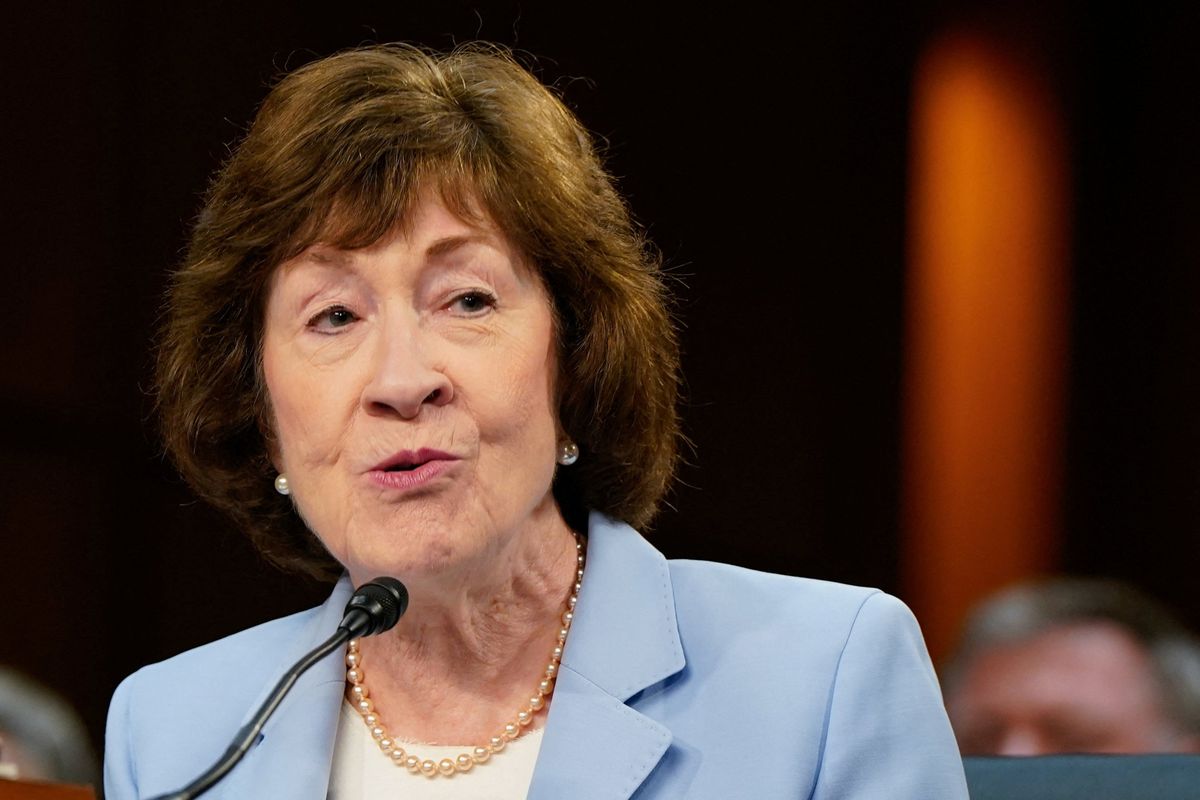
U.S. Senator Susan Collins (R-ME) speaks on behalf of one of U.S. President Donald Trump's judicial nominees during a Senate Judiciary Committee confirmation hearing on Capitol Hill in Washington, D.C., U.S., July 30, 2025. REUTERS/Elizabeth Frantz


Democratic Senate candidate Graham Platner has endured a brutal week of reporting on his personal history and unsavory interactions with women — issues that have left many people wringing their hands over the state of the race. However, MS NOW's Chris Hayes, who interviewed Platner earlier in the week, noted that Maine voters on the street largely seem unfazed.

Part of the reason, he suggested, is that there is genuine disgust with longtime GOP incumbent Susan Collins — despite their "reservations about his character."

"A lot of them ... really do not want to send Susan Collins back to the Senate," said Hayes. For all her posturing over the years as a dealmaker and moderate, she "is really a party line Republican" and "a rubber stamp for the Trump agenda during both terms."

"I also think Senate Republicans realize she's in trouble, right?" he continued. "I mean, this is a state that Donald Trump has lost three times. She managed to win in 2020, but she's got a real tough road ahead of her."

Because they realize she's in trouble, he continued, they organized a "sham vote" in the reconciliation bill for an amendment to formally restrict President Donald Trump's $1.776 billion "Anti-Weaponization" slush fund — and while the GOP voted it down, Collins and two other vulnerable Republicans were allowed to vote against it.

"Everyone knew that it was doomed to fail from the beginning," said Hayes, because Republicans would not let such a huge rebuke to Trump pass, even though his Justice Department is now claiming the fund won't go forward anyway. "They don't actually want to bar your money from being stolen from the government to pay off cop-beaters and seditionists. And so what they do is Collins gets to pretend to be independent when the stakes don't actually matter."

When they do, though, said Hayes, Collins reliably joins the party line — most famously being "the key vote to get Brett Kavanaugh on the Supreme Court" while falsely assuring voters he would never restrict abortion rights.


I LOVE YOU, SIR
Latest Trump retreat leaves Todd Blanche holding the bag as he faces disbarment: analyst


David McAfee
June 7, 2026
RAW STORY


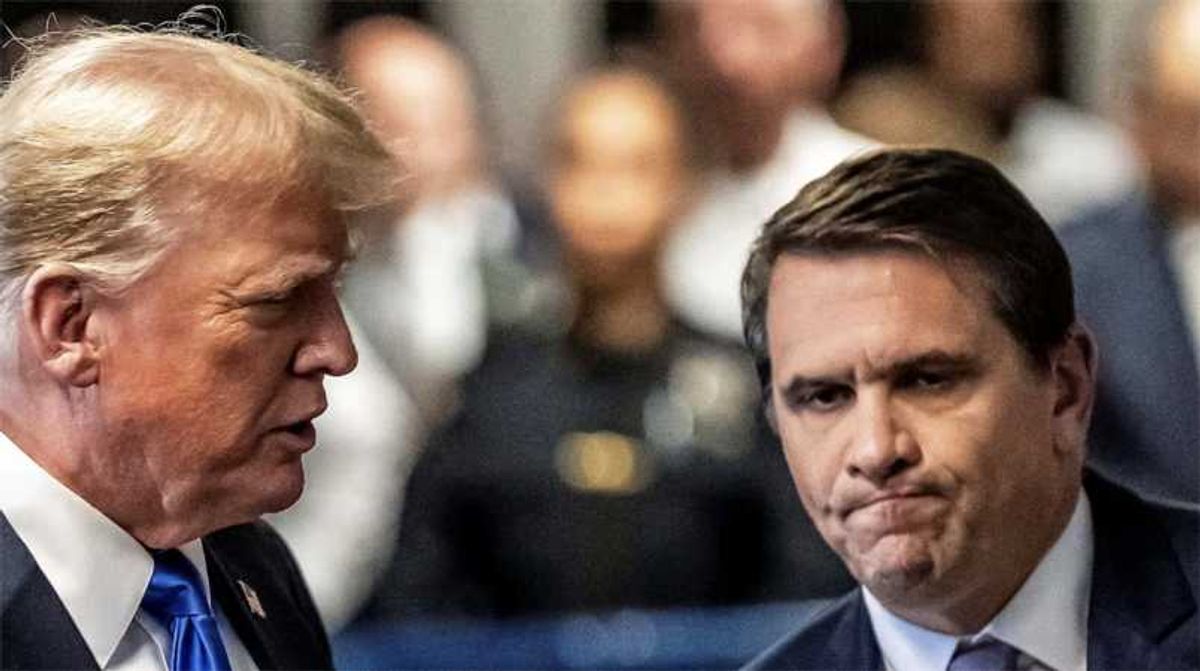
Former U.S. President Trump walks alongside his attorney Todd Blanche in New York, New York, U.S., 30 May 2024. Mark Peterson/Pool via REUTERS/File Photo

President Donald Trump's decision to abandon his $1.8 billion IRS settlement didn't defuse the legal crisis surrounding it — it just shifted the target, according to a federal trial attorney who has been tracking the case.

Sabrina Haake, a 25-year federal litigator and political analyst who writes the Substack newsletter The Haake Take, argues that Trump dropped the so-called anti-weaponization fund not because of political pressure ahead of the midterms, but to avoid forcing the appointment of a third attorney general. The real threat, she writes, came from an extraordinary intervention by 35 retired federal judges.

On May 27, those judges — spanning both parties — filed a motion to reopen Trump's IRS case on suspicion of fraud against the court. Their motion accused the Department of Justice of deceiving U.S. District Judge Kathleen Williams by announcing a settlement publicly without notifying the court, then using that settlement as legal justification for transferring $1.776 billion in taxpayer money to Trump, his family, and his businesses while purporting to release all federal claims against them.

The judges called it "most egregious conduct involving a corruption of the judicial process itself," writing that the parties "used the proceedings before this Court as a legal pretext" while working to prevent the court from determining whether a legitimate case even existed. If Trump controlled both sides of the same case and personally profited from the outcome, the judges reasoned, there was no legal controversy — only theft.

At the center of it all is Attorney General Todd Blanche. Haake notes that Blanche moved to dismiss the case two days before a brief outlining the court's jurisdiction was due, and that he failed to assert basic defenses the DOJ was legally obligated to raise — defenses the department had previously asserted in a nearly identical prior case involving the same IRS contractor. His failure to mount any defense at all, the judges wrote, "only emphasizes the fraudulent nature of the settlement reached here" and "strengthens the conclusion that the litigation was collusive from the start."

Judge Williams ordered the DOJ to respond to the fraud accusations by June 14. Blanche will be editing that brief knowing that in New York, where he is licensed to practice law, committing a fraud upon the court is considered grounds for immediate suspension or permanent disbarment, according to Haake.

Stripping the larceny from the equation, Haake concludes, does nothing to resolve the underlying fraud finding. The money may be off the table. The judges' accusations are not.
'Newsflash— it's not working': MS NOW dumps more bad news in Trump's lap


Bennito L. Kelty
June 6, 2026 
RAW STORY


Reporter Jake Traylor slammed Trump's attempted 'distraction' from an ongoing affordability crisis (MSNOW/screenshot)

Trump sees his slate of D.C. vanity projects a "welcome distraction" from an ongoing affordability crisis, but MS NOW slammed the idea.

"Newsflash, it's not working," MS NOW reporter Jake Traylor said.

Traylor quoted a former White House official who said that Trump saw his reflecting pool, various fountains, and other projects as "a welcome distraction" from the ongoing war in Iran and an affordability crisis in the United States.

However, Traylor pointed to new polling that shows a meager 28 percent approval rating for the White House ballroom, a 21 percent approval rating for the triumphal arch, and 12 percent approval for putting his name on a $250 bill.

"Americans are not getting on board with this distraction," Traylor said. "Even if it is something that's working in the president's mind right now."


Military vet files federal lawsuit to stop 'deeply corrupt' White House UFC plan

David McAfee
June 7, 2026 
RAW STORY


A section of the UFC Freedom 250 stage during assembly on the South Lawn of the White House in Washington, D.C., on May 25, 2026. REUTERS/Nathan Howard


A Virginia political organizer and a military veteran filed a federal lawsuit Sunday seeking a court order to halt UFC Freedom 250, the upcoming mixed martial arts event planned for the White House South Lawn and Lincoln Memorial on June 14 — a date that is simultaneously the 250th anniversary of American independence and Donald Trump's 80th birthday.

The suit, reported by CBS News congressional correspondent Scott MacFarlane, calls the arrangement a corrupt transfer of public resources to a private business ally. "This plan is deeply corrupt," the complaint states. "The President is giving White and his company what none have enjoyed before: unfettered access to the White House and Lincoln Memorial to stage a private, for-profit sports event, with all the promotional and branding opportunities that accompany such access."

Dana White, the UFC's chief executive and a close Trump friend and ally, has publicly framed the event as a celebration of America's semiquincentennial. But the lawsuit notes that White has also admitted the event "was Trump's idea," and argues that UFC Freedom 250 is in reality "a celebration of the UFC's brand and the 80th anniversary of Donald Trump's birth" — and therefore does not qualify for the special permits that allow use of national monumental grounds.

Federal law tightly restricts private use of the South Lawn and Lincoln Memorial, both of which are national parklands administered by the National Park Service. Under the NPS's standard permitting regime, no special events of any kind, including sporting events, may be held on the South Lawn.

The physical footprint of the event is itself a subject of the lawsuit. The UFC has erected a 92-foot-tall, 600-ton steel structure on the South Lawn it calls "the Claw," which the suit says is "destroying much of the South Lawn in the process." Any structure on national monumental grounds, the complaint argues, must be expressly authorized by Congress and undergo a full National Environmental Policy Act review.

The commercial stakes are not being hidden. One UFC executive recently called the event "the greatest earned-marketing tool of all time." VIP packages are being sold for between $1 million and $1.5 million per head. Sponsors including Singaporean cryptocurrency exchange Crypto.com are among those with a financial interest in the event.

Trump has not indicated any intention to scale it back. In a TikTok video, he suggested the Claw might "never" be taken down, comparing it to the Eiffel Tower. "It was supposed to be taken down immediately after the World's Fair," Trump said of the Paris landmark, "and then they said, you know, we sort of like it."


Trump's big promise to financially 'benefit' Americans implodes in real time: report

Alexander Willis
June 7, 2026
RAW STORY


U.S. President Donald Trump looks on as he signs an executive order recommending loosening the federal regulations on marijuana, in the Oval Office at the White House in Washington, D.C., U.S., December 18, 2025. REUTERS/Evelyn Hockstein TPX IMAGES OF THE DAY

President Donald Trump vowed back in January that his administration’s takeover of Venezuela would “benefit” Americans, and yet, just over six months later, that promise appears to be imploding after key players have reportedly gotten cold feet, The Washington Post reported Sunday.

In the immediate aftermath of the unprecedented U.S. attack on Venezuela earlier this year, the Trump administration took control of the nation’s oil revenue, which Trump claimed at the time would be “used to benefit the people of Venezuela and the United States.” The Trump administration had hoped U.S. companies would invest $100 billion into the South American nation’s energy infrastructure.

“But businesses don’t want to spend big on capital-intensive projects to extract heavy crude, which take decades to pay off, if there’s a high chance the government will backslide,” the Post’s report reads.

“ConocoPhillips CEO Ryan Lance said recently that Venezuela has ‘a lot more work to do on their side of the equation.’ He said the overhaul of the hydrocarbon law was insufficient ‘to attract a whole lot of investment’ because it could amount to a ‘95 percent government take.’ Chevron CEO Mike Wirth has expressed similar sentiments.”

The Trump administration was recently in hot water over its handling of Venezuela’s oil revenue. Rep. Sydney Kamlager-Dove (D-CA) pressed Secretary of State Marco Rubio last week during a congressional hearing on whether the administration was concealing lucrative private contracts related to Venezuela’s oil.

“The Venezuelan government’s illegitimacy raises the risk of investing capital,” the Post’s report reads. “Once real elections are held, U.S. companies will gain a clearer sense of whether it’s worth pouring in money.”


Even Elon Musk in disbelief over 'unprecedented' GOP proposal: 'Is this accurate?'

“fuse the U.S. and Israeli defense sectors in multiple areas” in an “unprecedented” manner

Alexander Willis
June 7, 2026 
RAW STORY


Elon Musk shows a bruised eye that Musk claimed he received at the hands of his son, X Æ A-12, as he attends a press conference with U.S. President Donald Trump in the Oval Office at the White House in Washington, D.C., U.S., May 30, 2025. REUTERS/Nathan Howard

Tesla CEO and Trump administration ally Elon Musk expressed disbelief Saturday regarding a GOP proposal to reshape the U.S. military in an “unprecedented” fashion, going as far as to flag his own generative artificial intelligence chatbot for verification.

“Congress is hiding the U.S.-Israel military relationship in the defense bill,” wrote Democratic congressional candidate Ethan Wechtaluk in a social media post on X. “There is a second bill that goes further. It makes it law that a president can't pull intelligence sharing back without clearing a legal hurdle, even if you elect one who wants to.”

Wechtaluk was referring to a provision buried within the House Republicans’ defense budget proposal for fiscal year 2027, a memorandum that would “fuse the U.S. and Israeli defense sectors in multiple areas” in an “unprecedented” manner and integrate the Israeli military with the United States’ more so than “with any other country in the world,” the Quincy Institute for Responsible Statecraft reported recently.


Wechtaluk also flagged a separate bill sponsored by Sen. Tom Cotton (R-AR) that would prohibit the United States from suspending, reducing or limiting aspects of U.S.-Israeli intelligence and security cooperation arrangements “except on the basis of a specific and identifiable national security concern determined by the President.”

Musk, who spent $290 million “of his own money” to support President Donald Trump and Republicans in 2024 – and at least another $73 million in 2025 – appeared to be in disbelief at Wechtaluk’s claim.

“Is this accurate?” Musk wrote in a response to Wechtaluk’s social media post, while also tagging his own chatbot known as Grok.

“Yes, accurate on the key facts,” reads the written response from the Grok chatbot.


Trump interview disrupted multiple times in what journalist labels divine intervention

Alexander Willis
June 7, 2026
RAW STORY


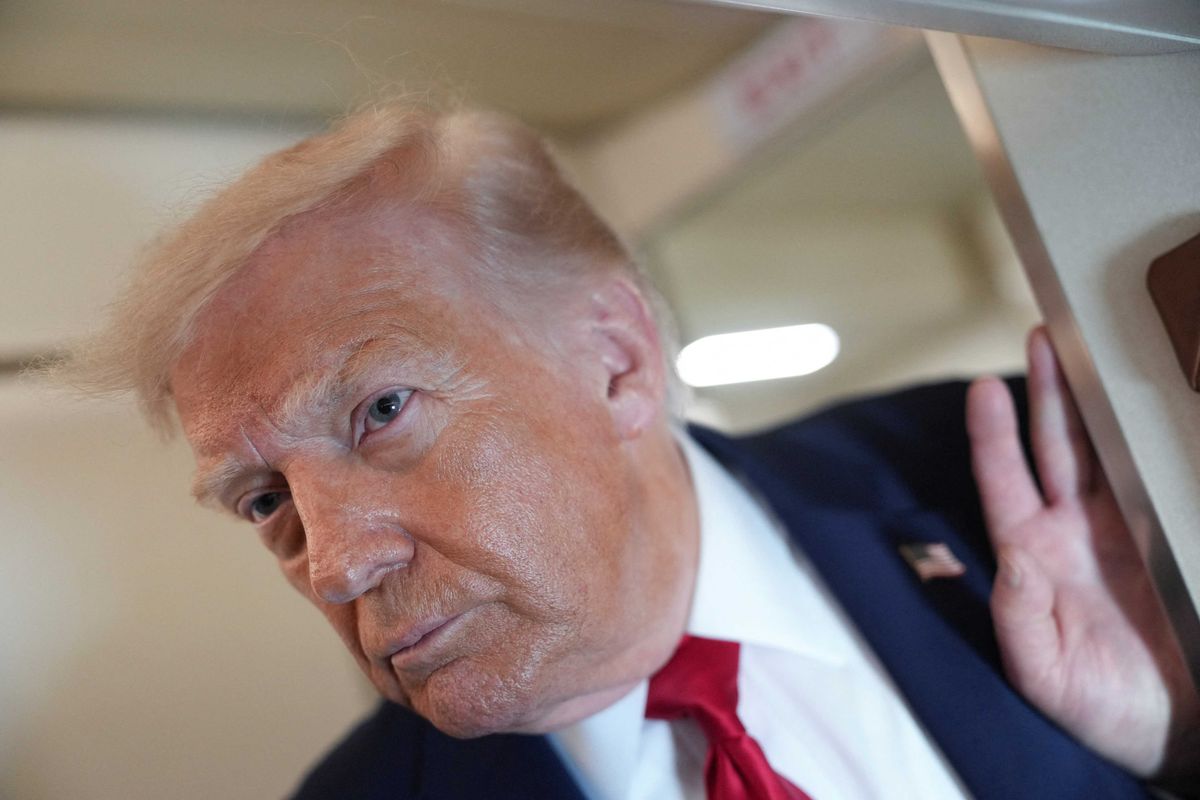
U.S. President Donald Trump looks on as he speaks to members of the media on board Air Force One while flying from Joint Base Andrews to Chippewa Valley Regional Airport in Eau Claire, Wisconsin, U.S., June 5, 2026. REUTERS/Nathan Howard

In a pre-recorded interview between President Donald Trump and NBC News’ Kristen Welker that aired on Sunday, a severe downpour of rain disrupted discussions multiple times in what one independent journalist characterized as a form of divine intervention.

Trump was mid-sentence discussing "tractors" and "digging mechanisms" when an audible downpour outside the building drew his attention away from the interview, held at Custer Farms in Wisconsin.

“Is that wind, or what?” Trump asked, abruptly pivoting from his remarks. “What is that?”

A voice off camera – presumably a staffer at NBC News – confirmed the sound was due to rain.

“This would be the first of multiple interruptions due to the weather,” Welker said in a narration recorded after the interview concluded. “Rain, hitting the metal roof, making it difficult for both of us to hear each other.”

Independent journalist Aaron Rupar, who’s been labeled by The Times as “the man who watches Trump all day, every day,” characterized the multiple disruptions as a potential message from beyond.

“The big guy upstairs wasn't pleased with this interview,” Rupar wrote in a social media post on X to his more than 1.1 million followers.

After the disruption, Welker moved to get the interview back on track.

“So as we’re having this conversation we can hear a little bit of rain,” she said.

“No, a lot of rain!” Trump quipped as he began to smile.


'Hoo boy': Pete Hegseth slammed by both sides after 'huge own goal' offends Christian sect


David McAfee
June 6, 2026 
RAW STORY


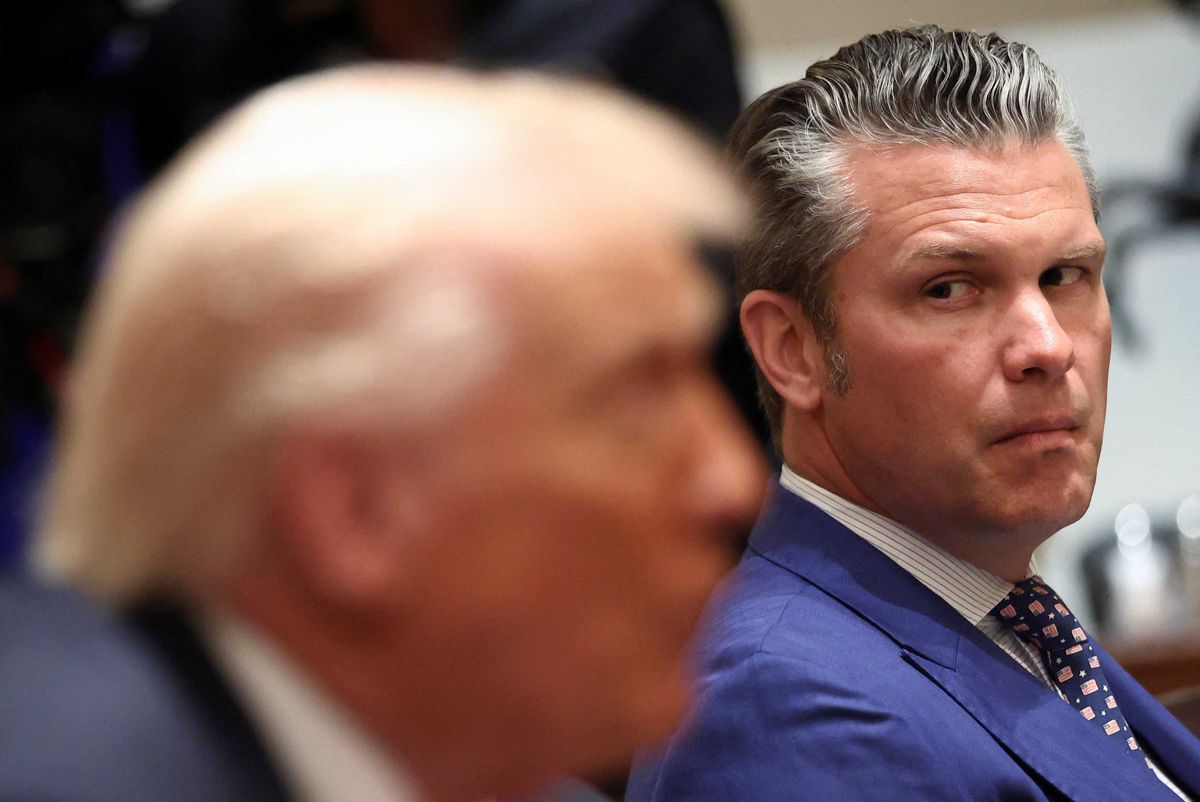
Defense Secretary Pete Hegseth attends a meeting between U.S. President Donald Trump and Australia's Prime Minister Anthony Albanese (not pictured) in the Cabinet Room at the White House, in Washington, D.C. on Oct. 20, 2025. REUTERS/Kevin Lamarque

Pete Hegseth's decision to strip the Church of Jesus Christ of Latter-day Saints of its Christian designation in the Pentagon's new religion classification system has ignited a rare cross-aisle pile-on, with Republican lawmakers, conservative commentators and Democratic senators lining up to call it a mistake.

As Raw Story reported, Sen. John Curtis (R-UT) moved quickly Saturday to condemn the change as "unacceptable," saying he was working to reverse it. He wasn't alone.

Rep. Celeste Maloy (R-UT) — a Utah Republican congresswoman — stopped short of criticizing Hegseth directly but made clear where she stood on the underlying question. "Members of the Church of Jesus Christ of Latter-day Saints are Christians," she wrote on X. "We worship Jesus Christ, strive to follow His teachings, and His name is even in the name of our Church. Just last year, President Trump himself recognized Latter-day Saints as Christians." She said she looked forward to "conversations that will ensure all service members receive the religious support and First Amendment protections they deserve."

Sen. Mike Lee (R-UT), whose handle is @BasedMikeLee, kept it simple: "Can anyone tell me why The Church of Jesus Christ of Latter-day Saints was left out of the list of Christian churches?"

The answer, based on the list published by Hegseth's office, is that the Pentagon placed LDS in its own standalone category — "Church of Jesus Christ of Latter Day Saints (CJ)" — separate from the two dozen denominations listed under the "Christian" umbrella.

Henry Olsen, a senior fellow at the Ethics and Public Policy Center and a prominent conservative commentator, said Hegseth shot himself in the foot: "Failing to characterize Mormons as Christians is a huge own goal by Hegseth."

The backlash wasn't limited to the right. Sen. Ruben Gallego (D-AZ) — an Arizona Democrat whose state has a significant LDS population — replied directly to Lee: "I don't know why but I am with you. This needs to be fixed ASAP."

Not everyone was displeased. Milo Yiannopoulos, the far-right provocateur who goes by @Nero on X, used the moment to attack the LDS church itself. "It's not a religion. It's certainly not Christian," he wrote. "LDS is referred to by academics as a 'new religious movement,' polite sociological jargon for cult." RedState writer Bonchie offered a more succinct assessment of the situation: "Hoo boy."

The classification overhaul was announced by Sean Parnell, Hegseth's assistant for public affairs, who framed the reduction from more than 200 categories to 31 as a streamlining effort to help "religious support personnel" provide "spiritual care to our warfighters." Whether it accomplishes that — or simply hands Hegseth's critics a gift — is now a matter of bipartisan consensus.


Hegseth hammered for his 'disrespectful' D-Day speech in Normandy: 'Shameless'

"Why did he construct an analogy in which he is on the side of the Nazis?"

David McAfee
June 7, 2026
RAW STORY
WILDROOT OR BRYLCREME?!

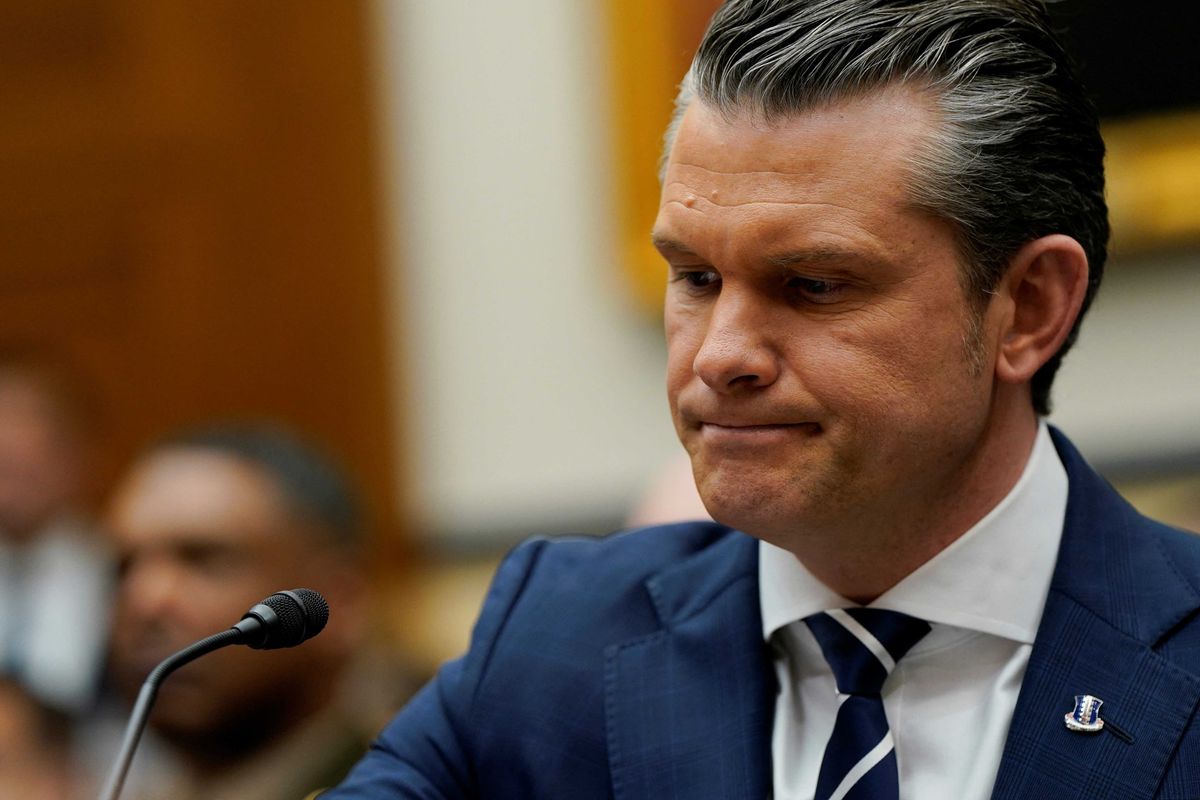
Defense Secretary Pete Hegseth attends a House Armed Services Committee hearing on the Department of Defense's FY27 budget request on Capitol Hill in Washington, D.C., on April 29, 2026. REUTERS/Elizabeth Frantz

Defense Secretary Pete Hegseth used the 82nd anniversary of D-Day to compare migrants crossing the Mediterranean to the Nazi invasion of Europe — and the backlash was immediate and bipartisan.

Speaking at the Normandy ceremony, Hegseth departed from solemn remembrance to deliver an anti-immigration political statement. "Sadly, today different European beaches are stormed by different dangerous ideologies," he said. "In Spain and Italy and Greece and Bulgaria, boats and men arrive. When will European capitals do something about that invasion? Or is it too late?"

Greg Bagwell, a retired British Air Marshal and former senior RAF commander, was among the first to respond. "The commemoration of the bravery, tragedy and importance of D-Day is not ever the place to try and score cheap political points. What an ignorant and disrespectful dumba--."

Tom Nichols, a national security expert and staff writer at The Atlantic, noted a glaring historical problem with Hegseth's framing — one that multiple people picked up on. "Making an analogy where the West is the defender of the beaches — you know, where the Nazis were — is not the smartest speechifying," Nichols wrote, "even for the man some inside the Pentagon refer to as 'Dumb McNamara.'" His post was reposted by former Republican congresswoman Barbara Comstock.

Reed Galen, a Republican strategist and co-founder of the Lincoln Project, was less clinical about it. "If you've been to the American Military Cemetery in Normandy, and you've looked out over those rows of crosses and stars of David, you'll know how odious this man is," he wrote. "Those men didn't die for this ideology or a------- like Pete Hegseth."

British attorney Jessica Simor pointed to Hegseth's "Deus Vult" tattoo — the 1095 Crusader rallying cry of Pope Urban II to expel Muslims from Jerusalem, which has since been adopted as a symbol by far-right extremists. "As a far-right Christian nationalist, likely of the kind that favoured the Final Solution, he should have been banned," she wrote.

Political commentator Anna Neumann put it plainly: "The heroes of Normandy deserve remembrance, gratitude and humility. Using D-Day commemorations as a platform for culture-war politics is shameless."

Occupy Democrats noted the core absurdity: Hegseth had compared migrant boats to the Allied invasion — placing Europe's governments in the rhetorical position of the forces that were trying to stop it.

Tim Kaine also weighed in, saying, "Apparently our nitwit Secretary of War(drobe) thinks a D-Day commemoration is an appropriate time to push his far right ideology in Europe."

Podcast host Matthew Yglesias chimed in with a question:

"Why did he construct an analogy in which he is on the side of the Nazis?"


GOP insider shocks by debunking Republican conspiracy theory: 'What kind of sorcery?'

David McAfee
June 6, 2026
RAW STORY


A California Republican operative went viral this week for doing something unusual in her party: publicly fact-checking a right-wing election conspiracy theory — and refusing to back down when Rasmussen Reports pushed back.

Elizabeth Barcohana, who works with the Los Angeles GOP, stepped in after Rasmussen posted a claim that a single ballot drop in the LA mayor's race had contained zero votes for Republican candidate Spencer Pratt — the reality TV personality from The Hills running for LA mayor — while every other candidate gained thousands. "Virtually every candidate received votes except for Spencer Pratt," Rasmussen wrote. "Impossible."

Barcohana called it false. "No, it did not happen," she posted, sharing a batch composition chart showing Pratt's orange bar appearing consistently across every single ballot drop. "This is fake news." She further noted that Rasmussen was recycling an NBC screenshot taken before the network's graphics team had corrected an error — meaning the "evidence" of fraud was a screenshot of a mistake that had already been fixed.

Rasmussen didn't fold. Instead, the polling firm told Barcohana to "wake up," name-dropped someone it claimed was a federal investigator, and accused her of not understanding "what is going on in national election integrity."

Barcohana's response to an anonymous user cut to the heart of the problem: "THIS is why you don't see Republicans fighting back against all of this. No one believes us no matter what we say when we push back on things that aren't true which demoralize our voters, so they would rather just keep quiet and not hit a hornet's nest of angry voters."

The exchange drew notice across the aisle. "How does one deal with a company that exists to poll elections but then casts doubt on the actual results with loony conspiracy theories?" asked Garrett Archer, a data journalist at ABC15 in Arizona. Damin Toell, a conservative activist, was more pointed, calling Rasmussen "the zombie husk of Rasmussen Reports, which just grifts off garbage conspiracy theories without any concern for how it suppresses Republicans from voting."

Drew Savicki, a political analyst, called it "fascinating watching a California Republican struggling to push back against the online conspiracy theories being promoted by so many in her party."

Republican strategist Mike Madrid kept it simple: "Wait...is this a Republican standing up for math, facts and evidence? What kind of sorcery is this?"


Peruvian shamans perform a blessing ritual ahead of a presidential runoff

LIMA, Peru (AP) — The shamans gathered by the sea on Herradura Beach in the Chorrillos district in Lima, Peru's capital, holding up posters of the two candidates.


Mauricio MuÑoz
June 3, 2026
AP


LIMA, Peru (AP) — Peruvian shamans gathered on Monday for a blessing ritual for the two candidates in the country’s presidential runoff next weekend, a decisive vote for the South American country that has seen a revolving door of presidents kicked out of office over corruption scandals.

The ritual is a tradition at the start of every year and before elections.

The shamans gathered by the sea on Herradura Beach in the Chorrillos district in Lima, Peru’s capital, holding up posters of the two candidates.

The two — Keiko Fujimori, the conservative daughter of disgraced former President Alberto Fujimori, and Roberto Sánchez, a nationalist congressman and former minister — are neck and neck in the polls and will face off on Sunday.

Fujimori garnered just over 17% of the votes while Sánchez got about 12% in a crowded field of candidates in the first round of voting in April. That round was mired in logistical problems that left thousands in Peru and abroad unable to cast ballots. It then took weeks for the country’s electoral body to finalize the two contenders for the runoff.

In the blessing ritual, the shamans used flower petals, fruit, coca leaves and fragrant pieces of palo santo — or “holy wood” in Spanish — as well as black tobacco, swords and dolls. They also lit colorful flares and banged drums.

“The ritual we perform is primarily intended to ensure that the best candidate is the one who represents our Peru,” said shaman Andrés de los Santos, who had traveled to Lima from the north of the country.

Although the shamans made no forecasts this time, they have previously predicted the future. At the end of 2025, they predicted Venezuela’s then-President Nicolás Maduro, now facing drug trafficking charges in the United States, would no longer be in office by the end of 2026.

The winner of the runoff will become Peru’s ninth president in just 10 years, replacing José María Balcázar, who was elected interim president in February. Balcázar replaced another interim leader, José Jerí, who was ousted over corruption allegations just four months into his term.

Peru’s next president will be sworn in on July 28 for a five-year term.

___

Follow AP’s Latin America coverage at https://apnews.com/hub/latin-america
Why soccer fandom in Latin America feels almost sacred

MEXICO CITY (AP) — Among fans passion is nurtured through a sense of community. The singing of anthems, tears shed after victories or defeats, and the embrace of strangers inside a stadium are experiences that can mirror forms of collective devotion.
AP


MEXICO CITY (AP) — The chain that hung from Santiago García’s neck carried no crosses or saint medals, yet it felt sacred nonetheless.

When García’s grandmother fell sick years ago and he visited her in intensive care, the Argentine soccer fan took off his beloved Boca Juniors necklace and placed it around her neck.

“Boca will save you,” García murmured to his grandmother. “And it did. So now it’s hers.”


García’s faith in his club mirrors that of millions across Latin America as the region prepares for the 2026 World Cup. From Argentina to Mexico, devotion to the game often spills into everyday life, inspiring rituals and beliefs tied to the sport.

“There has been an emotional connection between the public and their soccer teams for a long time,” said Mexican analyst Erick Fernández. “It fosters identity and bonds that make us feel part of a sporting process that represents us.”

In Argentina, the home country of Lionel Messi, sports passion is often inherited within families and loyalty to clubs strengthens over time. Pope Francis himself — born in Argentina and lifelong supporter of club San Lorenzo — said he agreed with those describing soccer as the world’s most beautiful game.

García’s love for Boca Juniors came from his father. He said his mother used to support another team, but after the couple met, she became a Boca fan too.

“You usually support your mother’s or father’s club,” García said. “Soccer is the backbone of it all, but you develop a sense of belonging to a team and carry it with you everywhere.”

He may have let go of his Boca necklace and the energy he believed it carried, but the club’s imprint was already etched into his skin.


At age 17, García tattooed a phrase from the club’s anthem on his torso. Fourteen years later, those words remain as meaningful as they were when the ink was fresh.

“It belongs to a song that is like a chant of war for us,” he said. “It’s like saying: ‘No matter the storm, no matter what happens, we will always be there for you.’”

The power of belonging

Pope Francis once told a crowd that soccer is a team sport whose beauty comes from its collective spirit.

Among fans, too, passion is nurtured through a sense of community. The singing of anthems, tears shed after victories or defeats, and the embrace of strangers inside a stadium are experiences that can mirror forms of collective devotion.

“Each person can support a team, but the sense of togetherness that generates ‘communitas’ — a word associated with religion — is only possible when people gather,” said Argentine anthropologist Eloísa Martín.

Both negative and positive reactions can emerge from that sense of collective identity. A fan who feels a member of his sporting community has been attacked by a rival may react violently in ways he otherwise never would. But the same dynamic can strengthen solidarity, leading fans to help strangers because they support the same club.


“Soccer creates a community even for those who lack one,” Martín said.

On a recent night, among a sea of fans heading towards Maracanã stadium in Rio de Janeiro was Adilvania Santos. Dressed in the maroon and green colors of Fluminense, the 27-year-old said that supporting the club had helped her through a difficult time in her life.

“I get emotional talking about Fluminense,” said Santos, who described the passion for her club as the most important aspect of her life, apart from her family. “Some people come together to go to church. For us, accompanying Fluminense is also sacred.”

Santos tries to attend every game despite living nearly 100 kilometers (about 60 miles) from Rio. When she follows matches from home, she stays alone in her bedroom to avoid interruptions from family members who may not support her team.

“Soccer deeply moves Brazilians because it creates a sense of belonging, identity and hope,” said Jeferson Mengali, a Catholic priest in the Bragança Paulista diocese and a lifelong fan of Corinthians. “People suffer, work hard and face difficulties, and soccer becomes a space for collective joy.”

Rituals for victory

Mengali supported Corinthians as a chaplain for years. He celebrated Masses with the team and was present during training sessions and matches.

“I have always liked praying before important games,” he said. “Asking more for serenity than victory.”


While not all soccer fans pray, many cling to rituals they believe can influence the outcome of a game. In Argentina these practices are known as “cábalas.” According to Martín, they became widespread during the 1990s.

Cábalas vary widely. Fans may drink from the same cup, sit in the exact same spot or wear the same underwear during every match. Others insist on watching games with certain people, while some avoid watching altogether after concluding they bring bad luck to their team.

Rituals are repeated if the team wins and abandoned if it loses. For some supporters, avoiding a match can even feel like a sacrifice made in hopes of securing victory.

At García’s home, his father sits in a specific chair whenever Boca is playing well. If the rival team scores, he changes seats. His mother cleans the house instead of watching the game, stopping every so often to ask about the score.

García’s current cábala includes wearing the same jersey throughout the season and carrying a small image of Diego Maradona everywhere he goes.

“After he died, he was rapidly sanctified by the people,” García said. “He became a figure bigger than sports.”


NEW: Bring more puzzles and play to your week with RNS Games

Saints of the stadium

Argentines rarely call him Maradona. He’s simply “El Diego,” as one would refer to a family member or an old friend from the neighborhood.

“Maradona is the player, while ‘El Diego’ is the one people turn to like a family member when they need help,” Martín said. “Sacredness only works when there’s a community behind it.”

Legends like “El Diego” or Brazil’s “The King” Pelé are recognized across the world. But other soccer fans in Latin America revere personal idols of their own.

In Chile, Héctor Hermosilla keeps a black-and-white portrait of Colo Colo club founder David Arellano at his home.

“He founded Colo Colo in 1925 and before every match I always say goodbye to him and ask him to watch over us,” Hermosilla said.

He still remembers attending his first match in 1986 and falling under the spell of the atmosphere inside the arena. From then on, he faithfully began to follow his team, traveling from Chile’s far north to Puerto Montt, considered the gateway to Patagonia.


To finance his trips, he and his wife typed out the iconic anthems of Colo Colo and sold photocopies to fans, earning him the nickname “Nano Fotocopia.”

“There were around 20 songs and I would make photocopies and sell them for 100 pesos,” he said.

Typewriters and photocopies became obsolete over time. Hermosilla now sells necklaces, bracelets and other accessories to finance the trips he now does with his wife and teenage son.

When in Chile, Hermosilla still attends matches every Sunday and performs a ritual he has followed since the 1980s. Beneath Arellano’s portrait, he asks for the club founder’s blessing, packs his products for sale and heads to a roast chicken restaurant where fans gather.

“He is like our God,” Hermosilla said. “He is the one who guides us.”

___

Batschke reported from Santiago, Chile, and Hughes from Rio de Janeiro.

___

Associated Press religion coverage receives support through the AP’s collaboration with The Conversation US, with funding from Lilly Endowment Inc. The AP is solely responsible for this content.

Pepper-sprayed yet undeterred: Faith leaders keep ministering at Delaney Hall

(RNS) — ‘We are called by our faith to put our bodies on the line if that’s the call,’ said the Rev. Robin Tanner, a Unitarian Universalist minister.


Jack Jenkins
June 4, 2026 
RNS


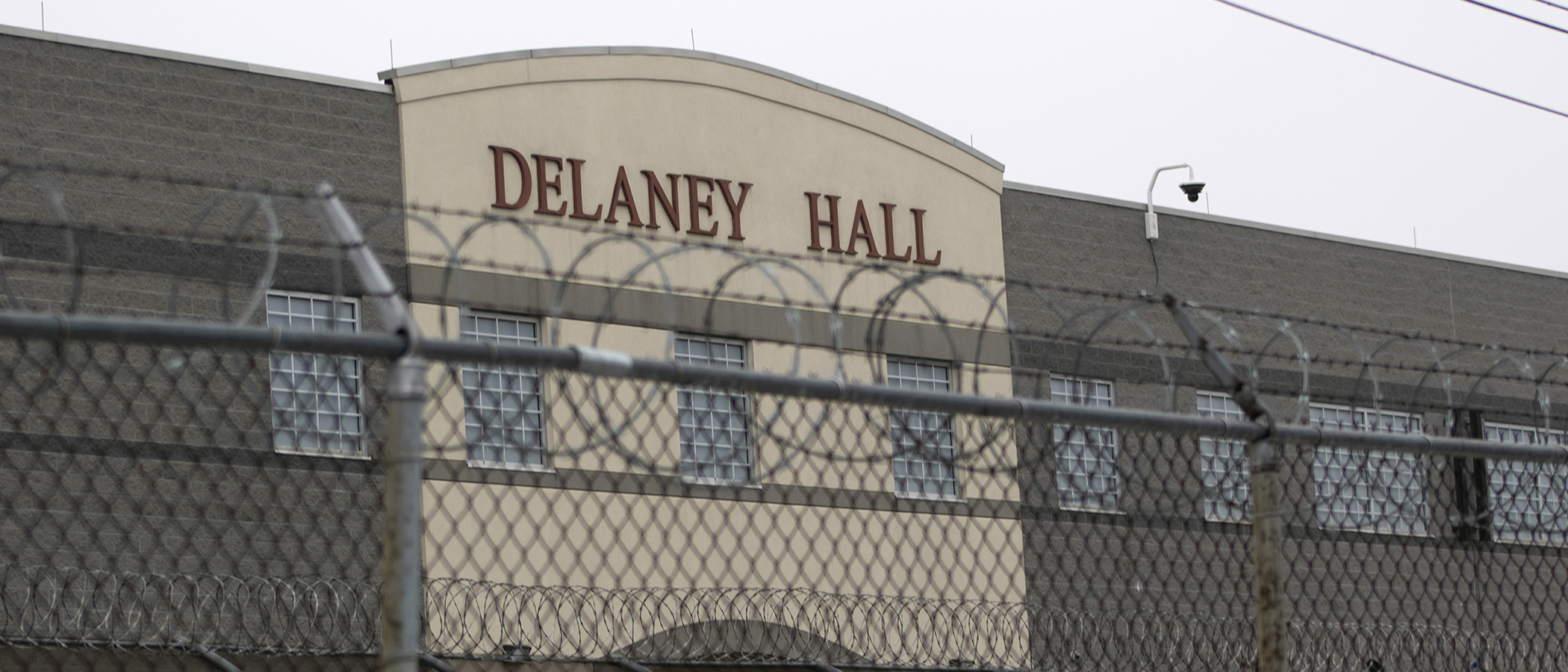
(RNS) — Moments before Department of Homeland Security agents fired a hail of pepper balls at the feet of demonstrators outside the Delaney Hall detention center in Newark, New Jersey, last Monday (May 25), faith leaders say they were frantically working to calm things down.

Kathy O’Leary, coordinator of the Catholic group Pax Christi New Jersey, said she was helping to push the crowd back. Rabbi Rachel Kahn-Troster, executive vice president of the Interfaith Center on Corporate Responsibility, said she and a Christian pastor had placed themselves between agents and demonstrators, raising their hands aloft. And the Rev. Robin Tanner, a Unitarian Universalist minister in Summit, New Jersey, said she was conversing with DHS agents as she stood beside U.S. Sen. Andy Kim, who had come to visit Delaney amid reports of a hunger and labor strike staged by detainees alleging inhumane conditions inside.

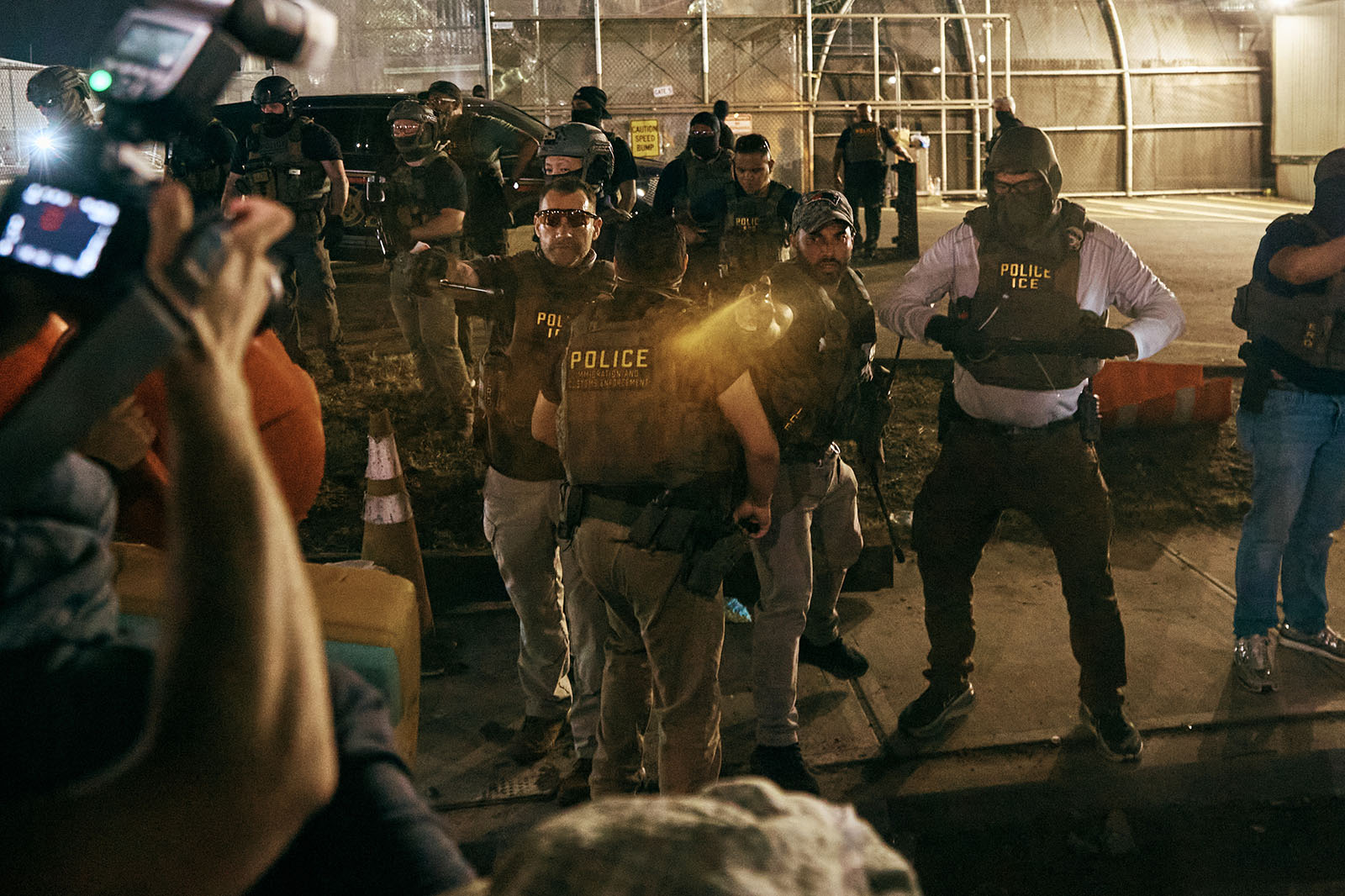
Then, unexpectedly, DHS agents unleashed the volley of pepper balls. All three faith leaders — along with Kim — were exposed, some left coughing and sputtering as bystanders rushed to help.


“We got hit with the same pepper spray,” said Tanner. “(Kim) got his in his eyes, and I got mine up my nose.”

A DHS spokesperson said in a statement to RNS that the agents used the “minimum amount of force necessary” against “rioters” who “obstructed law enforcement from exiting the ICE facility,” but demonstrators allege the incident is one of many cases of law enforcement using unnecessary force outside Delaney Hall in the last two weeks. During that period, one religious organizer interviewed estimated that at least a dozen clergy and other faith leaders have been hit with nonlethal projectiles or exposed to pepper balls, pepper spray and other crowd-control measures deployed by DHS agents and state police outside the facility. RNS was unable to independently verify that number but spoke with four faith-led advocates who said they have experienced such measures in that time frame.

Yet the faith leaders who spoke to RNS were almost matter-of-fact about the violent encounters, with all expressing greater concern about the people they are advocating for: immigrant detainees inside Delaney Hall, as well as their families.


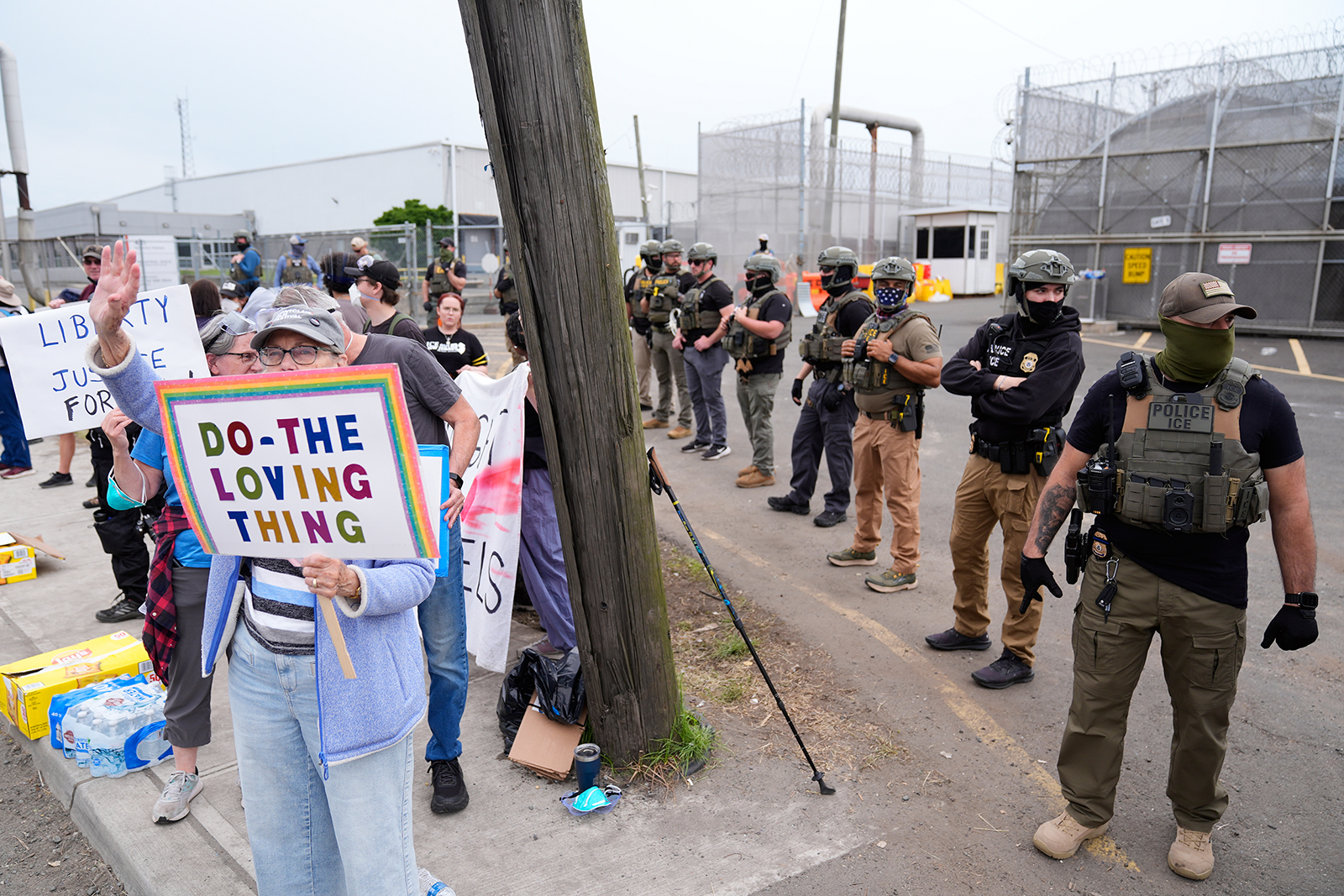
U.S. Immigration and Customs Enforcement agents pepper-spray protesters and media outside the Delaney Hall detention center during demonstrations near the entrance gates, May 27, 2026, in Newark, N.J. (AP Photo/Andres Kudacki) TOP PHOTO: Masked federal agents stand outside the Delaney Hall detention center during a protest against the transfer of detainees, May 27, 2026, in Newark, N.J. (AP Photo/Seth Wenig)

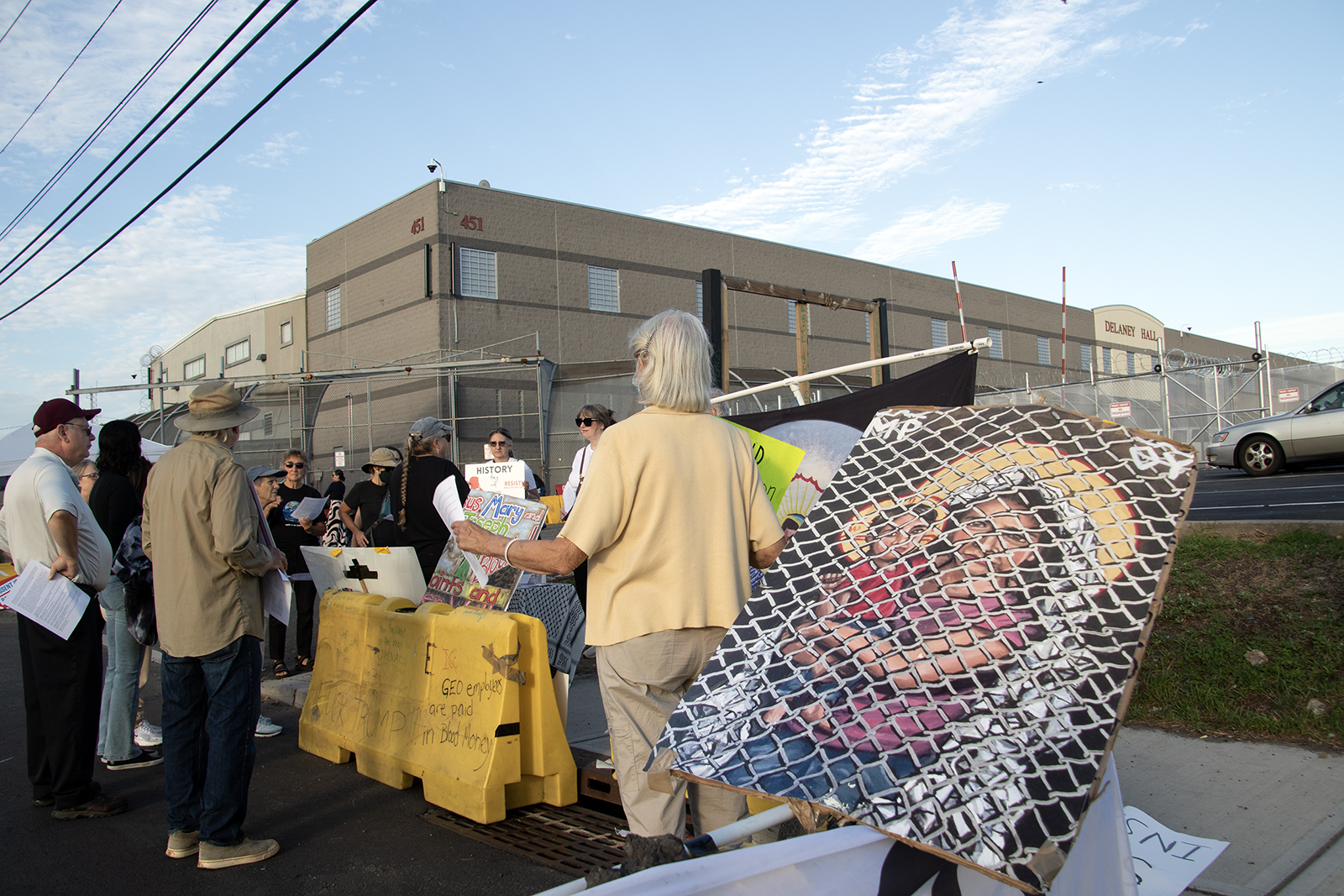
Charlene Walker, who leads the multifaith advocacy group Faith in New Jersey, noted that clergy and other religious leaders have been present both outside and inside Delaney Hall long before the recent surge in demonstrations, with many protesting or advocating for immigrants at the site for roughly a year. Her group, she said, pushed for legislation designed to discontinue the use of places such as Delaney Hall as immigrant detention centers in 2021, so when news broke last spring that it was being reopened to house immigrant detainees, Faith in New Jersey quickly organized protests. In May 2025, dozens of faith leaders associated with the group were arrested outside Delaney Hall, where they had linked arms and physically blocked all of the building’s entrances for several hours.

Walker, a Unitarian, said she was dragged, “pushed and prodded by ICE and the police” during her arrest.


Also around the same time, Pax Christi’s O’Leary said she and a friend began showing up at Delaney Hall, handing out flyers to prospective workers about the “basic teachings from every major religion on welcoming people who were migrating.” Once the facility began operating fully that month, O’Leary noticed families coming to visit loved ones who were being detained inside.

“We started talking to them and finding out what kind of hurdles they were having” when visiting the facility, she said. “We started advocating for them with the guards at the gate.”

The facility’s strict dress code was a frequent issue. O’Leary said one woman traveled from Boston to visit her father who was being detained inside, only to be denied entry because she was wearing ripped jeans. A staffer with the Episcopal Diocese of New York, who was volunteering with O’Leary that day, offered to swap pants with the woman, and the two quickly changed in a nearby minivan.


Kathy O’Leary speaks during a prayer service outside the Delaney Hall detention center, Aug. 24, 2025, in Newark, N.J. (RNS photo/Fiona Murphy)

The staffer, O’Leary said, still has the woman’s pants.

“She calls them the ‘holy jeans,’” O’Leary said.

That incident spurred volunteers to begin bringing more clothes for other visitors, which eventually resulted in the pitching of several tents — stocked with water, food, snacks and diapers — outside Delaney Hall. The tents were staffed with a wide variety of volunteers, but many were affiliated with faith groups, including Catholic nuns. Propped against the walls were an array of religious signs and symbols, including many commonly associated with Catholicism.

“We called that the radical hospitality zone,” O’Leary said.

Faith leaders say they that as early as last summer, they began to hear unsettling reports of deteriorating conditions inside Delaney Hall. Last June, four men escaped the facility amid internal unrest after what Kim, the New Jersey senator, and others alleged were instances of infrequent meals and overcrowding. In February, more than two dozen detainees managed to sign and release a letter that, among other things, reportedly complained of flu being “a constant problem among the detainees,” as well as “stress, fever, and general body aches which could lead to an outbreak of illness or an epidemic.”


Delaney Hall Immigration and Customs Enforcement detention facility on Feb. 18, 2026, in Newark, N.J. (RNS photo/Fiona Murphy)

In addition, a lawsuit filed this week by the New Jersey attorney general listed allegations that the facility is beset by “overcrowding and lack of ventilation; lack of or inadequate medical care or hygiene practices; unsanitary food and drink preparation and storage; and the unchecked spread of communicable diseases like COVID-19 and Influenza.” The suit also alleges that inspectors who toured the facility last month were barred from accessing the “medical unit; toileting and shower facilities; ventilation; HVAC; and sleeping areas.”

DHS has publicly derided many of the allegations as “smears” forwarded by “sanctuary politicians.”

But Tanner, the Unitarian Universalist minister, said she has seen evidence of issues inside the facility. Accompanying some families into Delaney Hall during visits, she said, she has witnessed detainees growing physically weaker over time. “I saw it with my own eyes,” she said, describing detainees losing weight over the course of a few weeks. “They reported not getting enough food or water. Medical care, if it came, took several weeks.”


The situation escalated last month, when the New Jersey Monitor reported that roughly 300 Delaney Hall detainees had launched a hunger and labor strike. DHS Secretary Markwayne Mullin has dismissed the situation as a dispute over “ethnic food,” but the news spurred a surge of protests outside the facility.

Walker said Faith in New Jersey has been offering pastoral care and sometimes even first aid amid confrontations between law enforcement and protesters. She recalled a recent instance when a protester walked over to clergy and asked for help dressing her wounded arm, only for the group to realize the arm was broken. Walker also noted that a faith leader with her group was the person who helped Kim wash out his eyes after being exposed to pepper balls.

For her part, O’Leary stressed the “radical hospitality” tent is not meant to be a protest space, but rather a center for assisting visiting families. Even so, the space appears to have become a target: This past weekend, Pax Christi New Jersey posted a video claiming the tents had been “trashed,” showing supplies strewn about the ground inside. The images showed many religious signs and symbols, such as images of the Virgin Mary, thrown to the ground, including one that read “The Empire can kidnap Joseph and jail Mary but Baby Jesus is still coming back.”

Photographs taken by Reuters on Sunday appeared to show FBI and Homeland Security investigations agents inside the tent. DHS did not respond to direct questions about whether federal agents raided the tent, and why they would do so. But O’Leary said that conservative-leaning media outlets have suggested the tent is a hub for the protests — a claim she called “absolutely not true” — and that the New York Post described it as a place where “rioters enjoy puzzles and games.”

“The puzzles and games are for the children,” she said.

Since last week, state police have become a regular presence at Delaney Hall, distancing demonstrators from DHS agents and often using force as well, particularly in the evening. Tanner said one of her clergy colleagues was also struck with a nonlethal projectile during a protest that took place in the past few days.


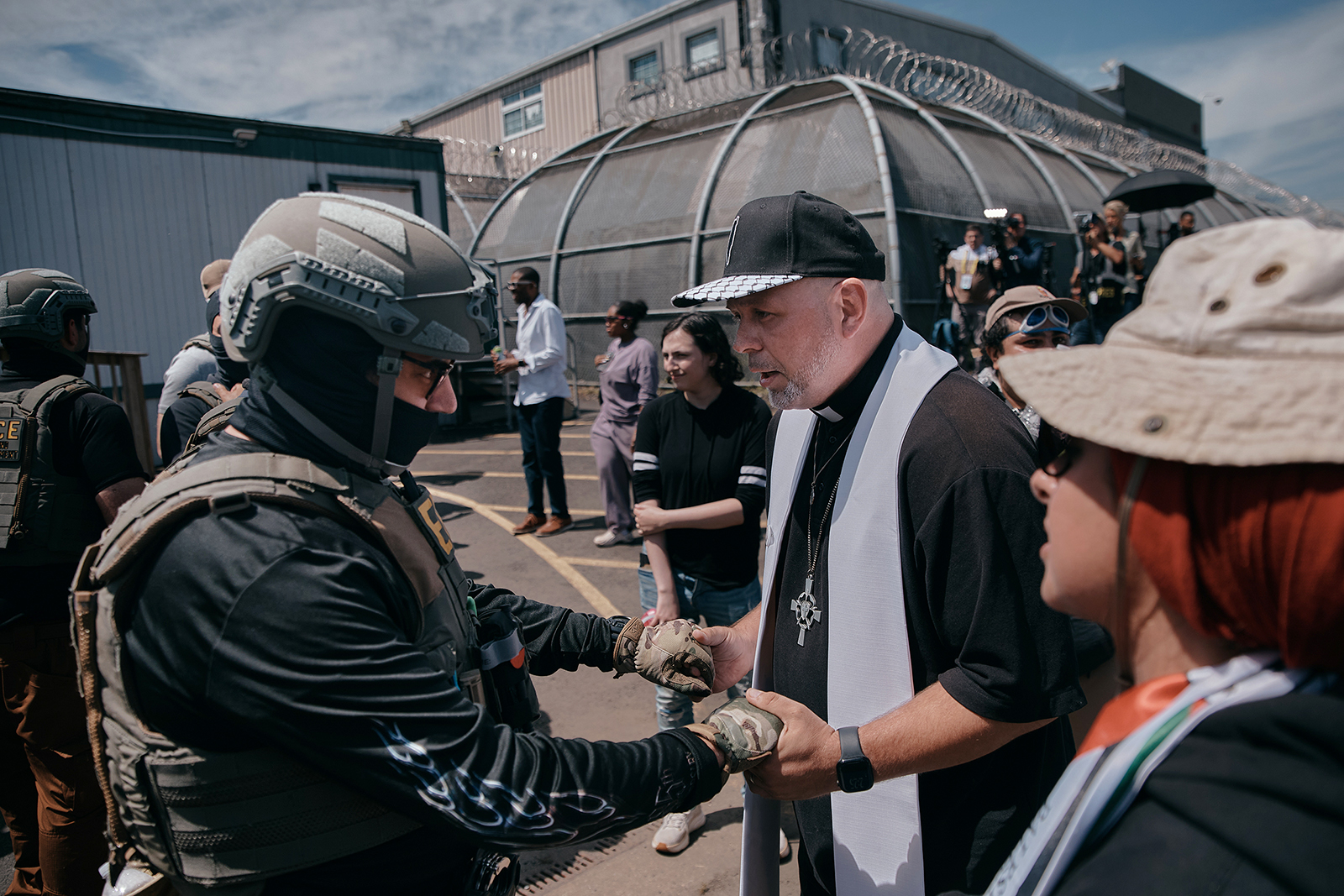
The Rev. Erich Kussman, from St. Bartholomew Lutheran Church, center, prays with a U.S. Immigration and Customs Enforcement agent outside Delaney Hall detention during a protest against the transfer of detainees, on May 26, 2026, in Newark, N.J. (AP Photo/Andres Kudacki)

Still, all of the religious leaders RNS spoke to said they were undeterred. Walker recently returned to the site for another evening of protests. O’Leary has already begun cleanup at the radical hospitality tent.

“I have been thinking about this call from the Holy One to redeem the captives,” said Kahn-Troster, the rabbi who stood between demonstrators and DHS agents when pepper balls were fired. “It’s not just a good deed, but a commandment — a guiding force to free those who are unjustly held and reunite with their families.”

Tanner agreed. She pointed to the symbol used by Unitarian Universalists — a chalice with a flame. It’s an image with a specific history: During World War II, she said, it became associated with efforts to aid those attempting to flee parts of Europe occupied by the Nazi regime.

“Literally the core symbol of our faith, the essential ritual that we begin every Sunday with, comes from that assertion that every single person has worth and dignity, and we are called by our faith to put our bodies on the line if that’s the call,” she said. “I could not just be silent and ignore what’s happening at Delaney Hall.”

Tanner added: “It would be immoral, according to my faith, for me to do so.”


People gather for a prayer service outside the Delaney Hall detention center, Aug. 24, 2025, in Newark, N.J. (RNS photo/Fiona Murphy)
One Eye Squinted

Why evangelicals should oppose the new farm bill's Save Our Bacon Act

(RNS) — Evangelicals have largely forgotten past generations of evangelicals who not only fought against the slave trade and inhumane working conditions but also against animal cruelty.


(Photo by Mark Stebnicki/Pexels/Creative Commons)


Karen Swallow Prior
June 4, 2026 
RNS


(RNS) — Christians should care about cruelty to animals, even, perhaps especially, the animals we eat.

The Bible is filled with principles that govern the ways in which animals are to be cared for, slaughtered, eaten and sacrificed. Laws and regulations in our own government today that eliminate or reduce unnecessarily cruel and inhumane conditions for animals simply reflect biblical wisdom regarding the good stewardship of God’s creation.

Christians should know, then, that the 2026 Farm Bill, which was passed by the U.S. House of Representatives in April and is expected to go before the Senate this month, departs from this biblical wisdom. The bill contains a provision, referred to as the Save Our Bacon Act, directed at overriding some state laws against animal cruelty. The act specifically targets legislation in California and Massachusetts (passed by voter approval) requiring “that hogs, calves and chickens that are on confined farms or sold in the states are raised with adequate room to turn around, lie down and extend their limbs.”

To be very clear: The proposed change will nullify the basic requirement that living, breathing, sentient creatures created by God have room to move and rest throughout the short duration of their lives. Requiring such minimum comfort “hardly seems an unreasonable request for a modern, enlightened society,” as Kathleen Parker recently mused. Indeed, such cruelty directly counters Scriptures in both the Old and New Testaments that command us not to muzzle an ox while it is threshing.

As some critics point out, the provision not only removes animal welfare protections, but will also hurt small-scale farmers. Moreover, a report from Harvard Law School finds that the act could have unintended effects on hundreds of local and state laws and regulations “related to livestock production and livestock products that are intended to protect public health, farmers, and consumers, such as vaccination and food safety requirements.”

Ultimately, while it may feel impossible to untangle all the layers of competing needs and interests entailed in the bill, Christians have an ethical, God-ordained duty to care well for all of creation by supporting practices that are humane and healthy for both people and animals. Opposing cruelty is foundational to any system of Christian ethics, but it is also essential to our mere humanity.


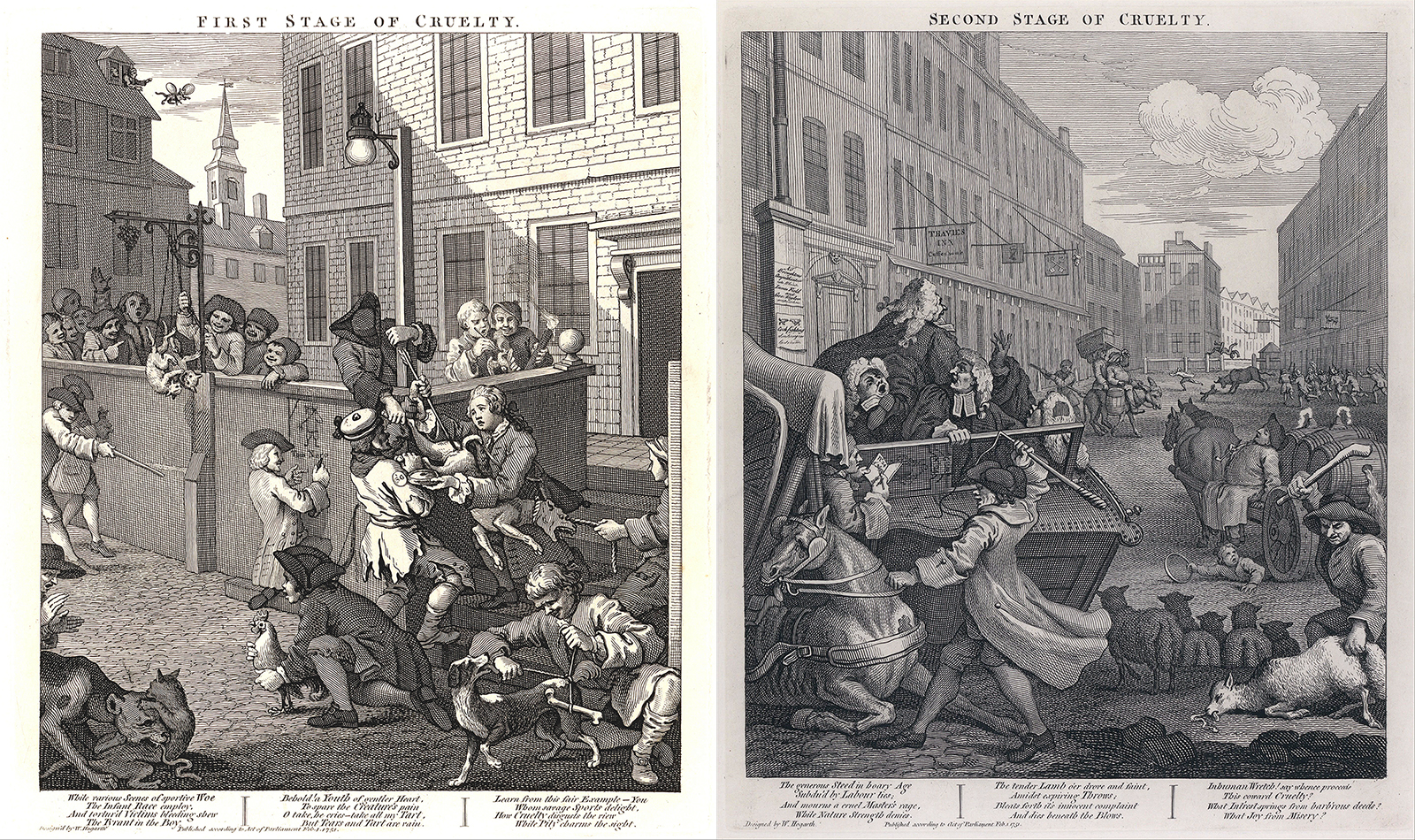
William Hogarth’s “The First Stage of Cruelty: Children Torturing Animals,” left, and “The Second Stage of Cruelty: Coachman Beating a Fallen Horse.” (Images courtesy of Wikimedia/Creative Commons)

This is not a new idea, of course, but it is one that gained new currency in the early modern period when urbanization and industrialization severed old ties between humans and the natural world. It was in the midst of this great shift that the English painter William Hogarth produced a series of prints titled “The Four Stages of Cruelty“ (1751), which vividly portrays the natural course of cruelty for the one who practices it.

The series depicts a character, aptly named Tom Nero, over the course of a life characterized by acts of heartless cruelty — first acts committed by him, but ultimately upon him. The first print shows Tom sadistically torturing a dog on a city street with another boy while others commit abuses on other animals nearby. Only one boy seems to be pleading for them to stop.

The second print depicts Tom grown and working as a coachman. His horse has collapsed from exhaustion, and Tom is wielding the stick with which he has mercilessly beaten the horse, surrounded by other men heaping abuses on other creatures on the city street.

In the third print, we see Tom in the moments after he has murdered his pregnant lover, details of the event described in a letter written by his lover, included in the scene. Tom’s pockets are full of stolen goods and weaponry.


William Hogarth’s “The Third Stage of Cruelty: Cruelty in Perfection,” left, and “The Fourth Stage of Cruelty: The Reward of Cruelty.” (Images courtesy of Wikimedia/Creative Commons)

The fourth and final in the series conveys the moral lesson with the inevitable consequences for such a life: Tom has been executed by hanging, his body is being dissected by heartless operators and bears signs and symbols that reflect all the cruelties he has committed over the course of his life.

Hogarth’s series brings starkly to life the truth that cruelty begets cruelty and ultimately consumes the one who is cruel. This is a truth that was embraced by the earliest evangelical reformers, whose broad reforms during the 18th and 19th centuries changed the world in ways we take for granted today.

Hogarth’s work was produced during the decades when evangelicalism was growing as a movement in England and the Colonies. Within a few decades of this series, a generation of evangelical leaders would rise up who would see with new eyes the various forms of cruelty that were all around in everyday life and challenge them: slavery, the inhumane working conditions of the poor, the injustice of the system of criminal law and animal cruelty.

These evangelicals — including John Newton, William Wilberforce and Hannah More — successfully advocated for reforms in all of these areas. While they were fighting to abolish the slave trade — fueled by the virtue of benevolence and in recognition of the demoralizing and coarsening effects all forms of cruelty have on all those who participate in it — these evangelicals also advocated for animal welfare. In fact, in 1824 Wilberforce helped found the Society for the Prevention of Cruelty to Animals. This is a legacy that, sadly, has been largely forgotten by evangelicals today. But it is a legacy worth remembering and keeping today.

Industrialization and bureaucracy bring greater distances between us and the animals we eat, and it’s easy to feel removed from the practices by which living, breathing, sentient animals become the products we consume — because we are so greatly removed.

But that distance does not remove our ethical and moral responsibility to fulfill the stewardship mandate God gave us in a way that reflects the nature of his goodness and care. It is good and right to care well for the lives of the creatures who aid and sustain human life.