Monday, July 06, 2026


Leaked report shows Trump admin knows of threat that may send 'shockwaves' through economy

Alexander Willis
July 6, 2026 
RAW STORY

While the Trump administration has gone all in on an emerging technology, a leaked internal report from the Treasury Department revealed Monday that officials are well aware of the “significant risk” it poses, a risk that could “send shockwaves throughout the entire economic system,” NOTUS reported.

That emerging technology is generative artificial intelligence, with the companies leading its development receiving significant support from the Trump administration, such as when President Donald Trump signed an executive order last December to block states from enacting their own laws to regulate the technology.

And yet, even as it champions GenAI companies, the Trump administration's own Treasury Department appears well aware of the risks that support carries, according to the draft report obtained by NOTUS.

“Career Treasury analysts found that AI firms are more deeply entrenched in the U.S. economy than their dotcom predecessors and pose significant risk to the entire system if financial conditions change, productivity goals are missed or various choke points stymie growth,” NOTUS’ report reads.

“A downturn in the AI market would send shockwaves throughout the entire economic ecosystem, the analysts wrote."

Should AI companies struggle financially, Treasury analysts predicted that “stock markets, private credit markets, companies financing data center buildouts, cloud providers, chip manufacturers and utilities would all feel the effect,” according to NOTUS review of the report.

“AI investors are taking risks so significant that much of the financial system now rests upon AI meeting expectations for productivity gains and profitability,” NOTUS’ report reads.

In public, the Trump administration has “shown nothing but bullishness toward the AI industry,” NOTUS’ report reads. It’s created an AI Action Plan aimed at speeding the building of GenAI data centers, repealed Biden-era regulations around AI, and publicly backed major AI projects.

MAGA melts down as Bruce Springsteen torches Trump in new interview: 'He is a coward'

Nicole Charky-Chami
July 6, 2026
RAW STORY


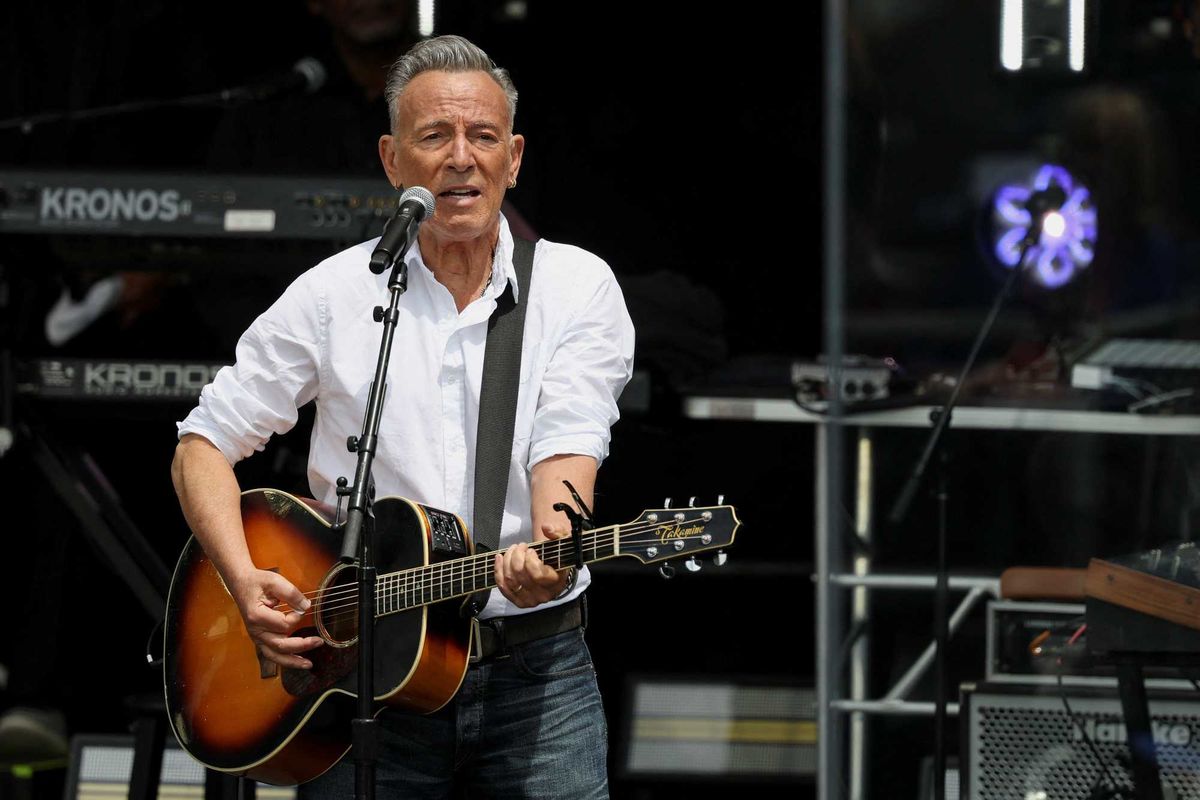
Bruce Springsteen performs during a dedication ceremony for the opening of the Obama Presidential Center in Chicago, Illinois, on June 18, 2026. REUTERS/Brendan McDermid

MAGA loyalists were furious Monday after music legend Bruce Springsteen said he was a true "patriot" and called out President Donald Trump.

In a PBS special called "Bruce Springsteen: Finding America in Song," the musician talked about fighting for a better America and encouraging others to do the same, Variety reported. Springsteen has been critical of Trump and his administration — and the president has lashed out against the artist, calling him a "bad, and very boring singer."

"I believe in critical patriotism," Springsteen told PBS. "I believe that’s the definition of a patriot, you know, that you love your country so much that you are willing to look at it clearly, recognize its faults, encourage it to be a better place, and believe that you carry in your heart the country that is waiting."

MAGA fans reacted to Springsteen's comments.

"He is wrong. What he is doing is using his platform to add to the unjustified rhetoric that is fueling the fires which are tearing this country apart. He is no hero," actor and filmmaker Jeff Rose, who often shares MAGA-related content, wrote on X.


"And I believe you’re a two-bit schmuck who hasn’t had a decent song since born to run! So do that song boy RUN!!" Jeffrey Calvert, who self-describes as "Christian, conservative," wrote on X.


"Springsteen sounds ungrateful for living in a country where he could become rich by being a musician. You can't define a country you love by the things you hate about it," Ted Nightingale, who shares pro-MAGA content and self-describes as "Patriot," wrote on X.

"He is a coward, not a patriot. Bruce Springsteen Declares Himself a ‘Patriot’ for Trashing Trump: ‘I Believe in Critical Patriotism,'" MAGA commentator Kevin Kmak wrote on X.
DINO
Fetterman sparks firestorm over Fox News interview claims: 'Look in the mirror'

Nicole Charky-Chami
July 6, 2026 
RAW STORY


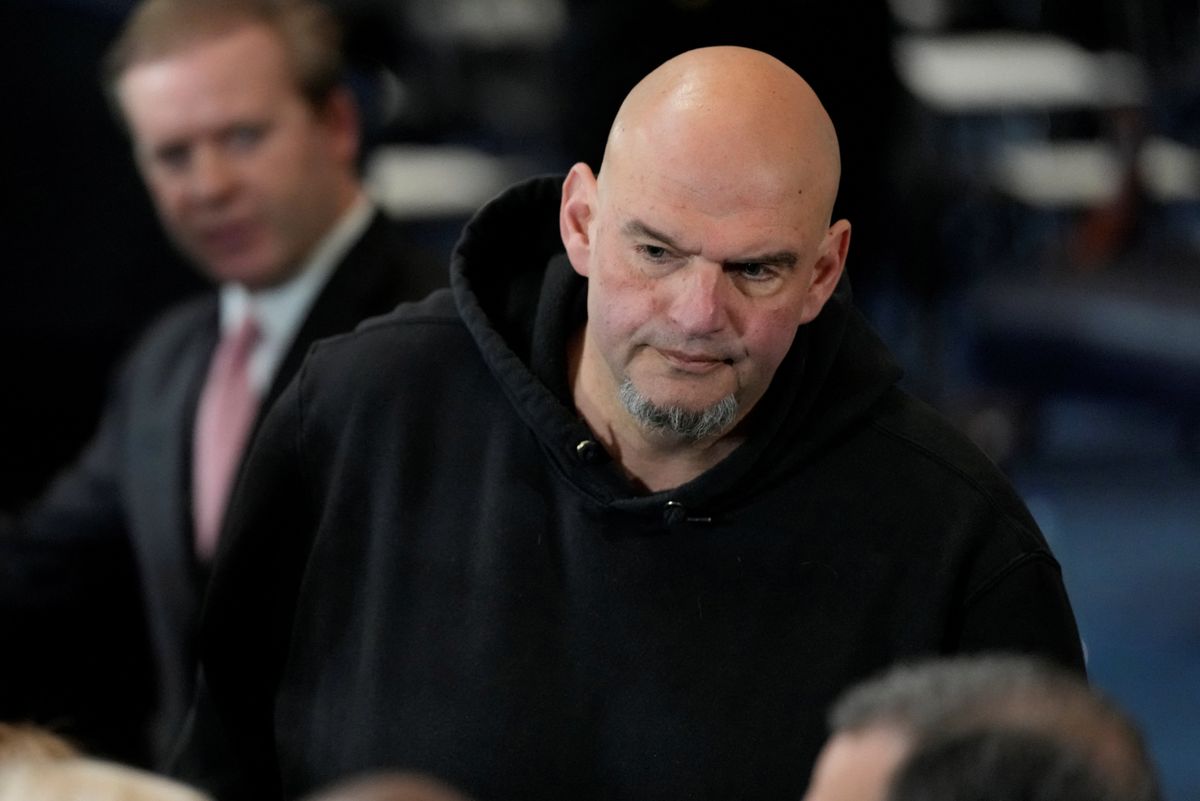
Sen. John Fetterman, D-Pa., arrives before the 60th Presidential Inauguration in the Rotunda of the U.S. Capitol in Washington, Monday, Jan. 20, 2025. Julia Demaree Nikhinson/Pool via REUTERS


The internet was livid Monday after Sen. John Fetterman (D-PA) slammed Democrats for boosting Maine Senate candidate and Democrat Graham Platner — taking swipes at his own party and prominent leaders.

Fetterman appeared on Fox News in an interview with anchor Laura Ingraham, as calls were mounting for the candidate to step down from the competitive Senate race after he was accused of sexual assault.

"I would really call Bernie Sanders to apologize for pushing this kind of predator more than anyone he helped him elect," Fetterman said. "Maybe he should stop pushing these communists."

Social media users called Fetterman out for his comments.

"Says the guy also pushed on us by Bernie," Rachel Murphy Azzara, founder and executive director of Democrats Work for America, wrote on X.

"This guy is more of a FOX maga anchor than a congressman," liberal political commentator Rodger Williams wrote on X.

"Has Laura Ingraham or Fetterman for that matter ever pushed for Trump to resign?" Political writer Zaid Jilani wrote on X.

"Democrat who trashes Democrats and appears on Fox every chance he gets wants everyone else to look in the mirror," political commentator Hemant Mehta wrote on X.

"Have long disliked Platner, but Fetterman owes his Senate seat in large part to Bernie. And millions of Democrats are jusifiability [SIC] angry at Sanders pushing fake progressive Fetterman. 'While serving as Pennsylvania's Lieutenant Governor, he was a vocal progressive Democrat who aligned with the Bernie Sanders wing of the party," frequent progressive commentator Janice Hough wrote on X.


BYE, BYE THE VIEW
Top US daytime talk show folds to Trump admin intimidation and ‘changes’ programing: report

Alexander Willis
July 6, 2026 
RAW STORY


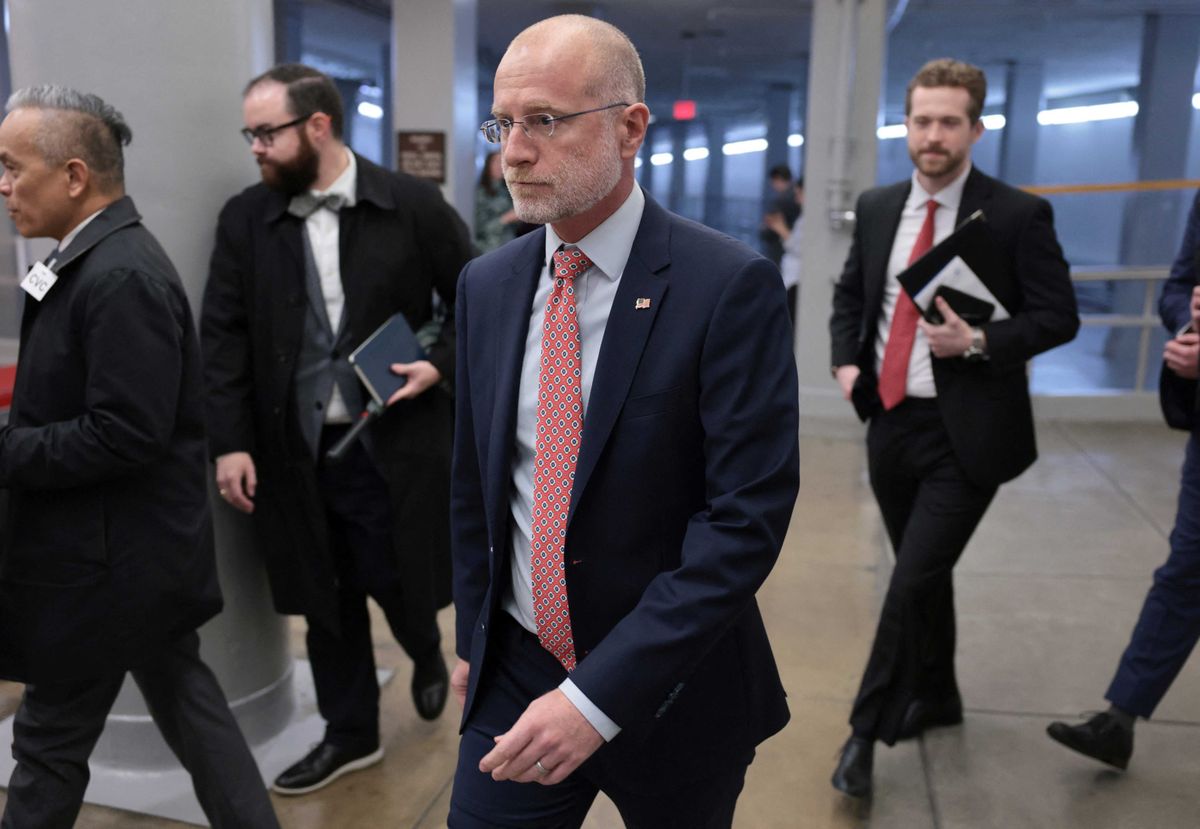
Federal Communications Commission (FCC) Chairman Brendan Carr walks through the subway system under the U.S. Capitol in Washington, D.C. on Dec. 2, 2025. REUTERS/Jonathan Ernst

Inside sources revealed to Semafor that “The View,” the top-rated daytime talk show on television, succumbed to pressure from the Trump administration’s Federal Communications Commission (FCC) and “changed [its] programing,” the outlet reported Sunday night.

Back in February, FCC Chairman Brendan Carr announced that his agency was investigating the program for potential violations of a 1934 rule that mandates certain media stations provide equal time to political candidates. As noted by Semafor, “since then, the ABC talk show hasn’t featured a single political candidate running in a competitive midterm race.”

“The inquiry itself has been enough to force the network to hedge which guests appear on the show, a notable departure from The View’s previous booking decisions,” Semafor’s report reads.

“Trump’s FCC, led by its aggressive chairman, has been one of the most visible regulators of American communications in a generation. The simple threat of regulatory action is now enough to impact how media outlets behave.”

A potential example of the show’s programing change occurred in recent weeks when a representative for New York City Mayor Zohran Mamdani proposed that “The View” host the mayor alongside two congressional candidates he had endorsed, Darializa Avila Chevalier and Claire Valdez, an inside source told Semafor on the condition of anonymity.

“‘The View’ said it was interested in having the mayor on, but indicated it couldn’t accommodate Avila Chevalier or Valdez, now Democratic congressional nominees, [the inside source] said,” Semafor’s report reads.

“Among other reasons, the show’s staff noted that it was proceeding cautiously with political candidate bookings while the FCC’s equal time inquiry was progressing.”

Carr has faced scrutiny over his threats to revoke licenses from television broadcasters critical of Trump and the administration. Back in March, Carr bragged about the changes to media that had occurred since Trump retook the White House, speaking bluntly to an all-conservative audience.

“Look at the results so far. PBS defunded. NPR defunded,” Carr boasted at CPAC, MS NOW reported at the time. “[Stephen] Colbert is leaving. CBS is under new ownership. And soon enough, CNN is going to have new ownership as well.”


Cuba's power grid collapses again as US oil blockade strains ageing plants


/
By bnl editorial staff July 6, 2026


Cuba's national electric system suffered yet another total\ collapse on July 6, the state-run Cuban Electric Union (UNE) said, the latest in a string of islandwide blackouts to hit the country since late 2024 as a US blockade on oil shipments squeezes the island's power supply.

The UNE said on its official channel that the cause of the disconnection was still unknown and under investigation, adding that further details would be released once available.

The utility said it was applying protocols for a gradual recovery of the grid, prioritising the creation of local microsystems to restore power to hospitals, aqueducts and other essential services.

The outage comes amid tightening US economic pressure on Havana. US President Donald Trump signed an executive order in January threatening tariffs on countries that export or facilitate fuel shipments to Cuba.

Pressure on the communist-run island intensified after US forces captured Venezuelan president Nicolás Maduro, a close ally of Havana, in a military operation in early January, severing a supply of Venezuelan oil that had propped up Cuba's economy for years. Trump told reporters shortly afterwards that Cuba "looks like it is ready to fall" and has since suggested the US could carry out a “friendly takeover” of the island, without elaborating.

The de facto oil blockade has placed additional strain on a generation network that already depends on ageing Soviet-era thermal plants and has been pushed beyond the breaking point by the US fuel embargo. Cuba's thermal blocks include ten units from the former Soviet Union alongside Japanese, Czechoslovak and French-built generators, most of which have been in operation for more than 30 years, with seven blocks running for over four decades.

Cuba has received only one oil shipment from Russia since the blockade tightened this year. A Russian-flagged tanker, the Anatoly Kolodkin, delivered 730,000 barrels of crude to the Bay of Matanzas on March 30, the first vessel to reach the island in three months, after Washington allowed the delivery on humanitarian grounds. Those supplies had reportedly been exhausted by late April. A second Russian tanker, the Universal, carrying nearly 270,000 barrels of diesel, stalled roughly 1,600 km off the Cuban coast after departing Russia in April and later turned around off the coast of Brazil in late May without reaching the island.

Havana has attributed the repeated grid collapses, which have strained the country's healthcare infrastructure and dealt a final blow to the once-thriving tourism industry, to the cumulative effects of the decades-old US trade embargo, which it says restricts its access to the fuel, spare parts and financing needed to maintain and modernise its power sector.


German public university creates Islamic theology faculty
DW
07/02/2026

The University of Münster is the first public university in Europe to establish an Islamic theology faculty, a move that is is attracting international attention.


The new 'Campus of Religions' at Münster University is still under construction
Image: Uni Münster – Linus Peikenkamp


Since 2021, work has been underway on the new "Campus of Religions" in the western German city of Münster. Much of the site is still under construction. Scheduled for inauguration in 2027, the complex will bring together the faculties of Catholic, Protestant, and Islamic Theology, as well as the Department of Religious Studies, in a single location.

The faculty marks a milestone: for the first time in Germany — and indeed in Europe — a public university is home to an independent Faculty of Islamic Theology.

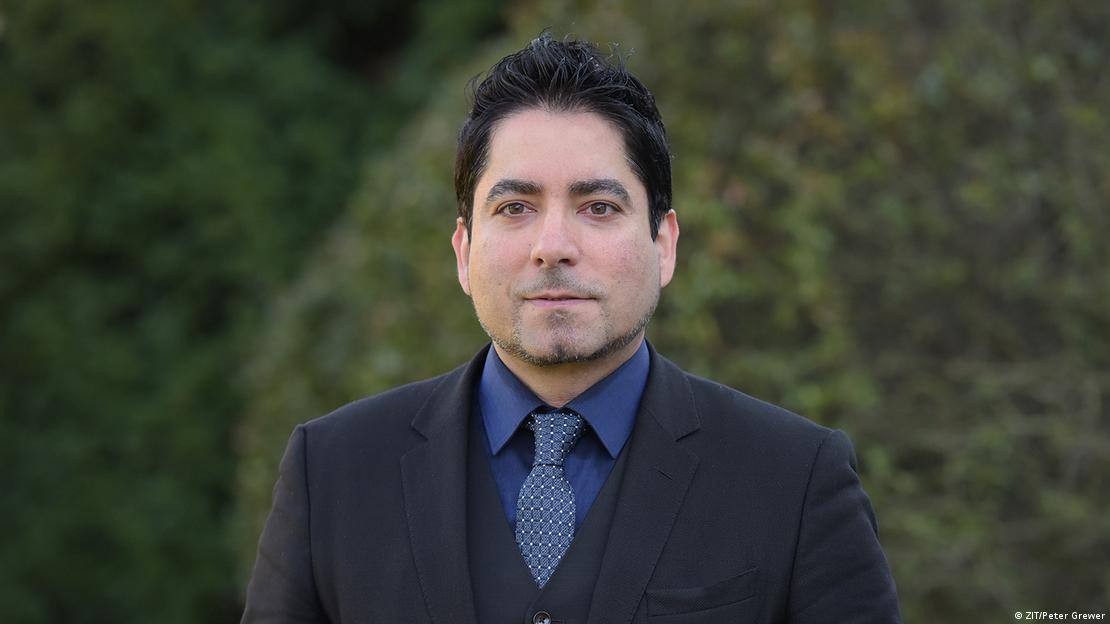
"I have the privilege of being part of a unique chapter in history," scholar Mouhanad Khorchide told DW. Looking back on 15 years of work at the University of Münster, he said the achievement fills him with deep gratitude. At the same time, the 54‑year‑old emphasized the responsibility that comes with it.

"We want to make the most of this unique opportunity and advocate for an open‑minded, enlightened understanding of Islam." According to Khorchide, the faculty's work will have an impact not only across Europe but also throughout the Muslim world.

Mouhanad Khorchide is an Austrian sociologist and Islamic theologian and a Professor of Islamic Religious Education and Director of the Center for Islamic Theology at the University of Münster in Germany.Image: ZIT/Peter Grewer


Faculty status a significant milestone


As of July 1, a new chapter begins for Khorchide. For the time being, however, he will continue working from the temporary university offices near Münster's Paulus Cathedral. Until now, the sociologist and religious educator has led the Center for Islamic Theology (ZIT) at the University of Münster. He is now the founding dean — the first dean of the newly established Faculty of Islamic Theology.

The elevation to full faculty status gives Islamic theology a new standing within the university and represents a significant academic policy milestone. Until now, the ZIT lacked faculty status of its own and therefore depended on another faculty for important academic functions.

An increase in Islamic religious education

As an independent faculty, Islamic Theology can now confer doctorates and habilitations in its own right, helping to cultivate a new generation of scholars and establish a lasting academic legacy. The new status is also expected to make it easier to secure third‑party research funding.

Khorchide recalls the early days of the ZIT in 2012, when it had just 15 students and three staff members. Today, the center employs eight professors and more than 50 staff members, and Khorchide expects student numbers to exceed 500 in the coming years.

He expects a high demand. Across Germany, Islamic religious education is being introduced in public schools, creating a growing need for qualified teachers.

For example, in Germany's most populous state of North Rhine‑Westphalia where Münster is located, up to 3,000 teachers are required, but only around 330 are currently in place. For graduates, this offers a clear career path.


'Islam and Social Work' specialization

Starting in 2027, Khorchide plans to launch a master's program titled "Islam and Social Work." He says there is strong demand for this specialization, particularly in fields such as youth services, hospital chaplaincy and elder care.

In its guiding principles, the faculty affirms the compatibility of faith and democracy, promotes a scholarly and contemporary reading of the Quran, and emphasizes interreligious dialogue. It also explicitly rejects extremism, antisemitism, and Islamism. "We oppose every form of religiously motivated violence and ideological manipulation," the document states.

Shaping Islam beyond Germany

Khorchide says he has been deeply impressed by the level of interest generated since news of the new faculty became public. Media outlets as far afield as Africa and Asia have reported on the development. He specifically points to Indonesia, the country with the world's largest Muslim population.

"People long for an open-minded Islam," Khorchide says. In the long term, he believes, Münster could help shape the broader debate on the future development of Islam far beyond Germany.

"Münster has traditionally been strong in theology," Norbert Robers, the university's spokesperson, told DW. Now, for the first time, the two Christian theological faculties and Islamic theology are being brought together under one roof, sharing a library and a cafeteria. "That has great symbolic power."

Europe's first Islamic theology department at a public university

A faculty of Islamic theology has long existed in Sarajevo, but it is not part of a public university structure. So Münster is now home to the first Faculty of Islamic Theology at a public university in Europe.

Robers, the university spokesperson, notes that the upgrade to faculty status may appear to be a "pure administrative act," but it carries significant legal and institutional weight. A ceremonial opening is scheduled for September 24 in the university's main hall.

Annette Schavan, a politician with the center-right Christian Democratic Union party (CDU) served as Germany's federal minister of education from 2005 to 2013. She played a key role in establishing Islamic theology at German universities and describes the current step as a "milestone." Writing on Cologne-based Catholic Domradio's portal in mid-June, she argued that the opening of the Faculty of Islamic Theology represented "a strengthening of academic theology as a whole" and predicted that the new faculty would be recognized across Europe.

This article has been translated from German.


Christoph Strack Christoph Strack is a senior author writing about religious affairs.@Strack_C


Jehovah's Witnesses fight German state for Holocaust archive

DW
July 5, 2026

The Jehovah's Witnesses have secured a partial victory in a dispute over a unique archive documenting the community's persecution by the Nazi regime. It comes after a new memorial to the victims was unveiled in Berlin.

Annemarie Kusserow was the eldest of 11 children who, along with their parents, were all persecuted by the Nazis

Image: Jehovas Zeugen, Archiv Zentraleuropa


Germany's Federal Court of Justice (BGH) has ruled in favor of the Jehovah's Witnesses in a dispute over a unique archive that meticulously documents the persecution of its adherents in photographs, letters, reports from the Gestapo secret police, arrest warrants and death sentences.

The religious community of Jehovah's Witnesses was one of the groups persecuted by the Nazi regime during the Holocaust. From 1933 to 1945, around 15,000 Jehovah's Witnesses were persecuted across Nazi-occupied Europe. Around 4,500 were sent to concentration camps where they were forced to wear purple triangles. Over 1,800 were murdered.

Annemarie Kusserow, herself a victim of Nazi persecution who died in 2005, bequeathed her private archive to a branch of the Jehovah's Witnesses in Germany. However, in 2009, one of her brothers sold the more than 1,000 documents to the Bundeswehr Military History Museum in Dresden and gave assurances that he was the rightful owner. The Jehovah's Witnesses have since been locked in a years-long legal battle with the German state for the return of the archive.


Around 4,500 Jehovah's Witnesses were sent to concentration camps where they were identified with a purple triangle
Image: Caroline Seidel/dpa/picture alliance

"To learn that here was a family that was persecuted by the Nazis and you have a clearly expressed will of Annemarie Kusserow who herself was persecuted, suffered, was imprisoned, and she clearly states what should happen with this archive that she collected meticulously, and morally it is so clear where this archive should be," said Sebastian Stock, a spokesperson for the Jehovah's Witnesses in Germany.
Targets of 'blood and soil' ideology

The Jehovah's Witnesses are an outgrowth of the International Bible Student movement founded in the US in the 1870s. Many of their missionaries traveled to Europe. By 1933, over 25,000 Jehovah's Witnesses were living in the German Reich, and the eastern German state of Saxony was home to Europe's largest community. Both the Protestant and Catholic Churches in Germany opposed the group, known as the International Bible Students and the Earnest Bible Students, and from 1931, as the Jehovah's Witnesses.

Before the Nazis came to power in 1933, the Bible Students were targeted by the German ethno-nationalist "völkisch" movement that emerged in the late 19th century, and which viewed the German people as a "racially pure" community tied to the land as part of the so-called "blood and soil" ideology. Baseless propaganda was spread that "World Jewry" or an international Jewish conspiracy financed the Jehovah's Witnesses.

Born in the western German town of Bochum in 1913, Annemarie Kusserow was the eldest of 11 children who, along with their parents, would all be imprisoned by the Nazi regime. In 1931, the family moved to the nearby town of Bad Lippspringe where Kusserow's father encouraged her to document their systematic persecution.


Annemarie Kusserow, pictured in her youth, meticulously documented the persecution of her family
Image: Jehovas Zeugen, Archiv Zentraleuropa

The Nazis issued a nationwide ban on the Bible Students in 1935 after several German states, Prussia and Bavaria among them, had already imposed regional restrictions. Its members were dismissed from the civil service, lost their jobs and pensions, and were subjected to waves of mass arrests.

To find work, Kusserow moved to Berlin where she was able to visit her younger brother Wolfgang who was in prison for his refusal to join the military. She was arrested in Berlin on October 25, 1944, and was sentenced to four years for discussing her faith and for being in possession of the group's literature. Her brother Karl-Heinz Kusserow was imprisoned in Dachau concentration camp and died at the age of 28 in 1946 as a result of his treatment there.

Conscientious objectors executed

The Nazis targeted Jehovah's Witnesses because they were unwilling to swear allegiance to the Nazi state and Adolf Hitler. They believe that their primary allegiance is to God and not any government or human leader. Jehovah's Witnesses refused to give the Hitler salute, would not become members of any Nazi organizations or institutions, and refused to join the military based on their religious pacifism. They were the single largest unified group that refused military service in the Third Reich.

Nearly 300 young men were executed by the Nazis for refusing to fight, including two of Annemarie's brothers. Kusserow's younger brother Wilhelm was executed by firing squad in 1940. "At age 25, imagine this young man who stood there and who gave his life for his conviction not to kill others," said Stock. In 1942, their 20-year-old sibling Wolfgang was executed by guillotine.


The executions of conscientious objectors are one reason why the right to refuse military service is now enshrined in Germany's Basic Law. "My brothers died for refusing to participate in military service. I don't find it proper that this inheritance is stored, of all places, in a military museum," Paul-Gerhard Kusserow, the youngest sibling, told the New York Times in 2022.

The Federal Court of Justice in Karlsruhe ruled on June 26 that Annemarie's brother Hans-Werner had taken possession of the archive without authorization. It also ruled that in the case of a "singular, historical significant archive," the state cannot simply rely on the reassurances of a seller and has a duty to investigate. The Higher Regional Court in Cologne will now determine whether Annemarie was the sole owner of the documents, how she lost possession of them, and whether sufficient questions were asked of her brother's right to sell the archive.

New memorial to persecuted Jehovah's Witnesses


The ruling came just two days after a new memorial to the Jehovah's Witnesses who were persecuted and murdered by the Nazis was unveiled in Berlin. The nearly five-meter-high bronze stele stands in the capital's Tiergarten park where groups of Jehovah's Witnesses would meet to organize resistance activities. Members were arrested by the Gestapo at the park's goldfish pond in 1936.

The memorial to the Jehovah's Witnesses persecuted and murdered by the Nazi regime was unveiled in Berlin
Image: Christian Ditsch/epd/IMAGO

The new memorial in Berlin has, however, prompted criticism. Prominent historian Tim B. Müller wrote an opinion piece for the Frankfurter Allgemeine newspaper. He argues that the Jehovah's Witnesses persecuted by the Nazis have no legitimate representation today. The Bible Student movement was marked by various schisms and, according to Müller, there is no straightforward continuity between those persecuted by the Nazis and later Jehovah's Witnesses. Müller writes that the memorial presents a "one-sided narrative" where "well-organized voices drown out historical plurality, and some of the victims are not represented."

Author Stefanie de Velasco has also criticized the memorial. She has written at length about her upbringing in the Jehovah's Witnesses, which she describes as a "totalitarian" sect. "The Jehovah's Witnesses were victims of the Nazis; I don't doubt that. But I would have preferred a memorial that focused on the individuality of the victims and their involuntary suffering — not on their heroic steadfastness," she wrote in Der Spiegel news magazine.

Concentration camp survivors persecuted in GDR

The persecution of the Jehovah's Witnesses did not end with World War II in 1945. It continued in Soviet-occupied Germany and intensified in the German Democratic Republic (1949-1990). Jehovah's Witnesses in Soviet-occupied Germany were initially able to carry out church services. Those who had been imprisoned or held in Nazi concentration camps were also given official papers recognizing them as victims of fascism.

"That changed by around 1947 and then a ban was introduced in 1950 on the religious community in the GDR. The official status of victims of fascism was then revoked," historian Falk Bersch told DW. "I've even come across cases where the time spent in Nazi concentration camps was counted by the GDR authorities as a prior criminal offense."

A total of 6,740 Jehovah's Witnesses were imprisoned in the Soviet occupation zone and later in the GDR. Sixty-five died in custody, around half of whom had spent time in Nazi camps. "We know of over 600 men and women who were persecuted by both the Nazi and the GDR regimes. Around 400 were in concentration camps or imprisoned under both regimes," Bersch said.

Edited by Rina Goldenberg
Helen Whittle British journalist in Berlin


Fashion against fascism: When trademarks deter neo-Nazis
DW
06/07/2026 - 

In Germany, where Nazi symbols are banned, activists are using trademark law to fight far-right merchandise.

A campaign uses creative means to fight racist codes, even turning them into anti-racism merch

Image: Jung von Matt

In recent years, far-right merchandise has become an important source of income for some right-wing extremist groups and individuals in Germany. Online stores sell clothing, accessories and other products that use symbols members of the far-right scene recognize.

Because many openly Nazi symbols are illegal in Germany, sellers have increasingly relied on coded language to get around the law. Hitlerhas become HTLR, while Hakenkreuz (swastika) is abbreviated to HKNKRZ.

But the campaign "Recht Gegen Rechts" (Rights Against the Right) has found a clever way to combat this legal workaround. They take control of Nazi-related symbols, coded extremist phrases and the names of far-right businesses by registering them as trademarks at the European trademark office.

The campaign was launched in 2021 by German creative agency Jung von Matt, together with Hamburg-based nonprofit Laut Gegen Nazis (Noise against Nazis).

If extremist retailers continue to sell products bearing the newly protected names or phrases without permission, they could face legal action for infringement — including paying compensation for each item sold.
How registered trademarks stopped far-right merchandise

"These online shops are not in the darknet; they're existing there online. You have just to find the right URLs," explained Simon Knittel of Jung von Matt.

Simon Knittel was among those who started the campaign in 2021 to raise awareness about neo-Nazi codes       Image: Jung von Matt

However, for those outside of the far-right scene, the stores aren't easy to find. The team had help from Joern Menge, the founder of Noise against Nazis (Laut Gegen Nazis), as well as Philip Schlaffer, a former neo-Nazi and online shop owner, who is now a speaker and activist against far-right extremism.

"Basically, you can find these shops if you know what keywords to enter. A lot of them are now based overseas," Schlaffer told DW. "It's become a global business where a lot of money is changing hands."

The team identified more than 35 online stores with over 1,000 articles in each shop and then determined which trademarks would be most effective. For Schlaffer, the campaign's approach is both creative and effective.

"Neo-Nazis shouldn't feel like they have a safe haven; they should be afraid that the ideas they have — the ones they're selling — might be taken away from them and that the products will need to be taken offline. That takes away their sense of security," he said.

Indeed, the team saw this in action after the first trademark was secured.

"When we published our initial press release announcing that we had registered a trademark, it only took about 30 minutes, and the trademark was taken down by all the online shops. We didn't have to do anything," explained Knittel. "They did it voluntarily because they knew that we really had something against them and didn't want to be on the losing side of a court case."

Each subsequent trademark was met with the same response: items were quickly taken offline.

"In the end, we had to wait just 10 minutes, not 30. That was the proof for us that we found something that really solves the problem," said Knittel.


Philip Schlaffer is a former neo-Nazi-turned activist who helped advise the campaign
Image: Philip Schlaffer


Germany's strict approach to Nazi symbols


Germany's approach to Nazi imagery reflects the country's history and its efforts to prevent the revival of National Socialism. Under Section 86a of the German Criminal Code, displaying or distributing symbols of unconstitutional organizations is generally prohibited. This includes symbols associated with the Nazi Party, such as the swastika, SS symbols and the Nazi salute, except in educational contexts or for research and historical documentation.

Violations can result in fines or even imprisonment. Germany has one of the strictest approaches to extremist symbolism anywhere in the world.


Turning racist codes into anti-fascist merch

Rights Against the Right has also taken the process a step further by turning the neo-Nazi slogans into snarky anti-Nazi merchandise.

The campaign secured the trademark and the web domain of Druck18, a major online seller of neo-Nazi merchandise run by far-right extremist Tommy Frenck.

The shop sold products featuring extremist and xenophobic messages, including items designed to appeal to Nazi nostalgia. Recht Gegen Rechts replaced it with their own online shop, which sells anti-Nazi and anti-racist merchandise.

In the new Druck 18 online shop, you can buy a sweatshirt with the words HKN KRZ, the shorthand for swastika in German, that features the words crossed off and the text: "Thank you trademark law: We've registered this Nazi code as a trademark so Nazis can't spread it."


The team had to find a way to use the new trademarks without contributing to neo-Nazi rhetoric
Image: Jung von Matt

New trademarks are legally required to be used commercially within five years, so the team had to get creative. "We had to find a way to make [these Nazi codes] commercially available without contributing to any Nazi scandal or anything like that. So, we turned them upside down and had them written on the shirts," said Knittel.

Challenges with registering trademarks

The campaign has secured six trademarks and is in the process of securing more.

"It's quite complicated — it takes up to six months to have one trademark registered and costs €1,600 ($1,823) — and you never know if you will actually get it registered," said Knittel. The campaign relies completely on donations to fund its operations. Jung von Matt works entirely pro bono.

Harassment in the form of hate mail, emails has been commonplace, and the campaign is currently looking for name donors, as each trademark needs to be registered under an individual's name.


The campaign is also involved in a lawsuit with Tommy Frenck, the owner of the original Druck 18. He sought a court order to stop them from using the shop's name but lost in both the first instance and on appeal.

And some of the codes used by Neo-Nazis can't be protected by trademark law in the first place. "So, there are still codes out there that we can't protect against," explained Knittel. "But in the end, the goal was to create awareness that these codes exists," in both the public and political spheres.

And that is something Rights Against the Right has certainly done — one trademark at a time.

Edited by: Elizabeth Grenier


Sarah Hucal Freelance Multimedia Journalist
El Niño Forecast To Intensify, Increasing Likelihood Of Extreme Weather


July 5, 2026 
By UN News

More blistering heatwaves and other weather extremes are becoming increasingly likely across the world now and in coming months, linked to strengthening El Niño conditions in the tropical Pacific, the UN World Meteorological Organization (WMO) said on Friday.

“El Niño will also give an extra boost to global temperatures,” said WMO scientist Alvaro Silva. “We know that during El Niño years, the global temperatures normally reach record levels.”

Key points
El Niño has developed in tropical Pacific
Rapid development expected from July to September
El Niño typically peaks between November and February
Countries urged to act on WMO warning, to save lives and livelihoods

According to WMO’s monthly Global Seasonal Climate Update, strong El Niño conditions are expected to develop rapidly from July to September, with “high confidence” in this outlook.


It is based on multi-model forecasting from WMO partners which indicates a “consistent and significant warming of ocean temperatures” across the central and eastern equatorial Pacific, with seasonal-average sea-surface temperature anomalies expected to exceed 2°C in monitored regions.
Regional variations

On land, the outlook is equally worrying. “It’s the first week of July, it’s the start of what is traditionally the hottest month of the year,” WMO spokesperson Clare Nullis told journalists in Geneva. “And yet already in June we’ve seen record-breaking temperatures in many parts of Europe; just as an example, Germany last weekend saw a new national temperature record of 41.7°C.”

The WMO update highlights a “prolonged and dangerous heatwave” in the central and eastern United States until the end of this week and into the Independence Day weekend, flagged by the US National Weather Service.


In addition, there are likely to be drier than average conditions in Central America and the Caribbean, along with North and South America.

Drier weather patterns are also forecast in parts of Indonesia and Southeast Asia during the monsoon season, but wetter conditions are anticipated during the rainy season from September to December in East Africa. It is also possible that East Africa may be wetter than normal and face flooding because of another important climate driver, the Indian Ocean Dipole, which WMO describes as a possible development.

The El Niño alert has prompted an “unprecedented mobilization” by WMO, its members worldwide and partners in regional climate centres, to support governments by providing timely forecasts to save lives and protect livelihoods, the agency said.
No time to lose

“We have a window to act for preparedness for early action. And this window is narrowing in some regions,” WMO’s Mr. Silva said. For areas where drought is anticipated, priorities include ensuring that there is enough water for agriculture, energy production and other key activities.

El Niño and La Niña are opposite phases of the El Niño – Southern Oscillation (ENSO); they are one of the most powerful climate drivers.

The naturally occurring phenomenon is characterized by above-average sea-surface temperatures in the central and eastern equatorial Pacific Ocean.

El Niño events typically occur every two to seven years and usually last between nine and 12 months. They often begin developing between March and June, reach peak intensity between November and February, and exert their strongest influence on global temperatures in the year following their onset.


The effects of El Niño vary depending on the intensity, duration, the time of year and also how it interacts with other climate variability modes, including the Indian Ocean Dipole.

Not all regions of the world are affected, and even within a region, impacts can be different. “Even when ENSO is neutral, extreme weather can still occur,” WMO explains.

The agency classifies El Niño and La Niña events as weak, moderate, strong or very strong.

“The intensity of El Niño is important because it increases the likelihood of extreme weather and climate events in different parts of the world…on top of long-term climate change due to human activities,” WMO’s Mr. Silva stressed.
As heat waves loom, scientists wonder how humans will adapt
DW
07/03/20

Temperatures are set to soar in the US around the July 4 holiday, a week after Europe struck new records. With experts predicting more intense and more frequent heat waves in the future, can our bodies adapt?


People may be able to get used to some heat, but 'this rapid pace of change is beyond what ecosystems and humans can adapt to,' says physician Claudia Traidl-Hoffmann
Image: Carsten Koall/dpa/picture alliance


Late June brought record-breaking temperatures to France, Spain, the United Kingdom, Belgium, the Netherlands, Switzerland and Germany. The national weather service, DWD, reported that Germany had never experienced such intense heat for such a long stretch so early in the year.

Now, large parts of the central and eastern United States are also living under heat warnings heading into the July 4 holiday weekend, with extreme heat expected to push temperatures as high as 100 to 115 degrees Fahrenheit (37.8-46.1 C) across much of the region.

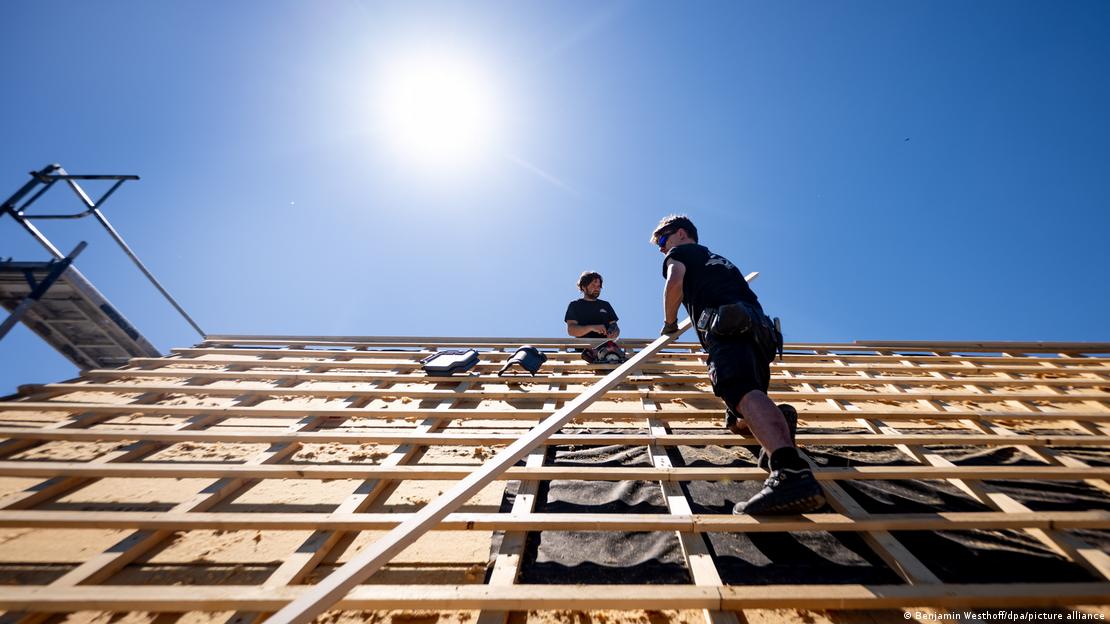
Outdoor workers are especially at risk during heat waves
Image: Benjamin Westhoff/dpa/picture alliance

A heat wave like this, with daytime temperatures well above 30 degrees Celsius (86 Fahrenheit) and nights when the thermometer doesn't drop below 20 C, places enormous strain on the human body. That is especially true for young children, pregnant women, older adults, people with underlying health conditions and those who perform physically demanding work or work outdoors.
Are people from hotter regions better able to cope with heat?

"The human body can adapt, and those adaptations are more developed in people who are continuously exposed to heat," said Claudia Traidl-Hoffmann, a physician and university professor. She is director of the Institute of Environmental Medicine at the University of Augsburg, where she treats patients with environmentally related illnesses.


Traidl-Hoffmann is also director of the Institute of Environmental Medicine at Helmholtz Munich, where she researches environmental diseases. As a member of the German government's scientific advisory council, she advises policymakers.

Adaptation to changing environmental conditions takes time, Traidl-Hoffmann writes in her book "Medicine of the Future — Healing in a Changing World" (original German title: "Die Medizin der Zukunft — Heilen in einer veränderten Welt"). But it's not a matter of years — rather, it will take centuries.

What happens to the human body in the heat?


"Once outdoor temperatures reach 23 C (73.4 F), the body begins activating mechanisms to regulate its temperature," Traidl-Hoffmann explained. Blood vessels widen, allowing the body to release heat. Sweating provides additional cooling. Together, these processes help keep the body's core temperature stable.

If these mechanisms don't work properly or fail altogether, the consequences can range from cardiovascular disease and stroke to multiple organ failure. The latter happens when the body can no longer maintain a stable core temperature.


"When our body temperature rises too much, metabolic processes initially accelerate further — until the body loses control — across all levels from the immune system to the nervous system. At around 42 degrees Celsius (107.6 F), the body experiences severe cell damage, multiple organ failure and, without immediate treatment, death can occur," said Traidl-Hoffmann.

The lungs also suffer in extreme heat. At the molecular level, the underlying processes are not yet fully understood, Traidl-Hoffmann said, but there are several hypotheses. Breathing in hot air appears to accelerate inflammatory processes.

"The lungs become inflamed more easily and more vulnerable to infections," she said.
What should we do — and avoid — during a heat wave?

Traidl-Hoffmann said people tend to think about heat and its effects only after temperatures have already soared — when railroad tracks begin to buckle, roads crack and emergency services are stretched to their limits.

She advises her patients to prepare for hot weather as early as January. That includes discussing possible medication adjustments with their doctor. Because heat can accelerate inflammatory processes, conditions such as allergies should be treated in advance with specific immunotherapy whenever appropriate.

How to survive heat waves in the city  11:57


Heat can also worsen eczema, making early treatment important. "Every chronic condition should be stable before the heat season begins," the physician said.

Once the thermometer starts to climb, Traidl-Hoffmann recommends drinking plenty of water, eating light plant-based meals and avoiding cigarettes and alcohol whenever possible. Getting enough sleep also gives the body a chance to recover from at least some of the day's heat stress.

Can our bodies adapt to a warming climate?


Heat keeps many people from getting enough sleep, and the body is more likely to reach what doctors call decompensation, the point when it can no longer compensate for physiological dysfunction.

How well the body can cope with heat and adapt to it all depends on how vulnerable a person is. Traidl-Hoffmann compares the body's capacity to adapt to a barrel: For older people, those with chronic illnesses or those taking medication, the barrel fills up much more quickly during a heat wave.

Young, physically fit people who are accustomed to hot weather generally have a greater tolerance, she said. But still, this also has its limits.

"This exponential increase in the number of hot days, this rapid pace of change, is beyond what ecosystems and humans can adapt to," she said.

This article was originally written in German.

Julia Vergin Senior editor and team lead for Science online
From north to south, Africa braces for volatile El Nino year
DW
06/07/2026 - 


The World Meteorological Association warns that the El Nino climate phenomenon could bring drought, floods and displacement to parts of Africa later this year. Are governments prepared?


In 2024, El Nino resulted in a prolonged drought in northern Botswana, affecting people and wildlife alike
Image: Monirul Bhuiyan/AFP/Getty Images


The UN Food and Agriculture Organization (FAO) and the World Food Programme (WFP) have appealed for over $200 million (€175 million) in funds to help protect 8.8 million people across 22 high-risk countries from the looming return the destructive El Nino weather pattern.

The support would include cash transfers, climate-resilient seeds, livestock protection and flood-control measures, as extreme weather patterns affect much of the world already.

"El Nino conditions have developed in the tropical Pacific, and are forecast to strengthen rapidly over the coming months, increasing the likelihood of extreme weather events in many parts of the world," the World Meteorological Organization (WMO) has warned.

In Africa, the countries listed as most at risk include Cameroon, Ethiopia, Kenya, Madagascar, Malawi, Mozambique, Nigeria, Somalia, South Sudan, Sudan, Uganda and Zimbabwe.


What El Nino means across Africa

El Nino is a naturally occurring warming of sea-surface temperatures in the central and eastern Pacific Ocean, which usually happens every two to seven years.

It can last nine to 12 months. In some regions, El Nino can bring hotter and drier conditions; in others, it can increase rainfall and flooding.

"For Africa, it's not one climate story. It's actually going to be a much more varied impact," Kgaugelo Mkumbeni, a research officer in the Climate Risk and Human Security Project at the Institute for Security Studies in Pretoria, South Africa, told DW.

Southern Africa has in the past experienced "hotter and much drier conditions" during El Nino events, Mkumbeni said, which raises the risk of "drought, water shortages and general food insecurity."

The situation in Eastern Africa, however, is more complex, as El Nino can have different effects depending on the season.


Global warming: Bad to worse

Bhargabi Bharadwaj, a research associate at Chatham House's Environment and Society Centre, told DW that "El Nino reshapes rainfall and temperature patterns around the world, though its impacts can vary depending on the region and which season it hits."

"Some areas will face drier conditions, which increases risk of drought and wildfire occurrence, whereas other parts of the world will have wetter conditions and face likelihood of storms and flooding," Bharadwaj said.

Scientists such as Bharadwaj say climate change does not directly cause El Nino, but it can make its effects more severe.

"We're working with warmer baseline temperatures of around 1.4 degrees (Celsius, or 2.5 F) higher than preindustrial levels. This means that, when an El Nino event does occur, then there are more extreme outcomes," Bharadwaj said.

Some experts are also concerned about the possibility of a very strong — or "super" — El Nino this year, "when your average temperature difference is around 2 degrees higher, or at least forecast to be 2 degrees higher," she said.

Acting before disaster strikes

The real challenge is whether governments and aid agencies can act quickly enough, as "science is ahead of policy," Bharadwaj said.

In northern Kenya, Abdikadir Aden Hassan, founder of Garissa Million Trees, told DW that the danger is not only the possibility of heavy rains and subsequent floods, but the fact that they may come after months of drought.

"We are in a dry spell and are headed toward drought in August and September," Hassan said. "Then, in October, November and December, we are expected to have the short rains. People may be coming out of drought and then going straight into flash floods. That means their livelihoods will be affected for a second time."

With lives and livelihoods at stake, experts say Africa's climate preparedness cannot be left to individual governments or ministries.

"It has to be embedded within agriculture, within health, within water, within energy, education and social protection," Mkumbeni said.


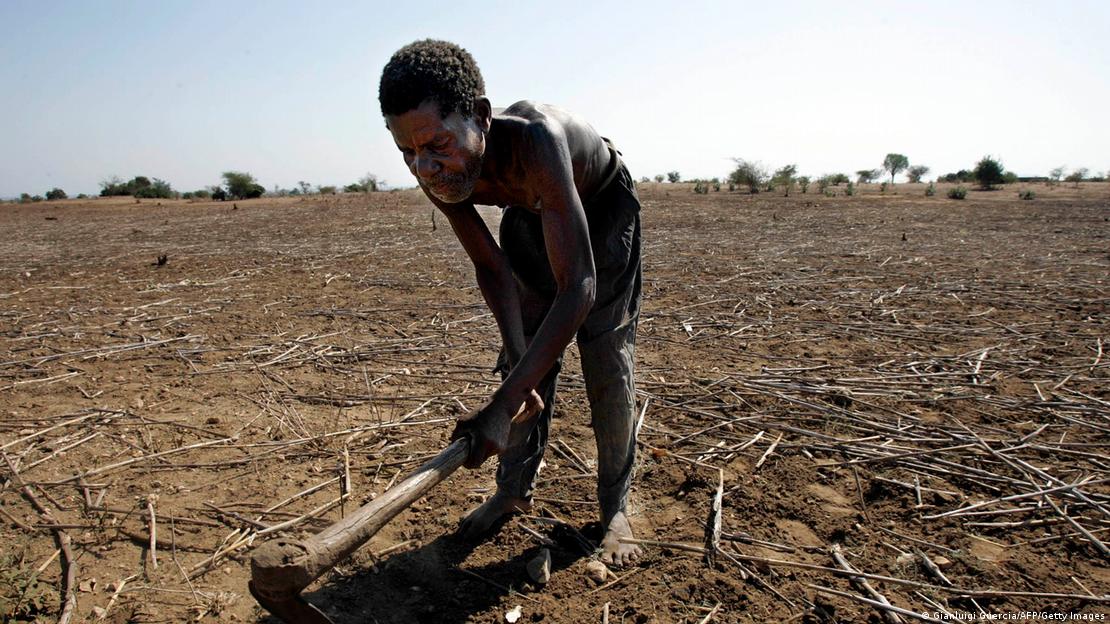
Droughts in Africa can often lead to hunger and even famine, especially among subsistence farmersImage: Gianluigi Guercia/AFP/Getty Images


Climate-linked displacement


Conflicts, high energy costs, debt pressures, fertilizer disruptions and cuts in international aid are already weakening the ability of many countries to respond to external shocks. Bharadwaj said this made the forecast for 2026 particularly worrying.

"The concern isn't just El Nino," Bharadwaj said. "It's that it's occurring at a time when the global system is already quite fragile. A lot of the vulnerable populations are living in regions that are highly impacted by import costs but also high debt."

Aimee-Noel Mbiyozo, a senior researcher at the Institute for Security Studies, said climate-related events were already forcing people to leave their homes.

"Cyclones and flooding have been by far and away the biggest pushers of mass displacement in Africa," Mbiyozo said. "Drought has, as well, but drought tends to do it a little bit more slowly."

"People don't want to leave home," Mbiyozo said. "Most people want to stay where they are."

Cities on the front line of climate crises

Drought and desertification are driving people increasingly toward Africa's towns and cities, which are increasingly having to absorb climate-linked migration — even as many struggle with wide-ranging issues such as a lack of housing and public services and widespread informal employment.

"The bulk of the movement that's happening, whether it's sudden or slow or general population growth, is into the cities," Mbiyozo said.

According to the World Bank, climate change alone could drive up to 86 million additional internally displaced people into African cities by 2050.
Concern for Lake Chad and southern Africa

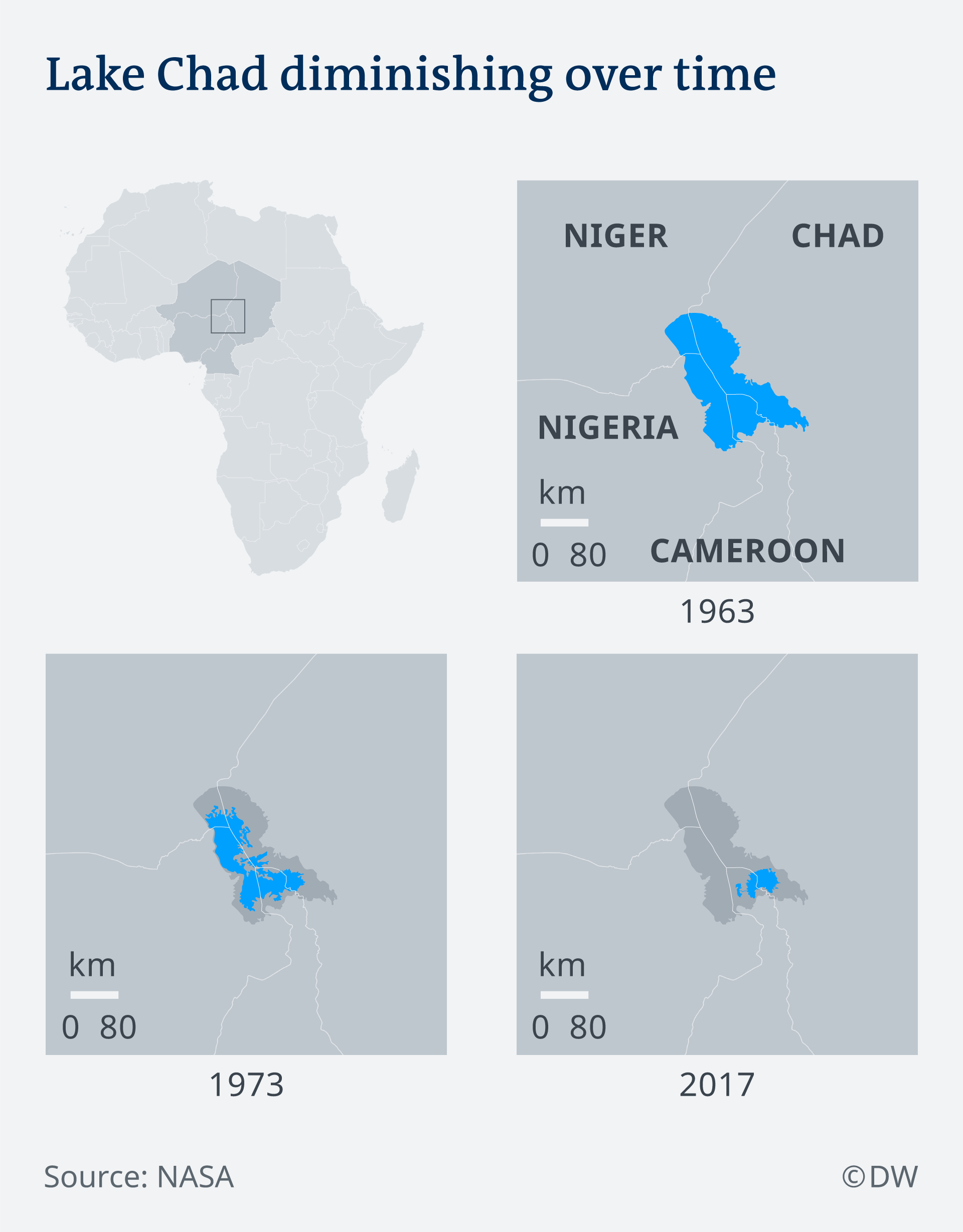
In the fragile Lake Chad Basin, research on displacement patterns from 2008 through 2024 found that disasters displace more people than conflict and violence, Mbiyozo said. "What we're also finding is that the violence is intersecting with the disasters," she said.

Mbiyozo said the region was ripe a "perfect storm" in which borderland fragility, violent extremism, pastoralism and climate shocks all collide.

Lake Chad has been vanishing for more than half a century, driving more and more people relying on the body of water for survival into despair

Southern Africa meanwhile is another major area of concern. The region has faced repeated cycles of drought and cyclones, with countries such as Mozambique, Malawi, Zimbabwe and Madagascar repeatedly affected in recent years.

"Madagascar at this point is hit by cyclones almost every year," Mbiyozo said, and Mozambique has repeatedly faced "never-before-seen-strength cyclones" in recent years.
Are early warning mechanisms enough?

Some countries have made progress in being better prepared: Mozambique has invested in early warning systems and climate literacy in coastal communities. South Africa has passed a Climate Change Act, which experts see as a positive legislative step.

Kenya has improved coordination between government agencies and humanitarian organizations, including emergency operation centers and efforts to move people in flood-prone areas to higher ground, Hassan said.

"As a country, we are better off and much more organized right now," he said. "But the challenge is that, if we do not get external support, the national emergency funds available may not be enough."

Hassan said early warnings systems must be matched by funds that are available before disasters escalate: "Money may be allocated," he said, "but delays in releasing it can make the disaster worse."


Cai Nebe Contributed to this article.
Edited by: Sertan Sanderson


Mimi Mefo Newuh Mimi is an award-winning Cameroonian-born journalist.https://x.com/mimimefo

Why heat waves heighten the risk of blackouts


DW
06/07/2026 - 


When extreme heat hits, people turn to AC, but what if the grid fails? From France to the US, heat waves are pushing power systems to the limit, raising blackout risks and energy prices when electricity is needed most.

Infrastructure like electricity masts and power lines can be vulnerable to heat and other weather extremes

Andreas Franke/dpa/picture alliance

In late June, a heat wave in France left nearly 70,000 households without power after a transformer failed under high temperatures. For about 24 hours, as the mercury hovered near 40 degrees Celsius (104 Fahrenheit), residents in parts of Brittany sweltered in deadly heat without fans or air conditioning.

Then as the United States baked in extreme heat in the run up to its 250th birthday celebrations, federal authorities issued blackout warnings. Grid operators were allowed to order large energy users, such as data centers, to switch to backup generators to maintain power to homes and emergency services like hospitals.

Power grids worldwide are struggling under intense heat waves and other extreme weather events — and in the US, outages are already happening. Heat-season power outages in the country, some linked to hot temperatures, rose about 60% over the past decade compared with the 2000s, according to data from the nonprofit Climate Central. Having no access to cooling in heat waves is especially dangerous for children, the elderly and those with chronic illness.


Extreme heat in the run up to the United States' 250 birthday prompted federal authorities to declare a blackout warning    Image: Cheney Orr/REUTERS

That trend is expected to continue as human-induced climate change drives longer, more frequent and intense heat waves, making it crucial for energy networks to adapt.

"As it gets hotter, things stop working quite so well," said Iain Staffell, associate professor of sustainable energy at Imperial College London. That means one "should expect faults to be more common at these very high temperatures."

"I think we do need to adapt the power system to cope with the changing weather," added Staffell, referring to Europe, which is warming much faster than the rest of the world.
Why are heat waves a problem for power networks?

When heat waves hit, electricity demand surges as people turn to ACs, fans and other cooling devices for relief. That strains the power grid, especially later in the day when heat lingers but solar power starts to fade.

At the same time, the infrastructure that keeps electricity flowing — from power plants to transformers — is vulnerable to heat stress. Transmission lines moving power across the country expand as temperatures rise, for instance. This causes them to sag, sometimes enough to brush against trees or other obstacles, increasing the risk of short circuiting or outages.

"The grid operator has to reduce the amount of power that flows down these wires in the very hottest temperatures to make sure everything remains safe," said Staffell.


Some nuclear power plants in France and Switzerland reduced output or switched off reactors due to the June heat wave
Image: Lionel Bonaventure/AFP

Heat and sagging lines were contributing factors in 2003 when around 50 million people across the northeastern US and parts of Canada were left without power during high temperatures. It was the largest blackout in North American history. While grid operators have since introduced safeguards to prevent a repeat outage of that scale, experts say extreme weather still poses a threat.

Thermal power plants are not immune either. In extreme heat, cooling in coal, gas and nuclear plants becomes less effective, meaning operators sometimes have to reduce output.

"Efficiency of coal and gas as well as nuclear power stations falls by roughly 1% for every degree it gets hotter," Staffell said — so they're 10% less effective at 35 C than at 25 C.

During Europe's heat wave in June, several nuclear facilities in France and Switzerland had to reduce output or temporarily shut down because the rivers they use for cooling had become too warm. Regulations require plants to limit the temperature of discharged water to protect ecosystems and aquatic life.

Renewable energy sources are affected as well. Low water levels can hamper electricity production from hydropower, for instance. And solar panels become slightly less efficient in high temperatures, while wind speeds often drop during heat waves, reducing their output.


These factors, taken together, can contribute to grid instability, with operators needing to source energy from elsewhere if the mismatch between demand and supply becomes too tight.

If cheap solar or wind isn't available during these critical crunch times, grid operators often have to rely on more expensive backup sources to fill the gap. And those tend to be planet-heating fossil fuels.

Even when blackouts don't occur, heat can drive up wholesale electricity prices, which are sometimes passed on to consumers depending on the market and the contract. During the recent European heat wave, power prices spiked across countries, including in France and Germany, especially during evening peak hours.

Can we heat-proof energy systems?


There are some smaller fixes "that can have a really big impact," said Staffell.

That includes upgrading grid components to withstand heat and installing better cooling systems for powerlines, transformers and other equipment. That could be as simple as "bolting on additional fans for putting a shade over the top of them," added Staffell.

Nuclear power plants, for example, could be built with "hybrid cooling systems, so they are not so reliant on the rivers," said the sustainable energy expert.

While the European electricity grid is one of the most resilient in the world, the infrastructure is aging, says Alexander Roth, an energy and climate policy fellow at Brussels-based economics think tank Bruegel.

At the same time, countries are transitioning to renewable energy systems largely based on electricity that will power everything from electric cars and data centers to heat pumps and air conditioning.


Snapshot Freddy/Zoonar/IMAGO

As Europe decarbonizes its economy, electricity is expected to account for about half of total energy use by 2040, up from about 20% today. That means demand will keep rising, even without factoring in hotter summers.

"And the current system is not fit for that," said Roth.

Meeting that challenge will require modernizing the grid, boosting the flow of power between countries, and creating more flexibility in the system. Battery storage, for example, can help reduce stress on electricity networks, especially during heat waves.

"These batteries could, for instance, store cheap generation of solar PV around midday and then actually feed it out in the evening hours ... because the wind is gone and the sun is gone but there's still high demand," said Roth.

Demand-side measures could help too. Dynamic pricing — whereby electricity costs vary throughout the day — can incentivize consumers to use power during off-peak hours, easing pressure on the grid, added Staffell.
What's the hold-up?

In Europe, a significant obstacle is the huge backlog in projects, including batteries and an estimated 1700 gigawatts worth of renewables, waiting in a queue for a grid connection. Legislation is under discussion in Europe to improve the grid, with massive investment required. But it'll likely take some time to build the required infrastructure, say analysts.

In the US, the Department of Energy has also announced a major investment to expand and modernize grid infrastructure. The country has seen an uptick in power outages over the past decade, as its ailing grid has struggled to cope with more frequent extreme weather events such as hurricanes and winter storms.


At the same time, the grid is facing "historic stress" from the growth in electric vehicles, renewable energy and energy-intensive data centers, according to JP Morgan Chase. The bank noted that smart grids and advanced grid tech were vital for energy security.

Meanwhile, in Europe, Roth believes there is a huge opportunity to create a better-functioning, more flexible grid that "is smarter, where we use more electricity, and also, that in the end, benefits the people."

Edited by: Jennifer Collins