Saturday, August 22, 2026

After Bessent Comments, China Warns US That It Cannot Sanction Iran Out of Existence

A spokesperson for the foreign ministry of China, which receives 80% of Iran’s oil exports, said that going along with Trump’s “economic warfare” will “only lead to escalation that serves no one’s interests.”
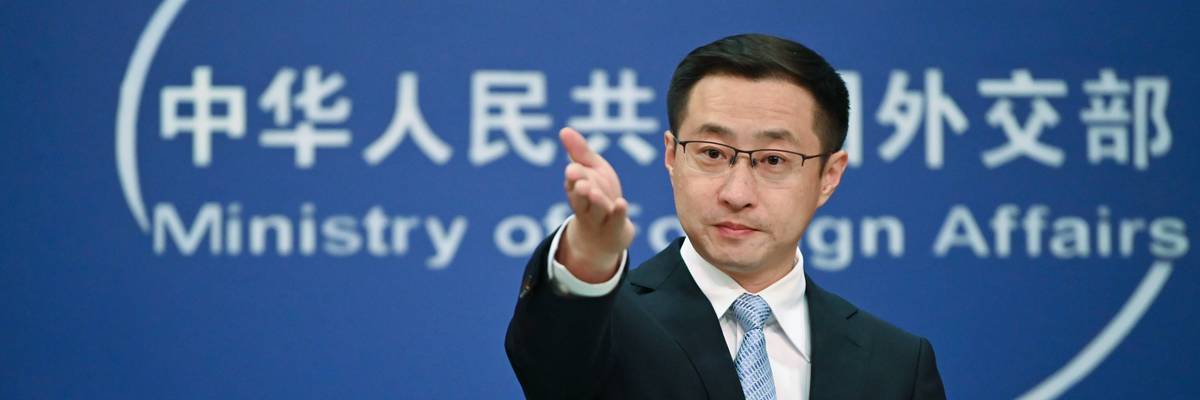


Lin Jian, spokesman for the Chinese Foreign Ministry, speaks at the ministry’s daily briefing  in Beijing.
(Photo by Johannes Neudecker/Picture Alliance via Getty Images)

Stephen Prager
Aug 21, 2026
COMMON DREAMS

The Trump administration is once again threatening to carry out “regime change” in Iran, this time using what President Donald Trump described as “economic warfare” against the nation rather than military might.

But as Treasury Secretary Scott Bessent demands the world play along with efforts to isolate Iran, the second-largest economy, China, is refusing to join the US sanctions campaign.

The Trump administration has failed to use military means to force Iran to open the Strait of Hormuz after it began restricting travel in retaliation for US and Israeli attacks in late February.

On Thursday, Bessent told CNBC that the new approach is to impose the “toughest sanctions in history” on Iran, ramping up a strategy that has inflicted suffering on the Iranian people but failed to force its leaders out of power for nearly 50 years.


Bessent emphasized that it would only work with the help of “all of our allies” carrying out the “greatest coordinated economic isolation in the history of the world.”

He made very explicit the goal of ratcheting up pressure on the regime by inflicting pain on the nation’s 90 million people, by causing “substantial inflation, both food inflation and ordinary inflation in Iran.” He compared the effort to the use of sanctions to strangle the economies of Venezuela and Cuba, which have fueled humanitarian crises in both countries.

Bessent gave an ultimatum that every nation is “either with us or against us,” and warned those who refuse to help with the administration’s effort to “squash the economy” of Iran that the US would “put its full might and force toward enforcing against you.”

He promised that any country that provides a “lifeline” to Iran would itself be sent into “economic oblivion.”

Iran responded to the threats by vowing a fearsome retaliation. “With preparedness across land, sea, air, air defense, and cyberspace, Iran’s armed forces will respond to the enemy’s new threats with crushing, punishing, and devastating responses,” said the chief of staff of Iran’s armed forces, Maj. Gen. Ali Abdollahi.

Iran’s parliament speaker, Mohammad Baqer Ghalibaf, acknowledged that the impact of further sanctions could indeed be devastating.

“We must make plans to deal with the unjust sanctions so that we can overcome them,” he said. “No matter how much military power we have, we won’t survive if people are hungry and we don’t have financial turnover, economic growth, and national production.”

As the US imposes its own blockade on Iran’s oil exports, Bessent called on China to “get with the program.” China buys about 80% of the oil exported from Iran, and Bessent emphasized that half of China’s energy comes from the Persian Gulf.


But Lin Jian, a spokesperson for China’s Ministry of Foreign Affairs, said during a press conference on Friday that China would not cooperate with efforts to isolate Iran.

“China believes that military means, sanctions, and pressure tactics are not the solution. On the contrary, they will only lead to escalation that serves no one’s interests. We call for efforts to solve disputes through dialogue and negotiation,” Lin told an Iranian government broadcaster.

Asked about the potential effects on China’s energy imports from Iran, he reiterated, “China opposes illicit unilateral sanctions that lack basis in international law and UN Security Council mandate.”

The question now is whether Trump will make good on his administration’s threats and retaliate against China. It’s likely easier said than done, as an economic war with the US’s third-largest trading partner could further exacerbate the economic turmoil Trump is seeking to ameliorate before the midterm elections in November.

Danny Citrinowicz, a senior researcher at Israel’s Institute for National Security Studies, suggested that China would be unlikely to surrender easily in that fight.

“China has a strong interest in preserving Iran under the Islamic Republic and maintaining Tehran’s strategic relationship, and growing dependence, on Beijing,” he wrote on social media. “Any economic strategy that assumes China will eventually fall in line with Washington risks being built on a fundamentally flawed premise.”


Shipping traffic through the Strait of Hormuz is still far below prewar levels, with the daily number of ships passing through in the single digits, according to Reuters.

Crude oil prices are still 30% higher than at the start of the war, while US gas prices are still up by more than a dollar per gallon.

But Trump, seemingly unwilling to admit that his campaign there has been anything less than successful, is continuing to claim that the strait is wide open thanks to US military action.

As Gregory Brew, a senior analyst on Iran and oil policy at the Eurasia Group, explained, this has left the administration’s messaging on why exactly it is now pivoting to ruthless economic warfare appear like disjointed doublespeak.

“Bessent and others cannot say what this policy is meant to achieve—reopening the strait—because in the admin’s telling, the strait is already open,” Brew said. “As a result, this return to maximum pressure feels oddly devoid of purpose. The US is inflicting economic pain, felt mostly by Iran’s people, rather than its rulers, for no clear reason.”
Scott Bessent's jobs logic exposes glaring hole at the heart of MAGA: analyst

Matthew Chapman
August 20, 2026 
RAW STORY


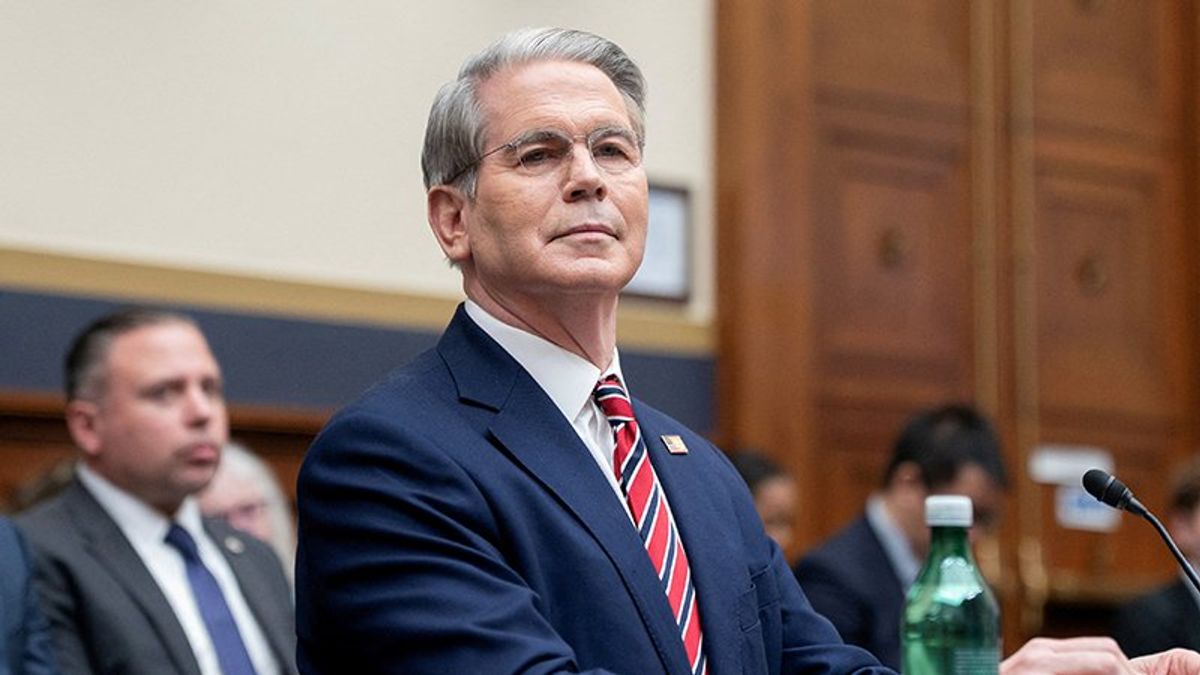
U.S. Treasury Secretary Scott Bessent testifies before a House Financial Services Committee hearing entitled "The Annual Testimony of the Secretary of the Treasury on the State of the International Financial System," on Capitol Hill in Washington, D.C., U.S., May 7, 2025. REUTERS/Nathan Howard

The Trump administration got a tongue-lashing on MS NOW's "Deadline: White House" Thursday, following Treasury Secretary Scott Bessent's boast that low job numbers are okay because immigrants are being deported to balance it out.


Not only is this not how the economy works, noted anchor Alicia Menendez to former GOP strategist Tim Miller, but it also reveals a glaring contradiction at the heart of MAGA ideology.

"I just want to make sure I follow the logic here, which is they told us that the immigrants they were deporting were the worst of the worst, who apparently had, like, great American jobs on the side of their criminality," said Menendez. "And they can't seem to decide which one it is," she added. These two things can't be true at once, she said. "They can't get their own messaging."

Miller agreed.

"It kind of goes back," he said, arguing that there was a similar contradiction underpinning Trump's tariff war, when he said parents could buy fewer dolls for their kids if tariffs make prices go up.

"I thought this was supposed to be the golden age where we were going to have this great economic boom in the country, we were going to bring manufacturing back to the country, we're going to have, you know, kind of a land of plenty," said Miller. But now Trump's policies are actually in place, he said, their message has changed to "we don't need to create that many jobs actually, because we've deported so many people."

Their only other messages, said Miller, are "maybe tighten your belt at Christmas this year" and "if you have to pay a little bit more at the gas pump, you know, four bucks a gallon, it's worth it because we changed one Ayatollah with another Ayatollah. You know, they don't have a lot to work with. And the messaging is pretty bad on top of that."

Wild gaffe as Trump threatens to unleash military on sluggish bond market


Bennito L. Kelty
August 21, 2026 
RAW STORY

President Donald Trump on Friday answered a reporter's question about calming the turbulent bond market by saying he'll use military force.

Trump was asked whether he had spoken with Treasury Secretary Scott Bessent about "another type of intervention" after bond yields climbed back to multi-year highs.

"The ultimate intervention is our military," Trump said. "And if we have to use that, we will."

The remark came as Trump seems to be escalating his military posture against Iran. Bessent told CNBC on Thursday that the U.S. likely would not need to restart large-scale combat with Iran, hours after Trump declared "economic D-day" on the country.

It also came shortly after Bessent announced that the Treasury would buy back far more of its own debt than planned. The step was meant to push interest rates down, according to reporting by CNBC. The Treasury acted after the rate on the government's 30-year bond hit its highest levels since 2007, Reuters reported.

Trump distanced himself from Bessent's move during his comments to reporters on Friday. Trump said he had not directed the intervention.

"No, not at all," Trump said. He added that Bessent is "a very capable man. He wanted to do it."

Bessent's fix barely lasted a day. Rates quickly climbed back to where they started after Trump escalated his standoff with Iran and drove oil prices higher, according to reporting by CNBC. The nation's total debt topped $40 trillion for the first time shortly after, which fueled investor anxiety over rising borrowing costs and deepening deficits, Reuters noted.

The Iran war is now in its sixth month. Trump has faced questions about how far he is willing to go. The Telegraph reported earlier this week that Trump was weighing a possible nuclear strike, a claim amplified by former Rep. Marjorie Taylor Greene, who said the administration had discussed the option in strategy meetings.


'Addled' Trump viciously mocked after flub: 'Bond market also two weeks away from a nuke?'

Bennito L. Kelty
August 21, 2026 
RAW STORY

President Donald Trump's threat to use military intervention to handle the troubled bond markets is baffling his online critics.

On Friday, a reporter asked Trump about increasing bond yields, which Treasury Secretary Scott Bessent has struggled to contain after a failed debt buyback intervention earlier this week.

"Have you talked to Bessent about another type of intervention?" a reporter asked Trump.

"The ultimate intervention is our military," Trump responded. "And if we have to use that, we will."

The response from Trump prompted mockery as he seemed to conflate military intervention with a bond market intervention.

"Addled Trump threatens to use the military on bond traders," reacted Ron Filipkowski, the editor-in-chief of the political news network MeidasTouch, in a post on X.

"Is the bond market also two weeks away from a nuclear weapon?" asked Acyn Torabi, the senior digital editor for MeidasTouch, referring to reports that Trump was weighing a possible nuclear strike against Iran.

"Operation Epic Interest Rates," suggested political blogger and Kash Patel foe Jim Stewartson.

"Is Trump going to bomb the bond market?" wondered PatriotTakes, which covers right-wing extremism.

"I preferred it when yield curve control didn't involve the military," economist Justin Wolfers lamented. "But perhaps mine is a radical position."

During his comments, which came ahead of a South Carolina rally for Sen. Darline Graham (R-SC), Trump also pinned the initial debt buyback to Bessent as bond yields climbed shortly after the buyback.

"Did you direct Secretary Bessent to intervene in the bond market?" a reporter asked Trump.

"No, not at all," he responded. "He's a very capable man. He wanted to do it. He's very good at it. He's got a good touch for bonds and interest rates. He did it."

The question came shortly before he was asked about considering another intervention, but Trump still pivoted to talking about military force.


Warning signs flash as 'eye-popping' economic figures spell doom for GOP voters: analyst


Matthew Chapman
August 20, 2026 
RAW STORY


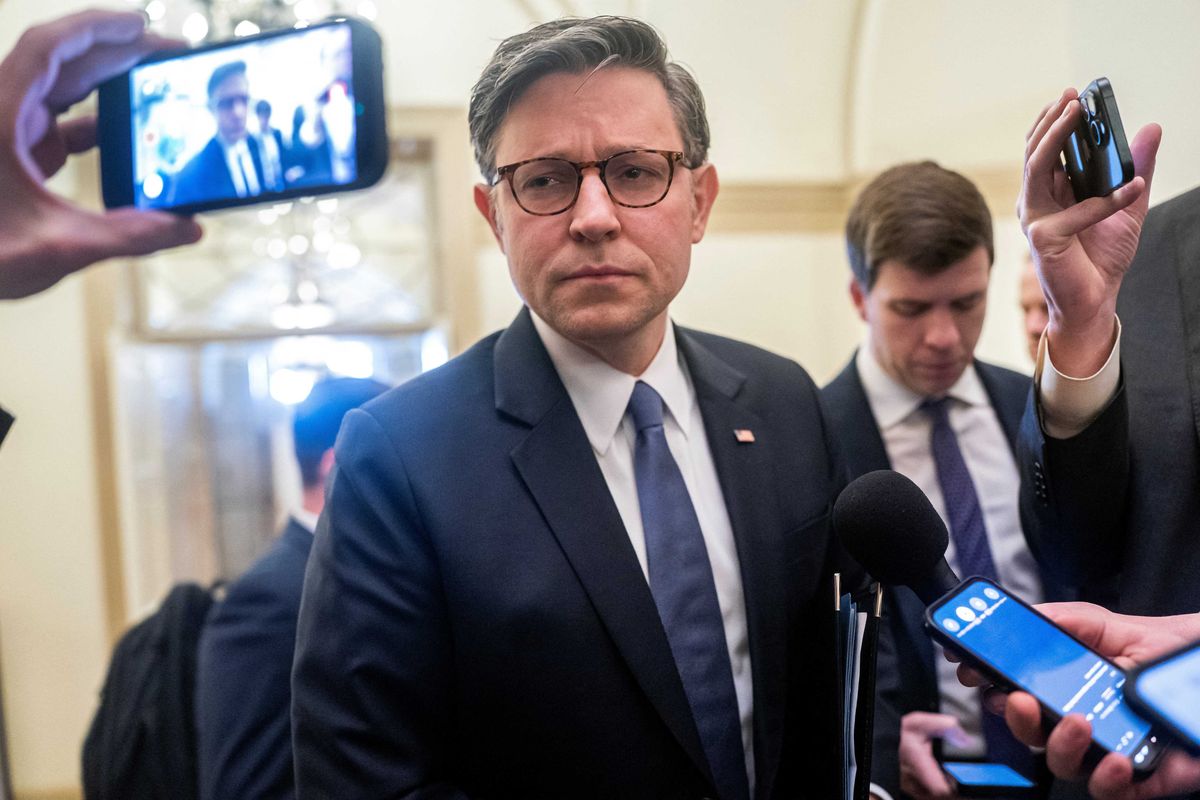
House Speaker Mike Johnson (R-LA) speaks with members of the media while arriving at the U.S. Capitol ahead of a two-week Easter recess starting at the end of this week, in Washington, D.C., U.S., March 26, 2026. REUTERS/Nathan Howard

A panel of experts on CNN blasted through the ramifications of the U.S. national debt hitting the $40 trillion mark.

More than a decade ago, President Donald Trump promised he could eliminate the national debt, and instead introduced a series of tax cuts that accelerated its growth.

"These are certainly eye-popping numbers for voters to see, and come as voters continue to have concerns about the Trump administration's handling of the economy," said CNN's Arlette Saenz in a sidebar.

She added that "the climbing debt isn't just a GOP issue," as debt has been rising steadily since the early 2000s among presidents from both parties — although the debt as a percent of GDP has been a bit more variable.

Meanwhile, Mark McKinnon, a longtime Republican strategist, told anchor Kasie Hunt that the implications for the GOP this election cycle are grim.

"I'll tell you this, as a campaign guy: the last thing that I want to be talking about 70 days out from a midterm election is the fact that we're busting out $40 trillion in [debt], and the stock market has taken a 700-point dive," said McKinnon, saying that the whole situation is "a really bad stew for the president."

Trump, he noted, "had largely campaigned on a macro message of sort of ... listen, just elect me and I'll go break stuff," he added. "And people said, yeah, go break stuff. And then they get turned around, and they say, wait a minute, not everything."

Seething MAGA reminds Trump who voted for him after 'slap in the face' to ranchers


Matthew Chapman
August 21, 2026 
RAW STORY

President Donald Trump's plan to lower sky-high beef prices before the midterms has triggered a rare rebellion from within his own party, with ranchers, senators, and even his health-food allies calling it a betrayal.

Trump announced Friday he'll remove duties on 300,000 metric tons of imported beef, claiming suppliers agreed to sell at a 25% discount that consumers will feel at checkout. The tariff relief lasts just 90 days, conveniently expiring right after November's midterm elections. A formal executive order is expected within two weeks.

But according to Politico, many of Trump's supporters and sympathetic special interests aren't happy.

United States Cattlemen's Association president Justin Tupper didn't hold back, saying, "You don't put America first by putting U.S. cattle producers last."

Sen. Deb Fischer (R-NE) called herself "extremely disappointed," while Sen. Tim Sheehy (R-MT) warned the move would hurt ranchers, who are "most of whom are MAGA Republicans." Rep. Thomas Massie (R-KY) went further, branding it a "slap in the face" to ranchers and consumers alike, and Sen. Pete Ricketts (R-NE) said the plan "compromises Nebraska farmers and ranchers."

One anonymous agriculture industry insider offered a blunt diagnosis of Trump's strategy.

"This is Donald Trump in purgatory," the industry representative said, describing it as trading long-term strategy for a short-term fix that won't meaningfully lower prices.

Even Agriculture Secretary Brooke Rollins had spent months publicly opposing similar import plans, instead blaming Biden-era policies for the beef shortage driving up costs. Industry insiders say they weren't briefed on Trump's announcement beforehand and remain unsure which countries could even supply that much beef. Meanwhile, MAHA movement figures like Alex Clark blasted the move as anti-health messaging, given the administration's own guidance pushing Americans to eat more beef as a protein source.

With ground beef prices near $7 a pound and no clear path to lasting relief, Trump's gambit risks alienating ranchers without delivering the grocery-store savings voters are demanding.
Thank Idiot, Greedy Republicans If You’re Upset With $40 Trillion in US Debt

Somehow, many people talk about Republicans as the party of fiscal responsibility. That’s insane.


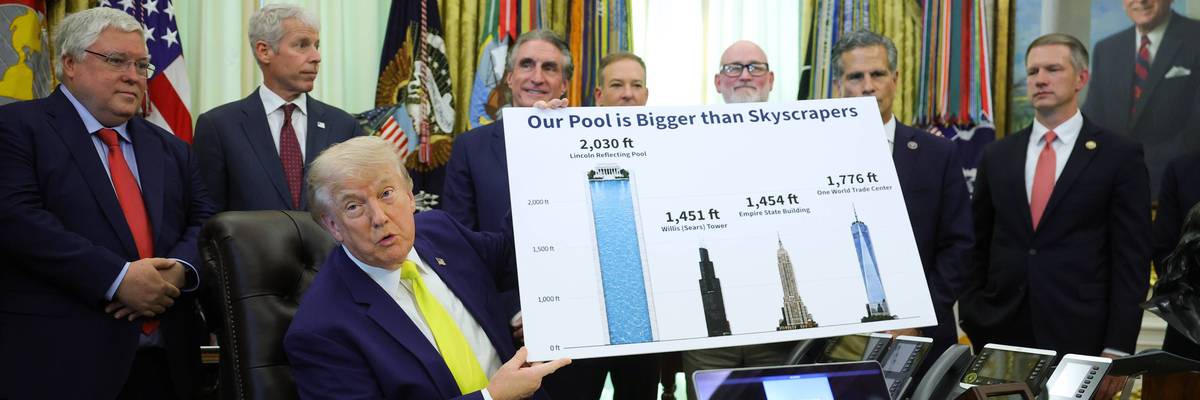
US President Donald Trump displays a graph entitled “Our Pool is Bigger than Skyscrapers” as he speaks on his renovations to the Lincoln Memorial Reflecting Pool during a “Beautiful, Clean Coal” event in the Oval Office of the White House on June 04, 2026 in Washington, DC. President Trump is expected to announce a $700 million investment in funding for coal plants and energy infrastructure.
(Photo by Kevin Dietsch/Getty Images)

Dean Baker
Aug 21, 2026
Beat the Press

I have never been a deficit hawk, and I’m not about to change my religious affiliation now. But whatever we think of debt and deficits, there is one point that should be very clear: it has been run up almost entirely due to Republican tax cuts and their inept management of the economy.

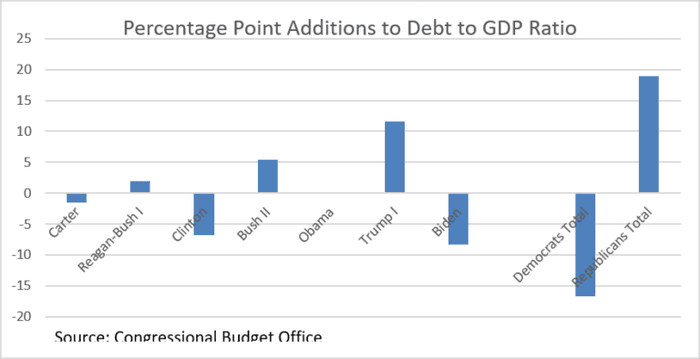
Every Democratic president of the last half century has left with a deficit that was lower, measured as a share of GDP, than the one they came in with, except Obama, who left it unchanged. By contrast, every Republican president has left with a considerably higher deficit than what they inherited.

Starting with Carter, the deficit for fiscal year 1976 was 4.1% of GDP. When he left office in 1980, it was down to 2.5% of GDP, despite a recession that year. That was the starting point for Reagan. (These figures refer to fiscal years, which end on October 1 of the year.) Reagan’s tax cuts, along with a big military buildup, were most of the story of higher deficits. When his successor, George H.W. Bush, left the White House in 1992, the deficit was 4.5% of GDP.

For better or worse, Clinton took deficit reduction seriously. He was helped by an explosion of tax revenue associated with the tech bubble, but he both made budget cuts and increased taxes. When he left office in 2000, the government was running a surplus equal to 2.3% of GDP.

George W. Bush quickly reversed the picture. A big part of the story was the collapse of the tech bubble in 2001-2002, which both led to a recession and a plunge in tax revenue from capital gains. He also had big tax cuts and a military buildup associated with his invasions of Afghanistan and Iraq. When Bush left office after 2008, he handed Obama a deficit equal to 3.1% of GDP, as well as a financial crisis and severe recession, resulting from the collapse of the housing bubble.

The deficit initially exploded in 2009 under Obama, as the country faced the worst recession since the Great Depression. As the economy gradually recovered, the deficit came down, falling back to 3.1% of GDP in 2016, just as Obama was leaving the White House.

Trump’s tax cuts caused the deficit to rise again. It hit 4.6% in 2019, but it really took off the following year, as a result of the pandemic. It reached 14.7% of GDP in 2020, the largest since World War II. The recovery and some modest increases in tax collections brought the deficit down to 6.3% of GDP in 2024.

Taking the cumulative changes from Democratic and Republican presidents, Democratic presidents have reduced deficits by 16.7 percentage points of GDP during their terms in office, while Republican presidents have raised them by 18.9 percentage points. Somehow, many people talk about Republicans as the party of fiscal responsibility.


As I said earlier, I am not hugely troubled by the debt. It would be better to be paying less money in interest, but 3.0% of GDP going to interest is not a disaster. The more important issue is to have a healthy economy with solid growth.

Here is where the big failure is. Trump’s war is leading to shortages, most importantly of oil, but also fertilizer and other products. His tariffs have led to higher prices for a wide range of products, as has his mass deportations. Perhaps most importantly, Trump’s open corruption and self-dealing undermine confidence in the U.S. financial markets and business system more generally.

In the past, investors could view the United States markets as relatively clean and stable. Unlike in some other countries, getting your investment back didn’t depend on staying in the good graces of the political leadership. Under Trump, this is no longer true. He has openly threatened companies and their management for saying and doing things he does not like. That is not a good recipe for a stable economy with solid growth.

If there is a run on the dollar, and interest rates soar higher, it is far more likely to be the result of Trump’s corruption and incompetence than the high debt. This is what people should be losing sleep over, not the debt crossing the $40 trillion mark.
Almost Overnight, the Data Centers Were Everywhere in My Community—Don’t Let This Happen to You

Virginia spent years asking how quickly it could build data centers. But Maryland and other states have an opportunity to ask a better question: How do we embrace innovation without sacrificing the affordability, environment, and quality of life that make our communities worth living in?


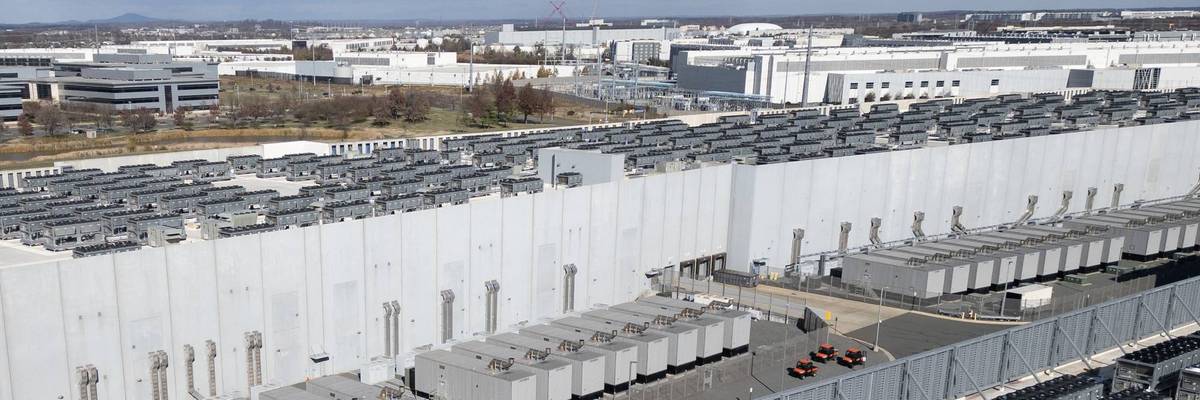
An aerial view shows cooling vent fans on the roof next to generators on 
the lower level of a Digital Realty data center in Ashburn, Virginia on November 12, 2025.
(Photo by Andrew Caballero-Reynolds / AFP via Getty Images)

Danielle Johnson
Aug 21, 2026
Common Dreams


I’ve lived in Northern Virginia my whole life, but no one told us we would soon be living alongside one of the largest concentrations of data centers in the world.

No one asked our community whether we wanted them. No one explained what they would mean for our neighborhoods, our landscape, or our monthly bills. Then, almost overnight, they were everywhere. Massive industrial buildings rose where open space once stood. The constant hum became part of daily life. And one month, our electricity bill didn’t gradually creep upward, it nearly doubled.

We were told these projects would bring jobs, innovation, and economic growth. What we weren’t told was what residents would be expected to give up in return.

Now, as I watch Maryland debate whether to accelerate data center development, I can’t help but feel like I’ve seen this story before.

As someone living with the consequences of Virginia’s choices, my advice is simple: Don’t wait until the bills arrive, the forests are gone, and the data centers are already built to ask whether they were worth it.

For years, Virginia has been held up as the nation’s data center success story. But if Maryland leaders only see Virginia’s balance sheet, they’re missing the growing backlash from the people who live here.

I have watched forests disappear, industrial buildings replace open land, electricity demand surge, and communities be transformed by sprawling server farms. Everyone I know is asking whether the promised economic benefits outweigh the environmental and financial costs.

Maryland has a choice. You can rush to replicate Virginia’s model, or you can learn from our mistakes before it’s too late.

The conversation surrounding data centers has largely centered on artificial intelligence and economic development. But too often, what gets left out are the communities expected to absorb the costs.

Supporters frequently describe data centers as major job creators, but the reality is more complicated. Construction creates temporary employment, yet once operational, many hyperscale facilities require relatively few permanent workers. Communities are often asked to trade farmland, forests, neighborhoods, and increased pressure on utilities for projects that may never deliver the long-term economic engine they were promised.

That trade-off deserves far more scrutiny than it has received.

The race to build data centers is being driven largely by the explosive growth of artificial intelligence. Every major technology company wants more computing power, faster infrastructure, and greater capacity. But history teaches us that economic booms rarely continue unchecked. America has seen speculative waves in office construction, shopping malls, and commercial real estate that far exceeded demand before markets eventually corrected.

No one can say with certainty whether today’s data center boom will follow the same path. But uncertainty itself is reason for caution, not acceleration.

Maryland should pause before repeating Virginia’s mistakes. A statewide moratorium would give policymakers time to complete a comprehensive assessment of the environmental, economic, and energy impacts of these facilities; strengthen safeguards for communities; ensure developers bear the costs of new infrastructure; and give the public a meaningful voice in decisions that will shape their neighborhoods for generations.

Virginia spent years asking how quickly it could build data centers.

Maryland has an opportunity to ask a better question: How do we embrace innovation without sacrificing the affordability, environment, and quality of life that make our communities worth living in?

As someone living with the consequences of Virginia’s choices, my advice is simple: Don’t wait until the bills arrive, the forests are gone, and the data centers are already built to ask whether they were worth it.

By then, the answer may come too late.


Our work is licensed under Creative Commons (CC BY-NC-ND 3.0). Feel free to republish and share widely.


Danielle Johnson
Danielle Johnson is a federal contractor and community advocate who lives in Woodbridge, Virginia.
Full Bio >


Trump alarms red state with power plant bombshell: 'Big deal'

Daniel Hampton
August 21, 2026 
RAW STORY


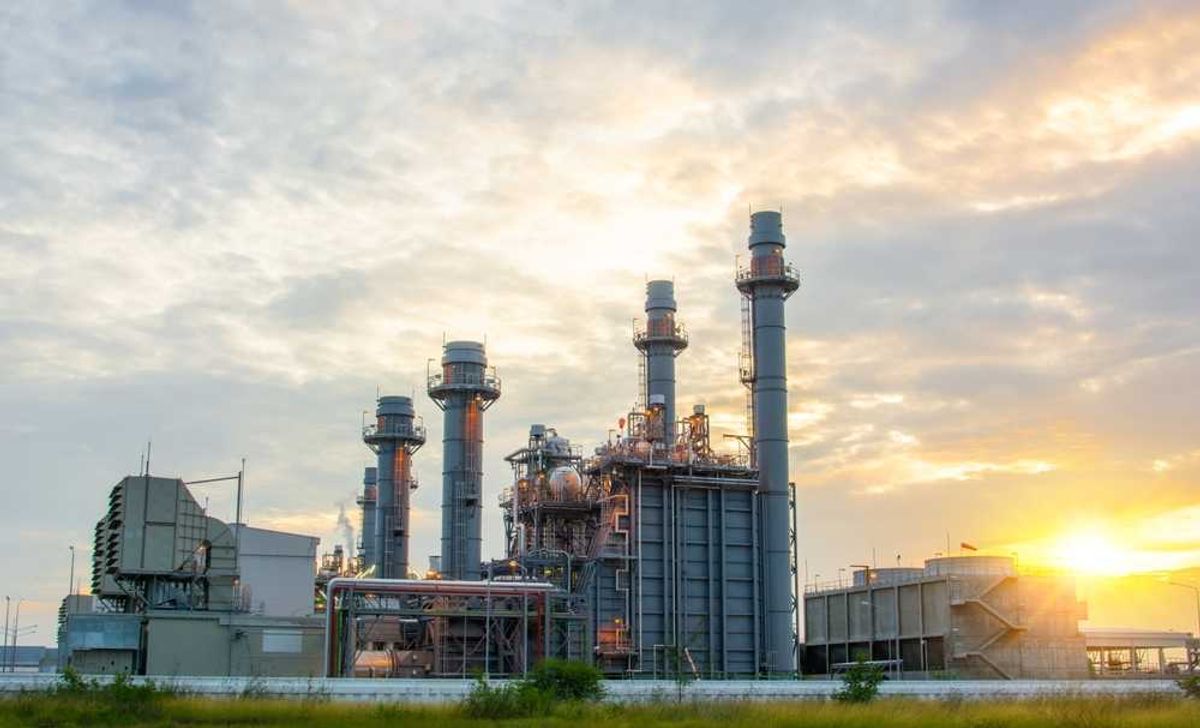
Natural gas plant. (Photo credit: tonton / Shutterstock)

The data center OpenAI is building in southern Ohio will draw its power from what would be the largest fossil-fuel power plant ever constructed in the United States, and the Trump administration is racing its environmental review to the finish.

According to Heatmap News, the federal review of the PORTS-Pike project's 9.2-gigawatt natural gas plant began July 10 and is slated to wrap by Dec. 23, roughly seven months to clear a facility bigger than five of Ohio's largest existing power plants combined. Regulators are handling it with an "environmental assessment," the lighter of the two federal review options, rather than a full environmental impact statement.

The gas plant would anchor a 10-gigawatt AI campus at the former Portsmouth Gaseous Diffusion Plant, a decommissioned uranium enrichment site on federal land in Pike County. OpenAI signed a 20-year lease for roughly 8 gigawatts last week, backed by a $105 billion guarantee from Nvidia and developed by SoftBank's SB Energy alongside the Energy Department.

OpenAI has cast the project as a rebirth for the region.

"Pike County helped power America's industrial growth in the 20th century and now, with this project, it has another opportunity to play a leading role in the next era of American industrialization," the company said.

The reaction from energy watchers was swift.

Heatmap's Jael Holzman, who broke the story, warned the scale hadn't sunk in: "y'all are not getting how big of a bfd this is yet." Her colleague Emily Pontecorvo laid out the trifecta drawing alarm: "the biggest fossil fueled power plant EVER BUILT IN THE US" getting the lighter review and clearing permitting "in just 7 months."

Energy analyst John Bistline put the size in perspective, noting that 9.2 gigawatts of new gas at one Ohio site is more generating capacity than any of 10 entire states hold — among them Montana, Idaho, Maine, Alaska and Vermont.

Longtime Ohio journalist Darrel Rowland took aim at the rushed review with a nod to the site's fraught history: "Where have southern Ohioans heard this before?"

‘Hoard and Destroy’? Advocates Demand Federal Probe of Book-Burning by AI Giants

“AI companies are engineering a future where only the wealthiest incumbents can build high-quality AI models and operate as the sole holders of humanity’s written works.”


Robot competitors arrange books during the library scenario competition of the Second World Humanoid Robot Games on August 16, 2026 in Beijing, China.
(Photo by Jia Tianyong/China News Service/VCG via Getty Images)


Jake Johnson
Aug 21, 2026
COMMON DREAMS
A coalition of American civil society groups on Friday called for a federal investigation into reports that artificial intelligence giants are mass-purchasing physical books, scanning them to train their AI models, and destroying them without regard for historical artifacts or the public good.

In a letter to the Federal Trade Commission (FTC), the coalition notes that “at least one top AI company, Anthropic, is known to have acquired millions of print books in bulk, scanned them into digital form, and discarded the physical originals.” The letter notes that “this process leaves only the digitized text in the company’s proprietary database for use in training its large language models behind products such as Claude.”

The coalition, led by the Demand Progress Education Fund, pointed to an internal Anthropic memo that was made public as part of a copyright lawsuit against the company. The memo is headlined “Project Panama,” which is described as “our effort to destructively scan all the books in the world.”

“We use a ‘soft codename’ for it because we don’t want it to be known that we are working on this,” the memo states. “This document is visible to all Anthropic employees, but you should avoid talking about it in public areas, and the fact that we are working on this should not be shared with anyone outside Anthropic.”

At one point, Anthropic reportedly considered approaching US libraries such as the New York Public Library for its massive book-consumption campaign. One court document describes how an Anthropic vendor’s “hydraulic powered cutting machine” would “neatly cut” books for scanning. The scanning company would then “schedule with the recycling company to pick up the completed books,” according to the filing.

Amazon is also reportedly engaged in a large book-buying operation, under which employees “cut the bindings off in order to scan the books more quickly.”

“The AI industry is acquiring books on vast commercial scales to scan and destroy, all to keep that scanned text in a private database walled off from the world and subject to corporate censorship and manipulation.”

The new letter to the FTC observes that “proxies and intermediaries now function as sourcing partners for AI companies, offering the buyers anonymity and brokering bulk book orders—including rare, out-of-print titles with few surviving copies.” 404 Media reported last month that ISBNdb, which markets itself as “the world’s largest book database,” is offering “high-volume book acquisition services for AI companies.”

“Books published before the rise of generative AI (such as Claude, ChatGPT, and Gemini) command a premium because they are free of the AI-sourced text common in today’s writing,” the new letter adds.

The coalition argues that AI giants’ mass book buying and subsequent destruction—dubbed the “hoard and destroy” practice—is part of an effort to “build and entrench their market dominance” by “corner[ing] the essential inputs of AI development.”

“We ask the FTC to use its investigative authorities, including potentially under Section 6(b) of the FTC Act, to determine whether and to what extent this practice forecloses competing AI developers and the public from a scarce, non-reproducible input and whether it constitutes an unfair method of competition under Section 5 of the FTC Act,” the groups write.

“Through their practice of permanently destroying books en masse and thus removing those non-renewable resources from broader access, AI companies are engineering a future where only the wealthiest incumbents can build high-quality AI models and operate as the sole holders of humanity’s written works—after having destroyed the originals to get there.”

Kate Oh, special adviser to the Demand Progress Education Fund, said in a statement Friday that “the secretive and reckless way that major AI companies like Anthropic and Amazon are acting shows that there is real smoke here that the FTC needs to investigate.”

“There is credible reporting that the AI industry is acquiring books on vast commercial scales to scan and destroy, all to keep that scanned text in a private database walled off from the world and subject to corporate censorship and manipulation,” Oh added.
Trump Threatens to Sue Think Tank Over Study That Exposed Folly of His DC National Guard Deployment

“Efforts to silence independent research because its findings are unwelcome by an administration or president should alarm every American.”


A National Guard vehicle is parked near the Lincoln Memorial on August 14, 2025 in Washington, DC.
(Photo by Kevin Dietsch/Getty Images)

Brad Reed
Aug 21, 2026
COMMON DREAMS

President Donald Trump is threatening to sue a liberal think tank after it published a report last month casting doubt on the purported effectiveness of his deployment of the National Guard in Washington, DC.

The New York Times reported on Friday that Alejandro Brito, one of the president’s personal lawyers, sent a letter to the Center for American Progress (CAP) this week demanding that it retract a study it published on July 13, which concluded that there was no evidence the National Guard’s presence in the nation’s capital did anything to reduce violent crime.

Brito threatened to file a $5 billion defamation lawsuit against CAP if it did not retract the report and offer a personal apology to the president, according to the Times.

CAP president Neera Tanden said the organization was standing by its work and would not back down in the fact of legal threats from the president.

“This threatened lawsuit’s attack on facts and evidence is baseless,” said Tanden. “A fundamental protection of the First Amendment is to allow for the publication of facts and analysis that is contrary to the arguments and claims of any administration. A lawsuit is a transparent attempt to silence us.”

Tanden added that “efforts to silence independent research because its findings are unwelcome by an administration or president should alarm every American.”

CAP’s report notes that crime has been declining in major US cities across the country over the last two years, and it finds that declines in Washington, DC over that period were not significantly greater than in cities where there was no National Guard presence.

“Despite multiple tests using multiple data sources, measures, and windows of time,” the report concludes, “there is no compelling evidence that these deployments reduced homicides, violent crime, or gun violence.”

The report adds that the goal of the deployment was never about fighting crime but rather “a dangerous power grab by the Trump administration.”

CAP isn’t alone in questioning the effectiveness of Trump’s DC National Guard deployment.

Reuters on Wednesday published an investigation finding that National Guard soldiers have been mentioned in just 1.3% of cases brought before the Superior Court of the District of Columbia, which processes nearly all prosecutions in the city.

What’s more, the investigation found that National Guard soldiers were mostly deployed to wealthier neighborhoods in the city, where they responded to minor incidents.

After examining court records, Reuters investigators “could find no reference... to soldiers doing any kind of law enforcement in the neighborhoods where about 82% of the city’s 859 murders occurred over the past five years.”

Deploying the National Guard in DC is also an expensive endeavor. Sen. Elizabeth Warren (D-Mass.) earlier this month revealed that keeping soldiers deployed in the city is projected to cost taxpayers an extra $1.4 billion through the end of Trump’s term.
‘Cruel and Shameful’: ICE Begins Mass Deportation of Haitians After Trump TPS Revocation

One Democratic congresswoman denounced the expulsions, which followed the lifting of temporary protected status for 350,000 Haitians, as “a humanitarian betrayal that will stain America for generations.”


People displaced from their homes due to gang violence are seen sheltering at a temporary camp in Port-au-Prince, Haiti, on August 17, 2026.
(Photo by Clarens Siffroy/AFP via Getty Images)

Brett Wilkins
Aug 21, 2026
COMMON DREAMS

A US Immigration and Customs Enforcement charter flight on Thursday deported 161 Haitians following the Trump administration’s cancellation of temporary protected status for 350,000 people from the Caribbean nation ravaged by deadly gang violence and a wider humanitarian crisis.

The first of what the administration says will be a wave of mass deportations to Haiti followed a June decision by the right-wing US Supreme Court affirming the Department of Homeland Security’s revocation of temporary protected status for Haitians and 6,000 Syrians, many of whom have lived in the United States for years under TPS due to unsafe conditions in their countries.


‘Bigotry’ as Government Policy: Trump Orders ICE to Ramp Up Arrests of Haitians

However, Haiti’s National Office of Migration said that none of those aboard Thursday’s flight were former TPS beneficiaries; rather, they were “people facing removal proceedings after entering the US without authorization, people who had served prison sentences, and some individuals born outside Haiti to at least one Haitian parent,” according to The Haitian Times.

Late last month, President Donald Trump ordered ICE to ramp up arrests of Haitians, who have been the target of racist verbal attacks by the president and other Republicans. Vice President JD Vance, infamously—and baselessly—claimed during Trump’s 2024 presidential campaign that the migrants were killing and eating people’s pets in Springfield, Ohio.

Beloved Springfield pastor Gilbert Joubert Adrien was arrested along with another Haitian by ICE agents on Thursday morning.

Carl Ruby, also a local pastor and founder of immigrant advocacy group G92, told the Springfield News-Sun on Friday that Adrien’s arrest inflicted a “profound wound” to the “embattled” Haitian community.

“Pastor Joubert Adrien left Haiti because his life was in danger, served Christ and his congregation faithfully, and his arrest shows how far ICE will stoop to incite panic among people who came here peacefully, came here legally, and offered nothing but good to our community,” Ruby said.

Thursday’s deportations came despite continuing warnings about Haiti’s deteriorating security conditions. Gangs control an estimated 70% of the capital city of Port-au-Prince and major transportation routes, while roughly 1.5 million of the Caribbean nation’s approximately 12 million people have been displaced by violence, according to the United Nations International Organization for Migration.

The UN says more than 3,100 Haitians were killed and nearly 1,200 others wounded between January and June of this year. The violence isn’t confined to Port-au-Prince; for example, at least 70 people were killed and 30 injured in a March gang massacre in the Artibonite region.

Krish O’Mara Vignarajah, president and CEO of the immigration nonprofit Global Refuge, said earlier this month that it is a “stunning contradiction” that a government that advises Americans against traveling to Haiti due to the dangerous security situation there would “compel hundreds of thousands of Haitians into such dire circumstances.”

The Trump administration policy, O’Mara Vignarajah added, “is an unconscionable abdication of our moral responsibility.”

Democratic US lawmakers also condemned the deportations.

Congresswoman Ayanna Pressley (D-Mass.)—who earlier this year led the Republican-controlled House of Representatives’ remarkable passage of a bill extending TPS for Haiti for three years—called the Trump administration’s policy “cruel and shameful.”

“We should not deport ANYONE into an ongoing humanitarian crisis,” Pressley added. “The Senate must come back into session NOW and pass our bill to extend TPS for Haiti before more people die.”


Sen. Elizabeth Warren (D-Mass.) said Wednesday on social media: “Haitian families on TPS are part of the fabric of our community and our economy. They’re neighbors, workers, and friends who have been in the US legally to stay safe from horrific violence in Haiti. It is cruel for Donald Trump to end TPS protections for them now.”

Congressman Greg Landsman (R-Ohio) also took to social media, writing Thursday that “our Haitian neighbors deserve dignity and respect... not this dangerous deportation effort from the Trump administration.”

Rep. Yvette Clarke (D-NY) asserted Friday that “our Haitian neighbors asked only for safety from the gang violence, rampant sexual exploitation, and vicious anarchy that has totally overtaken their nation.”

“Donald Trump saw their suffering, and asked only how he could make it worse,” she added. “His act to force thousands of men, women, and children back into the same hell they barely escaped with their lives is a humanitarian betrayal that will stain America for generations.”

Thursday’s ICE flight landed in the relatively peaceful northern city of Cap-Haitien, where The Associated Press interviewed deportees including Jean Diane Louis, who left Haiti when he was 5 years old.

“ICE came and took me without questioning me,” Louis said. “They just sent me here.”

Back in Ohio, Viles Dorsainvil, director of the Haitian Support Center in Springfield, told the News-Sun that “behind every number is a human being.”

“Behind every detention is a family,” Dorsainvil added. “Behind every deportation is a mother, a father, a husband, a wife, a child, a friend, a church member, a coworker, or a neighbor whose life may be changed forever.”
Casar Demands Shutdown of Texas Detention Center After ICE Abducts 5-Year-Old on Way to Soccer Match

“Liam should be starting kindergarten this week,” said Rep. Greg Casar. “Instead, he’s sitting in a trailer prison right now in Dilley, Texas.”


Liam Tadeo is seen in a family photo that his aunt posted on a GoFundMe fundraiser after he and his father were detained by US Immigration and Customs Enforcement on August 16, 2026, and taken to South Texas Family Residential Center in Dilley, Texas.

(Photo: Patricia Resendiz/GoFundMe)

Julia Conley
Aug 21, 2026
COMMON DREAMS


US Congressman Greg Casar on Thursday repeated his call for the Trump administration to close the immigration detention center in southern Texas where it’s held thousands of children over the past 18 months—children, the progressive Democrat said, who “should be playing soccer, going to school, living their lives, not being arrested on the streets,” as one of the center’s newest detainees, 5-year-old Liam Tadeo, was earlier this week.

Casar demanded the release of at least 112 children who are being held at South Texas Family Residential Center in Dilley, Texas, outside San Antonio, days after Tadeo was abducted along with his father by US Immigration and Customs Enforcement (ICE) agents during a traffic stop in Austin.


Condemning ‘Commodification of Child Imprisonment,’ Castro Leads Call to Shut Down Dilley ICE Center


‘Five-Alarm Fire’: Thousands of Immigrant Kids Set to Lose to Lawyers Thanks to Trump

Tadeo and his father were on their way to the child’s soccer game, days before he was set to start kindergarten, when they were arrested and taken to the detention center, said Casar. The facility, which is commonly known simply as Dilley, is a for-profit center run by CoreCivic that has come under scrutiny over reports of medical neglect and poor conditions for the dozens of families detained there.

“Liam should be starting kindergarten this week,” said Casar, chair of the Congressional Progressive Caucus. “Instead, he’s sitting in a trailer prison right now in Dilley, Texas.”


Lidia Terrazas of Univision posted a video on social media showing Tadeo crying during the arrest.

“Liam has been living in the United States for most of his life,” said Terrazas. “I just want you to see him. I want you to look at his face. I can’t even imagine what he was feeling in this moment... He’s crying, he looks at his dad while surrounded by immigration officers.”


Terrazas and Casar both noted that Tadeo has the same name as another 5-year-old boy, Liam Conejo Ramos, who was abducted by ICE on January 20 in Minnesota, as he was returning home from preschool with his father. Images of the boy wearing a blue bunny hat and a Spider-Man backpack were circulated widely online as the public expressed outrage over his detention, which happened around the same time that two US citizens were fatally shot on the streets of Minneapolis by federal immigration agents.

A federal judge ordered the release of Conejo Ramos and his father in February, but they are now fighting a ruling to deport them.

Patricia Resendiz, Tadeo’s aunt, posted a fundraiser on GoFundMe, asking the community “for help to secure the release of my nephew.”

“The detention of Liam and my brother-in-law was cruel; they are not criminals—they were simply on their way to a soccer match,” wrote Resendiz. “Liam is a beautiful, intelligent, and big-hearted little boy. My sister is devastated, and so are we. Liam was detained right in front of my son, his cousin. My son told me that the ICE agents said to Liam, ‘You can’t escape.’ We appreciate any help you can provide.”

The Department of Homeland Security (DHS) and ICE have not responded to questions from the press, including Newsweek and Univision, about Tadeo’s detention.

But DHS recently told FOX 7 Austin that it would continue ramping up deportation operations in the Texas capital, with the agency asserting that “being in detention is a choice” and imploring undocumented immigrants to “self-deport.”

“The United States is offering illegal aliens $2,600 and a free flight to self-deport now. We encourage every person here illegally to take advantage of this offer and reserve the chance to come back to the US the right legal way to live the American dream. If not, you will be arrested and deported without a chance to return,” said DHS. “Under President [Donald] Trump and Secretary [Markwayne] Mullin, ICE is targeting the worst of the worst.”

Despite the administration’s persistent claims that undocumented immigrants should “self-deport,” AL.com reported on Thursday on a Venezuelan family who attempted to return to their home country, went to an ICE check-in appointment as part of the process, and were detained and taken to Dilley, where they’ve been held for more than a month.

The family’s 7-year-old daughter has appealed to Sen. Katie Britt (R-Ala.), the chair of a Senate subcommittee on homeland security appropriations who spoke out against Conejo Ramos’ detention earlier the year, asking her to help secure the family’s release.


Tadeo was detained a day before Judge Dolly M. Gee of the US District Court in Los Angeles ordered a new oversight effort at Dilley and other detention facilities in Texas and California where children are being held. The judge found that children at Dilley have likely been forced to live in unsafe temperatures with inadequate sleeping quarters and without basic hygiene products like soap.

The court also found that the government may be keeping inaccurate records regarding the length of children’s detention. Under the Flores settlement, children cannot be held in immigration detention for longer than 20 days. Over the past year, said attorneys for minors who have been detained at Dilley, about 1,560 children have been held at the facility for more than 20 days.


TRUMP'S OTHER WAR 

‘Lethal and Illegal Economic Aggression’: Trump, Rubio Rebuked for New Sanctions on Cuba

One Cuban diplomat accused the Trump administration of waging “economic warfare that actually kills people without bombs.”


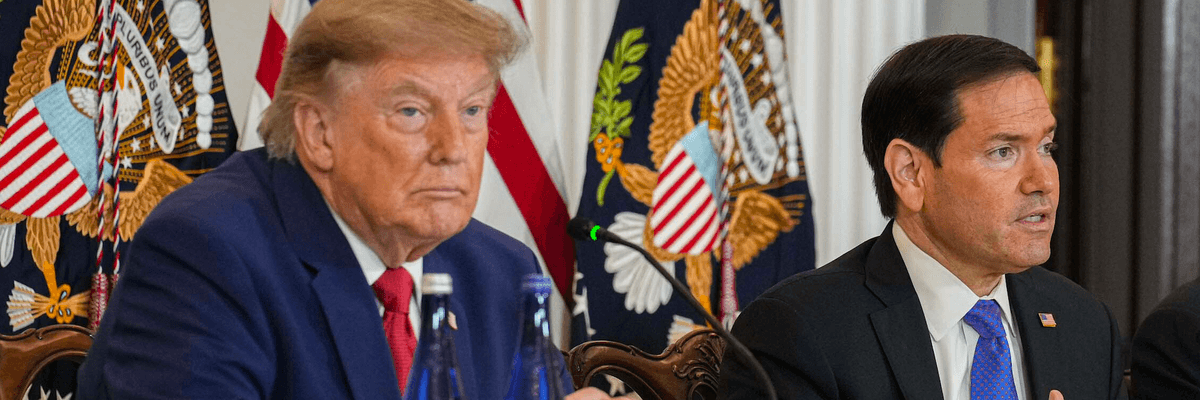
US President Donald Trump and Secretary of State Marco Rubio attend the president’s roundtable on mining at the US Department of State in Washington, DC on August 7, 2026.
(Photo by Freddie Everett/US Department of State)


Brett Wilkins
Aug 21, 2026
COMMON DREAMS
The Trump administration on Thursday intensified its campaign of economic pressure against Cuba, imposing sanctions on nine state-owned companies and three officials—a move critics condemned as an escalation of a decadeslong embargo amid a worsening humanitarian crisis.

“The Cuban regime has long sponsored a vast subversive network in the United States aimed at identifying, cultivating, and radicalizing subversives, largely operating under the pretext of educational or cultural exchange,” US Secretary of State Marco Rubio dubiously claimed. Citing an executive order issued by President Donald Trump in May, he announced new sanctions against entities including the Cuban Ministry of Construction and the mining group GEOMINSAL.

Also sanctioned were three leaders of the Cuban Institute of Friendship with the Peoples, an international solidarity group, including ICAP president Fernando González Llort, a member of the so-called Cuban Five who served 15 years behind bars in the US after being convicted—critics say unfairly—of espionage in 2001 for infiltrating exile groups plotting terrorist attacks targeting Cuba’s socialist government.

“The Trump administration will not stand by while a hostile foreign power seeks to exploit our freedoms—none of which are afforded to its people—by misleading and corrupting American citizens with lies, spy tradecraft, and other malfeasance as part of the regime’s raison d’être of exporting Marxism, racial resentment, and communist violence across the world,” Rubio said.


Rubio—who has falsely claimed that his parents fled communism in Cuba when they actually emigrated during an earlier US-backed dictatorship—added that the new sanctions “make clear that the Trump administration will not tolerate the Cuban regime’s efforts to fund its repression or continue its decadeslong campaign of subversive anti-American activities.”

Responding to the fresh sanctions, Cuban Foreign Minister Bruno Rodríguez accused Rubio of having a “failed obsession against Cuba” and seeking to “punish Cuban companies with the deliberate purpose of harming our economy and preventing the government of Cuba from guaranteeing basic services to the population, which are already in a critical situation as a result of the blockade.”

Cuban Ambassador to the United Nations Ernesto Soberón asked on social media: “What is [Rubio] afraid of? If he’s so convinced that the Cuban government is incompetent, why does he need to impose new sanctions that collectively punish the Cuban people and also attempt to prevent Cuba’s trade relations with third parties?”

The Center for Economic and Policy Research (CEPR), a Washington, DC-based think tank, accused the US administration of “escalating its lethal and illegal economic aggression against Cuba.”

CEPR research associate Pedro Labayen Herrera said in a statement that “these sanctions are the latest move in a more than 60-year US economic siege on Cuba, which has intensified since January’s naval blockade, an overt and illegal act of war.”

“By targeting the island’s mining, metals, construction, and trade sectors, the administration will further restrict the Cuban government’s ability to manage a deliberately designed crisis that UN experts recently warned could become a ‘silent Gaza,’” he added.


The United Nations General Assembly has overwhelmingly condemned the broader US economic blockade of Cuba 33 times.

The new US measures follow months of escalating aggression against Cuba by the Trump administration, including threats and reported preparations to attack, an oil blockade that critics say is causing the deaths of infants and sick people, and a Department of Justice (DOJ) indictment of former President Raúl Castro for his alleged role in the 1996 shoot-down of planes operated by a hostile US-based counterrevolutionary group following repeated warnings that they had violated Cuban airspace.

The oil blockade has hit especially hard given the January US invasion of Venezuela—which supplied between one-third and half of Cuba’s energy needs—and abduction of President Nicolás Maduro and his wife.

The Trump administration also reinstated Cuba on the US State Sponsors of Terrorism list, from which former President Joe Biden removed the country before leaving office in 2021. Cuba was initially added to the list during the Reagan administration amid a decadeslong campaign of US-backed Cuban exile terrorism, failed assassination attempts, economic warfare, and covert operations large and small in a futile effort to overthrow the government of longtime revolutionary leader Fidel Castro.

The fresh sanctions follow last month’s State Department report baselessly claiming that Cuba aims to “conquer” the United States and is backing “left-wing terrorism on American soil” while using dozens of US civil society groups, activists, journalists, and elected officials to further Havana’s supposedly nefarious goals.

“Rather than publishing unfounded, far-fetched claims of a Cuban-led campaign to subvert the United States as a pretext for military action against Havana, Washington should recognize that over half a century of strangulation has failed to bring about regime change,” Herrera said on Thursday. “Instead, US policy has crippled the country’s economy and healthcare system, depriving its people of a dignified life and contributing to significant levels of out-migration.”

“The Trump administration must lift all sanctions, respect Cuban sovereignty, and engage diplomatically,” he added, “or risk further immiserating the Cuban people and widening a crisis that will reverberate throughout the hemisphere.”