Wednesday, October 07, 2026


Former German foreign intelligence chief August Hanning arrested on suspicion of espionage, attempted treason
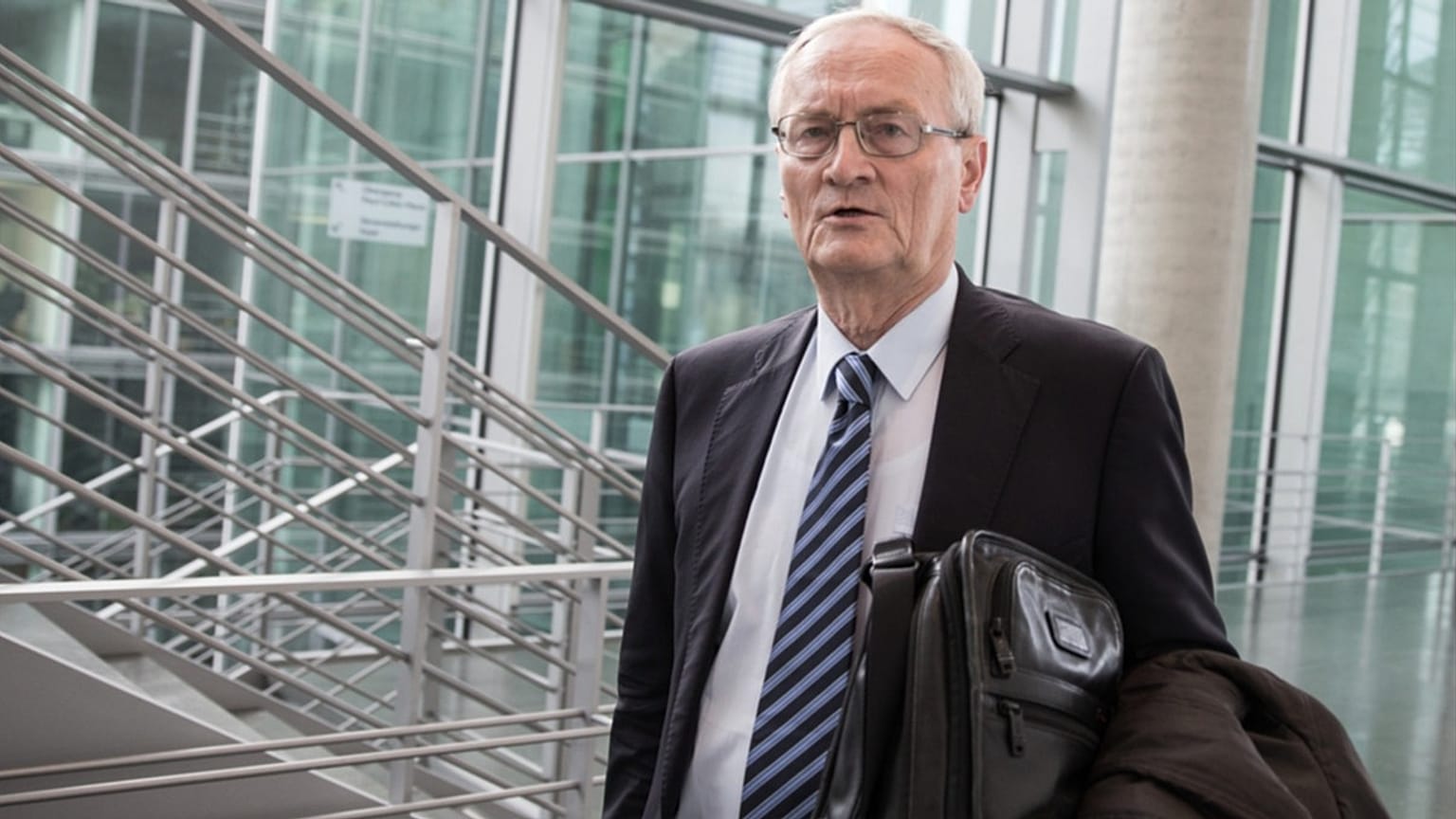
August Hanning, the former president of the Federal Intelligence Service (BND), arrives at the German parliament Bundestag in Berlin on Oct. 2, 2015
Copyright AP Photo

By Malek Fouda
Published on

August Hanning is accused of illegally receiving classified information during his time in office and after vacating his post, which were improperly used for his personal consultancy work.

A former head of Germany 's foreign intelligence service was arrested on Tuesday on suspicion that he had passed state secrets to a foreign intelligence service, the federal prosecutor's office said.

August Hanning, who led the Federal Intelligence Service, known by its German acronym BND, from 1998 to 2005, is “strongly suspected of treasonous espionage, spying out state secrets, attempted treason, and espionage,” the federal prosecutor’s office said in a statement.

Hanning, 80, was arrested in Bad Toelz-Wolfratshausen in southern Germany. A former aide, identified as Manfred D, was also arrested on Tuesday in Steinfurt in western Germany and has been charged with aiding and abetting attempted treason and treasonous espionage.
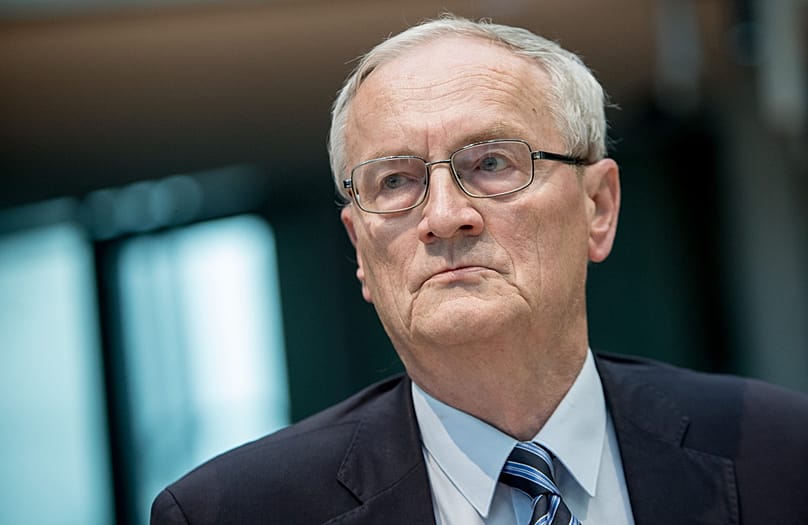
August Hanning, the former president of the Federal Intelligence Service (BND), appears as a witness at the German parliament Bundestag in Berlin on Oct. 1, 2015
August Hanning, the former president of the Federal Intelligence Service (BND), appears as a witness at the German parliament Bundestag in Berlin on Oct. 1, 2015 Michael Kappeler/(c) Copyright 2015, dpa (www.dpa.de). Alle Rechte vorbehalten

“In one instance, there is suspicion that Mr. Hanning used classified information to prepare an analysis for an employee of a foreign intelligence service,” Ines Peterson, a spokesperson for the federal prosecutor’s office, told German media outlets.

“In another instance, he is alleged to have passed on information following an extensive exchange — also with an employee of another intelligence service.”

Neither Peterson nor the earlier statement by the prosecutor's office revealed who exactly the two men were suspected of spying for or which foreign intelligence services they provided with classified information. Premises belonging to both men were searched late on Tuesday.

The prosecutor's office said Manfred D. worked as Hanning's chief of staff and later served as chief of staff for several subsequent BND presidents from 2012 until 2026. “In his role, he had access to confidential information,” the prosecutor's office said.
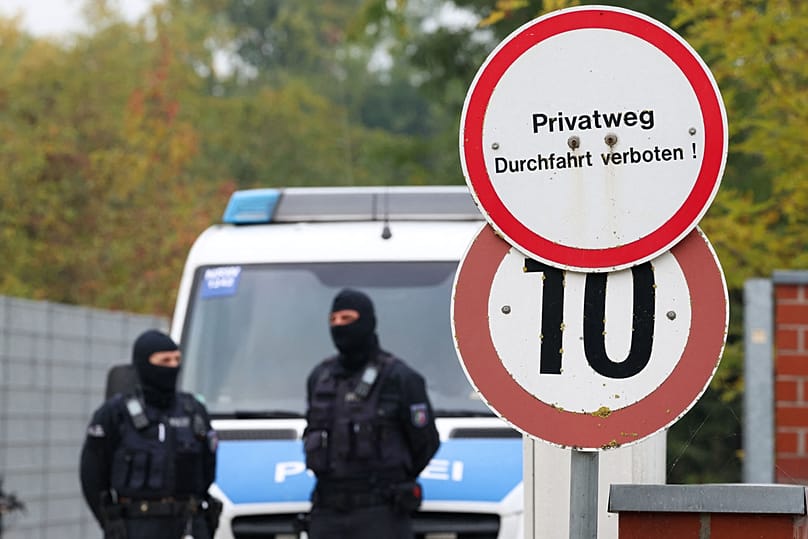
Police officers stand at the entrance of former intelligence chief August Hanning's home, who was arrested on suspicion of espionage, in Nordwalde, Tuesday, Oct. 6, 2026
Police officers stand at the entrance of former intelligence chief August Hanning's home, who was arrested on suspicion of espionage, in Nordwalde, Tuesday, Oct. 6, 2026 Christoph Reichwein/(c) Copyright 2026, dpa (www.dpa.de). Alle Rechte vorbehalten

Both suspects are believed to have agreed in 2010 to have Manfred D. continuously transmit valuable intelligence from the BND to Hanning in exchange for payment, the statement said.

“The current findings suggest that, over the years, Manfred D. provided Hanning with approximately 2,000 documents, many of which contained classified information to be used exclusively by the federal intelligence service for internal purposes, particularly for executive intelligence briefings,” the statement said.

Hanning used the information in private consulting work and Manfred D., who in line with German privacy rules cannot be identified by his full name, provided Hanning with classified information until June 2022, Peterson said.

Hanning came under scrutiny in a separate investigation into the abduction of Hamburg businesswoman Christina Block’s children from her ex-husband in Denmark in January 2024 in a lengthy custody battle. The investigation into that case led to Tuesday's arrests.
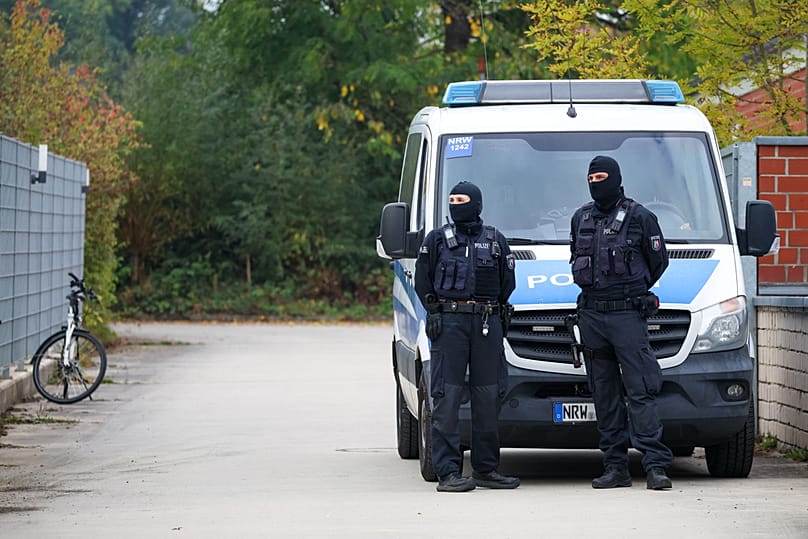
Police officers stand at the entrance of former intelligence chief August Hanning's home, who was arrested on suspicion of espionage, in Nordwalde, Tuesday, Oct. 6, 2026
Police officers stand at the entrance of former intelligence chief August Hanning's home, who was arrested on suspicion of espionage, in Nordwalde, Tuesday, Oct. 6, 2026 Christoph Reichwein/(c) Copyright 2026, dpa (www.dpa.de). Alle Rechte vorbehalten

The current proceedings stem from evidence found during a search of Hanning’s residence in connection with that case, the federal prosecutor’s office stated.

Hanning and a retired official from the Hamburg State Criminal Police Office are suspected of having accepted a contract from the businesswoman in 2022 to abduct her children while serving as executives of a security firm, the public prosecutor’s office announced in the fall of 2025, according to German news agency dpa.

The Blocks are a prominent Hamburg family best known for their popular national steakhouse chain ‘Block House’. The custody trial has received a lot of attention in the country, with German tabloids offering heavy coverage from the court.
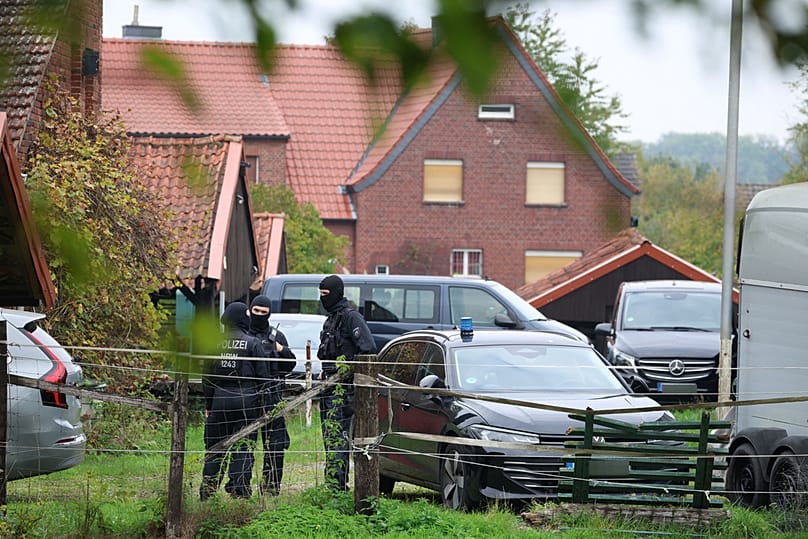
Police officers stand at the entrance of former intelligence chief August Hanning's home, who was arrested on suspicion of espionage, in Nordwalde, Tuesday, Oct. 6, 2026
Police officers stand at the entrance of former intelligence chief August Hanning's home, who was arrested on suspicion of espionage, in Nordwalde, Tuesday, Oct. 6, 2026 Christoph Reichwein/(c) Copyright 2026, dpa (www.dpa.de). Alle Rechte vorbehalten

German opposition lawmaker Konstantin von Notz expressed shock about the allegations against Hanning and called for a quick investigation.

“This is a hard-hitting and deeply troubling story,” said von Notz, a member of the Greens party and also the German parliament committee overseeing the intelligence services.

“We expect a swift and thorough investigation into the egregious allegations levelled against former BND chief Hanning,” he said.

Van Notz also called on the German state to bar former top executives and those with top level security clearances from engaging in private consultancy work after vacating office, a matter he classified of national security interest.
500 arrested as French police clashes with protesters on third day of national action by high school students


By Gregoire Lory & Estelle Nilsson-Julien & Anna Kirchheim with AFP
Published

Eyewitnesses say police deployed tear gas to quell unrest and disperse crowds in major cities including the capital, Paris, Marseille and Lyon. Officials figures reflected a nationwide participation exceeding a quarter million students in the protests that have rocked Macron's government.

Police fired tear gas to control crowds in Paris and elsewhere in France on Tuesday as more than a quarter of a million people rallied nationwide to support high school students demanding more education funding, according to government figures.

The protests increased pressure on the administration of outgoing President Emmanuel Macron. As pupils blockaded high schools, large crowds waving flags and placards gathered in Marseille, Strasbourg and other cities.

The demonstrations showed how protests that began at a high school in the Paris region in mid-September have grown into a nationwide movement — the latest of many that have marked Macron’s nearly decade-long tenure.

Official government figures put the number of demonstrators at over a quarter of a million nationwide on this third day of protest and arrests at more than 500.

In Paris 56.000 took to the streets and small groups clashed with riot police at the end of a largely peaceful march.

Students have drawn attention to rundown classrooms that lack basics such as desks and chairs, become sweltering in summer without air conditioning and, in some cases, are infested with rats.

Other common complaints include staff shortages and exhausting workloads. French high school students’ compulsory classroom hours are among the highest in Europe.

Classes suspended in 891 schools

Nearly 500 people were detained Tuesday, the interior ministry said. Classes were suspended “either completely or partially” in roughly 891 out of the 3,700 schools across the country.

The widespread use of arrests, tear gas and riot-control weapons against teenagers is fuelling defiance and angering some parents and teachers. Some student groups called for new protests on Thursday.

More than two weeks of class boycotts and school blockades, and policing that has led to more than 6,500 arrests, mostly of minors, have become a flashpoint in the early days of the presidential election campaign.

These protests are taking place against a backdrop of tension. The Minister for Education, Édouard Geffray, has stated that since the start of the protests, 85 members of teaching staff have been injured, as have 215 pupils and 715 members of the police force.

Questioned in parliament on Tuesday about the protest movement, Prime Minister Sebastien Lecornu denounced “ultra violence” threatening schools.

Responding to criticism of police tactics, he pledged that any “accidents” would be investigated and described allegations that the police are racist as a “lie".

Lessons were suspended “either completely or partially” in 891 schools out of the 3,700 across the country.


Belgian physicist wins Nobel for turning Antarctic ice into a telescope

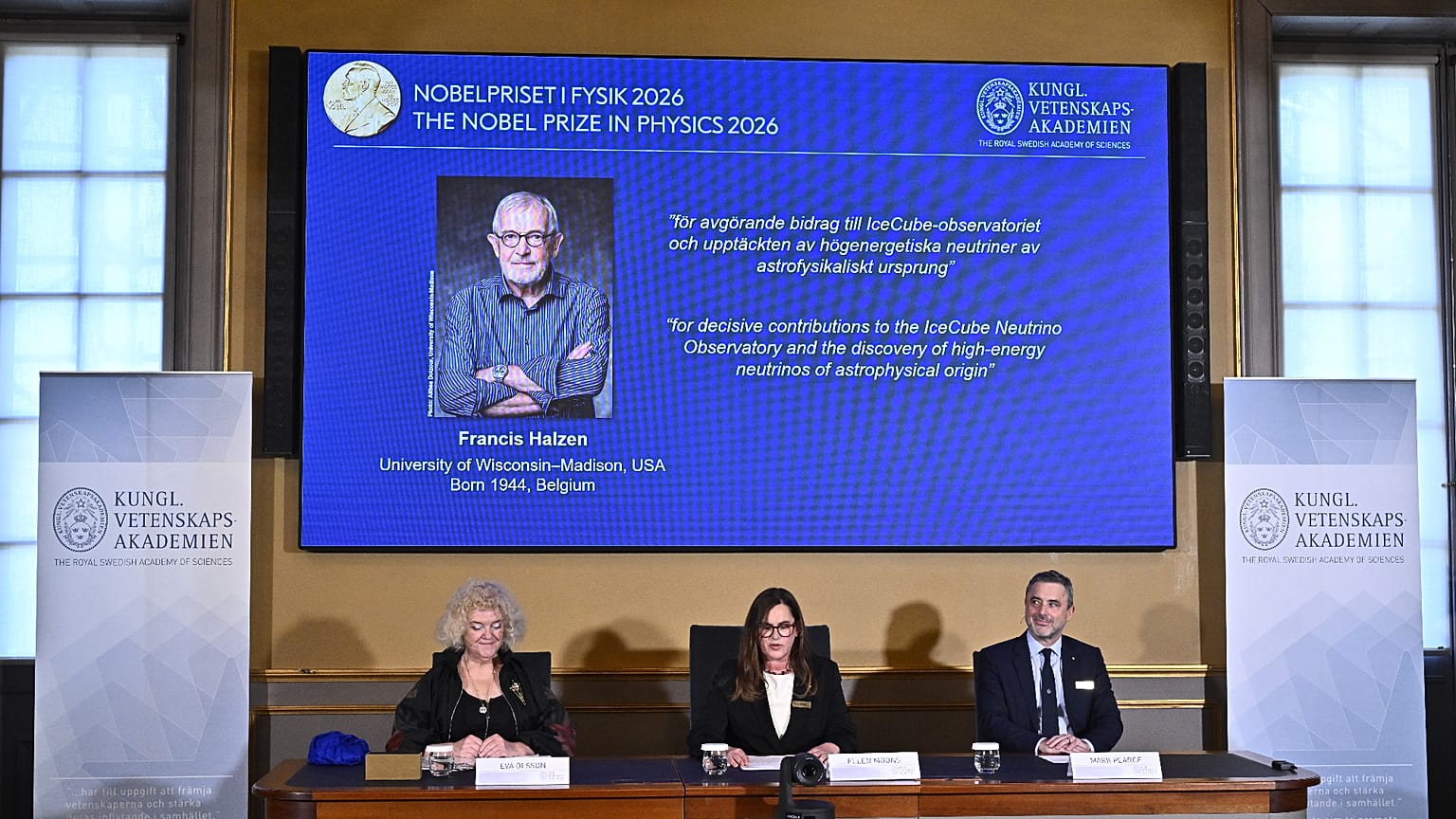
A portrait of Francis Halzen is shown on the screen as the panel announce the recipient of the 2026 Nobel Prize in Physics at the Royal Swedish Academy of Sciences, Stockholm.
Copyright AP Photo

By Una Hajdari & Jonathan Benton with AFP
Published on

Belgian Francis Halzen, 82, turned a cubic kilometre of Antarctic ice into the world's largest neutrino detector. On Tuesday, his hunt for "ghostly messengers" from the distant universe won him the 2026 Nobel Prize in Physics.

Buried deep in the ice at the South Pole sits a detector the size of a cubic kilometre, built to catch some of the most elusive particles in the universe. On Tuesday, the man who dreamt it up won the Nobel Prize in Physics.

Belgian physicist Francis Halzen won the 2026 Nobel Prize in Physics on Tuesday for pioneering work that uses Antarctic ice to capture neutrinos from the far reaches of the cosmos.

"This year's prize is about ghostly messengers from space," Ellen Moons, secretary general of the Royal Swedish Academy of Sciences, told a news conference in Stockholm.

The jury honoured Halzen "for decisive contributions to the IceCube Neutrino Observatory and the discovery of high-energy neutrinos of astrophysical origin".

The academy said his work had been fundamental to the observatory, which it described as "a cubic kilometre of ice that is equipped with light sensors," and that it had "paved the way for a new kind of astronomy".

The detector lets researchers capture neutrinos, rare subatomic particles, "from extremely energy-rich processes in the distant universe".

Halzen, 82, was born in Tienen, Belgium, and is a US citizen. He is a professor at the University of Wisconsin–Madison, where he directs the Institute for Elementary Particle Physics.

Speaking to the news conference by phone from Italy shortly after the announcement, he said, "it was a great surprise, and I obviously didn't expect it."

"But it's a great pleasure to hear about this prize," he added.

A giant eye in the ice

High-energy neutrinos form in the same violent cosmic environments as other particles. Unlike the others, though, they travel through space in a straight line and arrive intact.

"Neutrinos reach us without changing direction or losing energy. This means they can provide information that is not available in any other way," the academy said in a statement.

The catch is that they are fiendishly hard to spot. "Cosmic neutrinos with extremely high energies are very rare, so an enormous volume of ice is needed to observe an adequate number of collisions," the jury said.

Halzen first floated the idea of the observatory in 1988, and it quickly won over other researchers. Preliminary tests followed a few years later, but the detector was not completed until 2011.

He has served as principal investigator of IceCube, located at the Amundsen-Scott South Pole Station in Antarctica and the world's largest neutrino detector.

"For me, the main pleasure of it, besides winning the Nobel Prize, is that I hope this reflects on the really courageous people who joined me in the beginning of this project," Halzen said.

From Leuven to Antarctica

Halzen earned a master's degree in physics from KU Leuven in 1966 and a doctorate in 1969.

Since the 1970s, he has been a leading figure in cosmic ray and astroparticle physics, publishing research on cosmic ray anomalies and quark matter.

He has also sat on advisory committees including those of the Sudbury Neutrino Observatory in Canada and Germany's Max Planck Institutes.

Halzen's award is the second Nobel of the season. On Monday, the medicine prize went to US psychiatrist and neurologist Karl Deisseroth and German scientists Peter Hegemann and Georg Nagel for their pioneering work in optogenetics, which uses light to control nerve signals.

The chemistry prize follows on Wednesday, with the literature laureate due on Thursday. The most closely watched award, the peace prize, will be announced on Friday.

US President Donald Trump lobbied hard for it last year, and Venezuelan opposition leader María Corina Machado, who won it, later gave him her Nobel medal. The committee is aware he will be watching closely again.

The economics prize closes the Nobel season on Monday 12 October.

Each Nobel comes with a diploma, a gold medal and 12 million Swedish kronor (€1.1mn), shared if a prize has more than one winner.

The laureates will receive their awards at a formal ceremony on 10 December, the anniversary of the death in 1896 of Alfred Nobel, who created the prizes in his will.

REVANCHISM

Lithuania takes further step towards lifting nuclear weapons ban

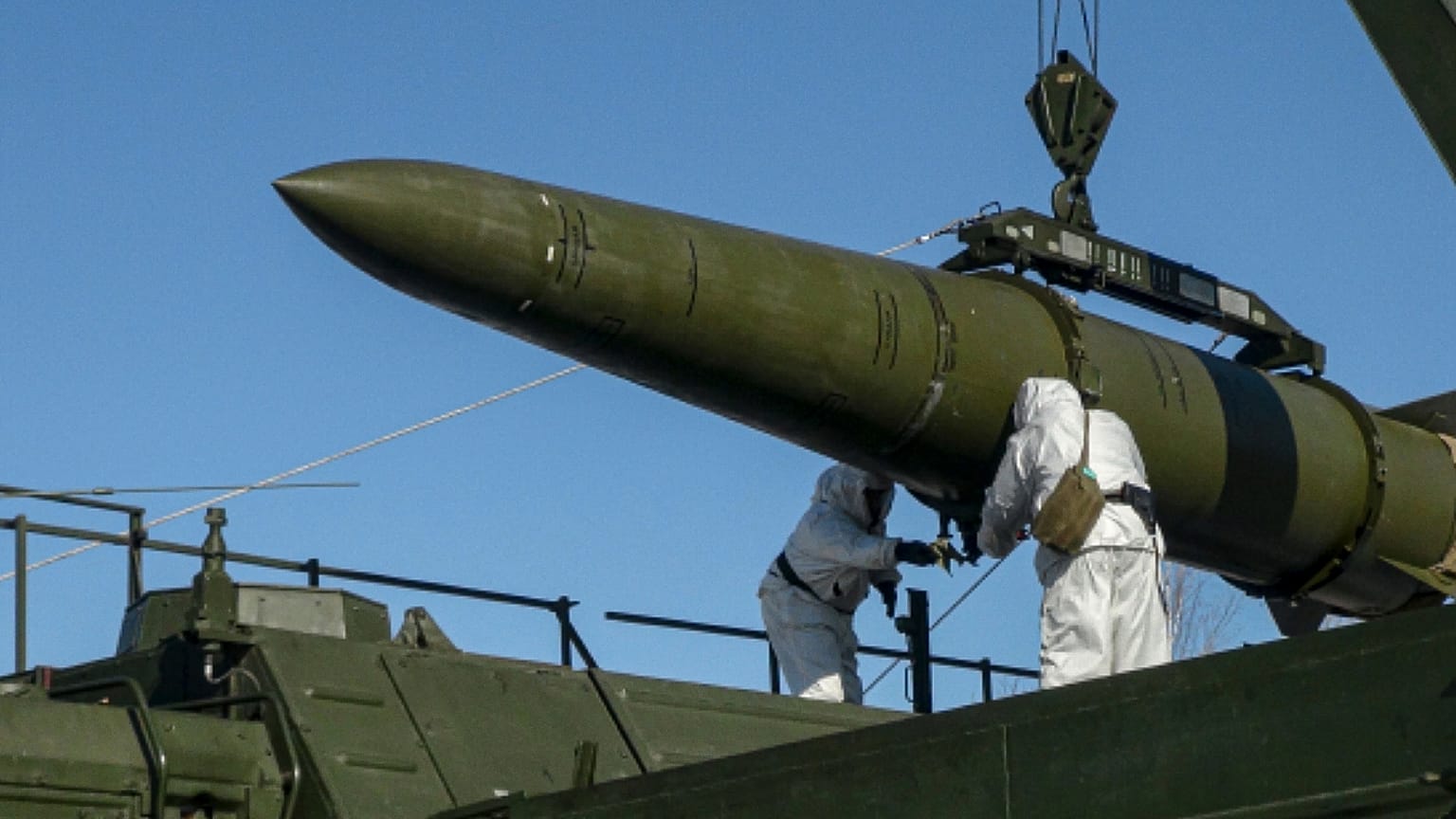
Russian troops load an Iskander missile onto a mobile launcher during drills at an undisclosed location in Russia. Feb. 2, 2024.
Copyright Russian Defense Ministry Press Service via AP


By Giedre Peseckyte
Published on


Kremlin spokesperson Dmitry Peskov said on Tuesday that Lithuania’s move, alongside broader plans to expand US and NATO military infrastructure in the region, risked further escalating tensions.

Lithuania has taken a step towards removing a constitutional ban on nuclear weapons from its territory, bringing the Baltic state closer to the legal position of its neighbours as European allies debate how to strengthen NATO’s deterrence in the face of Russia.

The Lithuanian parliament, the Seimas, voted 106-18, with six abstentions, on Tuesday to advance a constitutional amendment removing a provision that bars weapons of mass destruction and foreign military bases from Lithuanian territory.

The change still requires a second vote after a constitutionally mandated three-month waiting period. At least 94 of the Seimas’ 141 members must back it on both occasions. The final vote is expected on January 12.

“This constitutional amendment would enable Lithuania’s armed forces to participate fully in the planning and exercises of all of NATO’s deterrence measures,” said Viktorija Čmilytė-Nielsen, leader of the Liberal Movement parliamentary group.

Currently, Article 137 of the Lithuanian Constitution stipulates that weapons of mass destruction and military bases of foreign states may not be located in Lithuania, which borders Belarus and Russia’s Kaliningrad exclave. This means that under current laws, allied aircraft or ships carrying nuclear weapons could not enter Lithuanian territory for deterrence purposes.

Added urgency in Lithuania's case

Supporters of the amendment argue that the constitutional provision has become a legal obstacle to Lithuania’s full participation in NATO’s nuclear deterrence arrangements and leaves the country at a disadvantage compared with other NATO allies.

“Our neighbouring countries, such as Latvia, Estonia and Poland, have no such restrictions either,” Remigijus Motuzas, chairman of the Seimas Foreign Affairs Committee, said during a parliamentary session in September. “We cannot be less protected than other NATO countries. We must send a signal that Lithuania is a full part of NATO’s nuclear deterrence.”

NATO describes nuclear deterrence as part of its collective defence, alongside conventional and missile-defence capabilities. The Alliance also says its nuclear policy remains consistent with its commitments to arms control, disarmament and non-proliferation.

For Lithuania, the issue has taken on added urgency. “NATO deterrence, including nuclear deterrence, is part of collective defence,” Motuzas said, adding that Russia has rapidly modernised its nuclear arsenal in recent years and deployed nuclear weapons close to Lithuania — in Kaliningrad and Belarus.

Kremlin spokesperson Dmitry Peskov said on Tuesday that Lithuania’s move, alongside broader plans to expand US and NATO military infrastructure in the region, risked further escalating tensions, Reuters reported.

The warnings come as Russia has stepped up its nuclear rhetoric towards NATO. Moscow recently threatened nuclear retaliation in the event of what it described as attempts to isolate its Kaliningrad exclave, which borders Lithuania and Poland.

Finland has already made the move

Lithuania is not acting in isolation.

Finland, which joined NATO in 2023 after decades of military non-alignment, removed its own statutory prohibition on nuclear weapons earlier this year, citing the need to ensure that Finnish law did not restrict the country’s ability to fulfil its obligations as a NATO ally.

In June, the Finnish parliament approved amendments to the Nuclear Energy Act repealing the country’s ban on nuclear explosives. The legislation entered into force on July 1.

“This historic reform strengthens the security of Finland and of NATO as a whole,” Defence Minister Antti Häkkänen said on X.

Helsinki has stressed, however, that the change does not mean Finland intends to acquire or host nuclear weapons, and that NATO has no plans to station them there.

Finland has since joined a French-led initiative aimed at strengthening European security through closer cooperation on nuclear deterrence. French President Emmanuel Macron has proposed what Paris calls “forward deterrence” — closer cooperation with European allies around France’s independent nuclear capabilities.

The United Kingdom, Germany, Poland, Sweden, the Netherlands, Belgium, Greece, Denmark, and Norway have already signed up to France's initiative.


Russia denies plague death but quarantines hundreds without explanation

ARCHIVE: quarantine during a Marburg fever outbreak in Kenya, 8 October 2014.
Copyright Ben Curtis/Copyright 2024 The AP. All rights reserved.

By Knarik Papoyan & Euronews Russian
Published on

Rospotrebnadzor said Darya Shipilova, 28, died of "pneumonia of unknown aetiology" with no links to her work at the Irkutsk Anti-Plague Institute, but imposed quarantine on her contacts, confined 60 colleagues inside the facility and restricted access to hospitals including a maternity ward.

Russian authorities have insisted a lab researcher who died in Siberia last week did not have the plague while quarantining nearly 200 of her contacts, confining more than 60 colleagues inside their institute and restricting access to multiple hospitals, all without explanation.

Darya Shipilova, 28, a researcher at the Irkutsk Anti-Plague Research Institute, was admitted to Shelekhov District Hospital in late September and died last Friday night.

Russia's national health watchdog Rospotrebnadzor said biological samples from her body found no microorganisms linked to her professional work and that she died from "pneumonia of unknown aetiology."

The agency said its special commissions had found no accidents involving pathogenic microorganisms at the institute. Kremlin spokesman Dmitry Peskov told reporters to rely solely on Rospotrebnadzor's statements.

Between 189 and 197 of Shipilova's contacts were placed under observation and quarantine, according to figures cited by independent and regional media.

Initial tests among those contacts returned negative. More than 60 staff members of the anti-plague institute were effectively confined inside the facility for several days.

Quarantine restrictions were also imposed on hospitals in Irkutsk, including a maternity ward, according to reporting by multiple regional and international outlets.

Patients at one facility said doctors cited plague as the reason. Relatives of a woman in labour were refused entry to the ward despite having paid for partner-assisted birth.

The head of neighbouring Buryatia, Alexei Tsydenov, initially said after Shipilova's death that she had died of plague, then amended this to "possibly plague".

Irkutsk regional authorities posted a message on Friday asking residents not to travel to the satellite town of Shelekhov because of plague, then deleted it.

Governor Igor Kobzev described the cause of death as "pneumonia of unknown aetiology" on Monday.

What are international authorities saying?

The World Health Organization said it assessed the public health risk from the incident as low to moderate for Irkutsk region, low for Russia as a whole and very low for the WHO European region.

It said Russian authorities had identified Shipilova's contacts and were monitoring them, and that they had detected no dangerous infectious disease agents among those contacts.

The European Centre for Disease Prevention and Control told Euronews it was "closely following the situation" and was in contact with the WHO.

"We are aware of a case of pneumonia of unknown origin in eastern Russia that is suspected to be plague. This suspicion has not yet been confirmed," an ECDC representative said.

US authorities are also monitoring developments, while Kazakhstan and Kyrgyzstan have strengthened sanitary controls at their borders with Russia.

Uzbekistan has also strengthened its public-health preparedness after reports of a suspected case of a particularly dangerous infectious disease in Russia’s Irkutsk region, while stressing that the diagnosis has not yet been confirmed.

Online theories swirl

Two unofficial theories have circulated in Russian media. The first, reported by Telegram channels SHOT and Baza, holds that Shipilova accidentally broke a test tube containing the plague pathogen in the laboratory.

Several specialists consider this unlikely, noting that work with high-risk pathogens is conducted inside sealed safety cabinets with protective suits and strict decontamination protocols.

The second theory is that the infection was acquired during field research in a region with natural plague reservoirs. The head of Buryatia publicly denied that Shipilova had visited the region.

The official diagnosis has not been confirmed or ruled out by published PCR test results.

Plague is caused by the bacterium Yersinia pestis. Its most common form, bubonic plague, affects the lymphatic system. Pneumonic plague, which can spread between people via airborne droplets, is considered the most dangerous.

Russia's most recent confirmed human cases were recorded in the Altai region in 2014, 2015 and 2016, all involving people who handled marmots.

Human plague cases in Russia remain rare despite natural reservoirs existing in several regions.


EU countries to discuss suspected plague outbreak in Russia

The case centres on a lab worker in Siberia, Russia.
Copyright Alexander Zemlianichenko/Copyright 2021 The AP. All rights reserved.


By Jorge Liboreiro
Published on

European health authorities are closely following the suspected plague outbreak in Siberia, Russia. The European Commission and member states are set to discuss the matter on Wednesday morning.

Representatives from the European Commission and member states plan to discuss the suspected outbreak of pneumonic plague in Siberia, Russia, as national authorities scramble to get a clear picture of the situation.

A meeting of the Health Security Committee, which evaluates serious cross-border health threats, will take place on Wednesday morning in Brussels. The meeting was already scheduled, but the item has been added to the running order.

"I can confirm the incident in Russia will be on the agenda of the Health Security Committee," a Commission spokesperson told Euronews.

The case revolves around a female lab worker at the Irkutsk Research Anti-Plague Institute, in south-eastern Siberia, who died on 2 October in uncertain circumstances. Her death was attributed to a "pneumonia of unknown aetiology".

Russian authorities say they have found no evidence that her illness was caused by any of the pathogens she worked with and insist the situation is under control.

The hospital where the lab worker was treated was placed under quarantine. About 200 people who had been in touch with her went into strict medical observation.

Separately, Kazakhstan, Kyrgyzstan and Uzbekistan introduced precautionary measures at their borders to prevent the possible spread of infectious diseases.

The World Health Organization (WHO) said on Tuesday that none of those people has shown symptoms so far and early testing has been negative, although it noted it was "unclear" which pathogens were tested.

The WHO noted the risk for the European region was "very low".

In a statement, the European Centre for Disease Prevention and Control (ECDC) said the suspicion of a plague outbreak was "not yet confirmed".

"There is little travel between Irkutsk and the EU, particularly at present due to Russia's war against Ukraine," the agency said.

"Based on the limited information currently available, there are no reports of secondary cases or sustained human-to-human transmission."

Brussels and Washington are closely monitoring the evolving situation and have urged Russia to provide accurate and transparent information.

Pneumonic plague occurs when plague, an infectious disease caused by bacteria, infects the lungs. It is the most serious form of the disease and can be spread from person to person. If left untreated, it has a case-fatality ratio of 30% to 100%.


Pneumonic plague suspected in Russia: What we know and what is the risk to Europe?


By Marta Iraola Iribarren
Published on

The death of a staff member at an anti-plague institute in Russia following a laboratory accident has put the spotlight on plague and how it spreads.

A staff member at the anti-plague institute in Irkutsk, Russia, died after a test tube broke in the laboratory, regional media reported, citing unnamed sources close to the region’s security services.

Russian authorities said they found no evidence that her illness was caused by any of the pathogens she worked with. But the case has raised alarm in Russia after unconfirmed media reports suggested she might have died of pneumonic plague — a less common but severe form of plague that can spread from person to person.

Russian media reported that around 200 people, who had been in contact with the deceased worker, were under strict medical observation and that several hospitals in the region were closed and placed under quarantine.

“As ... the contagion was in a lab (and has presumably well disinfected) and people were rapidly quarantined, it is highly unlikely that it will spread further- and thus, whilst it is contagious, it is unlikely to have the opportunity to spread,” Alice Hughes, professor of conservation science at the University of Melbourne, said in comments to the Science Media Centre.

Yet, public health authorities are following closely any developments.

The European Centre for Disease Prevention and Control (ECDC) told Euronews that it is “closely monitoring the situation” and is in contact with the World Health Organization.

“We are aware of the case of pneumonia of unknown origin in eastern Russia that is suspected to be the plague. That suspicion is not yet confirmed,” a spokesperson said in a written statement.

The spokesperson added that based on the limited information currently available, there are no reports of secondary cases or sustained human-to-human transmission, and noted that there is “little travel” between Irkutsk and the European Union and European Economic Area countries, “particularly at present due to Russia’s war against Ukraine”.

Plague has been absent from Europe for more than 50 years; however, human cases are reported in Africa, particularly in the Democratic Republic of Congo and Madagascar.

What do experts say about the risk?

While the information surrounding the suspected case in Russia is very limited, experts noted that sporadic pneumonic cases are not rare.

“Plague is not a historical disease,” said Zania Stamataki, associate professor of viral immunology at the University of Birmingham in comments to the Science Media Centre. “It remains endemic in rodent populations across Africa, Asia and the Americas, and human cases occur every year, including outbreaks of the pneumonic form.”

According to Brendan Wren, professor of microbial pathogenesis at the London School of Hygiene & Tropical Medicine, “there shouldn’t be too much concern as the transmission of Yersinia pestis between humans is generally poor”.

What is pneumonic plague?

Pneumonic plague occurs when plague, an infectious disease caused by bacteria, infects the lungs.

Pneumonic plague is the most serious form of the disease and is the only form of plague that can be spread from person to person. If left untreated, it has a case-fatality ratio of 30% to 100%.

According to the World Health Organization (WHO), it is especially contagious and can trigger severe epidemics through human-to-human transmission via respiratory particles. However, recovery rates are high if the disease is detected and treated in time.

The incubation period can be as short as 24 hours and any infected person may pass it via respiratory particles to other humans.

What are the symptoms?

Pneumonic plague develops when bacteria spread to the lungs of a patient with untreated bubonic or septicemic plague, or when a person inhales infectious droplets coughed out by another person or animal infected.

Symptoms typically appear one to three days after infection. They include severe respiratory problems such as shortness of breath and coughing, often with bloody or watery mucus.

What is the treatment?

If untreated, pneumonic plague can be rapidly fatal. Early diagnosis and treatment are essential for survival and to reduce complications. Common antibiotics used against enterobacteria can effectively cure the disease if given early.

“Plague is a serious infectious disease. However, it can be diagnosed and treated with antibiotics readily available in Europe,” the ECDC spokesperson noted.

In cases of pneumonic plague, patients should be isolated and their contacts traced and treated, the agency says on its website.

Are there vaccines?

The WHO does not recommend vaccination except for high-risk groups, such as laboratory personnel who are constantly exposed to infection and health-care workers.

Because human plague is rare in most parts of the world, public health agencies see no need to vaccinate people other than those at particularly high risk of exposure.