It’s possible that I shall make an ass of myself. But in that case one can always get out of it with a little dialectic. I have, of course, so worded my proposition as to be right either way (K.Marx, Letter to F.Engels on the Indian Mutiny)
Saturday, December 27, 2025
NUKE NEWZ
WAIT, WHAT?!
US, Russia Allegedly Discuss Nuclear Plant Crypto Mining
Russian media claimed on Friday that the Trump administration held talks with Russia over joint management of Ukraine’s Zaporizhzhia Nuclear Power Plant, including the potential to use its power for crypto mining, Russian newspaper Kommersant has revealed. The discussions, which have not been independently confirmed, were allegedly held without Ukraine’s participation, and likewise proposed resuming electricity supply to Ukraine.
The Zaporizhzhia Nuclear Power Plant is currently not supplying electricity to Ukraine, with its six reactors in cold shutdown since 2022 when Russia invaded Ukraine. However, ZNNP still requires constant external power from Ukraine's grid to cool the reactors and spent fuel, a connection that is frequently lost due to the ongoing conflict.
The plant is under Russian control, and its operations are focused solely on nuclear safety and cooling, relying on emergency generators when the main power lines are cut, which happens often. With a total installed capacity of 5.7 gigawatts (5,700 megawatts), ZNNP is the largest nuclear power plant in Europe. Located in Enerhodar, ZNNP supplied ~20% of Ukraine's electricity.
Ukraine continues to attack Russia’s energy infrastructure with peace talks still ongoing. Ukraine hit a major Russian oil refinery with British Storm Shadow missiles on Thursday.
According to the Ukrainian General Staff, Ukraine hit the Novoshakhtinsk oil refinery in Rostov, one of southern Russia's biggest suppliers of oil products. Located 1,400km (870 miles) from the Ukrainian border, the giant refinery is responsible for supplying jet fuel and diesel to Russian troops fighting in Ukraine.
Last month, a Ukrainian drone strike on an oil-loading facility near Novorossiysk completely stopped exports, affecting 2% of global supply. Ukraine's deep-strike drone campaign targeting Russia's oil and gas production facilities has impacted half of Russia’s major oil and gas facilities and cost its bigger adversary ~10% of its refining capacity, according to industry experts.
"Ten percent, it's not an astonishing number," says Tatiana Mitrova of Columbia University. "But it is still something that starts to be felt with the Russian domestic fuel crisis, with reduced oil refined products exports, and general tension inside the Russian oil sector."
Artificial intelligence is emerging as a major new driver of global electricity demand, reinforcing the investment case for nuclear power and tightening the outlook for uranium markets heading into 2026.
A global investor survey commissioned by Uranium.io shows that the rapid expansion of AI systems and hyperscale data centres is already reshaping long-term expectations for nuclear generation and uranium procurement. Based on responses from more than 600 investors, the study finds that electricity demand linked to AI is increasingly viewed as structural rather than cyclical, at a time when uranium supply is already constrained.
More than 63% of respondents believe AI-related consumption will become a material factor in nuclear planning over the next decade, arguing that traditional demand models underestimate the power needs of large-scale computing. As a result, nuclear energy is gaining renewed attention as a reliable, carbon-free baseload option capable of supporting surging digital infrastructure.
Limited supply relief
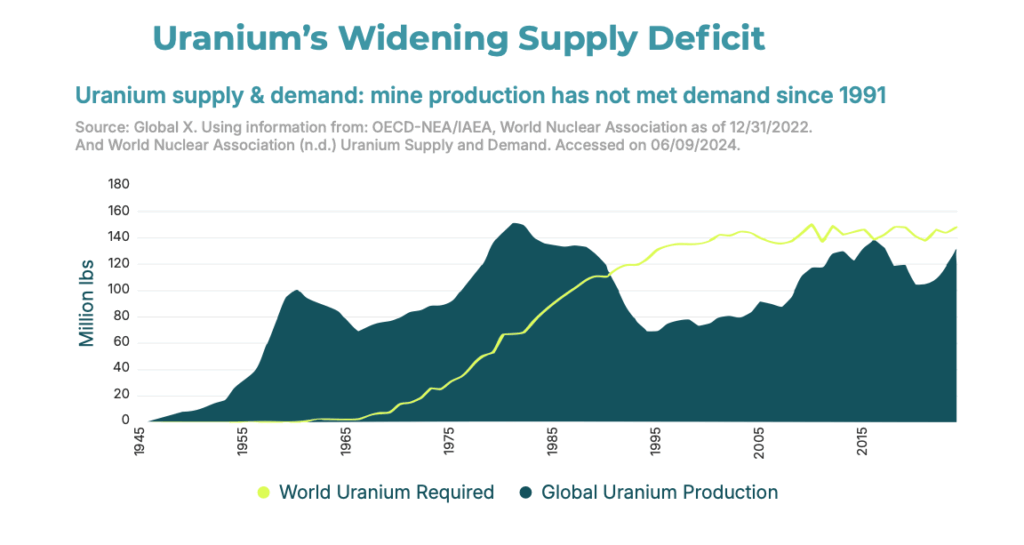
That demand signal is colliding with a market facing persistent supply challenges. A majority of surveyed investors expect mined uranium to meet less than 75% of future reactor requirements, citing years of underinvestment, long permitting timelines and declining secondary supplies. Against that backdrop, more than 85% anticipate higher prices into 2026, with many pointing to a $100–$120/lb range and some referencing upside scenarios as high as $135/lb if supply fails to respond.
Sprott Asset Management echoes that view in its latest uranium outlook, describing a market defined by “two speeds”: short-term volatility masking increasingly bullish long-term fundamentals. The firm expects a supply deficit to widen over the coming decade as global mine production continues to lag reactor demand, while utility contracting remains below replacement levels. In Sprott’s assessment, higher prices will be required to incentivize restarts and greenfield developments needed to close the gap.
Despite a choppy 2025, Sprott sees conditions aligning for a catch-up trade in 2026. Long-term uranium prices have begun to move higher, with utilities showing greater willingness to accept elevated contract levels, even as spot prices remain relatively contained. The firm argues that utilities can defer procurement only so long before replacement needs force them back into the market.
Incentives on the rise
Policy momentum is adding another layer of support. Investors surveyed by Uranium.io highlighted planned and proposed nuclear capacity additions across North America, Europe, the Middle East and Asia as key demand signals. Incentives in the US and Canada, Europe’s inclusion of nuclear within sustainable finance frameworks, and state-backed expansion programmes in countries such as China, South Korea and the UAE are reinforcing the role of nuclear in future energy systems.
Taken together, the rise of AI-driven power demand, tightening uranium supply and improving policy support are shifting how investors frame the commodity. Rather than a fuel tied narrowly to reactor build cycles, uranium is increasingly viewed through the lens of energy security and critical infrastructure. For many market participants, that combination points to a structurally stronger uranium market beyond 2026.
Texas Energy Firm Wants to Turn Naval Reactors Into Powerplants
Decommissioned reactors from subs and carriers could power datacenters, according to Bloomberg
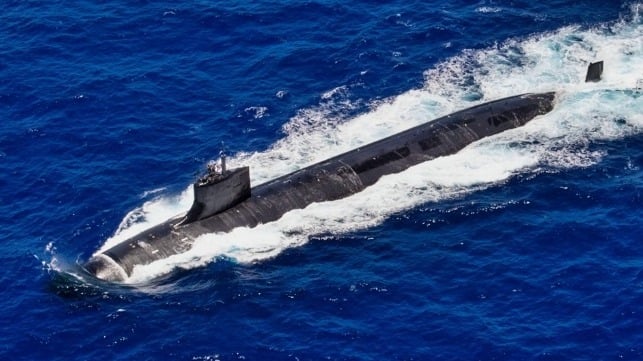
U.S. Navy subs have high power-to-weight ratios and long endurance thanks to nuclear propulsion (USN file image)
An American energy company has come up with a novel way to generate nuclear power for civilian uses without the high cost and long timeline of building a new nuclear plant. Texas-based HGP Intelligent Energy LLC wants to reuse a pair of retired naval reactors to generate power for a data center, according to Bloomberg, augmenting the grid with a local and long-lasting source of electricity.
According to HGP, a pair of submarine or aircraft carrier reactors could provide about 500 megawatts of power, which could be used to satisfy the ever-increasing demands of warehouse-sized computing centers. One complete plant would cost about $2 billion, a tiny fraction of the expense of building a new civilian nuclear powerplant.
Newbuild nuclear stations take years to permit and construct because of the perceived risks and the complexity of the task involved, and they require a large and hard-to-find workforce of talented welders and pipefitters. By contrast, HGP thinks that a naval reactor-based powerplant could be up and running by 2029, just four years away.
In operation, the equipment would be intimately familiar to veterans of the U.S. Navy's nuclear propulsion program, the men and women known as "Navy nukes," so the plant operator could hire qualified technicians from day one. Similarly, the supply chain for spare parts has been established for decades.
There is one challenge for scaling: security. American naval reactors run on weapons-grade, high-enriched uranium. If extracted from reactor fuel rods, the 93% uranium-235 fuel could be used to make nuclear weapons, and it is considered a proliferation risk. The reactor technology itself is among the defense establishment's most closely-guarded secrets.
The first plant project, according to a proposal filed with the Energy Department and seen by Bloomberg, would be built at Oak Ridge, Tennessee. The small city is home of Oak Ridge National Lab, the secure facility that helped develop the Navy's first nuclear propulsion reactors and train its first nuclear-qualified officers. ORNL has housed some of the nation's most important nuclear research since World War II, and it is a leading employer of ex-Navy nuclear personnel.
HGP has experience as a grid-scale project developer, having installed 20 sites with battery backup power storage and thermal-power generating capacity for grid resilience. It was among the first battery-backup developers in Texas, and now has nearly two dozen assets in development.
Texas Launches $350 Million Nuclear Energy Initiative
Texas Governor Greg Abbott has congratulated the Texas Legislature for passing House Bill 14, saying it will help revolutionize Texas’ energy sector and cement the state’s role in leading a nuclear power renaissance in the United States.
“Texas is the energy capital of the world, and this legislation will position Texas at the forefront of America’s nuclear renaissance,” said Governor Abbott. “By creating the Texas Advanced Nuclear Energy Office and investing $350 million–the largest national commitment--we will jumpstart next-generation nuclear development and deployment. This initiative will also strengthen Texas’ nuclear manufacturing capacity, rebuild a domestic fuel cycle supply chain, and train the future nuclear workforce. I look forward to signing it into law.”
The U.S. nuclear power sector is seeing renewed momentum as electricity demand rises, particularly from data centers, alongside policy support for carbon-free generation and growing interest in long-duration, firm power. Large technology companies are increasingly positioning themselves around nuclear energy through long-term power contracts, development partnerships, and early-stage investments, marking a shift from decades of limited new nuclear deployment.
Microsoft has signed a 20-year power purchase agreement with Constellation Energy tied to the company’s nuclear generation fleet, as Constellation evaluates the future of assets including the Three Mile Island site in Pennsylvania. Separately, Microsoft is backing nuclear fusion development through its partnership with Helion Energy. Alphabet has partnered with nuclear startup Kairos Power to support the development of small modular reactor technology, with the aim of sourcing power from future reactors expected to come online in the 2030s. Google has also invested in fusion developer TAE Technologies and early-stage fission company Elemental Power.
Meta Platforms has also signed a 20-year agreement with Constellation Energy for electricity from an existing nuclear reactor in Illinois and has issued a request for proposals seeking 1–4 gigawatts of new nuclear capacity in the United States. Meanwhile, TerraPower, founded and backed by Microsoft co-founder Bill Gates, is developing a sodium-cooled fast reactor, with a demonstration project underway in Wyoming. Oklo, backed by OpenAI chief executive Sam Altman, is developing small-scale nuclear reactors aimed at supplying power to data centers, with the company targeting initial deployment later this decade, subject to regulatory approval.
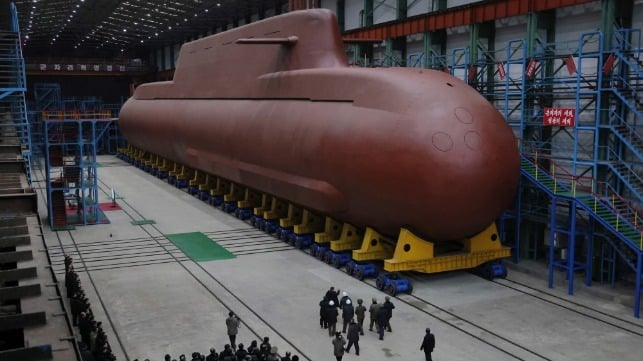
North Korean dictator Kim Jong Un has unveiled the completed hull of what his government claims to be its first nuclear-powered submarine.
To date, North Korea's submarine fleet has consisted of Soviet-era conventionally powered attack subs, which have comparatively limited capability in a modern context. North Korea also commissioned a conventionally-powered ballistic missile sub, the Yongung, in the 2010s and used it to test-fire a sub-launched ballistic missile in 2016. A second ballistic missile sub crafted out of a modified 1960s-era Romeo-class attack sub was spotted in 2019.
The new nuclear-powered, nuclear-armed ballistic missile sub has been under construction for some time, and its completed hull was first unveiled on Christmas Day. It is likely near to being fully outfitted, ex-submariner and analyst Moon Keun-Sik of Hanyang University told AP. Ballistic missile launch trials may still be some years off, given the challenges of bringing a first-in-class sub into operation and training a naval reactor crew.
North Korea is capable of producing its own nuclear fuel, nuclear weapons and ballistic missiles. Its access to naval reactor technology is less certain, as is the functionality of the vessel that Kim revealed on December 25. If it is a functional vessel, speculation has circulated about whether Russia could have supplied technical assistance for the North Korean reactor program - or even a complete reactor.
Some form of a military-to-military trade between Russia and the North is likely: Kim supplied 10,000 North Korean infantry troops to assist Russian military operations against Ukraine in 2024, and the force sustained heavy losses before being ultimately withdrawn. The North has also provided Russia with hundreds of thousands of rounds of howitzer ammunition, sustaining Russian artillery units for the war.
In unveiling the new sub, Kim also criticized South Korea's plans to build the same type of equipment. In a statement carried by state media, he called the newly-announced joint U.S.-South Korean nuclear attack sub development program an "aggressive act that seriously infringes on national safety and maritime sovereignty that must be countered," and said that North Korea would "further accelerate" its nuclear-navy program in response.
 Enriched uranium billet. (Stock image by RHJ)
No comments:
Post a Comment