Palestine Action hunger strike ends after Elbit loses UK contract
Palestine Action hunger strikers end their protest after Elbit loses a major UK defence contract, but campaigners say the fight is far from over.
Oliver Mizzi
London
15 January, 2026
The New Arab

P4P issued a statement late on Wednesday saying that hunger strikers Hamran Ahmed, Heba Muraisi and Lewie Chiaramello had decided to end their strike [Martin Pope/Getty Images]
Detained pro-Palestine Action hunger strikers have called off their strike after it was announced that Israeli arms company Elbit Systems had been denied a government contract.
Prisoners for Palestine (P4P), which represents the strikers, said in a statement late on Wednesday that hunger strikers Hamran Ahmed, Heba Muraisi and Lewie Chiaramello had decided to end their strike.
Speaking to The New Arab, Francesca Nadin, an activist and spokesperson for P4P, said the group was proud of the outcome but stressed that the struggle was far from over.
"This is just the beginning. To see everyone so motivated is amazing," Nadin said. "Even though the people who have just finished their hunger strike will have some time to recover, they’re also really motivated and want to continue doing as many things as possible."
Nadin said several issues remained unresolved, including the trials of the "Filton 24" and the judicial review into the proscription of Palestine Action.
She added that P4P would also support the campaign for the "Brize Norton Five", activists who broke into RAF Brize Norton and damaged military aircraft in an action that preceded Palestine Action’s proscription and led to Umer Khalid undertaking a six-day hunger strike.
P4P said the hunger strikers, alongside Teuta Hoxha, Jon Cink, Qesser Zuhrah and Amu Gib, all members of the "Filton 24" facing terrorism-related charges over the disruption of Elbit Systems’ Filton site in 2024, had begun refeeding.
Elbit Systems UK, a subsidiary of Elbit Systems, had been competing for a 10-year contract worth £2 billion from the Ministry of Defence to train British soldiers.
The bid was mired in controversy, with The Times reporting that former brigadier Philip Kimber, who had overseen the contract before leaving the army, met with Elbit Systems to help it win the deal, in breach of business appointment rules.
A senior civil servant preparing to assess the bid was also dined by Elbit, but not by Raytheon UK, which was also competing for the contract. Elbit also funded a tour of Jerusalem for two senior officers and the official overseeing the army's training programme.
P4P described the cancellation of Elbit's bid as "a resounding victory for the hunger strikers, who resisted with their incarcerated bodies to shed light on the role of Elbit Systems, Israel's largest weapons manufacturer, in the colonisation and occupation of Palestine".
Several other demands were met during the hunger strike, including Heba Muraisi's transfer from HMP New Hall to HMP Bronzefield, which is closer to her home.
Muraisi was the longest hunger striker among the "Filton 24", having refused food for 73 days, raising fears she could die during the protest. The length of her strike exceeded that of Bobby Sands, the Provisional Irish Republican Army member who led the 1981 hunger strike and died after 66 days.
Kamran Ahmed ended his strike after 66 days, while Lewie Chiaramello, who has type 1 diabetes and had been fasting every other day, ended his after 45 days.
Chiaramello said after ending his strike, "It is definitely a time for celebration. A time to rejoice and to embrace our joy as revolution and as liberation," adding that the strikers were protesting for "a free Palestine, for an emancipated world".
Striker Teuta Hoxha has since met with the head of the Joint Extremism Unit at her prison, while national heads of prison healthcare have also met with P4P following requests from the Ministry of Justice.
Withheld mail, including books on Gaza and feminism, has been handed over to prisoners, alongside an apology for a six-month delay in delivering a letter.
In addition, demands to release information covering five years of export licences involving Elbit Systems were met, with the Department for International Trade providing the material to an independent researcher.
"Our hunger strike will be remembered as a landmark moment of pure defiance; an embarrassment for the British state," P4P said.
"Banning a group and imprisoning our comrades has backfired on the British state, direct action is alive, and the people will drive Elbit out of Britain for Good," the group added.
The New Arab has contacted the Ministry of Justice for comment.

P4P issued a statement late on Wednesday saying that hunger strikers Hamran Ahmed, Heba Muraisi and Lewie Chiaramello had decided to end their strike [Martin Pope/Getty Images]
Detained pro-Palestine Action hunger strikers have called off their strike after it was announced that Israeli arms company Elbit Systems had been denied a government contract.
Prisoners for Palestine (P4P), which represents the strikers, said in a statement late on Wednesday that hunger strikers Hamran Ahmed, Heba Muraisi and Lewie Chiaramello had decided to end their strike.
Speaking to The New Arab, Francesca Nadin, an activist and spokesperson for P4P, said the group was proud of the outcome but stressed that the struggle was far from over.
"This is just the beginning. To see everyone so motivated is amazing," Nadin said. "Even though the people who have just finished their hunger strike will have some time to recover, they’re also really motivated and want to continue doing as many things as possible."
Nadin said several issues remained unresolved, including the trials of the "Filton 24" and the judicial review into the proscription of Palestine Action.
She added that P4P would also support the campaign for the "Brize Norton Five", activists who broke into RAF Brize Norton and damaged military aircraft in an action that preceded Palestine Action’s proscription and led to Umer Khalid undertaking a six-day hunger strike.
P4P said the hunger strikers, alongside Teuta Hoxha, Jon Cink, Qesser Zuhrah and Amu Gib, all members of the "Filton 24" facing terrorism-related charges over the disruption of Elbit Systems’ Filton site in 2024, had begun refeeding.
Elbit Systems UK, a subsidiary of Elbit Systems, had been competing for a 10-year contract worth £2 billion from the Ministry of Defence to train British soldiers.
The bid was mired in controversy, with The Times reporting that former brigadier Philip Kimber, who had overseen the contract before leaving the army, met with Elbit Systems to help it win the deal, in breach of business appointment rules.
A senior civil servant preparing to assess the bid was also dined by Elbit, but not by Raytheon UK, which was also competing for the contract. Elbit also funded a tour of Jerusalem for two senior officers and the official overseeing the army's training programme.
P4P described the cancellation of Elbit's bid as "a resounding victory for the hunger strikers, who resisted with their incarcerated bodies to shed light on the role of Elbit Systems, Israel's largest weapons manufacturer, in the colonisation and occupation of Palestine".
Several other demands were met during the hunger strike, including Heba Muraisi's transfer from HMP New Hall to HMP Bronzefield, which is closer to her home.
Muraisi was the longest hunger striker among the "Filton 24", having refused food for 73 days, raising fears she could die during the protest. The length of her strike exceeded that of Bobby Sands, the Provisional Irish Republican Army member who led the 1981 hunger strike and died after 66 days.
Kamran Ahmed ended his strike after 66 days, while Lewie Chiaramello, who has type 1 diabetes and had been fasting every other day, ended his after 45 days.
Chiaramello said after ending his strike, "It is definitely a time for celebration. A time to rejoice and to embrace our joy as revolution and as liberation," adding that the strikers were protesting for "a free Palestine, for an emancipated world".
Striker Teuta Hoxha has since met with the head of the Joint Extremism Unit at her prison, while national heads of prison healthcare have also met with P4P following requests from the Ministry of Justice.
Withheld mail, including books on Gaza and feminism, has been handed over to prisoners, alongside an apology for a six-month delay in delivering a letter.
In addition, demands to release information covering five years of export licences involving Elbit Systems were met, with the Department for International Trade providing the material to an independent researcher.
"Our hunger strike will be remembered as a landmark moment of pure defiance; an embarrassment for the British state," P4P said.
"Banning a group and imprisoning our comrades has backfired on the British state, direct action is alive, and the people will drive Elbit out of Britain for Good," the group added.
The New Arab has contacted the Ministry of Justice for comment.
3 pro-Palestinian protesters end hunger strike after UK decides not give contract to Elbit Systems UK
Kamran Ahmed, Heba Muraisi, Lewie Chiaramello end hunger strikes
Burak Bir |15.01.2026 - TRT/AA
LONDON
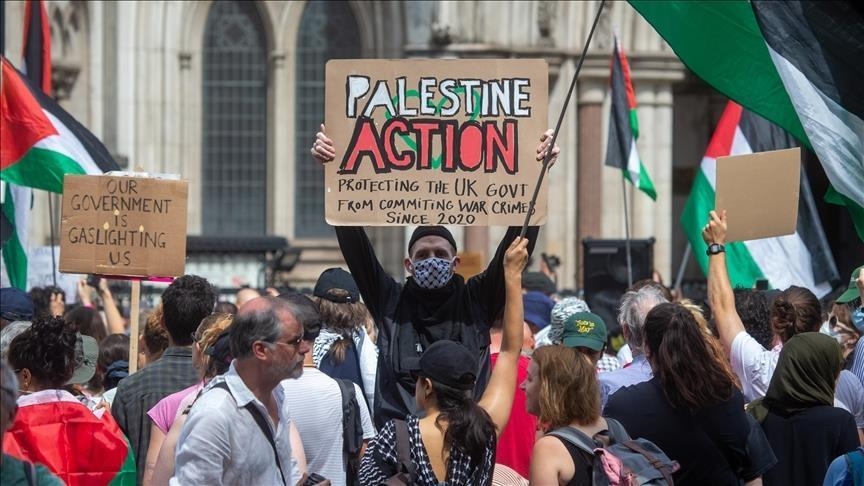
Three pro-Palestine prisoners, affiliated with the Palestine Action group, ended their hunger strike on Wednesday after the government opted against giving a contract to an Israeli arms company subsidiary, according to media reports.
Kamran Ahmed, Heba Muraisi and Lewie Chiaramello announced the decision to end the hunger strikes as Elbit Systems UK failed to win a £2 billion ($2.6 billion) government contract.
There has been growing fear for the welfare of the protesters as Muraisi, 31, would have been on day 73 of refusing food; Ahmed, 28, who would have been on day 66; and Chiaramello, 22, who has type 1 diabetes, would have been on day 46, The Guardian reported.
Prisoners for Palestine said Wednesday the decision not to grant the contract, under which it would have trained 60,000 British troops a year, fulfilled a key demand.
Umar Khalid, 22, who resumed his hunger strike Saturday after previously pausing it, is continuing to refuse food, according to The Guardian.
Last month, UN experts urged the UK to protect the lives and rights of eight pro-Palestinian detainees linked to the banned group, Palestine Action, who had been on a hunger strike.
They also raised concerns about the treatment of hunger strikers in detention, citing delayed medical care, excessive restraints during hospitalization, denial of family and legal contact and insufficient independent medical oversight.
Labour Party lawmaker John McDonnell said the hunger strikers have also secured meetings with prison officials about their health and conditions, following the news.
"I pay tribute to the dedication of the hunger strikers," he said on the US social media company X.
Palestine Action was banned in July under the Terrorism Act after members of the group entered a Royal Air Force base and spray painted two aircraft, causing £7 million ($9.44 million) in damage, according to police. Hundreds of pro-Palestine activists have since been arrested across the UK.
Kamran Ahmed, Heba Muraisi, Lewie Chiaramello end hunger strikes
Burak Bir |15.01.2026 - TRT/AA
LONDON
Three pro-Palestine prisoners, affiliated with the Palestine Action group, ended their hunger strike on Wednesday after the government opted against giving a contract to an Israeli arms company subsidiary, according to media reports.
Kamran Ahmed, Heba Muraisi and Lewie Chiaramello announced the decision to end the hunger strikes as Elbit Systems UK failed to win a £2 billion ($2.6 billion) government contract.
There has been growing fear for the welfare of the protesters as Muraisi, 31, would have been on day 73 of refusing food; Ahmed, 28, who would have been on day 66; and Chiaramello, 22, who has type 1 diabetes, would have been on day 46, The Guardian reported.
Prisoners for Palestine said Wednesday the decision not to grant the contract, under which it would have trained 60,000 British troops a year, fulfilled a key demand.
Umar Khalid, 22, who resumed his hunger strike Saturday after previously pausing it, is continuing to refuse food, according to The Guardian.
Last month, UN experts urged the UK to protect the lives and rights of eight pro-Palestinian detainees linked to the banned group, Palestine Action, who had been on a hunger strike.
They also raised concerns about the treatment of hunger strikers in detention, citing delayed medical care, excessive restraints during hospitalization, denial of family and legal contact and insufficient independent medical oversight.
Labour Party lawmaker John McDonnell said the hunger strikers have also secured meetings with prison officials about their health and conditions, following the news.
"I pay tribute to the dedication of the hunger strikers," he said on the US social media company X.
Palestine Action was banned in July under the Terrorism Act after members of the group entered a Royal Air Force base and spray painted two aircraft, causing £7 million ($9.44 million) in damage, according to police. Hundreds of pro-Palestine activists have since been arrested across the UK.
No comments:
Post a Comment