Donald Trump's latest visa ban hits African countries hard
DW
A decision by the US government to suspend visa procedures for numerous countries, including African ones, has come into effect. Experts say it is part of Donald Trump's strategy of portraying immigrants as a threat.

Trump's migration policy has affected numerous African countries, including those considered friendly to the US
Image: Olga Yastremska/Pond5 Images/IMAGO
The US is further tightening its immigration policy, following a decision by Donald Trump's administration to suspend the processing of immigration visas for applicants from 75 nations, a third of which are African.
Some of the affected African countries include Egypt, Ethiopia, Tanzania, Uganda, Somalia, Sudan, and South Sudan. In West Africa, Ghana, Cameroon, Cote d'Ivoire, Gambia, Liberia, Togo, Nigeria, Sierra Leone, and Senegal also face US visa restrictions.
The visa ban took effect on January 21, 2026, and applies to individuals seeking to live and work permanently in the US.
With this step, Washington claims to be putting an end to the alleged "abuse of the immigration system by people who want to enrich themselves at the expense of the US."
"President Trump has made it clear that immigrants must be financially independent and not be a financial burden on Americans," Phillip Assis, a spokesman for the State Department and director of the Africa Regional Media Hub in Johannesburg, told DW.
Are only wealthy immigrants welcome?
"The State Department is currently conducting a comprehensive review of all policies, regulations, and guidelines to ensure that immigrants from these high-risk countries do not claim social benefits in the United States and do not become dependent on government assistance," Assis said, adding that tourist visas are not affected.
The duration of the suspension is unclear. But according to Assis, nationals of the affected countries can continue to submit their visa applications.
However, during the suspension period, these nationals would not be granted immigration visas.
"Other visas, such as those for tourists, athletes and their families, and media representatives traveling to the United States for the FIFA World Cup, are not affected," he added.
The US will host the World Cup in 2026 with Mexico and Canada. In addition, Los Angeles is set to host the 2028 Olympic Games. The US is promoting the games as moments that can unify humanity.
The US is further tightening its immigration policy, following a decision by Donald Trump's administration to suspend the processing of immigration visas for applicants from 75 nations, a third of which are African.
Some of the affected African countries include Egypt, Ethiopia, Tanzania, Uganda, Somalia, Sudan, and South Sudan. In West Africa, Ghana, Cameroon, Cote d'Ivoire, Gambia, Liberia, Togo, Nigeria, Sierra Leone, and Senegal also face US visa restrictions.
The visa ban took effect on January 21, 2026, and applies to individuals seeking to live and work permanently in the US.
With this step, Washington claims to be putting an end to the alleged "abuse of the immigration system by people who want to enrich themselves at the expense of the US."
"President Trump has made it clear that immigrants must be financially independent and not be a financial burden on Americans," Phillip Assis, a spokesman for the State Department and director of the Africa Regional Media Hub in Johannesburg, told DW.
Are only wealthy immigrants welcome?
"The State Department is currently conducting a comprehensive review of all policies, regulations, and guidelines to ensure that immigrants from these high-risk countries do not claim social benefits in the United States and do not become dependent on government assistance," Assis said, adding that tourist visas are not affected.
The duration of the suspension is unclear. But according to Assis, nationals of the affected countries can continue to submit their visa applications.
However, during the suspension period, these nationals would not be granted immigration visas.
"Other visas, such as those for tourists, athletes and their families, and media representatives traveling to the United States for the FIFA World Cup, are not affected," he added.
The US will host the World Cup in 2026 with Mexico and Canada. In addition, Los Angeles is set to host the 2028 Olympic Games. The US is promoting the games as moments that can unify humanity.
At the same time, Trump is continuing the policy he began last November of "permanently stopping migration from low-income and middle-income countries.
In December, the US government suspended immigration applications for citizens of 18 countries and imposed entry bans on citizens of seven countries. Some of the affected countries, such as Mali and Burkina Faso, responded with similar restrictions on US citizens entering their countries.
Nationalism shapes Trump's MAGA movement
"We must not forget that Trump campaigned under the slogan 'Make America Great Again' (MAGA) and that nationalism and self-sufficiency are central features of this movement," Fredson Guilengue, a political scientist at the Rosa Luxemburg Foundation's South Africa office, said.
He explained that the MAGA movement emphasized protecting US workers and taxpayers. "It's about gaining more support within their own movement, as immigrants are portrayed by the current administration and Trump as a threat to American society," Guilengue told DW.
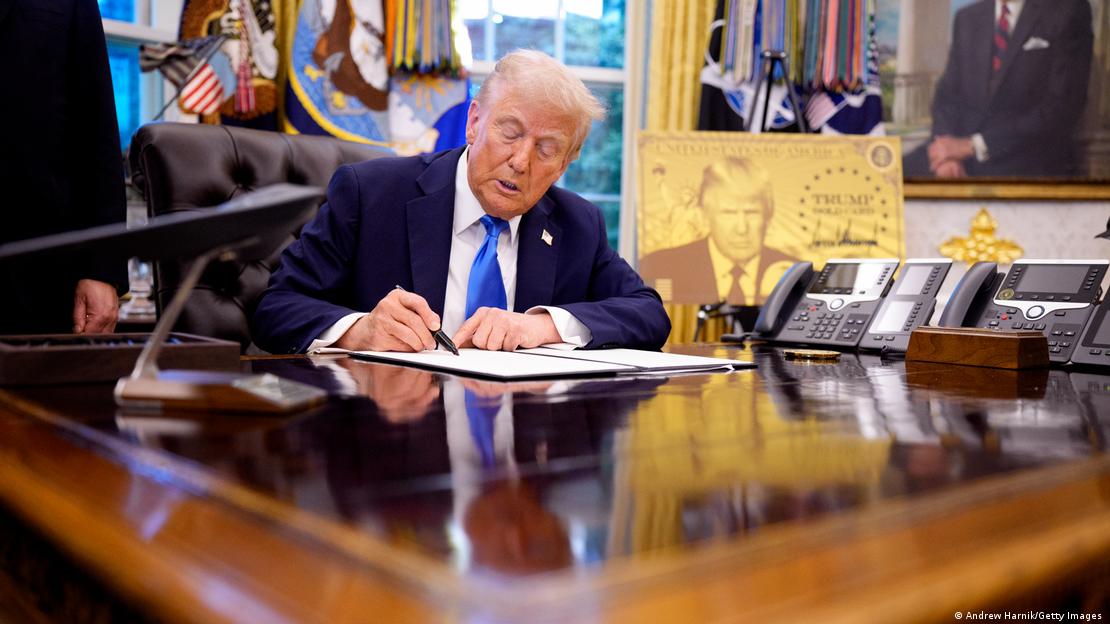
In December 2025, President Trump signed the 'Trump Gold Card' executive order — a quick path to permanent residence in the US upon payment of $1 million (€920,000).
Image: Andrew Harnik/Getty Images
Experts see the US migration policy as a setback for long-standing relations between the two continents. "For Senegal, the impact will be severe. Plans to study, work, or reunite families will be blocked. This decision sends the wrong signal and requires a diplomatic response and decisive advocacy," according to Boubacar Seye, president of the non-governmental organization Horizon Sans Frontieres, which advocates for the rights of migrants from its base in Dakar.
"The argument of 'overstaying' [one's visa] is greatly exaggerated," Seye stressed, referring to an alleged concern of the US government regarding immigration. "It punishes an entire population group because of the behavior of a minority [...] This justification is mainly used to tighten restrictive migration policies."
Nevertheless, the US is a country that offers opportunities on many levels, even for people without qualifications, Seye added.
"Visa restrictions are dangerous for all young people, whether from Latin America or even Europe, but especially for us in the Sahel and for the countries affected," Ahmedou Ould Abdallah, former Mauritanian foreign minister and UN ambassador, who now heads the Centre 4S research institute, told DW.
Is Trump targeting the Sahel Alliance?
The US visa regulations appear to be particularly aimed at the countries that make up the Sahel Alliance, according to Ould Abdallah. "This is not good news for the youth of these countries, who are generally not politicized and where there have been no elections to find out who they will or will not vote for," he said.
He added that the policy does not seem sensible for African countries.
Experts see the US migration policy as a setback for long-standing relations between the two continents. "For Senegal, the impact will be severe. Plans to study, work, or reunite families will be blocked. This decision sends the wrong signal and requires a diplomatic response and decisive advocacy," according to Boubacar Seye, president of the non-governmental organization Horizon Sans Frontieres, which advocates for the rights of migrants from its base in Dakar.
"The argument of 'overstaying' [one's visa] is greatly exaggerated," Seye stressed, referring to an alleged concern of the US government regarding immigration. "It punishes an entire population group because of the behavior of a minority [...] This justification is mainly used to tighten restrictive migration policies."
Nevertheless, the US is a country that offers opportunities on many levels, even for people without qualifications, Seye added.
"Visa restrictions are dangerous for all young people, whether from Latin America or even Europe, but especially for us in the Sahel and for the countries affected," Ahmedou Ould Abdallah, former Mauritanian foreign minister and UN ambassador, who now heads the Centre 4S research institute, told DW.
Is Trump targeting the Sahel Alliance?
The US visa regulations appear to be particularly aimed at the countries that make up the Sahel Alliance, according to Ould Abdallah. "This is not good news for the youth of these countries, who are generally not politicized and where there have been no elections to find out who they will or will not vote for," he said.
He added that the policy does not seem sensible for African countries.
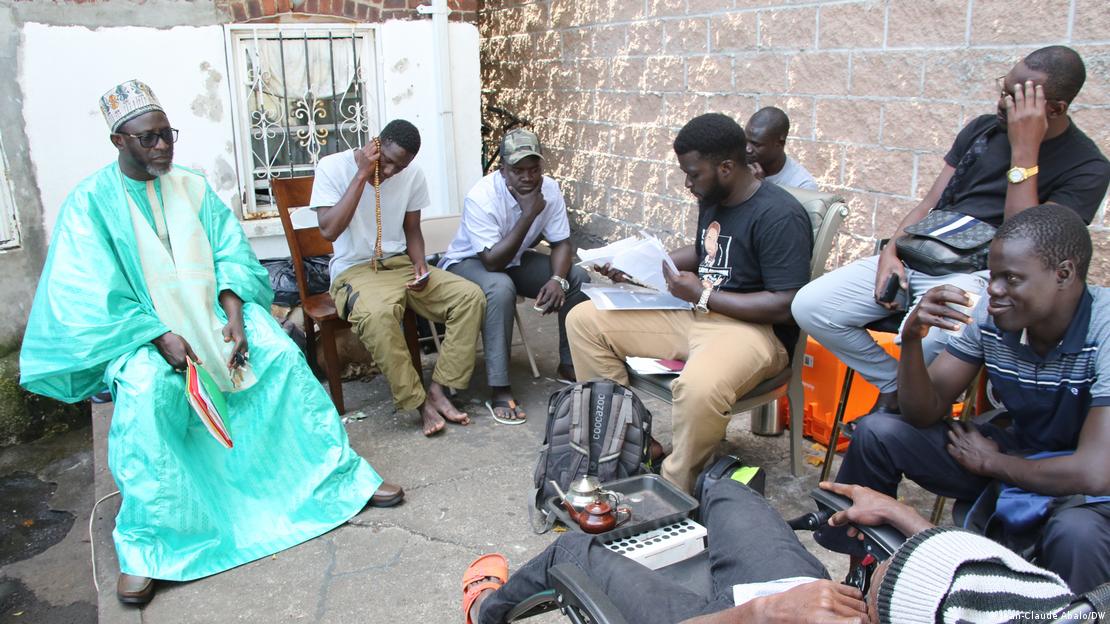
Many migrants from West Africa are not welcome to stay permanently in the US under the new Trump immigration policy
Image: Jean-Claude Abalo/DW
Emigration is not about hiding from political difficulties, he explained, "it's more about having more freedom to work, be successful, and compete on a level playing field without being attributed to a religious, tribal, regional or family affiliation."
The Democratic Republic of Congo is also affected by the visa ban. Fred Bauma, executive director of the Ebuteli research institute in Kinshasa, finds this contradictory. "It is not only in [the DR] Congo that we observe this paradox," Bauma said. "There are other countries that are rich in resources and coveted by the United States, but which find themselves excluded from any movement," he told DW.
Bauma cited Angola as an example of a resource-rich nation subject to some US visa restrictions. "It [Angola] is a central part of US strategy in the southern African region due to the Lobito corridor infrastructure project."
Emigration is not about hiding from political difficulties, he explained, "it's more about having more freedom to work, be successful, and compete on a level playing field without being attributed to a religious, tribal, regional or family affiliation."
The Democratic Republic of Congo is also affected by the visa ban. Fred Bauma, executive director of the Ebuteli research institute in Kinshasa, finds this contradictory. "It is not only in [the DR] Congo that we observe this paradox," Bauma said. "There are other countries that are rich in resources and coveted by the United States, but which find themselves excluded from any movement," he told DW.
Bauma cited Angola as an example of a resource-rich nation subject to some US visa restrictions. "It [Angola] is a central part of US strategy in the southern African region due to the Lobito corridor infrastructure project."
He added that such a strategy reinforces the idea that the race for resources is more critical than cooperation with states. "This is obviously a dangerous and unfavorable perspective for countries in the Global South that want to go beyond the simple exchange of goods."
But cultural identity politics also play a role, according to Guilengue. "These restrictions signal a desire to preserve 'American culture' by allowing fewer and fewer people with different identities to come to America and settle there." Guilengue calls this "exclusionary populism."
The result is that people suffer from exclusion. According to him, immigrants do not represent an economic burden. But instead, they contribute to economic growth and society. "It is not true that suspending the 75 countries [from entering the US] will protect the American economy. It could have the opposite effect."
This article was originally written in German.
Edited by: Chrispin Mwakideu
Martina Schwikowski Author for the Africa desk
No comments:
Post a Comment