Global Warming Surges, Antarctic Seas Bubble
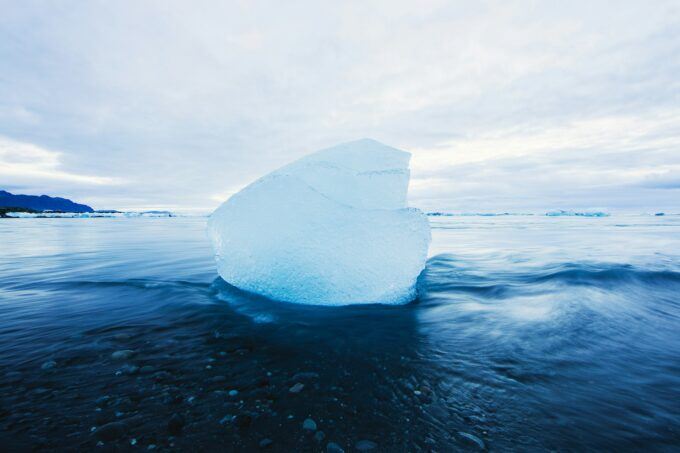
Image by Joshua Earle.
Global warming is on a very ominous trend that has never happened throughout human history, according to a recent study in Geophysical Research Letters.
The rate of global warming has doubled in only ten years. This rapid rate, outside of the influence of nature alone, should be unsustainable for any mass the size of Earth. However, if it is sustainable, danger signals today will be catastrophic results tomorrow. Indeed, new discoveries in the Antarctic region are cause for concern of additional acceleration of global warming.
“The warming trend nearly doubled after 2014,” study co-author Stefan Rahmstorf head of Earth system analysis at the Potsdam Institute for Climate Impact Research in Germany, told Live Science in an email. “The acceleration of the global warming rate means we will cross the 1.5°C [2.7 degrees Fahrenheit] limit earlier,’ he said, adding that they were surprised by the drastic surge as the warming trend nearly doubled after 2014.” (Source: The Rate of Global Warming has Accelerated More in the Past Decade Than Ever Before, LiveScience, d/d March 7, 2026).
Antarctic Seas
Top level scientists may be “surprised by the drastic surge” in global warming over the past decade, but even that surge may be about to accelerate. According to a new study; “Researchers have discovered dozens of new methane seeps littering the ocean floor in the Ross Sea coastal region of Antarctica, raising concerns of an unknown positive climate feedback loop that could accelerate global warming,” a decidedly negative configuration. (Methane Leaks Multiplying Beneath Antarctic Ocean Spark Fears of Climate Doom Loop, LiveScience d/d Oct. 15, 2025)
“In the new study, researchers used acoustic surveys, divers and a remotely operated vehicle to explore seeps located between 16 feet (5 meters) and 787 feet (240 m) below the icy surface of the Ross Sea, off the Antarctic mainland. The team initially only went to investigate one seep in Cape Evans, located on the west side of Ross Island, and were surprised to find the seafloor littered with them… Last year, we went to Cape Evans to look at one small area where gas bubbles had been discovered and were hoping to find that one site still bubbling,” Seabrook said (Sarah Seabrook, Dept of Marine Science, University of Otago, New Zealand). “Instead, we found dozens more…. This system is rapidly changing before our eyes from one year to the next,” Ibid.
It was only several months ago when a Spanish expedition discovered massive methane seeps on the ocean floor off the coast of the Antarctic Peninsula, which is on the opposite side of West Antarctica separated from the Ross Sea discovery by approximately 1,500 miles: Large Methane Leaks Discovered in Antarctica, Polar Journal d/d March 6, 2025.
Meanwhile another study found Antarctica on the verge of polar amplification. This threatens to accelerate the impact of global warming on the continent and throughout the world, which is bad news for coastal megacities. In time, the continuing failure of signatories to the Paris 2015 climate agreement to mitigate fossil fuel emissions, according to original commitments by over 190 countries, will slap the world across the face with cascading Antarctic glaciers that flood NYC and London.
Polar scientists have been warning, with more fervor than ever before, of a rapidly deteriorating Antarctica, especially since 2024. Their warnings via press releases address the public at large; as politicians, especially in America, care less. Major warnings since 2024: (1) August 2024 the 11th Scientific Committee on Antarctic Research attended by 1,500 scientists: Gino Casassa, glaciologist head of Chilean Antarctic Institute claimed: “Based upon current trends, sea levels will be up 13’ by 21oo.” Really? 13 feet? Then, what about 2035? (2) November 2024, 450 polar scientists called an emergency meeting in Australia to make a public announcement: “If we don’t act, and quickly, the melting of Antarctica ice could cause catastrophic sea level rise around the globe within our lifetimes.” (3) A February 2025 study in Nature about Worldwide Glacier Meltdown Underway, a 20-year study by 35 international teams, identified terrestrial glacier losses that are larger than Greenland and Antarctica but not found in scientific models of expected sea level rise. Oops!
A very recent study identifies an upcoming “amplification” scenario for Antarctica; “Antarctica could heat up 1.4 times faster than the rest of the Southern Hemisphere over the coming decades, which would lock in extreme sea-level rise and ravage polar ecosystems, a new modeling study shows.” According to Ariaan Purich, climatologist at Monash University/ Australia: “We’re now seeing abrupt changes occurring in Antarctica, at very rapid rates… With low Antarctic sea ice coverage, there is now the potential for the ice-albedo feedback to start exacerbating warming of the southern high latitudes… our study demonstrates a robust emergence of Antarctic amplification under the 2°C goal of the Paris Agreement and highlights the critical role of SST, i.e., sea surface temperature, changes in shaping this anthropogenic response.”, (Future Sea Surface Temperature as a Key Driver of Antarctic Warming, Geophysical Research Letters d/d Dec. 22, 2025)
The study identified the main driver of Antarctic amplification, unlike in the Arctic, where the ice-albedo feedback is a key driving force, Antarctica will warm mainly via accelerating heat release from the surrounding ocean.
Indeed, Ocean Heat Content (OHC) is a troubling result of global warming. According to the World Meteorological Organization (WMO), in 2025 OHC hit a record high for the ninth consecutive year, and it is accelerating. Similar to global warming that doubled over a decade, OHC has doubled since 2005. This is one more event that has never happened before in human history.
These excesses are not sustainable, given enough time, nature’s vast ecosystem infrastructure crumbles apart. In that regard. based upon studies by Potsdam Institute for Climate Impact Research, the tipping point fuse is getting short.
Indeed, global warming since the start of the 21st century has literally left the past in a cloud of dust, as previous all-time records seem to fall on a regular, nearly annual, basis. It appears global warming is gaining so much momentum, is it stoppable?
Based upon numerous reports out of Antarctica, it’s possible that society will be whiplashed blindsided by sea level rise. Predictions of sea level rise are all over the map. According to the mainstream IPCC Sixth Assessment Report (AR6) global mean sea level will rise by 1-3 feet by 2100. Yet, other reports within the depths of IPCC publications indicate two meters, or 6.5 feet, of sea level rise “cannot be ruled out.”
Still, according to reports from recent meetings of polar scientists, assuming “business as usual,” the next two decades 2030-40 may upstage the year 2100. That’s right around the corner.
In all, nobody really knows. But what is known, the current trend is headed in the wrong direction faster than ever before as actual changes outdistance climate model updates.
Perhaps the most reliable answers are found with polar scientists with boots on the ground. Across the board, they are screaming: Stop CO2 emissions, now!
Arctic sea ice at lowest level ever this winter
By AFP
March 26, 2026
This year's maximum Arctic sea ice level was reached on March 15 -- a week earlier than last year. - Copyright AFP Olivier MORIN
Arctic sea ice reached its lowest level ever recorded, statistically tying last year’s record, a leading US climate observatory for this geopolitically significant region said on Thursday.
The ice is formed by seawater that freezes through the winter. It partially melts through the summer. However, the amount of reformation each winter is in decline, as rising temperatures due to climate change disproportionately affect the Arctic.
– Earlier and lower levels –
This year’s maximum ice level was reached on March 15 — a week earlier than last year.
The ice clocked in just below last year’s level at 14.29 million square kilometers, a statistical tie with last year’s all-time record low of 14.31 million square kilometers, according to the National Snow and Ice Data Center (NSIDC) in Boulder, Colorado.
It is the lowest level observed in 48 years of satellite monitoring. Previous records were set in 2016, 2017, and 2018.
This year’s weak ice formation “gives a head start to the spring and summer melt season,” said NSIDC Senior Researcher Walt Meier.
Samantha Burgess of the European Centre for Medium-Range Weather Forecasts (ECMWF) had a similar analysis in a recent conversation with AFP, saying it may trigger a “potentially faster and more extensive summer melt.”
The weak ice growth was visible on satellite for weeks, as AFP reported earlier in March.
– Impacts on wildlife, geopolitics –
Unlike land-based ice — such as glaciers or ice sheets — melting sea ice does not directly raise sea levels. But it does cause wide-ranging climate impacts that threaten ecosystems.
Many species, including polar bears in the Arctic and emperor penguins in Antarctica, rely on sea ice to breed and feed.
Some effects can cascade.
“There are areas, for example, in the Beaufort Sea, near Canada or the Siberian seas of the ocean, that had never been exposed to the atmosphere,” says Gilles Garric, a polar oceanographer at Mercator Ocean Toulouse. That exposure, in turn, could make these waters warmer in the summer.
The melt also has geopolitical consequences, as it opens new shipping routes and access to mineral resources. Since returning to the White House, Donald Trump has repeatedly said he wants to take over Greenland.
“From a geopolitical perspective, the climate change-induced melting of sea ice is turning the Arctic into the new Mediterranean: a common shared maritime resource surrounded by competing states,” Elizabeth Chalecki, an expert on climate change and security, told AFP.
No comments:
Post a Comment