The Self-Undoing of Israel: Has Zionism Crossed the Point of No Return?
Is Israel’s trajectory toward isolation and collapse self-inflicted, and has Zionism reached the point of no return?
Every war led by Benjamin Netanyahu is framed not as policy, but as fate.
“There are moments in which a nation faces two possibilities: to do or die,” Netanyahu declared on October 28, 2023, as Israel expanded its genocide in Gaza.
The wording is familiar. The urgency is always absolute. The implication is unmistakable: Israel is not choosing war. It is forced into it.
For many, the claim is inherently contradictory. How can a state initiate war – and in Gaza’s case, sustain a genocide – while insisting that it is merely defending itself from annihilation? Yet within Israeli political discourse, and across much of Western media, this contradiction is rarely interrogated. It is normalized.
That normalization is not incidental. It is foundational.
Long before the establishment of Israel on the ruins of historic Palestine in 1948 – the Nakba, or catastrophe, for Palestinians – the language of existential threat was deeply embedded in Zionist political thinking. Survival was never framed as coexistence, but as triumph. Security was never separated from expansion.
In recent years, that fatalistic language has returned with renewed intensity.
The events of October 7, 2023, brought a sudden end to what had been, for Netanyahu, a moment of unprecedented political triumph. Prior to the Al-Aqsa Flood operation, Israel was not merely secure – it was ascending. A parallel “flood” was underway: normalization.
Arab, Muslim, African, Asian and even Latin American states were steadily incorporating Israel into their political and economic frameworks. The so-called isolation of Israel was collapsing.
Netanyahu was openly celebrating this shift. In September 2023, speaking alongside US President Joe Biden, he said, as reported by Reuters: “I think that under your leadership, Mr President, we can forge a historic peace between Israel and Saudi Arabia,” adding that such a deal would “go a long way first to advance the end of the Arab-Israeli conflict, achieve reconciliation between the Islamic world and the Jewish state.”
Days later, addressing the United Nations, he spoke of “the blessings of a new Middle East,” according to the official transcript of his September 22, 2023, UN speech.
This was not merely political rhetoric. It reflected a broader strategic project: Israel’s integration into the region, not through justice, but through power – through alliances with wealthy Gulf states, economic expansion, and geopolitical repositioning.
The genocide in Gaza shattered that trajectory.
Far from cementing Israel’s regional and global standing, the war has accelerated its isolation. According to a June 2025 Pew Research Center survey, majorities in most of the 24 countries surveyed held unfavorable views of Israel, while confidence in Netanyahu remained low across nearly all regions.
This shift is not limited to the Global South. It reflects a broader erosion of Israel’s legitimacy, even among traditional allies.
In response, Israeli political discourse has returned – almost instinctively – to the language of existential war.
Even when Netanyahu attempts to revive earlier narratives about shaping a “new Middle East,” the rhetoric repeatedly collapses back into warnings of annihilation. This reveals a deeper truth: within Israeli political thinking, the alternative to dominance is not coexistence, but destruction.
Part of this can indeed be explained through the logic of settler colonialism. Expansion is not incidental to settler-colonial projects; it is built into them. Such systems do not merely occupy land. They must continuously secure, reorder and enlarge their control, while presenting indigenous resistance as irrational violence.
Other settler-colonial societies remained colonial in essence while their territorial expansion was curbed by larger geopolitical constraints. Israel has never truly encountered such limits. It has not been meaningfully held accountable. Shielded by unconditional US support and enabled by Western powers that were themselves former or current colonial actors, it has had every structural incentive to continue.
But Israel’s fixation on existential danger even at the height of military superiority points to something deeper. It suggests a political culture haunted by its own origin story.
One possible explanation is moral and historical illegitimacy. Israel knows, at some buried but irrepressible level, that it was founded on the destruction of another people, on expulsion, massacre and erasure. A state built on the ruins of Palestine cannot indefinitely silence the history beneath it.
Still, there is more to the story.
Even before the genocide in Gaza, Israel was gripped by internal debates about its own continuity. In 2023, amid a profound political crisis, President Isaac Herzog warned of a possible “constitutional collapse,” according to Reuters. At the same time, Israeli discourse increasingly invoked the so-called “eighth decade curse,” the notion that Jewish political entities historically falter as they approach their eighth decade.
As noted in various newspapers, Netanyahu has been described as viewing himself as uniquely capable of leading Israel “into its eighth decade and beyond,” reflecting a deeper anxiety about national continuity.
October 7 brought these fears roaring back. So did the emergence of a more assertive regional pro-Palestine camp, particularly within what is often called the Axis of Resistance. True, several Arab regimes remained aligned with Washington and eager to contain the fallout. But in doing so, many only further exposed their own fragility.
From Israel’s perspective, this convergence of pressures reinforces both real and imagined fears – not only to state security, but to the ideological foundations upon which the state was built.
What makes this especially striking is that Israel has failed to secure decisive strategic outcomes in war after war. In Gaza, Lebanon, Yemen and beyond, it has relied on overwhelming force without achieving lasting political resolution.
Here lies the central irony.
Israel’s fears, long framed as hypothetical or exaggerated, are being transformed into tangible risks – not by inevitability, but by Israel’s own actions.
The result is a self-fulfilling trajectory: a march toward deeper isolation, perpetual conflict, and internal uncertainty – driven not by necessity, but by an inability, or refusal, to imagine an alternative.
That march may yet reach its logical end.
The deepest irony is that Israel once had alternatives. It was not fated to choose this path. But a just coexistence – one grounded in equality and historical reckoning – has never been intelligible within Zionist political vocabulary. There, coexistence is recast as disappearance.
And so Israel is not merely confronting a crisis.
It is undoing itself, by its own hand.
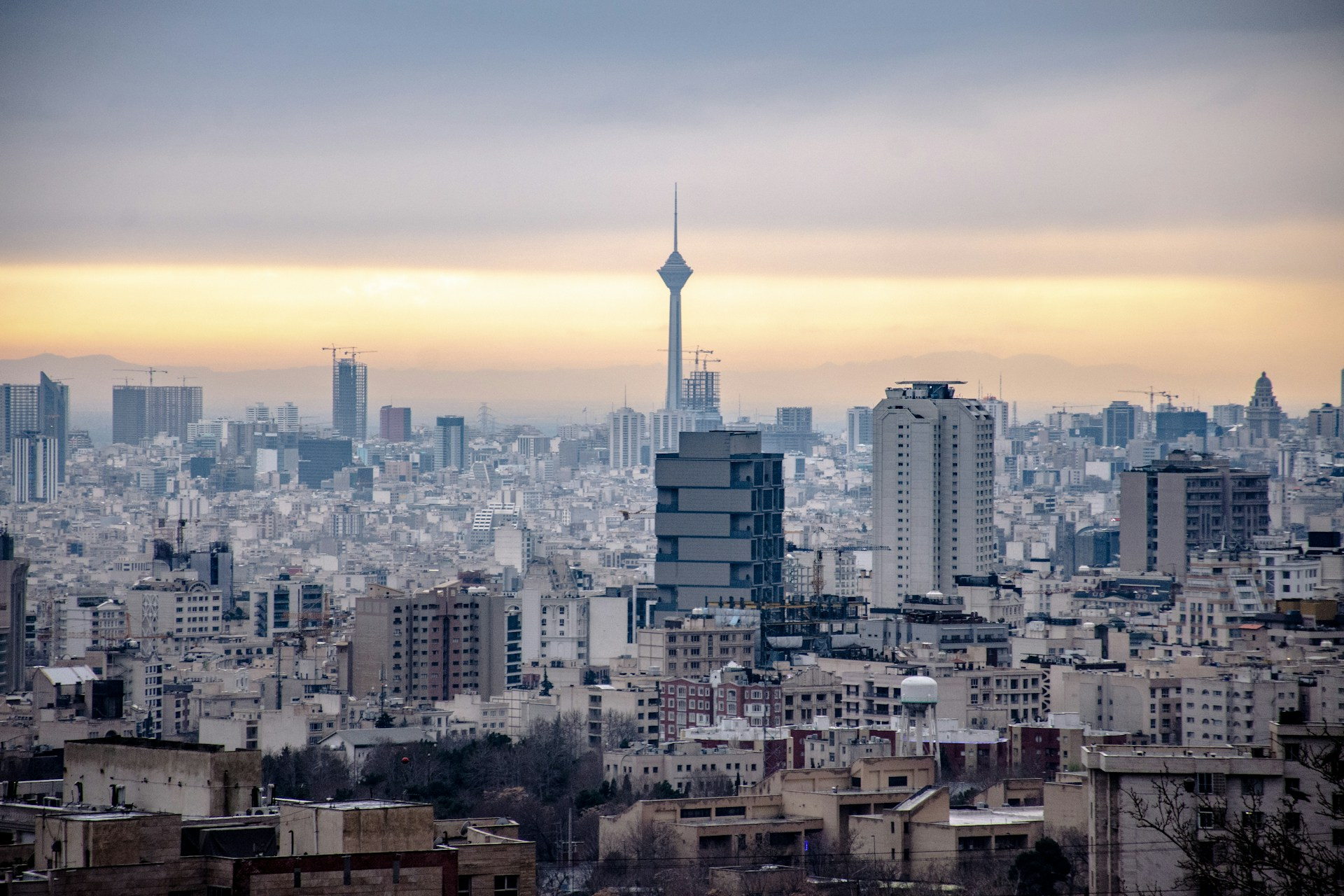
The origins of chess are contested, but few dispute that while the game began in India, it was the Sassanian Persian Empire that refined it into a recognizable strategic system. It was Persia that codified its language, symbolism and intellectual framework: the shah (king), the rokh (rook), and shatranj, the modern chess game.
This is not a trivial historical detail. It is, in many ways, a metaphor that has returned with force.
Since the start of the US-Israeli war on Iran on February 28, 2026, political discourse—across Western, Israeli and alternative media—has repeatedly invoked the analogy of chess to describe Iran’s conduct.
The comparison is seductive. But it is also incomplete.
Israeli Prime Minister Benjamin Netanyahu articulated this framing as early as May 2012. Speaking of Iran’s negotiating posture, he said that “it looks as though they see the talks as another opportunity to delay and deceive and buy time… Iran is very good in playing this kind of chess game, and you know sometimes you have to sacrifice a pawn to save the king.”
That statement was not merely rhetorical; it revealed a long-standing Israeli interpretation of Iran as a strategic actor operating within a calculated, long-term framework.
More than a decade later, that framing has resurfaced with renewed urgency. Analysts, policymakers and commentators now routinely describe Iran’s actions as deliberate, layered and patient—defined not by immediate gains, but by positional advantage accumulated over time.
Some observers contrast this with what they perceive as a fundamentally different approach in Washington: one driven by immediacy, spectacle and the politics of rapid outcomes.
But such a contrast, while tempting, risks oversimplification.
Iran’s approach is rooted in historical continuity. It understands the current war not as an isolated confrontation, but as the latest phase in a decade-long process of pressure, containment and confrontation.
In this sense, the battlefield is not defined by days or weeks, but by political cycles measured in years—if not generations.
The objective of its adversaries, however, has remained consistent: Shāh Māt—checkmate—the dismantling of the Iranian state as a coherent political entity.
Yet this is precisely where the central miscalculation emerges.
When the Iranian Revolution overthrew the US-backed Shah in 1979, the collapse of the system was swift and decisive. But it was not the result of external pressure. It was the inevitable outcome of a structurally brittle system.
That system was vertical—organized as a rigid hierarchy with power concentrated at the apex and legitimacy flowing downward. When the apex collapsed, the entire structure disintegrated.
If the people are the piyādeh—the pawns—then in that moment, they did not merely encircle the king; they overturned the entire board.
This experience helped shape a strategic doctrine that would later define US and Israeli military thinking: the belief that removing leadership—what is often termed “decapitation”—can trigger systemic collapse.
This doctrine appeared to succeed in Iraq following the 2003 invasion and the eventual execution of Saddam Hussein. It appeared to succeed in Libya after the killing of Muammar Gaddafi in 2011.
In Latin America, the same doctrine has shaped US intervention across decades—from the 1954 CIA-backed overthrow of Guatemala’s Jacobo Árbenz to the 1973 coup against Chile’s Salvador Allende and, most recently, the US kidnapping of Venezuela’s Nicolás Maduro in Caracas in January 2026. In each case, the assumption was the same: remove the leadership, and the system would collapse with it.
But this model has repeatedly failed when applied to movements and societies rooted in popular mobilization rather than elite control.
In Gaza, Lebanon and, crucially, Iran, the assumption that political systems function as fragile pyramids has proven fundamentally flawed.
These are not systems sustained solely by leadership. They are sustained by social depth. In other words, they are not pyramids—they are networks.
Their resilience lies in their ability to regenerate from within society itself. Leadership can be removed, but the political energy that sustains it cannot be easily extinguished.
Israel has long recognized, at least implicitly, that assassinating Palestinian leaders does not end Palestinian resistance. Yet it has persisted in such tactics, while simultaneously expanding its strategy.
Increasingly, the focus has shifted toward the population itself—raising the cost of resistance by targeting the social fabric that sustains it.
In Gaza, this strategy has reached its most extreme form: the systematic destruction of civilian life and the open pursuit of mass extermination and mass displacement.
In southern Lebanon, a similar logic is evident. Entire communities have been uprooted, towns devastated, and infrastructure erased—not merely as ‘collateral damage’, but as part of a deliberate strategy.
The aim is unmistakable: decapitate the leadership, then erode the people. Yet in Iran, this logic has encountered its most profound limitation.
Both Washington and Tel Aviv appear to have assumed that internal dissatisfaction could be weaponized—that social grievances would override national cohesion in the face of external pressure.
This assumption reflects a deeper misreading—not only of Iranian society, but of how legitimacy itself functions within it.
Iran is not a monolithic system in the way it is often portrayed. Its political life is dynamic, contested and deeply embedded in society. Legitimacy is not imposed from above; it is continuously negotiated within the public sphere—through electoral participation, protests, and other forms of political engagement.
This dynamism produces a system that is far more resilient than it appears from the outside. The removal of a leader, or even multiple leaders, does not signify collapse. Nor does the symbolic destruction of state power.
The system persists because it is not reducible to individuals. It is reproduced through collective political experience.
This is where the chess analogy becomes truly revealing.
Iran’s strategic strength does not lie in protecting a single “king,” but in its ability to reconfigure the board itself.
In this game, continuity is not tied to any one piece. It is embedded in the relationships between them. The rallies, marches and sustained public mobilization that have continued throughout the war are not incidental. They are central.
They represent, in effect, a collective “Shah”—a form of political sovereignty that cannot be eliminated through assassination or decapitation.
Some may argue that Iran is not merely playing chess, but rewriting its rules. That, perhaps, is the most unsettling realization of all.
For if the rules themselves have changed, then the strategy designed to defeat Iran may already be obsolete.

I have always found it interesting, and at times revealing, when seasoned activists and intellectuals in the West, including those who see themselves as deeply committed to Palestine, raise the same familiar point: Arab governments must stand up to Israel and the United States in solidarity with their brethren in Palestine.
The argument often comes wrapped in a perplexed question: why are Arabs and Muslims not doing anything for Palestine?
What makes this particularly puzzling is that the question is often posed by respected analysts and historians—people who should recognize that the issue is far less sentimental than structural.
At first glance, the question may not seem bizarre. Palestinians are tied to their neighbors through history, geography, demography, religion, language, collective memory, and a shared experience of Western domination and Israeli colonial violence.
Additionally, Israeli leaders speak openly in expansionist terms, and they act accordingly, whether in Palestine, Lebanon, Syria, or elsewhere. The people on the receiving end of this violence are often the same native communities of the region: Arabs, Muslims, and Christians alike.
Indeed, Arab and Muslim institutions themselves constantly invoke Palestine as a central cause. Arab summits still describe Palestine as a core issue, and public opinion across the region remains overwhelmingly aligned on that point.
For example, the 2024-25 Arab Opinion Index found that 80% of respondents across 15 Arab countries agreed that “the Palestinian cause is a collective Arab cause”, not solely Palestinian. The same survey found that 44% viewed Israel as the greatest threat to Arab security and 21% named the United States, far ahead of Iran at 6%.
So yes, the question of Arab and Muslim solidarity does not emerge from nowhere. On the level of popular feeling, it is entirely rational. It reflects a moral and political intuition that Palestine should be a point of unity.
But here is what that argument misses. Sentimental expectations aside, many Arab governments are not neutral actors waiting to be persuaded into solidarity. They are already positioned, structurally and strategically, within the US-led regional order. Some are client regimes in the classical sense. Others are so dependent on American protection, validation, or military partnership that calling them “partners” barely conceals the hierarchy embedded in the relationship.
The problem, then, is not hesitation. It is alignment.
The Gaza genocide offered a devastating example of this reality. While Palestinians were being starved and bombed, official Arab responses remained fragmented, cautious, and largely subordinate to Washington’s strategic priorities.
Some governments hardened their rhetoric later, but the early reactions were deeply revealing. Bahrain, for example, publicly condemned Palestinian resistance for October 7, rather than, at least, taking a position even remotely proportionate to the scale of Israeli violence and genocide. Egypt, meanwhile, allowed the narrative to circulate that it had warned Israel beforehand of “something big,” a framing that shifted attention toward Palestinian action rather than Israeli impunity.
Even more revealing was the economic dimension. As Ansarallah’s Red Sea operations disrupted maritime access to Israel in declared solidarity with Gaza, a land corridor developed to move cargo by truck from ports in the Gulf all the way to Jordan and finally to Israel.
Whatever diplomatic language Arab governments employed in public, trade and logistics were being quietly adapted in ways that helped Israel absorb the pressure and maintain continuity.
This was not an anomaly. It was continuity.
For decades, major Arab regimes have been deeply implicated in sustaining American military power in the region. US installations in Kuwait, Qatar, Bahrain, the UAE and elsewhere have long served as the infrastructure through which Washington projects force across the Middle East. These bases are now the lifelines for the US-Israeli war on Iran.
This is why the constant demand that Arab regimes “develop” a stronger position on Palestine is ultimately misleading. Their position has already been developed. In many cases, it has taken the form of normalization, security coordination, military hosting, logistical facilitation, and political adaptation to US priorities. The action has already been taken. It is simply not taken in favor of Palestine.
And yet, despite this reality, the question continues to resurface. Why does it persist?
Part of the answer lies in the enduring belief that Arab and Muslim solidarity with Palestine is both historically logical and politically defensible.
Another lies in the fact that Israel’s ambitions do not stop at Palestine. Israeli leaders and institutions repeatedly articulate visions that implicate the entire region, whether through permanent military superiority, fragmentation of neighboring states, or the normalization of endless war.
These realities make the question emotionally and strategically compelling—even if it is ultimately misplaced when directed at regimes rather than peoples.
There is also a deeper reason: the historic failure of the West. Western governments are structurally biased toward Israel, and many intellectuals, activists, and ordinary people have concluded—reasonably enough—that if justice will not come from Washington, London, Berlin, or Paris, then surely it must come from the Arab and Muslim worlds. The instinct is understandable. But it confuses publics with regimes.
That misplaced expectation makes the current war on Iran all the more consequential.
The war on Iran may indeed become a wake-up call. As the joint US-Israeli assault on Tehran is faltering, new realizations may be emerging in Arab capitals that neither Washington nor Israel can ultimately guarantee regime survival or regional stability.
At the level of ordinary people, the war has also generated a familiar sense of pride in resistance, not unlike what many felt during the steadfastness of Gaza and Lebanon. That may yet produce new conversations, perhaps even a new collective political imagination.
Until then, we would do better to understand Arab regimes according to their actual priorities, not our expectations. They are not “betraying” Palestine in the emotional sense, because Palestinian freedom, the defeat of Zionism, and the dismantling of imperial domination were never central to their governing agenda in the first place.
To the contrary, their overriding priority is the preservation of the regional status quo, whatever the human cost. And if maintaining that order requires the slow destruction of Palestine, many of them have already demonstrated that they are willing to pay that price.
No comments:
Post a Comment