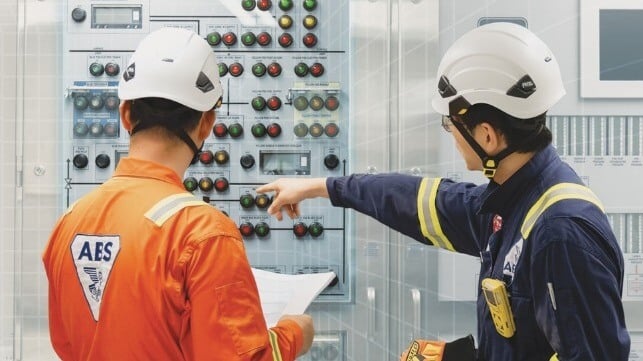
ABS Publishes Leading Whitepaper on Human Readiness Levels for the Industry
[By: ABS]
“Emerging maritime technologies require qualification processes that extend beyond technical maturity; Human Readiness Levels (HRLs) provide a structured approach that supports safer operations while reducing unnecessary cost and rework.”
That is an excerpt from the latest industry-leading research from ABS, Beyond Technology Readiness: Applying Human Readiness Levels in Maritime Systems, which examines existing gaps in maritime human?system integration and demonstrates how HRLs can be integrated into current maritime qualification processes.
“Technical maturity alone is not sufficient to achieve operational safety. While existing frameworks offer valuable insight into technical maturity, they do not account for the human element that ultimately interacts with, operates, maintains and makes decisions with the technology. In this whitepaper, ABS is providing guidance for owners and vendors to incorporate human factors early so new technologies can be introduced more safely, effectively and with greater confidence,” said Michael Kei, ABS Vice President, Technology.
Technology readiness levels focus on hardware and software performance, while HRLs evaluate: operator roles and responsibilities; cognitive workload and decision authority; interface usability and interpretability; alarm strategy effectiveness; training effectiveness; procedural completeness; and organizational readiness.
The ABS whitepaper builds on existing guidance from the American National Standards Institute (ANSI) and the International Maritime Organization (IMO) and provides HRL maritime application examples for remote inspections, autonomous operations, AI decision support tools and augmented reality devices.
Recent research on maritime autonomous surface ships (MASS) has highlighted emerging risks associated with supervisory control, automation trust, alarm overload and degraded situational awareness. ABS identifies ways to integrate HRLs into maritime qualification processes such as the ABS New Technology Qualification program, SMART notations and verification and validation guides.
The products and services herein described in this press release are not endorsed by The Maritime Executive.
AI-Enabled ETA Management Could be the Key to Solving Port Congestion
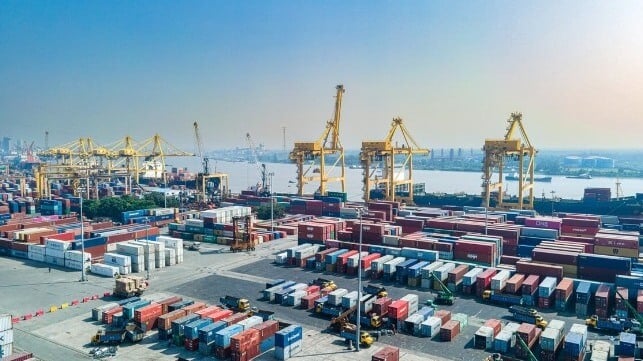
An expanding global fleet. Bigger ships. Growing trade volumes. Slower port turnarounds.
Port capacity is under increasing pressure and congestion is a significant challenge – raising operational costs for shippers, disrupting global supply chains and hitting economic activity. But AI-driven predictive ETA management can optimize port turnarounds to ease logistical impacts.
The smooth transit of 90% of global trade carried by sea remains hostage to port congestion stemming from supply-demand imbalances, operational inefficiencies and lagging investments in infrastructure. Weather also has an impact, along with labour issues and logistical constraints such as a lack of crane availability, yard space and inadequate landside transport connections.
Visibility is therefore key for vessel operators to avoid the ‘rush to wait’ at ports. This requires actionable data insights to determine accurate ETAs that can inform speed decisions to save fuel and optimize arrival times.
Counting cost of congestion
Congestion at ports can affect schedule reliability – adding days or weeks to transit times – as well as disrupt industrial production and push up freight rates due to a dearth of vessel capacity, while also increasing demurrage and detention charges. Consequently, carriers may be forced to reroute vessels or blank sailings.
As well as the negative costs and revenue impacts of port congestion, this can result in higher emissions from unplanned idle time at anchorage or suboptimal ETA management leading to higher than necessary speeds, while there are also safety concerns due to crowded waters.
Port congestion is compounded by the productivity demands of modern megaships – with ultra-large containerships discharging and loading 3000-5000 containers per call to extend berth times – that can put a strain on terminal capacity, especially if several such vessels arrive simultaneously.
Ports are also vulnerable to sudden demand surges caused by pre-holiday shipping rushes or global trade upheaval triggered by tariff changes that can lead to front-loading ahead of implementation to boost cargo shipments – causing delays, higher freight rates and congestion.
Port infrastructure issues
For example, berth waiting times can extend to several days during peak periods at Singapore – the world’s second-largest container port by TEU volume – while the European gateway ports of Antwerp and Rotterdam experience seasonal congestion, especially during the peak Q3/Q4 shipping season and when industrial action disrupts operations, according to research firm Kpler.
The biggest challenge is matching port capacity with shipping demand.
There is a lack of transparency about berthing slot availability in relation to expected ship traffic and arrival times, particularly in the container trade and possibly more so in bulkers and tankers. This means a slot may cease to be available for a waiting vessel if a port is working at full capacity, or available berths may not be used if expected vessels fail to arrive.
This leads to sub-optimal port utilization, putting intraport capacity utilization under pressure. Consequently, a port may develop port infrastructure that isn’t really needed. This also results in bottlenecks, slower vessel turnaround times and voyage delays.
Such bottlenecks – when the volume of ships calling at ports exceeds terminal capacity to efficiently process them – cause a domino effect where a delay due to congestion at one port ripples down to other ports on the route to hit entire trade lanes. Local congestion thus becomes global disruption.
S&P Global’s latest global port congestion analysis indicates a general decline in port efficiency globally with decreased port moves per hour, longer arrival processing times and increased average port hours at most ports across five regions – Northern Europe, North-East Asia, North America, South-East Asia and the Mediterranean.
Optimizing port traffic flows with AI
However, port traffic flows can be optimized by leveraging AI-driven intelligence used in smart voyage management that can enable predictive ETAs and earlier decisions on berth planning when there is a transparent flow of information between the port and shipping company.
Predictive ETA management uses AI analytics and advanced algorithms to forecast accurate arrival times based on a range of real-time data inputs – weather, vessel performance, traffic and navigational, and port and terminal operations.
This can enable more efficient planning of port calls through integration of port congestion insights, berth availability data, traffic events and analysis of avoidable waiting time.
Voyage intelligence, which combines meteorological, technical and operational data to predict ETAs, makes it possible to better navigate port call congestion when port information is included in the data stream.
Faster turnarounds, fuel savings
Real-time updates allow dynamic recalculation of optimal routes and speeds based on scenario analysis to determine the best route with the lowest fuel use and optimal arrival window.
One possible scenario is that a vessel could adjust speed 48 hours out to align with an open berth slot, thereby cutting waiting time from 18 hours to zero. It is all about facilitating the shift from a ‘rush to wait’ to just-in-time arrivals.
Ship operators are increasingly using cost-benefit analysis to vary speeds and save fuel within traditional contracts as part of intelligent routing, which can result in faster port turnarounds and savings of 5-8% in fuel and emissions, while also improving CII ratings. This is low-hanging fruit with minimal investment.
'Air traffic control system’ for ports
There is clearly also potential for wider application of smart ETA management to serve as an ‘air traffic control system’ for ports to allow more efficient berth allocation, improved resource coordination and enhanced capacity utilization.
This can provide visibility of all vessels sailing into a port for more precise scheduling of marine operation resources – such as pilots, shore labour and equipment – and better alignment with outbound logistics to avoid unnecessary costs.
Predictive ETA management can alleviate chronic port congestion to deliver measurable gains in shipping efficiency and sustainability – and dramatically improve the reliability of the global supply chain.
The opinions expressed herein are the author's and not necessarily those of The Maritime Executive.
A Hierarchy of Controls
It's the key to passenger safety.
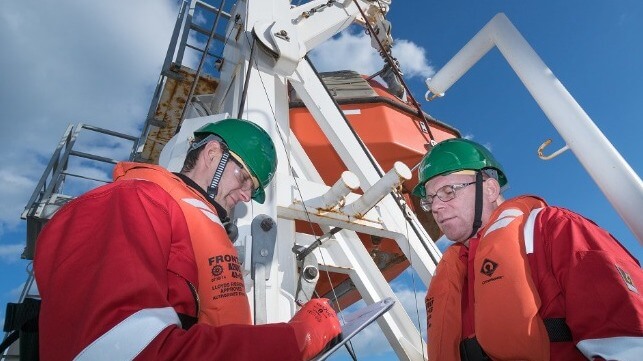
(Article originally published in Jan/Feb 2026 edition.)
PASSENGER SAFETY: A HIERARCHY OF CONTROLS
**By Pat Zeitler**
Those in the business of industrial safety are familiar with the concept, "hierarchy of controls."
It's predicated on the belief that health and safety risks are controlled through a hierarchy of actions that can best be described as an inverted cone or pyramid with the most effective control on top, narrowing down to the final and least effective control on the bottom. At the top of the pyramid is elimination, followed by substitution, engineering controls, administrative controls and personal protective equipment (PPE).
Safety professionals who dedicate themselves to cruise ships and ferry boats must implement this system in a way that encompasses both the industrial component of crew and passenger safety as well as the hospitality side of business.
In theory, eliminating hazards is best (step #1). However, many hazards are permissible in this system when the probability, risk or exposure is extremely low. A good example is how the cruise industry reacted during the 2020 Covid outbreak. It simply eliminated the hazard by ceasing operations until the threat of Covid went away. Another example would be a cruise operator not allowing a vessel to get underway due to reports of severe weather.
Step #2 is substitution. This action might be applied to a cruise ship or ferry boat in the form of changing a route (due to any number of factors) or reducing emissions by shifting to alternative fuels or electric propulsion – a substitution intended to mitigate the environmental hazard more than the immediate risk of personal safety.
The remaining three steps – engineering controls, administrative controls and personal protective equipment (PPE) – are tangible and easily recognizable by passengers and crew. This is where companies like Survitec, Consilium, Lalizas and Viking come into play.
ENGINEERING CONTROLS
Engineering controls, in the most simplistic terms, is a modification made or engineered in a way that physically separates the hazard from the person. The key factor is that the worker or passenger will not have to adapt their behavior to the known hazard.
For example, Consilium is a company that has been in the business of fire detection for marine purposes since 1967, long before the concept of a hierarchy of controls even existed. Safety technology is what Consilium is known for, and its newest innovation, SensEye, is a video monitor integrated into Consilium's SMiG automated safety management system and, with the assistance of AI, will notify the crew when abnormalities are detected.
The system monitors passengers and crew, and if a passenger enters a restricted area the system will notify the crew or if someone takes a fall the onboard emergency management system can be activated in real time.
When asked what safety trends Consilium expects to see in 2026 and beyond, Martin Steen, Consilium's Senior Vice President Americas, stated, "AI, AI, AI. We're investing heavily, same as all other leading tech companies. We'll use the AI engine to validate all our detection units such as smoke and heat detectors, flame detectors, gas detectors and – in combination with a HD smart camera – analyze the potential risk onboard. We will guide the crew in making the right decision to save life and values onboard."
Incorporating AI is taking fire detection and suppression to the next level. Detection alone is an administrative control. When combined with response capabilities like fire suppression, equipment shutdowns and emergency management system activations, it looks like the gold standard of an engineering control.
ADMINISTRATIVE CONTROLS
Administrative controls include regulations, company policies, materials that include warning signs and markers and even worksite communication systems. Consilium's safety management software could be considered an administrative control.
The defining characteristic of an administrative control is that it changes a crewmember or passenger's actions in a way that avoids a hazard. Training might be considered the ultimate administrative control, and vessel operators who team with Survitec have a partnership that includes access to a variety of training courses like safety equipment maintenance, lifeboat operator academies and customer-specific courses available upon request.
Survitec is best known for its life rafts and marine survival technology. Tracking and servicing life rafts, immersion suits, lifejackets as well as lifesaving equipment such as davits and fire suppression systems are key administrative controls that Survitec provides for its customers.
"We've seen a strong post?COVID resurgence in cruise?vessel contracting with shipyards," states Richard McCormick, Communications Director-MES &AES. "It's been significant not only for cruise operators but also for the wider network of suppliers that support them. As a result, we've secured record-breaking sales."
The success of 2025 is due in no small part to the newbuild MES (marine evacuation systems) orderbook. Systems like the Life Ark, Martin Ark 2 and Survitec Zodiac Evacuation Slide are setting the standard for passenger safety.
Looking ahead, Survitec is working on advanced automation solutions designed for the small ferry market as well as introducing its newest MES product, the Survitec Seahaven, the world's largest inflatable lifeboat.
PERSONAL PROTECTIVE EQUIPMENT
The last step on the hierarchy of controls is the most tangible and easily recognized one – personal protective equipment or PPE. It's the last line of defense against a hazard.
While items like gloves, safety glasses and hard hats immediately come to mind, PPE for passengers includes things like Survitec Marine Evacuation Systems, life rafts, immersion suits and all lifesaving equipment in general.
Lalizas is another leader in this space.
"At Lalizas, safety isn't simply about products – it's about people and outcomes," says Iasonas Lalizas, Marketing & Communications Director. "In 2026, we continue to build on our legacy by delivering rigorously tested, regulation-compliant lifesaving equipment, partnering with global operators to enhance onboard safety protocols and investing in education and innovation that protect passengers and crew alike. Our mission remains clear: to elevate safety standards across every voyage, from commercial fleets to recreational craft."
PPE for crew and passengers at sea is what Lalizas is all about.
Since the company's inception in 1982, the core product lines of Lalizas have been life rafts, inflatable and foam lifejackets, man overboard (MOB) systems, immersion suits and breathing devices. While staying true to its product roots, Lalizas introduced two new product lines in 2025 – a mini-version of the Lalizas Foam Folding Compact lifejacket, designed to save stowage space on board, and in-house production of pilot and embarkation ladders.
Beyond developing products, Lalizas acquired Ativa Náutica, Brazil's leading lifejacket manufacturer, a move that strengthened its global network in South America.
No survey of maritime PPE would be complete without mentioning Viking Life-Saving Equipment – the world's largest supplier of marine evacuation systems for cruise ships and passengers.
When aboard a ship, there exists inherent risks that cannot be removed or substituted – a fact that Tage Sørensen, who founded Viking Life-Saving Equipment back in 1960, knew very well. He began producing inflatable rubber life rafts for local Danish mariners.
Today, Viking is a synonym for safety at sea. Its product line of lifesaving PPE includes life rafts, immersion suits and firefighting equipment as well as lifeboats, evacuation systems and life jackets. Viking does more for passenger safety than just providing PPE. Its customers rely on Viking for engineering controls like boat davits and evacuation systems as well as administrative controls that include servicing agreements for life rafts and fire control systems.
Personal protective equipment like life jackets, immersion suits and life rafts are what most people initially think of when the conversation turns to passenger safety, and those items are a key component. However, safety at sea – especially as it relates to passengers – must be examined through a multilayered approach like the hierarchy of controls.
Pat Zeitler is Dive Superintendent at Orion Group in Houston.
The opinions expressed herein are the author's and not necessarily those of The Maritime Executive.
No comments:
Post a Comment