AU
New woe besets British Columbia’s two biggest gold projects
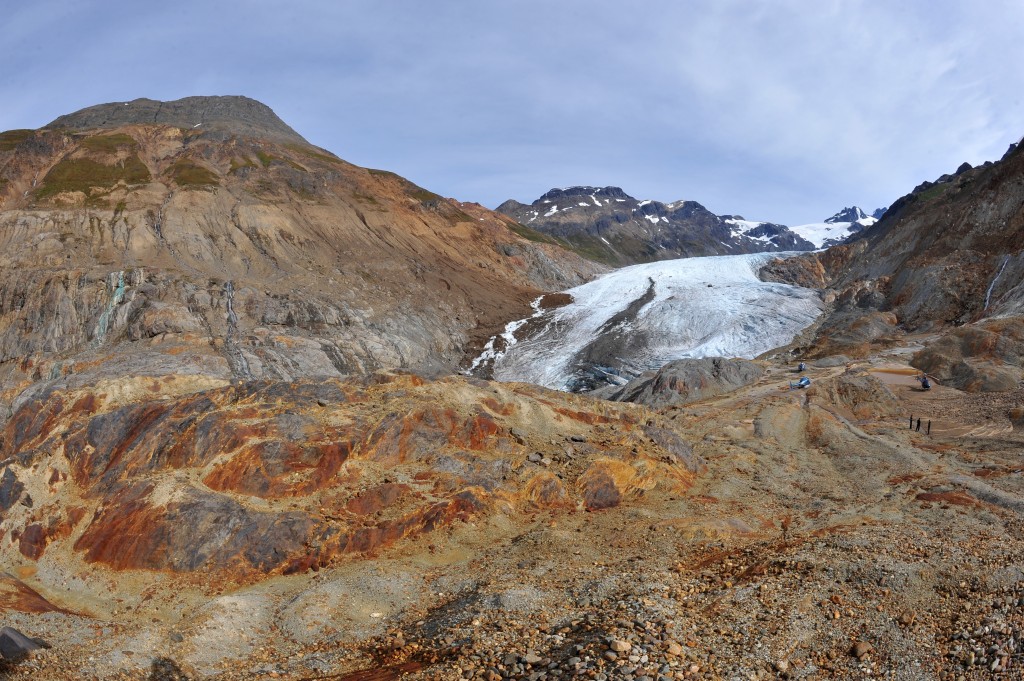
Seabridge Gold’s (TSX: SEA; NYSE: SA) push for permits to dig tunnels at its giant KSM project is being delayed by British Columbia until the miner’s court fight with neighbour Tudor Gold (TSXV: TUD) is resolved.

The twin tunnels are a core link in the $6.4 billion capex KSM project, carrying ore from mining in the Mitchell Valley to processing facilities in the Treaty Valley. Part of the route crosses Tudor claims and Seabridge already holds some permits. But the province won’t rule on the rest of them while Tudor challenges Seabridge in provincial court.
“We have always been clear that if Tudor has an approved and permitted mine plan for its Goldstorm project, then we are willing to sit down and find an amicable solution to the Mitchell Treaty tunnels (MTT) issue,” CEO Rudi Fronk said Friday in a news release. “However, agreeing to move the MTT route before Tudor has a defined project makes no sense.”
The delay comes after Seabridge’s KSM had cleared other major hurdles. These include the mid-2024 ‘substantially started’ designation from the BC government which cemented KSM’s Environmental Assessment Act permit for the life of the project; the narrowing of its search for a development partner to one company; and last month’s small victory in court when Tudor dropped one of its appeals.
Several fights
The details of the court fight concern whether Seabridge’s conditional mineral reserve for KSM, first granted in 2012, binds claims that predate it, and whether the province has authority to grant tunnel-related rights across them. The ministry has on several occasions confirmed in writing that the reserve applies to Tudor’s ground, Seabridge said.
Tudor has argued for months that the tunnel route, as planned, would cut through the Goldstorm deposit and the nearby Perfectstorm target on its Treaty Creek project. In October, it proposed a northern reroute that it said could let both projects advance. In December the company reiterated that negotiation with Seabridge and the province offered the best path, even as it said it was pressing ahead with court proceedings to preserve its rights.
“We continue to believe that negotiation is the best path forward to resolve the issues for the benefit of all parties,” president Joe Ovsenek wrote in an October newsletter to investors. “We are counting on the BC government to support the potential of Treaty Creek and not sacrifice it for the sake of KSM.”
Seabridge said it still has no plans to begin tunnel construction before it completes a final feasibility study and announces a project partner.
Tudor started compiling a preliminary economic assessment due by the third quarter for a 10,000-tonne-per-day underground mine at Goldstorm after updating the resource in January. Seabridge, meanwhile, said last month that securing a KSM partner is its top goal this year and updated KSM’s resources days later.
Seabridge’s Toronto-listed shares fell 4.3% on Friday-afternoon trades to C$42.89 per share, giving it a market capitalization of C$4.6 billion ($3.3 billion). Tudor shares were trading down 1% at C$0.99 by midday, giving it a market cap of C$404 million ($292 million).
Big resources
The size of the resources helps explain why neither side has backed down. Tudor’s January resource estimate outlined 912.3 million indicated tonnes grading 0.85 gram gold, 5.07 grams silver and 0.15% copper for 24.9 million oz. gold, 148.7 million oz. silver and 3.1 billion lb. copper.
Inferred resources add 86.1 million tonnes grading 1.43 grams gold, 5.22 grams silver and 0.17% copper for 4 million oz. gold, 18.6 million oz. silver and 327.7 million lb. copper.
Seabridge’s resource update last month showed higher metal price assumptions lifted measured and indicated resources by 6.8 million oz. gold and inferred resources by 12.9 million oz. without changing the underlying geology model. The project carries proven and probable reserves of 2.3 billion tonnes grading 0.64 gram gold, 0.14% copper and 2.2 grams silver for 47.3 million oz. gold, 7.3 billion lb. copper and 160 million oz. silver. The same study outlined a 33-year mine life and average yearly output of 1.03 million oz. gold and 178 million lb. copper.
$3 billion Canadian deal is fast-tracking gold production in Guyana

Ghana awards Gold Fields’ Damang mine lease to local firm Engineers & Planners

Ghana has selected local mining services company Engineers & Planners Ltd to take over Gold Fields’ Damang gold mine, the mines minister said on Tuesday.
Ghana, which is seeking to boost local ownership in its mining sector, rejected Johannesburg-based Gold Fields’ lease‑renewal bid and took control of the mine last year, breaking with years of automatic extensions.
It then began assessing local bids for a potential $1 billion revival of the asset.
In a statement, Emmanuel Armah‑Kofi Buah said mining regulator, the Minerals Commission, had recommended E&P as the successful bidder.
The company demonstrated it had access to $505 million in financing, meeting the government’s requirement that bidders show funding capacity of at least $500 million. It also scored strongly on technical experience, equipment, safety and local content, the statement said.
Gold Fields, which has operated Damang for more than two decades, initially said it may sell the mine, citing its limited remaining life and lack of economic reserves.
It said last month it was working to ensure the smooth transition of the mine to a new operator.
Authorities have said the tender aims to keep the mine operating, protect jobs and increase local participation in Ghana’s mining sector.
(By Christian Akorlie, Emmanuel Bruce and Maxwell Akalaare Adombila; Editing by Barbara Lewis)
BRICS+ nations hold over 17% of world’s gold reserves: Report
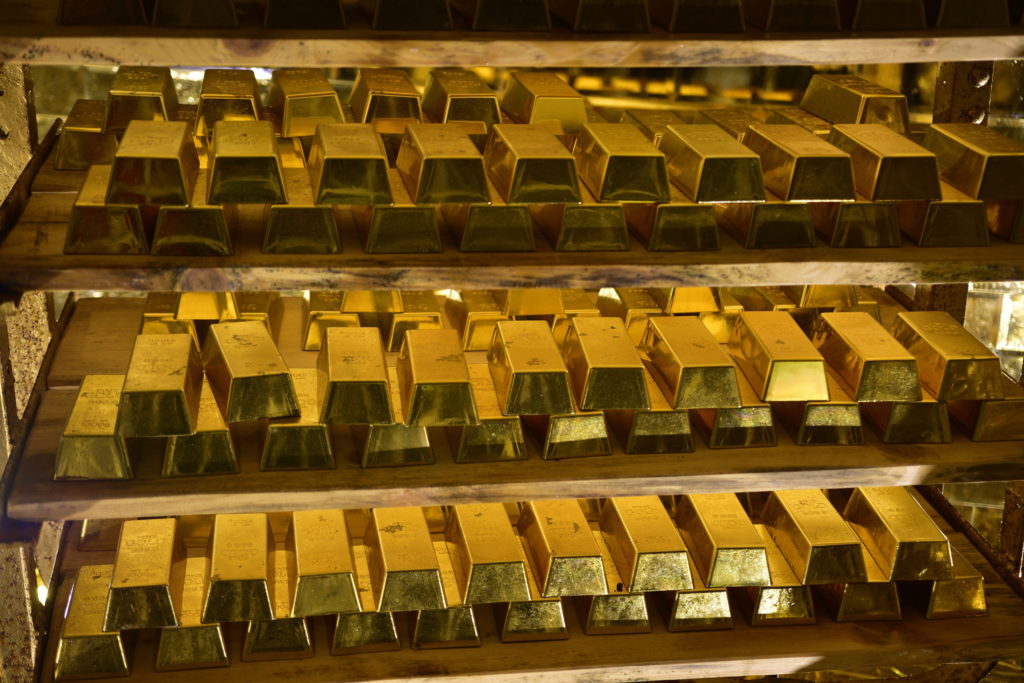
Global central banks have been buying up gold at a record pace, purchasing on average about 1,000 tonnes over the past four years, and the momentum has continued into 2026.
A large part of that can be attributed to emerging economies, led by BRICS+ nations, which have used bullion as a go-to strategy to shield themselves against geopolitical risks and US currency influence.
A new report by EBC Financial Group estimates that the bloc now holds about 6,000 tonnes of the world’s gold reserves, or 17.4% of the global total, up from 11.2% in 2019. Russia leads the group with 2,336 tonnes, followed closely by China at 2,298 tonnes. The next largest holder is India at 880 tonnes.
Between 2020 and 2024, BRICS+ nations accounted for more than half of all gold bought by central banks globally, EBC said, highlighting what it views as a “structural shift” in their reserves strategy tracing back to Western sanctions against Russia in 2022, after which gold purchases doubled from about 500 tonnes to 1,000 tonnes.
Shift in reserve strategy
But, as the London-based financial group notes, the gold accumulation is only one side of the shift. The other is the declining share of the US dollar in global reserves. IMF data shows that dollar’s share fell from 71% in 1999 to roughly 57% by the end of 2025, its lowest reading since 1994.
Since 2014, central bank holdings of dollar-denominated assets have remained essentially flat, ECB noted.
Meanwhile, gold’s share of official reserve assets has more than doubled from below 10% in 2015 to over 23% today. Much of this reflects gold’s price appreciation, but it unmistakably highlights that central banks are allocating a growing share of their portfolios to gold, and the war in the Middle East only reinforced this urgency, the group said.
The report also cited the World Gold Council’s 2025 survey, which revealed that 73% of central bankers globally believe the dollar’s reserve share will decrease further over the next five years, and 43% of surveyed central banks plan to increase their gold holdings, both record-high readings.
Trends to monitor
On whether the gold-buying would accelerate, the ECB report highlighted several key developments that could be worth monitoring.
One is China, such as whether it would resume public reporting of gold reserve additions, which it has not done since May 2024. As of the end of March, the Chinese central bank has bought gold for 17 straight months.
Another potential driver is whether nations like Saudi Arabia or the UAE would follow the Russia-China playbook and increase their formal allocations of gold. Saudi Arabia, in particular, is considered as a wild card. A move to just 5% gold allocation would require purchases equivalent to the entire projected central bank demand for 2026 from a single buyer, ECB noted.
In addition, the group said to watch for further declines in the dollar’s reserve share in the next IMF COFER release, since each incremental drop reinforces the narrative driving sovereign gold demand.
No comments:
Post a Comment