Trump Administration Is Using Christianity to Justify Murder and Empire
There is no love of the stranger in Trump, Vance, and Hegseth’s embrace of imperial Christianity.
By George Yancy ,
April 21, 2026

President Donald Trump, Vice President JD Vance, and Secretary of Defense Pete Hegseth bow their heads during the invocation the amphitheatre at the Tomb of the Unknown Soldier in Arlington National Cemetery in Arlington, Virginia, on Memorial Day, May 26, 2025.
BRENDAN SMIALOWSKI / AFP via Getty Images
As a philosopher, I am known for bringing a deeply uncomfortable truth to bear upon the hegemonic, hierarchical, and privileged embodied reality of whiteness. My aim has been to shape a critical discourse and produce a body of philosophical writing that reveals the ways in which whiteness functions as a mask, as a veil, to cover over the history of its violence. It does this through acts of denial, bad faith, and what philosopher Charles W. Mills terms an epistemology of ignorance, which produces “the ironic outcome that whites will in general be unable to understand the world they themselves have made.”
My aim has been to show white people to themselves with no chaser, and to attempt to free them from forms of evasion that result in the illusion that whiteness constitutes a site of “innocence.” Whiteness is not innocent; it is a structural and embodied lived reality that is predicated upon violence against those who have been constructed (such as Black people) in their very being as wretched. In short, to be Black is precisely to be not human, not moral, not civilized, not intelligent. It is this “not” that underwrites and renders legible the idea of whiteness as “supreme.” But whiteness is parasitic upon Blackness, which functions as its host. James Baldwin powerfully argued that Black people “have functioned in the white … world as a fixed star, as an immovable pillar.” It is this reality that generates a profound question that reveals the fundamental instability of whiteness: Without a dehumanizing concept of Blackness, what would happen to whiteness? My hope is that it will crumble. To inflect Michel Foucault’s provocative words, “One can certainly wager that [whiteness] would be erased, like a face drawn in sand at the edge of the sea.”
Bear in mind that my target of analysis is whiteness as a form of structural violence that white people perpetuate through their complicity. We must call into question the idea that white people are pre-social neoliberal subjects who exist beyond the messiness of racist practices and assumptions that are fundamentally linked to being white. In her book, Being White, Being Good, Barbara Applebaum argues that a pedagogy of white complicitly “addresses ideologies and the ontological, epistemological and ethical frameworks that support and maintain racial injustice.” This hard truth means that the most “radically” anti-racist white person remains tied to those historical struts and girders of white supremacy, even if only unconsciously, and is thereby ethically and socially implicated in the perpetuation of whiteness as structural violence.
I am less well-known for writing about my Christian sensibilities. I suspect this is due to a problematic tendency — something learned early in my philosophical training — to keep my personal faith private, lest I be dismissed as someone lacking “serious” philosophical grounding. As a graduate student at Duquesne University, I took a graduate seminar that explored various important developments within the area of liberation theology, including the work of both Leonardo Boff and Gustavo Gutiérrez, who are two prominent pioneers of the movement. Years later, after speaking with the professor about my religious Christian sensibilities, she said, “But I thought that you were an atheist.” However, my critical work on whiteness hasn’t strayed far from my religious sensibilities. For example, I have edited Christology and Whiteness: What Would Jesus Do? (2012), Buddhism and Whiteness: Critical Reflections with Emily McRae (2019), and In Sheep’s Clothing: The Idolatry of White Christian Nationalism with Bill Bywater (2024).
For these reasons and more, I was honored recently when asked by Dr. Greg Forster, who is a senior fellow and affiliate professor of biblical and systematic theology at Trinity Evangelical Divinity School and editor of Faith & Flourishing, about my thoughts regarding cultural diversity in higher education from a Christian perspective, which I see as linked to celebrating the other — not effacing the stranger. I am now more open to lay bare my own Christian identity — one couched in radical love — especially when inundated with the toxicity and perversity of white Christian nationalism and those, like U.S. Defense Secretary Pete Hegseth, who shamelessly invokes the name of Jesus Christ to wage wars. I am sickened by the implications. To this perverted understanding of Christianity, I want to shout: “Not in my name!” Imagine thanking Jesus for the horrible murder caused by the U.S. strike on a school in Minab, Hormozgan Province, in Iran that killed 168 people, including over 100 children. Think of the obscenity of thanking Jesus for the violent dismemberment of Iranian children. I reject Hegseth’s warmongering and idolatrous interpretation of the historical Jesus who preached love, even of one’s “enemies.” So there is a throughline in this article that allows me to reflect theologically on the theme of cultural diversity and also critique those machinations that I see as anti-theological, anti-Christian, and indeed, idolatrous.

Christian Nationalists in US Government Push Attacks on Iran as Holy War
With Pete Hegseth leading the Department of Defense, the line separating church and state is increasingly blurred. By Sara Gabler , Truthout April 2, 2026
Forster asked me: “Almost no topic produces a higher ratio of heat to light than cultural diversity in higher education. What distinctive contribution can Christians make to help academic communities, and society at large, develop a sustainable approach to these difficult issues?”
To answer this question, it is important to mention that I am racially embodied as Black. This lived experience shapes how I think about questions regarding justice, diversity, equity, and inclusion. It means that the question of cultural diversity isn’t an abstraction for me, especially given the reality of anti-Black physical violence and epistemic violence regarding the historical denial of the value of Black life and the denial of knowledge produced by Black people. Given the history of the transatlantic slave trade, Black Codes, Jim Crow segregation, lynch mobs, police violence, and mass incarceration, I literally have skin in the game of this discussion. I am also what I call a hopeful Christian theist, which means that hope, that sense of being unfulfilled, sustains my longing for the Divine, which points to that which is transcendent. It isn’t a form of hope that simply fills the gaps of failed proof for the existence of God. My hope embodies commitment to and striving for a promise that is theologically rich and inextricably linked to the practice of chesed, agape, social justice, and kindness. It is also a hope that yearns for the truth of a certain philosophical anthropology — one that grounds our existential mystery, our being in the cosmos, in the Imago Dei (image of God), and speaks to the character of our nature as transcendent through a Divine act of love.
My understanding of cultural diversity is informed by the idea that education is not about cultural arrogance, political hegemony, and the silencing of diverse voices. Metaphorically, the root meaning of education (educere — to lead out) implies movement, change, and transformation. It is a form of transformation that involves the process of engaging in critical thinking, daring, and courage. It means being vulnerable, capable of being “wounded,” which means being open to hearing about forms of injustice that touch your being at its core, that forces you to rethink your own “innocence” and “ethical purity.” It means to listen to and be touched by the stranger.
To embody the opposite of this is to pretend invulnerability; it is to relate to others through an attitude of imperial hegemony; it involves silencing others. Theologically, to silence the other is a failure or refusal to recognize the existential and spiritual integrity of others, to appreciate their existence as a gift. Critiquing how the power of the state usurps the prophetic message of Christianity, Cornel West writes, “Most American Constantinian Christians are unaware of their imperialistic identity because they do not see the parallel between the Roman Empire that put Jesus to death and the American Empire they celebrate.” For me, genuine education is diametrically opposed to the formation of an imperialistic identity, which seeks to dominate dialogical spaces that are meant to invite and cultivate epistemic humility. Left unchecked, such identities prioritize flags and missiles over love, inclusive fellowship, and reconciliation.
There are times when my students are clearly troubled, in a generative way, as we critically discuss, with as much honesty as possible, issues about what it means to contribute to injustice and political hegemony; and what it means to face one’s own complicity in perpetuating racism, sexism, and other oppressive hierarchies that do violence to other human beings or even the Earth itself. Within this context, love is inextricably linked to outrage, both of which are what I want my students to feel, to express. As a member of the academic community, one that is made up of a diversity of human beings who are always in process, finite and fallible, I encourage my students to feel outrage when it comes to forms of learning that are designed to create lockstep conformity. It is that kind of conformity that fears difference, that abhors those who don’t look like “us,” or those who come from countries that are deemed “ersatz,” “racially problematic,” or “uncivilized.”
As a Black philosopher, I share with my white students what it means to be deemed “racially other” and thereby excluded from the normative status of whiteness. I share with them how whiteness is itself a site of privilege and how, when left unchallenged, these students unconsciously reap the benefits of that privilege. This awareness is often painful as they have been taught, even if only implicitly, to think of whiteness as a site of “innocence.” But as James Baldwin wrote, “It is the innocence which constitutes the crime.” Given my own sense of ethical fallibility, which follows from my hopeful Christian theist positionality, I too cannot claim “innocence.” I too perpetuate forms of injustice. This way of demonstrating vulnerability within the context of my classroom helps me and my students to acknowledge and embrace a space of collective responsibility, even as that responsibility is distributed differently according to other factors like whiteness. There is the mutual understanding that even though I am the teacher, we all share in the process of “leading out,” of becoming more than we were before entering the classroom together. As Rabbi Abraham Joshua Heschel reminded us, “We must continue to remind ourselves that in a free society all are involved in what some are doing. Some are guilty; all are responsible.”
This sense of responsibility isn’t easy to carry. Yet, it is required of each of us. Within the context of cultural diversity — especially within our current political climate of unabashed toxicity of xenophobia and the erasure of cultural diversity — I pedagogically encourage my students to rethink the meaning of “neighbor.” Indeed, I invite them to explore the often-hidden assumptions and biases that they harbor that lead them to feel that sense of irrational unease where the “neighbor,” the “stranger” is a Black person, an undocumented immigrant, a Palestinian, a Haitian, a Somalian, a queer person. As a hopeful Christian theist, I take it as an act of love to show kindness to the least of these. What is this but the parable of the Good Samaritan? Indeed, it is an act of caritas, an act of what I would call un-suturing, where one opens oneself to the other and refuses to seek shelter (or walk away as fast as possible) in fear or refuses to look the other way. In this case, one stops in their tracks and refuses to mark the other as “unclean,” “abominable” and existentially nugatory. In this case, we accept the presence of the other as a gift, as an opportunity to demonstrate love and kindness.
I teach my students that we bring our entire complex selves to the university classroom, including our arrogant selves, our myopic selves, and our intolerant selves. Accordingly, what we deem “deviant” and “strange” within those classrooms is what we have already marked as such within the “outside world.” It is our broken selves that preexist the classrooms that we later come to inhabit. Hence, we must look to transform both spheres, and ourselves within each, as they are connected. Moreover, the creation of this transformative space isn’t simply about epistemic and cultural tolerance. After all, tolerance needn’t radically move the heart. Additionally, neoliberal forms of marketing “cultural diversity” can function as forms of superficial propitiation by, for example, giving false representations (or overrepresentations) of racial diversity in the form of brochures that are designed to sell an image as opposed to reality.
Through the lens of hopeful Christian theist sensibilities, and an understanding of the embodied love of the historic Jesus, it is important that we cultivate forms of love that radically dismantle structural and psychic barriers that render some people ungrievable while others are deemed grievable. Rabbi Heschel challenged us where he wrote, “Daily we should take account and ask: What have I done today to alleviate the anguish, to mitigate the evil, to prevent humiliation?” I would add: What have we done to eliminate the fear that keeps us apart, to eradicate the hatred, to open ourselves to those voices that have been historically marginalized, to listen with patience, to hear the plight of Palestinian and Iranian children, to hear the pain of those in poverty, to create a place in our hearts for those innocent children who need our loving kindness as they are driven from war-torn countries or are torn to pieces after being bombed by warhawk and self-serving “leaders” who initiate wars of choice? As I bear witness to the U.S.’s bloodlust in the form of murdering Iranian children, I know that the United States is in desperate need of a radical transformation. Christian ethics calls for drawing others near — not to inspect them or prejudge if they are “fit” or, as Donald Trump said, “to unleash hell” upon them. Unlike Pete Hegseth, who prayed violence against those “who deserve no mercy,” Christian ethics embodies mercy. Christian ethics refuses prayers of “overwhelming violence” in the name of Jesus Christ. Just imagine the scene for a moment, imagine the grotesqueness of this prayer spoken by Hegseth. As a ritual, it is dangerous and idolatrous; it distorts, flattens, and does violence to the memory of the historic Jesus, the one who said, “Blessed are the peacemakers.” This is the message of Pope Leo XIV to Trump: “God does not bless any conflict. Anyone who is a disciple of Christ, the Prince of Peace, is never on the side of those who once wielded the sword and today drop bombs.”
As we know, Trump, by his own words, is derelict when it comes to being a peacemaker. After all, it was just on April 7 that he threatened on social media that “a whole civilization will die tonight, never to be brought back again.” This is the same Trump who didn’t flinch when it came to posting an AI image of himself as Jesus. The contradiction and decadence in both cases are palpable. So, Trump’s threat is to commit the unconscionable act of genocide against over 93 million Iranians? Surely, they too, are created in the image of God, and one would think that Hegseth and JD Vance are aware of this theological faith claim as they both identify as Christians. But the problem is that Hegseth and Vance are both invested in weaponizing, instrumentalizing, and cheapening the concept of God as a tool for “justifying” the murder of other human beings. And the image of a white Jesus is itself deeply problematic, with, as Richard Dyer points out, “the gentilising and whitening of the image of Christ and the Virgin [Mary] in painting.” The image of Trump as Jesus borders on the sacrilegious, especially as it depicts angelic-like figures and his “supernatural” powers to heal. And even if we grant that he thought that it was an AI image of him as a “healer,” a healer doesn’t threaten genocide, a healer doesn’t threaten that “all Hell will reign down” on other human beings and then add, “Glory be to GOD!” In the midst of human carnage, a healer doesn’t talk about using bombs “just for fun.” Under this imperial Christianity, Hegseth does not pray to God that Iranians are kept safe from Trump’s war of choice.
What I counterpose to imperial Christianity is Christian love. As James Baldwin writes, “Love takes off the masks that we fear we cannot live without and know we cannot live within.” To be open to cultural diversity and yet to wear this mask is mutually exclusive. The latter must be torn from our eyes and ripped from our hearts. If one claims to be a Christian, then there must be the belief that each one of us embodies the gift of the Imago Dei, which many have covered over because of our fear, divisiveness, and fanaticism. Embracing cultural diversity is easy when it fails or refuses to ask anything radical from us. Christianity asks for more; it asks that we be more, and to be more without the machinations of safety, but by the fragility of hope.
This article is licensed under Creative Commons (CC BY-NC-ND 4.0), and you are free to share and republish under the terms of the license.
As a philosopher, I am known for bringing a deeply uncomfortable truth to bear upon the hegemonic, hierarchical, and privileged embodied reality of whiteness. My aim has been to shape a critical discourse and produce a body of philosophical writing that reveals the ways in which whiteness functions as a mask, as a veil, to cover over the history of its violence. It does this through acts of denial, bad faith, and what philosopher Charles W. Mills terms an epistemology of ignorance, which produces “the ironic outcome that whites will in general be unable to understand the world they themselves have made.”
My aim has been to show white people to themselves with no chaser, and to attempt to free them from forms of evasion that result in the illusion that whiteness constitutes a site of “innocence.” Whiteness is not innocent; it is a structural and embodied lived reality that is predicated upon violence against those who have been constructed (such as Black people) in their very being as wretched. In short, to be Black is precisely to be not human, not moral, not civilized, not intelligent. It is this “not” that underwrites and renders legible the idea of whiteness as “supreme.” But whiteness is parasitic upon Blackness, which functions as its host. James Baldwin powerfully argued that Black people “have functioned in the white … world as a fixed star, as an immovable pillar.” It is this reality that generates a profound question that reveals the fundamental instability of whiteness: Without a dehumanizing concept of Blackness, what would happen to whiteness? My hope is that it will crumble. To inflect Michel Foucault’s provocative words, “One can certainly wager that [whiteness] would be erased, like a face drawn in sand at the edge of the sea.”
Bear in mind that my target of analysis is whiteness as a form of structural violence that white people perpetuate through their complicity. We must call into question the idea that white people are pre-social neoliberal subjects who exist beyond the messiness of racist practices and assumptions that are fundamentally linked to being white. In her book, Being White, Being Good, Barbara Applebaum argues that a pedagogy of white complicitly “addresses ideologies and the ontological, epistemological and ethical frameworks that support and maintain racial injustice.” This hard truth means that the most “radically” anti-racist white person remains tied to those historical struts and girders of white supremacy, even if only unconsciously, and is thereby ethically and socially implicated in the perpetuation of whiteness as structural violence.
I am less well-known for writing about my Christian sensibilities. I suspect this is due to a problematic tendency — something learned early in my philosophical training — to keep my personal faith private, lest I be dismissed as someone lacking “serious” philosophical grounding. As a graduate student at Duquesne University, I took a graduate seminar that explored various important developments within the area of liberation theology, including the work of both Leonardo Boff and Gustavo Gutiérrez, who are two prominent pioneers of the movement. Years later, after speaking with the professor about my religious Christian sensibilities, she said, “But I thought that you were an atheist.” However, my critical work on whiteness hasn’t strayed far from my religious sensibilities. For example, I have edited Christology and Whiteness: What Would Jesus Do? (2012), Buddhism and Whiteness: Critical Reflections with Emily McRae (2019), and In Sheep’s Clothing: The Idolatry of White Christian Nationalism with Bill Bywater (2024).
For these reasons and more, I was honored recently when asked by Dr. Greg Forster, who is a senior fellow and affiliate professor of biblical and systematic theology at Trinity Evangelical Divinity School and editor of Faith & Flourishing, about my thoughts regarding cultural diversity in higher education from a Christian perspective, which I see as linked to celebrating the other — not effacing the stranger. I am now more open to lay bare my own Christian identity — one couched in radical love — especially when inundated with the toxicity and perversity of white Christian nationalism and those, like U.S. Defense Secretary Pete Hegseth, who shamelessly invokes the name of Jesus Christ to wage wars. I am sickened by the implications. To this perverted understanding of Christianity, I want to shout: “Not in my name!” Imagine thanking Jesus for the horrible murder caused by the U.S. strike on a school in Minab, Hormozgan Province, in Iran that killed 168 people, including over 100 children. Think of the obscenity of thanking Jesus for the violent dismemberment of Iranian children. I reject Hegseth’s warmongering and idolatrous interpretation of the historical Jesus who preached love, even of one’s “enemies.” So there is a throughline in this article that allows me to reflect theologically on the theme of cultural diversity and also critique those machinations that I see as anti-theological, anti-Christian, and indeed, idolatrous.
Christian Nationalists in US Government Push Attacks on Iran as Holy War
With Pete Hegseth leading the Department of Defense, the line separating church and state is increasingly blurred. By Sara Gabler , Truthout April 2, 2026
Forster asked me: “Almost no topic produces a higher ratio of heat to light than cultural diversity in higher education. What distinctive contribution can Christians make to help academic communities, and society at large, develop a sustainable approach to these difficult issues?”
To answer this question, it is important to mention that I am racially embodied as Black. This lived experience shapes how I think about questions regarding justice, diversity, equity, and inclusion. It means that the question of cultural diversity isn’t an abstraction for me, especially given the reality of anti-Black physical violence and epistemic violence regarding the historical denial of the value of Black life and the denial of knowledge produced by Black people. Given the history of the transatlantic slave trade, Black Codes, Jim Crow segregation, lynch mobs, police violence, and mass incarceration, I literally have skin in the game of this discussion. I am also what I call a hopeful Christian theist, which means that hope, that sense of being unfulfilled, sustains my longing for the Divine, which points to that which is transcendent. It isn’t a form of hope that simply fills the gaps of failed proof for the existence of God. My hope embodies commitment to and striving for a promise that is theologically rich and inextricably linked to the practice of chesed, agape, social justice, and kindness. It is also a hope that yearns for the truth of a certain philosophical anthropology — one that grounds our existential mystery, our being in the cosmos, in the Imago Dei (image of God), and speaks to the character of our nature as transcendent through a Divine act of love.
My understanding of cultural diversity is informed by the idea that education is not about cultural arrogance, political hegemony, and the silencing of diverse voices. Metaphorically, the root meaning of education (educere — to lead out) implies movement, change, and transformation. It is a form of transformation that involves the process of engaging in critical thinking, daring, and courage. It means being vulnerable, capable of being “wounded,” which means being open to hearing about forms of injustice that touch your being at its core, that forces you to rethink your own “innocence” and “ethical purity.” It means to listen to and be touched by the stranger.
To embody the opposite of this is to pretend invulnerability; it is to relate to others through an attitude of imperial hegemony; it involves silencing others. Theologically, to silence the other is a failure or refusal to recognize the existential and spiritual integrity of others, to appreciate their existence as a gift. Critiquing how the power of the state usurps the prophetic message of Christianity, Cornel West writes, “Most American Constantinian Christians are unaware of their imperialistic identity because they do not see the parallel between the Roman Empire that put Jesus to death and the American Empire they celebrate.” For me, genuine education is diametrically opposed to the formation of an imperialistic identity, which seeks to dominate dialogical spaces that are meant to invite and cultivate epistemic humility. Left unchecked, such identities prioritize flags and missiles over love, inclusive fellowship, and reconciliation.
There are times when my students are clearly troubled, in a generative way, as we critically discuss, with as much honesty as possible, issues about what it means to contribute to injustice and political hegemony; and what it means to face one’s own complicity in perpetuating racism, sexism, and other oppressive hierarchies that do violence to other human beings or even the Earth itself. Within this context, love is inextricably linked to outrage, both of which are what I want my students to feel, to express. As a member of the academic community, one that is made up of a diversity of human beings who are always in process, finite and fallible, I encourage my students to feel outrage when it comes to forms of learning that are designed to create lockstep conformity. It is that kind of conformity that fears difference, that abhors those who don’t look like “us,” or those who come from countries that are deemed “ersatz,” “racially problematic,” or “uncivilized.”
As a Black philosopher, I share with my white students what it means to be deemed “racially other” and thereby excluded from the normative status of whiteness. I share with them how whiteness is itself a site of privilege and how, when left unchallenged, these students unconsciously reap the benefits of that privilege. This awareness is often painful as they have been taught, even if only implicitly, to think of whiteness as a site of “innocence.” But as James Baldwin wrote, “It is the innocence which constitutes the crime.” Given my own sense of ethical fallibility, which follows from my hopeful Christian theist positionality, I too cannot claim “innocence.” I too perpetuate forms of injustice. This way of demonstrating vulnerability within the context of my classroom helps me and my students to acknowledge and embrace a space of collective responsibility, even as that responsibility is distributed differently according to other factors like whiteness. There is the mutual understanding that even though I am the teacher, we all share in the process of “leading out,” of becoming more than we were before entering the classroom together. As Rabbi Abraham Joshua Heschel reminded us, “We must continue to remind ourselves that in a free society all are involved in what some are doing. Some are guilty; all are responsible.”
This sense of responsibility isn’t easy to carry. Yet, it is required of each of us. Within the context of cultural diversity — especially within our current political climate of unabashed toxicity of xenophobia and the erasure of cultural diversity — I pedagogically encourage my students to rethink the meaning of “neighbor.” Indeed, I invite them to explore the often-hidden assumptions and biases that they harbor that lead them to feel that sense of irrational unease where the “neighbor,” the “stranger” is a Black person, an undocumented immigrant, a Palestinian, a Haitian, a Somalian, a queer person. As a hopeful Christian theist, I take it as an act of love to show kindness to the least of these. What is this but the parable of the Good Samaritan? Indeed, it is an act of caritas, an act of what I would call un-suturing, where one opens oneself to the other and refuses to seek shelter (or walk away as fast as possible) in fear or refuses to look the other way. In this case, one stops in their tracks and refuses to mark the other as “unclean,” “abominable” and existentially nugatory. In this case, we accept the presence of the other as a gift, as an opportunity to demonstrate love and kindness.
I teach my students that we bring our entire complex selves to the university classroom, including our arrogant selves, our myopic selves, and our intolerant selves. Accordingly, what we deem “deviant” and “strange” within those classrooms is what we have already marked as such within the “outside world.” It is our broken selves that preexist the classrooms that we later come to inhabit. Hence, we must look to transform both spheres, and ourselves within each, as they are connected. Moreover, the creation of this transformative space isn’t simply about epistemic and cultural tolerance. After all, tolerance needn’t radically move the heart. Additionally, neoliberal forms of marketing “cultural diversity” can function as forms of superficial propitiation by, for example, giving false representations (or overrepresentations) of racial diversity in the form of brochures that are designed to sell an image as opposed to reality.
Through the lens of hopeful Christian theist sensibilities, and an understanding of the embodied love of the historic Jesus, it is important that we cultivate forms of love that radically dismantle structural and psychic barriers that render some people ungrievable while others are deemed grievable. Rabbi Heschel challenged us where he wrote, “Daily we should take account and ask: What have I done today to alleviate the anguish, to mitigate the evil, to prevent humiliation?” I would add: What have we done to eliminate the fear that keeps us apart, to eradicate the hatred, to open ourselves to those voices that have been historically marginalized, to listen with patience, to hear the plight of Palestinian and Iranian children, to hear the pain of those in poverty, to create a place in our hearts for those innocent children who need our loving kindness as they are driven from war-torn countries or are torn to pieces after being bombed by warhawk and self-serving “leaders” who initiate wars of choice? As I bear witness to the U.S.’s bloodlust in the form of murdering Iranian children, I know that the United States is in desperate need of a radical transformation. Christian ethics calls for drawing others near — not to inspect them or prejudge if they are “fit” or, as Donald Trump said, “to unleash hell” upon them. Unlike Pete Hegseth, who prayed violence against those “who deserve no mercy,” Christian ethics embodies mercy. Christian ethics refuses prayers of “overwhelming violence” in the name of Jesus Christ. Just imagine the scene for a moment, imagine the grotesqueness of this prayer spoken by Hegseth. As a ritual, it is dangerous and idolatrous; it distorts, flattens, and does violence to the memory of the historic Jesus, the one who said, “Blessed are the peacemakers.” This is the message of Pope Leo XIV to Trump: “God does not bless any conflict. Anyone who is a disciple of Christ, the Prince of Peace, is never on the side of those who once wielded the sword and today drop bombs.”
As we know, Trump, by his own words, is derelict when it comes to being a peacemaker. After all, it was just on April 7 that he threatened on social media that “a whole civilization will die tonight, never to be brought back again.” This is the same Trump who didn’t flinch when it came to posting an AI image of himself as Jesus. The contradiction and decadence in both cases are palpable. So, Trump’s threat is to commit the unconscionable act of genocide against over 93 million Iranians? Surely, they too, are created in the image of God, and one would think that Hegseth and JD Vance are aware of this theological faith claim as they both identify as Christians. But the problem is that Hegseth and Vance are both invested in weaponizing, instrumentalizing, and cheapening the concept of God as a tool for “justifying” the murder of other human beings. And the image of a white Jesus is itself deeply problematic, with, as Richard Dyer points out, “the gentilising and whitening of the image of Christ and the Virgin [Mary] in painting.” The image of Trump as Jesus borders on the sacrilegious, especially as it depicts angelic-like figures and his “supernatural” powers to heal. And even if we grant that he thought that it was an AI image of him as a “healer,” a healer doesn’t threaten genocide, a healer doesn’t threaten that “all Hell will reign down” on other human beings and then add, “Glory be to GOD!” In the midst of human carnage, a healer doesn’t talk about using bombs “just for fun.” Under this imperial Christianity, Hegseth does not pray to God that Iranians are kept safe from Trump’s war of choice.
What I counterpose to imperial Christianity is Christian love. As James Baldwin writes, “Love takes off the masks that we fear we cannot live without and know we cannot live within.” To be open to cultural diversity and yet to wear this mask is mutually exclusive. The latter must be torn from our eyes and ripped from our hearts. If one claims to be a Christian, then there must be the belief that each one of us embodies the gift of the Imago Dei, which many have covered over because of our fear, divisiveness, and fanaticism. Embracing cultural diversity is easy when it fails or refuses to ask anything radical from us. Christianity asks for more; it asks that we be more, and to be more without the machinations of safety, but by the fragility of hope.
This article is licensed under Creative Commons (CC BY-NC-ND 4.0), and you are free to share and republish under the terms of the license.
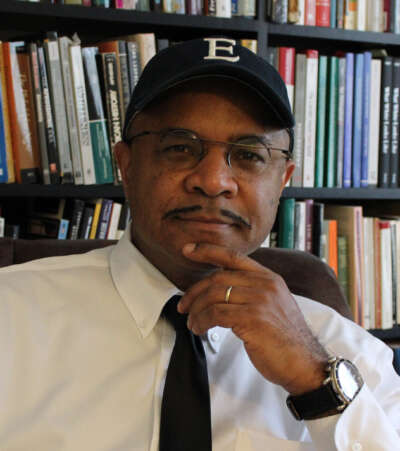
George Yancy
George Yancy is the Samuel Candler Dobbs professor of philosophy at Emory University and a Montgomery fellow at Dartmouth College. He is also the University of Pennsylvania’s inaugural fellow in the Provost’s Distinguished Faculty Fellowship Program (2019-2020 academic year). He is the author, editor and co-editor of over 25 books, including Black Bodies, White Gazes; Look, A White; Backlash: What Happens When We Talk Honestly about Racism in America; and Across Black Spaces: Essays and Interviews from an American Philosopher published by Rowman & Littlefield in 2020. His most recent books include a collection of critical interviews entitled, Until Our Lungs Give Out: Conversations on Race, Justice, and the Future (Rowman & Littlefield, 2023), and a coedited book (with philosopher Bill Bywater) entitled, In Sheep’s Clothing: The Idolatry of White Christian Nationalism (Roman & Littlefield, 2024).
No comments:
Post a Comment