Search for Missing Maintenance Worker After Fire on Submarine at Hyundai

A rescue effort was underway at the HD Hyundai Heavy Industries shipyard in Ulsan, South Korea, after one worker was reported missing during a fire on a submarine undergoing maintenance. Late reports said the body of a woman in her 60s who was working as a cleaner for a subcontractor had been located, but it is in an inaccessible area of the submarine.
The fire started midday on Thursday, April 9, on the Hong Beom-do, a Type 214 submarine, which was in the yard undergoing maintenance. There were 47 workers aboard, and they were ordered to evacuate the submarine. More than 50 firefighters and 31 pieces of equipment responded, and the fire was brought under control after about one hour and extinguished about 30 minutes later.
A report by ChosunBiz says the fire was thought to have started in the submarine’s battery room. It says that electrical switches had melted, and they were attempting to vent the smoke from the submarine. The report said there was a fear of short circuits or additional fires, and smoke had briefly interrupted the search for the missing worker.
According to the reports, the body of the worker has been located below the first floor living quarters, but it is in a narrow space. Teams are saying they can barely get a single person into the space. Officials are saying it is expected to take considerable time to reach the area because it is such a confined area.
The Hong Beom-do is a 65-meter (213-foot) submarine with a displacement of 1,800 tons. It was built by Hyundai and commissioned in 2018. The vessel was undergoing maintenance as part of a plan that will eventually enhance the combat system of the vessel.
Authorities said the cause of the fire is under investigation.
USN Gives Up on Long-Delayed Overhaul of Sub USS Boise
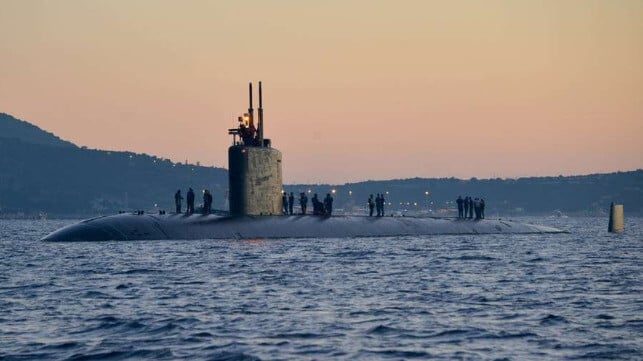
The U.S. Navy confirmed on Friday, April 10, that it is giving up on the long-delayed overhaul of the nuclear attack submarine USS Boise. The failed project had become a symbol of the Navy’s problems with maintenance and life-extension overhauls.
The overhaul project of the submarine had started a decade ago and remains unfinished, with most reports attributing it to the problems with the Navy’s public shipyards, supply problems, lack of experienced/trained shipyard personnel, and poor management.
In the official statement attributed to Chief of Naval Operations Daryl Caudle, the U.S. Navy said, “After a rigorous, data-driven analysis, we’ve made the tough but necessary decision to inactive USS Boise. This strategic move allows us to reallocate America’s highly-skilled workforce to our highest priorities: delivering the new Virginia and Columbia-class submarines and improving the readiness of our current fleet.”
The statement went on to say the Navy is changing the way it does business. It said its goal is to ensure all authorized funding directly contributes to readiness.
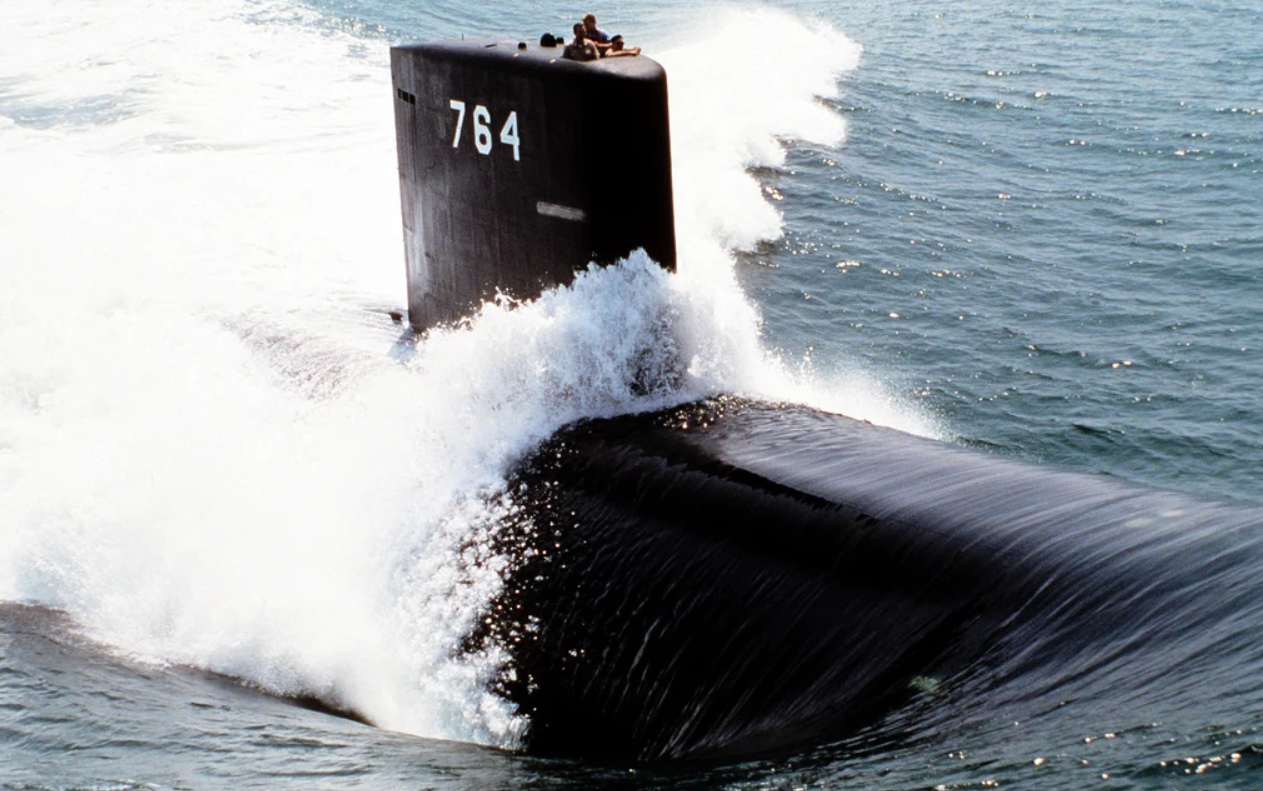
Underway on sea trials in 2011, she was reported to have a top speed exceeding 20 knots (USN)
The contract for the construction of USS Boise was awarded to Newport News Shipbuilding in 1987. The submarine was launched in 1991 and commissioned in November 1992. At 6,000 tons displacement, she is part of the Los Angeles class attack submarines.
At 110 meters (362 feet) in length, she was fast and carried a complement of approximately 135 officers and sailors. USS Boise's most noteworthy deployment might have been her participation in Operation Iraqi Freedom, including launching some of the first salvos in March 2003.
The schedule called for her to undergo her overhaul starting in 2015 and 2016. However, it was delayed due to manpower and funding issues. In 2017, she lost her drive certification.
She was shuttled back and forth in the Norfolk, Virginia area, sent and then recalled from HII’s Newport News yard. Reports highlighted the Navy’s decision to prioritize the ballistic missile submarines and the nuclear carriers, placing the attack submarines third on the priority list.
Plagued by delays in the overhaul program, the Navy reached out to the private sector and contracted with HII’s Newport News and General Dynamics’ Electric Boat for the overhaul of five of the attack submarines. General Dynamics completed the first of its projects and has the second underway. Newport News completed two, and finally USS Boise was placed into dry dock in 2021 for limited maintenance, followed by the formal overhaul contract in 2024. Reports indicate the budget had ballooned to between $1.6 and $1.9 billion for USS Boise and was likely to continue to rise. The current timeline did not schedule her return to the fleet until 2029.
Secretary of the Navy John Phelan, speaking on Fox, said the Navy had already spent $800 million on USS Boise, and it was only 22 percent complete. He justified the decision, saying the overhaul represented 65 percent of the cost of a new Virginia class submarine, yet it would only add 20 percent to the life of USS Boise.
“At some point, you just cut your losses and move on,” said Phelan.
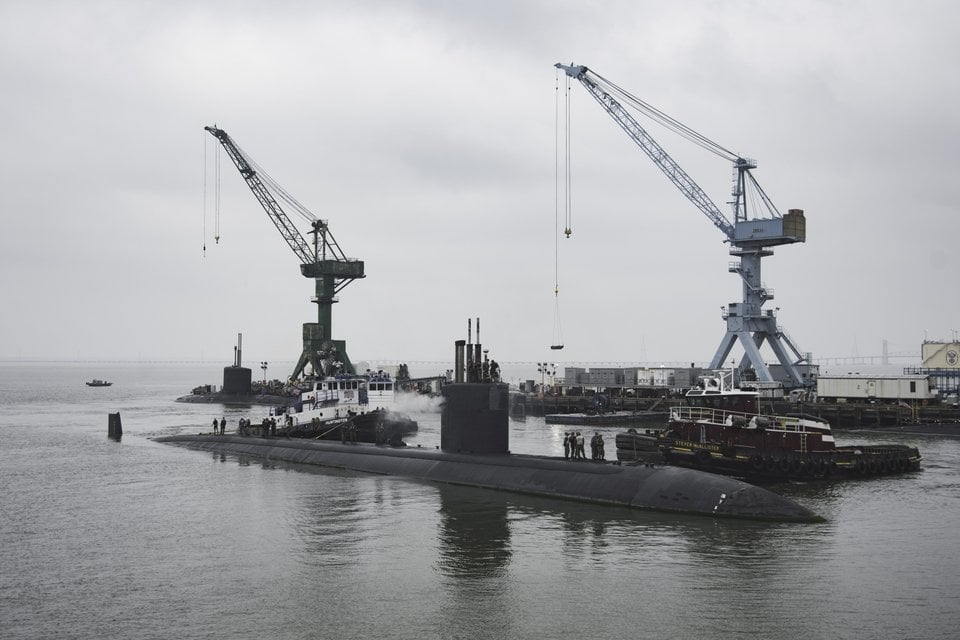
Looking forlorn in 2018 when she was first moved to HII's Newport News Shipyard (HII)
USS Boise was the 53rd Los Angeles class submarine commissioned and one of the youngest in a class that saw a total of 62 boats built from 1972 to 1996. As of 2025, the Navy lists 19 continuing in active service, with 26 officially decommissioned and others in active reserve awaiting decommissioning, or used for training.
In the official Navy vernacular, the vessel will be moved to “inactive” (i.e. laid up) while resources will be redirected to support other priorities. Reports point out that USS Boise spent a third of her life in port and listed as undergoing an overhaul.
No comments:
Post a Comment