Hungary's new Prime Minister Magyar moves fast to consolidate power and take down the Orban system
Acting quickly to consolidate his power and remake the political scene, Hungarian Prime Minister Peter Magyar detonated several political bombs in a single day on April 15.
First we gave a televised interview and told the pro-Orban state TV he was shutting it down, calling it a “factory of lies” and “not telling the people the truth” under his predecessor. Magyar went on to meet with Hungarian President Tamas Sulyok, who he told to quit immediately or face forced expulsion. Finally, he said that Budapest would continue to veto the release of a €90bn EU loan for Ukraine until oil flows from via the Druzhba pipeline resume.
Magyar was swept to power with a landslide victory on April 12 that handed him a constitutional majority of two thirds, putting his Tisza party in complete control of the country.
Going into the elections he warned that he would undo many of the reforms made by his predecessor Viktor Orban and sack the placeholders in government from the Fidesz party.
Lifting Hungary's veto on the blocked Ukraine loan is amongst the most urgent business as Kyiv is running out of money and faces macroeconomic collapse without fresh funding soon. Magyar said he will vote through the EU loan once the Druzhba pipeline resumes operations.
Supplies were halted in January after a drone attack damaged the pipeline, which Orban blamed on Ukraine and blocked the release of the funding. Magyar has taken the same line as Orban: “no oil, no money.”
Ukrainian President Volodymyr Zelenskiy said on April 14 that the pipeline is now repaired and flows would resume by the end of April, but not at full capacity.
Following a meeting with President Tamas Sulyok, Magyar said Hungary's new parliament would likely meet on May 6 or 7.
"ThePresident has informed me that he will ask me at the inaugural session of the new parliament to be Prime Minister and form a government, as the leader of the party that got the most votes," Magyar said.
President out
Magyar took an equally blunt line in a meeting with Hungary's President Tamas Sulyok: he told him to voluntarily leave his office or Tisza would use its super-majority in parliament to force the president out.
Sulyok is widely seen as an Orban ally and as president has the power to veto laws that would stymie the sweeping changes that Magyar has promised to make.
Magyar said in a social media post: “I have arrived at the Sandor Palace to meet the President of Hungary. [Tamas Sulyok] is unworthy of representing the unity of the Hungarian nation. He is unfit to serve as the guardian of legality. He is not fit to serve as a moral authority or a role model. Following the formation of the new government, Tamas Sulyok must leave office immediately.”
Sulyok became President of Hungary in 2024, nominated by Orban’s ruling Fidesz party, which holds a parliamentary majority. Before that, he served as President of the Constitutional Court, a role he held since 2016 after also being elected with Fidesz backing. The Hungarian presidency is largely ceremonial, but it carries influence through signing laws, referring legislation to the Constitutional Court, and symbolic leadership.
Magyar is keen to avoid the problems faced by Polish Prime Minister Donald Tusk who is pursuing a liberalisation agenda but is being blocked by Polish president Karol Nawrocki, who is aligned with the opposition Law and Justice (PiS) party and has tied up a lot of Tusk’s legislation by sending it to the constitutional court for review.
Magyar said in comments after meeting the president: “If he does not leave voluntarily, we will use the mandate given to us by the voters. Through constitutional amendments and the necessary legal changes, we will remove him from office. We will remove him and all the other puppets appointed by the Orban system.”
State TV shut
Magyar did not pull his punches during a live interview with the state TV station M1 for the first time, which was another tool used by the popularist Orban to control the media message and promote his own image in the country.
“What has been happening here since 2010 would have made even Goebbels or North Korean dictators blush. No truthful word has been spoken,” he said in the M1 interview.
“We will suspend this channel's news service. This isn't about me; I'm not seeking revenge. Our people deserve journalism that reflects the truth,” Magyar told the host.
Undoing the corruption
Magyar also announced a wide-reaching programme of renationalisation and confiscation of assets deemed to have been given away “for nothing” to state affiliated companies and Orban’s cronies. As IntelliNews reported, Hungary has been considered the most corrupt country in Europe for several years.
“We will nationalize the assets given to businesspeople and foundations during the Orban era,” said Magyar.
Amongst the most glaring deals, the Mathias Corvinus Collegium Foundation, a think tank close to Orban, was gifted 10% of the state-owned oil giant MOL and pharmaceutical company Gedeon Richter for free. “We will take back these shares,” said Magyar. In 2020, the MCC was also granted government funds and assets with a total value of approximately €1.4bn, Brussels Signal reports.
Magyar went on to ridicule some of M1’s more extreme reporting lines, promoted by Orban administration in an echo of Putin’s style of media manipulation, hyping up traditional family values” or blaming everything on the billionaire philanthropist George Soros.
“According to you, Germany has collapsed, there's no internet there, people aren't even having sex. The Hungarian people were laughing at you,” said Magyar. “It was said on this channel that even my young children won't talk to me, when in fact my children live with me.”
When the host tried to interrupt him, he shot back: “No host in this studio ever dared to interrupt Hungary's most corrupt and most lying prime minister.”
He went on to describe a sweeping programme to undo many of the abuses put in place by Orban.
“We will bring back the EU funds. We will join the European Public Prosecutor’s Office, create a national asset recovery authority, and implement other anti-corruption measures.”
“We will make the investigative authorities and judiciary independent,” he said.
“We will also restore academic freedom, returning universities to scholars and research institutes to researchers. We will use EU funds for infrastructure, energy efficiency, and healthcare — not for oligarchs or party loyalists.”
Currently Magyar remains Prime Minister elect but hopes his new government will be sworn in by early May.

Acting quickly to consolidate his power and remake the political scene, Hungarian Prime Minister Peter Magyar detonated several political bombs in a single day on April 15.
First we gave a televised interview and told the pro-Orban state TV he was shutting it down, calling it a “factory of lies” and “not telling the people the truth” under his predecessor. Magyar went on to meet with Hungarian President Tamas Sulyok, who he told to quit immediately or face forced expulsion. Finally, he said that Budapest would continue to veto the release of a €90bn EU loan for Ukraine until oil flows from via the Druzhba pipeline resume.
Magyar was swept to power with a landslide victory on April 12 that handed him a constitutional majority of two thirds, putting his Tisza party in complete control of the country.
Going into the elections he warned that he would undo many of the reforms made by his predecessor Viktor Orban and sack the placeholders in government from the Fidesz party.
Lifting Hungary's veto on the blocked Ukraine loan is amongst the most urgent business as Kyiv is running out of money and faces macroeconomic collapse without fresh funding soon. Magyar said he will vote through the EU loan once the Druzhba pipeline resumes operations.
Supplies were halted in January after a drone attack damaged the pipeline, which Orban blamed on Ukraine and blocked the release of the funding. Magyar has taken the same line as Orban: “no oil, no money.”
Ukrainian President Volodymyr Zelenskiy said on April 14 that the pipeline is now repaired and flows would resume by the end of April, but not at full capacity.
Following a meeting with President Tamas Sulyok, Magyar said Hungary's new parliament would likely meet on May 6 or 7.
"ThePresident has informed me that he will ask me at the inaugural session of the new parliament to be Prime Minister and form a government, as the leader of the party that got the most votes," Magyar said.
President out
Magyar took an equally blunt line in a meeting with Hungary's President Tamas Sulyok: he told him to voluntarily leave his office or Tisza would use its super-majority in parliament to force the president out.
Sulyok is widely seen as an Orban ally and as president has the power to veto laws that would stymie the sweeping changes that Magyar has promised to make.
Magyar said in a social media post: “I have arrived at the Sandor Palace to meet the President of Hungary. [Tamas Sulyok] is unworthy of representing the unity of the Hungarian nation. He is unfit to serve as the guardian of legality. He is not fit to serve as a moral authority or a role model. Following the formation of the new government, Tamas Sulyok must leave office immediately.”
Sulyok became President of Hungary in 2024, nominated by Orban’s ruling Fidesz party, which holds a parliamentary majority. Before that, he served as President of the Constitutional Court, a role he held since 2016 after also being elected with Fidesz backing. The Hungarian presidency is largely ceremonial, but it carries influence through signing laws, referring legislation to the Constitutional Court, and symbolic leadership.
Magyar is keen to avoid the problems faced by Polish Prime Minister Donald Tusk who is pursuing a liberalisation agenda but is being blocked by Polish president Karol Nawrocki, who is aligned with the opposition Law and Justice (PiS) party and has tied up a lot of Tusk’s legislation by sending it to the constitutional court for review.
Magyar said in comments after meeting the president: “If he does not leave voluntarily, we will use the mandate given to us by the voters. Through constitutional amendments and the necessary legal changes, we will remove him from office. We will remove him and all the other puppets appointed by the Orban system.”
State TV shut
Magyar did not pull his punches during a live interview with the state TV station M1 for the first time, which was another tool used by the popularist Orban to control the media message and promote his own image in the country.
“What has been happening here since 2010 would have made even Goebbels or North Korean dictators blush. No truthful word has been spoken,” he said in the M1 interview.
“We will suspend this channel's news service. This isn't about me; I'm not seeking revenge. Our people deserve journalism that reflects the truth,” Magyar told the host.
Undoing the corruption
Magyar also announced a wide-reaching programme of renationalisation and confiscation of assets deemed to have been given away “for nothing” to state affiliated companies and Orban’s cronies. As IntelliNews reported, Hungary has been considered the most corrupt country in Europe for several years.
“We will nationalize the assets given to businesspeople and foundations during the Orban era,” said Magyar.
Amongst the most glaring deals, the Mathias Corvinus Collegium Foundation, a think tank close to Orban, was gifted 10% of the state-owned oil giant MOL and pharmaceutical company Gedeon Richter for free. “We will take back these shares,” said Magyar. In 2020, the MCC was also granted government funds and assets with a total value of approximately €1.4bn, Brussels Signal reports.
Magyar went on to ridicule some of M1’s more extreme reporting lines, promoted by Orban administration in an echo of Putin’s style of media manipulation, hyping up traditional family values” or blaming everything on the billionaire philanthropist George Soros.
“According to you, Germany has collapsed, there's no internet there, people aren't even having sex. The Hungarian people were laughing at you,” said Magyar. “It was said on this channel that even my young children won't talk to me, when in fact my children live with me.”
When the host tried to interrupt him, he shot back: “No host in this studio ever dared to interrupt Hungary's most corrupt and most lying prime minister.”
He went on to describe a sweeping programme to undo many of the abuses put in place by Orban.
“We will bring back the EU funds. We will join the European Public Prosecutor’s Office, create a national asset recovery authority, and implement other anti-corruption measures.”
“We will make the investigative authorities and judiciary independent,” he said.
“We will also restore academic freedom, returning universities to scholars and research institutes to researchers. We will use EU funds for infrastructure, energy efficiency, and healthcare — not for oligarchs or party loyalists.”
Currently Magyar remains Prime Minister elect but hopes his new government will be sworn in by early May.
Trump breaks silence on Hungary’s election results, Russia adds Budapest to list of unfriendly countries

After two days of silence following Hungary's historic elections, US President Donald Trump has issued a measured response to the defeat of his ally Viktor Orban, but refrained from openly congratulating his challenger, Peter Magyar. Meanwhile, the Kremlin expressed support for Magyar’s willingness to engage in pragmatic dialogue with Russia, but Budapest was added to the 'unfriendly countries' list.
In an interview with the Italian newspaper Corriere della Sera, Trump referred to Orban as "a friend" and praised his approach to immigration. "He was my friend; this was not my choice, but he was a good man. He handled the immigration issue very well. He didn’t allow people to come in and destroy his country, as happened in Italy," Trump said, emphasising Orban's tough stance on immigration.
So far, the US administration has not sent its congratulations to the new Tisza government. Washington heavily backed Orban’s re-election campaign. US Vice President JD Vance was also dispatched to Budapest as a gesture of support for Orbán, underscoring the close alignment between the two political figures, days before the election.
On Fox News, JD Vance expressed confidence that Washington "would certainly be able to work well" with the new leadership, while describing Orbán as a key political partner of the United States in Europe. He said his recent visit to Budapest ahead of the election was intended as a show of support for a leader who had consistently defended US interests in European Union disputes.
Orban was “one of the few European leaders willing to stand up to a European bureaucracy that behaves badly towards the United States”, adding that in some cases he had been the only EU leader to vote in favour of US interests in disputes involving American companies. The vice president acknowledged that pre-election polling had already indicated the possibility of Orban’s defeat but said the visit was justified as a gesture of political support.
He called Orban’s 16-year premiership “transformative,” saying it had fundamentally reshaped Hungary. Despite expressing regret over Orbán’s defeat, he stressed that the United States would maintain strong relations with Hungary and look forward to cooperation with the incoming government.
Russian presidential spokesman Dmitry Peskov at a press briefing on April 14 said Moscow "positively assesses" the possibility of pragmatic engagement with Hungary, adding that Russia would take its cues from concrete steps taken by the new government. Russia respects the decision of Hungarian voters and seeks to maintain pragmatic relations, but noted that it does not issue formal congratulations to leaders of countries it classifies as "unfriendly".
Hungary was added to that latter category after Peter Magyar defeated pro-Russian leader Viktor Orban in the April 12 elections, RBC-Ukraine noted. Orban was widely seen as Putin’s voice in Europe and repeatedly obstructed European decisions aimed at supporting Ukraine. In the latest election, Orban received full backing from Moscow, which reportedly poured significant resources into boosting the Kremlin-friendly candidate.
Peskov’s comments came after Magyar told international reporters on April 13 that he would not initiate contact with Putin but would accept a phone call if received. The Tisza Party leader also said that, if such a conversation took place, he would urge the Russian president to end the war in Ukraine.
Fielding a question, he described Russia as a security risk for Europe while stressing the need for a pragmatic approach in areas such as energy and economic cooperation. He said a future Hungarian government would aim to diversify energy supplies, although he did not rule out continued imports of Russian energy.
Hungary remains heavily dependent on Russian oil and gas imports, while cooperation with Moscow continues in the expansion of the Paks nuclear power plant, he said.
In related news, Rosatom CEO Alexey Likhachev addressed Magyar’s comments on the Paks 2 nuclear project on April 14, stating the company is ready to justify the project's costs and efficiency. The prime minister-elect, in his first press briefing after the election, called for a review of the contract, citing concerns over overpricing.
Likhachev emphasised that Hungary will benefit from nuclear energy for over 70% of its electricity, boosting energy security and competitiveness. The €12.5bn project, set for completion by 2030-2031, has been developed in collaboration with the IAEA, with all decisions made transparently.
Amid Orbán’s takeover of elections, the media, and democratic institutions, the forces of democracy found a way to persevere through public organization and mass outrage. Here’s how we can learn from this during the midterms.
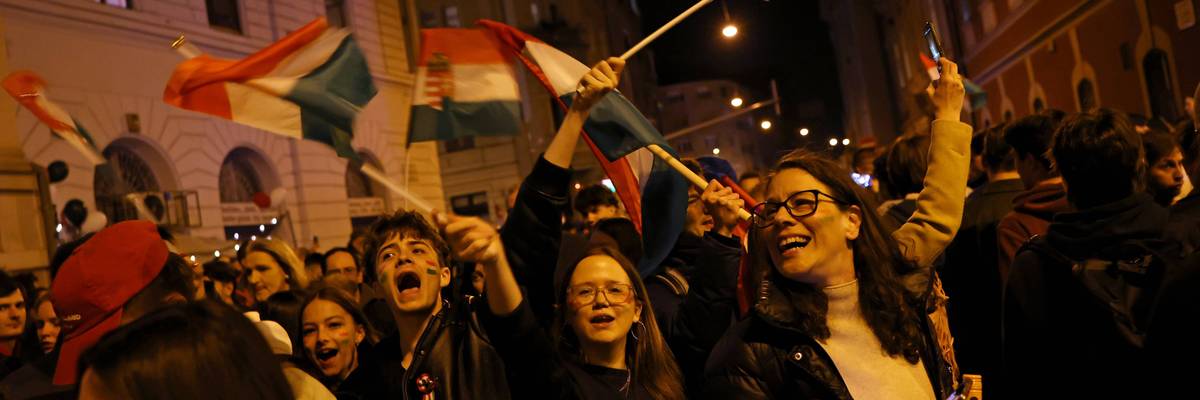
Revellers waving Hungarian flags celebrate the resounding Tisza party win in Hungarian parliamentary elections on April 12, 2026 in Budapest, Hungary.
(Photo by Sean Gallup/Getty Images)
Michael Waldman
Apr 15, 2026
This week, autocrat Viktor Orbán conceded defeat in Hungary’s general election. It was a landslide victory for Péter Magyar—and for democracy worldwide.
Over the course of 16 years, Orbán worked to dismantle and undermine democratic institutions. He took control of most news outlets. He rewrote election rules. He replaced judges with loyalists. His government faced numerous corruption scandals, including one surrounding a presidential pardon. He was also a fan favorite of the Trump administration. Our vice president campaigned for him.
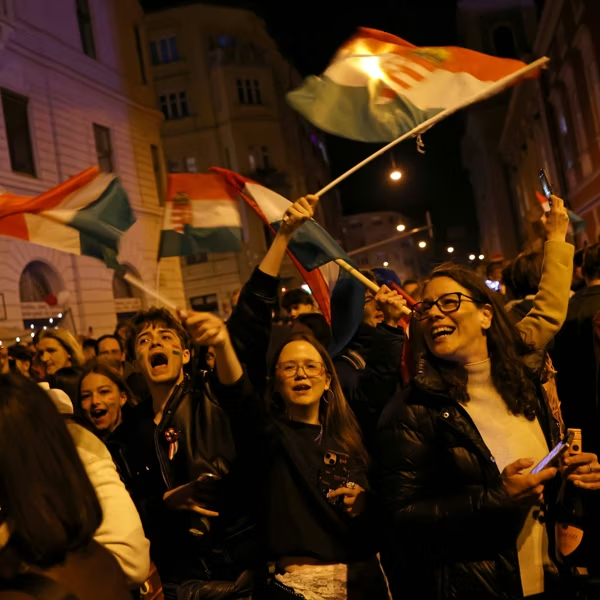
‘Hungary Has Chosen Europe’ as Voters End 16 Straight Years of Orbán’s Far-Right Rule
What are the implications of his defeat for democracy in the United States? To be sure, midterm elections often rebuke the party in power, and it’s hard to predict whether this election augurs any November results. But just as Brexit presaged Trump in 2016, worldwide trends are at play. Amid Orbán’s takeover of elections, the media, and democratic institutions, the forces of democracy found a way to persevere through public organization and mass outrage.
In Hungary, one backstop against authoritarian rule has been the European Union. In the United States, perhaps it is the fact that states control elections, largely through a steadfast network of officials across the country who ensure elections are free and fair.
Between now and November, all of us can help make sure election officials know we have their backs.
Today, that network is under immense strain. This week, the Brennan Center released our sixth annual survey of local election officials. It confirmed an alarming pattern: They are worried about the safety and security of the elections they supervise. Half worry about political leaders interfering with how they do their job. Seventy-one percent are actively planning or preparing for potential disruptions. Eighty percent are calling for more funds and support to keep up with election security needs.
These are Republican and Democratic public servants, trying to do their jobs far from the partisan fracas in Washington.
Between FBI raids seizing 2020 election ballots, efforts by the administration to meddle with voting equipment, and federal funding cuts to election security, election officials have many reasons to be alarmed. At the same time, organizations across the country have been working to give election officials the support they need to defend our elections in November.
After the Trump administration gutted the principal federal agency for training election officials and bolstering security, many organizations have jumped in to fill the gap in expertise. The Committee for Safe and Secure Elections, a coalition of current and former election officials and law enforcement, has been offering trainings and tabletop exercises to state and local leaders across the country so they can be prepared for high-stress, legally complex Election Day scenarios and establish lines of communication in case of potential interference.
The Brennan Center has also been working to keep officials informed. We are drafting handbooks for each state that outline relevant laws, suggest scenarios, and help election officials, their counsel, and others who support them to appropriately respond to federal interference
We have also organized a series of courses for hundreds of attorneys who represent election officials to inform them about their rights and responsibilities and to give guidance on how to respond to requests for election data and access to equipment.
There is much more to do. States must step in to fill funding gaps left by the federal government. In the survey, 75% of local election officials said their state or local government has not provided additional resources or funding to address federal cuts. The use of artificial intelligence in elections is also a growing concern that election officials should be informed about.
Between now and November, all of us can help make sure election officials know we have their backs. We can have free and fair, even uneventful, elections this year. We can ensure the perseverance of our democratic institutions. As in Hungary, it will take organization, preparedness, and collaboration.
© 2023 Brennan Center for Justice
Michael Waldman
Michael Waldman is President of the Brennan Center for Justice at NYU School of Law, a nonpartisan law and policy institute that focuses on improving the systems of democracy and justice.
Full Bio >

Former President Donald Trump (L) and Hungarian Prime Minister Viktor Orbán (R) in August of 2022 (Image: Orbán Viktor / Facebook)
The humiliating demise of Viktor Orban's authoritarian regime is bracing news for endangered democracies, including our own, but America isn't Hungary. Of the parallels that can be drawn between their despot and ours, the most salient may have been commented on the least -- the overwhelming and unprecedented Mafia-style corruption that enriched the ruling family and entrenched their power.
It was the corruption that motivated Peter Magyar, a lifelong loyal appartchik until two years ago, to break with Orban's Fidesz party and inaugurate the campaign to overthrow the regime. It was the corruption that forced the European Union to act against Budapest by withholding billions in funding and isolating its government. And it was the corruption -- so pervasive in Hungary's media, judiciary and business institutions -- that finally drove otherwise conservative Hungarian voters to reject the crooked outfit that had ruled them for 16 years.
Liberals in Hungary celebrated Magyar's election victory, not necessarily because they agree with the new prime minister on every issue -- they don't -- but because he vowed to clean up Orban's legacy of outrageous theft, to enforce accountability and to strengthen the nation's frayed ties with Europe. Relying on his long experience inside the Fidesz machine, Magyar was able to expose its sleazy deals, including a pardon scandal that embroiled his then-wife, who had served as Orban's justice minister.
Like so much of the criminality perpetrated by Orban and his cronies, that pardon affair echoed a train of remarkably similar offenses in the Trump White House. And as Magyar emphasized throughout his innovative grassroots campaign, the cost of Orban's venality fell on ordinary Hungarians, whose national wealth was siphoned off to enrich the dictatorship's cronies.
According to Akos Hadhazy, a leading voice against corruption as an independent member of Hungary's parliament, the Mafia-style graft perpetrated by the Orban regime has looted more than 2.8 billion euros (over $3.2 billion) annually from public funds. Much of that stolen money came from the EU itself, which played a role in the regime's demise by withholding further funds from suspect projects. Among the reasons to renew ties with Brussels, as Magyar often explained, was to facilitate prosecution of the "Orban Mafia" that stole those EU funds.
The details of the Fidesz government's boodling might almost seem quaint in comparison with the high-tech crypto scams hatched in the Trump White House. Viktor Orban's son-in-law, an entrepreneur named Istvan Tiborcz, became wealthy by forming Elios, a company that won multimillion-euro contracts to upgrade street lighting in cities and towns all over the country. Those contracts were financed by the EU, but as auditors later discovered, the project details were designed to favor Tiborcz's firm and eliminate any competition. In fact, the same officials who oversaw the lighting specifications also wrote the Elios bids.
EU investigators recommended that Hungary void those contracts, claw back the money, and commence legal action against the officials and business executives responsible for the scandal. The crooks in Budapest have been "investigating" that case for the past 11 years.
Meanwhile even more public millions flowed into the accounts of Orban's father, Gyozy, whose real estate development company swelled with government and EU contracts -- and is suspected of serving as a front for Orban himself. This arrangement smacks of the millions in U.S. government funding and related payments that have flowed over the years to the Trump Organization.
Various other Orban cronies -- notably including the chief of his cabinet, Antal Rogan, and his closest friend since childhood, Lorinc Meszaros -- have walked away with enormous fortunes. So brazen was Rogan that the U.S. Treasury sanctioned him in January 2025, during the final weeks of the Biden administration.
The Office of Foreign Assets Control found that Rogan had "orchestrated Hungary's system for distributing public contracts and resources to cronies loyal to himself and the Fidesz political party, (including) schemes designed to control several strategic sectors of the Hungarian economy and to divert proceeds from those sectors to himself and to reward loyalists from his political party."
The Trump administration lifted the U.S. sanctions on Rogan within three months of taking office, as part of its broader abandonment of anticorruption agencies and measures throughout government.
As for Meszaros, he is the richest man in Hungary, sitting atop a fortune estimated at over $3 billion. Having started out as a gas-pipe fitter in 2006, with assets worth less than $42,000, his wealth grew exponentially through state energy and construction deals. When asked how this could have happened, Meszaros modestly attributed his wealth to "God, luck and Viktor Orban."
Americans have long seemed indifferent to the orgy of corruption that has characterized President Donald Trump's career and especially his return to power. Citizens whose news consumption is limited to Fox News, Newsmax and the MAGA media have heard little or nothing about the ways that Trump, his wife and offspring, and their circle of supporters have gorged themselves in one shady deal after another, often at risk to our national security.
Yet somehow, despite a state-controlled Hungarian media universe, Magyar's movement brought the truth about Orban's corruption to the people, who responded with appropriate fury. In this country, Democrats of every persuasion must convey to every American voter that same message about the decadent MAGA movement and its greedy overlord.
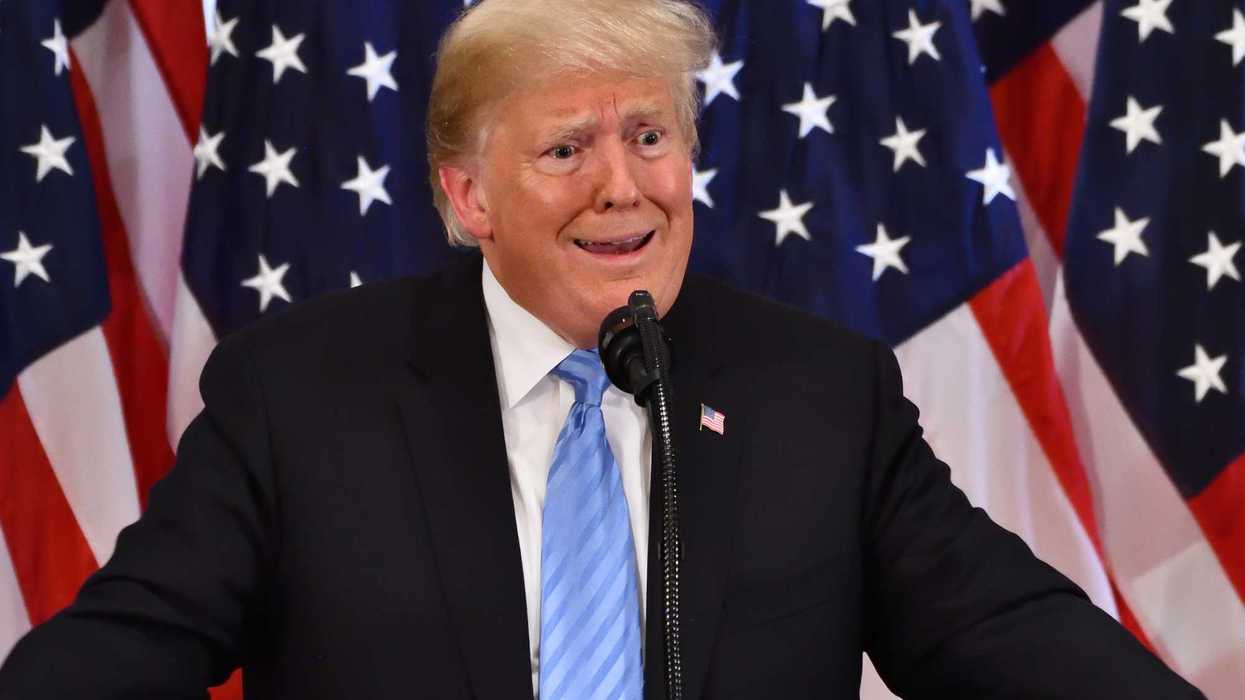
NEW YORK, NY - SEPTEMBER 26, 2018 President Donald Trump gestures to emphasize an issue at a press conference held at the Lotte Palace Hotel in the Villard Room. (Shutterstock)
President Donald Trump and CPAC want people to believe they support “America First,” but a recent report reveals that at least the latter received literal funding from the Hungarian government.
But those days are apparently over now that Hungary’s newly elected prime minister, Péter Magyar, has taken the reins. Magyar campaigned on an anti-corruption platform, and has pulled funding from the organization with ties to his corrupt opponent former prime minister Viktor Orbán.
“Scandal-plagued CPAC chairman Matt Schlapp posted in response to Magyar’s comments but didn’t address the payment claims, saying only that he was ‘gratified’ that Magyar ‘has invited us back to have CPAC,’’ reported MS NOW's Ja'han Jones on Tuesday. Upon winning and beginning the transition process, Magyar announced that Hungary had donated to CPAC under Orbán but would no longer.
“It’s easy to see how Orbán’s loss could prove injurious to the MAGA movement in a variety of ways,” Jones reported. “With the downfall of Trump’s favorite authoritarian, the U.S. conservative movement appears to be losing its free rein (and apparently some financing) to use Hungary as an ideological testing ground.”
Indeed, the revelation about Hungary and CPAC only underscores deeper ties between America’s far right and its European counterparts. From Nigel Farage in the United Kingdom and Marine Le Pen in France to Germany’s neo-Nazi AfD party and Italy’s Prime Minister Giorgia Meloni, Trump has done his past to use his political clout to advance the fortunes of overseas counterparts who are perceived as compatible with his own values and self-interests.
Magyar told CNN that “I believe the state should never have financed them in the first place. It was a crime. Mixing party financing with government spending from the state budget is, in my view, a criminal offense,” he said. "CPAC can come to Budapest. They’re very welcome. But not from Hungarian taxpayers’ money. From Fidesz’s money, or Orbán’s buddies’ money — before we take it back."
This is not the first time CPAC has recently had egg on its face. Last month Trump decided not to attend the organization’s annual event for the first time in a decade, allowing the usually pro-Trump event to air grievances against a president from their own party. According to The Conversation, the event demonstrated the overall fizzling of enthusiasm for the MAGA movement.
“There is a pall over the Make America Great Again, or MAGA, movement,” The Conversation wrote. “Donald Trump overpromised. His public support has fallen. Some “America First” die-hards now openly criticize him.”
They added, “Amid war, economic challenges, democratic backsliding, the Epstein files and Americans shot dead in the street by government agents, Trump’s support is softening and his vow to bring a ‘golden age of America’ is looking more like a political winter for Trump and his MAGA movement.”
Orbán’s Defeat in Hungary Signals Far Right’s Weakness, Not the Left’s Strength
Magyar’s win is a significant loss for the far right, but he has not provided a vision for a progressive future.
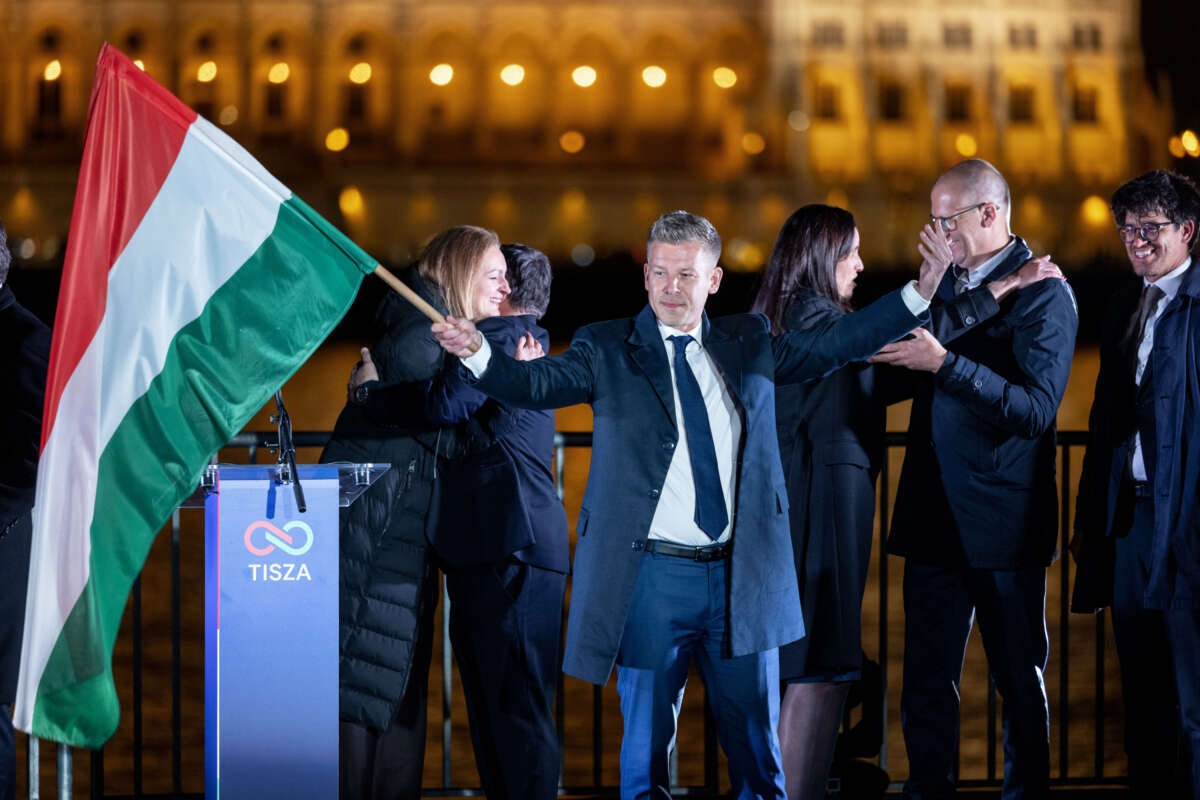
According to most mainstream media accounts, a “political earthquake” has taken place in Hungary. The European far right’s poster boy and MAGA darling Prime Minister Viktor Orbán was defeated in a landslide on Sunday by political upstart Péter Magyar. The outcome of this election is indeed politically significant, as the ousting of Orbán by Hungarian voters will curtail Donald Trump’s foreign policy efforts to undermine the European Union (EU) by using Hungary as a Trojan horse in Brussels.
The Trump administration has made it abundantly clear that it wants to see a “nationalistic” Europe ruled by far right leaders. Its real interests, however, lie in weakening the EU as part of Washington’s new national security strategy in which the U.S. reasserts itself as a global hegemon. In forging a new world order, the Trump administration wants allies who are obedient subordinates. Trump’s support for Orbán was not based solely on ideological grounds but was also driven by a specific strategy for Europe, one in which the continent was to be subordinated to the interests of U.S. imperialism.
That said, the key question is this: Could the end of Orbán’s 16-year reign also mark the beginning of the end of the far right’s modern political surge? Indeed, the far right has faced other major setbacks across Europe in recent days and Donald Trump’s approval rating in the U.S. has taken a significant hit in recent surveys. The problem with concluding that the defeat of Orbán somehow represents the start of a new political era marked by the decline of right-wing authoritarianism, however, is that while the far right may currently be experiencing setbacks, the left is still struggling to articulate an alternative vision attractive enough to capture the public’s interest.
Moreover, the winner of Hungary’s so-called historic election is a former Orbán loyalist who ran on a pledge to rebuild Hungary’s relationships with the EU and NATO. Magyar also campaigned on an anti-corruption and anti-state-capture platform, which is rather typical of every mainstream politician in central and eastern Europe, but it is highly unlikely that he will shift away from Orbán’s reactionary policies on immigration. In fact, as researchers Eric Maurice and Levente Kocsis have shown, Magyar’s Tisza party’s voting behavior in the European Parliament reveals a strong convergence with Orbán’s own Fidesz party on “politically sensitive issues” such as Ukraine and immigration and “opposing language on rights and equality.” And while Magyar has spoken of wanting to move Hungary closer to the EU, he has avoided taking a clear stance on LGBTQ+ rights. This is hardly a political vision for a progressive future.
Since the early 2010s, far right parties and movements have gained significant political traction throughout Europe. Their success has been driven by a variety of social, economic, political, and cultural factors, just as in the case of the MAGA movement in the United States. Using radical and forthright political rhetoric to take advantage of ordinary people’s concerns and fears over the consequences of neoliberal globalization, as well as the impotence of liberal and socialist parties in articulating a meaningful socioeconomic alternative, far-right leaders have been able to connect with the politically discontent among working- and middle-class voters as well as younger generations. In this context, quasi-fascist demagoguery, once considered a political taboo in postwar Western polities, has emerged as an ideological weapon designed to alter political norms and “transform the morally extraordinary into the ordinary,” as Jason Stanley put it in his book How Fascism Works: The Politics of Us and Them.
A loss for one European far-right party is not necessarily a win for the European and global left.
Viktor Orbán’s first term as prime minister of Hungary was from 1998 to 2002, but it was during his second term, starting in 2010, that he emerged as a strongman leader. Since then, he and his party, Fidesz, promoted the most successful variant of right-wing authoritarianism in the West by dismantling the country’s legal system and suppressing opposition. His government did so by winning four straight elections. This is no small feat and speaks volumes of the power of demagoguery in capitalist societies. Orbán’s political rhetoric relied on the spread of fear and misinformation, proving yet again that democracy erodes from the top. He kept hammering away at the EU’s approach to immigration, which he claimed threatened Hungary’s national sovereignty and cultural identity. But he also differentiated between migrants from other Eastern European countries and those from the Middle East and Africa, as well as between Muslim and non-Muslim immigrants. He described Muslim migration as an “invasion.” This anti-migration position, playing on the racist fears of the population, undoubtedly helped Orbán win successive elections.
But it was Orbánomics, a form of economic nationalism, that motivated Hungarian voters to keep reelecting Orbán and his Fidesz party. Using unorthodox economic policies, Orbán succeeded in reducing unemployment and stimulating growth under favorable economic conditions. He also placed families with children at the center of his economic policy by offering various tax benefits and a long line of subsidies. At the same time, the economy shifted under his reign to a form of crony capitalism that had detrimental effects on economic performance and increased corruption. From 2020 to 2025, the Hungarian economy experienced significant decline and entered a period of “stable stagnation.” Orbánomics had reached the end of the line and Hungarian voters were finally ready to ditch Orbán and his Fidesz for a new government.
The election of Péter Magyar does not appear to represent an ideological shift among Hungarian voters. Magyar is not a liberal, let alone a progressive. Aside from his stance toward the EU, he did not directly challenge Orbán’s policy agenda during his campaign but simply confined himself to talking about corruption and governance. It isn’t even clear that his position on the Ukraine war will be any different from Orbán’s, or that he will stand up to Trump.
That said, the political elite of the EU are surely elated over Magyar’s election. They will most likely show their satisfaction with the electoral outcome in Hungary by releasing frozen funds.
All in all, it is too early to draw conclusions about the consequences of Hungary’s election for the EU and the U.S., as well as for the political fortunes of the global far right. But it is essential to add that a loss for one European far-right party is not necessarily a win for the European and global left.
This article is licensed under Creative Commons (CC BY-NC-ND 4.0), and you are free to share and republish under the terms of the license.
C.J. Polychroniou
C.J. Polychroniou is a political scientist/political economist, author and journalist who has taught and worked in numerous universities and research centers in Europe and the United States. Currently, his main research interests are in U.S. politics and the political economy of the United States, European economic integration, globalization, climate change and environmental economics, and the deconstruction of neoliberalism’s politico-economic project. He is a columnist for Global Policy Journal and a regular contributor to Truthout. He has published scores of books, including Marxist Perspectives on Imperialism: A Theoretical Analysis; Perspectives and Issues in International Political Economy (ed.); and Socialism: Crisis and Renewal (ed.), and over 1,000 articles which have appeared in a variety of journals, magazines, newspapers and popular news websites. Many of his publications have been translated into a multitude of languages, including Arabic, Chinese, Croatian, Dutch, French, German, Greek, Italian, Japanese, Portuguese, Russian, Spanish and Turkish. His latest books are Climate Crisis and the Global Green New Deal: The Political Economy of Saving the Planet (with Noam Chomsky and Robert Pollin as primary authors, 2020); The Precipice: Neoliberalism, the Pandemic, and the Urgent Need for Radical Change (an anthology of interviews with Noam Chomsky, 2021); Economics and the Left: Interviews with Progressive Economists (2021); Illegitimate Authority: Facing the Challenges of Our Time (an anthology of interviews with Noam Chomsky, 2023); and A Livable Future Is Possible: Confronting the Threats to Our Survival (an anthology of interviews with Noam Chomsky, 2024)
No comments:
Post a Comment