The War in Iran as International Terrorism
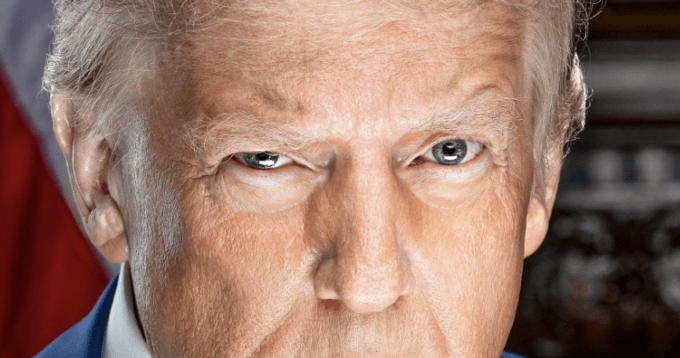
Image Wikipedia.
A couple of wars ago, when I gave readings from my book War Is Not a Game, I sometimes tried to liven things up by asking the audience to guess which of the names I mentioned were for video games and which were for actual U.S. military campaigns. It didn’t work when there were veterans in the audience — they were too familiar with both — but it did vividly point up the kinship of war and entertainment in our world.
Now, welcome to Operation Epic Fury, the perfect name for an adolescent-id-on-steroids-style war. That name was, of course, chosen by Donald (“How do you like the performance?”) Trump for his campaign against Iran, while his White House social-media team created actual mash-ups of games and reality to match. For example, on X.com, Undefeated alternates cartoon characters scoring points in an array of sports with images of bombs hitting their targets, and Instagram features a loop of baseball batters getting strikes interwoven with, yep, bomb strikes. So, I guess I was wrong. These days, war is a game, even if the only way to win it is to keep moving the goalposts.
The U.S. military has frequently promoted the game-like aspects of war. The title of my book, in fact, came from an action that a group of veterans affiliated with what was then Iraq Veterans Against the War (now About Face) staged in front of an Army recruiting booth at a jobs fair, where job-seekers were being enticed to play a war-simulation game. More recently, the Army’s “What’s Your Warrior?” recruitment campaign, while deemphasizing direct combat, includes videos that feature luminescent soldiers who resemble superheroes and characters in video games.
However, this does seem like the first time that a White House has joined quite so enthusiastically in the fun. Past presidents may have been cheerleaders for their wars, but they still retained a certain gravitas and respect for the grimness of combat. That was then — like, the last 250 years — while now, it’s game time for Donald Trump and his administration, who take contemptuous pride in smashing political norms, the more crass, careless, and callous, the merrier.
But suppose war doesn’t put you in a playful mood? Suppose your role in wartime is to inform the American public about what’s going on? Suppose you’re an American journalist? How the hell do you do your job?
Anointed by Jesus to Make War on Iran
You report the facts, of course: when the war began, how many countries are involved, how many people have been killed (especially American troops), how much oil is or isn’t passing through the strategically essential Strait of Hormuz, and why the International Energy Agency deemed blocking it “the biggest crude supply disruption in oil market history.” But you can check and recheck every fact and still get the story wrong, since this story — thank you, Donald Trump and crew — keeps lurching all over the place,
For starters, there have been the regularly shifting rationales for launching and continuing the war (which the president has deemed just “a little excursion”) and the even more elusive goals that could signify when whatever it’s called will end. In early March, The Atlantic did a running tally of the reasons Trump has offered for going to war. The primary ones were preventing “imminent threats” to the U.S. and its allies, denying Iran nuclear weapons, ending its support for terrorism in the region, liberating Iranians from a repressive government, giving up on failed negotiations, and (as he proclaimed in his usual CAPS on Truth Social), PEACE THROUGHOUT THE MIDDLE EAST AND, INDEED, THE WORLD! — which, of course, is best achieved by bombing a country to smithereens and slaughtering the people you’re liberating.
Secretary of War (forget about Defense!) Pete Hegseth, when he’s not worrying about unflattering photos of himself, seems to go in more for vengeance and dominance, but echoed his boss with the Orwellian declaration, “[W]ar, in this context and in pursuit of peace, is necessary.” I think, however, that my — if I can even use the word — favorite, reason for the war, seems to have come from a combat-unit commander who announced in a briefing that Donald Trump was “anointed by Jesus to light the signal fire in Iran to cause Armageddon and mark his return to Earth.” That exhortation is unverified, but as of early March, the Military Religious Freedom Foundation reported receiving more than 200 complaints from all branches of the military about similar comments, and a little while later, Hegseth, in his official capacity, told Americans to pray for victory over Iran “in the name of Jesus Christ.”
As for when the hostilities would end, Trump has vacillated between asserting that the conflict will be brief and that it could go on for months, that Iran is about to surrender or negotiate and that he will accept nothing short of “UNCONDITIONAL SURRENDER!” In a phone call to the Brian Kilmeade Show, he insisted that he’ll know it’s over “[w]hen I feel it, OK, feel it in my bones.”
There is, perhaps, a tactical advantage to never truly pinning down the purpose or endgame of the war because, whatever happens, whenever Trump “feels it,” he can declare victory, take his warships and go home, while whining that his actions represent another reason he’s owed a Nobel Peace Prize.
Polycrisis in War
The term polycrisis is a fancy name for the clusterfuck that results when several, separate crises interact to create a grand, all-inclusive crisis. The ongoing Iran war polycrisis includes so many vectors that journalists on nearly every beat have, it seems, skin in the game.
There are the military maneuvers in the region, at least the ones the Pentagon has owned up to, and a crash course in drones and other modern munitions. There are the ever-mounting costs to American taxpayers (one running estimate puts it at $34.8 billion and counting 30 days into the war); to the environment (check out “black rain”); to servicemembers and their families (traumatic brain injury is the prevalent injury); to the Iranian people; to all of us, thanks to the soaring price of oil (rising at times to over $100 a barrel) with its domino effect on American wallets; to the stock market and the world economy; and to whatever hope of coexistence there ever was in the Middle East before the bombing began.
Then, there are all the politics: in Iran, with its uncertain leadership; in countries not directly involved in the war, but affected by it like lucky Russia and unlucky Ukraine; in the U.S., with all the constitutional and legal questions raised and still unanswered; and internationally, as my country flouts any version of the rules of war and begs its supposed allies for help (or denounces them for not coming to its rescue). There are, of course, inevitable comparisons with the 2003 U.S. invasion of Iraq and its long, disastrous aftermath; horse-race reporting on what all this means for the fall midterm elections; and polls taking the American pulse on the war. Even sports couldn’t remain completely on the sidelines when President Trump suggested that Iran bow out of this summer’s World Cup matches in the U.S.
Phew! I’m already out of breath! And that’s not even including the rapid changes that can make a news story outdated within hours of being filed.
Reporting Iran
It’s complicated enough to report on a multifaceted polycrisis, but reporting on Iran, where there has been a near-total news blackout since the start of the war, presents particular difficulties. To put it mildly, that country has not been a friendly place for American reporters, or for that matter, for its own journalists. Reporters without Borders ranks it fifth from last of 180 countries in its 2025 press freedom index, while the Committee to Protect Journalists counts at least 15 members of the press in Iranian prisons now. All journalists there must register with the Culture Ministry and news outlets can be suspended or summarily closed for an array of vague offenses. Add to that the American and Israeli air strikes, which killed an Iranian journalist and damaged several media outlets.
Only one Western network reporter, Frederik Pleitgen of CNN, was given a visa to enter Iran when the war began. He ended each broadcast with this disclaimer: “CNN is able to report in Iran only with the Iranian government’s permission.” Everyone else must work from afar, reading between the lines of Iran’s state-aligned outlets, trying to gather reliable information through regional bureaus or human rights organizations on the ground, and verifying the often suspect social-media feeds that make it out of the country.
The U.S. government hasn’t been particularly helpful either. Last fall, when the Defense Department demanded that journalists sign a restrictive pledge or lose their credentials to report from inside the Pentagon, dozens of respected and seasoned reporters walked out, resulting in limited reporting about the war. (The situation of those Pentagon reporters is also changing daily.) More recently, the Department of War (formerly Defense) decided to “modernize” the previously independent newspaper Stars and Stripes, which will mean far greater editorial control by the Pentagon.
Information into and out of Iran has also been curtailed by Kari Lake, the (apparently illegal) head of the U.S. Agency for Global Media, who eviscerated Radio Free Asia and, during the recent protests in Iran, denied Radio Fardo, the Persian-language service, access to the transmission facilities it needed to broadcast into that country. And after Trump had a hissy fit over unfavorable coverage of the war, Federal Communications Commission Chairman Brendan Carr continued his slippery slide toward censorship by threatening to revoke the licenses of broadcasters “running hoaxes and news distortions.” Meanwhile, in February, The Washington Post laid off its Middle East reporters and editors.
What We Miss
War, for all its messiness, makes good news (at least for the news media). It’s exciting, immediate, nonstop, consequential — and it certainly is, however grimly, a spectacle, lit up with drama and horror that can bring out the best in journalism. Yet the established news media have taken a while to figure out how to report on Donald Trump’s war. Inevitably, there is much that they miss.
Donald Trump is, of course, adept in his own strange fashion at playing the media, distracting and shifting the focus away from things he doesn’t want to talk about. This time around, he has exchanged his usual government by Truth Social for phone chats with individual reporters. In case you’ve lost track of how many such calls he’s taken since the war began, the Columbia Journalism Review/CJR conveniently offered a non-exhaustive list of 13 reporters from nine outlets he talked with, some multiple times, in the first weeks of the war.
For a journalist, getting the president to take your call or answer multiple questions is a big win. That’s especially true when Trump, in full babble, reveals more than he probably meant to. For instance, in a press gaggle on Air Force One 16 days into the war, as he was arguing that NATO allies owed it to the U.S. to send ships to guard the Strait of Hormuz, he added, “You could make the case that maybe we shouldn’t even be there at all, because we don’t need it. We have a lot of oil.” (Ever notice that when something he’s responsible for goes wrong, he says, “we,” and when something is accomplished, whether thanks to him or not, he says, “I”? ) But as CJR noted, the problem isn’t reporters taking advantage of access to the president, but their treating his utterances, no matter how nonsensical or incoherent, as breaking news (often without even vetting them for veracity).
Remember “the president of peace“? Journalists have certainly reminded us of Trump’s campaign promises not to start wars, but even that inconsistency plays into his game of distraction. And his cynical tactic has worked. The still-unspooling Epstein scandal, the inhumane immigrant round-ups, and whatever we’ve been doing in Latin America or the Caribbean Sea have been largely relegated to some other world. Even the inconvenient affordability issue was elided until the war sent the price of oil soaring.
Also missing from much reporting has been context. In an excellent compilation on how to cover the Iran crisis, the Association of Foreign Press Correspondents USA suggested that journalists “remember that Iran is not only a theater of conflict. It is also a society.” Journalism, by its nature, doesn’t lend itself to deep, contextual analysis, but when it comes to Iran, it would be useful to supply some background for many Americans who know all too little about that country, including that it’s a large, complex nation with a rich culture and a long, illustrious history, only a relatively short part of which has been interwoven with the United States. Explaining that might help us all resist the reductive good/evil framing championed by a government at war.
Not that there hasn’t been thoughtful analysis from newsroom columnists and alternative platforms. Substacks like Margaret Sullivan’s “American Crisis” and newsletters like the “Equator” have brought depth to such war coverage. The dominant media have done some not-so-subtle pushback, too, labeling it “Trump’s war” — the BBC’s Jeremy Bowen called it the “third Gulf war” — and also using the dreaded word “quagmire,” even if only as a possibility. And as Trump would surely agree, nobody likes a loser, so as his excursion into war in the Middle East has been transformed into a giant losing proposition, the criticism has become more pointed and direct.
What I am missing most in the reporting, though, is any mention of peace. By peace, I don’t mean the cheap rebranding of the U.S. Institute of Peace with Trump’s name, or the parody known as Trump’s Board of Peace (stocked with countries that have been cited for human rights abuses). Nor do I mean just the cessation of bombs and missiles dropping on Iran and Lebanon, though that would be a good start, or even antiwar demonstrations, though such events can draw much-needed media attention.
When your job is to report on war, what you see is war in all its ramifications. But if your job were to report on peace, you would see the conditions for a positive, durable peace and report on them as realistic, attainable, and as potentially heroic as marching off to battle. It may seem counterintuitive, silly even, to ask for that kind of reporting in the throes of this ill-begotten war, but that’s when we need it most. War — even a “good” or “just” one — is brutal, pitiless, and destructive. Trump’s war is international terrorism at its most extreme and, if it were a game, it would be one where everyone loses something.
But in our better natures, we know that war really isn’t a game. Don’t we?
This piece first appeared on TomDispatch.
Presidential words can turn the unthinkable
into the thinkable − for better or for worse
Stephanie A. (Sam) Martin, Boise State University
Wed, April 8, 2026

President Donald Trump's rhetoric has grown increasingly violent.
Among the most disorienting things about President Donald Trump’s public language is how easily it can feel numbing and shocking in the same moment. He says something outrageous, the country recoils, and then the recoil itself begins to feel familiar.
As a scholar who studies presidential rhetoric, I know that over time that rhythm does its own kind of damage. It teaches the public to absorb the breach. What once might have sounded like a genuine political emergency or a violation of constitutional decorum begins to register as just another day in American political life.
But the past few days merit notice. The president’s demagoguery has taken a darker turn.
Trump’s rhetoric about Iran has become more than inflammatory. Beginning with posts to Truth Social in early April, he has used profanity-laden language – “Open the Fuckin’ Strait, you crazy bastards, or you’ll be living in Hell” – to threaten attacks on the country’s infrastructure. He urged Iranians to rise up against their government. He warned that “a whole civilization will die tonight” if Iran does not comply with U.S. demands.
The Associated Press treated those remarks as a significant escalation in the context of a live conflict, not merely as familiar Trumpian excess: “As the conflict has entered its second month, Trump has escalated his warnings to bomb Iran’s infrastructure.”
The International Committee of the Red Cross also issued the unusual reminder that the rules of war must be respected “in words and action,” suggesting that the rhetoric itself had become part of the danger.
But were Trump’s recent remarks really different from his many earlier outbursts?
I think they were. For years, Trump’s rhetoric has relied on insult, ridicule, threat and contempt. He has degraded opponents and helped coarsen the terms of public life.
What seems different about his words during the first week of April 2026 is the scale of violence his language primed people to imagine. His remarks about Iran moved beyond personal attacks or chest-thumping nationalism to take on a tone of collective punishment and civilizational destruction. The style was familiar. The horizon of harm was not.

President Donald Trump’s social media post of April 7, 2026, threatening the destruction of ‘a whole civilization,’ meaning Iran. Truth Social]
Presidential rhetoric is more about permission than persuasion. Presidents do not only argue. They signal.
Through those signals, they tell the public what kind of situation this is, what kind of danger is at hand, and what kinds of response are reasonable. In that sense, the president can function like a human starting gun. His words cue journalists, legislators, party allies and ordinary supporters about how to classify events before anyone has fully processed them.
Political theorist Corey Robin’s work on the politics of fear is a useful lens for understanding what is happening with Trump’s violent rhetoric.
Fear, in Robin’s view, is not simply a feeling that arises naturally in response to danger. It is politically manufactured. Power teaches people what to fear, how to name danger, and where to direct their apprehension. Presidential rhetoric is an essential tool for performing that work.
Thus, a president does not only describe a threat. He also gives it shape and scale. He tells the public how large it is, how close it is, and what kinds of response should feel reasonable in its presence.
A good example of a president doing this happened after the Sept. 11, 2001, terrorist attacks when, while visiting ground zero in New York City, George W. Bush said, “I can hear you. The rest of the world hears you. And the people who knocked these buildings down will hear all of us soon.” With that sentence, Bush acknowledged the gravity of what had happened, but also promised to fight back and bring justice to the terrorists.
When it comes to statements like those Trump has recently made about Iran, the worry is not that the president has said something extreme. Instead, the larger concern lies in what repeatedly using extreme language does to the atmosphere in which judgment takes place.
Political hyperbole lowers the threshold of what the public can imagine as legitimate, as allowable. When presidents make threats like the ones Trump issued, mass suffering becomes more imaginable. The president’s words and social media posts test whether the public will continue to hear such language as over the line, or whether it will be absorbed as one more hard-edged negotiating tactic.
Shaping reality
Presidential rhetoric matters for reasons that go beyond persuasion or style.
It helps arrange reality. It tells the public what is serious, who is dangerous, whose suffering counts, and what forms of violence can be described as necessary. President Barack Obama did this in 2012, when he was speaking at a vigil to honor the shooting victims at Sandy Hook Elementary School.
“We bear a responsibility for every child because we’re counting on everybody else to help look after ours,” he said. “That we’re all parents; that they’re all our children.” With these words, Obama called everyone to feel, up close, the horrific loss of 20 children shot dead, and to work for a solution to gun violence.
Trump has benefited from a public worn down by repetition. Every new breach arrives trailing the memory of earlier ones.
People begin to doubt their own reactions. Surely this is appalling, they may think, but also, somehow, this is what he always does. That dual feeling is part of the harm. A damaged baseline makes serious escalation harder to recognize and judge.
The disorientation and disgust that so many people experienced in response to Trump’s thundering, violent proclamations is important. Even after years of erosion of what was deemed normal, some lines remain visible.
Paying attention now is not about pretending Trump has suddenly become someone new. It is about recognizing more clearly what his presidency has been teaching the public to hear as thinkable. The most serious harm may lie not only in what follows such rhetoric, but in the world it helps prepare people to accept.
This article is republished from The Conversation, a nonprofit, independent news organization bringing you facts and trustworthy analysis to help you make sense of our complex world.
Read more:
Repeated government lying, warned Hannah Arendt, makes it impossible for citizens to think and to judge
Congress still has ways to throttle back Trump’s war with Iran – and to ask questions
Trump’s war against Iran is uniquely unpopular among US military actions of the past century
Opinion
Trump’s war crime threat is a betrayal of American values

Jason Kyle Howard
Wed, April 8, 2026
In October 1962, a few days after the United States had stood, in Adlai Stevenson’s famous phrase, “eyeball to eyeball” with the Soviet Union during the Cuban Missile Crisis, President John F. Kennedy invited the Joint Chiefs of Staff to the Oval Office to express his appreciation for their role in managing the two-week standoff. Among them was Gen. Curtis E. LeMay, the Air Force chief of staff who had pushed for immediate airstrikes and a full-scale military invasion of Cuba, and had, to Kennedy’s disbelief, claimed that in the event of such an attack the Russians would not respond militarily.
LeMay, wrote journalist Richard Reeves in “President Kennedy: Profile of Power,” told his commander in chief he didn’t need Kennedy’s gratitude. “We lost!” he said. “We ought to just go in there today and knock ‘em off!” The peaceful resolution to the crisis, which had brought the world close to nuclear conflict, was “the greatest defeat in our history,” LeMay added, according to historian Robert Dallek.
Kennedy considered the general unhinged. But now, more than 60 years later, it feels as if LeMay has somehow returned to take possession of American foreign policy — and Donald Trump himself. During the president’s primetime address about the Iran war on April 1, he threatened to blow the Islamic Republic “back to the Stone ages,” words that are a direct echo of LeMay’s famous quote from the Vietnam War. Intentional or not, the phrase marked a distinct escalation of threats coming from Trump against Iran culminating in a statement issued Tuesday morning that was, coming from a president of the United States, unprecedented in its depravity.
“A whole civilization will die tonight, never to be brought back again,” Trump posted on his Truth Social platform. “I don’t want that to happen, but it probably will. However, now that we have Complete and Total Regime Change, where different, smarter, and less radicalized minds prevail, maybe something revolutionarily wonderful can happen, WHO KNOWS? We will find out tonight, one of the most important moments in the long and complex history of the World. 47 years of extortion, corruption, and death, will finally end. God Bless the Great People of Iran!”
Trump’s words set off a tidal wave of global anxiety and outrage. Just 90 minutes before his deadline for Iran to open the Strait of Hormuz by 8 p.m. Eastern time expired, he announced the U.S. and Iran had struck a deal for a two-week ceasefire. In this whiplash media environment, news of the fragile agreement, which is reportedly already cracking, is now threatening to consign the president’s threat of annihilation to memory — or to dismiss it, as some Republicans, commentators and MAGA influencers are already doing, as simply a blunt-edged negotiating tactic that proved successful.
But we as a nation cannot allow this moment and what it represents to pass. Never before has an American president threatened to annihilate 93 million civilians, let alone a society that, for all its “extortion, corruption, and death” over the past 47 years, has shaped civilization for the better across two millennia. What we witnessed Tuesday morning from the commander in chief was a war crime in the making, written in language that smelled of genocidal bloodlust. It was an outright betrayal of what we have understood to be America’s values.
Two hundred fifty years ago, the “truths” Thomas Jefferson laid out in the Declaration of Independence were not yet “self-evident,” as Elaine Pagels pointed out in a recent essay. That famous wording is itself a tell, a rhetorical device pointing to the fact that the emerging revolution’s values needed to be articulated in writing. Underscoring the document was a radical notion: that everyone — later revealed in the Constitution to be, in the framers’ eyes, land-owning white men — has value and that, for better or worse, by “consent of the governed,” we are all in the American experiment together.
As democracy in the U.S. evolved over the next two centuries, that social contract was widened and refined to not only include the people the founders had excluded, but also to encompass ideals of fair play, sacrifice for the common good and proportionality in conflict.
This week, those values were best summarized by Christina Koch, one of the astronauts on NASA’s Artemis II mission to orbit the moon. After the crew had endured a 40-minute planned blackout while on the far side of the lunar body, she spoke of future NASA missions to establish a presence there. “But ultimately,” she concluded, “we will always choose earth, we will always choose each other.”
Want more sharp takes on politics? Sign up for our free newsletter, Standing Room Only, written by Amanda Marcotte, now also a weekly show on YouTube or wherever you get your podcasts.
They are also the ideals that Kennedy aspired to uphold at the height of the Cuban Missile Crisis and, 10 months later, when he signed the Limited Nuclear Test Ban Treaty with the Soviet Union and Great Britain. LeMay, predictably, was “solidly opposed” to the treaty, arguing it would impede military readiness and constrain America’s nuclear capability.
The Air Force general represents an entirely different philosophy that has, it must be said, always existed in American life and must be acknowledged in any discussion of American exceptionalism: outright nihilism. A belief, in this case, not in nothing but that the ends always justify the means.
Eighty years after the end of World War II, historians and ethicists continue to debate the Allied bombing of Dresden, or Harry Truman’s decision to drop atomic bombs on Hiroshima and Nagasaki (for which LeMay, as commander of B-29 Superfortress combat operations against Japan, gave the final order). But as horrific and deadly as these actions were, they can at least be contextualized as part of a world war in which America’s enemies were in the process of slaughtering over 400,000 of its soldiers.
No such argument could have been made had Trump followed through with his threat against Iran, and no coherent defense can be given for even raising the possibility in the abstract. His words were an anomaly in the history of presidential rhetoric.
American presidents have issued stern warnings to the country’s adversaries before. Ronald Reagan declared the Soviet Union an “evil empire,” a phrase considered shocking and inflammatory when he said it in 1983 but that to our ears, which have become conditioned to vile rhetoric in the age of Trump, seems positively gentle. Nearly 20 years later, in the wake of the Sept. 11 attacks, George W. Bush referred to Iran, Iraq and North Korea as an “axis of evil,” alleging that those countries were systemic sponsors of state terrorism and were pursuing weapons of mass destruction. “I will not wait on events while dangers gather,” he declared to Congress, laying the groundwork for preemptive action. “I will not stand by as peril draws closer and closer.” Even Richard Nixon in his darkest, and sometimes drunken, moments — such as when he proposed to National Security Adviser Henry Kissinger dropping a nuclear bomb on North Vietnam that would “destroy the god***n country” — had the good sense, or at least the protection afforded by his aides, to keep his most sadistic thoughts private.
Not so Trump who, according to his own chief of staff, has an “alcoholic’s personality,” traits of which can include recklessness, emotional instability, mood swings and a lack of impulse control. By the president’s own admission, the war in Iran is “exciting” — a lark he has rated as 15 out of 10 in terms of the pleasure he is deriving from it. He has failed to mention how the 13 dead American service members and their grieving families would rank the war. One would also presume that the 175 Iranians, most of them children, who were slaughtered by what appears to be an American bomb in the Feb. 28 attack on an elementary school in Minab, and thousands more of the country’s civilians who have been killed, would not share in Trump’s sense of “fun” and excitement.
Neither, for matter, did Iranian civilians who must have spent the 10 hours between the president’s threat and announcement of a ceasefire preparing to die. Or America’s allies in the Middle East and Europe, who are well within range of Iranian missiles. Or residents of Washington, D.C., and New York City, who would — and still could be — on the frontlines of a retaliatory terrorist attack from splinter groups or a lone wolf supporting the Islamic Republic.
Barely 50 minutes after Trump made his threat on Tuesday morning, military planners at the Pentagon were examining target lists and preparing to strike. Pentagon spokesman Sean Parnell said, “The entire Department serves at the direction of the President and will execute his military objectives without fail.”
Meanwhile, millions around the world were praying that the president of the United States was not a deranged madman.
In “The Fog of War,” Errol Morris’ Academy Award-winning documentary that examines Robert McNamara’s conduct during the Vietnam War, the former secretary of defense reflected on America’s conduct in Japan during World War II. He quoted LeMay, who in addition to his role in deploying the atomic bombs, oversaw the firebombing of Japanese cities. “LeMay said, ‘If we’d lost the war we’d all have been prosecuted as war criminals,’ and I think he’s right.”
Donald Trump is a war criminal in the making. In a different, better time, he would be impeached and removed from office by Congress for raising the specter. Even the likes of former GOP Rep. Marjorie Taylor Greene, conspiracy theorist Alex Jones and MAGA influencer Candace Owens are calling for the 25th Amendment to be invoked by Vice President JD Vance and Trump’s Cabinet.
That will not happen.
But as Americans, we owe it to ourselves, our children and, most of all, our country, to not allow the White House or the Pentagon or the frenetic news cycle to brush past the president’s genocidal statement. While he is not a traitor in the constitutional sense, he has betrayed the values of the country he purports to serve.
Alex Shephard
Wed, April 8, 2026

There were two ways to read Donald Trump’s unprecedented threat on Tuesday that Iran’s “whole civilization will die” if the Strait of Hormuz was not opened by 8 p.m. Eastern time. The first was that the president was threatening to drop a nuclear weapon on a nation that he had started a war with, as punishment for that nation’s fighting back. The second was that Trump wasn’t just bullshitting, and instead was desperate for a deal—so desperate he would utter perhaps the most horrific, murderous words an American president has ever spoken.
That second reading now looks to be the right one. Shortly before the Tuesday evening deadline, Trump announced that the United States and Iran had reached a two-week ceasefire and would be working on a potential peace deal. True to form, Trump boasted that he had won a massive victory and that the U.S. had “already met and exceeded all Military objectives.” Subsequent reporting—and the fact that Trump called Iran’s 10-point proposal “a workable basis on which to negotiate”—suggests something rather different.
Even if the U.S. agreed to just a few of Iran’s ten demands, or even if the demands were significantly watered down, a peace deal based on that framework would lead to an unmistakable conclusion: The U.S. has lost yet another war in the Middle East. The reality may in fact be much worse. The Iran war increasingly looks not only like another shocking humiliation, but perhaps the greatest strategic blunder in American military history.
Trump has called the ten-point plan “not good enough,” but that’s a significant understatement. If adopted, it would give Iran full control over the Strait of Hormuz, the vital shipping channel that the country effectively closed to maritime traffic when the U.S. bombing began, sending the cost of oil and other goods skyrocketing. Iran has said it plans to charge $2 million per ship, a fee it would share with its neighbor Oman (before the war, it cost $0 to pass through the strait). The proposal would also allow Iran to enrich uranium for civilian use; lift all U.S. sanctions on the country; require the U.S. to swear off future attacks on Iran; and even force the U.S. to pay restitution for the damage caused by its bombing campaign. Oh, and the U.S. would have to pull its combat forces out of the Middle East entirely.
It is, in short, a plan that would greatly expand Iran’s regional hegemony and perhaps turn it into a genuine global power. Granted, any future deal isn’t likely to include all of these demands; some of them, like the full military withdrawal from the region, are obvious nonstarters. But all of these demands would have been nonstarters for the U.S. if Iran had proposed them before the bombing began. Now, however, they comprise a “workable” proposal. That alone suggests that Iran will emerge from this the war in a significantly stronger position than they were six weeks ago.
That is remarkable in and of itself. But it is hard to overstate just how big a catastrophe this is for the U.S. By asserting control over the Strait of Hormuz, Iran has effectively negated one of the core aspects of American power: its use of naval power to ensure the safety of shipping lanes, thereby protecting the global economy. Iran has also made a fool of Trump, who can brag all he wants about “military objectives.” The fact is, Trump’s hubris cost thousands of lives, rattled economies around the world, and made the U.S. significantly weaker.
There are signs that the agreement is already fraying, however. Despite agreeing to a ceasefire, Israeli forces have not only continued to attack Lebanon but done so with greater ferocity than at any point since that conflict began in early March. Iran, meanwhile, has also launched missiles at its neighbors, though it’s not clear if that was retaliation for the violation in Lebanon or simply the result of the fact its armed forces are extremely decentralized, meaning orders take a long time to reach low-level troops. On Wednesday afternoon, Iran released a statement accusing the U.S. of three violations: the attacks on Lebanon by its ally, a drone flying into Iranian airspace, and the denial of Iran’s right to enrich uranium. “In such situations,” the statement concludes, “a bilateral ceasefire or negotiations is unreasonable.”
Trump was never able to articulate a sensible argument for why the U.S. had to go to war with Iran, which allowed the Iranians to set the stakes of the conflict. Trump quickly found himself in a trap of his own making. Facing two very bad options (admit defeat or commit war crimes), he was obviously grateful to be presented with a third one (the 10-point framework). Some journalists are calling this an “off-ramp,” and that’s true in the sense that it may bring an end to this pointless, destructive war of choice. But it is almost impossible to imagine how Trump, by using Iran’s framework as the basis for a peace deal, can still somehow save face. This ceasefire, though, at least buys him a couple of weeks to figure out how he will spin this astonishing humiliation to his MAGA base.
The right celebrated Trump’s Iran ceasefire.
Some seem to fear what could come next.
Analysis by Aaron Blake,
Wed, April 8, 2026

President Donald Trump arrives to speak about the Iran war from the Cross Hall of the White House, on April 1. - Alex Brandon/Reuters
For Iran hawks on the right, Tuesday night was initially time to revel in how President Donald Trump had again proven his detractors wrong with his supposed “Art of the Deal” win in obtaining a ceasefire in the ongoing war.
But by Wednesday morning, that revelry gave way to some genuine concern about what Trump was willing to concede to extract himself from the conflict.
There is a lot still unknown about the ceasefire deal. But some aspects are raising alarms on the right.
For one, there’s no real word about what might happen with Iran’s uranium. Second, Trump on Tuesday night said a 10-point Iranian plan for peace was a “workable basis on which to negotiate,” but Iran’s public version of those 10 points are heavily slanted in Tehran’s favor — including a recognized right to enrich uranium, reparations paid to Iran and the lifting of all sanctions.
White House press secretary Karoline Leavitt said Wednesday afternoon that Trump’s statement is referring to a separate, privately discussed plan. She added that the public one was deemed “unserious.”
“The president’s red lines, namely, the end of uranium enrichment in Iran, have not changed,” Leavitt said.
Still, Leavitt did not offer any details about the private deal. And, while she said the ceasefire required the Strait of Hormuz to be fully reopened with “no limitations,” Iranian officials are indicating that the agreement hands Tehran control of the strait, the world’s most important maritime chokepoint.
As the last 40 days have shown, Iran can use such control to effectively hold the international economy hostage. Already, Iranian media is reporting that Tehran is halting oil tanker traffic through the strait after Israel attacked Lebanon.
CNN’s Fareed Zakaria said late Tuesday that conceding even temporary control of the strait to Tehran amounted to handing Iran a “weapon” that is “far more usable than nuclear weapons.” He added that it conflicts with more than 200 years of American foreign policy, which has prioritized freedom of navigation.
There is no doubt that US and Israeli forces have killed many high-profile Iranian leaders and left the country’s military badly diminished. But control of the strait could be a huge lifeline for Iran moving forward.
And Trump is at least talking like this could be a workable part of a more permanent deal. In comments to ABC News’ Jonathan Karl on Wednesday morning, Trump floated “a joint venture” in which the US and Iran would charge tolls for ships to pass.
“It’s a beautiful thing,” he added. Leavitt confirmed the idea would be discussed over the next two weeks.

Vessels and boats are off the coast of Musandam governance, in Oman, overlooking the Strait of Hormuz, on April 8. - Reuters
But Trump allies who are more hawkish on Iran seem to see this as dangerous rather than beautiful.
Perhaps most striking have been a series of posts on X from Sen. Lindsey Graham of South Carolina, one of the most vocal proponents of the war.
Shortly after Trump announced the deal, Graham posted: “We must remember that the Strait of Hormuz was attacked by Iran after the start of the war, destroying freedom of navigation.”
“Going forward, it is imperative Iran is not rewarded for this hostile act against the world,” the South Carolina Republican added.
He even argued that Congress, which hasn’t seen fit to officially authorize the war, must vote on any deals to end it — comparing it to congressional approval of former President Barack Obama’s nuclear deal with Iran.
By Wednesday morning, Graham showered Trump with praise while also warning him about giving Iran too much leeway on the uranium issue.
“Allowing this regime to enrich in the future would be an affront to all those murdered by the regime since this war started and would be inconsistent with denying Iran a pathway toward a bomb in the future,” Graham said.
Another key voice in Trump’s ear, Fox News host Mark Levin, has made similar comments.
Shortly after the ceasefire was announced, Levin cautioned on Sean Hannity’s show that people should “make no mistake: they are the enemy.”
“They’re not going to go away if there’s not regime change,” Levin said. “And we’re going to have to figure out — and it’s not going to be easy — how to keep our foot on their throat.”
By Wednesday morning, Levin called Iran’s public 10-point proposal “an absolute disaster.”
Some Republicans interviewed on CNN have also projected caution.
In an interview with CNN’s Kate Bolduan, centrist Rep. Don Bacon of Nebraska rejected Trump’s idea of a joint US-Iran venture in the Strait of Hormuz.
“Here’s the concern,” Bacon added. “The government’s still in place, and we should be negotiating from a position of strength, not a position that’s good for them.”
And in an interview with CNN’s John Berman, conservative Rep. Ben Cline of Virginia repeatedly avoided weighing in on the idea that Iran could make money off the strait — before eventually rejecting it.
“No one’s going to be OK with that kind of continued tax by Iran on ships going through the strait,” Cline said.
Cline’s interview suggests that Republicans might be reluctant to publicly break with Trump on a deal with Iran. But concern is clearly percolating among the president’s allies, especially on social media. The way in which Graham and Levin are trying to steer any potential deal is especially telling.
Trump loves to hyperbolize his accomplishments and will no doubt tout this as an amazing deal only he could get. Usually, his base eventually accepts that talking point.
But that won’t be so easy when it comes to ending this war.
People like Graham and Levin feel very strongly about what needs to be done with Iran, and this is their best chance to exert maximum pressure on the regime — to really get what they want. They won’t be inclined to accept half-measures or major concessions to Iran in the name of toeing Trump’s line.
The problem comes if the president decides he just needs to get out of this, politically speaking — and if Iran keeps holding a hard line. Trump also tends to want to cut deals that turn foes into friends or at least business partners, but that would seem pretty fanciful with Iran’s regime.
The negotiations will continue — including internal ones on the American right.
No comments:
Post a Comment