DW
10/04/2026
The US is reportedly leveraging health aid to gain access to Zambia's critical minerals. Millions depend on US funding for HIV, tuberculosis and malaria treatment. Yet Zambia is hesitant to agree

Image: Damian Gillie/Construction Photography/Photosh/picture alliance
More than a million people in Zambia are living with HIV, one of several African countries where the United States' President's Emergency Plan for AIDS Relief (PEPFAR) program has been a cornerstone for the financing of life-saving medical treatment for more than two decades.
During this time, Zambia has made significant progress in battling the disease, with new HIV infections dropping from 63,000 to 30,000 between 2010 and 2025, according to the United Nations. But the southern African nation is reportedly reluctant to sign a new deal with the US, which ties this critical lifeline to demands for greater access to its critical minerals.
In late March, The New York Times reported it had obtained a memo prepared for Secretary of State Marco Rubio, which outlined how the US could withdraw health support "on a massive scale" to force Zambia and other countries to accept US terms.
From aid distribution to bilateral agreements
After dismantling USAID, the world's largest foreign aid agency, last year, the Trump administration has sought to replace decades of aid with new bilateral deals, called Memorandums of Understanding (MOUs), as part of the America First Global Health Strategy.
In a written statement to DW, the US State Department said it sought to partner "with select countries" to "transition from a foreign assistance paradigm to an investment and growth paradigm."
Details on many remain undisclosed, but the State Department said MOUs represented over $20.6 billion (€17.6 billion) in new health funding to fight HIV/AIDS, malaria, tuberculosis and other infectious diseases. Across Africa, 23 countries have so far signed bilateral deals with the US.
More than a million people in Zambia are living with HIV, one of several African countries where the United States' President's Emergency Plan for AIDS Relief (PEPFAR) program has been a cornerstone for the financing of life-saving medical treatment for more than two decades.
During this time, Zambia has made significant progress in battling the disease, with new HIV infections dropping from 63,000 to 30,000 between 2010 and 2025, according to the United Nations. But the southern African nation is reportedly reluctant to sign a new deal with the US, which ties this critical lifeline to demands for greater access to its critical minerals.
In late March, The New York Times reported it had obtained a memo prepared for Secretary of State Marco Rubio, which outlined how the US could withdraw health support "on a massive scale" to force Zambia and other countries to accept US terms.
From aid distribution to bilateral agreements
After dismantling USAID, the world's largest foreign aid agency, last year, the Trump administration has sought to replace decades of aid with new bilateral deals, called Memorandums of Understanding (MOUs), as part of the America First Global Health Strategy.
In a written statement to DW, the US State Department said it sought to partner "with select countries" to "transition from a foreign assistance paradigm to an investment and growth paradigm."
Details on many remain undisclosed, but the State Department said MOUs represented over $20.6 billion (€17.6 billion) in new health funding to fight HIV/AIDS, malaria, tuberculosis and other infectious diseases. Across Africa, 23 countries have so far signed bilateral deals with the US.
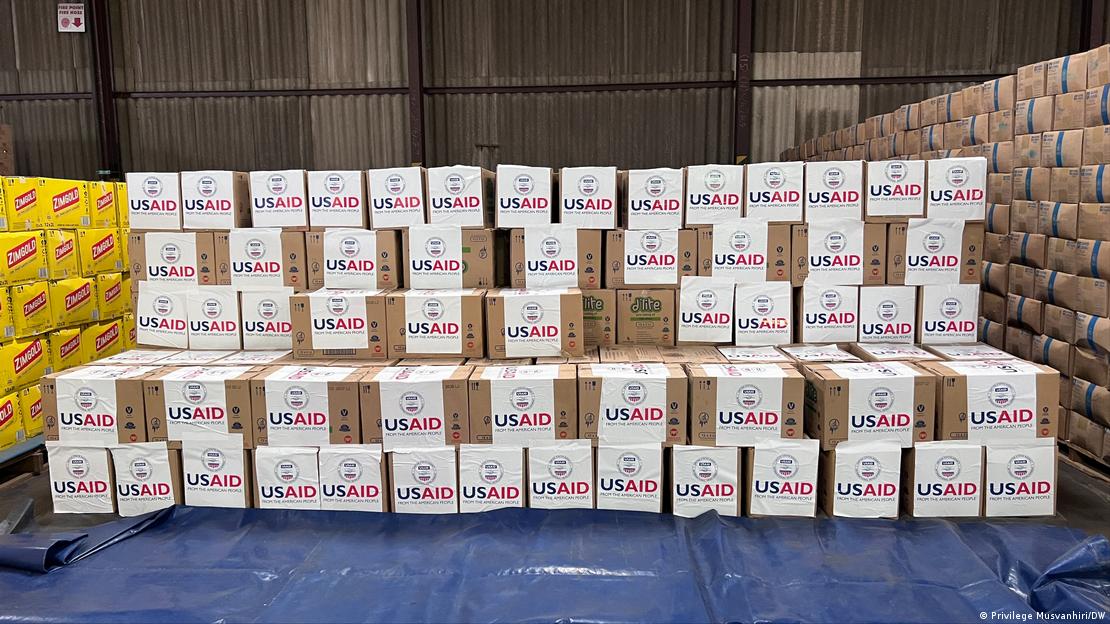
USAID officially shut down in July 2025, and its closure was felt significantly in Africa's health sector
Image: Privilege Musvanhiri/DW
But two countries are pushing back: Zimbabwe and Zambia.
"[The Trump administration is] fundamentally adopting a radically different approach to this than the US government has used in the past," said Conor Savoy, a visiting fellow at the Center for Global Development and formerly a foreign policy engagement lead at USAID.
US pressures African countries to accept health deals
Zimbabwe has walked away from negotiations, calling US demands on data and biological samples "lopsided" and an "intolerable infringement on sovereignty."
Kenya's government accepted a deal. However, activists with similar data privacy concerns have taken it to court.
For months, the US has been trying to reach a deal with Zambia. In February, its government said the American proposal did not align with the country's interests. The US is proposing $1 billion in health funding over five years, less than half of what Zambia received before Trump took office.
Zambia must also commit $340 million in new health spending, and the US has demanded biological and specimen data for 25 years. It has reportedly until May to sign or lose funding.
Zambia has already increased its own health contributions, including some HIV programs. However, scaling up health spending cannot happen overnight, according to Savoy.
"Their systems are simply not at a place where they can take on the entire challenge of health funding," he told DW.
Another reported demand from the US is access to Zambia's critical minerals. The country has significant reserves of nickel and cobalt, and is one of the world's largest copper producers.
Earlier this year, the Trump administration launched Project Vault, aiming to counter China's dominance in rare earth minerals. But reports of trading health aid for minerals is concerning to experts.
"We're playing with fire here ultimately and it could further erode confidence and credit and our credibility on the continent," said Savoy.
HealthGAP, a health advocacy organization working in Zambia, reported that activists are "demanding a rejection of deals conditioning funding access to mining."
Which countries have agreed to US mineral deals?
Many African nations have already signed MOUs with the US. "There are countries that want these types of investments, and they're going to be open to them," said Savoy.
It's difficult to confirm whether critical minerals have been a condition in other deals. For instance, the Democratic Republic of Congo has signed both a health agreement and a separate minerals deal with the US.
Some countries may welcome mineral agreements with the US.
"A lot of countries in the region have tried to look at diversifying away from China," Savoy said. But he argued health and economic deals with the US should be kept separate.
"This effort, especially in Zambia, could seriously undermine our credibility. At the end of the day we're doing essentially what the US government has accused the Chinese of doing for the past two decades in Africa."
Concerns increase for Zambian HIV patients
If a deal is not reached and the US does reduce its financial support on "a massive scale," the effects could be felt quickly.
Oxfam recently warned the deals are "effectively threatening the health and well-being of thousands by turning humanitarian assistance into a bargaining chip."
For 1.3 million Zambians that could mean losing daily life-saving HIV treatment, which had helped cut AIDS-related deaths in the country by over 70% in the last 15 years.
Zambia's health ministry was contacted for this article, but had not responded at the time of publishing.
Edited by: Cai Nebe

Amy Stockdale Author and multimedia journalist from Northern Ireland.
No comments:
Post a Comment