Saturday, December 27, 2025


How Trump’s Venezuelan Blockade Is Disrupting Oil Flows to China and Cuba

  • The Trump administration has ordered the U.S. military to enforce a two-month "quarantine" of Venezuelan oil as part of an intensified "gunboat diplomacy" campaign to pressure the Maduro regime.

  • The U.S. Coast Guard has already intercepted two Venezuelan crude tankers, and the blockade has successfully disrupted oil flows between Venezuela, Cuba, and China.

  • The U.S. believes this economic pressure will lead to an "economic calamity" in Venezuela by late January unless the Maduro government agrees to significant concessions, alongside an expanded U.S. military presence in the Caribbean.

The Trump administration has ordered the U.S. military to enforce a two-month "quarantine" of Venezuelan oil, signaling an intensification of gunboat diplomacy aimed at fostering regime instability in Caracas, with potential spillover effects that could ripple across the Caribbean into Cuba.

"While military options still exist, the focus is to first use economic pressure by enforcing sanctions to reach the outcome the White House is looking (for)," a U.S. official told Reuters on Wednesday afternoon, speaking on condition of anonymity.

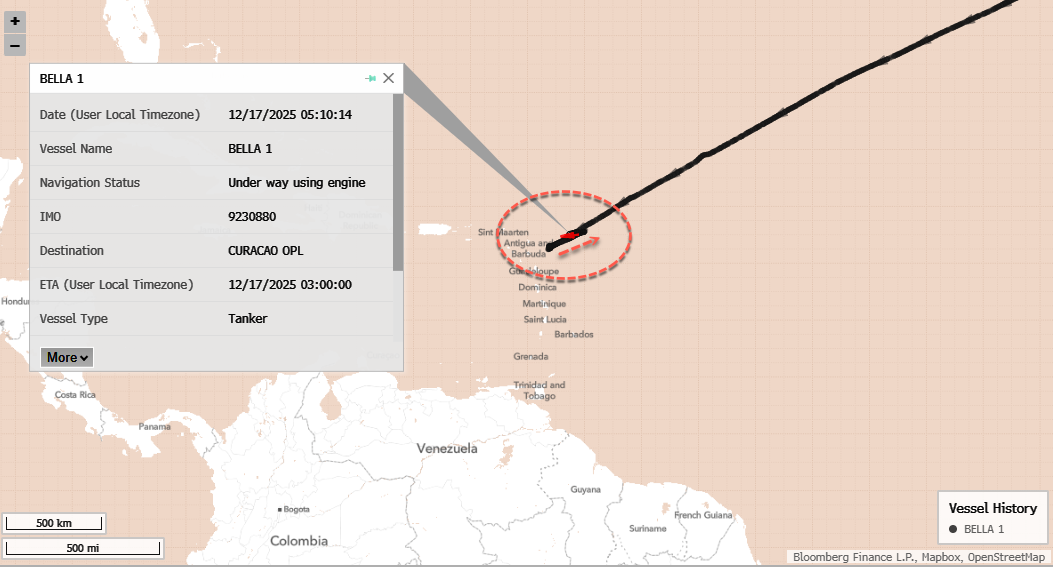
The U.S. Coast Guard has already intercepted two Venezuelan crude tankers this month and is prepared to seize another dark fleet tanker, but the vessel Bella-1 was chased away.

Sources familiar with the sanctioned Bella-1 told Bloomberg that the tanker retreated into the Atlantic after being pursued by U.S. Coast Guard forces. The tanker failed to comply with instructions to move to calmer waters for boarding.

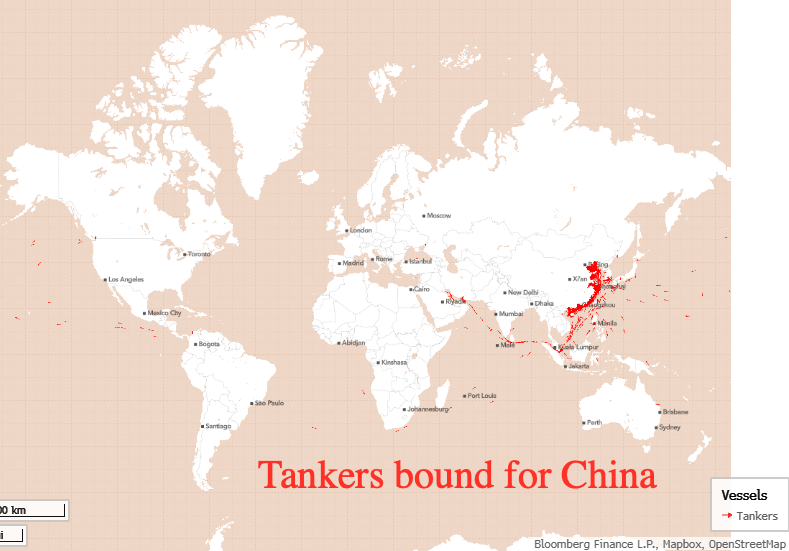
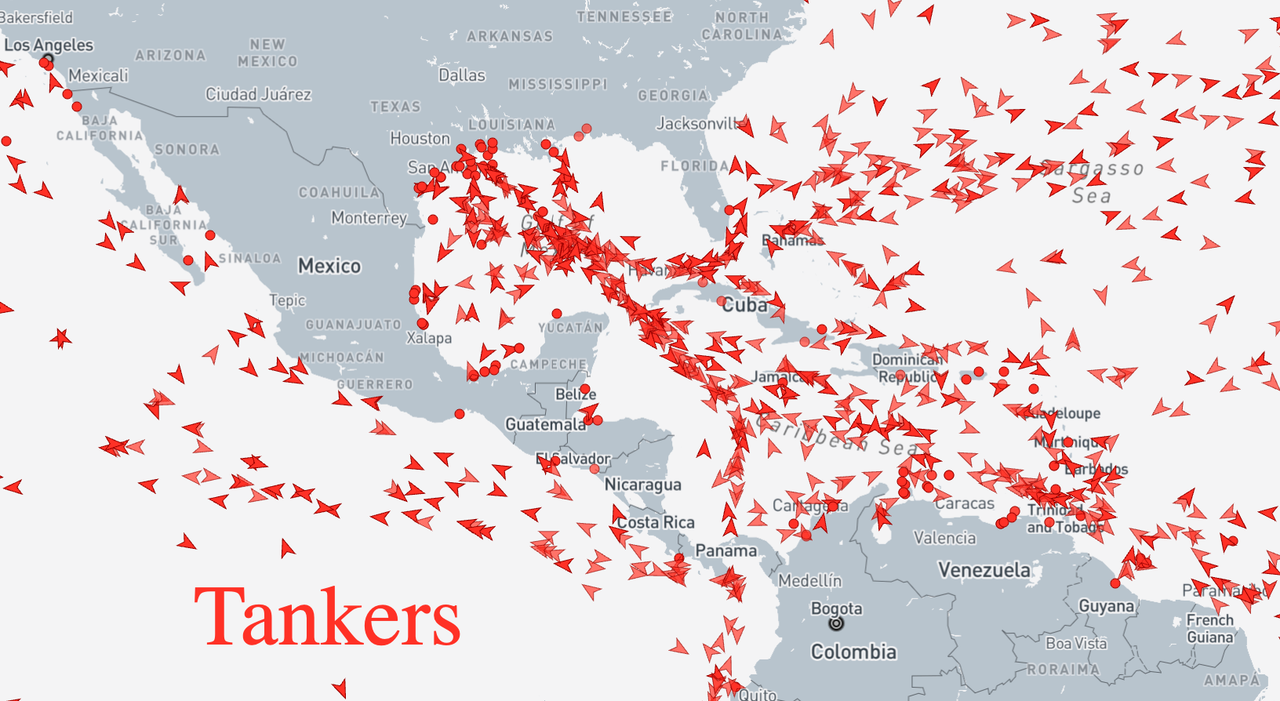
Bella-1's decision to evade closely monitored Venezuelan waters underscores how the Trump administration's U.S. blockade, widely viewed as gunboat diplomacy, has already disrupted Venezuela–Cuba–China oil flows. The blockade is set to further tighten financial pressure on President Nicolás Maduro's government by constraining crucial oil revenues. Beijing has already condemned Trump's gunboat diplomacy.  

According to analytics firm Kpler, Caracas has shipped nearly 900,000 barrels per day this year and relies on 400 dark-fleet tankers to transport the crude, much of which is bound for China. 

"The efforts so far have put tremendous pressure on Maduro, and the belief is that by late January, Venezuela will be facing an economic calamity unless it agrees to make significant concessions to the U.S," the U.S. official told Reuters.

Also reported this week, the Trump administration continues to expand its large military presence in the Caribbean, with more than 15,000 troops, an aircraft carrier, multiple warships, and stealth fighters staged across the region.

As we have repeatedly noted, this all reflects a significant reposturing of the U.S. military toward so-called Western hemispheric defense, effectively a Monroe Doctrine 2.0.

By Zerohedge


Alrosa flags smaller-than-expected decline in annual diamond output

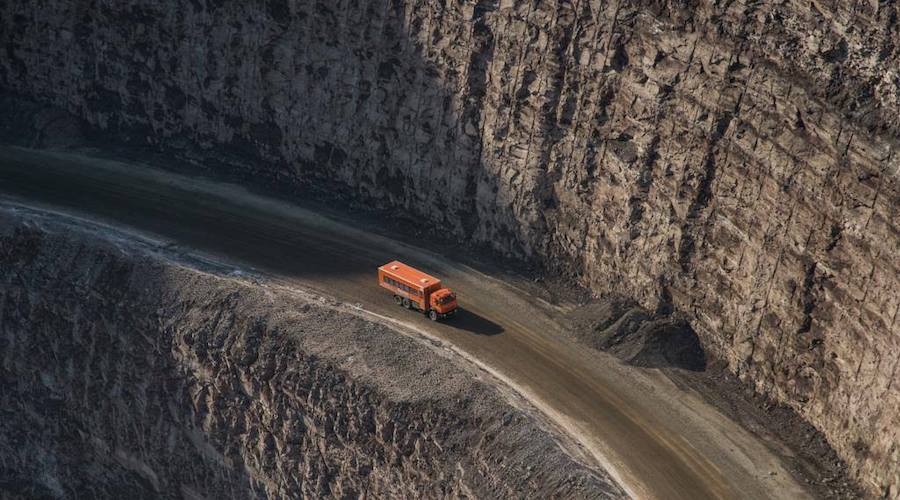
Reference photo by Alrosa.

Russian diamond producer Alrosa said on Tuesday that its 2025 output would amount to 29.7 million carats, beating its previous forecast but down 10% on last year.

CEO Pavel Marinychev said in a statement that the company remained profitable despite Western sanctions and a downturn in the global diamond market. He did not specify the level of profits.

Alrosa is the world’s largest producer of diamonds, accounting for around a third of global output. In March, it had said it would temporarily shut down low-margin assets with output of less than 1 million carats, and maintained its 2025 production target at 29 million carats.

Alrosa said it continues to develop its gold mining operations and aims to reach its design capacity of 3.3 tons of gold per year by 2030 at the Degdekan project in the far eastern region of Magadan.

(By Anastasia Lyrchikova and Mark Trevelyan; Editing by Frances Kerry)


Precious metals’ greatest year


Stock image.

Precious metals just enjoyed one of their greatest years ever, if not the greatest! Gold, silver, platinum, and their miners’ stocks skyrocketed in 2025, multiplying contrarian investors’ wealth. More importantly, this year’s enormous gains radically improved mainstream investors’ sentiment on precious metals. After mostly ignoring this important sector for long years, now everyone finally realizes PM allocations are essential.

Year-end is always a time of reflection. Around Christmas, the tyranny of the present and our endless busyness yields to a much-wider temporal perspective. As we spend joyous time with our families, we contemplate the past when our kids were younger. We look back on another year of hard work and give thanks for everything we were blessed to accomplish. We also optimistically look forward to a better year ahead.

Rewinding a year, 2024 certainly wasn’t bad for gold. The yellow metal powered 27.2% higher last year, actually besting the S&P 500’s parallel 23.3% gain. But mainstream investors really didn’t care, precious metals remained languishing in apathy. Gold has always been the linchpin driving the entire PM complex. Silver, platinum, and especially miners’ stocks tend to trade like gold sentiment gauges, amplifying its moves.

Silver rallied 21.5% in 2024, decent absolutely but really lagging gold. The global silver market is about 1/8th the size of gold’s, so silver really leverages gold’s upside when bullish psychology mounts. The lack of mainstream excitement about gold a year ago was also sure evident in platinum. It normally trades much more like an industrial metal than a precious one, yet still slumped 8.4% in 2024 despite supply constraints.

But nothing reflected the lack of interest in PMs a year ago like gold stocks. There are two leading gold-stock benchmarks, the GDX and GDXJ ETFs. The former is dominated by large major gold miners, the latter by smaller mid-tier and junior gold miners. GDX only climbed 9.4% last year, for horrendously-bad 0.3x upside leverage to gold. Historically GDX has tended to amplify material gold moves by 2x to 3x.

If gold stocks can’t greatly outperform their metal, they’re not worth owning. In addition to all gold’s own global-supply-and-demand risks, miners heap on additional big operational, geological, and geopolitical risks. Investors need to be well-compensated for bearing those, in the form of outsized gains. GDXJ didn’t fare much better in 2024, only rallying 12.8%. Just awful 0.5x leverage, smaller miners should do 4x+!

A year ago this week, I wrote an essay on Gold’s Remarkable Year. It analyzed gold’s massive breakout to many new records, despite “American stock investors enthralled by the AI stock bubble totally sitting out, multiple bouts of dangerous extreme overboughtness, exceedingly-overextended near-record spec gold-futures longs, and a powerful dollar rally!” Big global demand including from central banks overcame all that.

One week later as January 2025 dawned, I predicted this year would be Gold Stocks’ Revaluation Year. That was a hardcore contrarian call at the time, and I got a lot of flak for it then. GDX and GDXJ had just slumped to deep seriously-oversold lows well under their baseline 200-day moving averages. So gold-stock psychology then was really bearish, with gold and silver miners largely being left for dead by investors.

I concluded a year ago “2025 has great potential for gold stocks to enjoy a major-paradigm-shift revaluation higher. Gold just experienced one last year, which gold stocks greatly lagged. Despite the gold miners earning massive record profits, investors weren’t interested. Gold hadn’t yet rallied high enough for long enough to convince them of its staying power, and the AI stock bubble stole the limelight from everything else.”

“But with gold consolidating high instead of plunging after soaring in 2024, these much-higher prices are becoming the new normal. That makes gold miners’ fat-and-rich profits durable, leaving their stocks deeply undervalued. Fund managers will increasingly notice that, and start upping their tiny allocations. The resulting gold-stock gains will turn psychology bullish again, fueling increasing buying normalizing prices.”

Boy that would prove true in spades! With the book about to close on 2025, GDX and GDXJ have skyrocketed an extraordinary 163.9% and 177.3% year-to-date as of Christmas Eve! Those colossal gains amplified gold’s huge 70.7% YTD by a far-better 2.3x and 2.5x, reflecting wildly-improved mainstream psychology. That spilled into silver and platinum too, which have also skyrocketed an epic 148.9% and 148.2% YTD!

Don’t skim over those phenomenal results without giving them time to sink in. The S&P 500 had a good 2025 too, but merely rallied 17.9% YTD. Dominant AI market-darling NVIDIA had a great year, but is just up 40.4% YTD. The precious-metals returns this year have truly been mind-boggling! Given those, gold, silver, and their miners’ stocks ought to be far more popular than they are despite big improvements in that.

Again gold is the engine pulling the entire precious-metals train, with bullish gold psychology spilling into the rest of the complex. A major factor in gold’s greatest year ever is American stock investors finally starting to return. An excellent proxy for their gold allocations is the combined bullion holdings of the world-dominant US GLD, IAU, and GLDM gold ETFs. They reflect stock-market capital flows into and out of gold.

In 2024 when gold remained forgotten by mainstream investors, GLD+IAU+GLDM holdings only edged up a trivial 0.1%. That reflected no differential gold-ETF-share buying by American stock investors, who were enthralled by the AI bubble. But so far in 2025, these holdings have surged a strong 26.8% to a 4.9-year secular high of 1,739 metric tons! Investors are finally realizing how essential gold allocations are.

The dominant silver ETF is SLV, and it too enjoyed accelerating stock-market capital inflows this year. SLV’s bullion holdings grew 5.7% in 2024, then another 14.4% YTD in 2025 to 529m ounces. That just returned them to a 3.5-year secular high. While the GLD+IAU+GLDM builds were more gradual throughout this year, almost half of 2025’s SLV builds rapidly accrued in this past month as silver soared in a near-parabola.

That’s a serious concern heading into 2026. From a short-term-timing perspective, absolute price levels don’t matter much. What’s really important is how fast they got there. Big-and-fast surges dramatically ramp near-term downside risks because they leave prices increasingly overbought. An easy way to measure that looks at prices as multiples of their trailing 200-day moving averages, ideal slowly-evolving baselines.

Midweek gold, silver, platinum, GDX, and GDXJ are all stretched a truly-extreme 25.2%, 72.9%, 67.2%, 46.0%, and 50.4% above their respective 200dmas! All are deep into dangerous extreme-overbought territory, portending either big-and-fast selloffs or longer sideways drifts. Both are crucial for keeping major bull markets healthy, rebalancing away unsustainable technicals and sentiment before they slay bulls.

Prices divided by their 200dmas charted over time reveal oversold-to-overbought trading ranges. During these past five calendar years, extreme overboughtness has started at 18% above gold’s 200dma, 30% over silver’s, and 35% above GDX’s. Not only are current levels far above those warning thresholds, gold and GDX were way worse back at mid-October’s initial peak. Gold stretched 33.0% over its 200dma, and GDX 62.9%!

That proved gold’s seventh-most-overbought close since April 1980, top 0.1% in 45.8 years since! That odd starting date gets gold past the once-in-a-lifetime severing-dollar-from-gold huge cyclical bulls seen during the 1970s. Remarkably gold’s current monster bull hasn’t seen a single 10%+ correction in over two years! On Tuesday, that extended to epic record 146.8% gains over 26.6 months since early October 2023!

As I analyzed in mid-October, that makes this gold’s biggest cyclical bull since 1971 which means ever in dollar terms! This monster dwarfs second place, gold’s famous 127.9% superspike into January 1980. But big-and-fast gains demand rebalancing reckonings. After the next-ten-largest gold cyclical bulls since 1971 starting with January 1980’s, gold’s average drawdown was also big and fast at 20.8% over just 2.1 months!

Alternatively gold could almost miraculously consolidate high again for the fourth time in this epic record bull. Sideways drifts accomplish the same rebalancing mission as big drawdowns, but take much longer to do so. Sharp plunges eviscerate herd greed, while drifts gradually bleed it away. I wrote a whole essay a couple weeks ago analyzing this monster bull’s earlier high consolidations and their implications today.

Given the extreme overboughtness ubiquitous in precious-metals-land today, I sure wouldn’t rush to buy way up here! Markets are forever-cyclical, flowing two steps forward before ebbing one step back. Gold, silver, and their miners’ stocks will come in again as always, narrowing those vast gaps to their 200dmas. The closer they fall to those baselines, the greater the probabilities buying relatively-low there will prove successful.

Short-term extreme-overboughtness concerns aside, gold’s fundamentals remain really bullish supporting further future gains after a healthy rebalancing selloff or drift. The single-most-bullish argument for gold today is American stock investors’ still-really-low portfolio allocations. Those combined GLD+IAU+GLDM holdings are worth $251b midweek. That’s certainly a big chunk of change, but still tiny in the grand scheme.

The combined market capitalization of all 500 S&P 500 stocks is now running a staggering $62,913b! Thus American stock investors’ implied portfolio gold allocation is still way down near 0.4%, rounding to zero! That’s astounding, especially with gold at lofty all-time-record highs. Realize American stock investors control the great majority of global stock-market capital, so them gradually returning to gold is huge.

For centuries, minimum gold portfolio allocations of 5% to 10% were universally recommended. Given gold’s highly-valuable unique diversifying attributes, it’s easy to make a case for 20%. But even if American stock investors’ gold allocations only grow to a still-immaterial 2% to 3%, the coming capital inflows into gold will be vast. They will join ongoing strong central-bank and foreign demand to drive gold much higher.

And despite gold stocks also being extremely overbought in need of a rebalancing, their fundamental case remains breathtakingly-bullish. I’ve been intensely studying them, actively trading them, and writing about all that in our popular subscription newsletters for over a quarter-century now. Before I founded Zeal in early 2000, I was a Certified Public Accountant auditing mining companies for one of the biggest firms.

I’ve kept my CPA license active ever since, and one of my specialties remains deep analysis of gold and silver miners’ fundamentals. Every quarter I dig into the latest operational and financial results reported by the top-25 component stocks in both GDX and GDXJ. I last updated that incredibly-valuable analysis thread in mid-November for the GDX majors then a week later for the GDXJ mid-tiers, analyzing Q3’25 results.

That was my 38th quarter in a row advancing this unique research. The gold miners dominating both of these leading sector ETFs achieved epic record earnings with record gold, as their profits leverage the metal! But one phenomenal quarter isn’t the bullish case for gold stocks going forward, it is a long string of them leaving the miners still quite undervalued relative to prevailing gold prices. Their profits growth is jaw-dropping.

The best proxy for how gold miners are faring as a sector is implied unit profits. Those take the GDX top 25’s and GDXJ top 25’s average all-in sustaining costs per ounce in any quarter then subtract them from its quarterly-average gold price. That is much cleaner than bottom-line accounting profits, which are often distorted by unusual non-cash items. The gold miners’ earnings growth in recent years dwarfs all other sectors’.

Over the past nine reported quarters starting in Q3’23 which was just before gold’s monster record bull was born, the GDX-top-25 majors’ implied unit earnings have skyrocketed 87%, 47%, 31%, 75%, 74%, 78%, 90%, 78%, and 83% year-over-year! And the GDXJ-top-25 mid-tiers’ per-ounce profits soared an even-better 106%, 133%, 63%, 63%, 71%, 95%, 91%, 79%, and 82% YoY! Holy freaking cow that’s awesome!

And this current Q4’25 will continue that unparalleled-in-all-the-stock-markets colossal-earnings-growth trend. Once this quarter wraps up, I’m thinking about writing a whole essay delving into that next week. The gold miners’ Q4’25 results due out by early March since they include audited annual numbers will again prove stupendous records. Gold is averaging a record $4,135 quarter-to-date, soaring an epic 55.4% YoY!

So even if gold, silver, and their miners’ stocks roll over into serious drawdowns out of recent extreme overboughtness, the miners’ fundamentals remain fantastically amazing. There’s likely an excellent buying opportunity approaching early in 2026, much closer to GDX’s and GDXJ’s 200dmas. So if you haven’t yet jumped on the gold-stock train, another stop is coming. The getting should be good again by later next year.

It sure as heck was in 2025! We added extensive newsletter trade positions late last year and throughout this one when gold and gold stocks were less overbought. All those were stopped out in mid-October as both gold and GDX suffered brutal top-0.3%-in-their-history daily plunges. Yet our 60 newsletter stock trades realized in 2025 including all losers still averaged truly-spectacular annualized realized gains of +119.9%!

We can’t know how 2026 will play out in markets, but we can game probabilities based on long historical precedent. And the fundamental cases for gold and its miners’ stocks remain bullish going forward. Yes some kind of rebalancing selloff or consolidation is needed, but those are totally normal and healthy periodically. These bull runs will continue on bullish global supply and demand and increasingly-bullish herd sentiment.

The bottom line is precious metals enjoyed their greatest year ever in 2025! Gold, silver, platinum, and their miners’ stocks skyrocketed to utterly-massive gains. That multiplied the wealth of contrarian investors, but more importantly really shifted mainstream investors’ precious-metals psychology back to bullish. After mostly ignoring this essential asset class for long years, investors now realize they need to own PMs.

Their stupendous gains this year have left them extremely overbought, all but guaranteeing either big-and-fast drawdowns or slower high consolidations to rebalance unsustainable technicals and sentiment. But the fundamental cases for gold and its miners remain strong. American stock investors have barely started allocating capital into gold, and miners’ earnings continue soaring to epic records keeping them undervalued.

(By Adam Hamilton)


Super Copper’s Cordillera project approved by Chile’s National Mining Authority

Super Copper is focused on developing projects in northern Chile. (Image courtesy of Supper Copper.)

Super Copper (CSE: CUPR) said on Wednesday it has received approval from Chile’s national mining authority (Sernageomin) for its Cordillera Cobre project.

The approval pertains to a total of 26 mining concessions covering approximately 6,858 hectares in the Atacama copper belt.

Super Copper said it has now completed the most technical and challenging portion of the Chilean mining rights process, with 26 exploitation concessions that make up the Cordillera Cobre claim block fully approved by the National Geology and Mining Service.

Of these concessions, 25 have received formal court resolutions establishing them and 15 have had their legal extract published in the official mining gazette; registration in the Copiapó mining registry is now underway.

Once registration is complete, each concession becomes a legally constituted exploitation concession, granting full and permanent mining rights, the company noted.

“This is a critical milestone for Super Copper. Securing exploitation concessions, not just exploration rights, gives full and permanent mining rights at Cordillera Cobre,” Super Copper CEO Zachary Dolesky said in a news release.

“With the title process effectively complete and registration progressing as planned, we are positioned to submit our drill program promptly upon finalizing results from our most recent exploration work,” Dolesky said. “This positions Super Copper to advance one of the most exciting new copper projects in the Atacama region, at a time when global copper demand is entering a major structural deficit.” 

In July, the Canadian junior also struck a deal to acquire 100% of the Castilla copper project, locking down a 5,800-hectare land package near the historic Manto Negro mine.


Report: U.S. Navy Exceeded Limits for Underperforming Recruits

Then-VCNO Adm. James Kilby visits a Future Sailor Preparatory Course classroom, 2024 (USN file image)

Published Dec 23, 2025 5:00 PM by The Maritime Executive


In its rush to meet recruitment targets, the U.S. Navy exceeded the allowable legal limit for recruits who underperform on standard armed forces capability testing, according to the Pentagon's Office of the Inspector General.

The Navy has a serious need for more enlisted personnel out in the fleet, and is running some of its warships short-handed. In FY2023, it missed its recruitment target by 20 percent, hampered by multiple factors: a shortage of qualified youths in the general population; a new medical-records system that discovered disqualifying conditions at a higher rate; and a strong jobs market, which made military service less economically competitive with civilian employment. 

In response, the Navy made an all-out push to make it easier and faster to sign up and enlist. The service tripled the number of office staff assigned to perform medical waiver reviews, and it sped up operations at regional testing stations. It reduced its minimum acceptable score on the Armed Forces Qualification Test (AFQT) to the lowest level allowable by law, and increased the maximum recruit age to 41, the oldest it can accept without permission from Congress. It also opened a remedial program for applicants who do not meet minimum requirements at the time of first contact with a recruiter. 

The pre-boot camp program for underperforming recruits is called the Future Sailor Preparatory Course. The program has two tracks - one for personnel who need help passing the AFQT entrance exam, and one for those who need to improve their physical fitness. Together, the two tracks have a 90 percent pass rate, according to the service. 

In a review released earlier this month, the Pentagon's Inspector General found that through the enlistment of program participants, the Navy had accepted more than 2,700 people who scored in the 30th percentile or below on the AFQT (lower than the top 70 percent of all test takers) in the first half of the fiscal year. This amounted to about 11 percent of the recruits amassed to date at that point in the year - well in excess of the four percent limit that would trigger notification to the Secretary of Defense and Congress. 

The Navy disagreed with this finding, and it put the low-performer accession count at seven percent - still in excess of the congressional limit, but not as much. The Navy counted test scores posted after its remedial program, while the OIG reviewers counted applicants' initial test scores posted before the program. A Navy official informed OIG that the purpose of the remedial program was to improve the test scores and open up more opportunities for recruits, and counting their pre-remedial test scores would undermine the program's objective. 

This might be a procedural disagreement on paper, but the OIG warned that it could have practical consequences.

"Exceeding enlistments of [low-scoring] recruits, who . . . tend to exhibit below-average trainability and on-the-job performance, without the awareness and approval of the Department's leadership, could create unanticipated quality gaps in the fleet, degrading the Navy's overall readiness and lethality," the OIG wrote.


Hanwha and Hyundai to Square Off to Build Korea’s First Domestic Destroyer

Korean concept for KDDX vessel
HHI proposed a 6,500-ton destroyer with a world-first, ultra-larger 25 MW propulsion moter while Hanwha Ocean prosed a 7,000-ton smart ship design (HHI)

Published Dec 26, 2025 5:25 PM by The Maritime Executive


South Korea’s Defense Acquisition Program Promotion Committee has resolved to hold a head-to-head competition between Hanwha Ocean and HD Hyundai Heavy Industries for the country’s first domestically-produced destroyer. It selected the process after more than two years of discussion, and after elements of corporate espionage threatened to derail the whole project.

The project dates back more than a decade to inception in 2011, which called for South Korea to leverage its domestic expertise in shipbuilding and electronic warfare systems to build its first entirely domestically produced destroyers. South Korea, while building its own Aegis-class vessels, has been dependent on U.S. weapon systems and equipment. The government challenged the shipbuilders to develop designs for a truly Korean, next—generation destroyer.

Daewoo Shipbuilding & Marine Engineering (DSME) produced the first concept designs in 2012, and the government advanced the project in 2020, calling for design concepts. Hyundai Heavy Industries produced a design, but it later came out that some of its employees had illegally obtained confidential materials, including concept design data. Three years later, in 2023, a court confirmed the violations, which had led to two years of debate by the Committee and government over how to proceed.

The original concept called for the construction of six 6,000-ton displacement destroyers. The key stipulation is to develop advanced capabilities and critically build the key systems in Korea. The ships are seen as critical to the future of South Korea’s Navy as its older Gwanggaeto class is expected to be decommissioned between 2028 and 2032.

At the end of 2023, Hyundai said that after 36 months since it received the contract for a concept design, it had completed the basic design for its vessel. It is calling for a 6,500-ton destroyer. The company highlighted its design for a fully electric propulsion system, which it said would feature a world-first, ultra-large 25MW propulsion motor.  They called for a cutting-edge level of automation and electrification, powered by the massive power plant. They are proposing automated ammunition transport facilities, a smart bridge, advanced navigation assistance systems, and a design based on autonomous navigation technology.

Hanwha Ocean, which acquired DSME, has also proposed a fully-electric propulsion ship, noting that it would reduce noise and vibration, making the vessels more difficult for submarines to track. The hull would be a stealth design that minimizes laser reflection, noise, and heat, and it would have an integrated mast that includes sensors such as radar and electronic equipment with a phased array radar, infrared detection, and tracking equipment. 

Hanwha Ocean also expanded on the original KDDX vessel concept to propose a 7,000-ton displacement smart design. They have proposed incorporating anti-drone and laser weapon systems.

The Defense Acquisition Program Promotion Committee broke its two-year deadlock by agreeing to launch a “nominated competition” between the two shipbuilders for the contract for detailed design that will lead to ship construction. According to media reports, they expect to finalize the contract by the end of 2026 for the project, which is valued at approximately $5.3 billion.

The original intent had been to proceed with a sole-source contract. The competition, they said, would restore fairness while balancing schedule management for the project. The goal remains to domestically produce a sophisticated vessel “responding to increasingly sophisticated enemy nuclear weapons, missiles, and underwater threats.” They still expect the first vessel by 2030 and to complete the program by 2036.


Russia Delivers First Domestically-Built Arc7 LNG Carrier

Russian-built LNG carrier
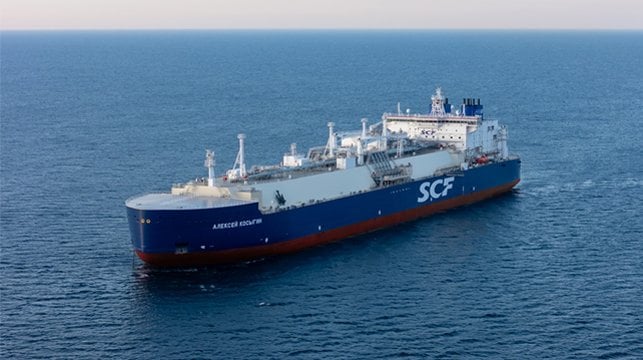
Zvezda delivered its first domestically-built Arc7 LNG carrier (Sovcomflot)

Published Dec 26, 2025 5:39 PM by The Maritime Executive


Russia’s Sovcomflot and Zvezda shipyard heralded the delivery of its first LNG carrier, the Alexey Kosygin. They are saying it is the first of a new series of domestically-built LNG carriers that will be able to operate year-round on the Northern Sea Route and help to meet the goal of tripling LNG exports.

The vessel with a capacity of 172,600 cbm was officially commissioned and handed over to Sovcomflot on December 24. It is years behind schedule due to sanctions that prohibited the import of key components. Reports said the ship was expected in 2023. Zvezda worked with foreign shipbuilders who built components of the vessels assembled in Russia.

"Today is a historic event for the entire domestic shipping and shipbuilding industry – we are commissioning the first gas carrier built in Russia,” said Igor Tonkovidov, CEO of PAO Sovcomflot. “Never before has our country built such complex vessels, both in engineering and technology.”

Zvezda, which was started by Russian President Vladimir Putin as the country’s first large-tonnage shipyard, highlights that the production of the gas carrier required a large amount of research and development. Sovcomflot says the design benefited from the experience operating the Christophe de Margerie series in the challenging Arctic climate.


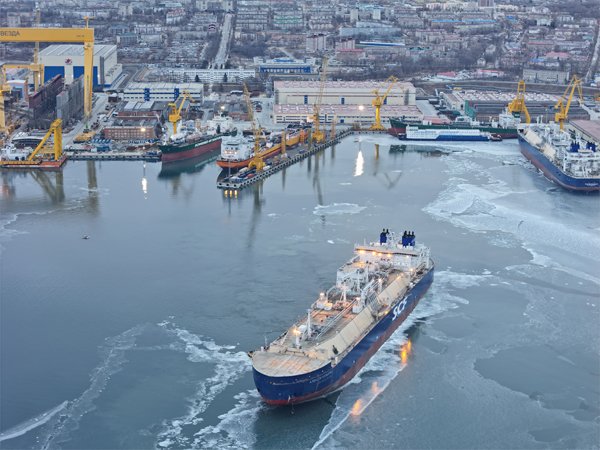
Zvezda complex - note the second LNG carrier outfitting on the dock (Zvezda)


The new vessel is 300 meters (984 feet) and is designed to operate without restriction on ice. It will have a crew of 29. They say it can handle ice up to 2 meters (6.5 feet) in thickness. It uses LNG for its propulsion, and the system has a capacity of 45 MW with three full-turn rudder propellers. The propulsion plant was also domestically built at the Saphir plant within the Zvezda complex.

Delivery on the vessel comes as Russia has struggled to maintain LNG shipments due to an early onset this year of heavy ice. Russian-flagged LNG carrier Buran reportedly was forced to turn back after making several attempts to reach the LNH terminal.

Plans call for the new ship to operate under a long-term charter to Novatek, which operates the Arctic LNG 2 plant. The company has said it intends to build 15 Arc7 ice-class tankers, and it will have contracted a total of 21 LNG tankers.

Sovcomflot reports that it expects to receive two more LNG tankers from Zvezda next year. The shipbuilder highlighted that it has already delivered seven vessels between 2020 and 2025, including five Aframax oil tankers, as the yard complex continues to expand its capacity.


Australia Surveys Historic Shipwrecks to Inform Future Preservation

HMAS Australia I
HMAS Australia I on a transit of the Suez Canal, 2019 (RAN file image)

Published Dec 25, 2025 3:06 PM by The Maritime Executive


Authorities in Australia have gathered new data and imagery on the state of three shipwrecks in the country’s waters, a project that is expected to help in the long term preservation of the historic wrecks.

The Department of Climate Change, Energy, Environment & Water (DCCEEW) announced that archaeologists have carried out surveys on the wrecks of HMAS Australia I, SS Wollongbar II and SS Tasman as part of efforts to ensure continuous protection. The surveys were undertaken during a transit voyage from Brisbane to Hobart by research vessel RV Investigator last month.

The 94-meter ocean-class vessel Investigator, which is operated by national science agency CSIRO, made the transit to Hobart in preparation for its next research expedition in the coming year. Underwater Cultural Heritage experts were part of the transit voyage in which surveys were carried on the historic wrecks.

Commissioned in 1913, the battle cruiser Australia I was the first flagship of the Royal Australian Navy (RAN) and is accredited for being the centerpiece of the fleet that signaled RAN’s arrival as a credible ocean-going navy. Historical accounts show the warship played a leading role during World War I, including taking part in a series of operations that led to the seizure of German colonies and destroying of the enemy’s radio network in the Pacific.

In April 1924, Australia I was sunk off the coast of Sydney as part of an arms reduction in the Pacific following WWI. The warship was sunk by demolition charges and deliberate flooding, and the vessel capsized before sinking in exactly 21 minutes.

For its part, SS Wollongbar II was a steel steamship built in 1922, and was known for its passenger and freight service between Sydney and Byron Bay. In 1943, the ship was en route from Byron Bay to Sydney when it was torpedoed by a Japanese submarine, causing the loss of 32 of its 37 crew. The vessel’s wreck was discovered in 2019 in about 100 meters of water off the coast of Crescent Head on, the NSW Mid North Coast.

Also surveyed was the wreck of SS Tasman, a 19th-century steamship that sank in 1883 after hitting a submerged rock near Hippolyte Rocks, Tasmania.

DCCEEW said that after the surveys, archaeologists now have a clear understanding of the positions and conditions of the shipwreck sites, something that will inform future protection and preservation. 

Since commissioning in 2014, Investigator has assisted with both the identification of significant shipwrecks as well as making several important discoveries during voyages. In 2024, the vessel helped find the wrecks of the historic SS Nemesis and MV Noongah.


Weathernews Launches AI-Enabled “SeaNavigator for Master”

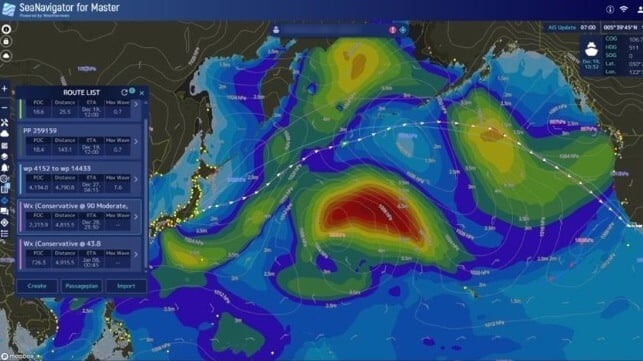
Seanavigator

Published Dec 26, 2025 6:47 PM by The Maritime Executive


Weathernews Inc. (Headquarters: Chiba, Japan; President and Representative Director: Tomohiro Ishibashi) has launched “SeaNavigator for Master”, a next-generation, world-first support platform that uses AI-powered chat to assist captains in making operational decisions, enabled by recent advances in maritime communications.

This service features the world's first commercial conversational AI Agent for captains, allowing them to ask AI for information directly relevant to voyage planning, such as weather risks along routes and at ports, as well as fuel consumption and speed forecasts, just as if they were speaking with a Weathernews expert. Captains can also view the latest high-resolution forecast in real time, including wave, wind and tropical cyclone track forecasts, which are among the most in-demand data sets. The Voyage Route Simulation feature allows captains to instantly search for optimal voyage routes onboard, based on wave height and historical routing track records. Whereas conventional communications have been limited to email and satellite phone, this service allows voyage plans to be smoothly reviewed and approved via chat between captains at sea and shore-based operations managers.
By sharing timely weather, marine, and operational data essential to decision-making through this onboard system, the service resolves the long-standing issue of information disparity between sea and shore. This enables captains to independently select more optimal routes using rich, up-to-date data sets. Going forward, Weathernews will leverage its experience supporting a cumulative total of one million voyages to further expand functionality and enhance the accuracy of the AI Agent and Voyage Route Simulation.

For nearly 40 years, Weathernews has provided marine weather services that support vessel safety, economic efficiency, and environmental performance. In 1994, Weathernews developed the world's first offline onboard system, establishing a long-standing track record of empowering captains to make informed decisions based on predicted weather conditions. However, due to limitations in maritime communications and security, delivering large volumes of data in real time has historically been challenging. While shore-based operations managers were able to verify detailed, up-to-date data in real time, captains onboard vessels were restricted to receiving information via email only a few times per day. This resulted in significant disparities in both the timeliness and volume of information available between ship and shore.

In recent years, substantial improvements in maritime network infrastructure have created a technical foundation for securely handling data at a level comparable to that available on shore. In response to these advancements, Weathernews has renewed its onboard systems for the first time since 2012. Prioritizing the needs of ship captains, the company developed “SeaNavigator for Master” with a clear focus.

SeaNavigator for Master is a marine weather service in which AI supports captains in making operational decisions at sea. Through this next-generation operational support platform, captains can access the latest wave and wind forecasts, grounding risk information, voyage route simulations, and other critical data directly onboard. By combining captains’ professional experience with a rich set of real-time data and AI-driven recommendations, the service enables more optimal operational decisions that balance safety, economic performance, and schedule reliability.

1. Use of the world's first AI service that helps make operational decisions aboard ships through dialogue

The most significant feature of this service is the AI Agent, which specializes in supporting captains’ operational decision-making at sea. The AI Agent (*1), which SeaNavigator for Master has provided since October 2025, has been further enhanced to address the unique needs of captains. Captains can ask questions at any time about the latest weather conditions, wave and wind risks along voyage routes, as well as fuel consumption, speed trends and forecasts based on historical routing service track records. This interactive dialogue experience allows captains to obtain relevant operational insights as naturally as if they were consulting experts from Weathernews Inc.’s Marine Weather Division.

For questions such as, "Summarize the weather risks along the planned route," or, "Tell me the wind speed and wave height forecast for the Port of Osaka in 48 hours," the AI references Weathernews's marine and operational data and responds in a chat-based format. This enables captains to instantly obtain the latest information required for voyage decision-making simply by asking the AI.

Going forward, Weathernews plans to further enhance the AI Agent to handle complex consultations that have traditionally required confirmation with experts from the Marine Weather Division, providing immediate responses 24 hours a day, 365 days a year. For example, when a captain currently asks, "I'm considering this route; are there any alternative routes that might be better?" Weathernews experts may respond with guidance such as, "The forecast for the latter half of the voyage is likely to change, so wait until tomorrow. If conditions worsen, consider switching to a plan with a slightly lower latitude." At present, captains review such recommendations and the underlying reasoning before making final route adjustments. Going forward, we will enhance the system so that captains can consult directly with the “AI Agent” to receive information and advice equivalent to that provided by our experts. This will support the captain's judgment and enable faster, more precise decision-making.

2. Timely access to the latest high-resolution wind and wave forecasts while at sea

Bandwidth constraints on conventional onboard systems have historically limited marine data to narrow areas and lower resolutions than those available to shore-based operations managers, with updates typically received only once per day. With SeaNavigator for Master, vessels can now access high-resolution marine data for all sea areas directly onboard, overlaid on nautical chart-style displays that include wind direction and speed, wave height and period, currents, and tropical cyclone track forecasts. This capability empowers captains to make more informed operational decisions based on a comprehensive set of the latest available information.

3. Update voyage plans with Voyage Route Simulation, which lets captains search for optimal routes at any time

Weathernews has developed our proprietary Voyage Route Simulation to meet the needs of international shipping markets where captains are responsible for everything from information gathering to final operational decision-making. This feature enables captains to independently search for voyage routes and review the results in detail.
With Voyage Route Simulation, captains simply enter the departure and arrival ports, scheduled times, and a reference threshold wave height. The system then automatically calculates voyage routes and proposes multiple options, ranked by the degree of weather-related risk. These options are further refined based on severe weather threats such as tropical cyclones and low-pressure systems, as well as ship report data. Captains can review estimated voyage time, distance, and fuel consumption for each route and select the most appropriate option according to their priorities for safety, economic efficiency, and schedule reliability.

Simulations can also be performed from the vessel’s current location using the latest available data after departure, making the feature particularly useful for updating voyage plans while at sea.

4. Move beyond email and approve voyage plans through chats between the sea and shore

SeaNavigator for Master enables the workflow, from route selection to approval between sea and shore, to be conducted via chat. Voyage plan approvals that were previously handled through email can now be discussed in real time while both parties view the same screen, dramatically accelerating decision-making.

The service also includes the NAR (Navigation Assessment & Routing) (*2) grounding prevention support feature, which was previously available only to shore-based operations managers. NAR alerts users to grounding risks when vessels plan to approach high-risk areas such as shallow waters or waters congested with fishing vessels. This makes it possible for both onboard and shore-based personnel to review voyage plans and verify grounding risks using the same data, while accounting for operational factors beyond weather conditions.

Early adopter shipping companies in Europe, Japan, and Asia have highly praised the system, describing it as a tool that drives digital transformation (DX) in day-to-day operations. One user commented, “We used to exchange large files via email to obtain approval for voyage plans, but now we can discuss them almost in real time. Improving the onboard network environment has resulted in significant operational benefits.”

Inquiries about this service: https://sea.weathernews.com/contact

Weathernews positions AI technology at the core of its services as a powerful partner that enhances captains’ experience and expertise. In pursuit of its mission to “Saving the lives of sailors. Saving the future of our planet too”, Weathernews will continue to promote environmental digital transformation while harnessing the potential of AI.


The products and services herein described in this press release are not endorsed by The Maritime Executive.