Wednesday, January 21, 2026

Greenland, NATO and war: Fact-checking Trump’s Davos speech


Copyright AP Photo

By Tamsin Paternoster & James Thomas & Estelle Nilsson-Julien and Noa Schumann
Published on 21/01/2026


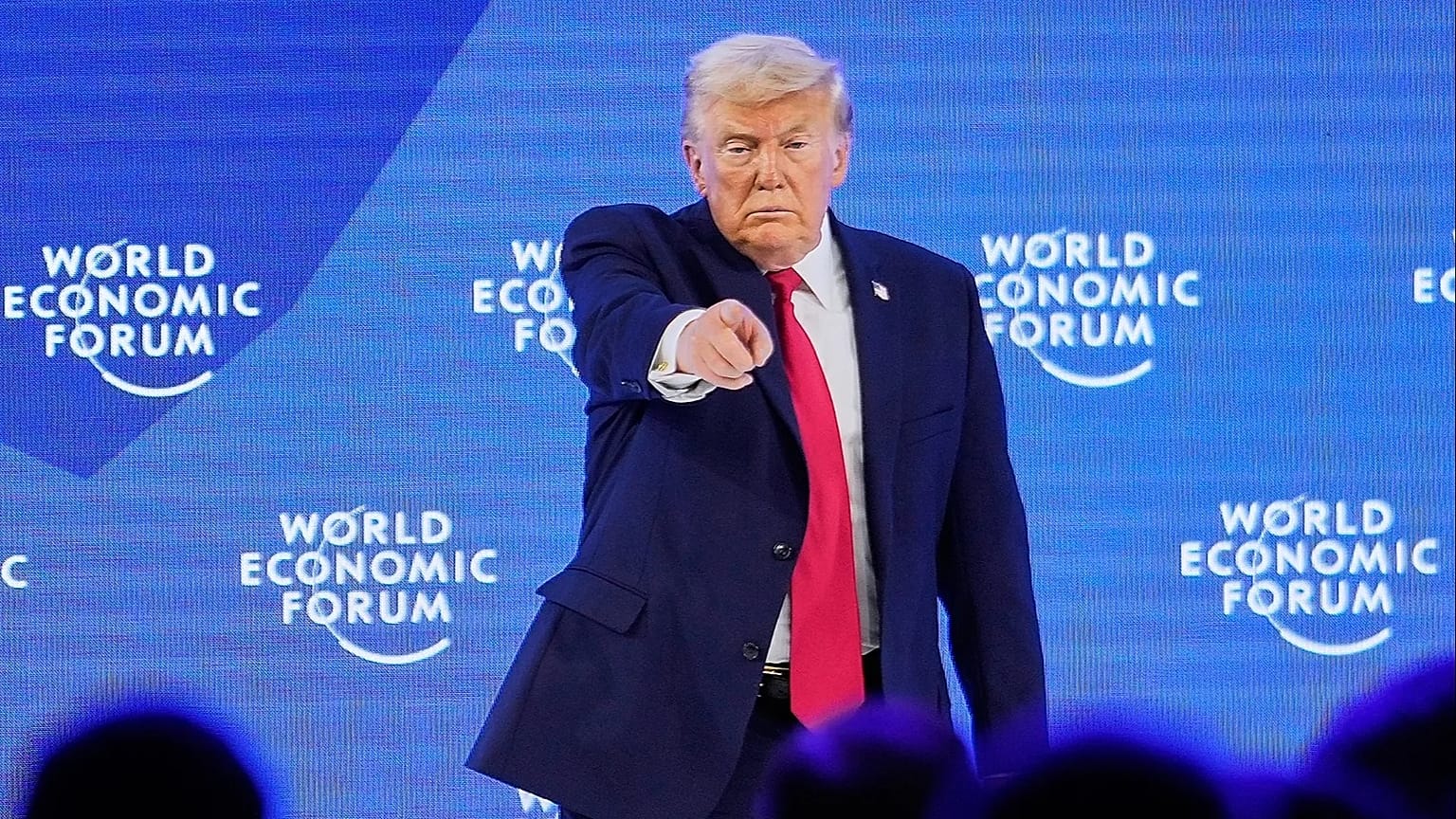
Addressing the World Economic Forum, US President Donald Trump attacked Europe’s energy policies and alleged the US “returned” Greenland to Denmark following World War Two. The Cube looks at where facts back his claims.


From repeating his long-running claim regarding ending eight wars, to evoking World War II history to stake his claim on Greenland, US President Donald Trump made a series of bold statements during his Wednesday speech in Davos.

The Cube, Euronews’ fact-checking team, has looked at some of his assertions to determine their accuracy.

NATO has 'never done anything' for the US

Trump repeatedly criticised NATO and its members for not pulling their weight in his speech, complaining that the US gets very little compared to what it gets back, casting doubt on whether the alliance would support his country in an attack.

“We’ve never got anything out of NATO,” the president said, adding later: “We’ve never asked for anything, it’s always a one-way street.”

“We’ll be there 100% for NATO, but I’m not sure they’ll be there for us,” Trump added.

However, the US is the only country to have ever invoked NATO’s Article 5 common defence measure, triggering an obligation for each country to come to its assistance. It did so in the aftermath of the 11 September attacks in 2001.

RUTTE CALLED TRUMP 'DADDY'
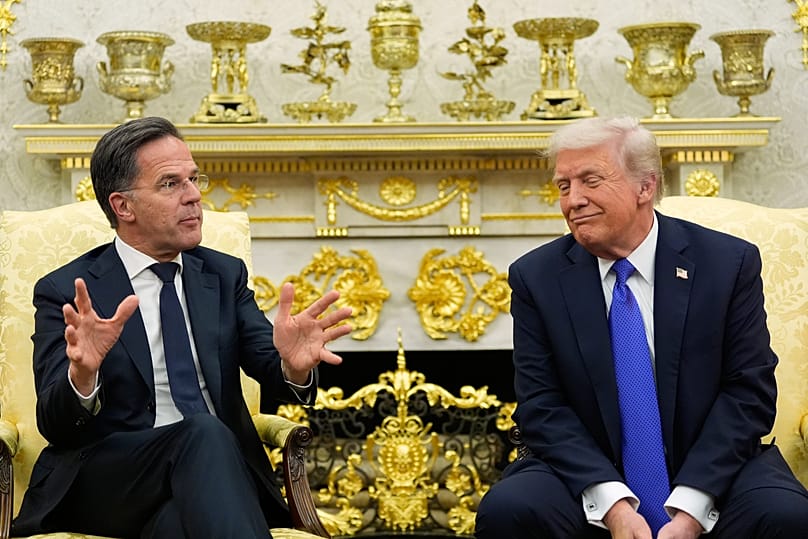
President Donald Trump meets with NATO Secretary General Mark Rutte in the Oval Office of the White House, in Washington on 22 October 2025. AP Photo

According to NATO, the alliance assisted the USin various ways, including enhancing intelligence sharing, providing increased security to US facilities, and launching its first-ever anti-terror operation — Operation Eagle Assist — between October 2001 and May 2002.

Trump also asserted that the US was paying “virtually 100%” of NATO’s budget before he entered office, but that’s not true either.

If he was referring to NATO’s common budget, then according to thealliance’s figures, the US was contributing some 15.9% to its funds between 2024 and 2025, alongside Germany. This included its civil budget, military budget and security investment programme.


The number has dropped to just under 15% for 2026-2027, again alongside Germany. The next biggest contributors are the UK (10.3%), France (10.1%) and Italy (8%).
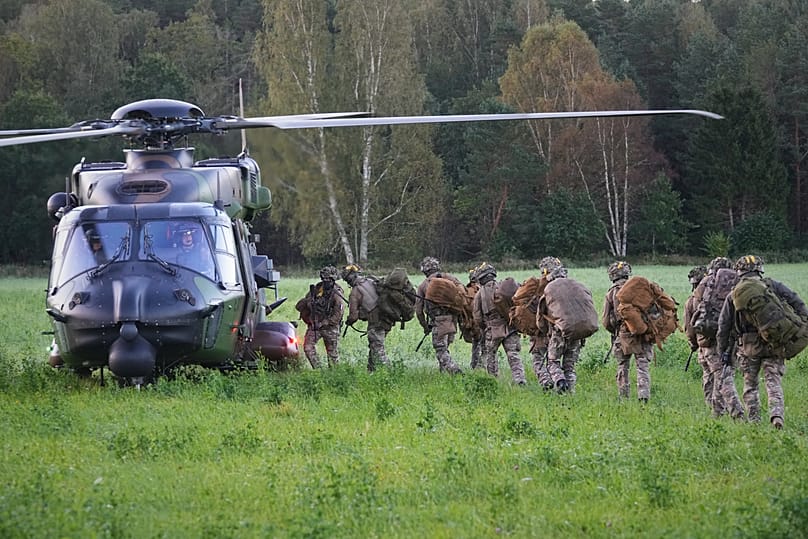

French service members participate in multinational military Exercise Pikne ("Lightning") on Saaremaa Island, Estonia, September 2025. AP Photo

It’s possible that Trump was referring to NATO members’ defence spending, which he criticised at several points during his speech, too, but it’s still wrong to say the US was ever contributing 100% to the alliance’s defence.

Back in 2016, the last year before Trump took office the first time around, US defence spending was in the clear majority (71%) of the total by all NATO members, but that’s not close to 100%.

Since then, it’s fallen to a figure estimated to be around 66%.

These numbers are not to be confused with members’ defence spending as a percentage of their GDP, which was originally set at a 2% target. It has since been increased to 5% by 2035 (excluding Spain), after Trump criticised that not enough countries were meeting the original number.

Recent figures put Polandat the topwith 4.48%, followed by Lithuania (4%) and Latvia (3.73%). The US is in sixth place at 3.22%.
Are Germany’s electricity prices 64% higher than 2017?

During his speech, Trump attacked European countries' energy policies and claimed that Germany's electricity prices are 64% higher now than they were in 2017.

“Germany generates 22% less electricity than it did in 2017. And it's not the current Chancellor's fault, he is solving the problem, he is going to do a great job. But what they did before him, I guess that's why he got there. The electricity prices are 64% higher,” he said.

It’s not clear where Trump is getting his data from, and whether he is counting electricity prices for households or for non-households. It is true that Germany has generated less electricity in recent years since 2017, and that renewables account for a much larger share of the country’s total energy generation, a shift that has grown steadily over decades.
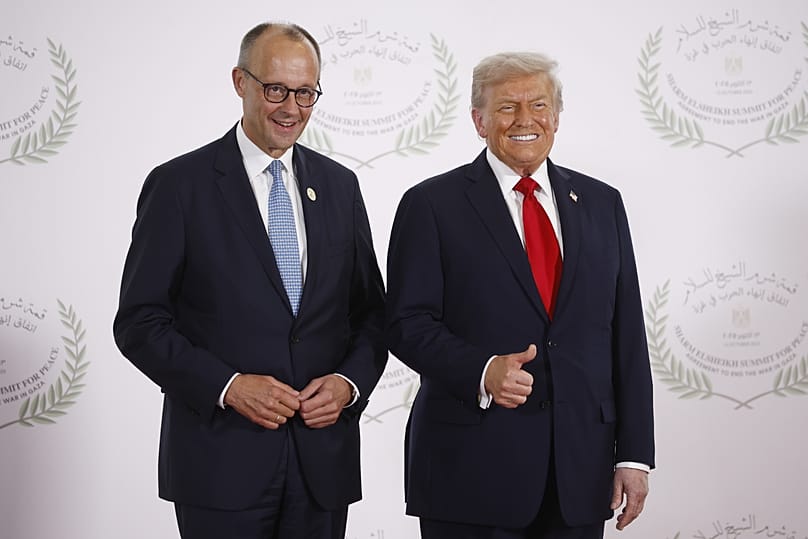

President Donald Trump and German Chancellor Friedrich Merz pose during the family picture at the Gaza International Peace Summit, in Sharm el-Sheikh, Egypt, October 2025. AP Photo

An initial look at data from the German Association of Energy and Water Industries, which represents around 2,000 energy and water companies in Germany, shows that household electricity cost 30,36 cents per kilowatt-hour in 2017 on average. In 2025, the average price was around 39.28 cents per kWh.

That represents an increase of around 29%, not 64%.

Data from Germany’s Federal Statistics Office and Eurostat depict a similar picture. According to it, households in Germany paid an average of 30.4 cents per kWh in 2017 and 39.92 cents in the first half of 2025 — an increase of around 31%.

Elsewhere, Trump blamed the renewable energy policies of left-leaning governments for “extremely high prices” and what he called the “New Green Scam”.

“There are windmills over the place, and they are losers,” he told the crowd.

Overall, Germany’s electricity prices have increased. They spiked particularly in 2022 and 2023 in what experts say was an increase directly linked to the collapse of gas supplies over Russia’s full-scale invasion of Ukraine in early 2022.
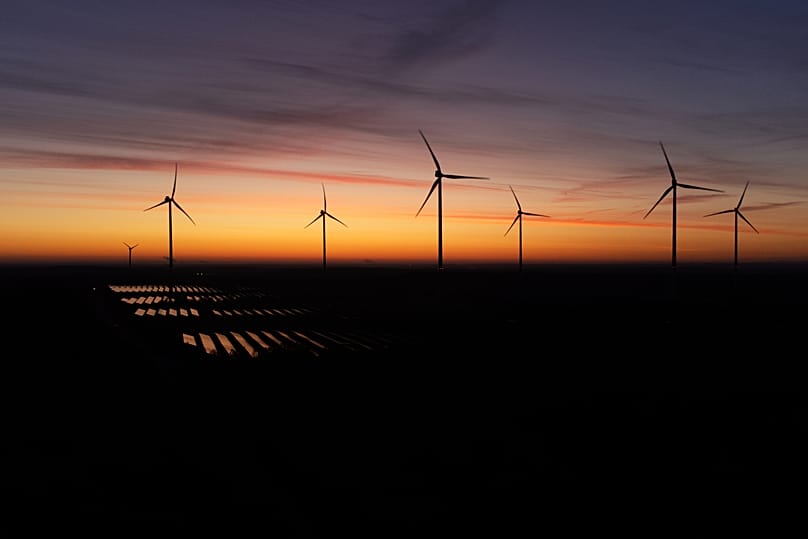
Wind turbines operate as the sun rises at the Klettwitz Nord solar energy park near Klettwitz near Klettwitz, Germany, October 2024. AP Photo

Renewable energy has added long-term system and grid costs to electricity bills, but it was not the main driver of Germany’s electricity price spike during this period.

Trump also said of the UK that it “produces just 1/3 of the total energy from all sources that it did in 1999. Think of that 1/3. And they're sitting on top of the North Sea — one of the greatest reserves anywhere in the world, but they don't use it.”

UK government data shows that energy production in 2023 is down 66% from 1999, when “UK production peaked”, so roughly by one-third.

According to it, oil and gas production from the North Sea, a major source of energy for the UK for decades, has declined naturally as “most accessible oil and gas has already been extracted”, making Trump’s claim that the UK “doesn’t use” its North Sea reserves misleading.
ADVERTISEMENT


Recently, there has been an uptick in rhetoric, particularly from the Conservative Party, that the UK should push for more oil and oil production in the North Sea.
Fixing eight wars

During his address, Trump reiterated his claim that he has ended eight wars since commencing his second Presidential term in January 2025.

He has previously listed these conflicts as: Israel and Hamas, Israel and Iran, Egypt and Ethiopia, India and Pakistan, Serbia and Kosovo, Rwanda and Congo, Armenia and Azerbaijan, and Cambodia and Thailand.

Although Trump has played a part in mediation efforts in a number of these conflicts, his impact is not as clear-cut as he alleges. Although he is credited with ending the 12-day war between Israel and Iran, this can be seen as a temporary respite from an ongoing cold war.

Fresh fighting broke out between Cambodia and Thailand in December. Although a peace agreement between Congolese forces and Rwanda-backed rebels was brokered by the Trump administration, fighting has continued, and M23 — the Rwandan-backed rebel group in the eastern DRC — was not party to the agreement.

Although the US announced the launch of the second phase of the Gaza ceasefire plan in mid-January, the next steps in this process remain shrouded in uncertainty. Many of the points in the first phase of Trump's 20-point plan have not materialised.

Friction between Egypt and Ethiopia over the Grand Ethiopian Renaissance Dam is best described as heightened tension, not war. There has been no threat of war between Serbia and Kosovo during Trump’s second term, nor has he made any significant contribution to improving relations in his first year back in the White House.

And while the leaders of Armenia and Azerbaijan signed a deal aimed at ending a decades-long conflict at the White House in August, they have yet to sign a peace treaty, and their parliaments would still need to ratify it.
RelatedFact check: Can the EU defend Greenland in a US attack?
Fact check: What is Trump's 'Board of Peace' and would it have real power?
Has Greenland banned Donald Trump and his descendants?
The US ‘returned’ Denmark to Greenland

Donald Trump repeatedly claimed during his speech that the United States had returned Greenland to Denmark after World War Two.

“We already had it as a trustee, but respectfully returned it back to Denmark not long ago,” the former president said.

In reality, while the US assumed responsibility for Greenland’s defence during the war, this did not affect Denmark’s sovereignty over the island.


After the conflict, Denmark was required to list Greenland with the United Nations as a “non-self-governing territory”, effectively acknowledging its colonial status.

The US has sought to purchase Greenland on several occasions over the past century. Most notably, in 1946, President Harry Truman offered Denmark $100 million in gold, an offer Copenhagen rejected.

Under a 1951 defence agreement, Washington formally recognised the “sovereignty of the Kingdom of Denmark over Greenland”.

In 2004, the US also acknowledged Greenland’s status as an equal part of the Danish kingdom, following changes to the territory’s constitutional position.

French journalist detained at pro-Kurdish rally in Istanbul released, lawyer says

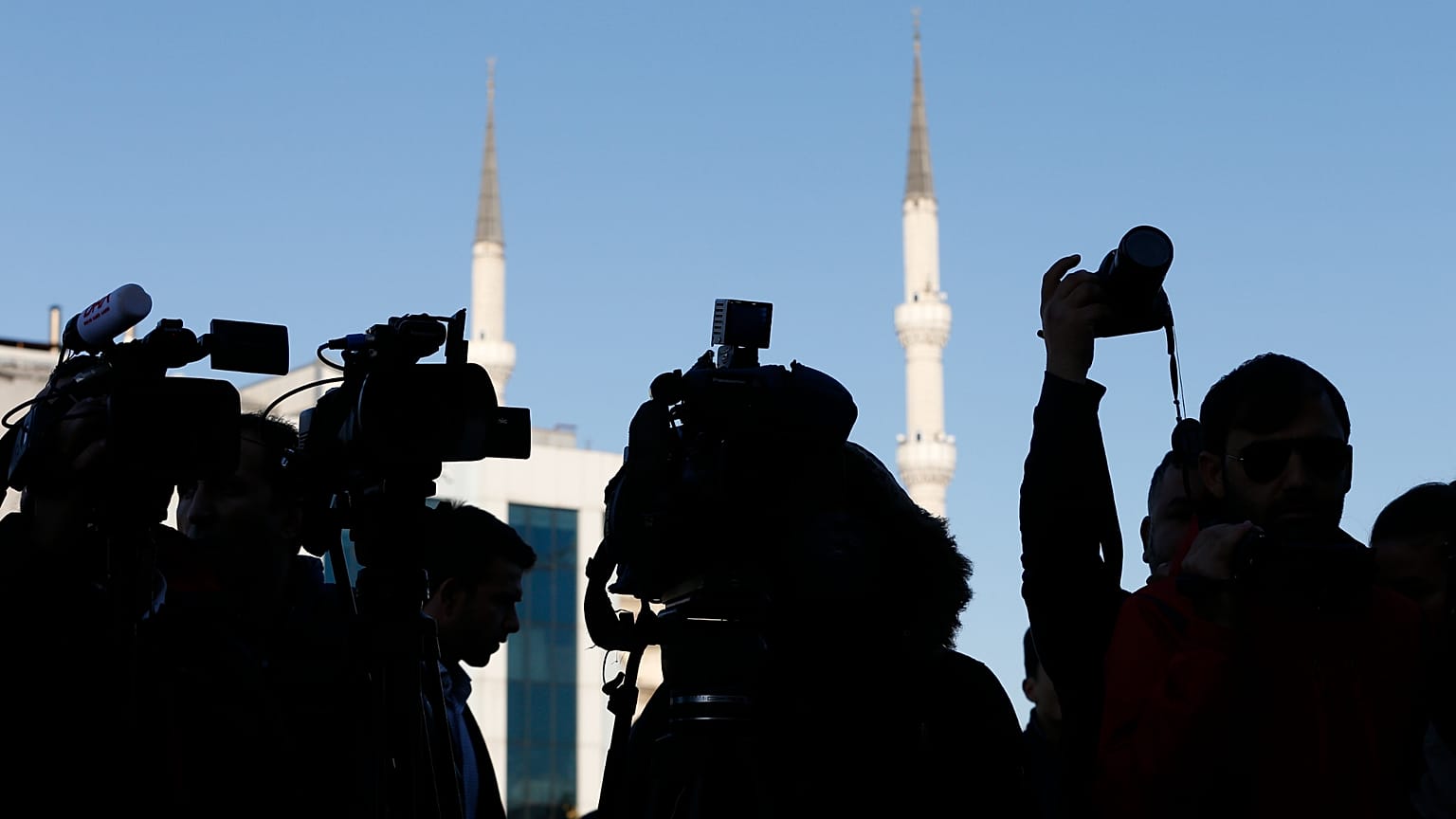
Members of the media follow the protest in front of the courthouse where the trial of Cumhuriyet newspaper employees accused of aiding terrorist organisations is underway / 31 October 2017
Copyright Copyright 2017 The Associated Press. All rights reserved.

By Sait Burak Utucu & Gavin Blackburn
Published on 

Raphael Boukandoura, who works for French publications including Liberation and Courrier International, was detained on Monday at a protest against a military operation targeting Kurdish fighters in northern Syria.

A French journalist who was arrested while covering a pro-Kurdish protest in Istanbul has been released without charge, his lawyer said on Wednesday.

Raphael Boukandoura, who works for French publications including Liberation and Courrier International, was detained on Monday at a protest against a military operation targeting Kurdish fighters in northern Syria.

Boukandoura, 35, has lived legally in Turkey for at least a decade and holds an official press card.

He was transferred to a detention centre for migrants, his lawyer Emine Ozhasar said.

Asked if Boukandoura might be deported, she said: "It's a possibility", explaining that no decision had yet been made.

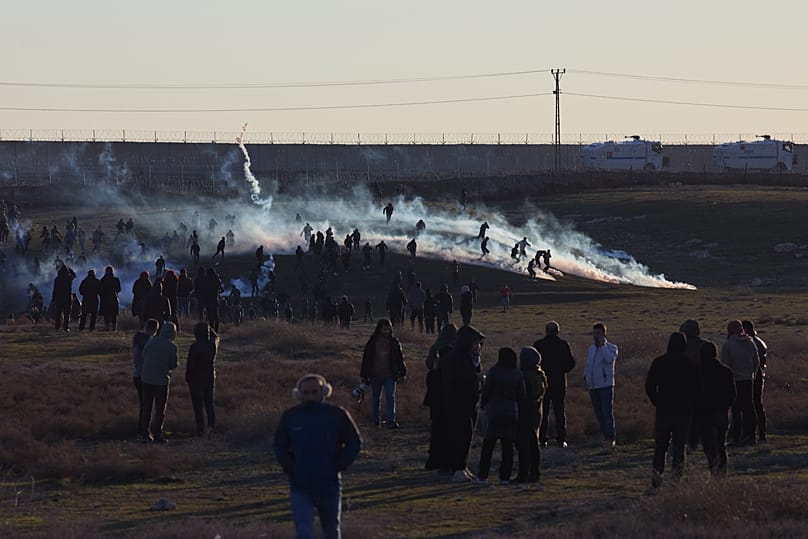
Pro-Kurdish Peoples' Equality and Democracy Party supporters clash with Turkish police in Nusaybin, 20 January, 2026
Pro-Kurdish Peoples' Equality and Democracy Party supporters clash with Turkish police in Nusaybin, 20 January, 2026 AP Photo

The arrest sparked calls for his release from rights groups and France's government.

In a statement to the AFP news agency on Tuesday, the French foreign ministry said it hoped Boukandoura would be "freed as quickly as possible". Its diplomats in Turkey were "closely monitoring the situation", it added.

At the protest, called by the pro-Kurdish party DEM, party officials called for "an immediate halt to the attacks" and the protection of civilians in northeastern Syria.

Police broke up the rally arresting 10 people, including Boukandoura.

Arrest 'unacceptable'

Two weeks ago, Syrian government troops launched an offensive against Kurdish-led forces, an operation publicly welcomed by Turkey, despite its own efforts to pursue a peace process with the outlawed Kurdistan Workers' Party (PKK).

According to rights group MLSA, Boukandoura told police he was present strictly as a journalist, covering the protest for French daily Liberation.

The police quizzed him about slogans allegedly chanted during the protest but he told them he did not chant anything and was only there to report, MLSA said.

The European Parliament's Turkey rapporteur Nacho Sanchez Amor said he was following "with concern" the reporter's case, who was "now facing deportation" despite being based in Turkey since 2015.

"Independent journalism is really a hazardous job in #Türkiye for locals & foreigners," he wrote on X.

Erol Onderoglu of Paris-based media-rights group Reporters Without Borders (RSF) said the fact that a French journalist was facing expulsion for doing his job was "unacceptable".

"It is intended to intimidate journalists covering pro-Kurdish protests in Turkey," he told AFP.

Liberation, along with Courrier International, Mediapart and Ouest-France, other outlets that have published Boukandoura's work, all issued statements calling for his immediate release.

THE GRIFT

Norway will not participate in Donald Trump's 'Board of Peace,' PM's office says

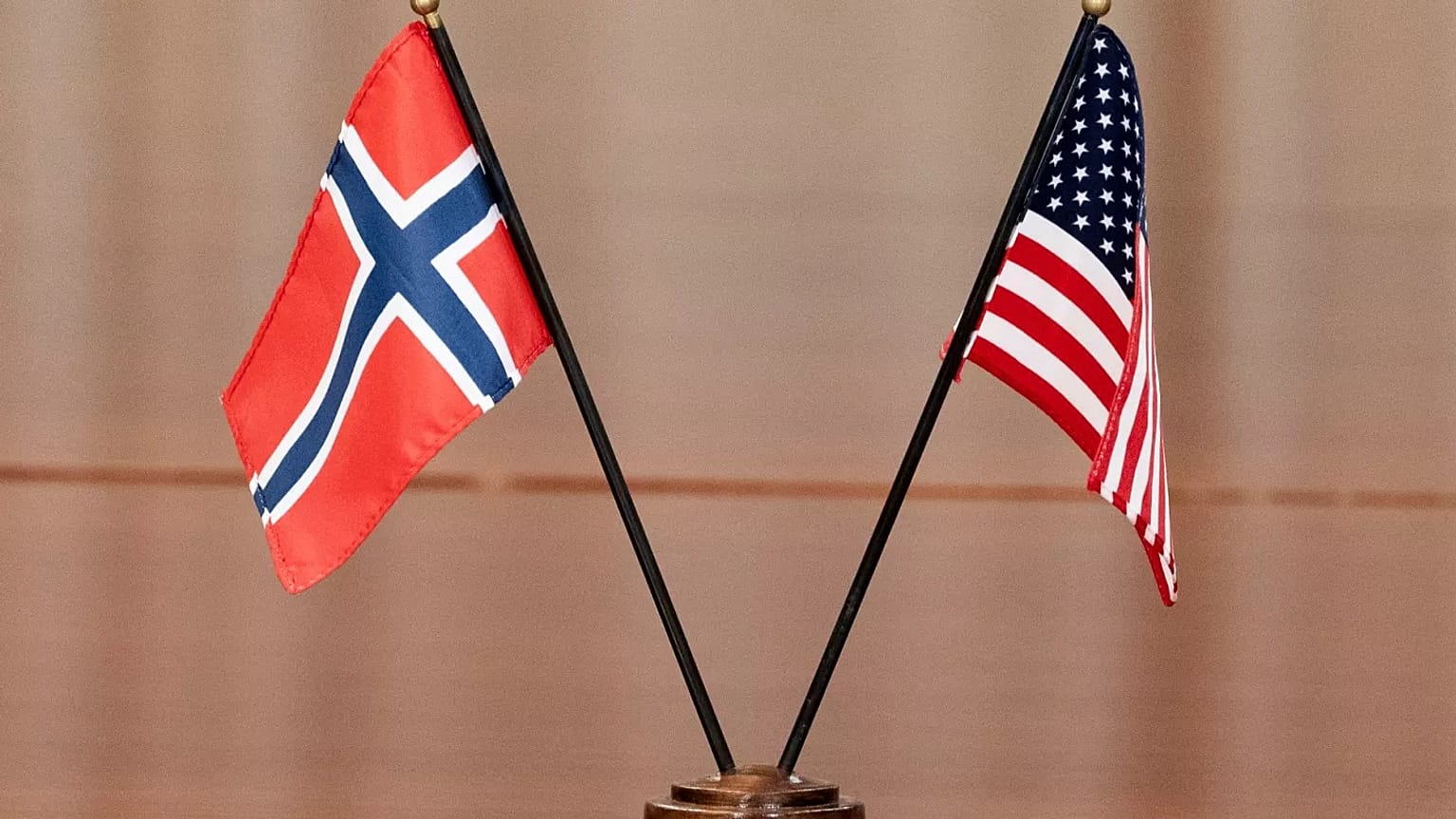
The Norwegian and US flags are seen on the table at the Pentagon, 20 September, 2022
Copyright AP Photo

By Gavin Blackburn
Published on 

Trump's Board of Peace was originally conceived to oversee the rebuilding of Gaza, but according to its charter the scope does not appear to limit its role to the Palestinian territory.

Norway's government said on Wednesday it would not join the Board of Peace initiated by US President Donald Trump, who has vented his frustration at the Nordic country after being snubbed for the Nobel Peace Prize.

"The American proposal raises a number of questions" requiring "further dialogue with the United States", State Secretary Kristoffer Thoner said in a statement.

"Norway will therefore not join the proposed arrangements for the Board of Peace, and will therefore not attend a signing ceremony in Davos," Thoner said.

Norway would continue its close cooperation with the United States, he added.

Trump's Board of Peace was originally conceived to oversee the rebuilding of Gaza, but according to its charter the scope does not appear to limit its role to the Palestinian territory

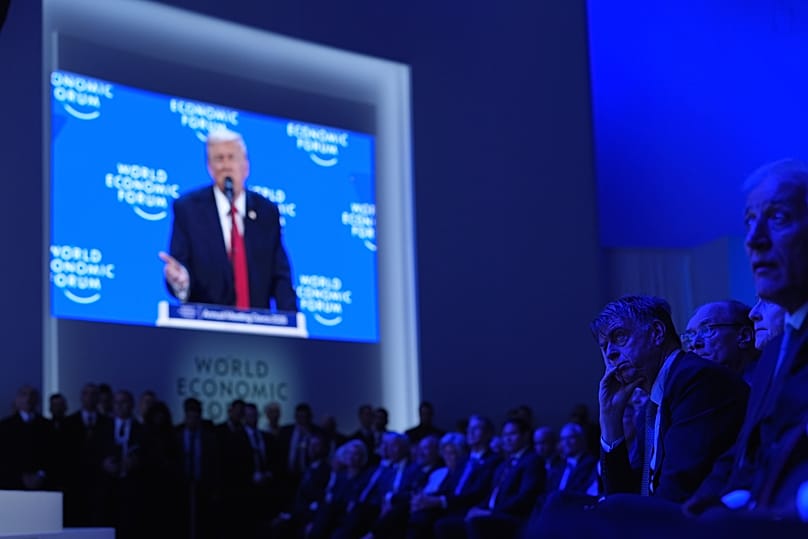
Attendees listen to the address of US President Donald Trump during the Annual Meeting of the World Economic Forum in Davos, 21 January, 2026 AP Photo

The US administration has asked countries to pay up to $1 billion for a permanent spot on the board, on which Trump will serve as chairman.

"For Norway, it is important how this proposal is linked to established structures as the UN, and to our international commitments," Thoner added.

The government representative added that Norway shared Trump's "goal of lasting peace in Ukraine, Gaza and in other situations."

Trump has repeatedly said he believes he deserved the Nobel Peace Prize. Last year's prize went to Venezuelan opposition leader Maria Corina Machado.

In a message to Norway's Prime Minister Jonas Gahr Støre published on Monday, Trump said having been denied the prize he no longer felt "an obligation to think purely of Peace."

Støre said in a statement: "I have clearly explained, including to President Trump, what is well known - the prize is awarded by an independent Nobel Committee.”


Gaza Vanishing: Trump’s Board of Peace


Donald Trump’s Board of Peace overseeing the reconstruction of Gaza was always going to raise a host of niggling questions. From the outset, the US President made it clear he would be the helmsman of what was essentially an outfit of selected corporate overseers tilling the soil for The Donald’s posterity fund. These anointed sorts have been given the ostensible task of reviving and resuscitating a pulverised, rubble strewn enclave that has seen atrocities aplenty visited upon it. But to what end?

The envisaged structure of control over Gaza, seen as a vital part of fulfilling Trump’s 20-point plan for the territory, opens the second phase of the peace process. It’s already clear that the Board is a cheese platter of billionaires and pro-Israeli figures, with Bulgarian diplomat Nickolay Mladenov being named its “High Representative”. A Gaza Executive Board will work with the Office of the High Representative and an inconsequential Palestinian technocratic body, the National Committee for the Administration of Gaza (NCAG). In a statement, the White House notes that the NCAG will be led by technocrat Ali Sha’ath, formerly of the Palestinian Authority, who will be charged with the tasks of restoring core public services, the reconstruction of civil institutions, “and the stabilization of daily life in Gaza, while laying the foundation for a long-term, self-sustaining governance.”

We already have a sense of how the pantomime will unfold. There are the Trump feet washers such as Secretary of State Marco Rubio; men of money such as the Middle East envoy Steve Witkoff; the family angle with the President’s son-in-law Jared Kushner; and that paragon of insincerity and ill-judgment on Middle East affairs, former UK Prime Minister Tony Blair.

The charter of the Board of Peace, a copy of which was circulated among dozens of heads of state with invitations to join, carries a fee of US$1 billion for countries seeking a permanent seat on it. Those not wishing to provide the fee will serve for three years. The document is further notable for what it does not say. Gaza does not make it into the text. Nor does the United Nations. It does, however, speak about the need for “a more nimble and effective international peace-building body”, which looks ominously like a subversive stab at the UN, a body whose alleged impotence Trump has done so much to encourage. To make peace durable, it was important to have “the courage to depart from… institutions that have too often failed.” The proposition as to why such institutions fail is never considered, much like the happy arsonist who starts fires in order to extinguish them.

Even before these bodies have taken shape, trouble is brewing. Despite the warm, favourable slant shown towards Israel in this venture, one designed to keep Palestinians in their downtrodden place, Israeli Prime Minister Benjamin Netanyahu was not delighted to find out that Turkey and Qatar would also have a role to play on the Gaza Executive Board. They might spoil the platter and sour the offerings. “The announcement regarding the composition of the Gaza executive board, which is subordinate to the Board of Peace,” stated a note from the PM’s office, “was not co-ordinated with Israel and runs contrary to its policy.”

In remarks made during an agitated debate in the Knesset plenum on January 19, Netanyahu was adamant that involvement by Ankara and Doha would not be military in nature: “Turkish or Qatari soldiers will not be in the Strip.” These sentiments are seemingly misplaced, given that Qatar lacks a force suitable to make such a contribution. The Israeli PM also insisted that both countries would be denied any authoritative role or have any influence on the various bodies, despite Trump’s willingness to include Turkish and Qatari representatives on the Gaza Executive Board.

Despite being overlooked on the issue of consultation regarding Turkey and Qatar, Netanyahu was boisterous enough to insist that standing up to Washington was something he was rather good at. “When it comes to Israel’s essential interest, we can argue, we can sharpen our positions, and, by the way, we can come to agreements.”

This did not convince the opposition leader and chair of the Yesh Atid party, Yair Lapid. As with most Israeli politicians, the prospect that the Palestinians might even dare to behave in sovereign fashion in Gaza remains both inconceivable and abhorrent. Allies of Hamas, he complained, “have been invited to run Gaza”, while the “dominant factor” of the Palestinian technocratic committee was the Palestinian Authority. This suggested one of two possibilities: either Netanyahu had slyly “agreed behind our backs that Turkey, Qatar, and the Palestinian Authority would be in Gaza” or he had been ignorant of their inclusion, in which case “Trump doesn’t give a damn about you.” Israel was “returning to Gaza, not at the starting point, but to a point much worse than at the beginning.”

Those worried about this venture being one to displace or marginalise the UN (Julien Barnes-Dacey of the European Council on Foreign Relations is of this view) should think again. Chaos seems imminent, with the Board looking much like a waxwork effort by sketchy amateur artists, likely to melt when heat is applied. There will be much fractiousness and no longevity about a project that says nothing of institutions and everything about the moods of a person who, when he departs, will see it wither. Narcissism lies at its core and may well die with it. The concern here is whether aspirations for Palestinian sovereignty will do the same.

Binoy Kampmark was a Commonwealth Scholar at Selwyn College, Cambridge. He lectures at RMIT University, Melbourne. Email: bkampmark@gmail.comRead other articles by Binoy.

Venezuela's Rodríguez to visit Washington in first presidential trip since Maduro capture

Venezuela's Rodríguez to visit Washington in first presidential trip since Maduro capture
Rodríguez, who served as Maduro's vice president and oil minister, assumed interim leadership as part of what Secretary of State Marco Rubio has outlined as a three-phase American strategy.
By bnl editorial staff January 21, 2026

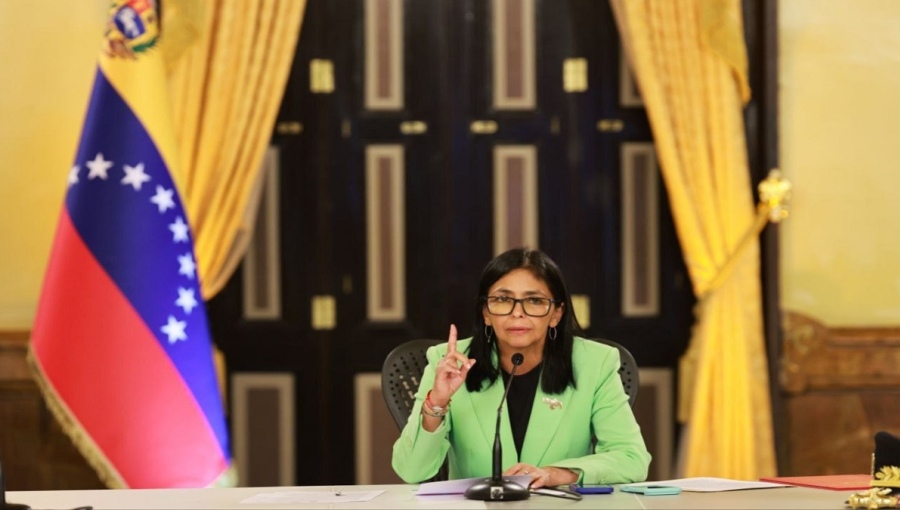
Venezuela's acting president Delcy Rodríguez will travel to Washington in the coming days, a senior US official told multiple news agencies, cementing her status as President Donald Trump's preferred partner for governing post-Maduro Venezuela despite her two decades defending authoritarian rule

The planned visit would mark the highest-level engagement between the two governments since Nicolas Maduro and his wife were captured and transferred to New York to face narcoterrorism charges after the January 3 operation. It would also make Rodríguez the first Venezuelan president to travel to the United States for bilateral talks in more than a quarter century – aside from protocol appearances at United Nations meetings in New York.

The dramatic US military raid that extracted Maduro from a heavily guarded compound in Caracas has fundamentally reshaped Venezuela's political landscape. Rodríguez, who served as Maduro's vice president and oil minister, assumed interim leadership as part of what Secretary of State Marco Rubio has outlined as a three-phase American strategy beginning with "stabilisation" through economic leverage, followed by "recovery" ensuring US companies gain oil sector access, and concluding with political "transition."

Washington has seized multiple Venezuelan oil tankers and recently completed its first sale of confiscated petroleum worth approximately $500mn whilst controlling revenues that would otherwise flow to Caracas. The Trump administration maintains explicit threats of further military intervention if the interim government fails to cooperate, a leverage that has so far produced tangible results including the release of over 400 political prisoners, though opposition groups report lower figures.

The announcement comes just a week after President Donald Trump met Venezuelan opposition leader and Nobel Peace Prize laureate María Corina Machado. Despite praising Machado personally, Trump has so far sidelined her from the country's transition process, arguing she lacks sufficient political backing.

After Machado presented him with the Nobel Prize, Trump seemed to partially backtrack on January 20, saying, "We're talking to her and maybe we can get her involved some way. I'd love to be able to do that; Maria, maybe we can do that.”

Still, he has firmly endorsed Rodríguez's post-Chavista administration, saying it is operating under his government's tutelage and meeting US demands, including granting access to Venezuela's oil sector and shipping millions of barrels of crude to the US for sale.

In a veiled swipe at Machado, which some also saw as an ironic reference to Maduro, Rodriguez told the National Assembly last week “If one day, as acting president, I have to go to Washington, I will do so standing up, walking, not being dragged." “I’ll go standing tall ... never crawling.”

During his speech at the World Economic Forum in Davos on January 21, Trump heaped praise on Rodriguez stating, "Her leadership is good and smart. We are working together to ensure that both countries prosper in this new era of trade."

Yet the arrangement remains precarious. Rodríguez, a pragmatic technocrat, governs alongside Interior Minister Diosdado Cabello, the brutal enforcer who commands intelligence services accused by the United Nations of crimes against humanity, and Defence Minister Vladimir Padrino López, who controls the armed forces. Armed pro-regime motorcycle gangs known as colectivos have established roadblocks in Caracas, prompting the State Department to issue urgent warnings ordering US citizens to flee immediately. The violence suggests that removing Maduro did not eliminate the coercive apparatus sustaining authoritarian control.

On the same day as Trump's meeting with Machado, Rodríguez held talks in Caracas with CIA Director John Ratcliffe on security matters and potential economic cooperation. Ratcliffe became the most senior US official, and the first cabinet member under Trump, to visit Venezuela since the military operation that ousted Maduro.


The Real Reason Washington Wants Venezuela’s Oil

  • Venezuelan heavy crude could replace up to 5% of WTI intake at U.S. Gulf Coast refineries, boosting diesel yields and utilization of heavy conversion units.

  • China faces higher feedstock costs and financial risk as discounted Venezuelan barrels are redirected toward the U.S., Europe, and India.

  • Over the medium term, rising Venezuelan production and easing sanctions could revive domestic refining and reshape global heavy crude flows.

The timeline of the US–Venezuela conflict highlights a long-term strategy centered on securing heavy crude supplies for US Gulf Coast refineries, which are configured to process heavy sour barrels and benefit from Venezuela’s ability to deliver crude over short lead times. This will reduce reliance on Middle Eastern high-sulfur fuel oil (HSFO) for the US. Exports of Venezuela crude are expected to recover slowly toward the US, Europe and India, leaving China disadvantaged, while OPEC+ remains defensive.

US Gulf Coast refineries process nearly 1.45 million bpd of imported crude out of an average 9 million bpd in total refinery runs. With between 400,000 and 500,000 bpd of Venezuelan crude (primarily Merey) expected to be added, nearly 5% of West Texas Intermediate (WTI) crude intake could be replaced by Venezuelan Merey. We used linear programing (LP) modeling (AVEVA) for some Gulf Coast refineries (having coker, catalytic cracker and hydrocracker) to estimate changes in product yields and utilization rates of heavier oil-processing units. The results indicate an average 2% increase in diesel yield, primarily higher utilization of bottom of barrel units, driven by increased utilization of heavy conversion units by almost 2% to 3%.

Fig


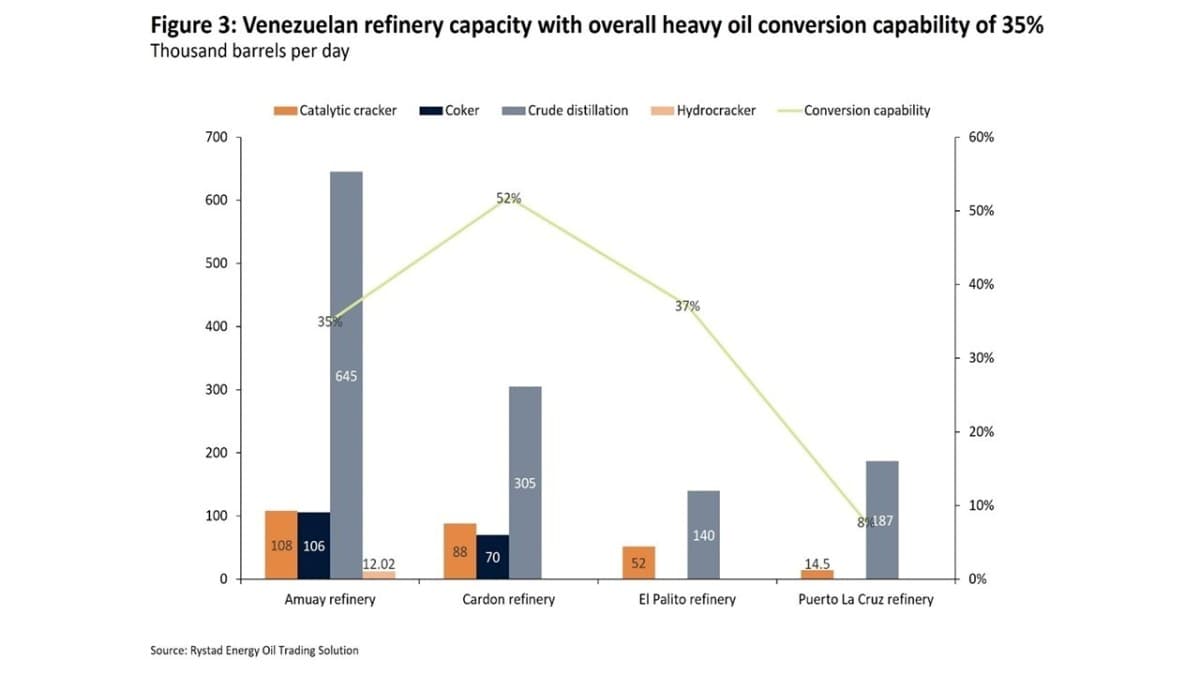
Over the longer term, as Venezuelan crude production just exceeded 900,000 bpd in 2025, with anticipated US capital inflow and a subsequent demand increase, Rystad Energy expects the Venezuelan refining sector – which has 1.2 million bpd of capacity – to start increasing runs within 18 to 24 months. Current run rates are hampered by frequent power disruptions, unplanned outages and improper maintenance of the refineries. We assess that the typical turn-down rate of 60% should be feasible by the middle of next year.

China remains the primary loser in this evolving structure. The loss of heavily discounted Venezuelan crude undermines the economics of independent so-called ‘teapot’ refiners and places approximately $12 billion in oil-backed loans at risk. Although some Middle Eastern HSFO and heavy barrels may now be redirected toward Asia, Chinese refiners still face higher feedstock costs, longer shipping distances and elevated geopolitical risk compared with the Venezuelan barrels they previously imported. India, by contrast, stands out as a structural winner, with complex refineries well suited to heavy sour grades and a renewed opportunity to absorb Venezuelan crude as sanctions ease.

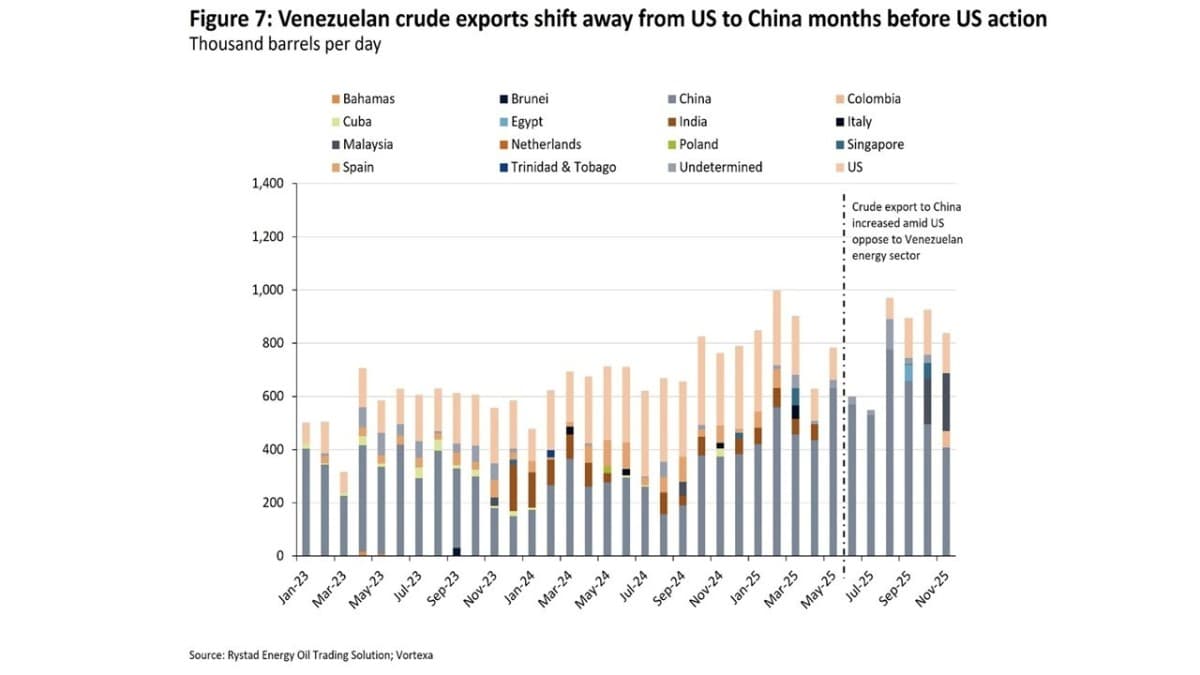
Venezuelan crude accounts for approximately 500,000 bpd of the 15 million bpd in China refinery runs since around 2019, which marked the start of increased US opposition to the Venezuelan energy sector. Chinese refineries processing heavy crudes are typically integrated facilities equipped with heavy bottom-of-the-barrel upgrading units. As a result, the loss of heavy Venezuelan barrels is unlikely to have any noticeable impact on China’s overall product yields, given total refinery runs of around 15 million bpd. While individual refiners processing this crude will need to adjust their crude slate, these changes are not expected to affect aggregate Chinese yields materially.

Fig

Disclaimer: The opinions expressed in this article are solely those of the author, and do not necessarily represent the views or beliefs of Rystad Energy. 

By Pankaj Srivastava for Rystad Energy


Inside the Economics of Venezuela’s Elusive Oil Reserves

  • Venezuela’s reported oil reserves are largely unaudited government claims that ignore economic viability.

  • Most of the country’s oil is extra-heavy crude that requires costly upgrading, diluents, and sustained high prices to produce profitably.

  • Political instability and long-term investment risks make a major near-term increase in Venezuelan oil production improbable.

In the wake of the Trump administration's prosecution of a war and blockade against Venezuela and the administration's promise to vastly increase oil production in the country, it's worth knowing why claims about Venezuela's oil "reserves" being the largest in the world are problematic. It's also important to understand what this implies for the future of oil production in Venezuela.

Consider the following:

1. Official oil reserves are just that. They are numbers reported by official government sources. Where these numbers come from large state-owned oil companies—as is the case with Venezuela—they are rarely verified through independent audits. And, those numbers tell you nothing about the economic viability of the claimed reserves.

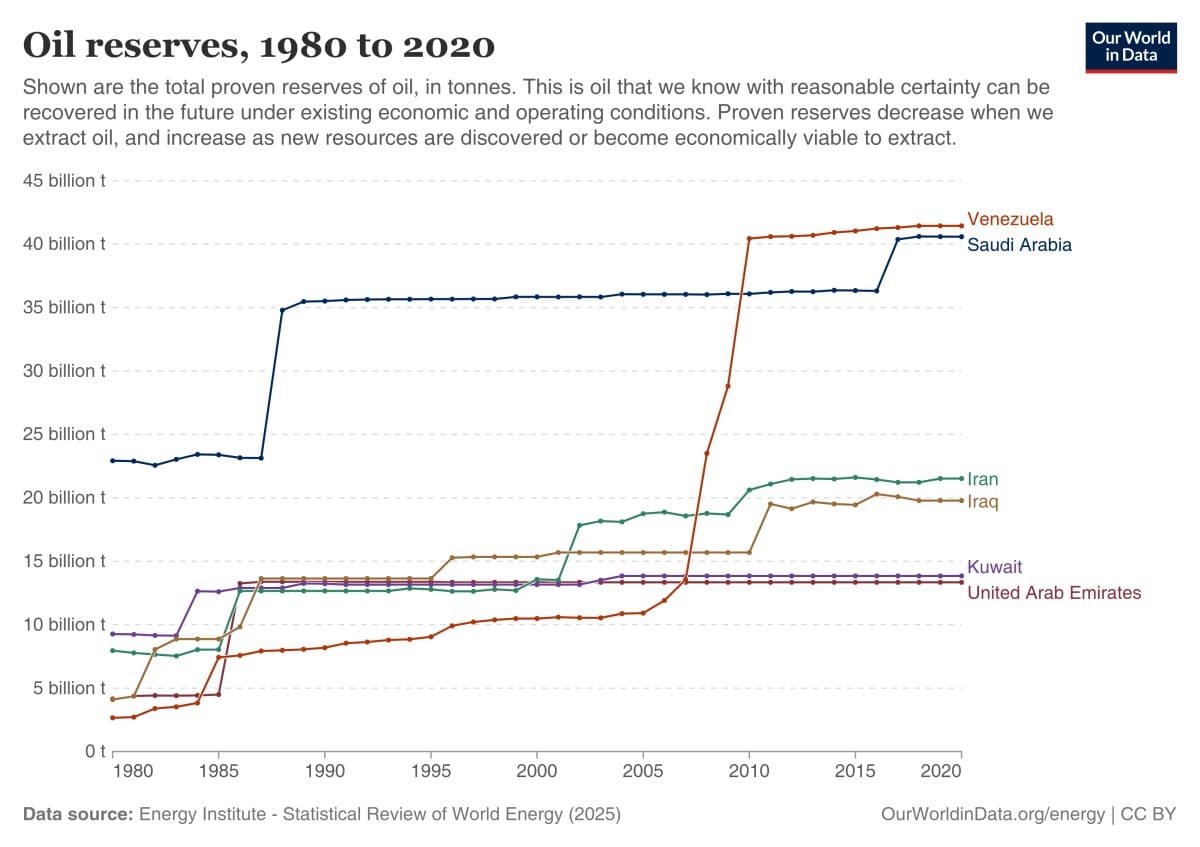
2. There is a pattern among several OPEC countries, including Venezuela, of suddenly claiming vast increases in oil reserves without evidence of additional economically viable discoveries. Just to be clear, reserves are known deposits of minerals demonstrated to be extractable using current technology and profitable at current prices. The term "reserves" does not appear to apply to most of Venezuela's extra-heavy crude at current prices, which is believed to be 90 percent of its supposed reserves. This is true especially if upgrading facilities have to be built from scratch—Venezuela has only one extra-heavy crude facility that began production in 1947. Such an expensive long-term investment requires a belief that prices will reach and maintain much higher levels than today and that political and social conditions will remain calm and favorable over long periods. (For a comparison of Venezuelan crude oil with others in the world, see this infographic.)

In several Middle Eastern countries, the sudden reserve increases mentioned above happened in the mid-1980s. In Venezuela, it happened over a three-year period from 2007 to 2010. The following chart is based on the Statistical Review of World Energy (formerly sponsored by oil giant BP and now published by an independent organization):Oil

3. The vast majority of Venezuela's so-called reserves are in the form of extra-heavy crude in an area called the Orinoco Belt, which lies in eastern Venezuela along the Orinoco River. The U.S. Energy Information Administration reported that Venezuela's state oil company claimed that there are 270 billion barrels of extra-heavy crude oil reserves in this area in 1998. Venezuela today reports 303 billion barrels of reserves of all types, including heavy crude, which it currently processes and sells. But nobody knows the real numbers because there is no outside independent audit.

4. Extra heavy crude oil is a very viscous liquid—about the consistency of "cold peanut butter"—that is suitable for use in asphalt, but little else. To be useful as oil, it must be upgraded using complex and costly processing that requires vast amounts of natural gas and also diluents such as naphtha, which are mixed with the oil to make it feasible to transport through a pipeline. Just to get the heavy oil out of the ground requires steam or water injection. And during refining, the high sulfur content—sulfur is an air pollutant that has to be removed—makes it more expensive to refine. In other words, it takes a lot of energy to extract and process extra-heavy crude oil to make it into something we call oil. And, all of that is quite expensive.

5. Which brings us to the price of oil and the economics of producing Venezuela's extra-heavy crude. The world benchmark for crude is Brent Crude, currently trading at around $64 per barrel. But because Venezuela's extra-heavy crude is so difficult to refine, it sells for a substantial discount to the world benchmark price, somewhere between $12 and $20. The cost of diluents adds another $15 to the costs of getting this extra-heavy crude through a pipeline.

So the seller is already taking a financial haircut of between $27 to $35 compared to the world benchmark crude. For massive investment to take place in Venezuela, world oil prices would probably have to be and remain around $100 per barrel for years in order to convince oil companies to risk making the kind of investments that only provide a return over 20 to 30 years—the kind that extraction and upgrading of extra heavy oil requires.

6. All this suggests that oil production in Venezuela is probably not going to rise much in the coming years. And, the idea that increased Venezuelan oil production could bring down current oil prices is nothing short of ridiculous since producing the vast majority of the country's oil resources will require much higher prices.

Of course, I haven't even factored in the political and social instability that is plaguing Venezuela in the wake of the U.S. attacks and blockade. Nor have I considered the fact that, despite the removal of Venezuelan President Nicolas Maduro, his vice president (now elevated to acting president) and administration are still in charge. These are the same people who expropriated U.S. oil company assets in the country previously and who levy high taxes on the remaining oil operations. Given this backdrop, it's hard to imagine much investment going into the Venezuelan oil industry from foreign countries anytime soon.

The smash-and-grab diplomacy in which the United States is now engaged in Venezuela may seem like it will somehow liberate Venezuela's supposed oil riches. But all it is likely to do is demonstrate that those riches are as elusive as ever.

By Kurt Cobb via Resource Insights


Maduro Redux


The Profanity of Life

Trump’s behavior has triggered a recall of Mario Vargas Llosa’s novel, based partly on his life, Aunt Julia and the Scriptwriter. In the novel, the protagonist’s employer hires an eccentric Bolivian scriptwriter to write soap opera serials. The novel chronicles the scriptwriter’s success and increasing popularity. The soap operas become more bizarre and reflect the scriptwriter’s descent into madness.

From start of his second ascendancy to king of the kingdom, Trump has exhibited a growing intensity of aggrandizement, internalized success that begs greater accomplishment, and escalations in daring episodes, violations of constitutional norms, and profanity of life. Each day, his disregarding the sanctity of life, permitting arbitrary killing, and indicating he will pardon anyone who commits a crime that has his approval, reflects his scriptwriting descent into madness.

Armed groups — National Guards, Homeland Security and its Immigration and Customs Enforcement (ICE), Federal Bureau of Investigation (FBI), and Secret Service — no longer defend the populace, operate in the benefit of the U.S. president, patrol our streets, commit aggressions, defy laws, and operate without constitutional control. There is no defense to the transgressions, except to take up arms against the armed, and no peace loving and country-loving citizen is prepared to do that. The trend is to increased trampling of national and international law, followed by national and international resistance, followed by national and international strife, and escalation of alarming national and international aggressions by a maddening president who holds the code to releasing nuclear-armed missiles.

Complementing a president descending into madness is a large portion of the population exhibiting symptoms of derangement. The lack of concern for the genocide of the Palestinian people, the inertia in protesting the unnecessary killings of unproven drug smugglers, and the slaughter of up to 100 Venezuelans and Cubans to apprehend a country’s leader and satisfy a U.S. court indictment in a case that will not be resolved for years, highlights the deranged thought. Reactions to the recent shooting of Renée Good by an ICE agent emphasize the derangement.

No normal person can consider the shooting of Renee Good as anything but homicide. From the start of the video of the crime scene to its ultimate tragic conclusion, the behavior of the ICE officers was provocation and use of force. Ms. Good was not entirely blocking traffic, drove the car away as the ICE agents wanted, did not steer the car to the agent who deliberately appeared in front of the car, did not hit the agent, and received bullets through the front and side windshields from ICE officer Jonathan Ross, who was never in danger.

The utterances from administration officials — President Trump initially claiming Ross was run over and was in the hospital; Homeland Security Secretary Kristi Noem saying, that the shooting occurred “because Ms. Good was allegedly using her Honda Pilot as ‘a deadly weapon;’” and Vice President JD Vance haranguing in a briefing that, “The reason this woman is dead is because she tried to ram somebody with her car, and that guy acted in self-defense. That is why she lost her life, and that is a tragedy,” are deliberate falsehoods that do not coincide with the facts.

Reading comments to the reports on the incident in Yahoo news, where a large assortment of the comments agree with the administration, is disturbing. Discussion of the shooting on PBS News Hour by political commentator, David Brooks, increased the disturbance. Brooks recited that, in his X account, followers responded to the shooting in accord with their agendas, splitting exactly as their feelings toward the present administration. He declined to voice his own opinion, willing to leave it to history.

Learning that the electorate is guided by agenda and not by reality and facts is disheartening. How can equality, justice, and freedom be achieved in that environment. Not a day of peace for Americans

Here is an interesting deliberation. Compare the murder of Ms. Good to the response by the Chinese military to the famous “Tank man,” who stopped Chinese tanks on the day after the Tiananmen incident and received no known rebuke, physical or otherwise. We also know that if Officer Ross is indicted and convicted, Trump will grant him a pardon, which is chilling. Dispose of anyone who gains the Trump wrath and don’t be concerned; similar to pardons granted other convicted criminals who were on good terms with Trump, you will not serve a day.

Each day brings another conflict between the U.S. populace and U.S. authorities. Trump has already said “he might use the Insurrection Act to deploy troops to Minneapolis.” With 33 Senate seats and all 435 congressional seats up for re-election, his popularity decreasing, and a possibility that a more heavily constituted Democratic congress might be successful in an impeachment vote and in a conviction, an out-of-control Trump might consider the anarchy he is creating as an excuse to control the mid-term congressional elections.

Will Minneapolis, Minnesota be the 21st century Fort Sumter?


Dan Lieberman publishes commentaries on foreign policy, economics, and politics at substack.com.  He is author of the non-fiction books A Third Party Can Succeed in AmericaNot until They Were GoneThink Tanks of DCThe Artistry of a Dog, and a novel: The Victory (under a pen name, David L. McWellan). Read other articles by Dan.

U.S. Seizes Seventh Crude Oil Tanker Linked to Venezuelan Trade

oil tanker seized
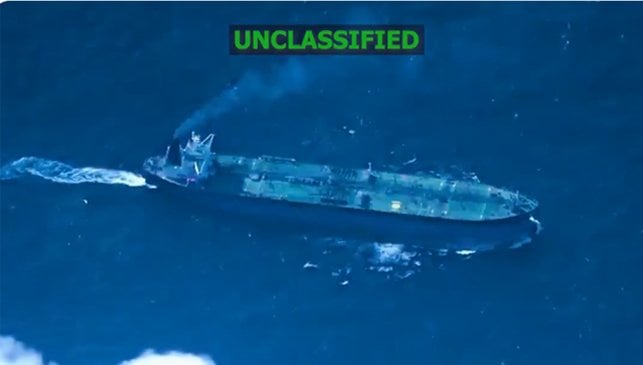
The U.S. seized the seventh crude oil tanker linked to the Venezuelan oil trade (Southern Command)

Published Jan 20, 2026 5:43 PM by The Maritime Executive


Southern Command announced this afternoon, January 20, that U.S. military forces have seized a seventh crude oil tanker. Few details were provided with the statement, only saying the apprehension took place without incident.

In announcing the seizure, the U.S. again declared that “the only oil leaving Venezuela will be oil that is coordinated properly and lawfully.” Southern Command asserted that the tanker was “operating in defiance of President Trump’s established quarantine of sanctioned vessels in the Caribbean.”

The ship, which had been sanctioned by the United States at the beginning of 2025, as well as sanctions by the European Union and the UK, is different in its modus operandi. Built in 2005, the tanker is 106,433 dwt and has been operating since 2022 under the name Sagitta. Unlike most of the shadow fleet, it has not bothered to change its name, but is reported to have used “zombie” identities.

The analytics service TankerTrackers.com reports the ship had operated for three years exporting Russian oil, but appeared to stop after the January 2025 sanctions. It, however, reports the tanker was tracked exporting fuel oil out of Venezuela in August 2025, using a zombie alias.

The Equasis database lists the vessel’s owners and managers as being in China. The ship was previously flagged in Panama and Liberia, but since 2024 has been operating without a flag registry. Lloyd’s Register lists its class certification as withdrawn in December 2024. The last port state inspection appears to have been in 2023.


The seizure comes as other reports have said some of the previously seized tankers were spotted off Puerto Rico, while the Bella 1 (Marinera) was last seen arriving in Scotland last week to re-provision. Russia’s Foreign Minister today asserted that the United States has not followed through on its commitment to release the two Russian crewmembers aboard the tanker.

Russia’s Minister of Foreign Affairs, Sergey Lavrov, told reporters in Moscow that “We were assured that a decision had been made at the highest level to secure their release.” He called on the U.S. to release the crew of the Bella 1 (Minerva) after Russia declared that the U.S. statement that the crew of the tanker might face prosecution is “categorically unacceptable.”

Trump has vowed the U.S. will seize shadow fleet tankers operating in the Caribbean and sell the oil. Like the Bella 1, it appears today’s seizure is of a vessel traveling only with ballast.