2024/01/03
By Maki Shiraki, Daniel Leussink and Lisa Barrington
TOKYO (Reuters) -Japanese authorities said on Wednesday a passenger jet that collided with a Coast Guard turboprop at a Tokyo airport was given permission to land, but the smaller plane was not cleared for take-off, based on control tower transcripts.
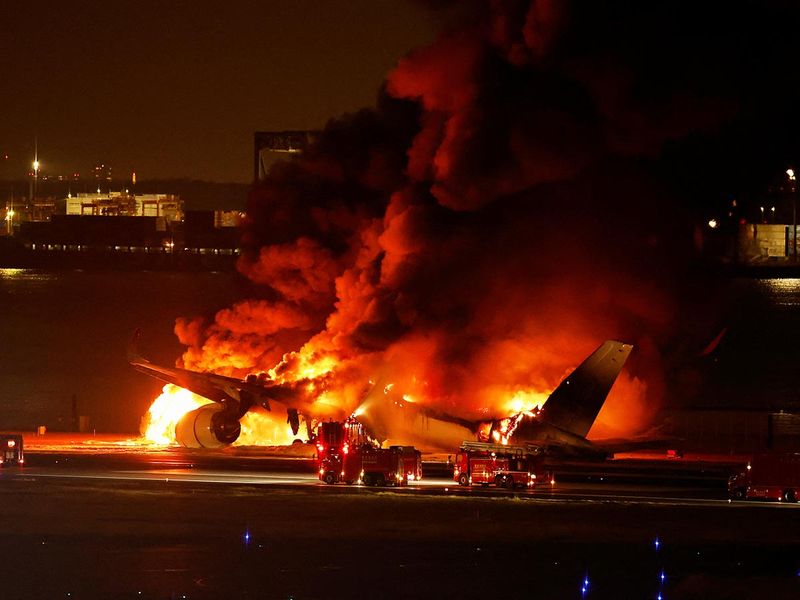
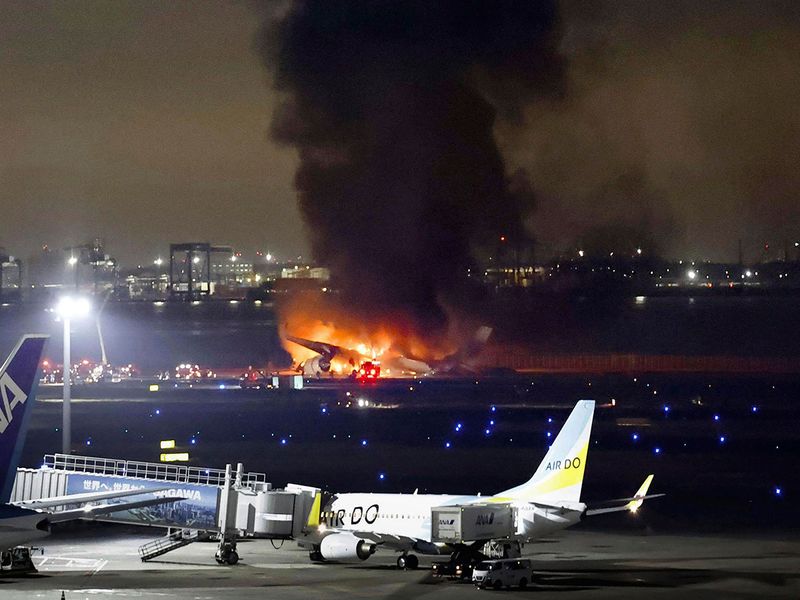
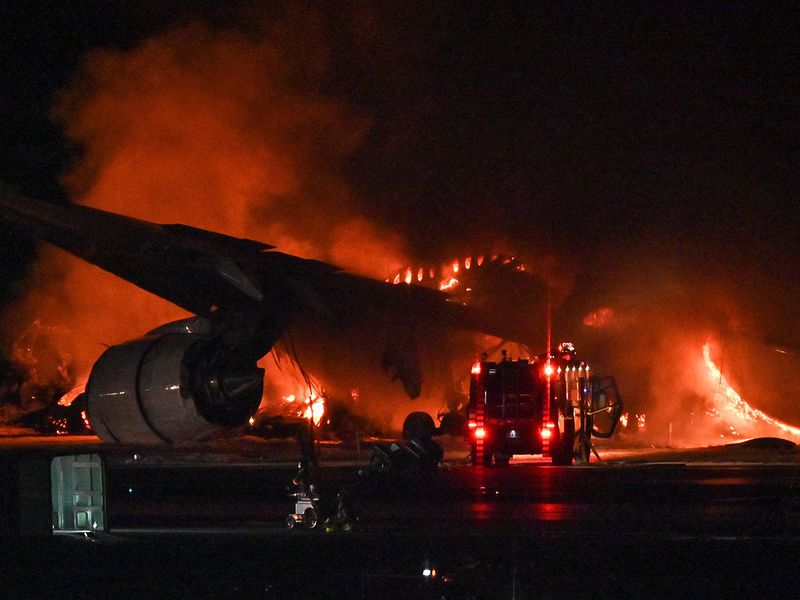
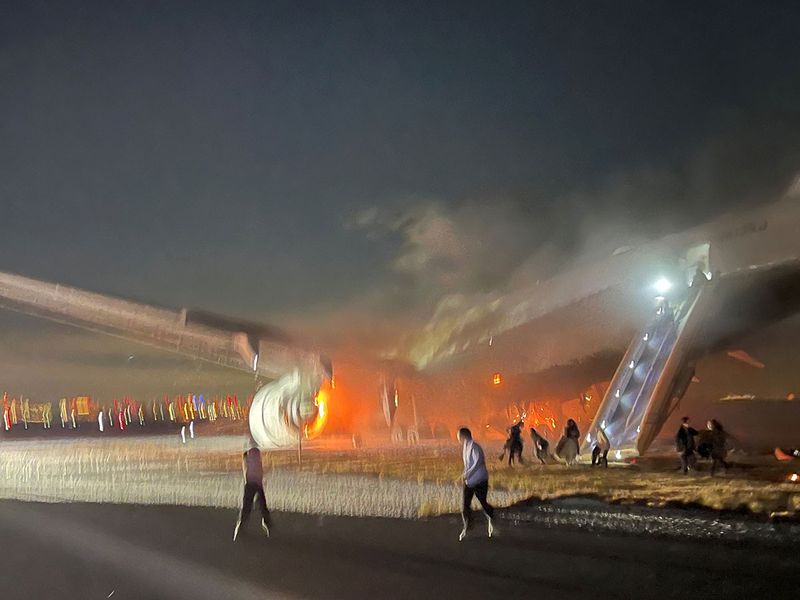
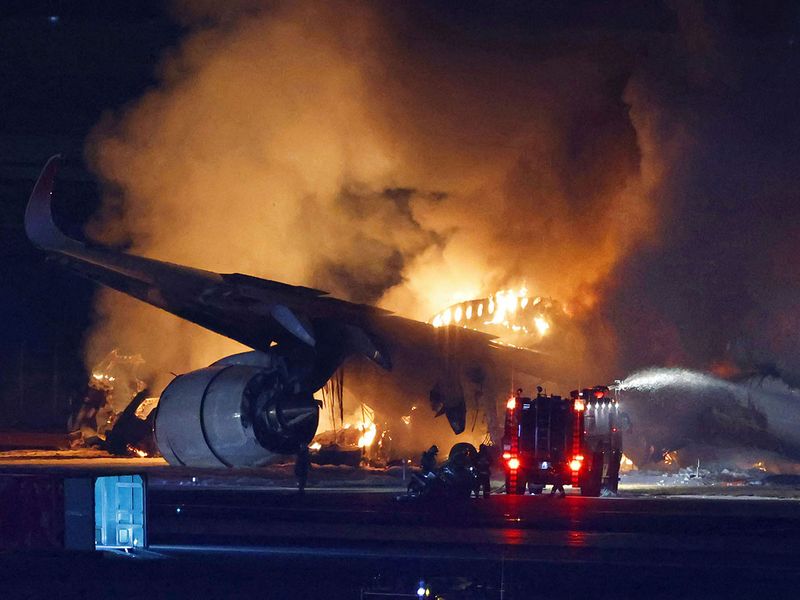
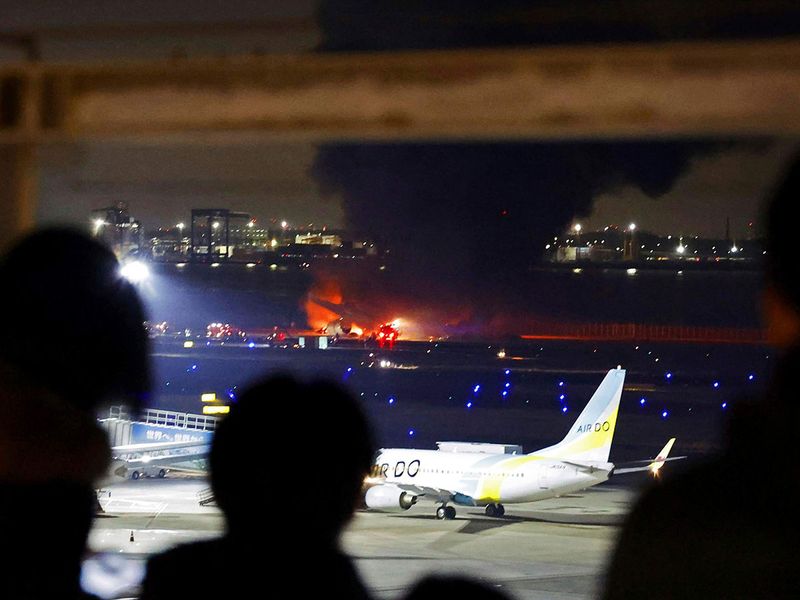
All 379 people aboard the Japan Airlines (JAL) Airbus A350 managed to evacuate after it erupted in flames following Tuesday's crash with a De Havilland Dash-8 Coast Guard turboprop shortly after landing at Haneda airport.
But five died among the six Coast Guard crew who were due to depart on a flight responding to a major earthquake on Japan's west coast, while the captain, who escaped the wreckage, was badly injured.
Authorities have only just begun their investigations and there remains uncertainty over the circumstances surrounding the crash, including how the two aircraft ended up on the same runway. Experts stress it usually takes the failure of multiple safety guardrails for an airplane accident to happen.
But transcripts of traffic control instructions released by authorities appeared to show the Japan Airlines jet had been given permission to land while the Coast Guard aircraft had been told to taxi to a holding point near the runway.
An official from Japan's civil aviation bureau told reporters there was no indication in those transcripts that the Coast Guard aircraft had been granted permission to take off.
The captain of the turboprop plane said he had entered the runway after receiving permission, a Coast Guard official said, while acknowledging that there was no indication in the transcripts that he had been cleared to do so.
"The transport ministry is submitting objective material and will fully cooperate with the ... investigation to ensure we work together to take all possible safety measures to prevent a recurrence," Transport Minister Tetsuo Saito told reporters.
The Japan Safety Transport Board (JTSB) is investigating the accident, with participation by agencies in France, where the Airbus jet was built, and Britain, where its two Rolls-Royce engines were manufactured.
The JTSB has recovered the voice recorder from the coast guard aircraft, authorities said.
POLICE INQUIRY
Meanwhile, Tokyo police are investigating whether possible professional negligence led to deaths and injuries, several media, including Kyodo and the Nikkei business newspaper, said.
Police set up a unit to investigate and planned to interview those involved, a spokesperson said, declining to say if they were examining suggestions of negligence. Parallel investigations have raised concerns in the past over tensions between civil safety investigations and police-led inquiries.
"There's a strong possibility there was a human error," said aviation analyst Hiroyuki Kobayashi, who is a former JAL pilot.
"Aircraft accidents very rarely occur due to a single problem, so I think that this time too there were two or three issues that led to the accident."
In a statement on Wednesday, JAL said the aircraft recognised and repeated the landing permission from air traffic control before approaching and touching down.
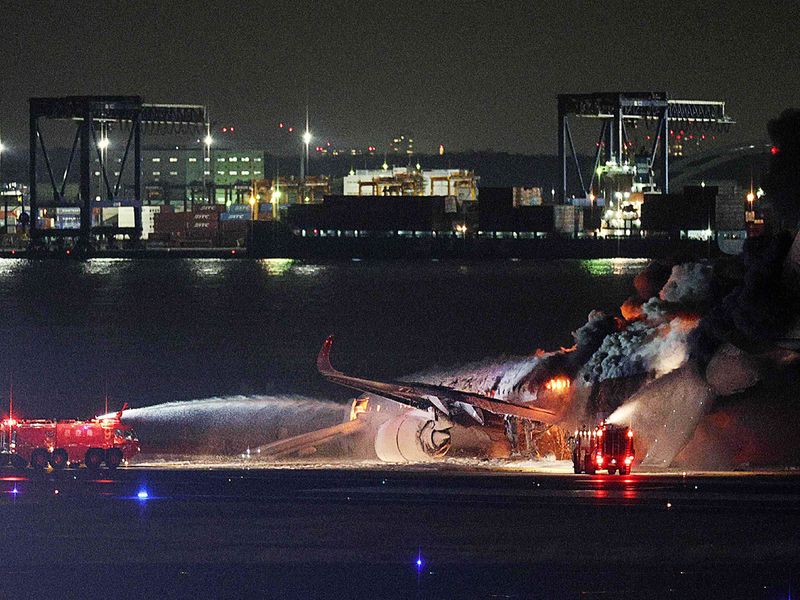
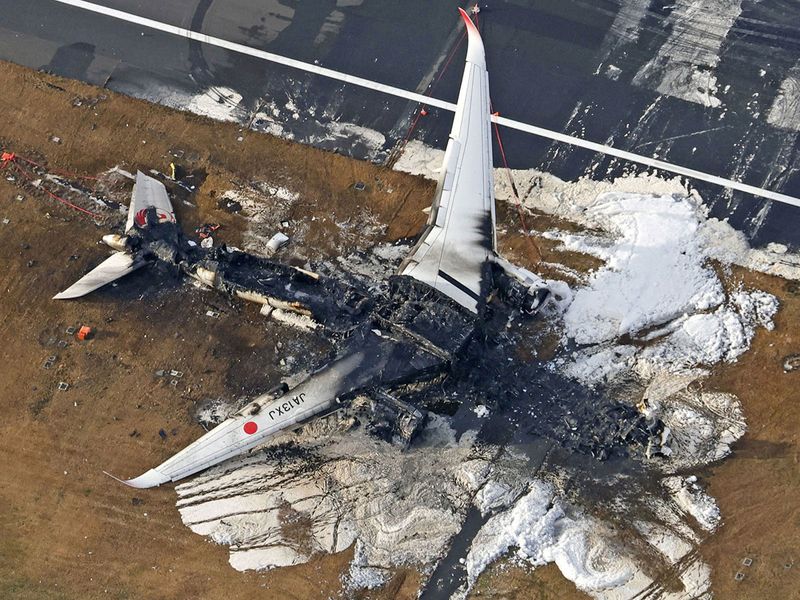
All passengers and crew were evacuated within 20 minutes of the crash, but the aircraft, engulfed in flames, burned for more than six hours, the airline said.
The Coast Guard aircraft, one of six based at the airport, had been due to transport aid to regions hit by Monday's earthquake of magnitude 7.6 that has killed 64 people, with survivors facing freezing temperatures and prospects of heavy rain.
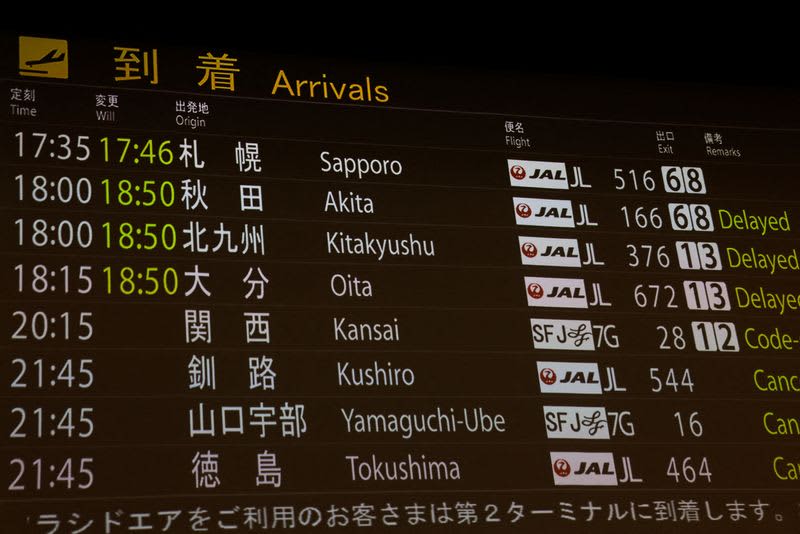
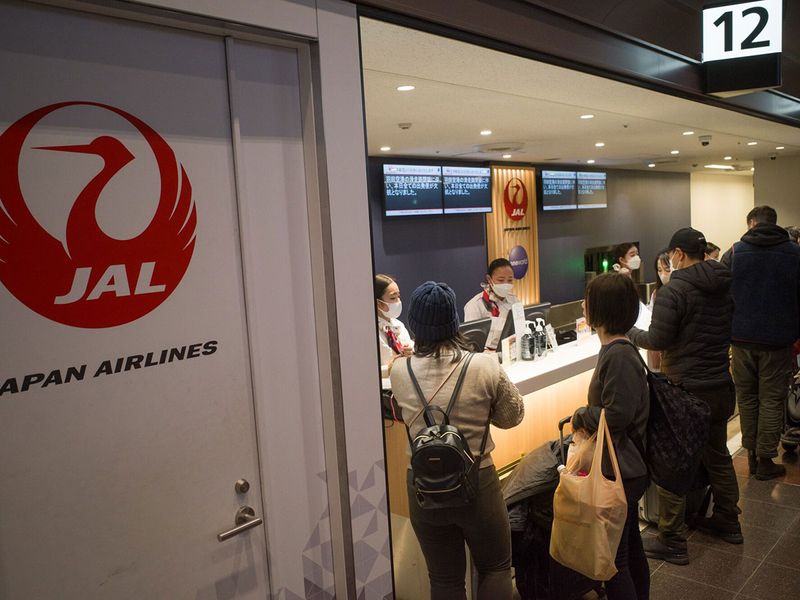
The accident forced the cancellation of 137 domestic, and four international, flights on Wednesday, the government said.
But emergency flights and high-speed rail services have been requested to ease the congestion, Transport Minister Saito said.
Michael Daniel, a former U.S. accident investigator, said investigators will be looking to make recommendations.
"The main thing is the situational awareness: what is it they would have told the pilot holding short of getting on a runway ... And then what was air traffic's understanding. Did the controller gave them clearance to take off? ... A lot of that information will come out when they start reviewing the cockpit voice recorder as well as the air traffic tapes."
(Reporting by Maki Shiraki, Kaori Kaneko, Daniel Leussink and Nobuhiro Kubo in Tokyo and Lisa Barrington in Seoul; Writing by John Geddie, Tim Hepher; Editing by Lincoln Feast, Raju Gopalakrishnan and Mark Heinrich)
© Reuters
By Tim Hepher, Allison Lampert, David Shepardson and Valerie Insinna
PARIS, Jan 3 (Reuters) - A runway collision at Tokyo's Haneda airport has raised concerns over a gap in alerting technology, weeks after the global aviation industry faced new warnings about runway safety.
All 379 people aboard a Japan Airlines (JAL) <9201.T> Airbus A350 escaped following a collision with a Dash-8 Coast Guard turboprop that killed five of six crew on the smaller aircraft.
Experts have cautioned it is too early to pinpoint a cause and stress most accidents are caused by a cocktail of factors.
Investigators are examining conversations between controllers and pilots and are expected to embark in coming days on a detailed examination of plane and airport systems.
Japanese authorities said on Wednesday the A350 was given permission to land, but the Coast Guard plane was not cleared for take-off, based on control tower transcripts.
The crash marks the first significant accident involving the Airbus A350, in service since 2015, and the first destruction by fire of a new generation of carbon-composite airliner.
It comes weeks after a U.S.-based safety group called for global action to prevent a new uptick in runway collisions or "incursions" as skies become more congested.
"Despite efforts over the years to prevent incursions, they still happen," Flight Safety Foundation CEO Hassan Shahidi said in a statement.
"The risk of runway incursions is a global concern, and the potential consequences of an incursion are severe."
Although ground collisions involving injury or damage have become rare, their potential for loss of life is among the highest of any category and near-misses are more common.
A collision between two Boeing 747s in Tenerife in 1977, killing 583 people, remains aviation's most deadly accident.
In 2016, a China Eastern Airbus A320 getting airborne from Shanghai missed hitting an A330 from the same airline as it taxied across the take-off runway just 19 metres below.
And a rash of near misses in the United States has led to the creation of an expert panel to address controller fatigue.
'TECHNOLOGY GAP'
The Washington-based Flight Safety Foundation says breakdowns in communication often play a role.
But a shortage of electronics to avoid collisions on the ground, rather than in the air where software to trigger avoidance has been available since the 1980s, is also a concern.
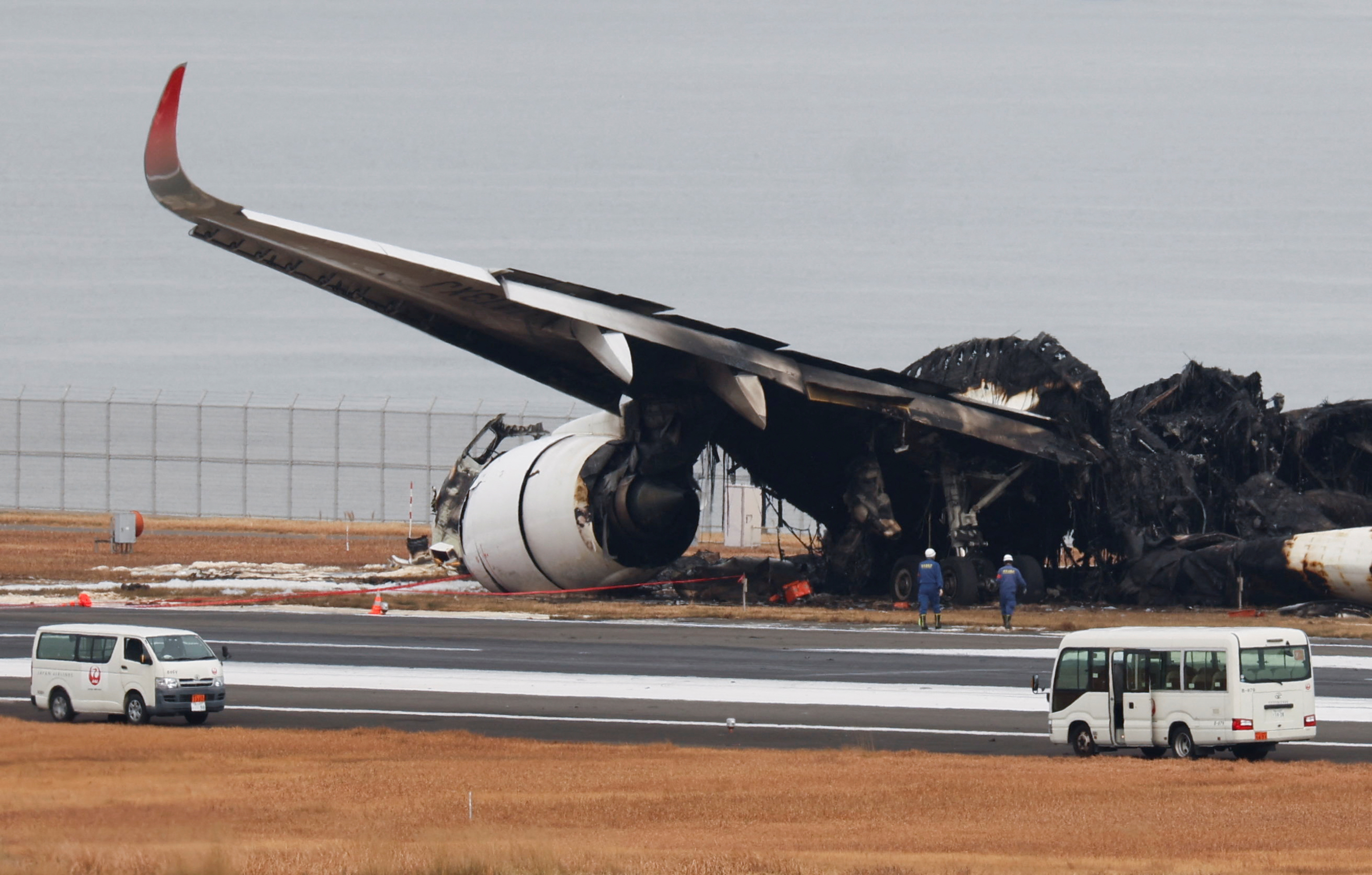
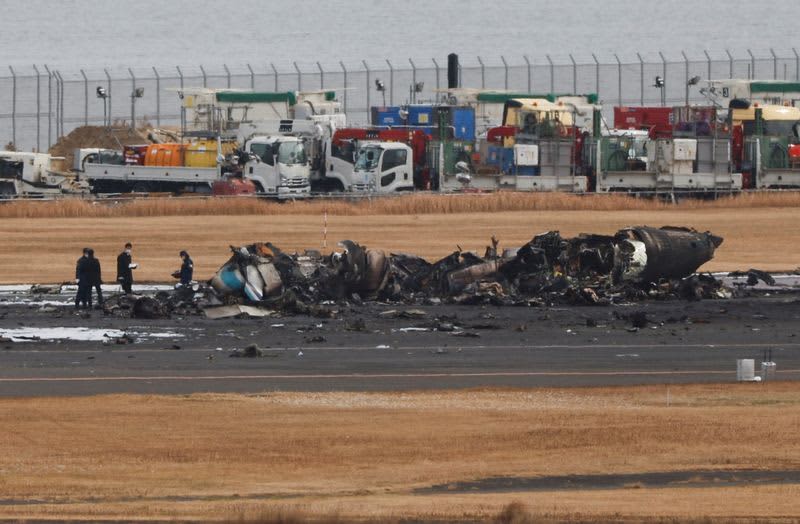
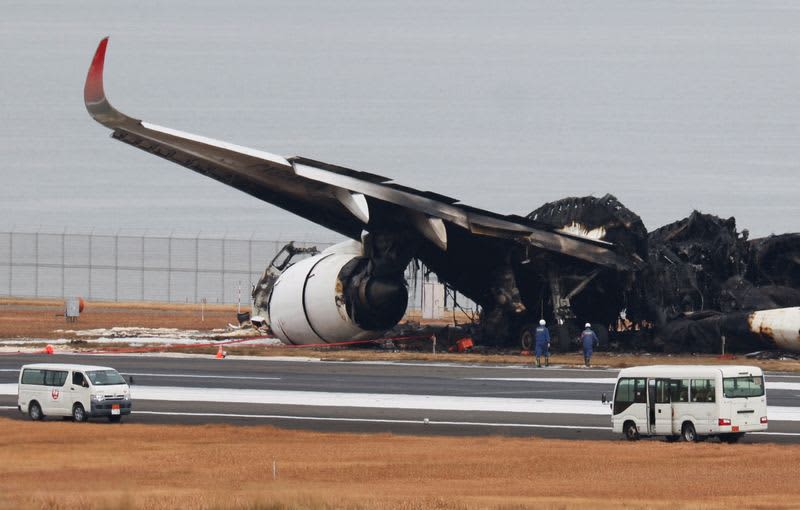
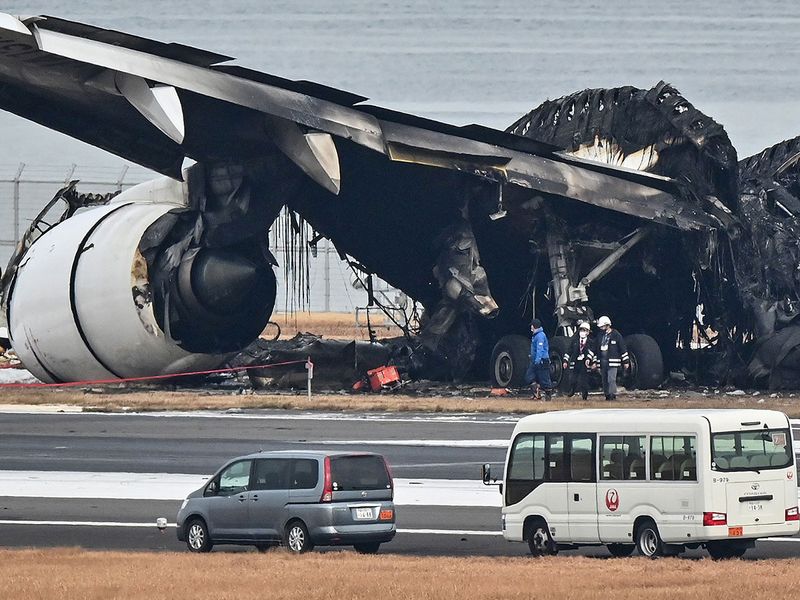
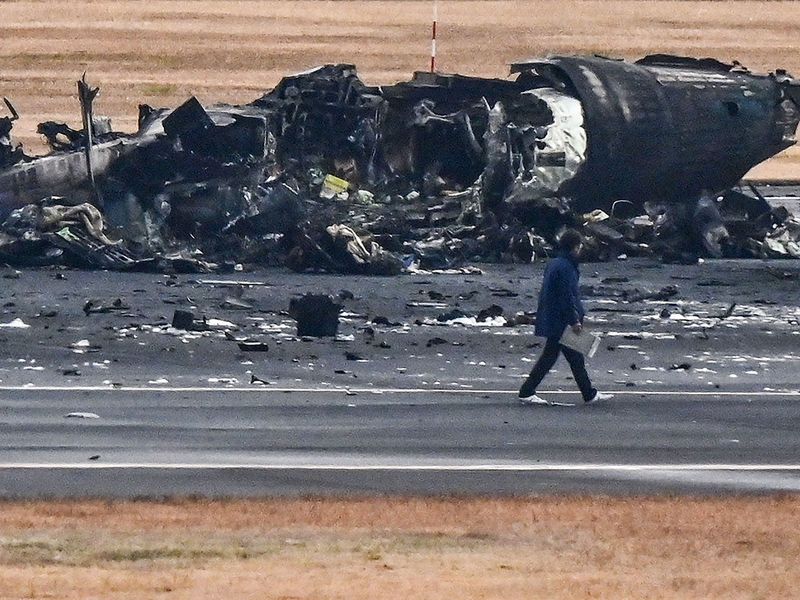
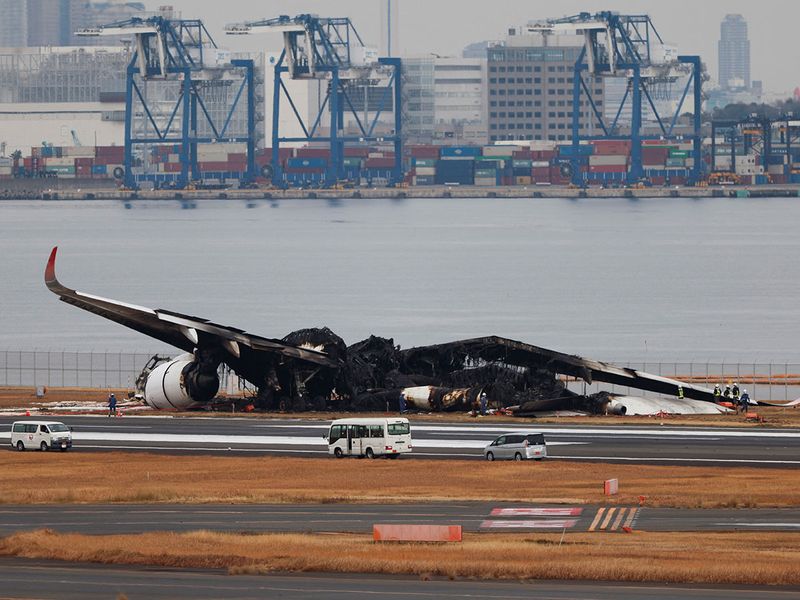
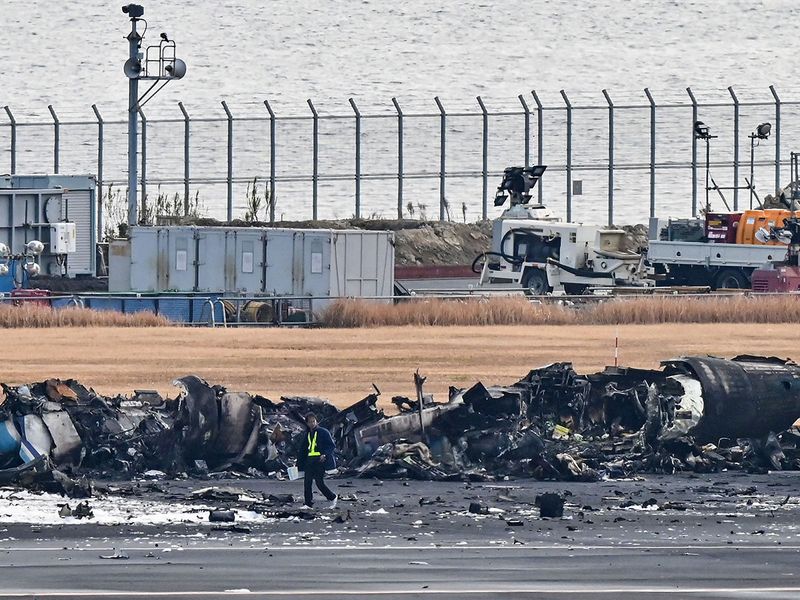
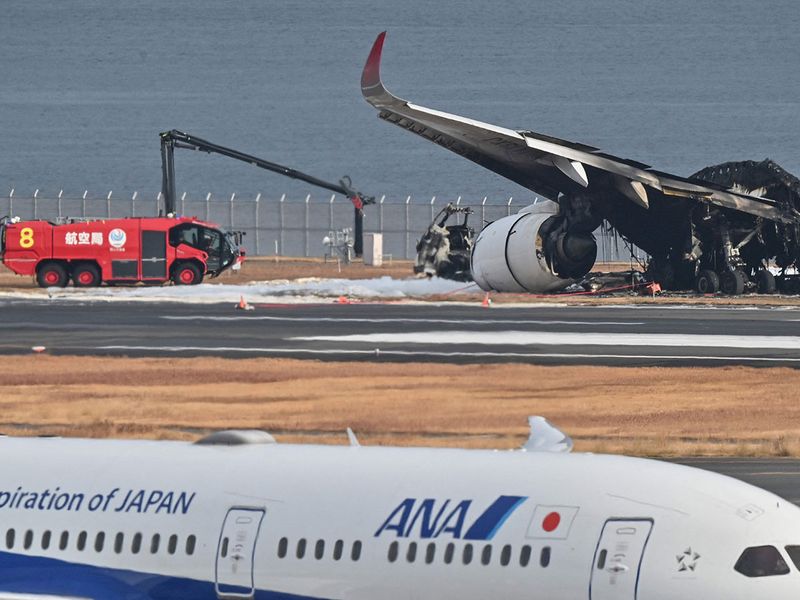
Officials investigate a burnt Japan Airlines (JAL) Airbus A350 plane after a collision with a Japan Coast Guard aircraft at Haneda International Airport in Tokyo, Japan January 3, 2024.
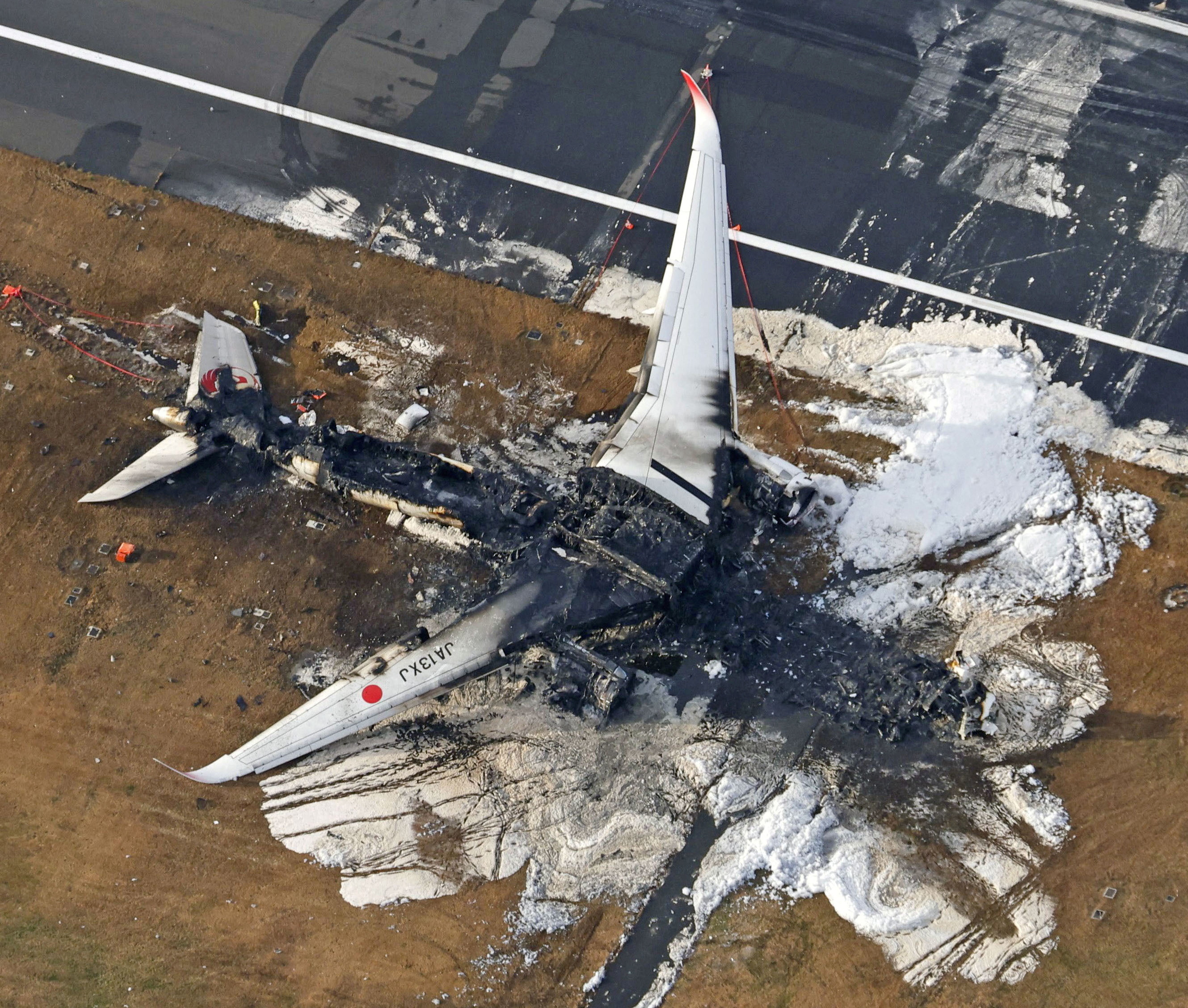
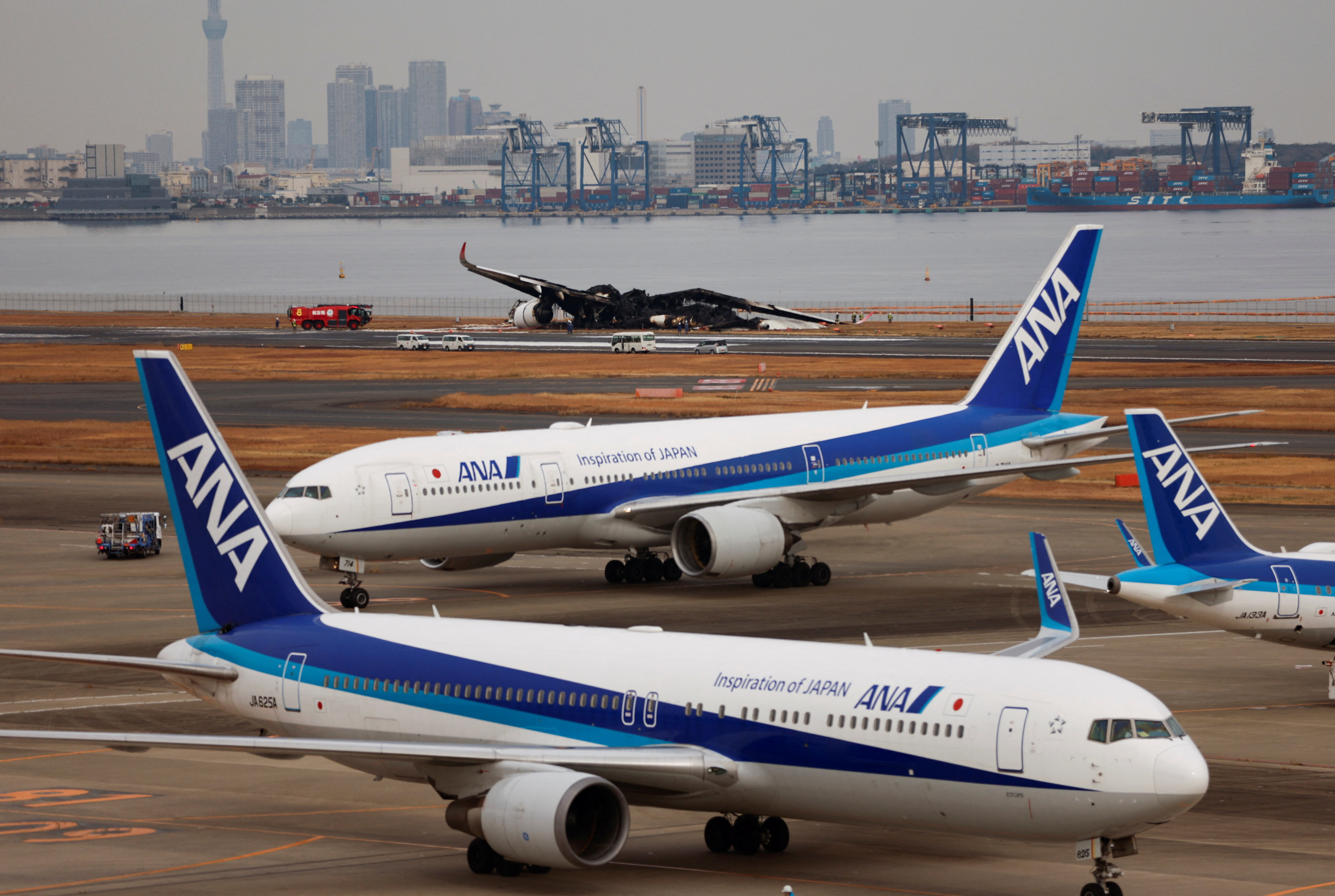
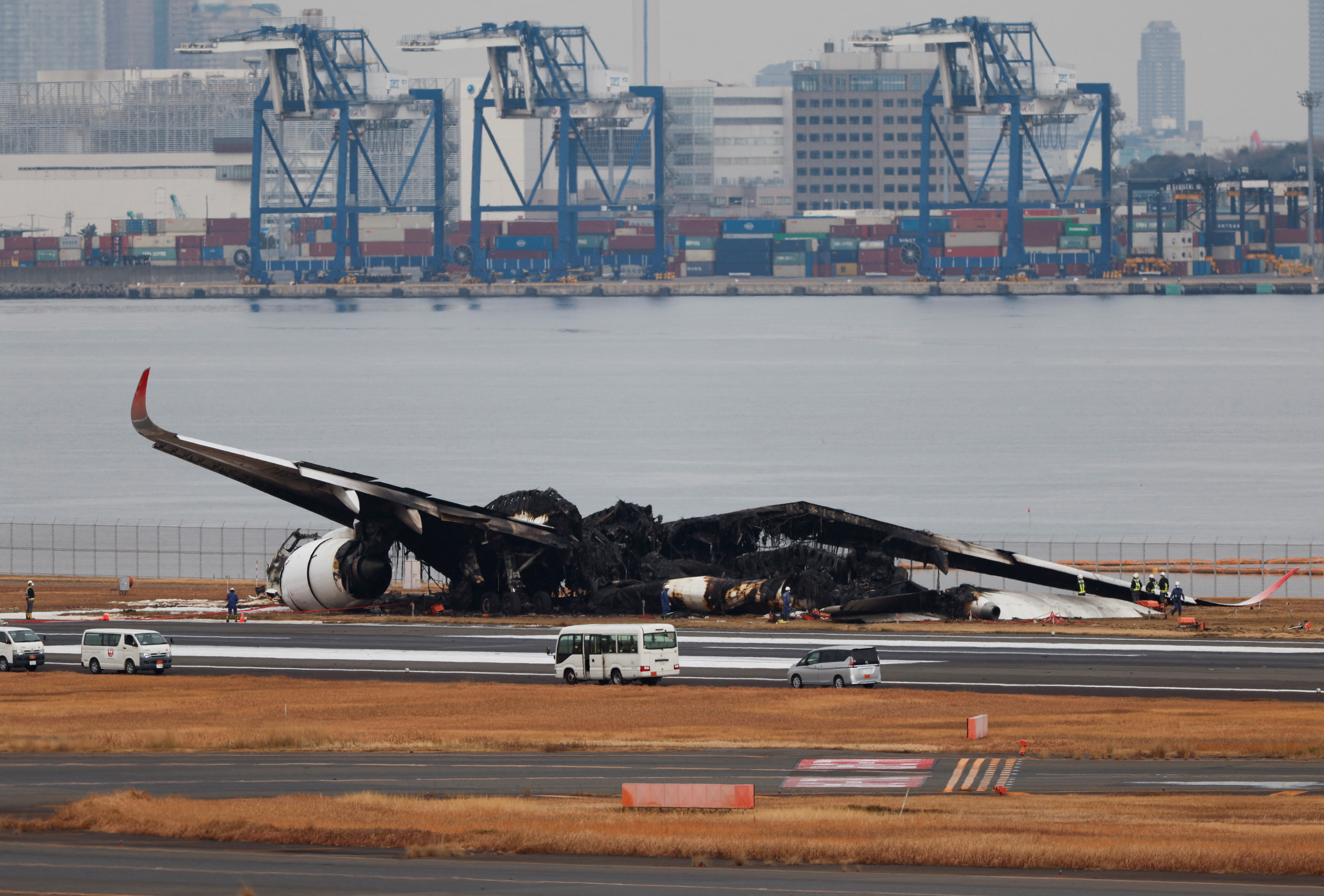
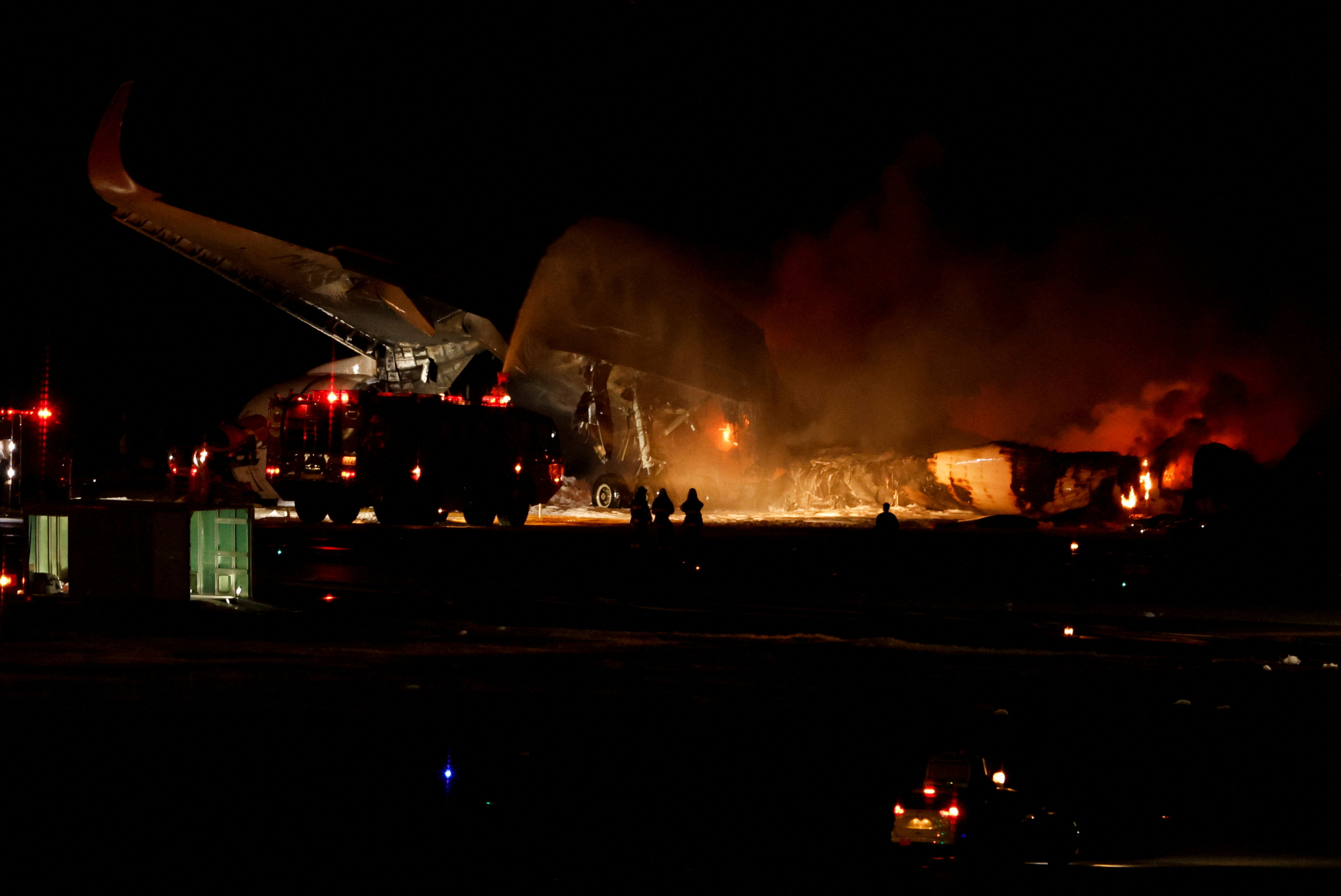
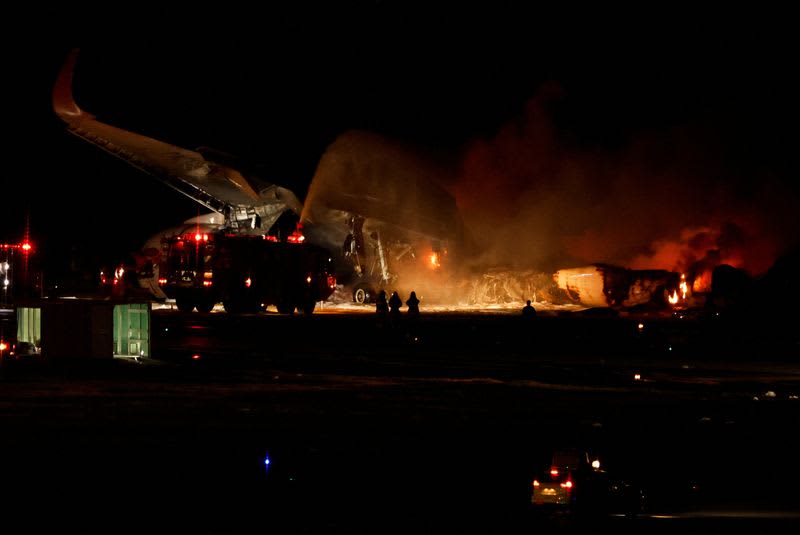
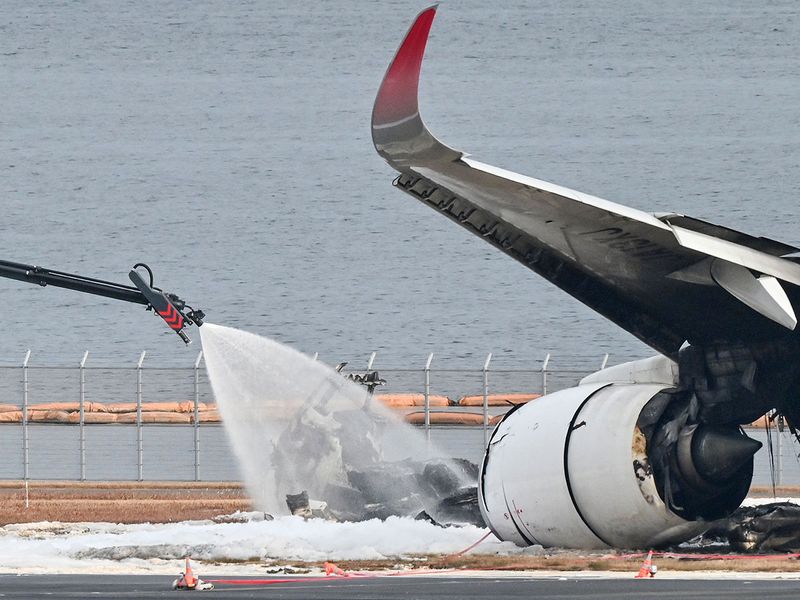
]Firefighters work on a burning Japan Airlines' A350 airplane at Haneda International Airport, in Tokyo, Japan January 2, 2024.
The Federal Aviation Administration says 35 U.S. airports are fitted with a system called ASDE-X that uses radar, satellites and a navigation tool called multilateration to track ground movements.
But National Transportation Safety Board chair Jennifer Homendy said in November the U.S. - a bellwether for airports worldwide - lacks sufficient technology to prevent incursions.
In 2018, Airbus said it was working with Honeywell on a system called SURF-A, or Surface-Alert, to help prevent runway collisions by giving pilots visual and audio warnings.
But no date for implementation has yet been announced and the idea has brushed up against reluctance from some airlines unwilling to bear the extra cost, while underlying reforms in U.S. and European air traffic systems have long been delayed.
"(The) primary concern about SURF is costs," one airline told a U.S. panel on air systems, according to a 2021 report.
Another commented: "Nothing can motivate investment; simply don't see a risk issue or benefit worthy of pursuit."
Airline groups had no immediate comment. Industry experts say flying often involves tricky choices of costs versus safety.
A person familiar with the technology said it had also been delayed by gaps in ADS-B tracking coverage on which it depends.
Development had also proved more challenging than the TCAS cockpit system which has been monitoring the threat of in-air collisions during flight for decades, due to the need to take into account multiple ground obstacles and systems.
In 2022, two firefighters were killed when their untracked vehicle hit a LATAM Airbus A320 during takeoff.
"The system is still under development," an Airbus spokesperson said.
The head of Honeywell's Aerospace Technologies division, Jim Currier, told Reuters the system went through a series of successful tests in December and should be certified and available to airlines "gradually over the next few years".
Although automated landings are increasing, experts say much still depends on visual checks by pilots who may be distracted by a high workload or the blur of a night-time runway.
"I think the investigation will focus a lot on the clearances ... and then also what the (JAL) crew could see. Could they physically see that airplane on the runway," said former U.S. air accident investigator John Cox.
Lighting was an issue in a 1991 collision between a USAir plane and SkyWest Airlines aircraft at Los Angeles International Airport in California, for example.
"One of the things that came out of that was that the USAir crew physically could not see the SkyWest Metroliner there. Although it was on the runway, the lighting was such that you … physically couldn’t see it," he said.
Additional reporting by Lisa Barrington; Editing by Lincoln Feast, Nick Macfie and Nick Zieminski
Airbus announced on Tuesday that a team of specialists was dispatched to assist relevant authorities to investigate an aircraft collision that involved one of its A-350 aircraft delivered to Japan Airlines.
In a press release, Airbus said that it would provide technical assistance to the Bureau of Enquiry and Analysis for Civil Aviation Safety (BEA) of France and to the Japan Transport Safety Board (JTSB) in charge of the investigation.
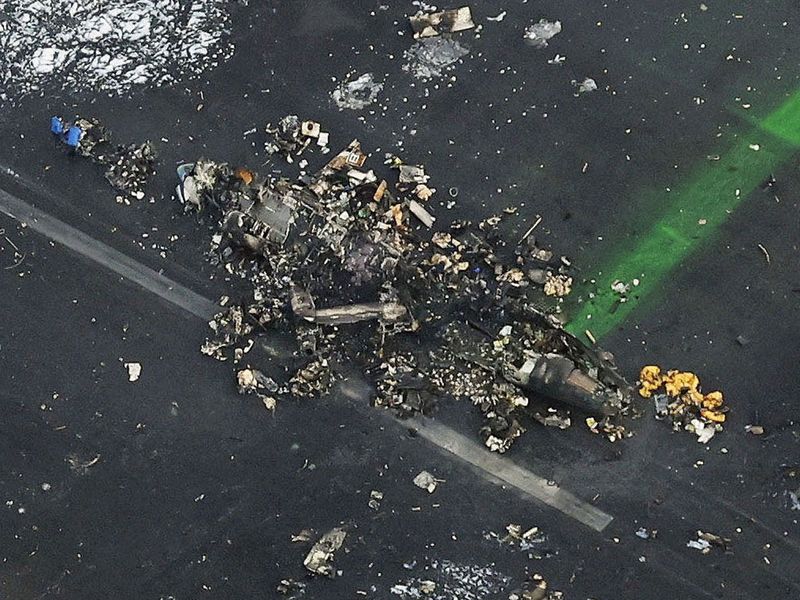
Five of the six crew members aboard a Japan Coast Guard aircraft that collided with a passenger plane at Tokyo's Haneda Airport on Tuesday were confirmed dead, while the captain who managed to escape earlier was severely injured, Japan's public broadcaster NHK reported.
Coast Guard spokesperson Yoshinori Yanagishima earlier confirmed the collision between the Japan Airlines aircraft and its flight MA-722, a Bombardier Dash-8, with both aircraft catching fire.
The Coast Guard plane was taxiing on the runway to transport relief goods for quake-hit areas in Niigata Prefecture after a series of temblors of up to 7.6 magnitude struck central Japan on Monday afternoon, according to the spokesperson.
Meanwhile, all 367 passengers and 12 crew members on board the Japan Airlines flight escaped from the airplane while it was on fire without life-threatening injuries after it collided with the smaller Coast Guard aircraft, the NHK reported.
Photos: Runway safety concerns in focus as Japan probes Tokyo crash
All 379 passengers escape Japan Airlines plane that burst into flames on runway
No comments:
Post a Comment