SPACE/COSMOS
Seven planets are lining up in the sky next month. This is what it really means
Jonathan O'Callaghan
BBC
(Credit: Getty Images)
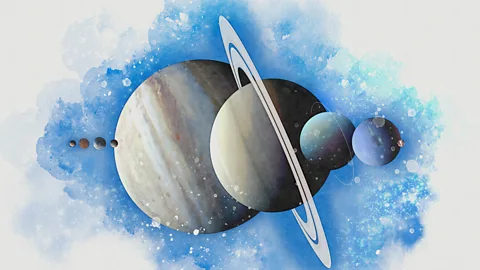
Stargazers will be treated to a rare alignment of seven planets on 28 February when Mercury joins six other planets that are already visible in the night sky. Here's why it matters to scientists.
Peer up at the sky on a clear night this January and February and you could be in for a treat. Six planets – Venus, Mars, Jupiter, Saturn, Uranus and Neptune – are currently visible in the night sky. During just one night in late February, they will be joined by Mercury, a rare seven-planet alignment visible in the sky.
But such events are not just a spectacle for stargazers – they can also have a real impact on our Solar System and offer the potential to gain new insights into our place within it.
The eight major planets of our Solar System orbit the Sun in the same flat plane, and all at different speeds. Mercury, the closest planet to the Sun, completes an orbit – a year for the planet – in 88 days. Earth's year, of course, is 365 days, while at the upper end, Neptune takes a whopping 60,190 days, or about 165 Earth years, to complete a single revolution of our star.
The different speeds of the planets mean that, on occasion, several of them can be roughly lined up on the same side of the Sun. From Earth, if the orbits line up just right, we can see multiple planets in our night sky at the same time. In rare events, all the planets will line up such that they all appear in our night sky together along the ecliptic, the path traced by the Sun.
Mercury, Venus, Mars, Jupiter and Saturn are all bright enough to be visible to the naked eye, while Uranus and Neptune require binoculars or a telescope to spot.
In January and February, we can witness this event taking place. The planets are not exactly lined up, so they will appear in an arc across the sky due to their orbital plane in the Solar System. During clear nights in January and February, all of the planets except Mercury will be visible – an event sometimes called a planetary parade. On 28 February, though – weather permitting – all seven planets will be visible, a great spectacle for observers on the ground.
"There is something special about looking at the planets with your own eyes," says Jenifer Millard, a science communicator and astronomer at Fifth Star Labs in the UK. "Yes, you can go on Google and get a more spectacular view of all these planets. But when you're looking at these objects, these are photons that have travelled millions or billions of miles through space to hit your retinas."
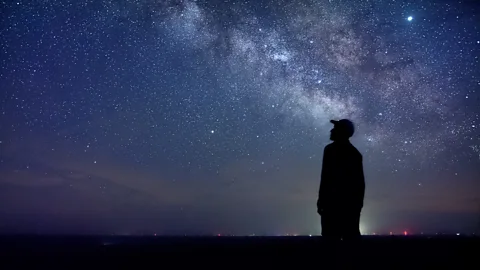
Stargazers will be able to enjoy the sight of the planets on a clear night through January and February, culminating with seven visible all at once (Credit: Getty Images)
While fascinating to observe, do such alignments have any impact here on Earth? Or might they have a use for increasing our understanding of our Solar System and beyond?
In fact, says Millard, "it's just happenstance that they happen to be in this position of their orbits". And while there have been suggestions from some scientists that planetary alignments might cause impacts on Earth, the scientific basis for most of these claims is weak or non-existent.
In 2019, however, researchers suggested that planetary alignments could have an impact on solar activity. One of the main outstanding questions about the Sun is what drives its 11-year cycle between periods of peak activity, known as solar maximum (which we are currently in), and periods of weakest activity, solar minimum. Frank Stefani, a physicist at Helmholtz-Zentrum research centre in Dresden-Rossendorf in Germany, believes the combined tidal forces of Venus, Earth and Jupiter could be the answer.
While the tidal pull of each planet on the Sun is extremely small, Stefani says that when two or more of the planets line up with the Sun – known as a syzygy – they might combine to cause small rotations inside the star, called Rossby waves, which can drive weather events.
"On Earth, Rossby waves cause cyclones and anticyclones," says Stefani. "We have the same Rossby waves in the Sun." Stefani's calculations showed that the alignments of Venus, Earth and Jupiter would cause a periodicity to solar activity of 11.07 years, almost exactly matching the length of solar cycles that we see.
Not everyone is so sure about the idea, with some noting that solar activity can already be explained by processes within the Sun alone. "The observational evidence suggests that the planets directly causing the solar cycle just doesn't happen," says Robert Cameron, a solar scientist at the Max Planck Institute for Solar System research in Germany, who published a paper on the subject in 2022. "There's no evidence of any synchronisation."
But there are other, far less contentious, quirks of planetary alignments which certainly do have an impact on us: their usefulness for scientific observations, particularly in terms of exploring the Solar System.
Using the gravitational pull of a well-placed planet, such as Jupiter, to slingshot a spacecraft outwards can reduce the travel time dramatically
Reaching the outer planets with a spacecraft is difficult because these worlds are so far away, billions of miles, and would take decades to reach. However, using the gravitational pull of a well-placed planet, such as Jupiter, to slingshot a spacecraft outwards can reduce the travel time dramatically, something no spacecraft has done better than Nasa's Voyager vehicles.
In 1966, a Nasa scientist called Gary Flandro calculated that there would be an alignment of the four outermost planets – Jupiter, Saturn, Uranus and Neptune – in 1977 that would enable all four to be visited within a span of just 12 years, compared to 30 years if they were not aligned. This fortuitous alignment, which occurs only once every 175 years, led to Nasa launching the twin Voyager 1 and 2 spacecraft in 1977 on a "Grand Tour" of the outer Solar System.
Voyager 1 flew past Jupiter in 1979 and Saturn in 1980, eschewing Uranus and Neptune because scientists wanted to fly past Titan, Saturn's fascinating moon, and could not do so without ruining the slingshot effect.
But Voyager 2 used the alignment to visit all four planets, becoming the only spacecraft in history to visit Uranus and Neptune, in 1986 and 1989 respectively.
"That worked out fantastic," says Fran Bagenal, an astrophysicist at the University of Colorado, Boulder in the US and a member of the Voyager science team. "If Voyager 2 had left in 1980, it would have taken until 2010 to get to Neptune. I don't think it would have won support. Who's going to fund such a thing?"
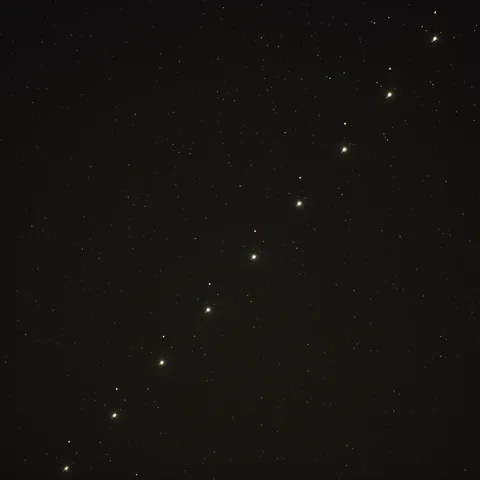
In 2024 it was possible to see Mars and Jupiter in conjunction with the naked eye but Venus, Saturn, Uranus and Neptune will also be visible in January 2025
It is not just within our Solar System that planet alignments are useful. Astronomers use alignments to probe many different aspects of the Universe, and none more so than in the discovery and study of exoplanets, worlds that orbit stars other than the Sun.
The dominant way of finding such worlds is known as the transit method: when an exoplanet passes in front of a star from our point of view it dims the star's light, allowing its size and orbit to be discerned.
Thanks to this method, we have discovered many planets in orbit around certain stars. Trappist-1, a red dwarf star located 40 light-years from Earth, has seven Earth-sized planets that all transit the star from our point of view. The planets in that system are actually in resonance with each other – meaning the outermost planet completes two orbits for every three orbits of the next planet inwards, then four, six, and so on. This means there are periods where multiple planets in the system align in a straight line, something that doesn't happen in our Solar System.
Using transits, we can study the existence of atmospheres on planets like these. "If a planet with an atmosphere goes in front of a star, that alignment means the starlight goes through the planet, and the molecules and atoms in the planet's atmosphere absorb light at certain wavelengths," says Jessie Christiansen, an astronomer at the Nasa Exoplanet Science Institute at the California Institute of Technology.
This allows different gases such as carbon dioxide and oxygen to be identified. "The vast majority of our atmospheric composition analysis is due to alignments," she says.
Much grander alignments can let us probe the distant Universe, namely the alignments of galaxies. Observing galaxies in the very early universe is difficult because they are so faint and far away. However, if a large galaxy or cluster of galaxies passes between our line of sight with a much more distant early galaxy, its large gravitational pull can magnify the light of the more distant object, allowing us to observe and study it, a process called gravitational lensing.
"These are huge alignments across the scale of the universe," says Christiansen. They are used by telescopes such as the James Webb Space Telescope to observe remote stars and galaxies such as Earendel, the most distant known star from Earth. The light viewed by the telescope from the star came from the first billion years of the 13.7-billion-year-history of the Universe and was visible only because of gravitational lensing.
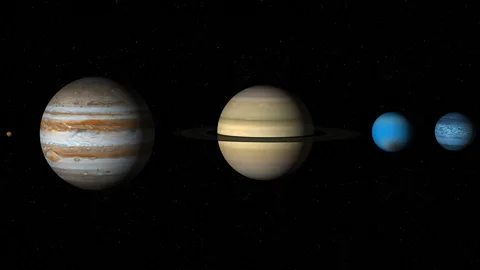
The different orbital speeds of the planets in our Solar System means several of them can occasionally line up in the same part of the sky at the same time
And then there are some more novel uses of alignments, such as probing the existence of extraterrestrial life, in solar systems where the exoplanets pass in front of each other from our point of view.
In 2024, graduate student Nick Tusay at Pennsylvania State University in the US used these alignments to look for any spillover communications being sent between worlds of the Trappist-1 system, such as how on Earth we send signals to planets like Mars in our solar system to talk to rovers and spacecraft. "Any time that two planets are aligned might be interesting," says Tusay.
On this occasion the searches turned up short. But an alien civilisation looking towards our own Solar System might use similar alignments for the same purpose. While the planetary parade this month depends on your point of view – any two planets in our system can be aligned if you are positioned at the right angle – it's not impossible to imagine someone else on the other end, watching on.
"Perhaps another alien civilisation might see this as an opportunity to conduct their own investigations," says Tusay.
How President Trump could change NASA
SPACE.COM
By Andrew Jones
January 20, 2025
As the Trump administration returns to power, NASA faces a crossroads that could redefine its mission for decades to come.
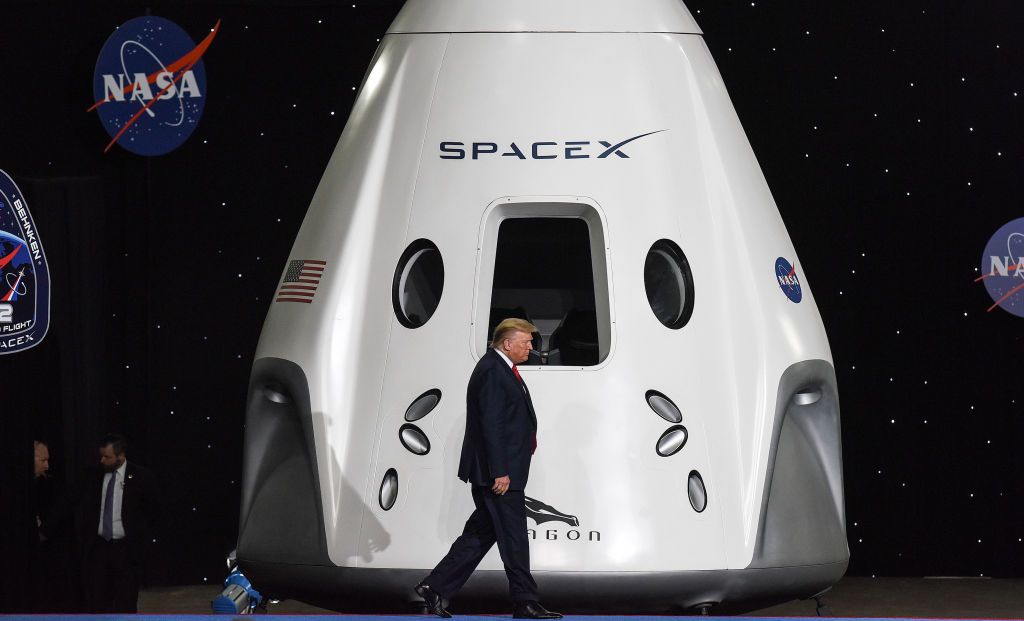
As the new Trump administration takes the reins in the White House, there is feverish speculation about how its policies will reshape NASA's direction and priorities, as well as the wider space sector.
Swift and profound changes could impact a number of areas of space, such as the future of the agency's Artemis moon program, which rockets are favored or canceled, funding levels for Earth and climate science and the very operation of NASA itself
Battles will play out over the coming months and years to decide the direction and extent of a number of U.S. programs and agencies, with push and pull between factions calling for budget cuts or strengthened spending in key areas. Here are some of the big issues and the factors that may decide their fate.
To the moon or Mars?
One of the big issues — with potentially seismic implications for NASA's direction, America's relations with its international space partners and geopolitics — is the future of the Artemis program. Artemis, established by the first Trump administration with the goal of returning humans to the moon, and continued by the outgoing Biden presidency, is years behind schedule, with scrutiny surrounding delays and technical issues.
"The new Trump Administration might try to skip the moon and go straight to Mars, but I expect they would encounter the same backlash from Congress as Obama did when he proposed that in 2010," Marcia Smith, who has 40 years of space policy experience and is founder and editor of SpacePolicyOnline, told Space.com. "Congress wants a moon-to-Mars program, not one or the other."
Breaking space news, the latest updates on rocket launches, skywatching events and more!Contact me with news and offers from other Future brandsReceive email from us on behalf of our trusted partners or sponsorsBy submitting your information you agree to the Terms & Conditions and Privacy Policy and are aged 16 or over.
Dropping the moon as a target would also have geopolitical ramifications, with China also seeking partners for its International Lunar Research Station (ILRS), a parallel but completely separate moon program.
However, some aspects of Artemis, such as the Gateway, which seeks to establish a space station in lunar orbit as a stepping stone to landing astronauts on the moon, could be in the new administration's crosshairs over cost and delays. Such a move would have repercussions with a number of international partners, such as the European Space Agency (ESA), Canadian Space Agency (CSA) and Japan Aerospace Exploration Agency (JAXA) already working on pertinent Gateway hardware.
"Whether Gateway remains part of it is another matter. I can't even guess what that answer will be," Smith said.
Space Launch System
Another uncertainty is the future of the Space Launch System (SLS), NASA's expendable megarocket to enable crewed moon missions. SpaceX is developing the Starship system, which could provide a reusable alternative, but moves to cancel SLS — which has been criticized over unsustainable costs and numerous delays and quality control on the part of lead contractor Boeing — will likely face resistance. Musk also posted his views on the Artemis architecture, stating it to be extremely inefficient.
"The new administration might try to cancel SLS, but it has a lot of support in Congress, which created SLS in the first place in the 2010 NASA Authorization Act," Smith explained. However, some aspects of the system, such as the larger, more powerful Block 1B, could be on the chopping block.
"I sincerely doubt SLS as a whole will be canceled, but would not be surprised if Block IB is terminated in favor of commercial alternatives that weren't even on the drawing boards in 2010, but are coming online now," she said.
A new NASA administrator
Donald Trump has tapped billionaire tech entrepreneur Jared Isaacman to head up NASA. Isaacman has already embarked on two commercial spaceflights using SpaceX and its Falcon 9 rocket and Dragon spacecraft, organizing, funding and commanding both efforts.
Isaacman will need to be officially nominated and then approved by the U.S. Senate. Smith reported that the expected nomination has already gathered support from Republicans, but not without criticism over Isaacman's past campaign donations to Democratic candidates.
While he would be somewhat beholden to decisions made by Congress, Isaacman would bring his own views and preferences to NASA at a potentially transformative moment for the agency
The US Space Force
The U.S. Space Force, which was established by the previous Trump administration back in December 2019, will likely see changes during the new administration. It is currently based in Colorado but could be moved. Its level of funding could also be an issue of fierce debate as priorities and details are thrashed out in Congress.
"Getting money for Space Force or anything else in the government is going to be one of the defining battles this year, not just between Democrats and Republicans, but within the Republican party," said Smith. "Congressional defense hawks want huge increases in defense spending, while hard-line Republicans are totally focused on debt reduction."
The two don't match, she noted. "As for moving Space Command from Colorado to Alabama, it's almost a foregone conclusion."
Climate and Earth sciences
Similar battles will play out over climate and Earth science, with the Trump administration likely keen to cut funding for these endeavors, but once again facing pushback from Congress.
The first Trump Administration tried to sharply curtail NASA's Earth science programs, but Congress overruled those cuts every year.
"It's tough to gauge how far Congress would go this time to save those NASA programs, but the bigger fight likely will be over NOAA [National Oceanic and Atmospheric Administration]," said Smith. NOAA conducts work and research related to weather and climate and other areas.
The return of the Trump administration promises a turbulent and transformative period for NASA and the broader U.S. space sector. With debates swirling over the future of Artemis, the role of commercial players like SpaceX, the fate of flagship programs like the Space Launch System, and NASA's commitments to climate science, the stakes appear high. The decisions made in the coming months will reverberate across U.S. space policy.
Andrew Jones
Contributing Writer
Andrew is a freelance space journalist with a focus on reporting on China's rapidly growing space sector. He began writing for Space.com in 2019 and writes for SpaceNews, IEEE Spectrum, National Geographic, Sky & Telescope, New Scientist and others. Andrew first caught the space bug when, as a youngster, he saw Voyager images of other worlds in our solar system for the first time. Away from space, Andrew enjoys trail running in the forests of Finland. You can follow him on Twitter @AJ_FI.

As the Trump 2.0 administration begins to take shape, one of the questions orbiting in the beltway space community is whether President-elect Trump will retain the National Space Council — a dedicated space policy coordination and oversight function within the Executive Office of the President. The National Space Council, first established by the 1958 law that created NASA, has been used intermittently by presidential administrations over the history of the space age, with its necessity and efficacy debated seemingly during every transition.
After lying dormant for almost 25 years, the first Trump administration revived the National Space Council to great fanfare within space policy circles. With Vice President Mike Pence as its chair, Trump’s National Space Council was successful in issuing numerous space directives, spearheading the administration’s push to establish the U.S. Space Force as the sixth branch of the armed forces and putting NASA on an ambitious path to return Americans to the moon.
The Biden administration elected to retain the National Space Council, again delighting space industry insiders who viewed the council as a way of maintaining national-level priority and attention on space. Although Biden’s National Space Council, helmed by Vice President Kamala Harris, pushed through fewer high-profile space policy initiatives, it was not without its successes. With one of its more visible priorities being to elevate international space partnerships, it cemented space cooperation with allies and partners, expanded international norms for space and gave commercial partners a seat at the table in bilateral space dialogues.
The key to these cross-administration successes, however, was not the existence of the National Space Council per se. At its core, the National Space Council itself is composed largely of the same senior administration officials that sit on other White House councils, such as the National Security Council, the National Economic Council or the Domestic Policy Council. But having a space policy coordinating function within the Executive Office of the President — and giving it the focus, staff and access to be successful — is key to whether the White House can effectively drive an ambitious space policy agenda that is part and parcel of the president’s broader foreign policy and domestic policy agenda.
One of the main benefits of having a National Space Council is its singular focus on space matters. With a senior political appointee as its Executive Secretary, the National Space Council staff — responsible for day-to-day drafting of policies and overseeing their implementation — ensures that the sprawling executive branch bureaucracy works in concert to advance the president’s space agenda. Without a team dedicated to space policy, the sheer volume of issues White House staff must tackle on a daily basis quickly crowds out any space agenda, whose successes and failures are typically measured in months or years, not the hours, days and weeks that drive activity at 1600 Pennsylvania Avenue.
Additionally, a White House space policy coordinating function must be large enough to effectively manage the many facets of space policy that rightfully deserve White House attention — from space exploration to space security, and everything in between. While there is a fine line between having a staff large enough to exercise effective oversight and a staff that is so large that it creeps into micromanagement, a staff that is too small simply will not be effective. Advancing the president’s space agenda — and ensuring that the government bureaucracy does not slide back toward the status quo — is indeed several full-time jobs.
Finally, when matters arise that require the president’s attention, the head of the White House’s space policy group must have a sure and speedy path to the president’s ear. Whether that path is through the vice president as Chair of the National Space Council or via a member of the president’s senior staff, such as the White House Chief of Staff or National Security Advisor, is not important. What is important is that this individual has the trust and confidence of the president and can access him when the need arises.
Certainly, retaining the National Space Council would be an easy and effective way for the president-elect to demonstrate his commitment to America’s space program. But many different organizational models could work, provided that any White House space coordinating function — including a National Space Council — is granted the focus, staff and access it needs. After all, in the years preceding Trump’s revival of the National Space Council during his first term, space policy was set through partnership between staff in the National Security Council and the Office of Science and Technology Policy.
As the contours of the next Executive Office of the President come into focus, the new team should consider the most effective — and efficient — way to organize the White House for sustained space leadership. Failing to quickly establish a clear and strong White House space policy structure risks slowing the significant progress made over the past decade in maintaining U.S. leadership in space exploration, unleashing the innovation of the U.S. commercial space sector and protecting and defending America’s significant and growing interests in space.
Audrey Schaffer is a senior associate (non-resident) at the Aerospace Security Project of the Center for Strategic and International Studies. She was the Director for Space Policy on the National Security Council staff from 2021-2023.
SpaceNews is committed to publishing our community’s diverse perspectives. Whether you’re an academic, executive, engineer or even just a concerned citizen of the cosmos, send your arguments and viewpoints to opinion@spacenews.com to be considered for publication online or in our next magazine. The perspectives shared in these op-eds are solely those of the authors.
This article first appeared in the January 2025 issue of SpaceNews Magazine.

Iain Todd
January 20, 2025
The Hubble Space Telescope has produced the largest mosaic image of the Andromeda Galaxy ever created.
The Andromeda Galaxy is located 2.5 million lightyears away and is our closest major galaxy.
It's also the most distant object that can be seen with the naked eye, although you need good eyesight and clear, dark skies to see it.
This photomosaic of the Andromeda Galaxy was made using over 10 years of data gathered by Hubble and over 600 different images.
Some 200 million stars are captured in the image, spread across around 2.5 billion pixels.
Hubble and the secrets of Andromeda
The Hubble Space Telescope has been particularly prolific in its study of the Andromeda Galaxy throughout the decades since its launch.
As well as being a fascinating target to study in its own right, the Andromeda Galaxy provides a proxy galaxy for astronomers to learn more about the history and evolution of our own Milky Way galaxy.
That's because we're embedded within one of the Milky Way's spiral arms, and so can't get a complete view of our galaxy, the way it would look to a distant observer.
The 200 million stars that Hubble is able to pick out within the Andromeda Galaxy are all brighter than our Sun.
And there are estimated to be 1 trillion stars in the Andromeda Galaxy, meaning the vast majority aren't massive or bright enough to be detected by Hubble.
While one of the key advantages of the Andromeda Galaxy is just how close it is to our own (hence why it can be seen with the naked eye on a dark night), its proximity makes it a large target for Hubble to observe.
This full Andromeda Galaxy mosaic was produced over two Hubble observing programs, and the space telescope orbited Earth over 1,000 times while capturing the data.
It began with the Panchromatic Hubble Andromeda Treasury (PHAT) program a decade ago.
This saw Hubble's Advanced Camera for Surveys and Wide Field Camera photograph the northern half of the galaxy in near-ultraviolet, visible and near-infrared wavelengths.
It was followed by the Panchromatic Hubble Andromeda Southern Treasury (PHAST), which added images of about 100 million stars in the southern half of the galaxy.
Combined, the two programmes cover the whole of the Andromeda Galaxy.
Information gathered by Hubble during survey programmes is telling astronomers about the galaxy's age and the masses of its stars, and could reveal whether the Andromeda Galaxy collided with one or more galaxies in the past.
And it's revealing the differences between the Andromeda Galaxy and our own, such as how Andromeda seems to be more populated with younger stars.
This burst of star formation could indicate interactions with another galaxy in the past, and astronomers say satellite galaxy Messier 32 is a good candidate.

But this won't be the only collision the Andromeda Galaxy will experience throughout its lifetime.
Astronomers say it will smash into our own Milky Way galaxy in about 4.5 billion years' time, in an event dubbed the Andromeda-Milky Way collision.
esahubble.org

Iain Todd
Science journalist
Iain Todd is BBC Sky at Night Magazine's Content Editor. He fell in love with the night sky when he caught his first glimpse of Orion, aged 10.
By: Arielle Frommer
Astronomers have discovered one of the earliest supernovae yet and found that exploding stars may have contributed to the enrichment of the young universe.
Brilliant, ephemeral, and deadly, supernovae are a powerful force in the cosmos. Through their deaths, they’ve enriched the universe with new elements, shaping the next generations of stars. Now, astronomers at the 245th meeting of the American Astronomical Society present new observations from the James Webb Space Telescope, reporting the discovery of a supernova hailing from the young universe and revealing how these stellar explosions may provide young galaxies with the material to form stars.
An Early Supernova

NASA / ESA /CSA / STSCI / JADES Collaboration
Webb, with its increased sensitivity and infrared detector, is the first telescope with the capacity to find a supernova from the first generation of stars that formed after the Big Bang. “These stars were considerably different than the stars today,” said team lead David Coulter (Space Telescope Science Institute), who presented the results at the AAS meeting. “They were massive, they were hot, and they had truly gargantuan explosions.”
Coulter led a team in using the JWST Advanced Deep Extragalactic Survey (JADES) to search for supernovae in the first billions of years after the Big Bang. To find these events, the team examined the same field of sky in the fall of 2022 and then again in 2023, subtracting the images from each other to highlight new features that had appeared.
They found dozens of transients in these tiny regions of sky — each one a fraction of a pinky nail on the sky. Subsequent observations revealed that one bright transient was an early supernova, occurring when the universe was less than 2 billion years old.
Analyzing the Webb data, the team was able to classify the distant transient as a core-collapse supernova, which happens when a massive star runs out of fuel and collapses under the weight of its own gravity.

NASA / ESA /CSA / STSCI / JADES Collaboration
The team also determined that the original star might have been 20 times the Sun’s mass, created in a pristine environment in which elements heavier than hydrogen and helium amounted to only a third of today’s heavy-element fraction.
“Although supernovae are rare, they play a major role in the evolution of the universe, spreading heavy elements throughout the cosmos and shaping how galaxies form and change,” says Saurabh Jha (Rutgers University), who was not involved with the new study.
As stars evolve, first burning hydrogen into helium, then helium into heavier elements, they produce other crucial elements on the periodic table — such as the carbon, oxygen, and nitrogen atoms that are vital to life. Supernovae explosively distribute these materials into interstellar space, where they are taken up into the next generation of stars and planets.
“We are really interested to learn whether these supernovae at early times were different in any way than the ones we see in the nearby Universe,” Jha says. “That would tell us how the conditions for stars to form, live, and die changed over cosmic time.”
Rapid Dust Factories
In another Webb-related result, Melissa Shahbandeh (Space Telescope Science Institute) reported at the AAS meeting that certain core-collapse supernovae may have been major dust producers in the young universe.
Astronomers previously thought that asymptotic giant branch (AGB) stars, cool luminous stars that power strong winds, produced most of the dust in the early universe. However, JWST observations found that early galaxies had a lot more dust than could be accounted for by AGB stars, which take millions of years to shed their outer layers and enrich their environment with dust.
Core-collapse supernovae are an appealing alternative, since they come from shorter-lived stars. “When we’re talking about the very first hundreds of millions of years of the universe, core-collapse supernovae are ‘first out of the gate’ and should dominate dust production,” said Chris Burns (Carnegie Observatories), who was not involved in the study. But it remained unclear how the dust could survive the supernova blasts.
Supporting this idea, Shahbandeh led a team that looked at a nearby supernova (SN 2005ip) in which the cast-off outer layers plow into surrounding gas, known as a Type IIn or interacting supernova. These explosions often remain bright for years. Comparing data from the Spitzer Space Telescope, taken three years after the explosion, with recent JWST data taken 15 years later, the team found that the supernova remnant was full of dust.
The Webb spectrum reveals cold silicate dust is still forming in the aftermath of the supernova — about 0.1 solar masses of it. “What this is telling us is that this supernova not only was hosting a lot of dust three years post-explosion, but it kept forming dust,” Shahbandeh said.

M. Shahbandeh / O. Fox
The team suspects that the continued dust production has to do with a cold, dense shell of dust that formed around the interacting supernova as it began to cool down. The shell protects the dust within from being destroyed by shock waves that are still traveling outward through the surrounding gas.
Shahbandeh thinks this type of supernovae could be rapid dust factories: “[They] could be the main contributors to the significant amount of dust observed in the early universe.”
“Type IIn supernovae are relatively rare in the nearby universe but could have been more common early on,” Jha says, “so I find the argument that they could contribute substantially to dust formation in the early universe quite plausible.”
As Webb enables astronomers to peer deeper into cosmic time, it has opened up a new window in supernova science. “JWST is leading the way to get to earlier and earlier times in the universe to find these truly massive stars and their explosions,” Coulter says. Both results have shed light on the role of early supernovae in the young universe.
In addition to Webb, ground-based telescopes such as the near-complete Vera Rubin Observatory in Chile are aiming to discover ever more supernovae in extended sky surveys, enabling astronomers to better understand how the blasts help shape galaxy evolution and star formation. Ground-based and space telescopes will continue to push into this more distant frontier, illuminating the universe’s first supernovae for the first time.
China Focus: China's space station achieves breakthrough in extraterrestrial artificial photosynthesis
Source: Xinhua
Editor: huaxia
2025-01-20
BEIJING, Jan. 20 (Xinhua) -- Among the key challenges to sustaining long-term life beyond Earth are achieving self-sufficiency and reducing reliance on Earth's resource supply.
Utilizing in-situ resources -- such as lunar regolith or carbon dioxide from the Martian atmosphere -- to produce oxygen and fuel is a critical strategy to achieve extraterrestrial resource utilization and minimize dependence on Earth's resources.
China's space station has recently conducted experiments on extraterrestrial artificial photosynthesis technology, completing the in-orbit verification of efficient carbon dioxide conversion and oxygen regeneration processes.
According to the China Manned Space Agency (CMSA), this breakthrough could be a technical foundation for the country's future manned deep-space exploration missions.
Extraterrestrial artificial photosynthesis is the process of using solar energy to convert carbon dioxide and water into oxygen and carbon-containing compounds through physicochemical methods in extraterrestrial environments. This innovative method, based on in-situ resource utilization, enables efficient carbon dioxide conversion and oxygen regeneration.
Unlike conventional high-temperature and high-pressure carbon dioxide reduction methods, this process is carried out under ambient temperature and pressure conditions.
It also supports multiple energy conversion pathways, such as solar-to-chemical, solar-to-electrical-to-chemical and solar-to-thermal-to-chemical energy conversion, significantly improving energy utilization efficiency.
Additionally, by modifying the catalysts for the reaction, it is possible to selectively produce various carbon dioxide reduction products through extraterrestrial artificial photosynthesis.
These products may include methane or ethylene, which can be used as propellants, as well as formic acid, a key raw material for sugar synthesis. According to the CMSA, this capability holds significant value for long-term extraterrestrial survival and future in-situ resource utilization.
The experimental equipment aboard China's space station has so far conducted 12 in-orbit experiments, successfully producing both oxygen and ethylene.
These experiments have validated several critical technological processes, including room-temperature carbon dioxide conversion, gas movement and separation in solid-liquid-gas reactions under microgravity, and the precise control of gas and liquid flow rates in space.
The CMSA has also highlighted that it has obtained a wealth of experimental data on multiphase physicochemical reaction processes under microgravity conditions, which is providing valuable insights for the development of new methods to utilize extraterrestrial resources in situ. ■
 By
By  January 20th, 2025
Image credit: CCTV/Inside Outer Space screengrab
The trio of crewmembers onboard China’s Tiangong space station will soon begin spacewalking tasks. According to the China Manned Space Agency (CMSA), the Shenzhou-19 crew is moving forward on preparations for their second set of extravehicular activities (EVAs).
According to the CMSA, the three astronauts — Cai Xuzhe, Song Lingdong and Wang Haoze — are “creating optimal conditions for the upcoming spacewalk.”
In a video released on Monday, the crew is shown conducting checks of their spacesuits and practicing mechanical arm operations in orbit.

Image credit: CCTV/Inside Outer Space screengrab
Rehearsing spacewalk duties
Two crew members are assigned the spacewalk duties, rehearsing their tasks in their spacesuits inside the space station.
Shenzhou-19 astronauts arrived at Tiangong in late October.
As noted by China Central Television (CCTV), in their first EVAs on December 17, Cai Xuzhe and Song Lingdong set a new world record for the longest single spacewalk, spending nine hours outside the orbital outpost. Tasks included the installation on the space station of protection devices against space debris.
For a video describing their preparations for the upcoming spacewalk, go to:
https://www.facebook.com/share/v/1HbfarfCXA/
China performs high altitude reusable rocket test with uncertain outcome
High-altitude test marks a step toward reusable launch technology, but silence from Chinese officials leaves mission success uncertain
by Andrew Jones
SPACENEWS

HELSINKI — A Chinese state-owned company performed a rocket flight aimed at testing reentry and landing burns late Saturday without announcing the outcome.
The Longxing-2 test article lifted off at around 10:00 p.m. Eastern, Jan. 18 (0300 UTC, Jan. 19) from a makeshift launch area near Haiyang, Shandong province.
Longxing-2 is thought to be a test article for the Long March 12A reusable launcher being developed by the Shanghai Academy of Spaceflight Technology (SAST). The rocket was designed to replicate the first stage of a reusable flight, reaching around 75 kilometers before performing a reentry burn and making a powered descent and splashdown into the Yellow Sea.
Amateur footage captured from near the launch area showed the rocket rise very slowly from the tower and perform an ascent phase with no apparent anomalies. The test was intended to build on a successful 12-kilometer-altitude vertical takeoff, vertical landing (VTVL) test performed in June 2024.
SAST published results and footage from the June test, but has so far remained silent on the 75-km attempt, being yet to publish any results or details of the flight more than 24 hours after liftoff. The lack of official updates raises questions about the success of the test, which could indicate challenges during reentry or landing phases.
https://twitter.com/raz_liu/status/1880826640563093993
State-owned SAST is one of a range of entities in China developing reusable launch vehicles. Reusability—first demonstrated by SpaceX for orbital launches—could help China reduce costs and increase its flight cadence. This appears crucial to the country being able to construct megaconstellations such as Guowang and Thousand Sails, and could also play a part in crewed lunar, lunar infrastructure and space-based solar power projects.
China made 68 launch attempts last year, all using expendable rockets. A large number of these were made by older, highly toxic hypergolic Long March series rockets. The country was aiming for around 100 launches, including state-owned and commercial companies.
The Longxing-2 test article is understood to be powered by methane-liquid oxygen engines developed by commercial firm Jiuzhou Yunjian (JZYJ). SAST and JZYJ collaborated on earlier, undisclosed vertical takeoff, vertical landing tests.
SAST is a branch of the state-owned China Aerospace Science and Technology Corporation (CASC), the country’s main space contractor. CASC is understood to have made methane-liquid oxygen engine technology available to commercial entities to develop engines, which SAST appears to be utilizing.
CASC, meanwhile, is developing more powerful and complex full flow staged combustion methalox engines for its Long March 9 super heavy-lift rocket.
SAST launched its expendable, kerosene-liquid oxygen Long March 12 for the first time in November 2024. The 12A will also be a 3.8-meter-diameter launch vehicle but adapted for reusability.
The Long March 12A is just one of a number of the reusable launchers being developed in China. CASC is developing the reusable Long March 10 series for human spaceflight, as well as the aforementioned Long March 9 and 12A.
Commercial entities are working towards first flights of several rockets this year, including the Zhuque-3 (Landspace), Tianlong-3 (Space Pioneer), Pallas-1 (Galactic Energy) and Kinetica-2 (CAS Space). All are intended to be made reusable at different stages. These are among a wider range of Chinese launch vehicles slated for debut flights in 2025.
China is also expanding its spaceports to help ease a bottleneck in access to launch infrastructure. This includes the Dongfeng Commercial Space Innovation Test Area at Jiuquan Satellite Launch Center, northwest China, and the Wenchang Commercial Space Launch Site on Hainan island, south China. The latter has two launch pads ready, and work on third and fourth pads is to be accelerated this year, according to China News Service, Jan. 17. The spaceport could host up to 10 pads in the future. Haiyang, from where the Longxing-2 launched, hosts China’s sea launch facilities. Last week it hosted a Jielong-3 solid propellant rocket launch and aims to facilitate around 10 launches across 2025.
Astronauts on NASA’s Artemis mission to the Moon will need better boots − here’s why
Published: January 20, 2025
For the Artemis program astronauts, walking on the Moon will require new ways of thinking, the latest technology and innovative approaches to improve boot and spacesuit design.
The Apollo program’s journeys to the Moon 50 years ago were all to the milder, equatorial regions of the lunar surface, where the coolest temperatures reached -9 degrees Fahrenheit (-23 degrees Celsius).
In contrast, the Artemis missions are designed to take astronauts to the Moon’s extreme polar regions, where temperatures can reach -369 degrees Fahrenheit (-223 degrees Celsius). Apollo-era equipment designed for short-term stays in a moderate zone will not be enough for extended stays in this new, more hostile region.
At the University of North Dakota we focus on biomechanics, the study of human movement. Our research explores the effects of extreme environments on human movement patterns and gait, and our lab conducts research that we hope will one day help astronauts explore the Moon while protecting their body.
New boots for the Moon
Of all the equipment astronauts need to explore the Moon, one of the most critical pieces is the boots they’ll use for extravehicular activity – when they step outside their spacecraft and bounce across the lunar landscape. These boots have to hold up to the harsh environmental conditions unique to the lunar south pole.

The Apollo program represents the last time humans stepped onto the lunar surface. Edwin 'Buzz' Aldrin/NASA via AP
Since the lunar poles are much colder than other lunar regions, the boots will need to retain heat effectively. The current iteration of the lunar boot uses a rigid thermal plate, which is typically integrated into the sole of the boot. The plate is solid and does not bend or flex. These plates were not used during the earlier Apollo missions.
While it’s necessary to keep astronauts’ feet warm, this addition to the boot prevents the footwear from flexing. The stiff sole restricts the foot’s natural movement, specifically the joint at the big toe, called the the metatarsophalangeal, or MTP, joint. The MTP joint bends and flexes to facilitate normal walking and running gait patterns.
The windlass mechanism
As you walk, the MTP joint allows your big toe to extend forward. Extension of the big toe triggers a mechanism in the foot that converts the flexible landing foot to a ridged pushing foot when you’re about to push forward to step. This mechanism allows the foot to become rigid and support your body weight through your step. Kinesiologists call this mechanism the windlass mechanism.
The windlass mechanism helps propel your foot forward while walking.
The windlass mechanism isn’t well studied – particularly under lunar gravity. If this mechanism is vital for walking around on the Moon, it could be a problem that the boots keep an astronaut’s feet from bending.
There are a million little details that have to go right for a Moon mission to succeed – how much flex is in the sole of the boots explorers use is just one that could ultimately influence their health on the Moon.
While an astronaut should be fine over the short term – days or weeks – once astronauts are staying on the Moon for months, they could develop a foot injury that might affect other parts of the body.
Kinesiologists like to examine the human body as a kinetic chain. This is to say, if you hurt part of your lower body, your upper body takes on the load of many of its functions. An issue that begins in the foot may affect the way a person walks and stands, causing further injury up the kinetic chain, through compensatory mechanisms.
So, the kinetic chain describes how an injury in the lower body could cause chronic injury in several other joints further up the body.
As NASA works on sending astronauts back to the Moon, researchers will need to learn more about lunar gait to understand how the foot reacts while moving around under lunar gravity. What they learn will aid designers as they continue to perfect spacesuit designs.

Associate Professor of Education, Heath & Behavior, University of North Dakota
Jesse Rhoades receives funding from NASA.

Researcher in Education, Health & Behavior, University of North Dakota
‘Megastructure’ 32 Times Bigger Than Our Milky Way Found, Scientists Say
Senior Contributor
Jamie Carter is an award-winning reporter who covers the night sky.

A giant galaxy measuring 3.3 million light-years [+]across has been found by astronomers using the South African MeerKAT radio telescope, an array of 64 antennas in the Meerkat National Park in the country's Northern Cape.South African Radio Astronomy Observatory
A giant galaxy measuring 3.3 million light-years across has been found by astronomers using a radio telescope array in South Africa.
One of the largest galaxies ever found, the behemoth is about 1.44 billion light-years away and reckoned to be 32 times the size of our Milky Way galaxy.
Meet ‘Inkathazo’
The mightly object is classed as a giant radio galaxy, whose signature structures are jets of hot plasma being spewed millions of light-years across intergalactic space. Scientists think the jets are powered by supermassive black holes at the centers of galaxies.
It's been nicknamed “Inkathazo”—meaning trouble in the African Xhosa and Zulu languages—by scientists in a paper published this week in the Monthly Notices of the Royal Astronomical Society.(though its catalog name is MGTC J100022.85+031520.4).

The newly-discovered giant radio galaxy [+]'Inkathazo'. The glowing plasma jets, as seen by the MeerKAT telescope, are shown in red and yellow. The starlight from other surrounding galaxies can be seen in the background.K.K.L Charlton (UCT), MeerKAT, HSC, CARTA, IDIA
‘Troublesome’ Physics
Kathleen Charlton, a Master’s student at the University of Cape Town and the first author of the new study said the nickname reflects the fact it’s, “been a bit troublesome to understand the physics behind what’s going on here.”
The giant galaxy was discovered using the South African MeerKAT radio telescope, an array of 64 antennas in the Meerkat National Park in the country's Northern Cape. Only radio telescopes can locate GRGs, which glow at radio frequencies.
As radio telescopes like MeerKAT get more sensitive, more and more GRGs are being discovered. “Research into GRGs is developing so rapidly that it's becoming hard to keep up,” said Charlton. “It’s incredibly exciting!”

A spectral age map of 'Inkathazo'. Cyan and green [+]show younger plasma, while purple indicates older plasma.K.K.L Charlton (UCT), MeerKAT, HSC, CARTA, IDIA
Extreme Science
Another of the paper's co-authors, Dr Kshitij Thorat from the University of Pretoria, called it “exciting and unexpected.” The highest-resolution data ever of a GRG revealed a complex interplay between the plasma jets and hot gas in the voids between galaxies in a cluster that is beyond current knowledge. “The findings challenge existing models and suggest that we don’t yet understand much of the complicated plasma physics at play in these extreme galaxies,” said Thorat.
Although most GRGs have been found in the northern sky by radio telescopes north of the equator, the relatively less explored southern sky is proving a treasure trove for these giant megastructures. Inkathazo is the third GRG to be found in a small patch of sky no larger than five full moons after two were discovered in 2021.
Exciting Era
MeerKAT will soon form part of the Square Kilometre Array, a $2.2 billion cross-continental complex of radio telescope networks—197 radio dishes in Karoo in South Africa’s Northern Cape and 131,072 antennas in Murchison in the outback of Western Australia. Together, they will form a total collecting area of one kilometer spanning two continents, which will allow the detection of very faint radio signals.
“We’re entering an exciting era of radio astronomy,” said Dr. Jacinta Delhaize, a researcher at the University of Cape Town who led the 2021 discovery. “While MeerKAT has taken us further than ever before, the SKA will allow us to push these boundaries even further and hopefully solve some of the mysteries surrounding enigmatic objects like giant radio galaxies.”
Wishing you clear skies and wide eyes.

Jamie Carter is an award-winning reporter and experienced stargazer who covers the night sky, astro-tourism, the northern lights and space exploration. He received the 2023 Popular Media Award from the American Astronomical Society’s Solar Physics Division and is the author of A Stargazing Program for Beginners. Writing for Forbes.com since 2018, Carter has covered the 2024 total solar eclipse, the intense geomagnetic storms and global northern lights in 2024, incoming comets, the sun's solar maximum and the search for intelligent life in the cosmos. The world's foremost solar eclipse journalist, Carter edits WhenIsTheNextEclipse.com, is the author of When Is The Next Eclipse? A traveler’s guide to total solar eclipses 2024-2034 and lectures to solar eclipse tour groups. He also writes for New Scientist, Space.com, The Planetary Society, Live Science, Sky & Telescope, BBC Sky At Night and Travel+Leisure.
SwRI-led PUNCH spacecraft make final pit stop before launch
NASA’s PUNCH mission will soon start studying the origins of the solar wind
Southwest Research Institute
image:
Four small suitcase-sized spacecraft, designed and built by Southwest Research Institute, have arrived at Vandenberg Space Force Base in California, a final Earth-side pit stop before launching into polar orbit. The PUNCH satellites are sharing a ride to space with NASA’s SPHEREx mission, with a launch targeted for the end of February.
view moreCredit: USSF 30th Space Wing/Alex Valdez
SAN ANTONIO — January 22, 2025 —Four small suitcase-sized spacecraft, designed and built by Southwest Research Institute, have made a final Earth-side pit stop at Vandenberg Space Force Base in California. NASA’s Polarimeter to Unify the Corona and Heliosphere, or PUNCH, mission is sharing a ride to space with the Spectro-Photometer for the History of the Universe, Epoch of Reionization and Ices Explorer (SPHEREx) observatory.
“The PUNCH mission will integrate our understanding of the Sun’s corona, the outer atmosphere visible during total solar eclipses, with the ‘solar wind’ that fills and defines the solar system,” said PUNCH Principal Investigator Dr. Craig DeForest of SwRI’s Solar System Science and Exploration Division. “Once the constellation is deployed, we’ll be able to routinely see and understand the solar wind itself, as it streams out from our star and washes over Earth.”
The PUNCH constellation of satellites is targeted to launch in late February 2025 into a polar orbit along the day-night line, so the spacecraft will remain in the sunlight with a clear view in all directions.
Three satellites will carry SwRI-developed Wide Field Imagers (WFI) — heliospheric imagers providing views from 18 to 180 solar radii, or 45 degrees, away from the Sun in the sky. The WFIs use an artificial “horizon” and deep baffles to view the very faint outermost portion of the solar corona and the solar wind itself.
“The instrument reduces direct sunlight by over 16 orders of magnitude or a factor of 10 million billion — the ratio between the mass of a human and the mass of a cold virus,” DeForest said. “The wide-field achromatic optics are based on the famous Nagler eyepiece design used in terrestrial telescopes.”
One satellite carries a coronagraph, the Narrow Field Imager developed by the U.S. Naval Research Lab, that images the Sun’s corona continuously.
All four spacecraft are synchronized to serve as a single “virtual instrument” to capture roughly a quarter of the sky, centered on the Sun. Each spacecraft also includes a camera, developed by RAL Space, to collect three raw images, through three different polarizing filters, every four minutes. In addition, each spacecraft will produce a clear unpolarized image every eight minutes, for calibration purposes.
“When electron particles scatter sunlight, the waves of light become aligned in a particular way — this is polarized light,” DeForest said. “By measuring the light using polarizing filters similar to polarized sunglasses, PUNCH scientists can make a 3D map of the features they see throughout the corona and inner solar system.”
This new perspective will allow scientists to discern the exact trajectory and speed of coronal mass ejections as they move through the inner solar system, improving on current instruments that only measure the corona itself and cannot measure motion in three dimensions.
“The PUNCH team proved to be remarkably resilient as we successfully overcame a number of late-breaking challenges over the last several months to complete integration and environmental testing of the four observatories,” said PUNCH Project Manager Ronnie Killough. “I look forward to a successful launch!”
The Small Explorers (SMEX) program provides frequent flight opportunities for world-class scientific investigations from space using innovative, efficient approaches within the heliophysics and astrophysics science areas. In addition to leading the PUNCH science mission, SwRI will operate the four spacecraft. The PUNCH team includes the U.S. Naval Research Laboratory, which is building the Narrow Field Imager, and RAL Space in Oxfordshire, England, which is providing detector systems for four visible-light cameras.
For more information, visit https://www.swri.org/heliophysics.
SwRI-led PUNCH spacecraft have arrived at Vandenberg Space Force Base in California in preparation for launch, targeted for the end of February. This image illustrates how the four PUNCH satellites will spread out around Earth along the day-night line to create a complete view of the corona and solar wind. Three of the PUNCH satellites will carry SwRI-developed Wide Field Imagers, and one will carry the Narrow Field Imager.
Credit
Southwest Research Institute
Three rockets will ignite Poker Flat’s 2025 launch season
University of Alaska Fairbanks
Three NASA sounding rockets are set to launch from Poker Flat Research Range as early as Tuesday to learn more about three types of aurora — black, flickering and fast-pulsating.
The launch window is Jan. 21 through Feb. 5.
The University of Alaska Fairbanks Geophysical Institute owns Poker Flat, located at Mile 30 Steese Highway, and operates it under a contract with NASA’s Wallops Flight Facility, part of the agency’s Goddard Space Flight Center.
The launches will be the first of the season. As of April 2024, Poker Flat had launched 350 major sounding rockets and about 1,800 meteorological rockets in its 55-year history.
To receive updates about the launches, text PFRRLAUNCHES to 866-485-7614. Updates and a live feed will be provided on the Poker Flat Facebook page.
Probing the black aurora
The Black and Diffuse Aurora Science Surveyor mission is led by Marilia Samara of Goddard Space Flight Center.
Scientists want to understand the processes that create an optical aurora variation known as the black aurora, the result of a significant decrease in auroral particle precipitation in localized regions. Black auroras are dark and separate structured regions embedded within a larger and faint diffuse aurora.
“We want to know about the electrons inside regions of black aurora — how many, their energies and in which directions they are moving,” Samara said.
Diffuse aurora are usually not visible to the unaided eye because they are so spread out and faint. Observers in regions with frequent and intense auroras are more likely to see them.
To viewers, black auroras seem to cut out sections of auroral light. They move with the aurora and sometimes appear to move through the background aurora.
Samara, who focuses on aurora research, is quite familiar with Poker Flat. She last launched a rocket as lead investigator in March 2014 with an experiment aimed at improving understanding of the electron precipitation that creates the aurora. She has served as co-investigator on several other Poker Flat missions, including last year’s Beam-PIE, as well as for ground-based imaging campaigns as a postdoctoral researcher.
Samara’s doctoral thesis at Dartmouth College focused on electromagnetic waves created inside the aurora and used data from several NASA rockets launched at Poker Flat.
A double shot for aurora answers
The Ground Imaging to Rocket investigation of Auroral Fast Features mission consists of two rockets and aims to study the fastest observable auroral variations: the flickering aurora and the fast-pulsating aurora. The two are similar but have notable differences.
“Flickering has very regular periodicities, while fast-pulsating contains fairly random modulations,” said principal investigator Robert Michell, also with Goddard Space Flight Center.
“They are caused by electromagnetic waves interacting with electron distributions in space, scattering the electrons,” he said. “They are caused by different types of waves in different regions of space.”
The mission aims to learn about the wave-particle interactions.
Michell is also familiar with Poker Flat and was a co-investigator on Samara’s 2014 launch. He has supported many missions over the last 20 years, starting with the 2005 CASCADES mission to study plasma processes associated with the aurora. He was the lead graduate student from Dartmouth College.
The motor failure on the CASCADES mission is what led Michell into using ground-based optical imaging and radar observations to study the same plasma processes the rocket was targeting. As a result, Michell has conducted extensive ground-based auroral imaging and incoherent scatter radar campaigns from Poker Flat.
•••
Other agencies and institutions involved in the two missions include the Air Force Academy; UAF; Dartmouth College; University of California, Berkeley; University of Maryland; and Catholic University.
UAF participants in the two missions include professor Peter Delamere of the Geophysical Institute and College of Natural Science and Mathematics, Poker Flat chief scientist Don Hampton, Professor Emeritus Hans Nielsen and research professor Paul Bernhardt.
NASA will use two-stage Black Brant IX rockets for both missions. The 40-foot rockets can reach altitudes of more than 200 miles, making them ideal for studying auroras, solar physics and the upper atmosphere.
Optical auroral observations for both missions will be made at a Geophysical Institute observing site in Venetie, on the Teedriinjik (formerly Chandalar) River north of the Arctic Circle.
In addition to launching sounding rockets, Poker Flat is home to several scientific instruments designed to study the atmosphere and ionosphere. Poker Flat is the world’s only scientific rocket launching facility owned by a university.
Poker Flat will also be the site of a three-rocket launch in late March. That mission, led by UAF professor Mark Conde, will study the density, wind and composition perturbations that occur in Earth’s far upper atmosphere during auroral substorms.
Establishing a permanent lunar presence will depend on ingenuity and the moon’s own resources, according to Concordians
To build infrastructure in a distant, highly hostile environment will require a unique blend of AI, robotics and 3D printing, write Krzysztof Skonieczny and Mohammad Azami
image:
Mohammad Azami (left) with Krzysztof Skonieczny: “We must establish the infrastructure needed to produce the essential tools, structures and systems required for habitation on the moon.”
view moreCredit: Concordia University
NASA’s Artemis program goal of establishing a human presence on the Earth’s moon is closer than ever to becoming a reality within the next few decades. But today’s starry-eyed dreamers are reckoning with the gritty reality of building a permanent base on an airless, dusty, radiation-blasted rock thousands of miles from home. How hard can it be?
The answer, obviously, is very. But with a lot of planning and innovation, it does not appear impossible.
In a new, comprehensive review paper led by Concordia researchers published in the journal Progress in Aerospace Science, the authors break down the many very serious challenges of lunar-based manufacturing and construction essential for establishing a sustainable, long-term lunar presence. But they also provide solutions that can overcome them.
“A crucial step is to be able to manufacture whatever is needed on site,” says Mohammad Azami, a PhD candidate at Concordia University’s Aerospace Robotics Lab (CUARL). “We must establish the infrastructure needed to produce the essential tools, structures and systems for habitation on the moon.”
The researchers say that this will require close use of three critical technologies: 3D printing, robotics and artificial intelligence (AI).
First-time solutions to first-time challenges
“These three technologies operating together offer versatility,” says co-author Krzysztof Skonieczny, associate professor in the Department of Electrical and Computer Engineering at the Concordia Institute of Aerospace Design and Innovation.
“They allow us to adaptively and flexibly respond to challenges as they arise. We can’t foresee everything in advance.”
A small 3D printing machine will be able to produce specialized parts and structures essential to building, maintaining and repairing lunar infrastructure. Given the unique environment in which they will be used, Skonieczny says many of the instruments will be equally unique.
“For everything that needs to be built, it will probably be the first time,” he says. “It will have to be done based either on inputs from astronauts on site or from specialists on Earth who can beam up designs and have the machines produce them while the astronauts are asleep.”
The promise of moon dust
The moon also has a critical natural resource that can cut down the total payload from Earth-launched supply missions: the lunar regolith, which is a layer of fine but highly abrasive dust that covers the moon’s surface.
Azami’s research at CUARL and the Concordia Centre for Composites (CONCOM), recently published in the journal Progress in Additive Manufacturing, has led to successful breakthroughs that can be critical to lunar manufacturing and construction: a mobile 3D printing robot that uses a composite of space-grade polymer called polyether ether ketone and a lunar dust simulant for on-demand fabrication of complex geometries.
Regolith has the additional benefit of being an effective barrier against solar radiation. Using it in construction as a radiation insulation layer would reduce the need to bring similar materials from Earth.
“The longer-term challenge is transitioning toward using local materials primarily not just as filler, but as the main ingredient. However, the current solutions for this are very energy intensive,” Azami says.
Both the United States and China have stated that they aim to establish a longer-term presence on the moon by the middle of the next decade. Skonieczny says those goals are feasible for smaller and shorter missions, along the lines of trips to the International Space Station or Antarctic research centres.
A longer-term presence will present even more challenges, particularly regarding the effects extended duration has on human biology as well as legal issues around lunar territorial rights.
“These are very important, big-picture challenges. Manufacturing is one piece of a very large puzzle,” he says.
Zahra Kazemi at the University of Toronto, Sare Moazen and Martine Dubé at l’École de technologie supérieure and Marie-Josée Potvin of the Canadian Space Agency provided additional research.
The Natural Sciences and Engineering Research Council of Canada (NSERC) provided financial support for this study.
Read the cited paper: “A comprehensive review of lunar-based manufacturing and construction.”
Journal
Progress in Aerospace Sciences
Method of Research
Literature review
Subject of Research
Not applicable
Article Title
A comprehensive review of lunar-based manufacturing and construction
Dead galaxies, live signals: Astronomers uncover a fast radio burst’s surprising location
McGill astronomers place FRB 20240209A in a region of space associated with a ‘dead’ galaxy, one that is no longer forming stars
Astronomers studying the origins of enigmatic fast radio bursts (FRBs) have made a groundbreaking discovery that could transform our understanding of the universe’s most powerful and mysterious signals. The Canadian Hydrogen Intensity Mapping Experiment Fast Radio Burst (CHIME/FRB) collaboration has pinpointed the location on the sky of a repeating FRB, known as FRB 20240209A, outside a dead galaxy, a finding unprecedented in FRB science. The researchers believe the FRB may have originated in a cluster of old, dead stars orbiting the dead galaxy.
“This is not only the first FRB to be found outside a dead galaxy, but, compared to all other FRBs, it’s also the farthest from the galaxy it’s associated with. The FRB’s location is surprising and raises questions about how such energetic events can occur in regions where no new stars are forming,” said Vishwangi Shah, PhD student in the Department of Physics and the Trottier Space Institute, and the corresponding author of a recent study published in the journal Astrophysical Journal Letters.
FRBs are intense, millisecond-long flashes of radio energy emanating from galaxies millions of light years away. While most are isolated events, some repeat sporadically, making them key targets for efforts to pinpoint their exact location on the sky. Using one of the newly operational CHIME/FRB Outrigger telescopes, which enhance the capabilities of the main CHIME telescope located in Penticton, B.C., astronomers have placed FRB 20240209A in a region of space associated with a “dead” galaxy, one that is no longer forming stars.
“This result challenges existing theories that tie FRB origins to phenomena in star-forming galaxies,” said Shah. “The source could be in a globular cluster, a dense region of old, dead stars outside the galaxy. If confirmed, it would make FRB 20240209A only the second FRB linked to a globular cluster.” She added that the other FRB originating in a globular cluster was associated with a live galaxy.
The discovery underscores that FRBs occur in diverse environments and pushes scientists to reconsider established models.
“This work provides vital clues for theorists. Any model explaining FRBs must account for their presence in these extreme and unexpected environments,” she said.
This breakthrough marks the first pinpointing of an FRB on the sky using a CHIME/FRB Outrigger, in this case, the one located in Princeton, B.C. With the location of many more FRBs expected to be pinpointed soon, astronomers are poised to uncover even more information about these enigmatic cosmic bursts.
“This is proof that the Outriggers are set to revolutionize our understanding of FRBs,” said Shah. “We’re at the forefront of solving one of astronomy’s biggest mysteries.”
“This discovery challenges our previous understanding of FRBS, and highlights the significant role that their environments play in unraveling their origins,” said Tarraneh Eftekhari, co-author and NASA Einstein Fellow at Northwestern’s Center for Interdisciplinary Exploration and Research in Astrophysics (CIERA).
About the study
A repeating fast radio burst source in the outskirts of a quiescent galaxy by Vishwangi Shah et al., was published in Astrophysical Journal Letters.
The Gordon & Betty Moore Foundation funded the construction of the Outriggers. The Canada Foundation for Innovation and provinces of Quebec, Ontario and British Columbia funded the construction of CHIME. The Trottier Space Institute is funded by a gift from the Trottier Family Foundation.
Journal
The Astrophysical Journal Letters
Discovery of Two Planets Sheds New Light
On The Formation Of Planetary Systems
By Keith Cowing
Press Release
University of Warwick
January 20, 2025
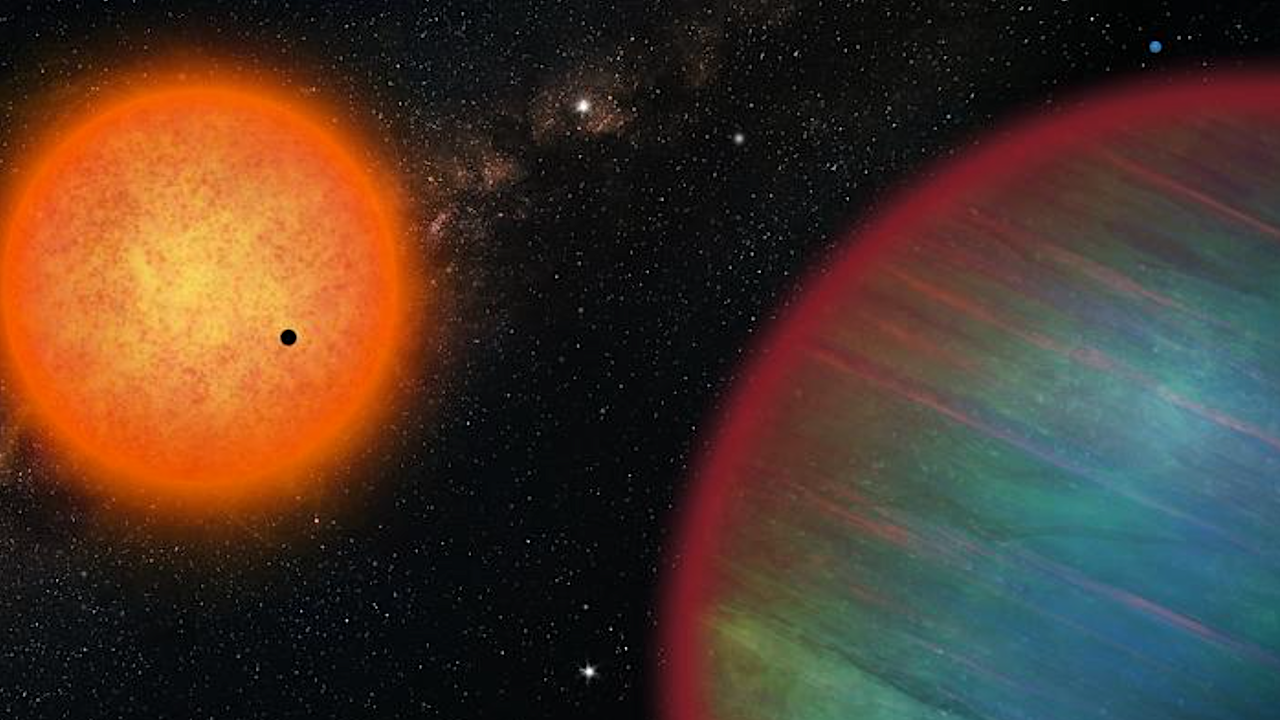
An artist’s impression of the two new planets discovered. An inner super-Earth, here seen transiting in front of the orange host-star and an icy giant planet on the periphery of the system. Credit Thibaut Roger – Université de Genève
The discovery of two new planets beyond our solar system by a team of astronomers from The University of Warwick and the University of Geneva (UNIGE), is challenging scientific understanding of how planetary systems form.
The existence of these two exoplanets – an inner super-Earth and an outer icy giant planet – within the WASP-132 system is overturning accepted paradigms of how ‘hot Jupiter’ planetary systems form and evolve.
Hot Jupiters are planets with masses similar to those of Jupiter, but which orbit closer to their star than Mercury orbits the Sun. There is not enough gas and dust for these giant planets to form where they are observed, so the accepted theory is that they originate far from their star and migrate inward as the planetary system evolves.
Until now, hot Jupiters were thought to orbit their star alone, as migration towards the star would eject other planets in the system. The research team’s recent observations of two extra planets in the WASP-132 system now calls into question this theory.
David Armstrong, Associate Professor of Physics, The University of Warwick said, “The detection of the inner super-Earth was exciting as it’s particularly rare to find planets interior to hot Jupiters. We carried out an intensive campaign with state-of-the-art instruments to characterise its mass, density and composition, revealing a planet with a density similar to that of the Earth”.
This planetary discovery adds a layer of complexity to the WASP-132 system as migration of a hot Jupiter towards its star through dynamical perturbation would destabilise the orbits of the other two planets. This suggests a more stable ‘cool’ migration path for the hot Jupiter in a proto-planetary disc that surrounds a young star and is the site of planet formation.
“The WASP-132 system is a remarkable laboratory for studying the formation and evolution of multi-planetary systems. The discovery of a hot Jupiter alongside an inner super-Earth and a distant giant calls into question our understanding of the formation and evolution of these systems. This is the first time we have observed such a configuration”, says François Bouchy, Associate Professor, Department of Astronomy, UNIGE Faculty of Science.
The hot Jupiter orbits its star in seven days and three hours; the super-Earth (a rocky planet six times the mass of the Earth) orbits the star in just 24 hours and 17 minutes; and the icy giant (five times the mass of Jupiter) orbits the host star in five years. The precise measurements of radius and mass have also made it possible to determine the density and internal composition of the planets. The super-Earth composition is dominated by metals and silicates, similar to that of Earth.
Observations of WASP-132 continue, with the ESA’s Gaia satellite measuring minute variations in the positions of stars since 2014, with a view to revealing their planetary companions and outer brown dwarfs.
The full paper is a collaboration between Warwick and the University of Geneva and can be read in Astronomy & Astrophysics: 2025, A&A, 693, A144 DOI: 10.1051/0004-6361/202348177 (open access)

Keith Cowing
Explorers Club Fellow, ex-NASA Space Station Payload manager/space biologist, Away Teams, Journalist, Lapsed climber, Synaesthete, Na’Vi-Jedi-Freman-Buddhist-mix, ASL, Devon Island and Everest Base Camp veteran, (he/him)
Bruce Dorminey
Senior Contributor
I cover aerospace, astronomy & hosted The Cosmic Controversy Podcast.
Jan 20, 2025

Illustration of a supernova explosion, created on July 19, 2015. (Illustration by Tobias ... [+]Future Publishing via Getty Images
Phosphorus, the vastly underappreciated 15th element on the periodic table, is essential to all life as we know it.
Phosphorus is the structural backbone of the phosphate nucleotides in DNA and RNA, Natalie Hinkel, a planetary astrophysicist at Louisiana State University in Baton Rouge, told me via email. But phosphorus is also the energy currency in nearly all metabolism, like adenosine triphosphate (ATP) which moves proteins and lipids in and out of cells, she said.
Because it’s so highly reactive, phosphorus is never found as a free element on Earth, but instead is always bound up in some kind of mineral or molecular compound.
Above all, it’s crucial for the formation of cell membranes, bones and teeth in people and animals, as well as microscopic ocean plankton. Trouble is, astrophysicists are still debating exactly how and where it forms within our own Milky Way Galaxy.
To date, less than 300 stars have been found to contain phosphorus in any quantity.
Phosphorus stars are predominantly found in the Milky Way’s inner galactic halo and thick disk, indicating that their distribution is not location-specific, Maren Brauner, a PhD student at Spain’s Instituto de Astrofísica de Canarias and the Universidad de La Laguna, told me via email. This suggests that the process responsible for their enrichment in phosphorus and other elements is likely independent of their position in the galaxy, she
Phosphorous is created by nuclear burning in stars at least ten times more massive than the sun that end their lives in a core collapse supernova explosion, Maria Lugaro, an astronomer at Hungary’s Konkoly Observatory in Budapest, told me via email. The star’s iron-rich core collapses because iron cannot generate energy and the external material is ejected into the interstellar medium from which new stars form, she said.
Our Sun Has An Abundance Of Phosphorus
The sun has a relatively high amount of phosphorus when compared to nearby stars, said Hinkel. On rocky planets that form around host stars with substantially less phosphorus, the strong shifting of phosphorus into planetary cores could rule out the potential for life on that planet’s surface, she said.
As a result, it’s important to have a better handle on the prevalence of phosphorous around other nearby solar type stars.
These stars are particularly intriguing because they are not expected to produce phosphorus themselves due to their low mass, said Brauner. This implies that we are searching for a progenitor or polluter that somehow produced the high amounts of phosphorus imprinted in these stars, she said.
Phosphorus is still very difficult to detect. That’s partly because its spectra in starlight cannot be seen in the optical wavelength, but only in the near-infrared or the ultraviolet.
Its abundance is relatively low, so to be seen, its signature requires observations at very high resolution, which are rare in this part of the light spectrum, said Brauner.
What’s most puzzling about the amount of phosphorus in our galaxy?
Models slightly underestimate the observed amounts of phosphorus, even in normal stars, said Brauner. These phosphorus-rich stars suggest the presence of an unknown source of phosphorus in the Milky Way or that the assumptions regarding the nucleosynthesis of phosphorus need to be revised, she said.
But fortunately, phosphorus will likely play a major role in the hunt for life beyond the solar system. As Hinkel and colleagues noted in a 2020 paper appearing The Astrophysical Journal Letters, if there are stars with practically insignificant amounts of phosphorus, then their planets are likely inhospitable for life; perhaps to the extent that we could rule out the possibility of life altogether on the planet’s surface.
The Bottom Line?
We don't currently have the technology to directly measure the interior or surface composition of a small, earth-sized planet outside our Solar system, said Hinkel. But stars and planets are formed at the same time and from the same materials, so we can measure the elemental abundances for the star and use that as a direct proxy for the planet’s composition, she said.

Bruce Dorminey
I'm an award-winning science journalist and author of "Distant Wanderers: the Search for Planets Beyond the Solar System." I primarily cover aerospace
No comments:
Post a Comment