The legislators said the Trump administration's move "calls into further question DOGE's competence to carry out its self-assigned task."

U.S. Sen. Edward Markey (D-Mass.) speaks while Democratic colleagues including Sens. Elizabeth Warren (Mass.), Jeff Merkley (Ore.), and Peter Welch (Vt.) stand by, during a press conference on Capitol Hill in Washington, D.C. on February 9, 2024.
(Photo: Chip Somodevilla/Getty Images)
Brett Wilkins
Feb 20, 2025
COMMON DREAMS
Decrying the Trump administration's firing of hundreds of workers at the agency in charge of nuclear weapons safety, a bicameral group of Democratic U.S. lawmakers on Thursday asked Energy Secretary Chris Wright to provide assurances that members of Elon Musk's Department of Government Efficiency cannot access classified systems or information.
"DOGE fired up to 350 staff members at the National Nuclear Security Administration. The NNSA is entrusted with safeguarding our nation's nuclear weapons, materials, and secrets," Rep. John Garamendi (Calif.) and Sens. Ed Markey (Mass.), Peter Welch (Vt.), Elizabeth Warren (Mass.), Jacky Rosen (Nev.), Cory Booker (N.J.), and Jeff Merkley (Ore.) wrote in a letter to Wright.
"Recklessly firing personnel without a strategic plan... is extraordinarily irresponsible and dangerous to U.S. national security."
"These terminations jeopardize the security of the U.S. nuclear stockpile, weaken our ability to detect and prevent threats to those weapons, and undermine our nonproliferation commitments," the letter asserts.
"Realizing the gravity of the mistake it had made, the Trump administration scrambled to rehire the fired employees," the Democrats noted. "Serious damage has been done. We urge you to immediately reassess these decisions, restore necessary expertise to the NNSA, and ensure that NNSA staffing decisions prioritize safety and security."
The letter continues:
The NNSA plays an essential role in maintaining the safety, security, and effectiveness of the U.S. nuclear arsenal and preventing the proliferation of weapons of mass destruction. According to press reports, these firings occurred because "the officials did not seem to know this agency oversees America's nuclear weapons." The reckless decision to eliminate 350 positions, without a clear national security justification, raises serious concerns about the Department of Energy's (DOE) commitment to this core mission. DOE has struggled to rehire some of these employees "because they didn't have their new contact information." This series of events calls into further question DOGE's competence to carry out its self-assigned task.
While the lawmakers "fully support efforts to reduce our reliance on nuclear weapons, responsibly reduce the nuclear stockpile, and curb unnecessary spending on nuclear defense programs that do not enhance our security," they argued in the letter that "recklessly firing personnel without a strategic plan, particularly those with expertise in nonproliferation, security, and arms control oversight, is extraordinarily irresponsible and dangerous to U.S. national security."
The legislators are asking Wright to explain the process behind the NNSA officials' firings, the DOE's strategy for ensuring effective staffing and oversight at the agency, which workers have been rehired, and what steps are being taken to prevent unauthorized access to classified systems by DOGE members.
"There is a right way to reduce the size and scope of our nuclear arsenal—one that enhances global security, properly safeguards our weapons, and reduces nuclear risks," the letter concludes. "These terminations do none of that."
Thursday's letter follows one sent to Wright last week by Markey and Rep. Don Beyer (D-Va.) seeking clarification about whether any DOGE members have access to classified information about the nation's nuclear arsenal.
It also comes as global experts warn about the risk of nuclear war. The Bulletin of the Atomic Scientists last month moved the Doomsday Clock "from 90 seconds to 89 seconds to midnight—the closest it has ever been to catastrophe."
Big Tech is driving a race for small modular reactors (SMRs) to meet the surging electricity demand of AI data centers.
Major tech firms like Amazon and Google are investing heavily in nuclear startups to accelerate SMR development.
Amazon backs X-Energy and Google signed a nuclear power purchase agreement with Kairos Power recently.
Soaring demand for electricity to power the AI boom is creating a global rush to develop small modular reactors to meet the growing energy needs of the Big Tech firms with electricity that’s both reliable and low-carbon.
Many start-ups in the United States and Europe are vying to become the first to not only design but also put into commercial operation the next generation of advanced nuclear reactors.
The small modular reactors (SMR) are believed to be simpler and cheaper to build and install. Because of their smaller size, it is possible to install SMRs on sites that are not suitable for bigger reactors. They are also significantly cheaper and faster to build than conventional reactors and can be constructed incrementally to meet the growing energy demand of a site.
Nuclear Renaissance
Despite promising advances in recent years, no one has actually launched such a micro reactor yet. However, the race has accelerated as technology giants are looking to power and cool their data centers, preferably with low-carbon energy. Renewables plus battery storage cannot meet all the growth in demand, so nuclear power has become the next best thing for Big Tech who are looking to boast AI advancements and climate commitments at the same time.
The problem is that conventional nuclear reactors and sites take years, often decades, to fund and build.
One mothballed reactor is being restarted in the U.S., thanks to a power purchase agreement that giant Microsoft has signed.
Last year, Constellation Energy, the biggest owner of U.S. nuclear power plants, signed its largest-ever power purchase agreement with Microsoft, which paves the way for the restart of the Three Mile Island Unit 1 nuclear plant.
The tech industry, however, cannot rely on PPAs from operational nuclear reactors to cover the energy needs of their new data centers. That’s why Big Tech is investing in the start-ups that are developing smaller-scale modular reactors.
Big Tech Backs Advanced Nuclear Technology
Amazon, for example, invested in a financing round of approximately $500 million, which X-Energy Reactor Company raised last year. X-Energy continues to raise financing to complete its reactor design and licensing as well as the first phase of its TRISO-X fuel fabrication facility in Oak Ridge, Tennessee. The Amazon funding will support future carbon-free projects that will use X-energy’s Xe-100 advanced SMRs.Related: Kazakh Oil Output Hits Record High
“We need smart solutions that can help us meet growing energy demands while also addressing climate change,” said Kevin Miller, Amazon’s Vice President of Global Data Centers.
Earlier this month, X-Energy said that the upsized $700 million financing round would help it advance its technology development. Amazon and X-energy are collaborating to bring more than 5 gigawatts (GW) of new power projects online across the U.S. by 2039.
Another tech giant, Google, signed in October 2024 the world’s first corporate agreement to purchase nuclear energy from multiple small modular reactors to be developed by Kairos Power.
“This agreement is part of our efforts to develop and commercialize a broad portfolio of advanced clean electricity technologies to power our global data centers and offices,” Michael Terrell, Senior Director, Energy and Climate, at Google said.
In the race to commercialize the first small modular reactors, developers globally have raised at least $1.5 billion in funding over the past year to advance their technologies and projects, according to estimates by the Financial Times.
Race Heats Up
The funding rounds, in many cases backed by the technology giants, add to government support for nuclear technologies in the U.S. and Europe.
While the Trump Administration is skeptical about supporting renewables such as solar and wind, and especially offshore wind, the Department of Energy strongly backs nuclear power development.
Secretary of Energy Chris Wright said earlier this month that DOE would “work diligently and creatively to enable the rapid deployment and export of next-generation nuclear technology.”
The funding and the support are lining up for developers of small advanced reactors. However start-ups will need much more financing to commercialize the various advanced nuclear technologies they are currently designing.
The hope is that at some point in the 2030s, the world will have its first operational small modular reactor. Developers and backers also hope that SMRs will not suffer the fate of many conventional nuclear projects of recent years, which have seen huge cost overruns and have been years behind schedule.
Nuclear Power To Help Meet The AI Power Demand
A lot of nuclear energy will be needed in the coming years as data center demand is soaring.
Nuclear power will be one of the most important new energy infrastructure that the world will need to meet the electricity demand from AI, Goldman Sachs said in a report last month.
“But nuclear can’t meet all of the increased data-center power needs. Natural gas, renewables, and battery technology will also have a role to play,” Goldman Sachs Research said.
The Wall Street bank forecasts 85-90 GW of new nuclear capacity would be needed to meet all of the data center power demand growth expected by 2030, relative to 2023. But well less than 10% of this capacity will be available globally by 2030.
That’s why natural gas will stay in the mix, especially in the U.S., while battery storage capacity is also expected to surge to back up solar and wind power in unfavorable weather conditions, according to Goldman Sachs.
By Tsvetana Paraskova for Oilprice.com
Efforts continue to eliminate small fires in Chernobyl shelter's roof
In an update on Thursday at 17:00 local time, the Chernobyl nuclear power plant operator said thermal imaging monitoring of the New Safe Confinement was continuing and parts of the exterior cut into "for the final elimination of smouldering areas".
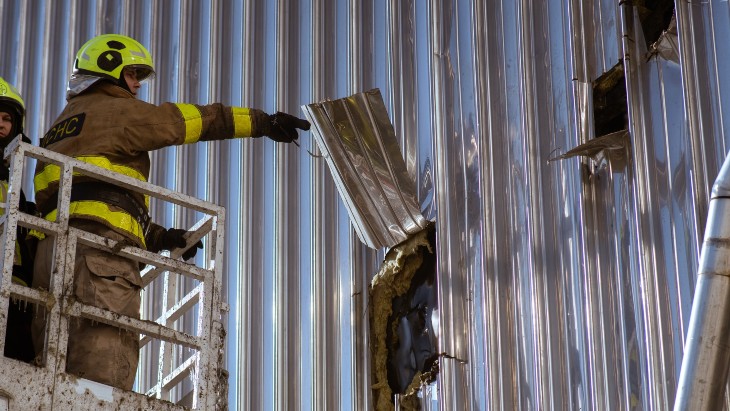
Workers from the State Emergency Service of Ukraine have been working at the site since the drone strike on Friday 14 February damaged the roof of the giant structure built to cover Chernobyl's unit 4.
The Chernobyl plant company (ChNPP) said that the external cladding of the arch-shaped New Safe Confinement (NSC) had a 15 square metre area of damage from the drone, with further damage in areas up to 200 square metres. It said there was also damage to the internal cladding filler and to some bolted connections in the structure.
It says that radiation levels remain within their normal levels at the site - the NSC was built to cover a wide area, including the original rapidly built shelter over the remnants of unit 4 following the accident in 1986.
In its update on Thursday, the International Atomic Energy Agency, which has experts based at Chernobyl, said: "Firefighters are continuing to put out small fires that keep smouldering and spreading on the roof of the New Safe Confinement." It added that agency staff's "measurements continue to show normal gamma radiation dose rate values near the NSC compared to those recorded by the IAEA since it established a continuous presence at the site just over two years ago".
What is the New Safe Confinement?
Chernobyl Nuclear Power Plant's unit 4 was destroyed in the April 1986 accident (you can read more about it in the World Nuclear Association's Chernobyl Accident information paper) with a shelter constructed in a matter of months to encase the damaged unit, which allowed the other units at the plant to continue operating. It still contains the molten core of the reactor and an estimated 200 tonnes of highly radioactive material.
However it was not designed for the very long-term, and so the New Safe Confinement - the largest moveable land-based structure ever built - was constructed to cover a much larger area including the original shelter. The New Safe Confinement has a span of 257 metres, a length of 162 metres, a height of 108 metres and a total weight of 36,000 tonnes and was designed for a lifetime of about 100 years. It was built nearby in two halves which were moved on specially constructed rail tracks to the current position, where it was completed in 2019.
It has two layers of internal and external cladding around the main steel structure - about 12 metres apart - with the IAEA confirming that both had been breached in the incident. The NSC was designed to allow for the eventual dismantling of the ageing makeshift shelter from 1986 and the management of radioactive waste. It is also designed to withstand temperatures ranging from -43°C to +45°C, a class-three tornado, and an earthquake with a magnitude of 6 on the Richter scale.
According to World Nuclear Association, the hermetically-sealed New Safe Confinement allows "engineers to remotely dismantle the 1986 structure that has shielded the remains of the reactor from the weather since the weeks after the accident. It will enable the eventual removal of the fuel-containing materials in the bottom of the reactor building and accommodate their characterisation, compaction, and packing for disposal. This task represents the most important step in eliminating nuclear hazard at the site - and the real start of dismantling".
The wider context
Chernobyl nuclear power plant lies about 130 kilometres north of Ukraine's capital Kyiv, and about 20 kilometres south of Belarus. A 30-kilometre exclusion zone remains around the plant, although some areas have been progressively resettled. Three other reactors at the site, which was built during Soviet times, continued to operate after the accident, with unit 3 the last one operating, until December 2000.
When Russia launched its invasion of Ukraine in February 2022 it rapidly took control of the Chernobyl plant. Its forces remained there until withdrawing on 31 March 2022 and control returned to Ukrainian personnel. The IAEA has had experts stationed at the site as the war has continued, seeking to help ensure the safety and security of the site.
IAEA teams are also in place at Ukraine's three operating nuclear power plants and the Zaporizhzhia nuclear power plant, which has been under the control of Russian forces since early March 2022.
Ukraine has blamed Russia for the drone strike, while Russia denied it was responsible and blamed Ukraine. The IAEA has not attributed blame to either side during the war, with Director General Grossi explaining in a press conference at the United Nations in April last year that this was particularly the case with drones, saying "we are not commentators. We are not political speculators or analysts, we are an international agency of inspectors. And in order to say something like that, we must have proof, indisputable evidence, that an attack, or remnants of ammunition or any other weapon, is coming from a certain place. And in this case it is simply impossible".
Grossi participates in collection of Fukushima water samples
During his latest trip to Japan, International Atomic Energy Agency Director General Rafael Mariano Grossi assisted in collecting seawater samples near the damaged Fukushima Daiichi nuclear power plant for analysis.
_81516.jpg)
At the Fukushima Daiichi site, contaminated water - in part used to cool melted nuclear fuel - is treated by the Advanced Liquid Processing System (ALPS), which removes most of the radioactive contamination, with the exception of tritium. This treated water is currently stored in tanks on site.
Japan announced in April 2021 it planned to discharge ALPS-treated water into the sea over a period of about 30 years. It started to discharge the water in August 2023 and has so far completed the release of ten batches, a total of 78,285 cubic metres of water.
The International Atomic Energy Agency (IAEA) has been monitoring the discharges of treated water and the collection of seawater samples since they began. In September last year, Japan and China reached an agreement that allows stakeholders, including China, to conduct independent sampling, monitoring and inter-laboratory comparisons at key stages of the discharge process.
On 19 February, Grossi joined scientists from the Third Institute of Oceanography in China, the Korean Institute for Nuclear Safety in South Korea and the Spiez Laboratory in Switzerland, along with IAEA experts, as they collected seawater samples near the Fukushima Daiichi plant.
"By welcoming countries to engage directly in sampling and analysis under the additional measures, Japan is increasing transparency, understanding, and trust, particularly in the region," Grossi said. "Through these efforts, third parties can independently verify that water discharge levels are, and will continue to be, in strict compliance and consistent with international safety standards."
The samples will be analysed by the IAEA laboratories in Monaco, by laboratories in Japan and in the participating laboratories from China, South Korea and Switzerland, each members of the IAEA's Analytical Laboratories for the Measurement of Environmental Radioactivity network.
"Additional measures focus on expanding international participation and transparency, allowing hands-on independent measurements of the concentration level of the water," Grossi said. "This work is conducted within agreed parameters set by the IAEA in its role as an independent, impartial and technical organisation."
The IAEA has confirmed that the tritium level in the ten batches of ALPS treated water already released was far below Japan's operational limit of 1500 Bq/litre. The IAEA says it will have a presence on site for as long as the treated water is released.
Grossi also visited the Interim Storage Facility (ISF) where removed soil arising from decontamination activities is stored and also observed a road embankment demonstration project for managed recycling, which is one of the measures to reduce the volume of removed soil towards its final disposal outside Fukushima Prefecture. The ISF was built to manage and store removed soil, waste arising from decontamination activities in Fukushima Prefecture, safely and in an integrated manner, until final disposal outside Fukushima Prefecture within 30 years from the start of transportation to the ISF.
The previous day, 18 February, Grossi visited Tokyo Electric Power Company's (Tepco's) Kashiwazaki-Kariwa nuclear power plant in Niigata Prefecture. During the visit, he saw safety equipment such as seawalls, emergency vehicles, and air-cooled gas turbine generators, as well as some of the security measures.
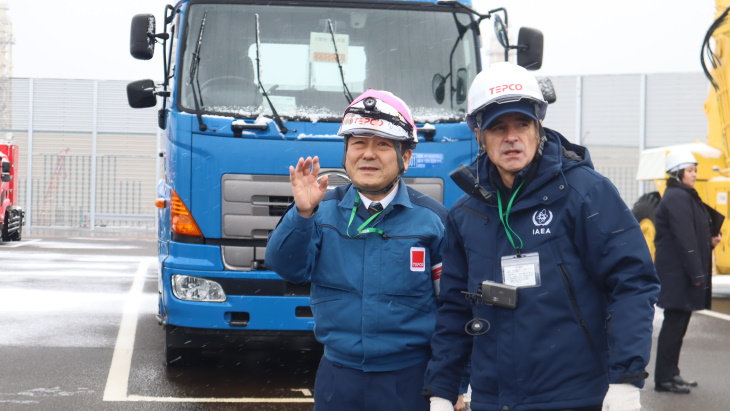
Grossi inspecting emergency vehicles at Kashiwazaki-Kariwa (Image: Tepco)
He said: "I have reviewed the management and monitoring system for security and access at the power plant, and I am very satisfied with the results. All measures have been taken over the past 15 years, and I am convinced that there is a certain basis for restarting the plant.
"The restart of this power plant is symbolic, and at the same time, it can be said that it will have a visible impact on Japan's energy environment."
In 2017, Tepco received permission from the Nuclear Regulation Authority (NRA) to restart units 6 and 7 at the plant. However, in early 2021, the company notified the NRA of malfunctions in intruder detection equipment on the Kashiwazaki-Kariwa site. In addition, it reported the unauthorised use of an ID card. In April 2021, the NRA issued an administrative order to Tepco prohibiting it from moving nuclear fuel at the plant until improvements in security measures there have been confirmed by additional inspections. This order was lifted in December 2023 after inspections confirmed that measures had been enhanced at the site.
Additional regulatory inspections will still be required before Kashiwazaki-Kariwa 7 - which has been offline since August 2011 - can resume operation. In addition, consent must also be sought from the local governor.
Milestone for Wyoming uranium operation
Uranium Energy Corp's Irigaray Central Processing Plant has produced its first dried and drummed uranium concentrates since the resumption of in-situ recovery operations at the company's Christensen Ranch project.
_21473.jpg)
The Irigaray plant, in Wyoming, is the central hub to 11 satellite in-situ recovery (ISR) projects across the Powder River Basin. Uranium Energy Corp (UEC) took ownership of the plant and the orebodies through its 2021 acquisition of Uranium One Americas Inc from Russian state nuclear corporation Rosatom.
In January 2024 the company's board of directors approved the restart of the Christensen Ranch ISR operation, with recovered uranium to be processed at Irigaray, and in September the Wyoming Department of Environmental Quality gave UEC the go-ahead to increase the plant's licensed production capacity from its current 2.5 million pounds U3O8 (96.2 tU) to 4.0 million pounds U3O8 per year. According to information from the US Energy Information Administration, Irigaray had last produced uranium in 2018.
UEC President and CEO Amir Adnani said the milestone had been reached on schedule, six months into the phased ramp-up of its operations in Wyoming (operations at Christensen Ranch started in August last year). "This marks the culmination of many years of planning and hard work from our entire team and is a testament to their expertise and dedication. UEC’s fully permitted ISR assets provide a cost-efficient foundation for sustainable growth, positioning UEC as a key player in the expanding nuclear energy sector," he said.
ISR - also known as in-situ leach, or ISL - recovers minerals by dissolving them from the orebody in the ground and pumping the resulting solution to the surface where the minerals can be recovered at a processing plant. UEC has two ISR hub and spoke platforms in South Texas and Wyoming, where a central processing plant forms the "hub" with several ISR uranium projects providing "spokes".
The uranium concentrates produced at Irigaray will be transported to the ConverDyn Conversion Facility in Metropolis, Illinois, UEC said.
European partnerships for fast reactor development
France's Hexana has formed a strategic partnership with Belgian engineering firm Tractebel to support the development of its sodium-cooled fast neutron reactor energy platform. Meanwhile, Swedish and French lead-cooled fast reactors developers Blykalla and Newcleo are to jointly research and develop materials for such reactors.
_13811.jpg)
Hexana aims to develop a small modular reactor (SMR) featuring a sodium-cooled fast neutron reactor, integrated with a high temperature storage device. A plant would comprise two of these reactors (400 MWt each) supplying a heat storage device. An adjoining conversion system will allow it to produce electricity on demand and in a flexible manner to compete with gas-fired power plants, but also to supply heat directly to nearby energy-intensive industries.
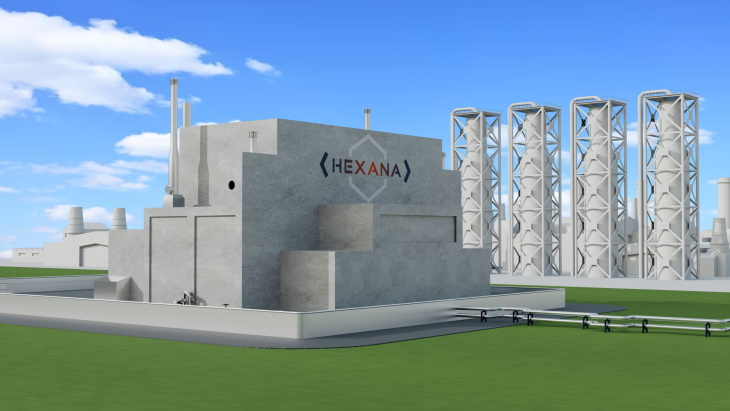
(Image: Hexana)
Tractebel will now define the conceptual design for the civil engineering and utilities of the nuclear island buildings and the special nuclear handling systems for the maintenance of large components. These studies will be incorporated into the Safety Option File that Hexana will submit to France's Nuclear Safety and Radiation Protection Authority for licensing.
"This initial contract constitutes an important step, laying the foundations for an expanded scope during the conceptual design phase," Hexana said.
Tractebel said: "We look forward to helping Hexana develop this groundbreaking technology that will contribute to shaping a sustainable economy."
Materials R&D collaboration
Blykalla - formerly called LeadCold - is a spin-off from the KTH Royal Institute of Technology in Stockholm, where lead-cooled reactor systems have been under development since 1996. The company - founded in 2013 as a joint stock company - is developing the SEALER (Swedish Advanced Lead Reactor) lead-cooled SMR.

(Image: Blykalla)
Newcleo is developing its Small Modular Lead-cooled Fast Reactor (SM-LFR) technology. According to Paris-headquartered Newcleo's delivery roadmap, the first non-nuclear pre-cursor prototype of its reactor is expected to be ready by 2026 in Italy, the first reactor operational in France by the end of 2031, while the final investment decision for the first commercial power plant is expected around 2029.
Blykalla and Newcleo have now signed an agreement for the joint research and development of materials for lead-cooled fast reactors (LFRs). The partnership entails the exchange of materials, results, and associated data to assist the respective R&D programmes of each party.
"By collaborating, Blykalla and Newcleo will have access to each other's research facilities and expert personnel, facilitating the exchange of materials, testing results, and data," the partners said. "This collaboration will enable both companies to enhance material solutions, ensuring the reliability and longevity of next-generation nuclear reactors."
They noted that this arrangement also serves the purpose of supporting the optimisation of supply chains in line with the goals of the EU SMR Alliance, facilitating cross-border knowledge exchange in the licensing process for each party's reactor technologies. Both companies are already collaborating in their respective working groups on topics of mutual interest.
_22172.jpg)
(Image: Newcleo)
"All SMR and AMR developers are working to ambitious timelines to bring our respective projects online and start generating the low-carbon electricity so crucial to delivering the energy transition," said Newcleo founder and CEO Stefano Buono. "This type of collaboration is designed to share knowledge which will help each party accelerate their development programmes, in service not only of our respective projects but for the new nuclear sector as a whole. When the need is urgent and time is short, collaboration is key, and I'm delighted that Newcleo and Blykalla can support each other in achieving our common goal."
Blykalla CEO Jacob Stedman added: "Both our companies recognise the urgency for developing sustainable energy to achieve decarbonisation, and LFR technology offers a pathway to do so. By combining our extensive expertise in corrosion-resistant materials with Newcleo's industrial capabilities, we are positioned to advance the commercialisation of lead-cooled reactor technology."
Site location application submitted for new Kozloduy unit
An application for a permit to determine the location of the planned unit 8 at the Kozloduy nuclear power plant has been submitted to Bulgaria's Nuclear Regulatory Agency.
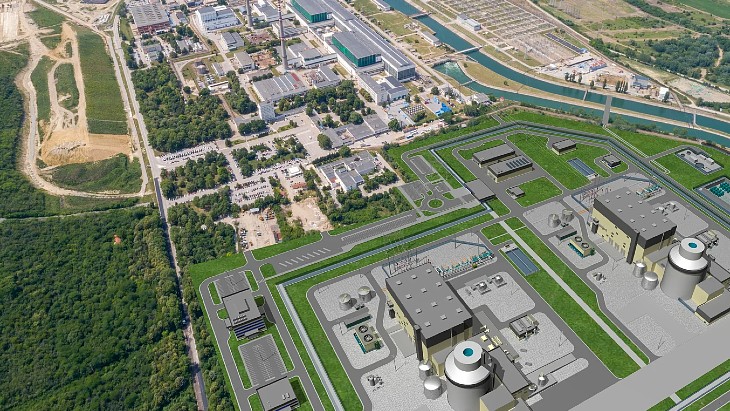
The project company, Kozloduy NPP–New Build EAD, is state-owned via its parent company Kozloduy NPP EAD, which operates the existing nuclear power plant. It said on Tuesday it had submitted its application for the permit.
"All required documents were attached to the application, which will be subject to review and assessment for compliance with the requirements of the ASUNE (Act on the Safe Use of Nuclear Energy) and its implementing regulations. The submitted application is the first step in the overall process of licensing a new nuclear facility, and the company has a number of activities ahead of it to secure it," the project company said.
The agency confirmed receipt of the application and added that it would "prepare a programme for a comprehensive review and assessment of the submitted application and the documents attached to it".
The submission came on the same day that Bulgaria's Energy Minister Zhecho Stankov held talks with European Union Energy Commissioner Dan Jorgensen in which the government's priorities were explained as working to "diversify energy sources, develop nuclear energy and green technologies, as well as increase energy efficiency".
Stankov also took part in a meeting of ministers from the EU members' Nuclear Alliance, where he said Bulgaria supported the effort "to have nuclear energy recognised by the European Commission as a low-carbon baseline option, which would enjoy the same advantages as other technologies that contribute to decarbonisation".
The background
Kozloduy units 1-4 were VVER-440 models which the European Commission classified as non-upgradeable and Bulgaria agreed to close them during negotiations to join the European Union in 2007. Units 5 and 6 feature VVER-1000 reactors that were connected to the grid in 1987 and 1991, respectively. Both units have been through refurbishment and life-extension programmes to enable extension of operation from 30 to 60 years. The country's two operable reactors generate about one-third of its electricity.
Westinghouse's AP1000 has been selected as the technology for two proposed new units and in November Hyundai Engineering & Construction, Westinghouse and Kozloduy NPP-New Build signed an engineering contract for the new capacity, with ministers saying that signing the contract meant that schedule and finance details would be firmed up within 12 months for the new capacity.
The aim is for the first new Westinghouse AP1000 unit - unit 7 at Kozloduy - to be operational in 2035 and the second one - unit 8 - to be operational in 2037. The 2300 MWe capacity of the two new units would exceed the 1760 MWe capacity of the closed first four units. The Bulgarian government has also said that further units will be needed to replace units 5 and 6 by 2050.
No comments:
Post a Comment