Belgian government seeks to reverse nuclear phase-out policy
Belgium's new coalition government has announced plans to continue operating two of the country's reactors for an additional 10 years beyond the 10-year extension already agreed - and said it aims to construct new reactors.
_19210.jpg)
Following the 2024 Belgian federal and regional elections, government formation talks began on 10 June. After months of negotiations, on 31 January the parties forming the Arizona coalition (Les Engagés, MR, Vooruit, CD&V and N-VA) reached an agreement on forming a government and its policies. Bart De Wever was sworn in as prime minister on 3 February.
"In terms of energy, the agreement provides for the development of a long-term strategy ensuring an affordable, safe and carbon-neutral energy mix composed of renewables, nuclear energy and other forms of carbon-neutral energy, which guarantees security of supply, affordability for citizens and businesses, and sustainability," Les Engagés said.
"It will also involve lifting the ban on the construction of new nuclear capacities in the very short term and taking all necessary measures to extend the life of units that meet safety standards. Specifically with regard to Doel 4 and Tihange 3, the agreement aims to extend their lifetime by at least 10 additional years in addition to the 10 years already agreed."
Belgium currently has five power reactors in operation: Doel units 1, 2 and 4 and Tihange units 1 and 3, with a combined generating capacity of about 4 GWe.
Under a plan announced by Belgium's coalition government in December 2021, Doel 3 was shut down in September 2022, while Tihange 2 shut down at the end of January 2023. The newer Doel 4 and Tihange 3 would be shut down by 2025. However, following the start of the Russia-Ukraine conflict in February 2022 the government and Electrabel began negotiating the feasibility and terms for the operation of the reactors for a further 10 years.
Belgium finalised plans in December 2023 to extend the lifetimes of Doel 4 and Tihange 3 by 10 years, providing capacity of 2 GWe from the reactors, which are 89.8% owned by Engie's Electrabel and 10.2% by EDF's subsidiary Luminus. The decision to extend their lifetimes was designed to boost the country's energy security while keeping carbon emissions as low as possible.
The European Commission opened an in-depth investigation in July last year into whether the support for the lifetime extension of the two reactors was in line with its rules on acceptable state aid.
Last week, Engie CEO Vincent Verbeke said it was "unthinkable" to keep the reactors in operation beyond the initial 10-year period.
In addition to maintaining the current 4 GWe of nuclear generating capacity, the government aims to construct a further 4 GWe of capacity, Energy Minister Mathieu Bihet was quoted as saying by financial daily Tijd.
"It's 4 gigawatts plus 4 gigawatts," Bihet said, without specifying locations and timing for the new reactors. He noted that building new small modular reactors (SMRs) alone could not provide sufficient capacity. "Which technology we will use, we still have to evaluate. But it is clear that it will not only be SMRs. Only small reactors will not suffice."
Industry stands ready to help
The agreement announced by the Arizona coalition partners was welcomed by the Belgian Nuclear Forum, saying it "puts the revival of nuclear power at the centre of its major concerns".
It added: "There is no time to lose on the energy issue. We must, without further delay and as a priority, adapt or even repeal the law on the nuclear phase-out, so that there is no longer any legal obstacle to the extension of existing reactors and the construction of new nuclear reactors."
The organisation said it was now "urgent" to set up a task force bringing together all stakeholders "who will enable this revival of nuclear power".
"It is important that we get to work immediately so that this relaunch of nuclear power in Belgium is carried out on time and within the budget planned to deal with the electricity shortage announced, in particular by [transmission system operator] Elia," it said. "We cannot afford to repeat the mistakes of the past by working in separate silos. We call on governments at different levels of power (federal, community, regional and communal) to work together, in close collaboration with the task force mentioned above."
The Forum said that if Engie maintains its stance against a further extension to the operation of the units "the government will have to switch to an alternative plan as soon as possible with the help of the task force. This means that it will be necessary to find another interested operator(s) to continue operating the existing nuclear reactors".
It added that Belgium must also develop a long-term vision that includes the development of new nuclear capacity. "This involves, in particular, a significant simplification of administrative procedures, at the level of granting licences and permits. It is also essential to ensure the necessary legal framework in order to reassure private investors, as well as potential new operators."
"All these elements are essential in the eyes of the nuclear sector to be able to build the new reactors within the announced deadlines and budgets. The nuclear sector is already putting itself at the service of the new government, to help it achieve our country's objectives in terms of energy transition and in terms of security of energy supply."
USA
Georgia Power plans additional nuclear capacity
Georgia Power has filed its 2025 Integrated Resource Plan, saying it has proposed power uprates at four units at its Hatch and Vogtle nuclear power plants and that additional nuclear power capacity will be needed over the long-term.
_79025.jpg)
The 2025 Integrated Resource Plan (IRP) - filed on 31 January with the Georgia Public Service Commission (PSC) - details the company's plan to meet the energy needs of customers and support the state's expected continued extraordinary growth. In the plan, the company has proposed necessary investments in its generation fleet and transmission system to help ensure Georgia Power can continue to provide its customers with "the reliability and resiliency they deserve and expect, as well as demand-side and customer programmes".
Over the next six years, Georgia Power projects about 8200 MW of electrical load growth – an increase of more than 2200 MWe in peak demand by the end of 2030 when compared to projections in the 2023 IRP Update, which was approved by the Georgia PSC in April 2024.
The company said it has "identified opportunities to upgrade several of its existing nuclear units to provide additional capacity. This additional baseload energy can aid in meeting growing capacity needs without the need for incremental transmission system investment".
Georgia Power - a subsidiary of Southern Company - is proposing extended power uprates (EPU) upgrades at units 1 and 2 of its Vogtle nuclear power plant and units 1 and 2 at its Hatch plant. Between 2028 and 2034, it plans to add a total of an additional 112 MWe of capacity at the four units: 27 MWe each at Vogtle 1 and 2; 30 MWe at Hatch 1 and 28 MWe at Hatch.
Extended power uprates involve significant modifications to major plant equipment to increase the thermal output of the reactor. "The EPU process includes an extensive analysis of plant systems and components to verify the capability and identify needed modifications to support the power upgrade at each facility," Georgia Power said.
For the Hatch units, the company is also planning to complete a necessary upgrade to boiler water reactors (BWRs) called the 'Maximum Extended Load Line Limit (MELLA+)' enhancement. This increases capacity by allowing for higher thermal power without increasing core flow to support EPU for BWRs. In addition to the upgrades described above, the company is considering an option for Vogtle units 1 and 2 that would transition the outage window to a 24-month cycle. This upgrade would extend unit runtimes and decrease the number of refueling outages across the fleet.
Georgia Power said it is working with the US Nuclear Regulatory Commission (NRC) as a part of the required review and licensing process. The NRC will review the licence amendment request that contains the detailed analysis to support the power upgrades and concur with approval to allow the upgrade of each facility.
Nuclear new build possible
"The company believes that additional nuclear power will be needed over the long-term to reliably and economically serve the energy needs of its customers," Georgia Power said. "Similarly, nuclear power provides a long-term pathway to reduce carbon emissions and mitigate the cost pressures that potential future environmental regulations could impose on the existing fossil-fired fleet and future new fossil resources."
The company said it develops "multiple views of future cost and performance of generating technologies, multiple views of future electricity consumption, and multiple views of the future price of fuels to support expansion planning for future years of need. Accordingly, B2025 scenarios select nuclear generation in six of nine scenarios over the 20-year planning horizon and as early as 2037."
However, it says: "Even with new nuclear generation's numerous benefits, undertaking the construction of new nuclear generation carries substantial risks for all stakeholders involved. Before proposing additional new nuclear generation, the company believes that solutions must be developed to adequately balance and mitigate risks to stakeholders."
It adds that "preserving viable new nuclear generation options for the benefit of customers is a priority" for the company. Accordingly, it continues to perform in-depth assessments of potential project sites, evaluate available and emerging technologies, and engage with stakeholders in developing improved methods to deploy new nuclear generation projects. "Over the long-term, with adequate additional risk mitigations and leveraging the experience gained with Vogtle units 3-4, the company believes customers would benefit from additional new nuclear in the future."
"At Georgia Power, our vision extends far beyond today - we plan for tomorrow, the next ten years and decades to come," said Kim Greene, chairman, president and CEO of Georgia Power. "As Georgia continues to grow, this state is well-positioned for the future thanks to proactive planning, policies, and processes like the Integrated Resource Plan. The 2025 IRP provides a comprehensive plan to support Georgia's continued economic growth and serve Georgians with clean, safe, reliable and affordable energy well into the future."
Grossi visits Ukrainian substation, stresses its nuclear safety role
Ensuring there are external power supplies for nuclear plants is a key safety issue, International Atomic Energy Agency Director General Rafael Mariano Grossi said as he visited a substation in Ukraine.
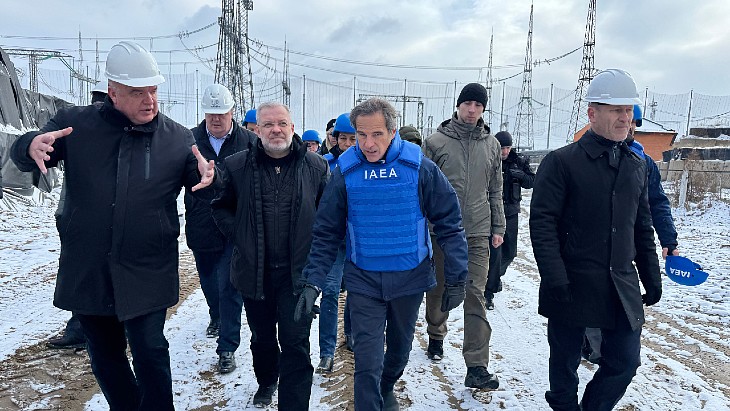
Grossi, on his 11th visit to the country since the war with Russia began, toured the Kyivska electricity substation.
Speaking to reporters alongside Ukraine's energy minister Herman Halushchenko and Energoatom's Petro Kotin, he said he wanted to assess the situation personally, saying the substation was very important to the functioning of the grid.
"Having external power supply is essential. A nuclear power plant produces power, electricity, but it also needs electricity in order to ensure its safety operation. When a power plant is not getting it - and it's through these kind of installations that it is getting it - it's like a blackout, so this compromises the safety of a power plant and it could eventually lead to an accident," he said.
Grossi added that it was clear that the "infrastructure has been degraded" but he had been "impressed with the work, the effort, being put in to ensure nuclear safety".
The IAEA has a team of experts stationed at the Zaporizhzhia nuclear power plant, which has been under Russian military control since early March 2022, and at Ukraine's three other operating nuclear power plants. He said they have also extended their inspections to nine substations that "are critical for the safe functioning of the nuclear power plants ... a nuclear accident can come with a direct attack on a nuclear power plant, but it can also be the result of disruption in the power grid".
Grossi is expected to have talks in Ukraine and in Russia during February as the IAEA continues its efforts to ensure the safety of nuclear power plants. The main focus remains on the six-unit Zaporizhzhia nuclear power plant, which is located by the frontline between Ukrainian and Russian troops.
The IAEA has set out basic rules to help ensure nuclear safety - namely that nuclear power plants should not be fired at, or fired from, and should not be used as a military base.
Leningrad unit 3 gets approval to operate to 2030
Russia's nuclear regulator Rostakhnadzor has issued a licence for Leningrad nuclear power plant's third unit to operate for a further five years, to 2030.
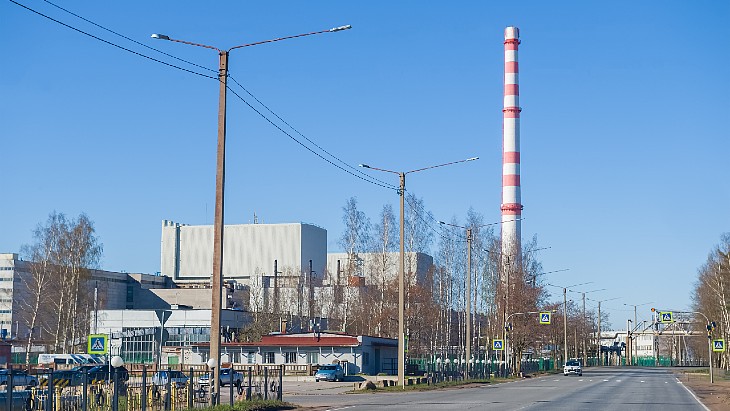
The RBMK-1000 unit, which entered commercial service in 1980, has generated more than 290 billion kWh of electricity, and had already had its original 30-year operating life extended by 15 years.
Rosenergoatom said that the licence was issued after a comprehensive analysis of the condition of equipment and documentation to ensure the unit's compliance with modern safety and reliability requirements, as well as the implementation of measures to modernise equipment where necessary.
It said that the assessment concluded that it would be safe to extend operation to 50 years.
Director of the Leningrad NPP Vladimir Pereguda, said: "Work to extend the lifetime of existing power units of Russian nuclear power plants has been carried out since 1998. Our units are no exception. An additional period of operation is not only about generating electricity. These are jobs, and the continuation of the production of unique isotope products, and systematic work on the construction and commissioning of two more new VVER-1200 units."
The operator is also in the process of seeking a licence for the operation of Leningrad unit 4 to 2030. Elsewhere in Russia, work is taking place to extend the lifetimes of Kursk 3 and 4, Smolensk 1, 2 and 3 and Kalinin unit 1.
The Leningrad plant is one of the largest in Russia, with an installed capacity of 4400 MWe, and provides more than 55% of the electricity demand of St Petersburg and the Leningrad region, or 30% of all the electricity in northwest Russia.
Leningrad units 1 and 2 - both 1000 MWe RBMK units - shut down in 2018 and 2020, respectively. As the first two of the plant's four RBMK-1000 units shut down, new VVER-1200 units started at the neighbouring Leningrad II plant. The 60-year service life of these fifth and sixth units (also known as Leningrad II-1 and Leningrad II-2) secures power supply until the 2080s. Units 7 and 8 - scheduled to be commissioned in 2030 and 2032 respectively - will replace units 3 and 4 as they are shut.
No comments:
Post a Comment