Trump Plans to Restore "Maximum Pressure" Sanctions on Iranian Oil
On Tuesday, the Trump administration announced plans to strengthen restrictions on Iranian oil exports, which have been sanctioned by the United States since President Trump's first term (with varying degrees of enforcement since). An official told Reuters that Trump will soon sign a memorandum instructing the Department of the Treasury to maximize pressure on Iran's energy exports.
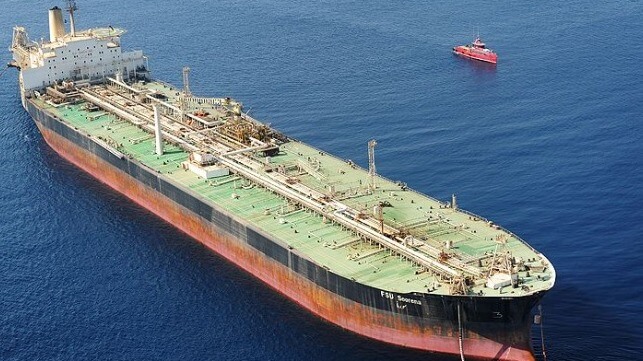
An estimated 150 tankers are engaged in the "dark fleet" trade of Iranian oil, which is almost exclusively sold to Chinese customers. Much of the cargo is transshipped between tankers at anchorages in Southeast Asia, putting a veneer on its origins before final-mile delivery. The trade is tracked in detail by commodity market intelligence firms and vetting agencies like TankerTrackers.com, along with the advocacy group United for a Nuclear Iran (UANI), and has been well documented in the media.
Despite occasional high-profile accidents, Iran has had little difficulty in evading U.S. sanctions and arranging tonnage for its export sales. In November it sold an estimated 1.8 million barrels per day - two percent of all global production, shipped almost exclusively to Chinese buyers. Its output is higher now than at any point since the imposition of "snap back" sanctions in 2018, and brought in more than $50 billion in sales last year.
Oil and gas account for an estimated 25 percent of Iran's government revenue, and the funding is essential to Iranian military ambitions. Iran is the primary backer of Yemen's Houthi rebel group, which repeatedly attacked foreign shipping in the Red Sea last year, and Tehran also provides critical support to Lebanese Islamist militia Hezbollah.
Trump's National Security Advisor Mike Walz has advocated encouraging Beijing to shut down Iranian oil imports, clamping down on the trade on the demand side. On the supply side, a U.S. official told Reuters on Tuesday that the Trump White House wants to reinstitute "maximum pressure" on Iran's oil trade to drive its energy exports down to zero.
The White House is focused on impeding Iran's nuclear program. After Israel's retaliatory airstrikes destroyed Iranian air defense and missile production sites last October, the Iranian government quickly ramped up its uranium enrichment program to make more 60-percent-purity uranium-235. This grade has few civilian uses, and is considered a jumping-off point for manufacturing weapons grade uranium-235. Iran denies any interest in procuring nuclear weapons, though it has invested heavily in nuclear-capable ballistic missiles.
Crude oil prices immediately jumped in response to news that the globally-traded oil supply could drop. WTI rallied by $2 to reverse an earlier slide, and Brent gained 0.6 percent. U.S. export-grade Louisiana Light - which could serve Chinese refiners as a substitute for sanctioned Iranian Light - rose by 1.4 percent.
RBOB wholesale gasoline futures (an index of investor expectations for future gas prices) rose about two percent following the news of tightened sanctions enforcement.

Oil Prices Spike As Markets Digest Trump’s
Iran Crackdown
Oil prices took a sharp turn today as traders weighed President Trump’s latest “maximum pressure” push against Iran. Brent crude rose to $76.34 per barrel (+0.50%), while WTI’s loss from early in the day shrunk to just a 0.31% dropoff at $72.93 per barrel.
While a quick glance at today’s oil prices could suggest traders aren’t convinced just yet that the Iran situation could have a profound effect, oil prices are indeed on the rise from their earlier downward trend—a rather quick turn, in fact.

Trump’s plan? Squeeze Iran’s oil exports down to zero—a bold move considering Iran still ships as much as 1.3 million barrels per day, mostly to China. The White House’s playbook includes fresh sanctions, tighter enforcement, and rolling back existing waivers. Translation: If the administration makes good on these threats, global supply could tighten overnight.
The last time Trump went all-in on Iranian sanctions, oil prices spiked north of $80. The market remembers. This time, with Middle East tensions already simmering and OPEC+ struggling to maintain discipline, the upside risk is real.
Of course, oil traders are a cynical bunch. They’ve seen this movie before. Crude flows tend to find a way—whether through shady ship-to-ship transfers or creative bookkeeping in Beijing. But if Washington actually gets aggressive with enforcement (hello, secondary sanctions), even China’s appetite for cheap Iranian crude might take a hit. That’s when Brent could break out.
For now, the market is playing it cool. But don’t be surprised if crude traders wake up tomorrow and suddenly decide that cutting off a key OPEC producer is, in fact, a big deal.
Crude prices were trading down prior to the announcement after China responded to US tariffs on China. WTI was down nearly 3% earlier in the day, with Brent down almost 2%.
By Julianne Geiger for Oilprice.com
No comments:
Post a Comment