The loophole has remained open for decades despite widespread agreement among regulators and advocates about its harm.
By Jesse Coburn ,
February 16, 2025
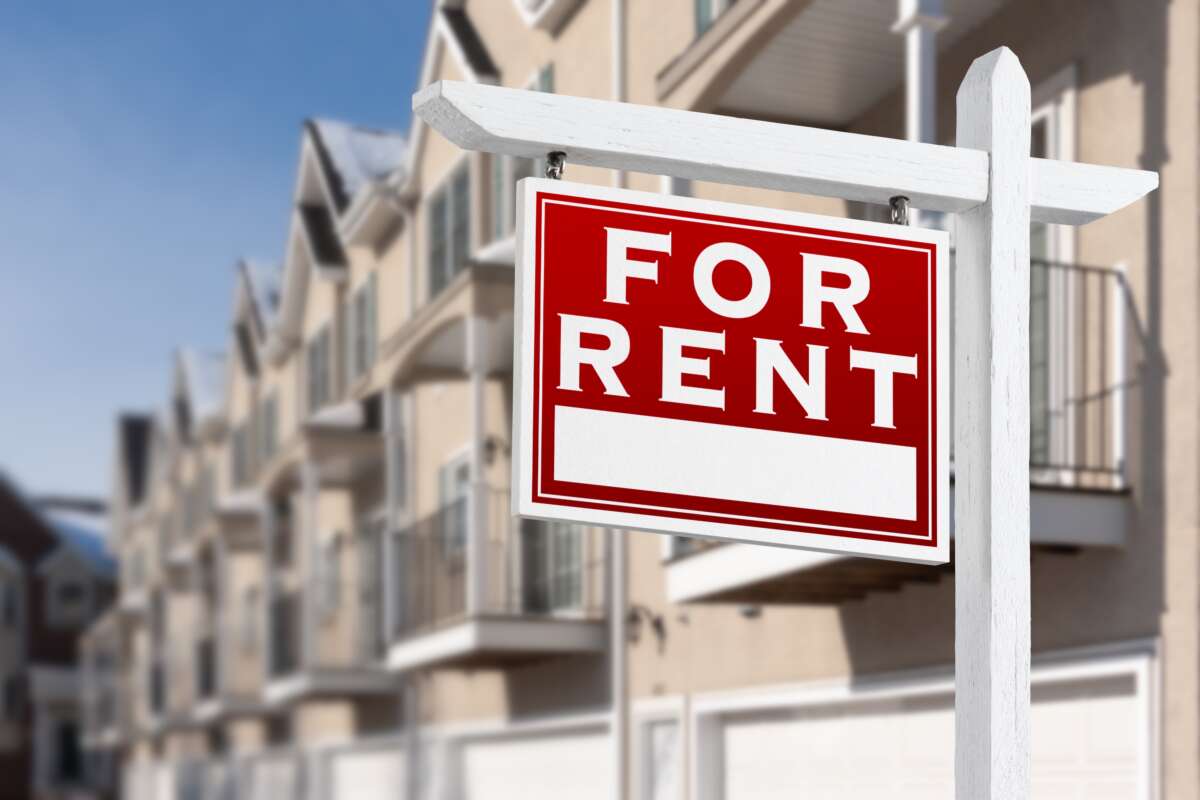
“For Rent” sign in front of a row of apartments.
iStock / Getty Images Plus
This story was originally published by ProPublica, a Pulitzer Prize-winning investigative newsroom.
Four and a half years ago, a newly formed corporate entity purchased a low-income housing complex with 264 apartments in Phoenix. The property had received more than $4 million in federal tax credits and, in exchange, was supposed to remain affordable for decades.
The company then used a legal loophole that stripped the affordability protections from the apartments. The maneuver appears to have been lucrative for the company, which bought the property for under $20 million and flipped it two years later for $63 million. Today, advertised rents there have gone up by around 50%.
Similar stories have been playing out across the country for years, as developers and real estate investors take advantage of an obscure section of the tax code known as the “qualified contract” provision. It allows owners of low-income rental properties that have received generous tax credits to raise rents far sooner than the law typically requires.
Four and a half years ago, a newly formed corporate entity purchased a low-income housing complex with 264 apartments in Phoenix. The property had received more than $4 million in federal tax credits and, in exchange, was supposed to remain affordable for decades.
The company then used a legal loophole that stripped the affordability protections from the apartments. The maneuver appears to have been lucrative for the company, which bought the property for under $20 million and flipped it two years later for $63 million. Today, advertised rents there have gone up by around 50%.
Similar stories have been playing out across the country for years, as developers and real estate investors take advantage of an obscure section of the tax code known as the “qualified contract” provision. It allows owners of low-income rental properties that have received generous tax credits to raise rents far sooner than the law typically requires.
Some 115,000 apartments in the United States have lost rent restrictions as a result, according to one estimate. Experts say these conversions are exacerbating the nation’s shortage of affordable housing, which has intensified in recent years. One report recently concluded that the country has nearly 5 million fewer housing units than it needs. The problem is most acute for those with low incomes.
The loophole has remained open for decades despite widespread agreement among regulators and advocates about its harm. Congressional efforts to repeal the provision have failed — most recently in 2023 — though state reforms have trimmed its effects. President Donald Trump has pledged to lower housing costs, but some advocates for reform are skeptical that his administration or a Republican-controlled Congress will strike a statute that can be lucrative to the real estate industry. (The White House did not respond to a request for comment.)
Related Story
Priced Out and Fed Up, Tenants Demand a National Renters Bill of Rights
As affordable housing dwindles, renters are calling for federal protections against price-gouging corporate landlords. By Mike Ludwig , Truthout November 18, 2023
“We have an affordable housing crisis just about everywhere in the country,” said Robert Rozen, a former Senate aide who helped draft the provision and now calls for its repeal. “We can’t afford to lose more affordable units, particularly as a result of a loophole in the law.”
The statute is part of the law defining the Low-Income Housing Tax Credit, which has become the primary catalyst for new affordable rental housing in the country. The program offers developers a tax subsidy worth potentially millions of dollars in exchange for keeping units affordable and renting them only to poor and working-class tenants. Typically that’s households making below 60% of the area median income. For a family of three to qualify in Phoenix last year, it would’ve had to make $55,560 or less.
Rent and income restrictions are supposed to last at least 30 years. But, after just 14 years, property owners may ask their states to find buyers. This opt-out clause was meant to offer wary investors an early exit from the program while retaining the affordability protections on the properties. But it included a critical unintended flaw: States can only sell at prices set by a formula that almost always overvalues the properties. As a result, buyers are rarely found. If states can’t find buyers within a year, owners are free to raise rents on vacant units and, a few years later, on existing tenants as well.
“It was obviously a mistake to include this in the law,” said Rozen, now an attorney specializing in affordable housing. “We didn’t know what we were doing when we constructed the buy-out formula.”
The beneficiaries of this maneuver are often shielded from public view. The Arizona property, previously called Sombra Apartments, was flipped by a Delaware limited liability company that incorporated under the name Sombra Apartments LLC shortly before the purchase and has a small online footprint. Through a public records request, ProPublica received the application that triggered the loss of affordability protections, which shows the LLC was controlled by a real estate investment firm in Scottsdale, Arizona, called ReNue Properties. ReNue’s website says the company specializes in “the acquisition and rejuvenation of underperforming multifamily properties” and has generated an average 81% return. Michael Christiansen, whose LinkedIn profile lists him as ReNue’s CEO at the time of the transactions, did not respond to requests for comment. (More than 5,700 low-income units in the state have lost affordability protections through the same opt-out method, according to a 2023 Arizona Republic report.)
Some companies exploiting the loophole appear to have done so with the indirect assistance of Fannie Mae and Freddie Mac. The government-sponsored enterprises support the nation’s housing sector, typically by buying mortgages to inject cash into the mortgage market. Property records show that the enterprises were involved in loans to owners of low-income housing who then stripped the properties of affordability protections or are seeking to do so. The enterprises’ involvement appears at odds with their declared support for affordable housing. Spokespeople for Fannie and Freddie did not respond to requests for comment.
Two industry insiders defended the qualified contract process as a way to fight the shortage of middle-income housing. That’s the position of Charlie Moline, CEO of Moline Investment Management, who said he has used the mechanism to remove affordability protections from around 20 multifamily properties across the Midwest.
Typically, low-income housing tax credit properties are too old and worn to be converted into high-end market-rate units, he said. But, freed of the income and rent limits, the properties can become appealing to middle-income renters after some basic renovations. “No one’s displaced by what we’re doing,” said Moline, who contends that he keeps rent increases moderate. “Our goal is to expand affordable housing to the missing middle.”
That goal would be of little benefit to Lashunda Williams, a resident of a low-income apartment complex in Omaha, Nebraska, that Moline purchased last year and is taking through the opt-out process. Williams, 33, said she makes $17 an hour as a custodian at an Amazon warehouse and pays $899 for a one-bedroom apartment. “I can barely keep up with my rent half the time,” she said. If it increased, “I would have to move.”
Moline’s argument was similarly unpersuasive to Rozen, the former Senate aide. “The bottom line is the owner is increasing his rental income and tenants who the program was intended to serve are losing their affordable rents,” Rozen said. “And the federal government is being taken advantage of.”
Affordable housing proponents have long called for repealing the qualified contract provision. But congressional efforts to do so have fizzled, in part due to lobbying from developers and private equity firms with interests in low-income housing, according to a former congressional staffer involved in the repeal effort.
Advocates have had more success pushing for state-level reforms. A majority of states now incentivize or require applicants for low-income housing tax credits to waive their opt-out rights, according to Moha Thakur of the National Housing Trust. The Department of Housing and Urban Development, the Federal Housing Finance Agency and the Department of Agriculture’s Rural Housing Service have also recently proposed or enacted policies to combat the problem. That includes a 2023 FHFA requirement that Fannie Mae and Freddie Mac no longer invest in low-income housing eligible for early opt-outs. However, Fannie and Freddie can still back loans on such properties, which is more commonly how they are involved, according to Rozen. (Freddie has said it is studying the issue.) And given the Trump administration’s mass-scale attempts to demolish regulations, particularly those adopted under the Biden administration, it’s unclear whether the new policy initiatives will survive.
The state-level changes have had an impact, bringing the number of apartments lost annually through the opt-out from around 10,000 a year to between 6,000 and 7,000. Without congressional action, however, the loophole remains on the books and a threat to poor tenants. “That loophole shouldn’t exist,” said Joy Noll, a tenant of the Arizona property, who lives on modest housing and disability subsidies. If rents rise further, Noll fears she will have to move: “It made it impossible for those of us who are low income to stay.”
This piece was reprinted by Truthout with permission or license. It may not be reproduced in any form without permission or license from the source.
We need your help to become less dependent on traffic from Facebook and X. Follow us on Bluesky today!
Jesse Coburn
Jesse Coburn is a reporter at ProPublica. He joined the newsroom in 2024 after three years as an investigative reporter at Streetsblog NYC. His series there on the black market for temporary license plates led to enacted or proposed laws in three states as well as civil penalties and criminal investigations. Previously, Coburn was a reporter at Newsday, where his reporting on wrongdoing in Long Island local governments spurred investigations and reforms. Coburn’s reporting has received a George Polk Award, an IRE Award, a Sidney Award, a Deadline Club Award and other distinctions. He was also a finalist for the Goldsmith Prize for Investigative Reporting.
As affordable housing dwindles, renters are calling for federal protections against price-gouging corporate landlords. By Mike Ludwig , Truthout November 18, 2023
“We have an affordable housing crisis just about everywhere in the country,” said Robert Rozen, a former Senate aide who helped draft the provision and now calls for its repeal. “We can’t afford to lose more affordable units, particularly as a result of a loophole in the law.”
The statute is part of the law defining the Low-Income Housing Tax Credit, which has become the primary catalyst for new affordable rental housing in the country. The program offers developers a tax subsidy worth potentially millions of dollars in exchange for keeping units affordable and renting them only to poor and working-class tenants. Typically that’s households making below 60% of the area median income. For a family of three to qualify in Phoenix last year, it would’ve had to make $55,560 or less.
Rent and income restrictions are supposed to last at least 30 years. But, after just 14 years, property owners may ask their states to find buyers. This opt-out clause was meant to offer wary investors an early exit from the program while retaining the affordability protections on the properties. But it included a critical unintended flaw: States can only sell at prices set by a formula that almost always overvalues the properties. As a result, buyers are rarely found. If states can’t find buyers within a year, owners are free to raise rents on vacant units and, a few years later, on existing tenants as well.
“It was obviously a mistake to include this in the law,” said Rozen, now an attorney specializing in affordable housing. “We didn’t know what we were doing when we constructed the buy-out formula.”
The beneficiaries of this maneuver are often shielded from public view. The Arizona property, previously called Sombra Apartments, was flipped by a Delaware limited liability company that incorporated under the name Sombra Apartments LLC shortly before the purchase and has a small online footprint. Through a public records request, ProPublica received the application that triggered the loss of affordability protections, which shows the LLC was controlled by a real estate investment firm in Scottsdale, Arizona, called ReNue Properties. ReNue’s website says the company specializes in “the acquisition and rejuvenation of underperforming multifamily properties” and has generated an average 81% return. Michael Christiansen, whose LinkedIn profile lists him as ReNue’s CEO at the time of the transactions, did not respond to requests for comment. (More than 5,700 low-income units in the state have lost affordability protections through the same opt-out method, according to a 2023 Arizona Republic report.)
Some companies exploiting the loophole appear to have done so with the indirect assistance of Fannie Mae and Freddie Mac. The government-sponsored enterprises support the nation’s housing sector, typically by buying mortgages to inject cash into the mortgage market. Property records show that the enterprises were involved in loans to owners of low-income housing who then stripped the properties of affordability protections or are seeking to do so. The enterprises’ involvement appears at odds with their declared support for affordable housing. Spokespeople for Fannie and Freddie did not respond to requests for comment.
Two industry insiders defended the qualified contract process as a way to fight the shortage of middle-income housing. That’s the position of Charlie Moline, CEO of Moline Investment Management, who said he has used the mechanism to remove affordability protections from around 20 multifamily properties across the Midwest.
Typically, low-income housing tax credit properties are too old and worn to be converted into high-end market-rate units, he said. But, freed of the income and rent limits, the properties can become appealing to middle-income renters after some basic renovations. “No one’s displaced by what we’re doing,” said Moline, who contends that he keeps rent increases moderate. “Our goal is to expand affordable housing to the missing middle.”
That goal would be of little benefit to Lashunda Williams, a resident of a low-income apartment complex in Omaha, Nebraska, that Moline purchased last year and is taking through the opt-out process. Williams, 33, said she makes $17 an hour as a custodian at an Amazon warehouse and pays $899 for a one-bedroom apartment. “I can barely keep up with my rent half the time,” she said. If it increased, “I would have to move.”
Moline’s argument was similarly unpersuasive to Rozen, the former Senate aide. “The bottom line is the owner is increasing his rental income and tenants who the program was intended to serve are losing their affordable rents,” Rozen said. “And the federal government is being taken advantage of.”
Affordable housing proponents have long called for repealing the qualified contract provision. But congressional efforts to do so have fizzled, in part due to lobbying from developers and private equity firms with interests in low-income housing, according to a former congressional staffer involved in the repeal effort.
Advocates have had more success pushing for state-level reforms. A majority of states now incentivize or require applicants for low-income housing tax credits to waive their opt-out rights, according to Moha Thakur of the National Housing Trust. The Department of Housing and Urban Development, the Federal Housing Finance Agency and the Department of Agriculture’s Rural Housing Service have also recently proposed or enacted policies to combat the problem. That includes a 2023 FHFA requirement that Fannie Mae and Freddie Mac no longer invest in low-income housing eligible for early opt-outs. However, Fannie and Freddie can still back loans on such properties, which is more commonly how they are involved, according to Rozen. (Freddie has said it is studying the issue.) And given the Trump administration’s mass-scale attempts to demolish regulations, particularly those adopted under the Biden administration, it’s unclear whether the new policy initiatives will survive.
The state-level changes have had an impact, bringing the number of apartments lost annually through the opt-out from around 10,000 a year to between 6,000 and 7,000. Without congressional action, however, the loophole remains on the books and a threat to poor tenants. “That loophole shouldn’t exist,” said Joy Noll, a tenant of the Arizona property, who lives on modest housing and disability subsidies. If rents rise further, Noll fears she will have to move: “It made it impossible for those of us who are low income to stay.”
This piece was reprinted by Truthout with permission or license. It may not be reproduced in any form without permission or license from the source.
We need your help to become less dependent on traffic from Facebook and X. Follow us on Bluesky today!
Jesse Coburn
Jesse Coburn is a reporter at ProPublica. He joined the newsroom in 2024 after three years as an investigative reporter at Streetsblog NYC. His series there on the black market for temporary license plates led to enacted or proposed laws in three states as well as civil penalties and criminal investigations. Previously, Coburn was a reporter at Newsday, where his reporting on wrongdoing in Long Island local governments spurred investigations and reforms. Coburn’s reporting has received a George Polk Award, an IRE Award, a Sidney Award, a Deadline Club Award and other distinctions. He was also a finalist for the Goldsmith Prize for Investigative Reporting.
Group Says Some Airbnb Hosts Illegally Spiked Rental Prices Amid LA Fires
Many wildfire evacuees looked to short-term rentals as a stop-gap measure while they looked for new housing.
By Robin Urevich ,
PublishedFebruary 15, 2025

According to a new data analysis, in January, some Airbnb hosts more than tripled nightly rates as evacuees from the Eaton and Palisades fires scrambled to find temporary housing.
Photo Illustration by Mateusz Slodkowski / SOPA Images / LightRocket via Getty Images
In January, some Airbnb hosts more than tripled nightly rates as evacuees from the Eaton and Palisades fires scrambled to find temporary housing, according to a data analysis run by Better Neighbors LA, a coalition of housing activists and labor groups that monitor short-term rental enforcement. (One of those groups, the union Unite Here Local 11, is a financial supporter of Capital & Main.) The organization says it has documented more than 3,200 cases of illegal price gouging in L.A. County’s short-term rental market.
On Jan. 7, after California Gov. Gavin Newsom declared a state of emergency in Los Angeles County, rent hikes of more than 10% were prohibited by the state’s price gouging law. Since then, California Attorney General Rob Bonta announced criminal charges against two real estate agents accused of attempting to raise rents beyond the legal limits.
On Feb. 4, L.A. City Attorney Hydee Feldstein-Soto announced she has filed suit against Blueground US, Inc. for price gouging. The company offers fully-furnished rentals on flexible terms, usually for less than a year. Feldstein Soto’s complaint says Blueground, which also lists homes on Zillow and Airbnb, raised some rents more than 50% after the fires. It is the first price gouging case against a company in the mid-term rental market to arise from the recent fires.
Now, in a letter to the Los Angeles City Council, Better Neighbors LA is also calling for legal action against price gougers in the short-term rental markets, including those overseen by companies such as Airbnb, Vrbo and Booking.com.
“It’s classic disaster profiteering, and it’s morally wrong,” said Noah Suarez-Sikes, an organizer with Better Neighbors LA.
In January, some Airbnb hosts more than tripled nightly rates as evacuees from the Eaton and Palisades fires scrambled to find temporary housing, according to a data analysis run by Better Neighbors LA, a coalition of housing activists and labor groups that monitor short-term rental enforcement. (One of those groups, the union Unite Here Local 11, is a financial supporter of Capital & Main.) The organization says it has documented more than 3,200 cases of illegal price gouging in L.A. County’s short-term rental market.
On Jan. 7, after California Gov. Gavin Newsom declared a state of emergency in Los Angeles County, rent hikes of more than 10% were prohibited by the state’s price gouging law. Since then, California Attorney General Rob Bonta announced criminal charges against two real estate agents accused of attempting to raise rents beyond the legal limits.
On Feb. 4, L.A. City Attorney Hydee Feldstein-Soto announced she has filed suit against Blueground US, Inc. for price gouging. The company offers fully-furnished rentals on flexible terms, usually for less than a year. Feldstein Soto’s complaint says Blueground, which also lists homes on Zillow and Airbnb, raised some rents more than 50% after the fires. It is the first price gouging case against a company in the mid-term rental market to arise from the recent fires.
Now, in a letter to the Los Angeles City Council, Better Neighbors LA is also calling for legal action against price gougers in the short-term rental markets, including those overseen by companies such as Airbnb, Vrbo and Booking.com.
“It’s classic disaster profiteering, and it’s morally wrong,” said Noah Suarez-Sikes, an organizer with Better Neighbors LA.
An Airbnb spokesperson said in an email that the company’s analysis of Better Neighbors’ report shows it is inaccurate. However, Airbnb did not respond to Capital & Main’s request that it provide pricing data to refute the inaccuracies.
Better Neighbors obtained its data from Inside Airbnb, an activist group whose mission is “to provide data that quantifies the impact of short-term rentals on housing and residential communities.” Inside Airbnb compiles information that is publicly available on the Airbnb website, then verifies and analyzes it.
Airbnb hosts price their own properties, but Airbnb offers them “Smart Pricing,” an online tool that automatically suggests rates based on demand. However, the company says since the emergency declaration such demand pricing is not allowed.
The Airbnb spokesperson claimed that the company is working to help hosts comply with the law.
“We are actively sending communications to hosts to remind them of the rules, and those who attempt to raise prices by more than 10% from their pre-emergency pricing structure receive an error message. Where necessary, Airbnb has also rolled back listing prices to pre-emergency pricing to help our hosts stay compliant.”
However, a host who goes by the name Andy on Airbnb told Capital & Main that he set rates on the platform without any issues. Andy, who is designated an Airbnb “Superhost,” lists five Pasadena properties on the platform. Better Neighbors LA data reviewed by Capital & Main found that one of them, an “entire guest suite” with three bedrooms was on offer for $100 per night on Jan. 4. By Jan. 17, the nightly rent was $149, 49% higher than the pre-fire price. Andy said he relied on Airbnb to set rates.
“I always [use] smart price from Airbnb,” he wrote in an Airbnb message to Capital & Main.
In letters to L.A.’s City Council and the Los Angeles County Board of Supervisors, Better Neighbors LA said it compared pre- and post-fire Airbnb rates. It reported that in the city of L.A., hosts raised rates by more than the 10% legal maximum on more than 1,450 listings after the blazes erupted, while more than 1,750 listings spiked in unincorporated Los Angeles County and surrounding cities.
Asked to comment on Better Neighbors’ request to crack down on price gouging in the short-term rental market, City Councilmember Hugo Soto-Martinez said in a statement that “price-gouging in the middle of an emergency isn’t just immoral — it’s illegal.”
As fires scorched L.A., many burned-out Angelenos looked to short-term rentals as a stop-gap measure while they looked for new housing.
Soto-Martinez said he’s “committed to holding bad actors accountable. If these platforms won’t step up to stop the abuse, then the city must.”
Better Neighbors flagged a two-story condo on a commercial strip near Universal Studios that it said rented for $129 per night on Jan. 4, then rose 30% to $169 by Jan. 17. Capital & Main checked prices and found they were up again to $369 for the night of Feb. 5, according to Airbnb. Airbnb appears not to have acted to stop the price fluctuations.
But Thomas Bekker, who manages the property, said the price increase “has nothing to do with the fires,” arguing that the increases don’t amount to price gouging. “We gave a lot of discounts,” during the disaster, he said.
Instead, Bekker, a co-owner of Apollo Property Management, said that, similar to hotels and airlines, short-term rentals have historically set prices based on demand. He added that Airbnb would not allow significant price increases of a property’s “base rate,” which is not visible to the public. He claimed that short-term rental gouging “would be crushed in the algorithms,” or that overpriced listings would be less visible in search results.
The Better Neighbors’ reports of Airbnb price gouging come as the company has positioned itself as a major player in wildfire relief efforts through Airbnb.org, a charity it founded. Although Airbnb.org has been publicly criticized for failing to deliver promised aid to some, its website says that it has offered free emergency housing to 32,000 evacuees and first responders through its partnership with the nonprofit 211 LA.
Capital & Main requested comment from the company on specific listings such as Andy’s and others whose rates, according to Better Neighbors LA data, rose precipitously from pre-fire levels, but the company has not responded.
Better Neighbors LA’s request to the City Council to rein in alleged price gouging has been made at a time when the city has struggled to police an already unruly short-term rental market. Last December, the L.A. Housing Department estimated that about 60% of the city’s short-term rentals in multiunit buildings were, for a variety of reasons, illegal, according to a memo sent by the Housing Department’s then-interim general manager, Tricia Keane, to the City Council.
Robin Urevich is a journalist and radio reporter whose work has appeared on NPR, Marketplace, the San Francisco Chronicle and the Las Vegas Sun.
Better Neighbors obtained its data from Inside Airbnb, an activist group whose mission is “to provide data that quantifies the impact of short-term rentals on housing and residential communities.” Inside Airbnb compiles information that is publicly available on the Airbnb website, then verifies and analyzes it.
Airbnb hosts price their own properties, but Airbnb offers them “Smart Pricing,” an online tool that automatically suggests rates based on demand. However, the company says since the emergency declaration such demand pricing is not allowed.
The Airbnb spokesperson claimed that the company is working to help hosts comply with the law.
“We are actively sending communications to hosts to remind them of the rules, and those who attempt to raise prices by more than 10% from their pre-emergency pricing structure receive an error message. Where necessary, Airbnb has also rolled back listing prices to pre-emergency pricing to help our hosts stay compliant.”
However, a host who goes by the name Andy on Airbnb told Capital & Main that he set rates on the platform without any issues. Andy, who is designated an Airbnb “Superhost,” lists five Pasadena properties on the platform. Better Neighbors LA data reviewed by Capital & Main found that one of them, an “entire guest suite” with three bedrooms was on offer for $100 per night on Jan. 4. By Jan. 17, the nightly rent was $149, 49% higher than the pre-fire price. Andy said he relied on Airbnb to set rates.
“I always [use] smart price from Airbnb,” he wrote in an Airbnb message to Capital & Main.
In letters to L.A.’s City Council and the Los Angeles County Board of Supervisors, Better Neighbors LA said it compared pre- and post-fire Airbnb rates. It reported that in the city of L.A., hosts raised rates by more than the 10% legal maximum on more than 1,450 listings after the blazes erupted, while more than 1,750 listings spiked in unincorporated Los Angeles County and surrounding cities.
Asked to comment on Better Neighbors’ request to crack down on price gouging in the short-term rental market, City Councilmember Hugo Soto-Martinez said in a statement that “price-gouging in the middle of an emergency isn’t just immoral — it’s illegal.”
As fires scorched L.A., many burned-out Angelenos looked to short-term rentals as a stop-gap measure while they looked for new housing.
Soto-Martinez said he’s “committed to holding bad actors accountable. If these platforms won’t step up to stop the abuse, then the city must.”
Better Neighbors flagged a two-story condo on a commercial strip near Universal Studios that it said rented for $129 per night on Jan. 4, then rose 30% to $169 by Jan. 17. Capital & Main checked prices and found they were up again to $369 for the night of Feb. 5, according to Airbnb. Airbnb appears not to have acted to stop the price fluctuations.
But Thomas Bekker, who manages the property, said the price increase “has nothing to do with the fires,” arguing that the increases don’t amount to price gouging. “We gave a lot of discounts,” during the disaster, he said.
Instead, Bekker, a co-owner of Apollo Property Management, said that, similar to hotels and airlines, short-term rentals have historically set prices based on demand. He added that Airbnb would not allow significant price increases of a property’s “base rate,” which is not visible to the public. He claimed that short-term rental gouging “would be crushed in the algorithms,” or that overpriced listings would be less visible in search results.
The Better Neighbors’ reports of Airbnb price gouging come as the company has positioned itself as a major player in wildfire relief efforts through Airbnb.org, a charity it founded. Although Airbnb.org has been publicly criticized for failing to deliver promised aid to some, its website says that it has offered free emergency housing to 32,000 evacuees and first responders through its partnership with the nonprofit 211 LA.
Capital & Main requested comment from the company on specific listings such as Andy’s and others whose rates, according to Better Neighbors LA data, rose precipitously from pre-fire levels, but the company has not responded.
Better Neighbors LA’s request to the City Council to rein in alleged price gouging has been made at a time when the city has struggled to police an already unruly short-term rental market. Last December, the L.A. Housing Department estimated that about 60% of the city’s short-term rentals in multiunit buildings were, for a variety of reasons, illegal, according to a memo sent by the Housing Department’s then-interim general manager, Tricia Keane, to the City Council.
Robin Urevich is a journalist and radio reporter whose work has appeared on NPR, Marketplace, the San Francisco Chronicle and the Las Vegas Sun.

No comments:
Post a Comment