'Panic': Trump’s paused tariffs are already inflicting 'long-lasting damage' — here's why
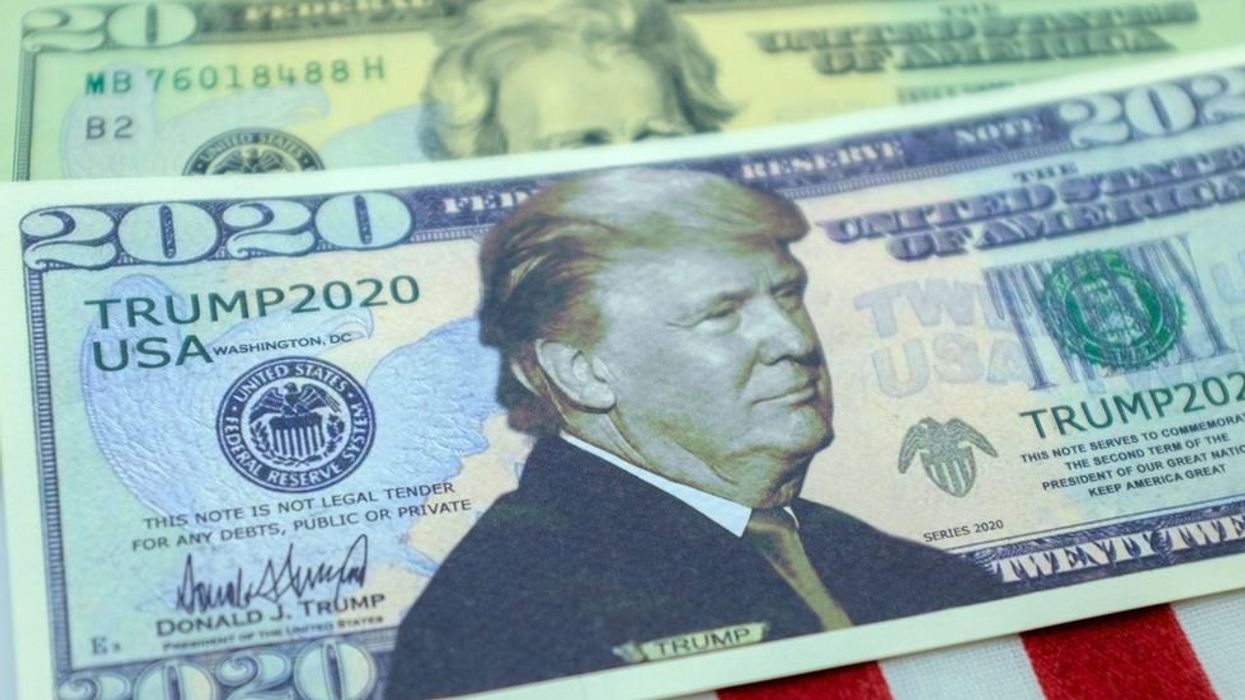
A fake $2020 bill featuring former President Donald Trump. Photo illustration: Christopher Sciacca/Shutterstock
Donald Trump has unclaimed property and abandoned money in at least 16 states
A fake $2020 bill featuring former President Donald Trump. Photo illustration: Christopher Sciacca/Shutterstock
Donald Trump has unclaimed property and abandoned money in at least 16 states
February 08, 2025
ALTERNET
Many economists, both left and right, cringed when President Donald Trump ordered 25 percent tariffs on all goods being imported into the United States from Canada and Mexico. And the outcry was vehement from neighboring officials north and south of the United States.
Former Canadian Deputy Prime Minister Chrystia Freeland slammed the tariffs as "a betrayal of America's closest friend," and Mexican President Claudia Sheinbaum vowed to impose tariffs on U.S. goods in response.
Trump later agreed to delay the tariffs on Canada and Mexico by 30 days, and many economists are hoping he won't go through with them at all. But The Atlantic's Lora Kelley, in an article published on February 7, argues that the mere threat of tariffs is already inflicting damage economically.
Trump, Kelley notes, "caused a panic in the stock market," adding that "the residue of this week's blink-and-you-missed-it trade war will stick."
Ernie Tedeschi of the Yale Budget Lab told The Atlantic that "uncertainty about tariffs poses a strong risk of fueling inflation, even if tariffs don't end up going into effect" —adding that "one of the cornerstone findings of economics over the past 50 years is the importance of expectations."
"Consumers, nervous about inflation, may change their behavior — shifting their spending, trying to find higher-paying jobs, or asking for more raises — which can ultimately push up prices in what Tedeschi calls a 'self-fulfilling prophecy,'" Kelley explains. "The drama of recent days may also make foreign companies balk at the idea of entering the American market. During Trump's first term, domestic industrial production decreased after tariffs were imposed."
Similarly, Felix Tintelnot, who teaches economics professor at Duke University, warns that the threat of tariffs — even if they don't go through — can promote inflation.
Tintelnot told The Atlantic, "Uncertainty by itself is discouraging to investments that incur big one-time costs."
ALTERNET
Many economists, both left and right, cringed when President Donald Trump ordered 25 percent tariffs on all goods being imported into the United States from Canada and Mexico. And the outcry was vehement from neighboring officials north and south of the United States.
Former Canadian Deputy Prime Minister Chrystia Freeland slammed the tariffs as "a betrayal of America's closest friend," and Mexican President Claudia Sheinbaum vowed to impose tariffs on U.S. goods in response.
Trump later agreed to delay the tariffs on Canada and Mexico by 30 days, and many economists are hoping he won't go through with them at all. But The Atlantic's Lora Kelley, in an article published on February 7, argues that the mere threat of tariffs is already inflicting damage economically.
Trump, Kelley notes, "caused a panic in the stock market," adding that "the residue of this week's blink-and-you-missed-it trade war will stick."
Ernie Tedeschi of the Yale Budget Lab told The Atlantic that "uncertainty about tariffs poses a strong risk of fueling inflation, even if tariffs don't end up going into effect" —adding that "one of the cornerstone findings of economics over the past 50 years is the importance of expectations."
"Consumers, nervous about inflation, may change their behavior — shifting their spending, trying to find higher-paying jobs, or asking for more raises — which can ultimately push up prices in what Tedeschi calls a 'self-fulfilling prophecy,'" Kelley explains. "The drama of recent days may also make foreign companies balk at the idea of entering the American market. During Trump's first term, domestic industrial production decreased after tariffs were imposed."
Similarly, Felix Tintelnot, who teaches economics professor at Duke University, warns that the threat of tariffs — even if they don't go through — can promote inflation.
Tintelnot told The Atlantic, "Uncertainty by itself is discouraging to investments that incur big one-time costs."
"The Trump bump in consumer confidence is already over,"
REUTERS/Kent Nishimura/File Photo/File Photo
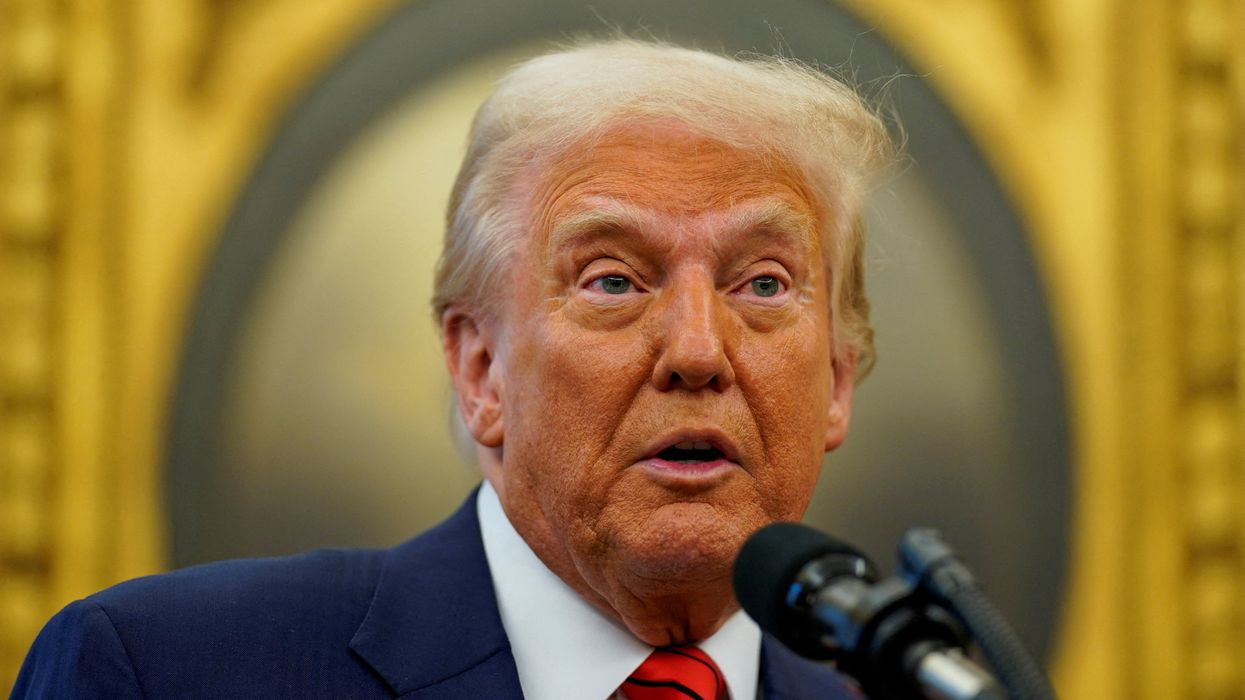
FILE PHOTO: U.S. President Donald Trump speaks at the White House in Washington, U.S., February 5, 2025.
February 08, 2025
ALTERNET
During the 2024 presidential race, Donald Trump repeatedly claimed that the U.S. economy was terrible under then-President Joe Biden and then-Vice President Kamala Harris. But according to U.S. Bureau of Labor Statistics (BLS) figures, unemployment stayed under 4.0 percent from February 2022 through April 2024. And U.S. unemployment was 4.1 percent in December 2024, Biden's last full month in office.
Nonetheless, voter frustration over inflation worked to Trump's advantage, and he narrowly defeated Harris by roughly 1.5 percent (according to the Cook Political Report) on Election Day.
Wall Street Journal reporters Rachel Wolfe and Joe Pinsker examine consumer confidence in an article published on February 7, laying out some reasons why it appears to be declining during Trump's second presidency.
"The Trump bump in consumer confidence is already over," Wolfe and Pinsker report.
ALTERNET
During the 2024 presidential race, Donald Trump repeatedly claimed that the U.S. economy was terrible under then-President Joe Biden and then-Vice President Kamala Harris. But according to U.S. Bureau of Labor Statistics (BLS) figures, unemployment stayed under 4.0 percent from February 2022 through April 2024. And U.S. unemployment was 4.1 percent in December 2024, Biden's last full month in office.
Nonetheless, voter frustration over inflation worked to Trump's advantage, and he narrowly defeated Harris by roughly 1.5 percent (according to the Cook Political Report) on Election Day.
Wall Street Journal reporters Rachel Wolfe and Joe Pinsker examine consumer confidence in an article published on February 7, laying out some reasons why it appears to be declining during Trump's second presidency.
"The Trump bump in consumer confidence is already over," Wolfe and Pinsker report.
"Tariff threats, stock market swings and rapidly reversing executive orders are causing Americans across the political spectrum to feel considerably more pessimistic about the economy than they did before President Trump took office. Consumer sentiment fell about 5 percent in the University of Michigan's preliminary February survey of consumers to its lowest reading since July 2024. "
The WSJ reporters continue, "Expectations of inflation in the year ahead jumped from 3.3 percent in January to 4.3 percent, the second month in a row of large increases and highest reading since November 2023…. Morning Consult's recent index of consumer confidence, too, fell between January 25 and February 3, driven primarily by concern over the country's economic future."
Wolfe and Pinsker cite 58-year-old Paul Bisson as an example of someone who voted for Trump in 2024 but now has reservations about his economic policies, including tariffs.
Bisson told WSJ, "I don't like the turbulence. I don't like the chaos in the market…. That will make the economy worse, and that's not what we signed up for. We've already cut back. There's no more cutting back to do."
Nicholas Schuch, a 38-year-old Durham, North Carolina resident who voted for Harris, also views the economy as chaotic during Trump's second presidency. And he is thinking of moving to a country he believes has a better monetary policy.
Schuch told WSJ, "I was thinking Switzerland, potentially…. I just expect things will be chaotic, and that that is what life is now."
The WSJ reporters continue, "Expectations of inflation in the year ahead jumped from 3.3 percent in January to 4.3 percent, the second month in a row of large increases and highest reading since November 2023…. Morning Consult's recent index of consumer confidence, too, fell between January 25 and February 3, driven primarily by concern over the country's economic future."
Wolfe and Pinsker cite 58-year-old Paul Bisson as an example of someone who voted for Trump in 2024 but now has reservations about his economic policies, including tariffs.
Bisson told WSJ, "I don't like the turbulence. I don't like the chaos in the market…. That will make the economy worse, and that's not what we signed up for. We've already cut back. There's no more cutting back to do."
Nicholas Schuch, a 38-year-old Durham, North Carolina resident who voted for Harris, also views the economy as chaotic during Trump's second presidency. And he is thinking of moving to a country he believes has a better monetary policy.
Schuch told WSJ, "I was thinking Switzerland, potentially…. I just expect things will be chaotic, and that that is what life is now."
'Irritating domestic manufacturers': How Trump tariffs create 'inflationary environment' for consumers
Watch the full video below or at this link.
February 10, 2025
ALTERNET
After agreeing to delay, for 30 days, 25 percent tariffs on all goods being imported into the United States from Canada and Mexico, President Donald Trump unveiled a new idea for tariffs on Sunday, February 9: a 25 percent tariff on all imported steel and aluminum.
Trump didn't specify any particular counties. He was talking about steel and aluminum imports in general, telling reporters, "Any steel coming into the United States is going to have a 25 percent tariff. Aluminum too."
Trump argues that tariffs on steel and aluminum imports will give domestic steel and aluminum manufacturers an advantage. But during a Monday, February 10 appearance on CNN, Roben Farzad — a business reporter for National Republic Radio (NPR) — warned that the tariffs Trump is proposing will be bad for the U.S. economically.
Farzad argued, "I think, for starters, this is about punching China in the nose. The great big panda. If you look at what China has done over the past 30 or 40 years in terms of ramping up steel production, where the United States was dominant in the middle of the 20th Century, and big steel and Pittsburgh and all the various things that came out of that, including Detroit and the various industries that could take that for granted. That industry has been in kind of an inexorable decline for a long time."
The NPR reporter added, "China, meanwhile, has been able to bring on all sorts of steel mills, all sorts of more modern steel mills, that could take inputs. It can recycle scrap, and it is now a behemoth…. You see dumping all across the global trade balance, and that's ending up in the United States and irritating domestic manufacturers."
Asked if tariffs on imported steel and aluminum would make them more expensive in the U.S., Farzad quickly replied, "Yes, yes."
"Look, the market for steel — which again, used to be dominated by Pittsburgh, it's no longer that. It's very fluid and fungible. We have the Koreans, the Mexicans, the Canadians, the Vietnamese, all along the value chain, passing this stuff along. And if there's any shiver in the system, any idea that, wow, a big price hike is going through — already, car prices are at a record high…. This is something that you really don't want in an inflationary environment."
After agreeing to delay, for 30 days, 25 percent tariffs on all goods being imported into the United States from Canada and Mexico, President Donald Trump unveiled a new idea for tariffs on Sunday, February 9: a 25 percent tariff on all imported steel and aluminum.
Trump didn't specify any particular counties. He was talking about steel and aluminum imports in general, telling reporters, "Any steel coming into the United States is going to have a 25 percent tariff. Aluminum too."
Trump argues that tariffs on steel and aluminum imports will give domestic steel and aluminum manufacturers an advantage. But during a Monday, February 10 appearance on CNN, Roben Farzad — a business reporter for National Republic Radio (NPR) — warned that the tariffs Trump is proposing will be bad for the U.S. economically.
Farzad argued, "I think, for starters, this is about punching China in the nose. The great big panda. If you look at what China has done over the past 30 or 40 years in terms of ramping up steel production, where the United States was dominant in the middle of the 20th Century, and big steel and Pittsburgh and all the various things that came out of that, including Detroit and the various industries that could take that for granted. That industry has been in kind of an inexorable decline for a long time."
The NPR reporter added, "China, meanwhile, has been able to bring on all sorts of steel mills, all sorts of more modern steel mills, that could take inputs. It can recycle scrap, and it is now a behemoth…. You see dumping all across the global trade balance, and that's ending up in the United States and irritating domestic manufacturers."
Asked if tariffs on imported steel and aluminum would make them more expensive in the U.S., Farzad quickly replied, "Yes, yes."
"Look, the market for steel — which again, used to be dominated by Pittsburgh, it's no longer that. It's very fluid and fungible. We have the Koreans, the Mexicans, the Canadians, the Vietnamese, all along the value chain, passing this stuff along. And if there's any shiver in the system, any idea that, wow, a big price hike is going through — already, car prices are at a record high…. This is something that you really don't want in an inflationary environment."
Watch the full video below or at this link.
No comments:
Post a Comment