UK Awards $71M Grant to Create Largest Scottish Floating Wind Farm Port
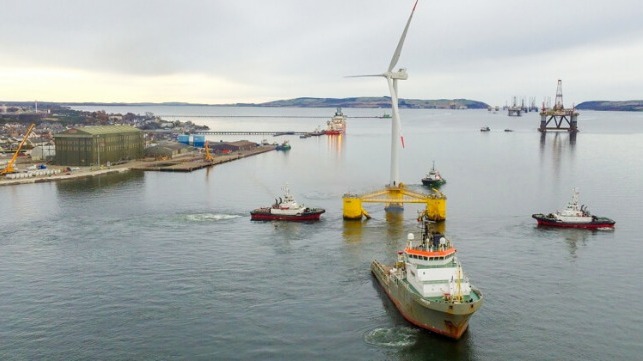
The UK Government awarded a £55 million ($71 million) grant to Scotland’s Port of Cromarty Firth to drive the next phase of expansion which will be used to support planned float offshore wind farms. The grant is the first of two announced under a program launched by the government in 2023 to support the development of port infrastructure needed for the floating wind sector.
Located on the northeastern shore of Scotland near Inverness, the Port of Cromarty Firth has a long history of supporting the offshore industries first in oil and gas and more recently offshore wind. Port officials highlight that its position with deep, sheltered waters is perfectly suited to accommodate large ships. The plan calls for bringing the wind farm components to the port where they will expand the lay area as well as provide space for the construction, installation, and operational support.
The components will be manufactured around the UK. The new facility will be the Quay West and the Phase 5 laydown area. The floating turbines can be assembled and pre-commissioned, before being towed to the wind farm site.
The port presented a plan that would make it the UK’s first custom-built integration hub for floating offshore wind construction. It said the expansion was critical to meeting the plans for the sector.
The UK remains the largest installed base of offshore wind in Europe although China surpassed it for total size in the global market. The government has mapped a strong strategy to make wind energy a key component in the long-term strategy and committed to investments in floating wind farms which will be the next phase of the industry.
The Department for Energy Security and Net Zero launched the Floating Offshore Wind Manufacturing Investment Scheme (FLOWMIS) to meet the port needs of the floating wind sector. The Department confirmed the grant to the Invergordon-based Trust that operates the port as part of an effort to fund the proposed expansion project. They said today’s grant would pave the way for the port to secure matching funds from banks and investors.
The port also plans to use the grant to start the process of awarding pre-construction contracts for the expansion project. They report the work must be completed by 2027 to be ready for the first commercial-scale floating wind projects.
Port Talbot is the second port selected under the FLOWMIS program. The Department reports the plans for the shortlisted port are currently under development. Talbot is located on Swansea Bay in Wales.
Australia Advances Offshore Wind Energy Granting Two Feasibility Licenses
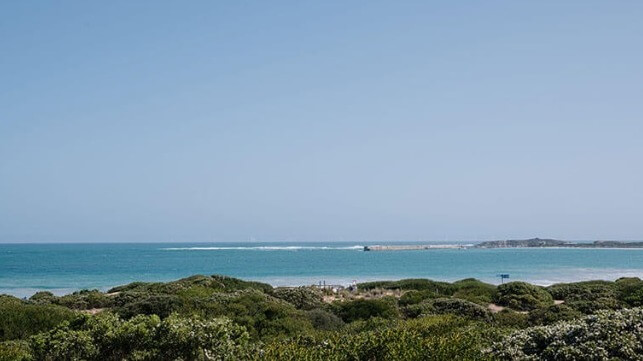
Australia continues its efforts to launch its first offshore wind energy projects. A year after declaring offshore zones and selecting the first potential projects, the government gra
nted two more feasibility licenses to proceed with the planning for wind farms in the Southern Ocean and the other for the Pacific Ocean.
Only in the past few years did Australia pass its first framework legislation to establish the process for developing offshore wind energy sites. The government selected areas and began accepting project applications in the multi-step planning process.
Projects back industry majors were the latest to be moved from provisional licenses to full feasibility licenses. One project, Novocastrain Wind is owned by Equinor and Oceanex Energy. It calls for up to 2.1 GW of installed capacity off the Hunter coast of New South Wales. The other is Spinifex being co-developed by Parkwind, which is part of JERA, and Alinta Energy. It proposes 1.2 GW which would be equivalent to 10 percent of Victoria’s electricity needs.
Each of the projects received licenses that grant the rights to explore the proposed projects, seek environmental approvals, and prepare a management plan. The management plan needs to be approved before they can begin feasibility activities and must address how the project will interact with shipping and fisheries.
With the approvals, the projects can undertake research and marine studies. This may include the use of lidar buoys to assess wind and other ocean conditions. They can also proceed with detailed environmental assessments and engage with the business community to develop the supply chain. The feasibility licenses provide for up to seven years. The companies then would submit construction plans for approval.
The companies hailed these steps are important milestones in the development of offshore wind energy for Australia. Each has been undertaking preliminary work. They highlighted the need for more work but said it would support moving forward with the investments to develop these projects.
RWE was granted one of the first feasibility licenses from the Australian Government in July 2024 for the development of an offshore wind farm. To be located in the Bass Strait, off the Gippsland coast in Victoria, it is expected this could become Australia’s first project. The area was Australia’s first designated offshore wind zone. RWE said it would use the feasibility process to apply for a commercial license to build and operate the wind farm for up to 40 years anticipating it could be commissioned in the 2030s with up to 2 GW of capacity.
No comments:
Post a Comment