SPACE / COSMOS
International Day of Human Spaceflight Celebrated

SCANNER: Svetlana Savitskaya, the second woman to see the Earth from the CosmosInternational Day of Human Spaceflight Celebrated
United Nations, Apr 12 (Prensa Latina) Humanity celebrates today the International Day of Manned Space Flight, a date that remembers the feat performed in 1961 by Russian astronaut Yuri Gagarin, the first human being to travel into space.
April 12, 2025 | 00:47
Years later, in 2011, the General Assembly of the United Nations (UN) declared April 12 for such a commemoration that marks the beginning of the space age, representing one of the greatest technological advances of the twentieth century.
The objective is to reaffirm that space science and technology make an important contribution to achieving sustainable development, enhancing the well-being of peoples and States, and ensuring that their aspiration to reserve outer space for peaceful purposes is fulfilled.
On April 12, 1961, Yuri Gagarin, a pilot in the Soviet air force, took off in Vostok 1 (the world's first spacecraft with a man on board), from Baykonur, becoming at the age of 27 the first human being to travel into space and complete an orbit around the Earth, a trip that lasted 108 minutes.
During the spaceflight, simple experiments were carried out, such as drinking, eating or writing with a pencil.
One of Gagarin's phrases remained for posterity: "The Earth is blue."
The UN declaration refers to some of the most outstanding achievements in space exploration, such as: the launch of the first Earth satellite, Sputnik I in 1957, and the first woman to orbit the Earth was the Russian engineer Valentina Tereshkova, who achieved her dream on June 16, 1963. Meanwhile, the American Neil Armstrong was the first man to set foot on the Moon on July 20, 1969, and the first international space mission took place on July 17, 1965 with the docking of the Apollo and Soyuz spacecraft.
Moreover, in the last decade, humanity has had a constant presence in outer space aboard the International Space Station.
Jha/LPN
April 12, 2025 | 00:47
Years later, in 2011, the General Assembly of the United Nations (UN) declared April 12 for such a commemoration that marks the beginning of the space age, representing one of the greatest technological advances of the twentieth century.
The objective is to reaffirm that space science and technology make an important contribution to achieving sustainable development, enhancing the well-being of peoples and States, and ensuring that their aspiration to reserve outer space for peaceful purposes is fulfilled.
On April 12, 1961, Yuri Gagarin, a pilot in the Soviet air force, took off in Vostok 1 (the world's first spacecraft with a man on board), from Baykonur, becoming at the age of 27 the first human being to travel into space and complete an orbit around the Earth, a trip that lasted 108 minutes.
During the spaceflight, simple experiments were carried out, such as drinking, eating or writing with a pencil.
One of Gagarin's phrases remained for posterity: "The Earth is blue."
The UN declaration refers to some of the most outstanding achievements in space exploration, such as: the launch of the first Earth satellite, Sputnik I in 1957, and the first woman to orbit the Earth was the Russian engineer Valentina Tereshkova, who achieved her dream on June 16, 1963. Meanwhile, the American Neil Armstrong was the first man to set foot on the Moon on July 20, 1969, and the first international space mission took place on July 17, 1965 with the docking of the Apollo and Soyuz spacecraft.
Moreover, in the last decade, humanity has had a constant presence in outer space aboard the International Space Station.
Jha/LPN
(+Photos +Video)
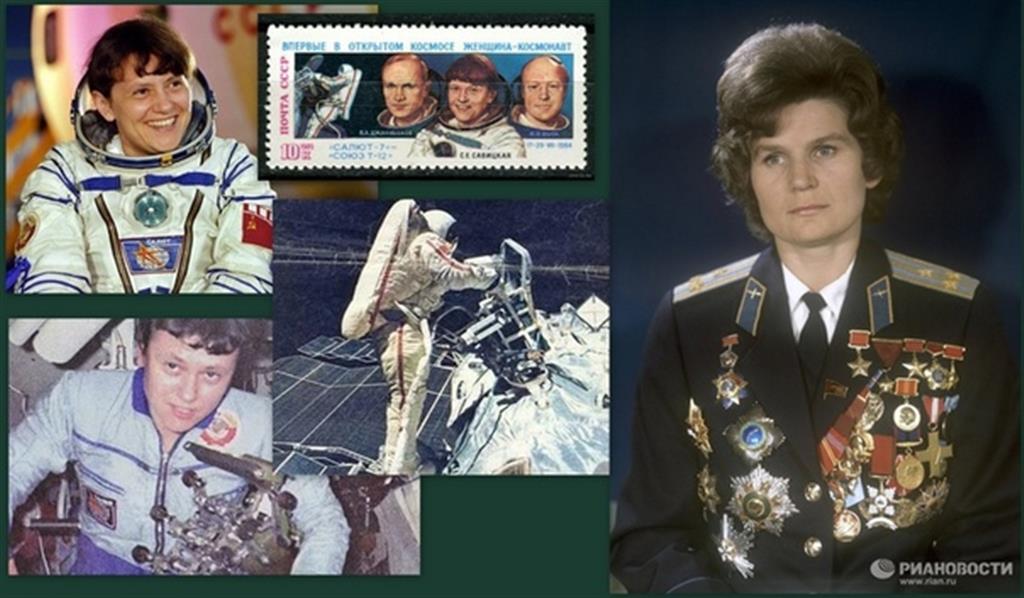
Moscow (Prensa Latina) Valentina Tereshkova's feat is well known: she was the first woman to go into space, and she did that feat in Vostok 6, launched in 1963, just over two years after the first manned flight into space, carried out by Yuri Gagarin.
March 25, 2025
By: German Ferrás Álvarez
Chief correspondent in Russia
Valentina's feat inspired thousands of women around the world, who saw reflected in the talent of the young and simple Russian, the possibility of achieving any goal that a representative of the so-called weaker sex proposes.
Among those inspired was Svetlana Savitskaya, who 19 years later, in 1982, was the second to fly back into space.
As Svetlana recently told Escaner, she decided to become a cosmonaut, even long before Valentina's flight, because in 1961, when the second cosmonaut in the world Germán Titov made a longer flight, she understood that a new job, a new profession, had appeared. At that time she was 13 years old.
Moscow (Prensa Latina) Valentina Tereshkova's feat is well known: she was the first woman to go into space, and she did that feat in Vostok 6, launched in 1963, just over two years after the first manned flight into space, carried out by Yuri Gagarin.
March 25, 2025
By: German Ferrás Álvarez
Chief correspondent in Russia
Valentina's feat inspired thousands of women around the world, who saw reflected in the talent of the young and simple Russian, the possibility of achieving any goal that a representative of the so-called weaker sex proposes.
Among those inspired was Svetlana Savitskaya, who 19 years later, in 1982, was the second to fly back into space.
As Svetlana recently told Escaner, she decided to become a cosmonaut, even long before Valentina's flight, because in 1961, when the second cosmonaut in the world Germán Titov made a longer flight, she understood that a new job, a new profession, had appeared. At that time she was 13 years old.
It was then that she began to improve herself, and decided that the first thing would be to obtain the status of aviator, and if her physique allowed it, to continue striving until she reached the category of cosmonaut pilot.
She set herself the task of being a good airline pilot, because in essence there was still the criterion that only men could be cosmonaut pilots.
In addition, from a very young age she was linked to the world of aviation. Her father, Marshal Evgeny Savitsky, was commander of Soviet air defenses, participated in the Great Patriotic War and was decorated with the title of Hero of the Soviet Union.
From the age of 16 she practiced skydiving without her parents' consent. In fact, it took her father a year to find out what her daughter was doing in secret.
His skill was more than obvious as he achieved 3 world records in jumps from the stratosphere and 15 in jumps from jet aircraft.
He won the world championship of aerobatic piloting held in London, something very important in his career, as this fact opened the way to any type of piloting and also allowed him to enter the exclusive Moscow Aviation Institute, in 1972.
After finishing her studies, she worked as an aviation monitor and from 1976, after completing a specialized course at the school of airplane pilots, she was awarded the title of test pilot by the Ministry of Aviation Industry of the USSR, where she learned to master more than 20 types of aircraft.
At that time she worked as one of the test pilots in the office of the famous designer Yakovlev. She was a tester of supersonic fighter jets and vertical take-off and vertical landing, of many sports aircraft and of the well-known Yak 42 passenger plane.
When the group of women cosmonauts for spaceflight in Soyuz-type spacecraft was created again, in 1980, Svetlana asked Yakovlev for permission to be part of that collective, and she combined her work as a test pilot with her training as a cosmonaut.
According to her, of the group of eight women who began the training, only she was a pilot, the rest were doctors and scientists, so she was also the skydiving coach of the group that was training.
Among the candidates was the one chosen for the flight of August 19, 1982, 19 years after Valentina Tereshkova's.
Svetlana Savitskaya traveled into space in Soyuz T-7 and returned to earth aboard Soyuz T-5, due to T-7 being docked at Salyut.
Her spaceflight lasted 7 days, 21 hours, 52 minutes and 24 seconds. Although she already had the cosmonaut pilot qualification, on that occasion she flew as a research cosmonaut and did several experiments on the station.
Later, in July 1984, she also manned the Soyuz T-12, and during her stay on the Salyut 7 space station on July 25, 1984, Svetlana became the first woman to take a spacewalk.
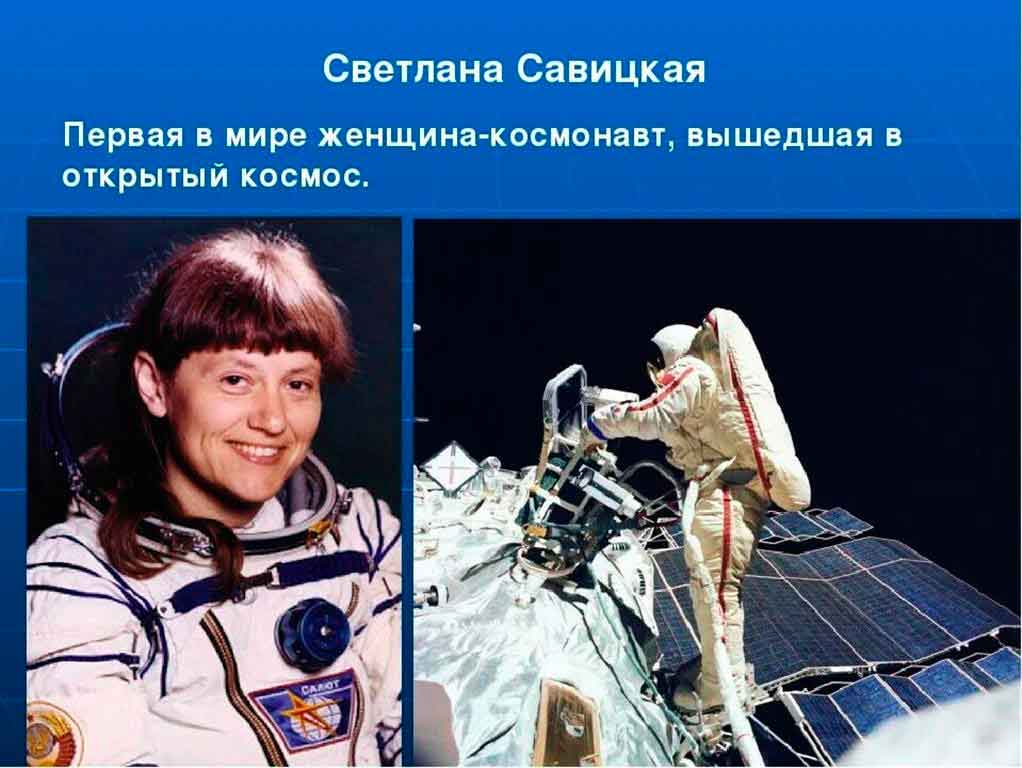
She remained outside the station for 3 hours and 35 minutes, successfully performing assembly work, metal cutting, and welding. At that time, she became the first woman to travel to space twice.
That second flight and exit into space, as she told Escaner, was accidental, since it was planned that after her, in 1982, another cosmonaut would fly, but in the end it was decided to postpone it, and only when it transpired that the Americans were preparing the first trip to space, was it decided to send Svetlana again, due to her experience, to do the feat.
He continued his preparation to fulfill the dream of piloting the Buran ship, which made a single successful flight, but without a crew, after which due to financial problems and the fall of the USSR, it was decided to close that program.
Then she understood that this dream was already unrealizable due to the passage of time, and decided to move into political life, a job she has done until now.
Svetlana Savitskaya is considered the last Soviet cosmonaut, since Yelena Kondakova, the next to travel into space on October 3, 1994 in the Soyuz TM-20, did so as a Russian citizen.
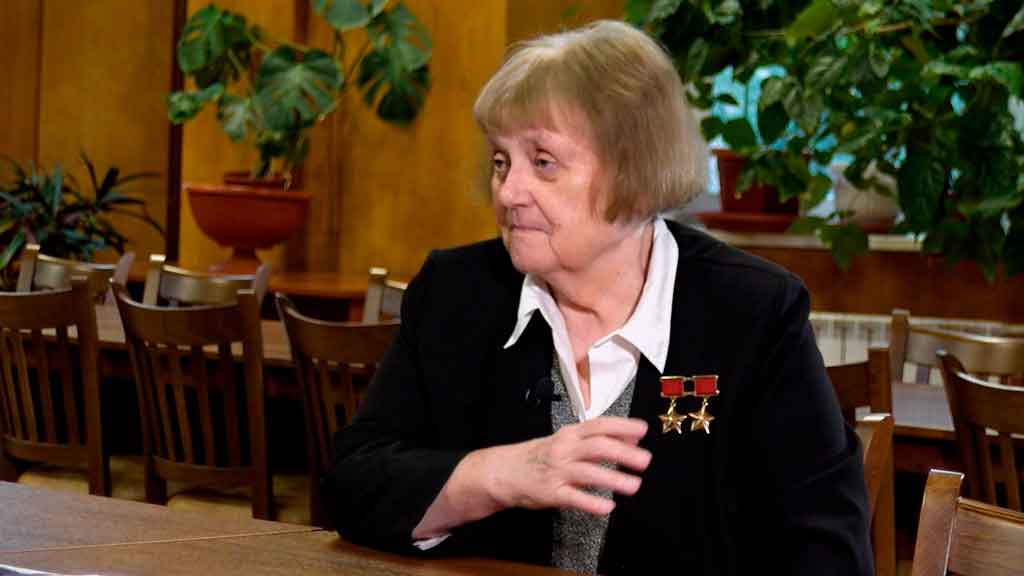
In her space career, in addition to technical difficulties and life risks that she took on like the rest, as a pioneering woman in this professional field she suffered the machismo of some of her colleagues, as evidenced by the words of welcome she had from them when the hatch of the Soviet space station was opened: "We have an apron ready for you, Sveta."
In an area considered exclusively for men, according to the heroine, after her first flight "no one had any questions, no one said that cosmonautics was exclusively for men. They didn't dare to say it anymore, although not everyone, of course, liked it."
After her special trips, Svetlana Savitskaya won many awards and recognitions. Among others, she was twice elected as a Hero of the Soviet Union, also decorated with two Orders of Lenin and the Order of the Badge of Honor.
He also holds a gold medal and 18 diplomas from the International Aeronautical Federation (IAF), 16 sports medals from the USSR, and a special medal for surpassing the mark of permanence in open space.
arb/to/gfa
She set herself the task of being a good airline pilot, because in essence there was still the criterion that only men could be cosmonaut pilots.
In addition, from a very young age she was linked to the world of aviation. Her father, Marshal Evgeny Savitsky, was commander of Soviet air defenses, participated in the Great Patriotic War and was decorated with the title of Hero of the Soviet Union.
From the age of 16 she practiced skydiving without her parents' consent. In fact, it took her father a year to find out what her daughter was doing in secret.
His skill was more than obvious as he achieved 3 world records in jumps from the stratosphere and 15 in jumps from jet aircraft.
He won the world championship of aerobatic piloting held in London, something very important in his career, as this fact opened the way to any type of piloting and also allowed him to enter the exclusive Moscow Aviation Institute, in 1972.
After finishing her studies, she worked as an aviation monitor and from 1976, after completing a specialized course at the school of airplane pilots, she was awarded the title of test pilot by the Ministry of Aviation Industry of the USSR, where she learned to master more than 20 types of aircraft.
At that time she worked as one of the test pilots in the office of the famous designer Yakovlev. She was a tester of supersonic fighter jets and vertical take-off and vertical landing, of many sports aircraft and of the well-known Yak 42 passenger plane.
When the group of women cosmonauts for spaceflight in Soyuz-type spacecraft was created again, in 1980, Svetlana asked Yakovlev for permission to be part of that collective, and she combined her work as a test pilot with her training as a cosmonaut.
According to her, of the group of eight women who began the training, only she was a pilot, the rest were doctors and scientists, so she was also the skydiving coach of the group that was training.
Among the candidates was the one chosen for the flight of August 19, 1982, 19 years after Valentina Tereshkova's.
Svetlana Savitskaya traveled into space in Soyuz T-7 and returned to earth aboard Soyuz T-5, due to T-7 being docked at Salyut.
Her spaceflight lasted 7 days, 21 hours, 52 minutes and 24 seconds. Although she already had the cosmonaut pilot qualification, on that occasion she flew as a research cosmonaut and did several experiments on the station.
Later, in July 1984, she also manned the Soyuz T-12, and during her stay on the Salyut 7 space station on July 25, 1984, Svetlana became the first woman to take a spacewalk.
She remained outside the station for 3 hours and 35 minutes, successfully performing assembly work, metal cutting, and welding. At that time, she became the first woman to travel to space twice.
That second flight and exit into space, as she told Escaner, was accidental, since it was planned that after her, in 1982, another cosmonaut would fly, but in the end it was decided to postpone it, and only when it transpired that the Americans were preparing the first trip to space, was it decided to send Svetlana again, due to her experience, to do the feat.
He continued his preparation to fulfill the dream of piloting the Buran ship, which made a single successful flight, but without a crew, after which due to financial problems and the fall of the USSR, it was decided to close that program.
Then she understood that this dream was already unrealizable due to the passage of time, and decided to move into political life, a job she has done until now.
Svetlana Savitskaya is considered the last Soviet cosmonaut, since Yelena Kondakova, the next to travel into space on October 3, 1994 in the Soyuz TM-20, did so as a Russian citizen.
In her space career, in addition to technical difficulties and life risks that she took on like the rest, as a pioneering woman in this professional field she suffered the machismo of some of her colleagues, as evidenced by the words of welcome she had from them when the hatch of the Soviet space station was opened: "We have an apron ready for you, Sveta."
In an area considered exclusively for men, according to the heroine, after her first flight "no one had any questions, no one said that cosmonautics was exclusively for men. They didn't dare to say it anymore, although not everyone, of course, liked it."
After her special trips, Svetlana Savitskaya won many awards and recognitions. Among others, she was twice elected as a Hero of the Soviet Union, also decorated with two Orders of Lenin and the Order of the Badge of Honor.
He also holds a gold medal and 18 diplomas from the International Aeronautical Federation (IAF), 16 sports medals from the USSR, and a special medal for surpassing the mark of permanence in open space.
arb/to/gfa

Scientists in The United Arab Emirates Develop Artificial Lunar Soil for Space Exploration
The UAE officials announced a goal to send an Emirati astronaut to the Moon within the next decade.
Published 1 April 2025
Images: Depositphotos.com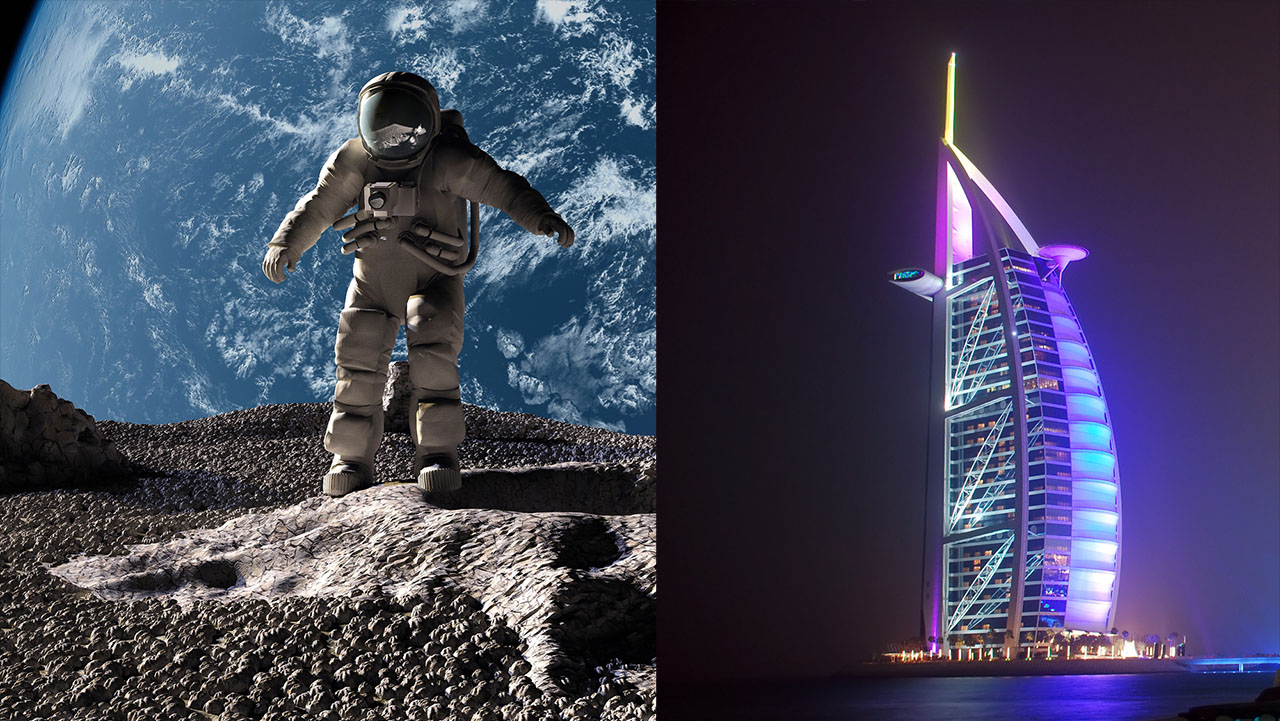
The UAE officials announced a goal to send an Emirati astronaut to the Moon within the next decade.
Published 1 April 2025
Images: Depositphotos.com
What will the future be? An Emirati astronaut (AI-image) on the Moon and the real Hotel Burj Al Arab.
Researchers in Abu Dhabi have developed an artificial lunar soil, the Emirates Lunar Simulant, using locally sourced natural materials, as reported by Emirates News Agency (WAM), a partner of TV BRICS.
The team utilised anorthosite-rich rocks from the Semail Ophiolite complex in the UAE, which closely resemble the mineral and chemical composition of genuine lunar samples. This simulant will play a crucial role in testing space equipment and training Emirati astronauts for upcoming missions to the Moon.
The UAE officials announced a goal to send an Emirati astronaut to the Moon within the next decade. Experts emphasised that the simulant represents a significant step in enhancing the UAE's contributions to planetary science and preparing for the complexities of lunar missions.
The Emirates Lunar Simulant will be used for testing rover functionality, training astronauts, and evaluating the performance of lunar equipment.
According to the source, this initiative will help optimise mission strategies, minimise risks, and pave the way for advancements in lunar exploration, including surface research, resource extraction, and potential construction efforts.
Additionally, UAE researchers have developed a planetary simulation chamber capable of replicating environmental conditions on the Moon, Mars, and other celestial bodies. This device simulates variables like gas composition, temperature, and solar radiation, enabling advanced research into the effects of prolonged exposure to extraterrestrial environments.
Source: TV BRICS
Researchers in Abu Dhabi have developed an artificial lunar soil, the Emirates Lunar Simulant, using locally sourced natural materials, as reported by Emirates News Agency (WAM), a partner of TV BRICS.
The team utilised anorthosite-rich rocks from the Semail Ophiolite complex in the UAE, which closely resemble the mineral and chemical composition of genuine lunar samples. This simulant will play a crucial role in testing space equipment and training Emirati astronauts for upcoming missions to the Moon.
The UAE officials announced a goal to send an Emirati astronaut to the Moon within the next decade. Experts emphasised that the simulant represents a significant step in enhancing the UAE's contributions to planetary science and preparing for the complexities of lunar missions.
The Emirates Lunar Simulant will be used for testing rover functionality, training astronauts, and evaluating the performance of lunar equipment.
According to the source, this initiative will help optimise mission strategies, minimise risks, and pave the way for advancements in lunar exploration, including surface research, resource extraction, and potential construction efforts.
Additionally, UAE researchers have developed a planetary simulation chamber capable of replicating environmental conditions on the Moon, Mars, and other celestial bodies. This device simulates variables like gas composition, temperature, and solar radiation, enabling advanced research into the effects of prolonged exposure to extraterrestrial environments.
Source: TV BRICS
No comments:
Post a Comment