Reform – Labour is feeding the monster
Tuesday 6 May 2025, by Dave Kellaway
The centre cannot hold! In the wake of Reform’s massive gains in local elections, Dave Kellaway investigates the new political landscape.
One comment stood out in the early hours of election night last Thursday: Reform is eating them for breakfast. A party that only managed one MP before the July election, when it won five, has just: taken the biggest vote share of the night,
won a parliamentary by election on a 17% swing
won 650 new councilors
controls ten county councils for the first time
won two mayoralties
is projected to have a national vote share of 30%, giving it a chance of forming or being part of a rightwing coalition government.
All those polls in recent months showing Reform neck and neck or ahead of Labour and the Tories have been validated and even bettered. Its membership at more than 120,000 had already overtaken the Tories. Wealthy donors, including from Trumpland, have boosted its coffers. Having hundreds of councilors not only gives you a profile and material resources but allows you to embed your party in the localities. This in turn makes it easier to campaign next time.
Journalists have commented on Reform’s shift to a more professional set up. Over 80 Tory representatives and staff have defected. This is also reflected in the way they have established a cordon sanitaire with the Tommy Robinson people, despite some members’ affinity with his politics. The most extreme voices were largely kept out of the media during the campaign. Farage’s next targets are the Welsh and Scottish Assembly elections.
Tories and Labour both hit hard
Given that these seats were last up during the heyday of Boris Johnson it meant that the Tories lost more than Labour – 676 seats. Its leadership is being squeezed, like Labour, from both the right and left. For example the Lib Dems defeated them in the South West and Shropshire as well as taking control in Oxfordshire and Gloucestershire.
Many Tory voters, particularly Remainers, did not appreciate the lurch of the leadership towards Reform policies. On the other hand, people like defeated leadership candidate, Robert Jenrick, are pushing for deals with Reform.
Rees Mogg (ex Tory MP) even thought it was a good night for the ‘right’. Clearly one option for these people is a reconfiguration of the right where Reform is an equal or dominant partner. The Italian traditional right has merged into a successful political coalition with the post-fascist Brothers of Italy led by prime minister Giorgia Meloni.
Labour spokespeople seemed stunned at the results. Apparently the reluctance of their traditional support to either turn out or vote for the party is really down to the mess the Tories have left after fourteen years. Labour has to take ‘tough decisions’ because of the Tories so it is really not our fault.
The media has said the winter fuel allowance and disabled cuts came up on the doorstep. Other political choices could have been made: on the two child benefit cap, cutting the winter fuel allowance, savagely reducing disabled peoples/sickness payments or backtracking on green policies. Once you rule out taxing the rich, changing arbitrary fiscal rules or taking resources into common ownership, you are boxed in. Especially if you want to carry out even moderate social democratic policies.
Labour’s leadership also seem to think that atrocious policies on Palestine, international aid, Waspi women, or trans rights will not have a negative effect on voters. Normally new governments benefit from a honeymoon where voters are expectant on some sort of change and are happy about the early policies. Reeves’ iron fiscal rules have limited how many goodies she can throw to the electorate.
Surely too the big decline in membership due the offensive against the left has meant a hollowing out of the party which is obviously affecting the ground operation during key elections. Reform was able to match Labour in the Runcorn bye-election on this terrain and one may imagine this story was repeated in many county council battles.
What next for Labour?
Two options are emerging. Before Runcorn was lost, the right of the party and surely within its central apparatus there was already talk about the opportunity that defeat would provide for Labour to cuddle up even closer to Reform’s anti-migrant policies and to copy its so-called anti-woke agenda. Jonathon Hinder, MP for Pendle and Clitheroe stated recently:
too many working-class people see Labour as the party of immigrants, minorities, those on benefits” (Britain needed) “to drastically reduce immigration, very quickly, and that might mean sometimes prioritising democratic decisions over international legal constraints”. Speaking about the European Convention on Human Rights (ECHR), which has often faced criticism from the right for judgments stopping deportations, Hinder said: “I think it’s quite clear that it’s not working”.
Others in the leadership think there is no need to change course much since in the event of a developing, Reform or Reform/rump Tory government there will be a progressive, ‘panicked’, reflex towards Labour to hold off the ‘neo-fascist’ threat. We could christen this the Macron manoeuvre after the French president who got elected twice as the left and progressive forces rallied to him to stop Marine Le Pen becoming president. The problem is that the electoral system here does not work over two rounds, which means it generates less panic until after the final results.
As we have seen on Thursday, the undemocratic first past the post system discriminates savagely against smaller parties… until they break the two party threshold. Reform was winning a lot of seats on far less than 50% of the vote. Just as Labour won its famous landslide on 34% of the popular vote there is nothing to stop Reform repeating the feat – particularly if it reaches a deal with the Tories.
On the other hand, voices even from outside the Socialist Campaign Group, like Rachael Maskell MP from York Central, are arguing for Starmer to do a U turn on policies like the pensioners fuel allowance or the PIP payments for disabled people. There might even be some pressure from inside the cabinet to at least make minor changes that could be shown to respond to such concerns.
Diane Abbott is clearer, stating that the mantra issued by Starmer after the results of going faster and stronger on the Plan for Change need to be altered. One of the few victorious candidates, the Mayor of Doncaster, Ros Jones, tore up the party script and attacked Starmer’s policies on pensioners and disabled people. She even campaigned against them and organized policy in her jurisdiction to mitigate their effects. Probably her efforts at independence helped her hang onto the mayoralty despite a fierce Reform onslaught.
How Labour tacking toward Reform fails
For the left it is clear cosmetic changes cannot defeat Reform nor does abstract denunciation of them as racists or even more clumsily as Nazis. If people are angry and disillusioned about the political process and the cost of living, you must convince them that you will improve their lives – not cut their benefits or do nothing to improve local public services.
You have to show people where you are getting the money from to pay to improve their lives. They know there is plenty of wealth in society to meet this bill. You have to be honest and say that you can make concrete plans for a wealth tax and higher taxes on corporate profits. If Starmer’s response it just to tinker and talk up growth then he will be continuing to feed the Reform monster.
During the general election Labour gave Reform a soft ride. They even pulled out a credible, dynamic candidate who was standing against Farage in Clacton. Very little material was put out targeting Reform. The great strategists like Morgan McSweeney thought Reform would hit the Tories worse and open the gate to a landslide.
It did but this was short-termism. Barely 9 months since the loveless landslide and we see the consequences already. Since the rise of Reform in the polls Labour has gone from ignoring it to mirroring their policies. Hence Yvette Cooper continually boasting about how many deportations she is carrying out and trumpeting the ethnic/migrant listing of offenders.
During the Runcorn campaign the candidate was induced by the apparatus to launch a petition to close the local asylum hotel despite her previous welcoming comments about asylum seekers. Even she felt (later on) that the language used backfired. Always spinning, when Labour lost Runcorn the official statement emphasised it was only a few votes that lost it – what about the other 15.000?
Labour are now facing an opponent unburdened by years of Tory austerity or pandemic incompetence and callousness. For now it also is an opponent that looks like change and newness to many voters.
An electoral space to the left of Labour
In a context of Labour losing 186 councilors and the 45th safest parliamentary seat the Greens vote held up well and they continued to add new councilors. Jessica Elgot, who is not unfavourable to the Starmer government, gives lot of evidence in her article that Labour are continuing to lose more votes to its left and progressive side than to Reform. There is a progressive space to the left of Labour.
In Preston Michael Lavalette and two other independents standing on a pro-Palestinian and anti-austerity platform won seats. The local Muslim community, like most places where it is a significant minority in a ward, have not returned to their traditional Labour home.
The oh-so-clever strategists think that Palestine is some sort of here today gone tomorrow online petition and that these voters have nowhere else to go. They fail to see the near total silence, or worse collusion, of the government on the genocide, the blocking of aid and the sending of British arms will mean no coming back.
The Preston experience also points to a lost opportunity for the political forces to the left of Labour. A continuing debate about whether to launch a new broad left party first on the local level before any national declaration meant that there was hardly any coordinated left electoral intervention in these elections. Such a development would make a difference, including on how well we can build a mass movement of opposition to Reform and its anti migrant racism.
Reform’s Andrea Jenkins lost no time in nailing her vicious anti-migrant rhetoric to the mast. In her victory speech as new mayor of Lincolnshire she said there should be no more asylum hotels, rather let them live in tents like in France.
Professor John Curtice and others are right to declare the two party system is currently not functioning. In some cases we have a five party system and many seats are won with candidates not even close to a 50%+1 majority. We should not rule out a return to two parties, particularly if the Tory party dies or fuses with Reform, but for the moment political volatility is here to stay.
And this new reality creates a more favourable opportunity for a new mass left electoral alternative. Once people change their vote they may do so again for another more progressive party. However the left should still argue for a properly Proportional Representation (PR) system as Labour conference has itself agreed. In principle and practice it is more democratic and could reduce the mass (even majority with these local elections) alienation from the political system. It would give a fair hand to the Greens and any new left alternative too.
Labour will not really challenge Reform. It is the responsibility of the Left to provide both opposition on the streets, in campaigns and electorally to Farage and his party. We need to expose the lies and contradictions in Reform’s policies. There will be an immediate focus in those councils it has won this Thursday. Farage is promising Doge like cuts and attacks on equal opportunity and diversity practices. Local campaigns linked to the council worker unions will be necessary.
Although it is clear that the main organizing of our response to Reform will be based on activists outside Labour we should still look to get support from any left or even soft left MPs who are prepared to speak up against Farage and the government’s policies that are feeding his support. Reform’s success makes discussion on anew left party that even more urgent.
Anticapitalist Resistance 5 May 2025
Attached documentsreform-labour-is-feeding-the-monster_a8976.pdf (PDF - 918 KiB)
Extraction PDF [->article8976]
Britain
UK Supreme Court backs bigots and transphobes
Defend the right to protest
After five days that changed its face, where is Lebanon headed?
Political Review of 2024 - a view from Britain
Why do socialists organise internationally?
Dave Kellaway
Dave Kellaway is a Socialist Resistance and Fourth International supporter within Anti*Capitalist Resistance.
International Viewpoint is published under the responsibility of the Bureau of the Fourth International. Signed articles do not necessarily reflect editorial policy. Articles can be reprinted with acknowledgement, and a live link if possible.

The UK’s first-past-the-post electoral system can have some remarkable results and is capable of enacting extraordinarily quick political revolution, as in the triumph then rapid fall from power of the great Liberal Party in the first quarter of the twentieth century. We are in such a moment now.
The Labour Party today has a Commons majority of 165 seats, slightly down from the 174 majority on election night. This was almost identical to Tony Blair’s 1997 majority of 178. But extraordinarily, the 178 majority was won on 43.2% of the vote, while Starmer’s 2024 174 majority was won on just 33.7% of the vote — the smallest vote share for any single-party majority government in British history, and yet producing one of the largest majorities.
The system is throwing up perverse results as never before. The reason is that 2024 saw the lowest combined Conservative and Labour vote share since 1910, at 57.4%. This is fundamentally different from the threat to the two-party dominance by the Liberals and Social Democrats in the 1970s and 1980s, when the combined Labour-Tory vote share never fell below 70.0% (1983). So if you are thinking you have seen this before, you are very wrong. This is a far greater shift in voter behaviour.
In the 2010 general election, the combined Labour/Tory vote fell to 65.1%, but 2024 was a further step-change down. Every single opinion poll since has shown that this is a systemic decline, not a blip.
Then we get to the local elections held in England last Thursday, where the combined Labour and Tory vote was 37%, with Labour at just 14%. While these were predominantly (but by no means all) non-metropolitan English elections, Labour suffered near wipeout, losing 65% of the seats they had held under Starmer’s leadership in 2021 in an already devastatingly low performance.
It is important to note that these results for both Labour and the Tories were much, much worse than their local election performance in 2013 at the height of UKIP success, the previous low point for Labour and Tory performance in local elections. Again, you may think, “Oh, I have seen this before. It will pass.”
You have not seen this before, and it will not pass.
The BBC and Sky both made psephological projections for how the local elections would reflect in a general election. These are complicated calculations based on voter movement and with calculated compensation for the kind of seats being fought. It is not a simple projection from irrelevant types of Tory areas to the whole nation. The BBC projection to general election vote share was Reform 30%, Labour 20%, Liberal Democrats 17%, Conservatives 15%, Greens 11%, and Others 7%. The Sky projection was Reform 32%, Labour 19%, Conservatives 18%, Lib Dems 16%, Greens 7%.
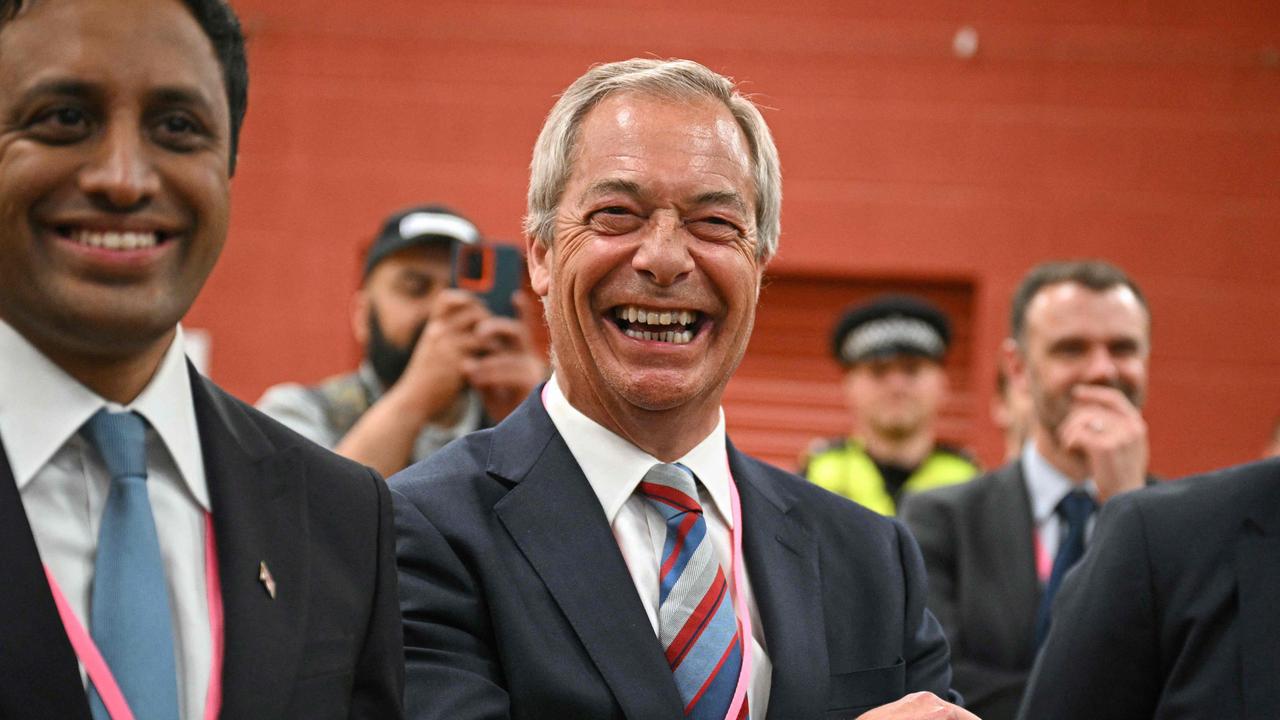
Neither the BBC nor Sky projected this to general election seats, but it is undoubtedly the case that both Labour and the Conservatives are steering into the abyss, the tipping point where first-past-the-post massively punishes those who have substantive support but are not winning constituencies (the Liberal Democrat and, to some extent, the Green position for decades). Which of Reform, Labour, Conservative, Liberal Democrat, and Green parties will emerge on top in England is a genuinely open question. Before going on to institutional and policy questions, I might say that my own thought is that the tendency of first-past-the-post everywhere to encourage two-party systems may well lead to Reform and the Liberal Democrats being those two parties; and that is certainly as probable as any other combination.
Institutionally, the Labour Party seems very strong, in that it is rooted in the trade union movement which created it and still funds it. Even under the lurch to the right under Starmer, the Labour Party retains some progressive policies which relate specifically to the rights of those in employment, and increases in the minimum and living wage and the Employment Rights Act reflect this. These are the inescapable tribute to the union paymasters, and a good thing too. Starmer’s right-wing economic policies rather focus attacks on those receiving benefits (some of whom are, of course, in work).
But institutional backing does not in itself ensure continued primacy. The Liberal Party had the active backing of a great many of Britain’s landed and industrial magnates. It did not founder for lack of institutional finance and muscle. Let us merely note that the Conservatives are in more jeopardy than Labour as their finances are reliant on contributions from wealthy individuals and companies which are ad hoc rather than institutional and susceptible to frictionless switching to Reform.
So what are the actual politics of this? Well, Reform voters are primarily motivated by dislike of immigration. While there are respectable economic arguments over the desirability of immigration, the simple truth is that most Reform voters are rather motivated by racist dislike of foreigners. I know that I have commenters here who like to deny this, but frankly, I do not live under a rock, I have fought elections, I used to live in the then-UKIP hotspot of Thanet, and I do not have a romanticised regard for the working class, and I have no doubt that Reform primarily channels racism.
But the interesting thing is that does not mean that Reform voters are “right-wing” in an economic sense. Opinion polls have found that most Reform voters favour renationalisation of public utilities, for example, and Farage has appealed to this by advocating for the nationalisation of the water industry and backing the nationalisation of the steel industry. Reform voters also favour rent controls, employment protections, and minimum wage legislation. On the left/right axis in economic policy, Reform voters are very substantially to the left of their party leadership, who almost certainly do not really believe in any of those things at all, though they may sometimes pretend.
George Galloway with the Workers’ Party has attempted to provide the mix of social conservatism in culture wars, including anti-immigration messaging, combined with left-wing economic policy, which might define a kind of left-wing populism, but failed miserably in Runcorn. It is only fair of me to make my own position clear, having stood for the Workers’ Party in the General Election on the issue of stopping the genocide. I do not support the culture wars agenda of the Workers’ Party and would not associate myself with the “Tough on Immigration, Tough on the Causes of Immigration” messaging the party used in Runcorn, even with the second half of that message emphasising an end to imperialist destabilisation of vulnerable countries. It is still too dog-whistle for my taste.
It remains my belief that Starmer has always been a deep-state operative and that he is deliberately driving the Labour Party to its own destruction. Among the strongest evidence for this, in my view, is the fact that all of the documentation on his involvement in the Assange case, the Savile case, the Janner case, and other high-level paedophile cases while he was Director of Public Prosecutions was allegedly destroyed by the state while the Conservatives were in office and Starmer in opposition. The Deep State was protecting him and preparing his way to power.
It is also interesting that the only time the mainstream media really turned on Boris Johnson during his premiership was in attacking Johnson for referencing Starmer’s involvement in the Savile case, which brought a torrent of media abuse of Johnson in defence of Starmer, even though it was one of the rare occasions where Johnson actually told the truth.
But even if you do not accept my theory that Starmer may be destroying the Labour Party on purpose, perhaps you might accept that Starmer would prefer to see the Labour Party destroyed than see it in power as a left-wing party. The Thatcherite agenda of austerity, benefit cuts and attacks on the non-working and disabled, monetarism, militarism and jingoism, with anti-immigrant policies allied to unquestioning Zionism, is perhaps a true reflection of Starmer’s core beliefs; as these align precisely with the Deep State agenda, the question of whether Starmer is a true believer or a blank cipher for the Deep State is moot.
With Labour emphasising “stop the boats” and deportations, there simply is no left-wing party among the complex five-party pattern emerging in English politics. It is also worth noting that under John Swinney, the SNP is firmly under control of its own neoliberal right wing in Scotland.
It is tempting to believe that a left-wing party must emerge to fill the gap in what is offered to the electorate, but that is not automatic. We may simply have a position where there is no left-wing choice of any stature. Jeremy Corbyn, for whom I have respect, has never indicated the dynamism and toughness required to drive a new party to success. Furthermore, he remains surrounded by the “soft Zionist” crew who convinced him as Labour leader that his best course was to continually apologise for non-existent anti-Semitism and speed up the expulsion of left-wingers from the party.
While a time of great political change is a time of great possibility, my own view is that what is going to emerge in England is going to be a dark period, with the extraordinary authoritarianism of the UK government, as already witnessed in the Public Order Act, Online Safety Act, and major police harassment of dissidents, becoming even more pronounced.
In Scotland, I am ever more confident of the prospects of Independence to escape from this. Scots do not want a right-wing government, and Reform will only split elements of the Unionist vote — it is no real threat to the Independence vote. As it becomes obvious that Westminster rule is going to be authoritarian right-wing rule for the foreseeable future, Scots will increasingly wish to quit the Union fast. Farage is an English archetype which is deeply unappealing to Scots, and, unlike Sturgeon, Swinney does not have the charisma to lead the Independence movement away from its goal.
My own focus in the coming year is very much going to be in moving forward on Scottish Independence. I hope to be adopted by the Alba Party as a candidate for the Scottish Parliamentary elections in 2026.
We are at the beginning of the biggest change in the UK political system for over a century. Get ready to play your part; inaction is not a sensible option in these dangerous times.
No comments:
Post a Comment