Carney meets Trump, stresses Canada will never be for sale

U.S. President Donald Trump greets Canadian Prime Minister Mark Carney at the White House in Washington, D.C., U.S., May 6, 2025. REUTERS/Kent Nishimura© Thomson Reuters
By David Ljunggren and Steve Holland
WASHINGTON (Reuters) -U.S. President Donald Trump began his first talks with Canadian Prime Minister Mark Carney on Tuesday and vowed to bring up "tough points" that are dividing the two countries since Trump imposed tariffs.
Their meeting started with smiles and a handshake despite Trump's desire to make Canada the 51st U.S. state, a prospect that has chilled bilateral relations. The subject quickly came up as they took questions from reporters.
"We're not going to be discussing that unless somebody wants to discuss it," Trump said. "It would really be a wonderful marriage."
Carney put down the idea firmly.
"It's not for sale, it won't be for sale - ever," he told Trump in the Oval Office.
"Never say never, never say never," Trump said.
Trump, whose tariff policy has rattled world markets, said he and Carney would discuss "tough points," an allusion to the president's belief that the United States can do without Canadian products.
"Regardless of anything, we're going to be friends with Canada," he said.
Carney's Liberal Party won the April 28 election on promises to tackle Trump and create a new bilateral economic and security relationship with the United States.
Shortly before Carney arrived, Trump posted a message on social media.
"I very much want to work with him, but cannot understand one simple TRUTH — Why is America subsidizing Canada by $200 Billion Dollars a year, in addition to giving them FREE Military Protection, and many other things? We don’t need their Cars, we don’t need their Energy, we don’t need their Lumber, we don’t need ANYTHING they have, other than their friendship, which hopefully we will always maintain. They, on the other hand, need EVERYTHING from us!"

U.S. President Donald Trump and Canadian Prime Minister Mark Carney meet at the White House in Washington, D.C., U.S., May 6, 2025. REUTERS/Kent Nishimura© Thomson Reuters
Trump appeared to be referring to the trade deficit the U.S. has with Canada due mostly to American imports of Canadian oil, although Canada's merchandise trade surplus was C$102.3 billion ($74.25 billion) in 2024.
Carney, a 60-year-old ex-central banker with no previous political experience, was elected Liberal leader in March to replace Justin Trudeau, who had a poor relationship with Trump.
Canada is the U.S.' second-largest individual trading partner after Mexico, and the largest export market for U.S. goods. More than $760 billion in goods flowed between the two countries last year.

FILE PHOTO: Canada's Prime Minister Mark Carney waves as he boards his plane for Washington, D.C., in Ottawa, Ontario, Canada, May 5, 2025. REUTERS/Patrick Doyle/File Photo© Thomson Reuters
Ahead of the meeting, the U.S. Commerce Department reported on Tuesday Canada's goods trade surplus with the U.S. narrowed to a five-month low in March, the month when Trump's hefty tariffs on imported steel and aluminum took effect. Canadian exports to the U.S. plunged by $3.7 billion, the second-largest drop on record.
 Related video: Carney tells Trump Canada won't ever be sale (The Canadian Press)
Canadian data showed the drop in U.S. exports was almost compensated by an increase to the rest of the world, as Canadian companies sought new markets.
Trump in March imposed a 25% tariff on all steel and aluminum imports and then slapped another 25% tariff on cars and parts that did not comply with a North American free trade agreement.
On Sunday, Trump said he would put a 100% tariff on all movies produced outside the U.S., without giving details, in a potential blow to Canada's film industry.
(With additional reporting by Andrea Shalal and Doina Chiacu in Washington; Editing by Nia Williams and Rod Nickel)
U.S. President Donald Trump greets Canadian Prime Minister Mark Carney at the White House in Washington, D.C., U.S., May 6, 2025. REUTERS/Kent Nishimura© Thomson Reuters
By David Ljunggren and Steve Holland
WASHINGTON (Reuters) -U.S. President Donald Trump began his first talks with Canadian Prime Minister Mark Carney on Tuesday and vowed to bring up "tough points" that are dividing the two countries since Trump imposed tariffs.
Their meeting started with smiles and a handshake despite Trump's desire to make Canada the 51st U.S. state, a prospect that has chilled bilateral relations. The subject quickly came up as they took questions from reporters.
"We're not going to be discussing that unless somebody wants to discuss it," Trump said. "It would really be a wonderful marriage."
Carney put down the idea firmly.
"It's not for sale, it won't be for sale - ever," he told Trump in the Oval Office.
"Never say never, never say never," Trump said.
Trump, whose tariff policy has rattled world markets, said he and Carney would discuss "tough points," an allusion to the president's belief that the United States can do without Canadian products.
"Regardless of anything, we're going to be friends with Canada," he said.
Carney's Liberal Party won the April 28 election on promises to tackle Trump and create a new bilateral economic and security relationship with the United States.
Shortly before Carney arrived, Trump posted a message on social media.
"I very much want to work with him, but cannot understand one simple TRUTH — Why is America subsidizing Canada by $200 Billion Dollars a year, in addition to giving them FREE Military Protection, and many other things? We don’t need their Cars, we don’t need their Energy, we don’t need their Lumber, we don’t need ANYTHING they have, other than their friendship, which hopefully we will always maintain. They, on the other hand, need EVERYTHING from us!"
U.S. President Donald Trump and Canadian Prime Minister Mark Carney meet at the White House in Washington, D.C., U.S., May 6, 2025. REUTERS/Kent Nishimura© Thomson Reuters
Trump appeared to be referring to the trade deficit the U.S. has with Canada due mostly to American imports of Canadian oil, although Canada's merchandise trade surplus was C$102.3 billion ($74.25 billion) in 2024.
Carney, a 60-year-old ex-central banker with no previous political experience, was elected Liberal leader in March to replace Justin Trudeau, who had a poor relationship with Trump.
Canada is the U.S.' second-largest individual trading partner after Mexico, and the largest export market for U.S. goods. More than $760 billion in goods flowed between the two countries last year.
FILE PHOTO: Canada's Prime Minister Mark Carney waves as he boards his plane for Washington, D.C., in Ottawa, Ontario, Canada, May 5, 2025. REUTERS/Patrick Doyle/File Photo© Thomson Reuters
Ahead of the meeting, the U.S. Commerce Department reported on Tuesday Canada's goods trade surplus with the U.S. narrowed to a five-month low in March, the month when Trump's hefty tariffs on imported steel and aluminum took effect. Canadian exports to the U.S. plunged by $3.7 billion, the second-largest drop on record.
Related video: Carney tells Trump Canada won't ever be sale (The Canadian Press)Canadian data showed the drop in U.S. exports was almost compensated by an increase to the rest of the world, as Canadian companies sought new markets.
Trump in March imposed a 25% tariff on all steel and aluminum imports and then slapped another 25% tariff on cars and parts that did not comply with a North American free trade agreement.
On Sunday, Trump said he would put a 100% tariff on all movies produced outside the U.S., without giving details, in a potential blow to Canada's film industry.
(With additional reporting by Andrea Shalal and Doina Chiacu in Washington; Editing by Nia Williams and Rod Nickel)
Mark Carney met with Donald Trump at the White House and said Canada is 'never for sale'
Story by Lisa Belmonte
NARCITY
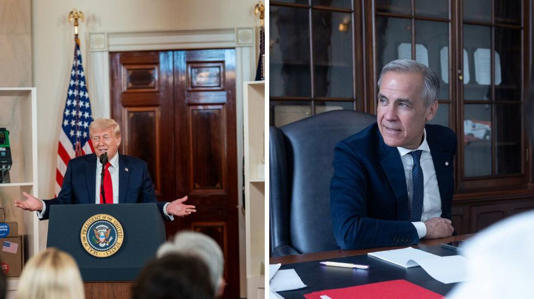
donald trump at a podium in front of an american flag. right: mark carney sitting at a desk
Prime Minister Mark Carney just met with U.S. President Donald Trump at the White House.
The leaders discussed the federal election, tariffs, the president's belief that Canada should be the 51st state, and more.
Carney joined Trump in the Oval Office on May 6, 2025, for the first in-person meeting between the leaders since Canada's federal election.
Trump congratulated Carney on winning the federal election and called him prime minister, not governor, like he did with Justin Trudeau.
"I think I was probably the greatest thing that happened to him," Trump said of Carney's election victory.
He also said it might be "one of the greatest comebacks in the history of politics."
"You're a transformational president with a focus on the economy," Carney said to Trump.
Then, reporters started to ask questions about trade between Canada and the U.S., tariffs and Trump's 51st state comments.
"We're going to be friends with Canada. Regardless of anything, we're going to be friends with Canada," Trump said.
"Canada is a very special place to me," he continued. "I love Canada."
When someone asked about Canada becoming the 51st state, Trump said, "I still believe that, but it takes two to tango."
"We're not going to be discussing that unless somebody wants to discuss it," the U.S. president said.
Carney jumped in and told Trump, "There are some places that are never for sale."
"Having met with the owners of Canada over the course of the campaign in the last several months, it's not for sale, won't be for sale ever," he said. "But the opportunity is in the partnership and what we can build together."
"Never say never," Trump said.
Then, Carney looked at the cameras, shook his head and mouthed "never, never."
When asked if Carney's comments about Canada not being for sale would have an impact on negotiations, Trump said, "No, not at all."
But then he seemed to walk back on that and said, "Time will tell."
Later, Trump took shots at Trudeau and Chrystia Freeland related to USMCA, the free trade agreement between Canada, the U.S., and Mexico.
"I won't say this about Mark, but I didn't like his predecessor. I didn't like a person that worked — she was terrible actually, she was a terrible person and she really hurt that deal very badly because she tried to take advantage of the deal and she didn't get away with it."
Trump turned to Carney and said, "You know who I'm talking about."
"We had a bad relationship having to do with the fact that we disagreed with the way they viewed the deal," the president said.
Carney said that the agreement is the basis for broader negotiations.
"Some things about it are going to have to change, and part of the way you've conducted these tariffs has taken advantage of existing aspects of USMCA, so it's going to have to change," the prime minister told Trump.
Later in the meeting, Trump also said that calling Trudeau a governor probably didn't help him in the election.
Love this? Check out our Narcity noticeboard for details on jobs, benefits, travel info and more!
Story by Lisa Belmonte
NARCITY
donald trump at a podium in front of an american flag. right: mark carney sitting at a desk
Prime Minister Mark Carney just met with U.S. President Donald Trump at the White House.
The leaders discussed the federal election, tariffs, the president's belief that Canada should be the 51st state, and more.
Carney joined Trump in the Oval Office on May 6, 2025, for the first in-person meeting between the leaders since Canada's federal election.
Trump congratulated Carney on winning the federal election and called him prime minister, not governor, like he did with Justin Trudeau.
"I think I was probably the greatest thing that happened to him," Trump said of Carney's election victory.
He also said it might be "one of the greatest comebacks in the history of politics."
"You're a transformational president with a focus on the economy," Carney said to Trump.
Then, reporters started to ask questions about trade between Canada and the U.S., tariffs and Trump's 51st state comments.
"We're going to be friends with Canada. Regardless of anything, we're going to be friends with Canada," Trump said.
"Canada is a very special place to me," he continued. "I love Canada."
When someone asked about Canada becoming the 51st state, Trump said, "I still believe that, but it takes two to tango."
"We're not going to be discussing that unless somebody wants to discuss it," the U.S. president said.
Carney jumped in and told Trump, "There are some places that are never for sale."
"Having met with the owners of Canada over the course of the campaign in the last several months, it's not for sale, won't be for sale ever," he said. "But the opportunity is in the partnership and what we can build together."
"Never say never," Trump said.
Then, Carney looked at the cameras, shook his head and mouthed "never, never."
When asked if Carney's comments about Canada not being for sale would have an impact on negotiations, Trump said, "No, not at all."
But then he seemed to walk back on that and said, "Time will tell."
Later, Trump took shots at Trudeau and Chrystia Freeland related to USMCA, the free trade agreement between Canada, the U.S., and Mexico.
"I won't say this about Mark, but I didn't like his predecessor. I didn't like a person that worked — she was terrible actually, she was a terrible person and she really hurt that deal very badly because she tried to take advantage of the deal and she didn't get away with it."
Trump turned to Carney and said, "You know who I'm talking about."
"We had a bad relationship having to do with the fact that we disagreed with the way they viewed the deal," the president said.
Carney said that the agreement is the basis for broader negotiations.
"Some things about it are going to have to change, and part of the way you've conducted these tariffs has taken advantage of existing aspects of USMCA, so it's going to have to change," the prime minister told Trump.
Later in the meeting, Trump also said that calling Trudeau a governor probably didn't help him in the election.
Love this? Check out our Narcity noticeboard for details on jobs, benefits, travel info and more!
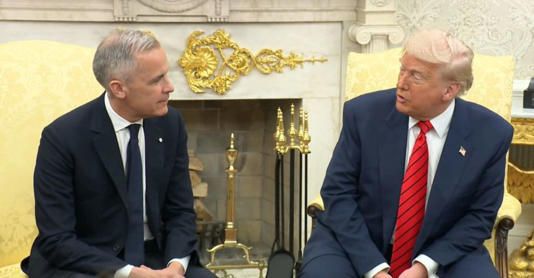
Mark Carney and Dponald Trump sit for a meeting in the White House.
MTL BLOG
MAY 6, 2025
During their first official meeting at the White House on Tuesday, newly elected Canadian Prime Minister Mark Carney and U.S. President Donald Trump kept things mostly cordial. But the tone shifted when an old Trump talking point came up: the idea of Canada becoming America's 51st state.
The leaders met for about 35 minutes on Tuesday in Washington, with members of the press present for part of the conversation.
The leaders met for about 35 minutes on Tuesday in Washington, with members of the press present for part of the conversation.
Trump, who initiated heavy tariffs on Canada earlier this year, opened the chat by calling the Liberals' election victory "one of the greatest comebacks in the history of politics."
"Maybe even greater than mine," he added, jokingly.
While the exchange was mostly polite, especially compared to Trump's tense February meeting with Ukrainian President Volodymyr Zelenskyy, things got more pointed when Trump brought up his long-running, tongue-in-cheek claim that Canada is "for sale."
Carney, who's been quick to shut that narrative down during his campaign and early days in office, was quick to chime in.
"As you know from real estate, there are some places that are never for sale," Carney told the former businessman.
"That's true," Trump responded.
"Having met with the owners of Canada over the course of the campaign for the last several months, I can say it's not for sale and won't ever be for sale," the Northwest Territories native added.
Nevertheless, Trump said he "still believes" Canada should become the 51st state, citing a number of "advantages" that include tax cuts, military, and healthcare.
"It would really be a wonderful marriage," he said. "Never say never."
Carney then looked into a camera and mouthed the word "never."
Related video: Carney tells Trump Canada won't ever be sale (The Canadian Press)Later, a reporter asked Trump if the day’s meetings might sway him on lifting tariffs against Canada.
The president's response was blunt: "No. That's just the way it is."
While they're far from being on the same page, Trump seems keen on maintaining a good relationship with his northern neighbours going forward.
"Regardless of anything, we're going to be friends with Canada."
Carney is scheduled to speak to reporters at the Canadian Embassy at 3 p.m. ET.
MTL Blog noticeboard
AI tools may have been used to support the creation or distribution of this content; however, it has been carefully edited and fact-checked by a member of MTL Blog's Editorial team. For more information on our use of AI, please visit our Editorial Standards page.
AI tools may have been used to support the creation or distribution of this content; however, it has been carefully edited and fact-checked by a member of MTL Blog's Editorial team. For more information on our use of AI, please visit our Editorial Standards page.
Canadian PM asks Trump to stop calling his country 'the 51st state'
David Edwards
RAW STORY
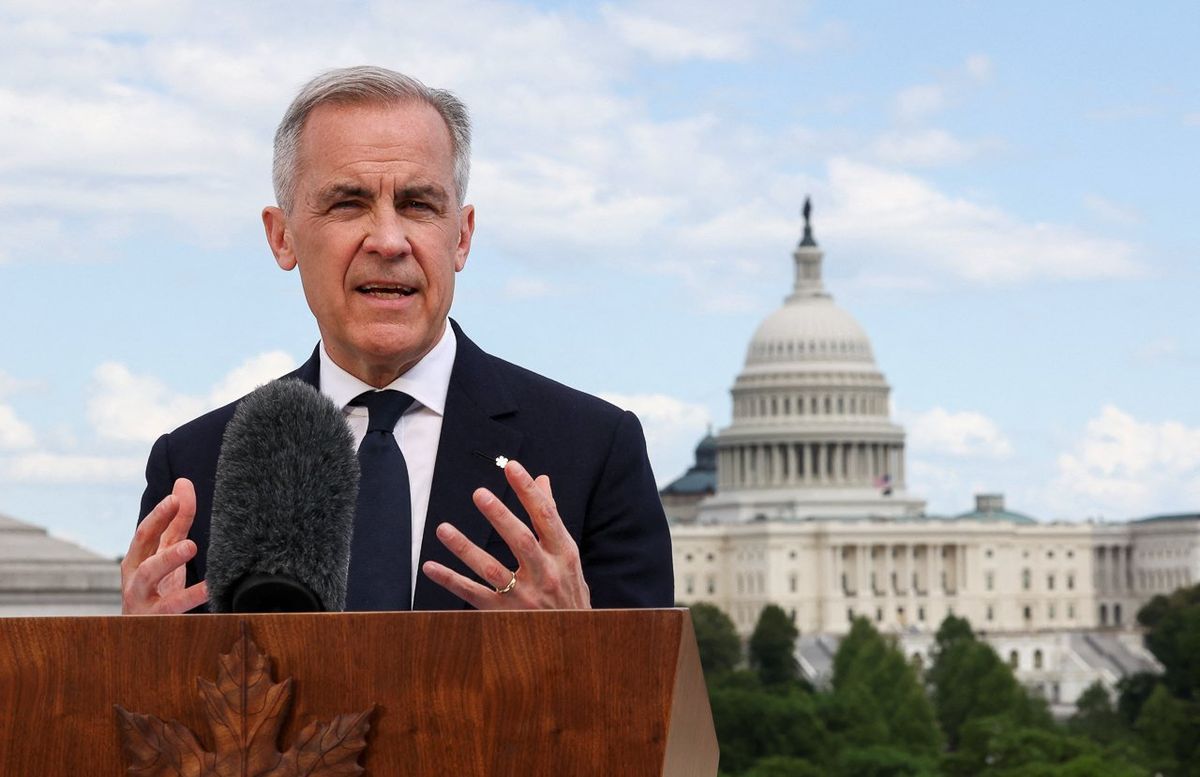
With the U.S. Capitol in the background, Canadian Prime Minister Mark Carney speaks to reporters after his meeting with U.S. President Donald Trump, during a press conference at the Canadian Embassy in Washington, D.C., U.S., May 6, 2025. REUTERS/Kevin Lamarque
Canadian Prime Minister Mark Carney revealed that he asked President Donald Trump to stop calling Canada the "51st state."
Carney spoke about his conversation with Trump following a meeting at the White House.
"Many Canadians are offended and deeply angered by the fact that he keeps repeating this comment," a reporter with the National Post told Carney. "So, have you asked the President to stop calling Canada the 51st state?"
"Yes," the prime minister replied.
"Specifically, what did you ask him?" the reporter wondered.
"Exactly what you just said," Carney said. "Look, I gave you an answer."
"What was his answer?" the reporter pressed.
ALSO READ:‘Pain. Grief. Anger’: Families heartbroken as Trump backlash smashes adoption dreams
"I don't know — he's the president, he's his own person," Carney lamented. "I would go back to showing the difference between a wish and a reality. We're very clear."
During his Oval Office meeting, Carney insisted that Canada would never be the 51st state.
"There are some places that are never for sale," he told Trump. "And having met with the owners of Canada over the course of the campaign, the last several months, it's not for sale, won't be for sale ever."
Watch the video below.
David Edwards
RAW STORY
With the U.S. Capitol in the background, Canadian Prime Minister Mark Carney speaks to reporters after his meeting with U.S. President Donald Trump, during a press conference at the Canadian Embassy in Washington, D.C., U.S., May 6, 2025. REUTERS/Kevin Lamarque
Canadian Prime Minister Mark Carney revealed that he asked President Donald Trump to stop calling Canada the "51st state."
Carney spoke about his conversation with Trump following a meeting at the White House.
"Many Canadians are offended and deeply angered by the fact that he keeps repeating this comment," a reporter with the National Post told Carney. "So, have you asked the President to stop calling Canada the 51st state?"
"Yes," the prime minister replied.
"Specifically, what did you ask him?" the reporter wondered.
"Exactly what you just said," Carney said. "Look, I gave you an answer."
"What was his answer?" the reporter pressed.
ALSO READ:‘Pain. Grief. Anger’: Families heartbroken as Trump backlash smashes adoption dreams
"I don't know — he's the president, he's his own person," Carney lamented. "I would go back to showing the difference between a wish and a reality. We're very clear."
During his Oval Office meeting, Carney insisted that Canada would never be the 51st state.
"There are some places that are never for sale," he told Trump. "And having met with the owners of Canada over the course of the campaign, the last several months, it's not for sale, won't be for sale ever."
Watch the video below.
'It's imaginary!' CNN fact-checker smacks down Trump's new 'wildly inaccurate' claims
Sarah K. Burris
May 6, 2025
RAW STORY
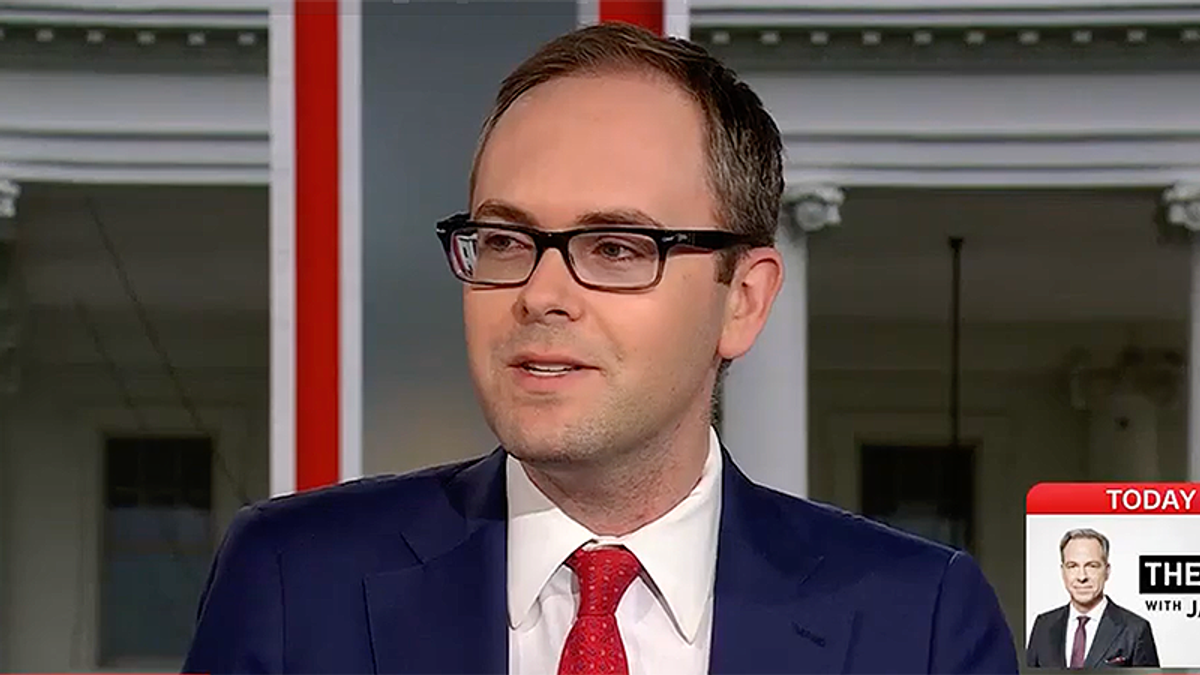
CNN fact-checker Daniel Dale (Photo: screen capture via CNN video)
CNN fact-checker Daniel Dale appeared Tuesday afternoon to address the recent Oval Office press availability with President Donald Trump and new Canadian Prime Minister Mark Carney.
Dale said Trump "did not repeat a lot of the lies about Canada that I've been fact-checking for months," as he counted "at least 11 false claims" from the president this year. During the meeting on Tuesday, which lasted under an hour, Trump repeated just two of those claims about Canada.
One of those is Trump's claim that the United States is "subsidizing Canada" to the tune of $200 billion a year.
ALSO READ: Trump's toadies are peddling a dangerous lie to America's working class
"So this $200 billion figure he uses to describe the trade deficit with Canada, and it's imaginary," Dale said. "The deficit with Canada isn't even close to that high."
He explained that it's a little closer to $36 billion.
"Even if you only count goods trade, ignore the services trade, at which the U.S. excels, about $71 billion," Dale said. "So, just wrong."
The other claim from Trump was that the United States "doesn't do much business with Canada from our standpoint. They do a lot of business with us. We're at like 4%."
"So, that 4% figure is wildly inaccurate, again," Dale said. "About 17% of U.S. exports go to Canada. I can't definitively fact-check this claim that 'we don't do much business with Canada.' But Canada was the No. 1 buyer of U.S. exports in 2024. Again, through March this year, is year, the number three source of U.S. imports."
He said that by "any reasonable standard," Canada is "a major business partner/trading partner of the United States.
CNN fact-checker Daniel Dale (Photo: screen capture via CNN video)
CNN fact-checker Daniel Dale appeared Tuesday afternoon to address the recent Oval Office press availability with President Donald Trump and new Canadian Prime Minister Mark Carney.
Dale said Trump "did not repeat a lot of the lies about Canada that I've been fact-checking for months," as he counted "at least 11 false claims" from the president this year. During the meeting on Tuesday, which lasted under an hour, Trump repeated just two of those claims about Canada.
One of those is Trump's claim that the United States is "subsidizing Canada" to the tune of $200 billion a year.
ALSO READ: Trump's toadies are peddling a dangerous lie to America's working class
"So this $200 billion figure he uses to describe the trade deficit with Canada, and it's imaginary," Dale said. "The deficit with Canada isn't even close to that high."
He explained that it's a little closer to $36 billion.
"Even if you only count goods trade, ignore the services trade, at which the U.S. excels, about $71 billion," Dale said. "So, just wrong."
The other claim from Trump was that the United States "doesn't do much business with Canada from our standpoint. They do a lot of business with us. We're at like 4%."
"So, that 4% figure is wildly inaccurate, again," Dale said. "About 17% of U.S. exports go to Canada. I can't definitively fact-check this claim that 'we don't do much business with Canada.' But Canada was the No. 1 buyer of U.S. exports in 2024. Again, through March this year, is year, the number three source of U.S. imports."
He said that by "any reasonable standard," Canada is "a major business partner/trading partner of the United States.
No comments:
Post a Comment