Romania overtakes Poland as worst country in the EU for LGBTQ+ people
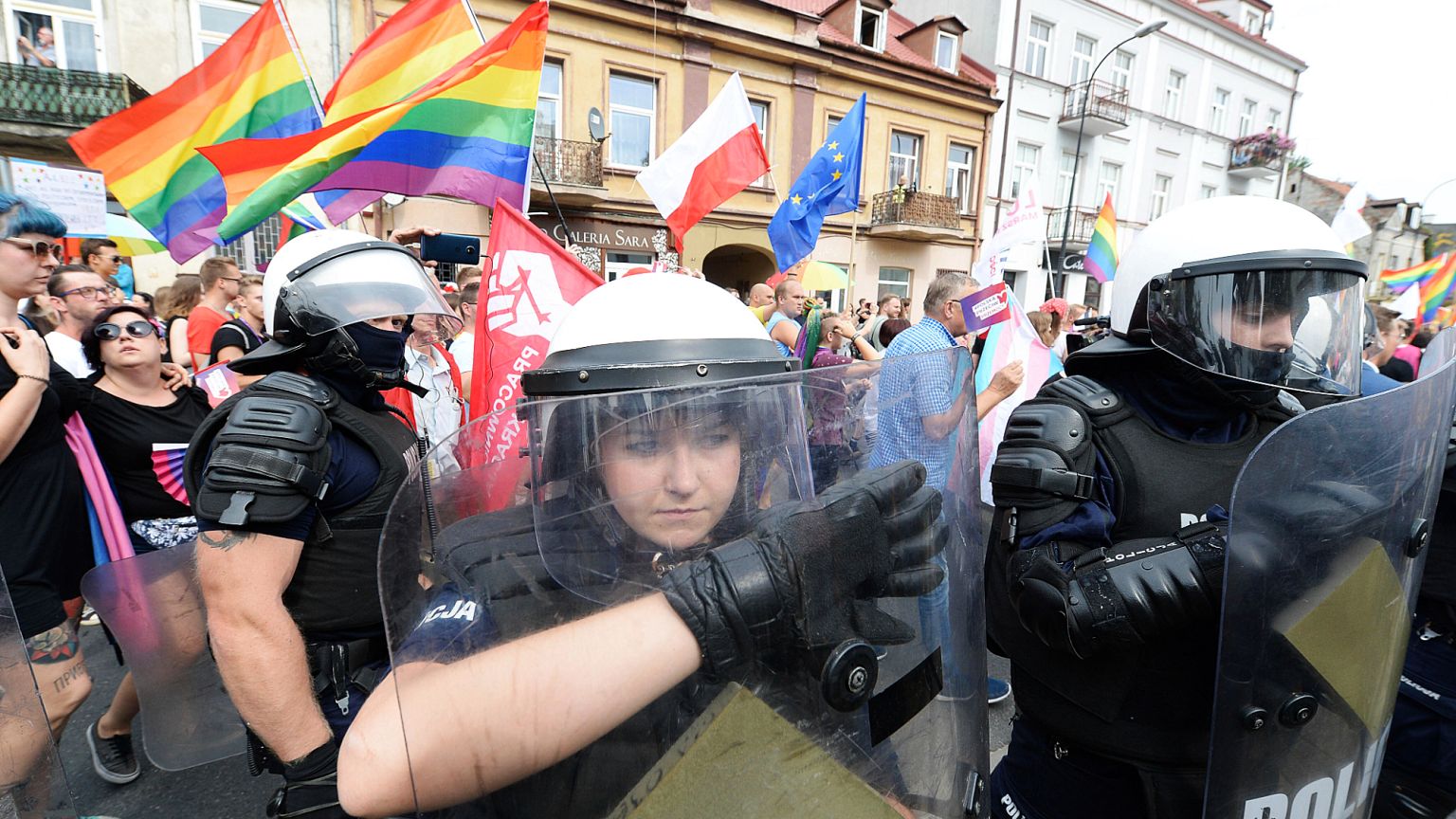
After six straight years in first place, Poland is no longer the worst country in the EU for LGBTQ+ people, according to the annual "Rainbow Map" published by the NGO ILGA-Europe.
Romania has overtaken Poland as the worst country in the EU for LGBTQ+ people, according to a ranking published by the Brussels-based non-governmental organisation ILGA-Europe.
Poland had occupied the top spot in the rankings since 2019, which are based on a score that takes into account factors such as the number of hate crimes in a given year and the rights afforded by authorities to the LGBTQ+ community.
Based on new data from 2024, Romania has now overtaken Poland, while Malta, Belgium and Iceland find themselves on the opposite side of the spectrum.
In the past, several Polish political leaders, including the chairman of the Law and Justice (PiS) party Jaroslaw Kaczyński, have campaigned against what they call "LGBTQ+ ideology."
Asked about the "threat of the imposition of gender and LGBTQ+ ideology on Poland" during a virtual meeting with the editors of the Gazeta Polska newspaper in 2021, Kaczyński said that "all this madness- because it really is madness - is happening in a world in which there are tough and strong civilisations, both economically and militarily, which are weakening. This weakening of the West will be taken advantage of."
Poland's lowly ranking changed after the country's 2023 parliamentary elections, indicating that conditions for LGBTQ+ people have improved. However, the new government has not introduced any new reforms to improve LGBTQ+ rights, despite having promised to do so during the pre-election campaign.
Nevertheless, ILGA-Europe reports that in the "civil society space" category, Poland has seen an improvement, referring to the fact that there were fewer obstacles to "LGBT+ events" such as pride marches.
"Last year, more than 35 marches were organised across Poland and almost all of them took place peacefully," reads the latest ILGA-Europe report. "However, the protection of these events is insufficient."
Poland recently abolished its last "LGBT-free zone", six years after the first one was introduced. These zones, although mainly symbolic, were an attempt to exclude the LGBTQ+community from public life, according to activists.
"LGBT-free zones" have also faced criticism from the European Union. In 2019, the European Parliament voted with a majority of 463 to 107 to condemn the zones, of which there were more than 80 at the time.
According to an Ipsos+ poll, 67% of Poles support same-sex marriage or legal recognition of unions for LGBTQ+ couples. Although there were two motions in place for the ruling coalition to introduce bills on civil partnerships into parliament, both failed due to a lack of support by more conservative members.

MEPs protest Hungary’s Budapest Pride ban
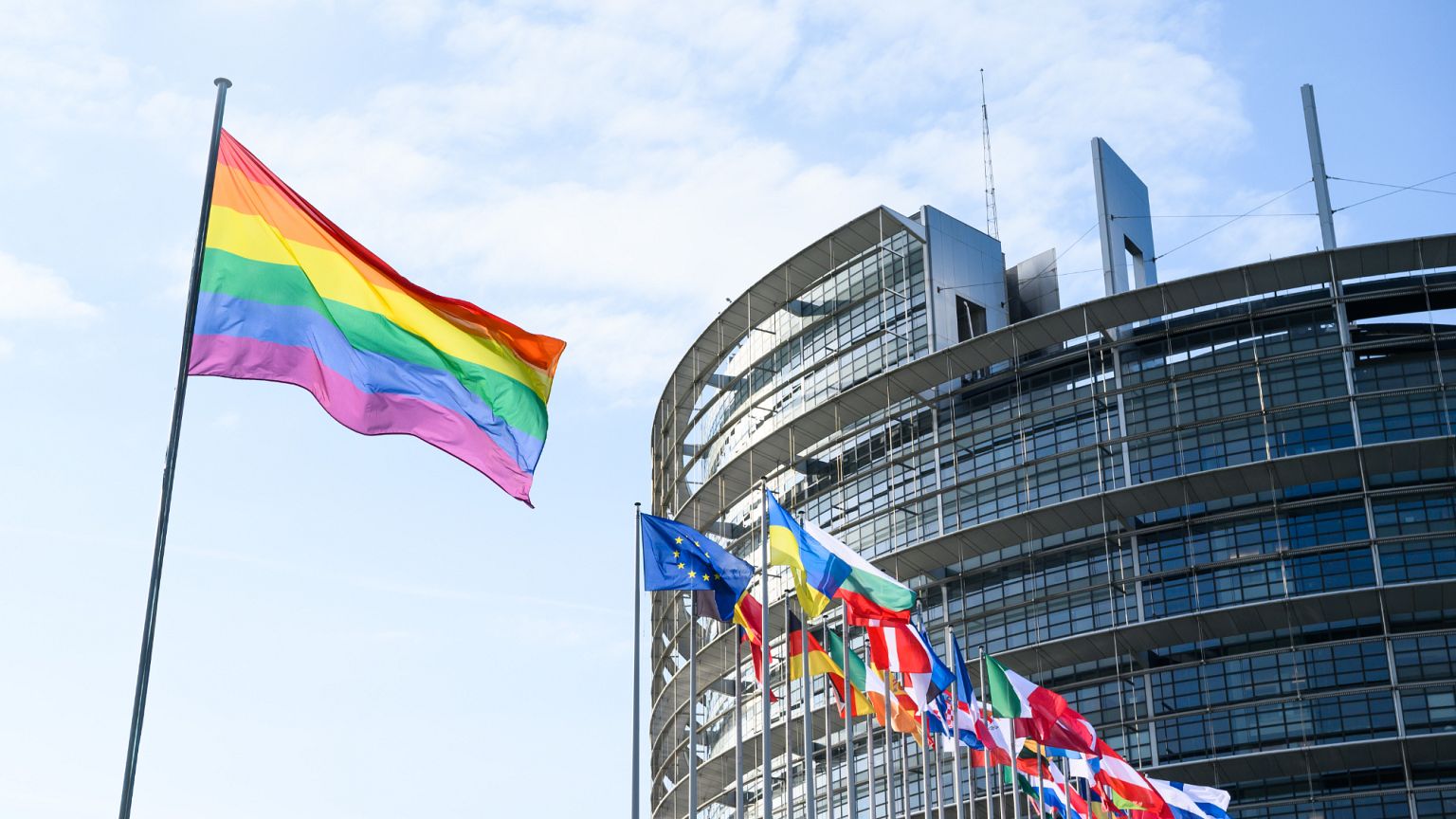
A cross-party group of MEPs plans to join Budapest Pride despite Hungary’s ban. Organisers and lawmakers urge the European Commission to take legal action, warning of broader risks to civil liberties across the EU.
A cross-party group of Members of the European Parliament is preparing to travel to Hungary to protest the government’s decision to ban this year’s Budapest Pride, organisers confirmed on Friday during a press conference in Brussels, urging the Commission to take legal action.
Last month the Hungarian parliament passed an amendment to the constitution codifying the law that the ruling party fast-tracked in March, banning public events that are considered to be in breach of the Child Protection Act, which heavily restricted depictions of homosexuality and gender reassignment. Events held by the LGBTQ+ community, such as the yearly Pride parade in Budapest that draws thousands of visitors, were prohibited under the new law.
Activists and MEPs are urging the European Commission to take immediate legal action to overturn the ban. They recommend two main steps: requesting interim measures from the Court of Justice of the EU as part of the ongoing infringement procedure against Hungary’s 2021 anti-LGBTIQ+ law, and launching a new infringement procedure specifically targeting the restriction on freedom of assembly.
 |
| POLAND (THE FEARLESS VAMPIRE KILLERS) |
During a press conference for the International Day Against Homophobia, Biphobia and Transphobia, the MEPs argued the ban is part of a broader clampdown on civil liberties and a violation of EU law.
“We will be marching on June 28th on the streets of Budapest. No matter what, we will not comply with this illegal ban,” said Viktória Radványi, President of Budapest Pride. “We haven't seen any action from the European Commission in the past two months... So we are here today in Brussels to talk about this issue and to see what type of concrete legal actions we can see from the Commission.”
Radványi urged the Commission to use existing legal tools, including requesting interim measures in the ongoing infringement procedure against Hungary’s 2021 anti-LGBTIQ+ law. “This current ban on Pride marches is just a verbatim extension of the 2021 propaganda law,” she said.
The European Court of Human Rights has previously ruled that banning pride events breaches human rights protections. In 2017, the Court criticised Russia’s pride ban and considered that “by adopting such [anti-LGBTI propaganda] laws the authorities reinforce stigma and prejudice and encourage homophobia, which is incompatible with the notions of equality, pluralism and tolerance inherent in a democratic society".
“By banning Pride, the Hungarian government wants to silence opposition,” said Marc Angel, S&D MEP and co-chair of the LGBTIQ+ Intergroup. “Next Tuesday in LIBE committee, there will be an important vote on this year's rule of law report and the EPP group has requested separate votes on all paragraphs that include the LGBTQI+ rights,” he said, referring to language on same-sex marriage, gender recognition and conversion practices. He urged centre-right MEPs to support progressive amendments and called on the press to monitor the outcome, which will be finalised during a mini plenary session in Brussels on Thursday.
A delegation of MEPs from across the political spectrum from The Left to the European People Party is expected to join Pride march in Budapest next month. The final list has not yet been confirmed an parliamentary assistant told Euronews.
“We are at a crossroad right now,” said Dutch Green MEP Kim van Sparrentak, adding: “We're at a point where we're really going to see whether the European Commission is really going to act and not only talk about the fact that we're promoting European values and we stand for a union of equality.”
Activists from Romania, Bulgaria and Italy warned that the situation is not limited to Hungary, citing rising violence, legal crackdowns and public hostility against LGBTIQ+ people across the region.
This week, ILGA-Europe, a Brussels-based NGO advocating for queer rights, published its annual ranking of 49 European countries, assessing them on a scale from 0% (gross violations of human rights, discrimination) to 100% (full respect for human rights and equality).
Hungary is ranked 37 of 49 countries - the lowest the country ever been on the ranking. Russia and Azerbaijan are at the bottom of the list, while Malta and Belgium lead the ranking.

No comments:
Post a Comment